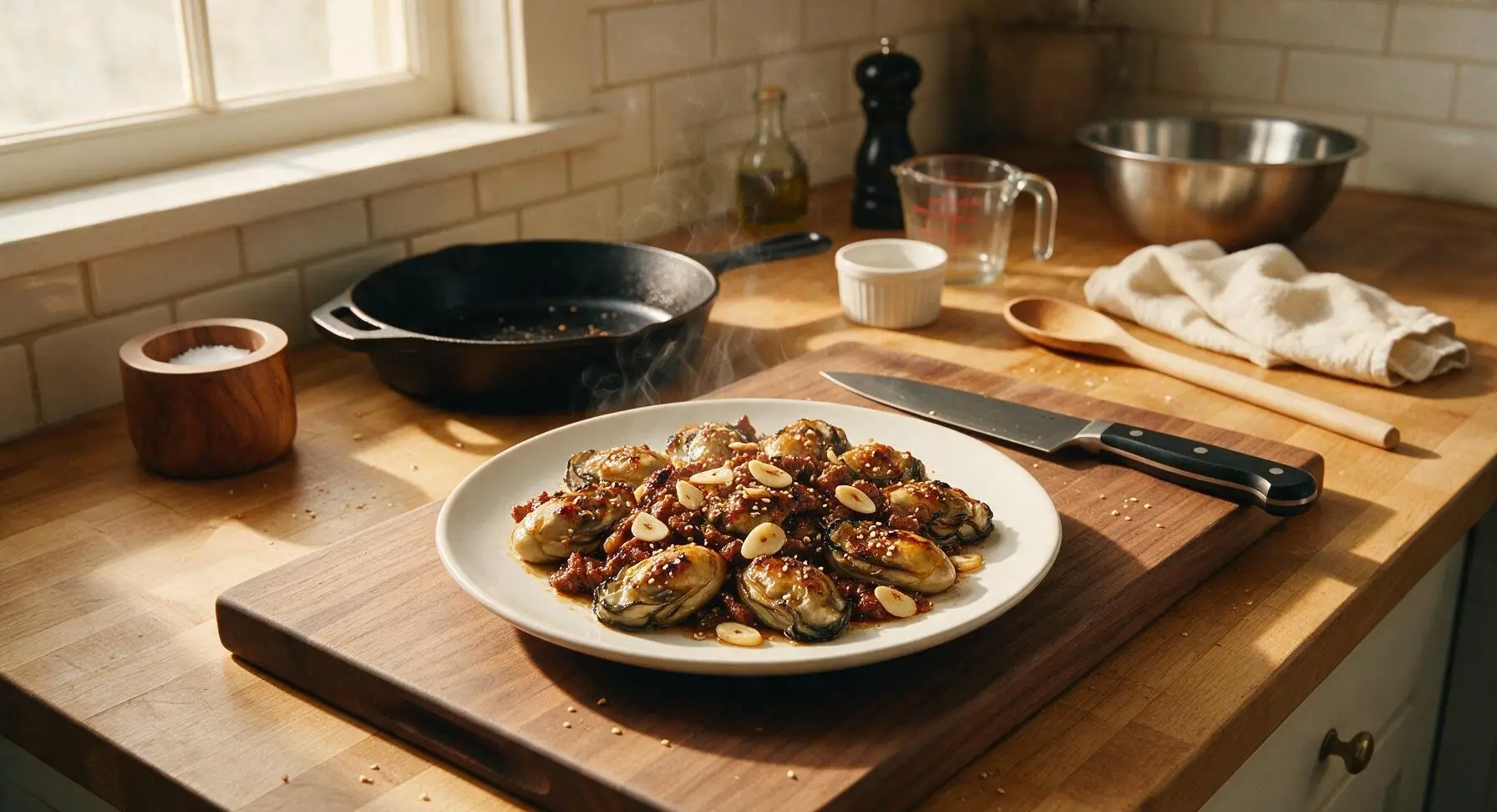
Oysters Bulgogi

title 1
Oysters Bulgogi
⏱️ cook time 8 minutes
🍽️ servings 4
⚡ Difficulty medium

intro

Plump, briny oysters coated in sweet-savory bulgogi marinade, seared to caramelized perfection, with nutty sesame and bright garlic—an elegant umami twist on a Korean classic.

Ingredients
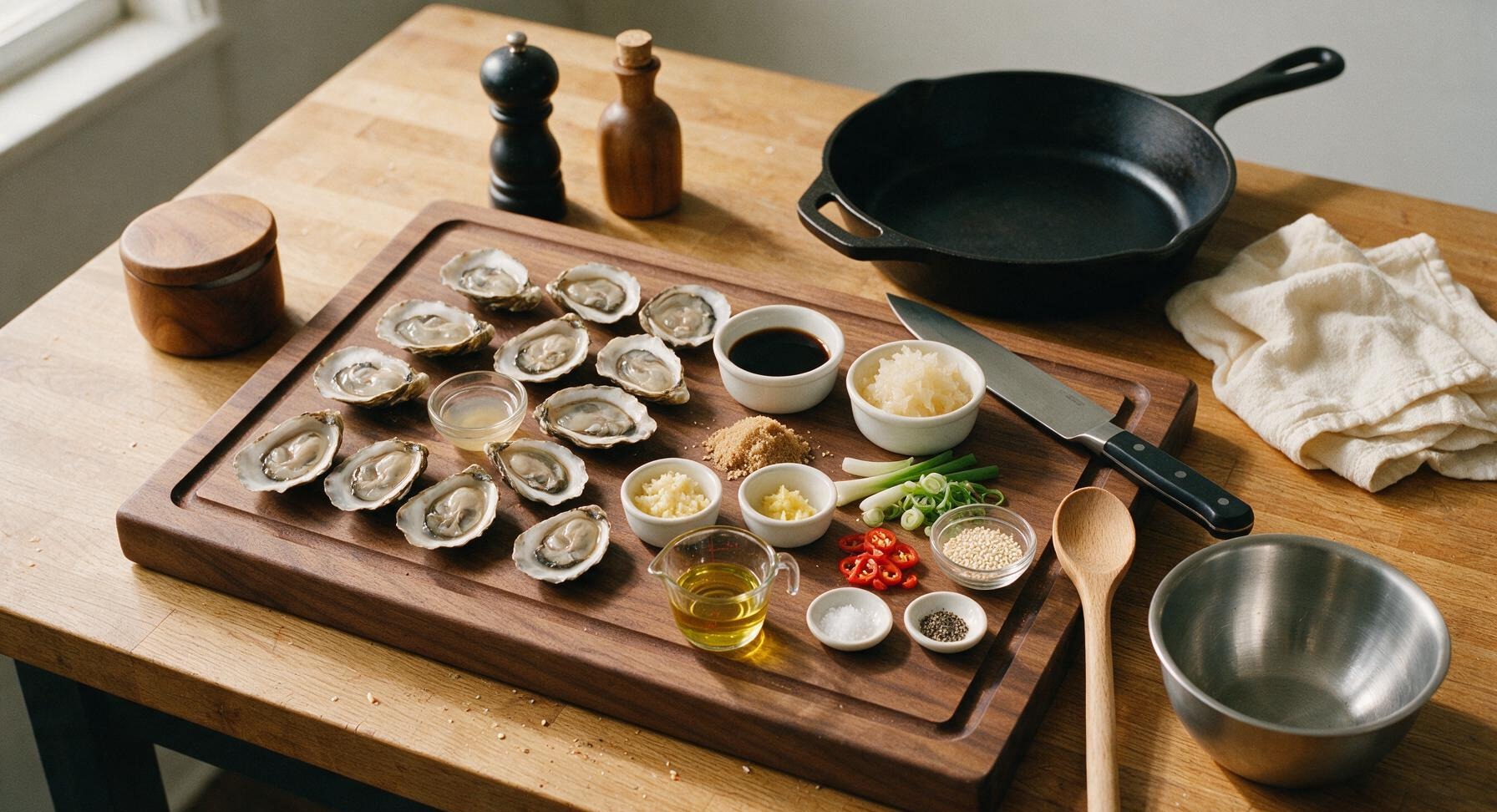
Fresh shucked oysters (drained, liquor reserved) 16 pieces (~450g total)
Low-sodium soy sauce 3 tablespoons
Grated Korean pear (peeled, cored, squeezed to remove excess juice) 1/4 cup
Light brown sugar 1 tablespoon
Toasted sesame oil 1 tablespoon
Minced garlic 2 cloves (~2 teaspoons)
Grated fresh ginger 1 teaspoon
Scallions (white parts minced, green parts thinly sliced for garnish) 3 stalks
Fresno chili (seeded, thinly sliced) 1
Toasted white sesame seeds 1 teaspoon
Coarse sea salt 1/4 teaspoon
Freshly ground black pepper 1/8 teaspoon
Neutral high-smoke-point oil (grapeseed or avocado) 1 teaspoon

Steps

1

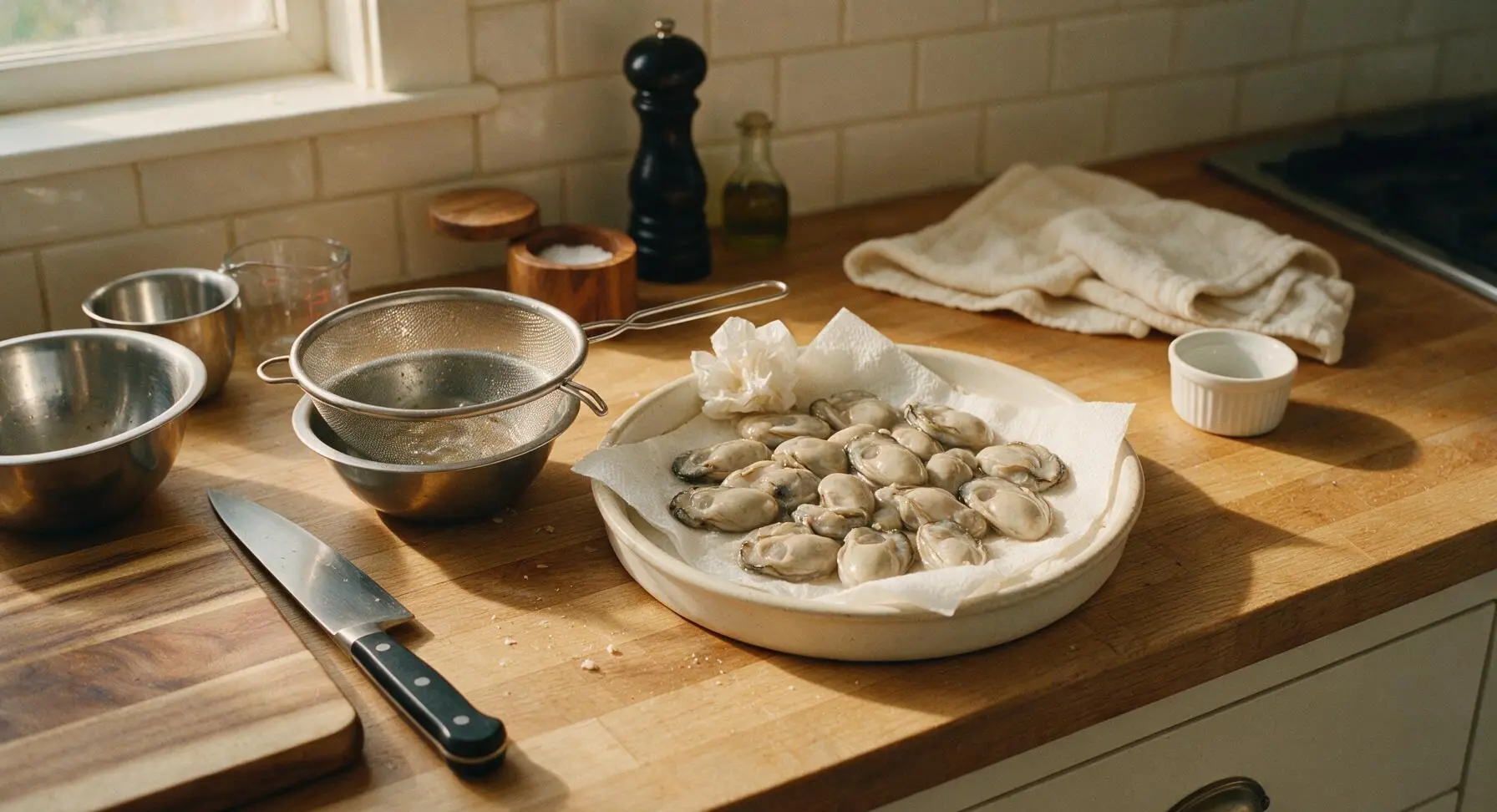
Prep and drain oysters

Pour the shucked oysters and their reserved liquor into the fine mesh stainless steel sieve set over a small bowl to drain for 5 minutes. Gently transfer drained oysters to the paper-towel lined off-white ceramic tray, patting the tops lightly with extra paper towel to remove all excess surface moisture. Discard any small bits of broken shell you spot; fully dry oysters will sear evenly instead of steaming in the pan.
Step 1
step1:Prep and drain oysters
2

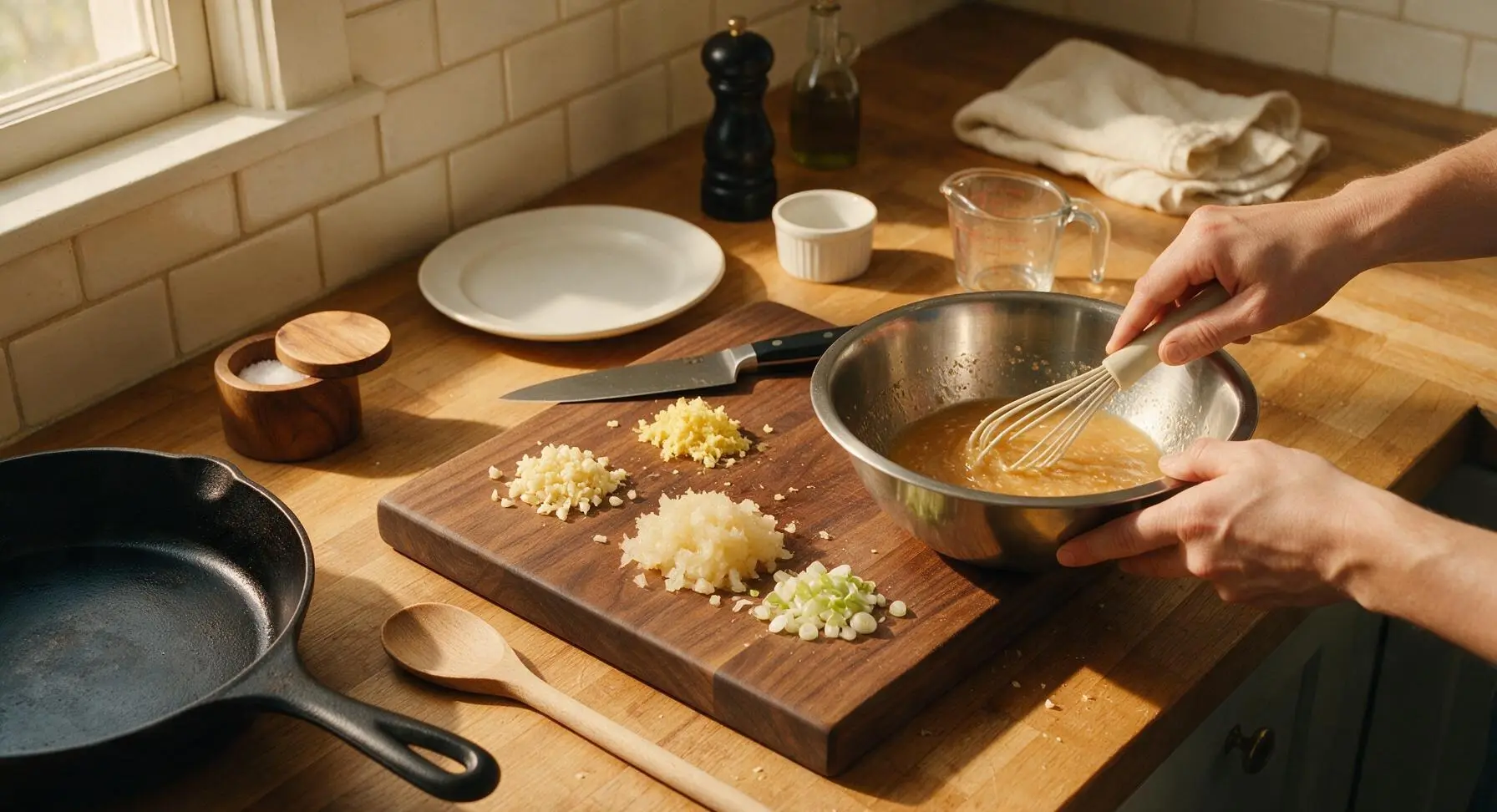
Mix bulgogi marinade

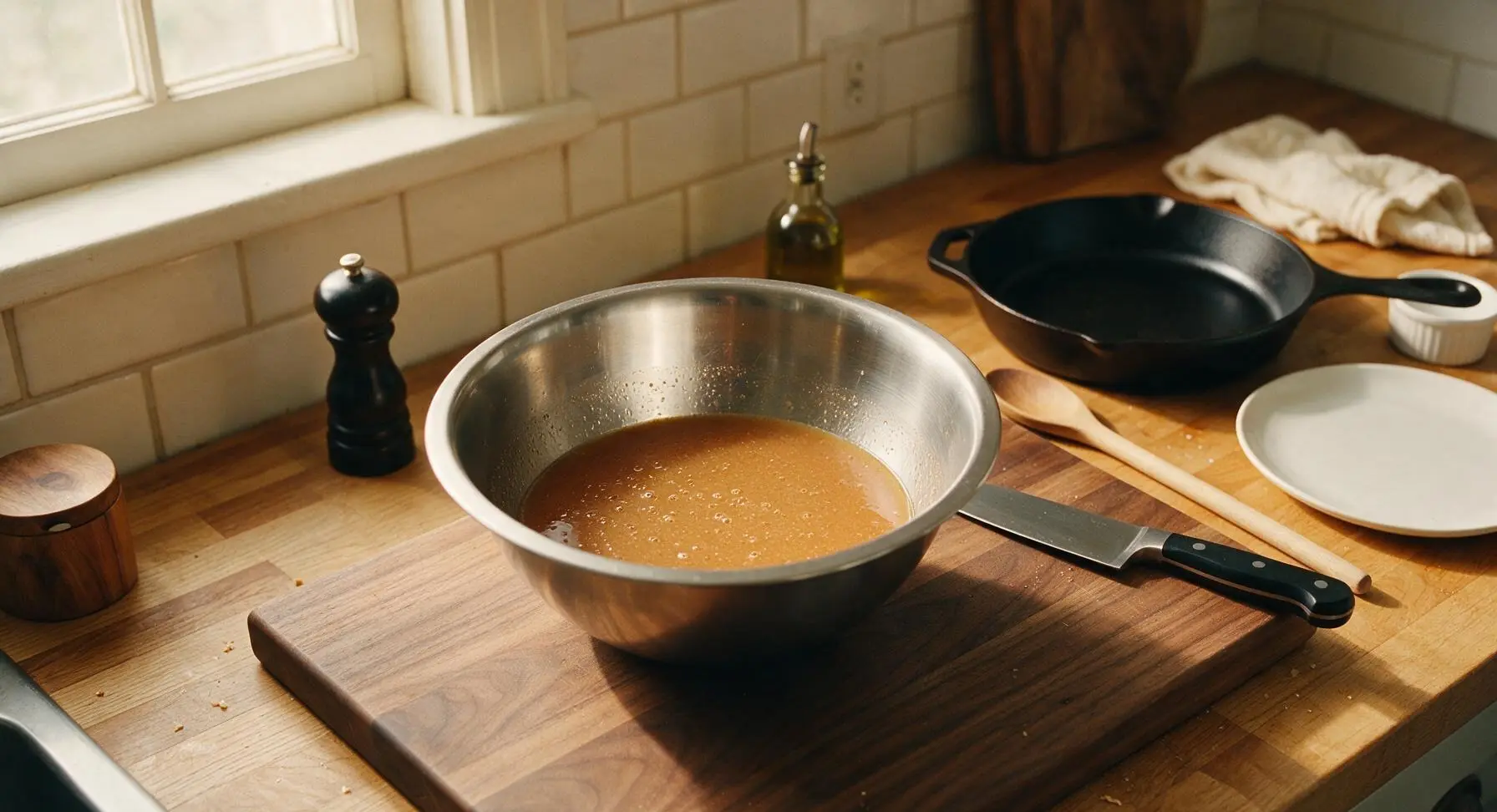
Set the stainless steel mixing bowl on the counter next to the cutting board. Add 3 tablespoons low-sodium soy sauce, 1/4 cup finely grated peeled Korean pear (squeezed lightly to remove excess juice), 1 tablespoon light brown sugar, 1 tablespoon toasted sesame oil, 2 teaspoons minced garlic, 1 teaspoon grated ginger, minced white parts of the 3 scallion stalks, 1/4 teaspoon coarse sea salt, and 1/8 teaspoon freshly ground black pepper. Whisk thoroughly with the mini silicone whisk for 30 seconds, until the brown sugar is fully dissolved and the marinade is a smooth, uniform light amber color.
Step 2
step2:Mix bulgogi marinade
Step 2
step2:Mix bulgogi marinade
3

Marinate oysters briefly

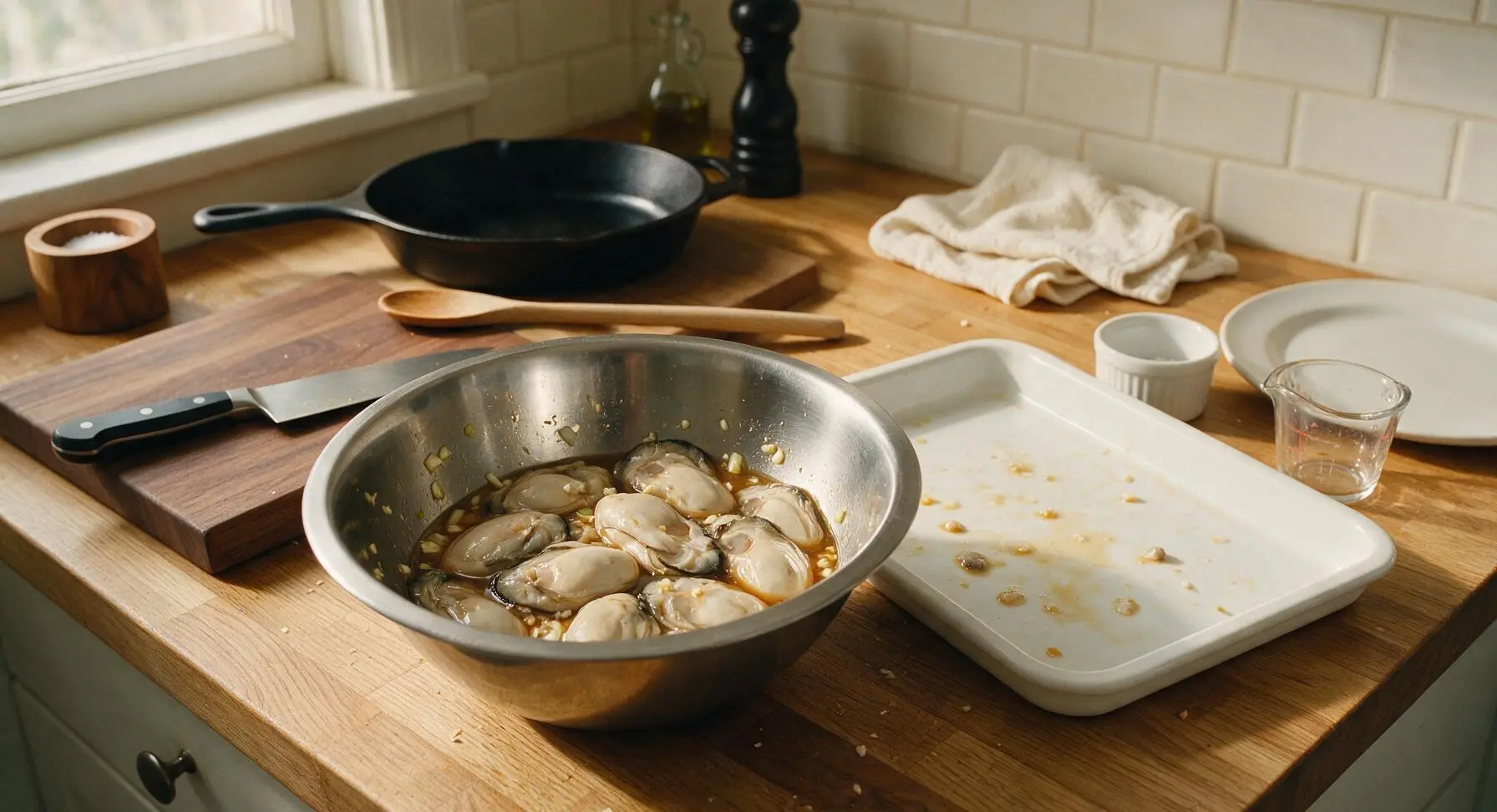
Gently add the fully patted-dry oysters to the bowl of bulgogi marinade, turning each one carefully with a spoon to coat evenly. Let oysters marinate for exactly 10 minutes at room temperature — do not marinate longer, as the salt and enzymes in the pear will break down the oyster texture too much, leading to rubbery, mushy results. The oysters will just begin to take on a light tan tint at the edges as they absorb the marinade.
Step 3
step3:Marinate oysters briefly
4

Heat skillet to temperature

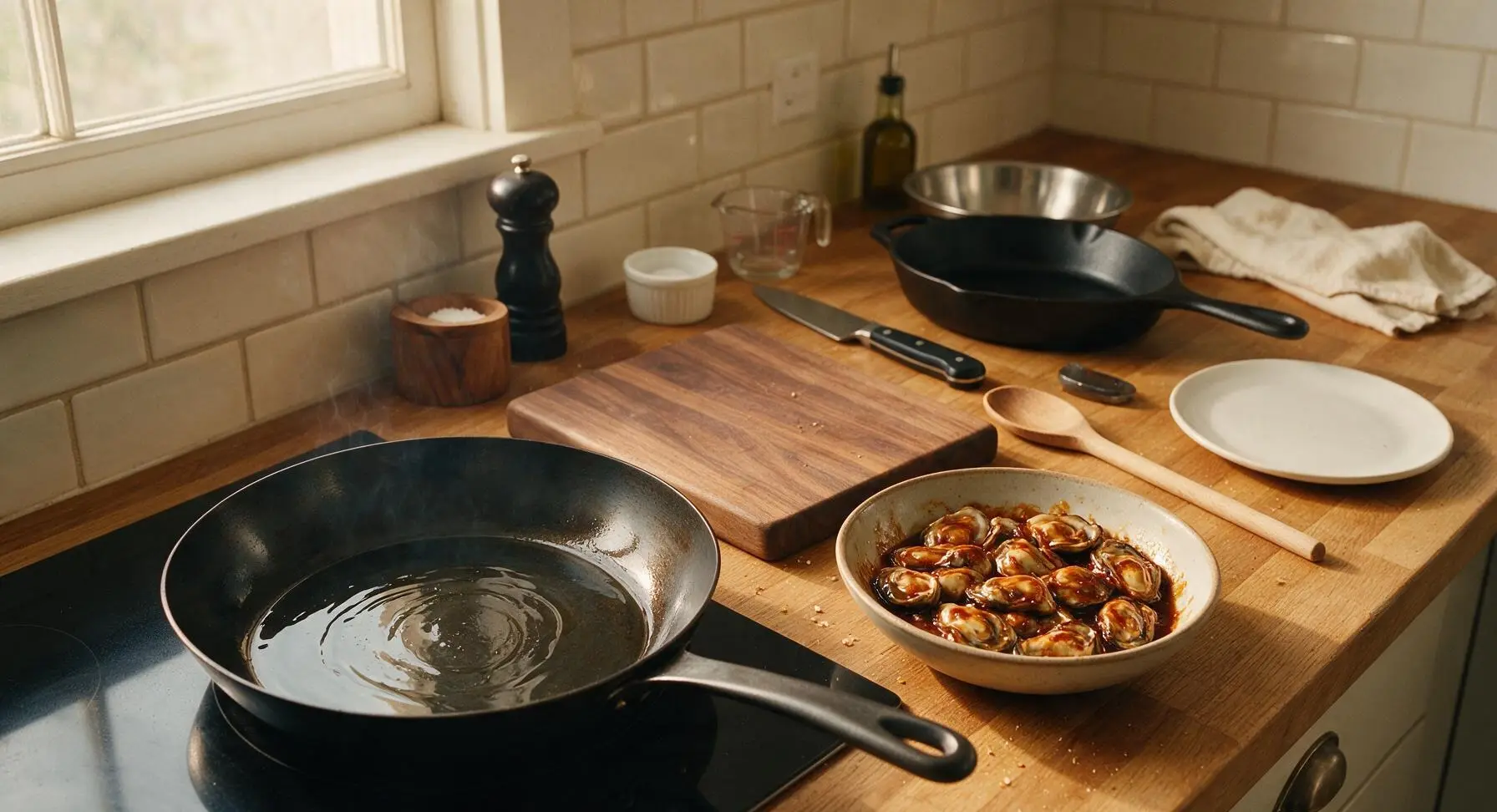
Place the 10-inch seasoned carbon steel skillet on the flush-mounted matte black induction stovetop set into the left section of the counter, add 1 teaspoon neutral high-smoke-point grapeseed or avocado oil, and heat over medium-high heat for 2 minutes. The oil is ready when it shimmers across the pan surface and sends up thin, wispy trails of smoke; it should not be smoking heavily, as this will burn the marinade.
Step 4
step4:Heat skillet to temperature
5

Sear oysters in batches

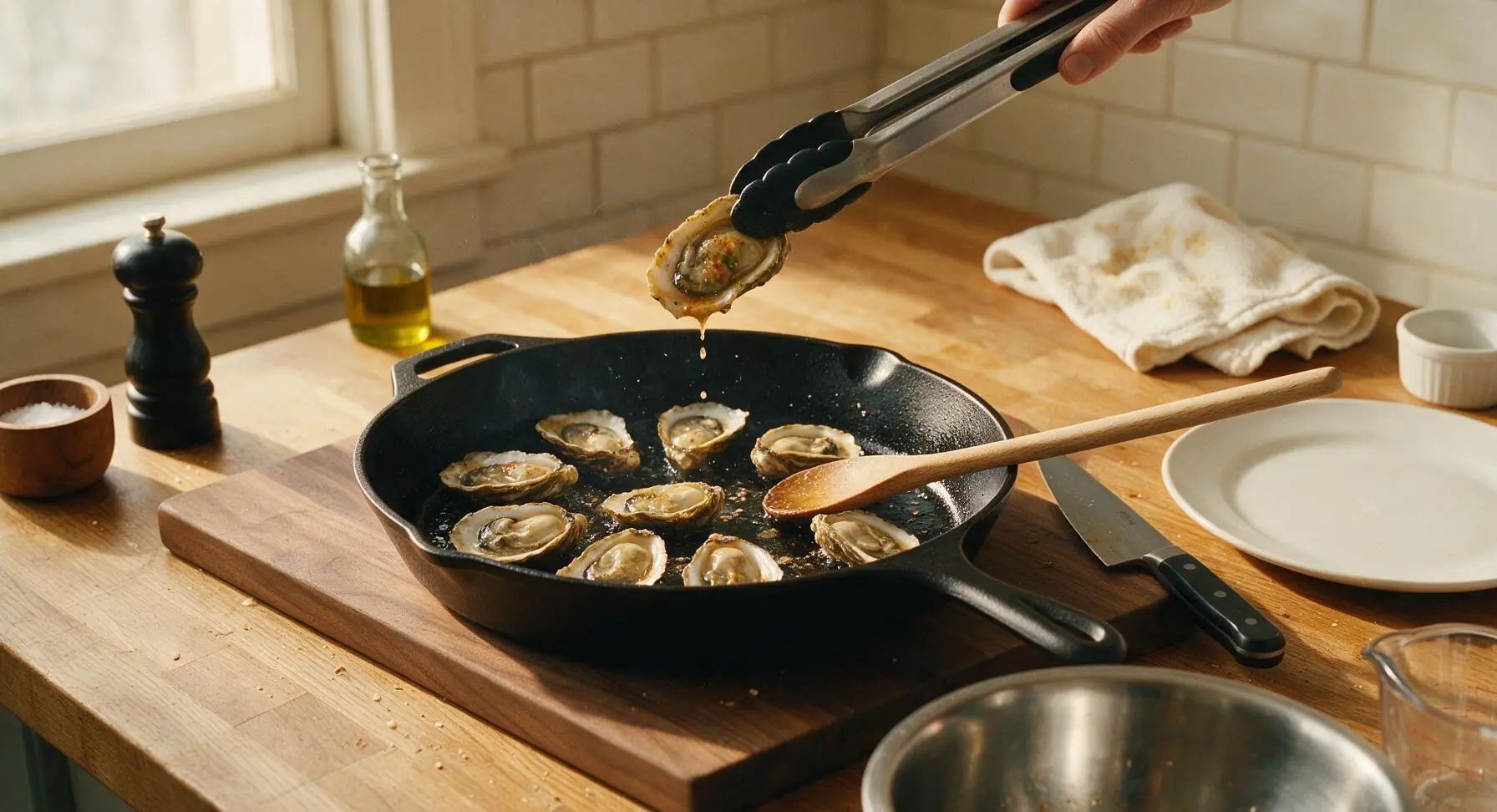
Using the silicone-tipped stainless steel tongs, lift oysters one by one from the marinade, letting excess marinade drip back into the bowl, and place them in the hot skillet in a single layer, working in 2 batches of 8 oysters each to avoid crowding the pan. Sear for 45 seconds on the first side, until the bottom is deep golden and slightly caramelized, then flip carefully and sear the second side for another 30 seconds. Total cook time per oyster is 1 minute 15 seconds — overcooking will result in shrunken, rubbery oysters. Transfer seared oysters temporarily to the empty ceramic draining tray as you finish each batch.
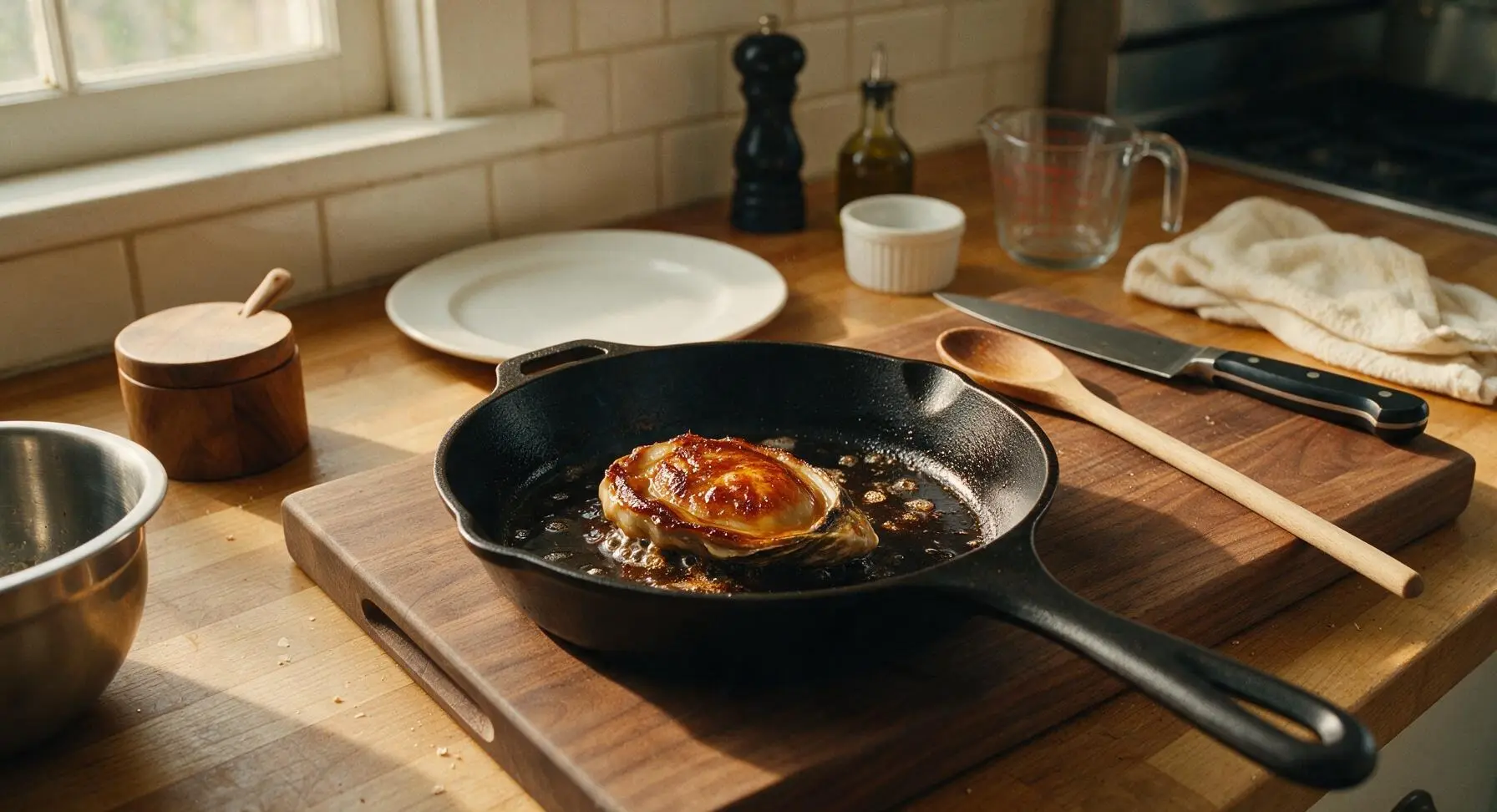
Step 5
step5:Sear oysters in batches
Step 5
step5:Sear oysters in batches
6

Reduce leftover marinade

Once all oysters are seared and set aside on the tray, pour the remaining bulgogi marinade from the mixing bowl into the hot skillet, along with 1 tablespoon of the reserved strained oyster liquor. Bring to a gentle simmer over medium heat, stirring constantly with the matte black heatproof silicone spatula, and cook for 1 minute until the marinade reduces to a thick, glossy, syrup-like consistency that coats the back of the spatula. Turn off the stovetop heat.
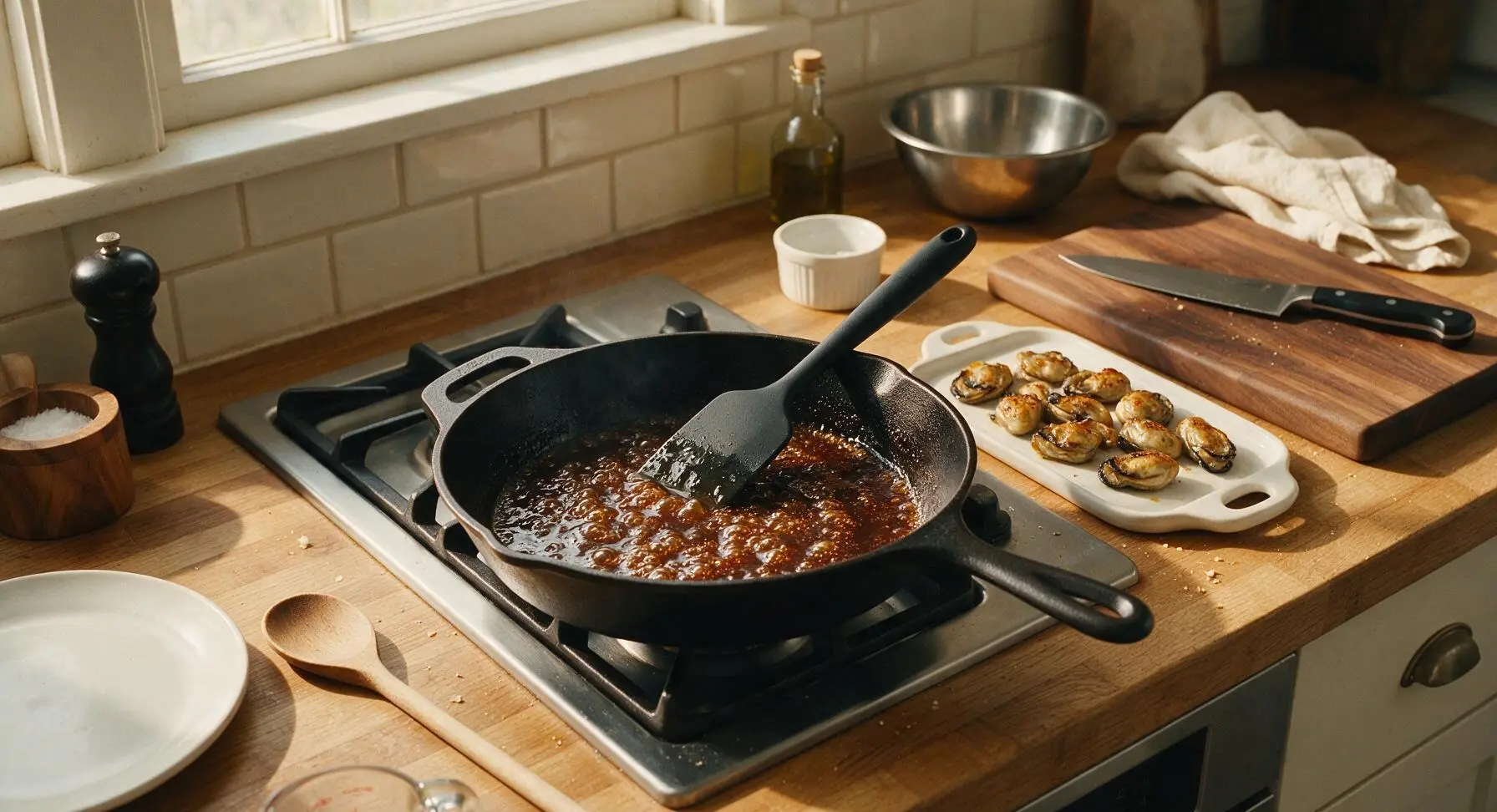
Step 6
step6:Reduce leftover marinade
7

Plate and garnish oysters

Arrange the seared oysters in a single overlapping line down the center of the speckled cream ceramic oval serving platter. Drizzle the thick, reduced bulgogi glaze evenly over the top of the oysters. Scatter the thinly sliced scallion greens, toasted white sesame seeds, and thin rings of seeded Fresno chili over the glazed oysters as garnish. Serve immediately while warm, before the oysters cool and lose their tender, plump texture.
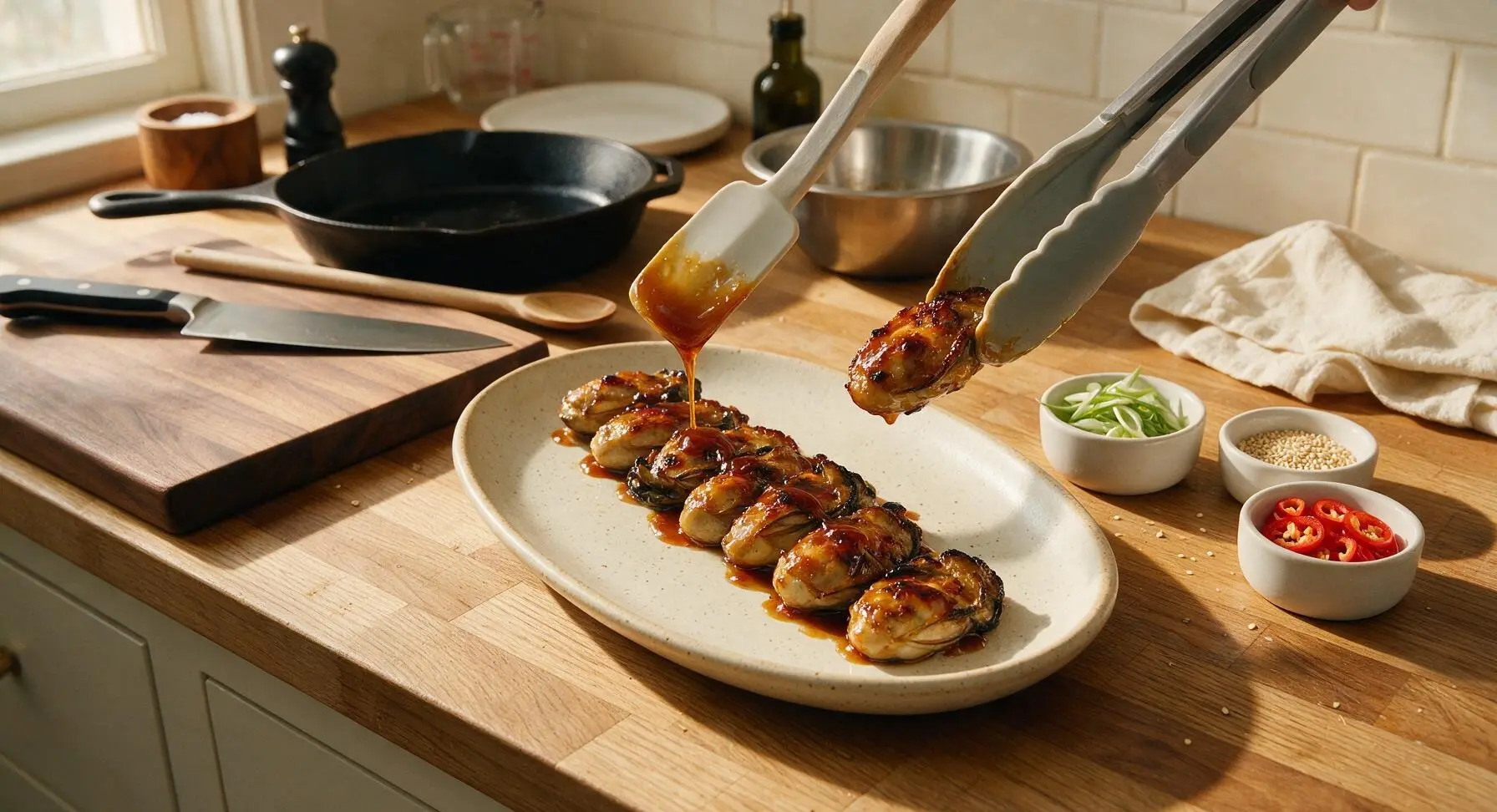
Step 7
step7:Plate and garnish oysters

Tips

1.Skip long marination times: Unlike beef bulgogi, which benefits from 2+ hours of marination to tenderize tough muscle fibers, oysters are delicate and will turn rubbery and mushy if left in the salty, enzyme-rich marinade for longer than 10 minutes. The short marination time is enough to infuse flavor without breaking down the oyster texture.
2.Dry oysters thoroughly before searing: Any excess surface moisture from the oysters or marinade will cause them to steam instead of sear in the hot pan, preventing the signature caramelized, slightly crisp edges that contrast with the soft, briny oyster center. Let excess marinade drip off fully before adding oysters to the skillet.
3.Work in small batches: Crowding the pan will drop the skillet temperature dramatically, leading to steamed, not seared, oysters. Cooking 8 oysters per batch leaves enough space between them for heat to circulate evenly, creating a perfect golden crust without overcooking.
✨ You May Also Like

Seafood
🍜 United States

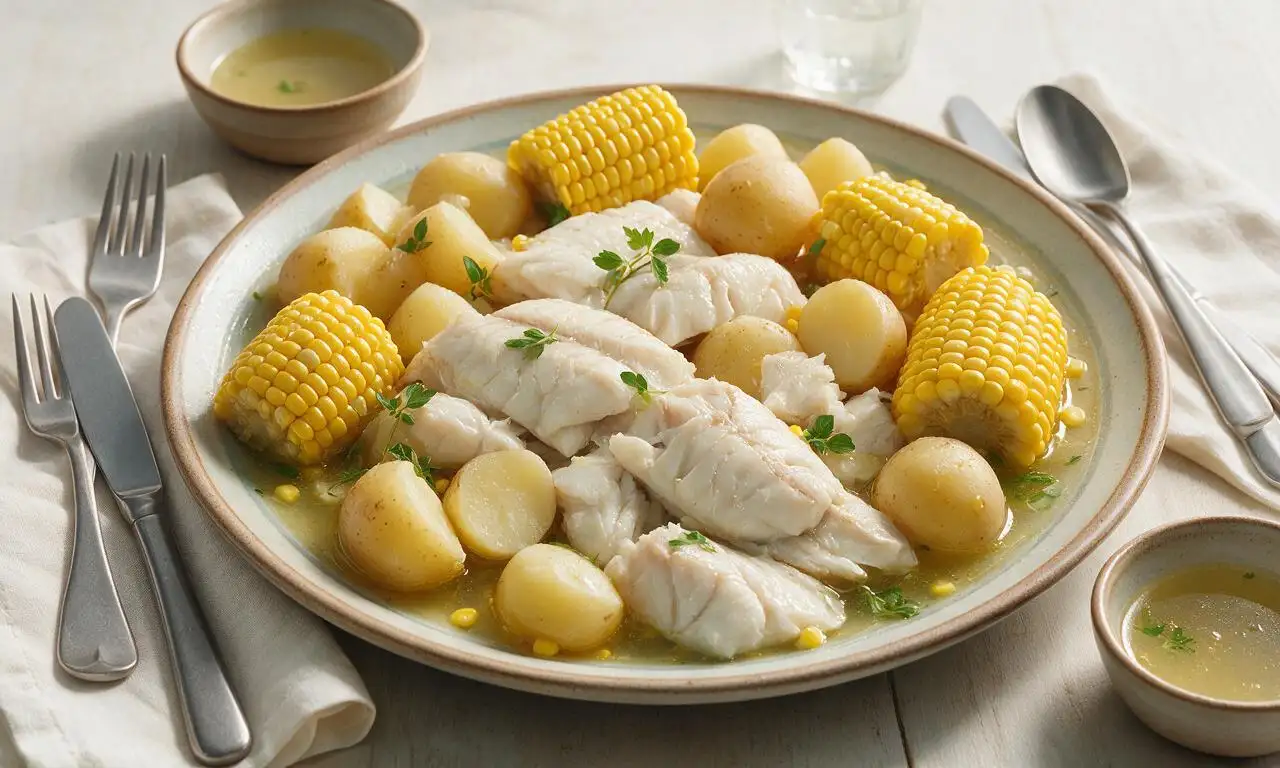
An iconic Door County, Wisconsin tradition of flaky boiled whitefish, tender potatoes, and sweet corn, cooked outdoors for casual, communal summer gatherings.

⏱️ 45 minuteSeafood ★ 4.7
Seafood
🍜 United States

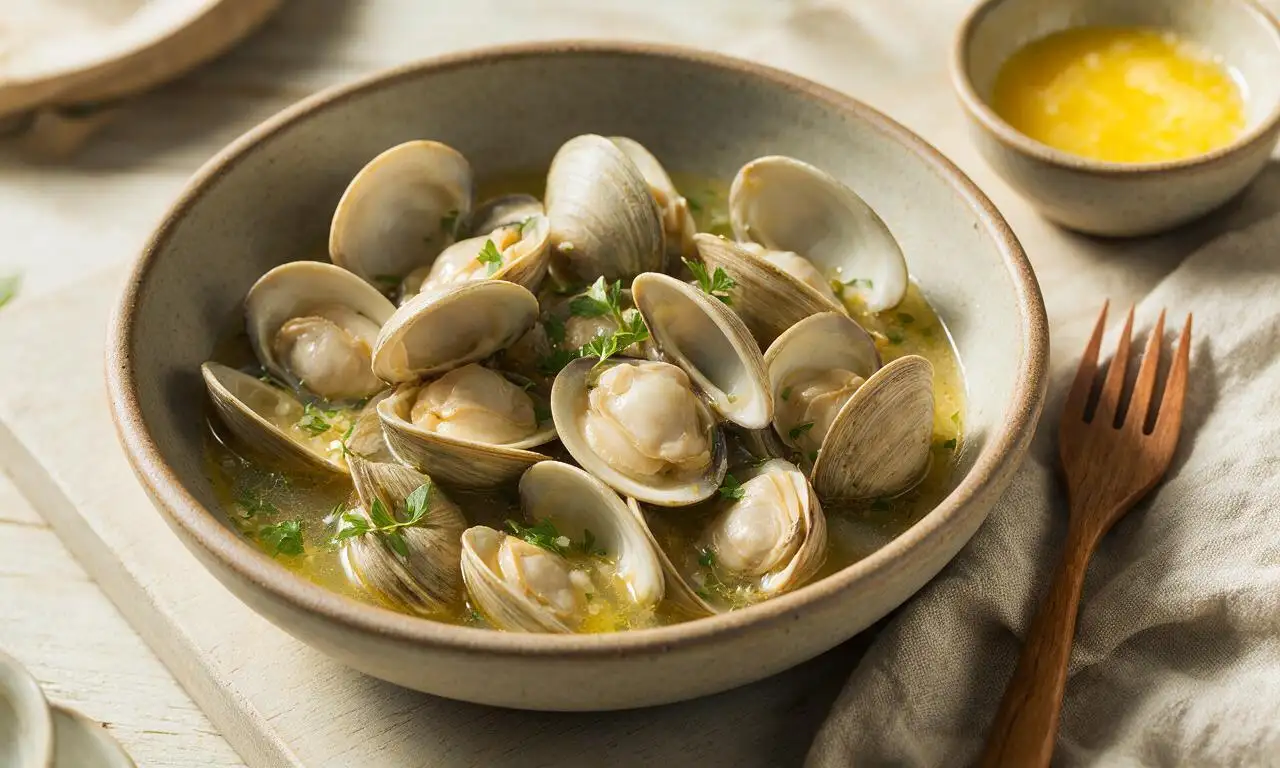
Tender, briny soft-shell clams steamed in garlicky white wine broth, served with warm broth and melted butter for dipping—classic coastal comfort food.

⏱️ 30 minuteSeafood ★ 4.7
Seafood
🍜 United States

Iconic zesty, savory spice blend from Maryland’s Chesapeake Bay, perfect for seafood boils, grilled fare, fries, and corn, made fresh without preservatives.

⏱️ 10 minuteSeafood ★ 4.9
Seafood
🍜 China

Tender, crisp, sweet blanched geoduck topped with fragrant sizzled ginger and scallion, a luxurious Cantonese dish highlighting the clam’s natural briny, delicate flavor.

⏱️ 30 minuteSeafood ★ 4.7
Seafood
🍜 United States

Succulent sweet crab legs coated in rich garlic butter, steamed to tender perfection for a juicy, indulgent seafood feast that requires minimal prep and cook time.

⏱️ 25 minuteSeafood ★ 4.7
Seafood
🍜 United States

A nostalgic chilled jellied seafood staple of 1950s American potlucks, loaded with tender shrimp, lump crab, crisp veggies, and bright creamy tang.

⏱️ 4 hours 2Seafood ★ 4.6

Oysters Bulgogi:Frequently Asked Questions

1.Can I use frozen oysters instead of fresh shucked ones for this recipe? ▾
You absolutely can, as long as you thaw them fully in the fridge overnight first and pat them very dry before marinating—excess moisture will prevent that nice caramelized sear. Skip saving frozen oyster liquor, as it tends to taste flat compared to fresh, and limit marinating time to 10 minutes max to avoid mushy oysters.
2.Why do I need to squeeze excess juice out of the grated Korean pear? ▾
Grated Korean pear acts as a natural tenderizer and adds subtle fruity sweetness, but its excess watery juice will thin out the bulgogi marinade and make seared oysters soggy instead of caramelized. Squeeze it firmly over a fine sieve until only soft, grated pulp remains to mix into your marinade for ideal texture.
3.How long should I marinate the oysters before cooking? ▾
Unlike beef bulgogi that benefits from long marination, oysters are extremely delicate—only marinate them for 8 to 12 minutes total. Any longer, and the salt and enzymes in the pear and soy will break down their tender flesh, turning them mushy and overly salty instead of plump and perfectly seasoned.
4.What do I do with the reserved oyster liquor from the shucked oysters? ▾
Don’t toss that briny, flavorful reserved oyster liquor! Strain it through a fine sieve to remove any bits of broken shell, then stir 1 to 2 tablespoons into your finished marinade for an extra punch of ocean umami. You can also freeze leftover liquor to add to seafood stews, stir-fry sauces, or savory rice dishes later.
5.Can I substitute regular pear if I can’t find Korean pear? ▾
You can substitute ripe Bosc or Anjou pear in a pinch, though they are slightly less sweet and juicy than Korean pear. Avoid very soft, mealy pears, add a tiny pinch of grated fresh ginger to mimic the pear’s subtle bright tenderizing note, and be extra diligent about squeezing out excess juice before adding to the marinade.
6.What’s the best pan to use to get that perfect caramelized sear on the oysters? ▾
Reach for a heavy-bottomed cast iron skillet or carbon steel pan for the best sear—these hold high, even heat without hot spots that can burn the sugary bulgogi marinade. Make sure the pan is fully preheated over medium-high heat before adding oysters, and cook in batches to avoid overcrowding, which causes steaming instead of searing.
7.Why use low-sodium soy sauce instead of regular? ▾
Oysters are naturally briny, so regular full-sodium soy sauce will easily make the final dish overly salty, masking their delicate ocean flavor. Low-sodium soy lets you control salt levels while still delivering that deep, savory umami base. If you only have regular soy on hand, cut it with 1 part water to 3 parts soy to mellow the salt content.
8.Can I cook this oyster bulgogi on an outdoor grill? ▾
You absolutely can! Thread marinated oysters onto presoaked wooden skewers or use a fine-mesh grill basket to prevent them from falling through grates. Cook over medium-high direct heat for 1 to 2 minutes per side, just until edges caramelize, and brush with a little extra marinade halfway through for that classic sticky bulgogi crust.
9.How do I keep the oysters from getting rubbery when cooking? ▾
The two biggest culprits of rubbery oysters are over-marinating and overcooking. Stick to the 8–12 minute marination window, and sear oysters for only 45 to 60 seconds per side over high heat. They’re done when edges turn golden and flesh is just opaque all the way through, with no translucent raw spots in the center.
10.Is light brown sugar necessary, or can I swap it for another sweetener? ▾
Light brown sugar adds a subtle molasses depth that pairs perfectly with sesame and soy, but you can swap it for an equal amount of coconut sugar or raw turbinado sugar if needed. Avoid using honey or maple syrup as a 1:1 swap, as they burn much faster at high heat and leave a bitter, scorched taste on seared oysters.
11.What are the best side dishes to serve with oyster bulgogi? ▾
This rich, umami dish pairs beautifully with classic Korean sides: fluffy steamed short-grain rice, tangy quick-pickled daikon and carrot, crisp kimchi, and lightly blanched spinach tossed with sesame and garlic. A small squeeze of fresh lime right before serving cuts through richness and makes the briny oyster flavor pop even more.
12.Do I need to rinse the shucked oysters before marinating them? ▾
Give shucked oysters a very quick, gentle rinse under cold running water only if you see visible bits of broken shell stuck to them, then pat them completely dry with paper towels. Don’t soak them or rinse aggressively, as that will wash away their natural briny flavor and dilute the reserved oyster liquor you’ll want for the marinade.
13.Can I make this dish ahead of time for a dinner party? ▾
Oysters bulgogi is best served immediately after searing, as the oysters will turn rubbery and the caramelized marinade will get gummy as it sits. You can prep the marinade fully 2 to 3 days ahead and store it in an airtight container in the fridge, but only marinate and sear the oysters right before you plan to serve guests.
14.The recipe calls for toasted sesame oil—can I use regular untoasted sesame oil? ▾
Stick with toasted sesame oil for this recipe, as it has that deep, nutty, warm aroma that is iconic to bulgogi flavor. Untoasted (plain) sesame oil has a very mild, neutral flavor that won’t add that signature nuttiness, and it lacks the rich, fragrant finish toasted oil brings when drizzled over hot seared oysters.
15.How do I know when the pan is hot enough to sear the oysters? ▾
Preheat your pan over medium-high heat for 3 to 4 minutes first, then do a quick test: drop a single tiny drop of marinade into the pan. If it sizzles immediately and starts to caramelize in 2 to 3 seconds, the pan is ready. If it sits and bubbles slowly, give the pan another minute or two of preheating to avoid soggy, steamed oysters.
16.Can I add vegetables to this oyster bulgogi like I do with beef bulgogi? ▾
Absolutely! Thinly sliced scallions, minced garlic, julienned carrot, and sliced shiitake mushrooms all work beautifully, but cook the vegetables first in the hot pan for 1 to 2 minutes before adding marinated oysters. Veggies release moisture as they cook, so pre-cooking them prevents soggy oysters and a diluted caramelized marinade.
17.What should I do if my marinade is too thin? ▾
If your marinade feels thin after mixing, it’s almost always because you didn’t squeeze enough excess juice out of the grated Korean pear. Fix this quickly by stirring in a tiny pinch of cornstarch (no more than 1/4 teaspoon per 1/2 cup of marinade) to help it thicken and cling to oysters as they sear, creating that perfect sticky bulgogi crust.
18.Is this dish spicy? I don’t tolerate heat well. ▾
The base oyster bulgogi recipe as written is not spicy at all—it’s balanced sweet, savory, nutty, and briny with no added chiles. If you’re serving guests who like heat, offer a small side of gochugaru (Korean red pepper flakes) or gochujang mixed with sesame oil for people to drizzle on their own portions to customize heat levels.
19.Can I use canned oysters for this recipe if fresh aren’t available? ▾
Canned oysters are not ideal for this recipe, as they are pre-cooked, very soft, and have a muted, slightly metallic brininess that won’t hold up to searing or the bold bulgogi marinade. If fresh and frozen oysters are both out of reach, save this recipe for later—canned oysters work far better in dips, stews, or fritters than this seared preparation.

Comments (4)

2 days ago

OMG this oysters bulgogi is a total game changer! I made it for my family dinner last night and even my picky 10 year old who swears he hates seafood went back for seconds. The sweet-savory marinade cuts the brininess of the oysters perfectly, and 8 minute cook time? Perfect for busy weeknights. Will absolutely be making this for our next neighborhood potluck!

yesterday

Wait how did you keep the oysters from getting rubbery? I tried a similar recipe once and they turned super chewy, I’m nervous to mess up good oysters lol

yesterday

Great question! The key is to make sure your pan is screaming hot before adding the oysters, and don’t stir them constantly—let them sear for 1 minute per side max before tossing in the remaining marinade. That’ll keep them plump and tender, no rubbery texture!

3 days ago

Took me a minute to get the marinade ratios right the first time (I may have overdid it with the gochugaru, oops) but WOW once I dialed it in? SO good. I served these over buttered rice with quick pickled cucumbers on the side and my roommate said it’s better than the Korean spot we hit up downtown. Medium difficulty is spot on, wouldn’t recommend for total newbies but totally doable if you’ve cooked seafood a couple times before.

2 days ago

So glad you enjoyed it even with the extra gochugaru kick! A little extra heat never hurts — we love serving these with pickled veggies too, it balances the richness of the marinade perfectly. Great call!

1 week ago

Added this to my weekly meal prep rotation! I pre-portioned the marinated oysters and sliced green onions and bell peppers ahead of time so all I have to do is toss them in the pan for 8 minutes when I get home from work. So much faster than waiting for takeout, and way less greasy. Only quick tip for other folks: pat the oysters dry with paper towels first before marinating to get a nice golden sear.

2 hours ago

Made this for my anniversary date night in and my partner was obsessed! We usually do steak for special occasions but wanted to switch it up, and this felt so fancy even though it only took 8 minutes to cook. 10/10, will be pulling this out for dinner parties from now on.

30 minutes ago

Oh this is such a good date night idea! Did you serve it with anything else? I’m making this for my boyfriend’s birthday next week and need side ideas!