
poached chicken breast
intro
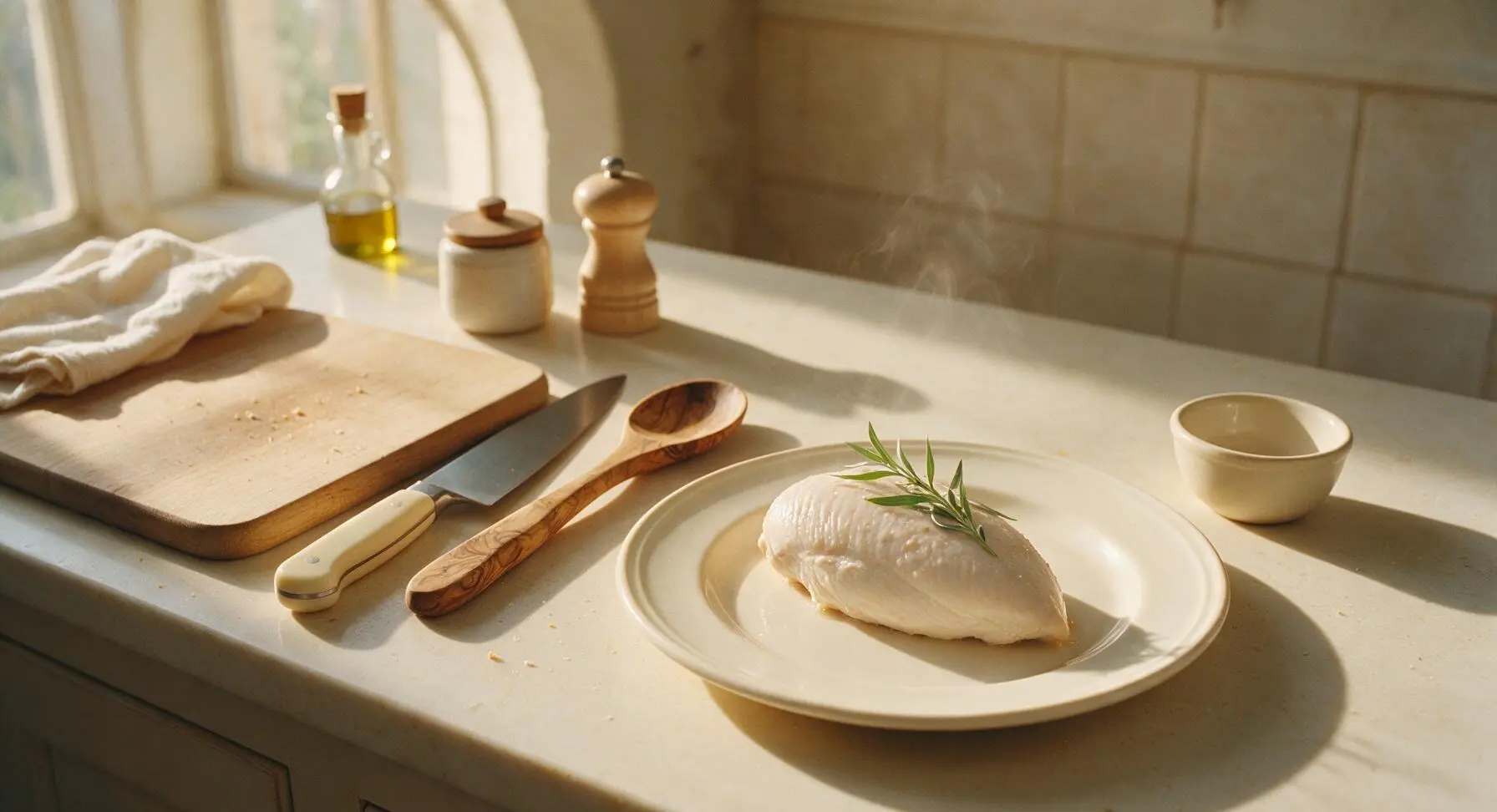
Tender, juicy, never-rubbery poached chicken breast cooked gently for even doneness. A versatile high-protein staple for salads, sandwiches, grain bowls, or simple serving.
Ingredients
Steps
Prep chicken for even cooking
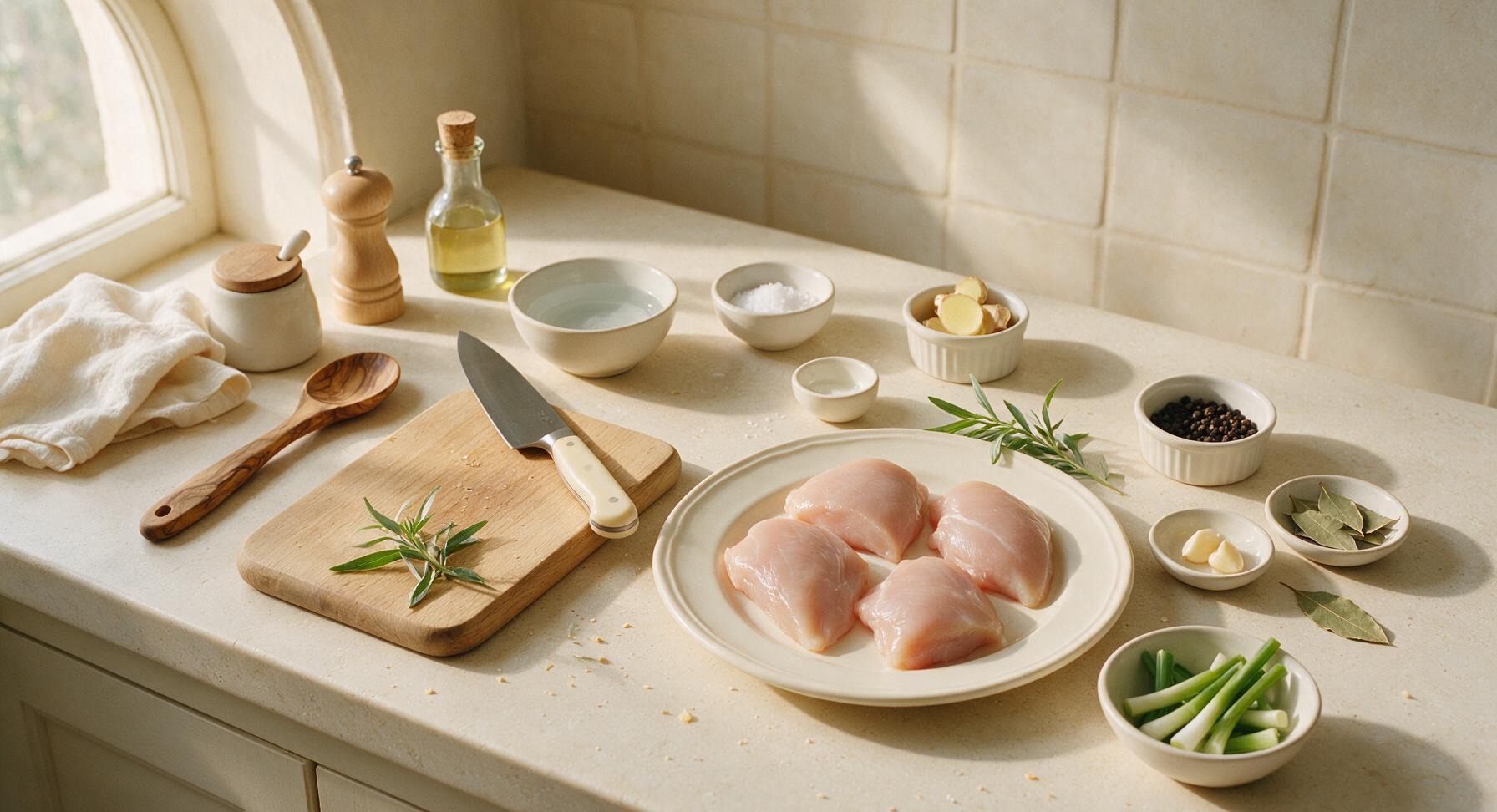
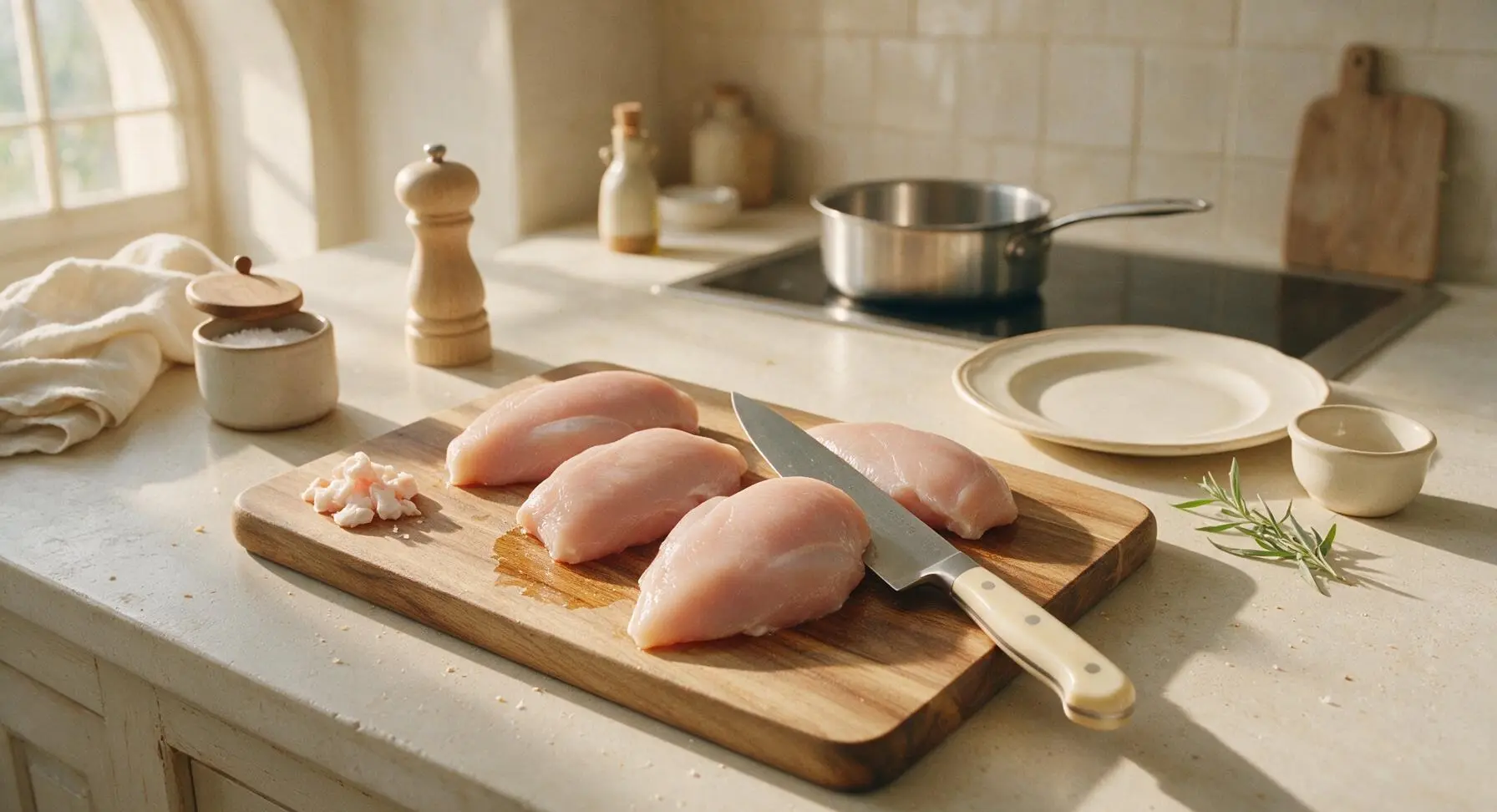
Place the four 150g boneless, skinless chicken breasts on the acacia wood cutting board, pulled to the center of the counter. Use the chef's knife to trim any excess loose fat or tough silver skin from the chicken. If any breast is thicker than 2.5cm at its widest point, gently pound the thick end with the flat of the knife blade to create a uniform 2.5cm thickness across every breast—this eliminates overcooked thin edges and undercooked thick centers. Pat the chicken completely dry with a corner of the sky-blue linen towel.
Build aromatic poaching liquid
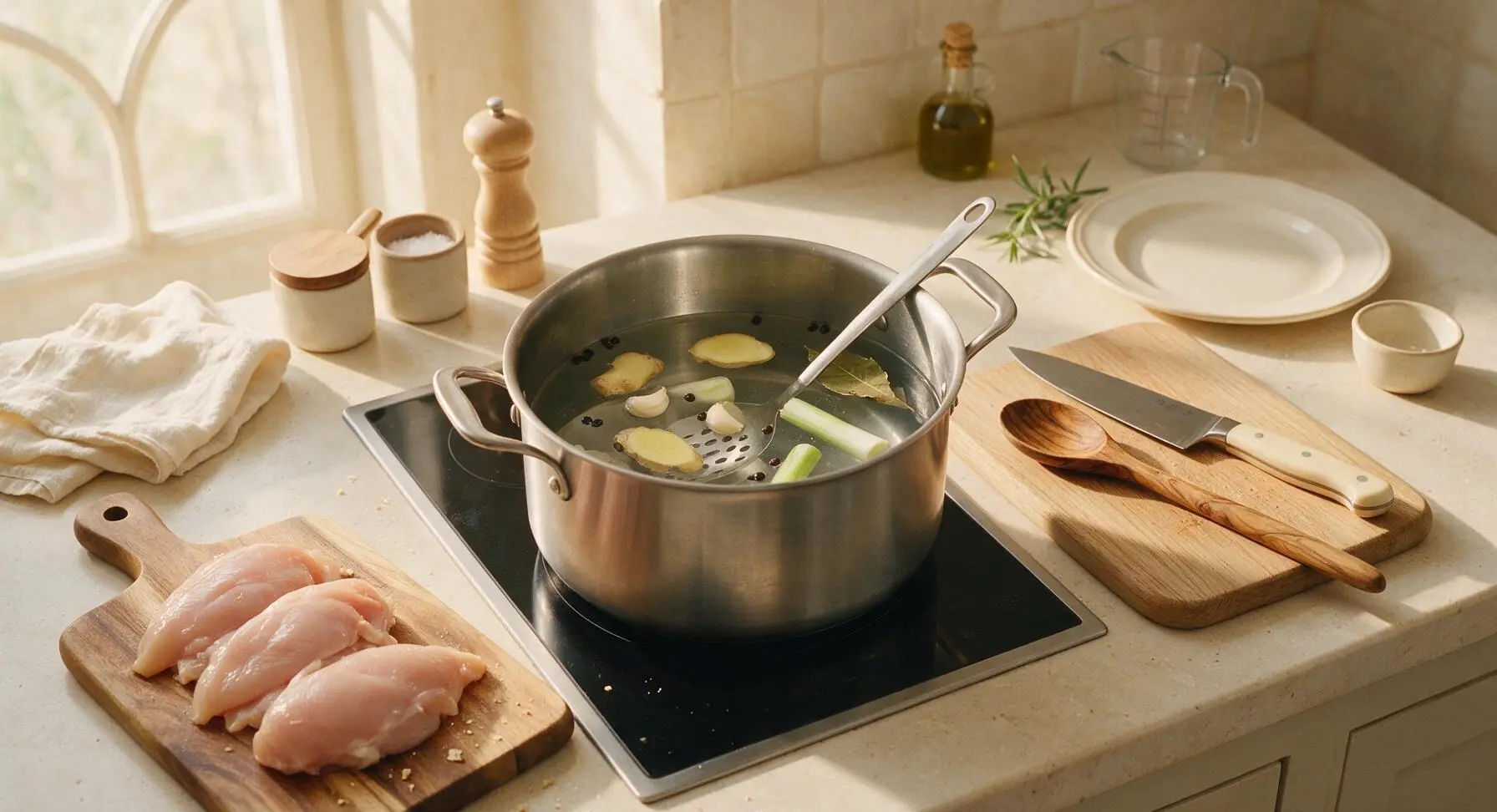
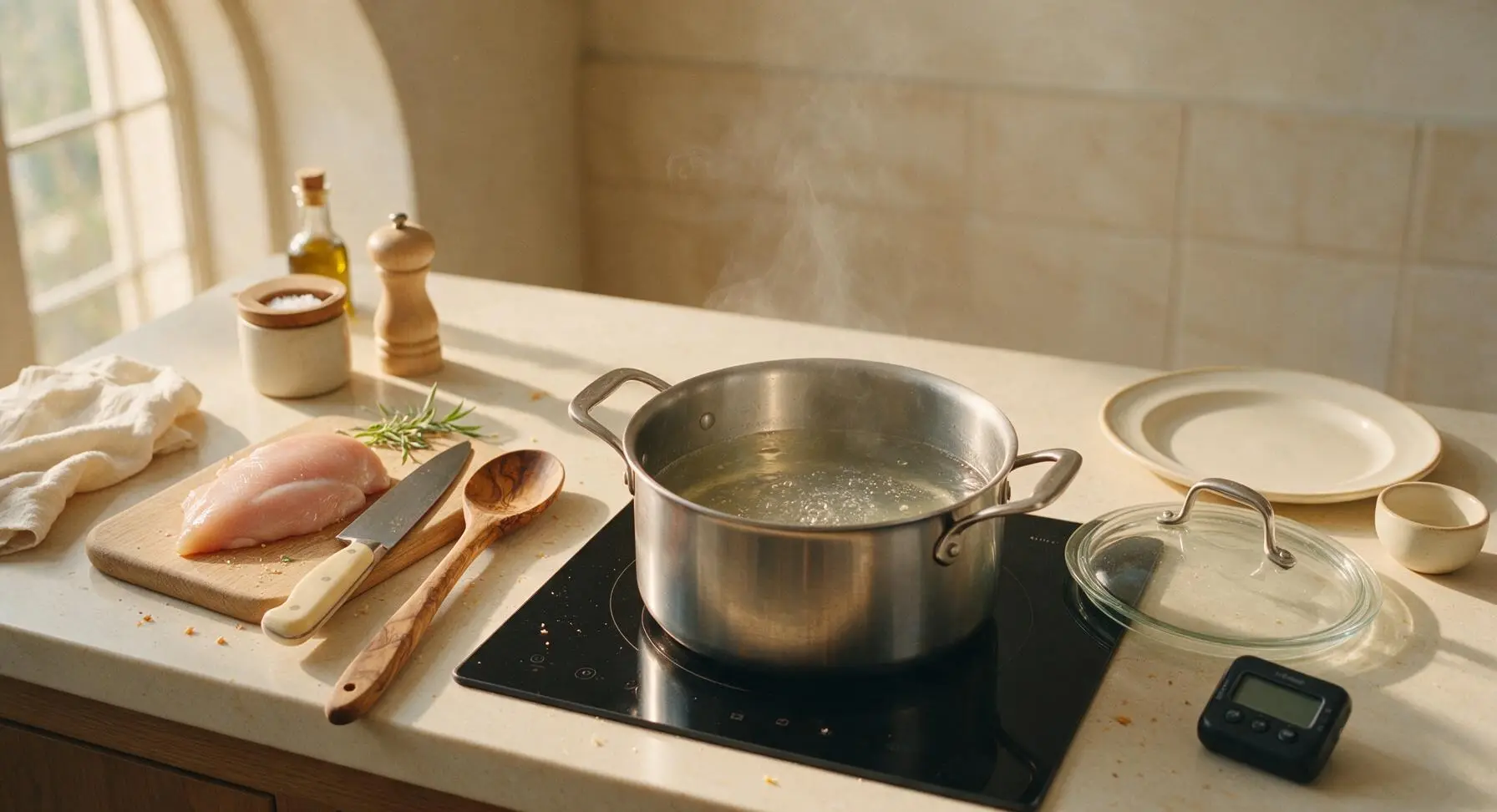
Move the acacia wood cutting board with prepped chicken to the front left of the counter, and set the 4L stainless steel stock pot in the center of the induction cooktop. Pour 2 liters of cold water from the glass measuring cup into the pot, then add 1 tablespoon kosher salt, 3 thick ginger slices, 2 cut scallion lengths, 2 crushed garlic cloves, 1 teaspoon whole black peppercorns, and 1 dried bay leaf. Stir gently with the stainless steel slotted spoon to dissolve the salt in the water, then set the empty measuring cup at the far back right of the counter next to the olive oil bottle.
Heat liquid to gentle simmer
Turn the induction cooktop to medium heat, warming the poaching liquid until it reaches a bare simmer (85C/185F), where tiny pinprick bubbles just start to rise from the bottom of the pot with no rolling, roiling boil. Adjust heat as needed to hold this temperature—a rolling boil will cause chicken muscle fibers to seize and turn rubbery. Set the glass lid on the counter next to the pot while heating.
Lower chicken into liquid
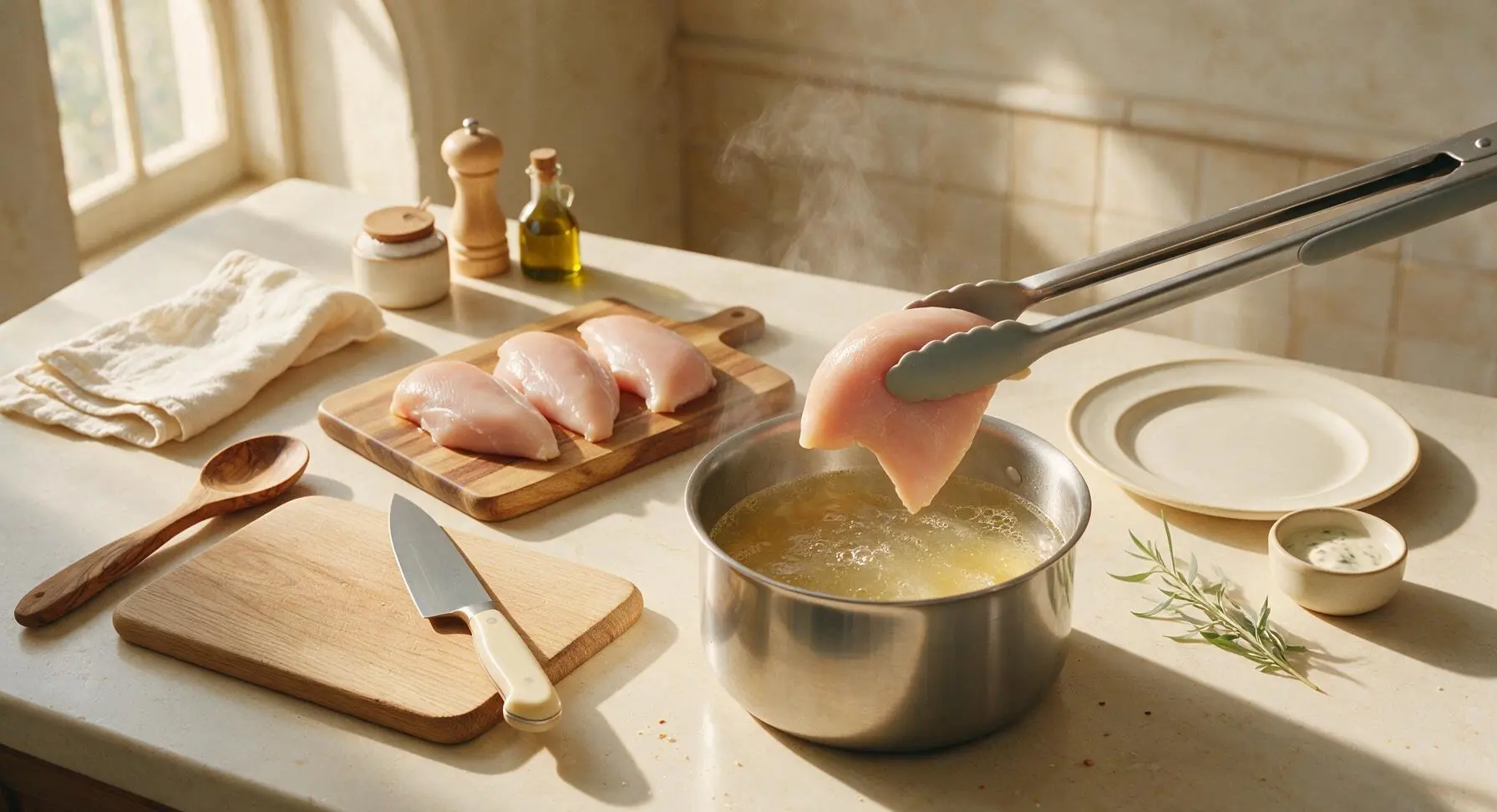
Once the bare simmer is reached, use the silicone-tipped kitchen tongs to gently lower each chicken breast one at a time into the poaching liquid, ensuring every breast is fully submerged. If liquid does not cover the chicken by at least 1cm, top up with a small amount of extra cold water to prevent exposed, dry chicken.
Steep chicken off heat
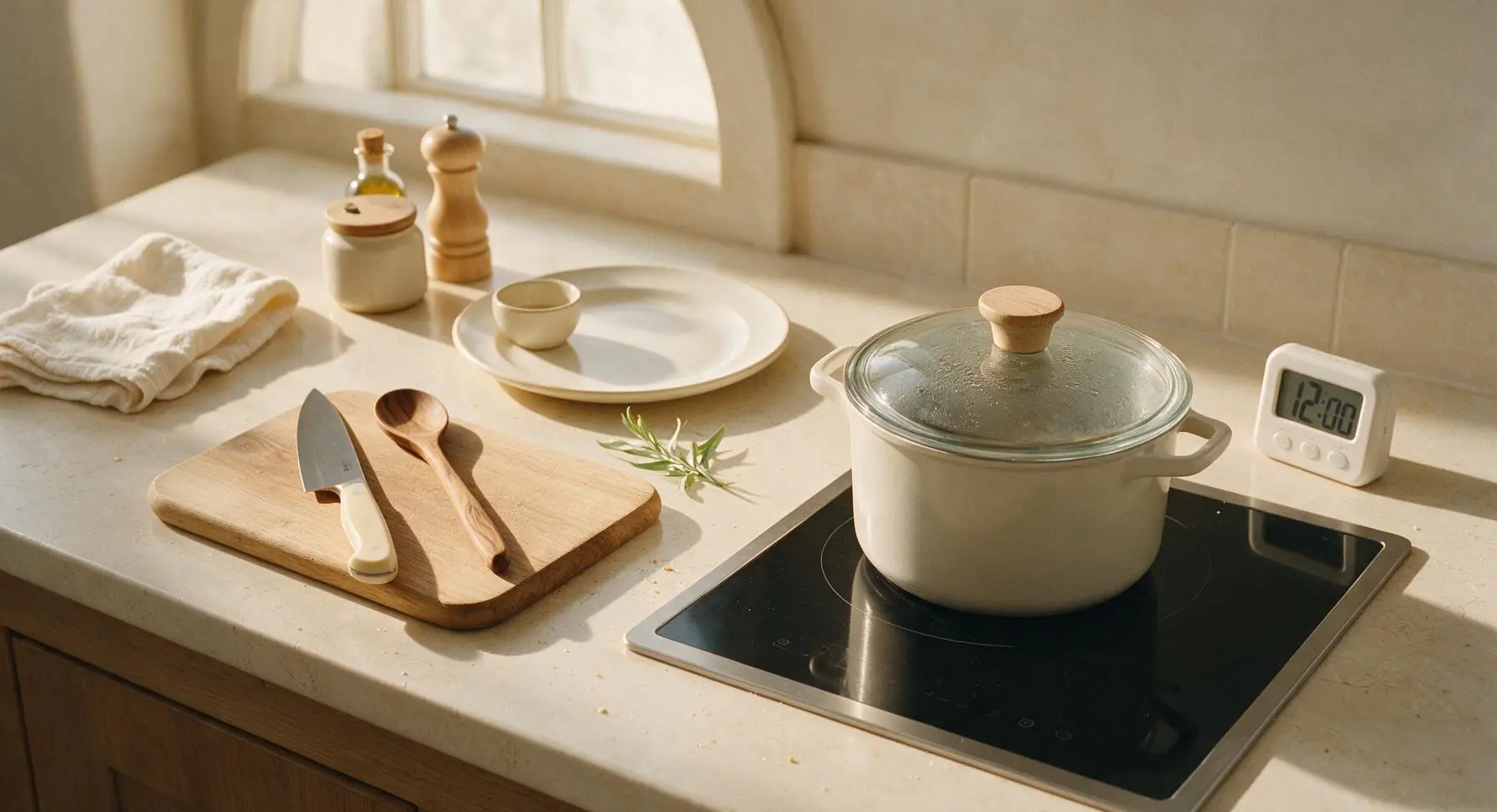
Wait 1 minute for the liquid to return to a bare simmer after adding all chicken, then immediately turn off the induction cooktop, cover the pot tightly with the glass lid, and set the digital kitchen timer for 12 minutes. Do not lift the lid during steeping—trapped gentle steam cooks the chicken evenly without overheating the outer protein layers.
Verify doneness accurately
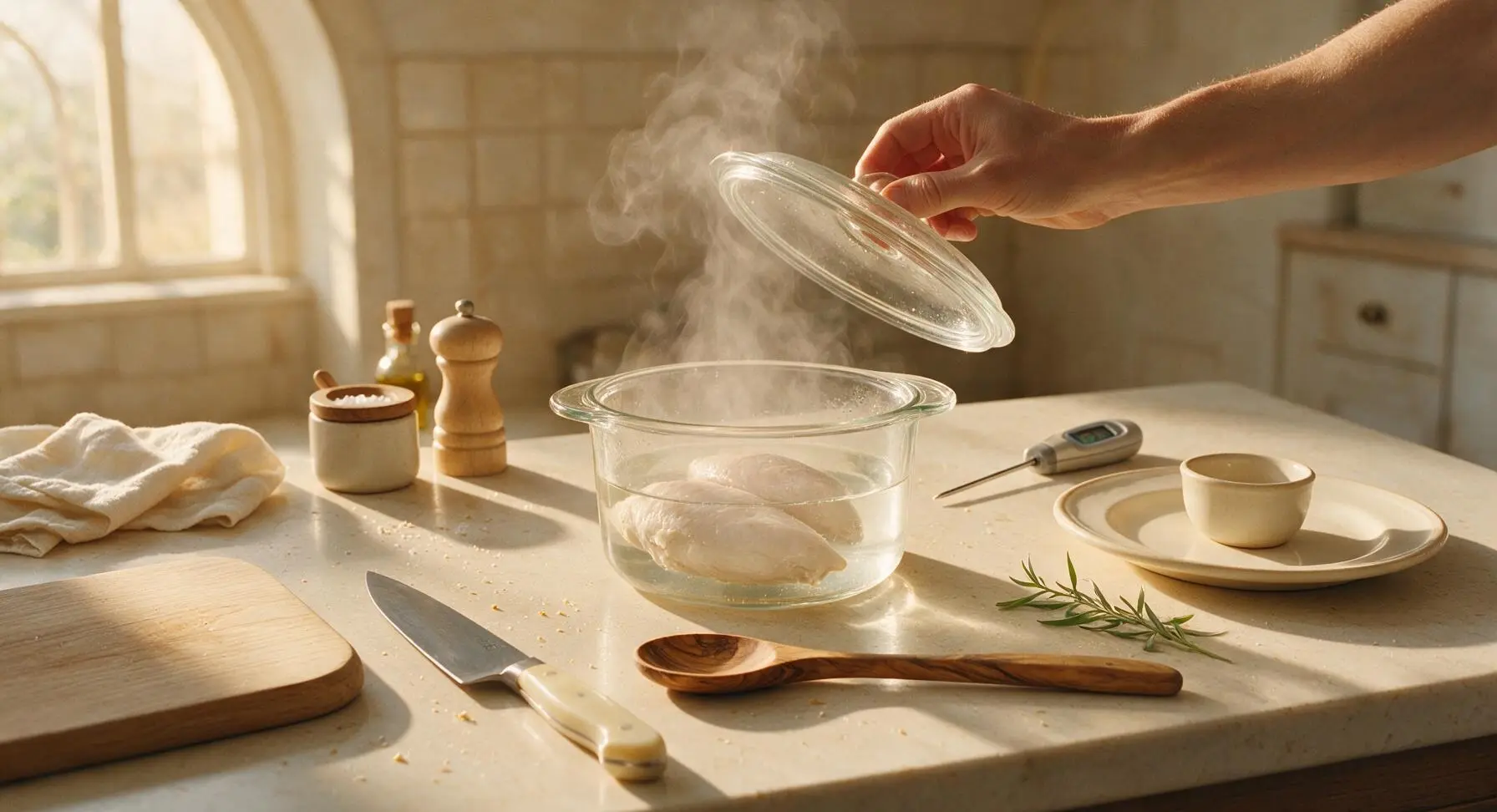
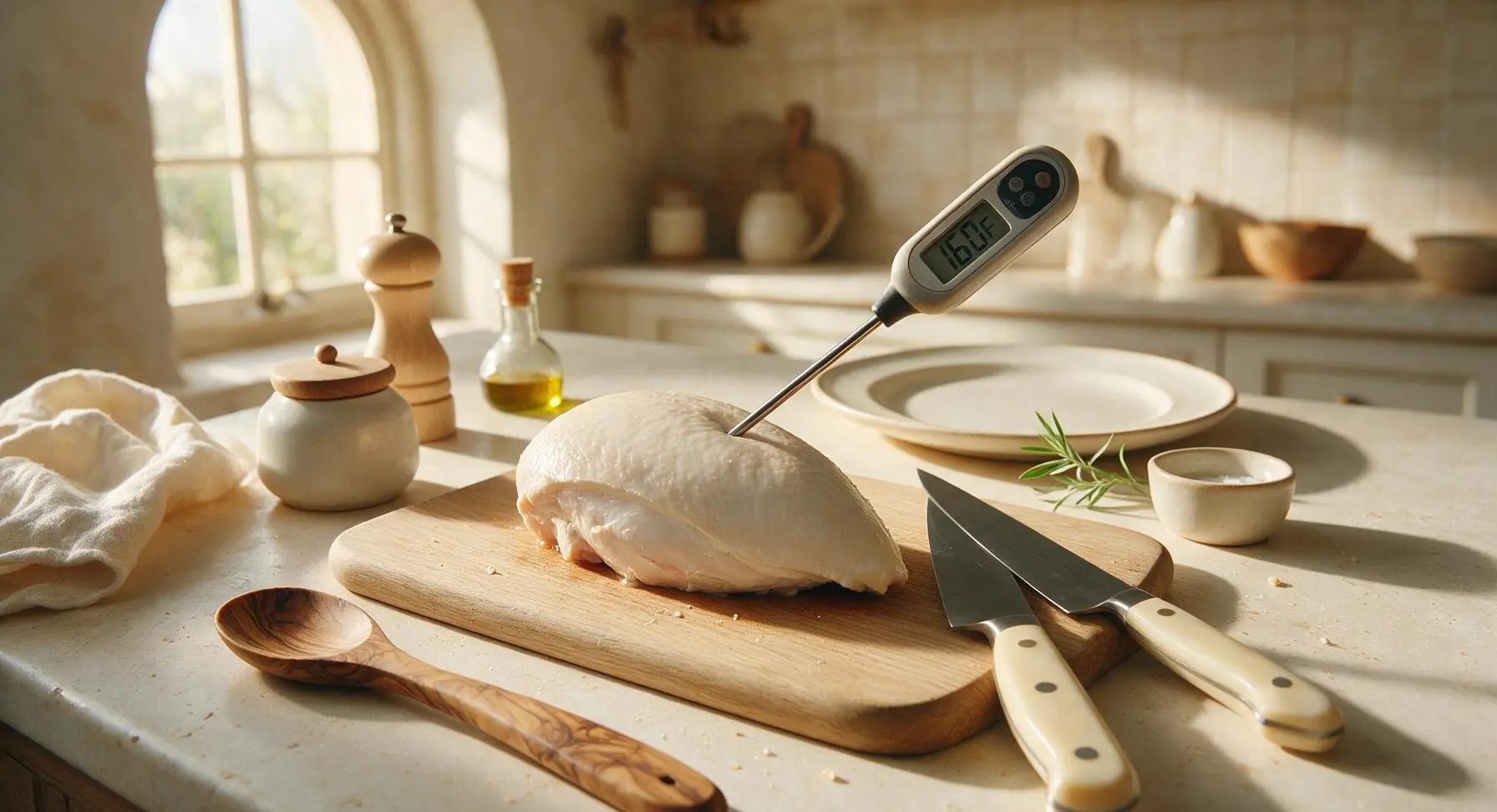
After the 12 minute timer goes off, tilt the glass lid away from your face to avoid steam burns as you lift it. Insert the instant-read meat thermometer into the thickest part of the largest chicken breast, aiming for the very center. The temperature should read 71C/160F—carryover cooking will raise the internal temp to the food-safe 74C/165F as the chicken rests. If temp is below 68C/155F, replace the lid and steep 2 more minutes before rechecking.
Let chicken rest briefly
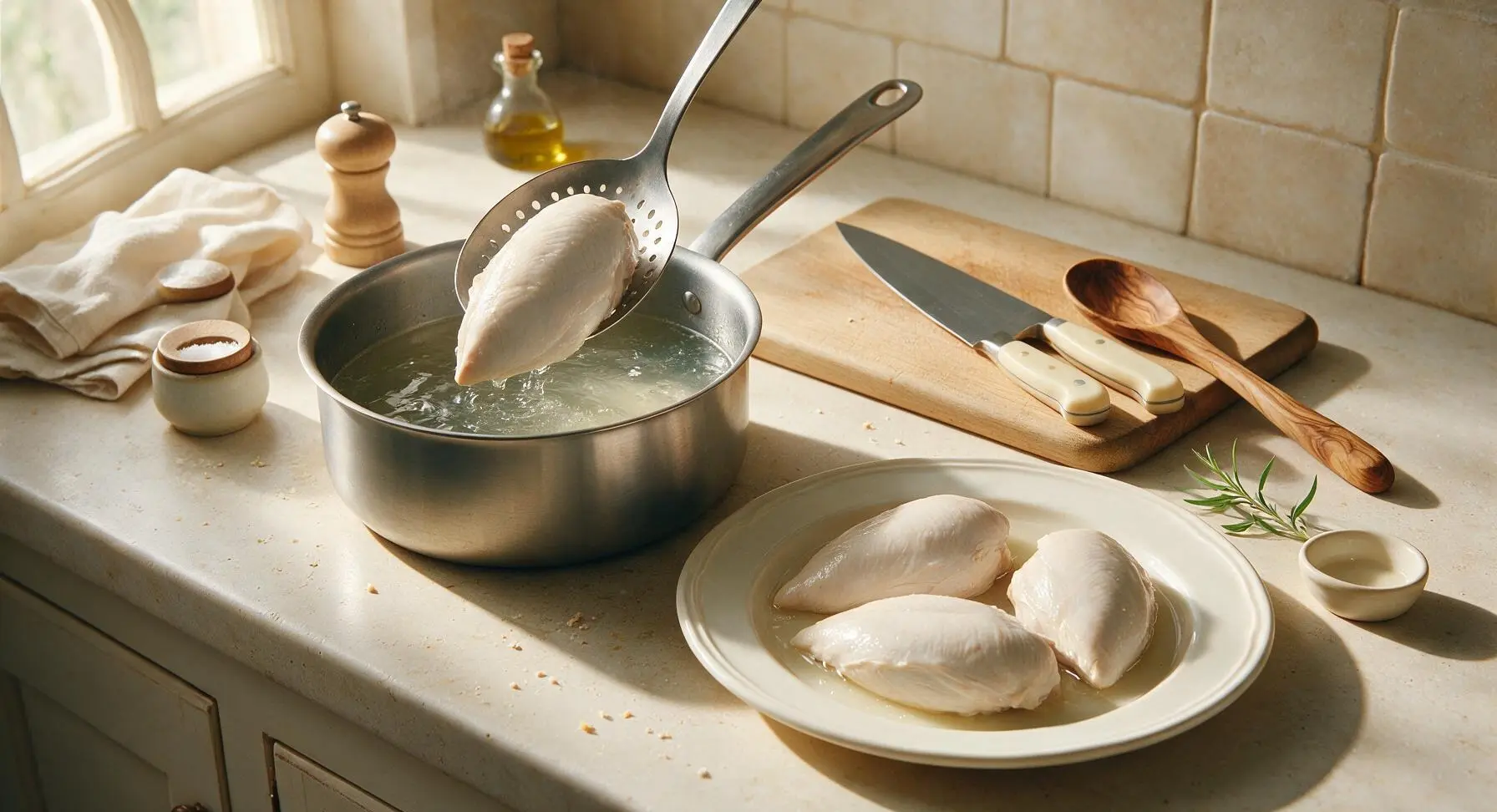
Once the correct temperature is confirmed, use the slotted spoon to lift all chicken breasts out of the poaching liquid, transferring them directly to the matte off-white ceramic dinner plate in its fixed front-right position. Let the chicken rest for 5 minutes at room temperature to allow muscle fibers to relax and reabsorb juices—this prevents juice from running out when slicing. Do not rinse chicken under cold water unless you plan to use it for cold salads, as this washes away savory flavor.
Slice against the grain
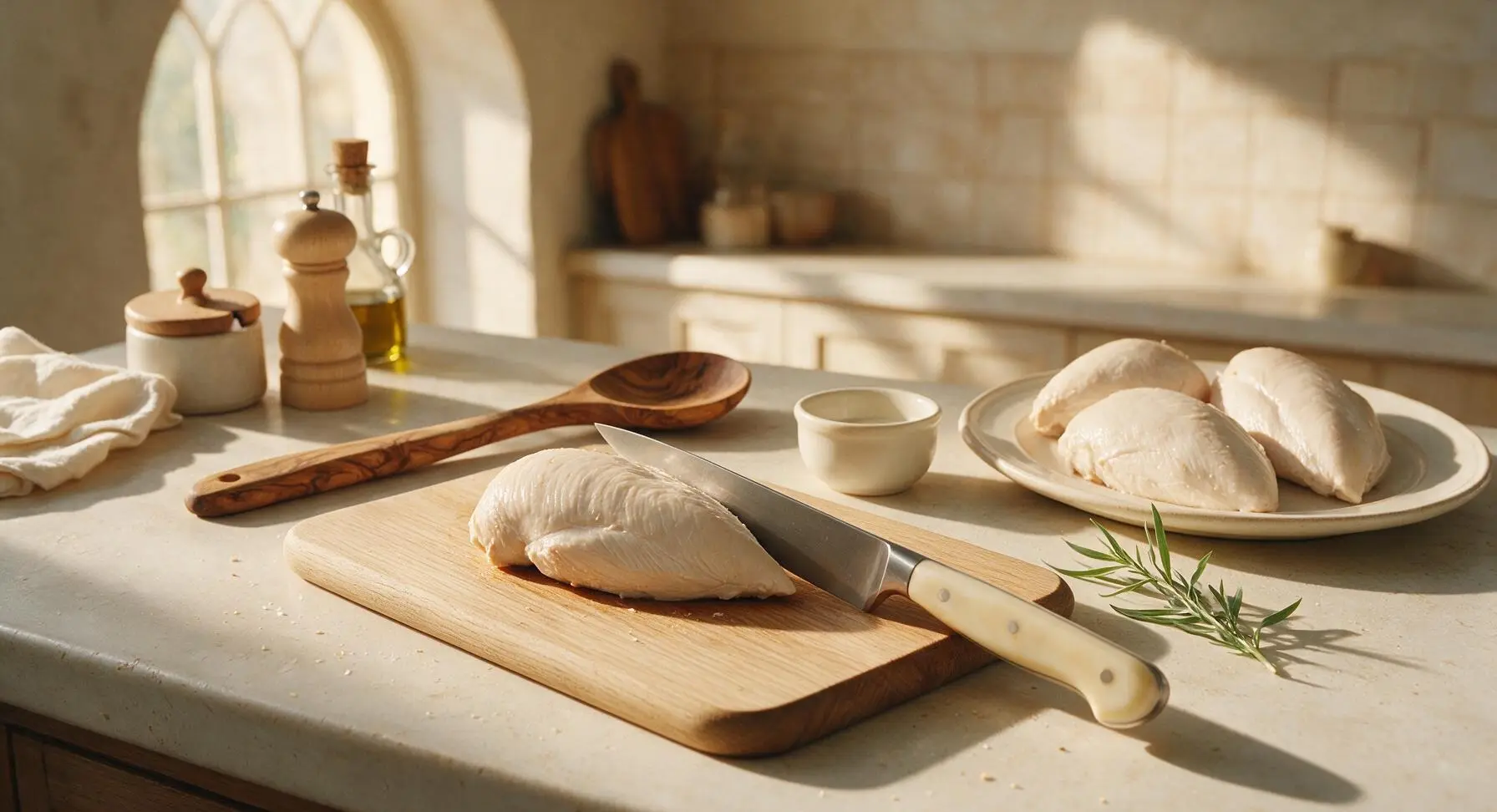
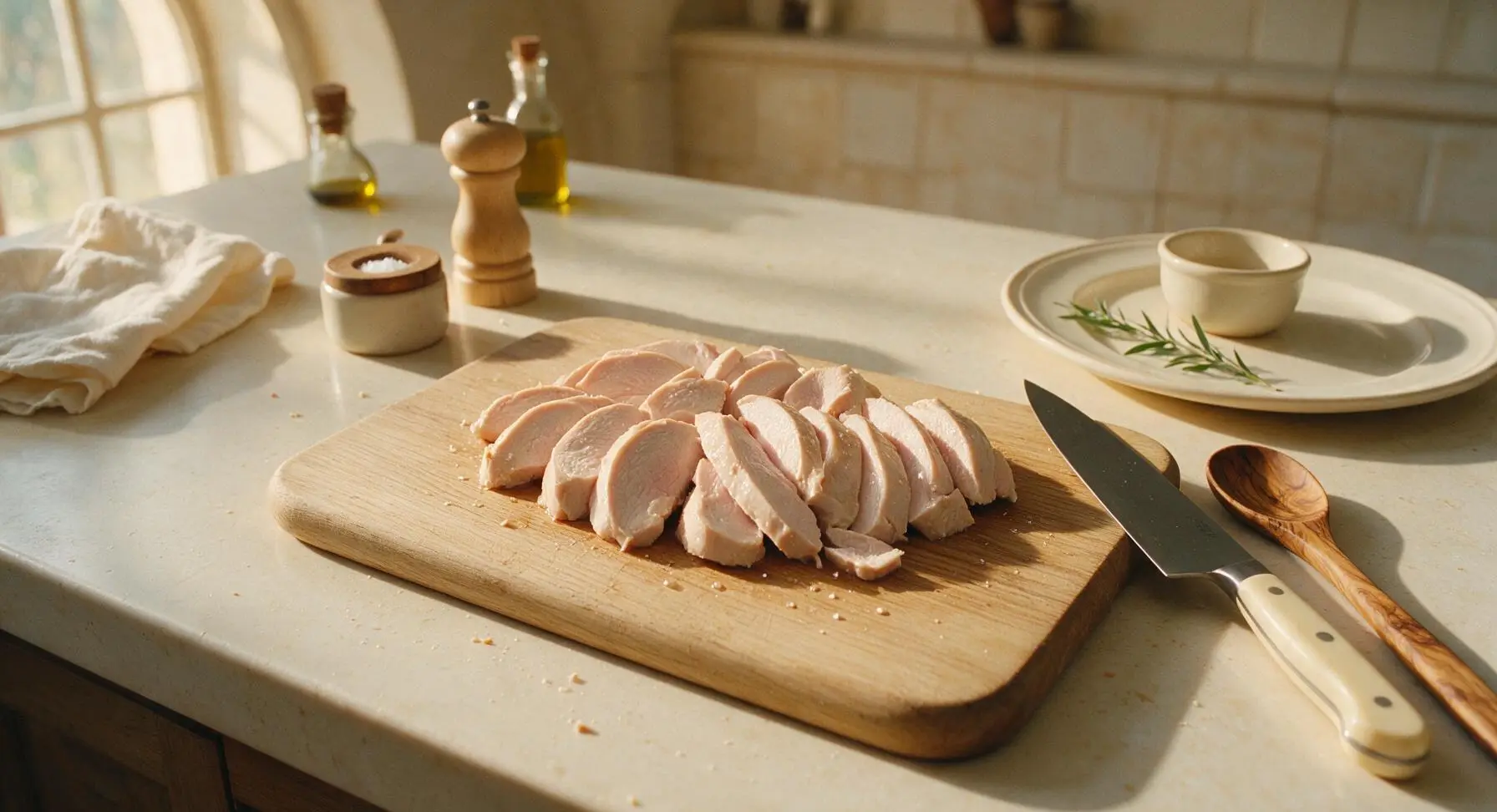
After resting, transfer the chicken breasts one at a time back to the acacia wood cutting board at center counter. Use the chef's knife to slice the chicken into 1cm thick slices, cutting perpendicular to the direction of the visible muscle fibers (against the grain) for maximum tenderness. Arrange the sliced chicken back on the serving plate, top with a small sprig of fresh thyme plucked from the terracotta pot, and serve.
Tips
2.Don’t skip the 5-minute rest: Just like roasted meats, chicken muscle fibers contract when hot, pushing juice toward the center of the cut. Resting lets fibers relax and reabsorb moisture, so juice stays in the meat instead of pooling on your plate when sliced.
3.Save the leftover poaching liquid: Strain out the aromatics to use as a light, flavorful chicken stock for soups, cooking grains, or making pan sauces. It stores for 3 days in the fridge or 3 months in the freezer, cutting down on future food waste.
OMG this is a total game changer! I’ve been making dry, rubbery poached chicken for my weekly meal prep for literal years and this method gave me perfectly juicy breasts every single bite. I tossed a little dill and lemon in the poaching liquid and it was chef’s kiss. Even my picky 7 year old asked for seconds at dinner last night!
I was skeptical poached chicken could be this good, ngl. I usually smoke or grill all my chicken but I needed something lighter for salad toppings for our neighborhood potluck and this did NOT disappoint. Everyone was asking how I kept it so moist, I sent the recipe link to half the block lmao.
SO easy and SO good! I’m a total beginner living in the dorms and I made this on my tiny hot plate in 15 minutes exactly like the recipe said. No fancy equipment needed, I just used a regular pot and it came out perfect. Put it on a wrap with hummus and veggies for lunch, will be making this every week for sure.
Tried this last night for family dinner and man, it’s a keeper. I work 10 hour shifts so 15 minute cook time is *chef’s kiss* for weeknights. Only thing is I overcooked mine a tiny bit because I got distracted helping my kid with math homework, oops. Even then it was still juicier than any baked chicken I’ve made before.
I’ve tried so many poached chicken recipes over the years that promised juicy results and left me with sad, stringy meat, so I went into this with low expectations. HOLY COW this works! I used the chicken for chicken salad for my teacher work luncheon and three people asked for the recipe. The tip about not boiling the water the whole time is the real secret, I think.
My mom used to make poached chicken when I was a kid but she always boiled it to death and I thought I hated it until I tried this recipe. It’s so tender, I shredded it and put it in chicken noodle soup this weekend and it was just perfect. Reminded me of my grandma’s cooking, that’s the highest compliment I can give!
This is my new go-to for post-workout protein! No more choking down dry chalky chicken breast to hit my macros. I season the poaching liquid with garlic powder, paprika, and a little onion powder and it has so much flavor on its own, I don’t even need sauce. 10/10, macros tracked, gains incoming.
Wait, why did no one tell me poached chicken could taste this good?? I usually eat tofu but my partner wanted chicken for dinner so I gave this a shot and I might actually make this for myself even when he’s not home. It’s so light but still filling, I ate mine over arugula with a little parmesan and it was *chef’s kiss*. Only note: I added a couple smashed garlic cloves to the water, no regrets.
Made this for our weekly Sunday dinner with my extended family last weekend, I used the poached chicken for chicken and dumplings and everyone raved about how tender the chicken was. I was worried it wouldn’t have enough flavor to hold up in the dumplings but it was perfect. The 15 minute cook time meant I had more time to visit with my grandkids instead of slaving over the stove, which is always a win.
I’m still learning how to cook now that we’re married and I’ve messed up so many chicken recipes it’s become a running joke with my husband. This is the FIRST chicken breast recipe I’ve made that didn’t come out dry or burnt! He told me it tasted like restaurant quality, I felt so proud. Will absolutely be adding this to our regular weeknight rotation.
This recipe is so budget friendly! Chicken breast is usually on sale at my grocery store for super cheap and I used to avoid buying it because I could never cook it right, but this method is foolproof. I made a big batch on Sunday and used it for tacos, salads, and pasta all week, no food waste, no sad dry chicken. Saved me so much money on takeout this week!
I’m 72 years old and I’ve been cooking chicken every which way for most of my life, and I have to say this method is just top notch. I used to poach chicken for my babies when they were little and I forgot how tender it gets when you don’t rush it. I made this for my great-grandson’s birthday party last weekend, cut it up into little nugget sized pieces with a side of honey mustard, and all the kids devoured it. My granddaughter asked for the recipe, I told her I found it right here!
First time ever poaching chicken, first time I haven’t given myself food poisoning from undercooked chicken OR made it so dry it’s basically jerky. Win win! The timing instructions were so easy to follow, I used a meat thermometer just to be safe and it hit 165 exactly when the recipe said it would. Piled it on a sandwich with mayo and dill pickles, 10/10 would make again.
I make a big batch of this every single Sunday for my kids’ school lunches all week. I shred it up, toss a little BBQ sauce on some, ranch on others, and put it in wraps or on slider buns, and I never have to fight with them to eat their lunch. It’s so much healthier than the processed lunch meat I used to buy, and it saves me so much time during the crazy morning rush. Total lifesaver for busy sports moms!