
pomodoro sauce
intro
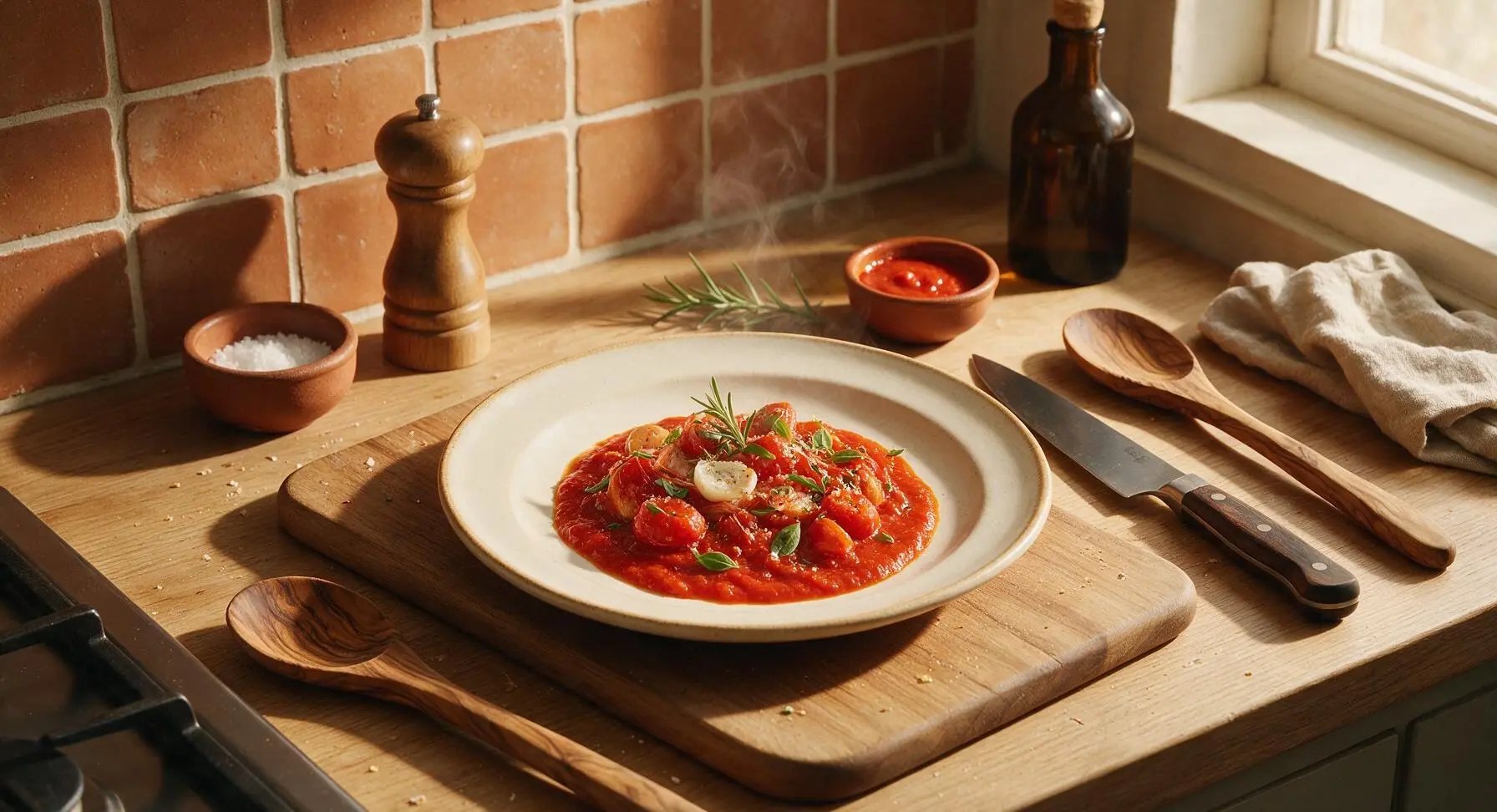
Bright, silky, and deeply flavored, classic Neapolitan pomodoro is the gold standard of Italian tomato sauces—simple, fresh, and perfect for quick weeknight pasta.
Ingredients
Steps
Prep aromatic ingredients
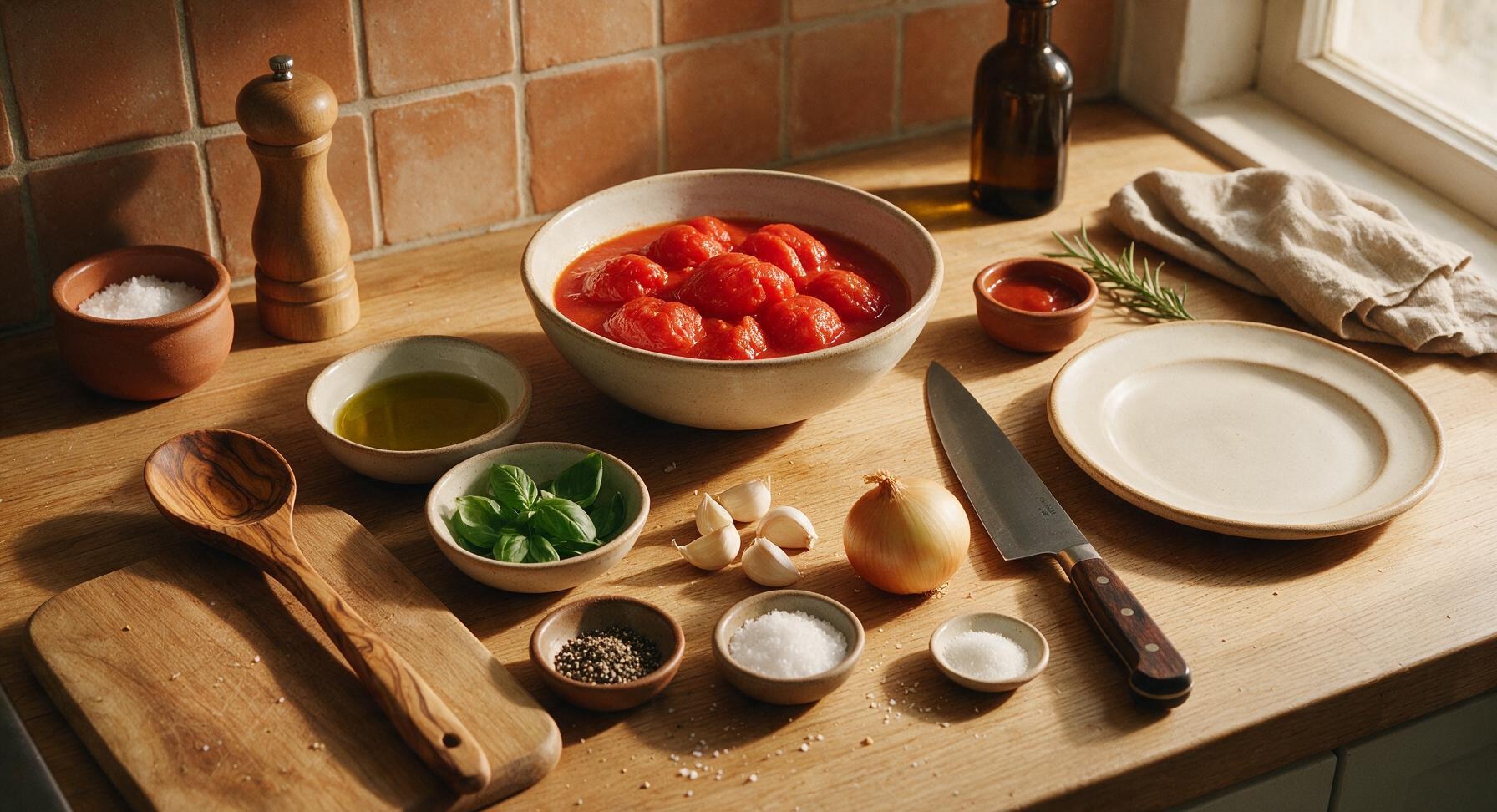
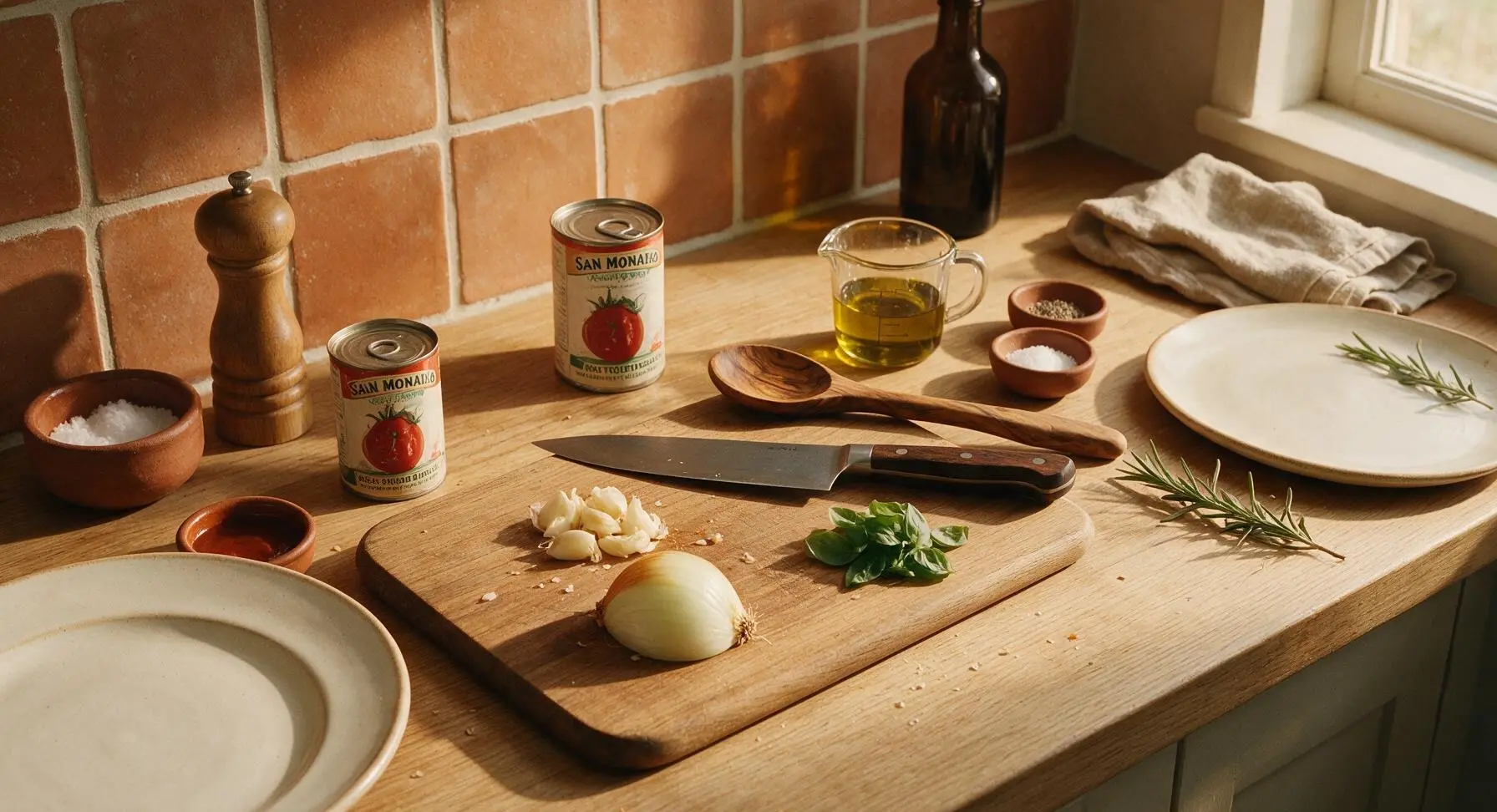
Set the maple wood cutting board on the center of the travertine counter. Peel 4 garlic cloves and crush them lightly with the flat of the 8-inch chef knife (do not mince—crushing releases mellow garlic flavor without sharp, bitter bite). Peel the 100g small yellow onion and cut it in half through the root, leaving both halves intact. Pick 1/2 cup packed fresh basil leaves from their stems, setting aside 3 small whole leaves for final garnish. Measure 1/4 cup extra-virgin olive oil, 1 tsp fine sea salt, 1/4 tsp black pepper, and optional 1 tsp granulated sugar into the tiny terracotta pinch bowls.
Sauté garlic and onion
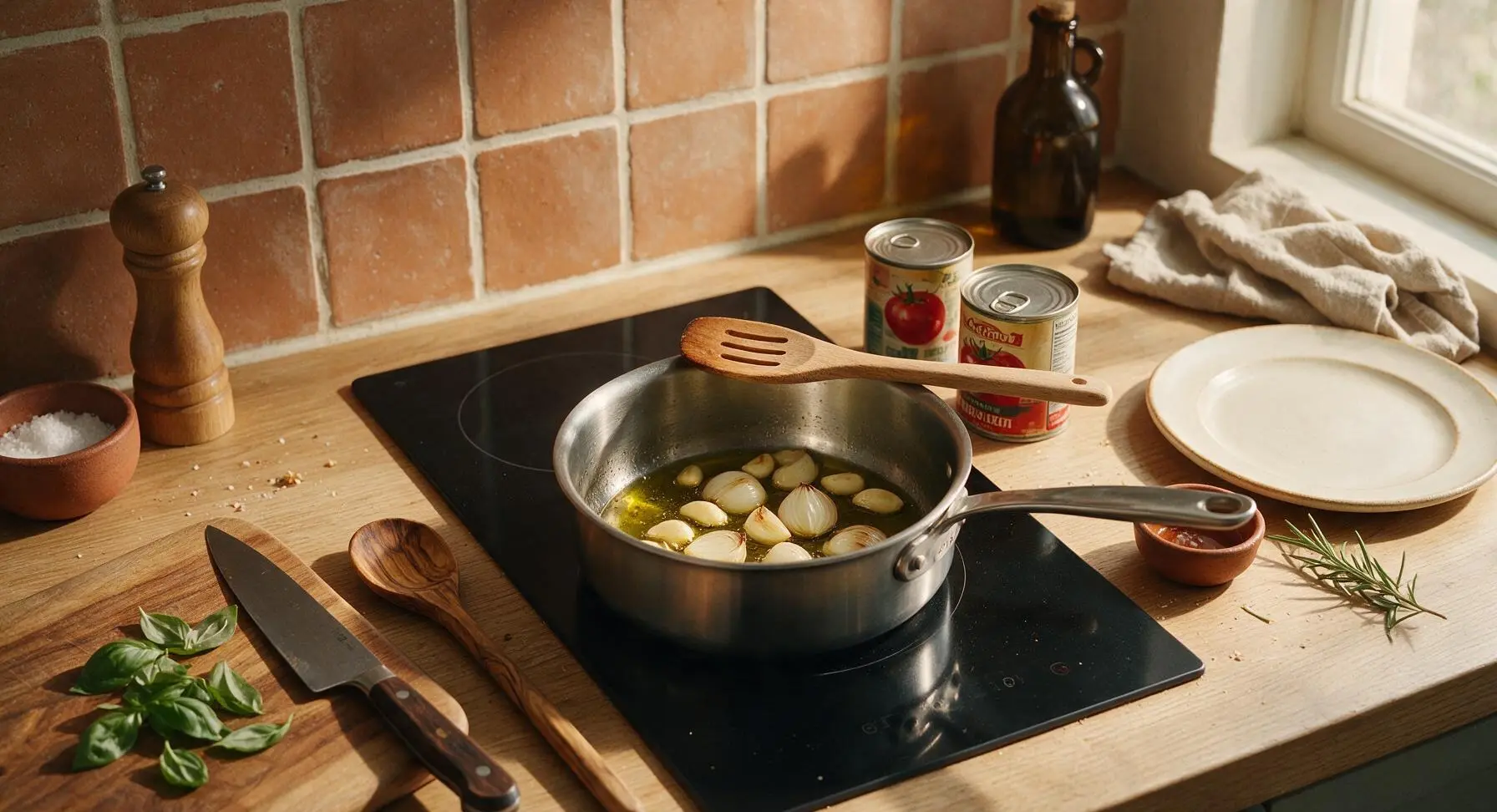
Place the 3-quart stainless steel saucepan on the center of the matte black induction cooktop over medium-low heat. Pour in the measured extra-virgin olive oil, and heat until the oil shimmers (about 2 minutes, 325°F). Add the crushed garlic cloves and both onion halves cut-side down. Cook slowly for 3-4 minutes, until the garlic is pale golden and fragrant—do not let it brown, as burnt garlic will make the sauce bitter. Turn the garlic once with the slotted beech wood spoon if it colors too quickly.
Add and crush tomatoes
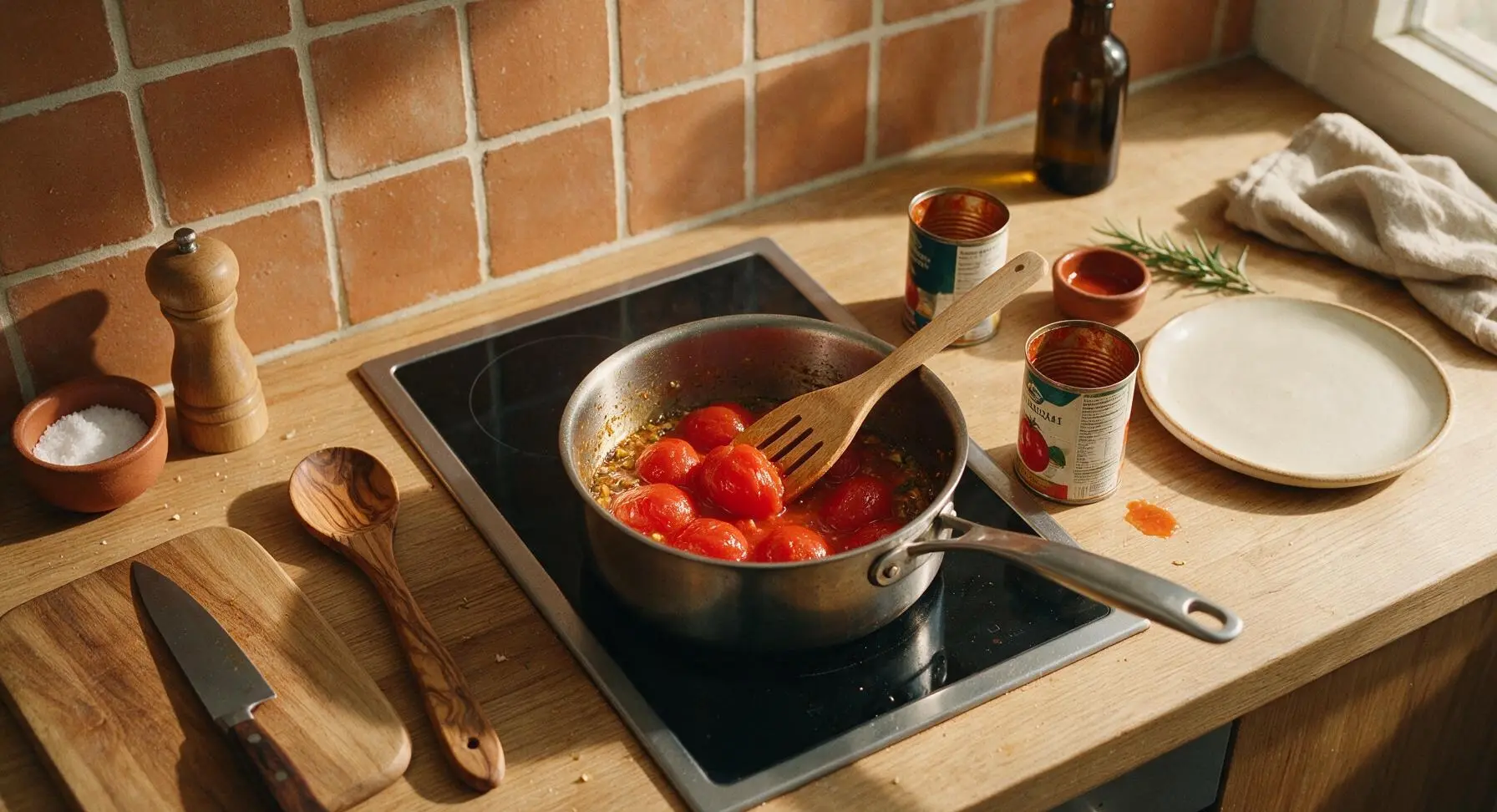
Open the two cans of San Marzano peeled tomatoes, and pour the entire contents (tomatoes and their reserved juice) into the saucepan with the oil and aromatics. Use the slotted beech wood spoon to gently crush the tomatoes against the side of the pan, breaking them into rough 1-inch chunks. Stir in the measured sea salt, black pepper, and optional sugar if your tomatoes taste overly tart. Bring the sauce to a gentle, low simmer, avoiding a hard rolling boil.
Slowly simmer sauce
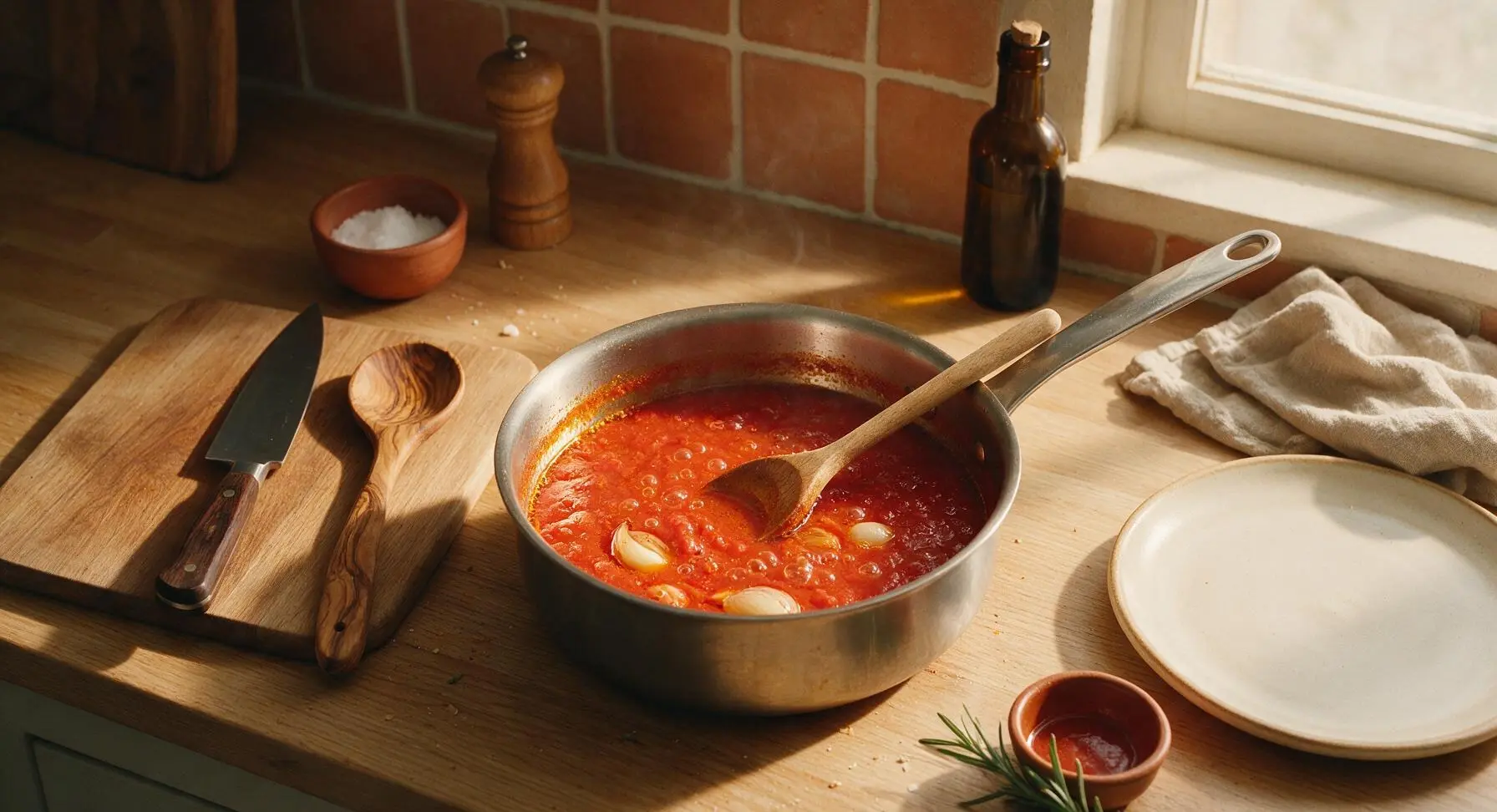
Reduce heat to low to maintain a soft, steady simmer (small bubbles breaking the surface every 2-3 seconds, approximately 200°F). Do not cover the pan. Let the sauce cook for 15 minutes, stirring gently with the beech wood spoon every 3-4 minutes to prevent sticking on the pan bottom. The sauce will reduce slightly and thicken, and you will see a bright red-orange ring of separated olive oil around the pan edge when it is ready.
Remove spent aromatics
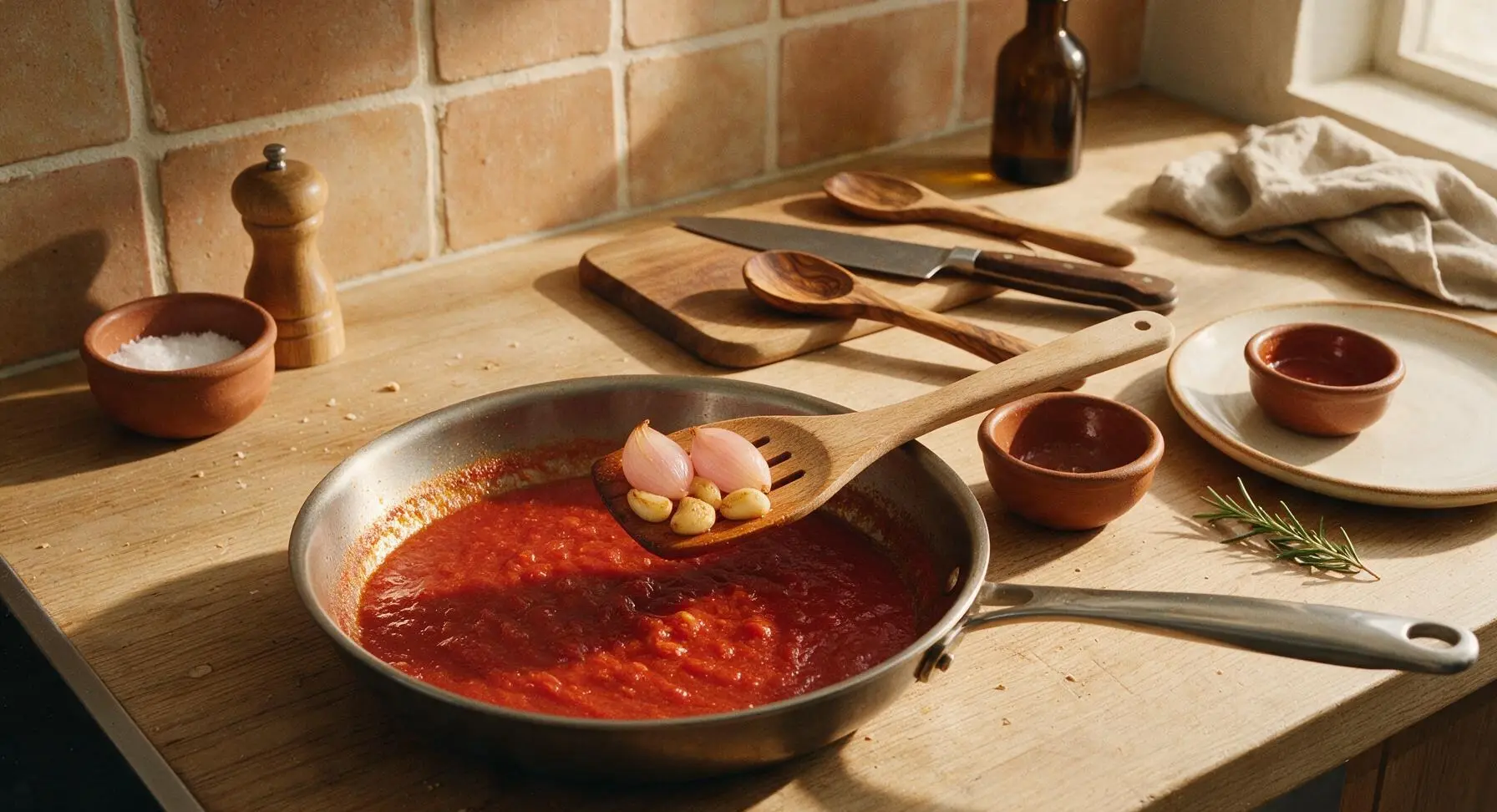
After 15 minutes of simmering, use the slotted beech wood spoon to fish out the two onion halves and all four garlic cloves from the sauce. Discard them, or reserve the softened onion to spread on crostini for a quick cook's snack—they have released all their sweet, mellow flavor into the sauce, and leaving them in would create an uneven, chunky texture.
Mill sauce for silkiness
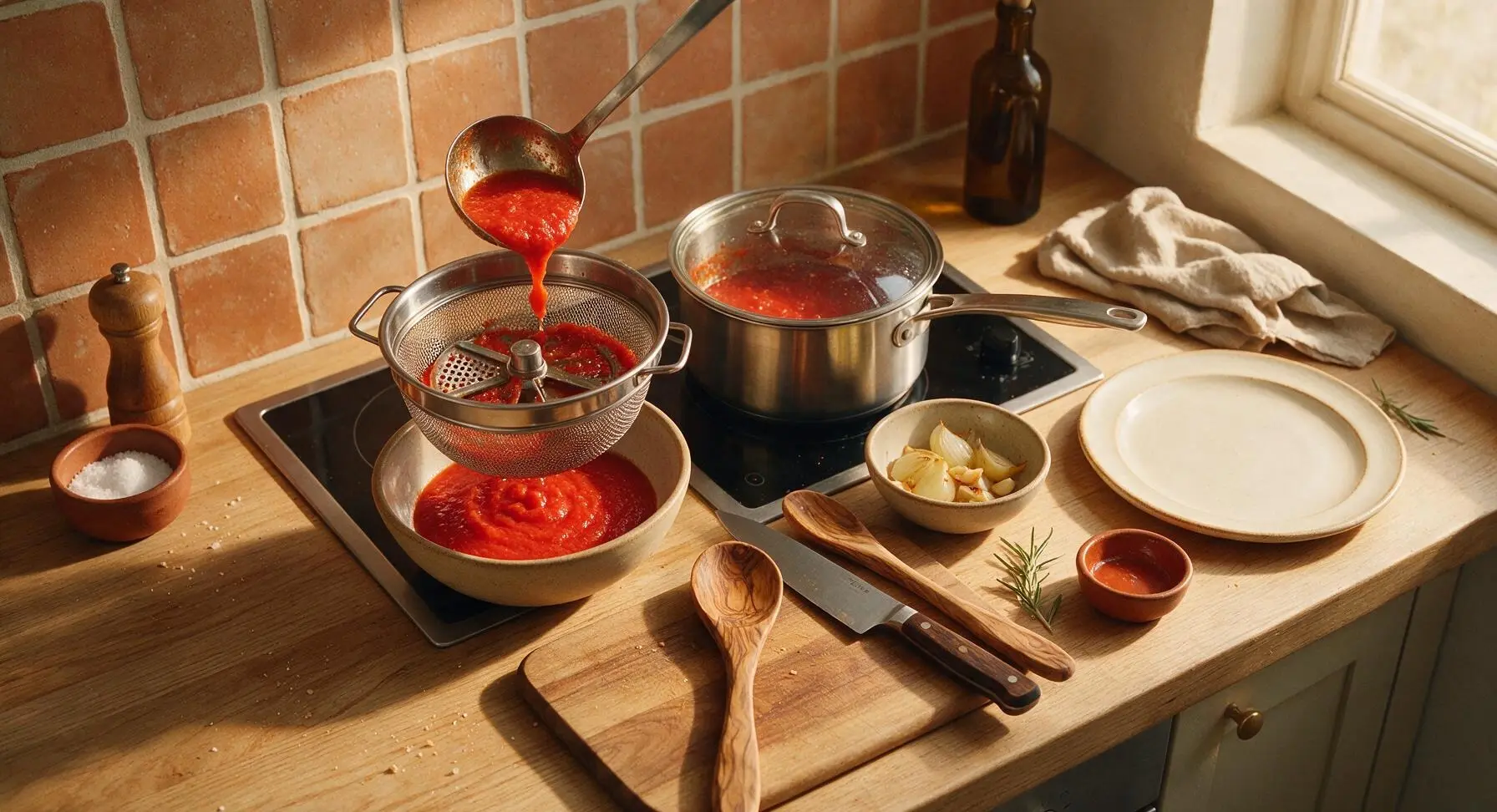
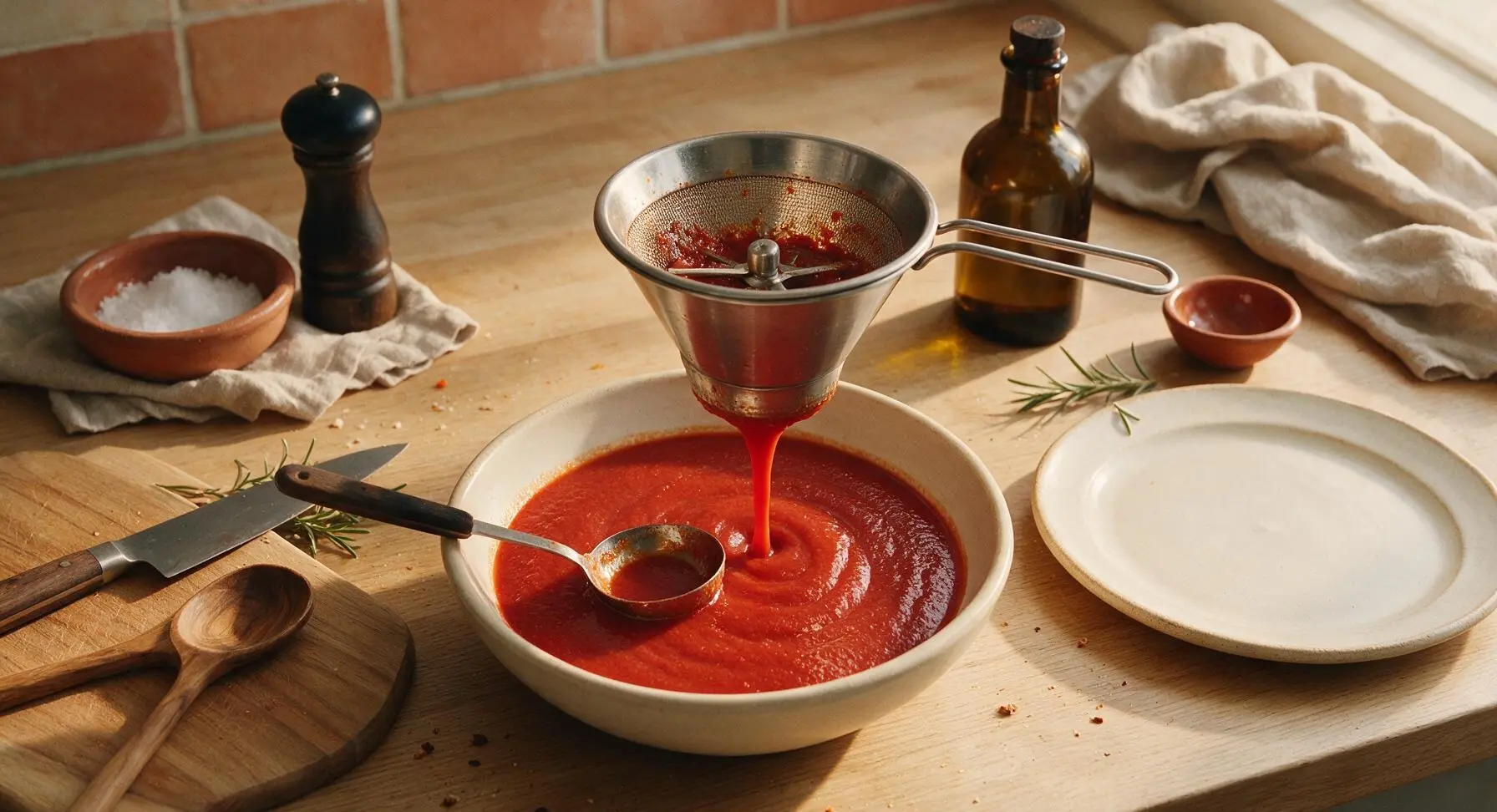
Set the stainless steel wire mesh food mill (fitted with the medium grinding disc) over a clean heatproof bowl set on the counter to the left of the cooktop. Use the small stainless steel ladle to transfer hot tomato sauce into the food mill in batches, turning the mill handle to press the sauce through the disc, leaving behind all tomato skins, seeds, and tough fibrous bits. This creates a perfectly smooth, velvety texture without the graininess or foam caused by blending. For a chunkier sauce, skip this step and crush tomatoes more thoroughly during cooking.
Finish with fresh basil
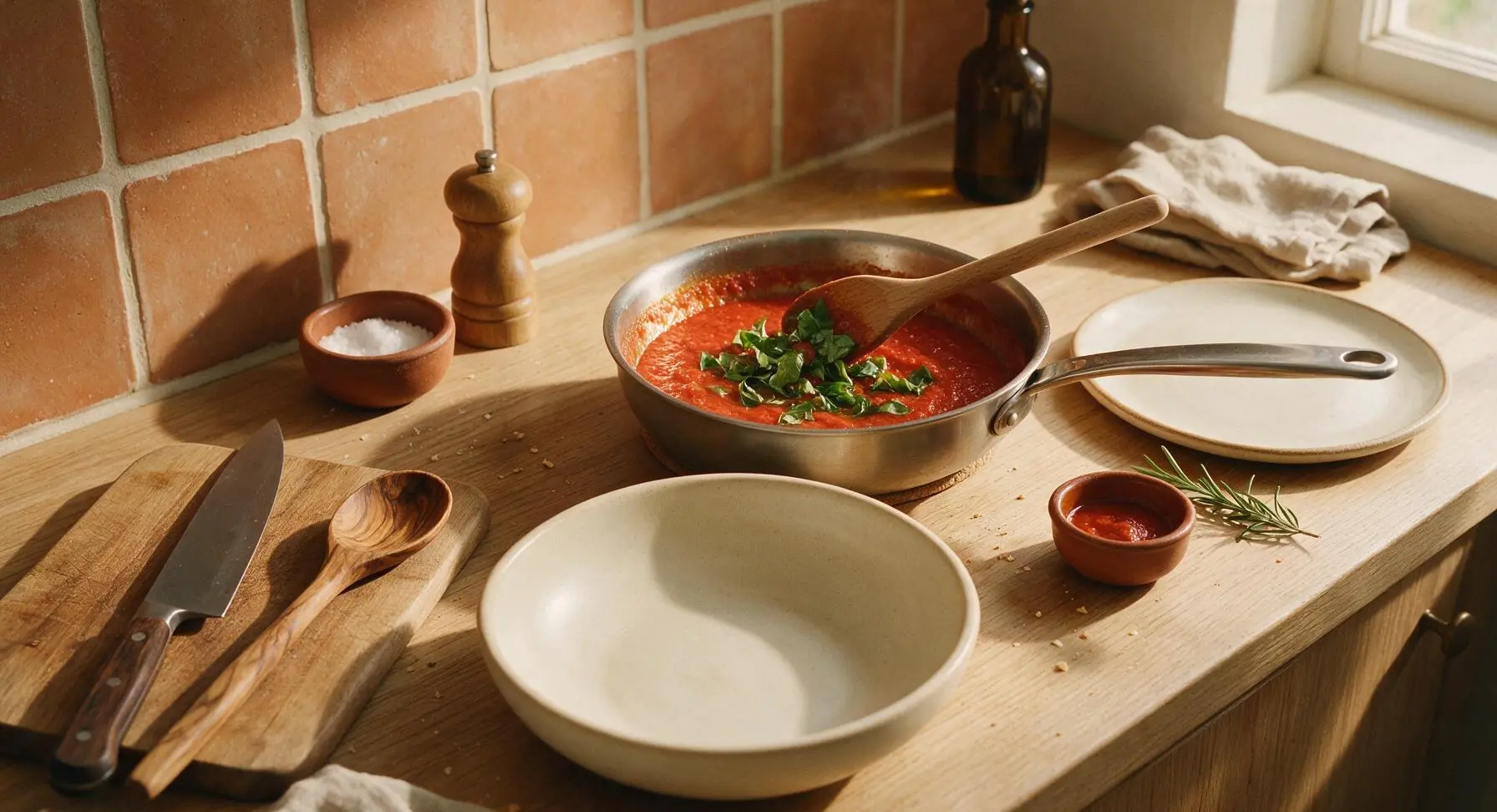
Return the smooth, milled sauce to the saucepan over the lowest heat. Tear the remaining fresh basil leaves into rough pieces and stir them into the sauce, letting them wilt for 1 minute. Taste and adjust salt if needed—the finished sauce should taste bright, sweet, and balanced, with no sharp acid or bitter notes. Toss with al dente pasta immediately, or let cool completely and store in an airtight container in the fridge for up to 5 days, or freeze for 3 months.
Tips
2.Avoid using an immersion blender for this sauce: high-speed blending incorporates air, turning the sauce a pale orange and creating a foamy, frothy texture. A food mill presses the sauce through a mesh without aeration, yielding a clear, deep ruby red, velvety texture that is true to Neapolitan tradition.
3.If you can't find San Marzano tomatoes, use high-quality canned whole plum tomatoes with no added seasonings. Avoid diced canned tomatoes, which are often treated with calcium chloride to keep them firm, leading to a tough, grainy sauce texture even after long cooking.






OMG this pomodoro sauce is SO good!!! I’ve been buying jarred sauce for years for our weekly family pasta night and this was such a game changer. Took literally 20 minutes just like the recipe said, no weird ingredients, and my 7 and 9 year old both asked for seconds. I even stirred a little extra fresh basil in at the end like my nonna used to, chef’s kiss. 10/10 will be making this for our next neighborhood potluck too!
This recipe is made for weekly meal prep! I made a double batch on Sunday, portioned it into freezer containers, and it’s been perfect for quick weeknight dinners all week. Tastes just as good reheated as it did fresh, no weird separation or watery texture like other homemade sauces I’ve tried. Drizzled a little olive oil on top before freezing and it held up beautifully. Easy enough to throw together even when I’m chasing a toddler around the kitchen, 5 stars!
Tried this last night for date night and my girlfriend thought I ordered takeout from our favorite local Italian spot! Only note is I accidentally let it simmer a little too long (closer to 30 minutes) but it still turned out incredible. Used it on homemade margherita pizza too instead of just pasta and it was chef’s kiss. Who knew a simple sauce could taste so complex?
Finally a pomodoro recipe that doesn’t have a million random add-ins! I’m gluten free and have been craving a simple, fresh sauce to go with my chickpea pasta, and this hit every single note. I did add a tiny pinch of red pepper flakes for a little kick, and it was perfect. So easy I even let my 12 year old make most of it for his first home ec cooking assignment, he got an A!