
pozole
intro
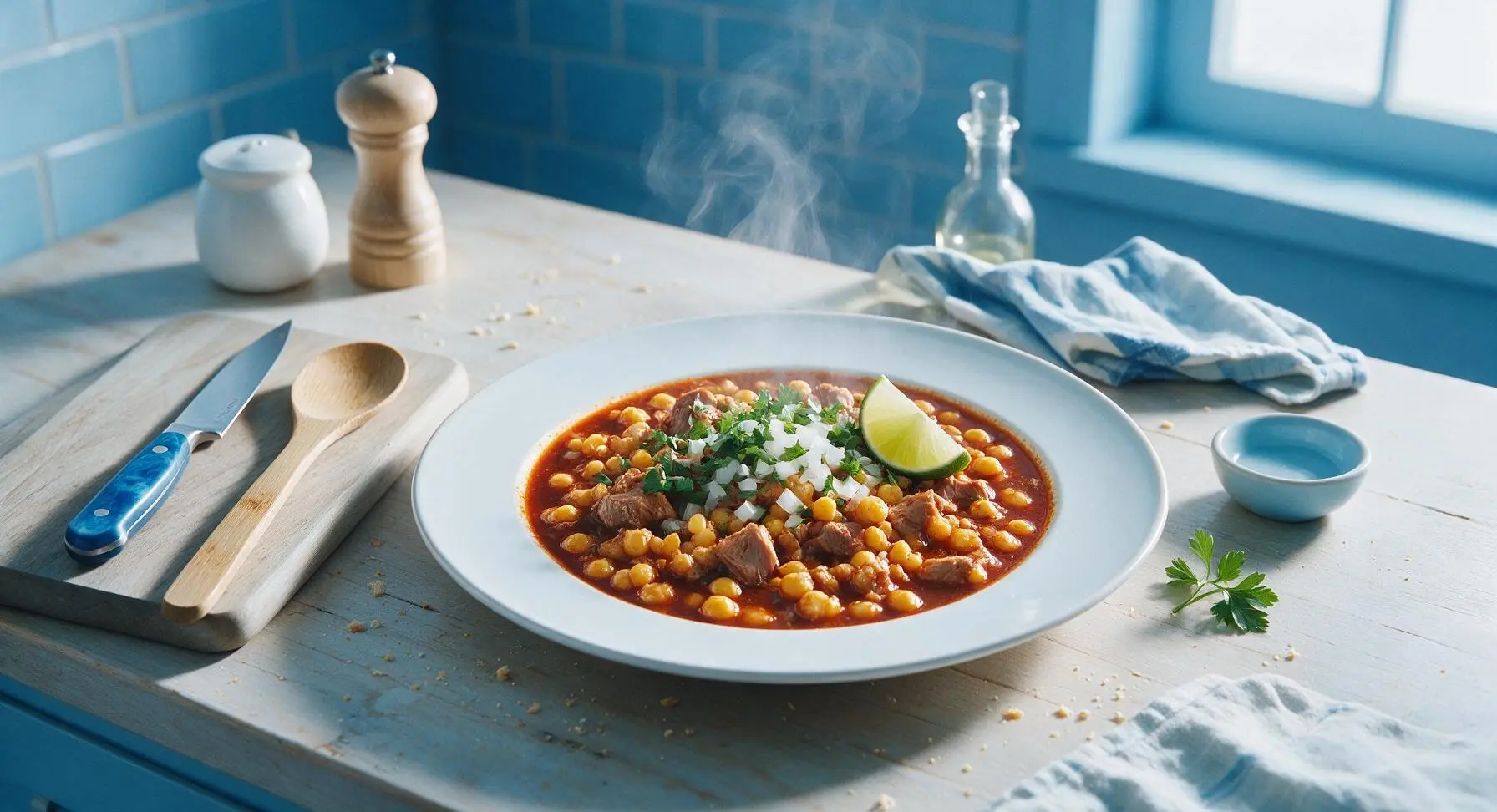
Rich, soul-warming red pozole is a beloved Mexican hominy stew, brimming with slow-simmered pork and bright, crisp fresh garnishes, perfect for gathering loved ones.
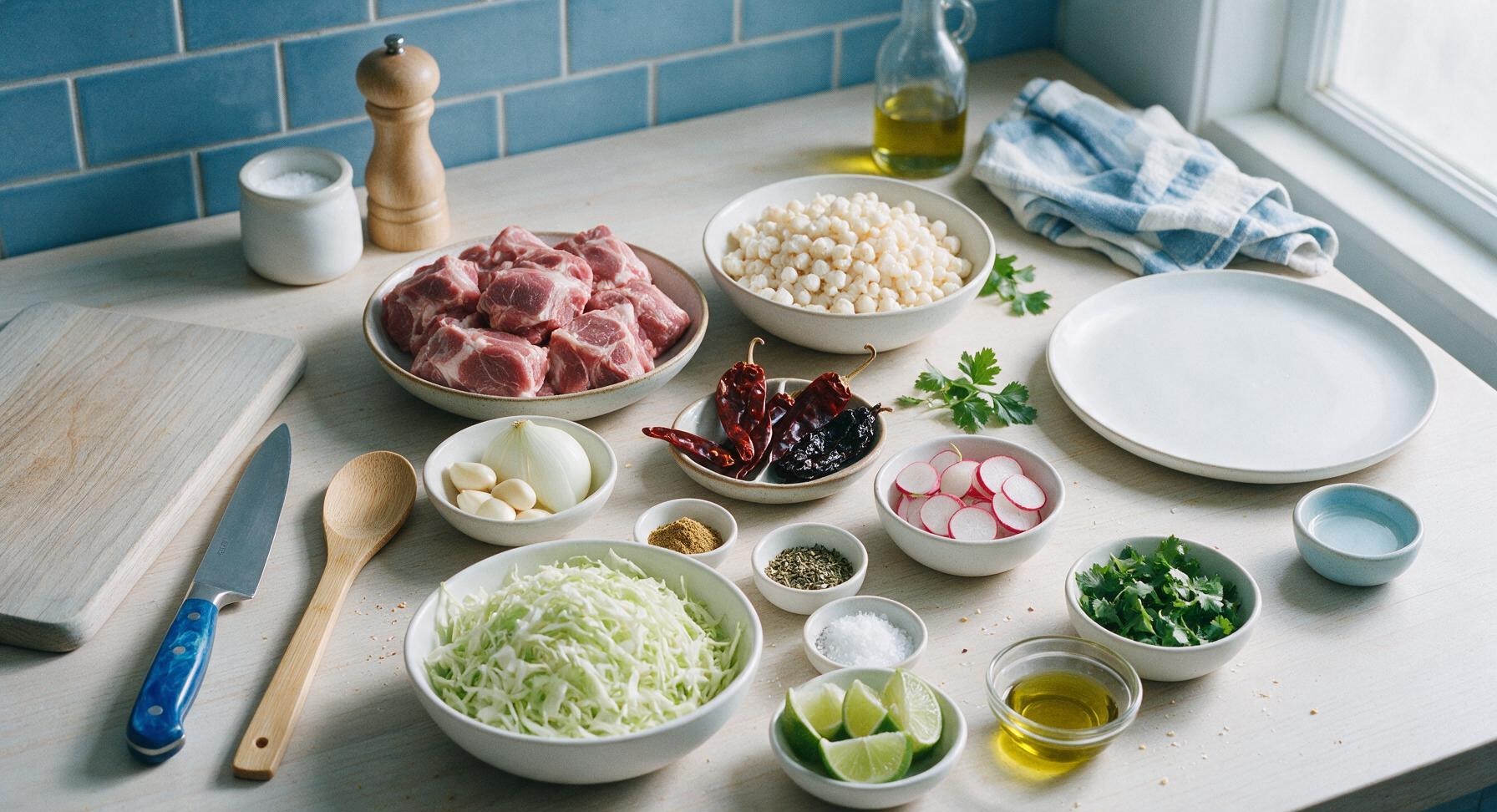
Ingredients
Steps
Sear the Pork Chunks
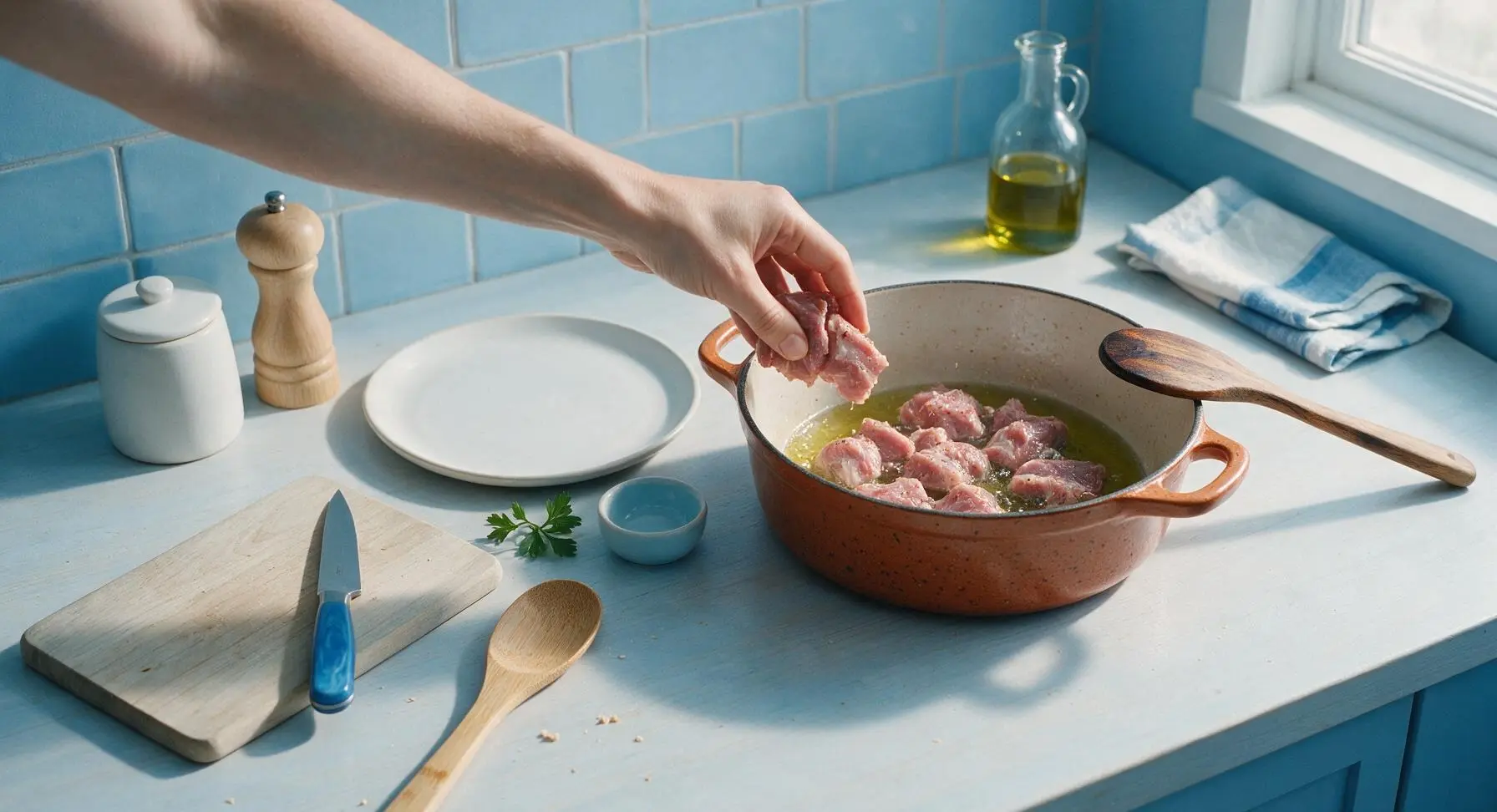
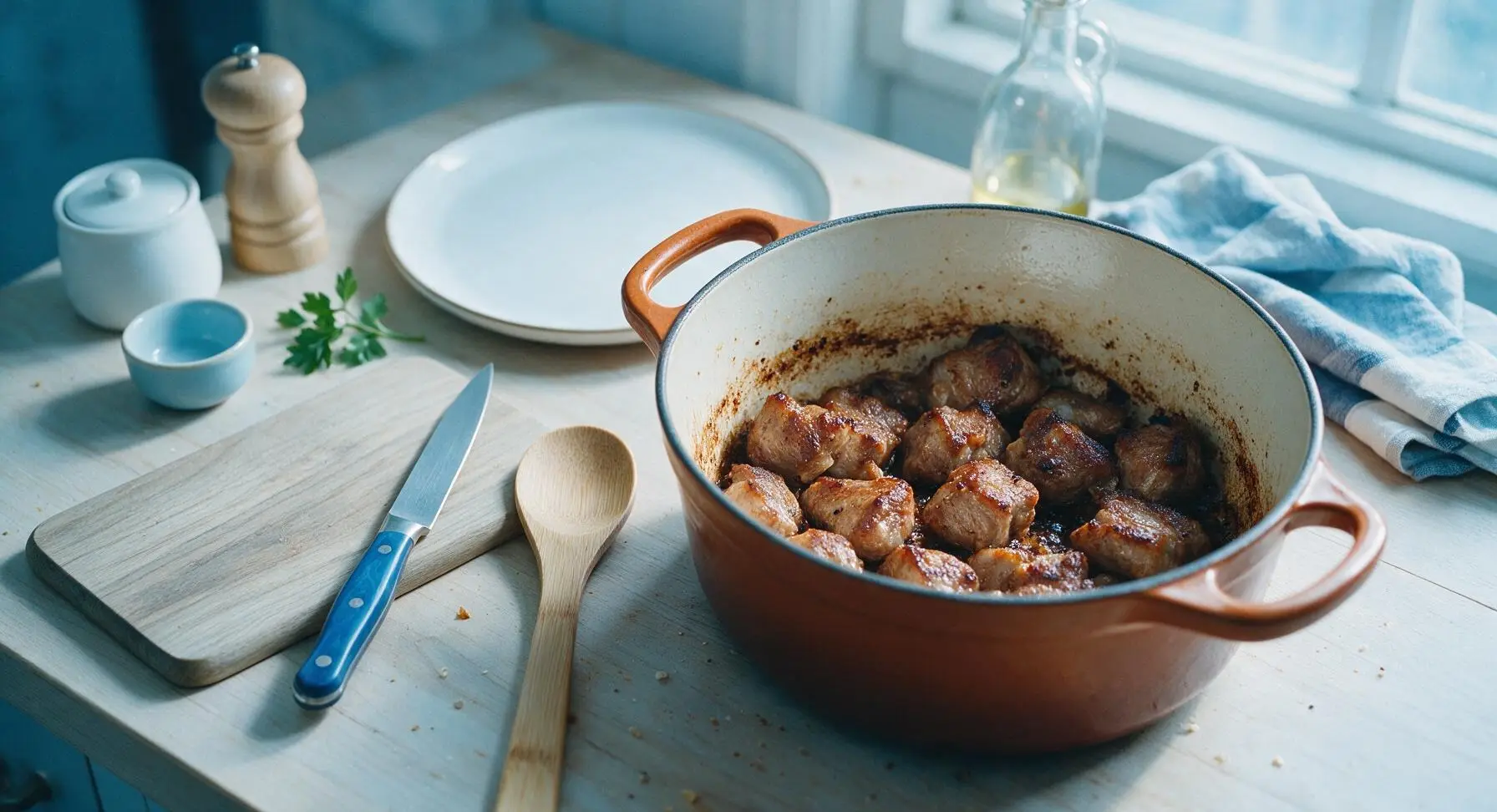
Pat the pork shoulder chunks completely dry with the edge of the burnt-orange cotton towel, season lightly with 1 tsp salt and ½ tsp black pepper. Heat 1 tbsp olive oil from the glass oil bottle in the terracotta enameled Dutch oven (now positioned center-right on the counter for cooking) over medium-high heat. Working in 2 batches to avoid crowding the pot, sear pork chunks on all sides until deep golden brown, about 4 minutes per side. Transfer seared pork to a clean plate set aside, leaving the browned caramelized bits (fond) in the bottom of the pot.
Simmer Pork and Aromatics
Return all seared pork to the Dutch oven. Add 3 quarters of the onion, 6 whole garlic cloves, 2 tsp salt, ½ tsp black pepper, and 2.5L of cold water to the pot. Bring to a rolling boil over high heat, then reduce heat to low, partially cover the pot with its lid, and simmer for 1 hour 15 minutes until the pork is fork-tender but not falling apart. Use the mesquite spoon to skim any white foam or rendered fat from the surface of the broth every 20 minutes during the simmer.

Make Red Chile Puree
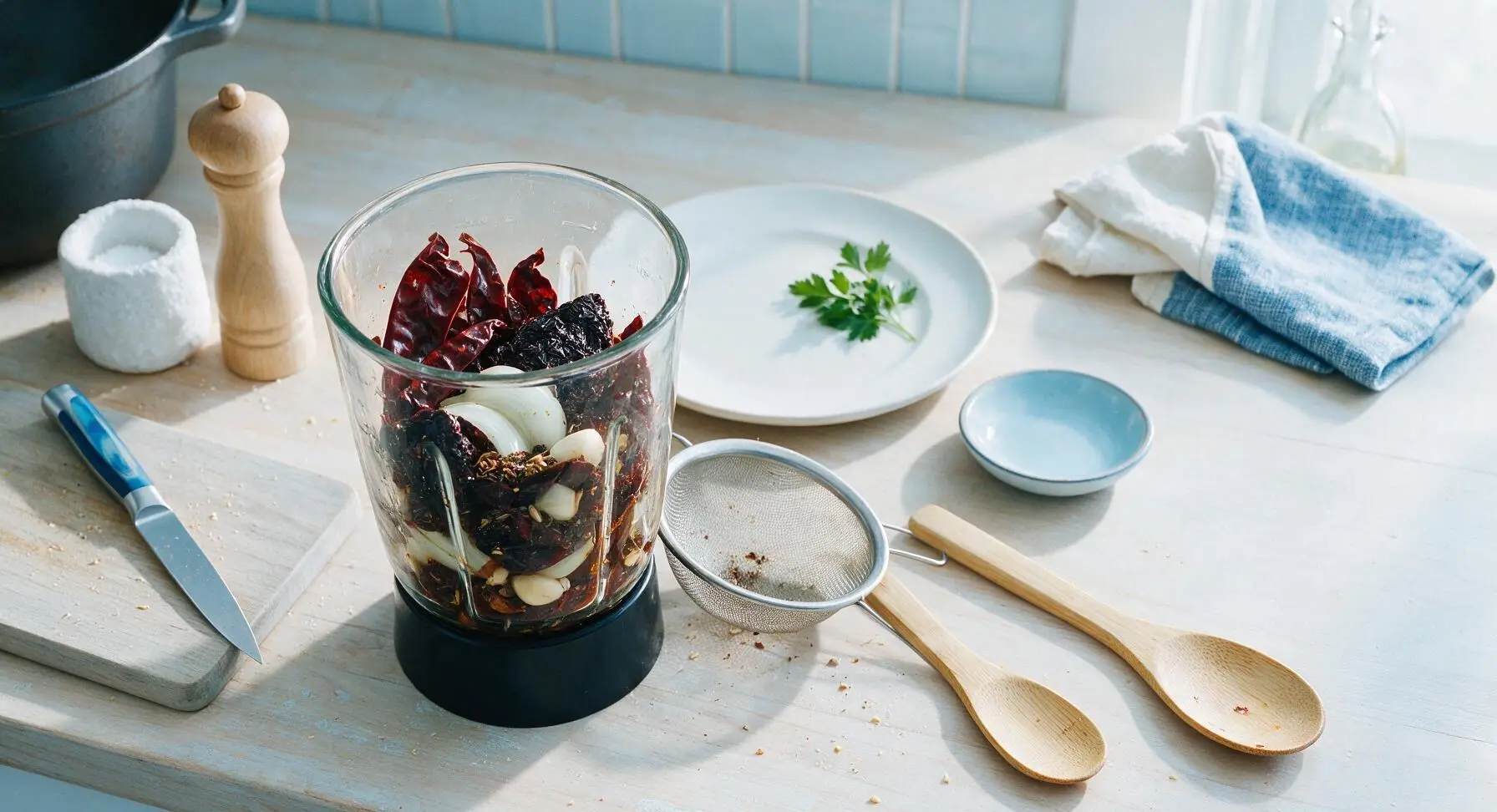
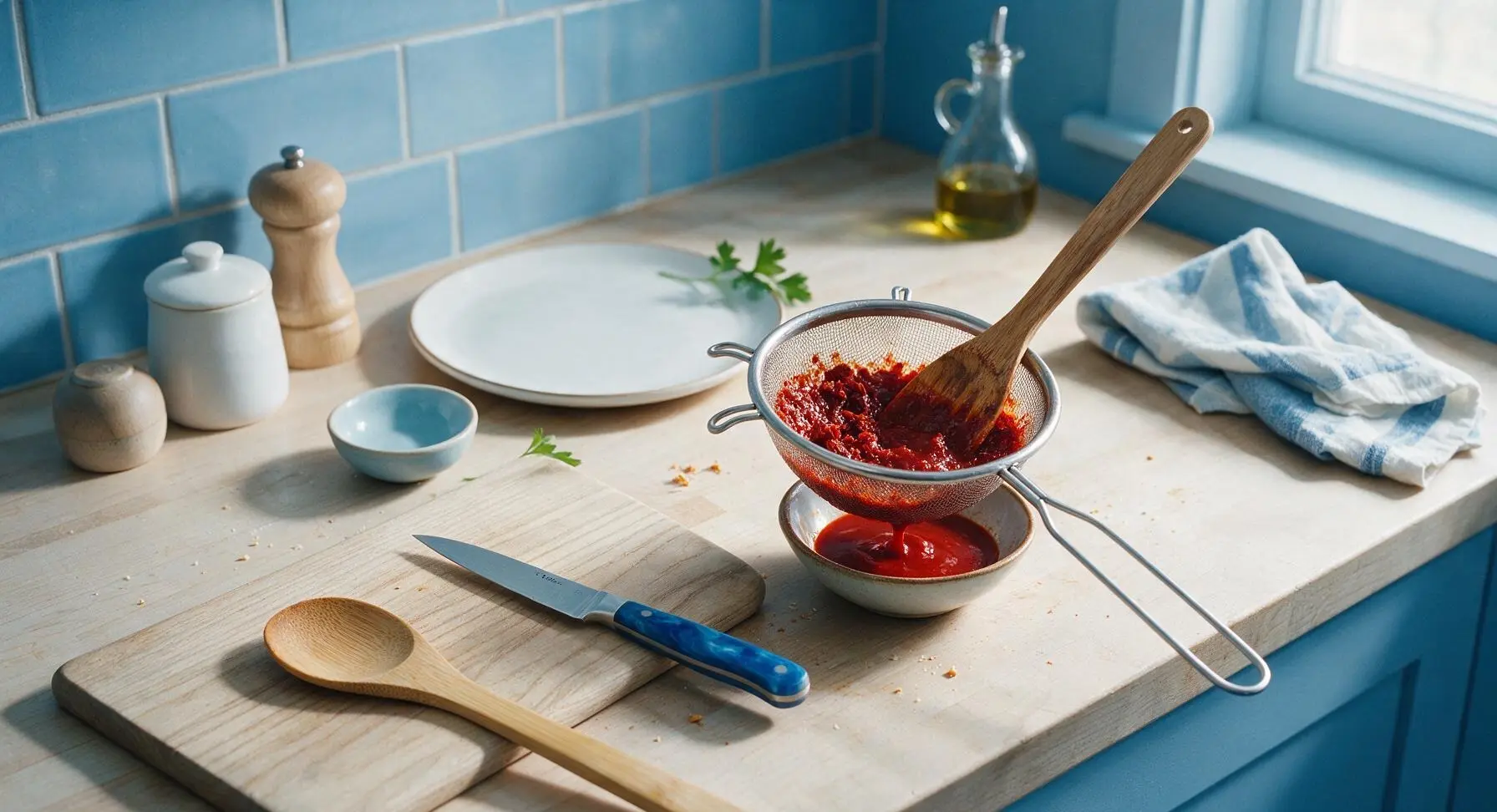
While the pork simmers, place the seeded guajillo and ancho chiles in a small heatproof bowl, cover with boiling water, and weigh down with a small plate to keep them fully submerged. Soak for 15 minutes until chiles are completely soft and pliable. Transfer softened chiles to the permanently positioned glass blender, add 250ml of the reserved chile soaking liquid, the remaining ¼ quarter of onion, 2 remaining garlic cloves, cumin, and ½ tbsp dried oregano. Blend on high for 2 minutes until completely smooth. Place the stainless steel wire mesh strainer (now positioned to the immediate right of the Dutch oven) over a small bowl, pour the blended chile mixture through the strainer, pressing with the back of the mesquite spoon to extract all smooth liquid, discarding the fibrous skins and seed bits left in the strainer.
Combine Chile and Broth
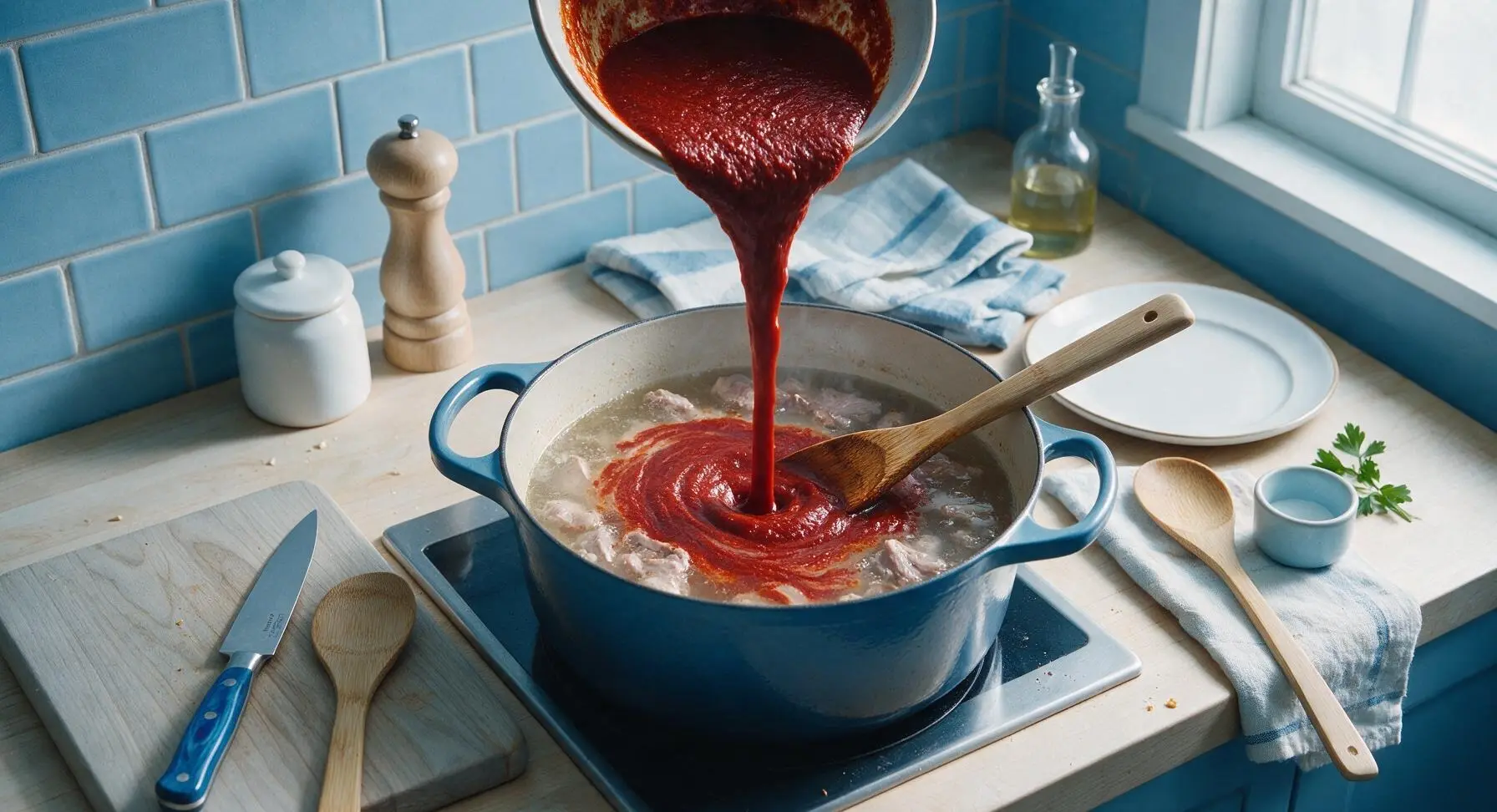
Once the pork is fork-tender, pour the strained red chile puree into the Dutch oven with the pork and broth, stirring well with the mesquite spoon to fully incorporate the puree into the clear broth. Bring the mixture back to a gentle simmer, and cook uncovered for 15 minutes to let the chile flavor meld with the pork broth, tasting and adjusting salt if needed.
Add and Cook Hominy
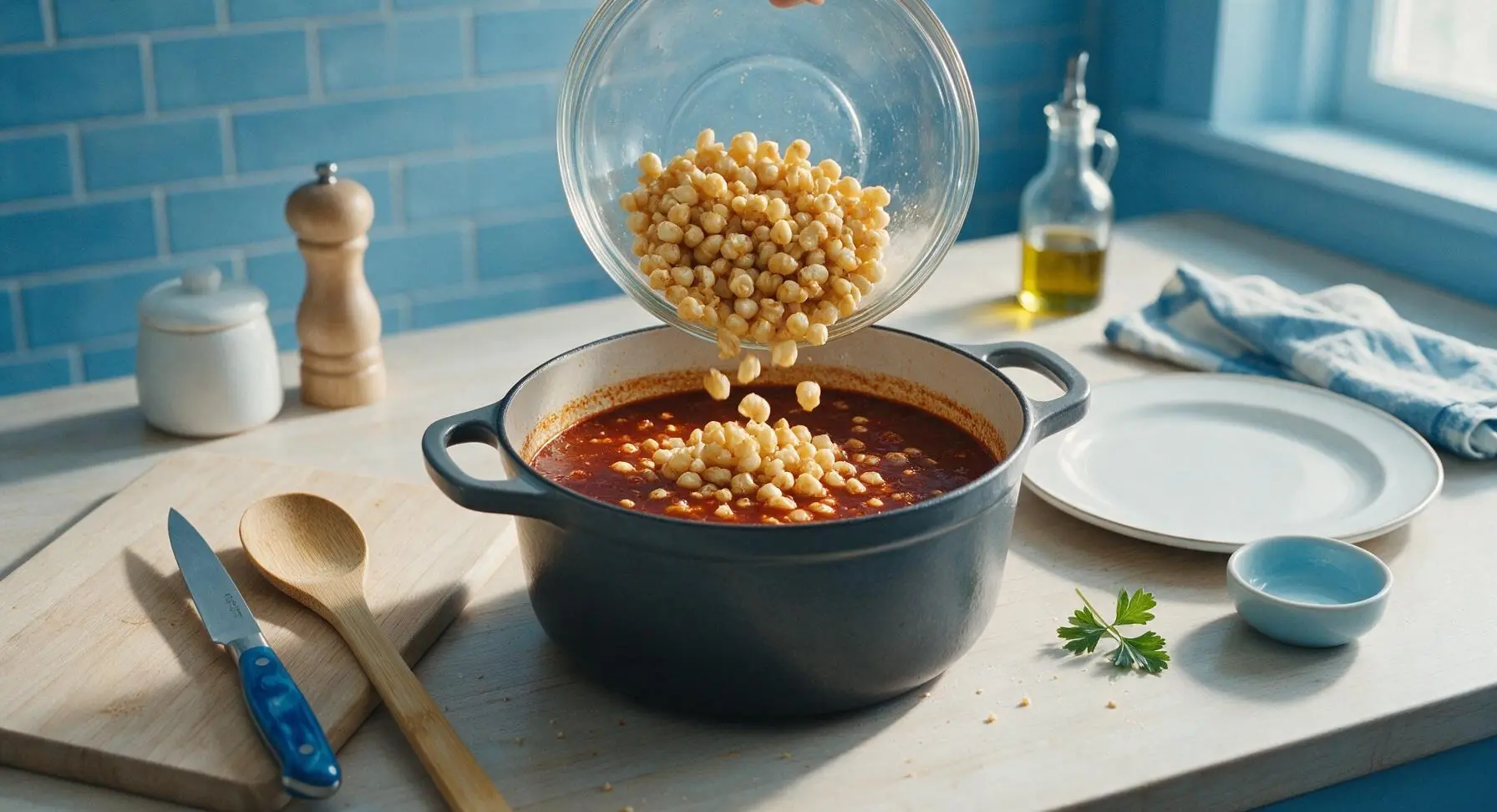
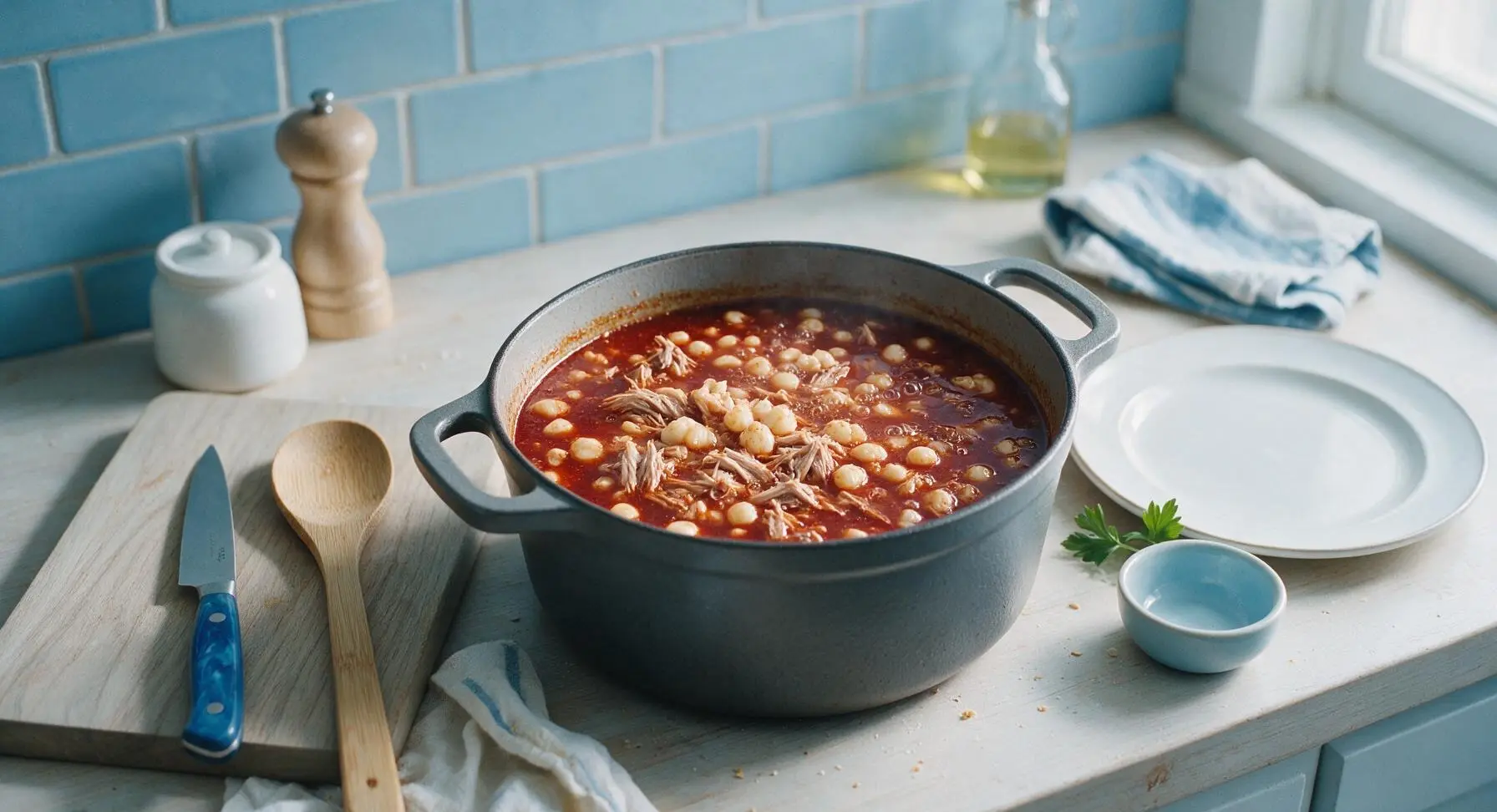
Stir the rinsed, drained hominy into the red pozole base in the Dutch oven, return to a gentle simmer, and cook uncovered for an additional 30 minutes, until the hominy is plump and tender with a slight chewy bite, and the broth has thickened slightly. By this point, the pork should be pull-apart tender; use two forks to shred any large pork chunks into bite-sized pieces directly in the pot, discarding any loose bone fragments or large pieces of excess fat as you go.
Prep Fresh Garnishes
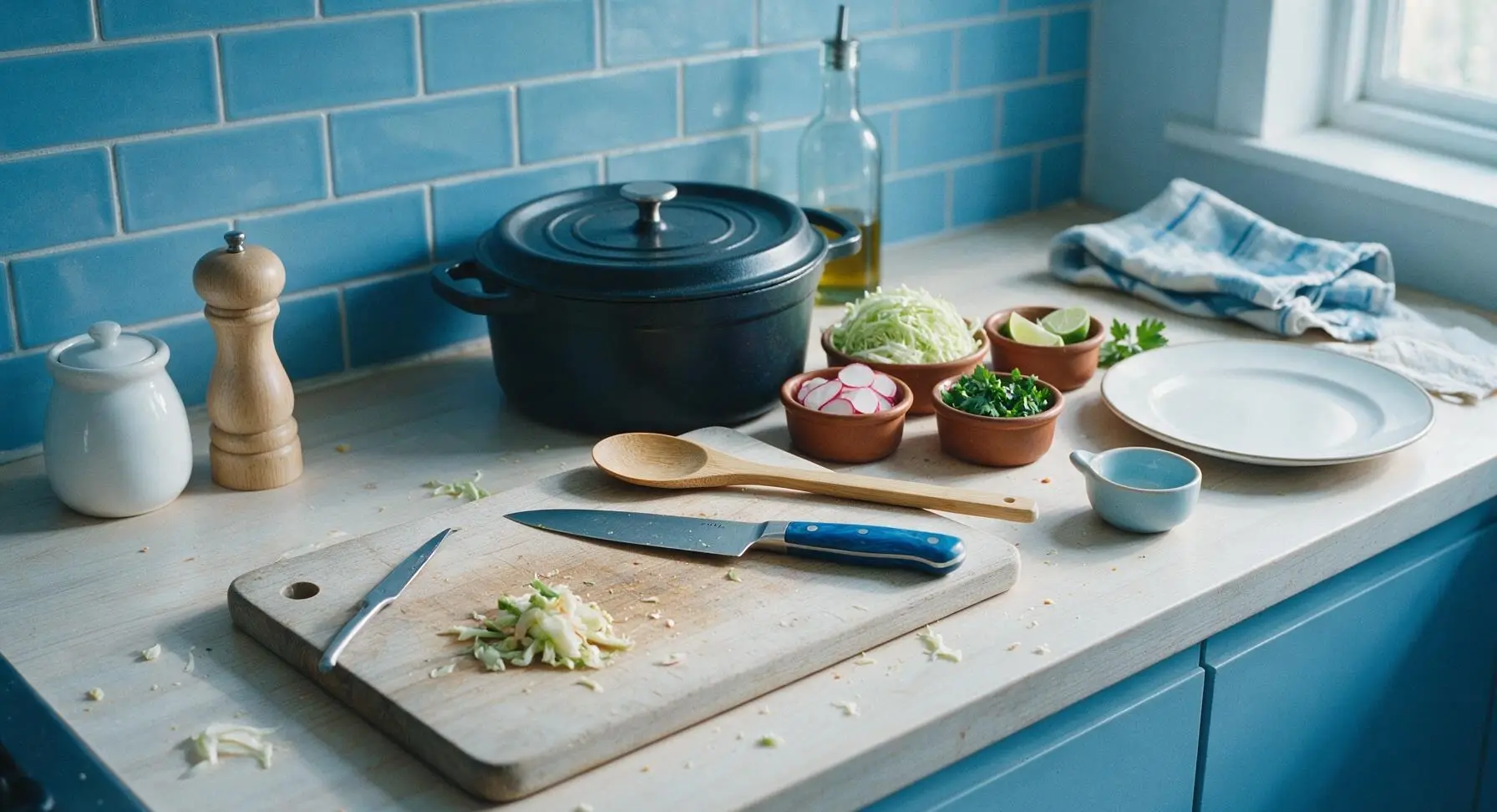
While the hominy simmers, prepare the fresh garnishes for serving: use the chef knife on the mesquite cutting board to finely shred the green cabbage into thin, crisp strips, thinly slice the radishes into translucent rounds, roughly chop the cilantro leaves and tender stems, and cut the limes into 8 wedges. Place each prepared garnish into one of the four small terracotta ramekins (now arranged in a row to the right of the Dutch oven) for easy serving.
Ladle and Serve Pozole
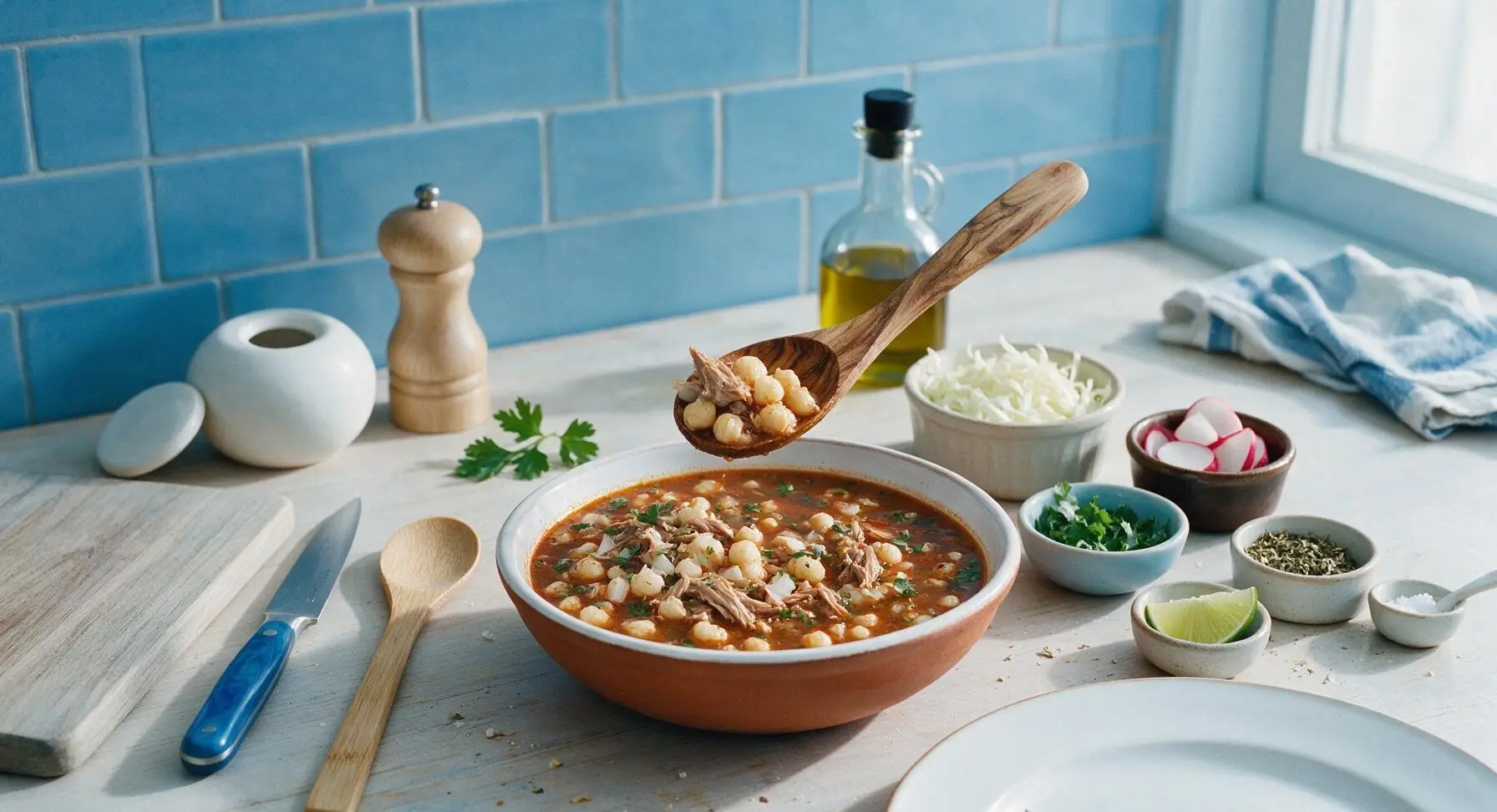
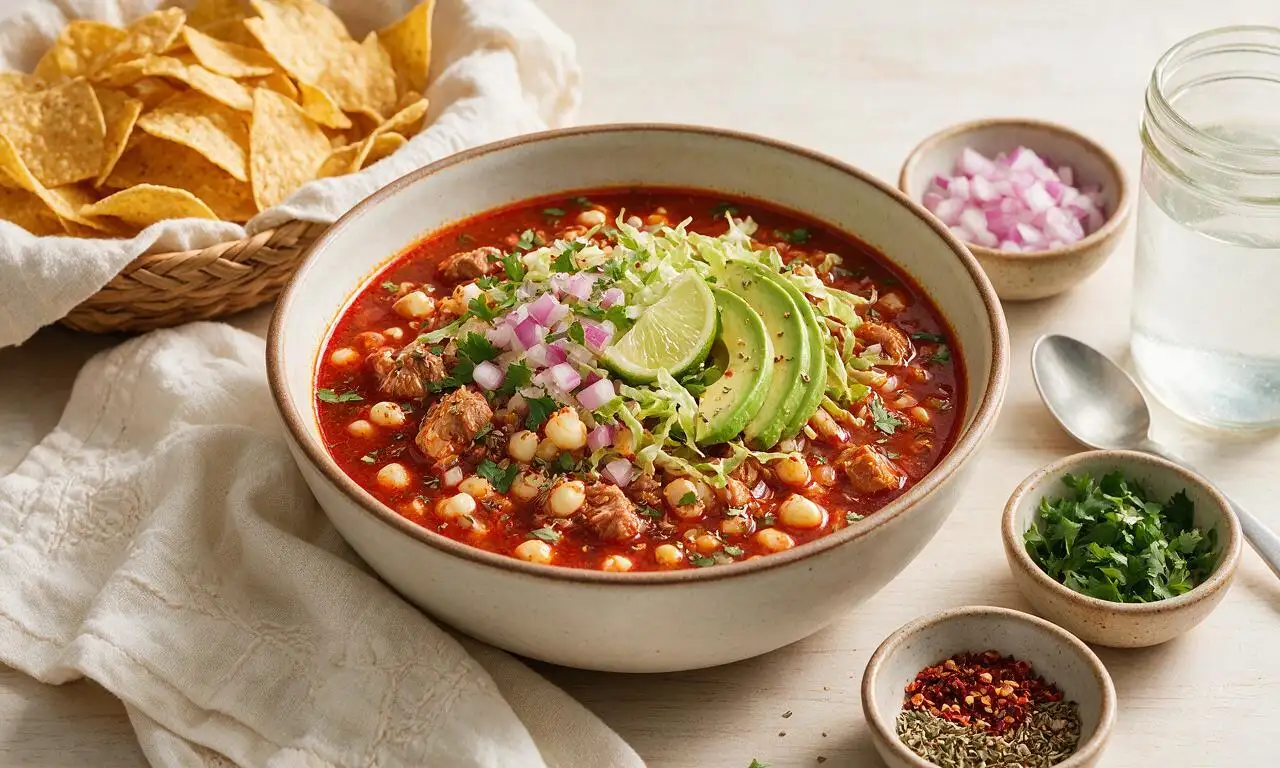
Once the hominy is tender and the broth is rich and flavorful, position the wide terracotta soup bowl in the center of the counter. Use the mesquite spoon to ladle hot pozole into the bowl, making sure to scoop a generous mix of broth, plump hominy, and tender shredded pork for each serving. Top with a small mound of shredded cabbage, a few overlapping radish slices, a sprinkle of chopped cilantro, a pinch of remaining dried oregano, and rest a lime wedge on the bowl’s rim. Serve immediately while hot, with extra garnishes available for guests to add to taste.
Tips
2.Strain the blended chile puree for a silky broth: skipping the straining step will leave tiny bits of tough chile skin in the pozole, creating a gritty, unpleasant texture instead of the smooth, velvety broth that defines great pozole.
3.Add hominy only in the final 30 minutes of cooking: hominy will turn mushy and break apart if simmered for the full two hours with the pork, while a shorter cook time preserves its signature chewy, plump texture.





OMG this red pozole is a total game changer! I made it for our Sunday family dinner last night and even my super picky teen went back for a third serving. I used hominy straight from the Mexican market down the street and the red chile base had that perfect deep, smoky flavor I’ve been chasing since my abuela used to make it. Total cook time was right on 2 hours 15 minutes like the recipe said, no surprises even with the medium difficulty rating. 10/10 will be making this for our next block potluck for sure!
SO good. I prepped a big batch of this on Sunday for weekday lunches and it held up perfectly all week in the fridge, the flavors got even better as it sat! I did add a little extra Mexican oregano because I love that earthy kick, and topped every bowl with thinly sliced radish, fresh lime, shredded cabbage and a dollop of sour cream. Only heads up is that prepping and straining the chiles takes a little extra time if you’ve never done it before, so don’t wait until you’re already starving to start cooking, ha!
Brought this to my office potluck last week and people were literally coming up to ask me for the recipe before we even got through the first round of servings! I was a little nervous about the medium difficulty rating since I’m mostly a boxed mac and cheese level cook, but the step-by-step instructions were so easy to follow I didn’t mess up a single step. My only tiny tweak was adding a can of pinto beans to stretch it a little further for a crowd and it worked perfectly.
My kids loved it! I’ve been trying to find a traditional red pozole recipe that doesn’t cut corners on flavor but isn’t so complicated I can’t make it on a weeknight, and this hits every mark. I skipped the optional chicharron garnish because my youngest is a little picky about texture, but otherwise followed the recipe exactly. It was so warm and comforting after a long day of school drop-offs and back-to-back work meetings, we all left the table full and happy.