Pozole

title 1
Pozole
⏱️ cook time 2 hours
🍽️ servings 6
⚡ Difficulty medium

intro

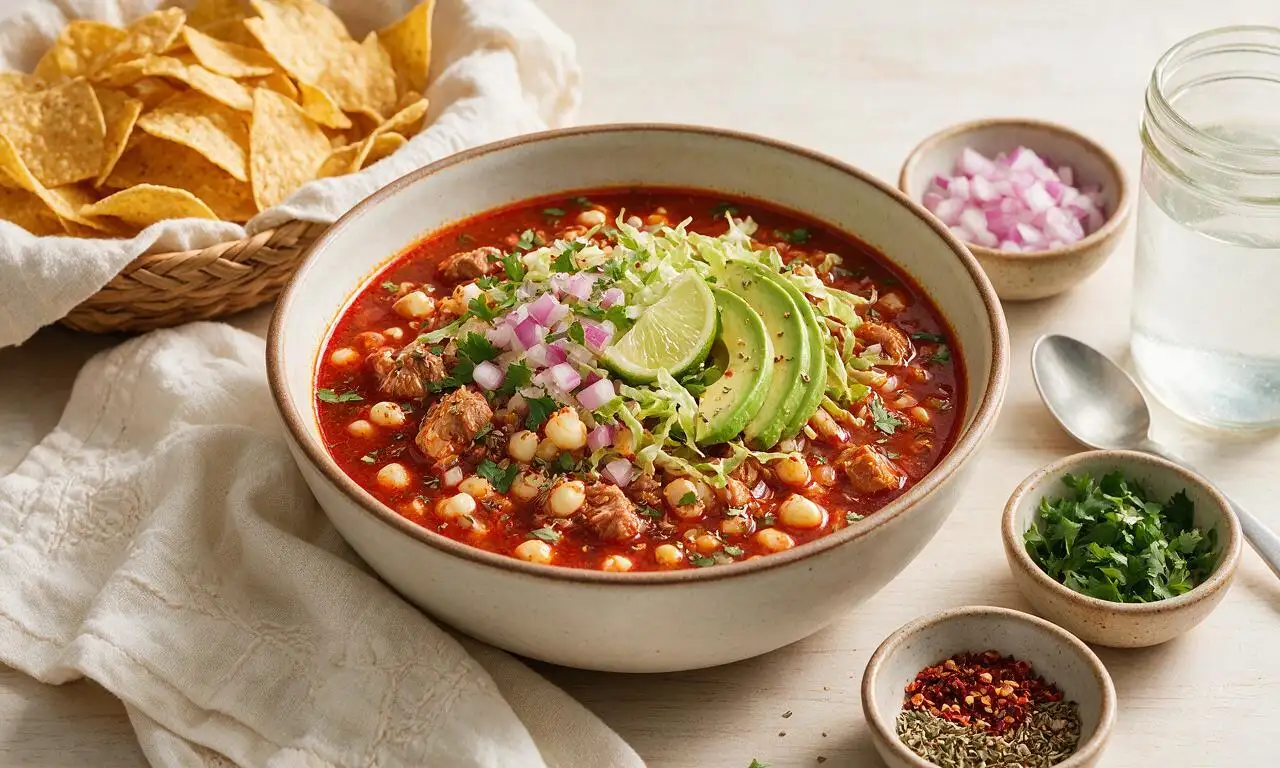
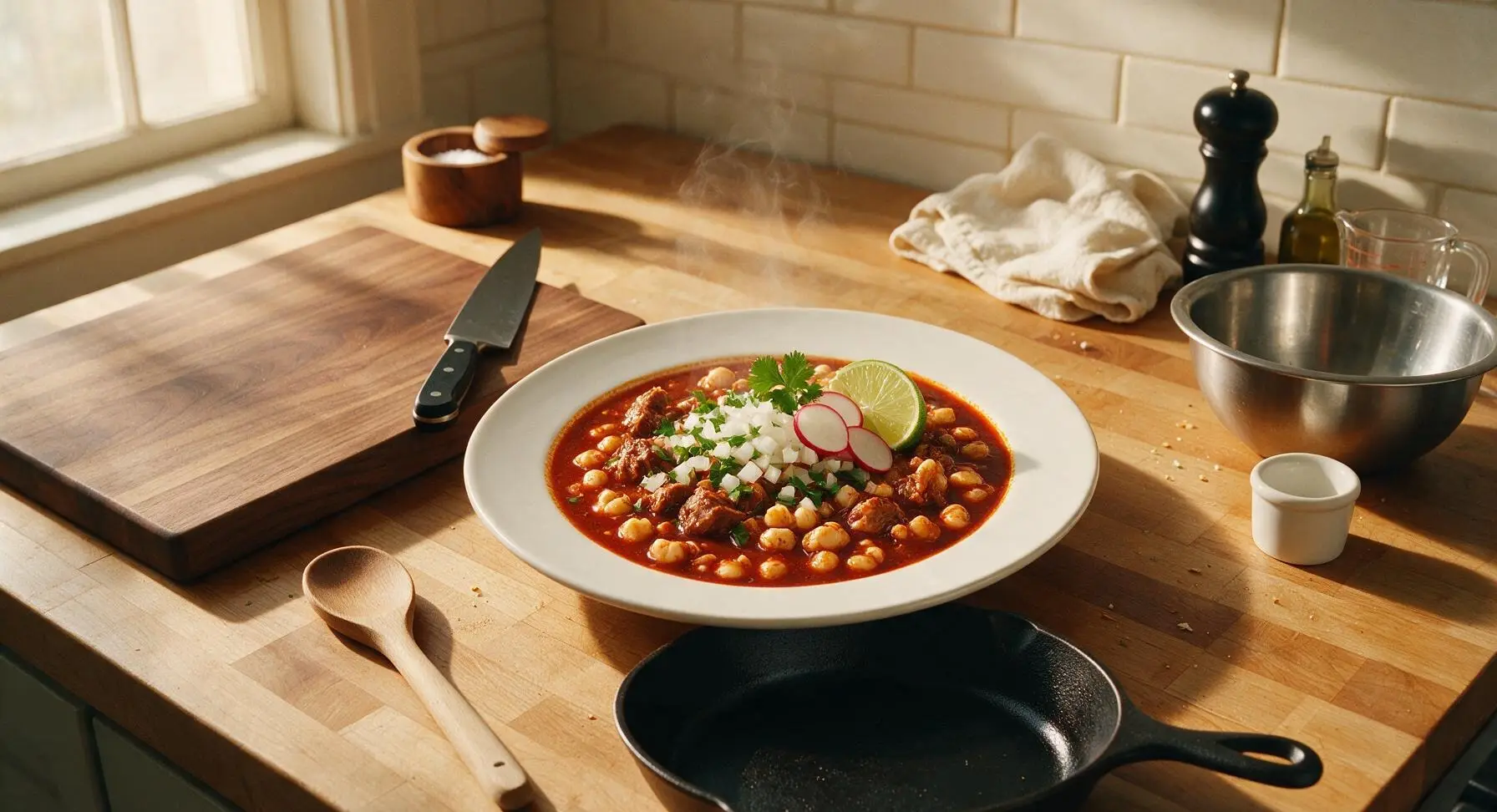
Soul-warming, hearty Mexican hominy stew slow-simmered with tender pork in a rich, aromatic red chile broth, served with bright, crisp fresh garnishes for a cozy communal meal.

Ingredients
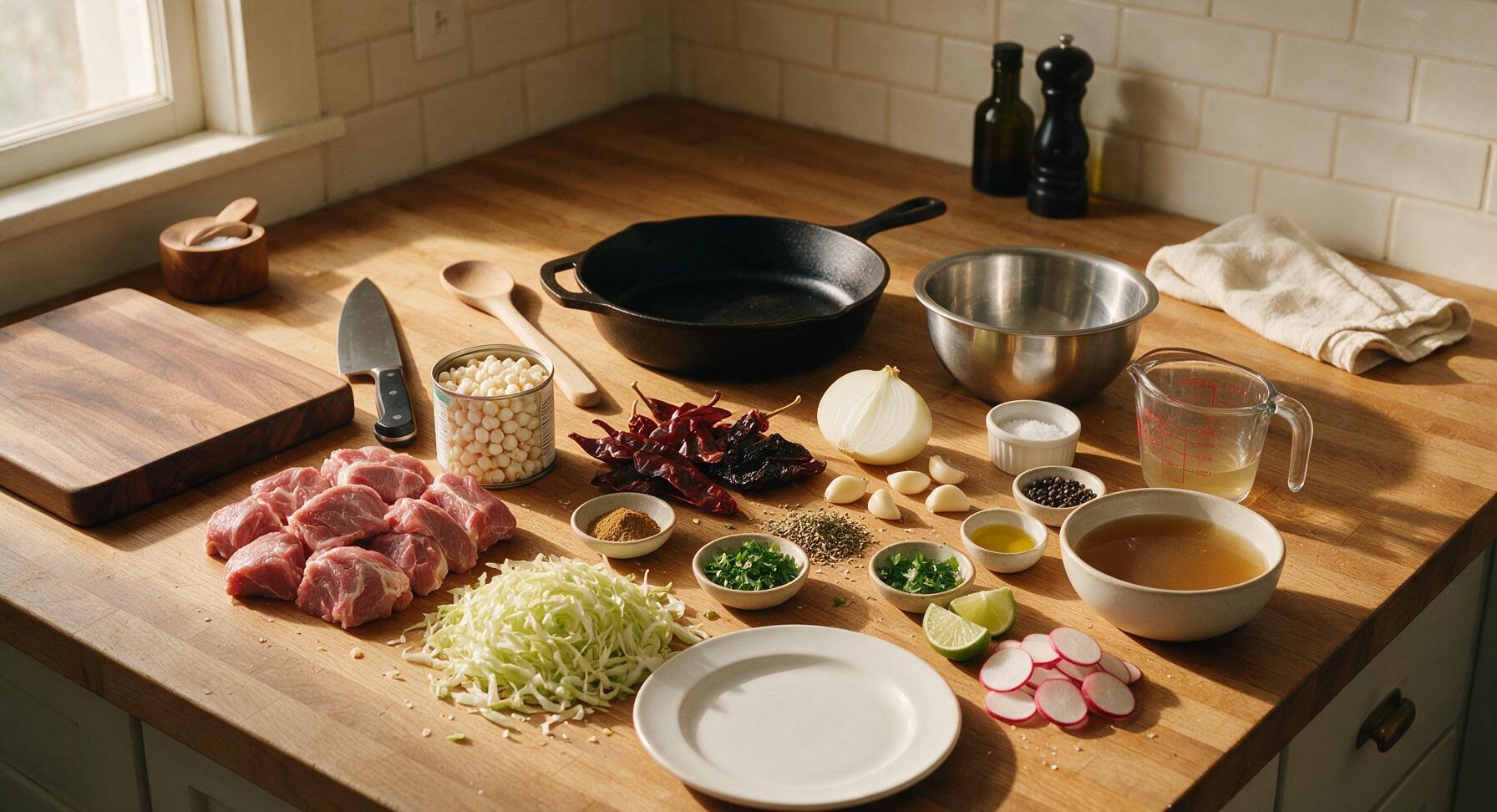
Boneless pork shoulder, cut into 5cm (2-inch) chunks 1kg (2.2 lbs)
Canned white hominy, drained and rinsed 800g (2 x 400g cans)
Dried guajillo chiles, stemmed and seeded 8 pieces (50g)
Dried ancho chiles, stemmed and seeded 2 pieces (20g)
Large white onion, quartered 1 (200g)
Garlic cloves, peeled 6 (20g)
Ground cumin 1 tsp
Dried Mexican oregano 1 tbsp, plus extra for garnish
Kosher salt 2 tsp, divided
Whole black peppercorns 1 tsp
Canola oil 1 tbsp
Low-sodium chicken broth 6 cups (1.5L)
Shredded green cabbage, for garnish 2 cups (180g)
Fresh cilantro, chopped, for garnish 1/2 cup (20g)
Lime, cut into wedges, for garnish 1 whole (100g)
Radishes, thinly sliced, for garnish 4 (80g)

Steps

1

Toast Chiles and Aromatics

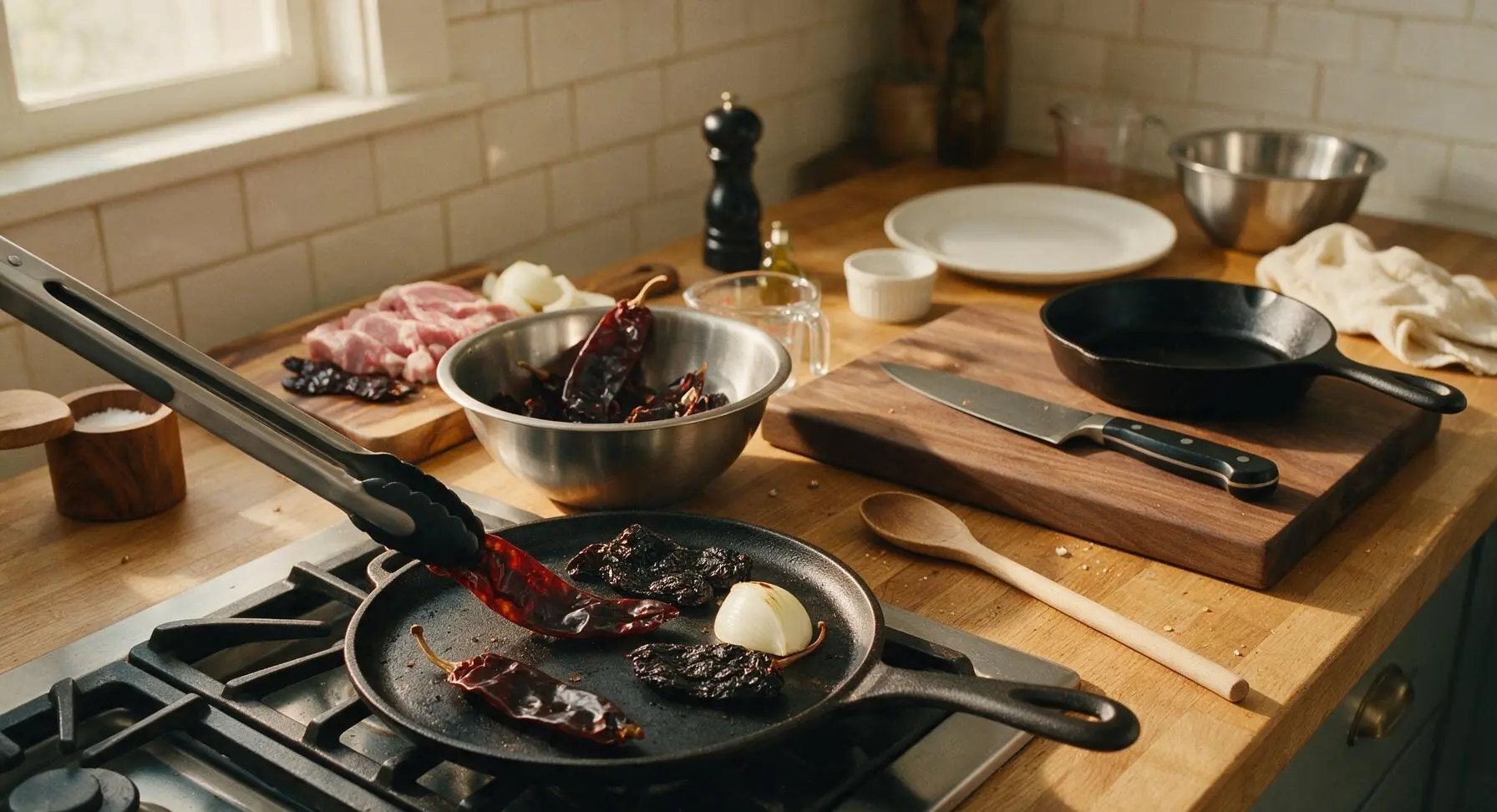
Heat the seasoned cast iron comal over medium-low heat. Place stemmed, seeded guajillo and ancho chiles, 2 quarters of the white onion, and 4 garlic cloves on the dry comal surface. Toast for 30-45 seconds per side, pressing gently with the silicone-tipped tongs, until chiles are fragrant and develop light, tan blisters (do not blacken, as this causes bitter flavor). Transfer toasted chiles and aromatics to the medium stainless steel bowl, cover with 4 cups of hot tap water, and set aside to rehydrate for 15 minutes.
Step 1
step1:Toast Chiles and Aromatics
2

Sear Pork Until Golden

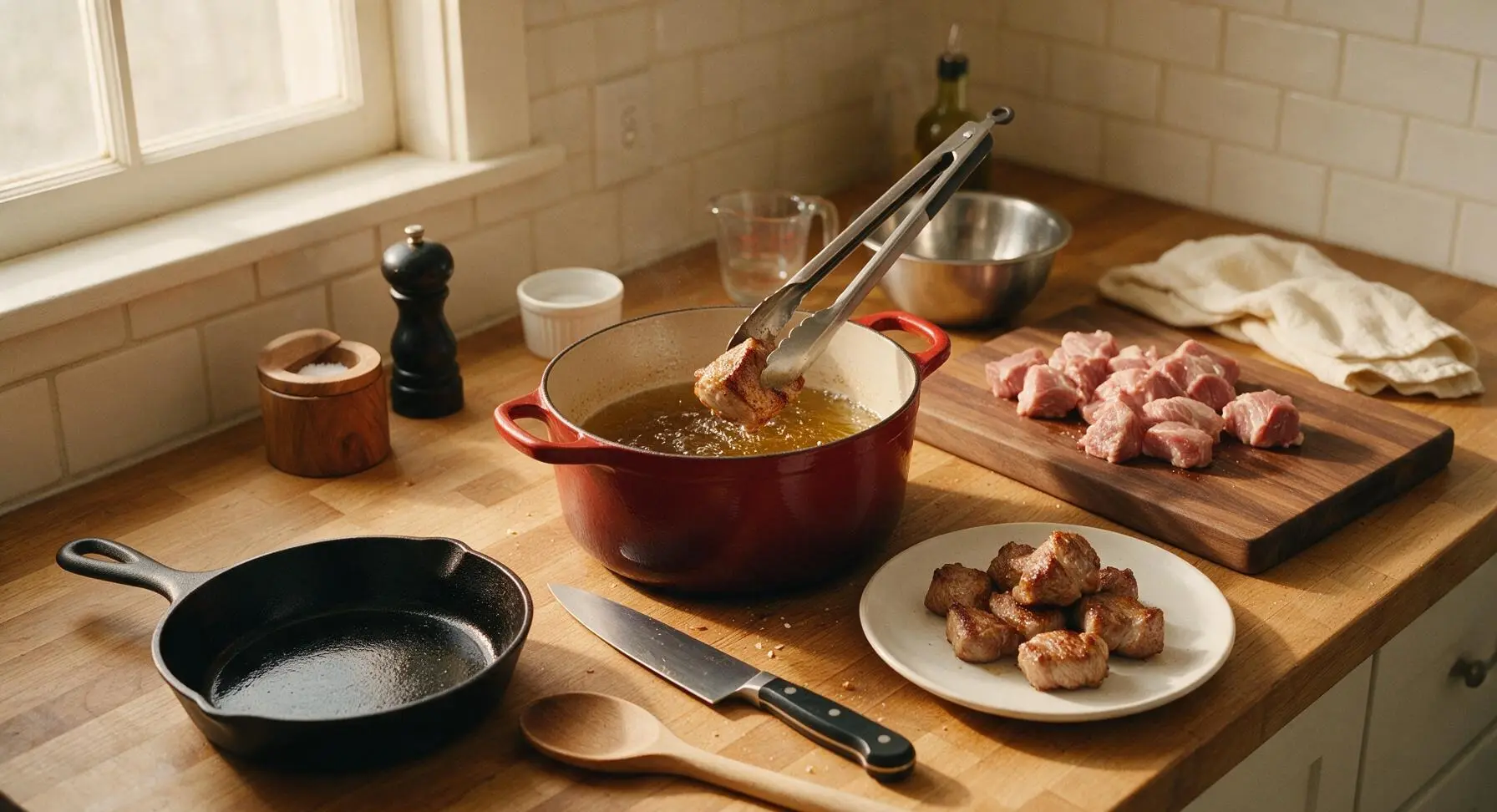
While chiles rehydrate, heat 1 tbsp canola oil in the 6-quart enameled Dutch oven over medium-high heat. Pat pork shoulder chunks completely dry with a corner of the burnt orange cotton towel, season with 1 tsp kosher salt. Working in 2 batches to avoid crowding the pan (which causes steaming instead of searing), sear pork for 3-4 minutes per side until deep golden brown on all edges. Use tongs to transfer seared pork to a clean plate, set aside.
Step 2
step2:Sear Pork Until Golden
3

Blend Smooth Chile Base

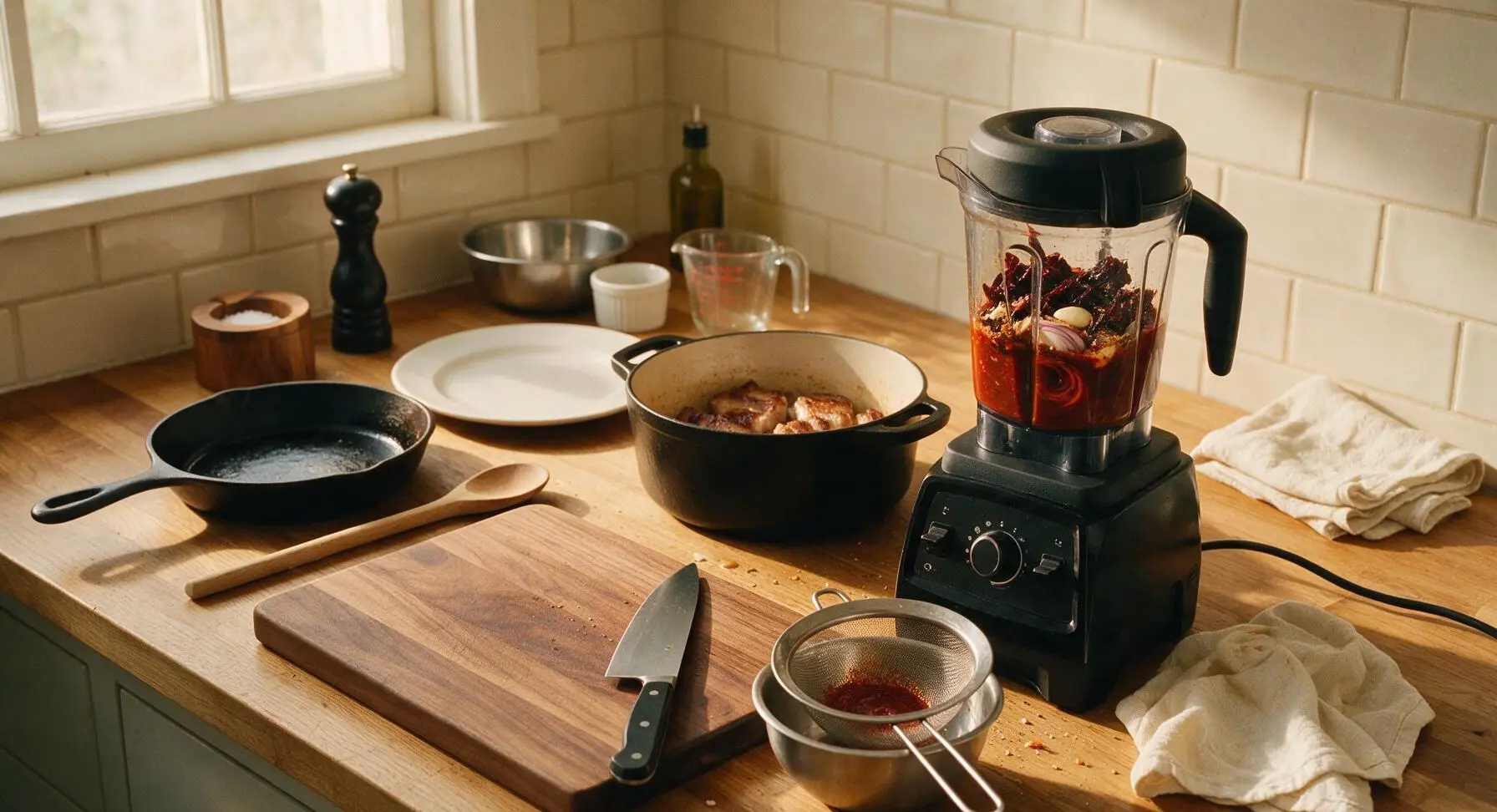
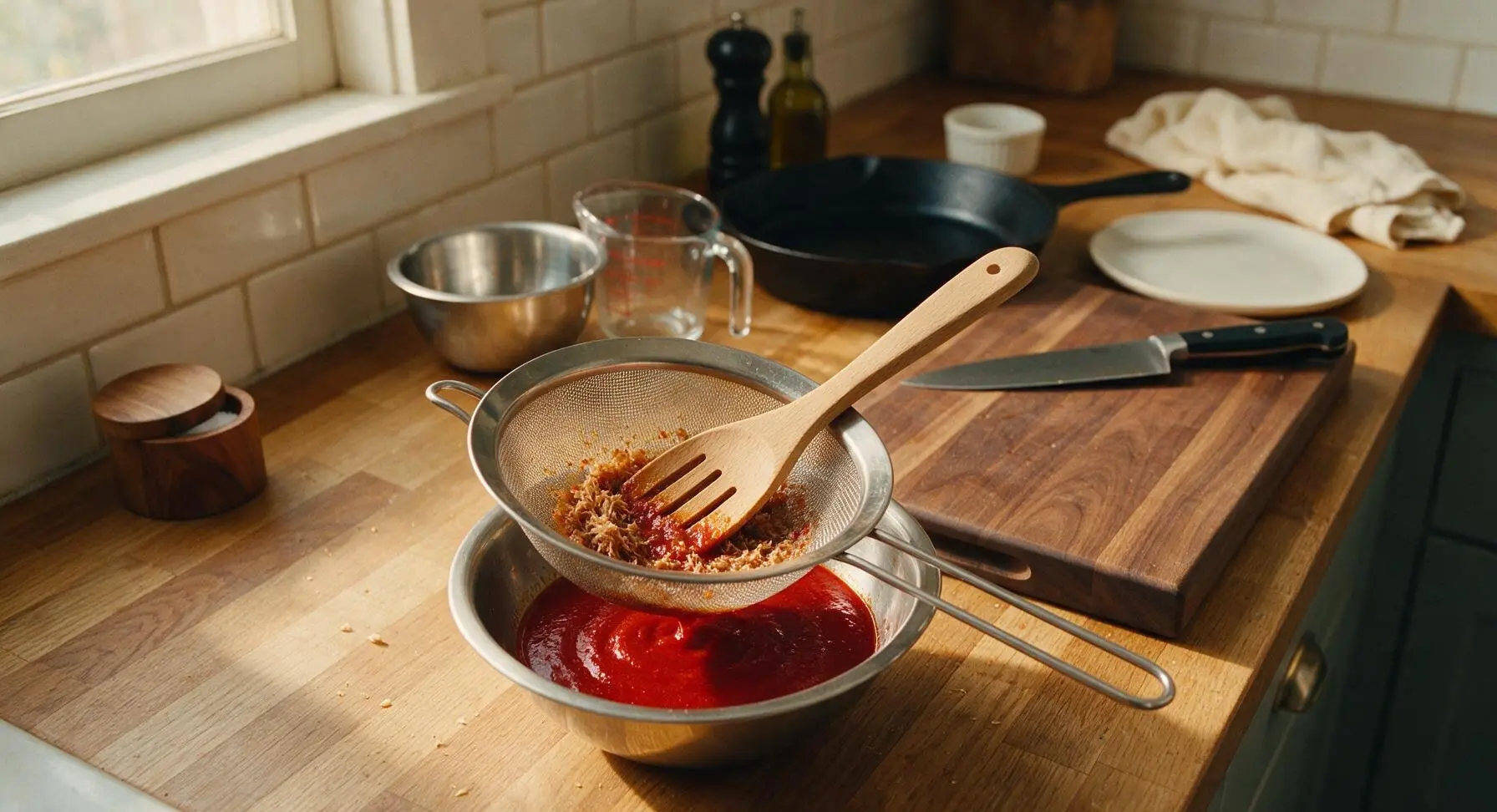
After 15 minutes of soaking, drain chiles, reserving 1 cup of the dark red soaking liquid. Add drained chiles, toasted onion and garlic, remaining raw onion quarter, remaining 2 raw garlic cloves, cumin, black peppercorns, and remaining 1 tsp kosher salt to the blender pitcher. Pour in the reserved chile soaking liquid, then blend on high speed for 2 full minutes until completely smooth. Pour the blended chile mixture through the fine-mesh strainer into the small stainless steel bowl, pressing firmly with the back of the slotted spoon to extract all smooth liquid; discard the fibrous skins and seeds left in the strainer.
Step 3
step3:Blend Smooth Chile Base
Step 3
step3:Blend Smooth Chile Base
4

Simmer Chile Broth Base

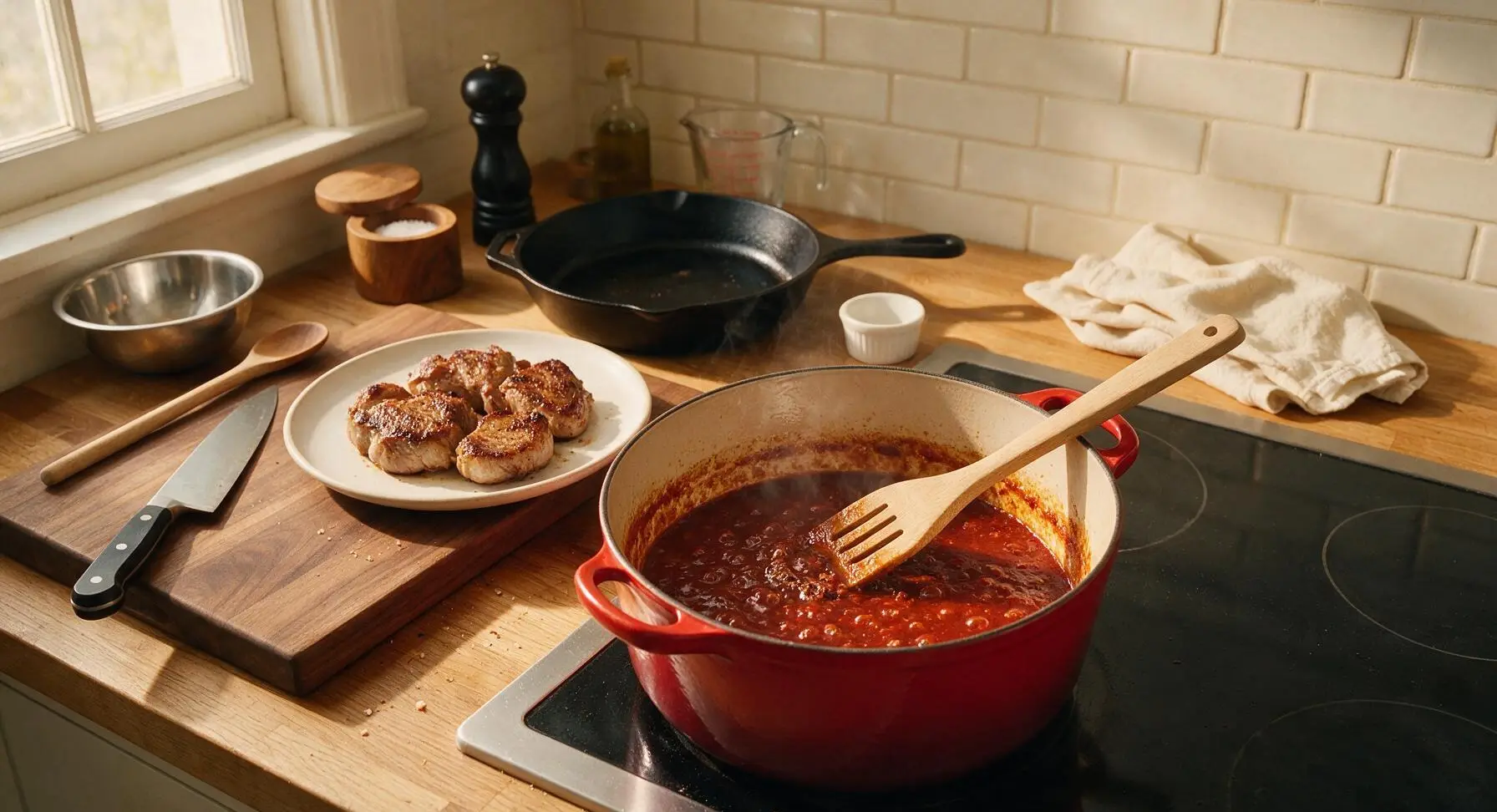
Return the Dutch oven (with leftover pork searing bits, called fond, left in the pan) to medium heat. Pour the strained chile sauce into the pot, scraping the pan bottom with the slotted spoon to lift all browned fond into the sauce for extra depth. Cook the sauce for 5 minutes, stirring occasionally, until it thickens slightly and darkens to a deep ruby red. Pour in the 6 cups of chicken broth, stir to fully combine, and bring to a gentle, low rolling simmer.
Step 4
step4:Simmer Chile Broth Base
5

Slow Cook Tender Pork

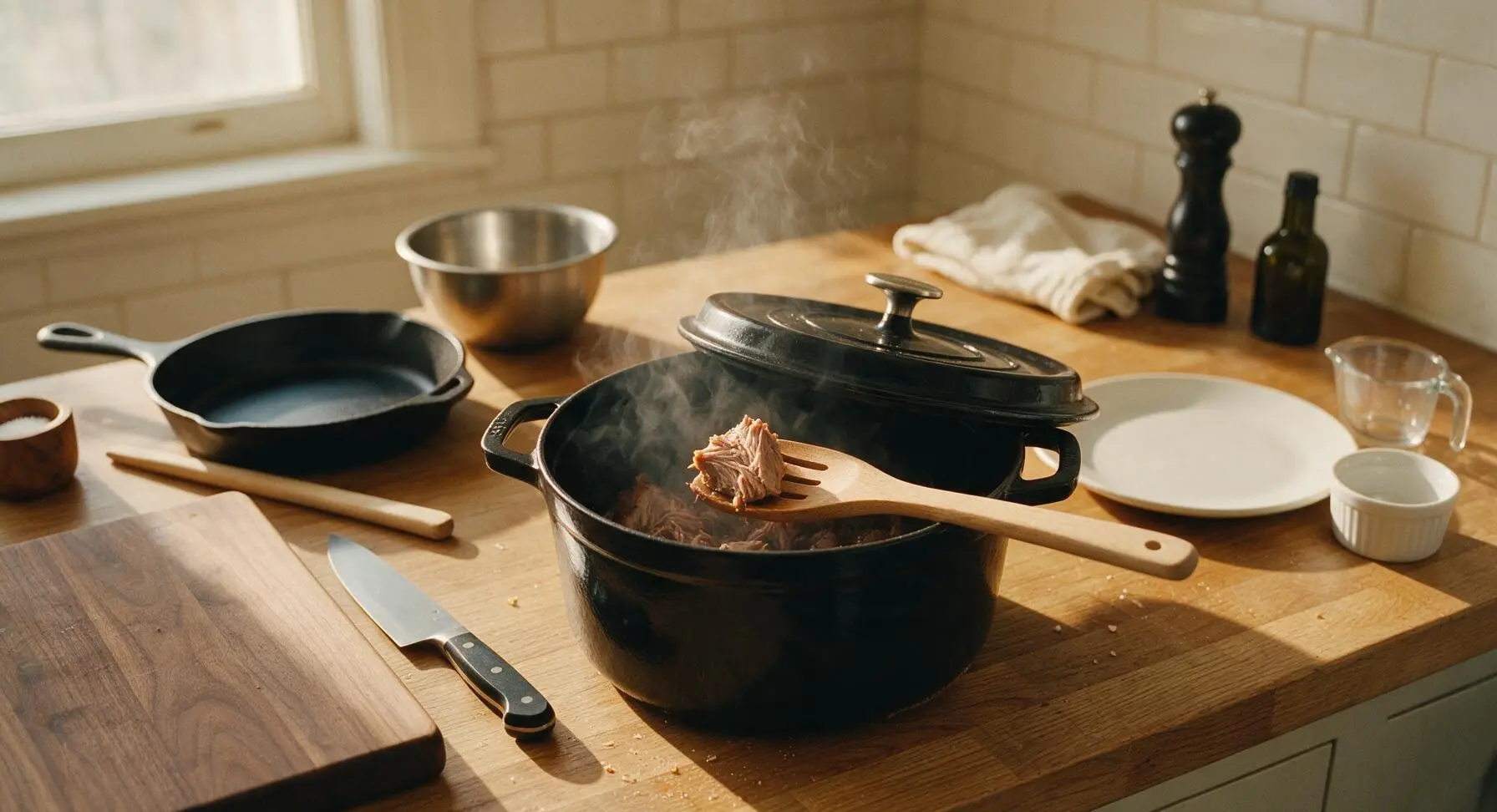
Return all seared pork chunks to the simmering chile broth, stir in 1 tbsp dried Mexican oregano. Reduce heat to low, cover the Dutch oven with its lid, and simmer for 1 hour 30 minutes, stirring every 30 minutes to prevent sticking, until pork is fork-tender and pulls apart easily when prodded with the spoon.
Step 5
step5:Slow Cook Tender Pork
6

Add Hominy and Finish

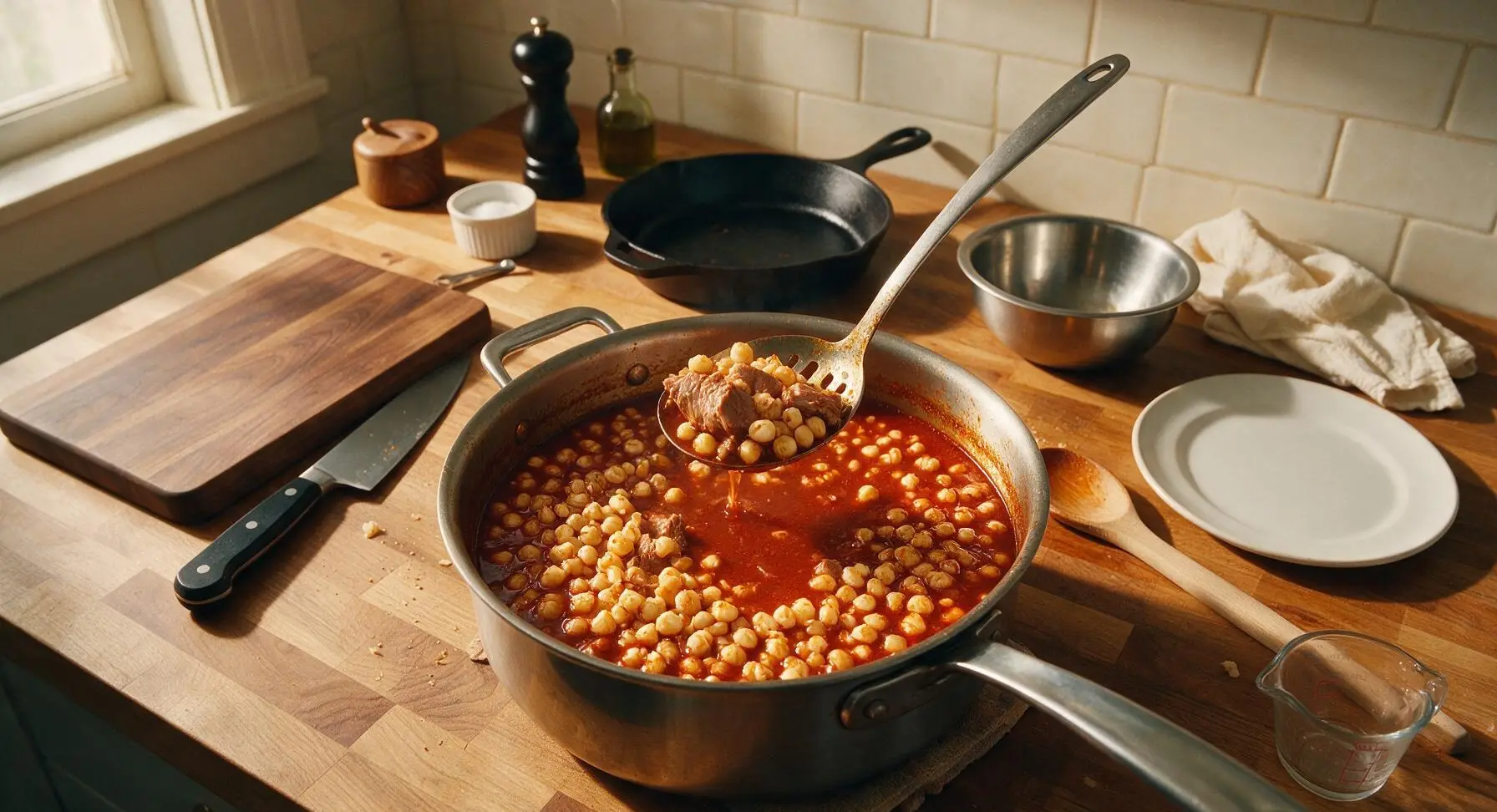
Once pork is fully tender, stir in the drained, rinsed hominy. Continue to simmer uncovered for 15 minutes, allowing hominy to absorb chile broth flavor and the broth to thicken slightly. Taste and adjust salt if needed; the finished broth should be rich, savory, and lightly fruity from the chiles, with no bitter aftertaste.
Step 6
step6:Add Hominy and Finish
7

Prep Fresh Garnishes

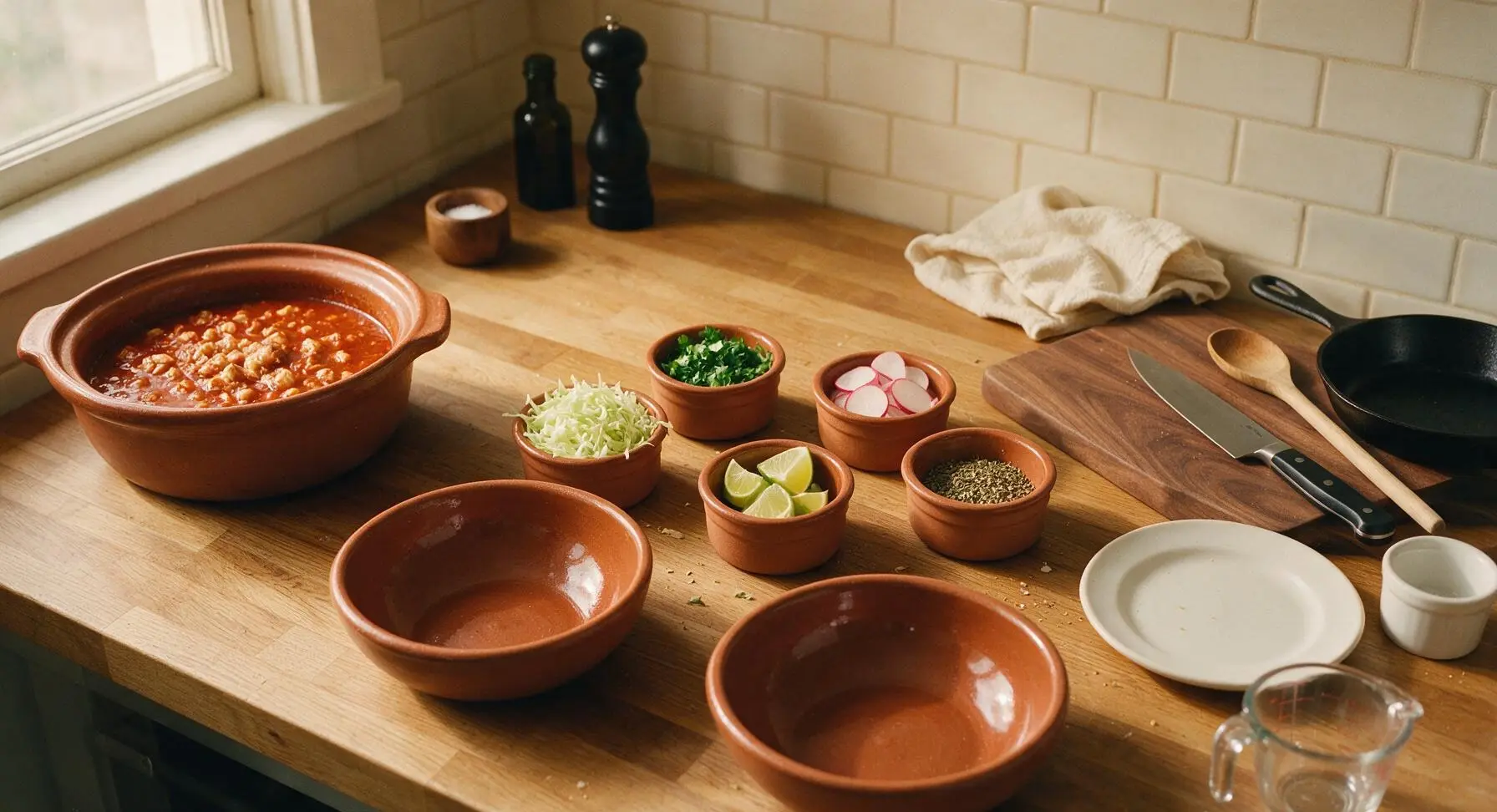
While hominy simmers, arrange prepared garnishes in the small terracotta ramekins: shredded green cabbage, chopped cilantro, thinly sliced radish, extra dried oregano, and lime wedges. Ladle finished pozole into the wide terracotta soup bowls, top with a small handful of each garnish, and serve hot.
Step 7
step7:Prep Fresh Garnishes

Tips

1.Avoid burning dried chiles during toasting: even 10 seconds of blackened char will make the broth unpleasantly bitter. Remove chiles from the comal as soon as they release a warm, fruity aroma and develop light blisters, about 30 seconds per side.
2.Always strain the blended chile base: pressing the puree through a fine-mesh strainer removes tough, fibrous chile skins and seeds, creating a silky, smooth broth instead of a gritty, uneven final stew.
3.Serve with all the fresh garnishes: crisp shredded cabbage, tangy lime, peppery radish, and bright cilantro cut through the rich, slow-simmered pork and chile broth, balancing deep savoriness with bright, fresh texture and acidity, just as pozole is traditionally served.
✨ You May Also Like

Soups & Stews
🍜 Japan

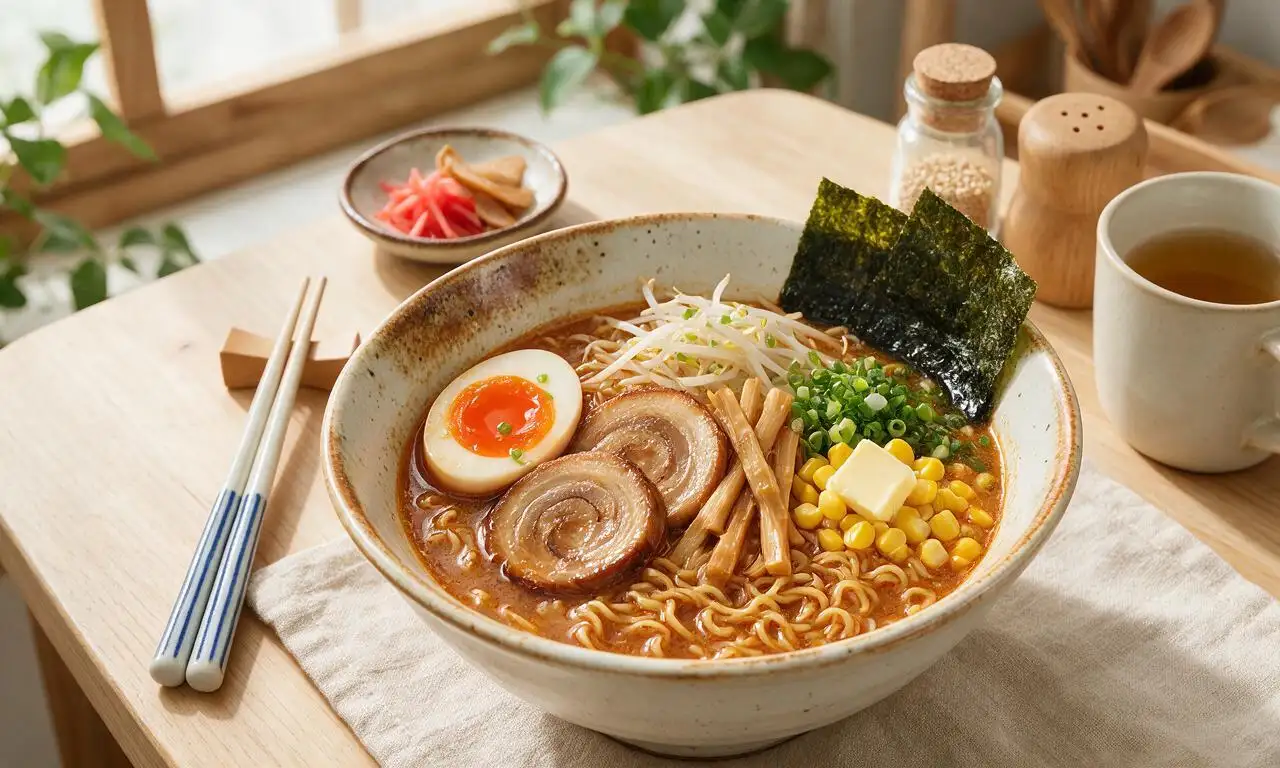
Rich, umami-dense Hokkaido-style miso ramen with chewy noodles, savory fermented broth, and classic toppings, a cozy, deeply satisfying warm meal.

⏱️ 45 minuteSoups & Stews ★ 4.5
Soups & Stews
🍜 United States

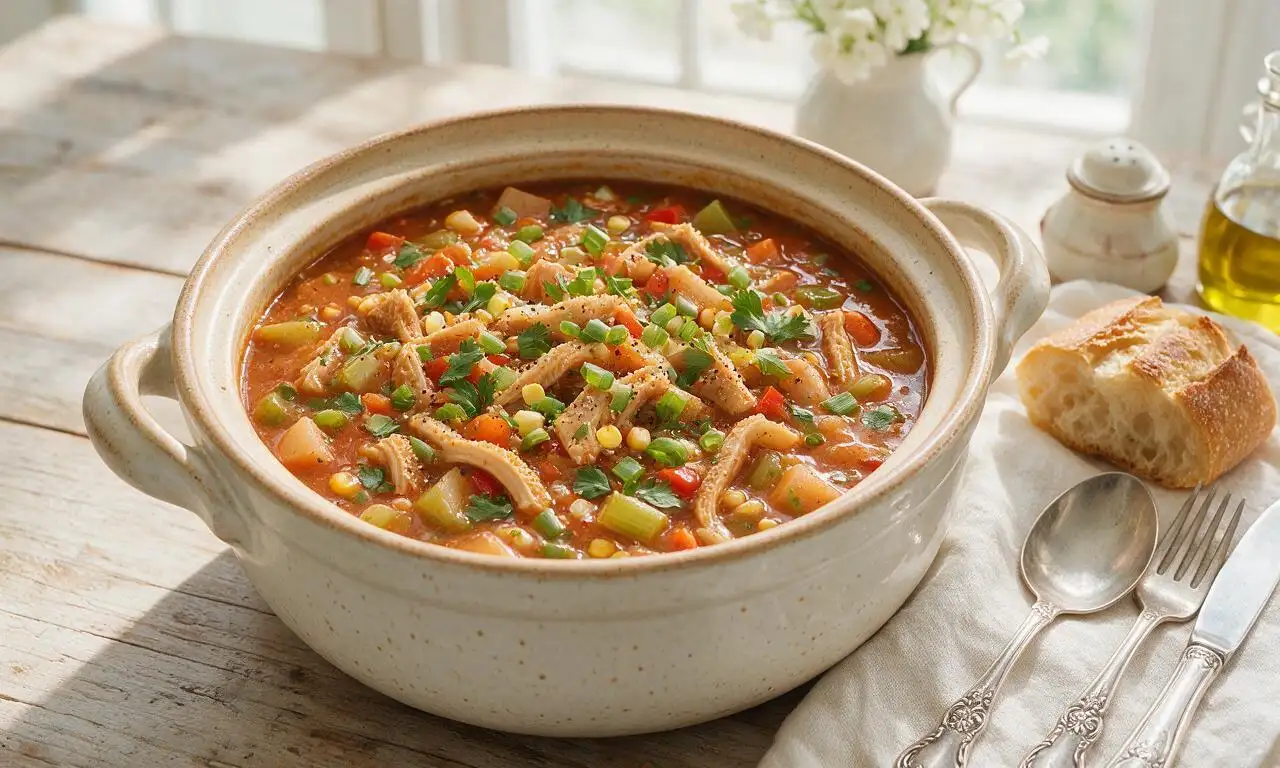
A hearty, peppery tripe and root vegetable stew with colonial Philadelphia roots, thick, warming, and packed with bold savory flavor for cold winter days.

⏱️ 2 hours 3Soups & Stews ★ 4.6
Soups & Stews
🍜 Mexico

Hearty, warming red pork posole loaded with tender hominy, slow-simmered in a rich smoky chile broth, served with zesty fresh garnishes for a deeply comforting, satisfying meal.

⏱️ 2 hours 3Soups & Stews ★ 4.7
Soups & Stews
🍜 United States

Warm, soothing classic chicken noodle soup loaded with tender chicken, soft egg noodles, and savory veggies, perfect for chasing chills and feeding the whole family.

⏱️ 40 minuteSoups & Stews ★ 4.9
Soups & Stews
🍜 France

Deeply savory caramelized onion broth topped with crusty bread and bubbly melted Gruyère, a timeless French bistro comfort food ideal for cold days.

⏱️ 1 hour 25Soups & Stews ★ 4.8
Soups & Stews
🍜 United States

Hearty, briny Maryland crab soup loaded with sweet blue crab, tender summer vegetables, and zesty Old Bay, a beloved Chesapeake Bay coastal comfort staple.

⏱️ 55 minuteSoups & Stews ★ 4.9

Pozole:Frequently Asked Questions

1.What cut of pork works best for traditional red pozole, and why? ▾
Boneless pork shoulder is the ideal pick here, cut into uniform 5cm (2-inch) chunks. Its generous marbling melts slowly during the long simmer, creating fall-apart tender meat and adding rich, savory depth to the broth without drying out, unlike leaner cuts like pork loin that turn tough or stringy with long cooking.
2.Can I use fresh or dried hominy instead of canned white hominy for this recipe? ▾
You absolutely can, but canned white hominy is the most convenient, consistent pick for home cooks. If using dried, rehydrated hominy, extend the simmer time by 45 to 60 minutes until it’s plump with a slight chewy bite, and rinse it just as you would canned to remove any excess starchy residue.
3.What flavor roles do guajillo and ancho chiles play in the red broth? ▾
These two dried chiles build the broth’s signature layered flavor: Ancho chiles are dried ripe poblanos, with a deep, sweet, slightly raisiny, mild heat, while guajillo chiles are brighter, fruitier, with subtle earthy notes and mild-to-medium heat. Using both creates balance instead of a flat, one-note chile flavor.
4.Do I really need to stem and seed the dried chiles before making the broth? ▾
Yes, stemming and seeding both guajillo and ancho chiles is a key step. The tough, woody stems won’t break down during blending, and excess seeds can add harsh, bitter grit and unbalanced sharp heat to your final broth. If you prefer extra heat, you can always set aside a small handful of seeds to add back in.
5.Why does the recipe call for quartered white onion instead of finely diced onion? ▾
Quartered white onion simmers slowly to release its sweet, mild savoriness into the broth without breaking down into mushy little bits. Once the broth is fully flavored and the pork is tender, you can easily fish out the soft onion pieces for a smoother broth, or blend a portion in for extra savoriness.
6.How long should I simmer pozole to get the ideal tender texture? ▾
Plan for a low, gentle simmer of 2.5 to 3 hours total. Simmer the pork first for 1.5 hours until it’s almost fall-apart tender, then add your blended chile base and rinsed hominy to simmer for the final hour so the hominy plumps and absorbs flavor without turning mushy or waterlogged.
7.My red chile broth turned out gritty—what did I do wrong? ▾
Gritty broth almost always comes from skipping a key processing step for your dried chiles. After toasting and soaking your guajillo and ancho chiles, blend them thoroughly, then pour the puree through a fine-mesh sieve to catch tough, unblended skin bits before adding it to the pot for a silky, smooth broth every time.
8.Can I make this traditional red pozole in a slow cooker instead of on the stovetop? ▾
Absolutely! Sear your 2-inch pork shoulder chunks first to build deep, caramelized flavor, then add them to the slow cooker with your quartered onion and chile base, cooking on low for 6 hours. Add the rinsed canned hominy during the last 45 minutes so it doesn’t turn overly soft and mushy.
9.What’s a good substitute for pork if I don’t eat red meat? ▾
You can swap the pork shoulder for skinless, bone-in chicken thighs cut into large chunks for a lighter version, simmering for only 45 minutes before adding hominy and chile base. For a vegetarian take, use large chunks of butternut squash and jackfruit with vegetable broth, simmering for 1 hour total.
10.How should I store leftover red pozole, and how long does it keep? ▾
Let leftover pozole cool completely to room temperature within 2 hours of cooking, then transfer it to airtight containers and store it in the fridge for up to 4 days. The flavors actually meld and get richer the second day! You can also freeze it for up to 3 months, adding fresh garnishes only after reheating.
11.What are the traditional fresh garnishes to serve with red pozole? ▾
Stick to bright, crisp, fresh toppings to cut through the rich, hearty stew: thin-sliced radishes, shredded crisp green cabbage, chopped fresh cilantro, diced white onion, lime wedges for squeezing, dried Mexican oregano, and hot sauce for anyone who wants extra heat. Serve with warm corn tortillas on the side.
12.Should I toast the dried chiles before making the broth base? ▾
Toasting your stemmed, seeded guajillo and ancho chiles for 10 to 15 seconds per side in a dry, hot pan before soaking amplifies their deep, fruity, earthy flavor dramatically. Just don’t toast them too long—burnt chiles will add a sharp, bitter taste to your broth that’s impossible to fix once mixed in.
13.Can I use pre-ground chile powder instead of whole dried chiles as a shortcut? ▾
You can in a pinch, but the flavor won’t match the depth of whole soaked and blended ancho and guajillo chiles. If you go that route, use 3 tablespoons of pure ancho chile powder and 2 tablespoons of pure guajillo chile powder (not generic chili powder with added cumin and garlic), whisked in to avoid clumps.
14.Why is my pork still tough even after simmering for hours? ▾
Tough pork almost always comes from simmering at too high a rolling boil, rather than a low, gentle bubble, or cutting chunks smaller than the recommended 2-inch size. A hard boil makes pork muscle seize up and turn tough, while low, slow heat lets connective tissue break down into silky, tender richness.
15.Do I really need to rinse canned hominy before adding it to the pot? ▾
Yes, always drain and thoroughly rinse canned white hominy before adding it to your pozole. Canned hominy is packed in a starchy, slightly briny liquid that can make your broth cloudy, overly salty, or give it an odd, tinny off-flavor. A quick rinse under cool running water removes that residue for clean, bright flavor.
16.How spicy is traditional red pozole, and can I adjust the heat level? ▾
Traditional red pozole is mild to medium in heat, since ancho and guajillo chiles are both relatively low on the Scoville scale. If you want more heat, add 1 to 2 stemmed, seeded dried arbol chiles to your chile blend when soaking, or offer hot sauce on the side so guests can customize their own bowls.
17.Can I prep components of the pozole ahead of time to cut down on day-of cooking? ▾
Absolutely! You can toast, soak, blend, and strain the guajillo and ancho chile base up to 3 days ahead, storing it in an airtight jar in the fridge. You can also sear the pork chunks a day ahead, so all you have to do day-of is combine ingredients and let them slow-simmer to perfection.
18.What’s the difference between red pozole, white pozole, and green pozole? ▾
The three classic pozole styles are defined by their broth base: Red pozole uses a guajillo and ancho chile base for its deep, rich color; white pozole skips colored chiles for a clear, savory broth; green pozole uses a bright base of roasted tomatillos, jalapeños, and cilantro for a tangy, fresh profile.
19.Why is red pozole such a popular meal for group gatherings and celebrations? ▾
Pozole is made for sharing because it’s easy to scale up for a crowd, holds up well for long, leisurely meals, and lets guests customize their own bowls with their favorite garnishes. It’s a beloved staple at Mexican holidays and family gatherings, since the slow-simmered pot feels warm, welcoming, and made for gathering around.

Comments (11)

2 weeks ago

OMG this red pozole is a total game changer for our Sunday family dinners! I made it for my husband and three kids last weekend, and every single one went back for seconds. I added a little extra lime on top like my abuela used to, and it tasted exactly like the pozole I grew up eating at family holidays. 10/10 will be making this monthly for sure!

1 week ago

Wait did you use bone-in pork shoulder like the recipe says? I was thinking of swapping for chicken since my kid doesn’t love red meat, curious if that works!

5 days ago

That makes us so happy to hear, Julie! If you (or Sam!) want to swap for chicken, we recommend using bone-in chicken thighs for the richest flavor—just reduce the simmer time to 45 minutes so the chicken doesn’t get tough. The extra lime touch sounds perfect!

3 days ago

I meal prepped this on Sunday and ate it for lunch all week, and it somehow got better every single day? The broth is so deep and rich, and the red chile flavor isn’t too spicy for people who can’t handle a ton of heat. 10/10 for meal prep, it freezes amazingly too if you want to stash half for a busy week later.

2 days ago

Made this for our church potluck this past weekend and it was the first dish to get completely wiped out! My only tiny note is that the cook time was a little longer than 2 hours for me—my pork took closer to 2.5 hours to get fall-apart tender. Maybe because I used a slightly bigger cut? Either way, totally worth the extra time.

yesterday

Thanks so much for the honest feedback, Pat! Cook time can definitely vary a bit based on the size of your pork cut and your stovetop heat, so we’re glad you adjusted to get that perfect tender texture. We love that it was a hit at the church potluck!

5 days ago

If you love extra spicy food like me, do yourself a favor and toss in a couple of dried arbol chiles when you’re blending the red sauce. Game. Changer. I was worried the base would be too mild for my heat tolerance, but that little tweak made it perfect. My roommate who hates spicy food just topped hers with extra sour cream and cabbage and loved it too!

3 days ago

Oh thank god for this tip! I’m a total wimp when it comes to spice, would you say the base recipe is mild enough as written for people like me?

2 days ago

@MildMouthMia totally! The base has that deep chile flavor but barely any heat, no burn at all. You’ll love it!

1 week ago

I’ve been making red pozole for over 40 years, and I was skeptical a random online recipe could hold a candle to my old family recipe. Color me impressed! The ratio of chiles to broth is spot on, and the tip to toast the dried chiles before blending made the flavor so much deeper than my usual method. My grandkids ate two bowls each and asked when I’m making it again.

5 days ago

This review means the world to us, Lila! Toasting the chiles is such a simple step but it makes such a huge difference in the final flavor. We’re so glad you and your grandkids enjoyed it!

30 minutes ago

First time making pozole ever and I was intimidated because I heard it’s super labor intensive, but this recipe broke every step down so clearly! I was worried I’d mess up the red chile sauce, but following the instructions step by step made it totally foolproof. Served it with warm corn tortillas on the side, chef’s kiss.

yesterday

Made a big pot of this for my post-soccer team dinner last night, and all the parents were asking for the recipe! I used low-sodium chicken broth instead of regular to cut down on salt a little, and it worked perfectly. The hominy is such a nice change from regular beans or rice in soup, so filling.

2 hours ago

How much did the low-sodium broth change the flavor? My husband has high blood pressure so I’m always looking for swaps that don’t make food taste bland!

30 minutes ago

Great swap, Brie! For Len—using low-sodium broth works beautifully here, just season to taste with a little extra salt at the end if needed, and you won’t notice a difference in flavor at all. It’s a great way to adjust the recipe for dietary needs!

2 hours ago

Okay y’all, I burn toast on a regular basis so I was shocked when this actually turned out edible? Wait no, better than edible—it was SO good! I did accidentally buy white hominy instead of yellow, but I don’t even think it mattered. My boyfriend said it tasted like restaurant quality, which is the highest compliment I could ever get.

30 minutes ago

This is the kind of win we love to see, Brittany! White hominy works totally interchangeably with yellow here, so no stress at all about that swap. We’re so impressed you pulled off restaurant-quality pozole even if you’re still working on your toast game 😂

1 week ago

I’m adding this to our permanent Christmas Eve menu! We usually do tamales every year, but I wanted to add something warm that people can serve themselves with all their favorite toppings, and this was perfect. Even my picky 7 year old ate a whole bowl without complaining, which is basically a miracle.

5 days ago

Wait how did this hold up next to tamales? My family does tamales for Nochebuena too and I’ve been wanting to add a soup option, but I don’t want anyone to riot lmao

3 days ago

@TamaleTim it was perfect! We set up a little toppings bar right next to the tamale platter, people went back and forth between both. No riots, just full happy bellies!

5 minutes ago

I’m a sucker for any big batch soup, and this is easily top 3 I’ve ever made. The chile broth is so complex, I couldn’t stop sipping it straight from the ladle while it was simmering. Pro tip: don’t skip the oregano, it adds that little earthy note that makes the whole thing taste like authentic pozole, not just random pork and hominy soup.

just now

I was so excited to make this for my partner’s birthday dinner last night, but my red chile sauce turned out slightly bitter? I think I might have toasted the chiles for too long on too high heat? The rest of the soup was great, but that bitter note threw it off a little. Any tips for next time?

just now

Hi Zoe! So sorry the chile sauce turned out bitter—that almost always happens when chiles are toasted over too high heat or for longer than 30-45 seconds per side. Next time, keep your heat to medium-low, toast them just until they’re fragrant and slightly pliable, and make sure to remove all the seeds and veins before blending, which can also add bitterness. We know your next batch will turn out perfect!