
prawn paste
intro
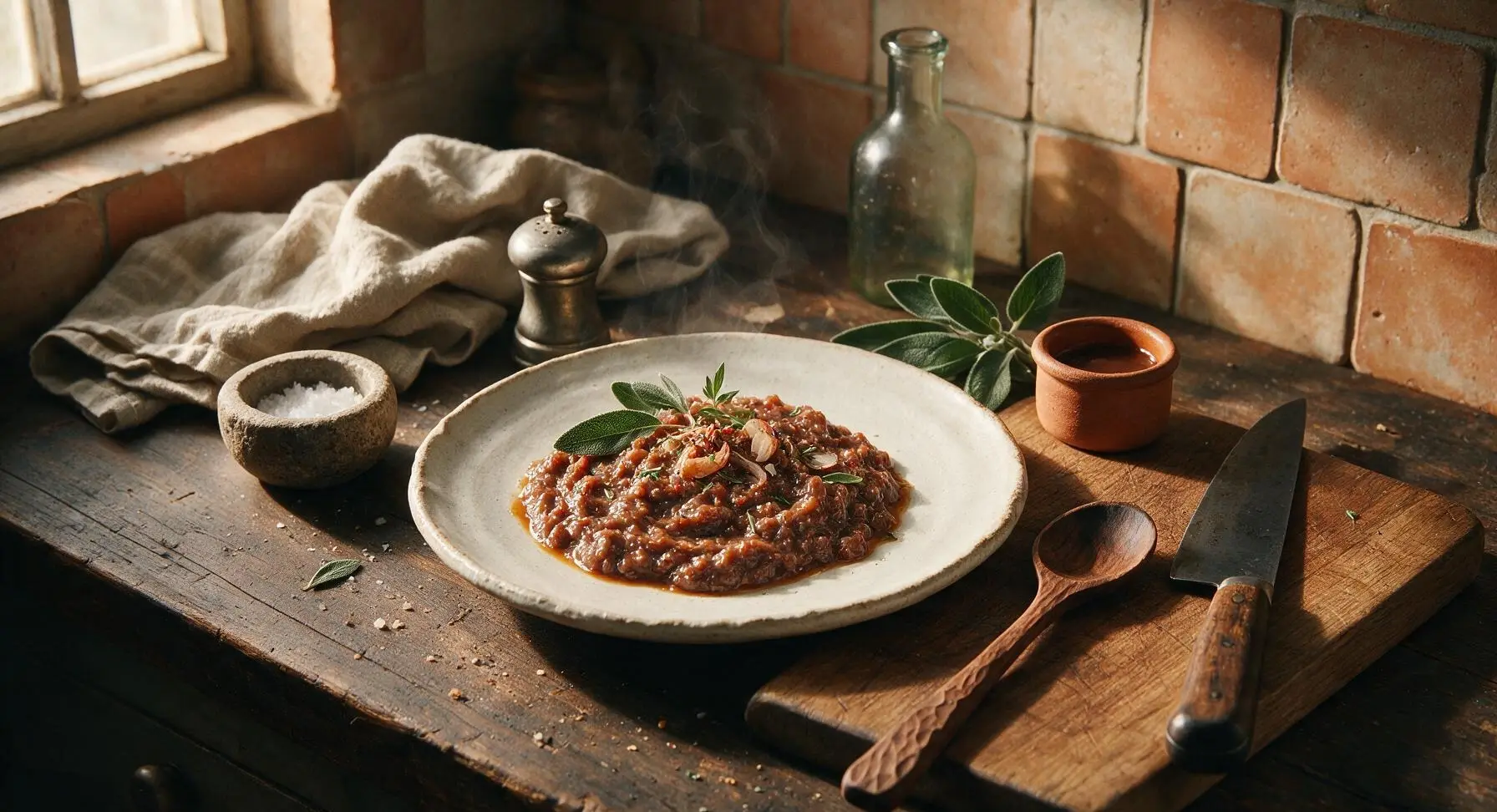
Deeply briny, umami-dense homemade prawn paste is the versatile coastal staple behind bold stir-fries, dips, and curries, bringing rich, rounded savor to every dish it touches.
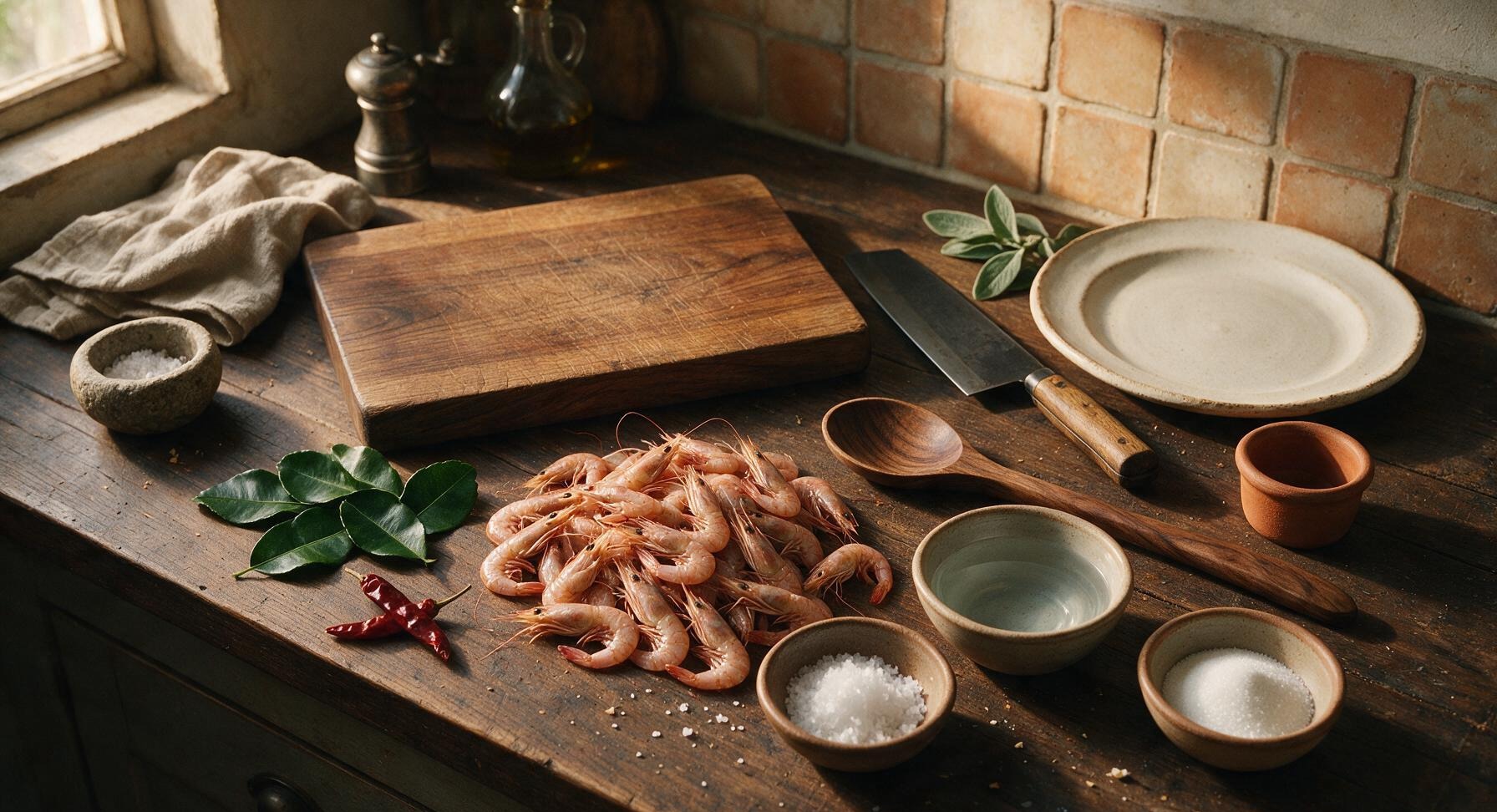
Ingredients
Steps
Clean Fresh Prawns
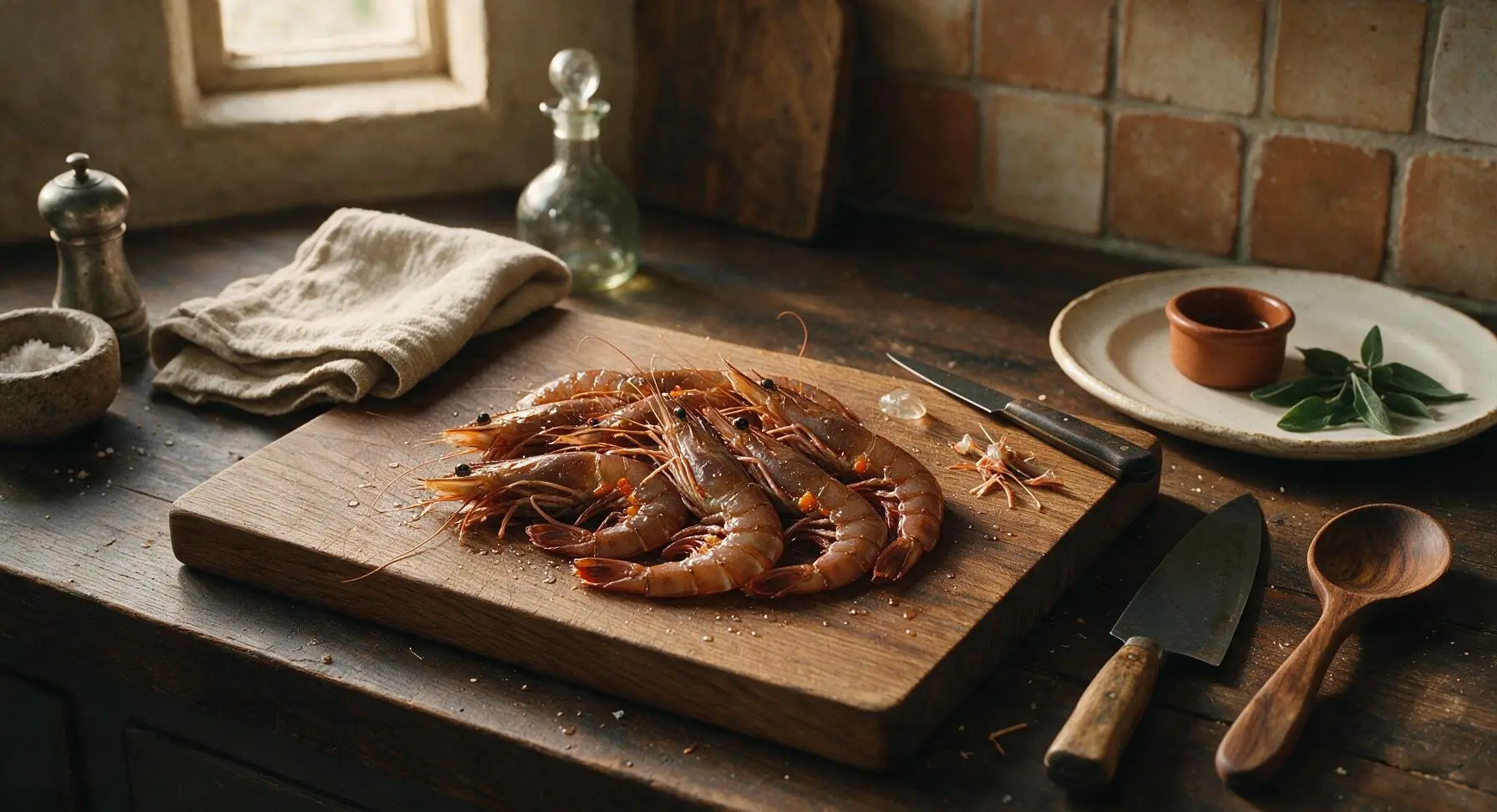
Place the whole prawns on the center of the bamboo cutting board. Use the paring knife to trim off sharp eye stalks and spiny leg tips from each prawn, leaving all shells, heads, and orange roe fully intact—these components carry the deep, signature umami of prawn paste. Do not peel or devein, as all parts will be processed and strained later. Rinse trimmed prawns briefly under cold running water, then pat lightly with the corner of the indigo cotton towel to remove excess surface moisture.
Salt Brine Prawns
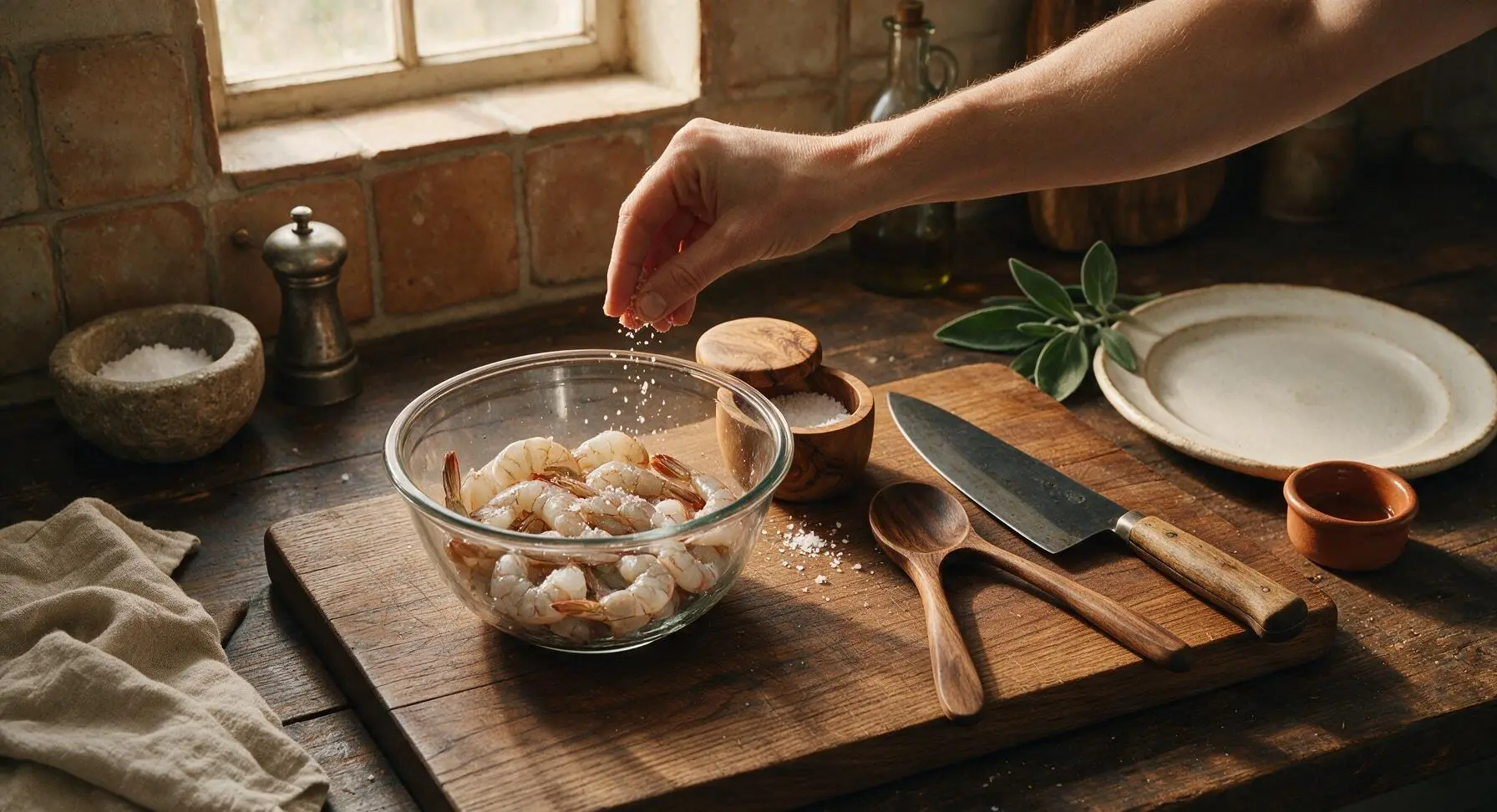
Transfer cleaned, patted prawns to the clear glass mixing bowl positioned on the left side of the cutting board. Sprinkle all 3 tablespoons of coarse sea salt evenly over the prawns, then toss gently with clean hands to coat every prawn fully in salt. Cover the bowl with a small plate, and leave to brine at cool room temperature (18-20C/65-68F) for 20 minutes, until prawns release 2-3 tablespoons of cloudy briny liquid at the bottom of the bowl.
Slow Simmer Prawns
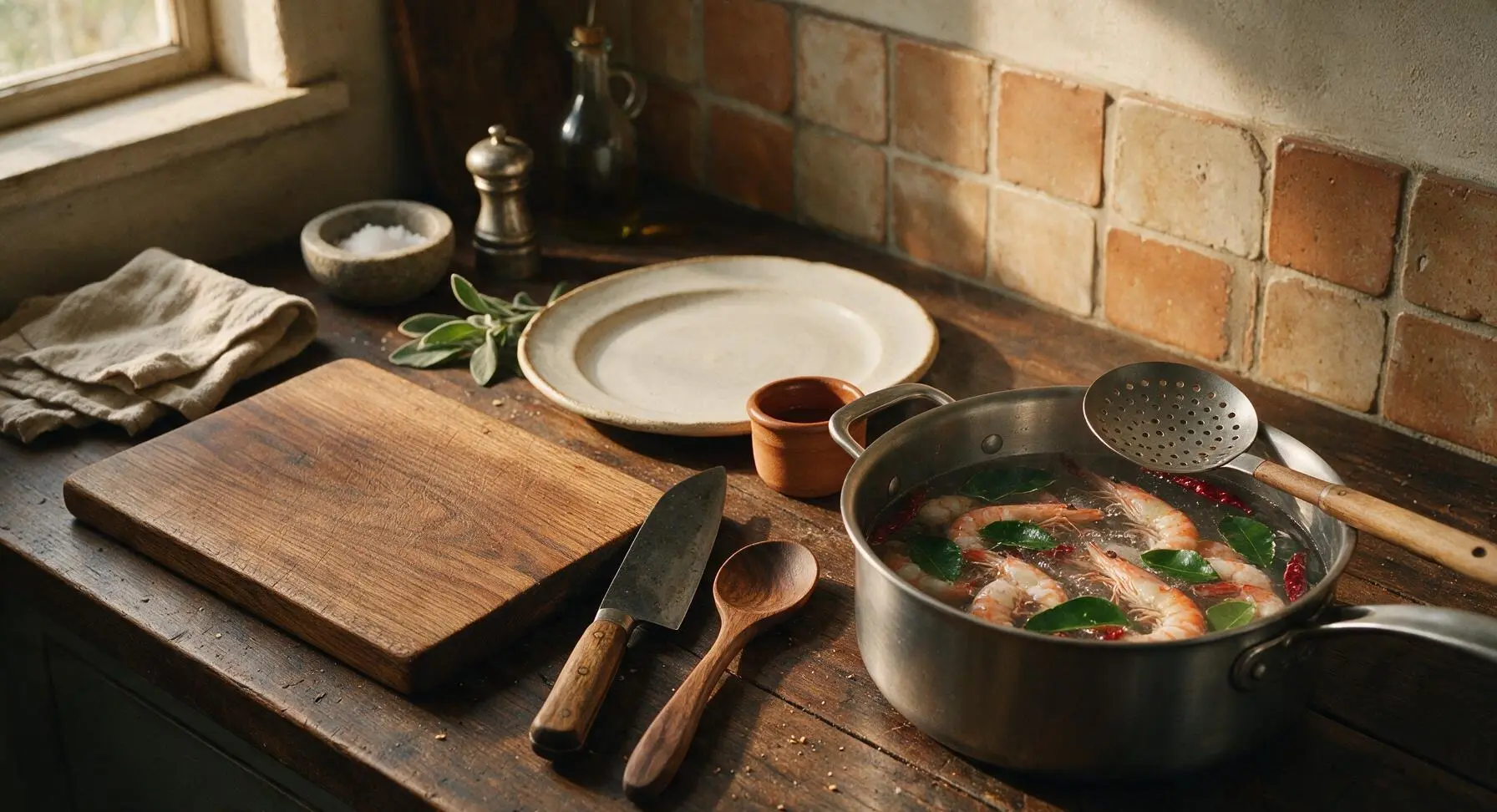
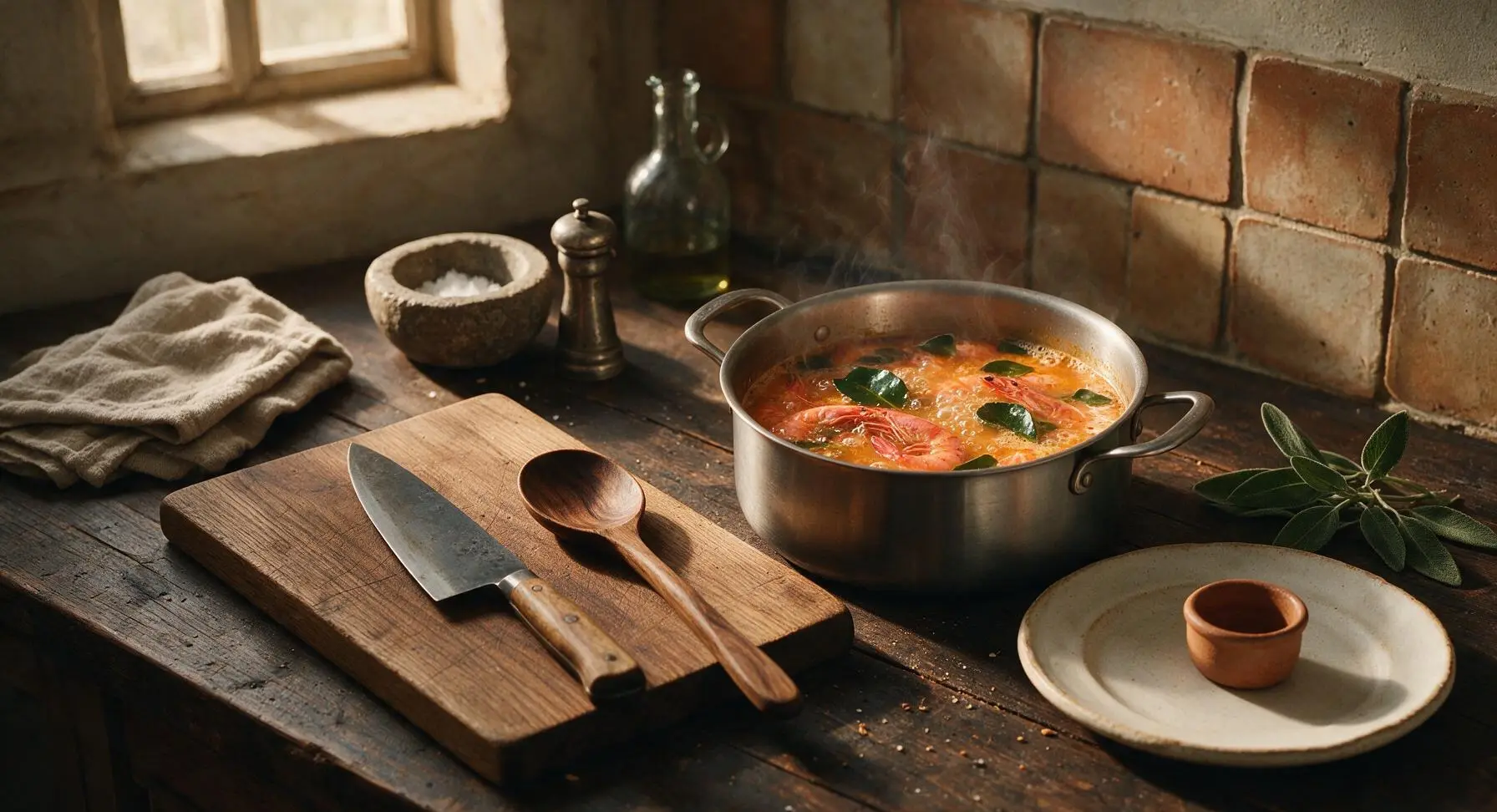
Position the brushed stainless steel stock pot 10cm to the right of the cutting board. Pour in 600ml filtered water, then add the brined prawns and all their released brine, kaffir lime leaves, and dried red chilies. Bring to a gentle simmer over medium-low heat (do not boil rapidly, as high heat will make the final paste taste harsh and bitter). Adjust heat to maintain a soft, steady bubble, and cook uncovered for 45 minutes, stirring occasionally with the slotted skimmer. When done, prawns will be deep opaque pink, and the cooking liquid will reduce by roughly one third, turning a cloudy pale orange.
Strain and Peel Solids
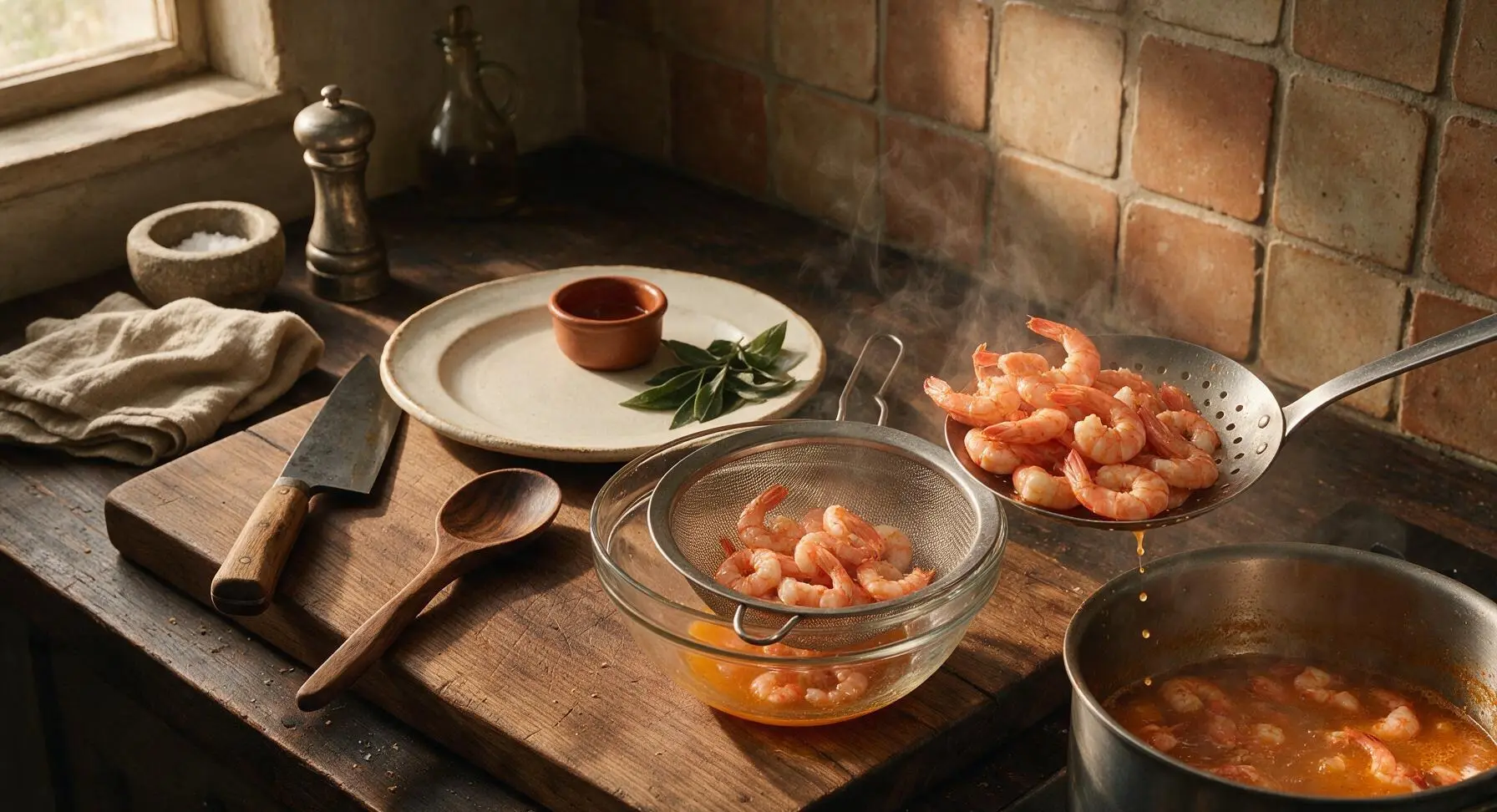
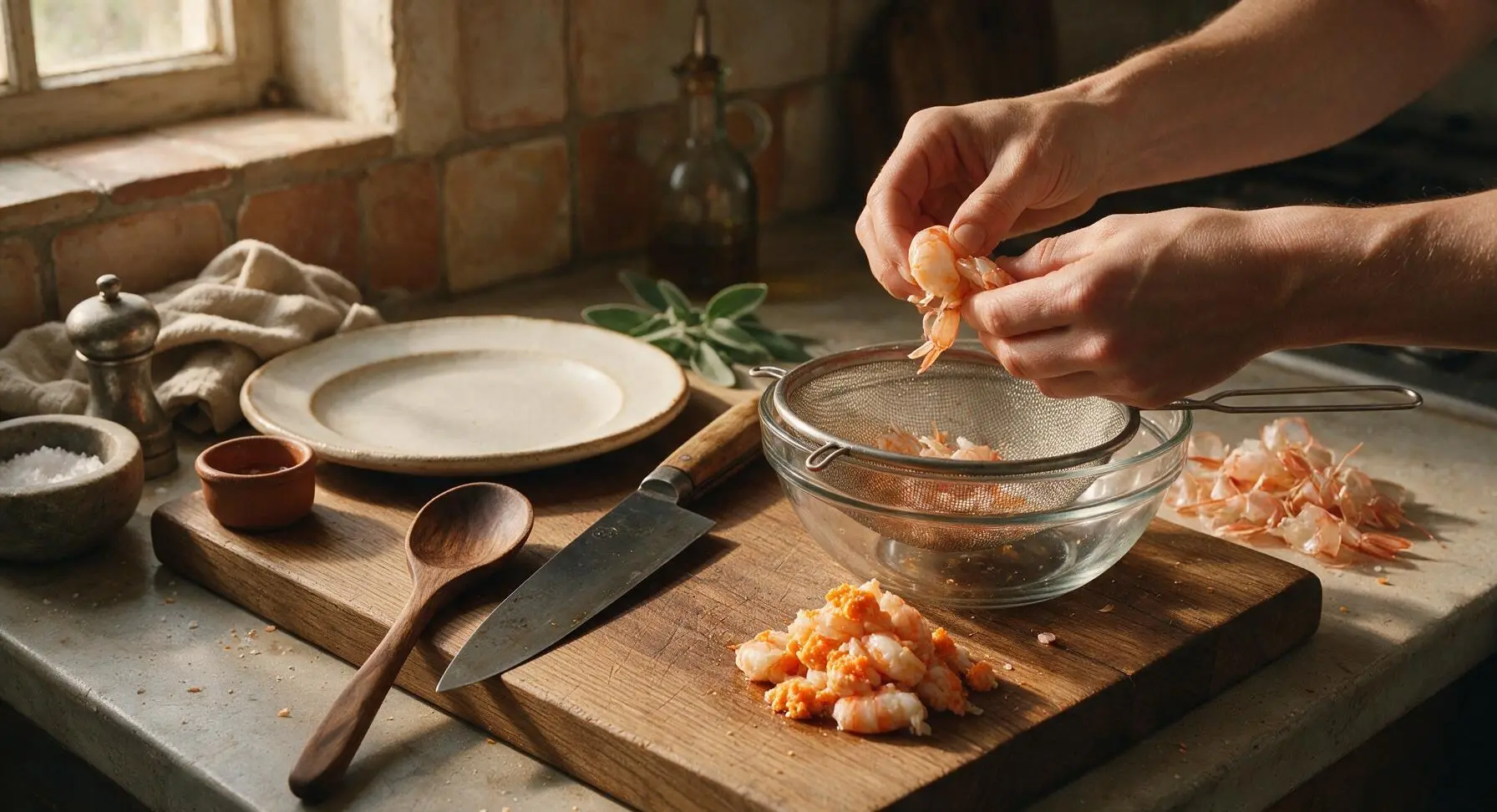
Once simmering is complete, remove the pot from heat. Use the slotted skimmer to lift all solid prawns, leaves, and chilies out of the pot into the fine-mesh stainless steel sieve set over the clear glass mixing bowl. Leave solids to cool for 5 minutes, until safe to touch without burning fingers. Peel away and discard all hard prawn shells, rigid head casings, kaffir lime leaves, and dried chilies, reserving every bit of soft cooked prawn meat, orange head fat, and roe. Pour the remaining simmering liquid from the pot through the sieve into the bowl to catch any stray shell fragments.
Blend to Smooth Paste
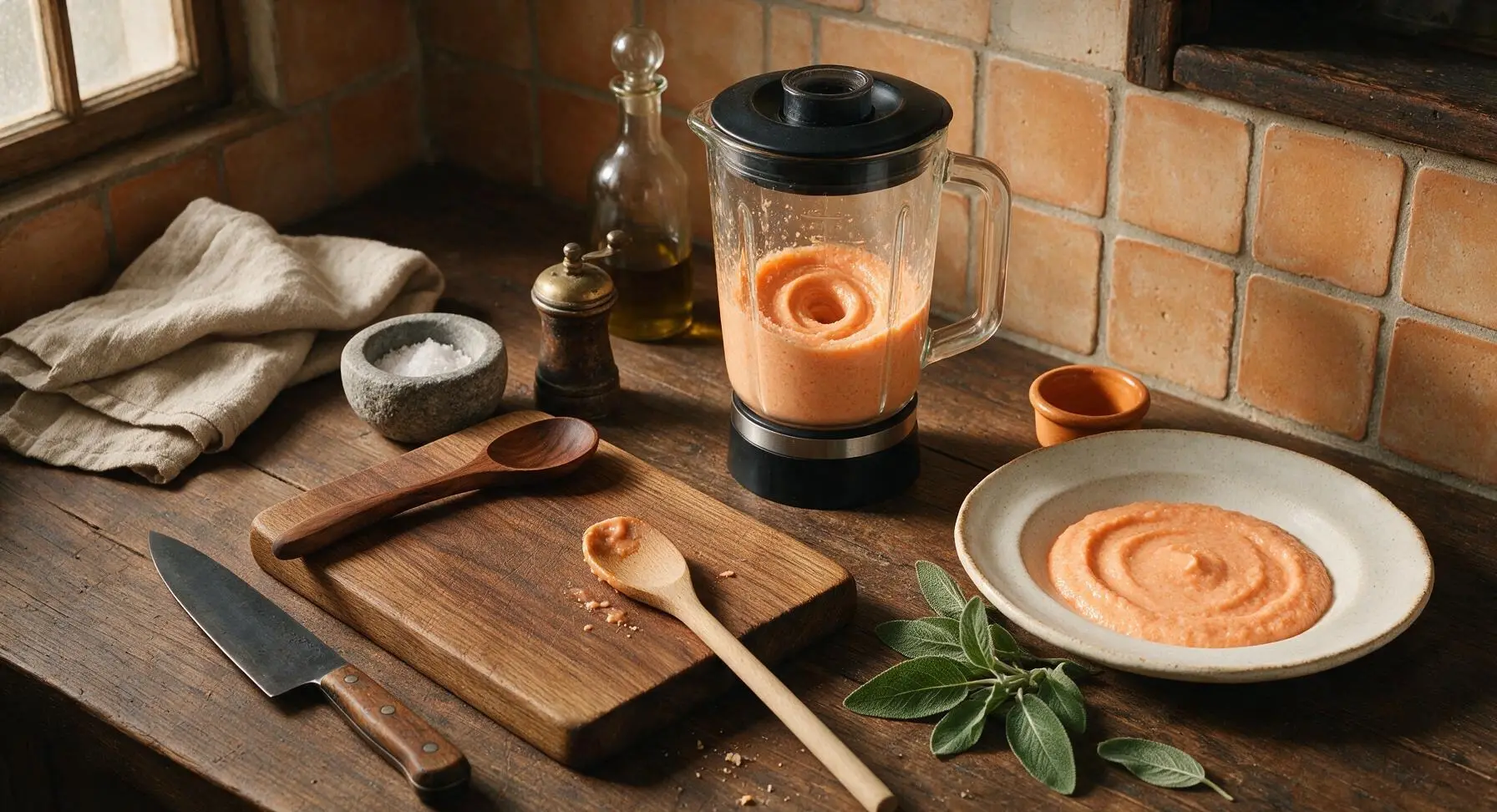
Position the glass jar blender 10cm to the right of the cutting board. Transfer the reserved cooked prawn meat, roe, and all of the strained prawn cooking liquid into the blender carafe, then add the 1.5 tablespoons of granulated sugar. Secure the blender lid, and blend on high speed for 2 full minutes, stopping once halfway to scrape down the carafe sides with the beechwood cooking spoon. The final blended mixture should be completely smooth, with no visible grainy shell fragments, and the consistency of thin tomato sauce.
Reduce Paste Slowly
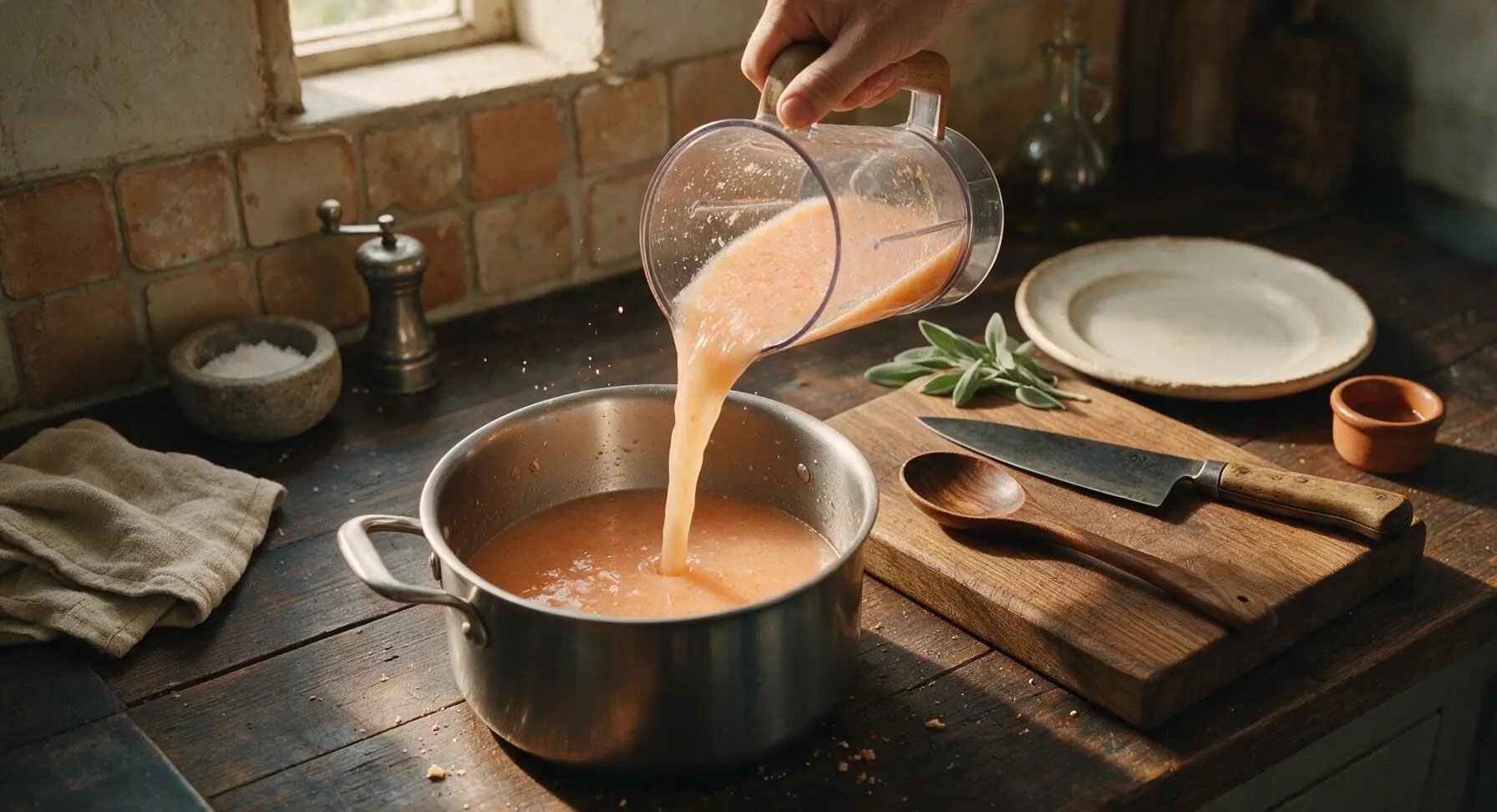
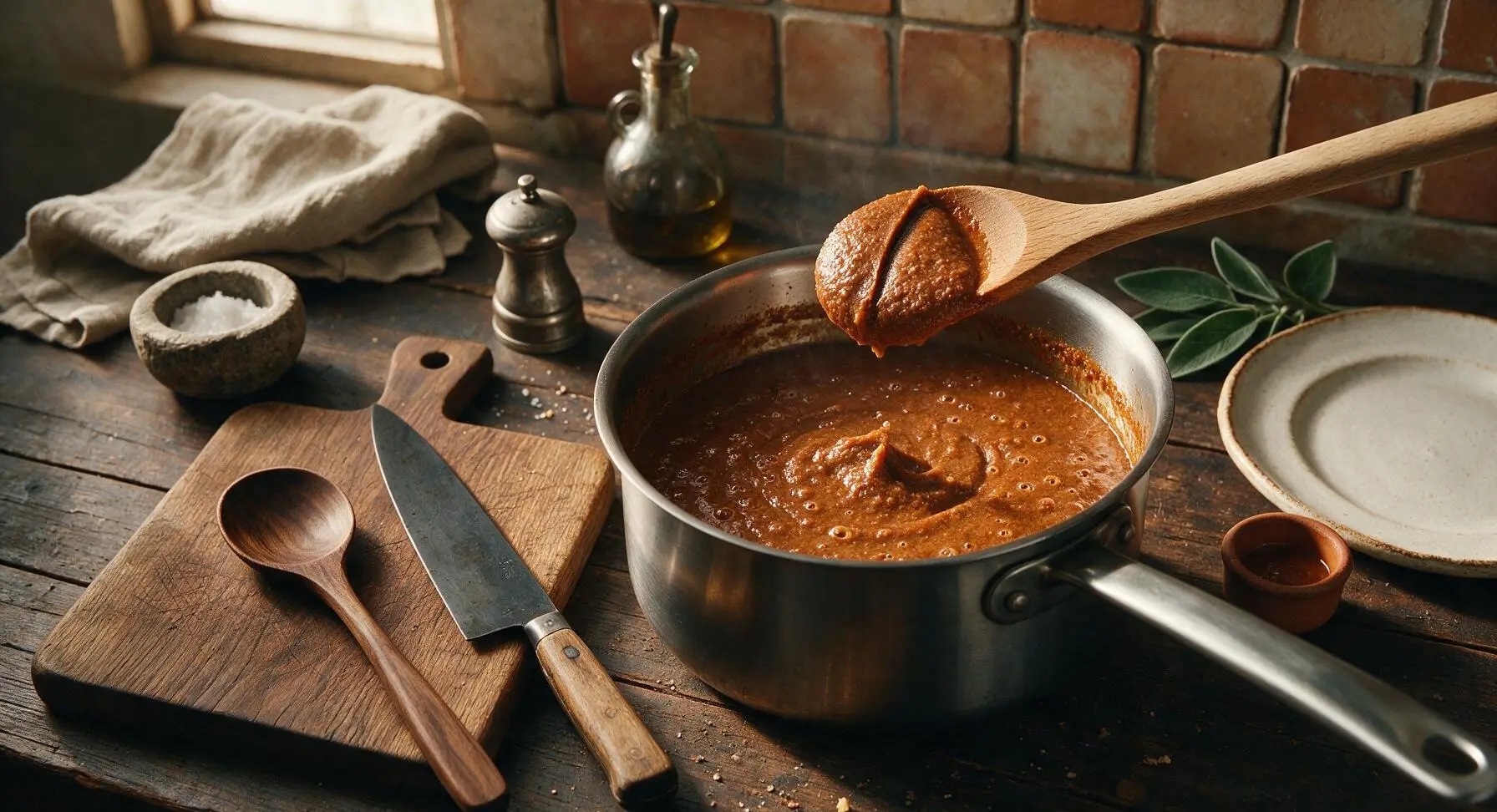
Pour the smooth blended prawn mixture back into the clean stainless steel stock pot, set over the lowest heat setting. Cook uncovered, stirring constantly with the beechwood cooking spoon to prevent the paste from sticking and burning on the pot bottom, for 35-40 minutes. The paste will gradually thicken and deepen from pale orange to a rich rusty brown, reaching the consistency of thick natural peanut butter when done. To test doneness, lift a spoonful of paste: a line drawn through the paste on the spoon with a finger will hold its sharp shape without running.
Cool and Jar Paste
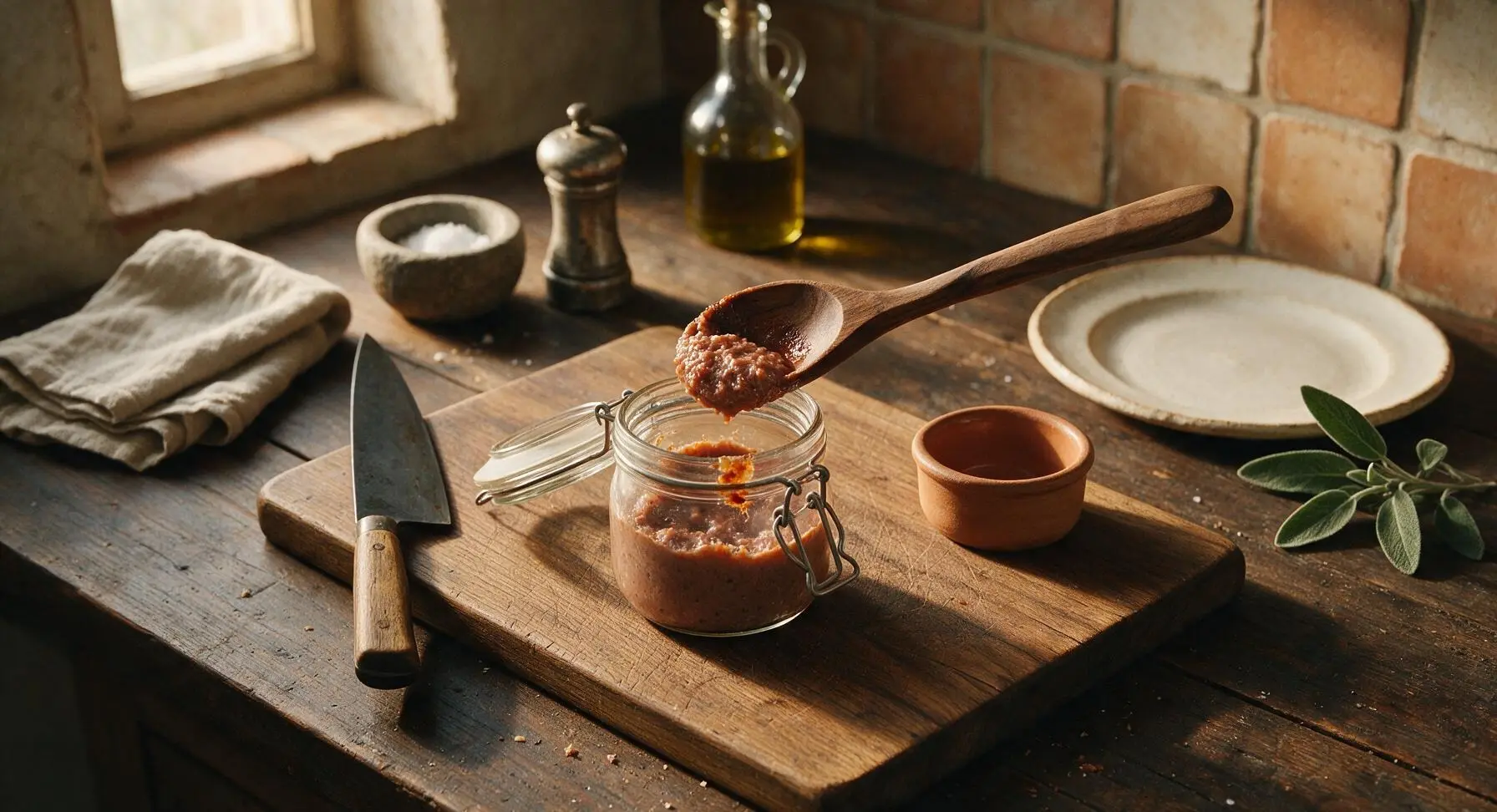
Remove the pot from heat, and leave the prawn paste to cool completely to room temperature (21C/70F) for 40 minutes, stirring every 10 minutes with the beechwood spoon to release trapped heat and prevent a thick skin from forming on the paste surface. Once fully cool, transfer the paste to the clear glass storage jar, seal tightly with the glass clamp lid, and refrigerate for up to 3 months. Spoon a small portion into the terracotta ramekin for serving.
Tips
2.Never boil the prawns or reduce the paste over high heat: high temperatures scorch prawn proteins, creating a bitter, off-flavor that cannot be fixed, so keep heat at the lowest setting for both simmering and reducing.
3.Make sure all equipment used to store the finished paste is completely dry before adding the paste: any residual water or moisture in the storage jar will cause mold growth and shorten the paste’s refrigerated shelf life from 3 months to less than 1 week.
Brought this prawn paste to our neighborhood block party last weekend, served it up with cucumber slices and rice crackers as a dip, and the bowl was scraped clean in 15 minutes flat. Multiple neighbors texted me for the recipe before they even left the party. Worth every single minute of that 1 hour 25 minute cook time, no cap.
Made a big batch of this for Sunday meal prep last week and it’s held up so well all week! I’ve slathered it on toast, stirred it into stir fries, even mixed a little dollop into my nightly ramen. Only reason it’s 4 stars instead of 5 is I had trouble getting the texture perfectly smooth even with my food processor – maybe I needed to blend it a couple minutes longer than the recipe says?
I’ve been dropping $12 a jar on imported prawn paste from the Asian market for literal years and this homemade version is SO much better. It’s fresher, less aggressively salty, and I can control exactly what goes into it so no weird preservatives. I was intimidated at first because medium difficulty made me think it’d be super fussy, but the steps are really straightforward if you take your time.
OMG my kids went absolutely crazy for this prawn paste! I stirred a big dollop into their shrimp fried rice for weeknight dinner and they asked for seconds before they even finished their first serving. I was worried the medium difficulty would be too much for my chaotic weeknight cooking vibe but the steps were so easy to follow. Only tweak I made was adding an extra pinch of garlic because we’re total garlic fiends in this house!
Total game changer for my summer grilling cookouts! I used this paste as a marinade for jumbo prawn skewers last weekend and my friends kept asking if I bought it from that fancy Asian fusion spot downtown. The cook time felt a little long at first but all that slow simmering is so worth it for that deep, rich umami flavor.
SO good! I added a teaspoon of red chili flakes to the mix while it was simmering for a little warm kick and it’s perfect on literally everything. I slathered it on my avocado toast this morning for breakfast and it blew my regular go-to hot sauce right out of the water. Will absolutely be making this on repeat all summer long.
This was my first time making any kind of seafood paste from scratch and it was definitely trickier than I expected! I burned the first batch a little when I was simmering it because I walked away to answer a work call. The second batch turned out pretty solid though, just way saltier than I was expecting. Any tips for cutting the salt if I mess up the ratios next time?
The flavor is a solid 10/10 but I wish the recipe gave a heads up about how strong the smell is while it’s simmering! My roommate walked in 20 minutes into cooking and thought something had gone rotten in the kitchen, lol. Next time I’ll make sure to pop open all the windows and turn the range hood on high before I start.
Just pulled this off my dorm hot plate and it’s actually fire! I halved the recipe since I don’t have a ton of space in my mini fridge, and I didn’t have cheesecloth so I strained it through a coffee filter which worked fine (just took forever). Can’t wait to put this on everything this week now that I don’t have a campus meal plan.