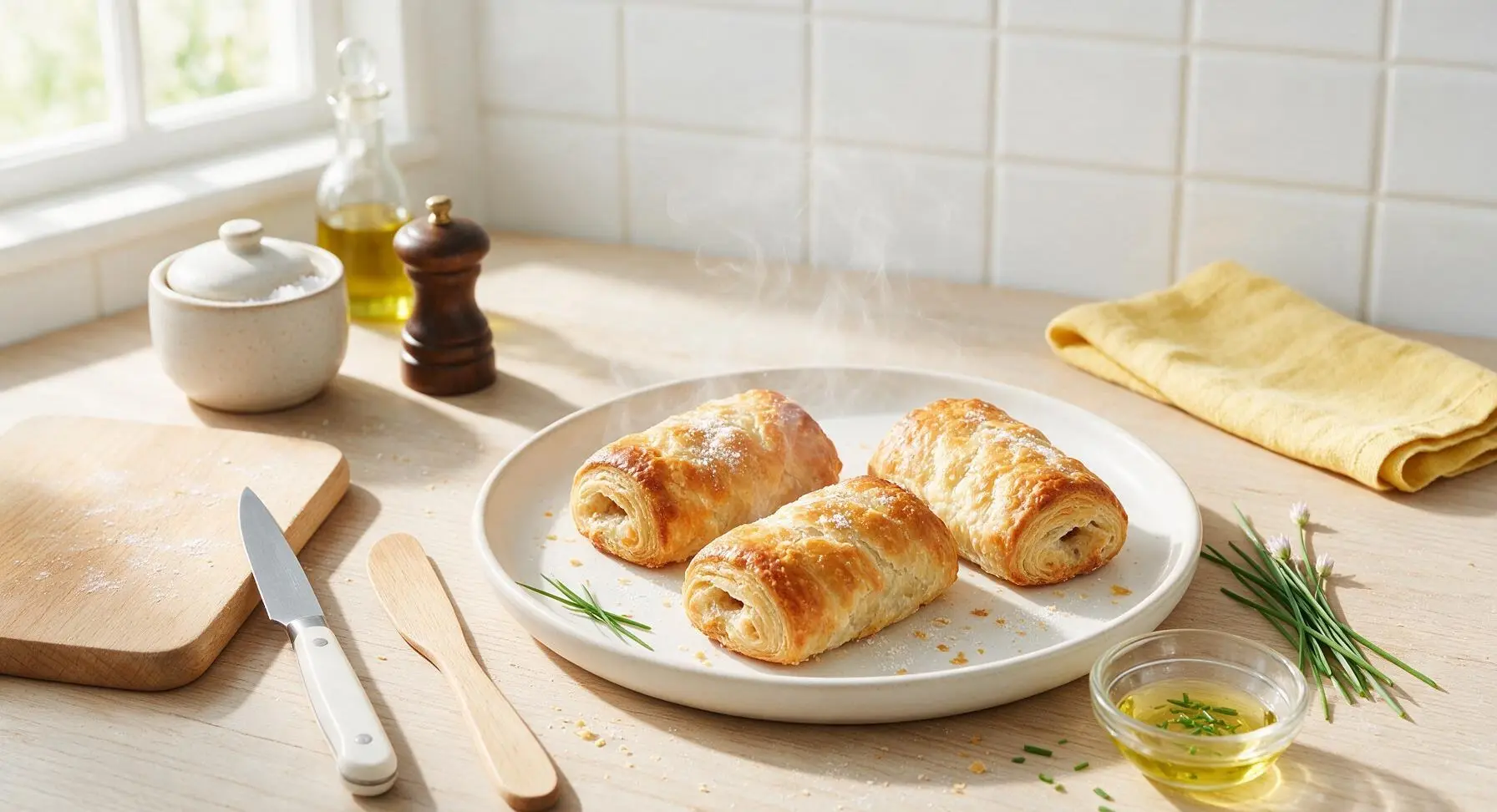
sausage roll dough

title 1
sausage roll dough
⏱️ cook time 0 minutes (plus 2 hour minimum chill time; dough bakes 20-25 mins at 200°C/400°F after filling)
🍽️ servings 8
⚡ Difficulty medium

intro

This buttery, flaky rough puff dough is the classic base for homemade sausage rolls, creating shatteringly crisp layers that hold savory filling without sogginess, ideal for holiday baking.

Ingredients
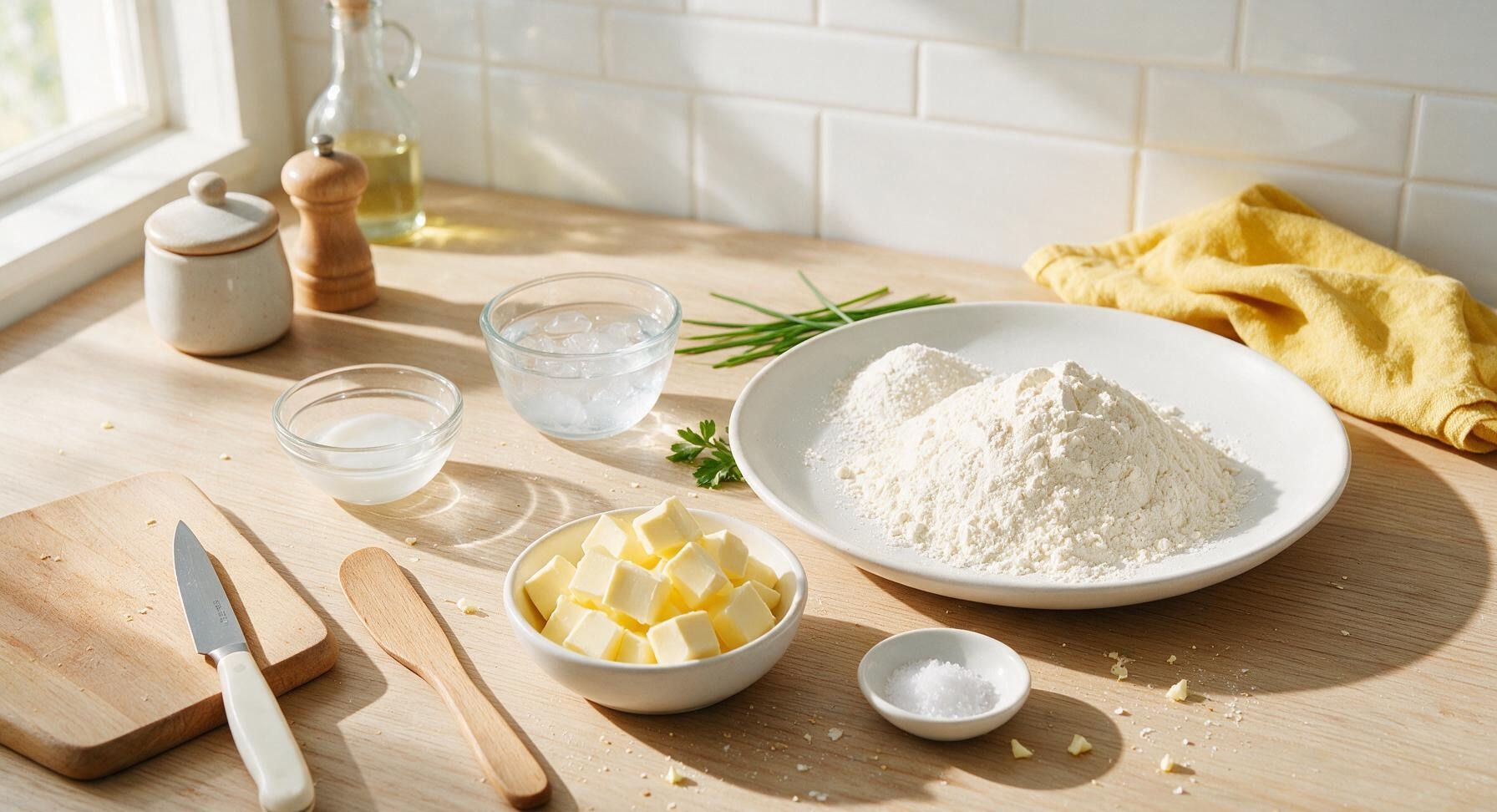
All-purpose flour 250g, plus 2 tbsp for dusting
Cold unsalted butter 225g, cut into 1cm cubes
Fine sea salt 1 tsp
Ice-cold filtered water 120ml
White vinegar 1 tsp

Steps

1

Whisk Dry Ingredients

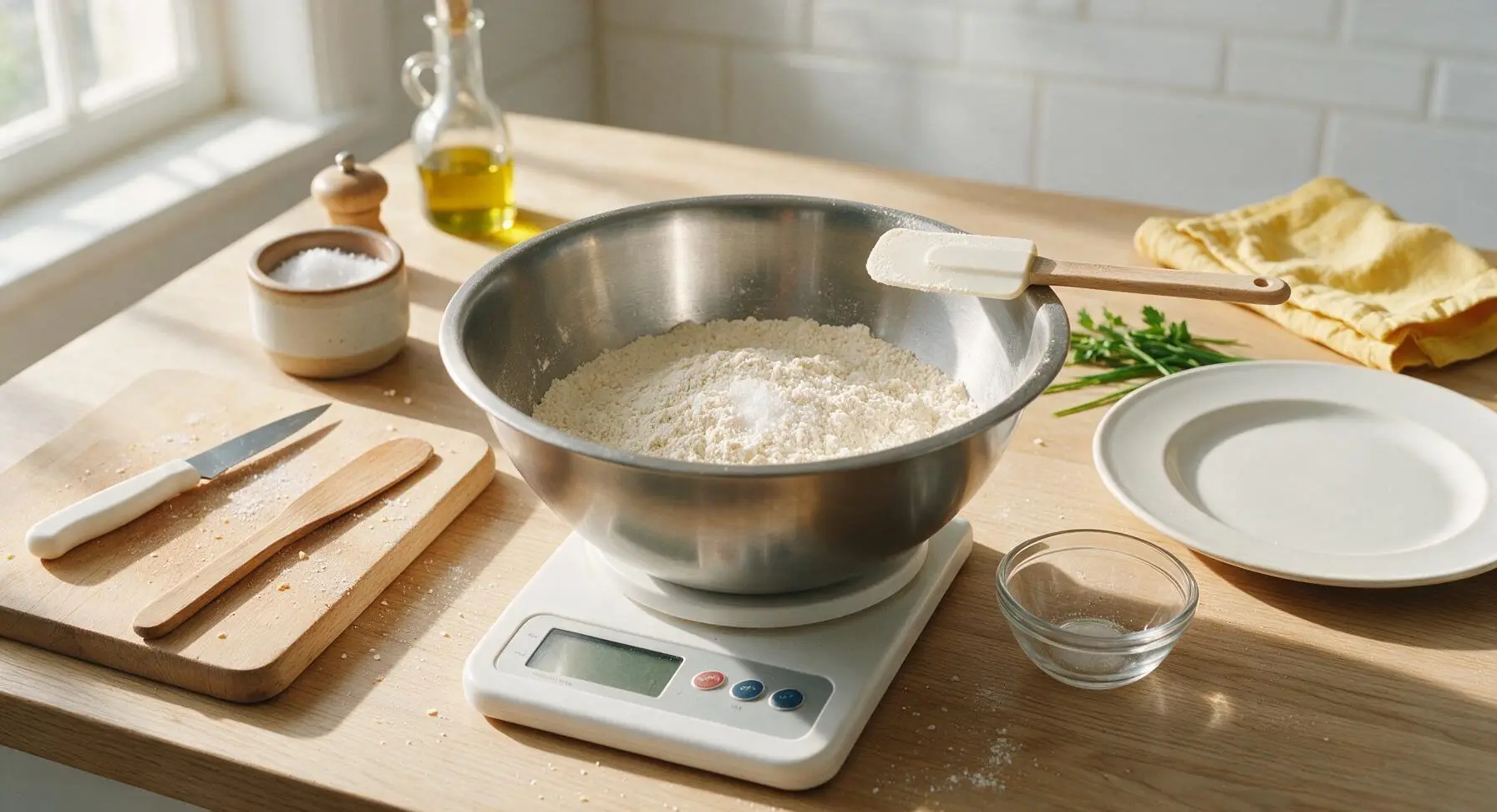
Set the 24cm brushed stainless steel mixing bowl on the matte white digital scale, tare to zero, and measure in 250g all-purpose flour and 1 tsp fine sea salt. Use the silicone scraper to stir the mixture for 10 seconds to evenly distribute the salt, breaking up any small flour clumps as you go. The mixture should be uniform pale off-white, with no concentrated salt pockets.
Step 1
step1:Whisk Dry Ingredients
2

Toss in Cold Butter

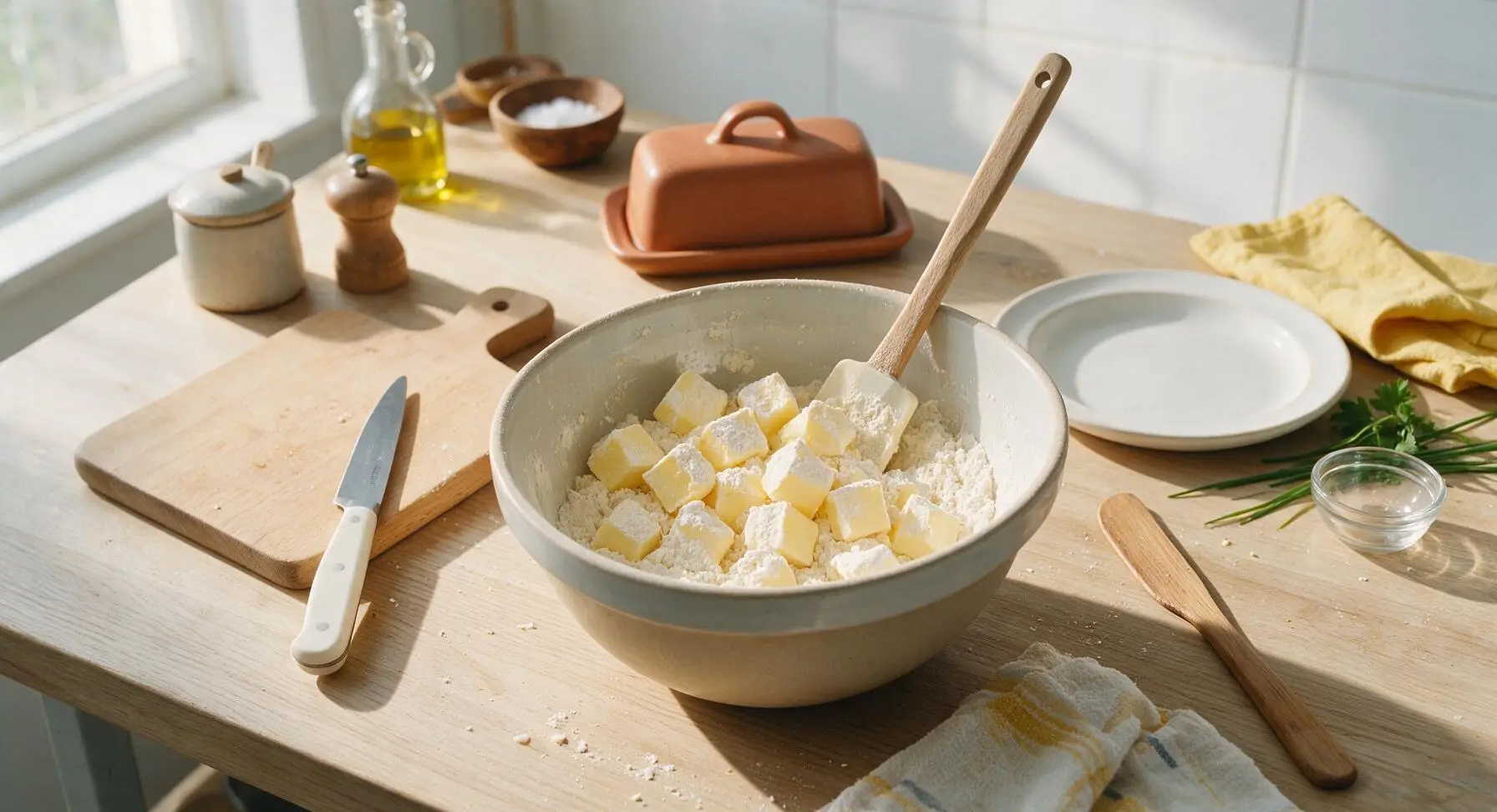
Add 225g of ice-cold unsalted butter, cut into 1cm cubes, to the flour mixture. Toss thoroughly with the silicone scraper until every butter cube is fully coated in flour, separating any cubes that stick together. Keep the butter as cold as possible—warm butter will melt into the dough instead of creating flaky layers.
Step 2
step2:Toss in Cold Butter
3

Form Shaggy Dough

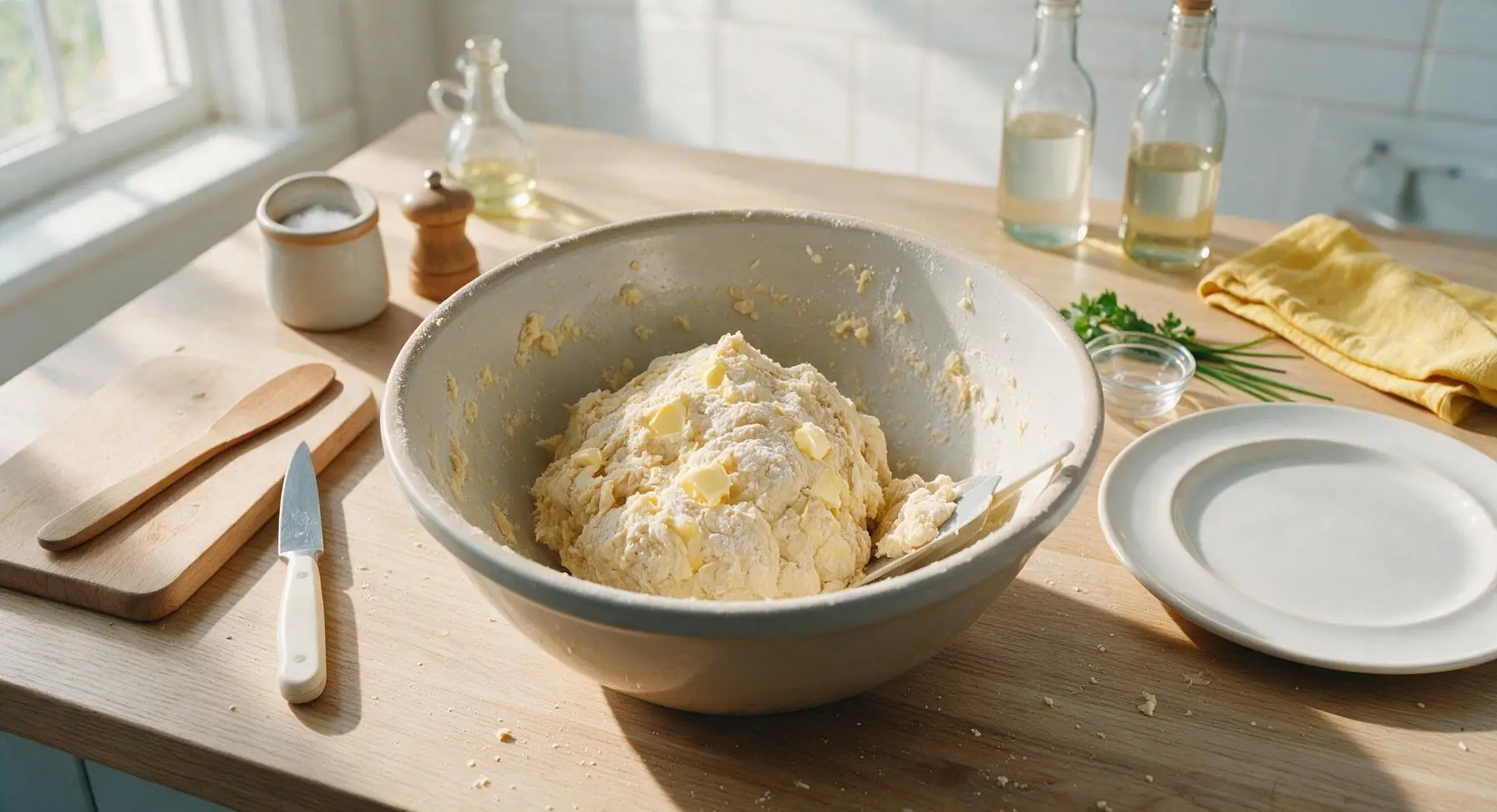
Stir 1 tsp white vinegar into 120ml ice-cold water, then drizzle the liquid slowly over the flour and butter mixture, tossing constantly with the scraper. Mix only until the dough clumps into a rough, shaggy mass with large, visible butter chunks still intact. Do not knead the dough at this stage—overworking will create tough, dense pastry instead of flaky layers.
Step 3
step3:Form Shaggy Dough
4

Roll First Fold

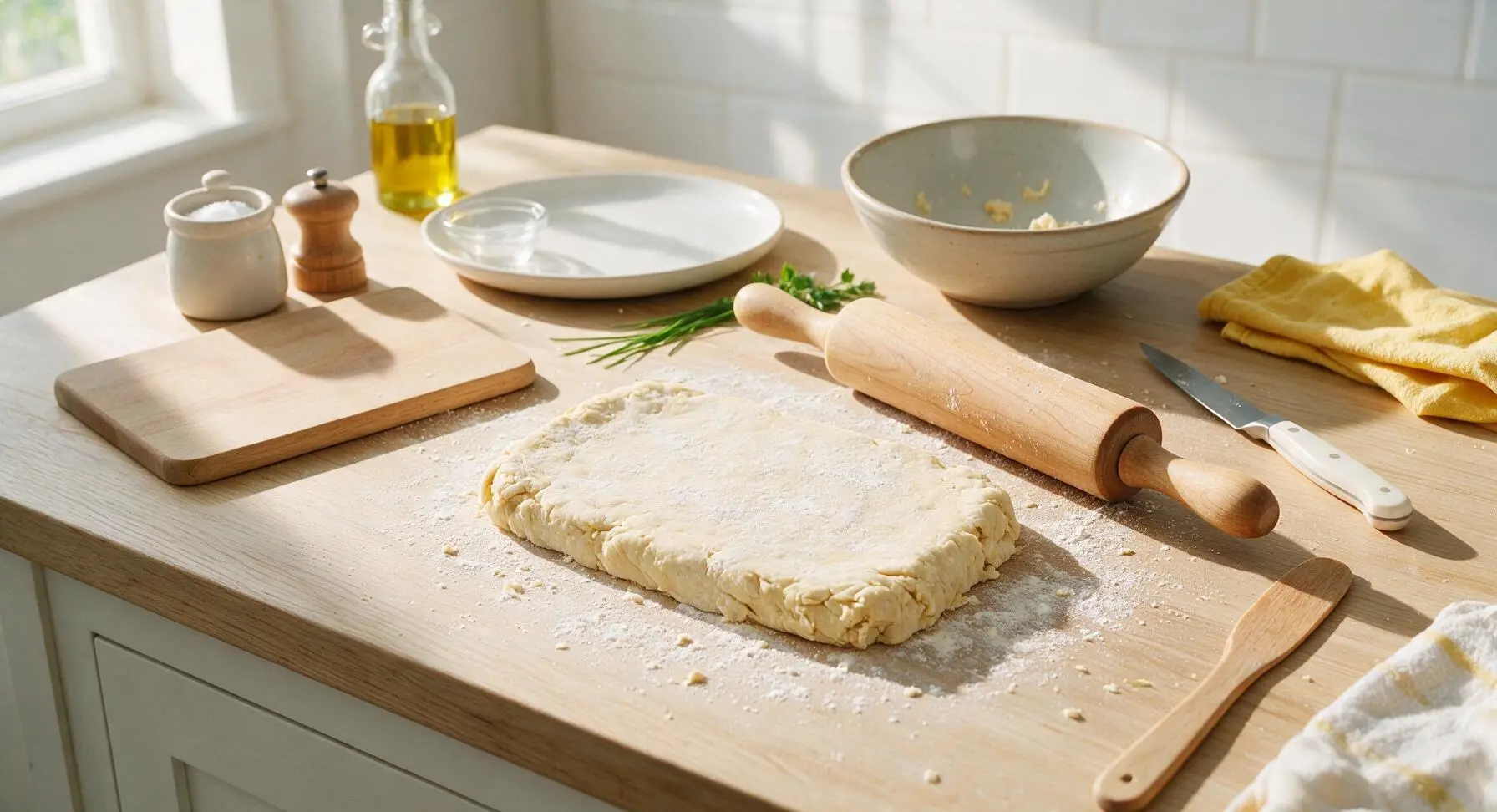
Lightly dust the central marble counter with a pinch of flour from the cream crock. Tip the shaggy dough out onto the floured surface, and press it into a rough 2cm thick rectangle with the scraper. Use the maple rolling pin to roll the dough evenly into a 1cm thick sheet, roughly 20cm wide and 60cm long. Fold the top third of the dough down over the center, then the bottom third up over the top like a business letter, brushing off excess flour as you fold.
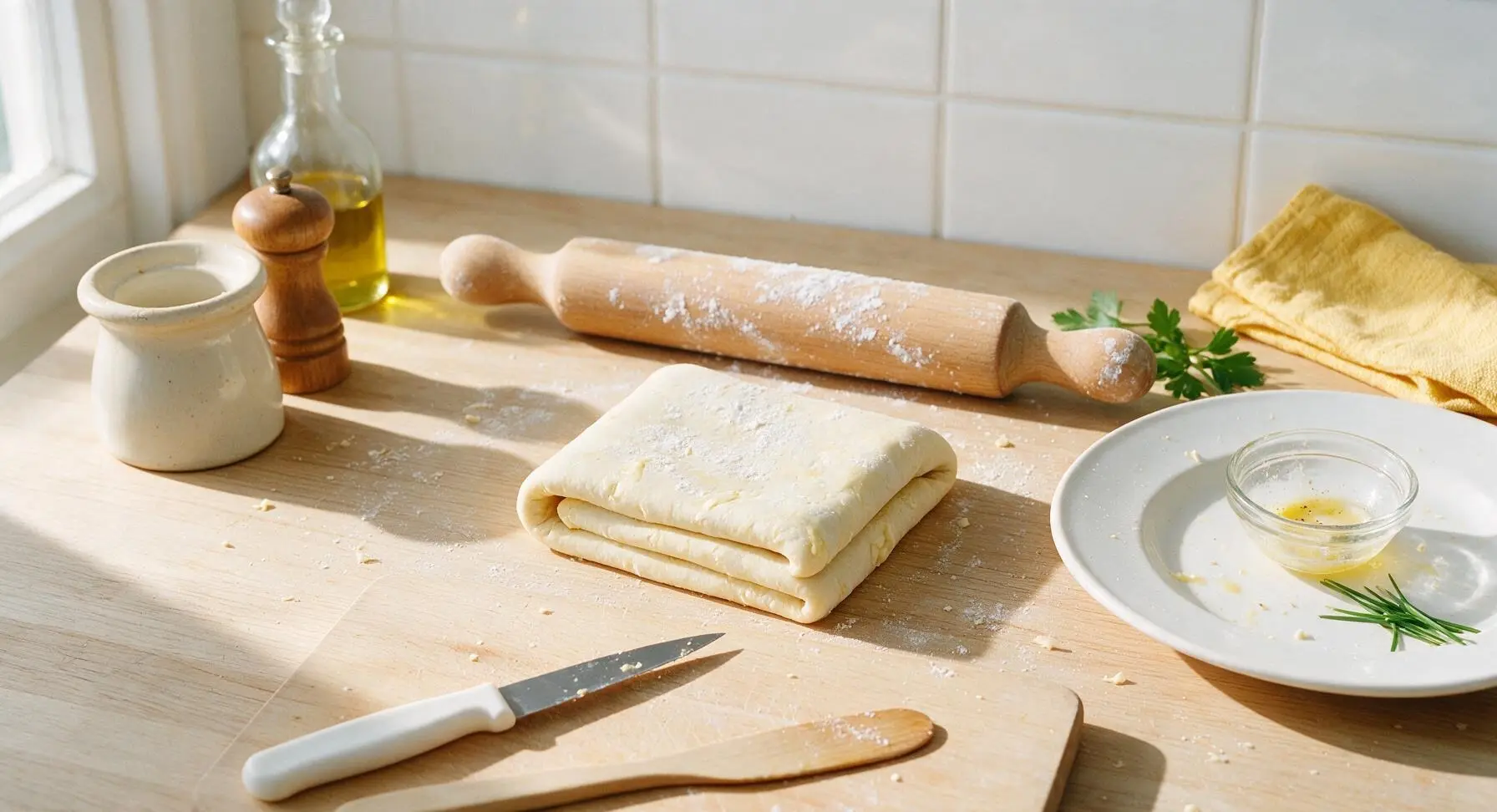
Step 4
step4:Roll First Fold
Step 4
step4:Roll First Fold
5

Complete Lamination

Give the folded dough a quarter turn, then roll it out again to the same 1cm thick, 20x60cm rectangle, and complete another three-fold. Repeat this roll, turn, and fold process two more times for a total of 4 full folds. If the butter feels soft and squishy at any point, transfer the dough to the fridge for 15 minutes to firm up before continuing. After the final fold, the dough will form a neat, compact rectangular block with faint even layer lines at the edges.
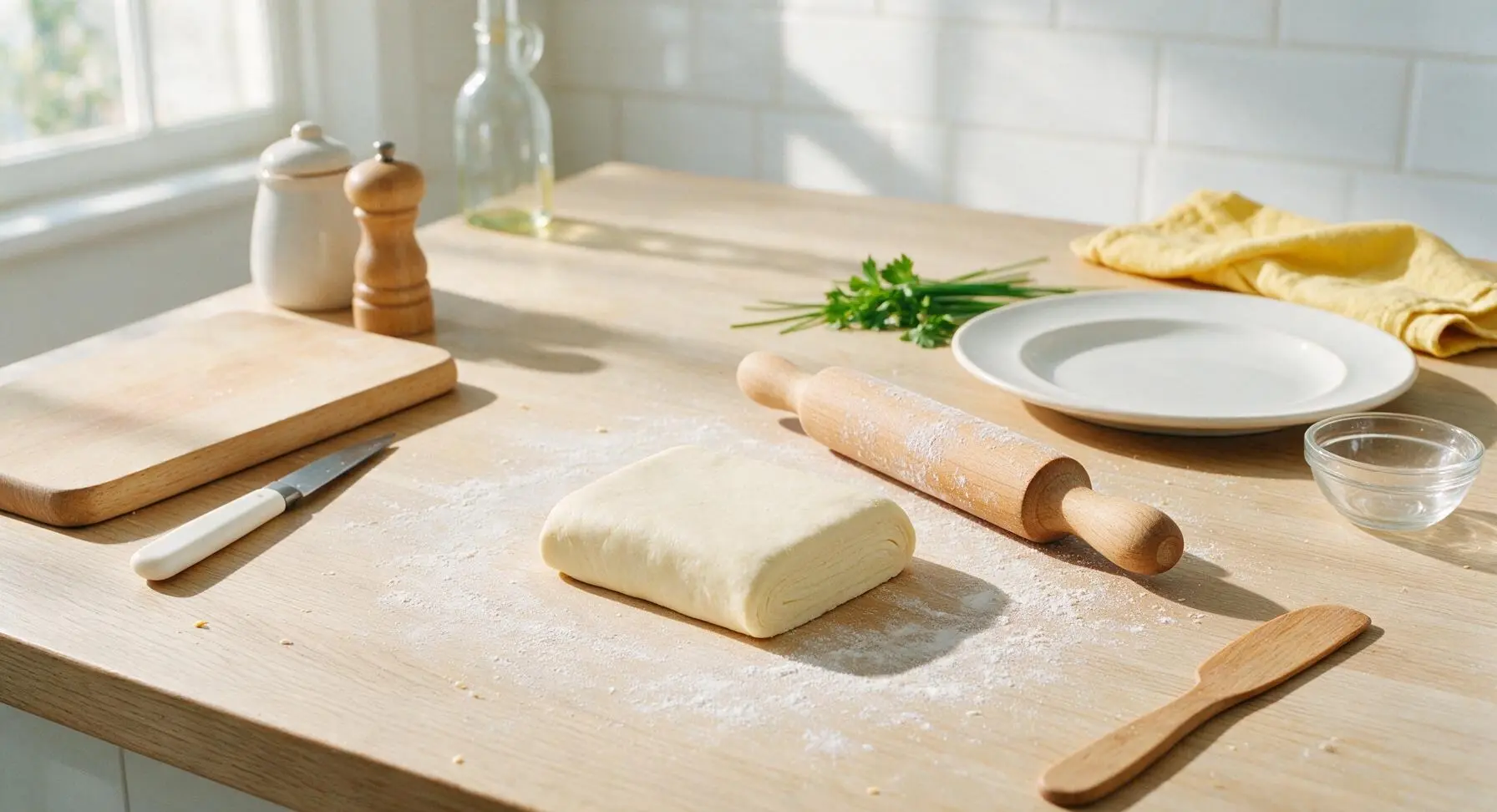
Step 5
step5:Complete Lamination
6

Wrap Dough Tightly

Pull a length of cling film from the far back right dispenser, and wrap the dough block completely, pressing the film tight against the dough surface to squeeze out any trapped air. Air pockets will cause the dough to dry out and form a crust during chilling, which creates hard spots when rolled out later.
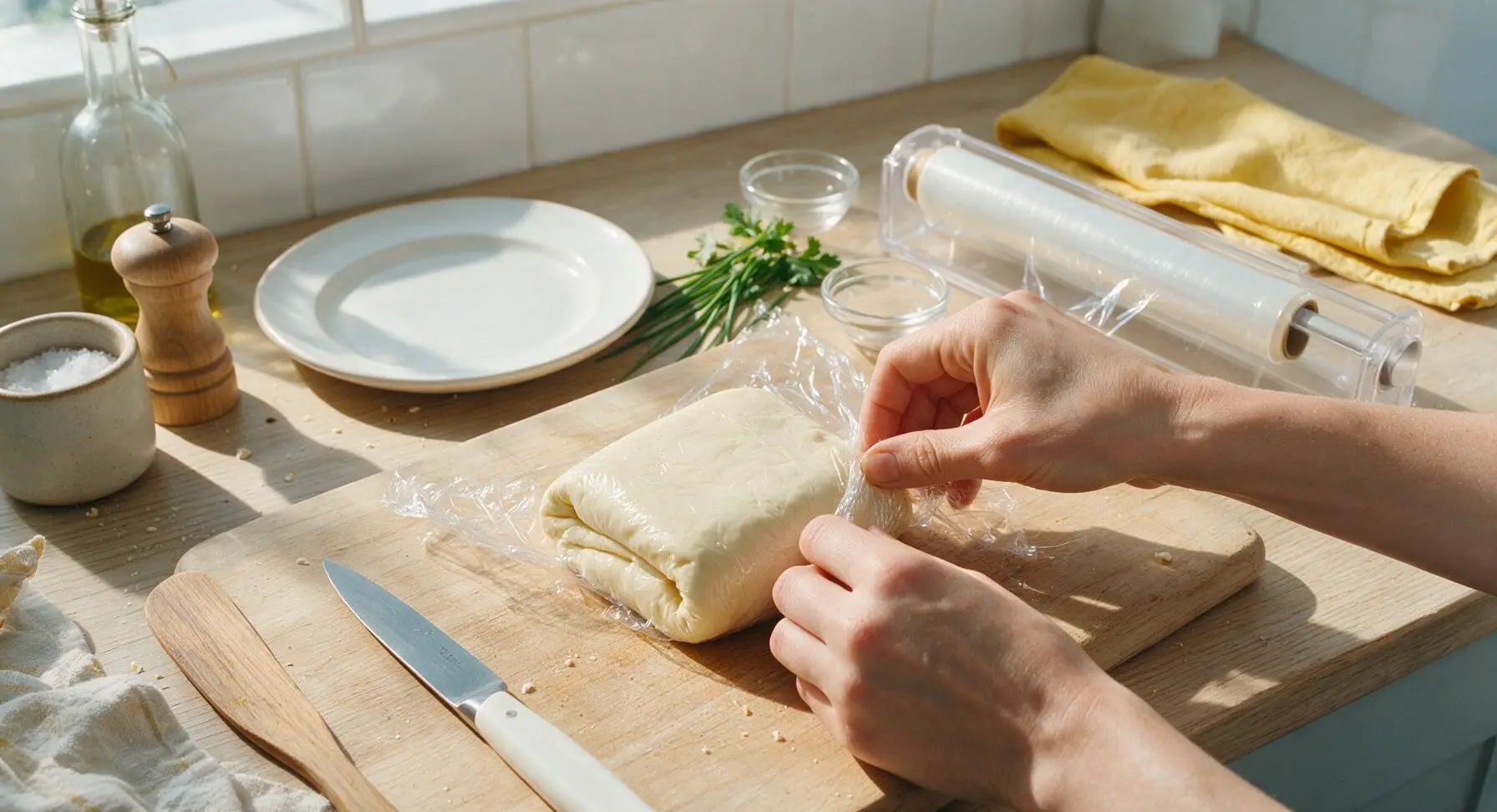
Step 6
step6:Wrap Dough Tightly
7

Chill Until Firm

Place the wrapped dough block on the matte cream ceramic platter (moved from its stacked position at back right to center counter), and transfer to the fridge to chill for a minimum of 2 hours (or up to 3 days) before using to make sausage rolls. The dough is ready when it is firm to the touch, with no soft, squishy butter spots on the surface.
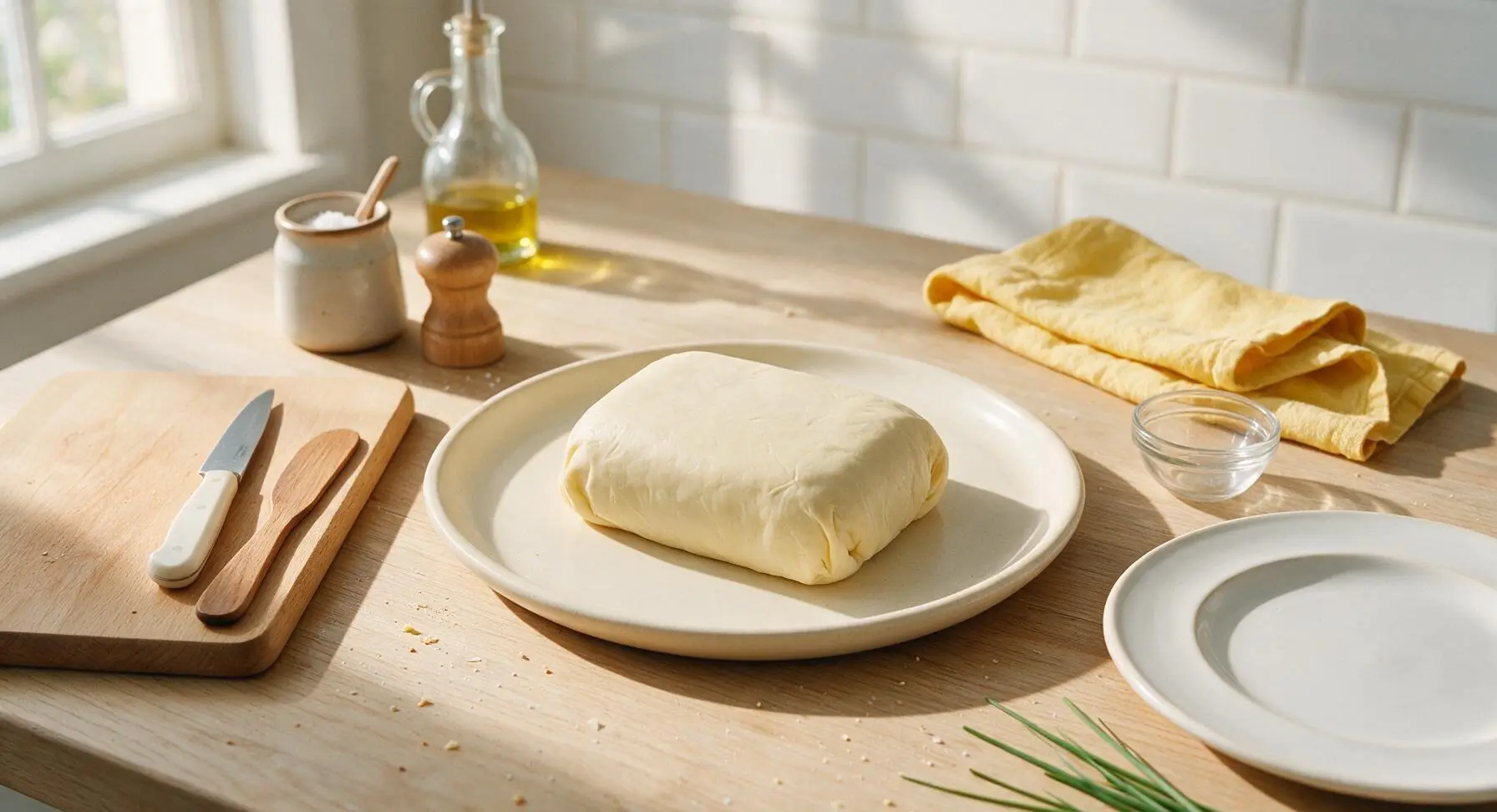
Step 7
step7:Chill Until Firm

Tips

1.Keep all ingredients ice cold (4°C/39°F) at every step: if butter warms above 15°C/59°F, it will absorb into the flour instead of creating distinct, shattery flaky layers when baked. In warm kitchens, chill the dough for 15 minutes between every fold to keep butter firm.
2.Do not skip the small amount of white vinegar: its mild acid inhibits gluten development in the flour, which keeps the dough tender instead of tough and chewy, and it will not add any noticeable sour flavor to the finished baked pastry.
3.Avoid adding excess flour when rolling unless the dough actively sticks to the pin: too much extra flour will make the baked dough dry and dense, rather than light and flaky. Always brush off loose excess flour between folds to prevent dry, floury pockets in the finished pastry.

✨ You May Also Like

Desserts & Baking
🍜 Italy

Creamy, coffee-kissed classic Northern Italian no-bake dessert, with layers of rum-spiked mascarpone cream, soft ladyfingers, and a rich cocoa dusting.

⏱️ 4 hours 3Desserts & Baking ★ 4.7
Desserts & Baking
🍜 France

Flaky, shatteringly crisp, buttery French croissants with golden exteriors and soft, airy layered interiors, perfect for pairing with coffee for a special morning treat.

⏱️ 12 hours Desserts & Baking ★ 4.5
Desserts & Baking
🍜 United States

Warm, spiced baked apples topped with a fluffy golden biscuit crust, this cozy dessert pairs perfectly with vanilla ice cream for cool-weather comfort.

⏱️ 55 minuteDesserts & Baking ★ 4.6
Desserts & Baking
🍜 United States

A star-spangled classic American blueberry pie with buttery flaky crust and bright sweet-tart filling, perfect for summer patriotic gatherings.

⏱️ 1 hour 25Desserts & Baking ★ 4.7
Desserts & Baking
🍜 United States

A beloved no-bake regional Maine candy with a chewy coconut-potato center coated in rich dark chocolate, a New England holiday staple since the 1870s.

⏱️ 2 hours 3Desserts & Baking ★ 4.8
Desserts & Baking
🍜 France

Luxuriously creamy, floral frozen custard made with aromatic Tahitian vanilla beans, boasting a smooth, rich texture that melts slowly on the tongue.

⏱️ 3 hours 3Desserts & Baking ★ 4.5

sausage roll dough:Frequently Asked Questions

1.Why is there white vinegar in this sausage roll dough? ▾
The small amount of white vinegar gently inhibits excess gluten development in the flour, which prevents the dough from shrinking dramatically as it bakes and keeps the final layers tender rather than tough. You won’t taste any tang in the finished baked rolls—it just works behind the scenes for a more reliable flaky result.
2.How cold do the butter and water need to be for the flakiest results? ▾
Both need to be ice-cold to create those signature shattery layers—your butter should be firm enough that it doesn’t squish easily when pinched, and your water should have visible ice cubes right before measuring. If butter melts into the flour instead of staying in distinct chunks, you won’t get that crisp layer separation as it bakes.
3.Can I use salted butter instead of unsalted butter in this recipe? ▾
You can, but you’ll need to adjust the added fine sea salt to avoid overly salty dough. Cut the added salt by roughly 1/4 teaspoon per stick of salted butter you use, and make sure the salted butter is just as cold as the unsalted butter called for to keep those distinct flaky layers intact.
4.What makes this rough puff different from regular puff pastry? ▾
Rough puff is a faster, more approachable cousin to classic laminated puff pastry, because you skip the precise, repeated book folds with a full solid block of butter. You work cold butter chunks directly into the flour before folding, which still creates hundreds of flaky layers but cuts prep time nearly in half for home bakers.
5.How do I keep the dough from getting soggy once I add sausage filling? ▾
First, avoid overworking the dough to keep it sturdy, and chill filled rolls for 20 minutes before baking so the fat sets. For extra insurance, brush the inner dough edge with thin egg wash before sealing, and skip overly wet, drippy sausage filling that can seep into layers as it cooks.
6.Can I make this dough ahead of time for easier holiday baking? ▾
Absolutely! Tightly wrapped in plastic wrap, this dough keeps for up to 3 days in the fridge, or up to 3 months in the freezer. If frozen, thaw it slowly in the fridge overnight before rolling—don’t thaw it at room temperature, or the butter will soften too much and ruin the flaky layers.
7.Do I need any special equipment to make this rough puff dough? ▾
No fancy tools are required! All you need is a large mixing bowl, a sharp knife to cut butter into chunks, a rolling pin, and a clean work surface. A bench scraper is helpful for lifting and folding dough as you work, but a stiff spatula works just fine if you don’t have one at home.
8.What happens if I overwork the dough while mixing and folding? ▾
Overworking develops too much gluten in the flour, which makes your final baked dough tough instead of tender, and can cause it to shrink unevenly as it bakes. Stop mixing as soon as the dough forms a shaggy mass, and don’t knead it like bread dough—keep handling gentle to preserve those butter chunks.
9.Can I use bread flour instead of all-purpose flour for extra structure? ▾
I don’t recommend it for this recipe—bread flour has a much higher protein content, which creates a chewier, tougher final dough even with the added vinegar. Stick to standard all-purpose flour for the perfect balance of structure to hold sausage filling and tender, crisp flakiness.
10.How thick should I roll the dough out when assembling sausage rolls? ▾
Aim for a uniform 1/8-inch thickness when you roll the final chilled dough for sausage rolls. That’s thick enough to create a sturdy, crisp crust that won’t split or leak filling as it bakes, but thin enough that you still get loads of shattery, buttery layers without a doughy, thick crust.
11.Why is my dough crumbly and hard to roll out? ▾
That usually means the dough is too cold, or you didn’t add enough ice water to bind the flour together. Let it rest at room temperature for 3 to 5 minutes to soften the butter slightly, and if it still won’t hold, spritz it with a tiny bit of extra ice water as you fold to help shaggy bits bind without making it sticky.
12.Do I need to dock (prick) the dough with a fork when making sausage rolls? ▾
You don’t need to dock the sections of dough that wrap around the sausage filling, because docking creates holes that let filling juices leak out and cause sogginess. If you have exposed crimped edges, you can prick those lightly to prevent them from puffing up unevenly in the oven.
13.What oven temperature gives the flakiest baked sausage rolls? ▾
Bake your assembled sausage rolls at 400°F (200°C) in a fully preheated oven. That high heat is critical to make the cold butter in the dough release steam quickly, which puffs separate layers apart into that shattery crisp texture before the butter can melt out and soak into the dough.
14.Can I use this rough puff dough for recipes other than sausage rolls? ▾
Definitely! This versatile rough puff works beautifully for cheese straws, savory hand pies, turnovers, or even quick tart crusts for holiday appetizers. Just keep it well chilled before baking, and you’ll get that same perfect buttery flake no matter what savory or lightly sweet filling you pair it with.

Comments (17)

3 days ago

OMG this rough puff is a total game changer! I’ve always been scared to make laminated dough from scratch because it feels so fussy, but this method was way more forgiving than I expected. My sausage rolls came out so buttery and flaky, my husband thought I bought them from the fancy bakery down the street! Used it for our weekend tailgate prep and everyone was begging for the recipe.

2 days ago

So thrilled to hear this was a hit at your tailgate! The rough puff method is perfect for folks who don’t want to fuss with full laminated dough, and it works so well for savory applications like sausage rolls. So glad your family loved it!

5 minutes ago

Wait, quick question—do I *have* to chill it the full 2 hours? I’m cramming for a potluck tonight and only have about 90 minutes of chill time before I need to fill and bake these. Would that totally mess up the flakiness?

just now

Great question! 90 minutes will work in a pinch, but try to tuck it in the coldest part of your fridge (usually the back shelf) to make sure the butter stays nice and firm. If the butter gets too soft before baking, you won’t get those signature flaky layers, so keep it as cold as you can!

1 week ago

Made a double batch of this dough on Sunday for the week’s meal prep, stuffed it with maple breakfast sausage and a little cheddar, baked them off for quick grab-and-go breakfasts. SO good, way better than the frozen sausage rolls I used to buy. My 10 year old asked for seconds before he even finished his first one!

yesterday

Tried this yesterday and my dough turned out a little crumbly when I was rolling it out? I followed the measurements exactly, used cold butter like the recipe said, but it kept cracking when I did the folds. Did I overwork it? Or maybe my butter was too cold?

2 hours ago

I had the same issue my first try! I let the dough sit on the counter for 5 minutes before rolling each fold and it stopped cracking, I think I was taking it straight from the fridge and trying to roll it too hard too fast

30 minutes ago

@PNWbaker92 is exactly right! If your dough cracks a lot when rolling, let it rest for 5-10 minutes at cool room temp to relax the gluten and let the butter soften just a touch. You don’t want it squishy, but it should roll without splitting. Give that a shot next time!

3 days ago

Game. Changer. I added a little paprika and garlic powder to the dough itself when I mixed it, and it paired so perfectly with the spicy Italian sausage I used for the filling. Brought these to my neighbor’s backyard BBQ and they were gone in 10 minutes flat. People kept asking if I ordered them from a specialty shop!

2 days ago

Oh the paprika addition sounds chef’s kiss! I’m making these for our fantasy football draft party this weekend, I’m definitely stealing that tip

2 weeks ago

Full transparency, I thought medium difficulty meant I was gonna mess this up for sure, but the step-by-step instructions were so easy to follow. The layers came out perfectly crisp and buttery, even with my 3 year old “helping” me press the folds. 10/10, will be making this every time we have family over.

5 days ago

Quick note for anyone who’s tried rough puff before and had it turn out greasy: make SURE you’re dicing your butter into small, even cubes and keeping everything ICE cold. I messed this up on my first attempt a while back, but following this recipe’s tip to freeze the butter cubes for 10 minutes before mixing made all the difference. Perfect flaky layers, no greasy sogginess at 400°F bake time.

3 days ago

Wait the frozen butter tip?? That’s the hack I’ve been missing! My last rough puff melted all over the baking sheet and was a total mess, I’m definitely trying that next go around

2 days ago

Couldn’t have said it better ourselves! Cold butter is the secret to those tall, flaky layers—when it hits the hot oven, the water in the butter turns to steam and puffs up every single layer. So glad that tip worked for you!

1 week ago

I used this dough to make little sausage roll bites for my dorm floor potluck and everyone lost their minds. The only issue was I didn’t make enough! I only had time for a 2.5 hour chill and it still turned out perfect, flaky as can be. Will absolutely be doubling the recipe next time.

5 days ago

Love that this was a dorm potluck hit! Doubling is always the right call with these—they disappear faster than almost any other party appetizer I make. So glad it worked out even with a slightly longer chill, that extra time in the fridge never hurts!

2 days ago

Has anyone tried using this dough for other things besides sausage rolls? I have a little left over from a batch I made yesterday and I’m wondering if it would work for apple turnovers or something sweet?

yesterday

I used leftover dough for little cheese straws last week! Twisted it up with some parmesan and black pepper, baked for 12 minutes, and they were insane. I bet it would be amazing for turnovers too, it’s so buttery

2 hours ago

This dough is super versatile! It works beautifully for sweet applications like turnovers, savory hand pies, even cheese straws like @OhioHomeBaker mentioned. Just adjust the bake time a little depending on what you’re filling it with, and you’re good to go!

2 weeks ago

This tastes exactly like the sausage rolls my nana used to make when I was a kid! I’ve been chasing that perfect flaky, buttery crust for years and nothing ever came close until now. No weird storebought aftertaste, just pure rich butter and perfect layers. I’m so happy I found this recipe.

3 days ago

Pro tip for all my fellow meal preppers: you can freeze this dough for up to 3 months after the final fold! I portioned it into 4 discs, wrapped them super tight in plastic wrap and foil, and pulled one out last night to thaw in the fridge for tonight’s dinner. Worked like a charm, flakiness was totally intact.

2 days ago

OH thank you for this tip! I was wondering if it freezes well, I’m about to have a new baby and stocking the freezer with easy meals is my whole personality right now. This is going on the list!

30 minutes ago

Wait, the recipe says no cook time before filling? That makes sense I guess, but I always blind bake my pastry for other things—am I gonna have a raw dough bottom if I just fill the raw dough and bake for 20-25 mins at 400°F? Don’t want soggy sausage rolls!

5 minutes ago

I was worried about the same thing! I pricked the bottom layer a little with a fork before adding my sausage filling, baked on a preheated baking sheet, and had zero sogginess. The crust was crisp all the way around

just now

@SoggyBottomHater’s tip about a preheated baking sheet is chef’s kiss! No need to blind bake this dough for sausage rolls—the high oven temp and preheated sheet will crisp up the bottom perfectly as long as you don’t overfill your rolls. Enjoy!

1 week ago

Full disclosure, I’ve never made any kind of pastry before in my life, and this still turned out! I will say it took me a little longer to do the folds than I expected, but that’s just me being slow. The end result was so worth it, my roommates are already begging me to make another batch.

5 days ago

This makes us so happy to hear! We designed this rough puff recipe to be accessible for beginner bakers, even if you’ve never laminated dough before. Those folds feel tricky the first time, but they get faster every time you make it. Can’t wait for you to test out another batch!

2 hours ago

Made these for our office potluck yesterday and I swear I got stopped by 8 different people asking for the recipe. The crust was so light and flaky it practically melted in your mouth, and the butter flavor was so rich it didn’t even need any extra dipping sauce. 10/10, adding this to my permanent potluck rotation.

2 days ago

I used salted butter instead of unsalted because it’s all I had on hand, and I just cut the added salt in the dough by half, and it turned out perfectly! Don’t panic if you don’t have the exact butter type, it’s totally easy to adjust.

yesterday

Thank you for this! I only ever keep salted butter in my fridge and I was about to run to the store just for unsalted, you just saved me a trip. Can’t wait to make these this weekend!

5 days ago

Is there a good vegan swap for the butter here? My daughter is vegan and I want to make these for her graduation party next month, but I’m not sure if vegan butter will hold up the same for the flaky layers.

3 days ago

I made this with high-fat vegan butter (the kind that comes in a block, not the spreadable tub kind) and it worked great! Just make sure it’s super cold, same as regular butter, and you’ll get all the same flaky layers

2 days ago

Great question! As @VeggieBakeVibes mentioned, a high-fat, block-style vegan butter works perfectly here as a swap. Just avoid the soft spreadable tub versions, since they have too much water content and won’t create those nice defined layers. Congrats on your daughter’s graduation!

just now

We did these for our Sunday family dinner last night, stuffed with a mix of sage sausage and caramelized onions, and everyone went back for seconds. The dough was so flaky we had crumbs all over the table, which is how you know it’s good. My dad even said it was better than the sausage rolls he had on our trip to London last year. Total win!