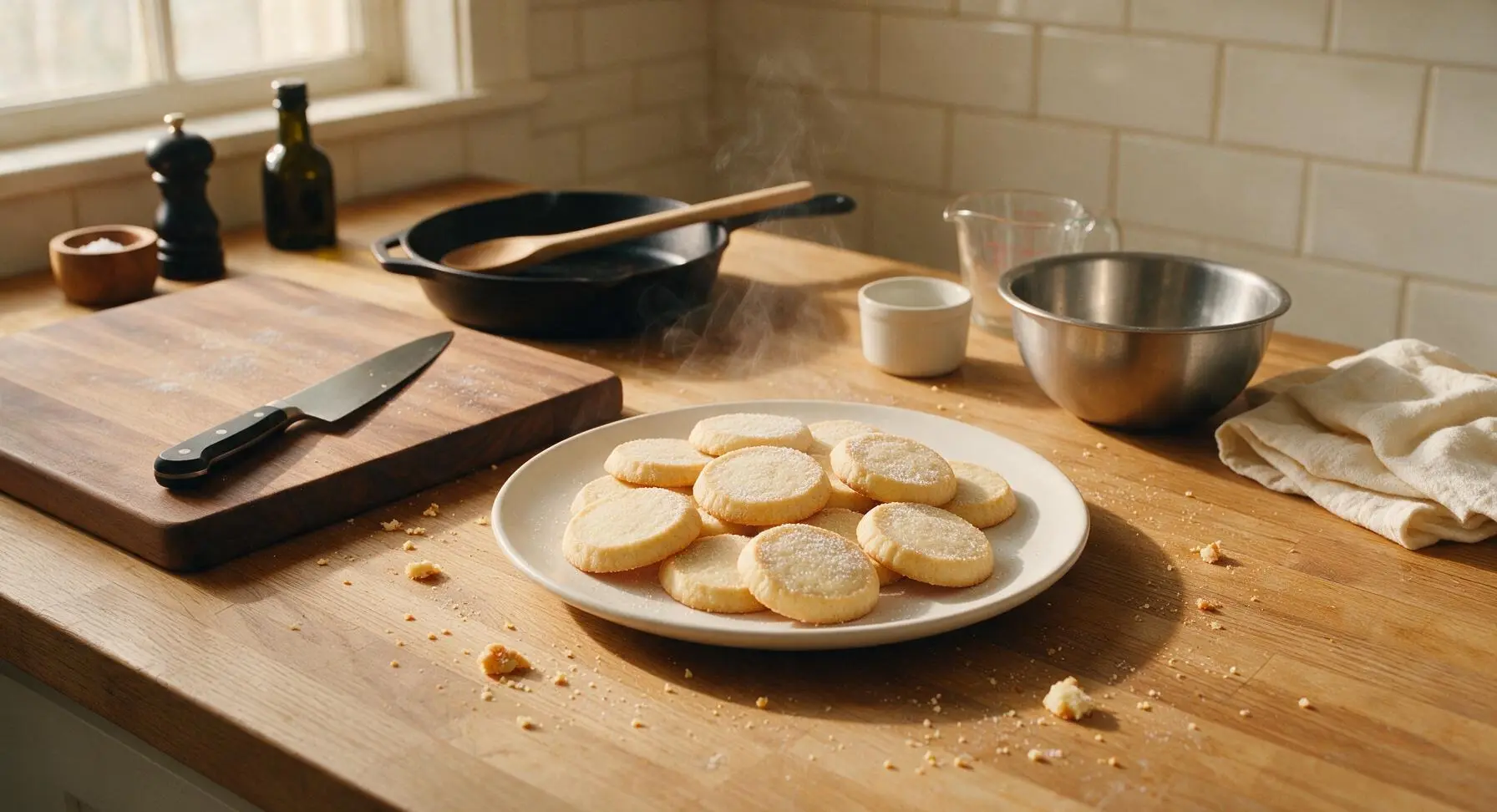
Shortbread Cookies

title 1
Shortbread Cookies
⏱️ cook time 20 minutes
🍽️ servings 12
⚡ Difficulty easy

intro

Buttery, melt-in-your-mouth shortbread cookies made with simple pantry staples, with a crisp crumb and subtle salty-sweet finish, perfect for winter holiday gifting and tea time.

Ingredients
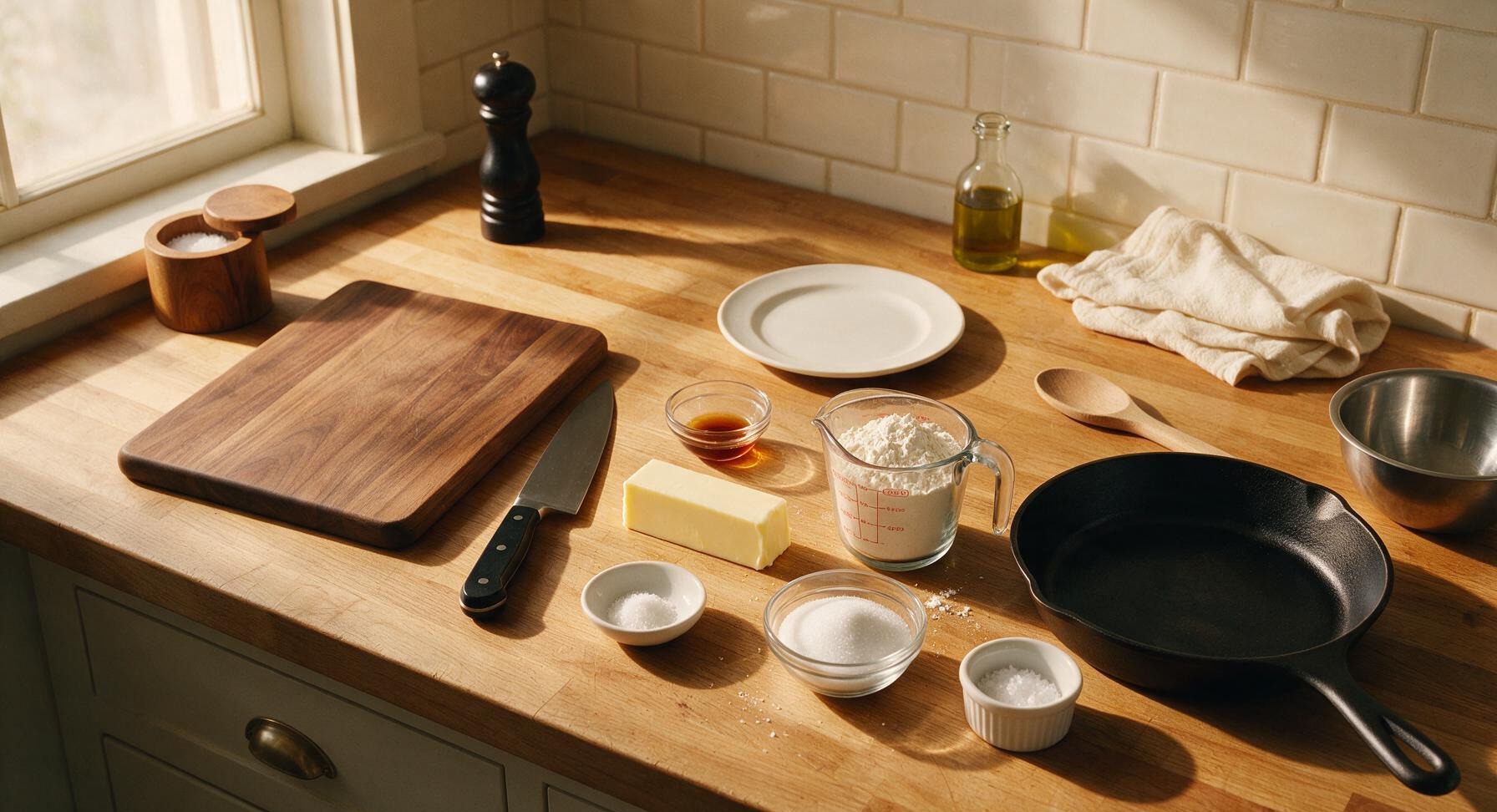
Unsalted butter 226g (2 sticks, room temperature)
Granulated sugar 75g (1/3 cup, plus 1 tbsp for topping)
All-purpose flour 280g (2 1/4 cups, spooned and leveled)
Pure vanilla extract 5ml (1 tsp)
Fine sea salt 1g (1/4 tsp)
Flaky sea salt 3g (1/2 tsp, for topping)

Steps

1

Cream Butter and Sugar

Place 226g (2 sticks) room-temperature unsalted butter and 60g (1/3 cup) granulated sugar into the medium stainless steel mixing bowl. Use the butter yellow silicone spatula to cream the ingredients together for 2–3 minutes until the mixture is smooth, pale, and fluffy, with no gritty sugar texture remaining when a small amount is rubbed between your fingers. Stir in 5ml (1 tsp) pure vanilla extract until fully incorporated. Avoid using an electric mixer on high speed, as this traps excess air and causes cookies to spread excessively during baking.
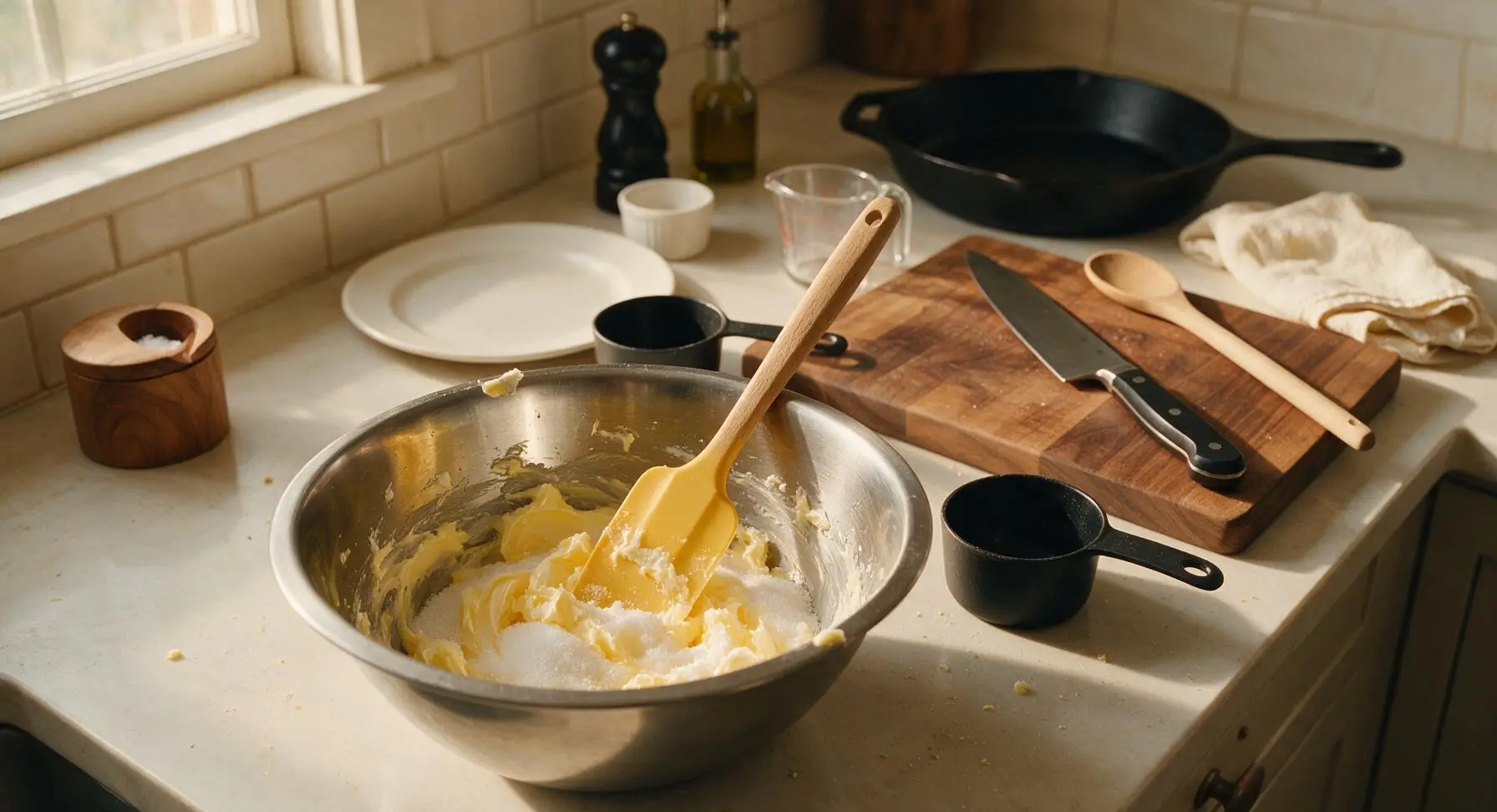
Step 1
step1:Cream Butter and Sugar
2

Sift Dry Ingredients

Set the fine-mesh stainless steel sieve over the mixing bowl holding the creamed butter mixture. Add 280g (2 1/4 cups, spooned and leveled) all-purpose flour and 1/4 tsp fine sea salt to the sieve, tapping the edge gently to sift the dry ingredients evenly over the butter. Sifting removes lumps and creates a uniformly tender, crumbly texture in the baked cookies.
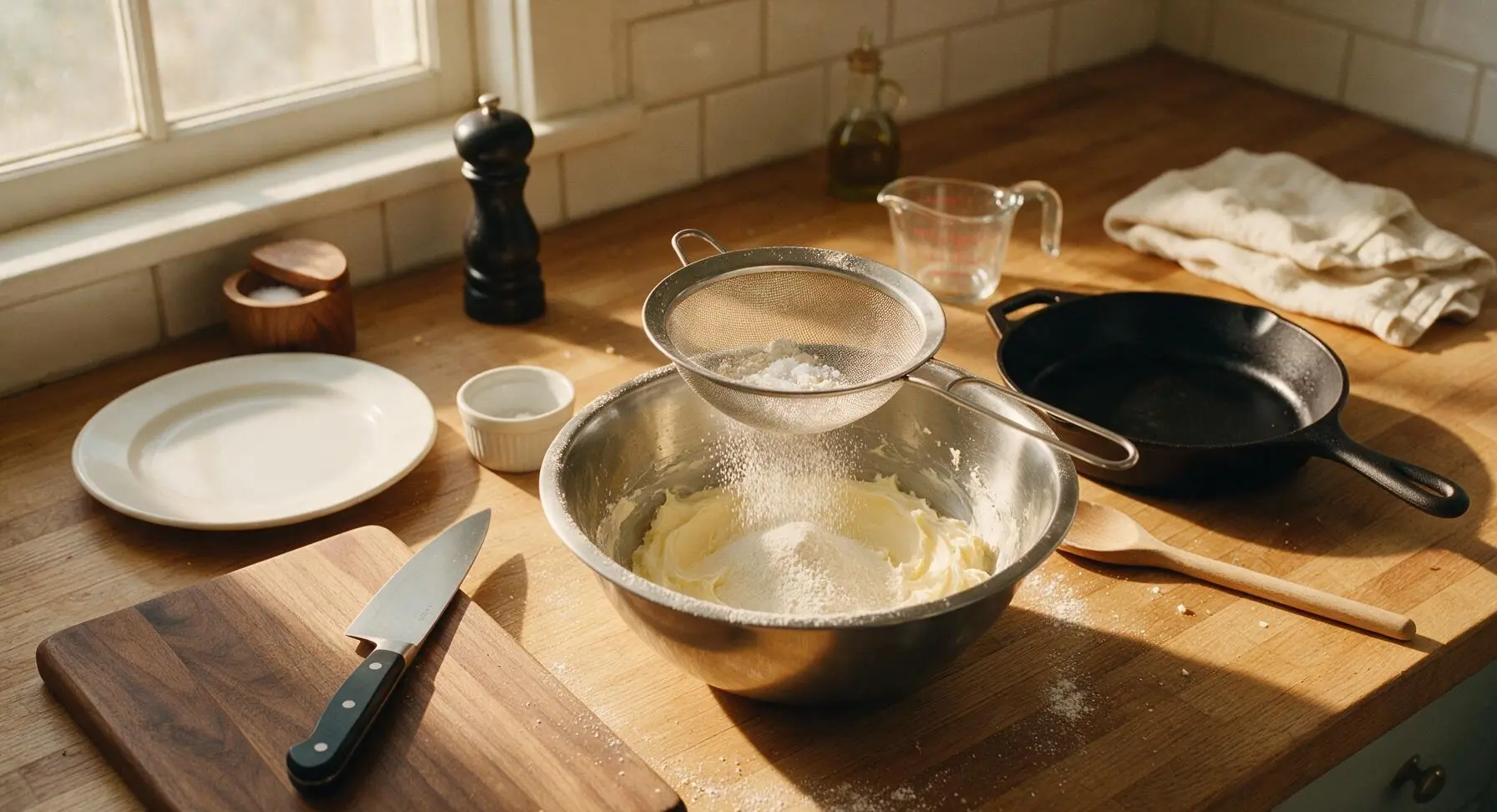
Step 2
step2:Sift Dry Ingredients
3

Form Shortbread Dough

Use the silicone spatula to gently fold the sifted dry ingredients into the butter, stirring only until no dry flour remains and the mixture comes together into a soft, crumbly dough. Do not overmix, as overworking gluten in the flour will result in tough, chewy cookies instead of the signature melt-in-your-mouth texture. Turn the dough out onto the beech wood rolling board, and press gently into a flat 2cm thick disk with the palms of your hands.
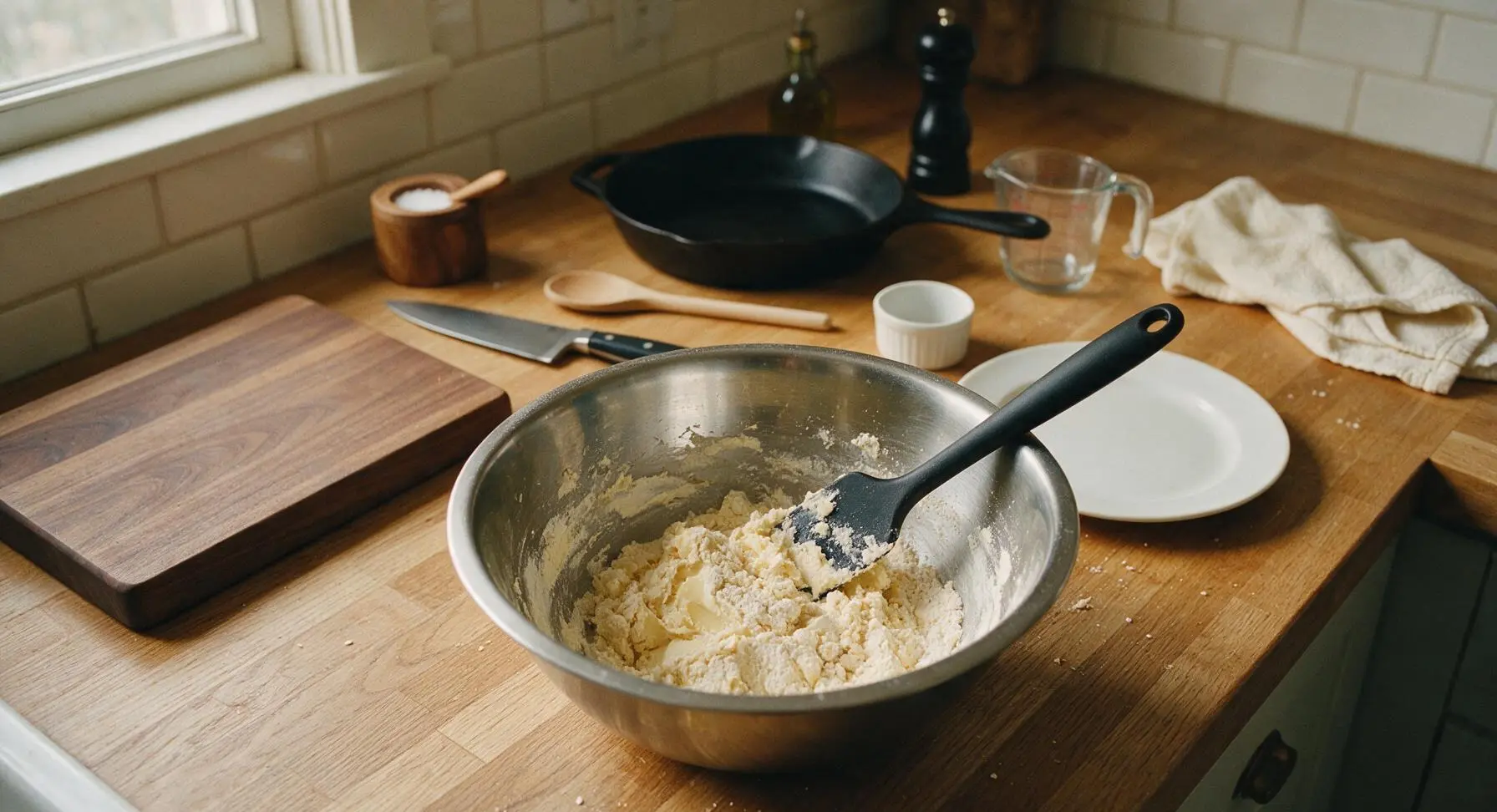
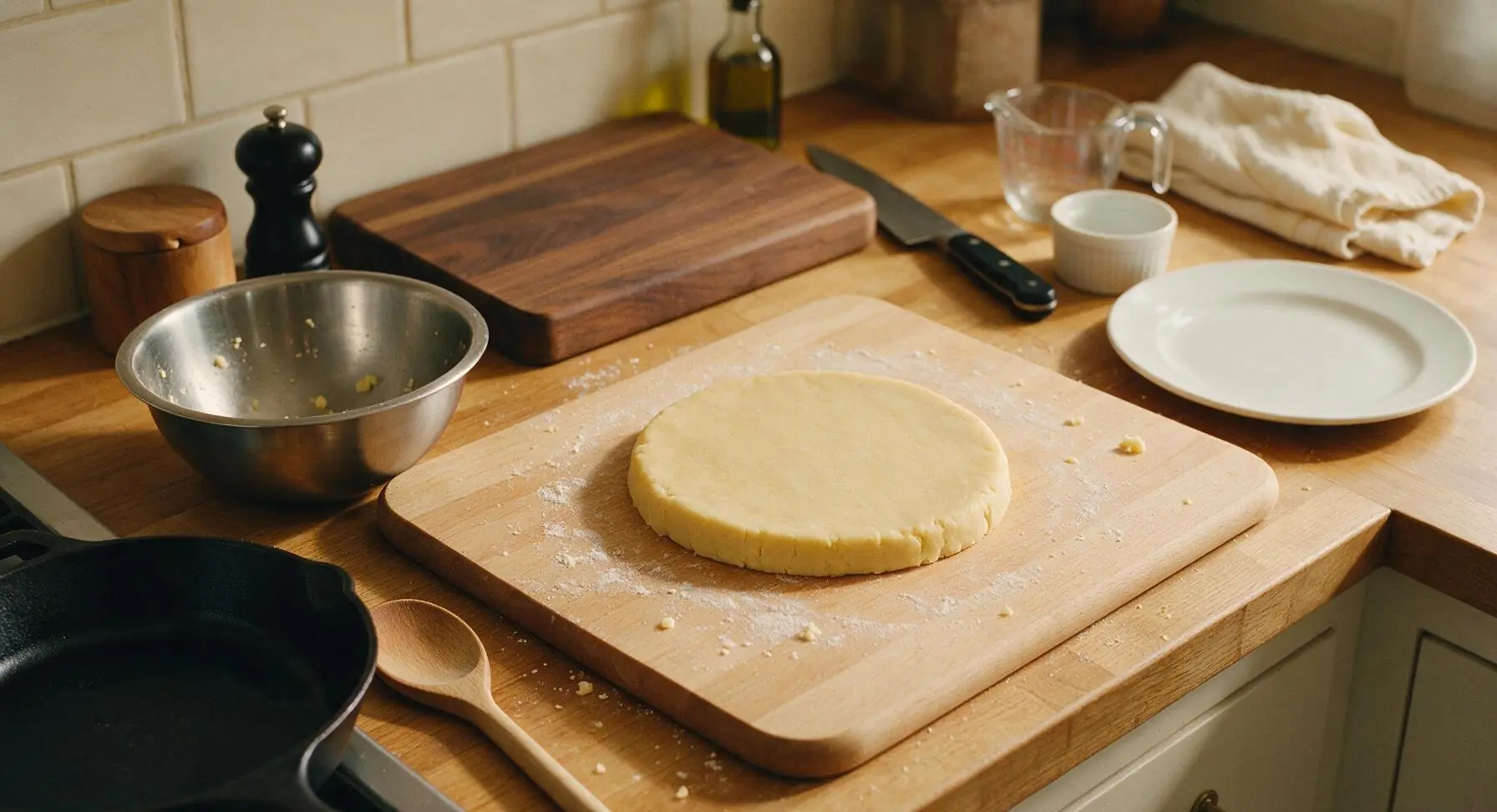
Step 3
step3:Form Shortbread Dough
Step 3
step3:Form Shortbread Dough
4

Chill Dough Thoroughly

Loosely wrap the dough disk in a sheet of unbleached parchment paper, and transfer to the refrigerator to chill for 1 full hour. Chilling solidifies the butter in the dough, preventing spread during baking and helping the cookies hold their crisp fluted shape. The dough is ready when it feels firm to the touch, with no soft, malleable spots when pressed.
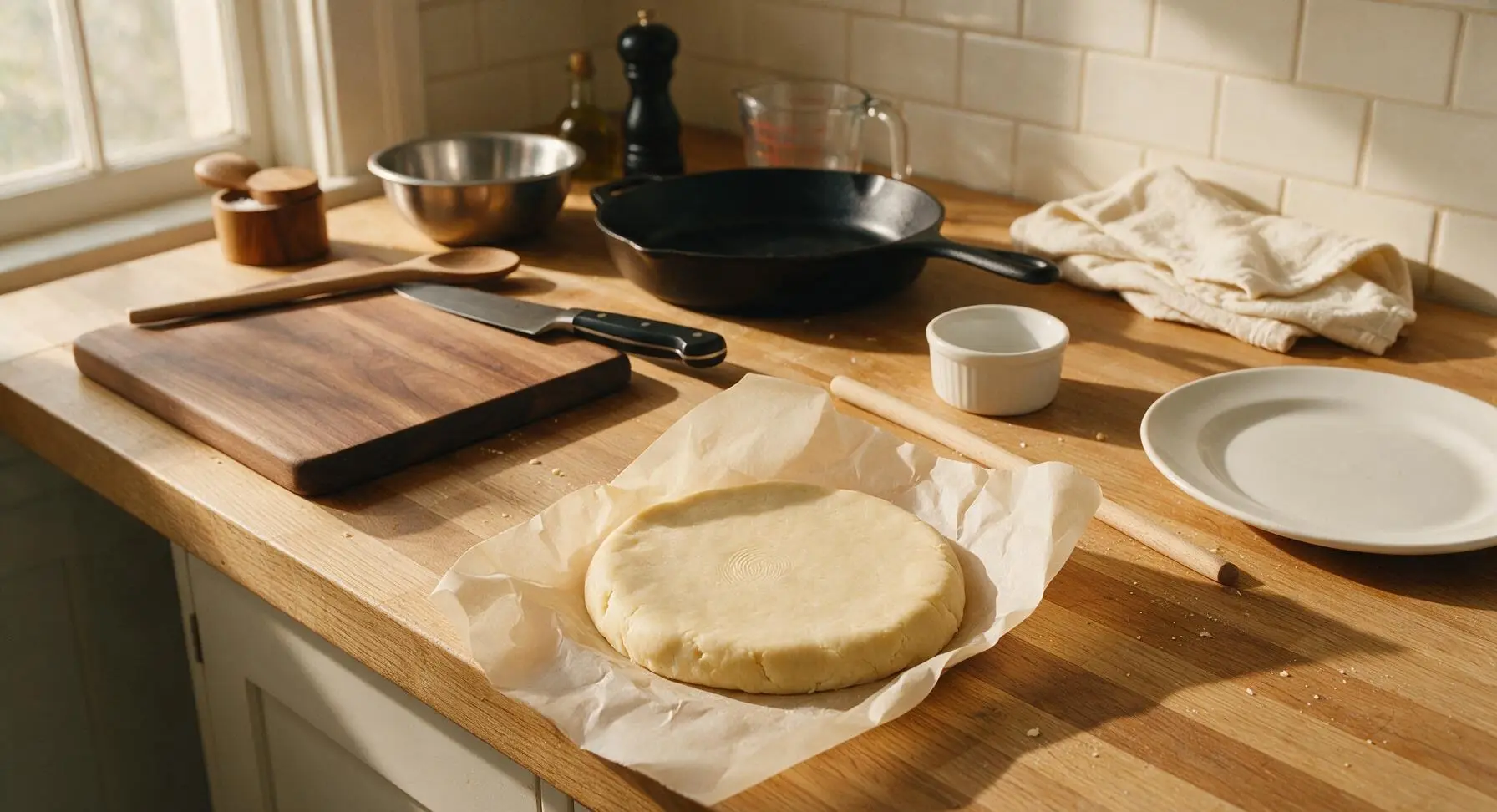
Step 4
step4:Chill Dough Thoroughly
5

Roll and Cut Shapes

Remove the chilled dough from the refrigerator, unwrap it, and return it to the lightly floured beech wood rolling board. Use the solid beech French rolling pin to roll the dough to an even 1cm thickness, applying steady, even pressure to avoid uneven edges. Press the 5cm fluted round cookie cutter straight down through the dough (do not twist, as this seals edges and prevents even rising) to cut shapes, gathering scraps and re-rolling once to cut additional cookies until all dough is used, yielding approximately 24 cookies total.
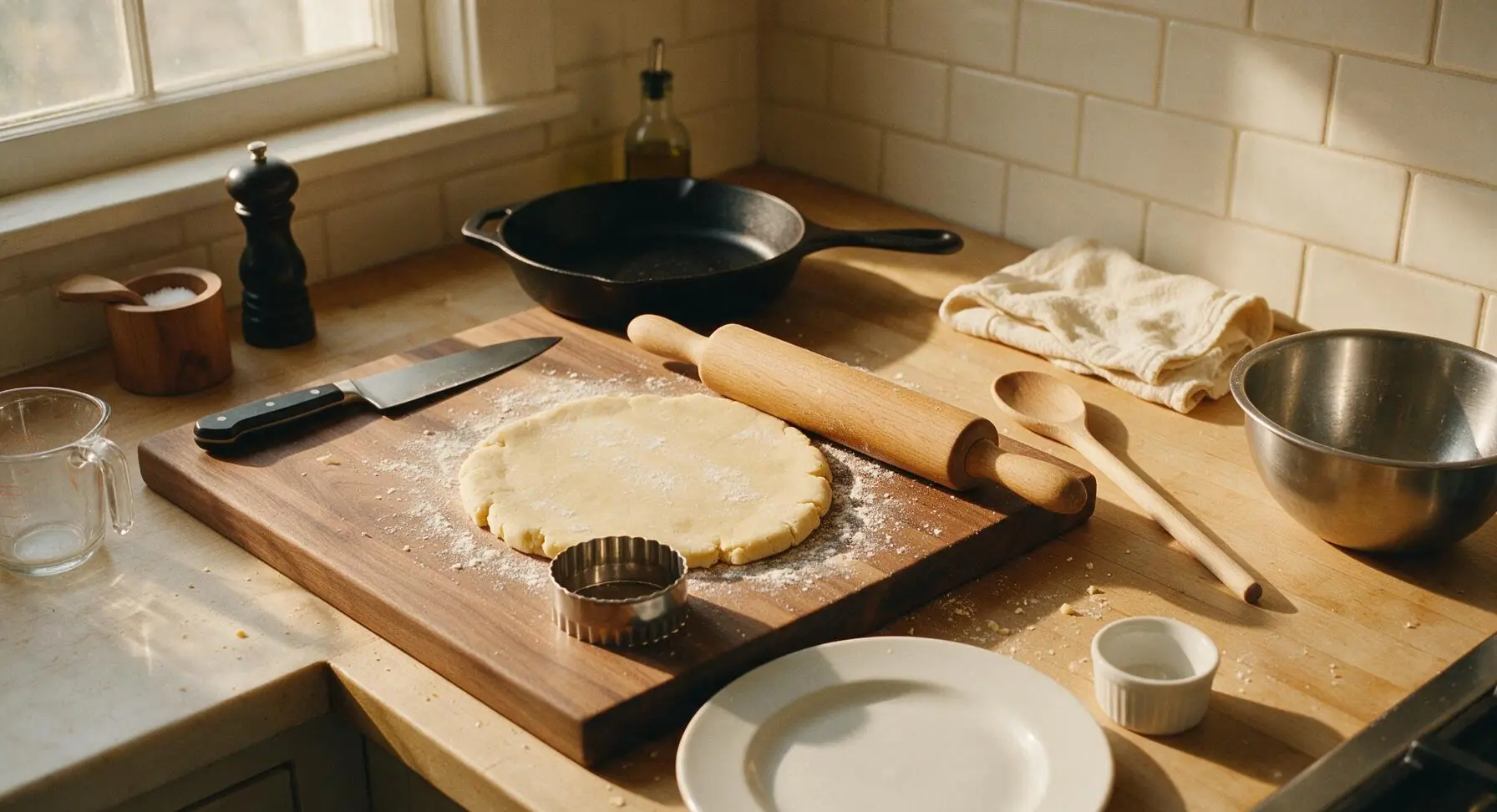
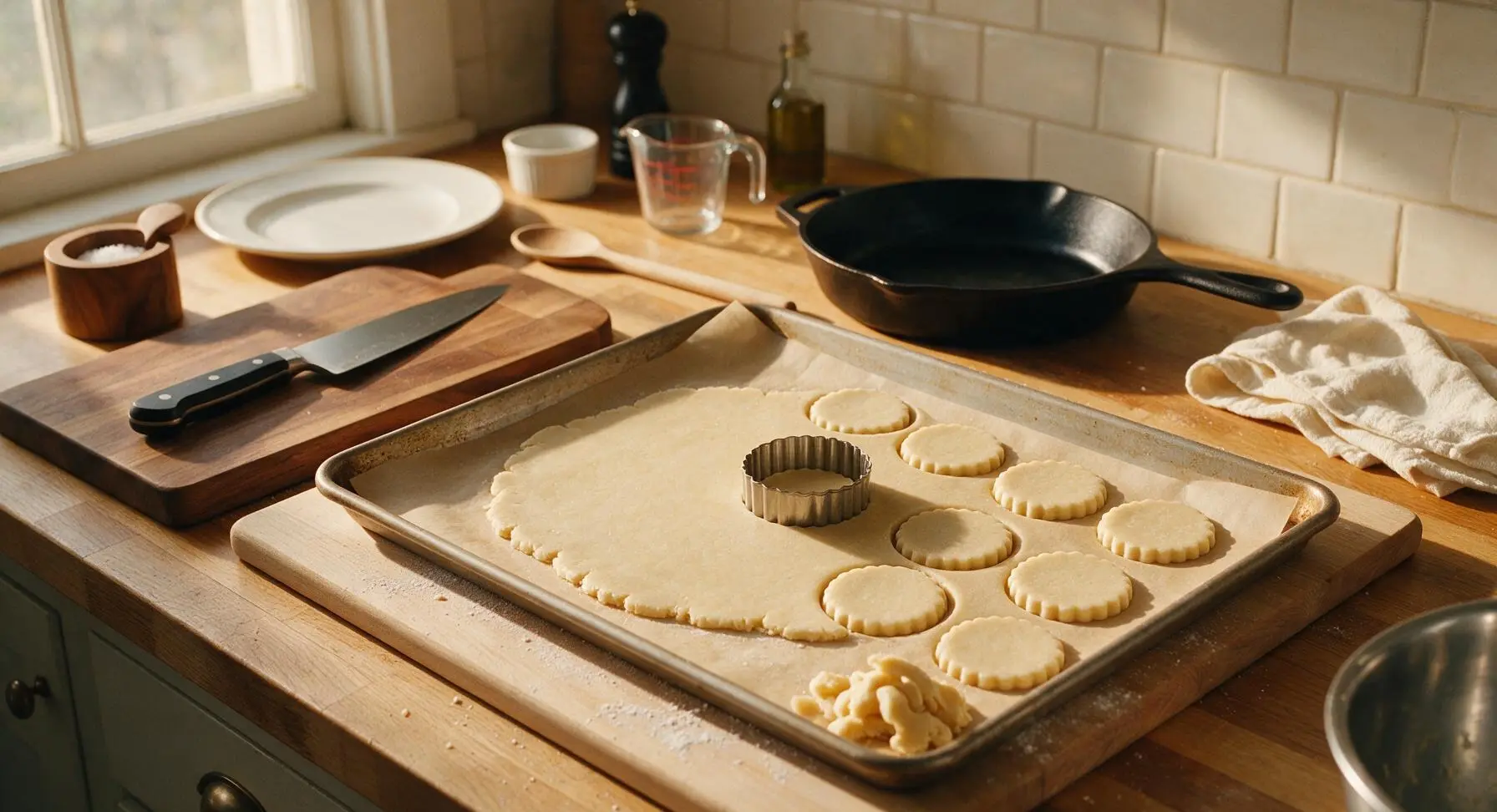
Step 5
step5:Roll and Cut Shapes
Step 5
step5:Roll and Cut Shapes
6

Bake to Perfection

Arrange the cut cookie shapes on the parchment-lined heavy-gauge baking sheet, leaving 2cm of space between each cookie to allow for slight spread. Bake on the middle rack of a preheated 160C (325F) oven for 18–20 minutes. The cookies are done when their edges turn a very pale golden brown, and centers are set but not deeply colored; overbaking will produce hard, dry shortbread.
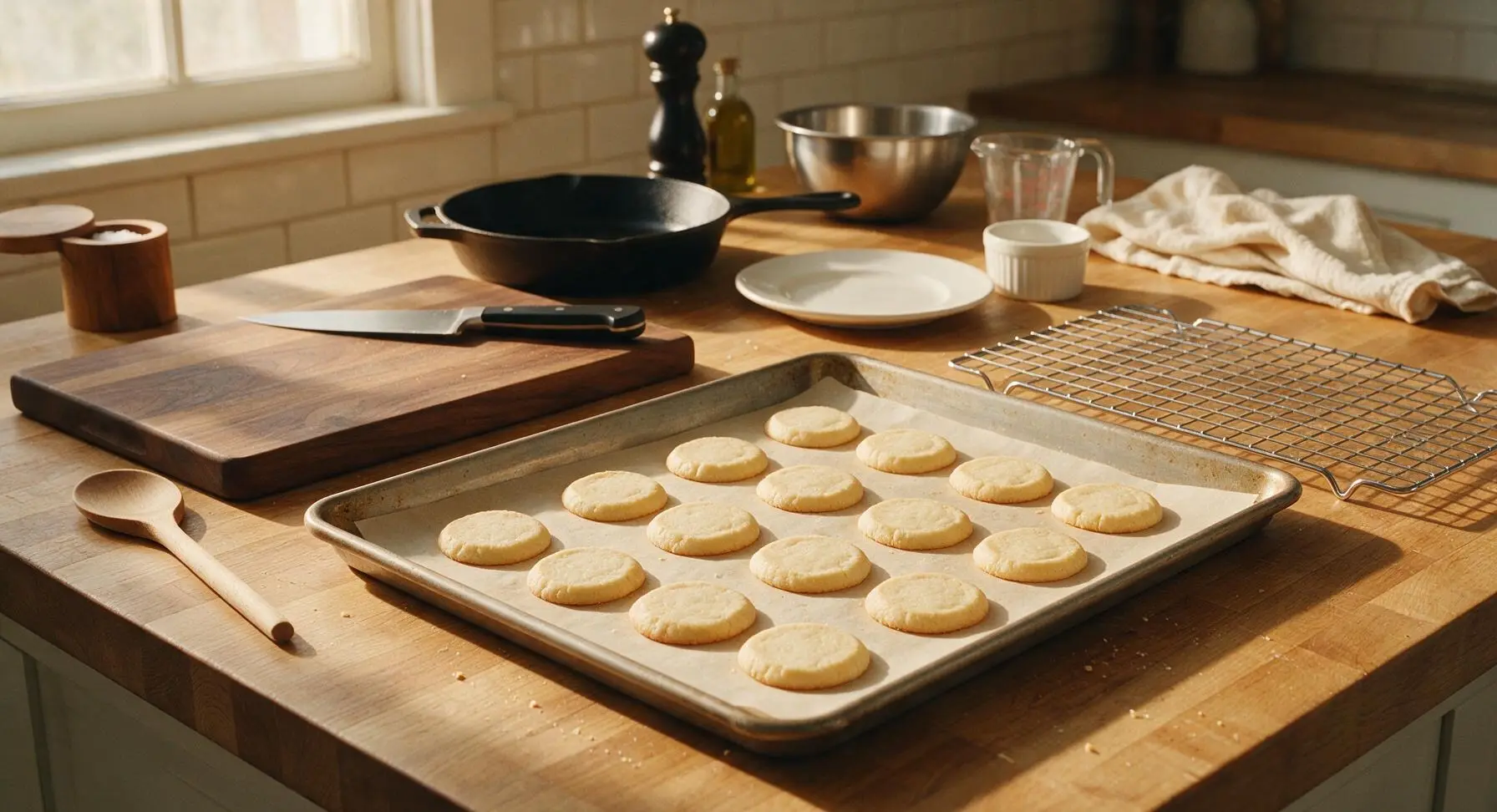
Step 6
step6:Bake to Perfection
7

Cool and Garnish

Let the cookies rest on the hot baking sheet for 5 minutes after removing from the oven, as they are extremely fragile when hot. Use the offset metal spatula to transfer cookies to the wire cooling rack to cool completely for 30 minutes. While cookies are still slightly warm, sprinkle tops evenly with the reserved 1 tbsp granulated sugar and 1/2 tsp flaky sea salt for subtle crunch and balanced sweet-salty flavor.
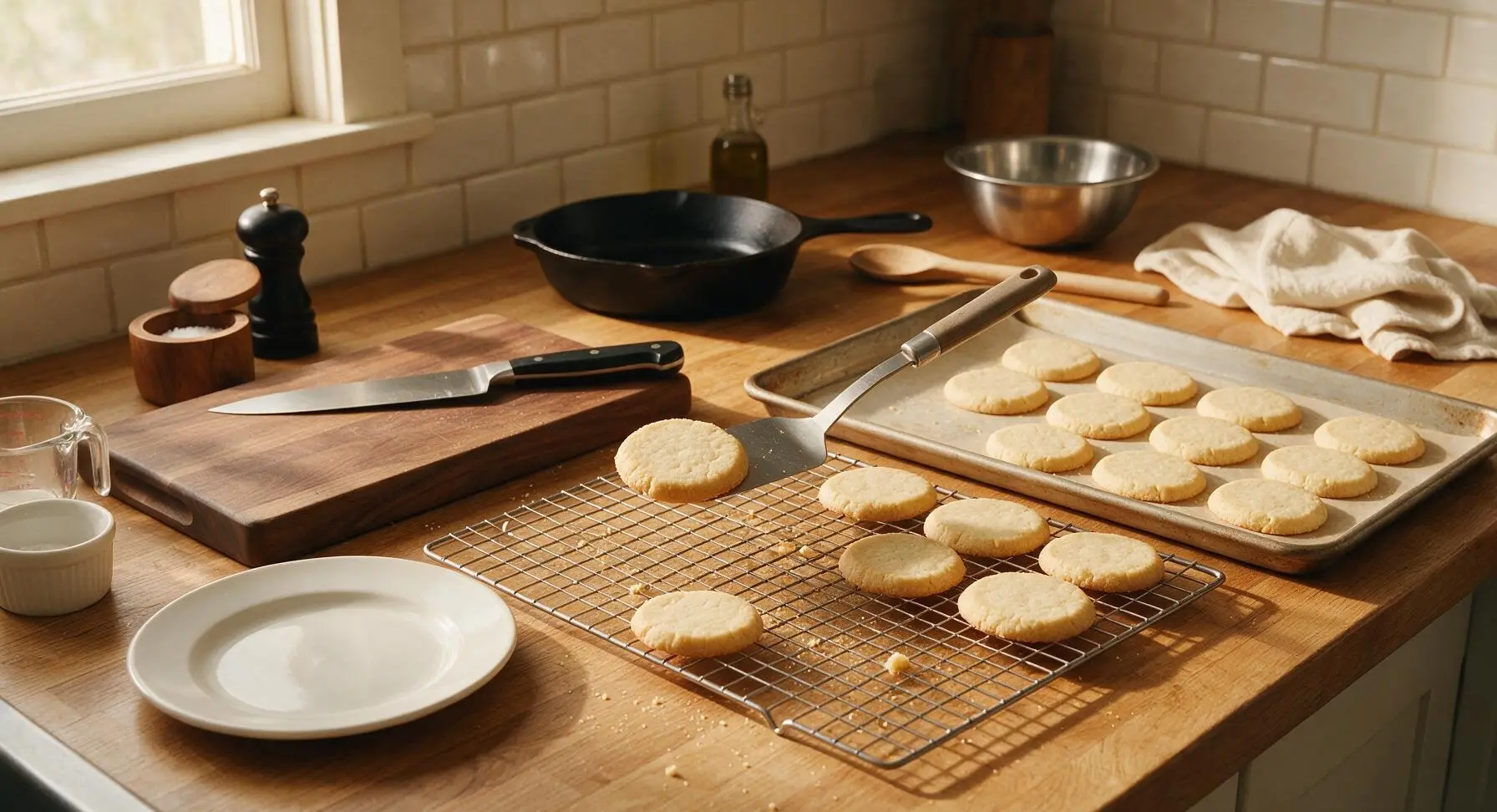
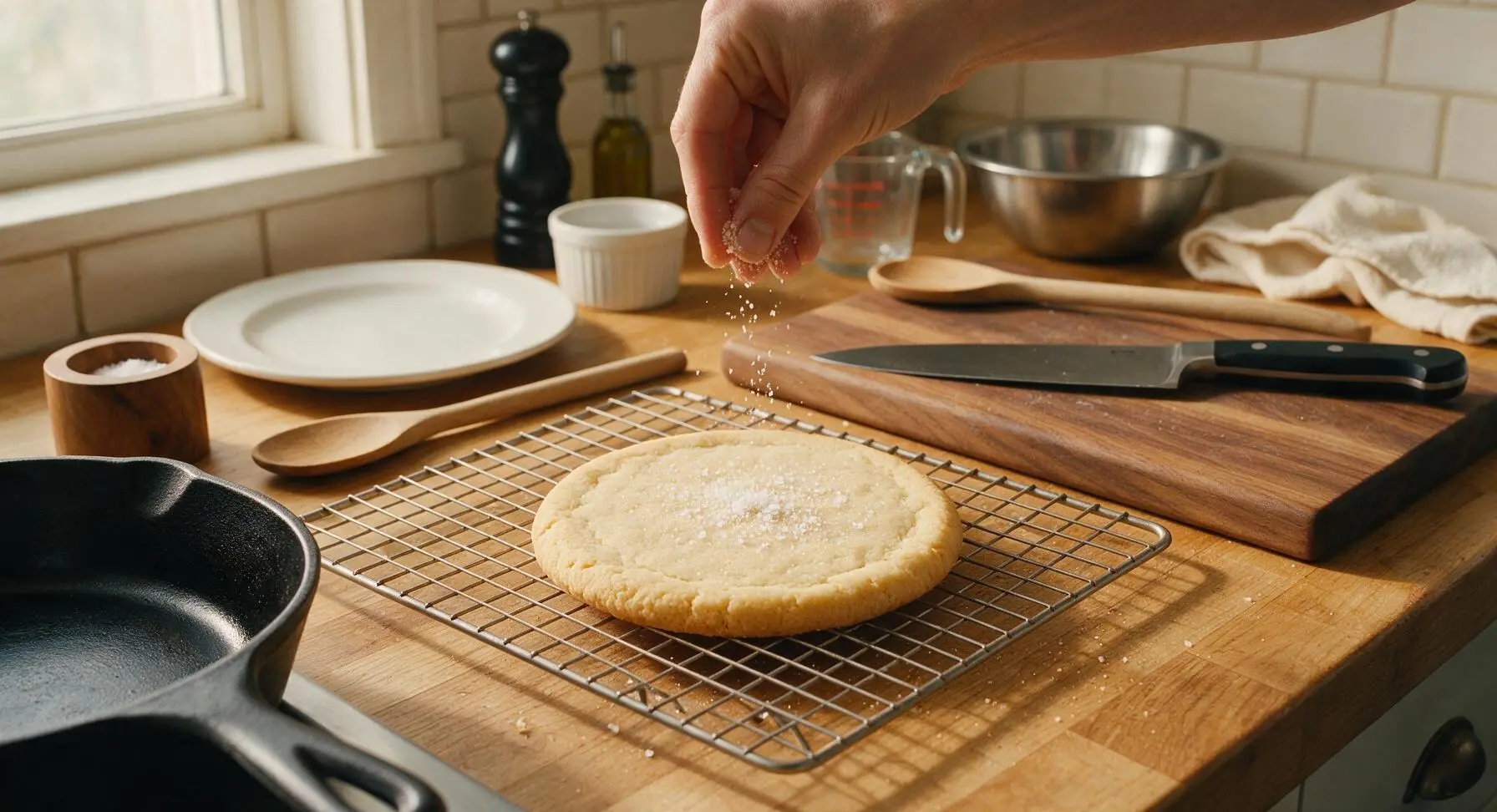
Step 7
step7:Cool and Garnish
Step 7
step7:Cool and Garnish
8

Plate and Serve

Once fully cooled, arrange the shortbread cookies on the matte cream ceramic serving platter. Serve at room temperature alongside hot tea or coffee, or store in an airtight container at room temperature for up to 2 weeks for gifting or casual snacking.
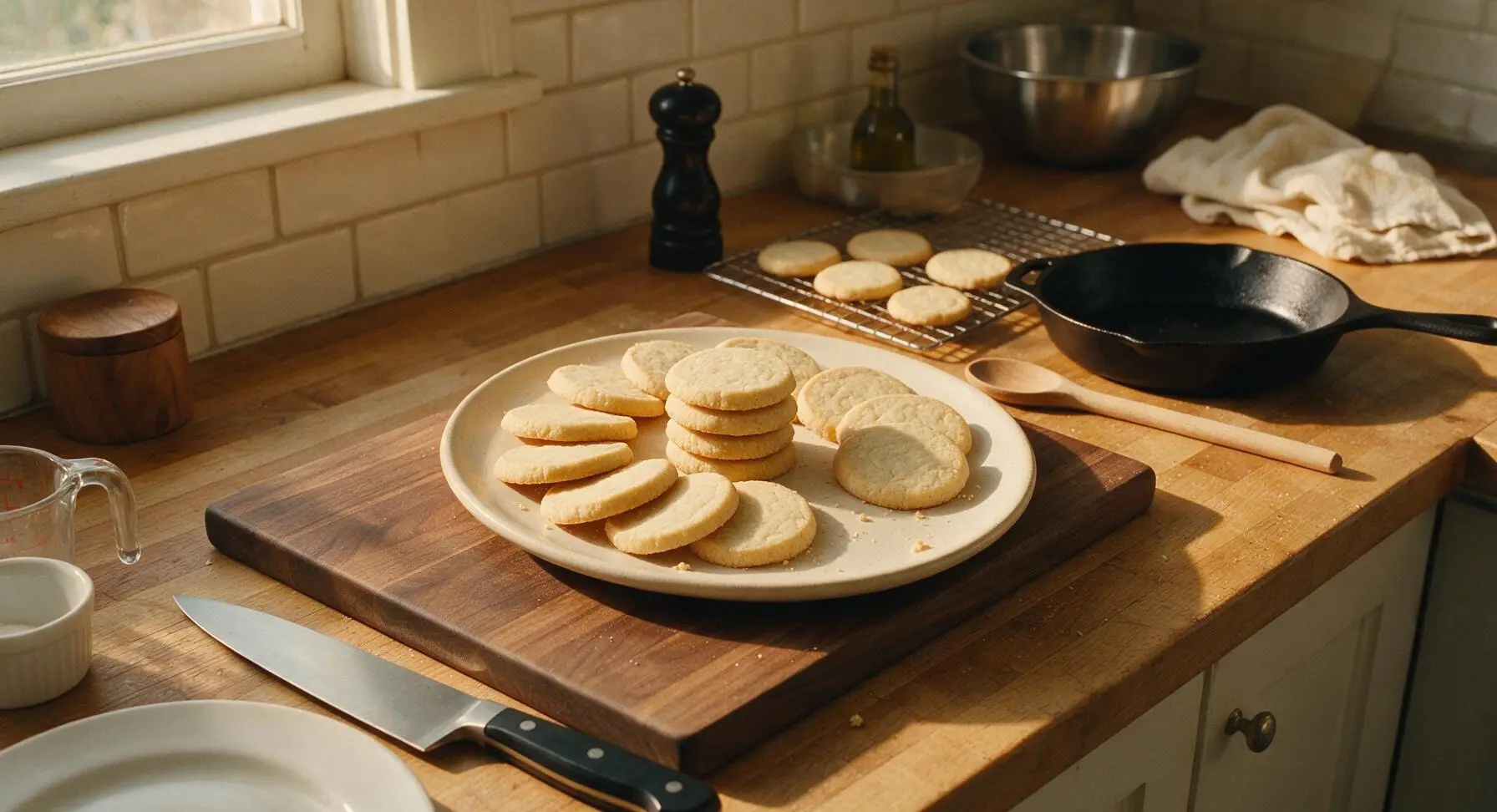
Step 8
step8:Plate and Serve

Tips

1.Use properly softened butter (18C/65F, indentable with a light finger press) instead of cold or melted butter: Softened butter creams evenly without trapping excess air, which prevents cookies from spreading too thin in the oven or turning out dense and heavy.
2.Resist overmixing the dough once flour is added: Overstirring develops gluten in the all-purpose flour, which creates tough, chewy shortbread instead of the signature tender, crumbly texture that melts on the tongue.
3.Never twist the cookie cutter when pressing through dough: Twisting pinches and seals the cut edges of the dough, which prevents the shortbread from rising evenly and leads to lopsided, misshapen cookies after baking.

✨ You May Also Like

Desserts & Baking
🍜 Italy

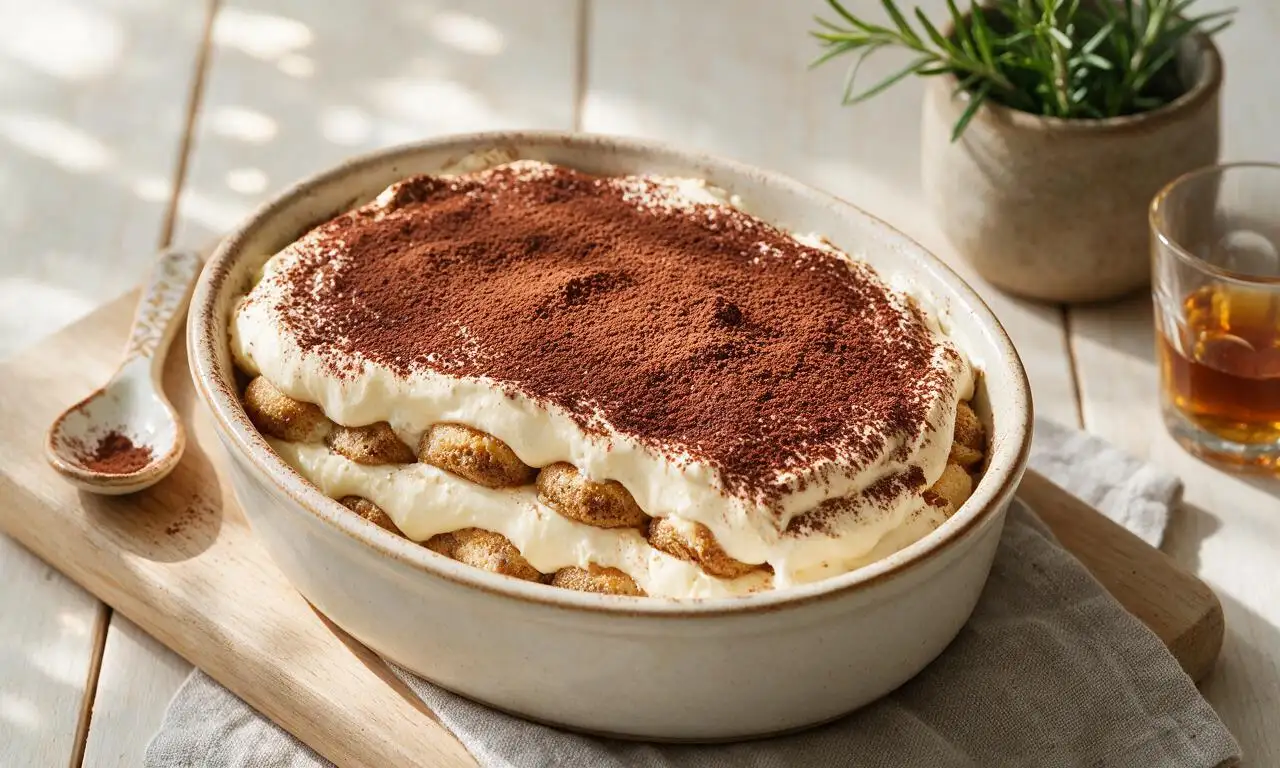
Creamy, coffee-kissed classic Northern Italian no-bake dessert, with layers of rum-spiked mascarpone cream, soft ladyfingers, and a rich cocoa dusting.

⏱️ 4 hours 3Desserts & Baking ★ 4.7
Desserts & Baking
🍜 France

Flaky, shatteringly crisp, buttery French croissants with golden exteriors and soft, airy layered interiors, perfect for pairing with coffee for a special morning treat.

⏱️ 12 hours Desserts & Baking ★ 4.5
Desserts & Baking
🍜 United States

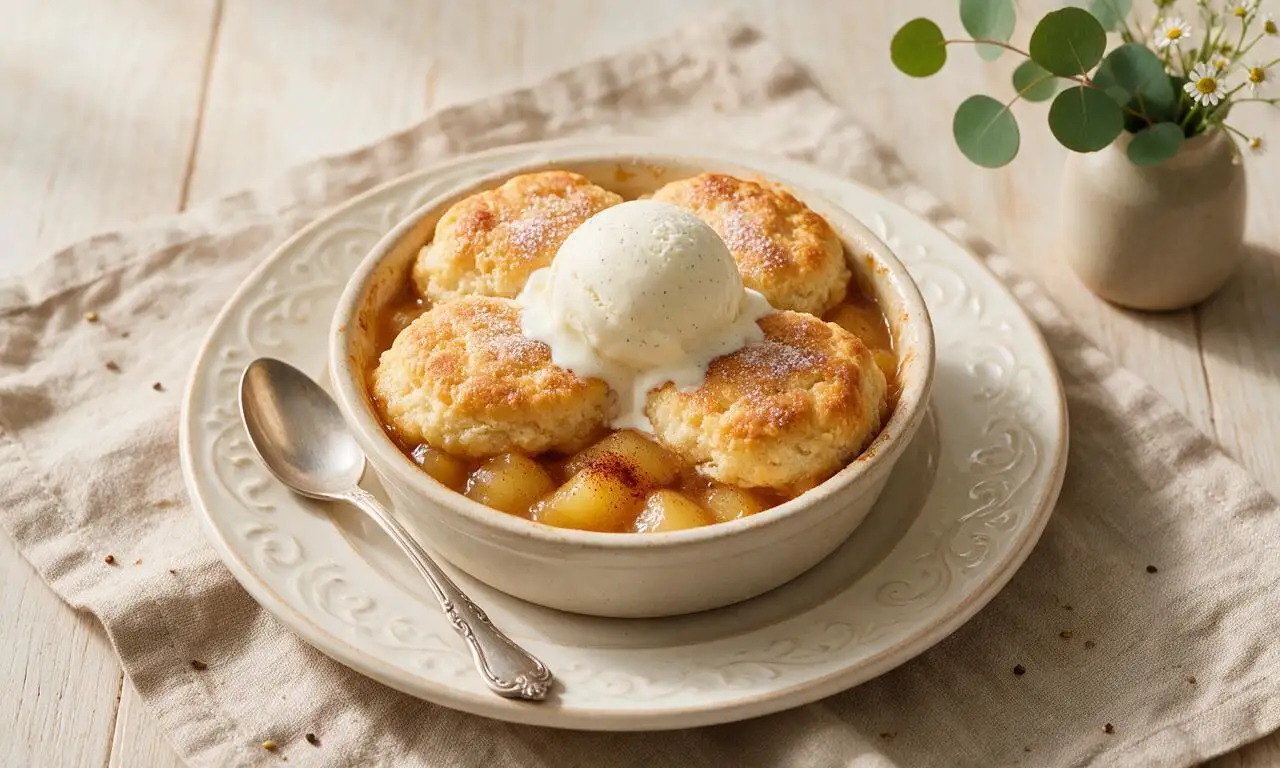
Warm, spiced baked apples topped with a fluffy golden biscuit crust, this cozy dessert pairs perfectly with vanilla ice cream for cool-weather comfort.

⏱️ 55 minuteDesserts & Baking ★ 4.6
Desserts & Baking
🍜 United States

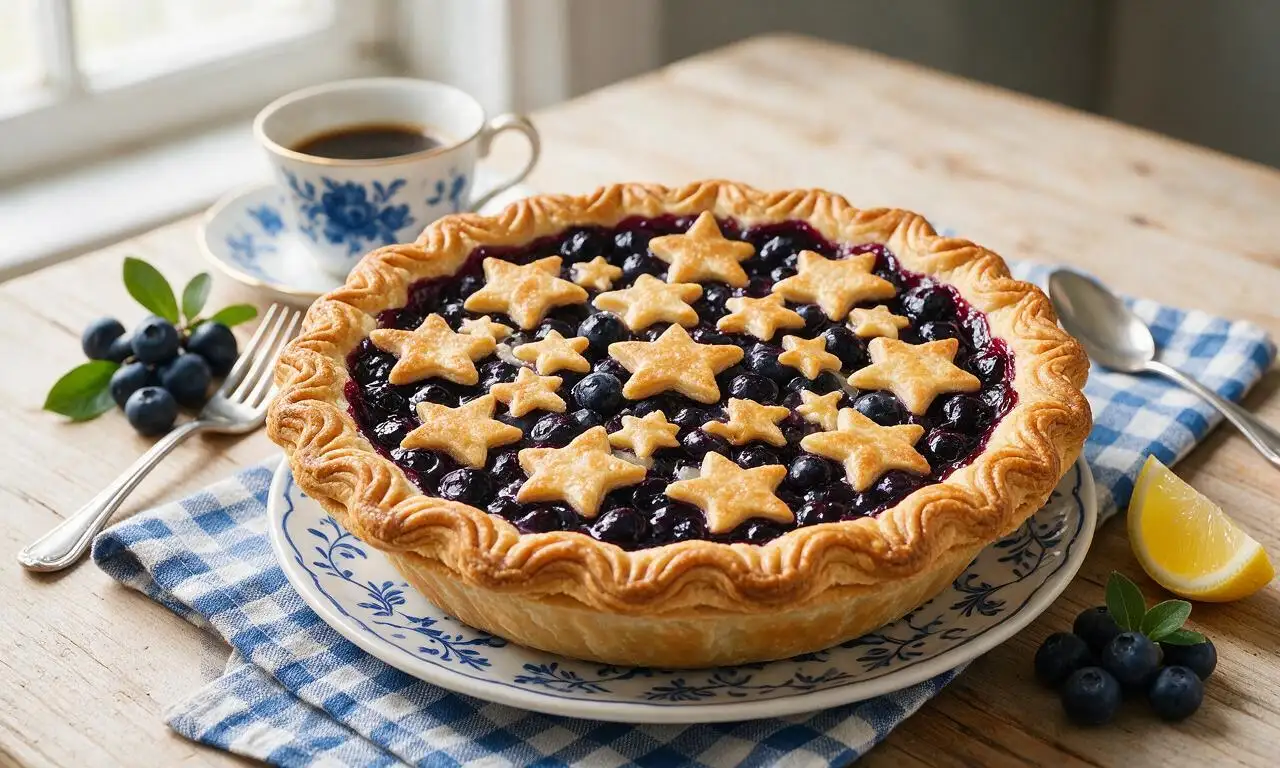
A star-spangled classic American blueberry pie with buttery flaky crust and bright sweet-tart filling, perfect for summer patriotic gatherings.

⏱️ 1 hour 25Desserts & Baking ★ 4.7
Desserts & Baking
🍜 United States

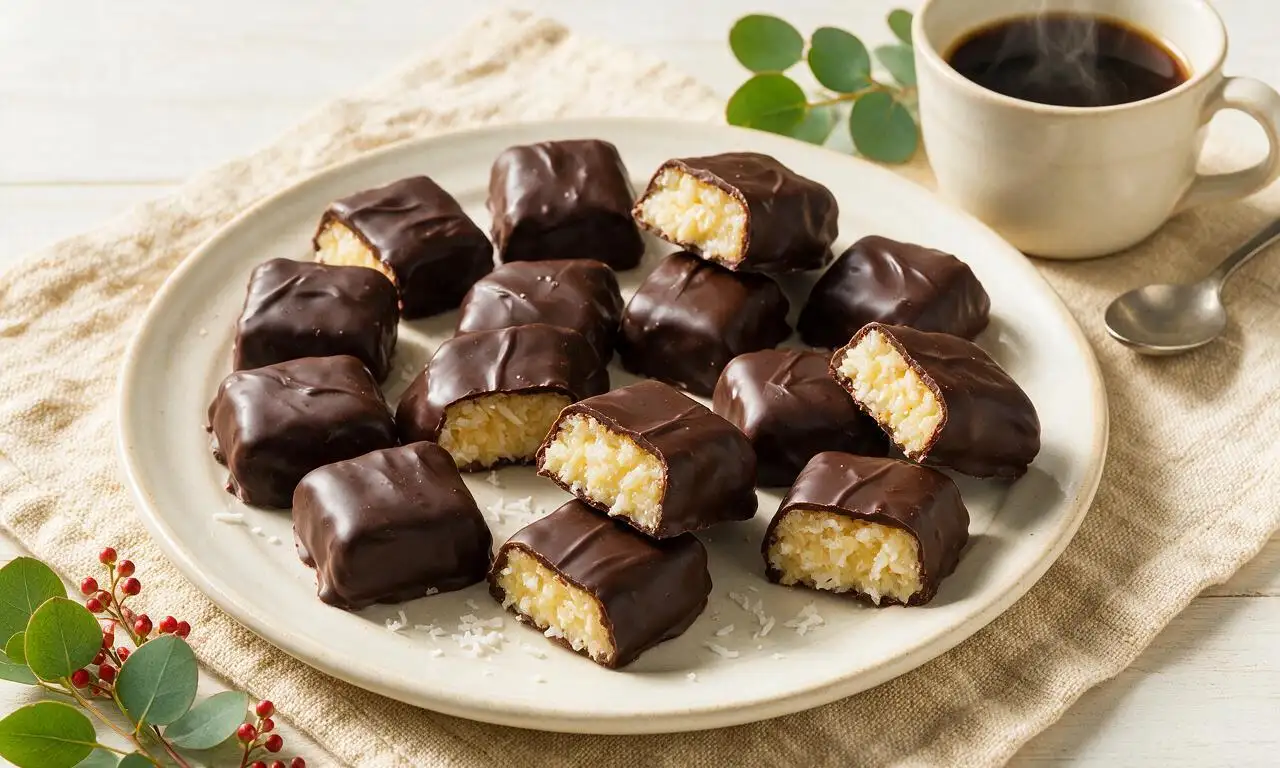
A beloved no-bake regional Maine candy with a chewy coconut-potato center coated in rich dark chocolate, a New England holiday staple since the 1870s.

⏱️ 2 hours 3Desserts & Baking ★ 4.8
Desserts & Baking
🍜 France

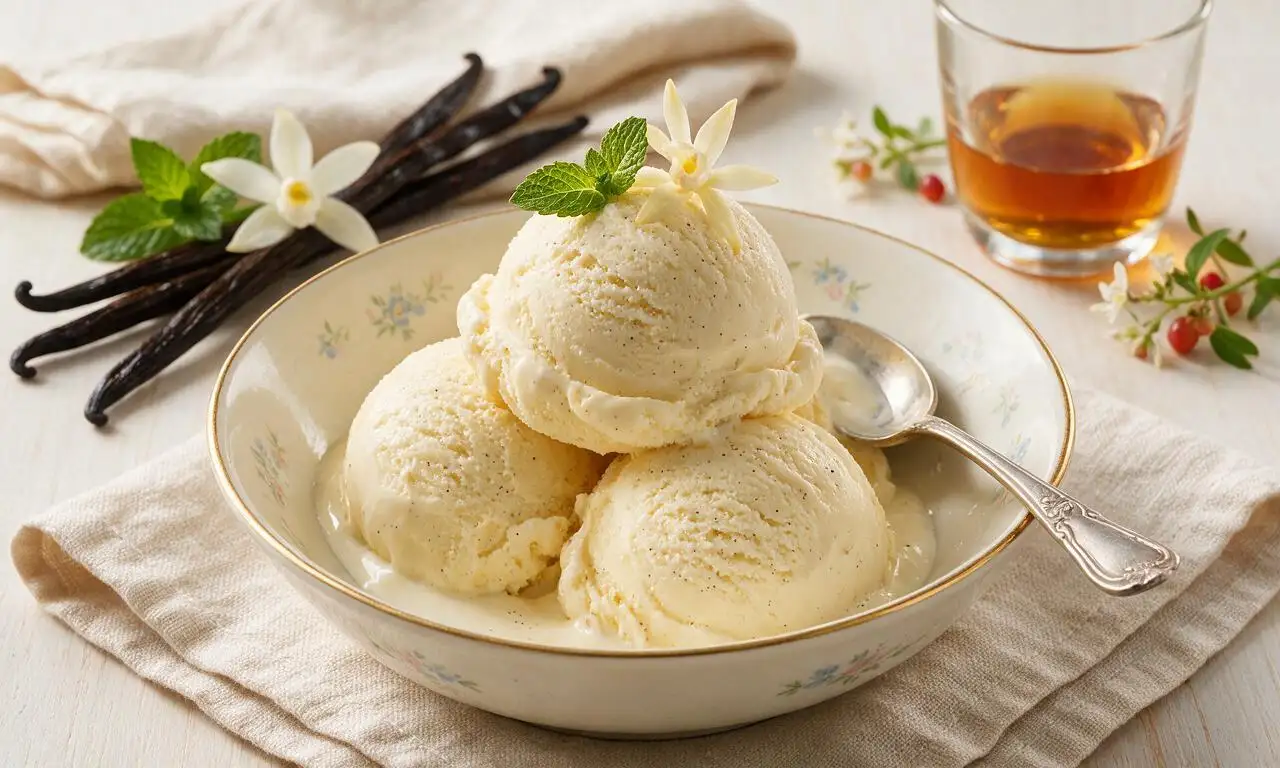
Luxuriously creamy, floral frozen custard made with aromatic Tahitian vanilla beans, boasting a smooth, rich texture that melts slowly on the tongue.

⏱️ 3 hours 3Desserts & Baking ★ 4.5

Shortbread Cookies:Frequently Asked Questions

1.Why do my shortbread cookies turn out tough instead of tender and melt-in-your-mouth? ▾
Tough shortbread almost always comes from overworking the dough or using overly soft butter. Overmixing develops excess gluten in the all-purpose flour, which creates a chewy, tough crumb. Mix only until the dough just comes together, skip extra kneading, keep butter at cool room temperature, and chill the dough before baking for that perfect tender bite.
2.Can I use salted butter instead of unsalted for this recipe? ▾
You absolutely can, just adjust the added fine sea salt to compensate. Standard salted butter contains roughly 1/4 teaspoon of salt per stick, so cut the added sea salt in half, or skip it entirely if you prefer a less salty finish. I still recommend unsalted butter for full control over salt levels to nail that perfect subtle salty-sweet balance.
3.How long do I need to chill the shortbread dough before baking? ▾
For the best texture and to prevent excess spreading in the oven, chill shaped or rolled dough for at least 1 hour, and up to 3 days wrapped tightly in the fridge. If you’re in a rush, you can pop it in the freezer for 15 minutes, but a longer slow chill builds deeper buttery flavor and helps cookies hold clean, sharp edges.
4.Why did my shortbread spread and lose its shape while baking? ▾
Spreading usually stems from three common issues: your butter was too soft when mixing, you skipped the dough chilling step, or your oven ran too cool. Use an oven thermometer to confirm your oven hits 325°F, don’t let butter get so soft it oozes when pressed, and chill dough thoroughly to help cookies hold their shape.
5.Can I make this dough ahead of time for holiday baking? ▾
Definitely! This shortbread dough freezes beautifully for up to 3 months when wrapped tightly in plastic and sealed in a freezer bag. You can freeze a whole dough block to thaw, roll, and cut later, or freeze pre-cut shapes to bake straight from frozen—just add 2-3 minutes to total bake time, no thawing needed.
6.What’s the best way to get even, consistent cookie thickness? ▾
The easiest trick for uniform shortbread is to roll dough between two 1/4-inch thick wooden dowels, or use rolling pin bands set to 1/4 inch. That thickness delivers the perfect crisp, melt-in-your-mouth crumb without being too thin and brittle or too thick and underbaked. If you don’t have guides, measure a few spots with a ruler as you roll.
7.Do I really need to use fine sea salt, or can I use table salt? ▾
Fine sea salt dissolves more evenly into dough for that subtle, balanced salty-sweet finish, but you can use table salt if that’s what you have on hand. Just use half the measured amount, since table salt has a sharper, more concentrated flavor that can make cookies overly salty in a 1:1 swap. Save coarse flaky salt for topping, not mixing into dough.
8.How do I know when shortbread is done baking? ▾
Shortbread is ready when the edges are just barely pale golden, and the center looks set but not deeply browned. Unlike chewy drop cookies, shortbread won’t look wet on top when done, and it will firm up significantly as it cools on the baking sheet. If you wait until the whole cookie is golden, it will be overbaked and dry.
9.Can I add mix-ins like chocolate chips or sprinkles to this recipe? ▾
Of course! This classic base is super versatile. Fold in up to 1/2 cup of mini chocolate chips, chopped toasted nuts, dried cranberries, or citrus zest right after mixing the base dough, before chilling. If you’re adding sprinkles, press them lightly onto the top of cut cookies right before baking so they stick without bleeding into the dough.
10.Why is my shortbread dry and crumbly even after mixing? ▾
If your dough won’t come together and stays overly crumbly, you likely used butter that was too cold, or measured your flour incorrectly by packing it into the measuring cup. Spoon flour into your cup and level it with a knife instead of scooping, and if dough is still crumbly, add 1 teaspoon of ice water at a time until it just holds together when pressed.
11.How should I store baked shortbread cookies to keep them fresh? ▾
Store fully cooled shortbread in an airtight container at room temperature, layered between sheets of parchment paper to prevent sticking, for up to 2 weeks. They actually taste better a day or two after baking, as the buttery flavor melds and the texture gets even more tender. Avoid storing them in the fridge, as that can make them soggy or absorb off-flavors.
12.Can I bake these in a patterned shortbread pan instead of cutting individual cookies? ▾
Absolutely! A traditional patterned shortbread pan works beautifully for this recipe. Press the dough evenly into a lightly greased pan, prick the surface all over with a fork, and add 3-5 minutes to the total bake time. Let it cool in the pan for 10 minutes before inverting onto a board and slicing along the scored lines for clean wedges.
13.What does pricking the shortbread dough with a fork before baking do? ▾
Pricking (also called docking) the dough creates tiny air vents that let trapped steam escape as cookies bake. This prevents random air bubbles from puffing up under the surface, keeps cookies flat and even, and reduces excess spreading. You don’t need to poke all the way through—just press fork tines 1/4 inch deep every inch across the dough surface.
14.Can I make these cookies gluten-free? ▾
You can swap the all-purpose flour for a 1:1 gluten-free all-purpose baking blend that contains xanthan gum for best results. I recommend weighing the flour (120 grams per cup, the same as regular all-purpose flour) instead of using volume measurements for the most consistent texture. The final cookies will be just as buttery, though slightly more delicate than the wheat version.
15.Why does my shortbread have a grainy texture instead of smooth? ▾
A grainy texture almost always comes from not creaming the butter and sugar long enough, or using sugar that’s too coarse. Beat cool room-temperature butter and sugar on medium-low speed for 2-3 minutes, until it’s smooth and pale, with no grit when you rub a bit between your fingers. If you only have coarse sugar, blitz it in a food processor first to make it finer.
16.Can I use vanilla bean paste instead of pure vanilla extract? ▾
Definitely! Vanilla bean paste is a fantastic swap here, since it has rich, deep vanilla flavor with tiny visible bean specks that look beautiful in the pale buttery cookies. Use the exact same measurement as you would for pure vanilla extract—no adjustments needed. I skip imitation vanilla, as it can leave a harsh artificial aftertaste that clashes with the simple butter flavor.
17.How thick should I roll the dough for the best cookie texture? ▾
Aim for a consistent 1/4-inch thickness for classic shortbread. That thickness bakes up into a cookie that’s crisp but not brittle, with that signature melt-in-your-mouth crumb. If you roll it thinner than 1/8 inch, it will be overly crunchy and prone to burning; if you roll it thicker than 1/2 inch, the center may stay underbaked and doughy.
18.Can I freeze baked shortbread cookies for later? ▾
Yes! Fully cooled, baked shortbread freezes incredibly well for up to 4 months. Let them cool completely, then layer them between parchment paper in an airtight freezer-safe container, and thaw at room temperature for 15-20 minutes before serving. They hold their texture and flavor perfectly, which makes them ideal for prepping ahead for holiday cookie tins.
19.Do I need to use parchment paper or a silicone mat on my baking sheet? ▾
I strongly recommend lining your baking sheet with parchment paper or a silicone baking mat for easy release and even browning. Shortbread has high butter content, so it won’t stick badly to an unlined sheet, but the liner prevents bottoms from browning too quickly and makes cleanup totally effortless. There’s no need to grease the sheet if you use a liner.
20.Why do some shortbread recipes use rice flour or cornstarch? ▾
Rice flour or cornstarch is sometimes added to shortbread to create an even more tender, melt-in-your-mouth crumb by reducing gluten development. This classic recipe doesn’t require it thanks to our gentle mixing method and proper dough chilling, but if you love an extra-delicate texture, you can swap 1/4 cup of all-purpose flour for cornstarch without throwing off the balance.

Comments (8)

2 days ago

OMG these are SO good! I baked these for my kid’s soccer team potluck yesterday and every single parent asked for the recipe. The buttery flavor is perfect, not too sweet, and they held their shape so well even when I cut them into little soccer ball shapes. Total game changer for my holiday cookie platter this year!

yesterday

So glad they were a hit at the potluck, Molly! Love the soccer ball shape idea—such a fun touch for the team. If you ever add a little lemon zest to the dough for a bright twist, it works beautifully too!

yesterday

Wait I’m making these for our end-of-season potluck next week! Did you chill the dough before cutting the shapes? I always have issues with cutout cookies spreading too much.

3 days ago

Super easy recipe, turned out great for my first time making shortbread! Only thing is I baked them for 20 minutes exactly like the recipe said and the edges got a little darker than I wanted. Flavor was still chef’s kiss though, my roommate ate half the batch in one sitting.

2 days ago

Thanks for the feedback, Jake! Oven temperatures can vary pretty widely, so next time try checking them at the 16 minute mark—they’re done when the edges are just barely golden, and they’ll firm up as they cool on the tray. Glad you and your roommate enjoyed the flavor!

1 week ago

I’ve been making shortbread for 40 years and this recipe is just as good as my old hand-me-down one! I added a tiny pinch of flaky sea salt on top before baking like I always do, and it cut the richness perfectly. My grandkids gobbled them up after Sunday dinner, no leftovers at all.

5 days ago

Meal prepped these for my work snack stash for the week and I’m obsessed. They’re so simple to throw together, I didn’t even need to pull out my stand mixer! I dipped half of each cookie in dark chocolate after they cooled and *chef’s kiss* 10/10.

3 days ago

The dark chocolate dip sounds insane! Did you let the cookies cool completely before dipping? I always make a mess and get crumbs in my melted chocolate when I rush it.

2 days ago

The dark chocolate dip is such a great upgrade, Luna! To answer Mia’s question too—yes, letting them cool for at least 30 minutes on a wire rack before dipping prevents crumbs and helps the chocolate set faster. Flaky sea salt on the chocolate is chef’s kiss too!

yesterday

Made these last minute for my date night in with my partner and they thought I bought them from a fancy bakery! The recipe was so straightforward even with my terrible baking skills, I couldn’t believe how buttery and crumbly they were. Will definitely be making these again.

2 hours ago

Wait did you use salted or unsalted butter? I only have salted on hand right now and don’t want to run to the store just for butter!

2 weeks ago

These are my go-to cookie recipe for every occasion now! I made them for our office holiday party, for my neighbor’s housewarming, and for my kid’s class snack day, and every single time people rave about them. So easy to make even on busy weeknights, no fancy ingredients required. 10/10.

30 minutes ago

Taste is amazing, but I messed up the first batch because I tried to roll the dough too thin right after mixing it. Ended up with crispy almost cracker-like cookies, oops. Second batch I chilled the dough for an hour first and rolled it to 1/2 inch thick, and they came out perfect. Don’t skip the chill time, folks!

5 minutes ago

So glad you gave it a second shot, Mike! The chill time really does make all the difference for that classic tender, crumbly shortbread texture. 1/2 inch thickness is exactly what we recommend for the perfect bite—great call!

1 week ago

These shortbread cookies are exactly what I was looking for! Not cloyingly sweet, just that rich melt-in-your-mouth buttery taste I remember from my grandma’s recipe. I pressed a little pecan half into the top of each before baking for extra crunch, and it was chef’s kiss.

5 days ago

The pecan addition sounds so good! Would walnuts work too? I have a big bag of walnuts in my pantry I need to use up.

3 days ago

I made these with walnuts last week and they were amazing! I toasted them first for extra nuttiness, highly recommend.