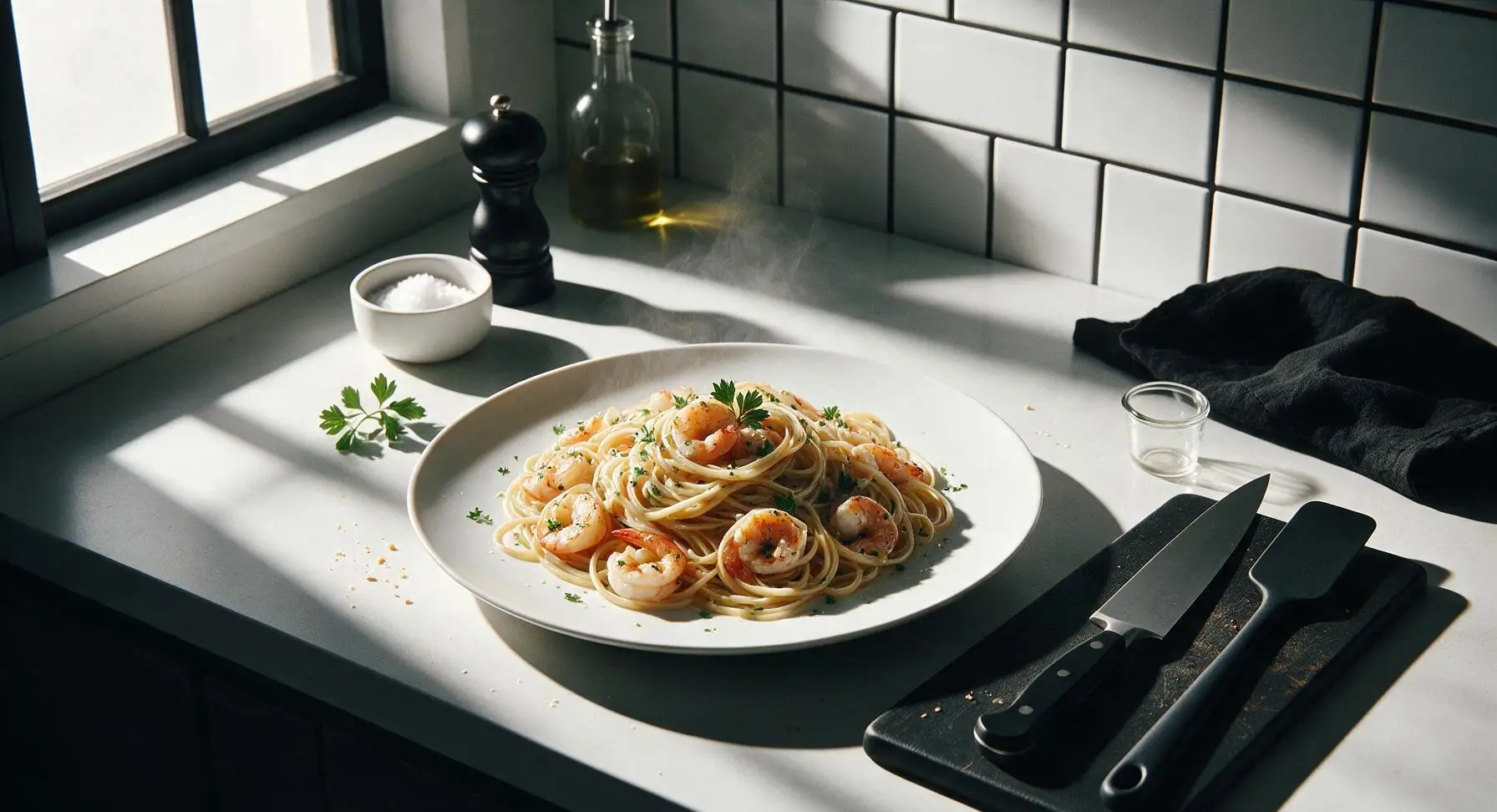
shrimp linguine

title 1
shrimp linguine
⏱️ cook time 20 minutes
🍽️ servings 4
⚡ Difficulty easy

intro

Silky linguine tangled with plump garlicky shrimp, bright white wine-lemon sauce, and fresh parsley — a light, luxurious meal that feels special without the fuss.

Ingredients
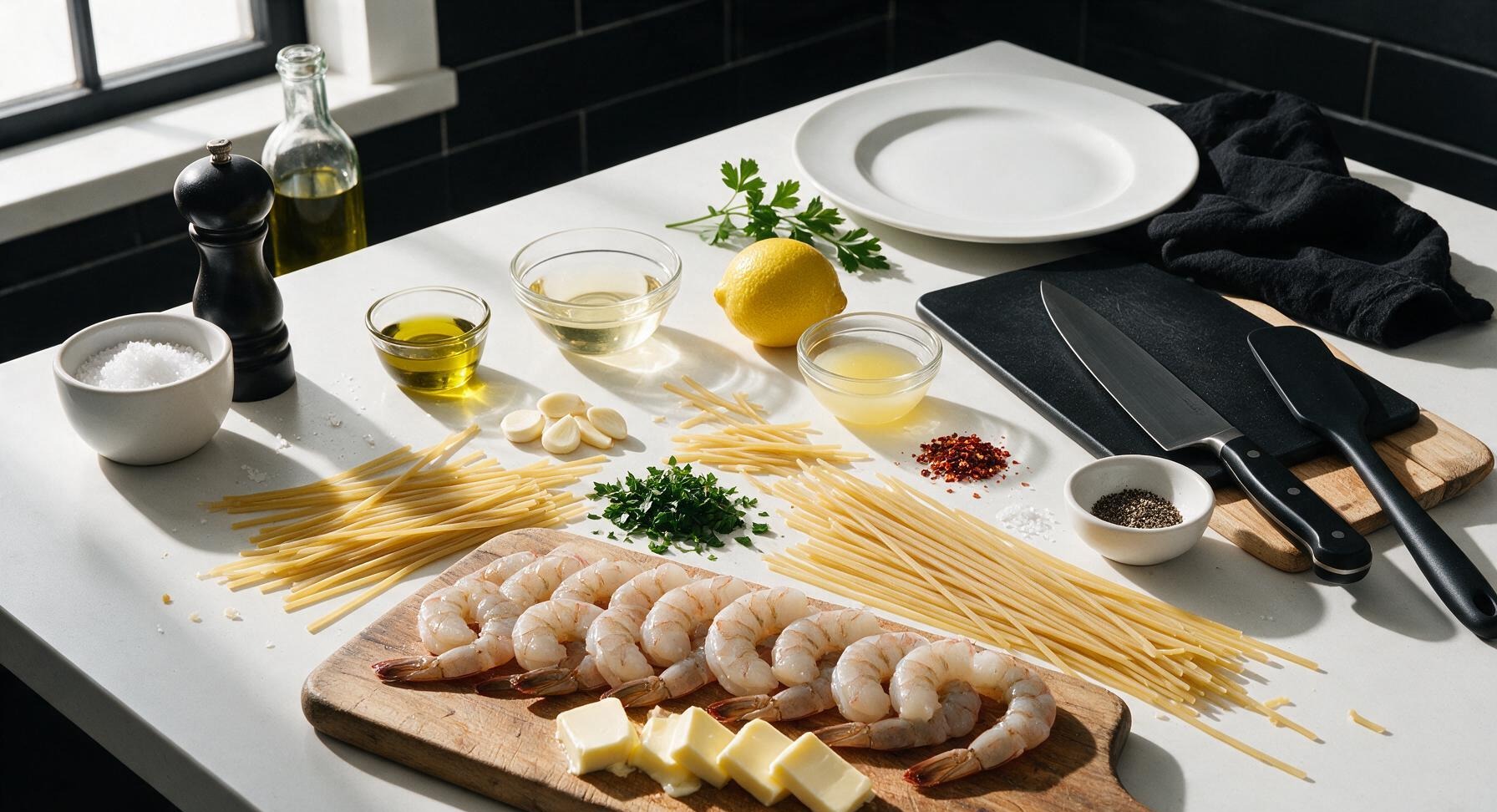
Dry linguine pasta 400g
Large raw shrimp (peeled, deveined, tails optional) 680g (1.5 lbs)
Unsalted butter 4 tbsp (56g)
Extra virgin olive oil 3 tbsp
Garlic cloves 6 (thinly sliced)
Dry white wine (e.g. Pinot Grigio) 120ml (1/2 cup)
Fresh lemon 1 whole (zest + 2 tbsp juice)
Flat-leaf parsley 1/4 cup (chopped)
Crushed red pepper flakes 1/4 tsp
Kosher salt 2 tbsp (for pasta water + seasoning)
Freshly ground black pepper 1/2 tsp

Steps

1

Prep shrimp and aromatics

Pat the 680g peeled, deveined large shrimp dry with paper towels, season lightly with 1/2 tsp kosher salt and 1/4 tsp black pepper, and set aside. Thinly slice 6 garlic cloves, chop 1/4 cup flat-leaf parsley, zest 1 whole lemon and squeeze 2 tbsp fresh juice, and portion all remaining ingredients into small matte white ramekins to complete mise en place, eliminating last-minute scrambling during fast cooking steps.
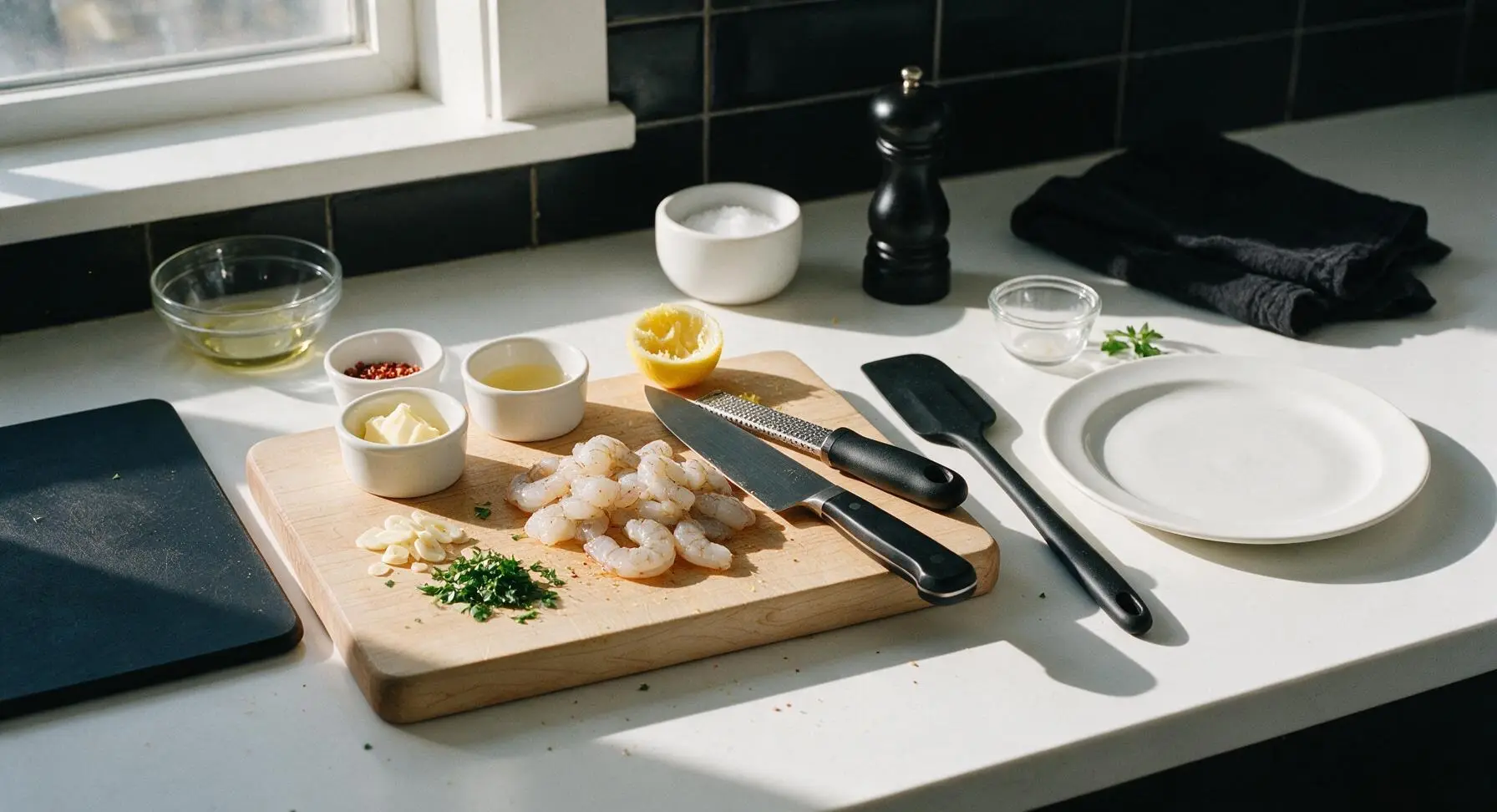
Step 1
step1:Prep shrimp and aromatics
2

Boil salted pasta water

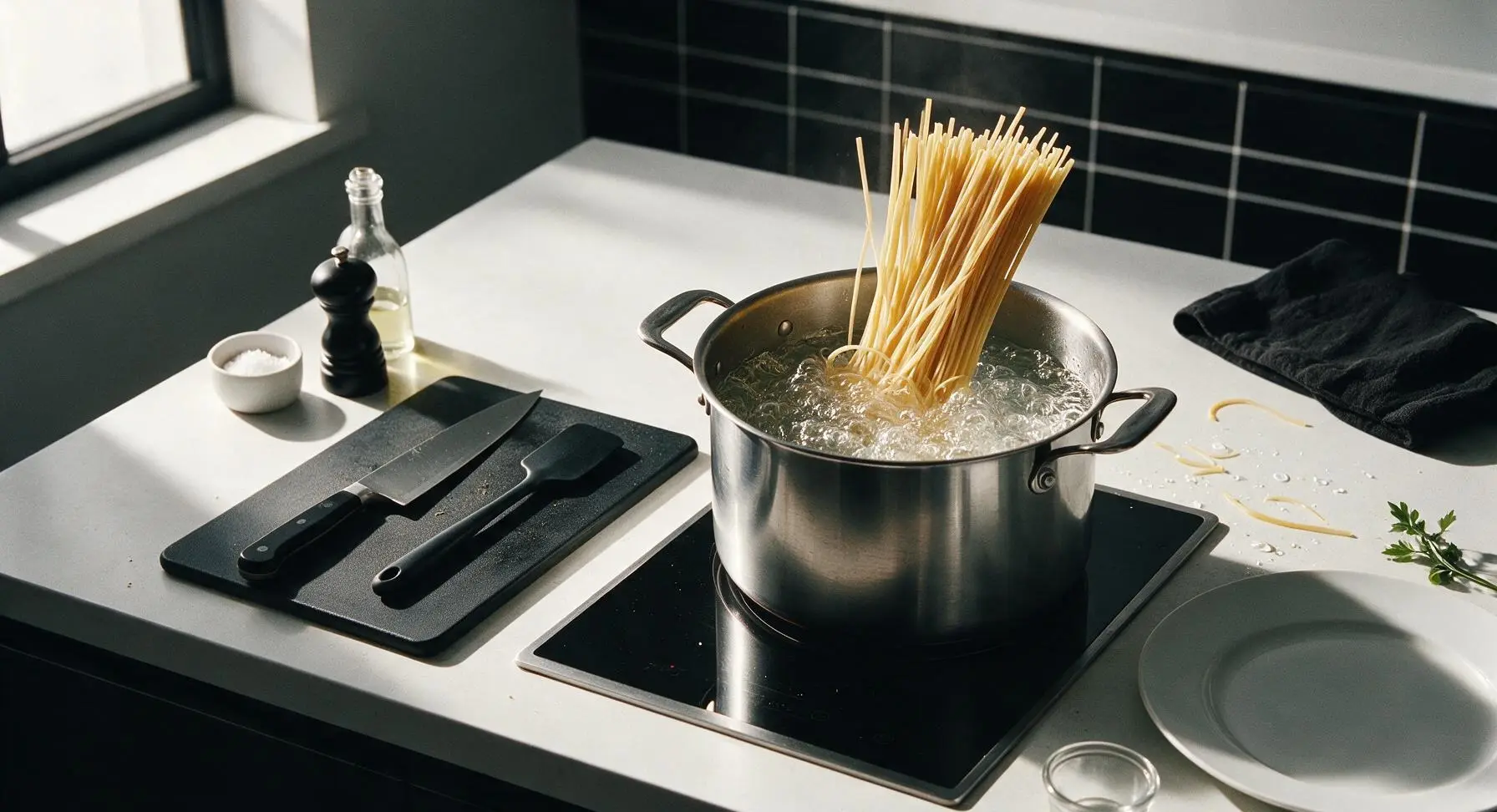
Fill the 6-quart stainless steel stock pot with 4 liters of cold water, set on the right induction burner to high heat. Once water reaches a rolling, bubbling boil (100C/212F), add 2 tbsp kosher salt — the water should taste as salty as seawater to properly season pasta. Add 400g dry linguine, stir immediately with the beechwood pasta fork to prevent sticking, and cook for 1 minute less than the package’s listed al dente time. Reserve 1 cup of starchy pasta water before draining, as this is critical for a smooth, clinging sauce.
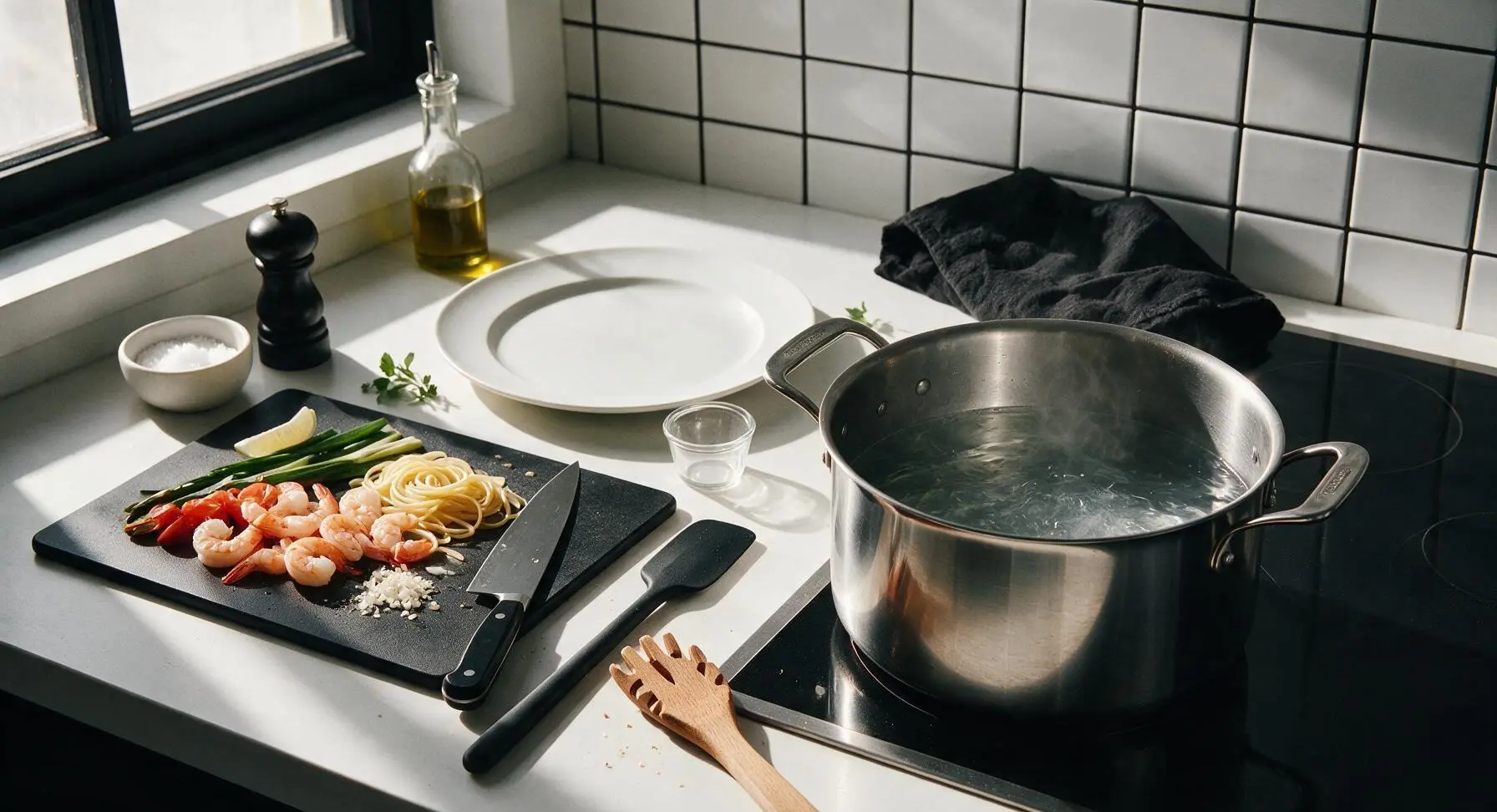
Step 2
step2:Boil salted pasta water
Step 2
step2:Boil salted pasta water
3

Sauté garlic and chili

While pasta cooks, set the 12-inch stainless steel sauté pan on the left induction burner over medium heat. Add 3 tbsp extra virgin olive oil and 2 tbsp unsalted butter. Once butter melts and foaming subsides, add thinly sliced garlic and 1/4 tsp crushed red pepper flakes. Sauté for 30-45 seconds, stirring constantly with the silicone-tipped tongs, until garlic turns pale golden and fragrant. Do not let garlic darken to deep brown, as it will turn bitter and ruin the sauce’s flavor.
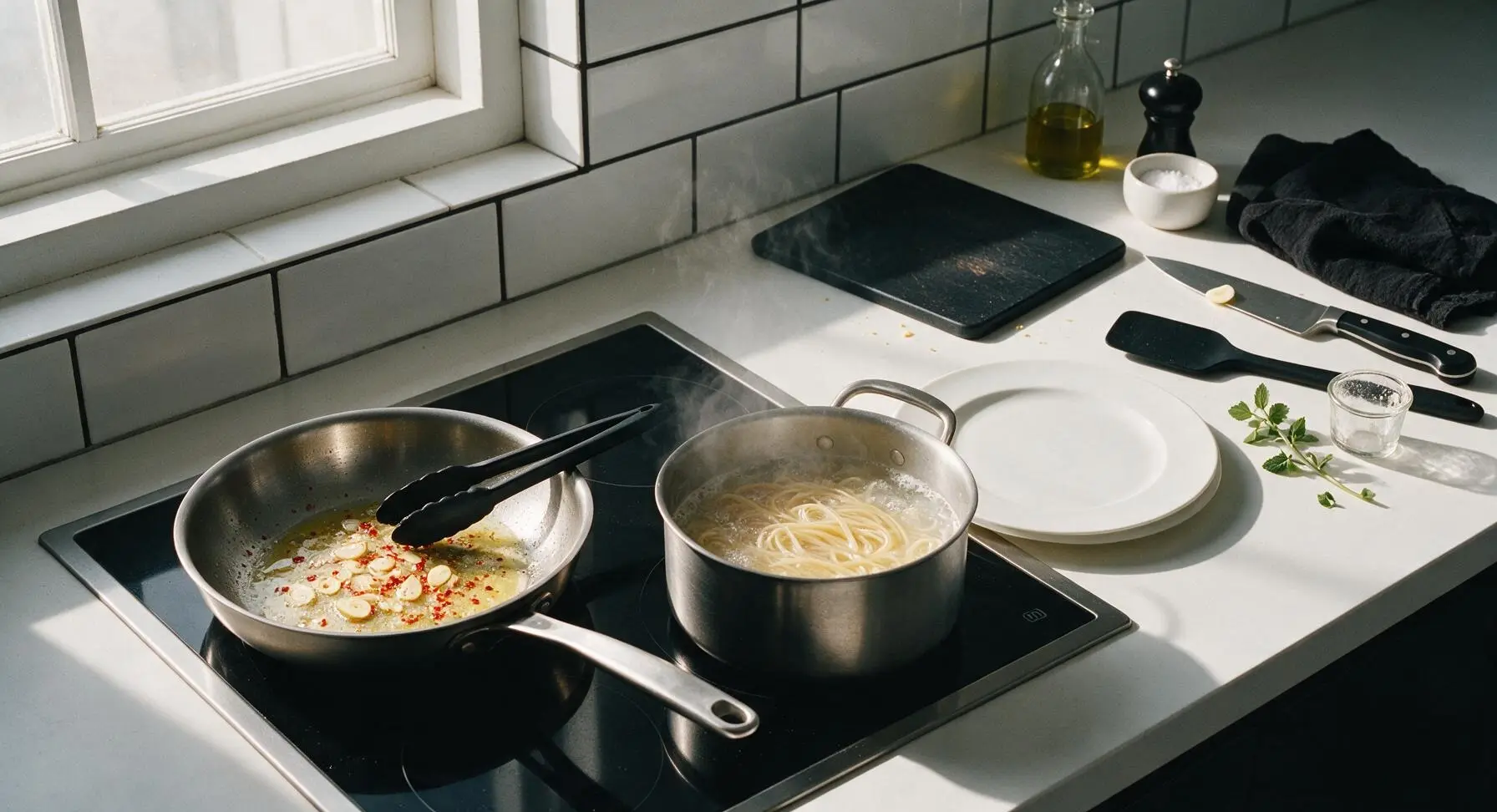
Step 3
step3:Sauté garlic and chili
4

Sear seasoned shrimp

Add seasoned shrimp to the sauté pan in a single, even layer, cooking in 2 batches if needed to avoid overcrowding (overcrowding causes steaming instead of searing). Sear 1.5 minutes on the first side until edges turn bright pink, then flip with tongs and cook 1 additional minute on the second side. Shrimp should be just opaque at the edges with a light golden sear; they will finish cooking later, so do not cook fully through now. Transfer seared shrimp to a clean plate and set aside temporarily.
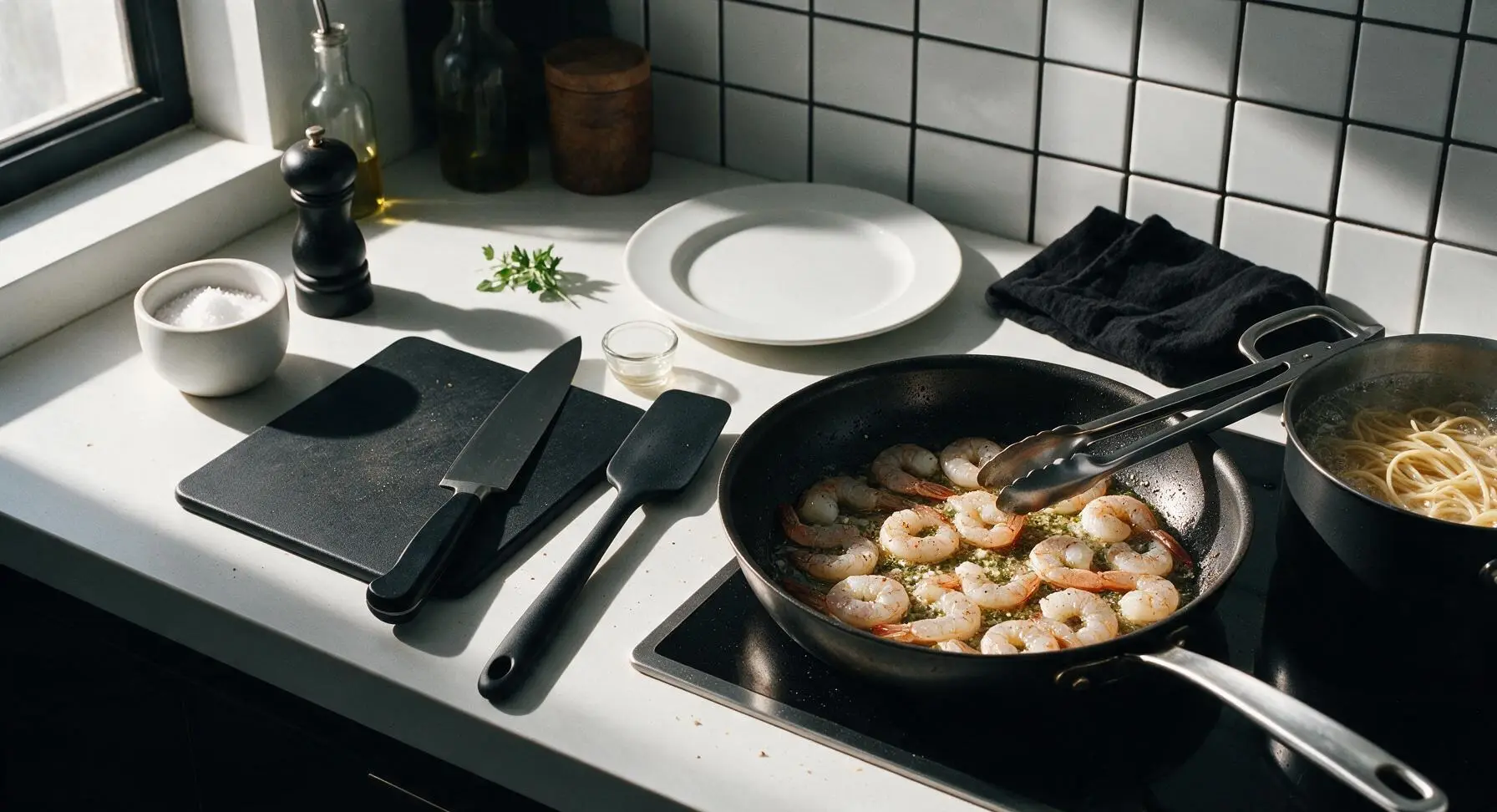
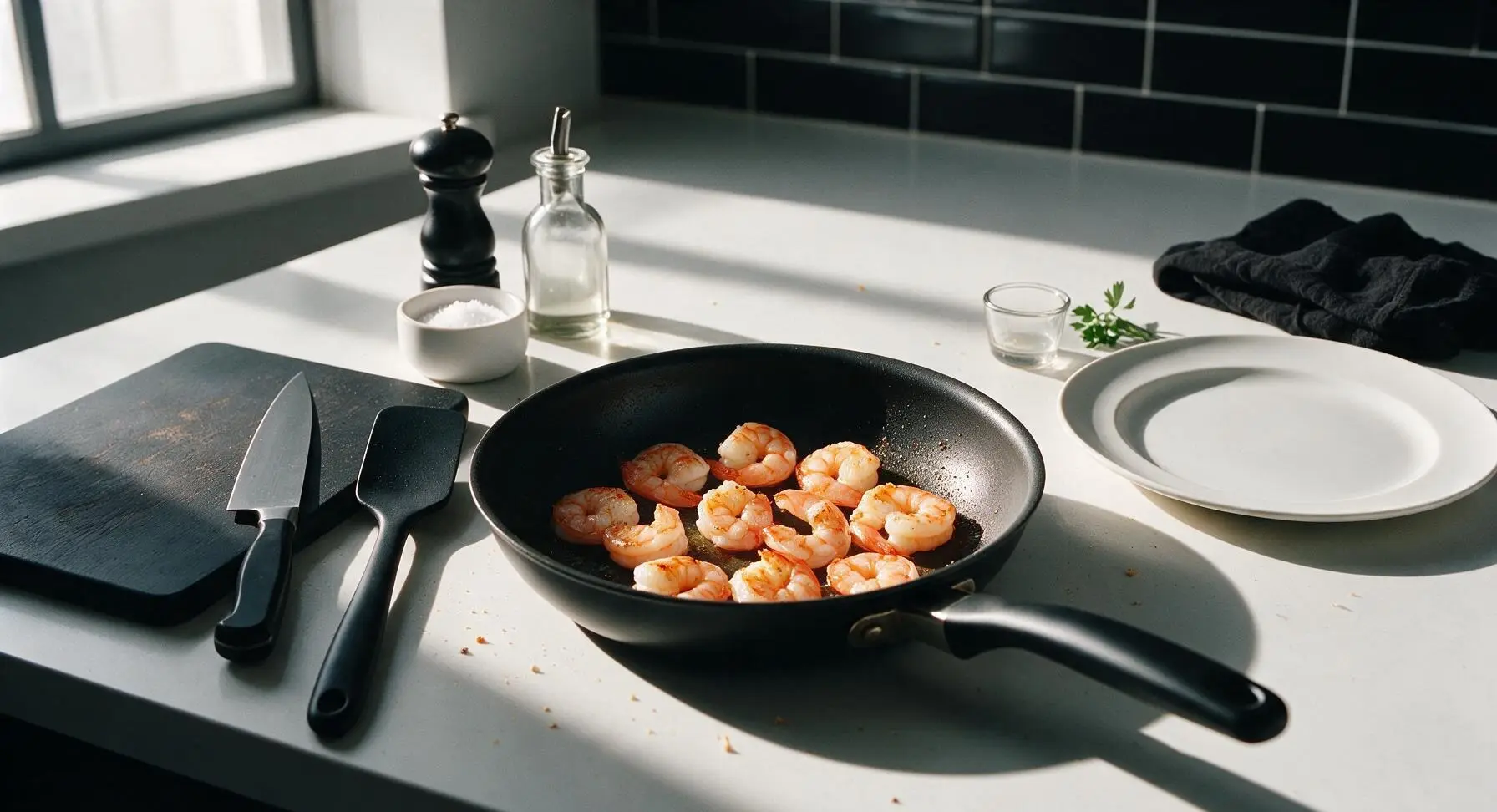
Step 4
step4:Sear seasoned shrimp
Step 4
step4:Sear seasoned shrimp
5

Build white wine sauce

Leave the sauté pan on medium heat, pour in 120ml dry white wine, and use the solid beechwood spoon to scrape up all browned flavorful bits (fond) from the pan bottom. Simmer 2 minutes until wine is reduced by half, then stir in the remaining 2 tbsp unsalted butter, lemon zest, and 2 tbsp lemon juice, stirring until butter melts into a smooth, glossy pale golden sauce.
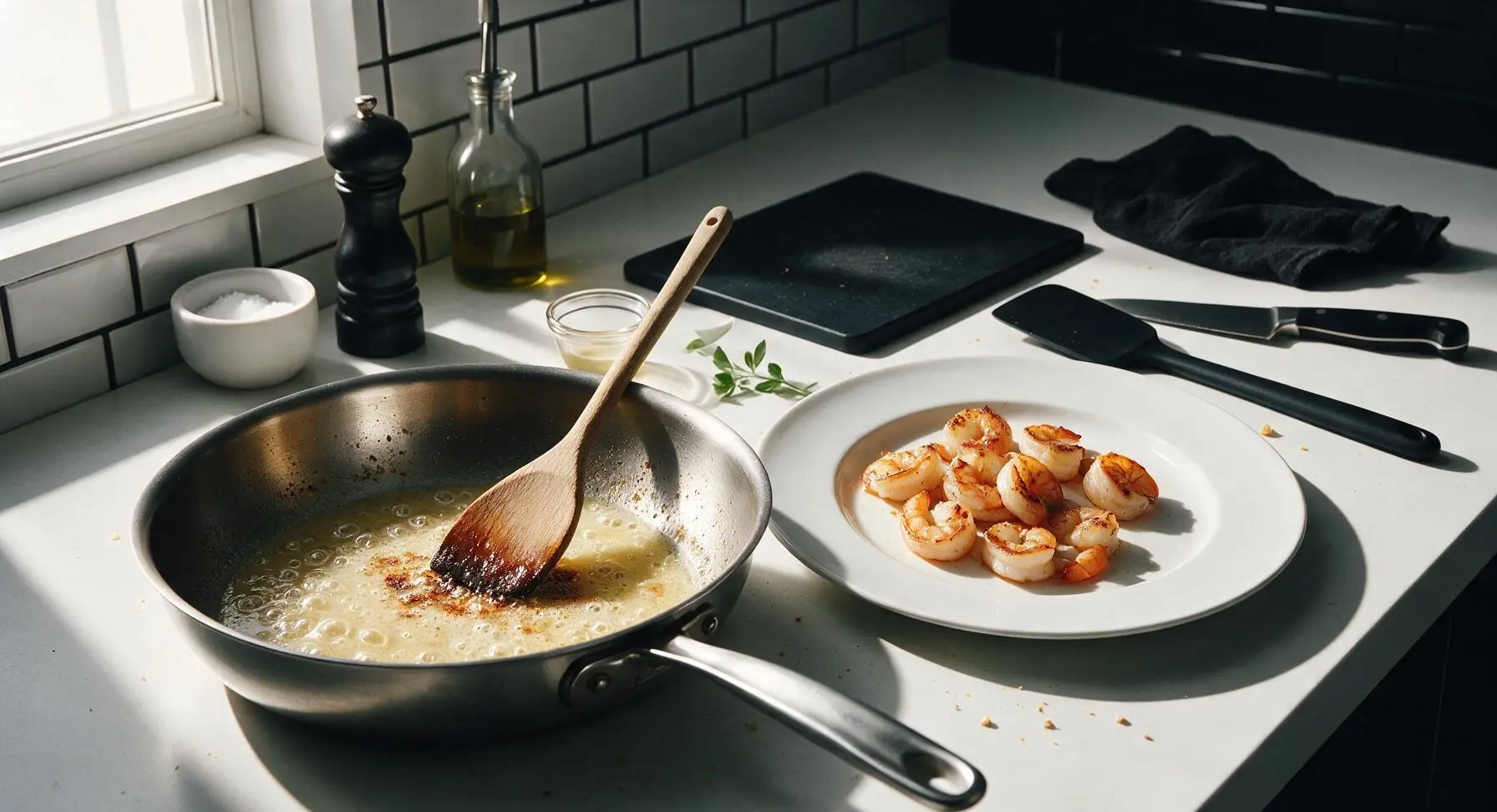
Step 5
step5:Build white wine sauce
6

Toss pasta with sauce

Use the beechwood pasta fork to transfer the slightly undercooked linguine directly from the stock pot to the sauté pan — do not rinse pasta, as its starchy surface helps sauce cling. Add 1/3 cup reserved starchy pasta water, tossing constantly over medium heat for 1 minute, until pasta finishes cooking and sauce emulsifies to coat every noodle. Add extra pasta water 1 tbsp at a time if sauce feels too thick or dry.
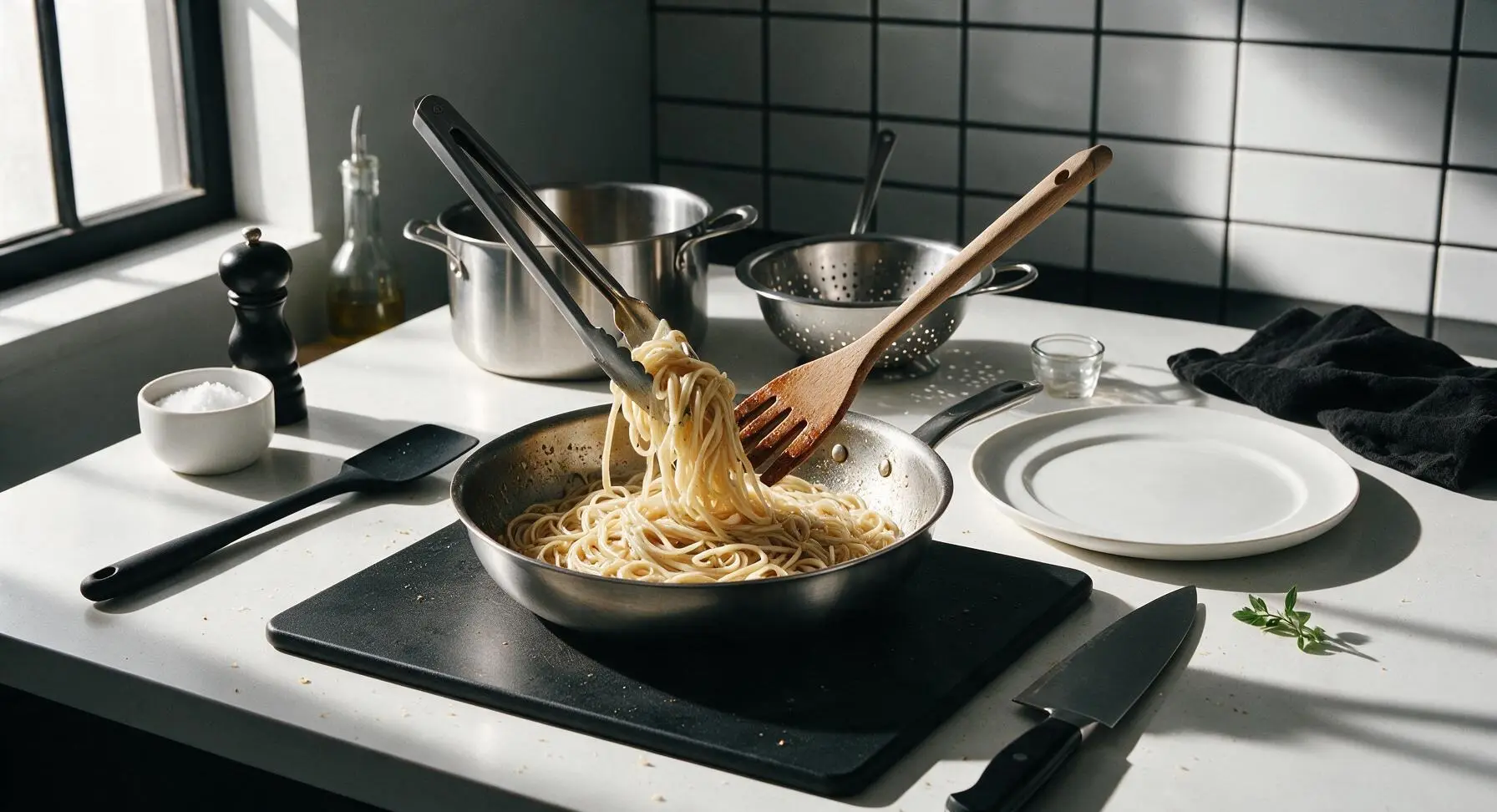
Step 6
step6:Toss pasta with sauce
7

Add shrimp and finish

Return reserved seared shrimp to the sauté pan, tossing gently for 30 seconds to warm shrimp through and coat them in sauce. Turn off heat, taste and adjust seasoning with extra kosher salt or black pepper as needed, then stir in half of the chopped fresh parsley.
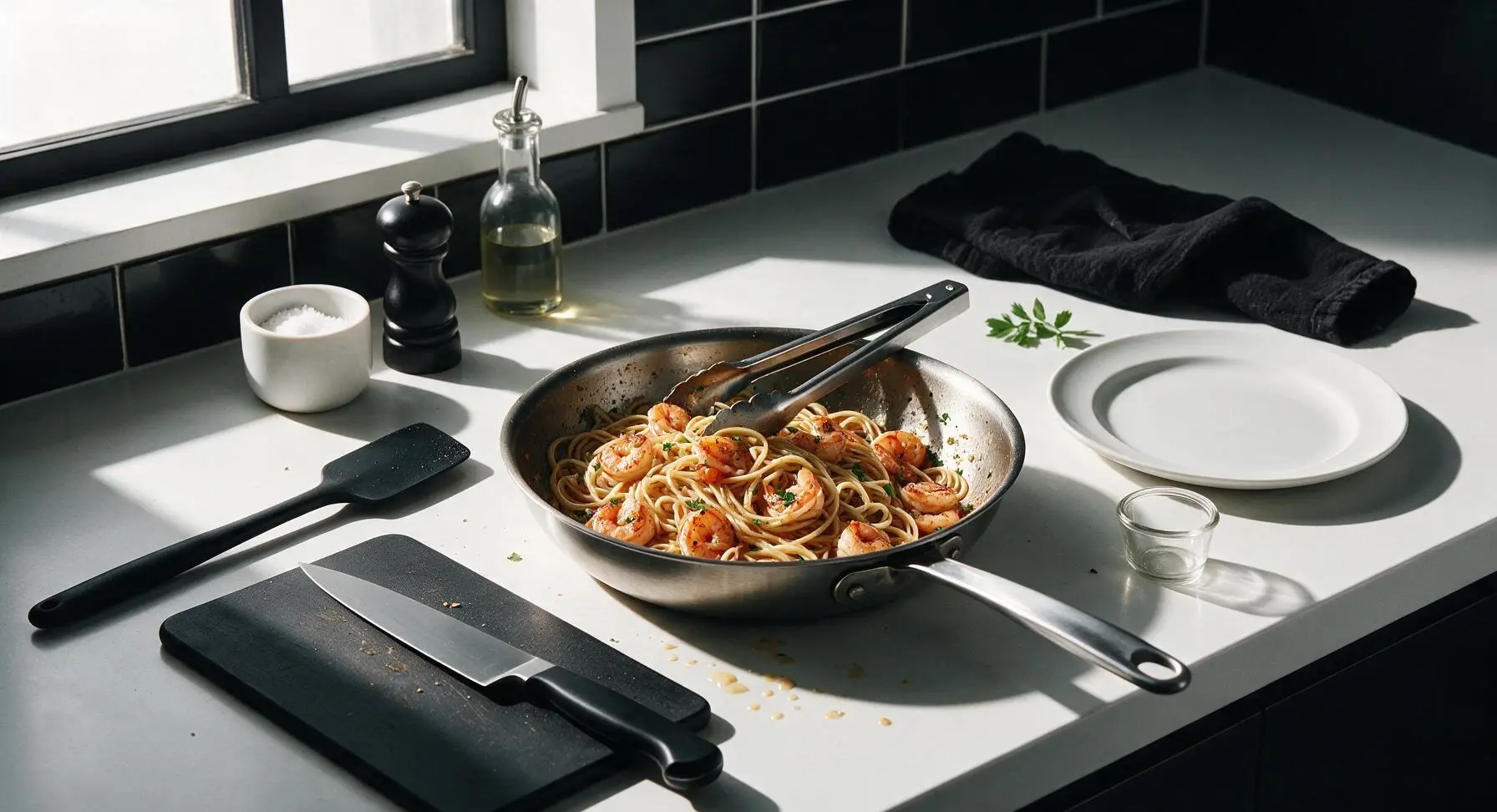
Step 7
step7:Add shrimp and finish
8

Plate and serve hot

Twirl generous mounds of sauced linguine and shrimp into the wide matte cream ceramic pasta bowls, ensuring each serving gets 5-6 shrimp. Garnish with remaining chopped parsley, a light twist of fresh black pepper, and a small lemon wedge on the bowl rim. Serve immediately, while sauce is glossy and pasta is hot, before sauce thickens as it cools.
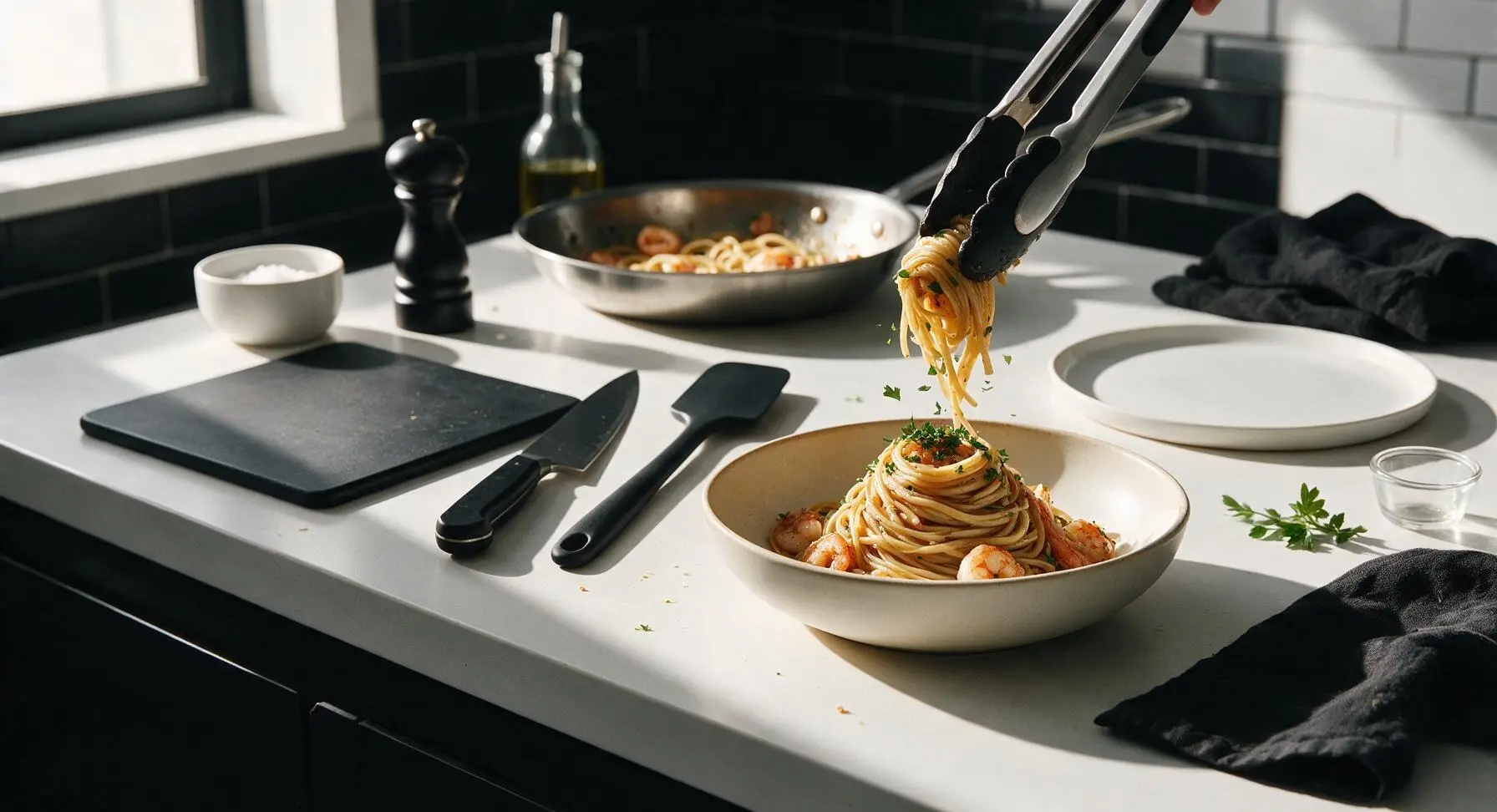
Step 8
step8:Plate and serve hot

Tips

1.Skip rinsing cooked pasta: the starchy coating on linguine is critical to creating a smooth, emulsified sauce that clings to every noodle, rather than sliding off to pool at the bottom of the bowl.
2.Pull shrimp off heat slightly early: residual heat from the hot pasta and sauce will finish cooking shrimp in 30 seconds, preventing the tough, rubbery texture that plagues overcooked shrimp.
3.Reserve extra starchy pasta water: it is the secret to a silky, restaurant-style sauce without heavy cream — the dissolved pasta starch emulsifies with butter and oil to create a light, glossy coating that feels luxurious.
✨ You May Also Like

Main Course
🍜 United Kingdom

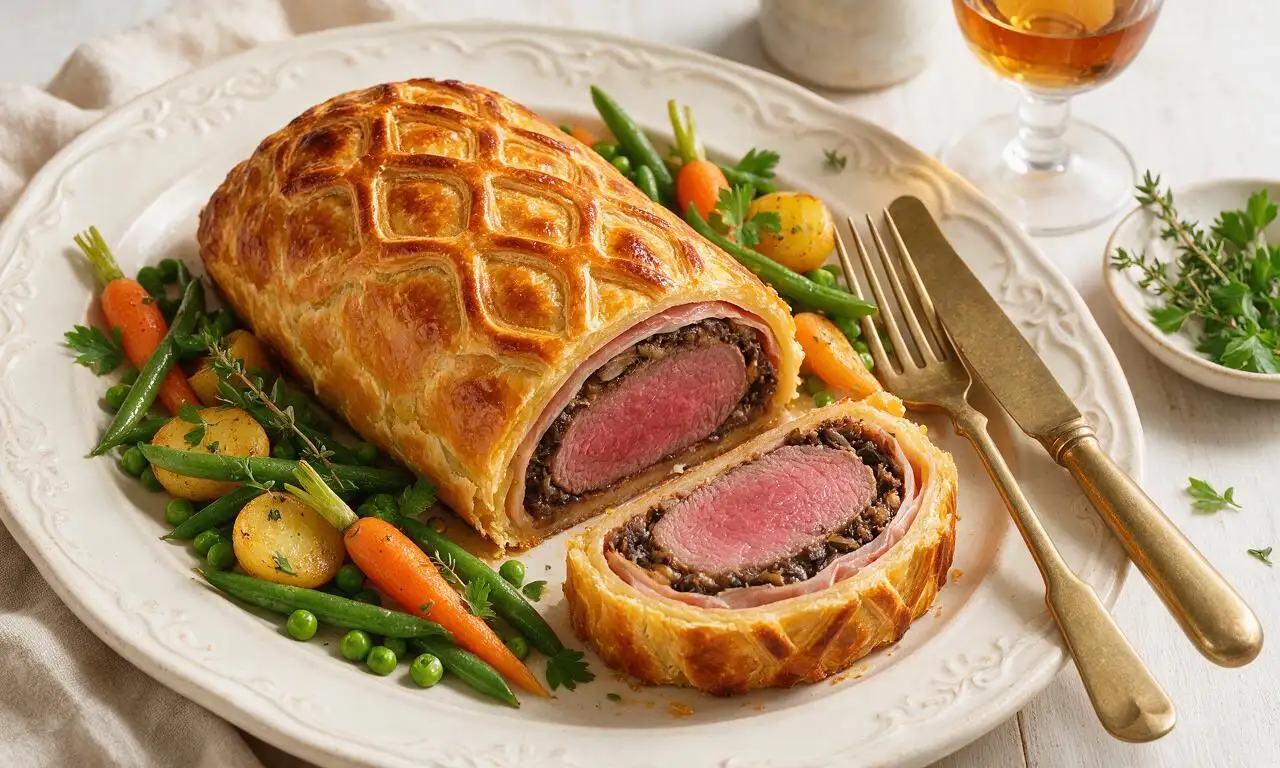
A showstopping classic of tender seared beef, savory mushroom duxelles, and crisp prosciutto wrapped in flaky golden puff pastry, baked to juicy perfection.

⏱️ 2 hours 1Main Course ★ 4.7
Main Course
🍜 India

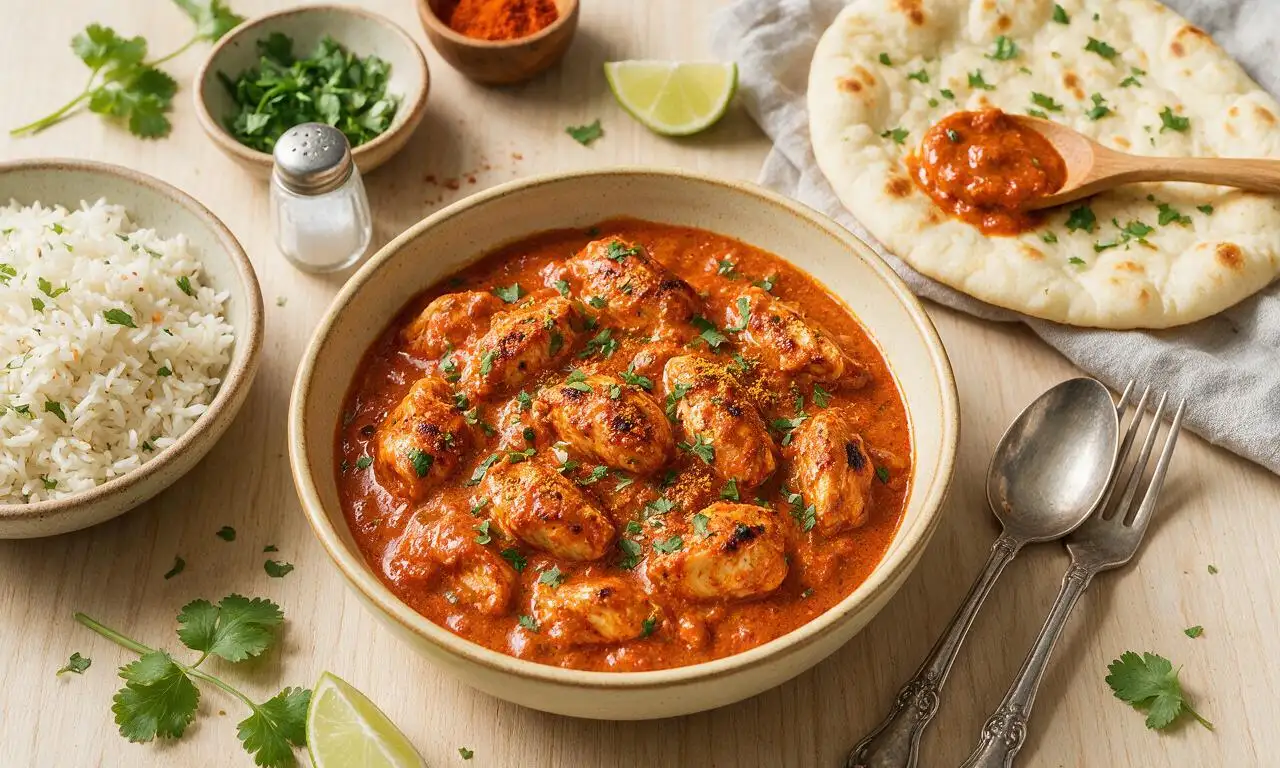
Tender charred marinated chicken simmered in a rich, spiced creamy tomato sauce, this iconic Anglo-Indian curry pairs perfectly with basmati rice or warm naan.

⏱️ 50 minuteMain Course ★ 4.6
Main Course
🍜 Thailand

Classic tangy, sweet, and savory Thai stir-fried rice noodles with shrimp, tofu, and crunchy garnishes, balancing all five core Thai flavor profiles.

⏱️ 30 minuteMain Course ★ 4.5
Main Course
🍜 United Kingdom

Crispy golden beer-battered cod and fluffy double-fried chips, served with tangy tartar sauce and malt vinegar: the timeless, beloved British pub comfort classic.

⏱️ 45 minuteMain Course ★ 4.7
Main Course
🍜 Mexico

Smoky, chile-marinated pork tacos with caramelized pineapple, fresh cilantro, and lime: a beloved classic Mexican street food perfect for casual summer gatherings.

⏱️ 1 hour 45Main Course ★ 4.8
Main Course
🍜 United States

Crunchy Fritos corn chips layered with savory beef chili and melted cheddar, topped with cool, zesty fixings for a beloved, cozy Tex-Mex comfort food.

⏱️ 35 minuteMain Course ★ 4.8

shrimp linguine:Frequently Asked Questions

1.Can I use frozen shrimp instead of fresh for this classic shrimp linguine? ▾
Absolutely—frozen shrimp works perfectly here, as it’s often flash-frozen right at sea for peak freshness. Thaw it overnight in the fridge, then pat completely dry with paper towels before cooking; excess moisture will prevent that nice, golden sear and make your sauce watery. Skip pre-cooked frozen shrimp, as it will turn rubbery when tossed with hot pasta and sauce.
2.How do I keep my shrimp from turning rubbery and overcooked? ▾
The two biggest culprits of rubbery shrimp are overcooking and excess surface moisture. First, pat shrimp completely dry before searing, then cook them over medium-high heat for just 1.5 to 2 minutes per side, until opaque pink with a slight golden edge. Pull them right out when done, as they’ll keep cooking a little from residual heat as you finish the sauce.
3.What kind of white wine works best for the lemon-wine sauce? ▾
Stick to a crisp, dry white wine for this recipe—think Pinot Grigio, Sauvignon Blanc, or unoaked Chardonnay. Avoid sweet whites like Moscato or heavily oaked Chardonnay, as they throw off the sauce’s bright, balanced flavor. If you don’t drink alcohol, swap wine for low-sodium chicken broth mixed with 1 teaspoon white vinegar to mimic that bright, acidic kick.
4.How do I get that silky sauce that clings to every pasta strand? ▾
The secret to that perfect, silky, clinging sauce is reserving ½ to ¾ cup of starchy pasta water before you drain your noodles. Toss al dente pasta directly into the pan with your finished wine-lemon sauce and shrimp, adding splashes of starchy pasta water as you toss over low heat. The starch emulsifies with butter and oil to create a light, glossy coating, no heavy cream needed.
5.How do I keep my garlic from burning when I sauté it? ▾
For the best balanced flavor, use 4 to 6 plump garlic cloves, sliced thin rather than finely minced, for this recipe. Sauté garlic over medium-low heat in the butter and oil just until it turns fragrant and pale golden, about 30 seconds to 1 minute. Burned garlic turns bitter very quickly, so add your wine right as it hits that pale golden stage to stop the cooking.
6.Can I substitute a different pasta shape if I don’t have linguine on hand? ▾
You can swap linguine for other long, thin pasta shapes like fettuccine, spaghetti, or bucatini in a pinch. The key is to pick a shape with enough surface area to cling to the light, silky wine-lemon sauce—skip short, chunky shapes like penne or rigatoni, as they won’t hold the delicate sauce as well, and always cook pasta to al dente.
7.Do I have to leave the tails on my shrimp for this recipe? ▾
Leaving tails on is totally optional, just as the recipe notes! Tails add a subtle, briny shellfish depth to the sauce as the shrimp cook, and they look nice for a fancy presentation, but they’re fully fine to remove if you don’t want to peel them at the table. Save removed shells to simmer in the sauce for 2 minutes, then strain out for extra flavor if you’d like.
8.Is it okay to use pre-peeled, deveined grocery store shrimp? ▾
Pre-peeled, deveined shrimp is a huge time-saver and works perfectly for this recipe—just give it a quick rinse and pat it extremely dry before searing, as store-bought pre-peeled shrimp often holds extra surface moisture. If you have 5 extra minutes, peeling your own shrimp lets you save shells for a quick briny stock boost for the sauce, but it’s not required.
9.How do I know when my linguine is perfectly al dente for this dish? ▾
Start testing your linguine 2 minutes before the lower end of the package’s recommended cook time. Perfect al dente pasta will have a tiny, firm white core at the very center when you bite into it, with no raw, crunchy texture. It will finish cooking for 1 to 2 minutes directly in the sauce as you toss it, so pulling it early keeps it from turning mushy.
10.How much salt should I add to my pasta water, and do I need oil? ▾
Always salt your pasta water—it’s the only chance you get to season the pasta itself, rather than just the sauce. Aim for water that tastes as salty as seawater, roughly 1 tablespoon of kosher salt per 4 quarts of water. Skip adding oil to the water, though; that makes pasta slippery and keeps the light sauce from clinging properly to each noodle.
11.Do I really need to use both butter and olive oil for this recipe? ▾
Using both butter and extra-virgin olive oil gives you the best of both worlds for this dish. Olive oil has a higher smoke point, so it keeps the butter from burning as you sear shrimp and sauté garlic, while butter adds that rich, silky, luxurious mouthfeel to the light sauce. If you only have one on hand, you can make it work, but the combination creates a far more balanced base.
12.Can I adjust this recipe to be dairy-free? ▾
You can easily make this dish dairy-free by swapping the unsalted butter for a high-fat, good-quality dairy-free butter substitute, or an extra 2 tablespoons of extra-virgin olive oil. The rest of the ingredients are naturally dairy-free, so you won’t lose that bright, luxurious texture or garlicky, briny shrimp flavor with this simple swap.
13.Can I use dried parsley instead of fresh parsley for this recipe? ▾
Fresh flat-leaf parsley is always best here, as it adds a bright, herbaceous, fresh pop that cuts through the rich butter and briny shrimp. Dried parsley has a muted, dusty flavor that doesn’t deliver that same bright finish, but if it’s all you have, use 1 teaspoon of dried and add it when you sauté the garlic to bloom its flavor.
14.Can I use bottled lemon juice instead of fresh for the sauce? ▾
Fresh lemon juice is always preferred for that bright, zesty flavor that defines this dish—bottled lemon juice has a flat, slightly metallic aftertaste that dulls the light sauce. If you’re in a total pinch, you can use 100% unsweetened bottled lemon juice, but add it a little at a time and taste as you go to avoid making the sauce too tart.
15.What’s the best way to reheat leftover shrimp linguine? ▾
Reheat leftovers gently to avoid rubbery shrimp and mushy pasta. Skip the microwave, which heats unevenly—instead, toss the pasta in a skillet over low heat with a splash of chicken broth, white wine, or even plain water, stirring frequently, until warmed through. The extra liquid will loosen the sauce back to that silky consistency, and low heat keeps shrimp tender instead of tough.

Comments (4)

2 days ago

OMG this was SO good for a last minute weeknight dinner! I had frozen shrimp in the freezer and a box of linguine in the pantry, so I threw this together in literally 20 minutes just like the recipe said. My husband and two kids devoured it— even my picky 7 year old asked for seconds! Total game changer for busy school nights. Only tweak I made was adding a little extra red pepper flakes because we love a tiny kick.

1 day ago

Wait I also added extra red pepper flakes! So glad I'm not the only one who thought it needed that little zing, paired perfectly with a cold glass of pinot grigio when I made it last night.

1 day ago

So happy this was a hit with your whole family, Sarah! Love the red pepper flake addition— a little heat goes such a long way with the buttery, garlicky shrimp. Keeping frozen shrimp on hand for quick meals is such a pro move, nice work!

1 week ago

I made a big batch of this for my weekly meal prep on Sunday and it held up perfectly all week for work lunches! I was worried the shrimp would get rubbery when reheating, but if you undercook it just a tiny bit when you first make it, it comes out perfect when you zap it in the office microwave. 10/10, will be adding this to my regular rotation.

3 days ago

Tried this for our small neighborhood potluck this past weekend and everyone was hounding me for the recipe! I will say I accidentally grabbed whole wheat linguine instead of regular because that's all the grocery store had left, and it still slapped. Super easy to follow, even for someone like me who burns toast half the time lmao.

2 days ago

Love to hear this worked for your neighborhood potluck, Greg! Whole wheat linguine is such a great high-fiber swap, so glad it turned out even with that last minute grocery store substitution. Don't sell yourself short— if you can nail this shrimp linguine, you're way better at cooking than you think!

2 hours ago

This looks so perfect for our date night in this weekend— I’m already giving it 5 stars because the directions are so straightforward and the cook time is only 20 minutes, which is ideal for us! Quick question though— has anyone tried making this with gluten-free linguine? I’m gluten intolerant and want to make sure the texture holds up with the garlic butter sauce, don’t want to mess up our cozy dinner plans!

30 minutes ago

I made it with brown rice gluten-free linguine last week and it worked perfectly! Just make sure you salt your pasta water really well like the recipe says, it makes all the difference. Your boyfriend is gonna love it— I made it for my partner and he asked for it again two nights later!