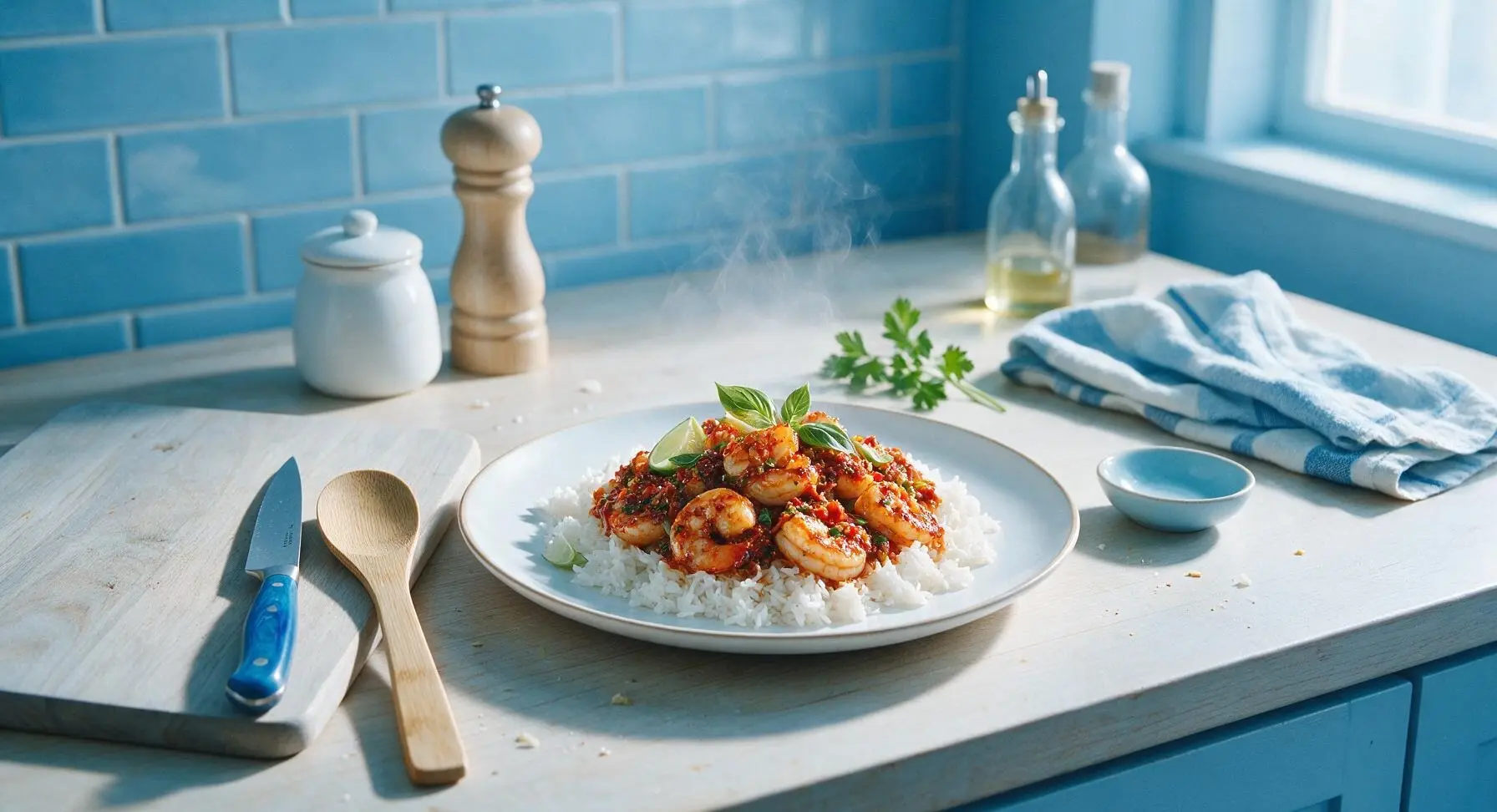
shrimp sambal

title 1
shrimp sambal
⏱️ cook time 15 minutes
🍽️ servings 4
⚡ Difficulty medium

intro

Fiery, umami-packed shrimp sambal coats plump seared shrimp in a fragrant, balanced chili paste, brightened with lime and fresh basil, perfect served over fluffy steamed rice for a fast, flavorful meal.

Ingredients
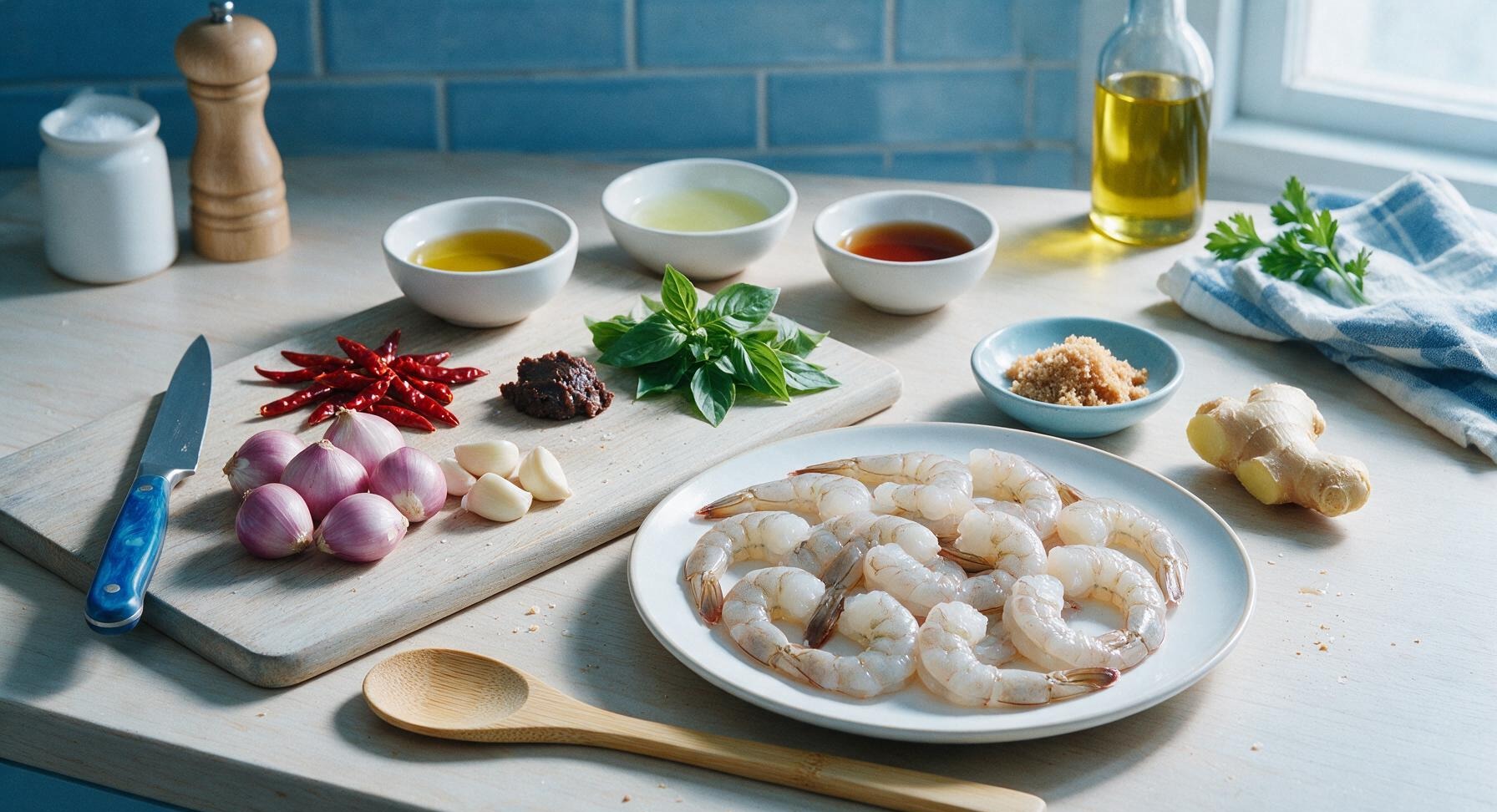
Large raw shrimp (peeled, deveined, tails intact) 500g
Dried red bird's eye chilies 15g (approx 10 pieces)
Small red shallots 80g (approx 6 pieces, peeled)
Garlic cloves 15g (approx 3 cloves, peeled)
Fresh ginger 10g (1-inch knob, peeled)
Fermented shrimp paste (belacan) 1 tsp (5g)
Neutral cooking oil (canola/sunflower) 3 tbsp (45ml)
Grated palm sugar 1 tbsp (15g)
Fresh lime juice 2 tbsp (30ml)
Fish sauce 1 tbsp (15ml)
Fresh Thai basil leaves 5g (1/4 cup, packed)

Steps

1

Pat Shrimp Dry

Place the 500g peeled, deveined raw shrimp on the acacia wood cutting board. Pat thoroughly dry on all sides using a clean corner of the indigo kitchen towel until no surface moisture remains; this ensures the shrimp sear instead of steam when added to the hot wok. Set dried shrimp aside in a small pile at the edge of the board.
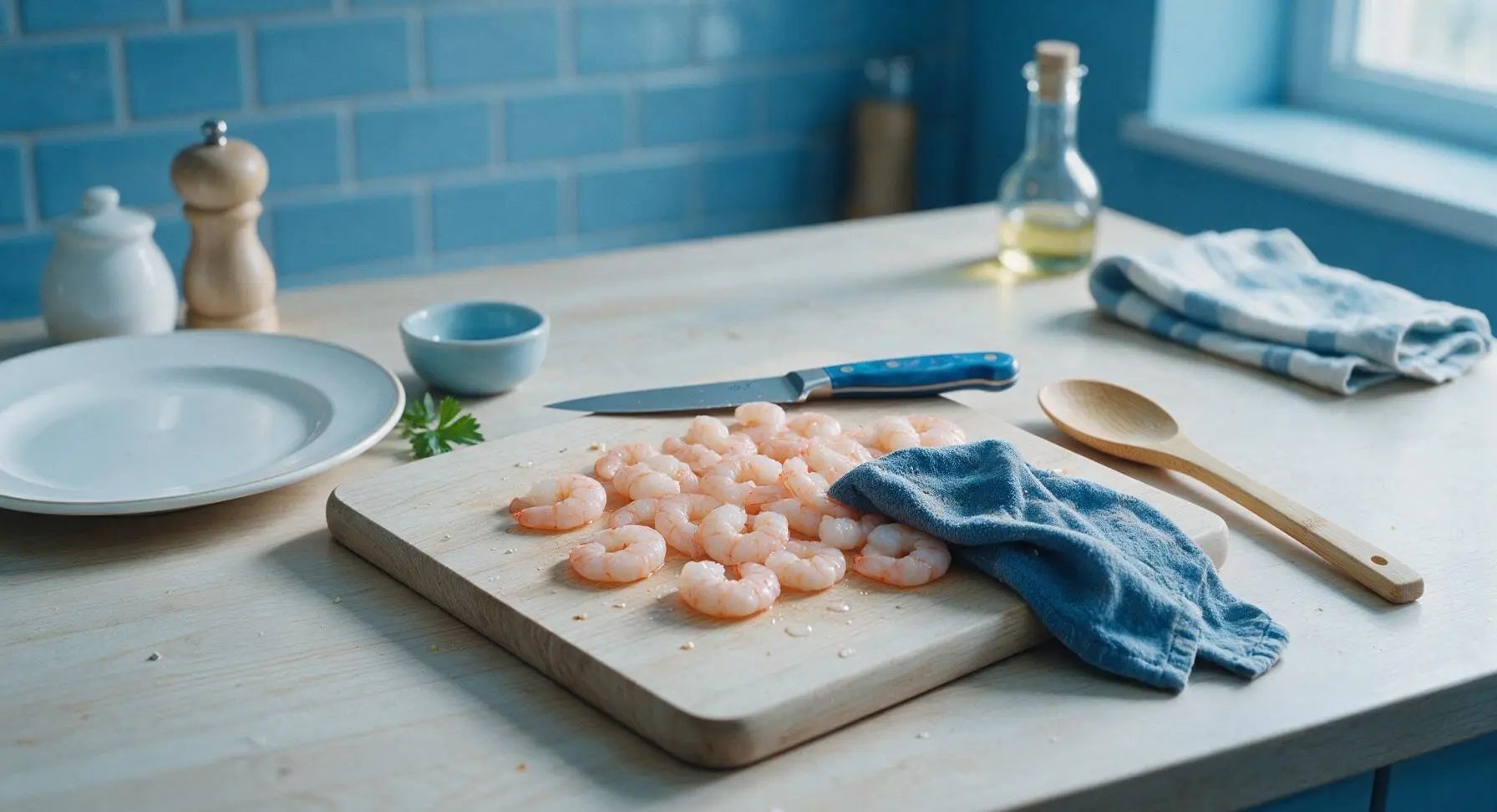
Step 1
step1:Pat Shrimp Dry
2

Soften Dried Chilies

Place 15g dried red bird's eye chilies in a small heatproof bowl, pour boiling water over to fully submerge, and let soak 10 minutes until soft and pliable. Drain thoroughly, gently squeezing out excess water; remove seeds for a milder final heat level.
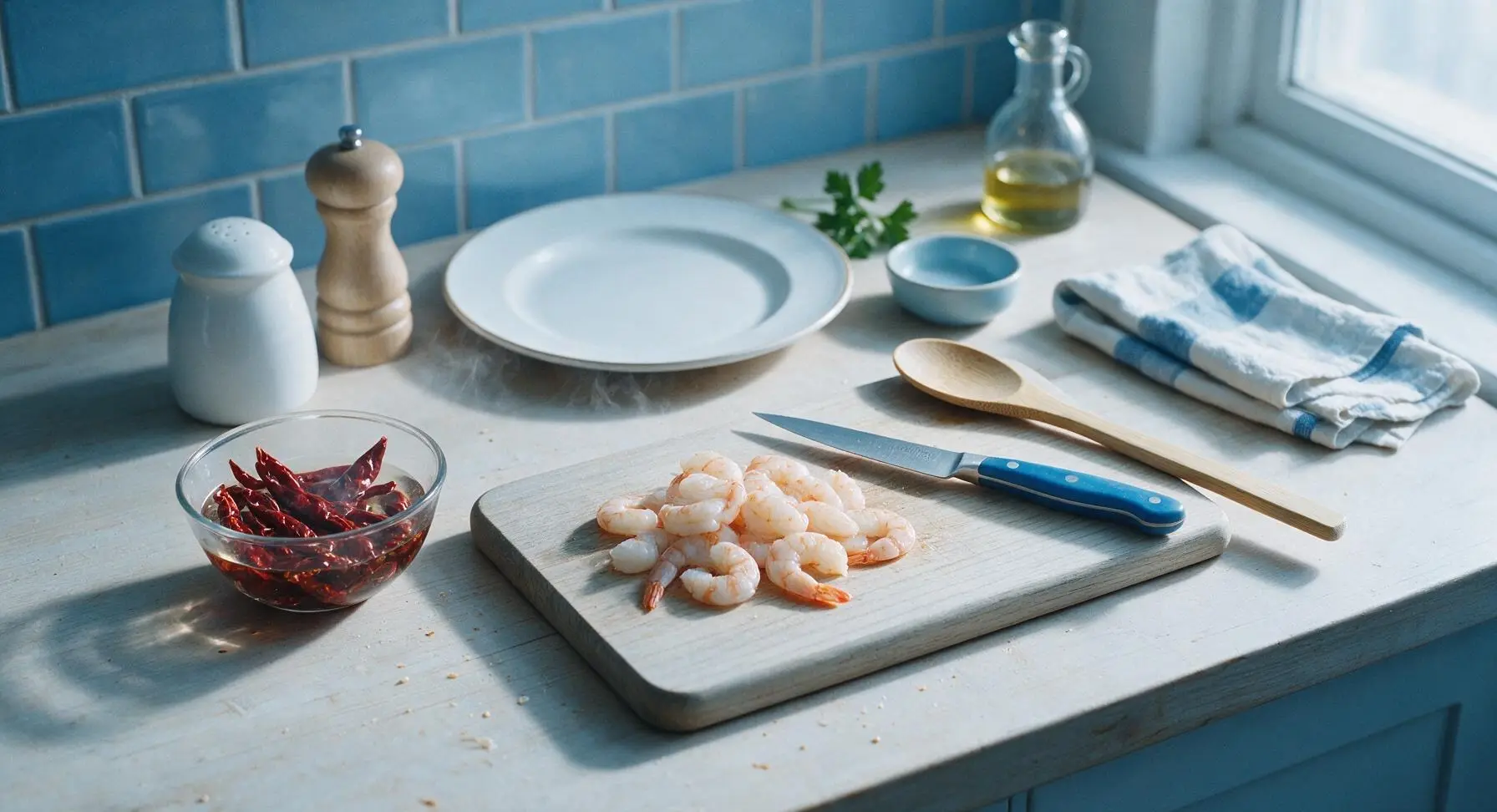
Step 2
step2:Soften Dried Chilies
3

Grind Sambal Base

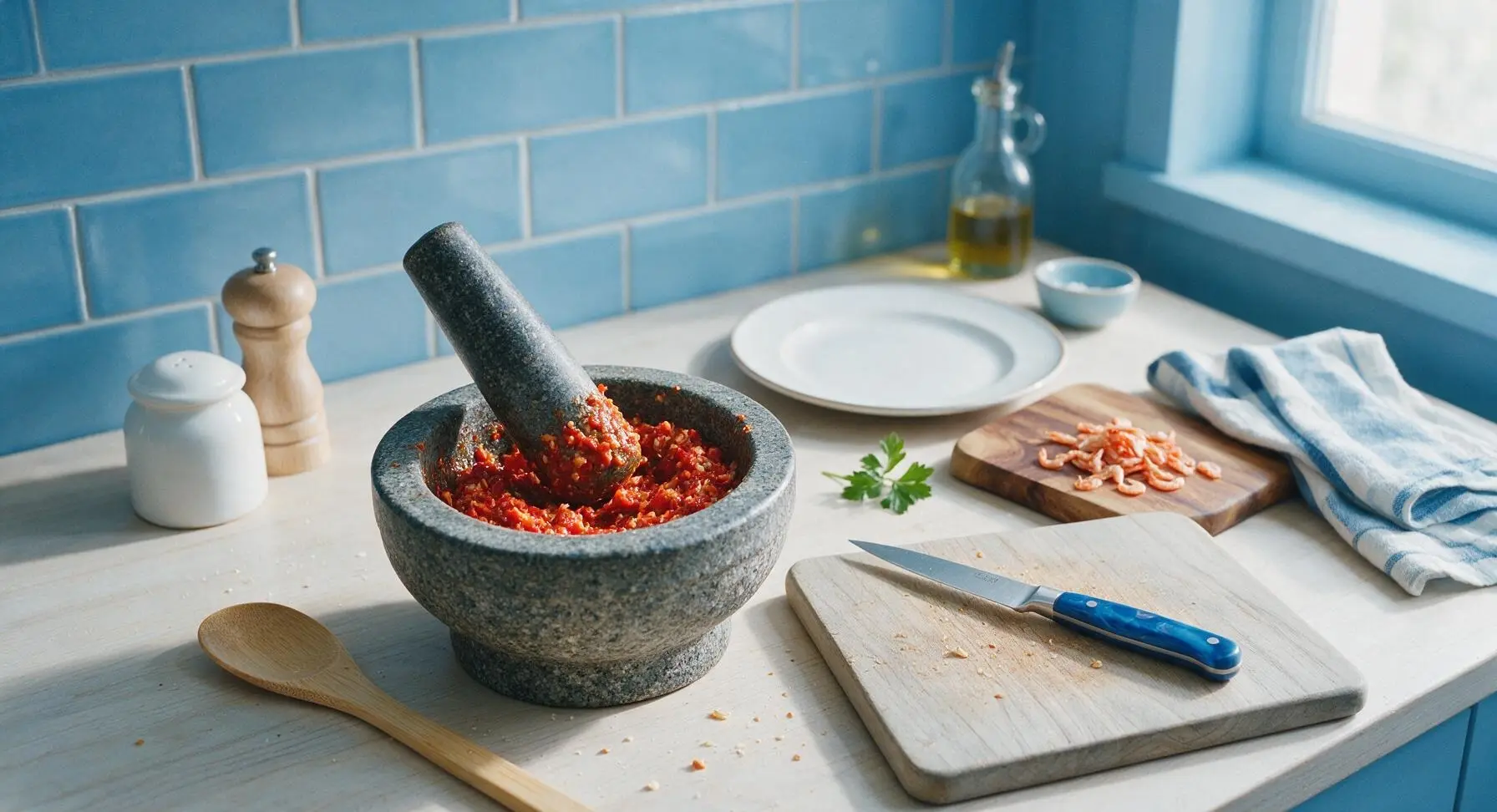
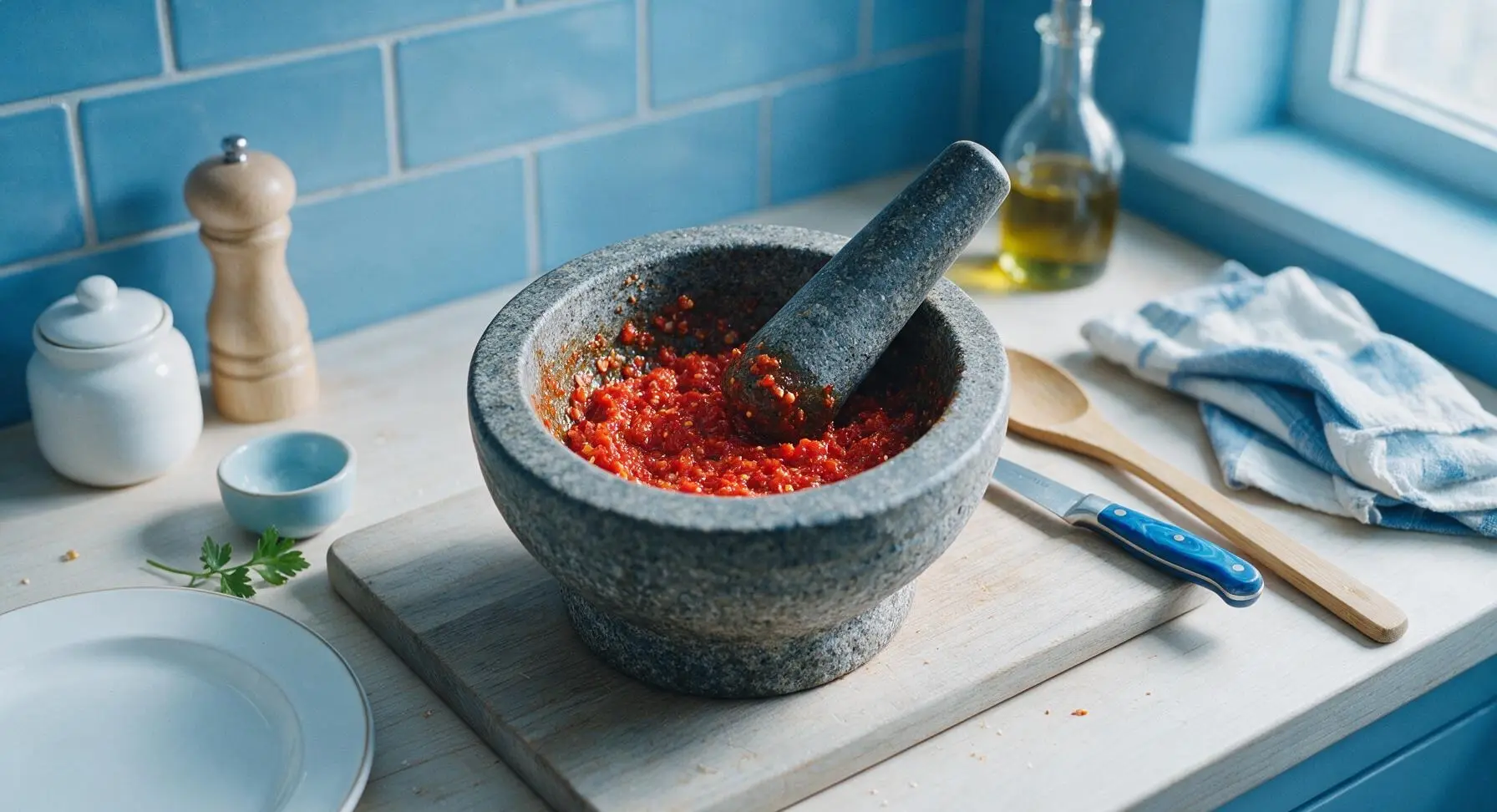
Add drained softened chilies, peeled shallots, garlic, sliced ginger, and 1 tsp fermented shrimp paste to the unpolished granite mortar. Grind with the pestle in firm circular pressing motions for 3-4 minutes, until a coarse, slightly chunky bright red paste forms. Do not grind to a completely smooth puree, as texture is key for authentic sambal.
Step 3
step3:Grind Sambal Base
Step 3
step3:Grind Sambal Base
4

Toast Sambal Paste

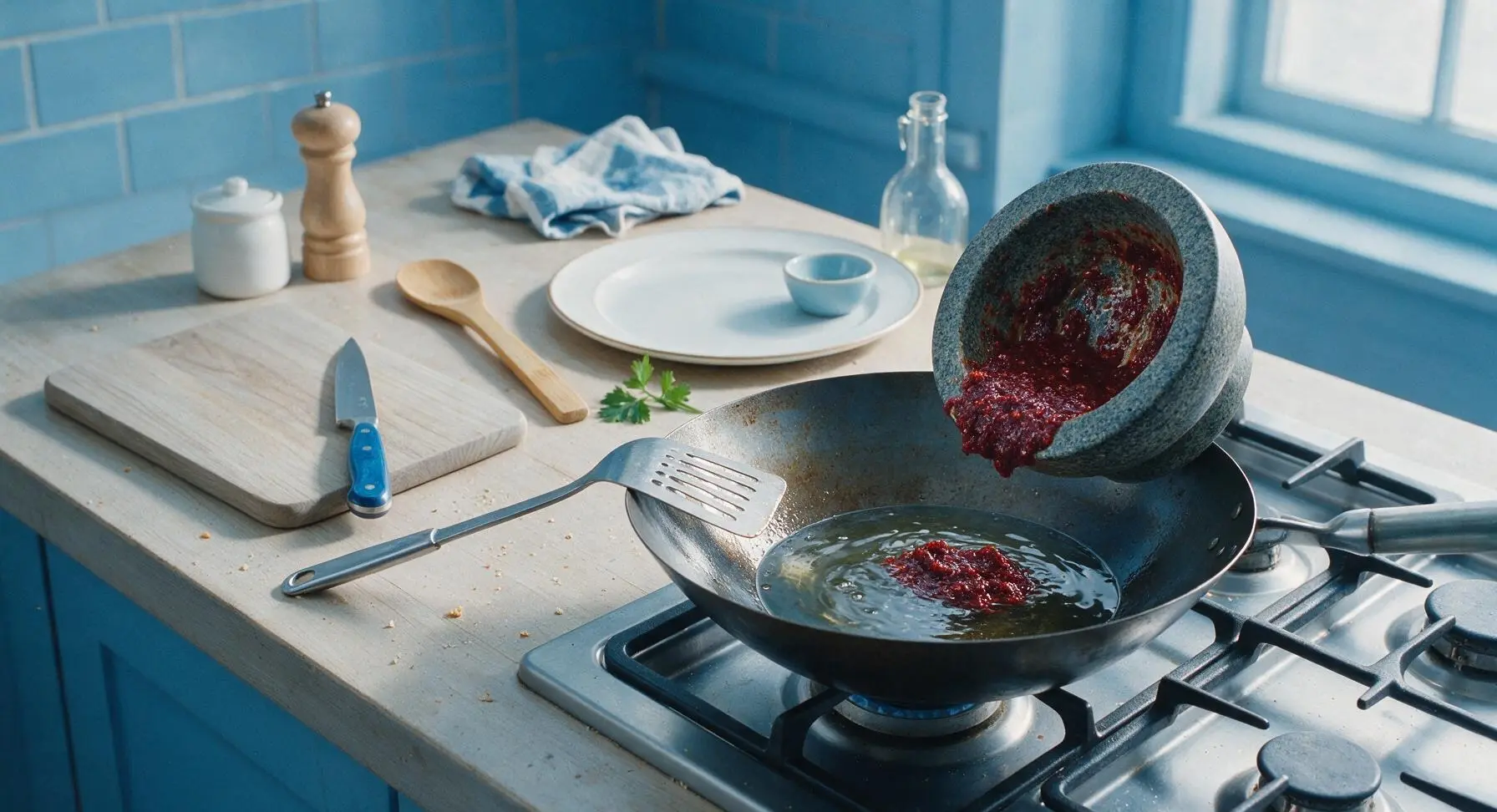
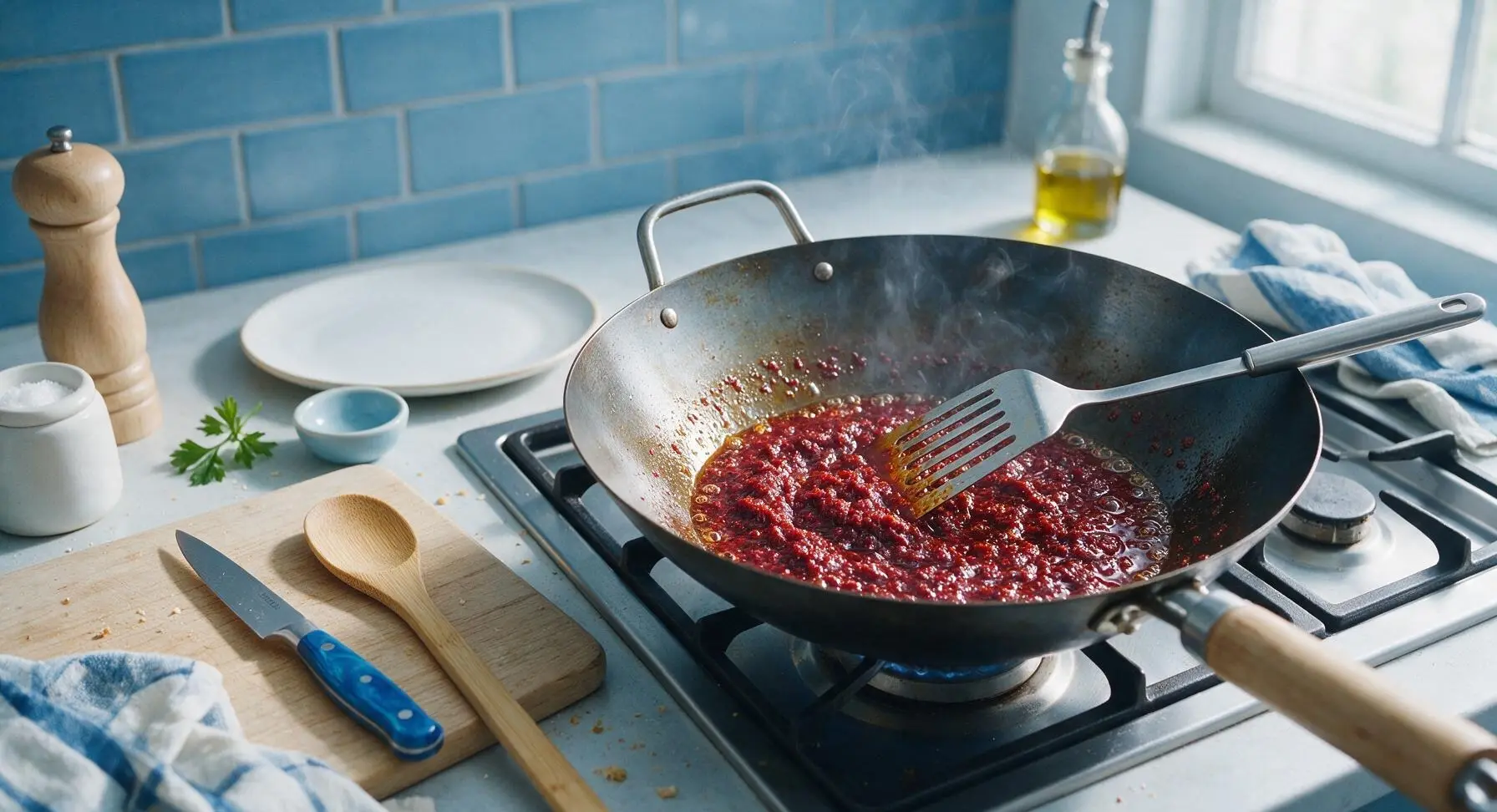
Place the 32cm seasoned carbon steel wok on the center-right stovetop burner over medium heat (175°C/350°F). Add 2 tbsp neutral cooking oil, and when the oil shimmers (about 30 seconds), scrape the ground sambal paste into the wok. Stir constantly with the slotted stainless steel turner for 4-5 minutes, until the paste darkens to deep ruby red, smells intensely fragrant, and oil separates from the edges of the paste.
Step 4
step4:Toast Sambal Paste
Step 4
step4:Toast Sambal Paste
5

Season Sambal Sauce

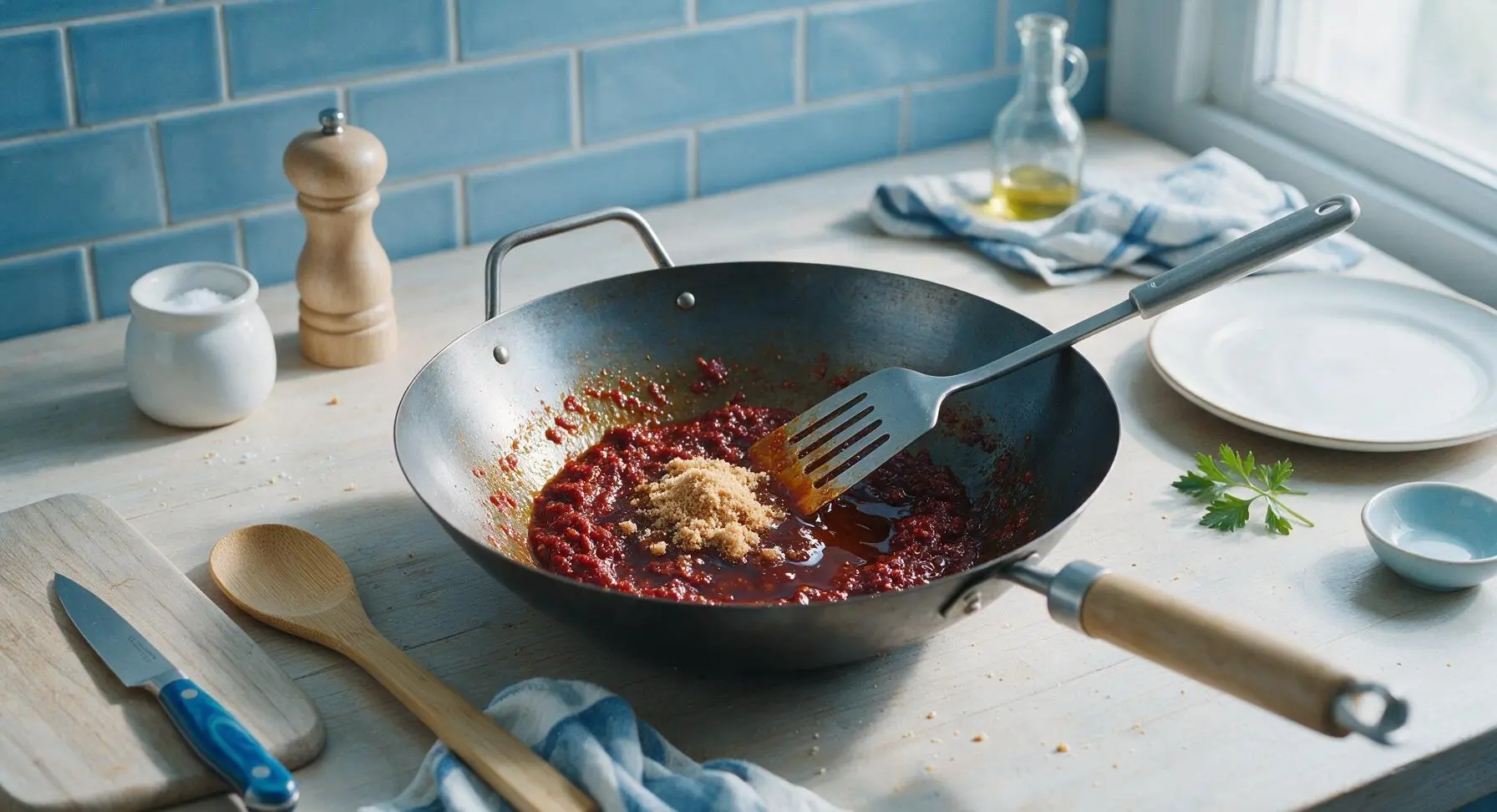
Add 1 tbsp grated palm sugar and 1 tbsp fish sauce to the toasted sambal paste in the wok. Stir continuously for 1 minute until the palm sugar fully dissolves into the sauce. Taste and adjust: the base should balance spicy, salty, and sweet notes, with deep umami from the shrimp paste.
Step 5
step5:Season Sambal Sauce
6

Sear Shrimp in Sauce

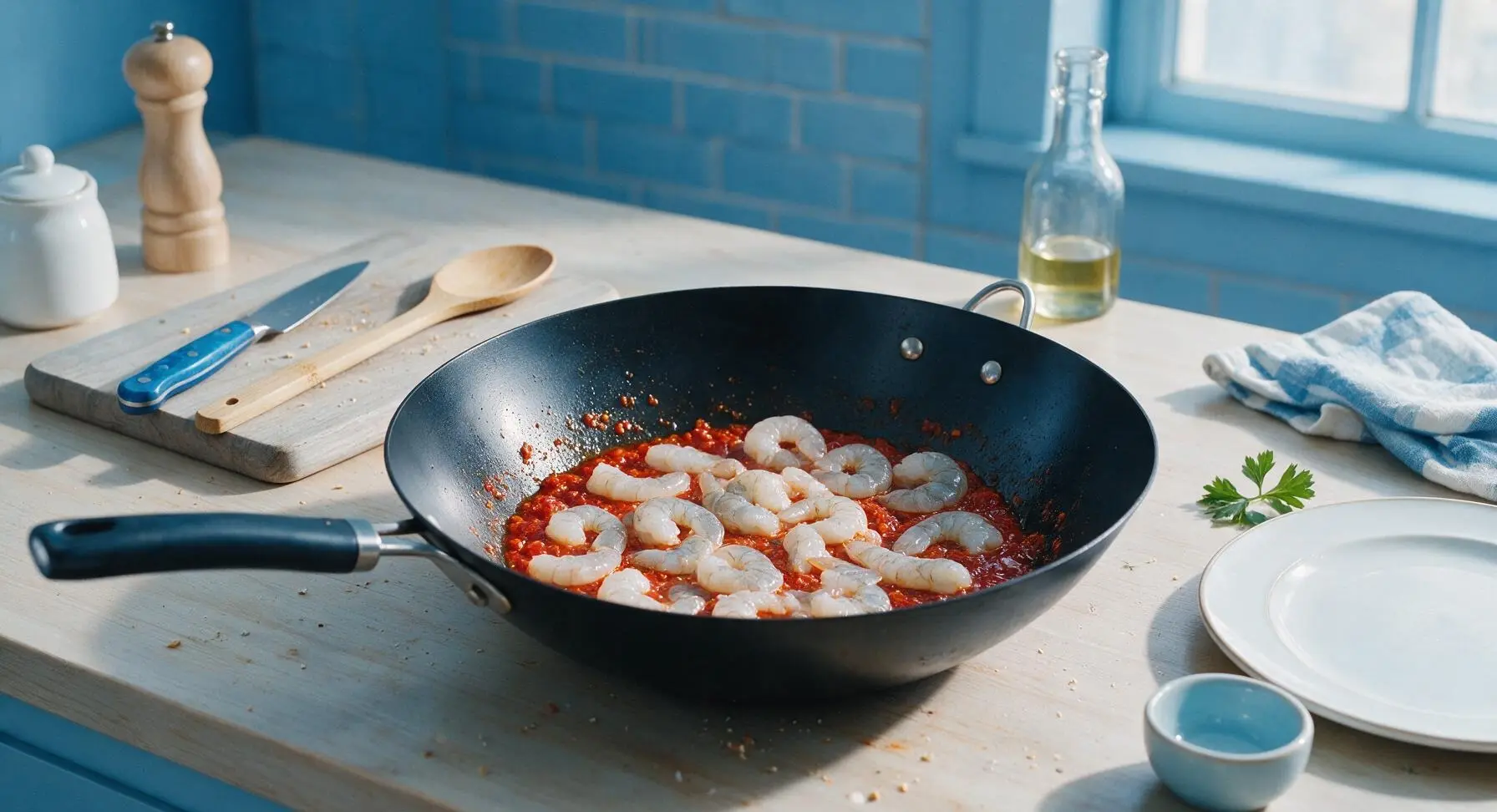
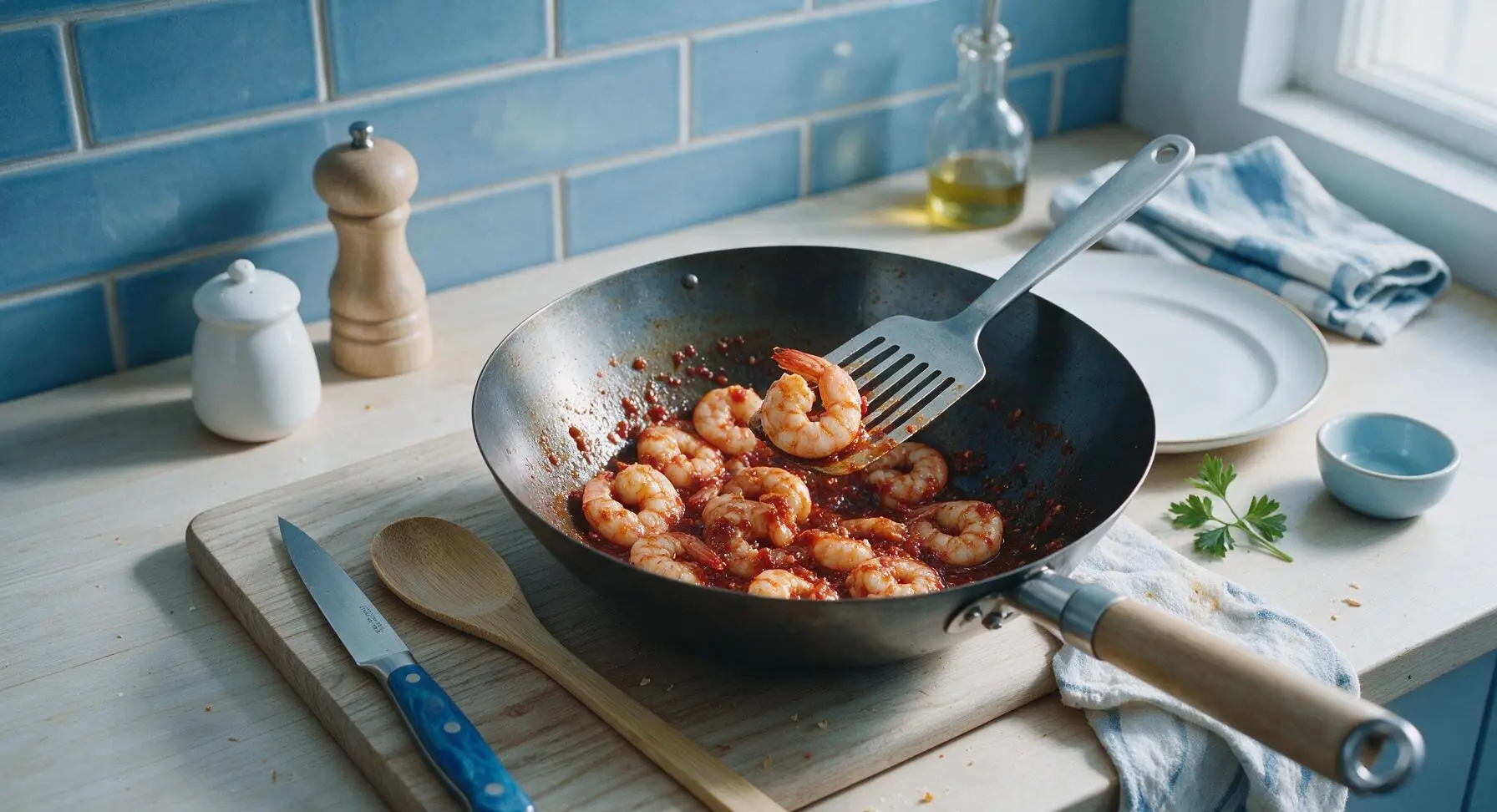
Increase stovetop heat to medium-high (200°C/400°F). Add the fully patted-dry shrimp to the wok in a single loose layer, tossing immediately to coat evenly in sambal sauce. Cook 3-4 minutes total, flipping shrimp once halfway through, until shrimp turn opaque pale pink, curl into tight C-shapes, and have no remaining translucent gray flesh. Avoid overcooking, as shrimp will turn rubbery if left on heat too long.
Step 6
step6:Sear Shrimp in Sauce
Step 6
step6:Sear Shrimp in Sauce
7

Finish with Aromatics

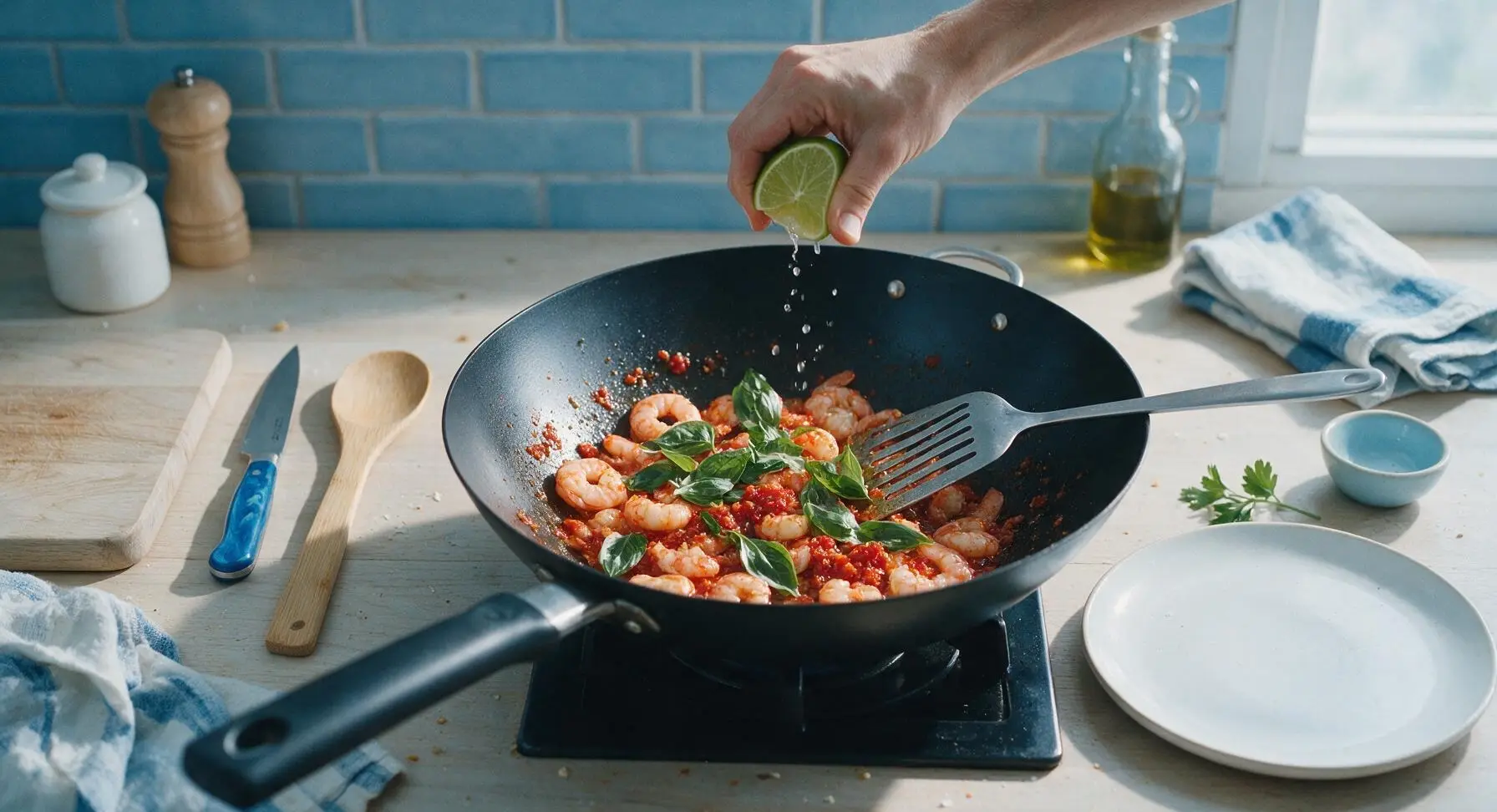
Turn off the stovetop heat. Drizzle 2 tbsp fresh lime juice over the shrimp and sambal, add 3/4 of the packed Thai basil leaves, and toss gently for 30 seconds until the basil just wilts from the wok's residual heat.
Step 7
step7:Finish with Aromatics
8

Plate and Garnish

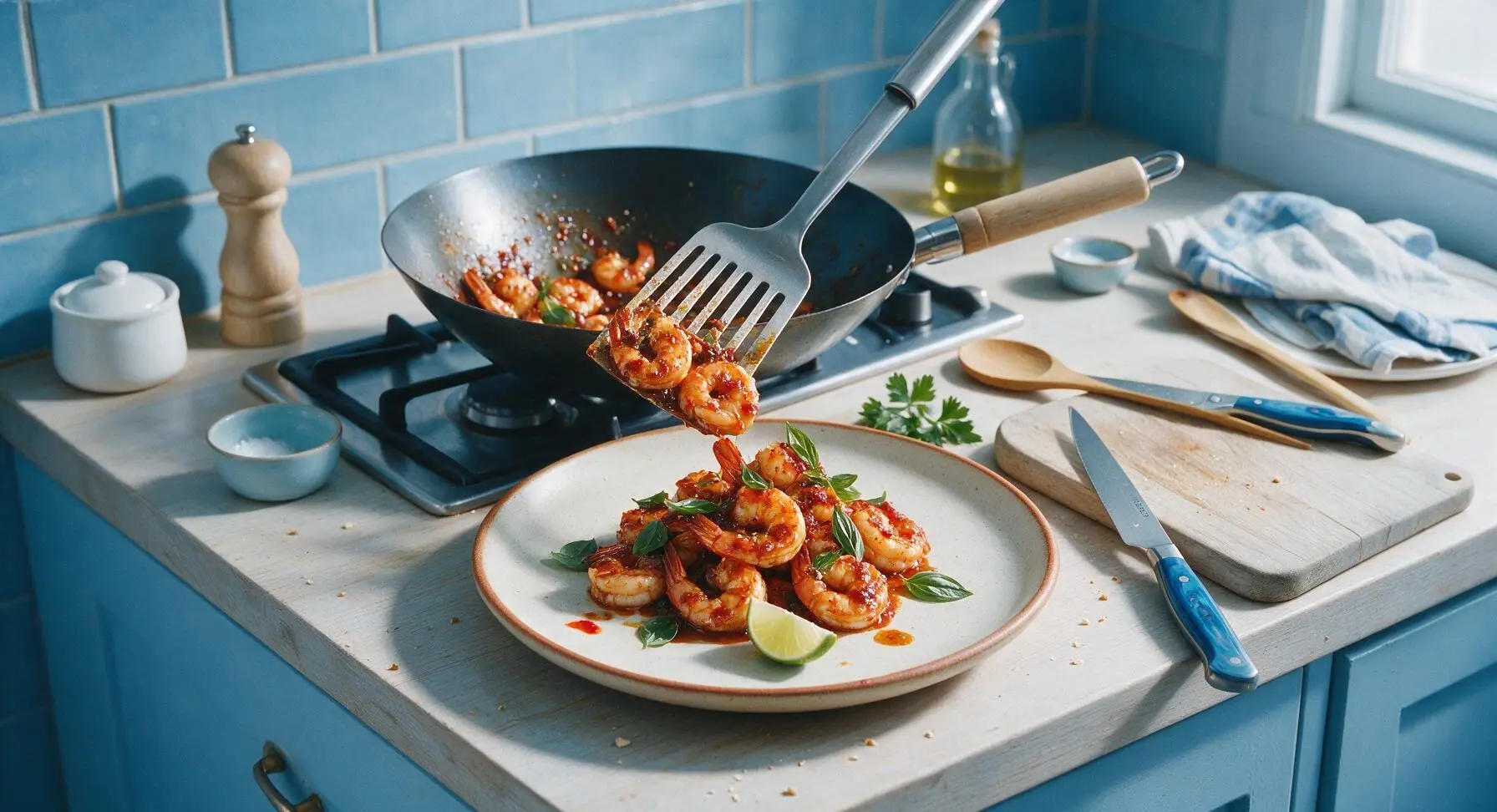
Transfer the finished shrimp sambal to the matte cream ceramic serving plate, piling shrimp slightly in the center. Drizzle any remaining sambal sauce from the wok over the top, scatter the reserved fresh Thai basil leaves over the dish, and tuck a fresh lime wedge at the plate edge for extra squeezing at the table. Serve immediately with steamed jasmine rice.
Step 8
step8:Plate and Garnish

Tips

1.Pat shrimp completely dry before adding to the hot wok: any remaining surface moisture will cause shrimp to steam instead of sear, leading to a watery sauce and preventing the shrimp from absorbing the rich sambal flavor.
2.Keep sambal paste slightly coarse when grinding: a fully smooth puree will have a harsh, uniform heat, while a chunky texture allows the aromatic flavors of shallot, garlic, and chili to release gradually for more balanced taste.
3.Add lime juice and basil only after turning off the heat: high heat will cook lime juice to a bitter, flat taste and turn basil leaves black and mushy, while residual wok heat keeps the lime bright and basil fresh-tasting with just a light wilt.

✨ You May Also Like

Main Course
🍜 United Kingdom

A showstopping classic of tender seared beef, savory mushroom duxelles, and crisp prosciutto wrapped in flaky golden puff pastry, baked to juicy perfection.

⏱️ 2 hours 1Main Course ★ 4.7
Main Course
🍜 India

Tender charred marinated chicken simmered in a rich, spiced creamy tomato sauce, this iconic Anglo-Indian curry pairs perfectly with basmati rice or warm naan.

⏱️ 50 minuteMain Course ★ 4.6
Main Course
🍜 Thailand

Classic tangy, sweet, and savory Thai stir-fried rice noodles with shrimp, tofu, and crunchy garnishes, balancing all five core Thai flavor profiles.

⏱️ 30 minuteMain Course ★ 4.5
Main Course
🍜 United Kingdom

Crispy golden beer-battered cod and fluffy double-fried chips, served with tangy tartar sauce and malt vinegar: the timeless, beloved British pub comfort classic.

⏱️ 45 minuteMain Course ★ 4.7
Main Course
🍜 Mexico

Smoky, chile-marinated pork tacos with caramelized pineapple, fresh cilantro, and lime: a beloved classic Mexican street food perfect for casual summer gatherings.

⏱️ 1 hour 45Main Course ★ 4.8
Main Course
🍜 United States

Crunchy Fritos corn chips layered with savory beef chili and melted cheddar, topped with cool, zesty fixings for a beloved, cozy Tex-Mex comfort food.

⏱️ 35 minuteMain Course ★ 4.8

shrimp sambal:Frequently Asked Questions

1.How spicy is this shrimp sambal, and can I adjust the heat to match my tolerance? ▾
This recipe leans moderately fiery thanks to dried bird’s eye chilies, but you can easily tweak the heat. For milder results, seed all dried chilies before soaking and cut the quantity by half; for extra heat, toss in 1-2 fresh chopped bird’s eye chilies when sautéing the paste. Always balance adjusted heat with a pinch more sugar or lime to keep flavors even.
2.Do I have to leave shrimp tails on, or can I peel them completely? ▾
Leaving tails on is totally optional! Tails add a nice visual pop and a subtle extra shellfish savor as the shrimp sear, but if you prefer no-fuss, bite-sized eating, feel free to peel shrimp entirely. Just make sure to pat peeled shrimp very dry before searing to get a crisp, golden exterior instead of steamed, rubbery shrimp.
3.Can I use pre-cooked shrimp for this recipe to save prep time? ▾
I don’t recommend pre-cooked shrimp here, as they’ll turn tough and rubbery when tossed in hot sambal paste. Pre-cooked shrimp also won’t absorb the bright, umami chili flavors the way raw seared shrimp do. If you’re short on time, pick up pre-peeled, deveined raw shrimp from the seafood counter—they cut prep time drastically without ruining texture.
4.What’s the best way to prep dried red bird’s eye chilies for the sambal paste? ▾
Start by snipping off chili stems, then shake out as many seeds as you want for your preferred heat level. Cover the chilies with hot (not boiling) water and let them soak 15-20 minutes until fully soft, then drain well before blending with shallots, garlic, and ginger. Skipping the soak leaves a gritty, uneven paste that won’t coat shrimp properly.
5.I don’t have a blender or food processor—can I make the sambal paste by hand? ▾
Absolutely! Traditional sambal is often made with a stone mortar and pestle, which works beautifully to pound soaked chilies, shallots, garlic, and ginger into a coarse, fragrant paste. If you don’t have a mortar and pestle, finely mince all paste ingredients and mash them together with the flat side of a chef’s knife until evenly combined.
6.How do I keep my shrimp from getting rubbery when cooking this dish? ▾
The two biggest tricks for plump, tender shrimp are patting them completely dry before searing, and not overcooking them. Sear shrimp over medium-high heat for just 1-2 minutes per side until opaque and pink, then set them aside while you sauté the sambal paste. Toss them back in the paste for 30 seconds to coat, then pull the pan off heat immediately.
7.What can I substitute if I can’t find dried bird’s eye chilies locally? ▾
If dried bird’s eye chilies are hard to track down, use a mix of dried arbol chilies (for bright, sharp heat) and 1 small dried guajillo chili (for mild, fruity depth) to match the classic flavor profile. Avoid generic chili powder as a substitute—it has added cumin and oregano that will clash with sambal’s clean, bright balance.
8.What sides pair best with shrimp sambal besides steamed white rice? ▾
Fluffy steamed jasmine rice is the classic pairing to soak up the spicy, umami sauce, but you can also serve it over coconut rice for extra richness, with crisp cucumber and tomato slices on the side to cut the heat. For a lower-carb option, pair it with cauliflower rice or quick stir-fried bok choy.
9.How long do leftovers keep, and can I freeze shrimp sambal? ▾
Stored in an airtight container, leftover shrimp sambal keeps well in the fridge for up to 3 days. I don’t recommend freezing it, as shrimp will turn mushy and watery when thawed, and the bright notes from lime and basil will fade dramatically. Reheat leftovers gently over low heat, adding a tiny squeeze of fresh lime to refresh flavors.
10.When should I add the lime and fresh basil mentioned in the recipe intro? ▾
Add both lime juice and fresh basil right at the very end, after you’ve tossed seared shrimp back into the cooked sambal paste to coat. Cooking lime juice too long makes it taste bitter and flat instead of bright, and adding basil early wilts it completely and mutes its fresh, aromatic flavor. Toss lightly and serve immediately.
11.Can I make the sambal paste ahead of time for faster weeknight meals? ▾
Absolutely! The blended chili, shallot, garlic, and ginger paste will keep for up to 1 week in a sealed jar in the fridge, topped with a thin layer of neutral oil to prevent browning. You can also freeze the paste in ice cube trays for up to 3 months, so you can pop out a single portion for quick meals anytime.
12.The recipe calls for large shrimp—what if I only have other sizes on hand? ▾
Large shrimp (marked 21/25 count per pound at the seafood counter) are ideal because they stay plump and juicy during searing, and hold up to bold sambal without getting lost. If you only have extra-large or jumbo shrimp, cut them into 1.5-inch pieces after peeling; avoid small salad shrimp, which overcook instantly and lack that satisfying meaty texture.
13.My sambal paste tasted bitter after sautéing—what went wrong? ▾
Bitter sambal almost always comes from cooking the paste over too high heat, which burns tiny bits of garlic, shallot, and chili. Sauté the paste over medium-low heat, stirring constantly, for 5-7 minutes until it turns deep rich red and oil separates from the paste. Fix slight bitterness with a tiny pinch of light brown sugar and a squeeze of lime to balance flavors.
14.Can I add extra vegetables or proteins to make this a more filling meal? ▾
Definitely! The bold sambal base pairs beautifully with quick-cooking additions like green beans, bell pepper strips, cubed fried tofu, or even squid rings. Sear or blanch any add-ins separately before tossing them with shrimp and sambal at the end, so you don’t overcrowd the pan and make shrimp steam instead of searing crisp.
15.Do I need a special type of oil to make authentic-tasting shrimp sambal? ▾
You don’t need fancy specialty oils! A neutral, high-smoke-point oil like canola, avocado, or refined peanut oil works best, since it won’t burn when you sear shrimp and sauté the spice paste. Avoid strongly flavored oils like toasted sesame oil or extra-virgin olive oil, as they will overpower the bright, balanced chili, shallot, and ginger flavors.

Comments (17)

yesterday

OMG this shrimp sambal is an absolute game changer! Made this last night for date night and my partner literally asked if I ordered takeout from our favorite Malaysian spot. The depth of flavor is insane for only 15 minutes of cook time! I served it over coconut rice and it was chef’s kiss.

3 days ago

Wait, I’ve never made sambal before and I was intimidated by the medium difficulty rating but it was so straightforward! I did accidentally add a little extra lime at the end and it turned out even brighter, tbh.

2 days ago

So glad you gave it a shot even if you were nervous! Extra lime is never a bad call in my book, it cuts the richness of the shrimp so nicely.

1 week ago

Has anyone tried meal prepping this? I’m trying to add more seafood options to my Sunday prep rotation and I’m curious if the shrimp holds up well reheated!

1 week ago

I prepped it on Sunday last week! Stored it in an airtight glass container for 3 days, reheated in a pan over low heat instead of the microwave and it tasted just as fresh as night one. Just don’t overcook the shrimp initially!

6 days ago

Great question! Jess’s tip is perfect — low heat reheat is key to not making the shrimp rubbery. It holds up for 3-4 days in the fridge if stored properly.

5 minutes ago

SO good. I used frozen shrimp that I thawed in a bowl of cold water for 10 minutes first and it worked perfectly, no weird texture at all. Will be adding this to my regular weeknight rotation for sure.

2 hours ago

I upped the chili paste by double because I love that burn, and wow, this hit exactly the spot I was craving. Served with some pickled cucumbers on the side to balance the heat, *chef’s kiss*

30 minutes ago

Same! I added a whole chopped Thai bird’s eye chili too, my sinuses were clear for hours but it was so worth it. Pickled cucumbers are such a good call, I’m stealing that for next time.

2 days ago

Wait quick question — do I need to use tamarind paste for this? My grocery store was out and I don’t have time to run to the Asian market before dinner tonight.

2 days ago

I used a mix of 1 tbsp lime juice + 1 tbsp brown sugar + a tiny pinch of Worcestershire as a tamarind substitute last week and it turned out great! Not 100% the same but close enough for a weeknight meal.

1 day ago

Seconding that substitute! I’ve used it for other sambal recipes too and it works perfectly, you won’t even notice the difference.

1 week ago

I brought this to my neighborhood block party potluck last weekend and people were hovering over the platter asking for the recipe before I even set it down! I used extra large shrimp so they were easier to pick up as finger food, worked like a charm.

6 days ago

That makes me so happy to hear! Using extra large shrimp for potluck servings is such a genius tip, I love that. Thanks for sharing!

30 minutes ago

Made this in my tiny dorm kitchen with a single hot plate and it still turned out incredible. Way better than the instant noodles I usually eat, lmao. Next time I’m gonna add some bell peppers to bulk it up a bit.

2 weeks ago

Is this recipe gluten free as written? I have a celiac diagnosis so I have to be super careful about soy sauce cross contamination!

2 weeks ago

Great question, Gabi! As written it uses regular soy sauce, but you can easily swap it for tamari to make it 100% gluten free without changing the flavor at all.

1 week ago

I made it with low-sodium tamari last week and it was perfect! No weird aftertaste or anything, my whole family (none of whom are GF) loved it too.

5 days ago

Full transparency: I usually hate shrimp because I think it’s rubbery and flavorless but my partner begged me to make this and… I’m a convert. The sambal paste coats every single bite so there’s zero blandness, and I cooked the shrimp exactly per the time instructions so it was perfectly tender.

4 days ago

Same! I used to overcook shrimp all the time until I started following the exact cook times on seafood recipes, makes such a huge difference. So glad you gave it a shot!

3 days ago

My kids loved it! My oldest is going through a super picky eater phase where she refuses anything “saucy” but she ate three whole servings of this over rice. Win for dad dinner night.

yesterday

Wait the cook time is listed as 15 minutes but it took me closer to 22 because I was chopping aromatics like a maniac. Still totally worth it, though! Flavor was better than the shrimp sambal I get at the restaurant down the street from my apartment.

yesterday

Totally fair! The 15 minute cook time assumes you have your garlic, shallots, and chilies pre-chopped first, I should note that more clearly on the recipe card. So glad the flavor still delivered for you!

5 days ago

How long do leftovers keep in the fridge? I made way too much for just me and my roommate and I don’t want it to go to waste!

4 days ago

I kept mine for 4 days in a sealed container and it was totally fine! Like the earlier comment said, reheat on the stovetop low and slow instead of the microwave so the shrimp doesn’t get chewy.

4 days ago

Zoe is spot on! 3-4 days in an airtight container is the sweet spot, and low stovetop reheat works best. You can also toss leftover shrimp sambal with noodles for a quick next-day lunch!

2 weeks ago

I added a handful of fresh pineapple chunks at the last minute to add a little sweet contrast to the spicy sambal and it was unreal. Highly recommend that hack if you like that sweet-spicy vibe!

1 week ago

Oh my god that sounds incredible! I have a whole pineapple sitting on my counter right now, I’m absolutely doing that when I make this tomorrow night. Thanks for the idea!

just now

Paired this with a crisp cold riesling last night and it was the perfect midweek pick-me-up after a brutal day at work. The balance of spicy, savory, tangy is exactly what I needed. Zero notes, 10/10.

1 week ago

I made this for my son who has a shellfish allergy by swapping the shrimp for crispy tofu cubes and it worked so well! The sambal sauce is so flavorful that even with tofu it was a total hit at our family dinner.

6 days ago

What a fantastic swap! I’m so glad the sauce worked with crispy tofu for your son, that’s such a great way to make the recipe accessible for people with shellfish allergies. I’ll add that as a variation note!

2 hours ago

Help! I followed the recipe exactly but my sambal paste came out really chunky, is that normal? I used a regular blender instead of a food processor, did I mess that up?

1 hour ago

Chunky is totally normal! I make mine in a blender too and just pulse it a little longer if I want it smoother, but some people prefer the chunky texture because it has more bite. No need to stress!

45 minutes ago

BlenderBabe is totally right! Chunky sambal is totally traditional in a lot of regions. If you want a smoother paste, just add a tiny splash of water or oil while blending to help it break down more easily, no fancy food processor required.