shrimp udon noodles

title 1
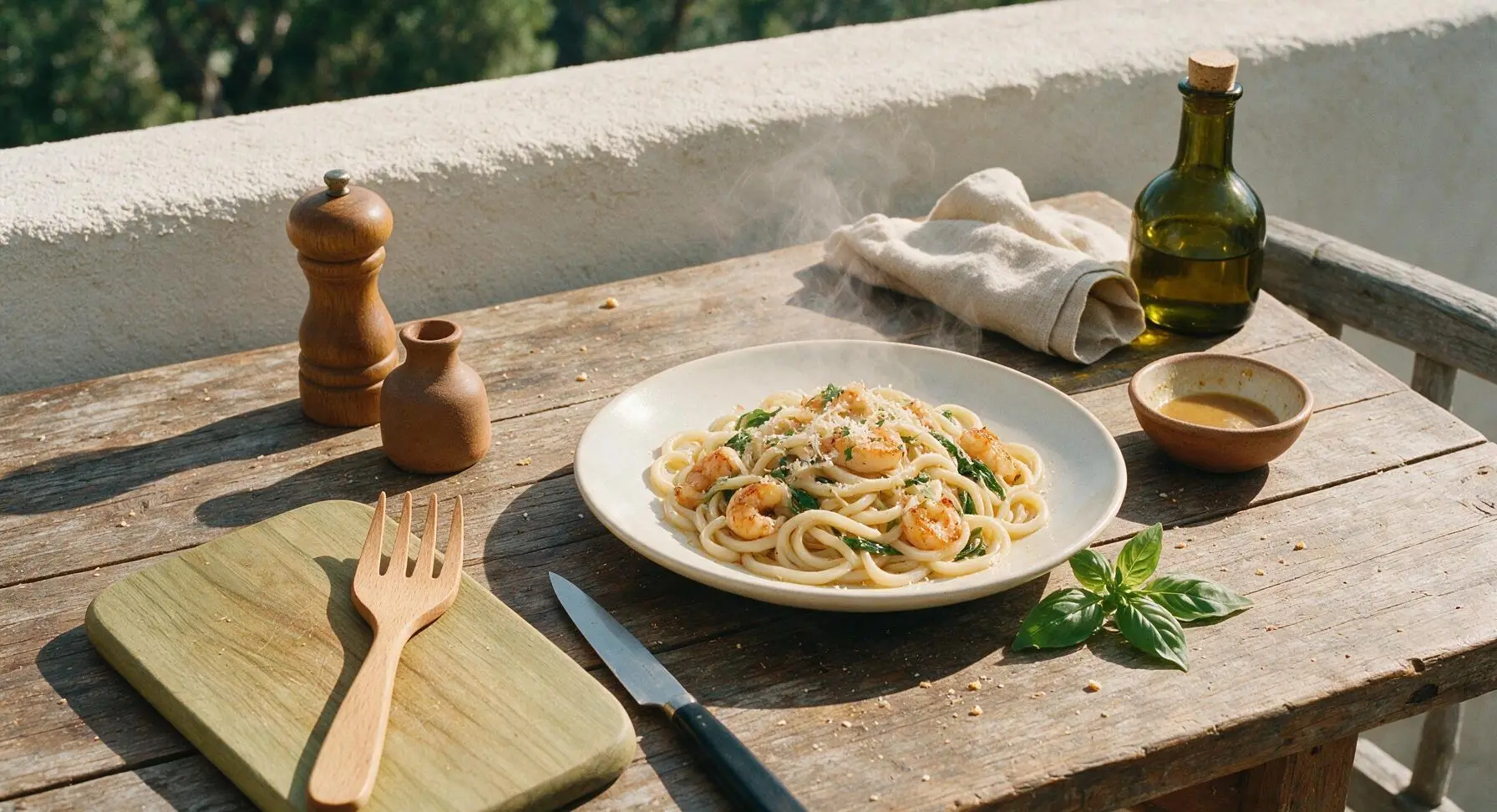
shrimp udon noodles
⏱️ cook time 15 minutes
🍽️ servings 2
⚡ Difficulty easy

intro

Silky thick udon noodles tossed with plump seared shrimp, savory umami broth, and tender greens, a fast, cozy one-pan meal ideal for busy weeknights.

Ingredients
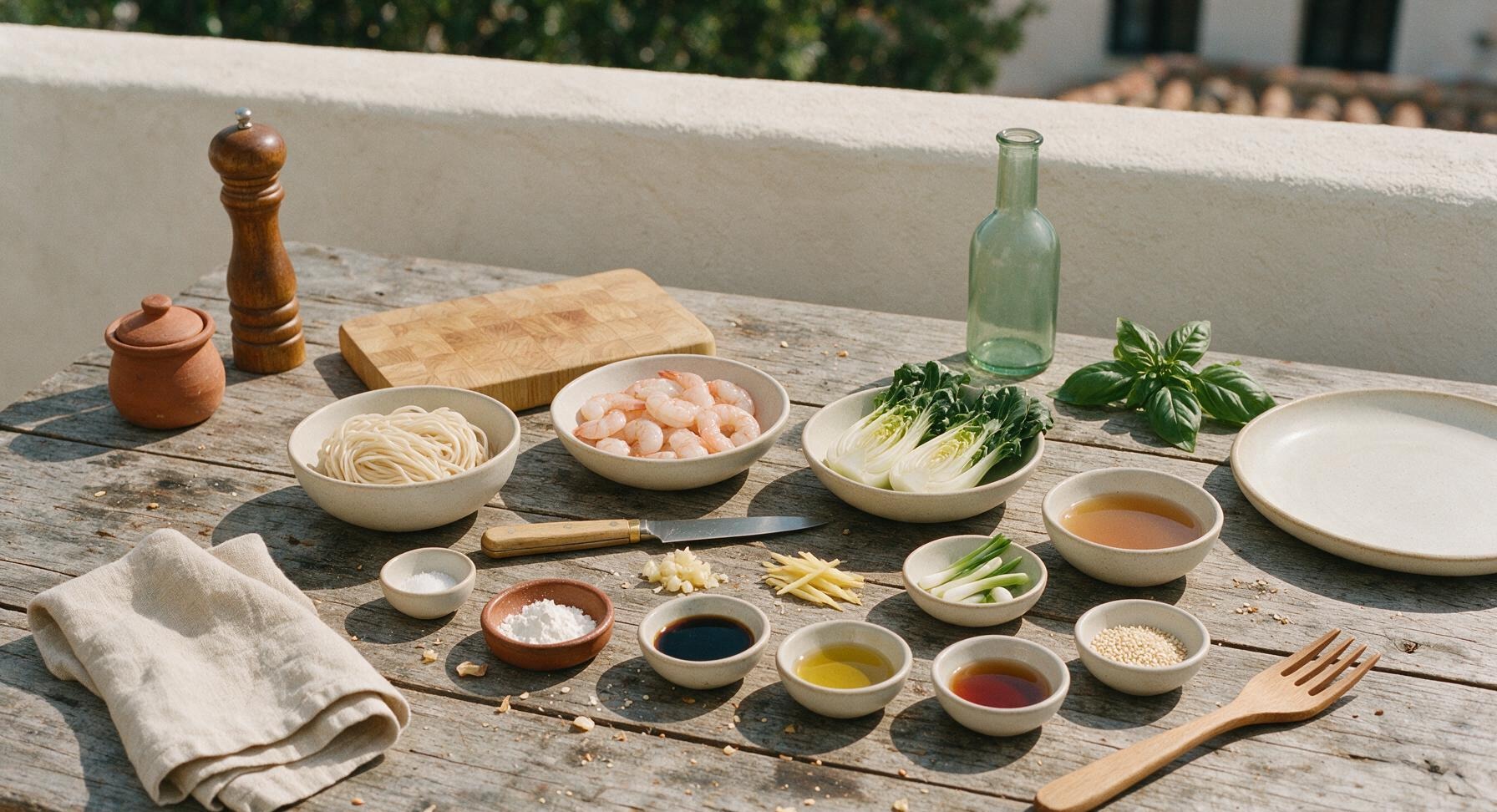
Pre-cooked udon noodles 200g (2 portions)
Large raw shrimp (peeled, deveined, tail-on) 200g (12 pieces)
Baby bok choy 2 heads (halved lengthwise)
Garlic cloves 3 cloves (minced)
Fresh ginger 2.5cm (1 inch, julienned)
Scallions 2 stalks (sliced, green/white parts separated)
Low-sodium dashi or chicken broth 360ml (1.5 cups)
Soy sauce 30ml (2 tbsp)
Mirin 15ml (1 tbsp)
Toasted sesame oil 5ml (1 tsp)
Neutral canola oil 15ml (1 tbsp)
Cornstarch 1 tsp
Toasted white sesame seeds 1 tsp
Fine table salt 1 pinch

Steps

1

Prep Shrimp and Aromatics

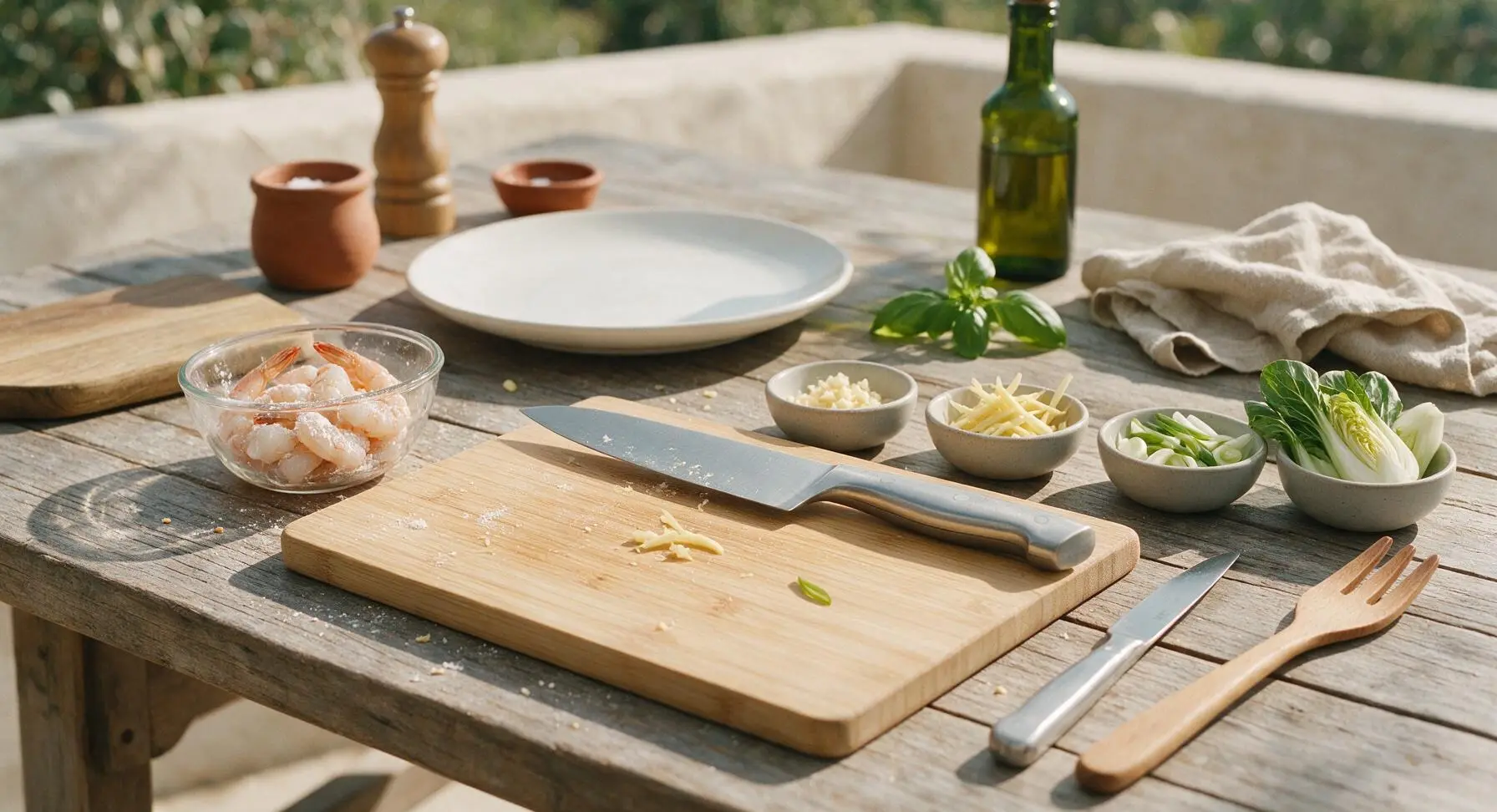
Pat 12 peeled, deveined tail-on shrimp dry with paper towel, toss with 1 tsp cornstarch and a pinch of fine salt until lightly, evenly coated. On the light bamboo cutting board, use the 6.5-inch stainless steel santoku knife to mince 3 garlic cloves, julienne the 1-inch ginger knob, slice 2 scallions (separating white and green parts), and halve 2 baby bok choy lengthwise. Transfer each prepped ingredient to separate small matte pale gray pinch bowls to keep organized.
Step 1
step1:Prep Shrimp and Aromatics
2

Mix Savory Sauce Base

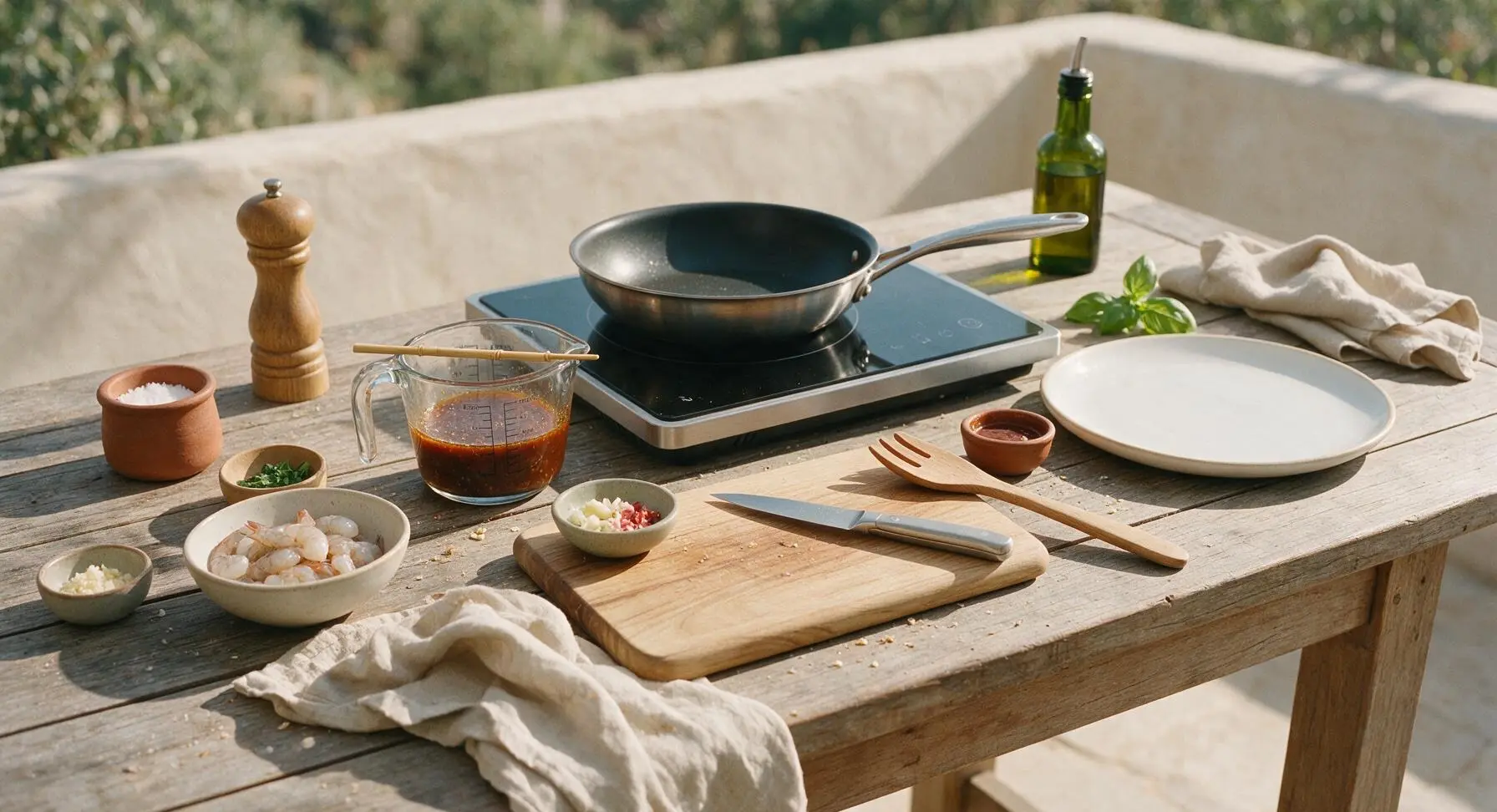
In the clear tempered glass 2-cup measuring cup, stir together 1.5 cups low-sodium dashi broth, 2 tbsp soy sauce, 1 tbsp mirin, and 1 tsp toasted sesame oil until fully combined, with no separate oil layers visible. Set the mixed sauce near the induction burner for easy access during cooking.
Step 2
step2:Mix Savory Sauce Base
3

Sear Plump Shrimp

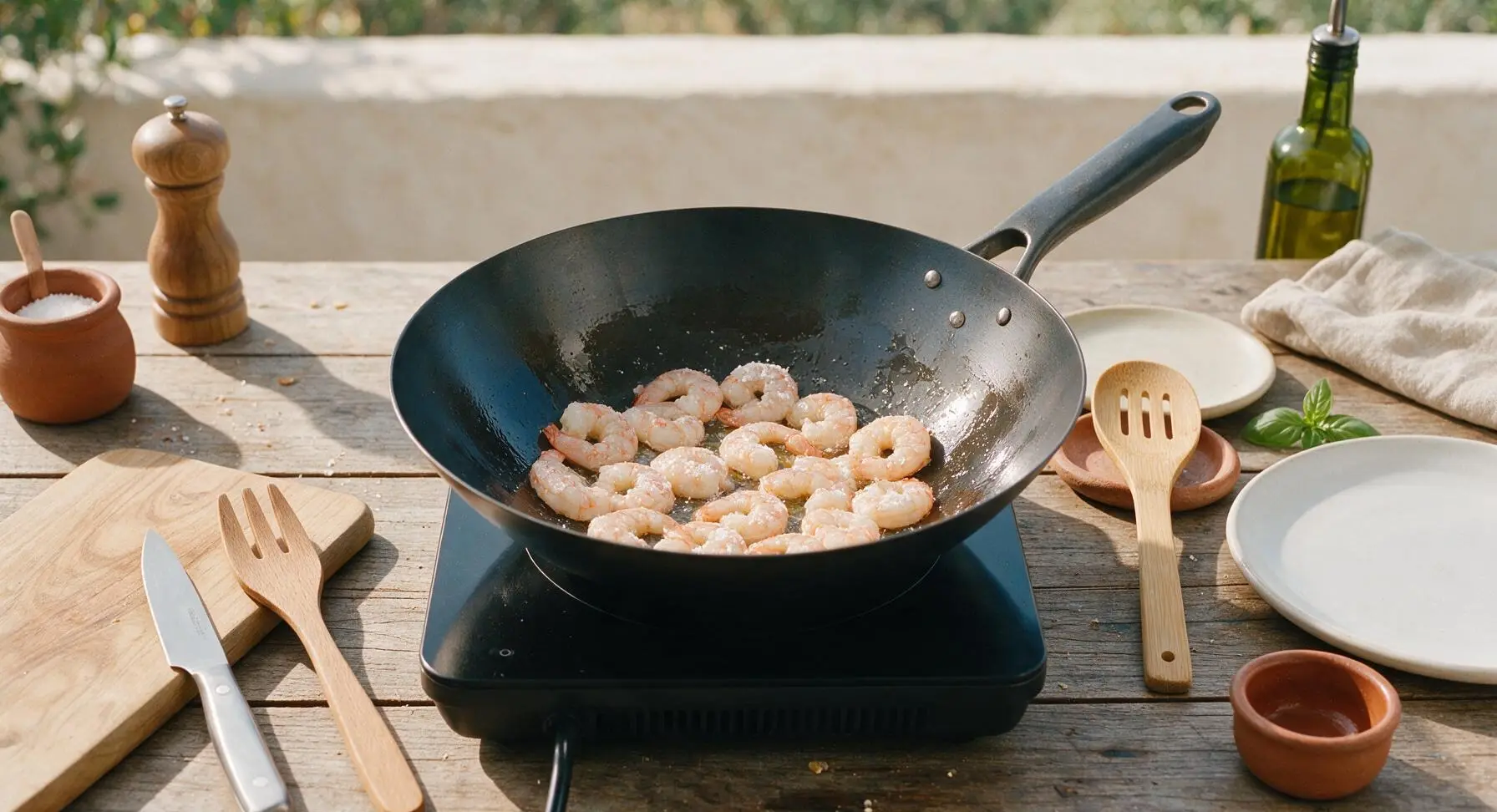
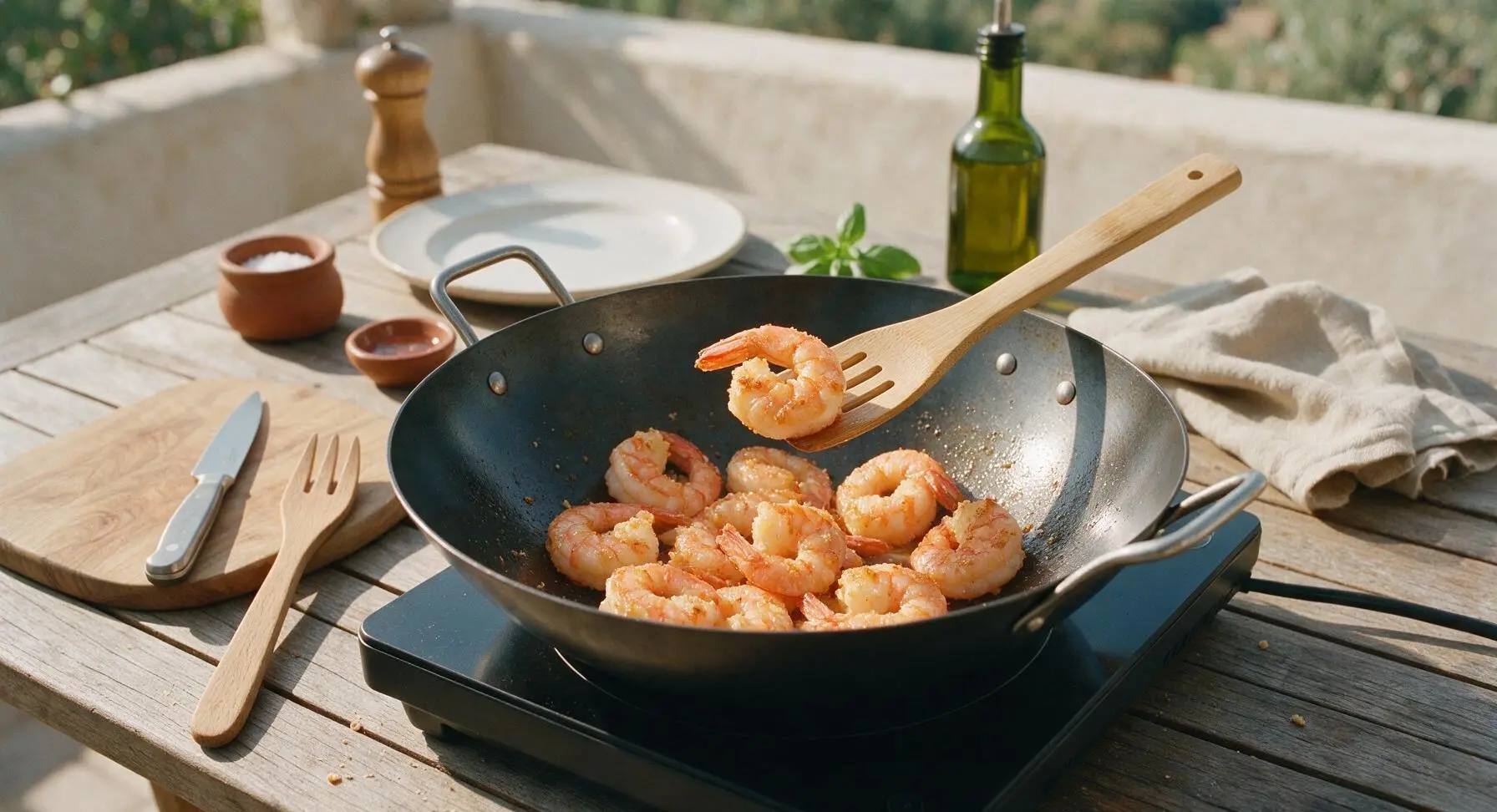
Place the 3-quart matte carbon steel wok on the portable matte black induction burner, heat to medium-high (190°C/375°F), add 1 tbsp neutral canola oil. Once oil shimmers across the wok surface, add the cornstarch-coated shrimp in a single uncrowded layer, sear 1.5 minutes per side until bright coral-pink and slightly golden at the edges, with no translucent gray flesh remaining. Use the light bamboo slotted spoon to transfer seared shrimp to the small matte off-white side plate temporarily.
Step 3
step3:Sear Plump Shrimp
Step 3
step3:Sear Plump Shrimp
4

Sauté Aromatics and Greens

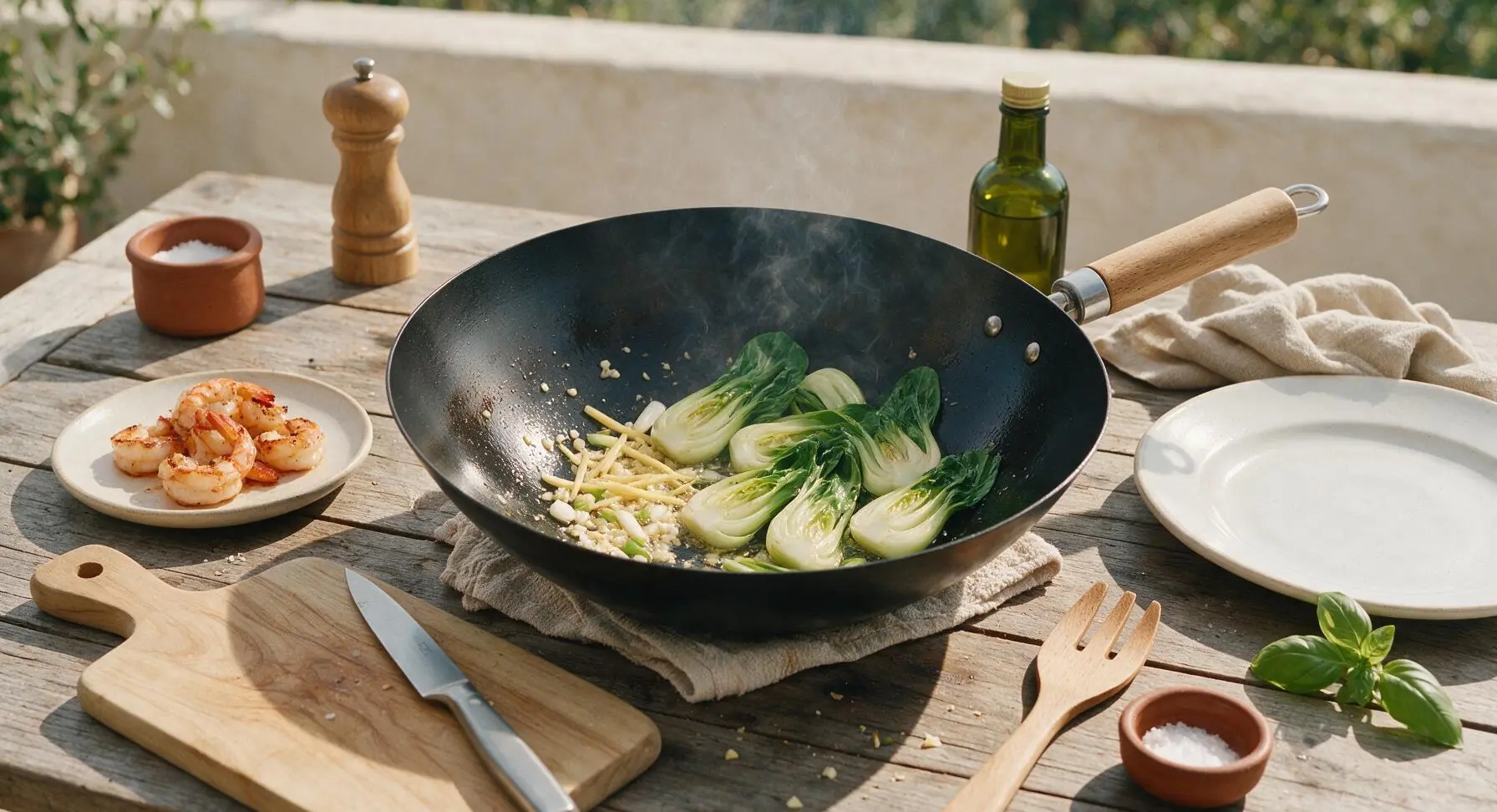
Reduce burner heat to medium (160°C/325°F), leave 1 tsp of oil in the wok, add minced garlic, julienned ginger, and scallion whites. Stir-fry for 30 seconds until fragrant, taking care not to let the garlic turn dark brown or burn. Add halved baby bok choy cut-side down, cook 1 minute until the cut surface is slightly caramelized and leaves are bright, tender wilted green.
Step 4
step4:Sauté Aromatics and Greens
5

Simmer Noodles in Broth

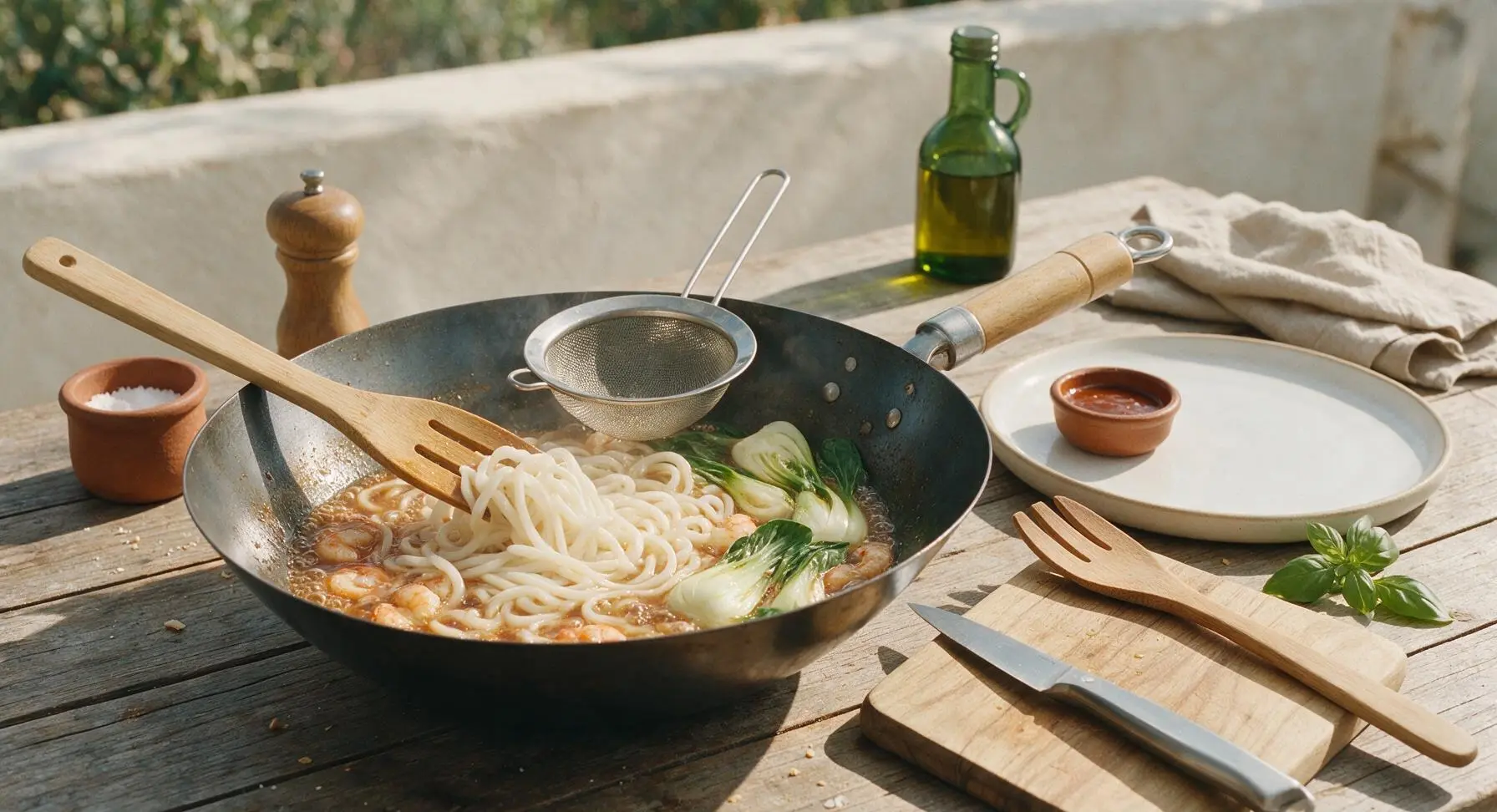
Pour the pre-mixed sauce base from the measuring cup into the wok, bring to a gentle simmer. If using frozen pre-cooked udon, quickly rinse the noodle block under warm running water in the stainless steel fine-mesh strainer for 30 seconds to loosen tight clumps, then add to the wok. Use the bamboo slotted spoon to gently separate the noodles as they warm, about 2 minutes, until noodles are silky and fully heated through, and the broth reduces slightly to a light, noodle-coating consistency.
Step 5
step5:Simmer Noodles in Broth
6

Toss Shrimp with Noodles

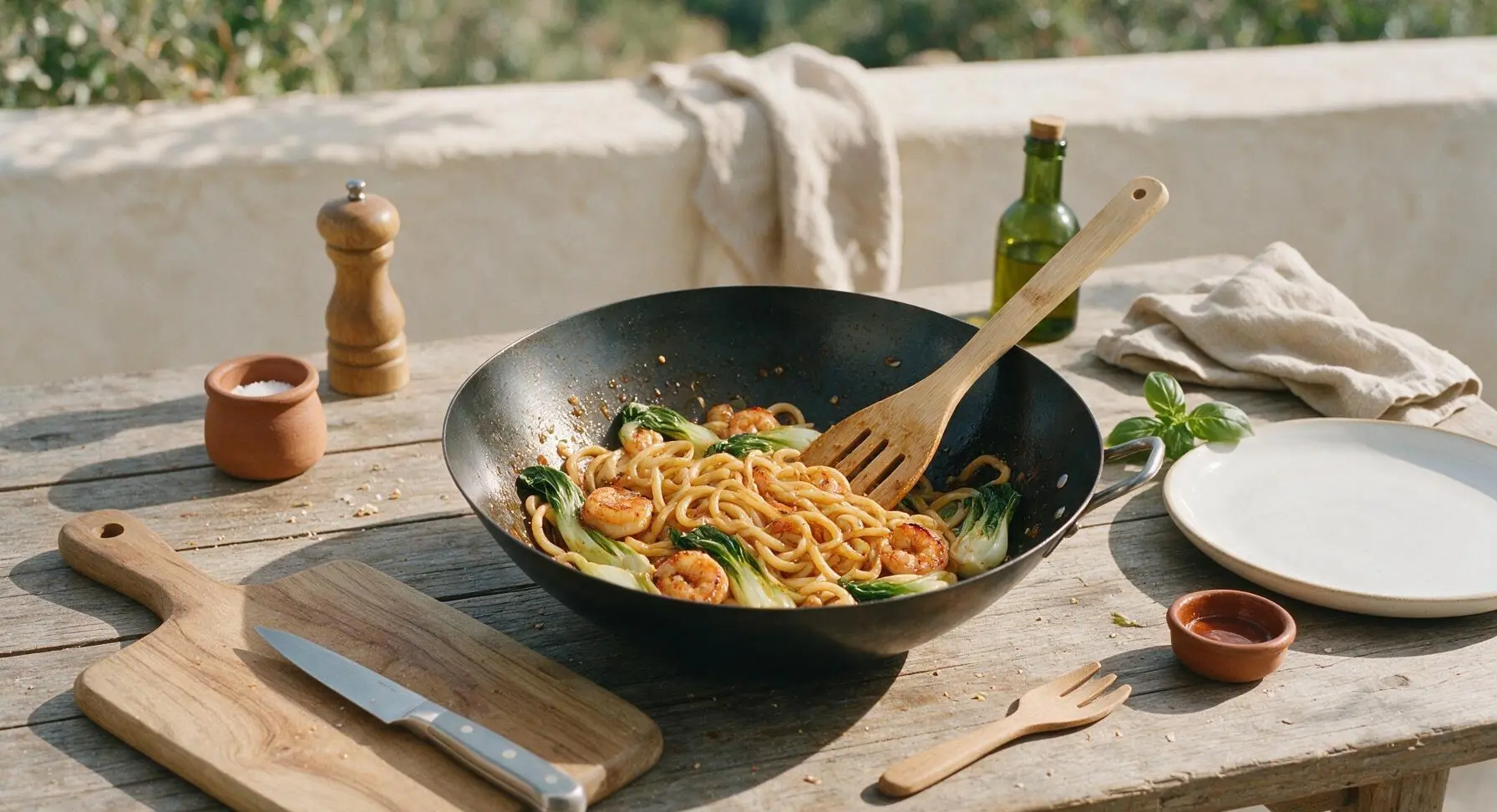
Add the temporarily set-aside seared shrimp back into the wok, toss gently with the noodles and bok choy for 1 minute to reheat the shrimp and coat all ingredients evenly in the light savory sauce. Turn off the induction burner heat once everything is evenly coated and hot.
Step 6
step6:Toss Shrimp with Noodles
7

Plate and Garnish

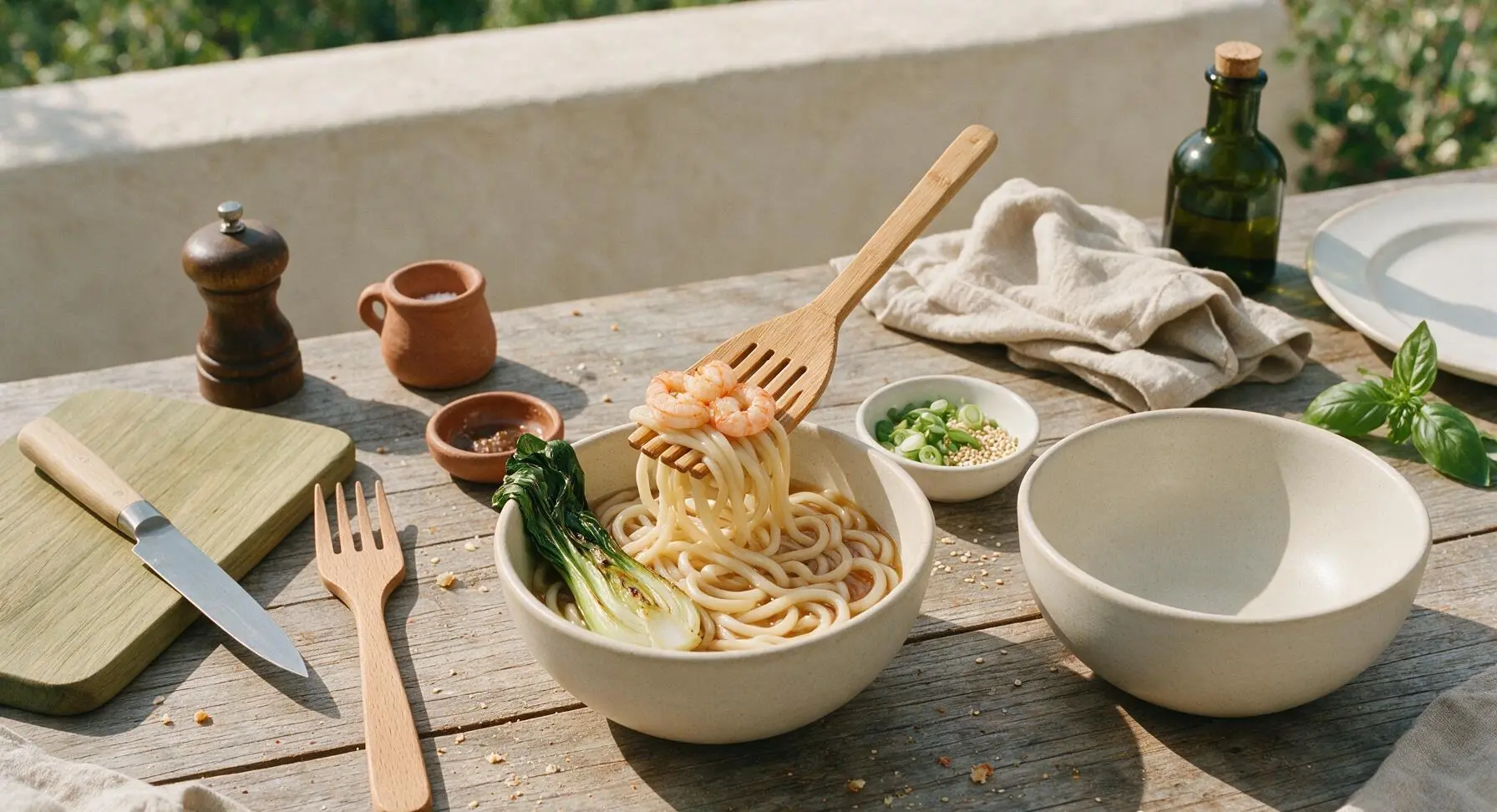
Divide noodles, shrimp, bok choy, and light broth evenly between the two matte warm off-white ceramic udon bowls. Top each bowl with reserved sliced scallion greens and a 1/2 tsp sprinkle of toasted white sesame seeds. Serve immediately while hot, before noodles cool and stick together.
Step 7
step7:Plate and Garnish

Tips

1.Pat shrimp completely dry and toss with a tiny amount of cornstarch before searing: this creates a light, crisp exterior and prevents shrimp from steaming instead of searing, locking in juiciness and preventing them from curling too tightly as they cook.
2.Use fresh or frozen pre-cooked udon instead of dried udon: dried udon has a firmer, less chewy, less silky texture, and pre-cooked udon only needs 2 minutes to warm through, cutting down total cook time for busy weeknights. Never overcook udon, as it will turn mushy and lose its signature springy bite.
3.Watch garlic closely when sautéing: garlic only needs 30 seconds over medium heat to release its sweet, aromatic flavor, and burnt garlic will add a sharp, bitter, unpleasant taste to the entire dish. If you notice garlic turning dark brown before adding other ingredients, discard it, wipe out the wok, and start with fresh garlic and a small amount of new oil.
✨ You May Also Like

Main Course
🍜 United Kingdom

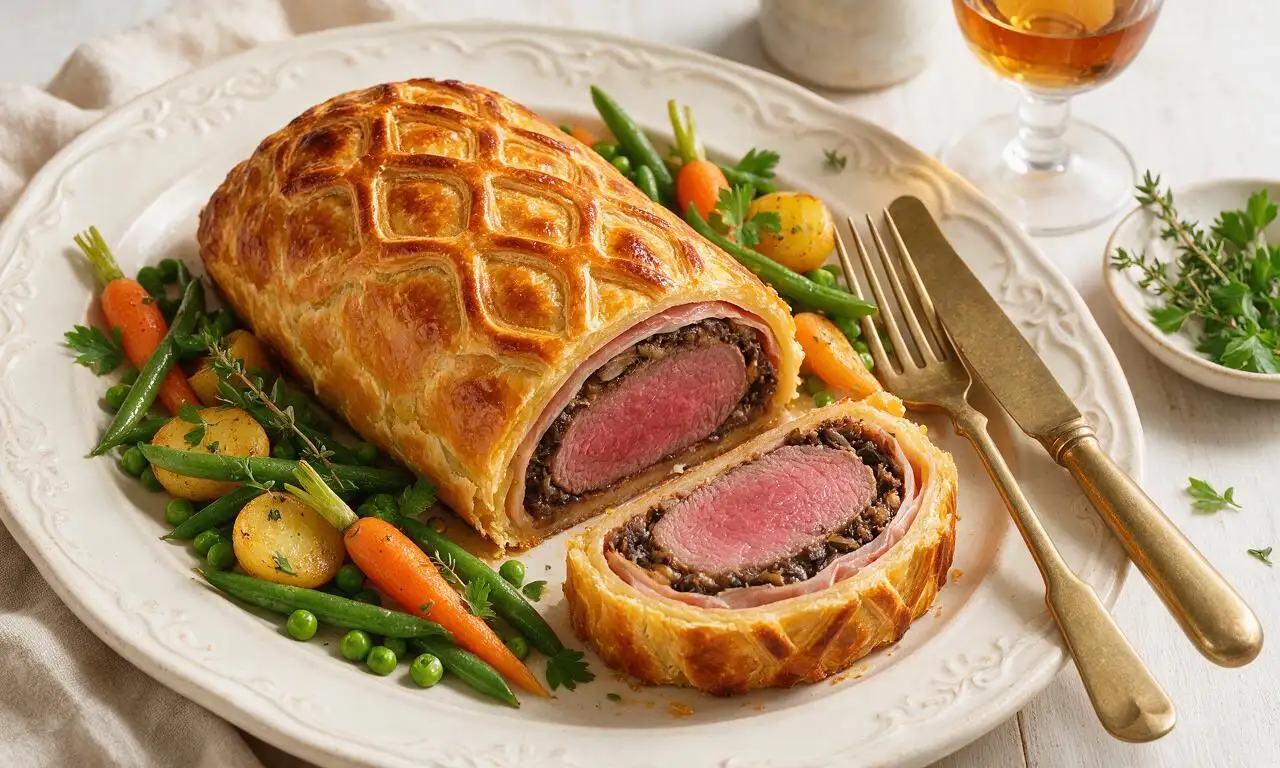
A showstopping classic of tender seared beef, savory mushroom duxelles, and crisp prosciutto wrapped in flaky golden puff pastry, baked to juicy perfection.

⏱️ 2 hours 1Main Course ★ 4.7
Main Course
🍜 India

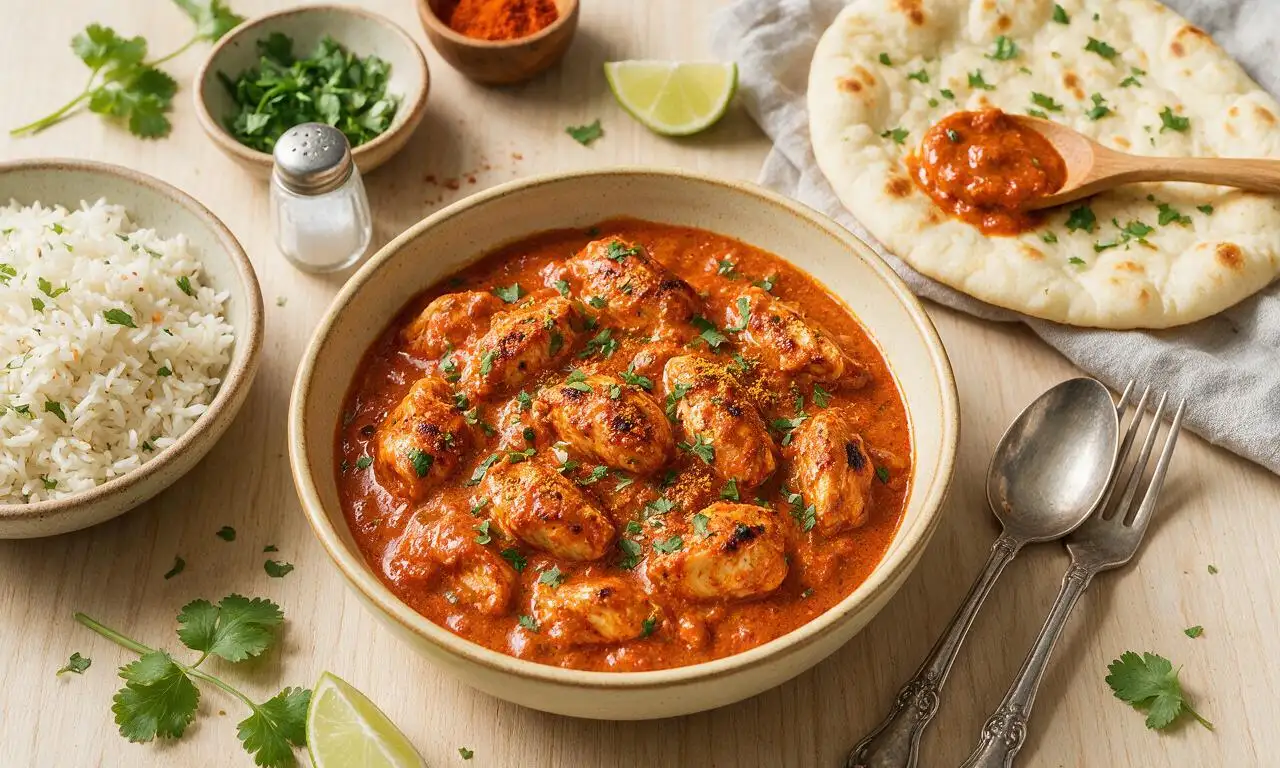
Tender charred marinated chicken simmered in a rich, spiced creamy tomato sauce, this iconic Anglo-Indian curry pairs perfectly with basmati rice or warm naan.

⏱️ 50 minuteMain Course ★ 4.6
Main Course
🍜 Thailand

Classic tangy, sweet, and savory Thai stir-fried rice noodles with shrimp, tofu, and crunchy garnishes, balancing all five core Thai flavor profiles.

⏱️ 30 minuteMain Course ★ 4.5
Main Course
🍜 United Kingdom

Crispy golden beer-battered cod and fluffy double-fried chips, served with tangy tartar sauce and malt vinegar: the timeless, beloved British pub comfort classic.

⏱️ 45 minuteMain Course ★ 4.7
Main Course
🍜 Mexico

Smoky, chile-marinated pork tacos with caramelized pineapple, fresh cilantro, and lime: a beloved classic Mexican street food perfect for casual summer gatherings.

⏱️ 1 hour 45Main Course ★ 4.8
Main Course
🍜 United States

Crunchy Fritos corn chips layered with savory beef chili and melted cheddar, topped with cool, zesty fixings for a beloved, cozy Tex-Mex comfort food.

⏱️ 35 minuteMain Course ★ 4.8

shrimp udon noodles:Frequently Asked Questions

1.Can I use dried or frozen udon noodles instead of the pre-cooked refrigerated kind? ▾
Absolutely! If using dried udon, boil per package directions (8–10 minutes) until chewy, then drain and rinse lightly to cut excess starch that causes clumping. Frozen udon works too—thaw quickly in hot water for 1 minute before using. Just note pre-cooked refrigerated udon cuts total weeknight cook time to under 20 minutes.
2.Do I have to leave the shrimp tails on, or can I remove them before cooking? ▾
You can totally remove tails if you prefer easier, no-fuss eating! Leaving tails on adds a tiny bit of extra shellfish flavor to the broth and gives the finished dish a nicer, restaurant-style presentation, but there’s no functional difference if you peel them fully for casual weeknight meals.
3.What can I substitute for baby bok choy if I don’t have any on hand? ▾
You have tons of easy swap options! Fresh spinach, chopped yu choy, thinly sliced napa cabbage, or even tender broccolini florets work beautifully. Add heartier greens a minute or two earlier than you would bok choy, and delicate greens like spinach right at the end so they don’t turn mushy.
4.How do I keep my shrimp from getting rubbery when I sear them? ▾
The biggest trick is to not overcook them! Pat peeled shrimp completely dry with paper towels first, sear over medium-high heat for 1.5–2 minutes per side until they just turn opaque and pink, then pull them out of the pan while you make the broth. Residual heat will finish cooking them gently.
5.Can I make this dish ahead of time for meal prep? ▾
Yes, it holds up really well for 3–4 days in the fridge! Store the cooled noodles, shrimp, and greens in an airtight container, and keep extra broth separate if you can to prevent the noodles from getting too soggy. Reheat gently in the microwave or stovetop with a splash of water to loosen the broth.
6.I don’t have fresh ginger, can I use ground ginger instead? ▾
You can, but use a very light hand! Ground ginger has a much more concentrated, slightly sharper flavor than fresh, so use ¼ teaspoon of ground ginger for every 1 teaspoon of freshly grated ginger the recipe calls for. Add it when you sauté the garlic so it toasts lightly and doesn’t taste powdery.
7.Why are my udon noodles clumping together when I cook them? ▾
Clumping usually happens if you skip rinsing cooked noodles, or let them sit too long without a light coating of oil or broth. If using pre-cooked udon, loosen the blocks in warm water first and separate strands gently before adding to the pan. Toss with broth right away to coat every strand evenly.
8.Can I add extra vegetables to this one-pan meal? ▾
Absolutely—this recipe is super customizable! Sliced shiitake mushrooms, shredded carrot, snap peas, or thinly sliced bell pepper all make great additions. Sauté firmer veggies for 2–3 minutes before adding garlic and ginger, so they cook to tender-crisp without making the dish watery.
9.What kind of broth base gives that classic savory umami flavor for the noodles? ▾
For that classic cozy udon taste, mix 2 cups low-sodium chicken or vegetable broth with 1 tablespoon low-sodium soy sauce, 1 teaspoon mirin, and a tiny pinch of dashi powder if you have it. No dashi? A half teaspoon of oyster sauce adds that same deep, savory kick without overpowering other ingredients.
10.Can I use pre-cooked frozen shrimp instead of raw shrimp for this recipe? ▾
You totally can, just adjust the cook time to avoid rubbery shrimp! Thaw frozen pre-cooked shrimp completely, pat dry, and add them to the pan during the last 30 seconds of cooking just to warm them through. Searing pre-cooked shrimp like you would raw will overcook them fast and leave them tough and chewy.
11.How thick should I slice the garlic and ginger for this dish? ▾
I recommend grating ginger on a microplane for smooth, even flavor distribution, and slicing garlic paper-thin so it toasts lightly without burning. If you prefer a more pronounced ginger bite, cut it into thin matchsticks instead—just don’t mince garlic too fine, as it burns in seconds over high heat.
12.Is there a way to make this recipe gluten-free? ▾
Definitely! Swap regular wheat udon for gluten-free brown rice udon noodles, use tamari instead of regular soy sauce, and double check that your broth and any umami boosters (like oyster sauce) are certified gluten-free. All core ingredients—shrimp, bok choy, garlic, ginger—are naturally gluten-free, so swaps are straightforward.
13.My garlic burned when I sautéed it—what did I do wrong? ▾
Burnt garlic happens fast, especially on the high heat we use to sear shrimp! Turn the heat down to medium right after pulling seared shrimp out of the pan, and add garlic and ginger for only 20–30 seconds until fragrant, before pouring in broth. If it smells bitter or turns dark brown, toss it and restart that step.
14.Can I make this dish spicy? ▾
Of course! There are tons of easy ways to add heat. Toss in a pinch of red pepper flakes when you sauté the garlic, stir a teaspoon of chili oil into the broth, or top finished bowls with sliced fresh jalapeño or a dollop of spicy chili crisp. Start with a small amount so you don’t overpower the savory umami broth.
15.Do I need to use a non-stick pan for this one-pan recipe? ▾
You don’t! A regular stainless steel skillet or carbon steel pan works great, as long as you let it preheat fully before adding the shrimp. Patting shrimp dry also helps prevent sticking, and the broth will lift tasty browned bits (called fond) off the pan bottom to add extra flavor depth to your sauce.
16.How do I know when the baby bok choy is done cooking? ▾
Baby bok choy cooks really fast! Add halved baby bok choy to the simmering broth, cut side down, and cook for 2–3 minutes total. It’s done when the stems are just tender when poked with a fork, and the leaves are wilted but still bright, vibrant green. Longer cooking will turn stems mushy and leaves dull and slimy.

Comments (3)

yesterday

OMG this was such a game changer for weeknight dinners! I only had 15 minutes to throw something together after my two boys’ soccer practice, and they both went back for seconds. I added a little extra garlic and a sprinkle of toasted sesame seeds on top, SO good. Will absolutely be adding this to my regular meal prep rotation!

2 hours ago

Wait the sesame seed add is genius! I did the same last night and it added such a perfect nutty crunch, my picky 7 year old didn’t even complain about the shrimp lmao

30 minutes ago

So happy this worked for your busy post-soccer practice weeknight! Extra garlic is always a win in our book, and that toasted sesame seed sprinkle is such a great quick touch to elevate the whole dish. So glad your boys loved it!

2 days ago

Super easy recipe, perfect for total beginners! I was worried I’d mess up udon since I’ve never cooked it before, but the steps were so straightforward I didn’t even have to re-read them. Only tiny misstep on my end: I wish I’d deveined the shrimp a little better before cooking, oops. Tasted amazing regardless, brought leftovers to my office potluck today and three coworkers asked me to send them the recipe link!

yesterday

So glad you decided to give homemade udon a try! Pro tip for next time: you can grab pre-deveined shrimp from the grocery store to cut down even more on prep time, it makes this already quick 15-minute meal totally fuss-free. Love that it was a potluck hit!

3 days ago

Made this for my low-key date night in the other night and it was chef’s kiss! I swapped regular soy sauce for low-sodium since my partner watches his salt intake, and tossed in some leftover steamed broccoli I had sitting in the fridge. Tasted way better than the takeout udon we usually order on Friday nights, and we saved like $25 by making it at home too. Total win!