Songpyeon Ribs

title 1
Songpyeon Ribs
⏱️ cook time 1 hour 40 minutes
🍽️ servings 4
⚡ Difficulty medium

intro

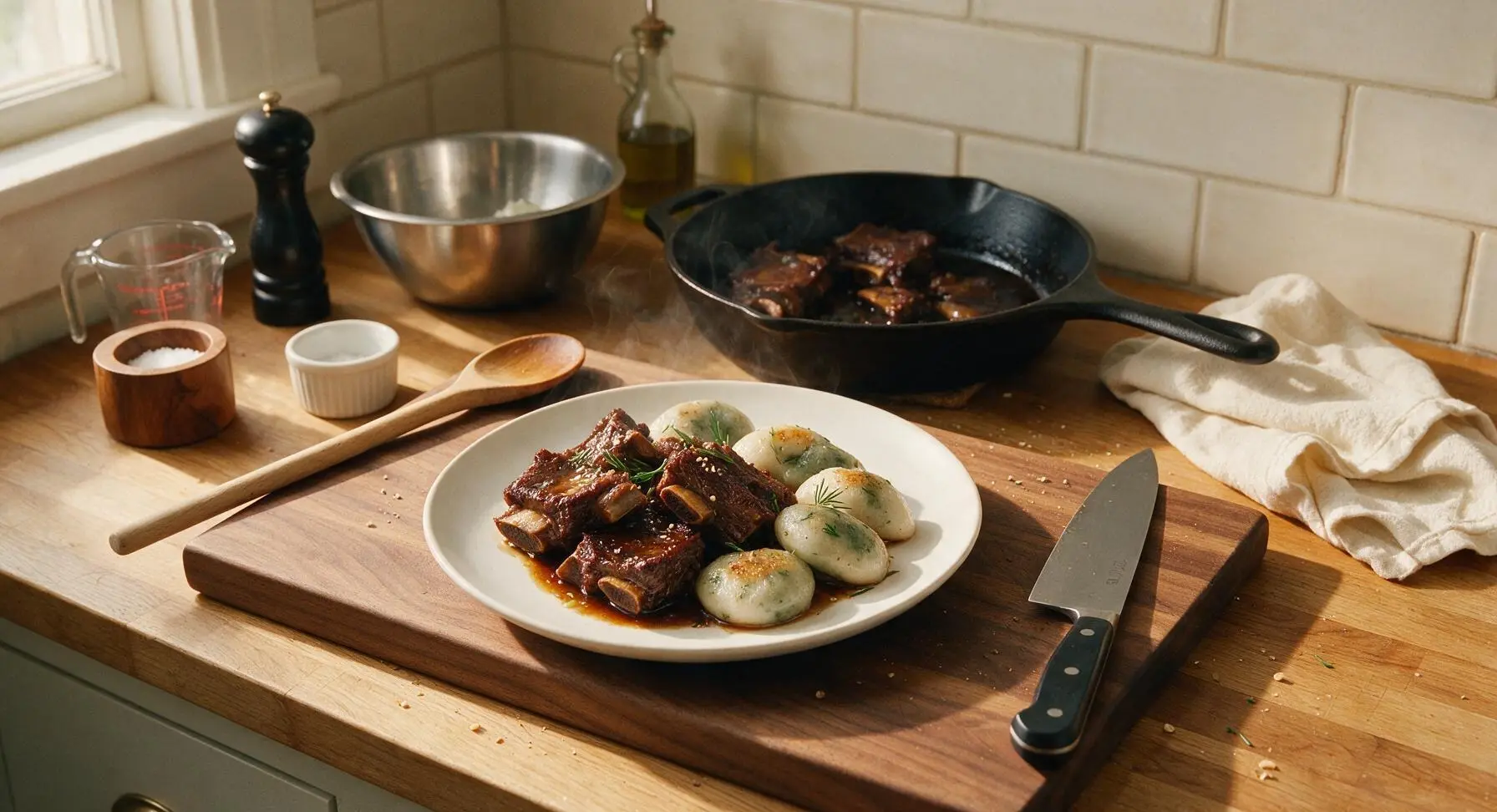
Tender soy-glazed Korean braised short ribs paired with chewy pine-scented songpyeon rice cakes, a cozy autumn family dish balancing sweet, savory, and nutty notes.

Ingredients
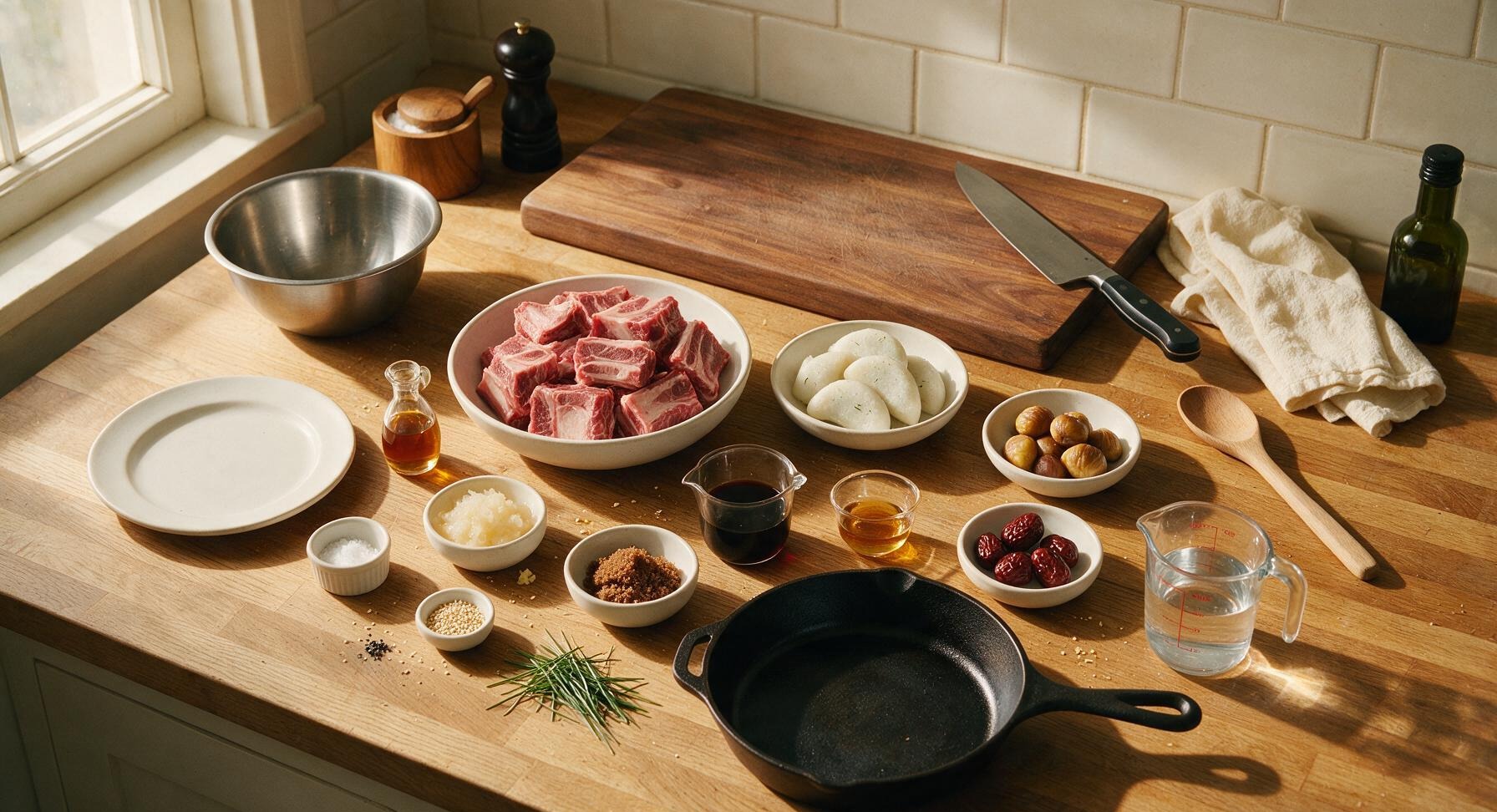
Bone-in beef short ribs (cross-cut into 5cm pieces) 1kg
Pine-flavored white songpyeon (half-moon rice cakes) 200g (approx 8 pieces)
Low-sodium soy sauce 120ml
Mirin 60ml
Grated Korean pear (strained, pulp removed) 100g (1/2 medium pear)
Dark brown sugar 2 tbsp (25g)
Minced garlic 20g (4 cloves)
Grated fresh ginger 5g (1 tsp)
Peeled roasted chestnuts 80g (8 pieces)
Pitted dried Korean jujubes (dates) 4 pieces (20g)
Toasted sesame oil 1 tbsp (15ml)
Toasted sesame seeds 1 tsp (3g)
Ground black pepper 1 tsp (2g)
Fresh pine needles 5g
Cold water 500ml

Steps

1

Soak ribs to draw blood

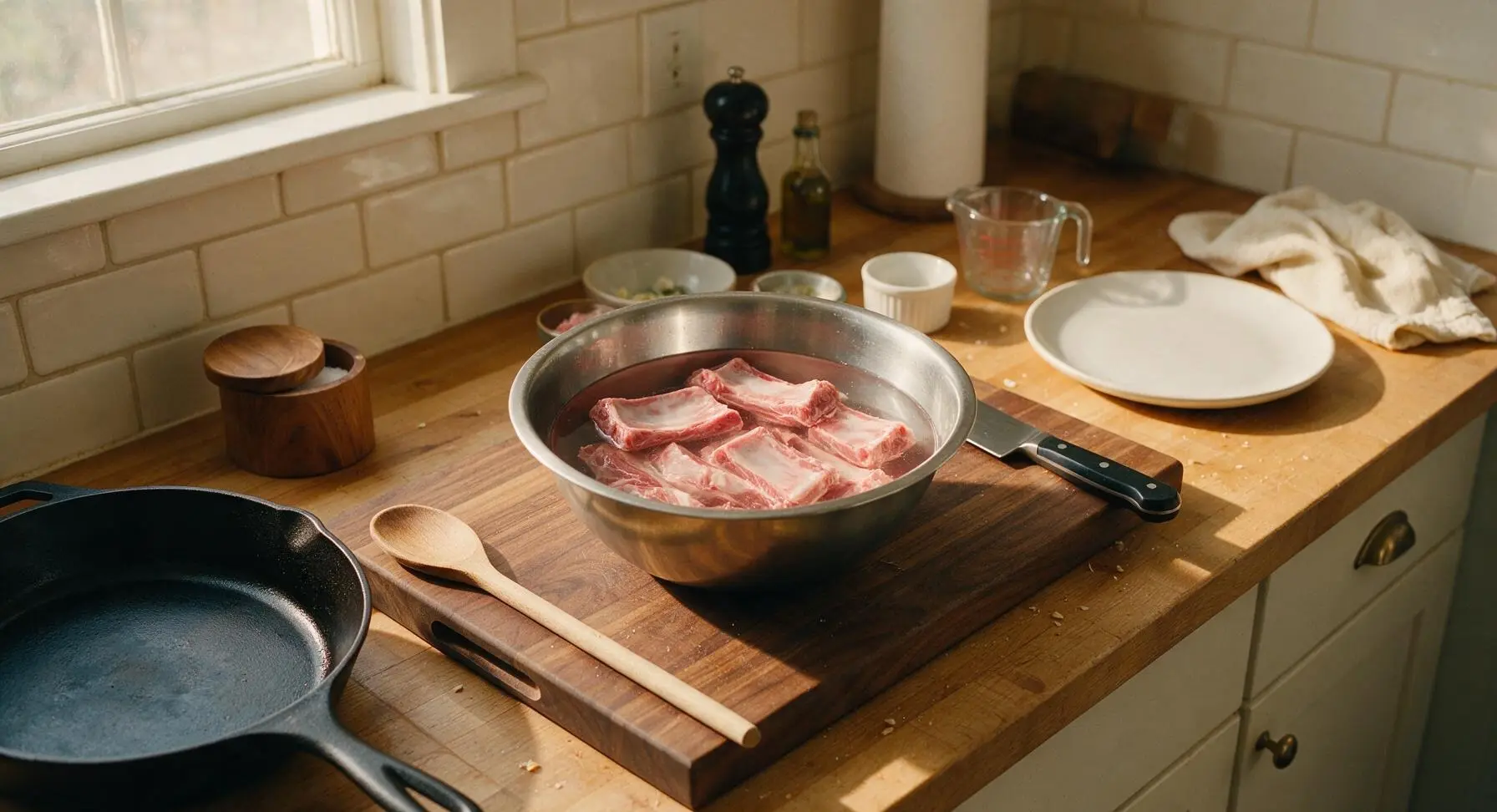
Place the short ribs in the medium stainless steel mixing bowl, cover completely with cold water, and let soak for 20 minutes at room temperature, changing the water once after 10 minutes. This step leaches out excess blood and myoglobin to prevent cloudy, metallic-tasting braising liquid. Drain the ribs fully after soaking, and pat dry thoroughly with paper towels.
Step 1
step1:Soak ribs to draw blood
2

Sear ribs for deep crust

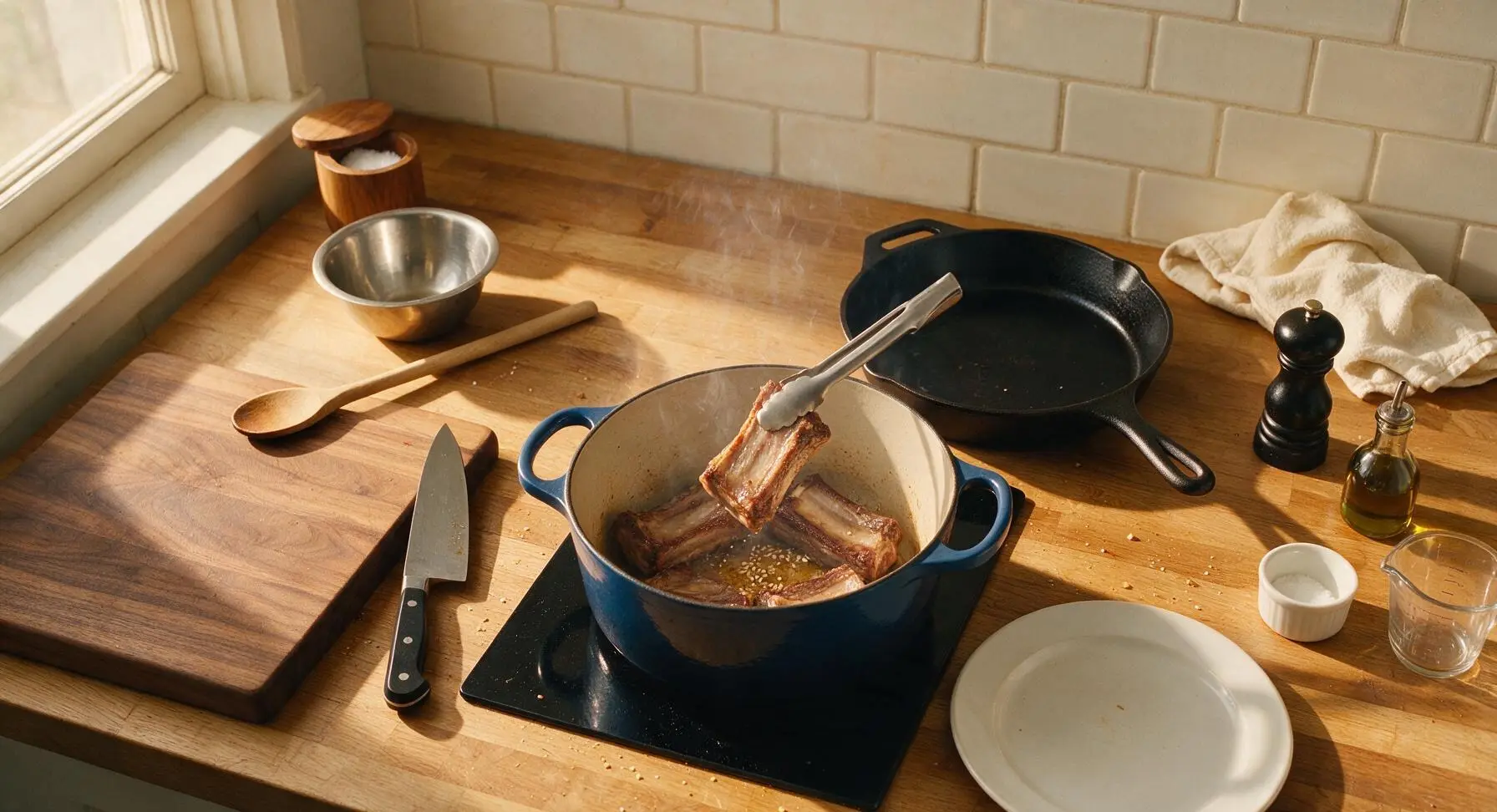
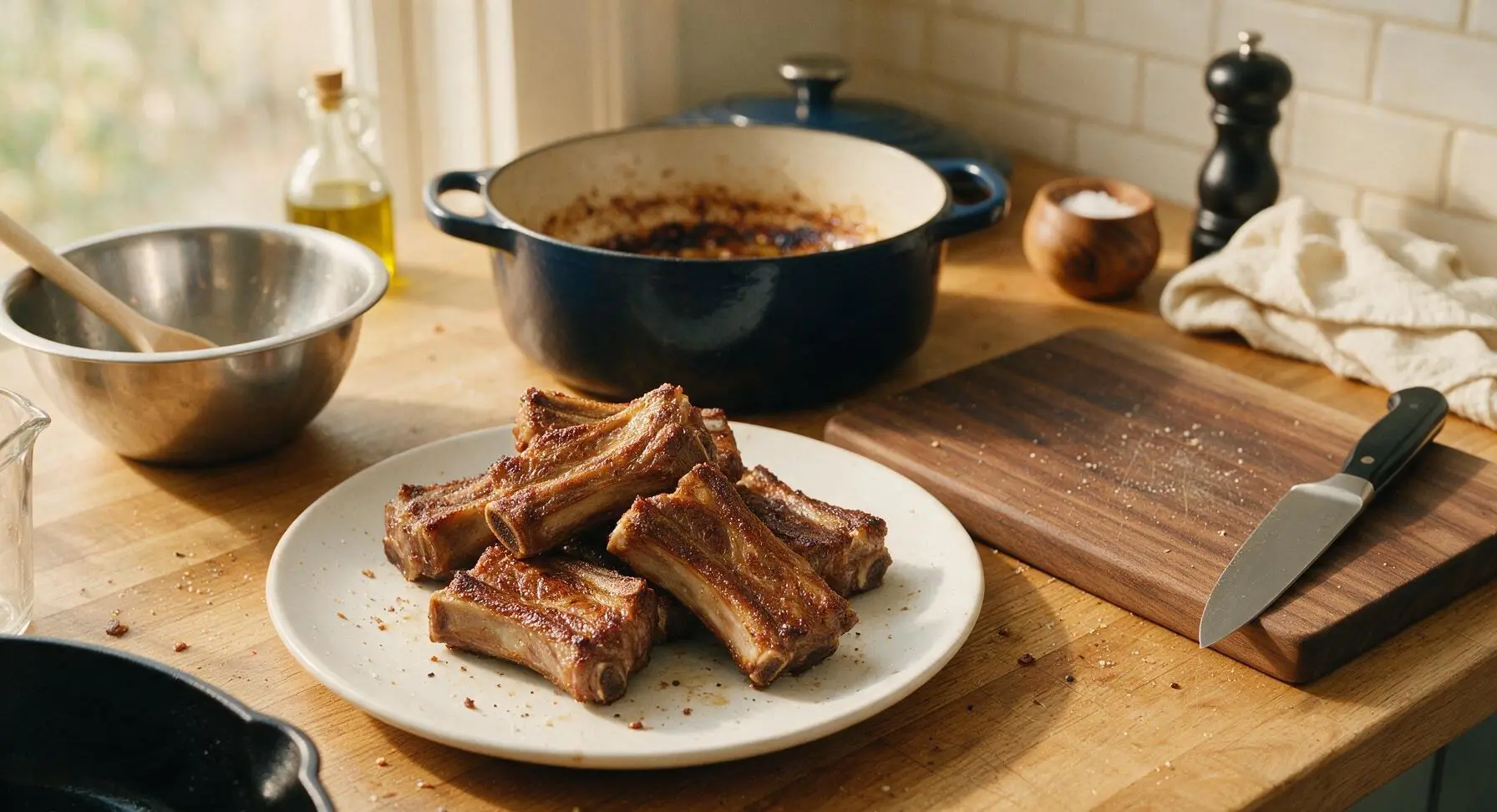
Place the indigo enameled Dutch oven over medium-high heat, add 1 teaspoon of toasted sesame oil. Working in 2 batches to avoid crowding the pan (which causes steaming instead of searing), sear the dried short ribs on all cut sides for 2-3 minutes per side, until a deep golden-brown crust forms on every surface. Use the silicone-tipped tongs to flip ribs carefully to avoid splattering. Transfer seared ribs to a clean plate once browned.
Step 2
step2:Sear ribs for deep crust
Step 2
step2:Sear ribs for deep crust
3

Mix braising sauce base

In the now-empty stainless steel mixing bowl, whisk together the low-sodium soy sauce, mirin, strained grated pear, dark brown sugar, minced garlic, grated ginger, ground black pepper, and remaining toasted sesame oil until the sugar is fully dissolved. The finished sauce will be a deep amber-brown color with a balanced sweet-savory aroma.
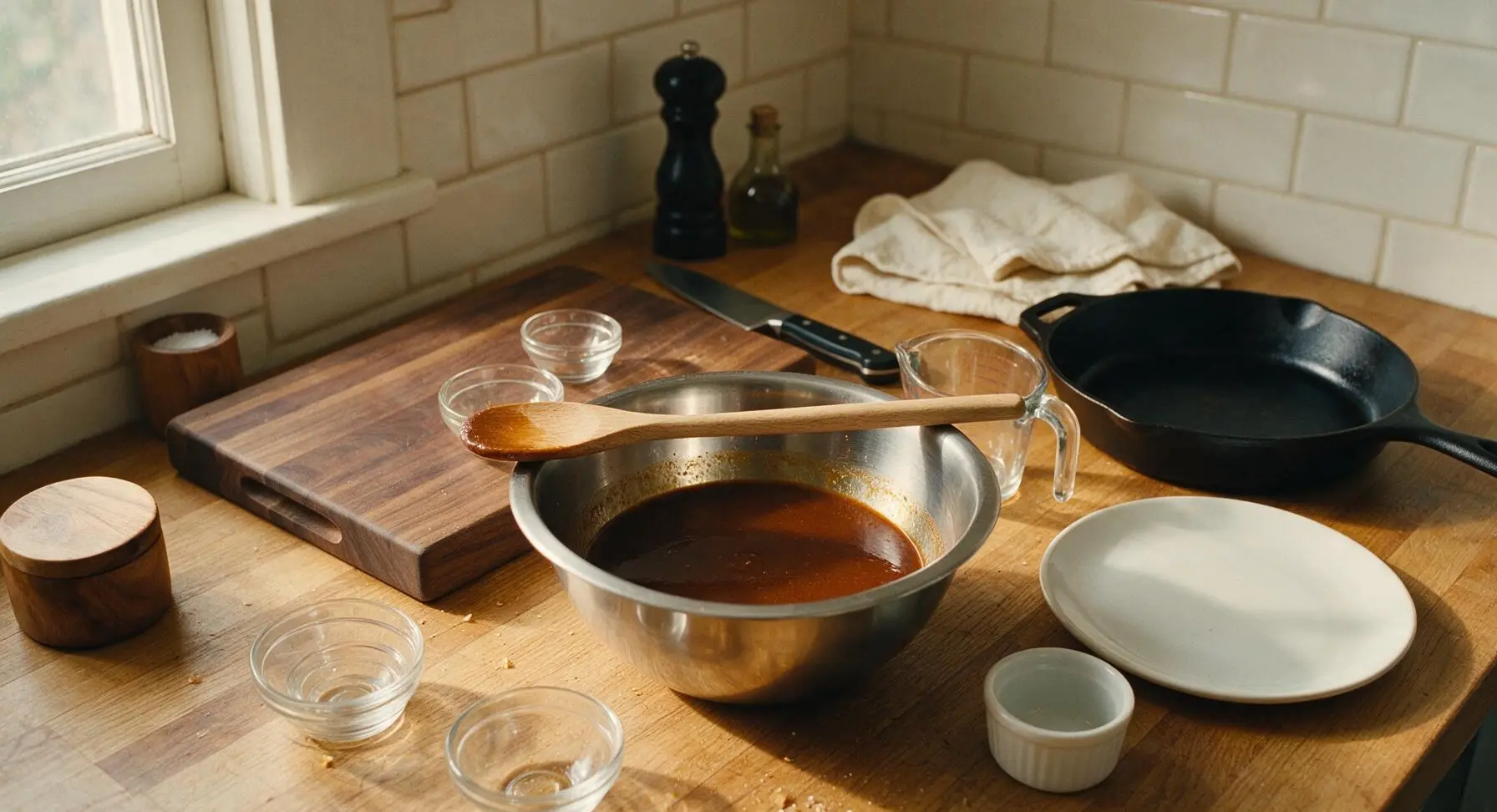
Step 3
step3:Mix braising sauce base
4

Simmer ribs in braise

Return all seared ribs to the Dutch oven, pour the mixed braising sauce over top, add 500ml cold water, and drop in half the fresh pine needles to infuse subtle pine flavor that matches the songpyeon. Bring the liquid to a gentle boil over medium heat, then reduce heat to low, cover with the tight-fitting lid, and simmer for 1 hour 15 minutes. Maintain a soft, quiet simmer (not a rolling boil) to keep meat tender rather than tough.
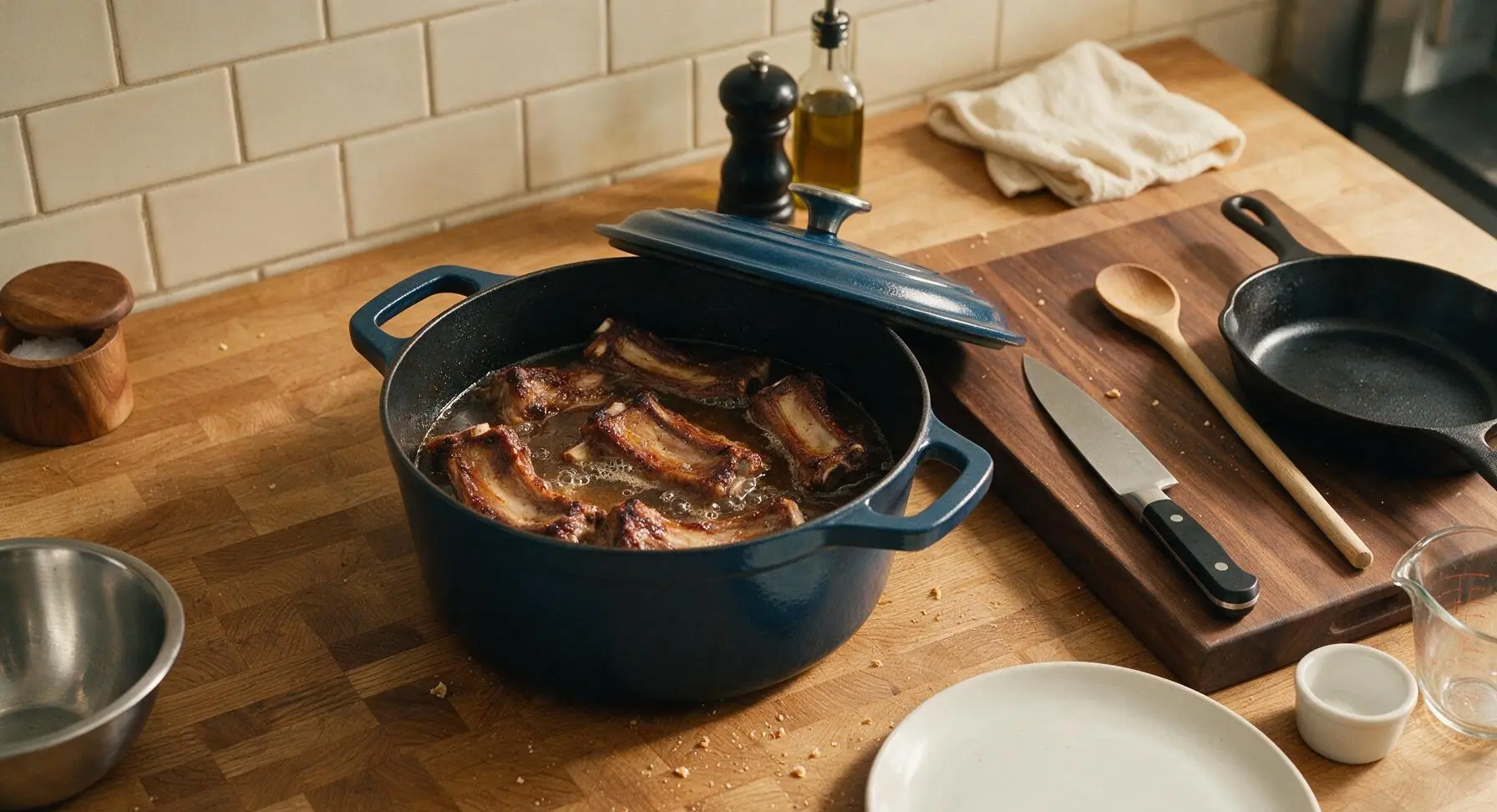
Step 4
step4:Simmer ribs in braise
5

Skim impurities, add aromatics

After 45 minutes of covered simmering, use the fine-mesh stainless steel skimmer to remove any grey foamy impurities or rendered excess fat that rises to the surface of the braising liquid. Add the peeled roasted chestnuts and pitted jujubes to the pot, stir gently with the beech wood spoon to submerge them, re-cover the pot, and continue simmering for the remaining 30 minutes.
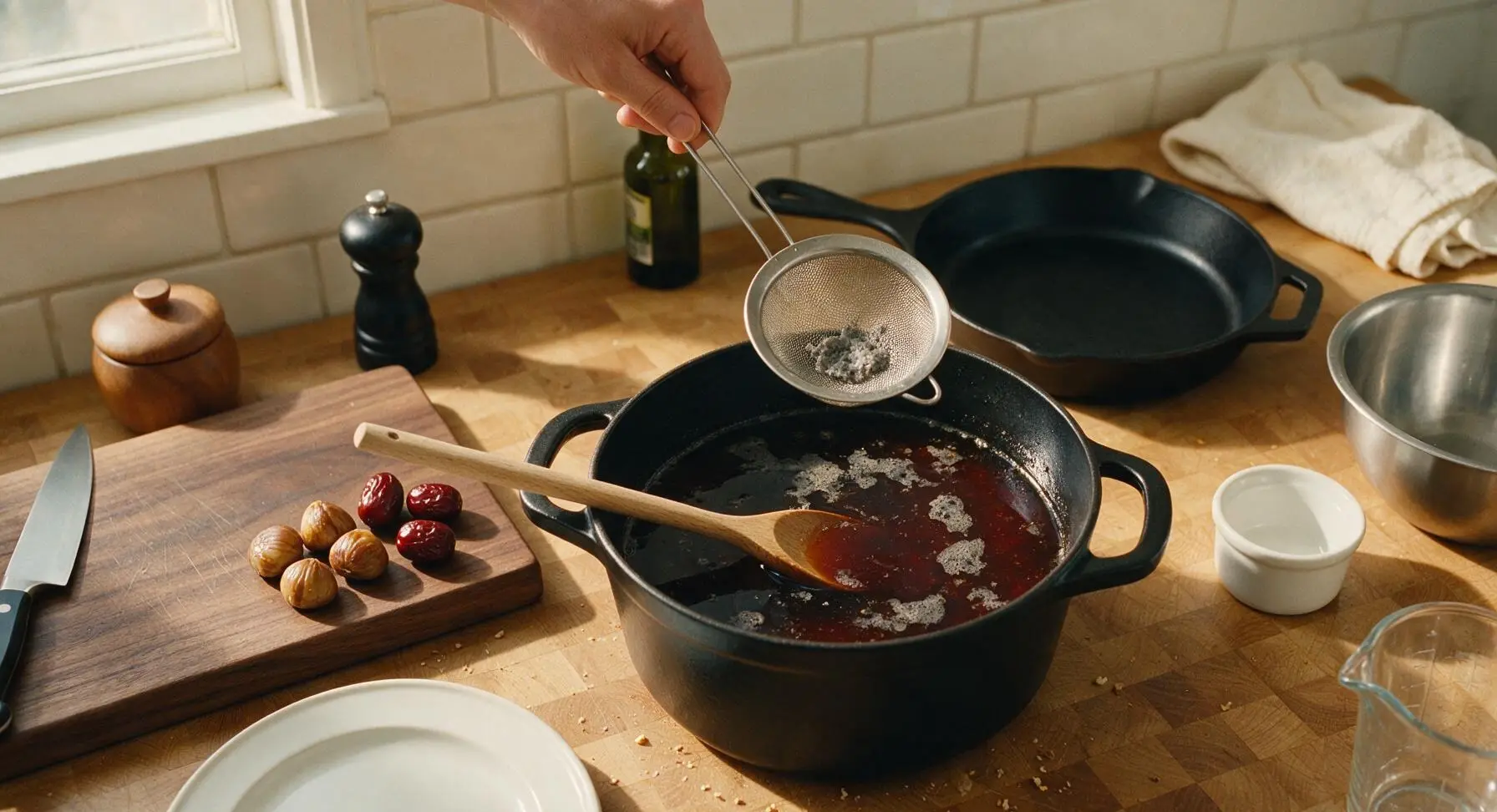
Step 5
step5:Skim impurities, add aromatics
6

Nestle songpyeon in glaze

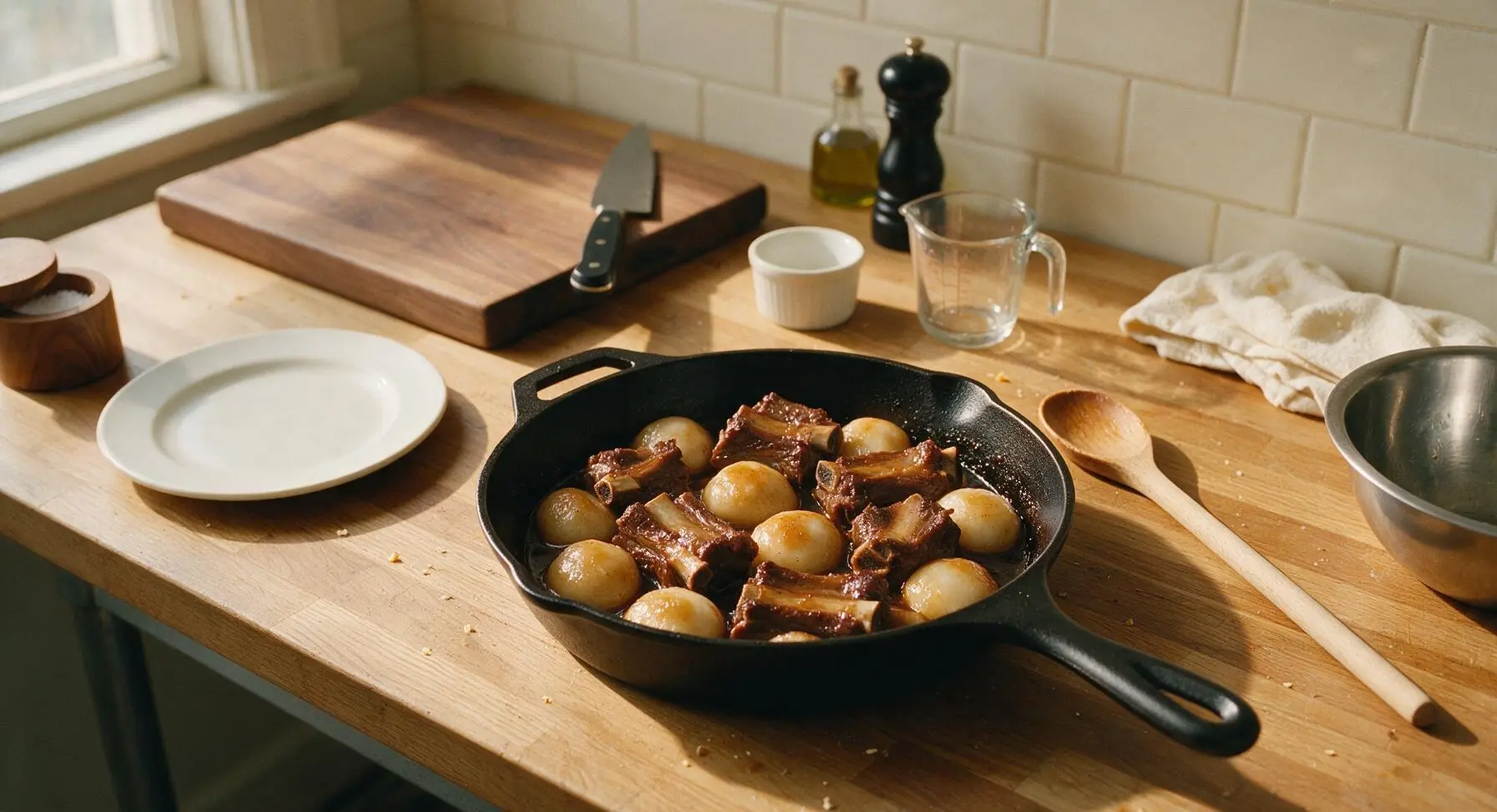
After the full 1 hour 15 minutes of braising, test rib tenderness with a fork: meat should pierce easily and pull slightly away from the bone. Gently nestle the songpyeon rice cakes into the braising liquid in the gaps between ribs, spooning a small amount of glaze over each rice cake to coat. Cover and simmer for an additional 8 minutes, until songpyeon is chewy and heated through, and the braising liquid has reduced by roughly one third.
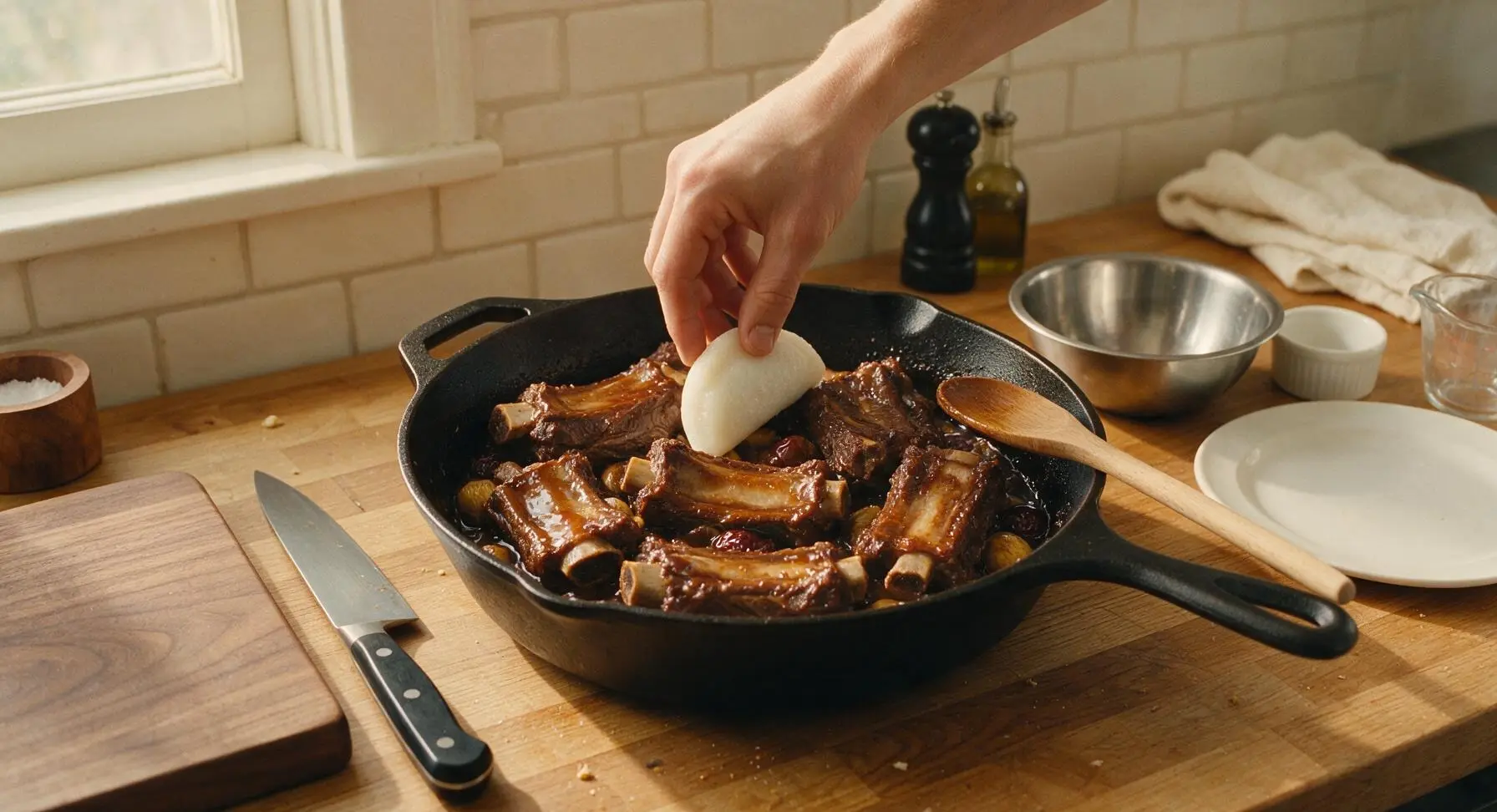
Step 6
step6:Nestle songpyeon in glaze
Step 6
step6:Nestle songpyeon in glaze
7

Reduce glaze to glossy coat

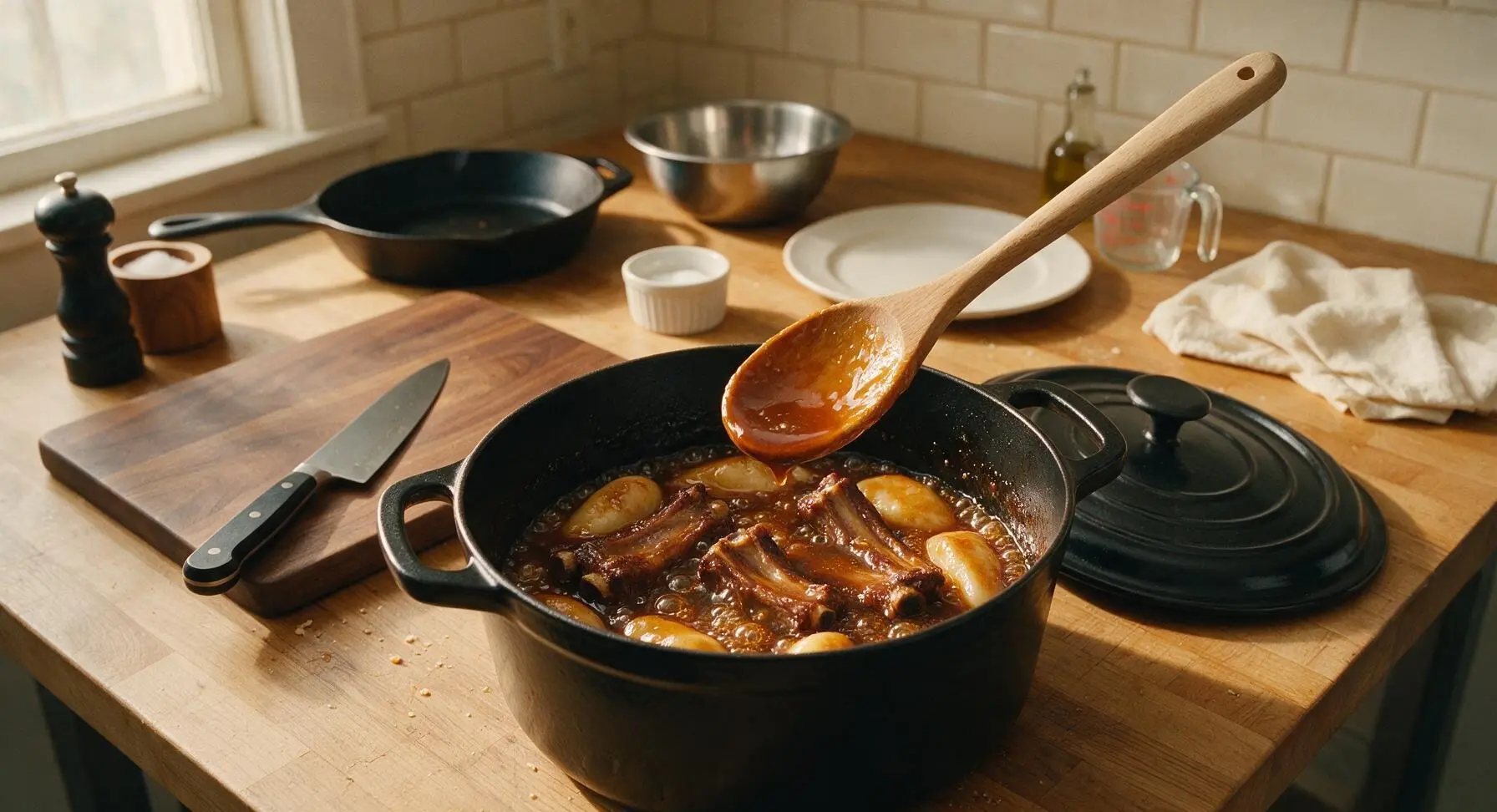
Remove the Dutch oven lid, turn heat up to medium, and simmer the ribs and songpyeon uncovered for 3-4 minutes, basting continuously with the beech wood spoon, until the glaze thickens enough to coat the back of the spoon without running off. Turn off the heat, and discard the spent pine needles from the pot.
Step 7
step7:Reduce glaze to glossy coat
8

Plate and garnish warm

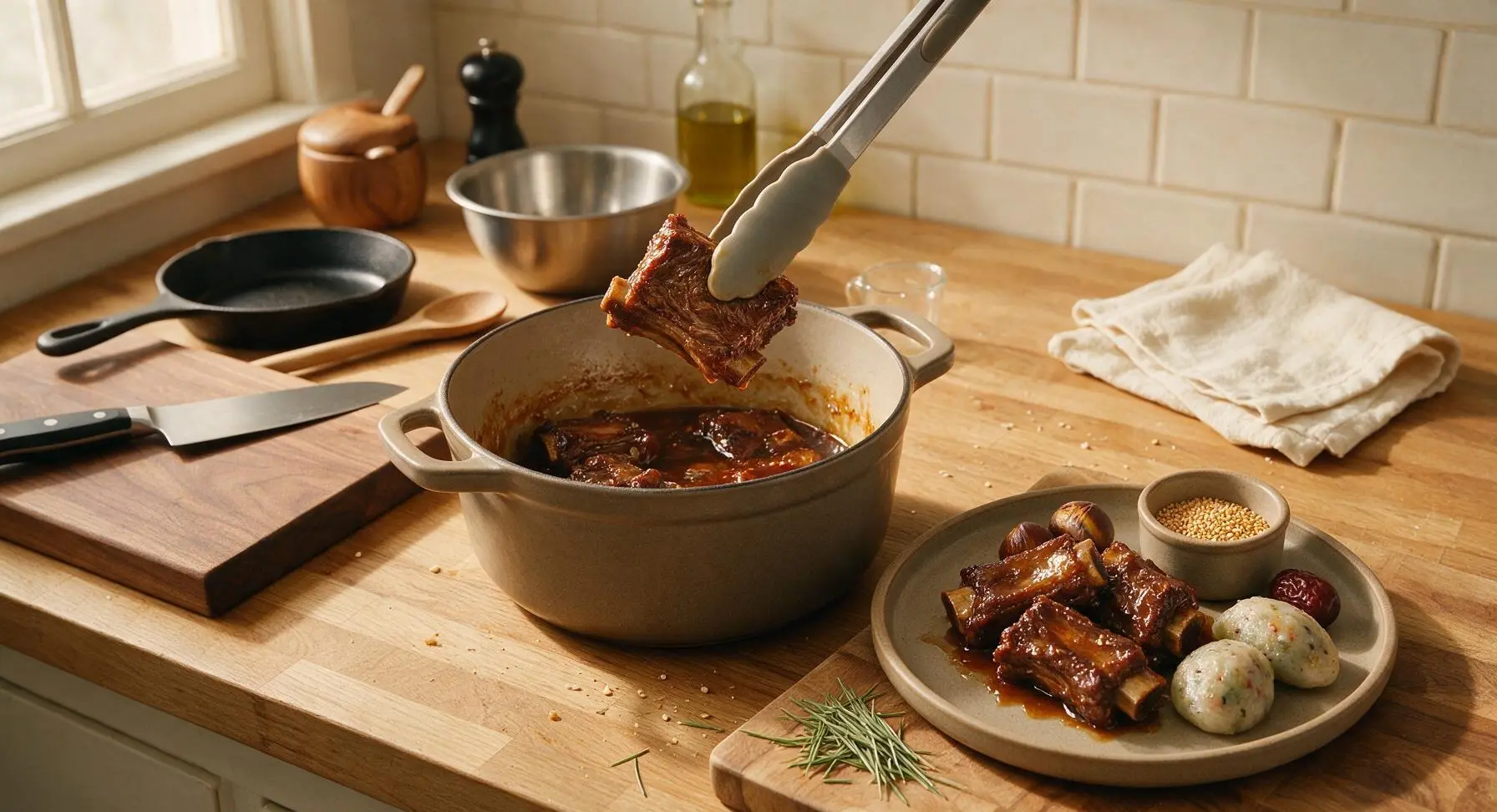
Use the silicone-tipped tongs to arrange 3 short rib pieces per taupe stoneware dinner plate, tucking 2 songpyeon, 2 chestnuts, and 1 jujube alongside each serving. Drizzle 1 tablespoon of the remaining thick glaze over the top, sprinkle lightly with toasted sesame seeds, and garnish with a single fresh pine needle for a subtle aromatic touch. Serve immediately while warm.
Step 8
step8:Plate and garnish warm

Tips

1.Don’t skip the 20-minute cold water soak for ribs: skipping this step leaves residual blood in the meat, which creates a cloudy, metallic-tasting braising liquid instead of the clear, sweet, glossy glaze that defines this dish.
2.Use frozen songpyeon directly from the freezer without thawing: the 8 minutes of simmering in hot glaze will heat them through perfectly to a chewy texture, while thawing first can make them mushy and fall apart during braising.
3.Strain all fibrous pulp from the grated Korean pear before adding to the sauce: the pear juice alone provides enough natural tenderizing enzymes and sweet fruity flavor, while leftover pulp will make the glaze grainy instead of smooth and glossy.
✨ You May Also Like

Main Course
🍜 United Kingdom

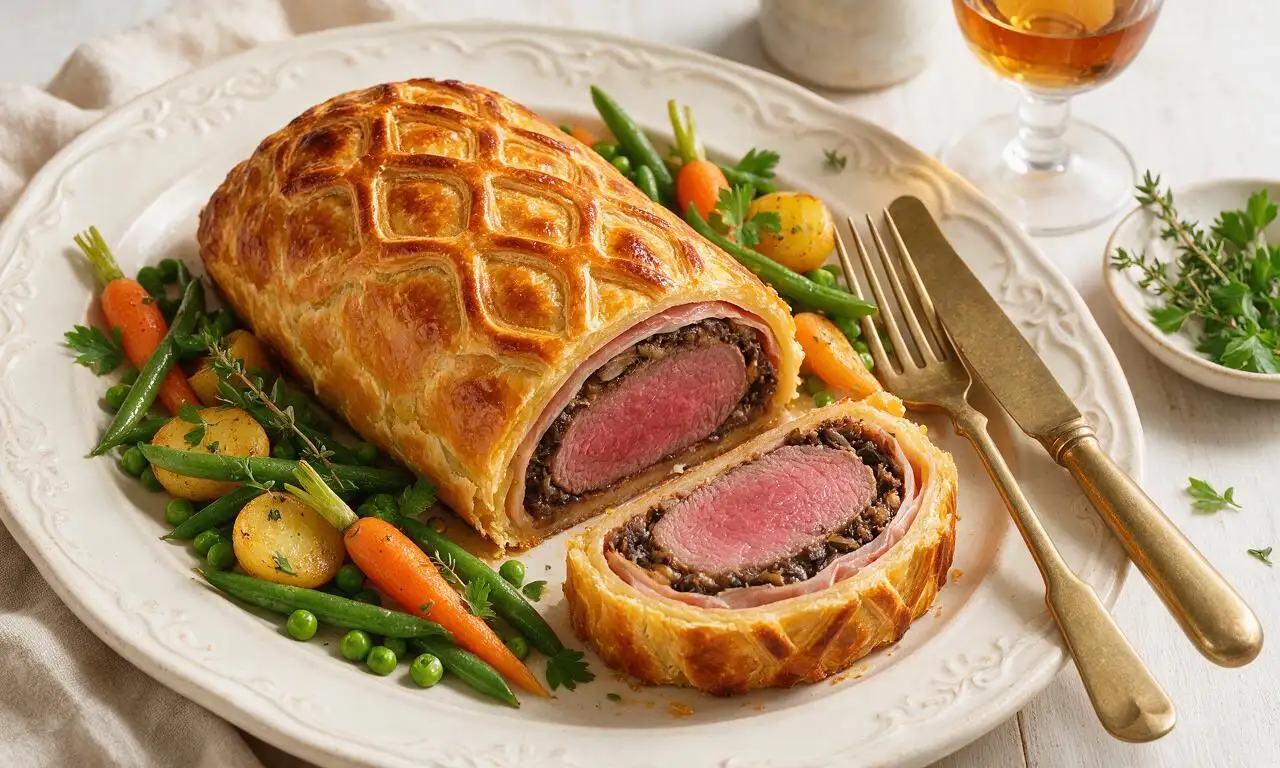
A showstopping classic of tender seared beef, savory mushroom duxelles, and crisp prosciutto wrapped in flaky golden puff pastry, baked to juicy perfection.

⏱️ 2 hours 1Main Course ★ 4.7
Main Course
🍜 India

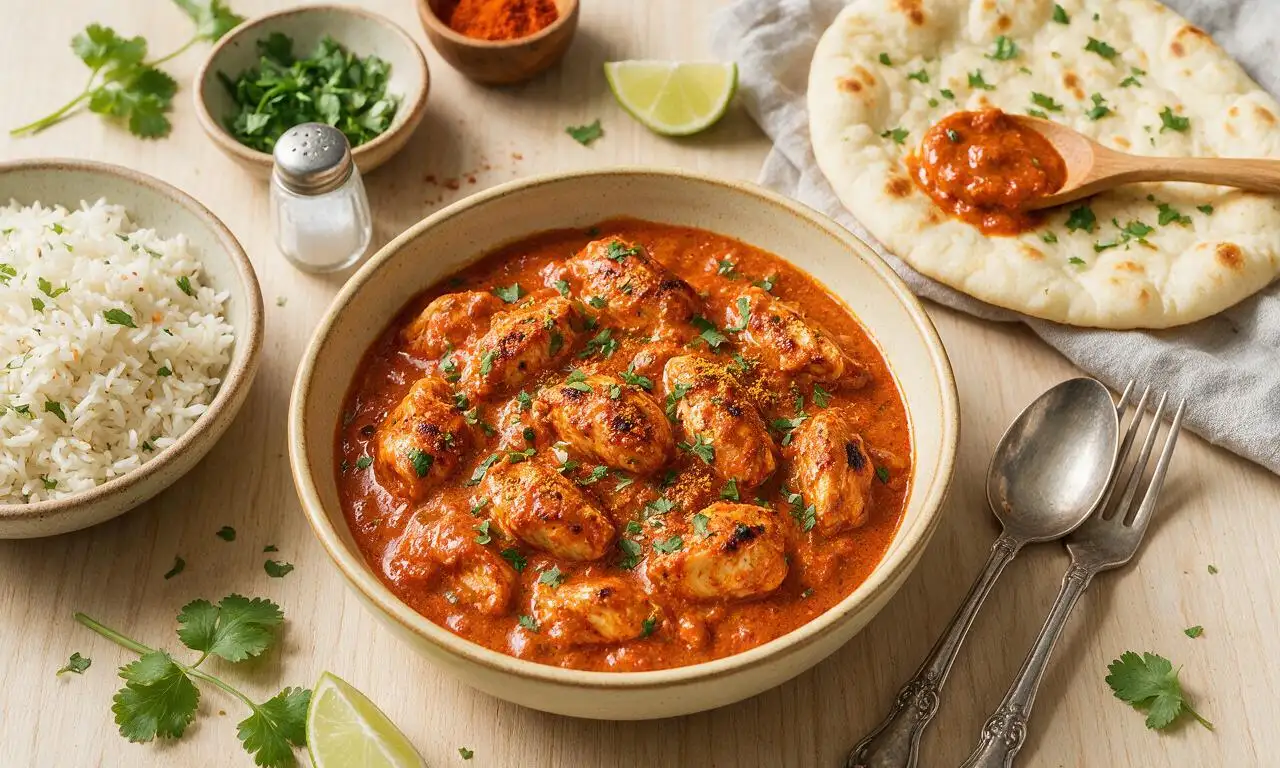
Tender charred marinated chicken simmered in a rich, spiced creamy tomato sauce, this iconic Anglo-Indian curry pairs perfectly with basmati rice or warm naan.

⏱️ 50 minuteMain Course ★ 4.6
Main Course
🍜 Thailand

Classic tangy, sweet, and savory Thai stir-fried rice noodles with shrimp, tofu, and crunchy garnishes, balancing all five core Thai flavor profiles.

⏱️ 30 minuteMain Course ★ 4.5
Main Course
🍜 United Kingdom

Crispy golden beer-battered cod and fluffy double-fried chips, served with tangy tartar sauce and malt vinegar: the timeless, beloved British pub comfort classic.

⏱️ 45 minuteMain Course ★ 4.7
Main Course
🍜 Mexico

Smoky, chile-marinated pork tacos with caramelized pineapple, fresh cilantro, and lime: a beloved classic Mexican street food perfect for casual summer gatherings.

⏱️ 1 hour 45Main Course ★ 4.8
Main Course
🍜 United States

Crunchy Fritos corn chips layered with savory beef chili and melted cheddar, topped with cool, zesty fixings for a beloved, cozy Tex-Mex comfort food.

⏱️ 35 minuteMain Course ★ 4.8

Songpyeon Ribs:Frequently Asked Questions

1.What makes Songpyeon Ribs different from standard Korean braised short ribs (galbi jjim)? ▾
Great question! Unlike classic galbi jjim that uses starchy add-ins like potatoes or chestnuts, this dish pairs tender soy-glazed short ribs with chewy, pine-scented half-moon songpyeon rice cakes. It leans into warm, cozy autumn flavor, balancing the ribs’ rich savoriness with the rice cakes’ subtle nutty pine aroma for a lighter, more aromatic finish.
2.Can I use pre-cut flanken-style short ribs instead of cutting my own 5cm cross-cut pieces? ▾
Absolutely! Pre-cut flanken short ribs work perfectly here as long as they’re roughly 5cm (2 inches) thick, so they hold up through the long braise without falling apart too early. Just avoid ultra-thin ¼-inch flanken cuts meant for Korean BBQ, as those will overcook and turn tough before the braising liquid reduces properly.
3.Do I have to use low-sodium soy sauce for this recipe? ▾
I highly recommend it for full control over the final salt level. Regular soy sauce can make the glaze overly salty once it reduces, especially since mirin and natural Korean pear sweetness already balance the savoriness. If you only have regular soy sauce on hand, cut the total amount by 25% and add a splash more water to the braising liquid to compensate.
4.Where can I find pine-flavored white songpyeon if I don’t have a local Korean market? ▾
Most well-stocked Asian grocery stores carry frozen songpyeon year-round in the Korean frozen food section. If you can’t find pine-infused varieties, plain white songpyeon works too—just add 1 tiny pinch of food-grade pine needle powder (or a clean pine needle bundle during braising, removed before serving) to get that signature subtle pine note.
5.Why do I need to strain the grated Korean pear instead of adding the pulp? ▾
Straining removes fibrous, grainy pear pulp that would make the smooth soy glaze cloudy and add an unpleasant mushy texture as it cooks. The clear pear juice contains natural tenderizing enzymes that break down tough rib connective tissue, plus delicate fruity sweetness that doesn’t overpower the dish, without textural issues from leftover pulp.
6.Can I substitute mirin with another ingredient if I don’t have it? ▾
Yes, you have two easy, reliable swaps. For a non-alcoholic option, use 2 parts white grape juice mixed with 1 part rice vinegar to mimic mirin’s mild sweet-tart profile. If you don’t mind cooking with alcohol, dry sherry mixed with ½ teaspoon of sugar per tablespoon works too—avoid corn syrup-sweetened cooking wines, as they’ll make the glaze cloying.
7.How long do I need to braise the ribs to get them perfectly tender? ▾
Plan for 1 hour and 15 minutes of gentle, covered braising over low heat after you bring the liquid to a simmer. Start checking at the 1 hour mark: the ribs are done when you can pierce the thickest part with a fork with minimal resistance, but the meat still clings to the bone so it won’t fall apart when you add the rice cakes.
8.Do I need to soak the short ribs in water before braising? ▾
I strongly recommend soaking them in cold water for 1 to 2 hours, changing the water every 30 minutes, to draw out excess blood from the bone. This step cuts down on gamey, metallic aftertaste some short ribs have, and keeps the braising glaze clear and glossy instead of murky from floating blood scum during cooking.
9.When do I add the songpyeon to the dish so they don’t turn mushy? ▾
Add frozen (no need to thaw!) songpyeon during the last 12 to 15 minutes of braising. If you add them any earlier, they’ll absorb too much braising liquid, break apart, and turn gummy instead of staying chewy and distinct. Give the pot a gentle stir after adding them to make sure they’re coated in glaze without sticking to the bottom.
10.Can I make this dish ahead of time for a family gathering? ▾
Absolutely, and it actually tastes better the next day! Braise the ribs fully, let them cool completely, and store covered in the fridge for up to 3 days. Wait to add the songpyeon until you’re reheating the ribs on the stovetop over low heat—add them once the glaze is bubbling, cook 15 minutes until chewy, then serve right away.
11.My songpyeon stuck together when I added them to the pot—what did I do wrong? ▾
That’s a super common misstep! Most people add frozen songpyeon straight from the bag without separating clumps first, or don’t give the pot a gentle stir 2 minutes after adding them. To prevent sticking, gently pry apart frozen clumps before dropping them in the glaze, stir once to coat each cake, then cover to cook without over-stirring.
12.Is there a non-beef substitute for the short ribs if I don’t eat red meat? ▾
Yes! Bone-in, skin-on chicken thighs make a fantastic swap—just reduce total braising time to 40 minutes so the chicken doesn’t dry out, since it cooks much faster than beef short ribs. You can also use bone-in pork country-style ribs, which have a similar rich, marbled texture, and braise them for the full 1 hour 15 minutes for tender results.
13.Why did my braising glaze turn out too thin? ▾
Thin glaze almost always comes from cooking ribs on heat that’s too high, which makes liquid evaporate too fast before ribs are tender, or skipping the final uncovered reduction step. After ribs and songpyeon are done, crank heat to medium, remove the lid, and simmer 3 to 5 minutes, stirring gently, until glaze coats the back of a spoon thickly.
14.Can I use fresh songpyeon instead of frozen? ▾
You can, but be sure to adjust the cooking time! Fresh, homemade or store-bought fresh songpyeon only needs 6 to 8 minutes in the braising liquid at the end, since they’re already softer than frozen varieties. Keep a close eye on them—they’re done when chewy all the way through with no starchy center, but haven’t split open or lost their half-moon shape.
15.What side dishes pair best with Songpyeon Ribs? ▾
Stick to light, fresh sides to cut through the rich, sweet-savory glaze. Quick pickled radish, lightly seasoned spinach namul, crisp steamed napa cabbage, and a bowl of fluffy white rice are classic, well-balanced pairings. Skip heavy, creamy sides, as they’ll compete with the dish’s pine and soy notes and make the meal feel overly heavy.
16.Do I need to peel the Korean pear before grating it? ▾
Yes, definitely. The peel is tough and fibrous, and even if you strain the juice, small bits of peel can slip through your strainer and add a bitter, scratchy texture to the smooth glaze. Grate peeled pear flesh on the smallest holes of a box grater, then pour through a fine-mesh sieve, pressing gently to extract all tenderizing juice before discarding pulp.
17.Can I add other vegetables to the braise like I do with regular galbi jjim? ▾
You can, but keep additions minimal so you don’t overpower the pine songpyeon flavor. I recommend adding 1-inch chunks of daikon or carrot during the last 30 minutes of braising, so they cook through without turning mushy. Skip strongly flavored veggies like garlic scapes or kimchi, as they’ll clash with the subtle, nutty pine aroma of the rice cakes.
18.How do I reheat leftovers without making the songpyeon tough? ▾
Reheat leftovers low and slow on the stovetop, not in the microwave. Add 1 to 2 tablespoons of water or extra low-sodium soy sauce per serving to thin the chilled, thickened glaze, then cover and heat over medium-low for 8 to 10 minutes, stirring once gently, until ribs are warmed through and songpyeon are soft and chewy again. Microwaving makes rice cakes tough and rubbery fast.
19.What cut of short ribs should I avoid for this recipe? ▾
Skip boneless short ribs, as they lack the deep, rich bone-in flavor that makes the braising glaze taste so rounded, and they tend to shrink a lot during cooking. Also avoid paper-thin cross-cut ribs meant for tabletop grilling, as they’ll overcook and turn stringy long before the braise develops that deep, caramelized soy flavor. Stick to 5cm thick bone-in cross-cut pieces.
20.Is this dish spicy? Can I add heat if I prefer spicier food? ▾
Traditional Songpyeon Ribs are not spicy at all—they’re balanced to highlight sweet, savory, and subtle pine notes, which makes them super kid-friendly for family meals. If you love heat, add 1 to 2 teaspoons of gochugaru (Korean red chili flakes) to the braising liquid at the start, or drizzle a tiny bit of gochujang glaze over top right before serving, so you don’t cover up the pine flavor.

Comments (15)

yesterday

OMG these Songpyeon Ribs were the star of our Chuseok family dinner last night! I was nervous the sweet pine flavor would be too much for my picky 7 and 9 year old, but they went back for seconds AND thirds. The glaze is so sticky and perfect, 10/10 will be making this for our next neighborhood potluck too!

2 hours ago

Wait did you make the songpyeon from scratch too or use store bought? I’m thinking of making this for our office potluck next week and trying to cut down on prep time!

30 minutes ago

Great question! Store-bought frozen songpyeon works perfectly here if you’re short on time — just thaw it for 20 minutes before adding it to the braise in the last 10 minutes of cook time. No one will know the difference!

2 days ago

Tried this for Sunday meal prep this week, and wow what a game changer. I was worried the medium difficulty rating meant I’d mess it up, but the steps were super straightforward. Only thing is my ribs came out a tiny bit tougher than I wanted — any tips for next time?

yesterday

So glad you gave it a shot! Tough ribs usually mean they needed a little longer braising at a slightly lower temp — try dropping your oven to 300°F instead of 325 and adding 10 extra minutes covered, that’ll get them fall-off-the-bone tender every time.

3 days ago

SO good!!! I’ve been wanting to make songpyeon ribs ever since I saw them in that one K-food variety show, and this recipe did not disappoint. The sesame seed garnish at the end is non-negotiable, don’t skip it!!!

1 week ago

Made these for my wife’s birthday dinner and she said it’s better than the ones we had at the Korean restaurant in Phoenix last month. Win for me! I subbed honey for the rice syrup because that’s what I had in the pantry, worked like a charm.

5 days ago

Oh thanks for the honey sub tip! I’m allergic to rice syrup so I’ve been nervous to try this, now I know I can swap it no problem.

5 days ago

Wait, 1 hour 40 minutes cook time? Is there a way to speed this up for a weeknight dinner? I don’t get home from class until 6 and would love to make this without eating at 8pm lol

3 days ago

I did the braise in my Instant Pot on high pressure for 25 minutes instead of oven braising, cut the total cook time down to 45 minutes total! The songpyeon still held up great when I tossed it in at the end.

2 days ago

Great Instant Pot tip! If you go that route, just make sure to do a quick pressure release and reduce the glaze on saute mode for 5 minutes after adding the songpyeon to get that sticky, thick coating.

2 weeks ago

Threw these on the smoker for the first hour instead of oven braising and oh my GOD the smoke level paired with the sweet piney songpyeon glaze is insane. If you have a smoker, 100% give that a shot. Game. Changer.

2 hours ago

Quick question — I can’t find fresh pine needles anywhere near me in Atlanta. Can I skip that part, or is there a good substitute? Really don’t want to miss out on that signature flavor!

30 minutes ago

No worries if you can’t find fresh pine needles! You can use 1/4 teaspoon of pine needle extract (found at most Asian grocery stores or online) or even a pinch of crushed pine nuts mixed into the glaze for a similar earthy, resinous note. It’ll still taste incredible without the fresh needles!

1 week ago

My kids are usually weird about any food that’s “too chewy” but they devoured these! I used the songpyeon filled with red bean like the recipe suggested and the little sweet bites inside the savory ribs were such a fun surprise for them. We’re adding this to our weekly rotation.

5 days ago

Wait do you think this would work with vegan short ribs? I’ve been looking for fun vegan Korean recipes to make for my partner who’s plant based.

3 days ago

I made this with store-bought vegan short ribs last week and it was chef’s kiss! Just cut the braise time down by 20 minutes since the vegan ribs don’t need as long to get tender.

2 weeks ago

Made these for our Ohio State tailgate last weekend and people were begging me for the recipe before halftime. I pre-cooked the ribs the night before and reheated them on the grill with the songpyeon, and they held up perfectly. 10/10 for game day food.

1 week ago

Bro that is such a good call pre-cooking them the night before! I always run out of time on tailgate mornings, definitely stealing that hack for our next game.

5 minutes ago

I messed up the first batch because I added the songpyeon too early and they totally dissolved into the glaze lmao. Second batch I waited until the last 10 minutes like the recipe said and they were perfect. Don’t be like me, read the instructions all the way through first!!

1 week ago

This tastes exactly like my grandma’s songpyeon ribs that she makes for Chuseok every year!!! I’ve been trying to replicate her recipe for years and never got the glaze ratio right. This is spot on, I cried a little when I took the first bite. Thank you so much for sharing this!

5 days ago

This comment means the world to us! This recipe is actually adapted from my own mom’s Chuseok recipe, so it makes me so happy to hear it feels like home for you. So glad you loved it!

2 days ago

First time making ribs ever and these turned out insane??? I was so intimidated by the medium difficulty rating but the step by step instructions were so easy to follow. My roommate said it’s the best thing I’ve ever cooked. Only note: my glaze was a little runny, any fixes?

yesterday

I had the same issue my first time! Just take the ribs and songpyeon out of the pan when they’re done, then crank the heat up to high and simmer the glaze for 3-4 minutes stirring constantly until it thickens up, then pour it back over. Works every time!

2 hours ago

Perfect tip from Riley! Runny glaze usually just needs a few minutes of uncovered simmering to reduce down — make sure you don’t have the lid on when you’re thickening it, or the steam will keep it thin.

1 week ago

Took these to a friend’s potluck in Capitol Hill last weekend and every single person asked for the recipe. I added a little extra gochujang to the glaze for a tiny kick and it was *chef’s kiss*. If you like a little heat, don’t sleep on that addition.

5 days ago

How much extra gochujang did you add? I love spicy food but don’t want to overpower the pine flavor from the songpyeon!

30 minutes ago

Made these after a long day hiking last weekend and they were the perfect comfort food. The sweet and savory balance is so on point, I didn’t even need to add extra salt or soy sauce like I usually do with rib recipes. Will be making this all fall.

just now

I was worried 1 hour 40 minutes was too long for a weeknight but I did most of the braising while I helped my kid with homework, and it was totally doable! The ribs were fall off the bone tender, and the little chewy songpyeon bits were such a fun textural change from regular ribs. SO good.