
Turkey Caldo de Pollo con Bay Leaf
intro
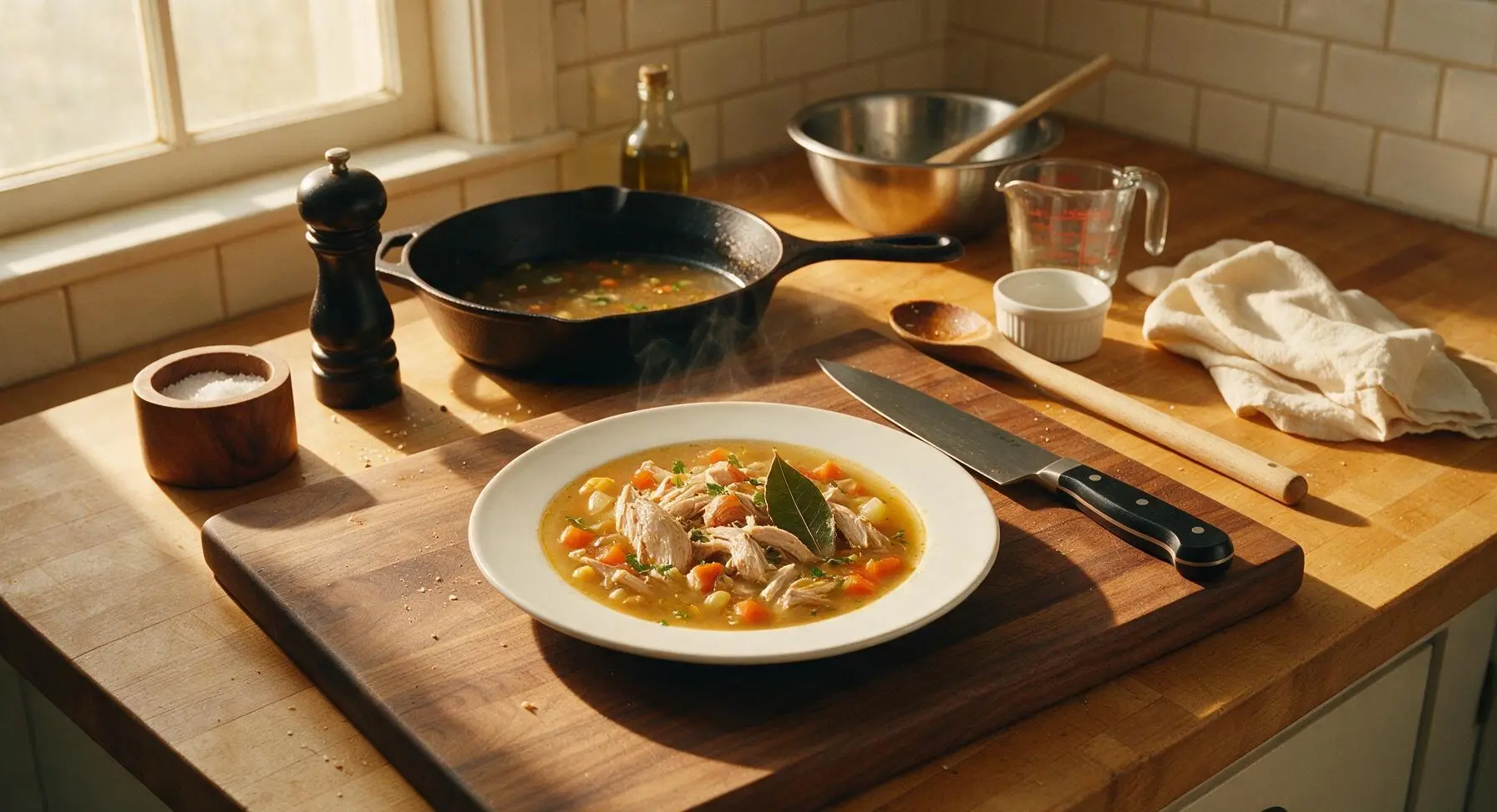
A comforting, bright take on classic Mexican caldo de pollo, slow-simmered with tender turkey, hearty vegetables, and aromatic bay leaf for a nourishing cold-weather family meal.
Ingredients
Steps
Prep Turkey and Aromatics
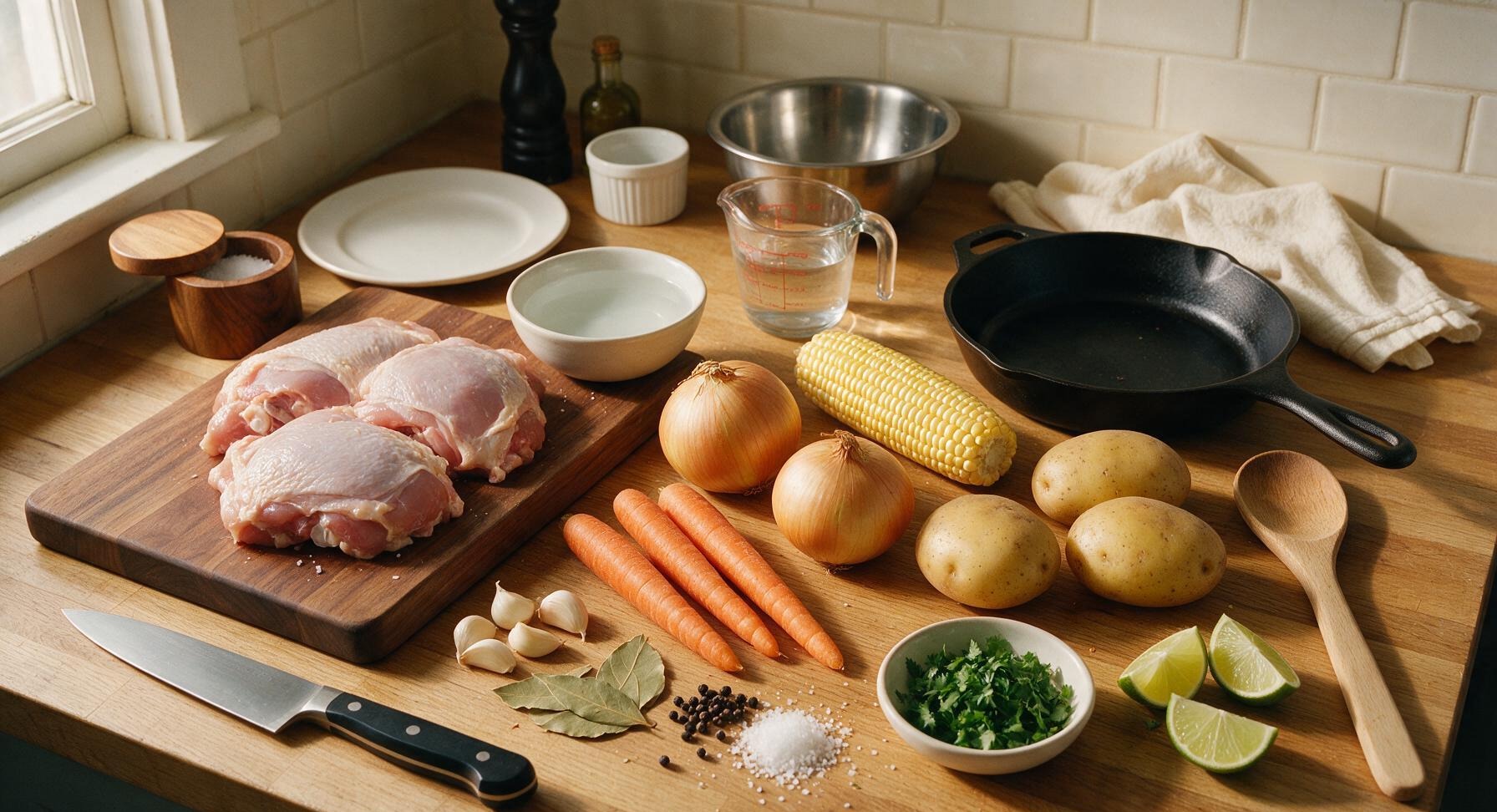
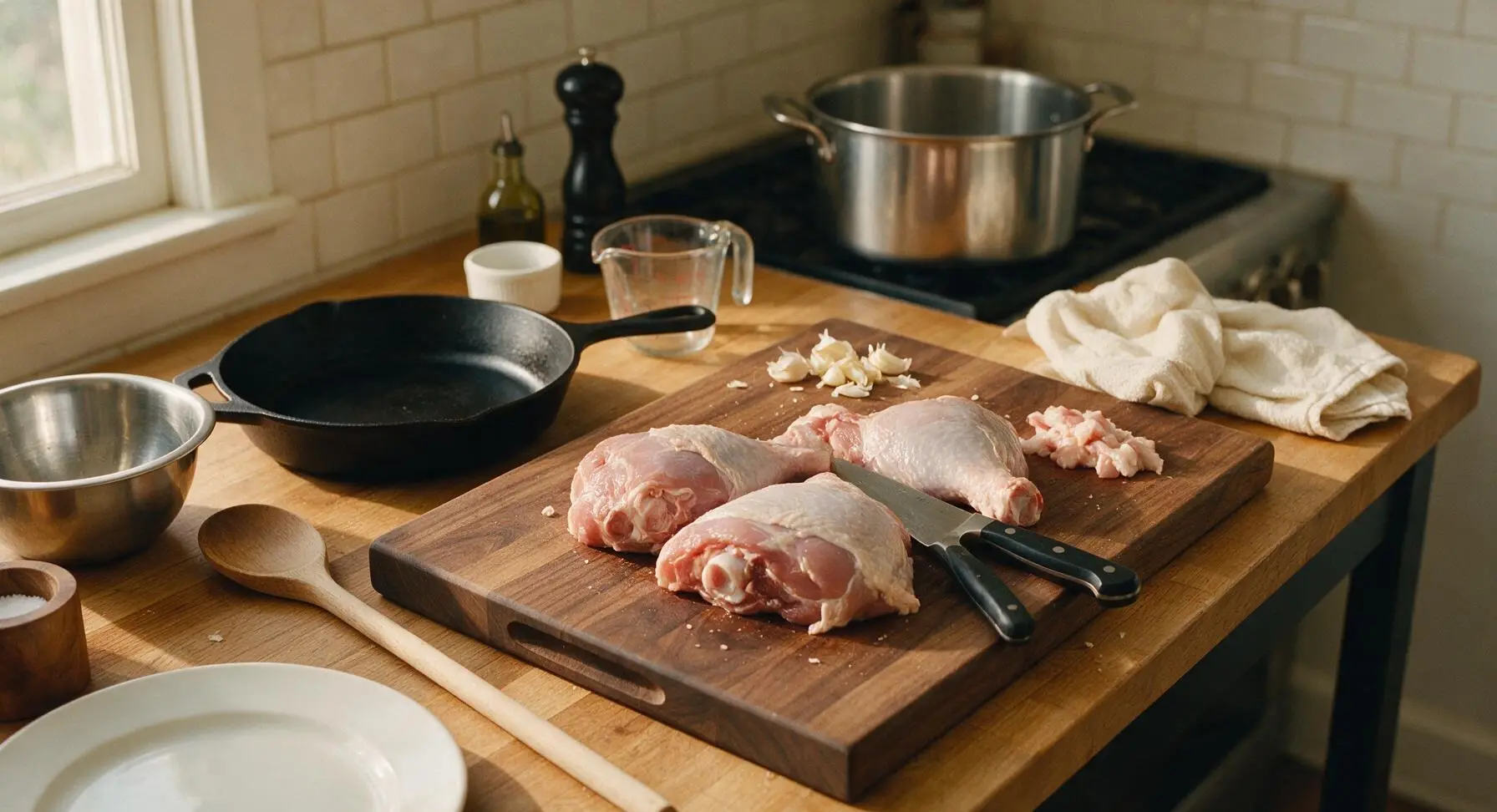
Place the raw bone-in turkey thighs on the acacia wood cutting board. Pat the turkey completely dry with a corner of the terracotta linen towel. Use the 8-inch chef knife to trim any loose, thick hard fat deposits from the thighs, leaving a thin 1/8-inch layer of skin to add depth of flavor to the broth. Lightly crush the 4 garlic cloves with the flat side of the knife blade, leaving papery skins partially attached for easy removal later if desired.
Add Base to Pot
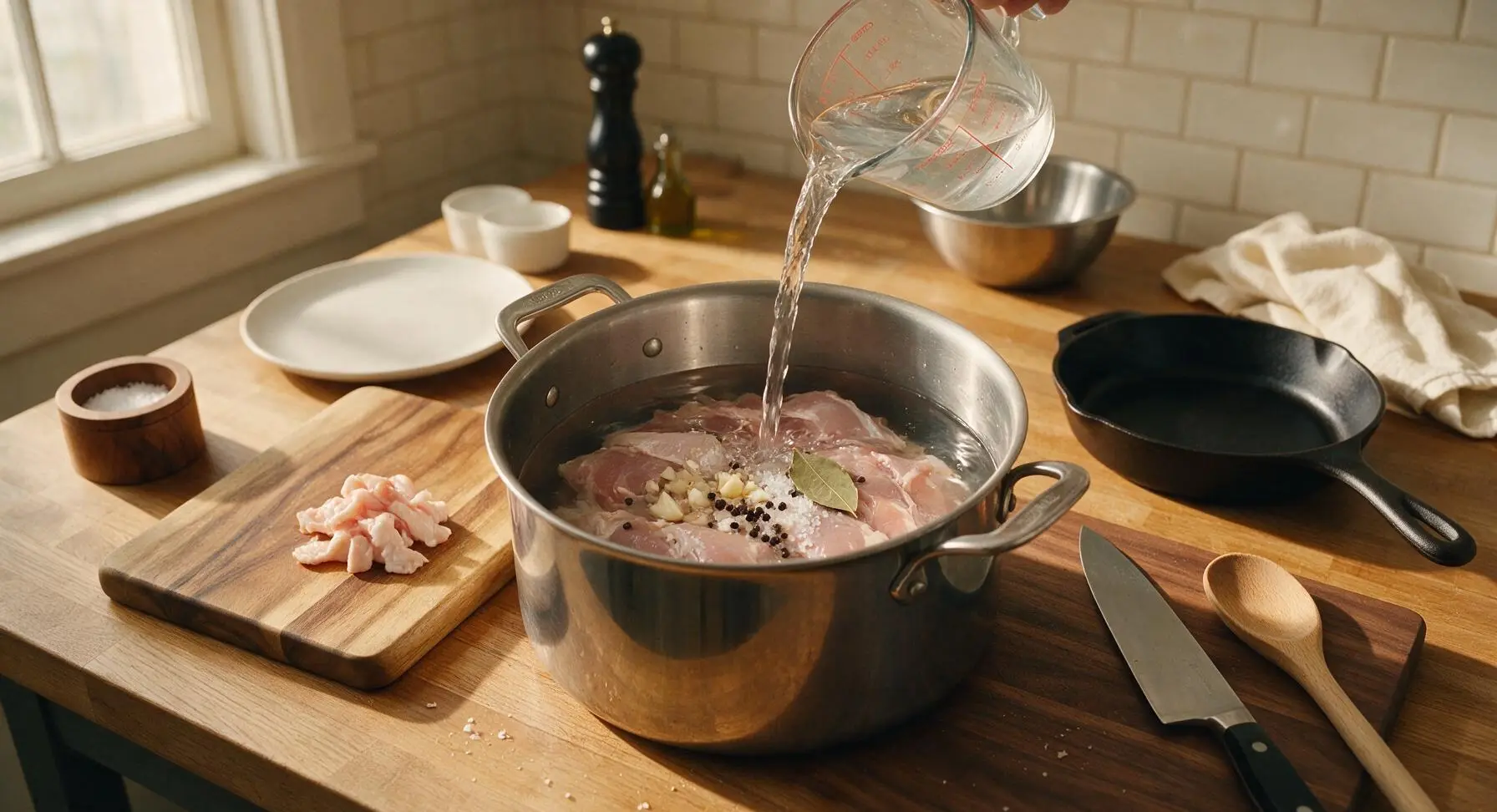
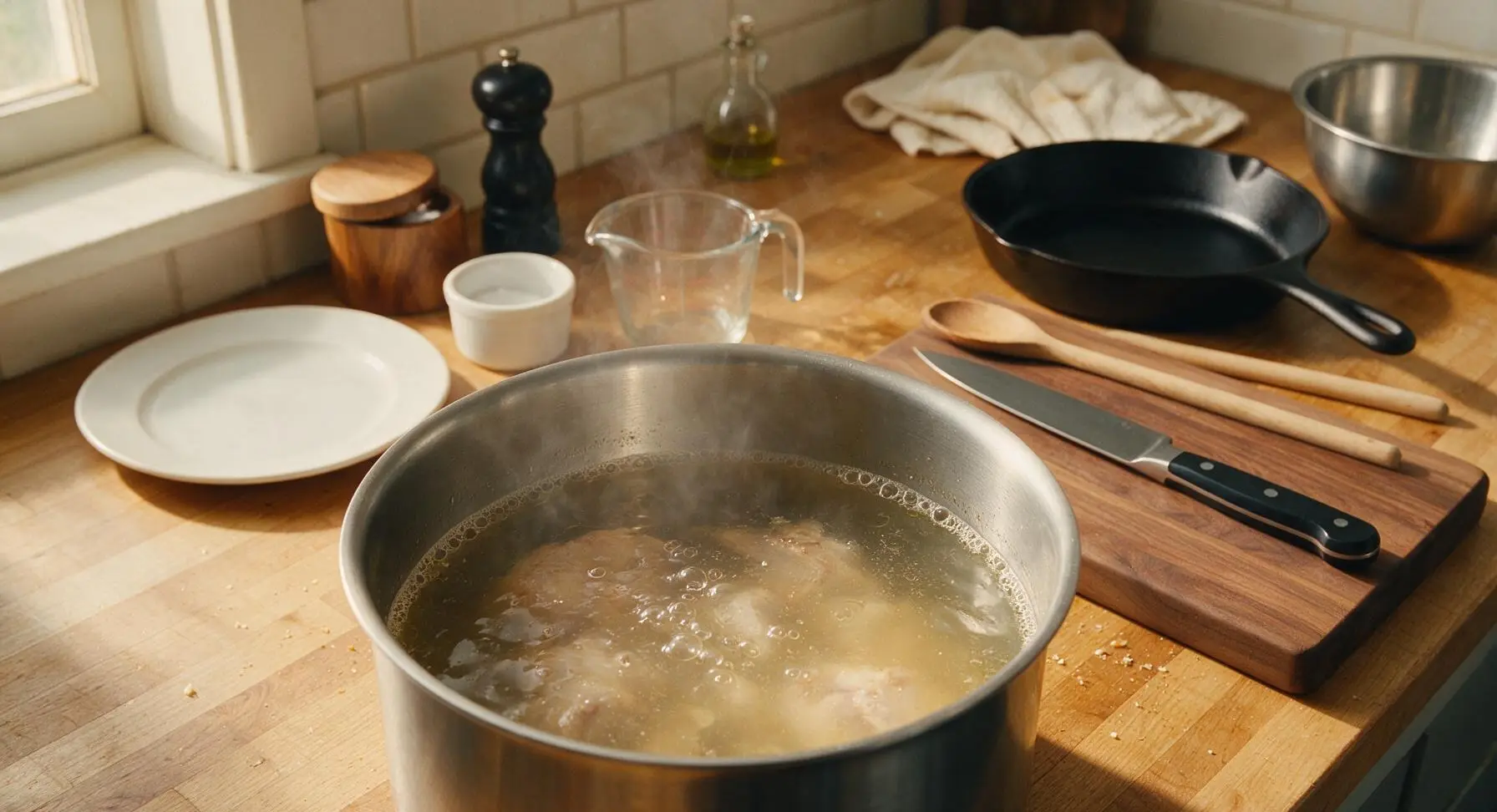
Transfer the trimmed turkey thighs and crushed garlic into the empty 6-quart stock pot. Add 2 dried bay leaves, 1 tsp whole black peppercorns, and 1 tbsp coarse kosher salt. Pour all 8 cups of cold water from the clear glass measuring cup into the pot, ensuring turkey pieces are fully submerged by at least 1 inch of liquid.
Bring to Gentle Simmer
Place the stock pot over medium-high heat, leaving it uncovered. Heat until the water reaches a gentle, low simmer (190°F/88°C), marked by small bubbles breaking at the surface every 2-3 seconds. Do not allow the water to reach a rolling, turbulent boil. As soon as the steady simmer is reached, reduce heat to medium-low to maintain the temperature.
Skim Broth Impurities
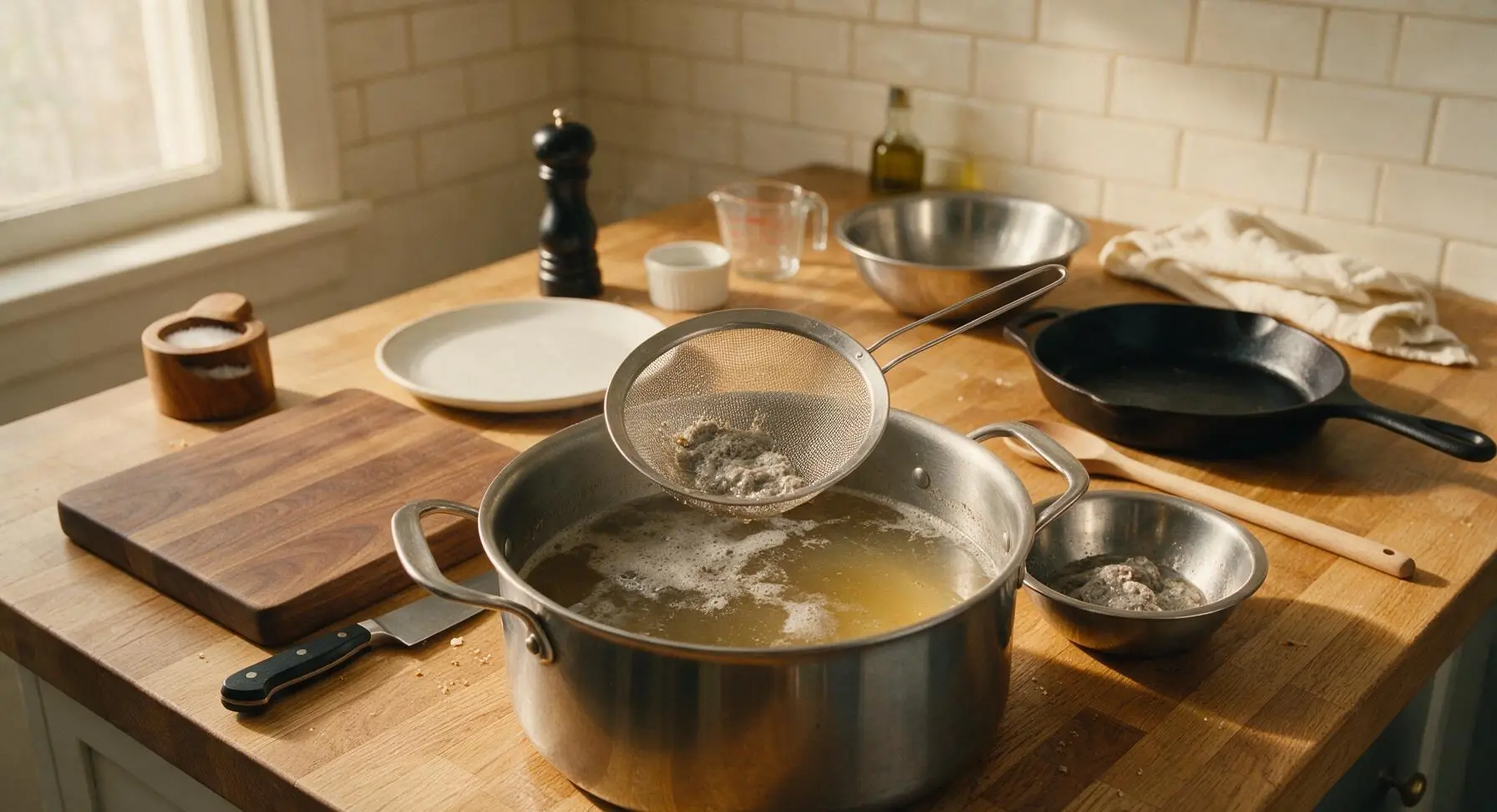
For the first 15 minutes of simmering, use the fine-mesh stainless steel skimmer to scoop off all gray, foamy scum that rises to the broth surface, depositing the collected scum into the small stainless steel prep bowl. Skim every 3-4 minutes to keep the broth clear. After 15 minutes of skimming, partially cover the pot with its lid, leaving a 1-inch gap to allow steam to escape and prevent boil-overs.
Simmer Turkey Until Tender
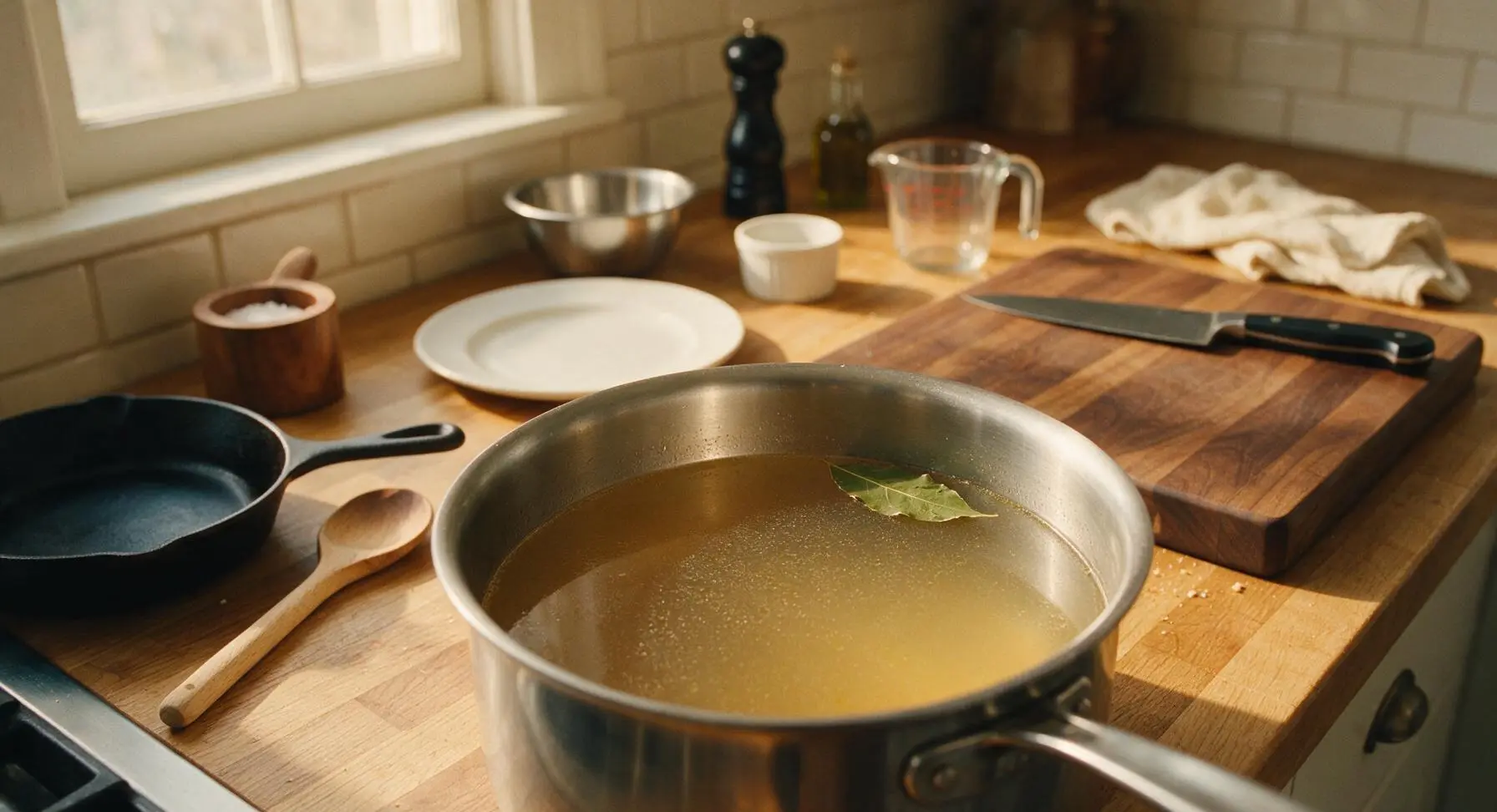
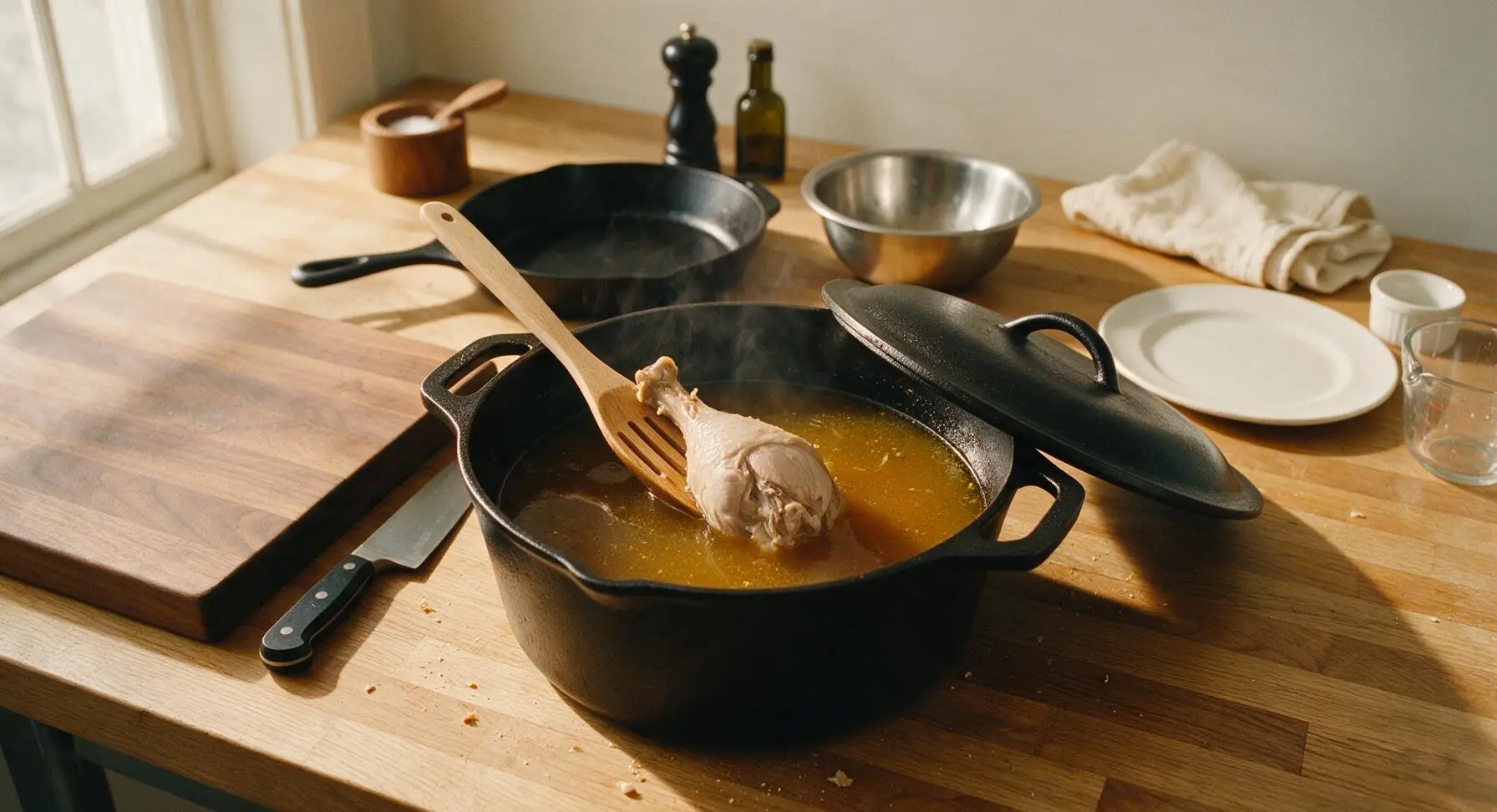
Maintain the gentle, partially covered simmer for 45 minutes total, checking heat periodically to ensure the broth never boils rapidly. The turkey is fully cooked when the meat pulls easily away from the bone when prodded with the beech wood slotted spoon, and the thickest part of the thigh reaches an internal temperature of 165°F/74°C.
Prep and Add Vegetables
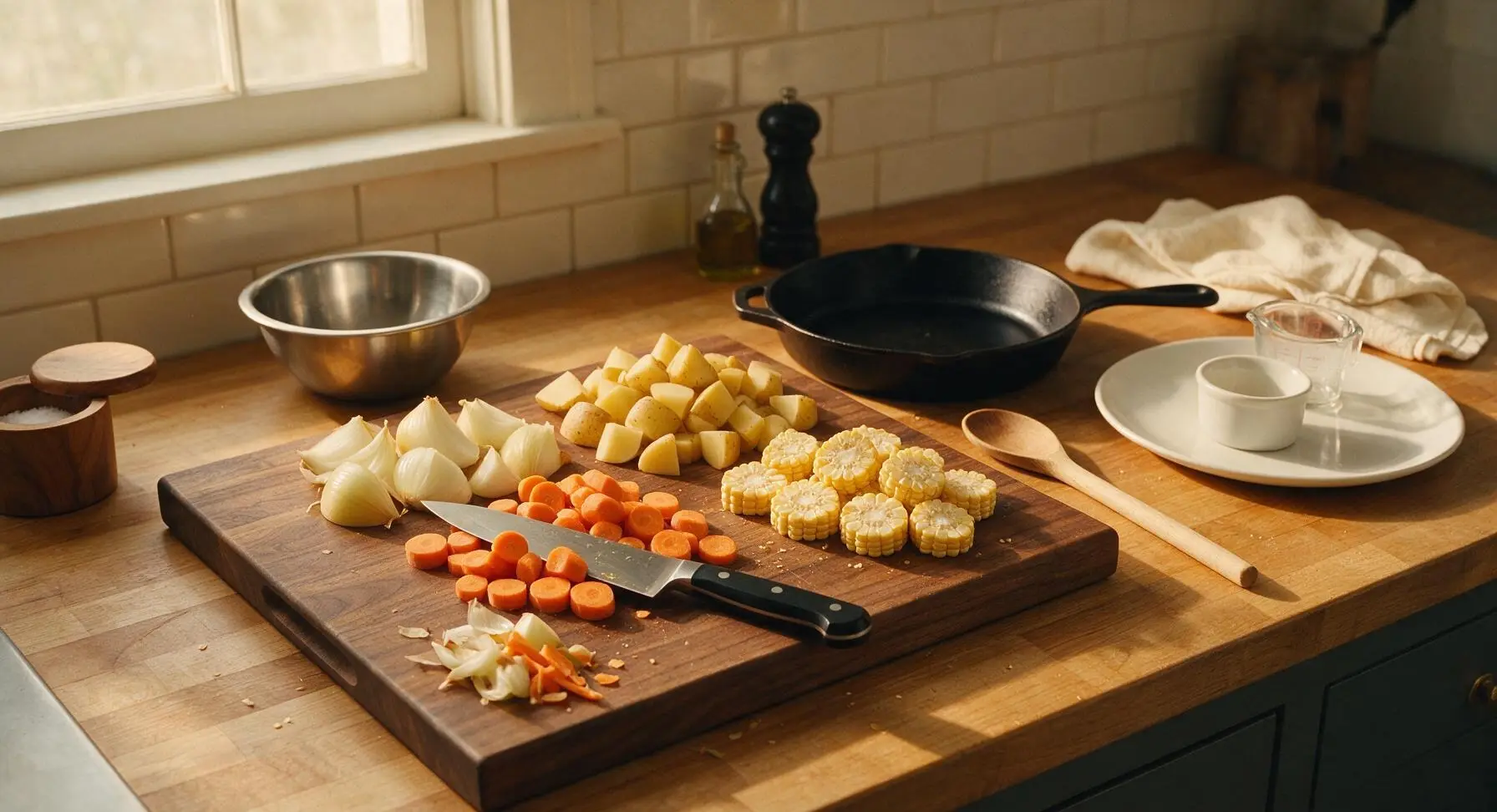
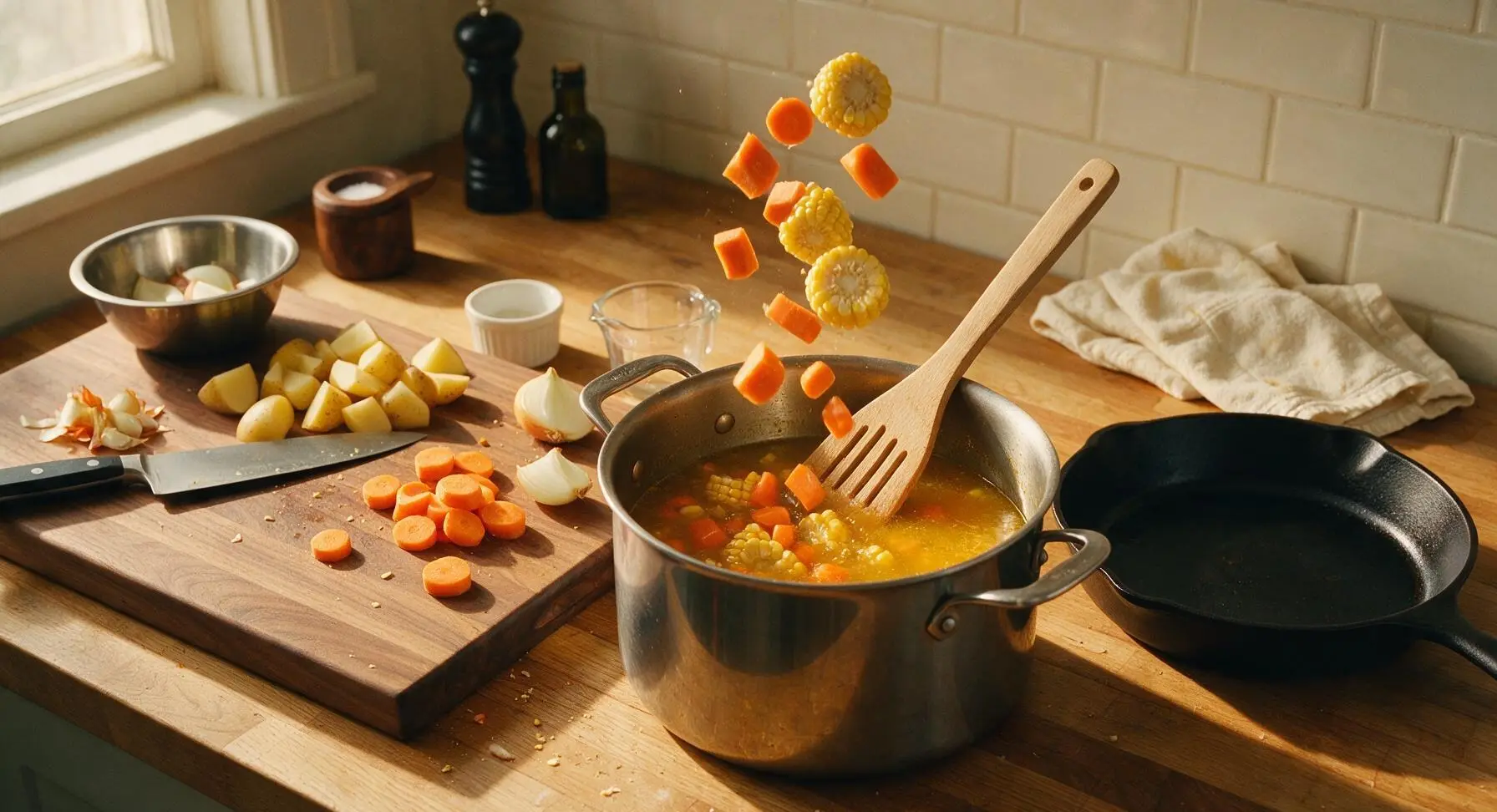
While the turkey finishes simmering, use the 8-inch chef knife on the acacia wood cutting board to cut the yellow onions into 1-inch wedges, carrots into 1-inch thick coins, Yukon gold potatoes into 1.5-inch cubes, and the sweet corn ear into 1-inch thick rounds. Pile vegetable trimmings (onion ends, carrot peels) in a small heap at the corner of the board. Once the turkey is fully tender, add all cut vegetables and the remaining 1 dried bay leaf to the pot, stirring gently with the beech wood slotted spoon to fully submerge all vegetable pieces under the broth.
Cook Vegetables Through
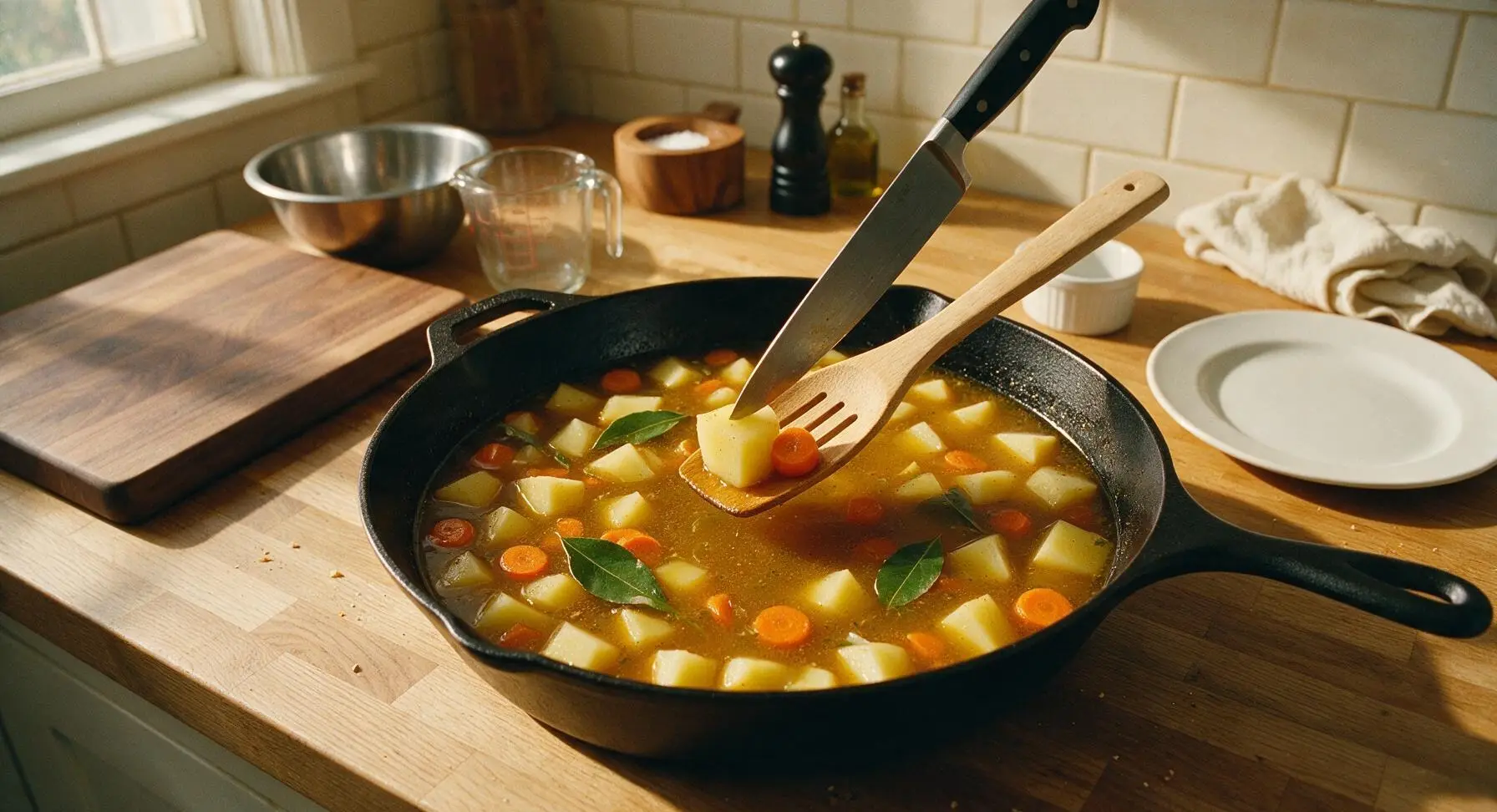
Keep the pot partially covered, maintain the steady gentle simmer, and cook the vegetables for 18-20 minutes. Test for doneness by piercing a potato cube with the tip of the chef knife: the potato should slide easily off the knife tip with no resistance, but hold its shape without turning mushy. Taste the broth and add extra pinches of kosher salt as needed to adjust seasoning.
Ladle and Garnish Caldo
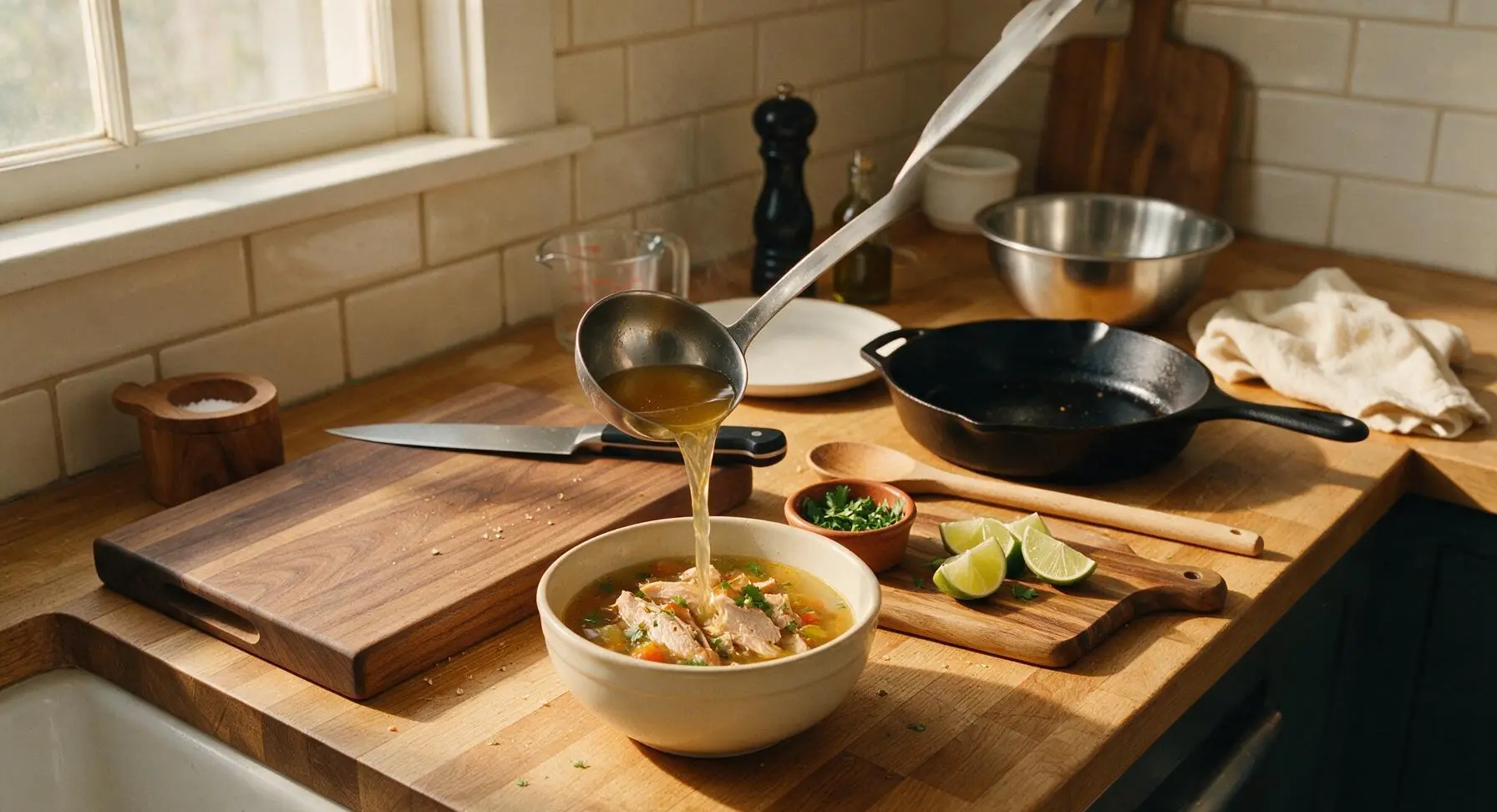
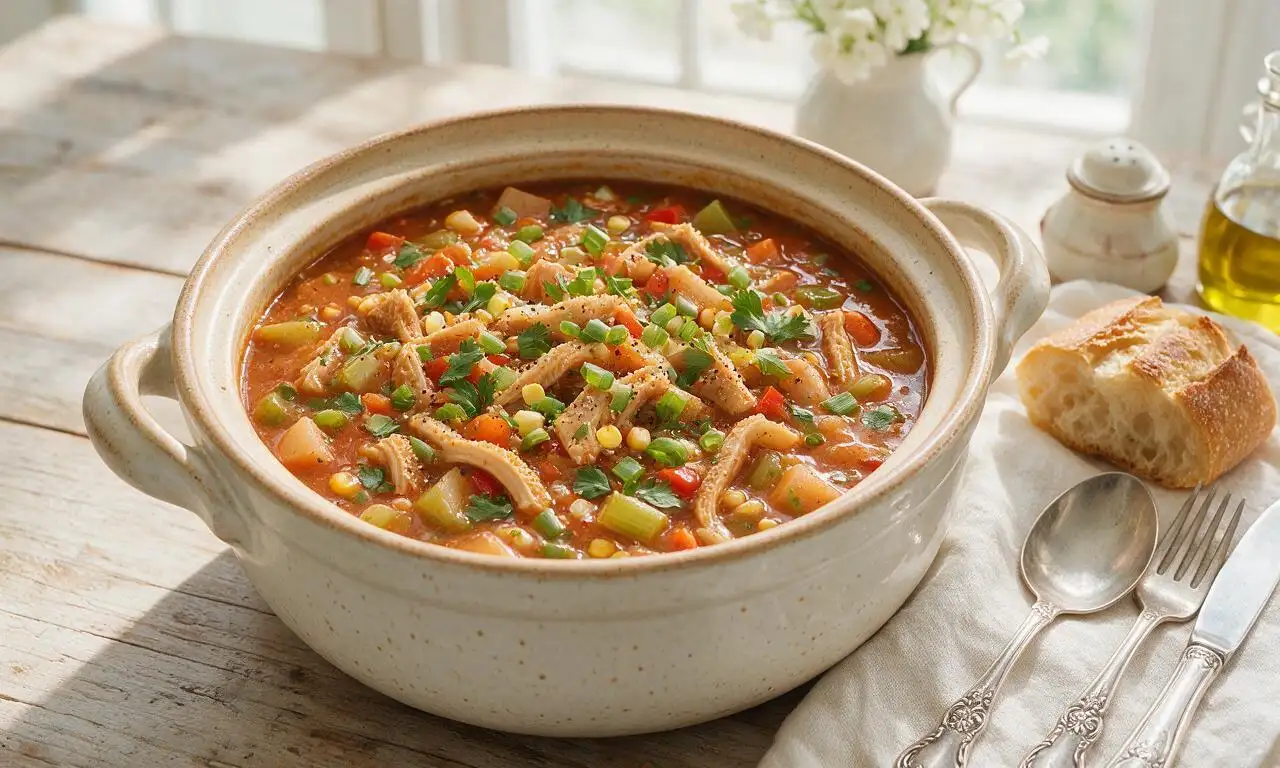
Turn off the heat, and let the caldo rest for 5 minutes off the burner to allow flavors to meld and fine particles to settle. Use the stainless steel soup ladle and slotted spoon to divide turkey and vegetable pieces evenly between the cream ceramic soup bowls, then ladle golden broth over top. Sprinkle each bowl with chopped fresh cilantro, and perch a lime wedge on the bowl rim for squeezing over top before eating.
Tips
2.Add bay leaves in two stages: Place two bay leaves in the pot at the start of simmering to build a base herbal note, then add the third bay leaf with the vegetables to retain bright, fresh bay leaf aroma, as dried bay leaves lose their volatile oils quickly during long cooking.
3.Let the caldo rest for 5 minutes off heat before serving: This short pause allows fine food particles to settle to the bottom of the pot for clearer broth, and gives the flavors time to meld so the turkey, vegetable, and bay leaf notes taste balanced rather than disjointed.


Made this when my youngest came down with a nasty cold this week and it was the perfect cozy pick-me-up! The bay leaf adds such a warm, gentle flavor that didn’t overpower the broth, and even my husband who “hates soup” had two full bowls. Will absolutely be keeping this in my back pocket for cold and flu season.
Game changer for my Sunday meal prep! This is so easy to throw together, tastes even better on day 2 and 3 when the bay leaf flavor really melds into the broth. I swapped the turkey for chicken thighs cause that’s what I had in the fridge and it still slapped. 10/10 will be on my rotation all fall and winter.
Brought this to our neighborhood block party potluck last weekend and people were literally lining up for seconds! I tossed in a can of hominy and a handful of chopped cilantro at the end like my abuela used to do, and everyone was begging for the recipe. SO good, even my super picky teen ate two full bowls without complaining.
Wait, caldo de pollo is usually chicken right? I was confused this uses turkey but I gave it a shot anyway since it was marked easy and OMG it’s way better than regular chicken caldo! The bay leaf gives it such a warm, deep flavor I never manage to get from my usual sad canned soup. My roommate said it’s the best thing I’ve ever cooked lmao.
Made this last night for our weekly family dinner and my kids loved it! They kept asking for refills on the broth, even the one who swears she hates all “wet food” (aka soup). I added a little extra garlic and a pinch of cumin because I can never leave a recipe totally as-written, will definitely be making this every other week once the temps drop below 50.
Super easy recipe, didn’t have to run to the store for a million fancy ingredients which is a huge win for a chaotic weeknight. Cook time was exactly the 1 hour 20 minutes stated, no surprises, and the whole house smelled amazing while it simmered. Only note is I’d add a bit more salt next time for my taste, but that’s just personal preference, not a flaw in the recipe at all.