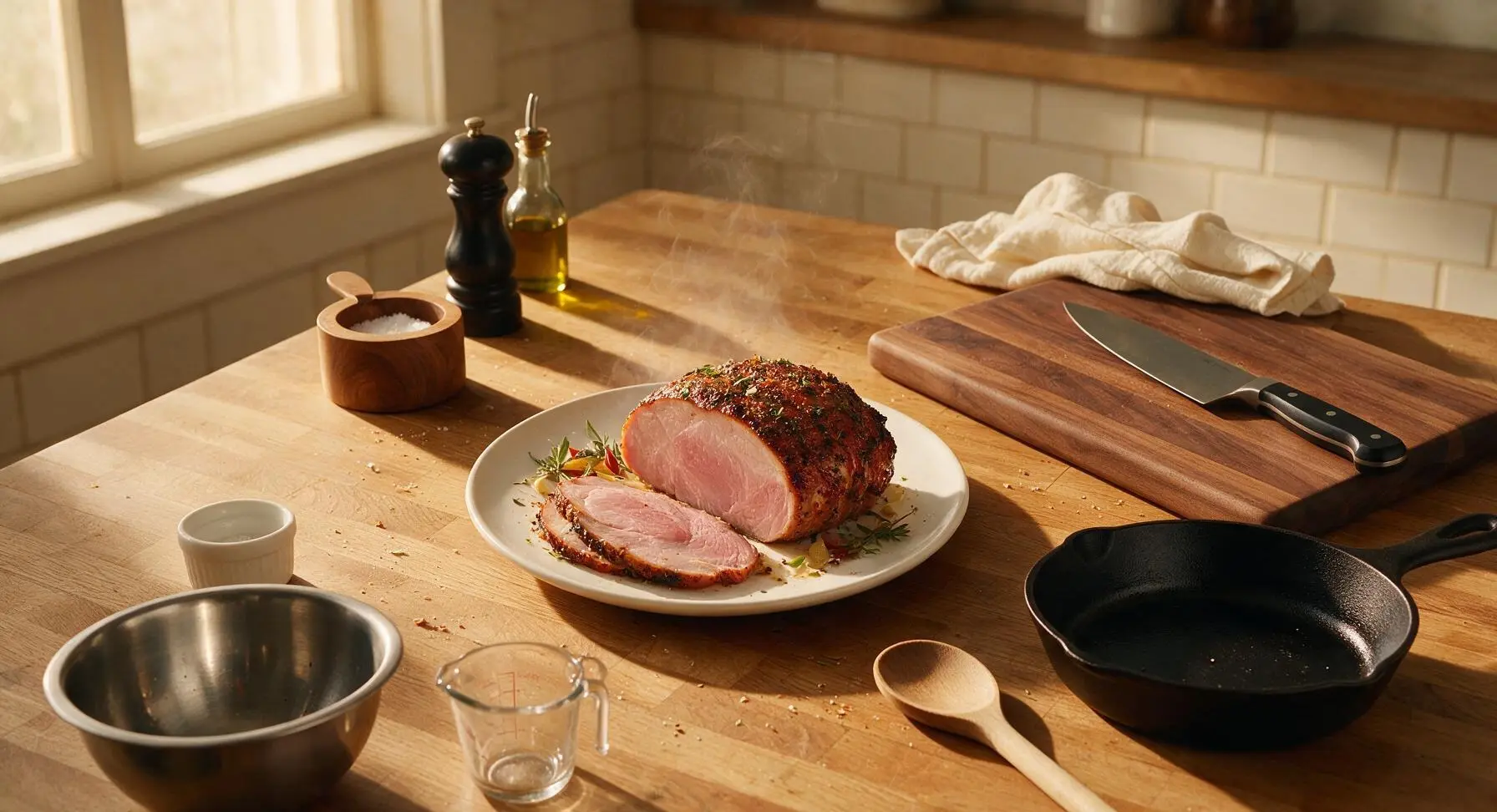
Turkey Speck

title 1
Turkey Speck
⏱️ cook time 2 hours
🍽️ servings 8
⚡ Difficulty medium

intro

Tender, slow-cured turkey speck with a crisp mahogany herb crust, smoky savory flavor, and juicy blush-pink interior—a lean, delicious alternative to traditional pork speck perfect for holiday platters.

Ingredients
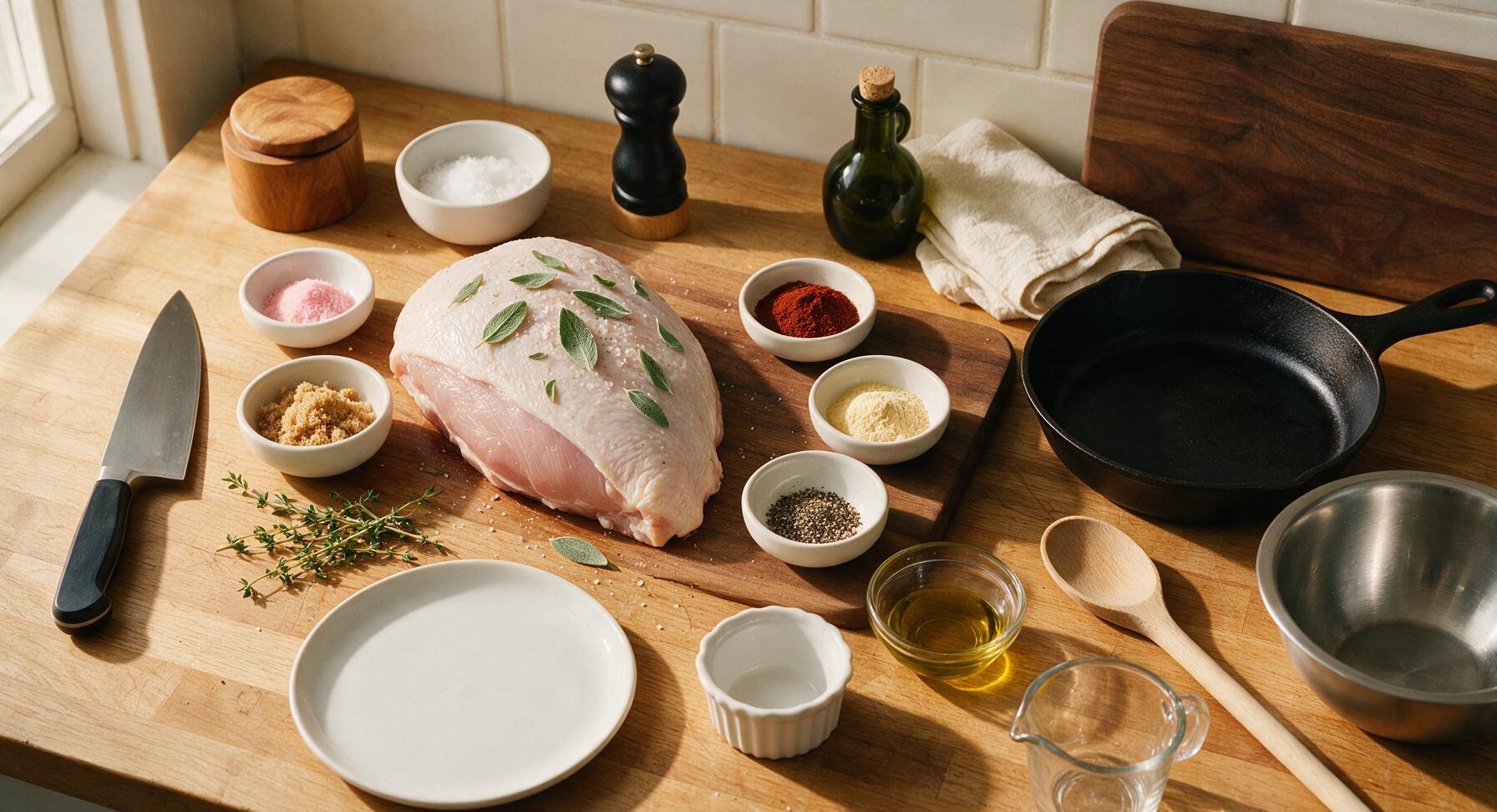
Boneless skin-on turkey breast 1.8kg (4lb)
Kosher salt 3 tbsp
Pink curing salt #1 1 tsp
Light brown sugar 2 tbsp
Smoked paprika 1 tbsp
Garlic powder 1 tsp
Freshly ground black pepper 2 tsp
Fresh sage 10 leaves
Fresh thyme 4 sprigs
Extra-virgin olive oil 1 tbsp

Steps

1

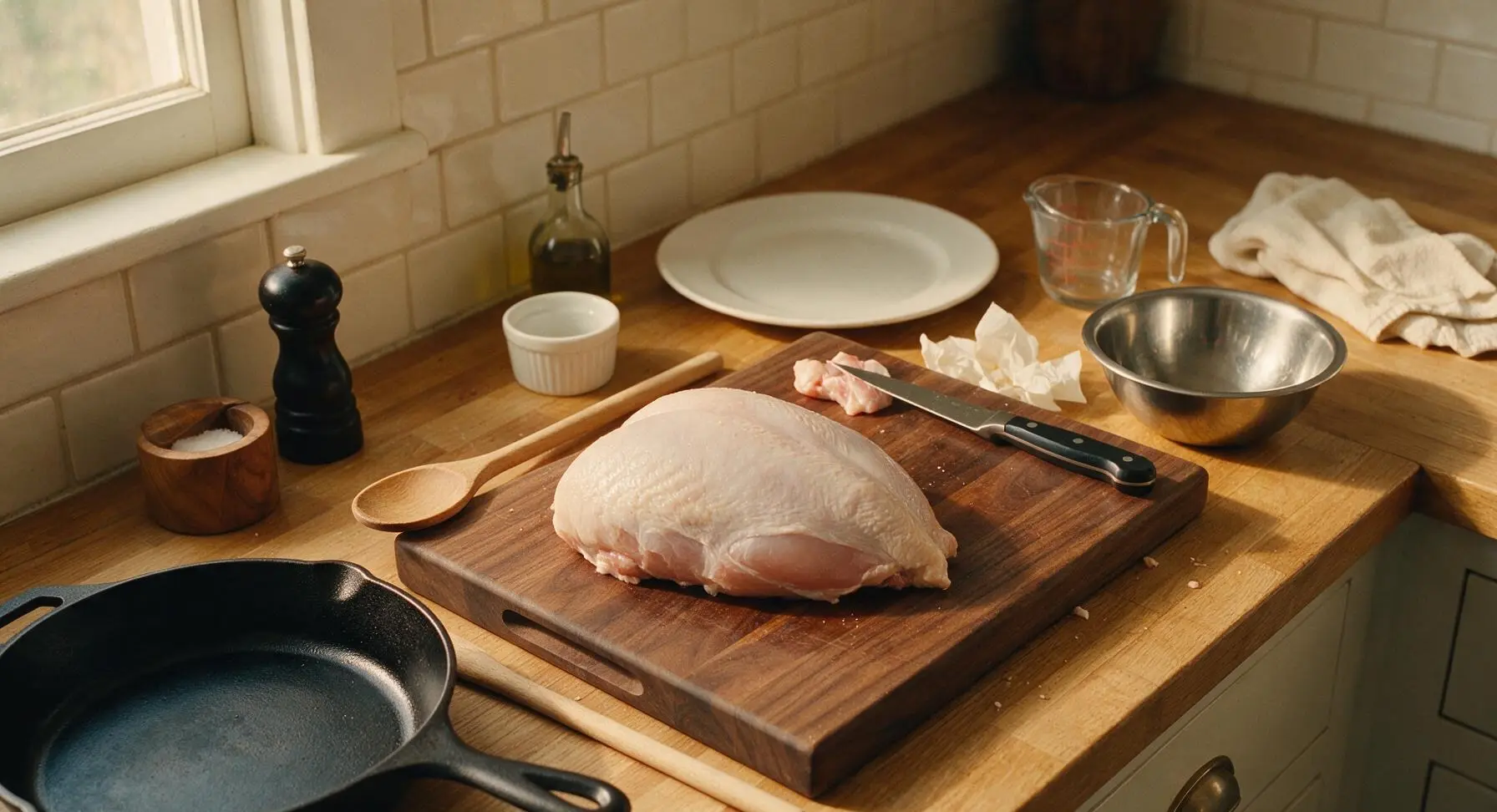
Trim Turkey Breast

Place the 1.8kg skin-on boneless turkey breast on the acacia wood cutting board. Use the 6-inch boning knife to trim any excess loose skin or thick hard fat deposits, leaving an even 3mm (1/8 inch) layer of fat and skin across the top surface. Pat the entire turkey surface completely dry with paper towels, discarding trimmed bits into a small waste bowl. The turkey should sit flat on the board with no ragged, uneven edges.
Step 1
step1:Trim Turkey Breast
2

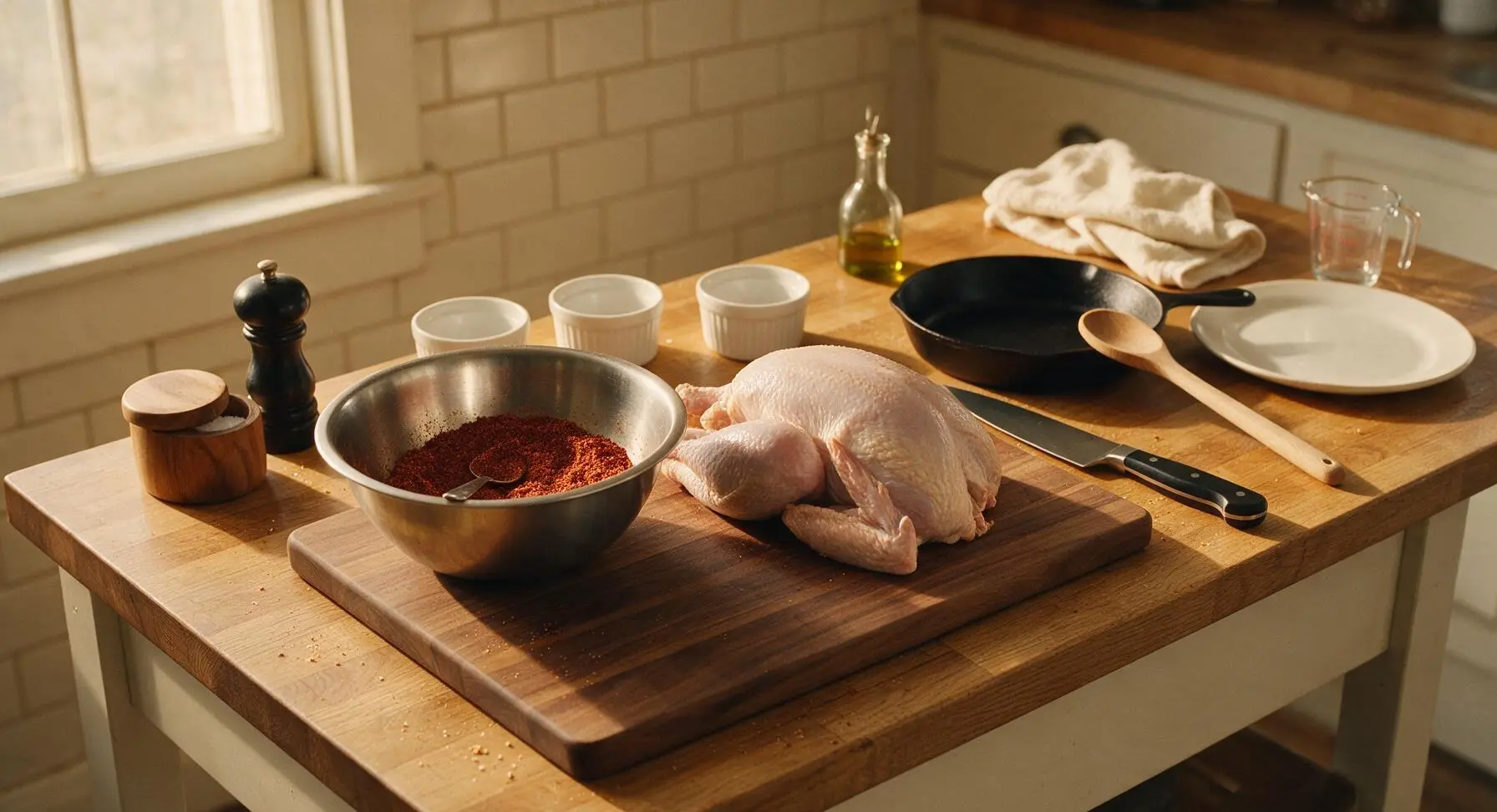
Mix Curing Rub

In the small brushed stainless steel mixing bowl, combine 3 tbsp kosher salt, 1 tsp pink curing salt #1, 2 tbsp light brown sugar, 1 tbsp smoked paprika, 1 tsp garlic powder, and 2 tsp freshly ground black pepper. Stir the mixture with a small spoon until fully combined, breaking up any clumps of brown sugar with the back of the spoon. The finished rub will be a uniform deep reddish-brown, with no visible streaks of separate spices.
Step 2
step2:Mix Curing Rub
3

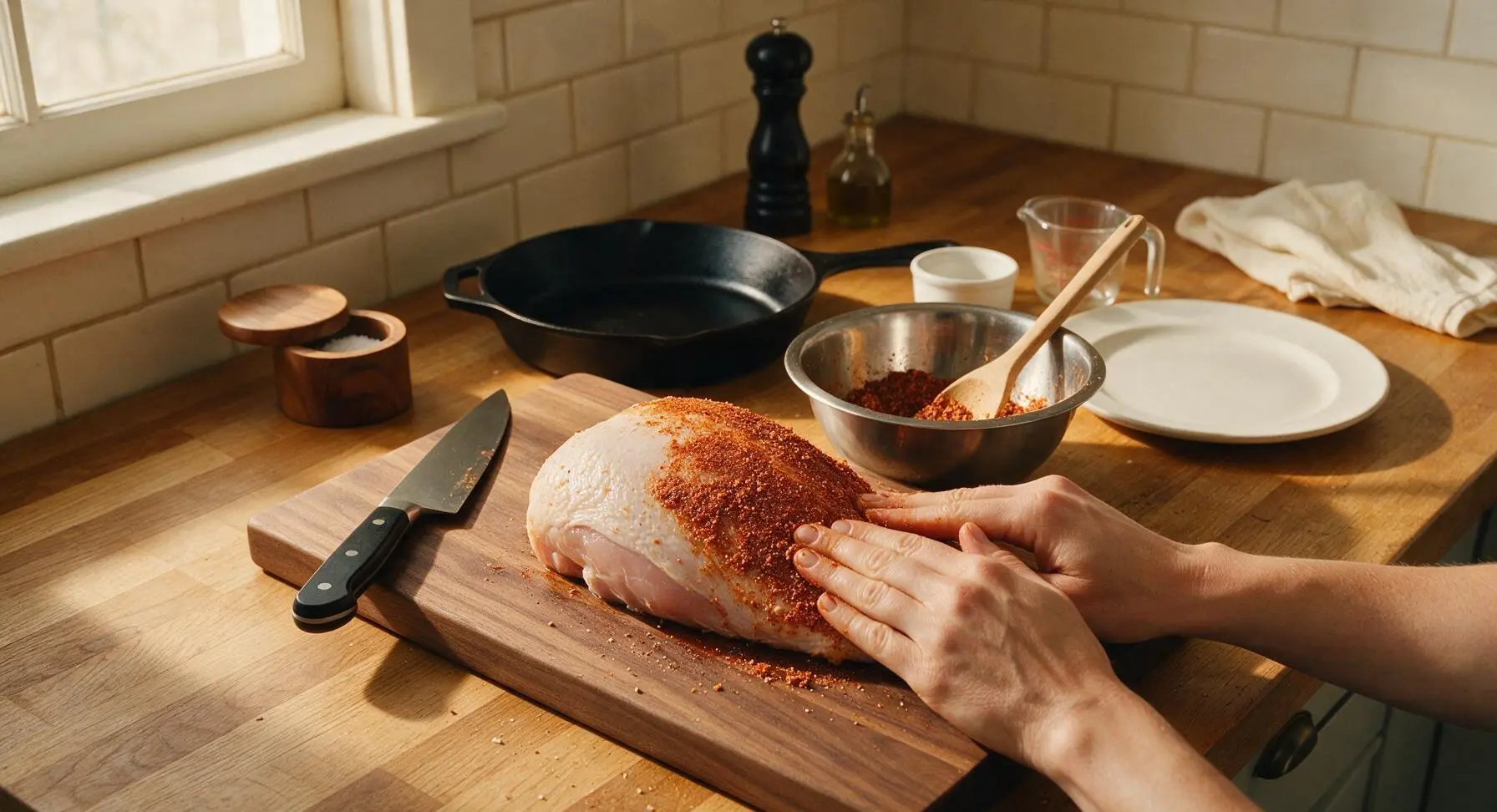
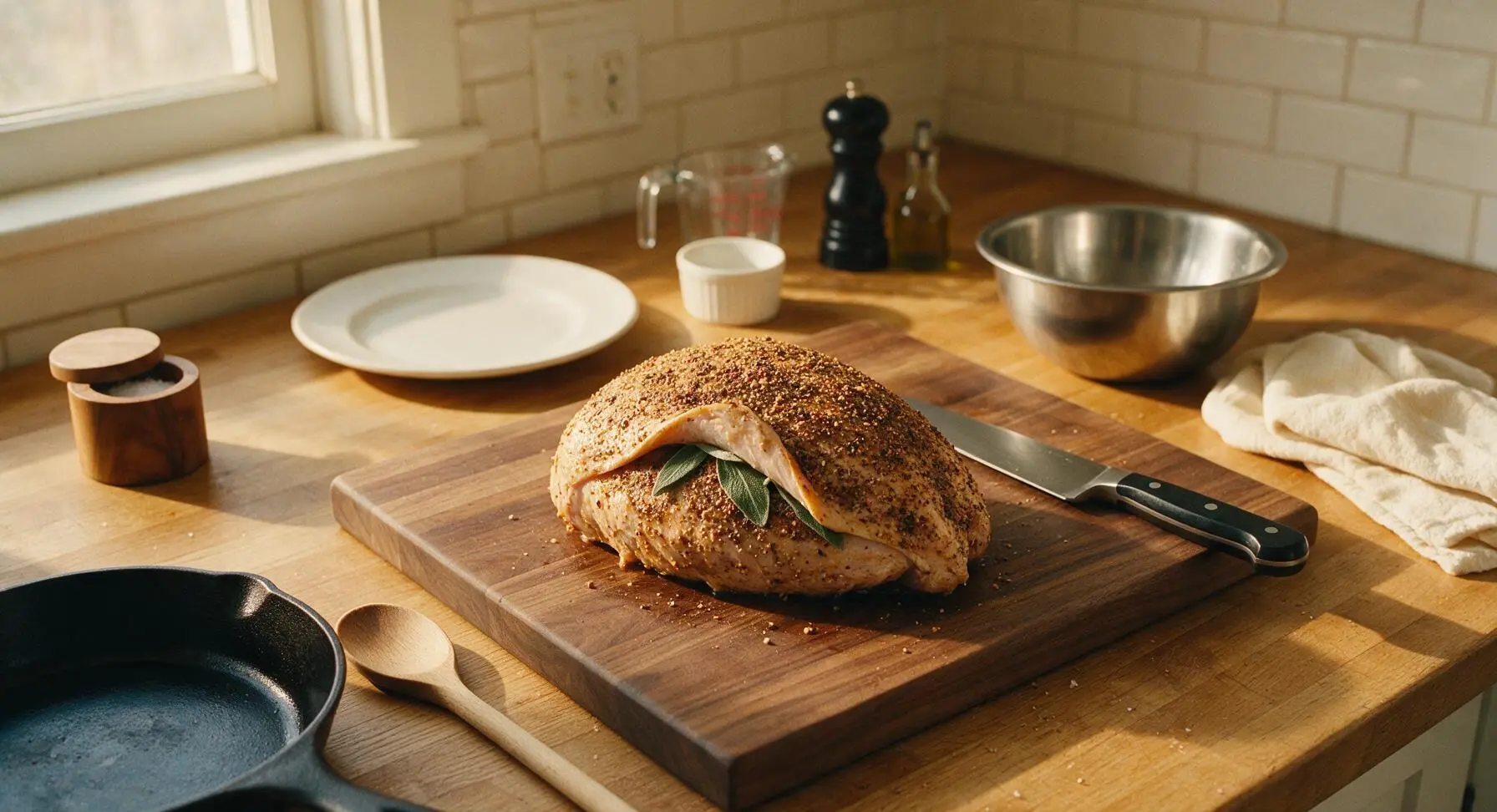
Coat Turkey in Cure

Rub the entire surface of the dried turkey breast—top, bottom, and all sides—with the full batch of curing rub, pressing firmly so the spice mixture adheres tightly to the meat and skin. Ensure every crevice and edge is evenly coated, with no bare patches of turkey visible. Tuck 4 fresh sage leaves and 2 thyme sprigs under the skin on the top of the breast to infuse aroma during cooking.
Step 3
step3:Coat Turkey in Cure
Step 3
step3:Coat Turkey in Cure
4

Cure Turkey Overnight

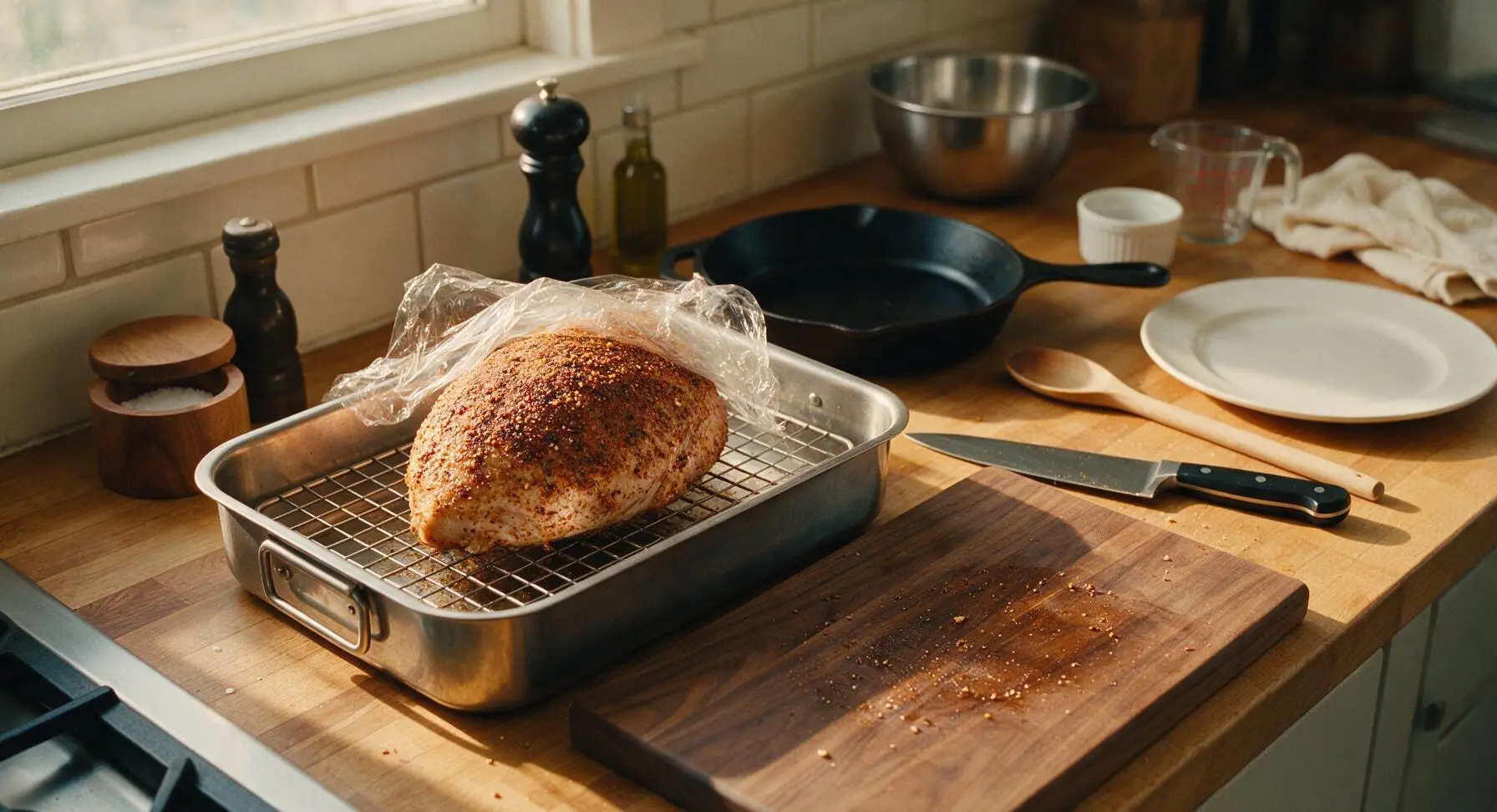
Transfer the rub-coated turkey breast to the stainless steel wire roasting rack set inside the heavy-gauge stainless steel roasting pan, leaving 5cm of space around all sides of the turkey for air flow. Loosely tent the pan with plastic wrap, and refrigerate for 24 hours. The turkey is ready to cook when its surface feels firm and slightly dry to the touch, with the cure fully penetrated into the outer 5mm of meat. Do not rinse the cure off before cooking.
Step 4
step4:Cure Turkey Overnight
5

Bring Turkey to Room Temp

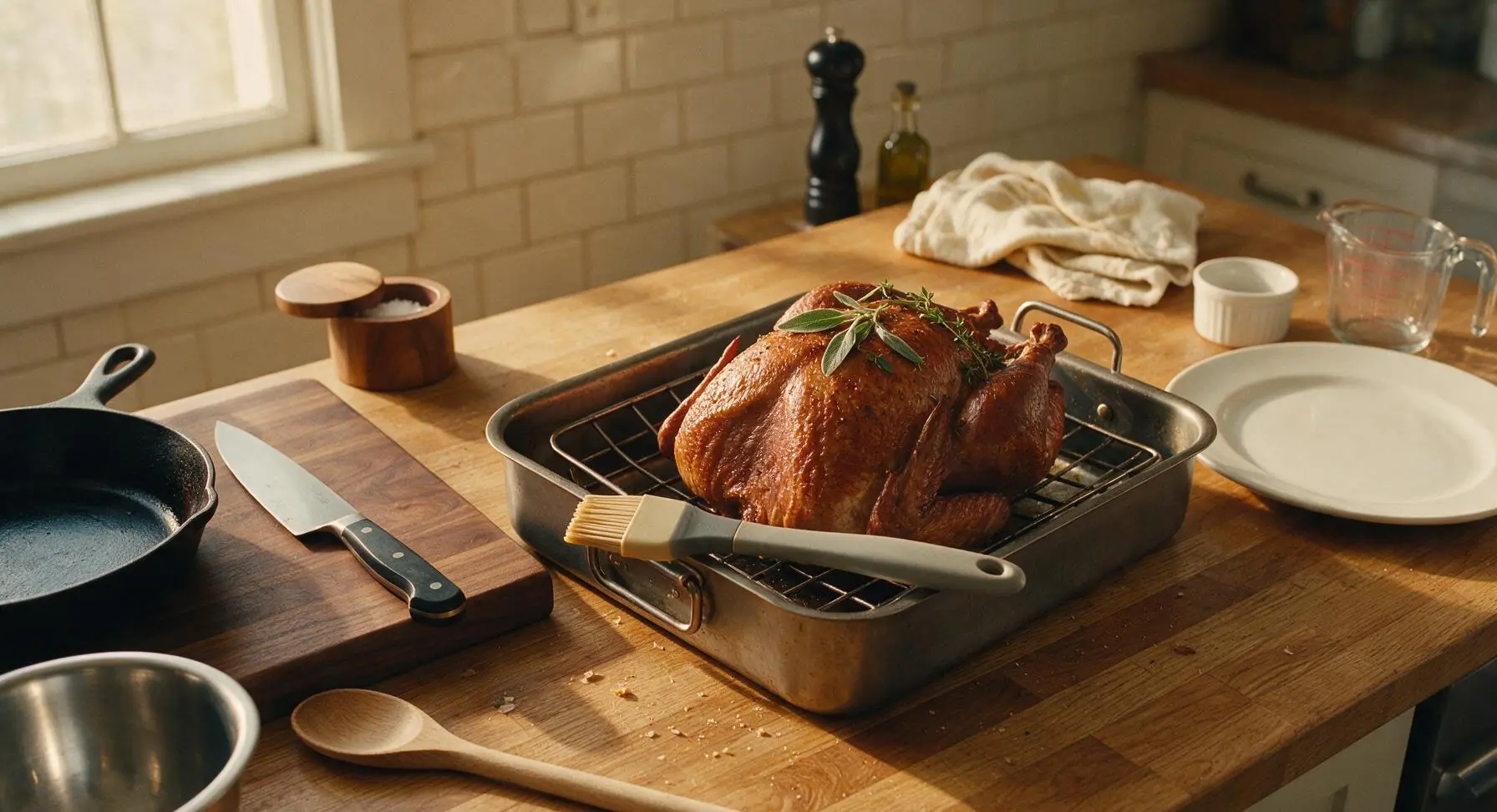
After 24 hours of curing, remove the turkey from the refrigerator and discard the plastic wrap. Let it rest at room temperature for 45 minutes to take the chill off, which ensures even cooking. Preheat the oven to 135C (275F). Use the silicone basting brush to coat the turkey skin lightly with 1 tbsp extra-virgin olive oil, then scatter the remaining 6 sage leaves and 2 thyme sprigs across the top.
Step 5
step5:Bring Turkey to Room Temp
6

Slow Roast to Temperature

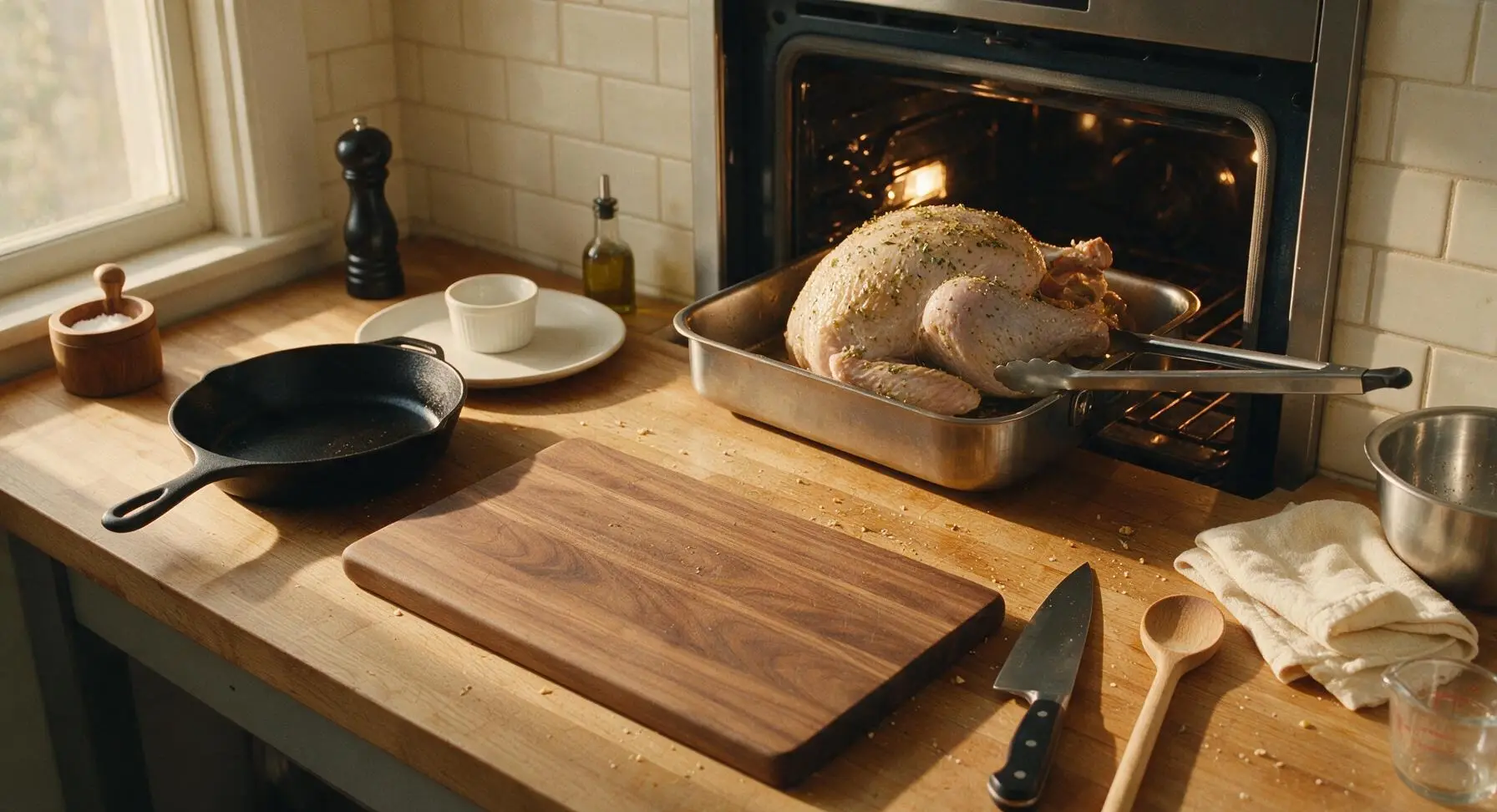
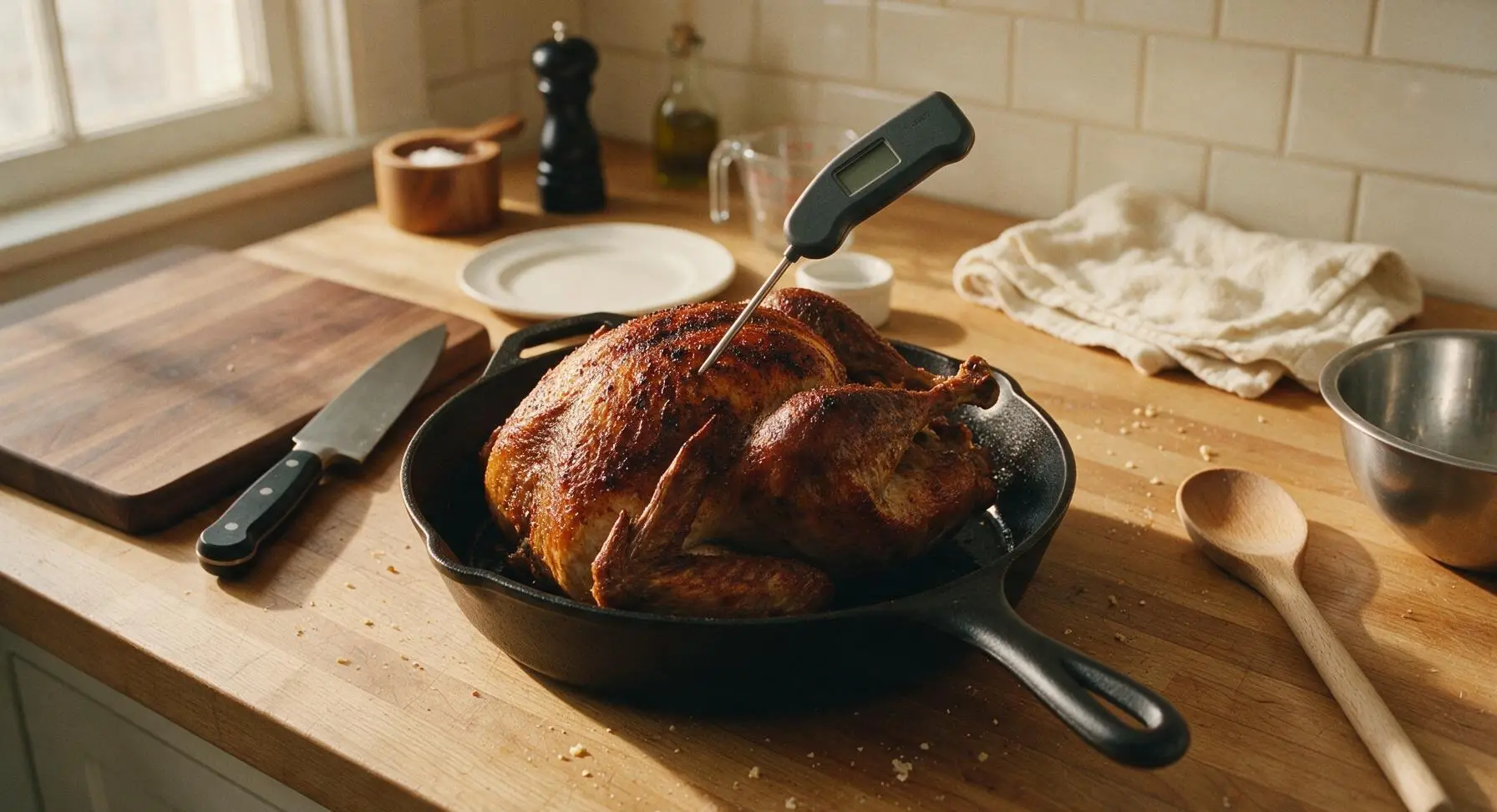
Place the roasting pan with the turkey on the middle oven rack. Roast for 1 hour 45 minutes to 2 hours, avoiding opening the oven door for the first 90 minutes to maintain consistent heat. The turkey is done when the instant-read meat thermometer inserted into the thickest part of the breast (avoiding bone) reads 63C (145F). The skin will develop a deep, crisp mahogany crust as it roasts.
Step 6
step6:Slow Roast to Temperature
Step 6
step6:Slow Roast to Temperature
7

Rest Cooked Turkey

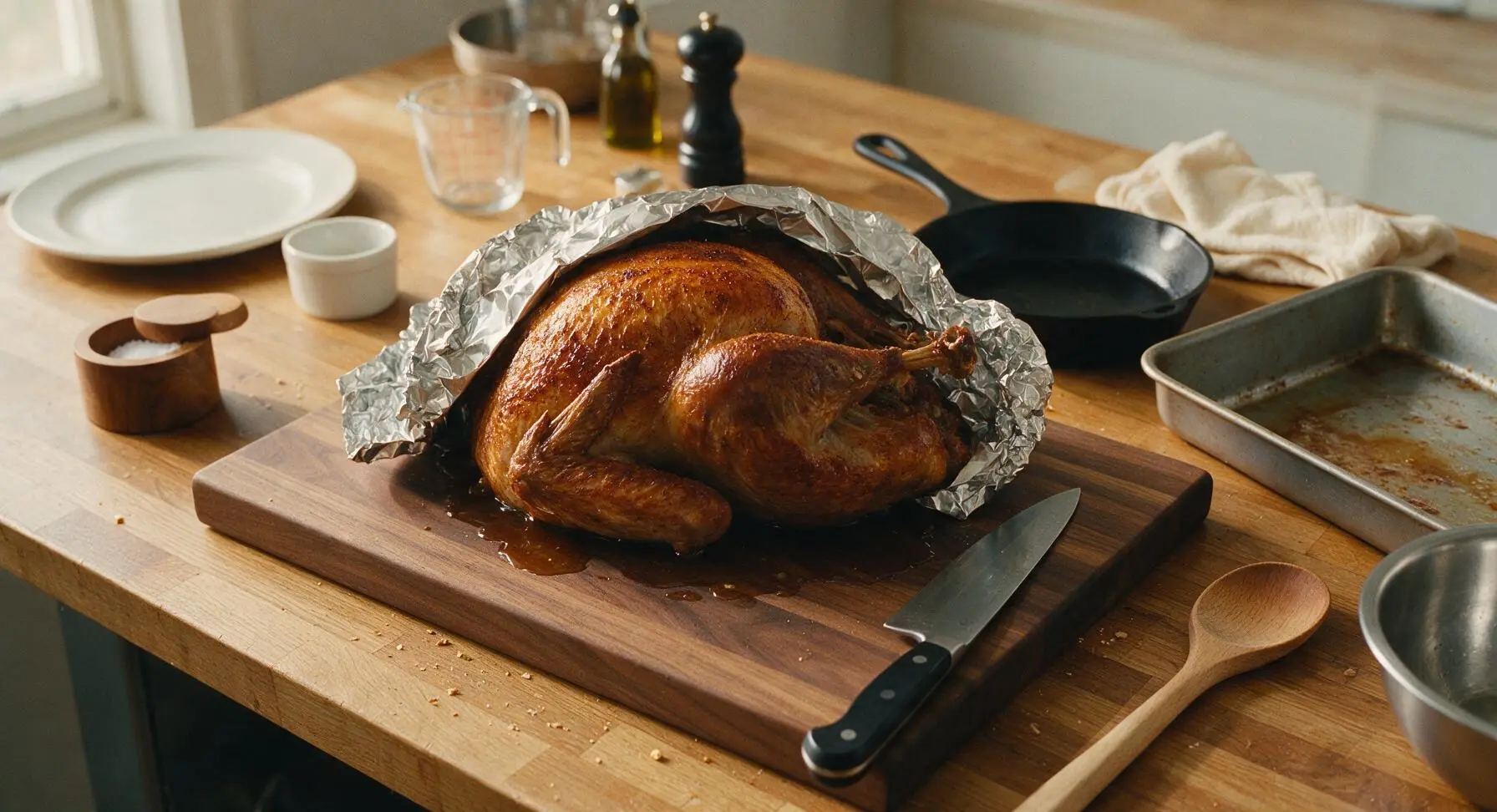
Use the stainless steel tongs to carefully lift the roasting rack with the cooked turkey out of the pan, and transfer the turkey back to the clean acacia wood cutting board. Loosely tent the turkey with a sheet of aluminum foil, and let it rest for 30 full minutes to allow juices to redistribute back into the meat fibers. The internal temperature will rise 5-7C (10-12F) during resting, reaching a safe final temperature of 71C (160F).
Step 7
step7:Rest Cooked Turkey
8

Slice and Plate Turkey

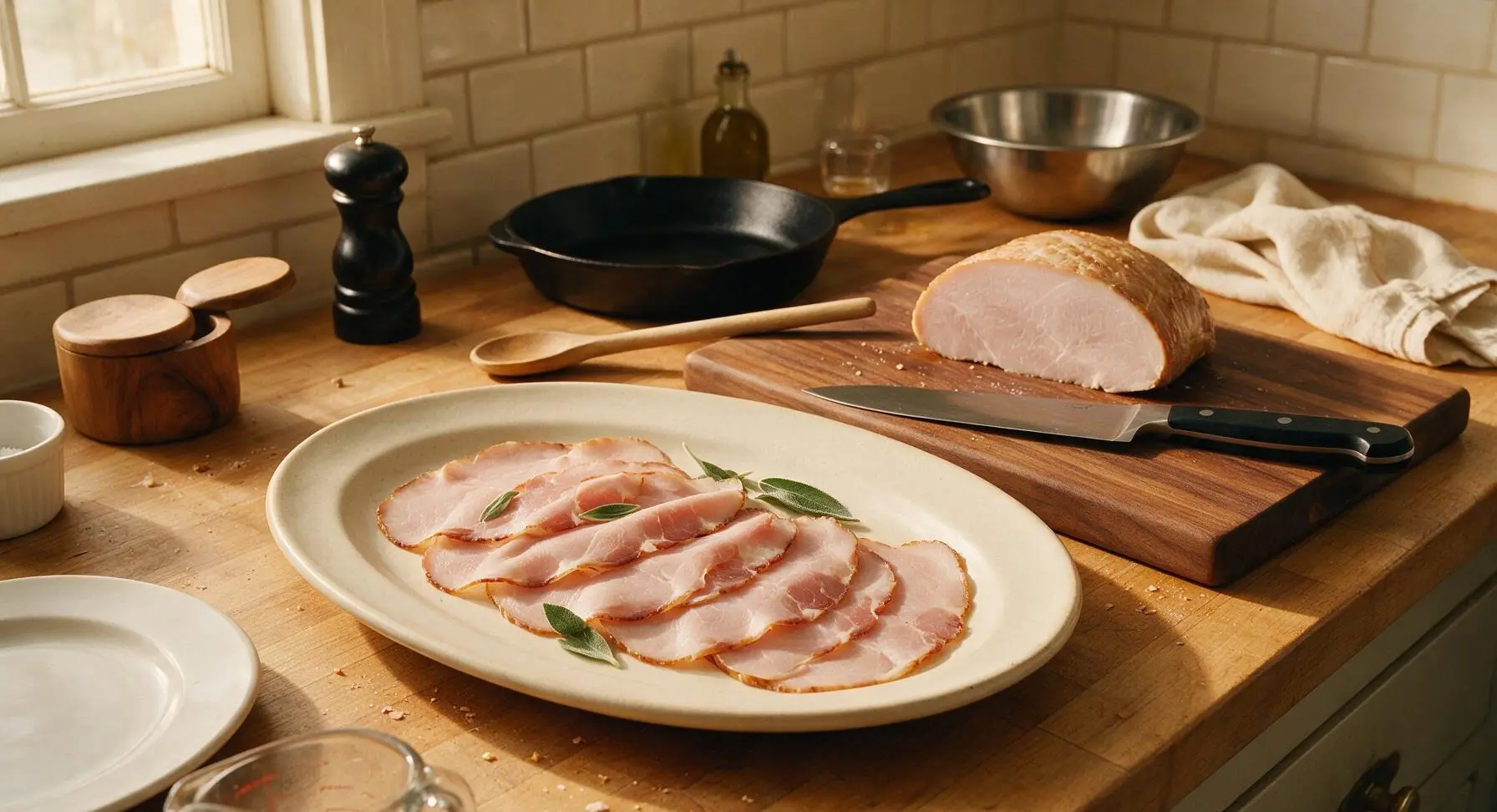
After resting, use the 10-inch stainless steel slicing knife to cut the turkey speck into very thin, even 3mm (1/8 inch) slices, cutting against the grain for maximum tenderness. Arrange the slices in overlapping fanned layers on the large oval matte cream ceramic serving platter, tucking a few fresh sage leaves between slices for a bright garnish.
Step 8
step8:Slice and Plate Turkey

Tips

1.Don’t skip the pink curing salt: it creates turkey speck’s signature pale pink cured interior, adds the subtle savory flavor profile of traditional speck, and prevents harmful bacteria growth during the long curing and low-temperature roasting process. It is not interchangeable with regular table salt.
2.Resist the urge to slice the turkey immediately after roasting: a full 30-minute rest allows the hot, pressurized juices inside the meat to settle back into the muscle fibers. Slicing too early will cause all the flavorful juice to leak out onto the cutting board, resulting in dry, bland slices.
3.For an extra authentic smoky speck flavor without a dedicated smoker, stir 1/2 tsp of food-grade hickory smoke powder into the curing rub. Avoid using more than a drop or two of liquid smoke, as it can leave a harsh, bitter, artificial aftertaste that overwhelms the delicate turkey flavor.
✨ You May Also Like

Main Course
🍜 United Kingdom

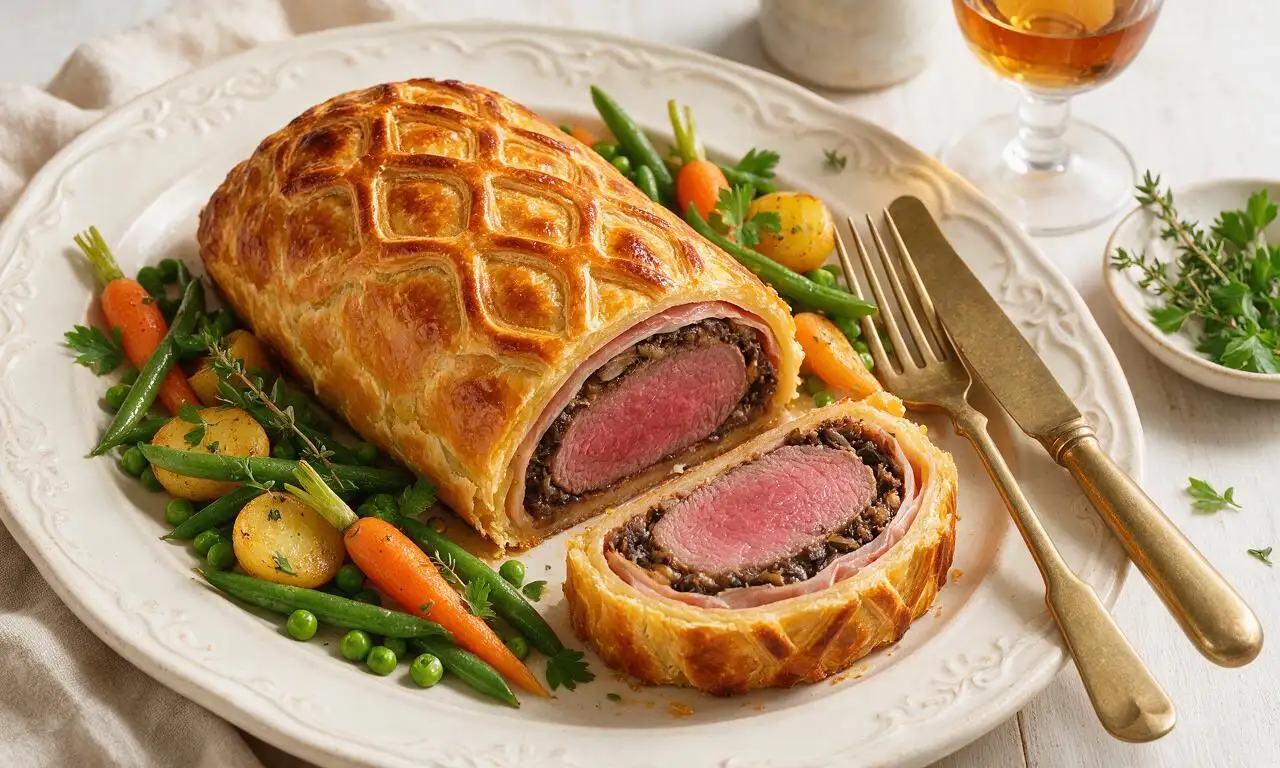
A showstopping classic of tender seared beef, savory mushroom duxelles, and crisp prosciutto wrapped in flaky golden puff pastry, baked to juicy perfection.

⏱️ 2 hours 1Main Course ★ 4.7
Main Course
🍜 India

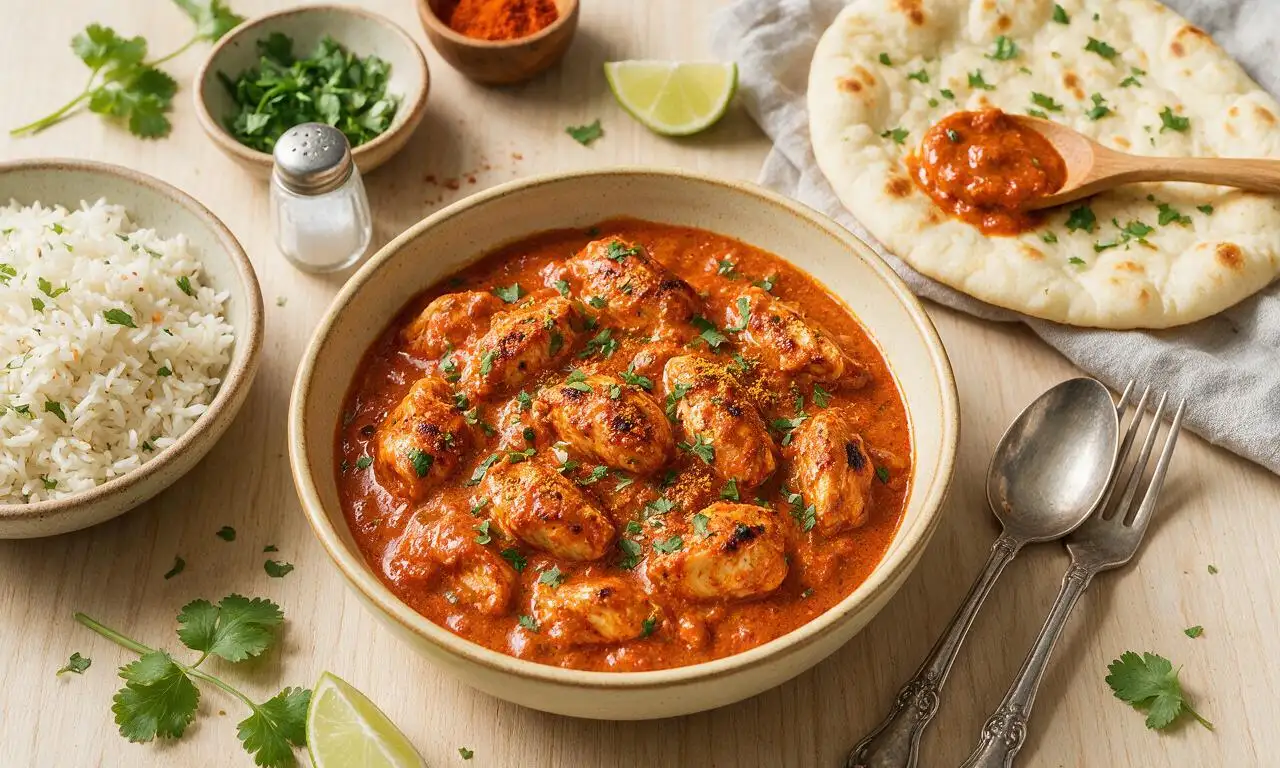
Tender charred marinated chicken simmered in a rich, spiced creamy tomato sauce, this iconic Anglo-Indian curry pairs perfectly with basmati rice or warm naan.

⏱️ 50 minuteMain Course ★ 4.6
Main Course
🍜 Thailand

Classic tangy, sweet, and savory Thai stir-fried rice noodles with shrimp, tofu, and crunchy garnishes, balancing all five core Thai flavor profiles.

⏱️ 30 minuteMain Course ★ 4.5
Main Course
🍜 United Kingdom

Crispy golden beer-battered cod and fluffy double-fried chips, served with tangy tartar sauce and malt vinegar: the timeless, beloved British pub comfort classic.

⏱️ 45 minuteMain Course ★ 4.7
Main Course
🍜 Mexico

Smoky, chile-marinated pork tacos with caramelized pineapple, fresh cilantro, and lime: a beloved classic Mexican street food perfect for casual summer gatherings.

⏱️ 1 hour 45Main Course ★ 4.8
Main Course
🍜 United States

Crunchy Fritos corn chips layered with savory beef chili and melted cheddar, topped with cool, zesty fixings for a beloved, cozy Tex-Mex comfort food.

⏱️ 35 minuteMain Course ★ 4.8

Turkey Speck:Frequently Asked Questions

1.Do I really need to use pink curing salt #1 for this recipe, or can I skip it? ▾
Pink curing salt #1 is non-negotiable for safe, authentic slow-cured turkey speck. It prevents harmful botulism bacteria growth during the long curing process, creates that signature blush-pink juicy interior, and adds the classic savory cured flavor. Don’t confuse it with pink Himalayan salt—they are completely different products, and substituting will not give you proper results or food safety.
2.How long does the curing process take, and how do I know the turkey is fully cured? ▾
For a standard 2–3 pound boneless skin-on turkey breast, plan for 3–4 days of dry curing in the refrigerator, flipping the breast once a day to distribute the kosher salt, sugar, and spice cure evenly. You’ll know it’s ready when the entire breast feels uniformly firm (no soft, squishy spots in the thickest section) and has lost 10–15% of its original raw weight.
3.I don’t own a smoker—can I still make this turkey speck at home? ▾
You absolutely can! The recipe’s smoked paprika delivers a good baseline of smoky flavor, and you can amp that up by mixing 1/4 teaspoon of applewood or hickory liquid smoke into the brown sugar and salt cure if you want a bolder smoke note. Roast the cured breast low and slow at 225°F in a conventional oven until it hits 150°F internal temperature for perfect results.
4.Why did my finished turkey speck turn out dry instead of juicy? ▾
Dry turkey speck almost always stems from one of two common mistakes: either you cured the breast for too long, which pulls out excess moisture, or you overcooked it past the target temperature. Always pull the breast when the thickest part hits 150°F—carryover cooking will bring it to a safe 155°F as it rests—and don’t cure a 3lb breast for longer than 4 days.
5.What’s the best way to store finished turkey speck, and how long will it keep? ▾
Let the cooked speck cool completely to room temperature first, then wrap it tightly in parchment paper followed by a layer of plastic wrap. Store it in the coldest part of your refrigerator for up to 2 weeks, or vacuum-seal it and freeze for up to 6 months. Slice it paper-thin right before serving for the best texture on holiday charcuterie platters or sandwiches.

Comments (20)

yesterday

Help! I’ve never cured any meat before, is the medium difficulty rating meaning I’m gonna mess this up if I’m a total beginner? I really want to make this for my partner’s birthday charcuterie board but I’m nervous I’ll waste a whole turkey breast.

2 hours ago

Hi Tyler! Don’t stress at all — the medium rating mostly comes from the multi-step curing process, not fancy skills. Just make sure you follow the cure ratio closely and keep your fridge at a consistent 38-40°F while it cures, and you’ll do great! It’s a fantastic first curing project if you take it slow.

2 days ago

Game changer alert! I’ve been making my own cured meats for years and never thought to try turkey speck before. This turned out so much better than the store-bought turkey bacon I usually grab. Wrapped some around melon for an appetizer last night and *chef’s kiss*.

yesterday

Wait the melon wrap idea is genius! I’ve been eating mine on breakfast toast but I’m definitely stealing that for my house party next weekend.

1 week ago

OMG this slow-cured turkey speck is SO good! I brought a batch to my neighborhood potluck last weekend and people were asking me for the recipe left and right. Way lighter than traditional pork speck, perfect for folks who don’t eat red meat. 10/10 would make again.

2 weeks ago

Brought this turkey speck to my office potluck today and it was the first dish gone! People kept guessing what it was because it tastes just as rich as regular speck but way lighter. Already sent the recipe link to half my team.

1 week ago

Wait were you the one who brought that?! I had three pieces and had no idea who made it to ask for the recipe. So glad I saw this comment, making it for my family next weekend!

5 days ago

We love hearing that it was a potluck hit! Quick pro tip for anyone making this for events: it tastes even better after 2-3 days resting wrapped in the fridge post-cook, so it’s ideal to make a few days ahead to cut down on day-of stress.

5 minutes ago

How long does this keep in the fridge after it’s done curing? I want to make a big batch on Sunday for the whole week but I don’t want it to go bad before I can eat it all.

just now

Great question! Once fully cured and sliced, your turkey speck will keep for up to 2 weeks in an airtight container in the fridge, or up to 3 months in the freezer if you want to stash some for later.

3 days ago

Tried this for my weekly meal prep and it’s a total game changer for my weekday sandwiches. A little trickier than I expected for a curing recipe but the payoff is huge. No sad desk lunches for me this month!

3 days ago

Has anyone tried adding red pepper flakes to the cure? I love a little kick with my cured meats and I’m curious if that would mess up the texture or curing process at all.

2 days ago

I did that last batch! Added about a teaspoon of crushed red pepper to the cure rub and it was perfect — didn’t mess up the cure at all, just added a nice slow heat that built with every bite. Highly recommend!

3 days ago

I wanted to love this so bad, but my first batch came out way too salty! I followed the measurements exactly, so I’m not sure what I did wrong. It was still edible but I had to blot every piece with a paper towel to cut the salt.

2 days ago

I had this happen my first batch too! I realized I didn’t rinse off the cure rub completely before cooking, which left extra salt on the outside. A quick 20 minute cold water soak after curing and a really good rinse fixed it for my next go around.

yesterday

Hi Jules, so sorry your first batch was saltier than expected! Leo’s tip is spot on — a thorough rinse and optional short cold water soak after the curing period will mellow out the salt level perfectly. It also helps to make sure you’re using fine-grain kosher salt, not table salt, for the cure since table salt is much denser and can lead to over-salting.

1 week ago

OMG I never thought homemade turkey speck could taste this good! I used a wild turkey breast my brother brought home from hunting season and it was chef’s kiss. Way better than any store-bought cured meat I’ve ever had.

5 days ago

Whoa, wild turkey?! That’s such a good idea, I have a few breasts in my deep freeze from last hunt season and I was trying to figure out something new to do with them. This just jumped to the top of my list.

3 days ago

What a fantastic use for wild turkey! The lean meat holds up beautifully to the slow cure, and we love hearing folks adapt the recipe to what they have on hand. Just be sure to trim off any extra silverskin from the wild breast before applying the cure for the best texture.

2 weeks ago

Made this for our family camping trip snack stash and it held up perfectly! Salty, savory, just the right amount of chew. My kids kept sneaking pieces out of the container before we even left the driveway lol.

1 week ago

Made this for our family Sunday brunch and served it alongside avocado toast and mimosas — everyone went back for seconds! Even my super picky brother-in-law who swears “turkey can never replace pork” was raving about it.

5 days ago

That is such a good serving idea! I’ve only been using mine for sandwiches but I’m absolutely adding it to my next brunch spread. Your brother-in-law’s reaction is exactly what I’m hoping for with my pork-obsessed dad lol.

yesterday

Wait the listed cook time is 2 hours — is that active time, or total time including the curing rest? I only have small windows to cook during naptime so I need to plan ahead.

2 hours ago

Hi Carla! The 2 hour cook time listed is the active cook/smoke time after the curing period is complete. The curing itself is mostly hands-off rest time in the fridge, so you can split the prep over a few days to work around naptime schedules easily!

2 days ago

I don’t have a smoker — can I make this in a regular oven? I live in a tiny studio apartment in Brooklyn and there’s zero balcony space for any outdoor cooking equipment, but I’m dying to try this recipe.

yesterday

I did it! I used my oven on the lowest convection setting (170°F) and added a little smoked paprika to the cure to get that smoky flavor without a smoker. It turned out amazing, you couldn’t even tell I didn’t use actual smoke.

30 minutes ago

You absolutely can make this in a regular oven, Nora! Rory’s trick is perfect — use your oven’s lowest setting (aim for 160-170°F internal oven temp), cook until the internal temp of the turkey hits 150°F, and add a pinch of smoked paprika or a few drops of liquid smoke to the cure if you want that classic speck smokiness. No outdoor equipment required!

5 days ago

So happy I found this recipe! I’ve been missing speck since I cut out pork a few years ago and this hits every single note. Threw some on a charcuterie board for my book club and nobody could tell it was turkey!

5 days ago

Ran this on my pellet smoker at the temp recommended and it came out perfect! Nice smoky flavor, not too overpowering, perfect chew. I was worried turkey would dry out during the slow cook but the cure kept it super moist.

3 days ago

Oh good to hear it works on a pellet smoker! I’ve been nervous to try cured meats on mine since I’ve only done ribs and brisket so far. This is gonna be my next weekend project for sure.

1 week ago

I have to watch my sodium intake — has anyone tried making this with a reduced-sodium cure? I’d love to give it a go but don’t want to risk food safety by messing with the salt levels too much.

5 days ago

Hi Pat! For food safety, we don’t recommend reducing the salt in the initial cure, as it’s what prevents harmful bacteria growth during the slow curing process. If you’re watching sodium, you can soak the finished speck in cold water for 30-45 minutes after curing to draw out excess salt before cooking, just be sure to pat it completely dry before putting it in the oven/smoker.

5 days ago

Chopped this up and tossed it into my carbonara last night instead of guanciale and it was INSANE. The salty, smoky flavor cut through the creamy egg sauce perfectly, and it was way lighter than the traditional pork version. My roommate thought I ordered takeout from a fancy Italian place!

3 days ago

Wait that is the most genius swap I’ve ever heard of! I make carbonara every other Friday and I’ve been looking for a lighter alternative to guanciale that doesn’t sacrifice flavor. Running to the store to get a turkey breast after work today.

2 days ago

I did something similar! Thinly sliced it and put it on my homemade white pizza with arugula and parm. 10/10, way better than regular bacon on pizza. Will have to try the carbonara swap next!

30 minutes ago

Pretty solid recipe! Cook time was exactly 2 hours like it said, which was nice for planning. I added a little extra black pepper to the cure for my personal taste and it turned out great. Will tweak the salt a touch next time for my preference.

yesterday

My kids loved it! I was worried the curing process would be too fussy for a weeknight, but I split the prep over two days and it came together way easier than I thought. Served it with scrambled eggs for breakfast and the whole family cleaned their plates.

yesterday

I was intimidated by the medium difficulty rating but this was way easier than I thought! The only tricky part was waiting the full curing time because it smelled so good the whole time it was in the fridge. 100% making this again for holiday charcuterie boards this year.

2 hours ago

Oh my god the waiting is the worst part! I kept opening my fridge to peek at it every few hours the first time I made it, I was so worried I’d mess up the cure. It was 100% worth the wait though, right?

30 minutes ago

We’re so glad you gave it a shot, Sam! The wait is definitely the hardest part, but the end result is always worth it. It makes a fantastic holiday charcuterie addition — we recommend slicing it paper-thin and serving it alongside olives, aged cheese, and crusty bread for the perfect spread.