1.Why is it so important to use sushi-grade ahi tuna for this recipe?
▾
Sushi-grade (or sashimi-grade) ahi is handled, flash-frozen, and stored to strict FDA guidelines that kill harmful parasites, making it completely safe to eat raw. Non-sushi-grade grocery store tuna hasn’t gone through this process, carrying higher food safety risk for raw consumption, and it usually has a mushier, less fresh texture that won’t work well for poke.
2.Can I use frozen ahi tuna if I can’t find fresh sushi-grade ahi?
▾
Absolutely! Most sushi-grade ahi sold at seafood counters was actually flash-frozen at sea to lock in peak freshness and meet food safety standards. Thaw it slowly in the fridge overnight, pat it completely dry with paper towels before cubing, and it will deliver the same firm, buttery texture as never-frozen fresh ahi.
3.What size should I cut the ahi cubes for the best texture?
▾
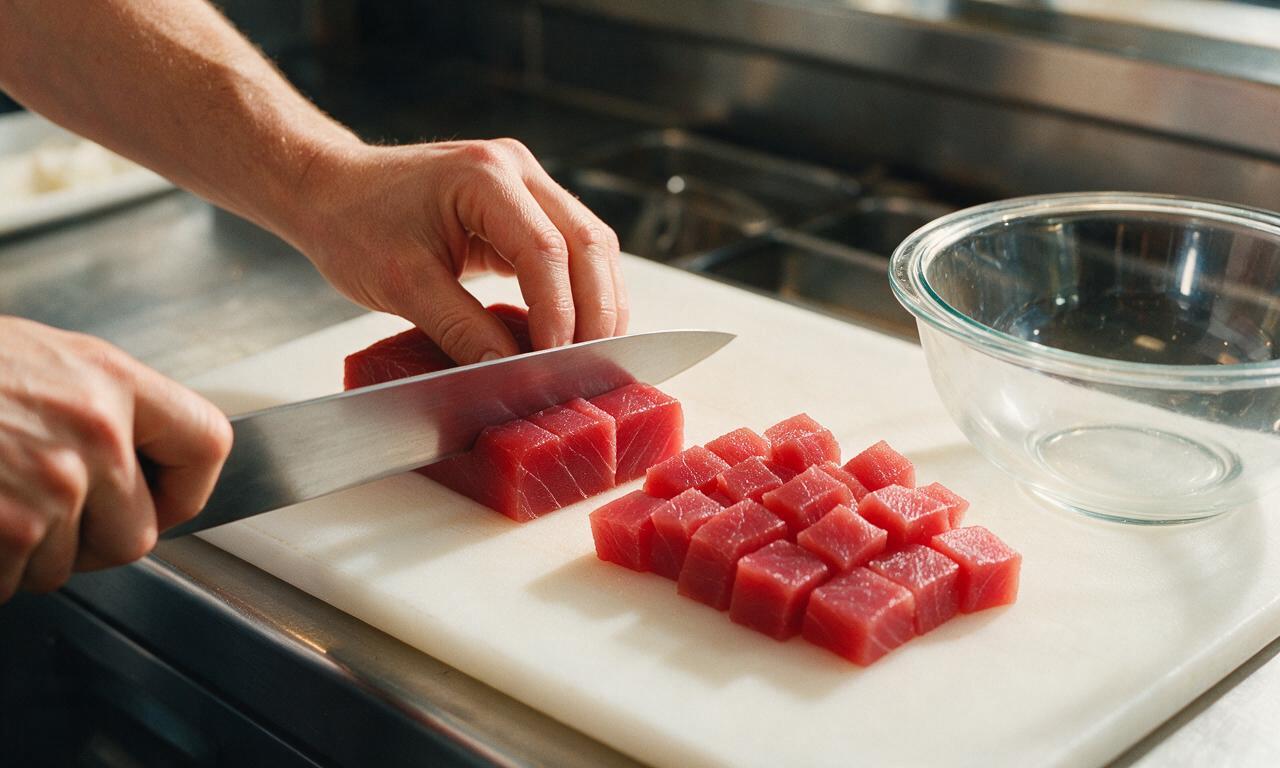
Aim for uniform ½-inch to ¾-inch cubes for the ideal bite. If you cut the fish smaller, the salt and acid in the dressing will break it down too quickly, leading to mushy poke. If you cut it larger, you won’t get a balanced mix of fish, dressing, and mix-ins in every single bite.
4.Why does the recipe call for low-sodium soy sauce instead of regular?
▾
Regular soy sauce is extremely high in salt, and since poke is served raw, that salt doesn’t mellow or dilute the way it does in cooked dishes. Low-sodium soy sauce lets you control salt levels better, letting bright umami shine without making the dish overly salty, and it won’t pull excess moisture out of the delicate ahi too fast.
5.Can I use regular untoasted sesame oil instead of toasted sesame oil?
▾
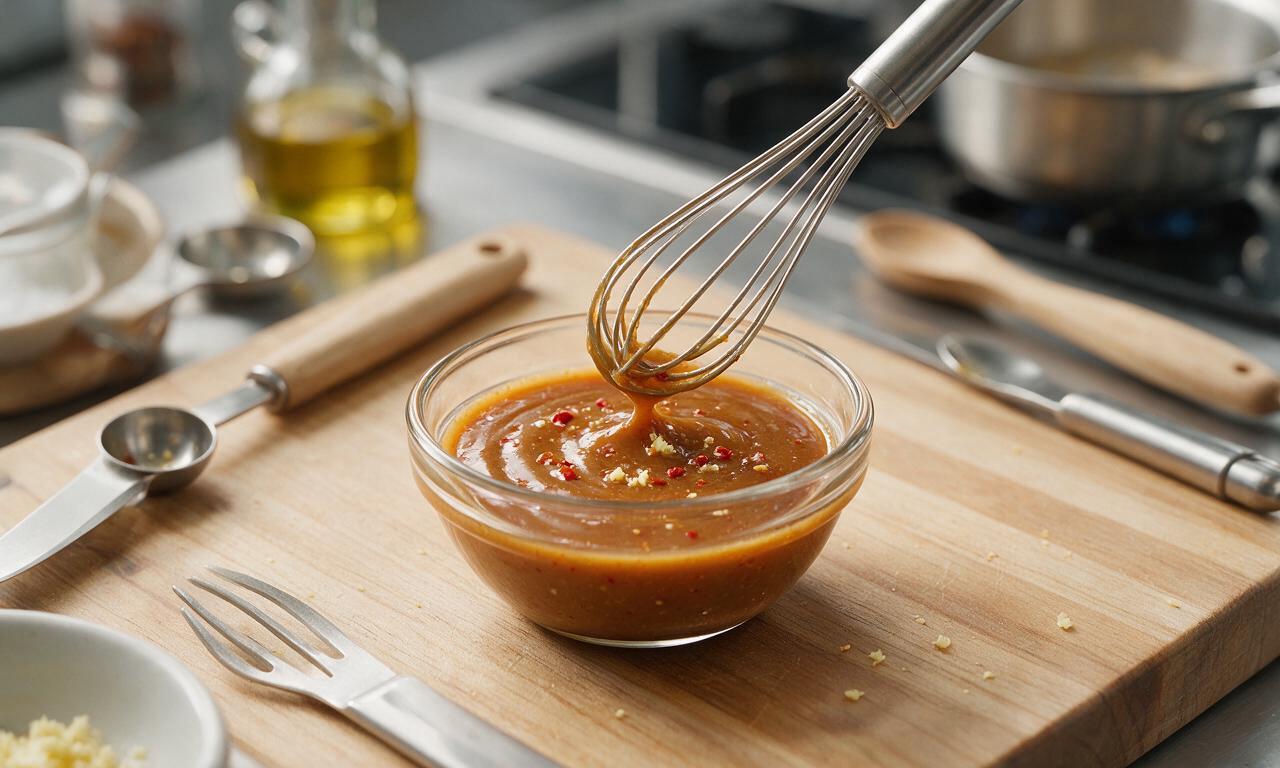
Skip untoasted sesame oil for this recipe—it has a mild, neutral flavor that won’t deliver the signature warm, nutty aroma core to traditional poke. Toasted sesame oil has a deep, roasty note that pairs perfectly with soy and fresh fish; use it sparingly, as its concentrated flavor can easily overpower the delicate fish if you pour too much.
6.What’s a good substitute for unseasoned rice vinegar if I don’t have it?
▾
Unseasoned rice vinegar has a mild, slightly sweet tang that doesn’t overpower delicate ahi. If you’re out, the closest swap is plain white vinegar mixed with ¼ teaspoon of white sugar per tablespoon of vinegar to mellow its sharp bite. Avoid balsamic, apple cider, or white wine vinegar, as their bold, fruity notes will clash with the clean fish flavor.
7.Why use freshly grated ginger instead of dried ground ginger?
▾
Dried ground ginger has a sharp, spicy, concentrated flavor that tastes nothing like bright, zesty fresh ginger, and it will leave a gritty, unpleasant texture in your poke. Freshly grated ginger adds a warm, bright aromatic kick without overpowering the fish, and it blends seamlessly into the light dressing for even flavor across every bite.
8.How far in advance can I toss the ahi with the dressing before serving?
▾
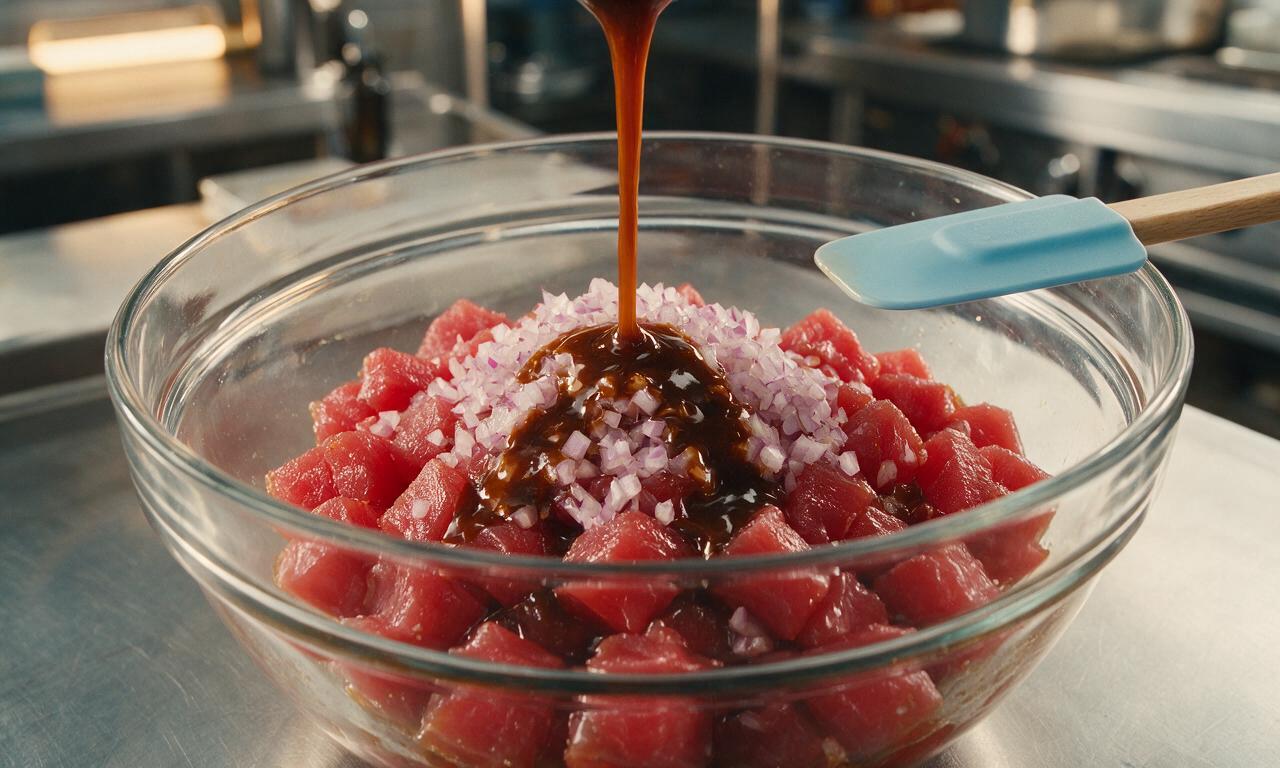
For the best firm texture and freshest flavor, toss the ahi with the dressing no more than 15 to 20 minutes before you plan to serve. The acid in the rice vinegar and salt in the soy sauce will start to cure the fish, making it opaque and mushy if it sits too long, much like ceviche left to marinate for hours.
9.When should I add the avocado to keep it from browning or getting mushy?
▾
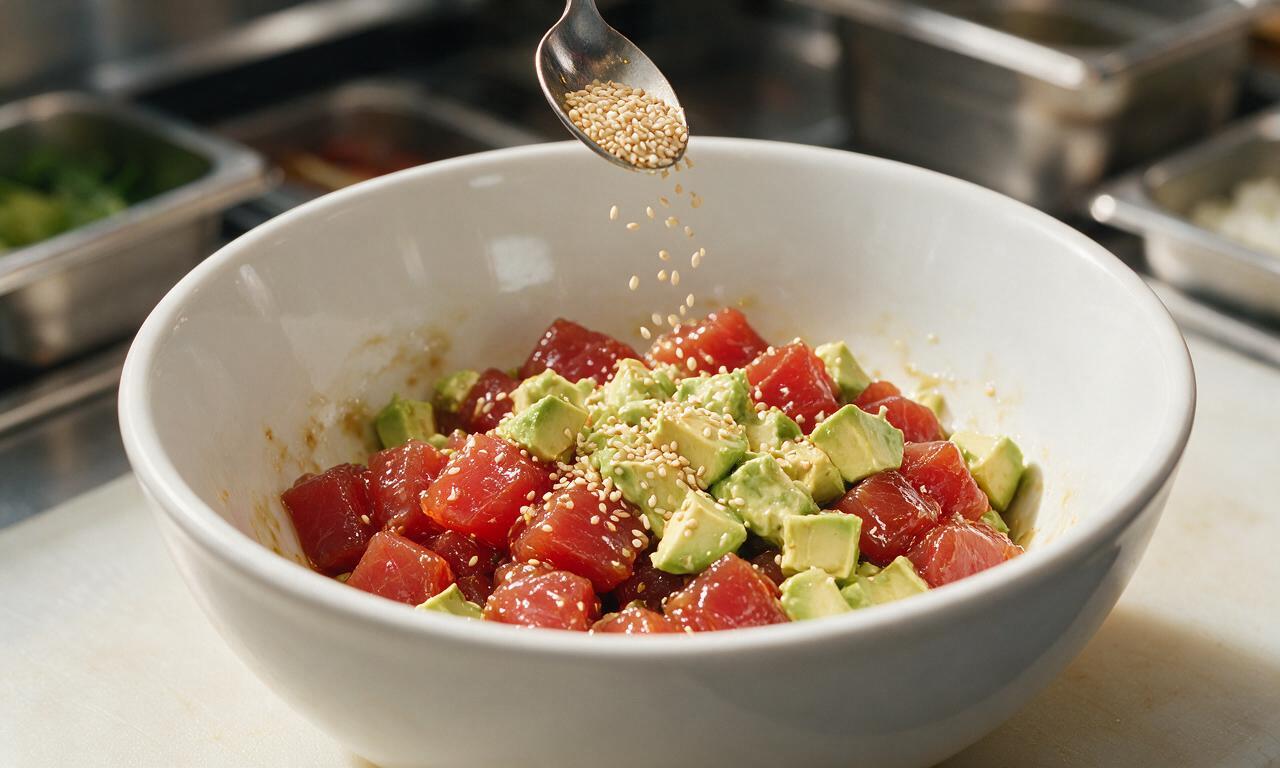
Dice your avocado right before serving, and fold it in very gently at the very end, after the ahi is fully tossed with dressing and aromatics. If you add it earlier, the acid in the dressing will make it turn brown and break down into a mushy mess, rather than staying in firm, creamy, bright green chunks.
10.Is there a gluten-free swap for the soy sauce in this recipe?
▾
Absolutely! Swap the low-sodium soy sauce 1:1 for low-sodium gluten-free tamari, a Japanese wheat-free soy product that delivers the same deep umami flavor. Stick to a low-sodium option just like you would with regular soy sauce to keep salt levels balanced, so it doesn’t overpower the delicate, buttery flavor of the raw ahi.
11.How can I tell if my ahi tuna is fresh enough to use for poke?
▾
High-quality sushi-grade ahi, whether fresh or properly thawed, should be bright deep pink to red with no dull brown or gray discoloration. It should smell clean and briny, like fresh ocean air, with no strong, fishy, or sour odor, and it should feel firm to the touch, not slimy or mushy, when pressed lightly.
12.Can I store leftover tossed poke in the fridge to eat the next day?
▾
I don’t recommend it. Once tossed with the soy and vinegar dressing, the ahi will continue to cure, turning firm, opaque, and mushy after even a few hours in the fridge, and the avocado will brown and break down. If you have prepped, un-tossed ingredients, you can store dry, cubed ahi in an airtight container for up to 24 hours to toss fresh later.
13.What crunchy mix-ins are used in authentic Hawaiian-style poke?
▾
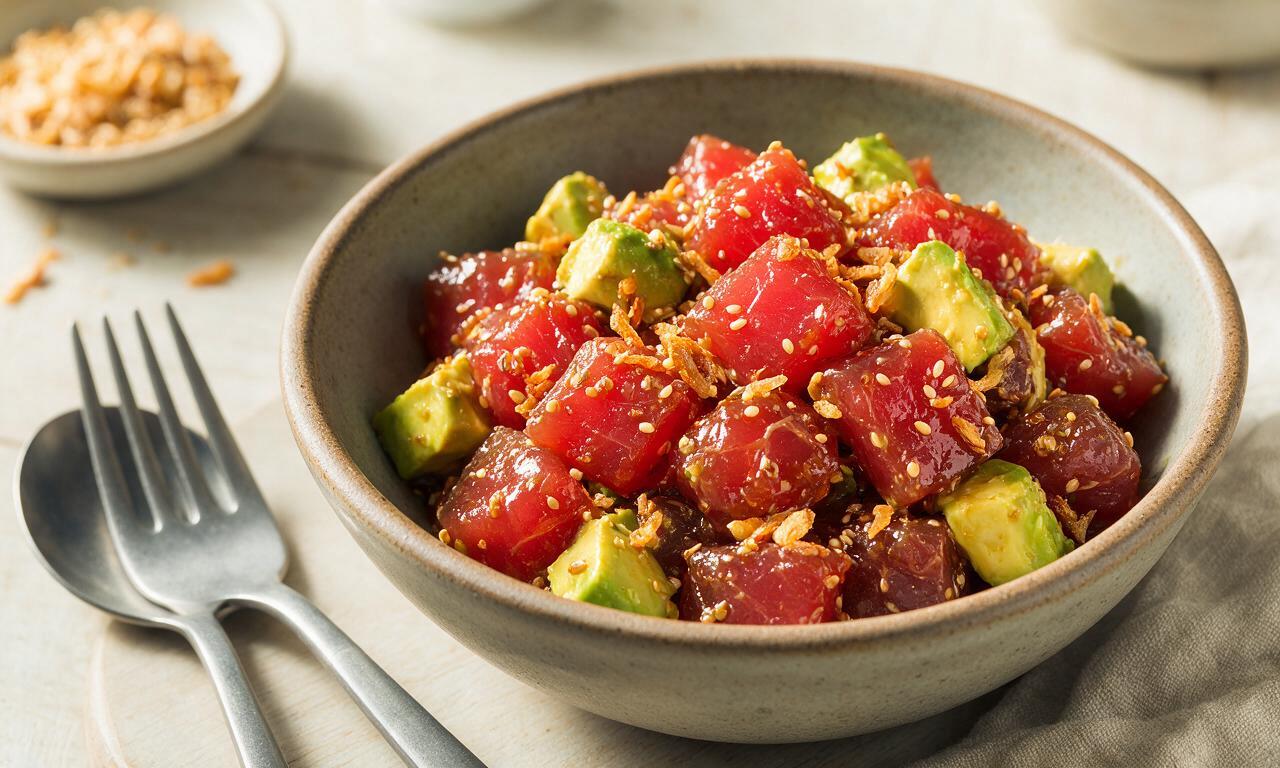
Traditional poke keeps mix-ins simple to highlight the ahi: thin-sliced sweet Maui onion, chopped toasted macadamia nuts, thinly sliced scallion, and a light sprinkle of toasted white sesame seeds for crunch. Skip heavy add-ins like spicy mayo, fried wonton strips, mango, or cream cheese—those are modern mainland twists, not classic preparations.
14.Do I need to trim the ahi before cubing it for poke?
▾
Yes, always take 2 minutes to trim the fish first. Run your fingers over the ahi fillet, and use a sharp thin knife to cut out any pale, tough, stringy connective tissue you find. Those chewy, tendon-like bits don’t soften when eaten raw, and they’ll leave an unpleasantly tough bite in an otherwise silky, buttery bowl of poke.
15.How can I add spicy flavor without straying from traditional poke style?
▾
For a gentle, authentic heat kick, stir a tiny pinch of crushed red pepper flakes or a thinly sliced fresh Hawaiian chili pepper into the dressing, rather than adding creamy spicy mayo. That adds bright, subtle heat without covering up the fresh fish flavor, and it aligns with the simple, ingredient-focused approach of classic Hawaiian poke.
16.What’s the best way to serve traditional ahi poke?
▾
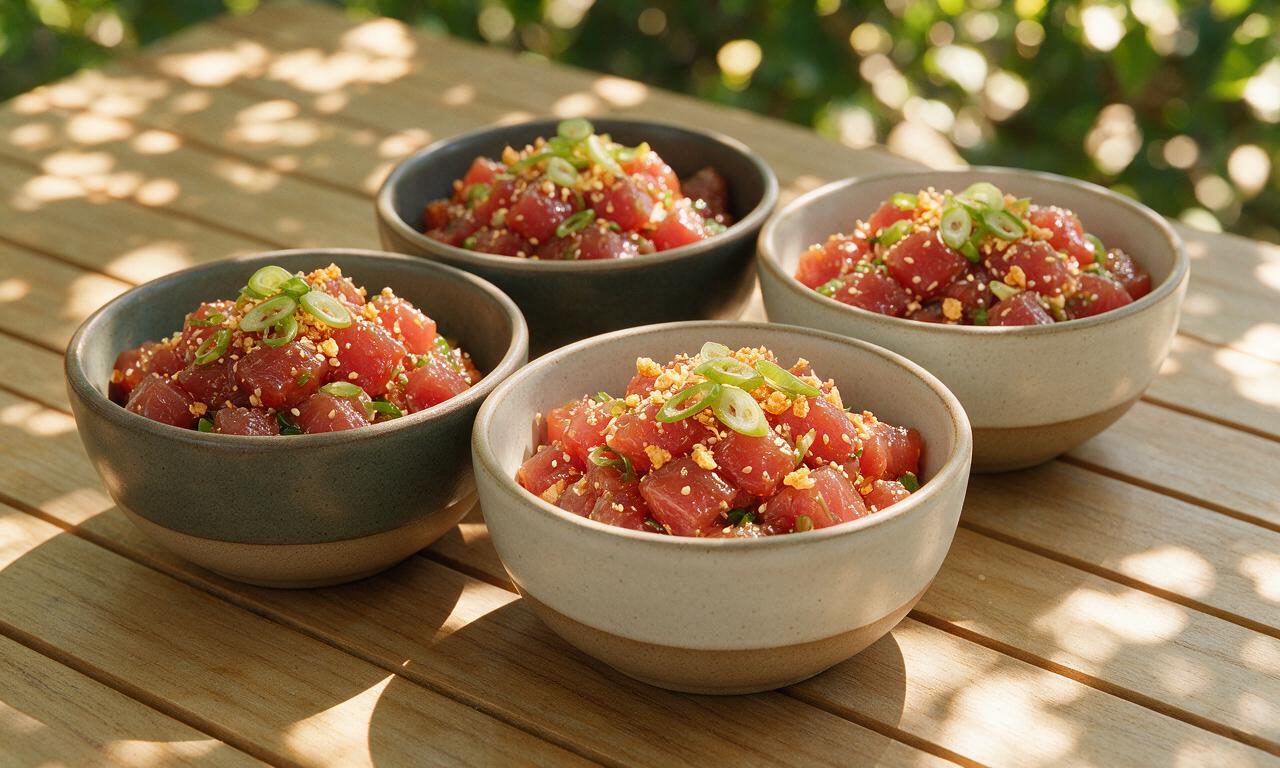
Serve it well-chilled straight from the fridge, either in small bowls as a light shared appetizer, piled over warm short-grain sushi rice for a light lunch, or alongside crispy plain rice crackers for easy scooping. You don’t need fancy garnishes—just a light sprinkle of extra sesame seeds or sliced scallion is all you need to finish it.
17.Why does my homemade poke always turn out mushy?
▾
Mushy poke almost always traces back to three common mistakes: using low-quality non-sushi-grade ahi that was thawed too quickly, cutting the fish into too-small cubes, or letting it sit in the acidic, salty dressing for too long before serving. Patting the fish completely dry before cubing also helps, as excess moisture leads to watery, soft poke.
18.Can I use a different type of tuna if I can’t find yellowfin ahi?
▾
If you can’t source sushi-grade yellowfin ahi, sushi-grade bigeye tuna is the closest swap, as it has a similarly high fat content and firm, buttery texture. Skip albacore or skipjack tuna for raw poke—they are much leaner, softer, and have a stronger, fishier flavor that doesn’t hold up well to the sesame-soy dressing.
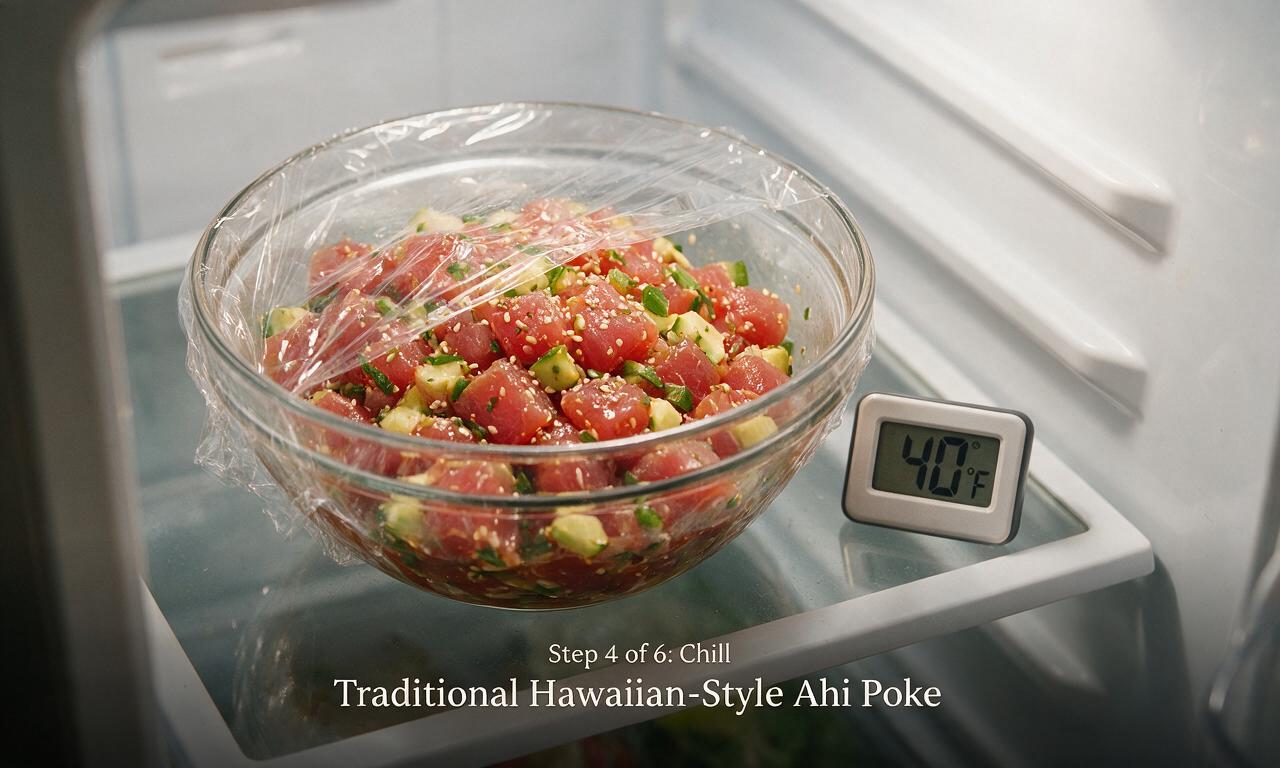
19.Do I need to let the ahi marinate for hours to build deeper flavor?
▾
Long marination is actually a big mistake for traditional poke. Unlike cooked meat marinades that need hours to penetrate, delicate raw ahi absorbs the dressing’s bright, umami flavor in just 10 to 15 minutes of gentle tossing. Longer marination cures the fish, ruining its silky raw texture and making it tough and overly salty.

OMG this is exactly the ahi poke I ate every single day on my Maui trip last summer! I was so scared I’d never get that fresh, bright flavor at home but this recipe is foolproof. 20 minutes start to finish? Unbeatable. My husband even asked if I ordered takeout from our local Hawaiian spot, ha! Game changer for my weekly meal rotation.
Brought this to my neighborhood block party last weekend and people were hounding me for the recipe before I even set the bowl down! I added a little extra sesame oil because I’m obsessed with that nutty flavor, and it was chef’s kiss. SO good, will be making this for every potluck from now on.
Wait, quick question — is it totally safe to eat the ahi raw here? I’ve never made raw fish at home before and I’m nervous I’ll mess it up! The recipe looks so good I really want to try it for my sister’s birthday dinner next week.
Has anyone tried prepping this ahead for work lunches? I’m trying to mix up my usual sad desk lunch rotation and this looks way better than my go-to turkey sandwich.
Made this for my at-home date night last night and it felt like we were eating at a fancy waterfront restaurant! I served it over some seasoned sushi rice with a side of edamame and my date said it was the best meal I’ve ever made. Will absolutely be adding this to our date night rotation.
Super excited to make this! Does anyone know if I can swap the regular soy sauce for tamari to make this gluten free? I can’t have wheat and don’t want to mess up the flavor balance.
Dude, this is legit. I grew up going to the Big Island every summer to visit family and this tastes exactly like the poke my uncle would make after a morning of fishing. The ratio of soy to sesame to onion is perfect, no weird extra add-ins like the mainland grocery store versions that are loaded with mayo. 10/10.
As a broke college student with basically zero cooking skills, I was shocked how easy this was! I found sashimi-grade ahi on sale at my local grocery store, grabbed the rest of the ingredients from the pantry, and had a restaurant-worthy meal in less than 20 minutes. Way cheaper than getting poke takeout too, will be making this nonstop.
Ugh, I made this last night and my ahi got all mushy! Did I do something wrong? The flavor was still incredible but the texture was off, I want to get it right next time.
This recipe is chef’s kiss as written! I added a spoonful of chili crisp and a little sliced jalapeño for some heat for anyone who likes a kick, and it was such a good upgrade. Definitely recommend if you love spicy food like I do.
My kids are so picky when it comes to fish and they both devoured this! I was shocked, they kept asking for more. I served it with crispy wonton chips for dipping and they thought it was the coolest snack ever. Definitely a new family favorite in our house.
I’ve tried so many homemade poke recipes over the years and they always come out too salty or too bland, but this one is perfectly balanced! I meal prepped 4 portions on Sunday, kept the sauce separate, and tossed it right before eating, and it held up great all week. Absolute game changer for my meal prep lineup.
Thinking about making this for our football tailgate next weekend! How long does it stay good out on ice? I don’t want it to get too warm and go bad before everyone gets to eat.