American Cheese Scrambled Eggs

title 1
American Cheese Scrambled Eggs
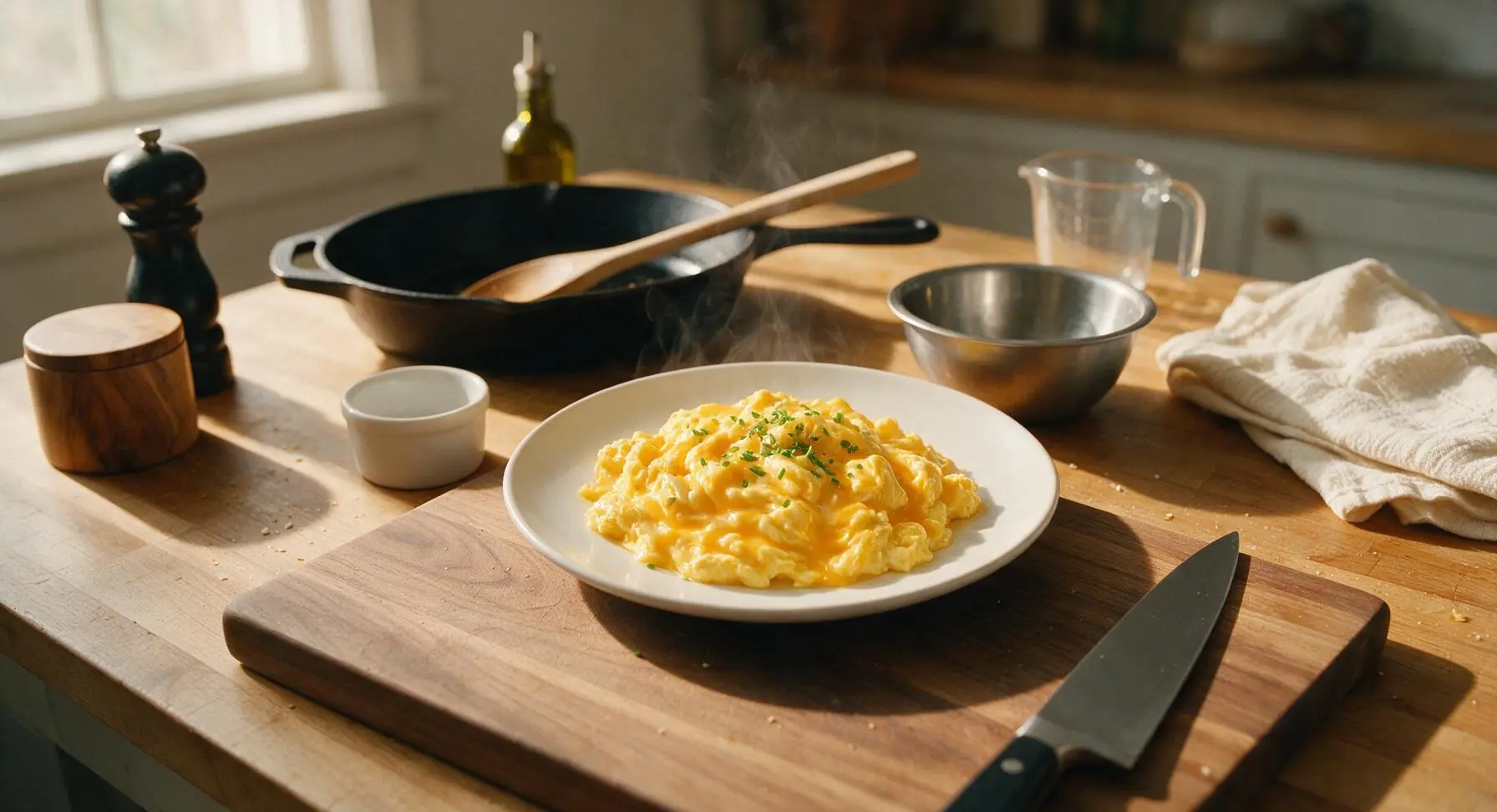
⏱️ cook time 5 minutes
🍽️ servings 2
⚡ Difficulty easy

intro

Silky, creamy soft-scrambled eggs folded with melty, stretchy American cheese—this nostalgic diner staple comes together in under 10 minutes for a satisfying, no-fuss cozy meal.

Ingredients
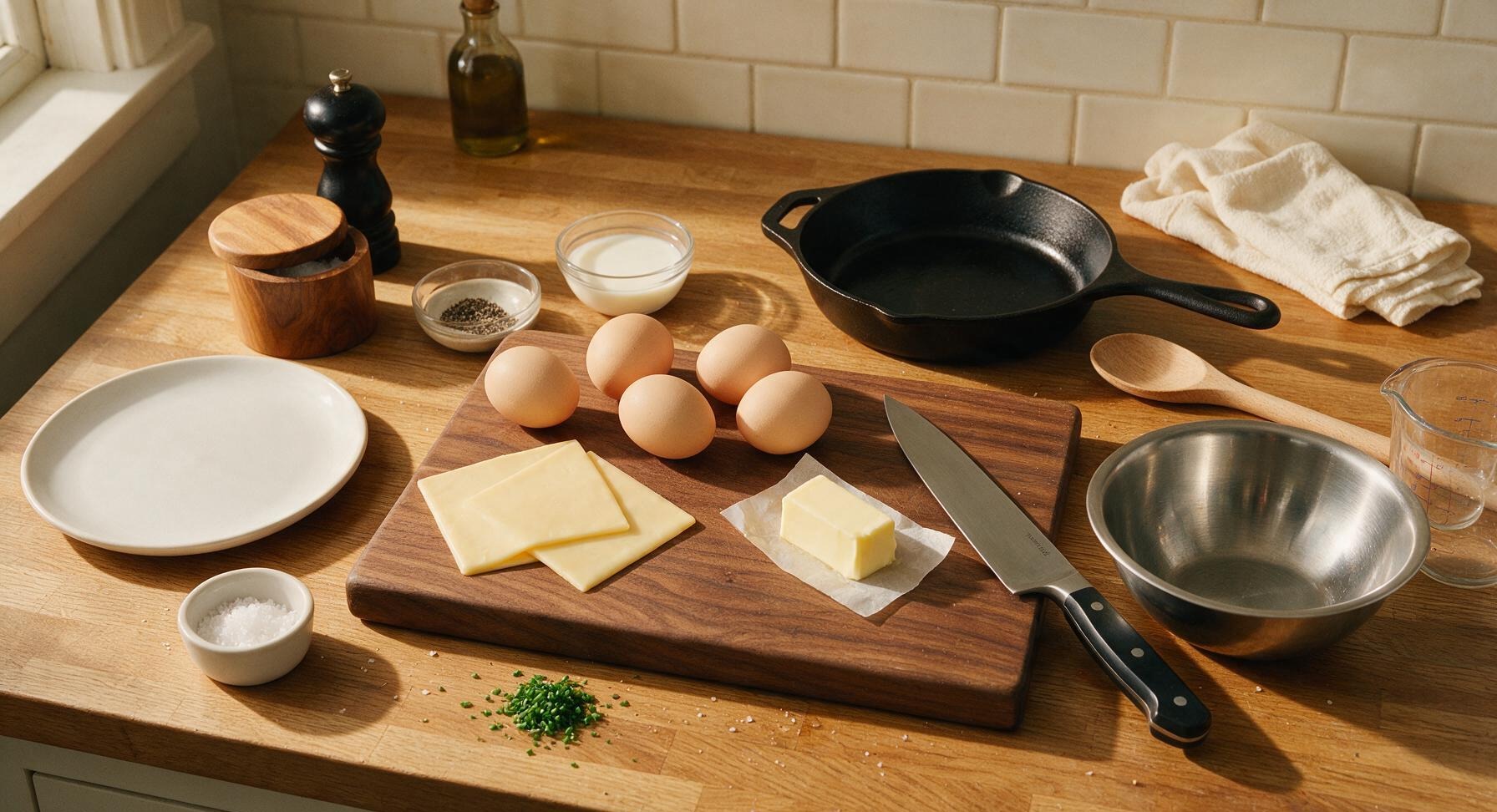
Large eggs 6 (about 300g)
Processed American cheese slices 2 slices (40g)
Unsalted butter 1 tablespoon (14g)
Whole milk 2 tablespoons (30ml)
Flaky sea salt 1/4 teaspoon
Freshly ground black pepper 1/8 teaspoon
Fresh chives 1 teaspoon, finely chopped

Steps

1

Crack Eggs Into Bowl

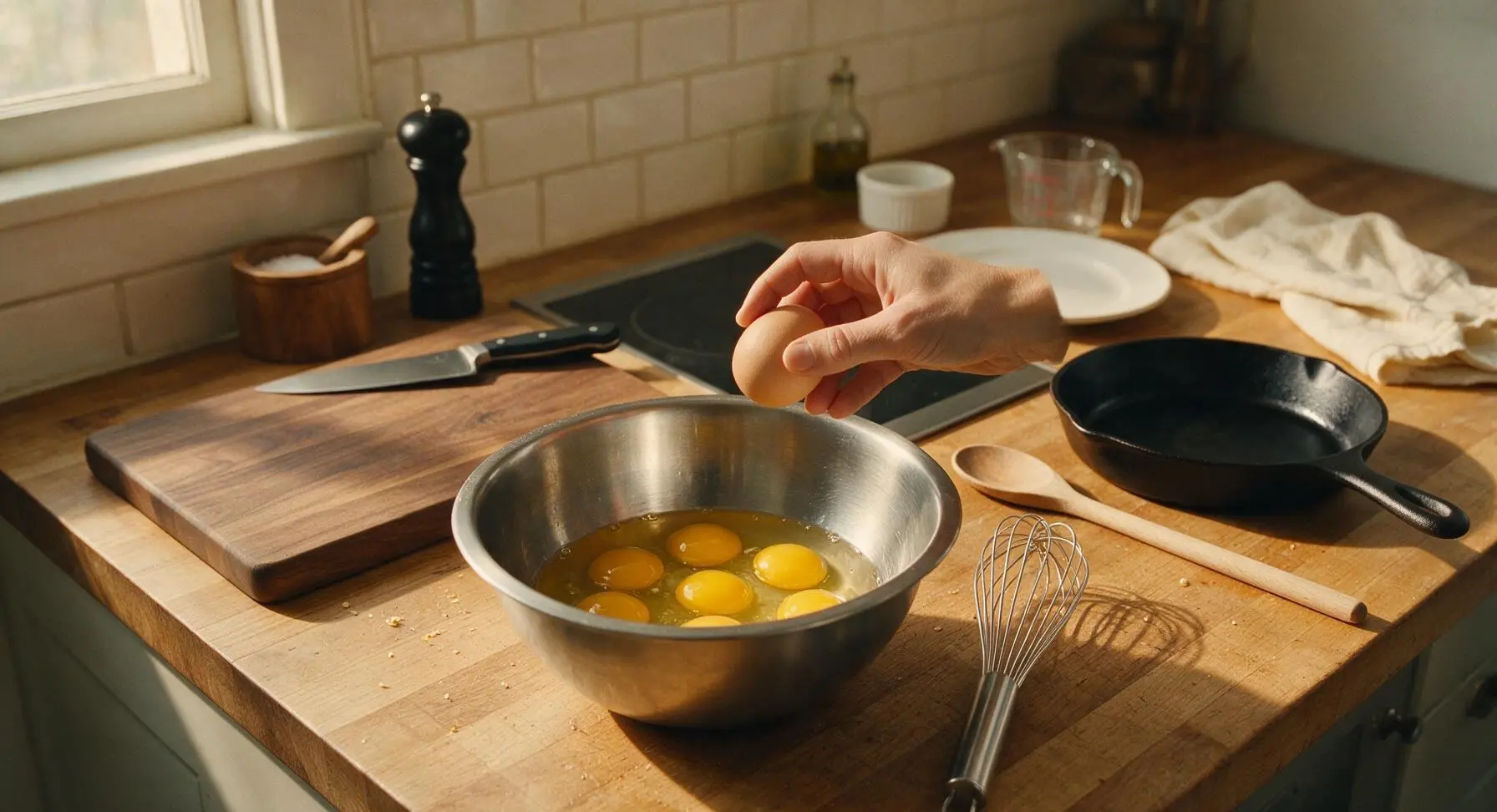
Hold each large egg gently against the edge of the stainless steel mixing bowl, cracking cleanly to avoid shell fragments falling into the bowl. Add all 6 eggs to the bowl, then pour in 2 tablespoons of whole milk and 1/4 teaspoon flaky sea salt. Fish out any small shell fragments with the tip of the whisk if they fall into the mixture.
Step 1
step1:Crack Eggs Into Bowl
2

Whisk Until Smooth

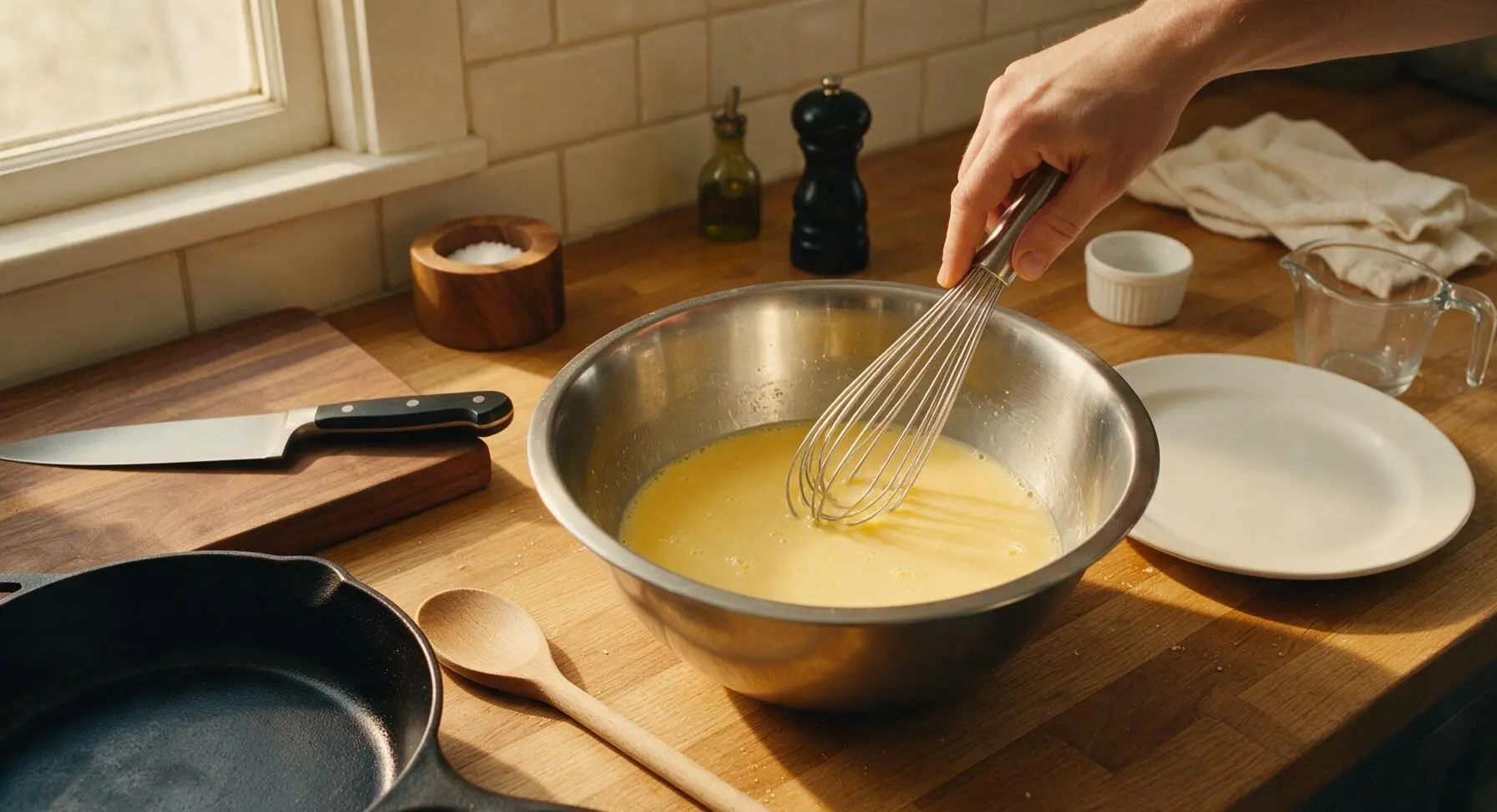
Use the stainless steel wire whisk to beat the egg and milk mixture for 30-45 seconds, until yolks and whites are fully combined, the mixture is a uniform pale yellow, and a thin layer of small bubbles forms across the surface. Do not over-whisk, as incorporating too much air will lead to dry, spongy eggs instead of tender curds.
Step 2
step2:Whisk Until Smooth
3

Melt Butter In Pan

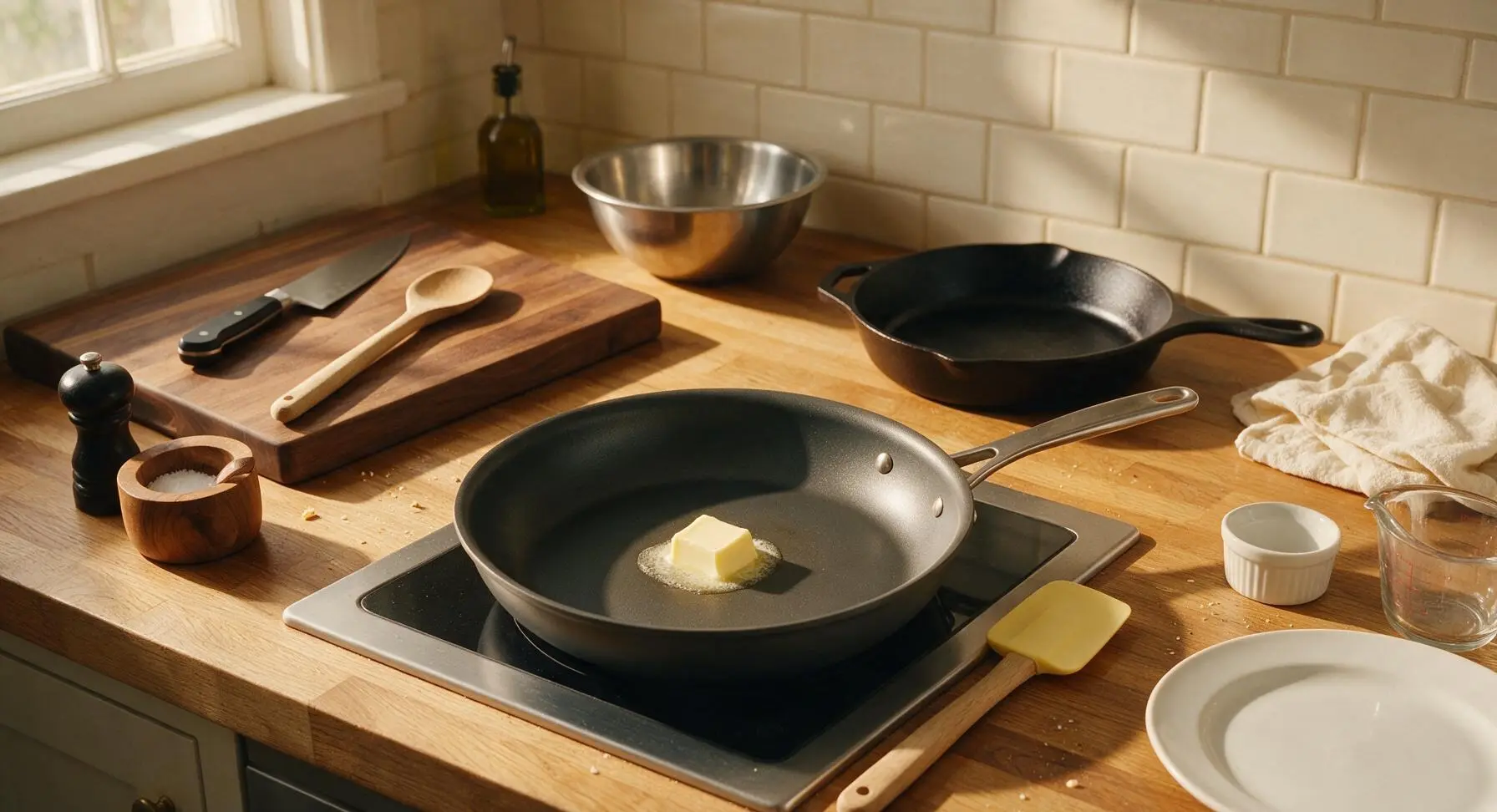
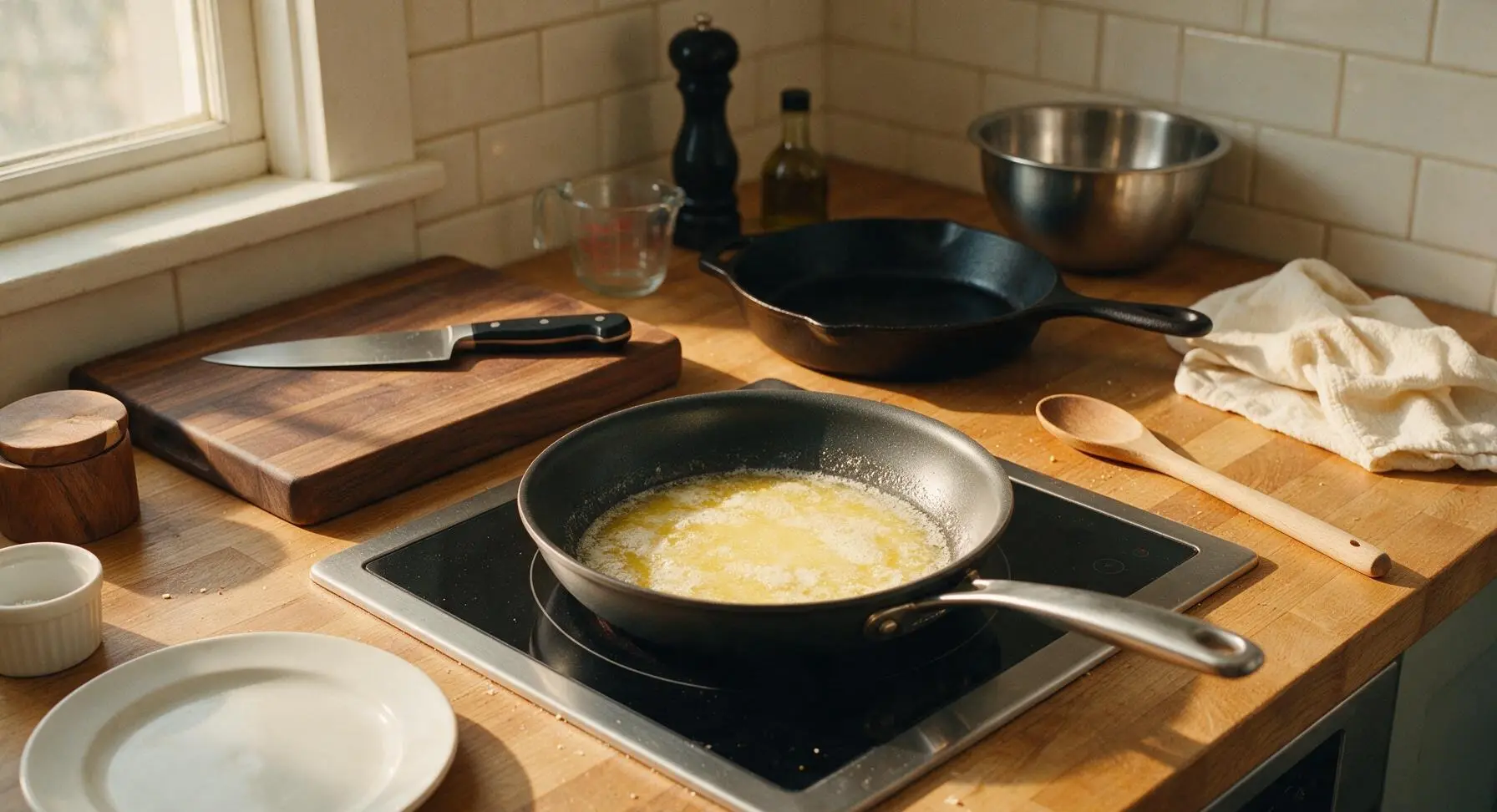
Place the 10-inch nonstick skillet on the centered induction zone, set heat to medium-low (300°F / 150°C). Add 1 tablespoon of unsalted butter to the pan, swirling as it melts for 1 minute until it foams gently but does not turn golden brown. The melted butter should coat the entire bottom of the pan evenly.
Step 3
step3:Melt Butter In Pan
Step 3
step3:Melt Butter In Pan
4

Add Eggs To Skillet

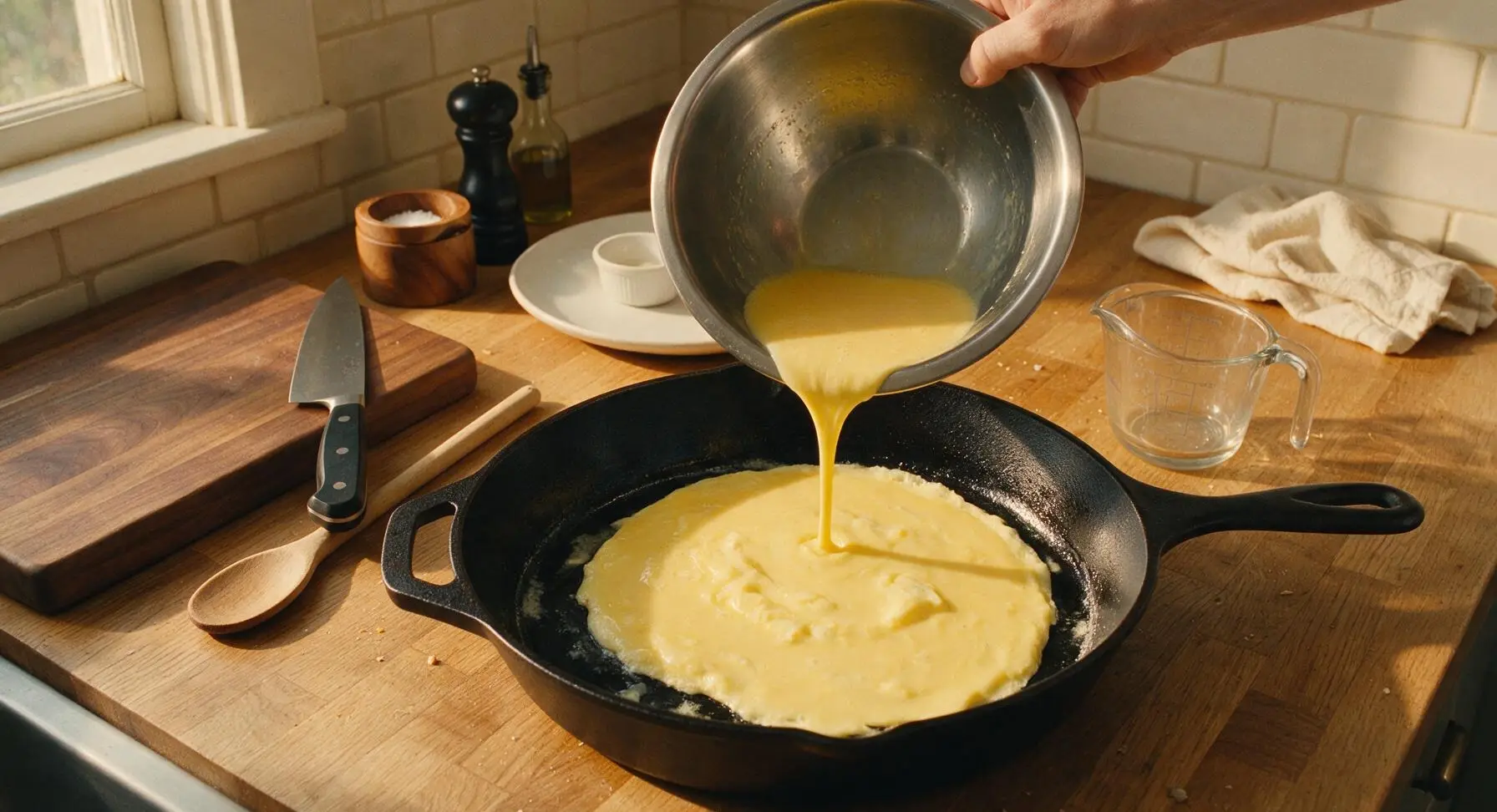
Pour the fully whisked egg mixture into the center of the buttered skillet in one smooth pour. Let the eggs sit undisturbed for 15 seconds, so the thin layer touching the pan begins to set into soft, tender curds without browning.
Step 4
step4:Add Eggs To Skillet
5

Gently Stir Curds

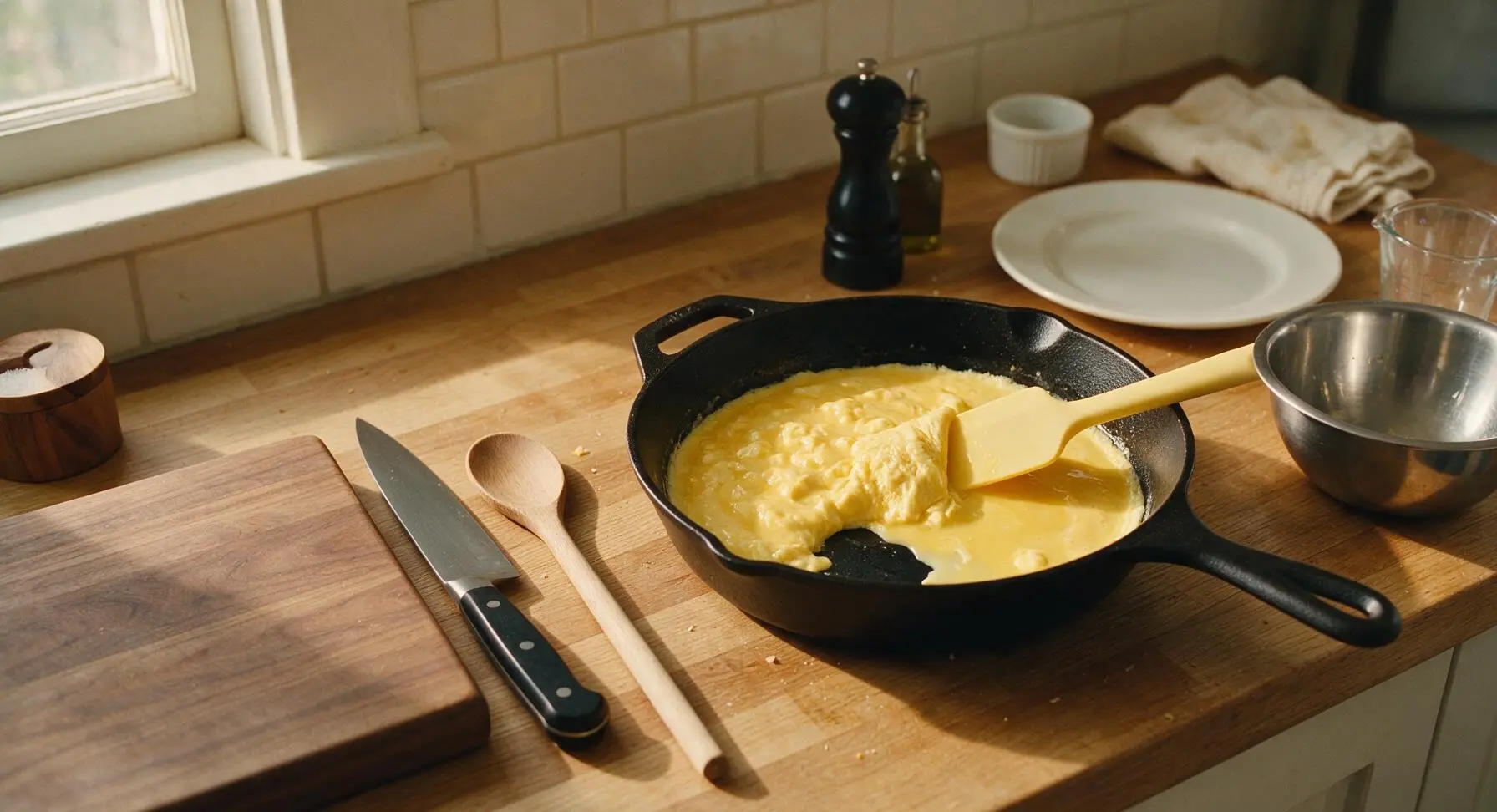
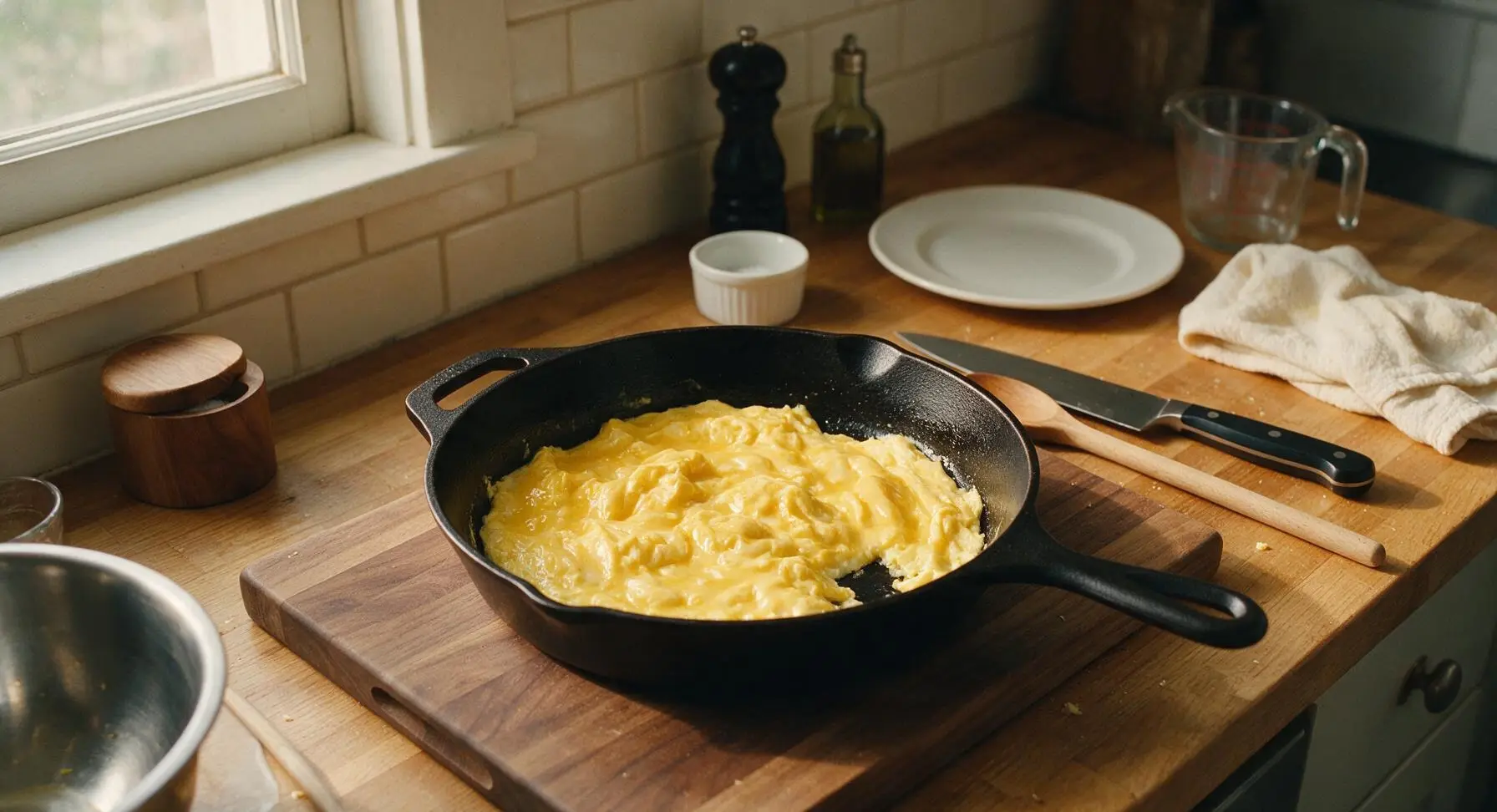
Use the flexible yellow silicone spatula to push the set edges of the egg toward the center of the pan, tilting the skillet to let uncooked, runny egg flow into the empty pan spaces. Repeat this slow, gentle pushing motion every 10 seconds for 2 total minutes, until eggs form soft, wet, large curds and are about 70% cooked (still slightly runny in spots, no browned edges). Do not scrape the pan hard or stir constantly, as this will break curds into small, tough pieces.
Step 5
step5:Gently Stir Curds
Step 5
step5:Gently Stir Curds
6

Fold In Cheese

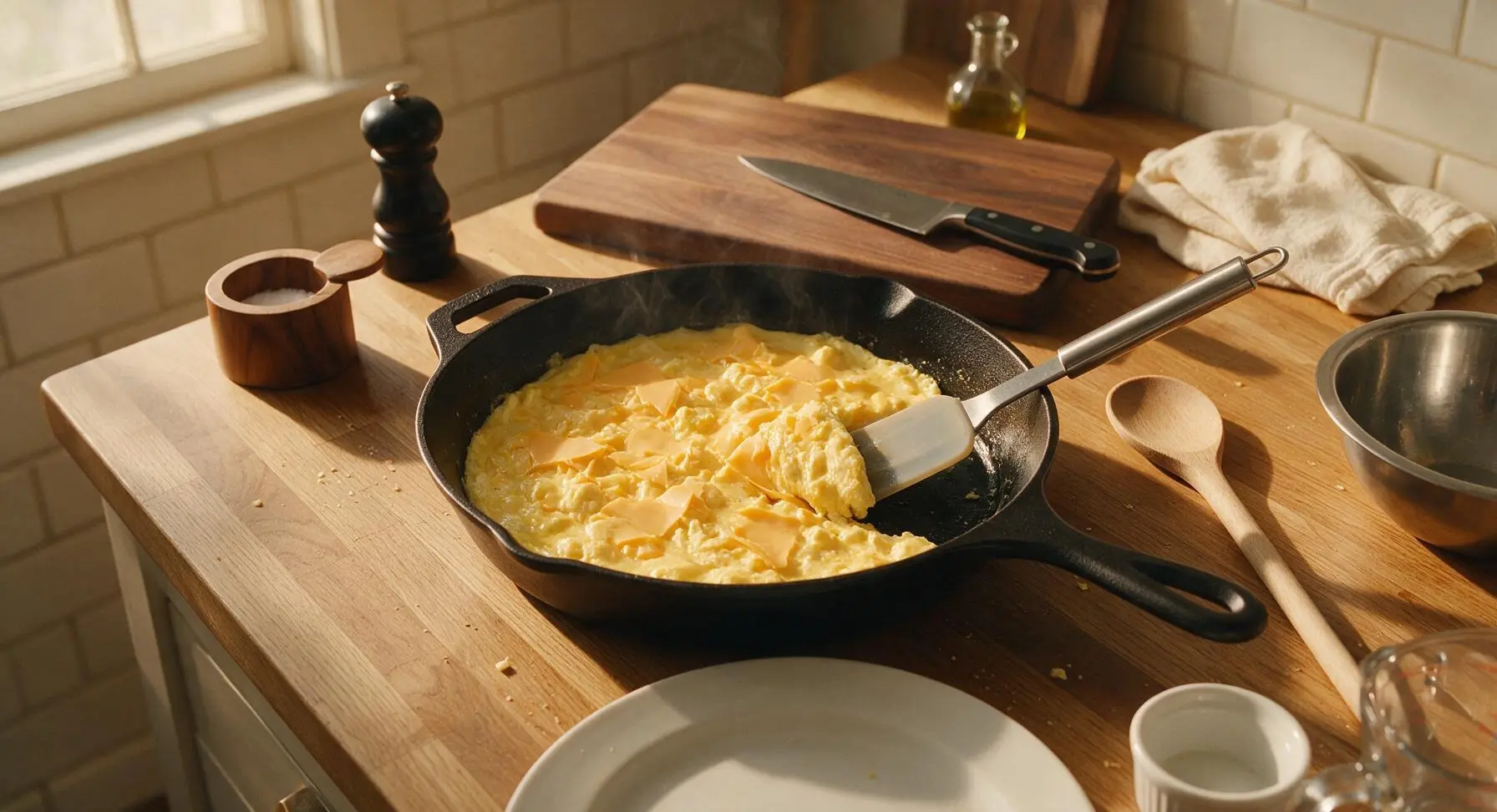
Tear each slice of American cheese into 4 small, even pieces, scattering them evenly across the top of the partially cooked egg curds. Turn off the induction heat (residual pan heat will melt the cheese gently), then use the silicone spatula to fold the cheese into the eggs 2-3 times, letting it melt into creamy, stretchy streaks for 30 seconds. Do not over-mix, as this will break the cheese into tiny bits instead of creating distinct melty streaks.
Step 6
step6:Fold In Cheese
7

Plate And Garnish

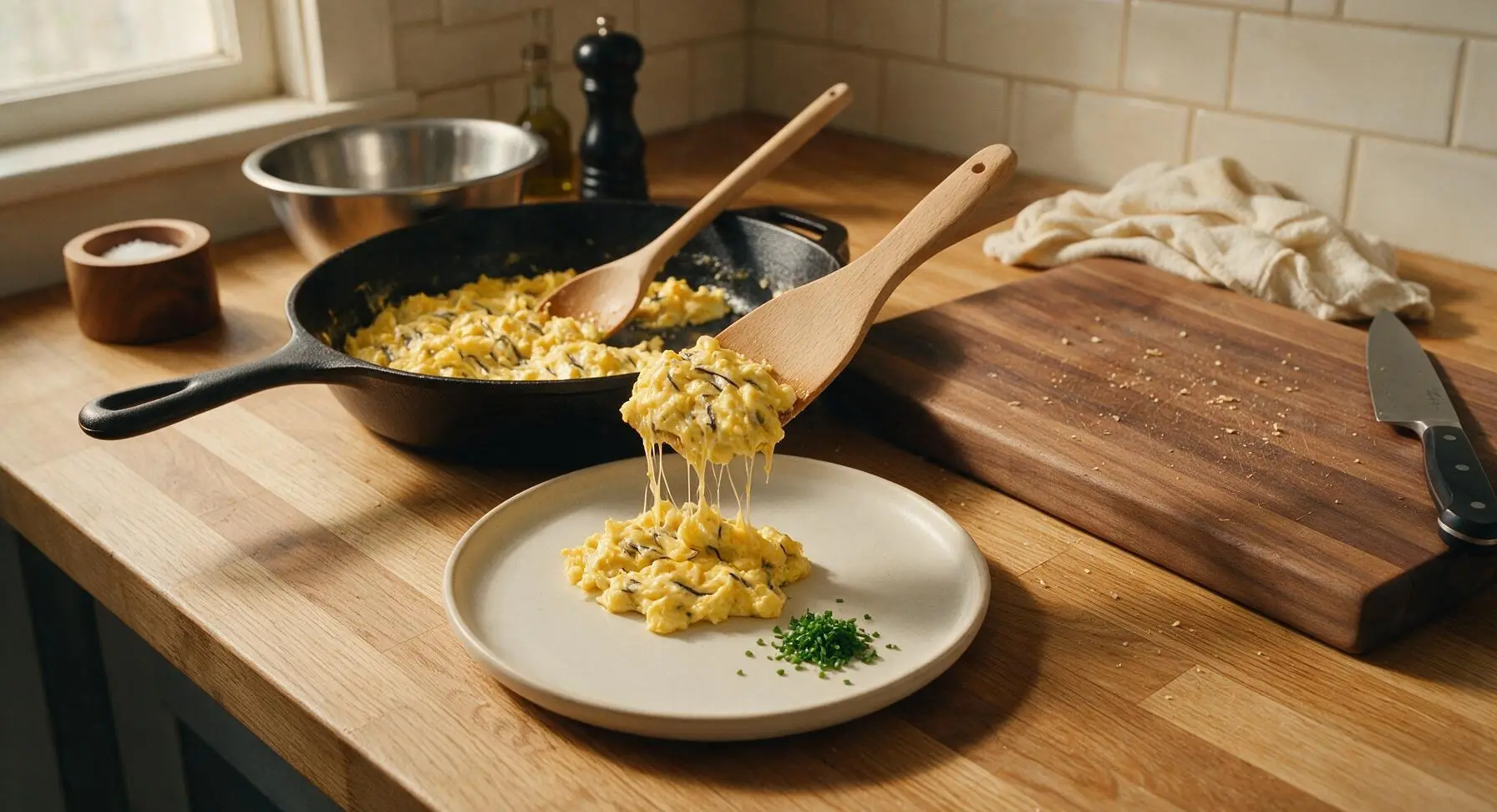
Scoop the warm, cheesy scrambled eggs gently from the pan onto the center of the off-white ceramic breakfast plate. Sprinkle the top with 1/8 teaspoon freshly ground black pepper and 1 teaspoon finely chopped fresh chives. Serve immediately, while eggs are soft and cheese is fully stretchy, as eggs will continue to cook and firm up if left in the hot pan.
Step 7
step7:Plate And Garnish

Tips

1.Use medium-low heat exclusively: High heat makes egg proteins tighten rapidly, resulting in dry, rubbery curds instead of the soft, tender texture that defines perfect American cheese scrambled eggs.
2.Stir slowly and infrequently: Constant, fast stirring breaks eggs into tiny, crumbly curds; gently pushing set edges toward the pan center every 10 seconds creates large, moist curds that hold melted cheese perfectly.
3.Melt cheese with residual heat: Adding cheese after turning off the pan lets it melt into smooth, stretchy streaks without separating into greasy oil, which happens when processed American cheese is exposed to direct high heat for too long.
✨ You May Also Like

Breakfast
🍜 United States

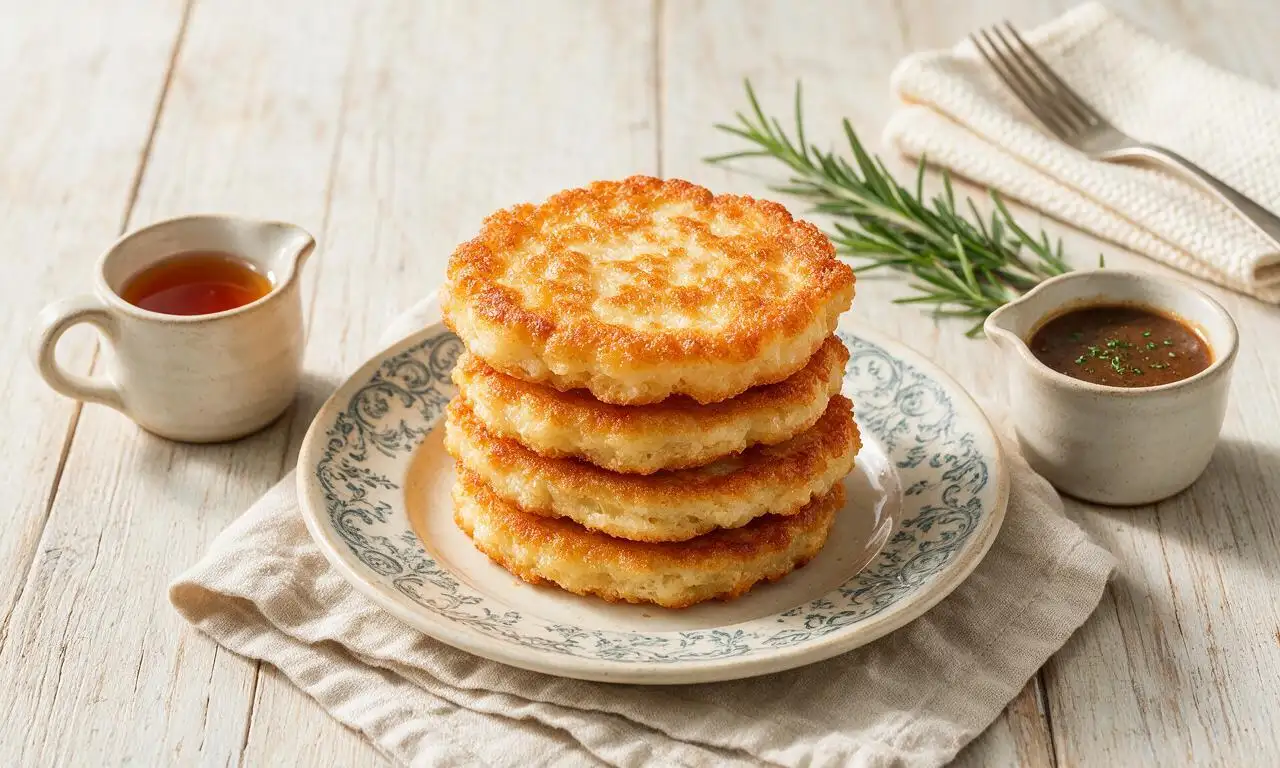
Crisp-edged, fluffy lard griddle cakes are a nostalgic homestyle staple, with rich savoriness from rendered lard, perfect topped with maple syrup or savory gravy.

⏱️ 25 minuteBreakfast ★ 4.8
Breakfast
🍜 United States

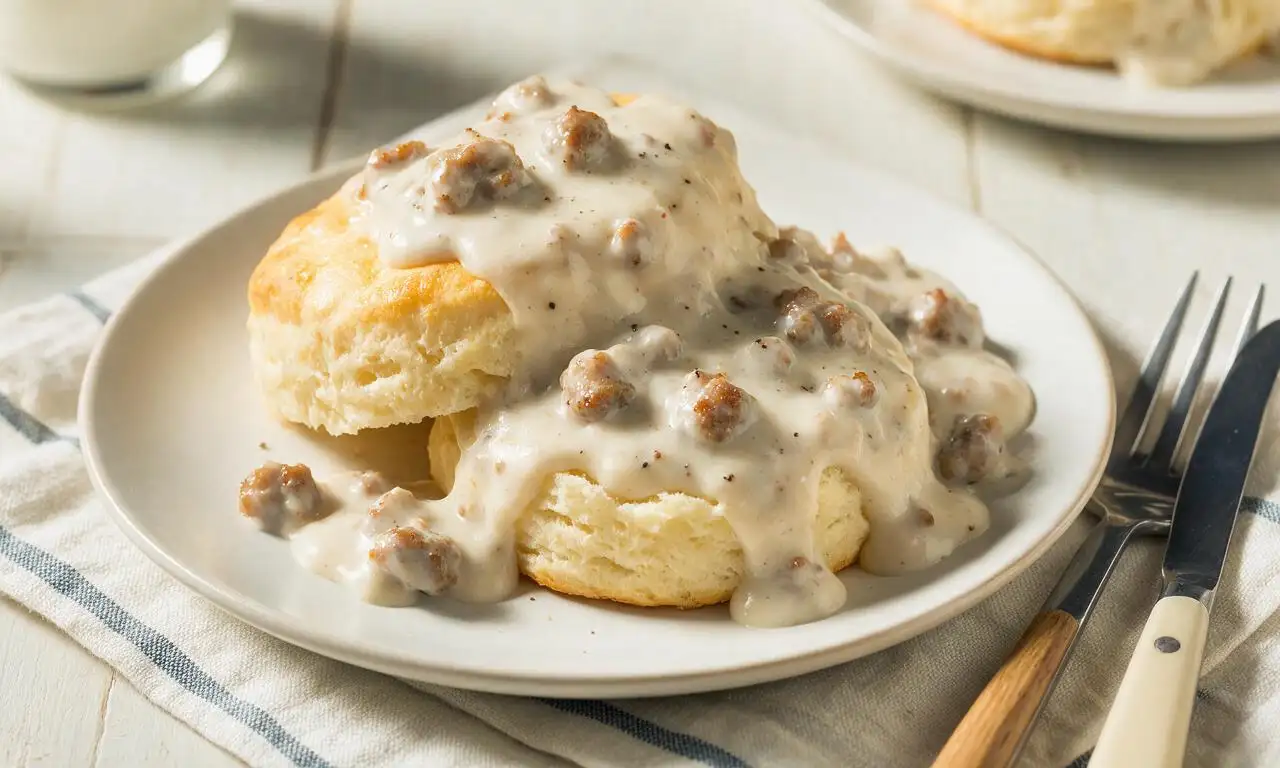
Flaky, buttery homemade buttermilk biscuits smothered in creamy, peppery pork sausage gravy: a beloved, hearty Southern American comfort food classic.

⏱️ 35 minuteBreakfast ★ 4.8
Breakfast
🍜 United States

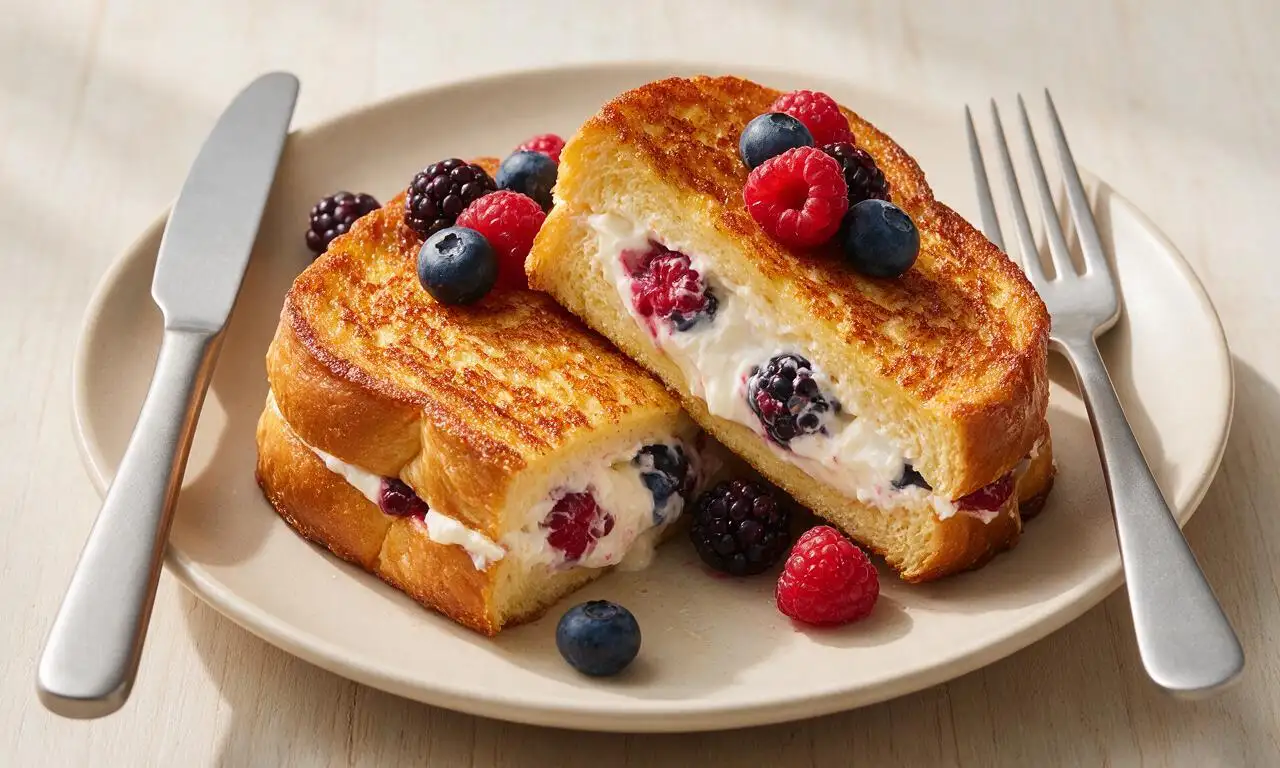
Golden, custardy brioche stuffed with sweet cream cheese and fresh berries, pan-fried to crisp perfection. An indulgent, cozy breakfast perfect for slow weekend mornings.

⏱️ 30 minuteBreakfast ★ 4.7
Breakfast
🍜 United States

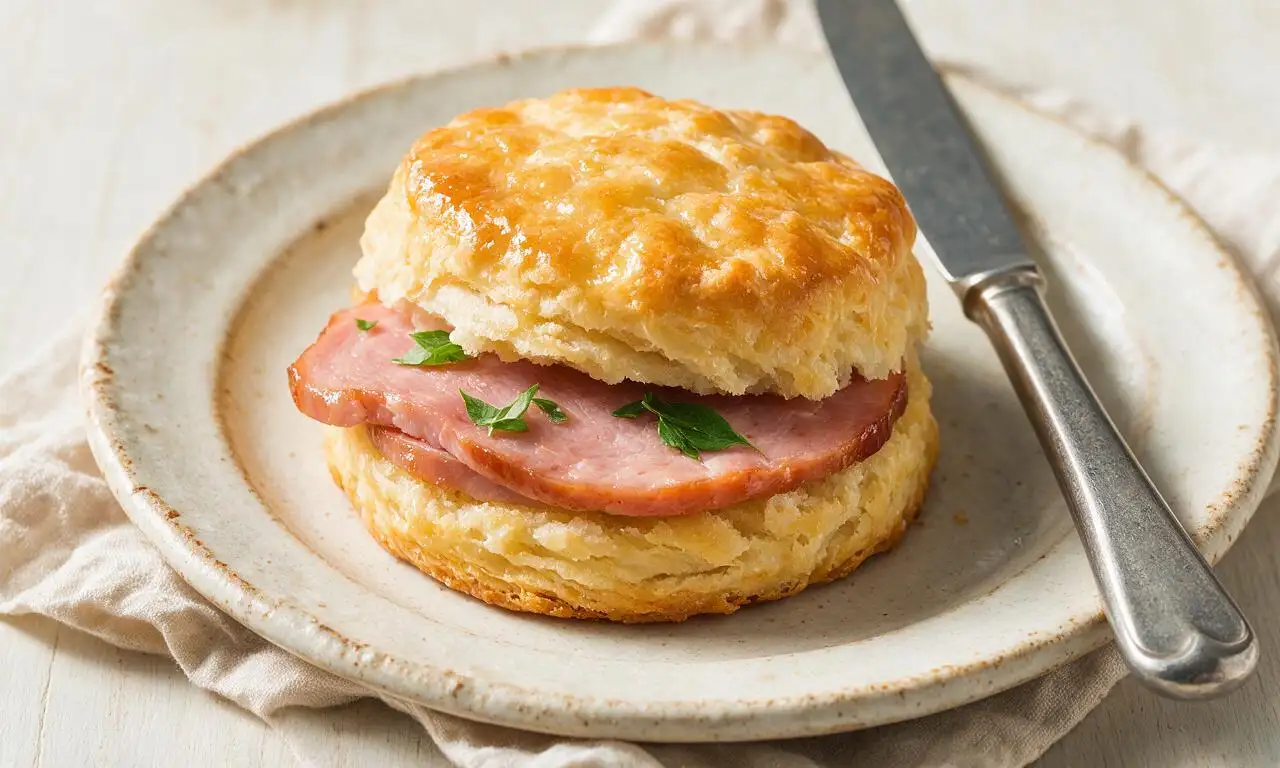
Flaky, buttery Southern-style biscuits stuffed with savory salty country ham, a portable, satisfying classic perfect for casual on-the-go meals.

⏱️ 25 minuteBreakfast ★ 4.8
Breakfast
🍜 United States

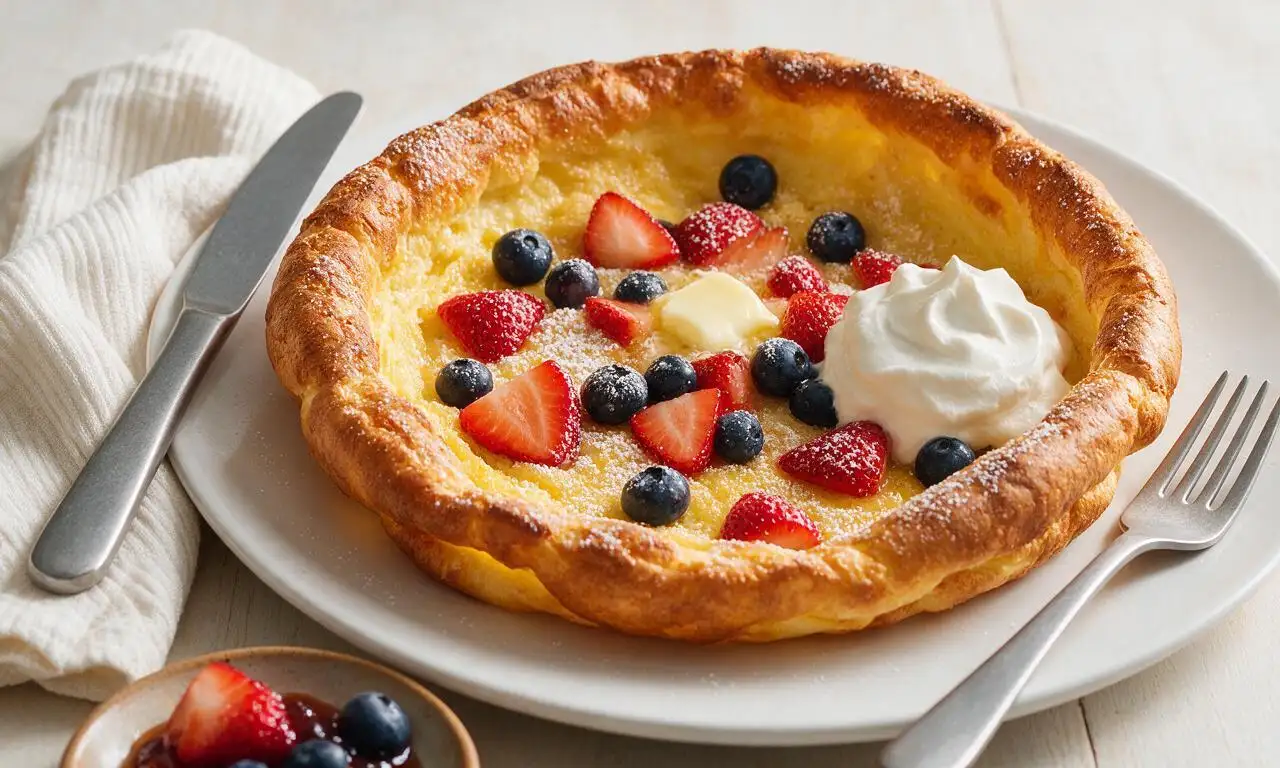
Iconic puffy baked pancake popularized in Seattle, with crisp golden edges and soft custardy center, served warm with classic sweet toppings.

⏱️ 35 minuteBreakfast ★ 4.6
Breakfast
🍜 United States

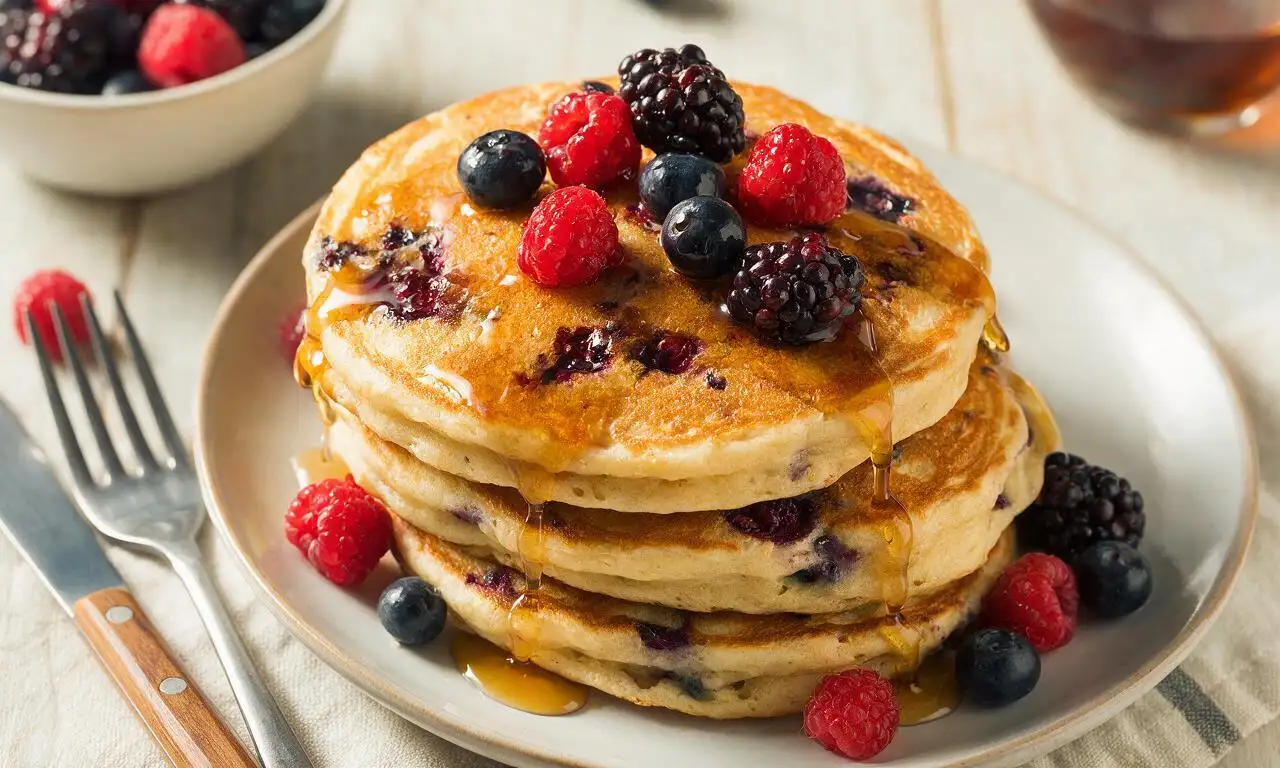
Fluffy, golden pancakes studded with juicy peak-summer mixed berries, drizzled with maple syrup for a bright, comforting, crowd-pleasing family breakfast.

⏱️ 25 minuteBreakfast ★ 4.7

American Cheese Scrambled Eggs:Frequently Asked Questions

1.Why do you call for processed American cheese instead of natural cheddar or specialty cheeses for this recipe? ▾
Processed American cheese is formulated to melt into that iconic stretchy, gooey, non-greasy texture that defines classic diner scrambled eggs, without clumping or separating like many natural hard cheeses. Its mild, salty, nostalgic flavor pairs perfectly with creamy eggs without overpowering their delicate taste.
2.How do I get that signature silky, soft scramble texture instead of rubbery, tough eggs? ▾
Cook low and slow! Melt butter over medium-low heat, pour in your whisked eggs, and stir constantly with a silicone spatula, pushing soft curds from the pan edges to the center. Pull the pan off heat right when eggs are just barely set, since residual heat will finish cooking them without turning them rubbery.
3.Can I swap whole milk for another dairy like skim milk, half-and-half, or water? ▾
Whole milk adds just the right amount of creaminess without making eggs overly rich or watery. You can swap for half-and-half for an extra luxe texture, but skip skim milk or plain water, which make eggs taste thin and flat. If you need a dairy-free swap, unsweetened plain oat milk works as a close substitute.
4.What’s the standard serving size for these scrambled eggs per person? ▾
Plan for 2 to 3 large eggs per person if you’re serving this as a main dish paired with toast or breakfast potatoes. If you’re putting together a larger brunch spread with bacon, pancakes, or fruit, 2 eggs per person is plenty to keep servings balanced without leaving guests too full.
5.When should I add the American cheese to get that perfect melty, stretchy texture? ▾
Tear your cheese slices into small pieces and add them the second you pull the pan off direct heat, right as eggs are almost fully set but still look slightly underdone. Gently fold the cheese in for 30 seconds; residual pan heat will melt it into even, stretchy strands without making it greasy or chewy.
6.Do I need to whisk my eggs really vigorously before adding them to the pan? ▾
You only need to whisk eggs just until whites and yolks are fully combined, with no streaks of clear white left. Over-whisking incorporates too much excess air, which makes eggs puff up while cooking then turn tough and watery as they set. A quick, gentle whisk right before cooking is all you need.
7.Can I mix in extra ingredients like veggies, bacon, or fresh herbs? ▾
Absolutely! Cook dense mix-ins like diced bell pepper, onion, or crumbled bacon first and set them aside before making your eggs, so they don’t water down the soft scramble. Fold those, plus tender add-ins like chopped chives, in with the cheese at the end to keep the egg texture silky.
8.What type of pan works best for making these scrambled eggs? ▾
A small to medium nonstick skillet is ideal, as it lets you easily stir soft curds and slide finished eggs out without sticking, even with a small amount of butter. If you don’t have a nonstick pan, a well-seasoned carbon steel or cast iron skillet works too—just add a tiny extra pat of butter to prevent sticking.
9.Why do my scrambled eggs turn out watery every time I add cheese? ▾
Watery eggs almost always come from two common mistakes: cooking over too high heat, which makes eggs separate and release excess moisture, or adding cheese while the pan is still over direct high heat, which causes cheese to break and leak whey. Stick to low heat and add cheese off-heat to fix this.
10.When should I add salt, and how much seasoning do these eggs need? ▾
Add a small pinch of flaky sea salt right to the eggs as you whisk them, which helps break down egg proteins for extra tender curds. Hold off on adding extra salt until after you taste the finished dish, since American cheese is already fairly salty—over-salting is an easy mistake to make with this simple recipe.
11.Can I make these scrambled eggs ahead of time for meal prep? ▾
These eggs are best eaten fresh right out of the pan, since soft scrambled eggs and melted American cheese firm up and lose that silky, stretchy texture as they cool. If you do need to prep ahead, store cooled eggs in an airtight container in the fridge for up to 2 days, reheating gently in 10-second microwave bursts.
12.Can I use salted butter instead of unsalted butter for this recipe? ▾
You can absolutely use salted butter if that’s what you have on hand, just cut back on the flaky sea salt you add to the whisked eggs to avoid over-salting. Unsalted butter gives you full control over final sodium levels, which is extra helpful since processed American cheese already has a noticeable savory, salty flavor.

Comments (4)

30 minutes ago

Wait, is it really only 5 minutes cook time? I feel like every time I try to make fluffy scrambled eggs they take forever and end up rubbery, so this sounds too good to be true! Does the American cheese make them creamier even if I don’t add extra milk? Can’t wait to test this tomorrow morning.

5 minutes ago

I skipped the milk when I made these yesterday and they were so much creamier than my usual eggs! The American melts right into the soft curds so you don’t need extra dairy at all. Total game changer for quick breakfasts before my morning commute.

just now

Great question! The 5 minute cook time is totally accurate as long as you keep your heat on medium-low — cranking the heat too high is what causes rubbery eggs every time. The American cheese adds so much creamy, salty richness that you don’t need extra milk, though you can absolutely add a splash if that’s your preference!

3 days ago

Made these for our neighborhood weekend potluck brunch last week and people would not stop asking for the recipe! I doubled the batch and kept them warm in a small slow cooker, they stayed fluffy for over an hour. Who knew boring old scrambled eggs could be the star of the spread?

2 days ago

Love that you brought these to a potluck! The slow cooker trick for keeping them warm is such a smart call, I’ll have to note that tip for other readers who make these for group brunches. So glad they were a hit!

1 week ago

Solid easy recipe, perfect for my weekly meal prep. I make a big batch on Sunday, portion them out with whole wheat toast and turkey sausage, and they reheat way better than I thought they would. The American cheese adds just the right salty kick without being overpowering. Only note is I added a little black pepper and smoked paprika for extra flavor, highly recommend.

yesterday

My 7 year old is the pickiest eater on the planet and he ate three servings of these tonight for dinner?! I was just making a quick lazy meal after his soccer practice and didn’t expect it to go over this well. Used the regular pre-wrapped yellow American we always have stocked in the fridge, no fancy ingredients needed. SO good, will be on our weekly rotation for sure.

2 hours ago

Oh this is such a win for picky kids! My toddler turns her nose up at almost every egg recipe I make, I’m definitely testing these out tomorrow after daycare. Fingers crossed it goes over as well as it did for your son!