
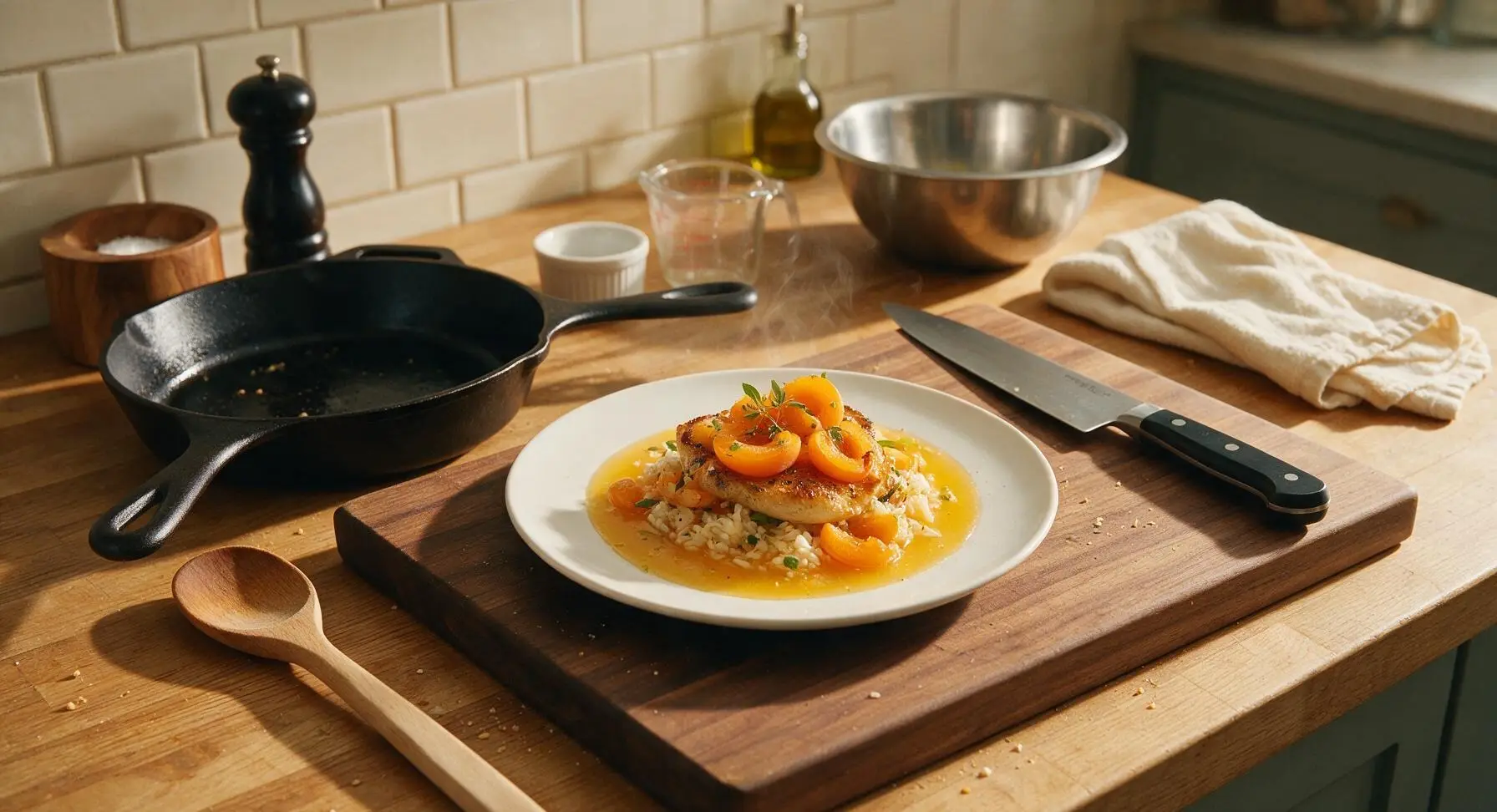
Apricot IPA

title 1
Apricot IPA
⏱️ cook time 1 hour 20 minutes
🍽️ servings 10
⚡ Difficulty medium

intro

Bright, juicy apricot IPA balances zesty Cascade hop bitterness with sweet stone fruit aroma, a crisp, hazy golden brew perfect for warm summer gatherings.

Ingredients
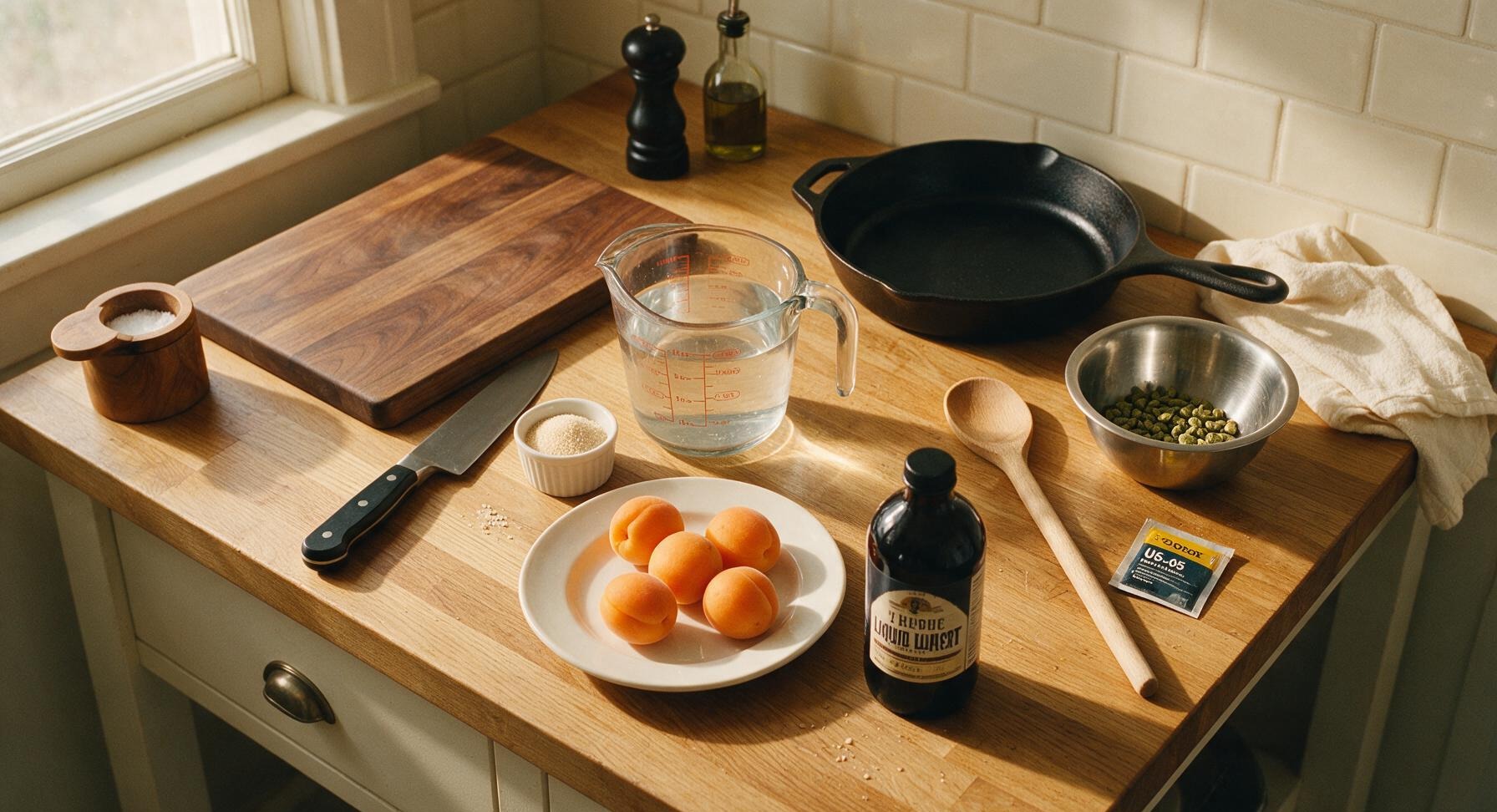
Filtered water 1.25 gallons
Light 2-row liquid malt extract 2 lbs
Cascade hop pellets 1 oz
Ripe fresh apricots 8 oz (about 4 medium)
American ale yeast (US-05) 1 (5g) packet
Priming corn sugar 3.5 oz

Steps

1

Sanitize All Equipment

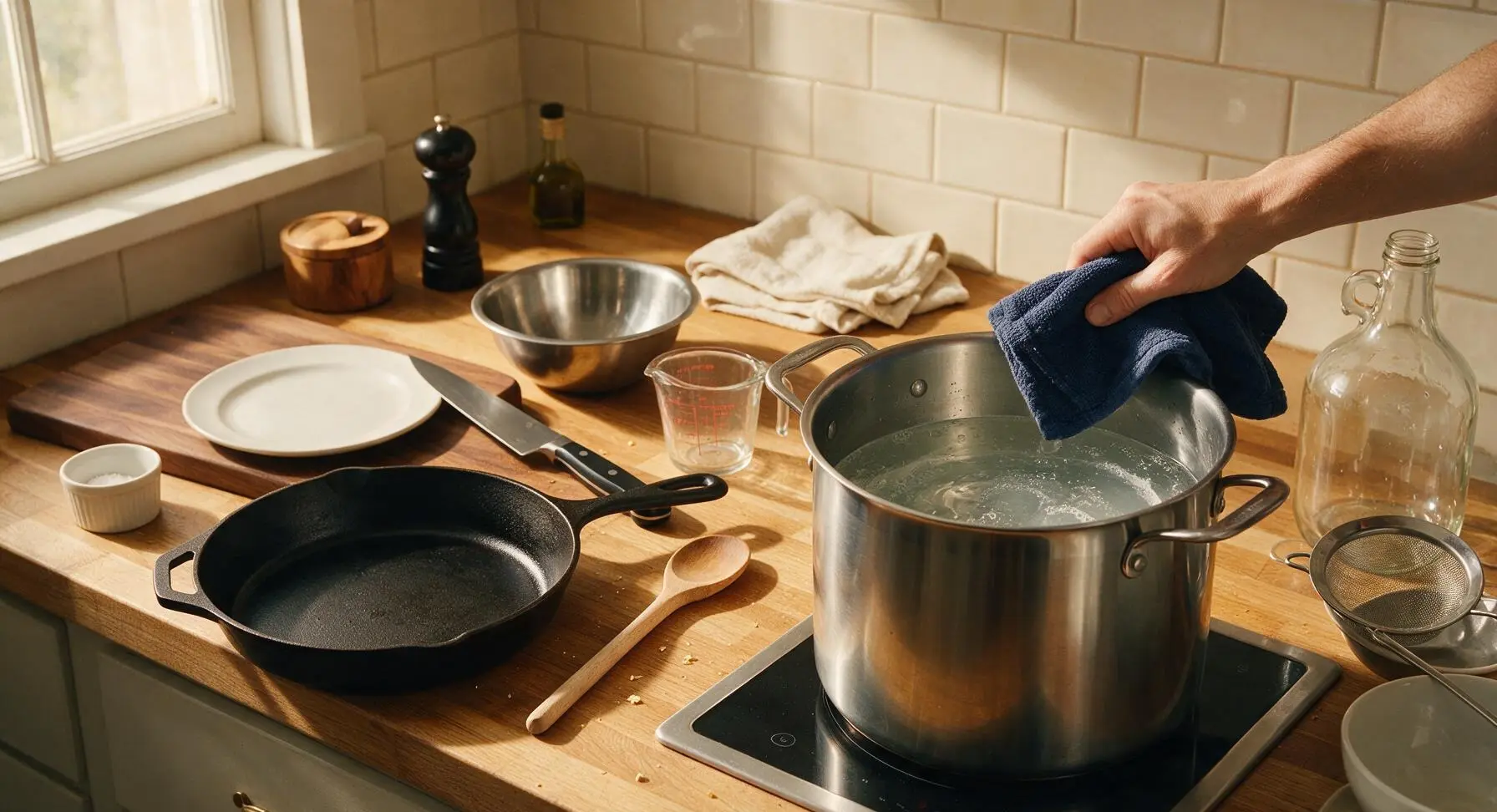
First, wash all brewing tools (stock pot, carboy, stirring spoon, strainer, siphon, airlock, bottles, prep bowls) with warm, unscented soapy water, then rinse thoroughly to remove soap residue. Mix no-rinse food-grade brewing sanitizer according to package directions, and coat every surface that will touch cooled wort or beer. Let tools air dry for 5 minutes; no pooled sanitizer should remain on surfaces. This step prevents off-flavors from unwanted wild bacteria or yeast.
Step 1
step1:Sanitize All Equipment
2

Heat and Boil Wort

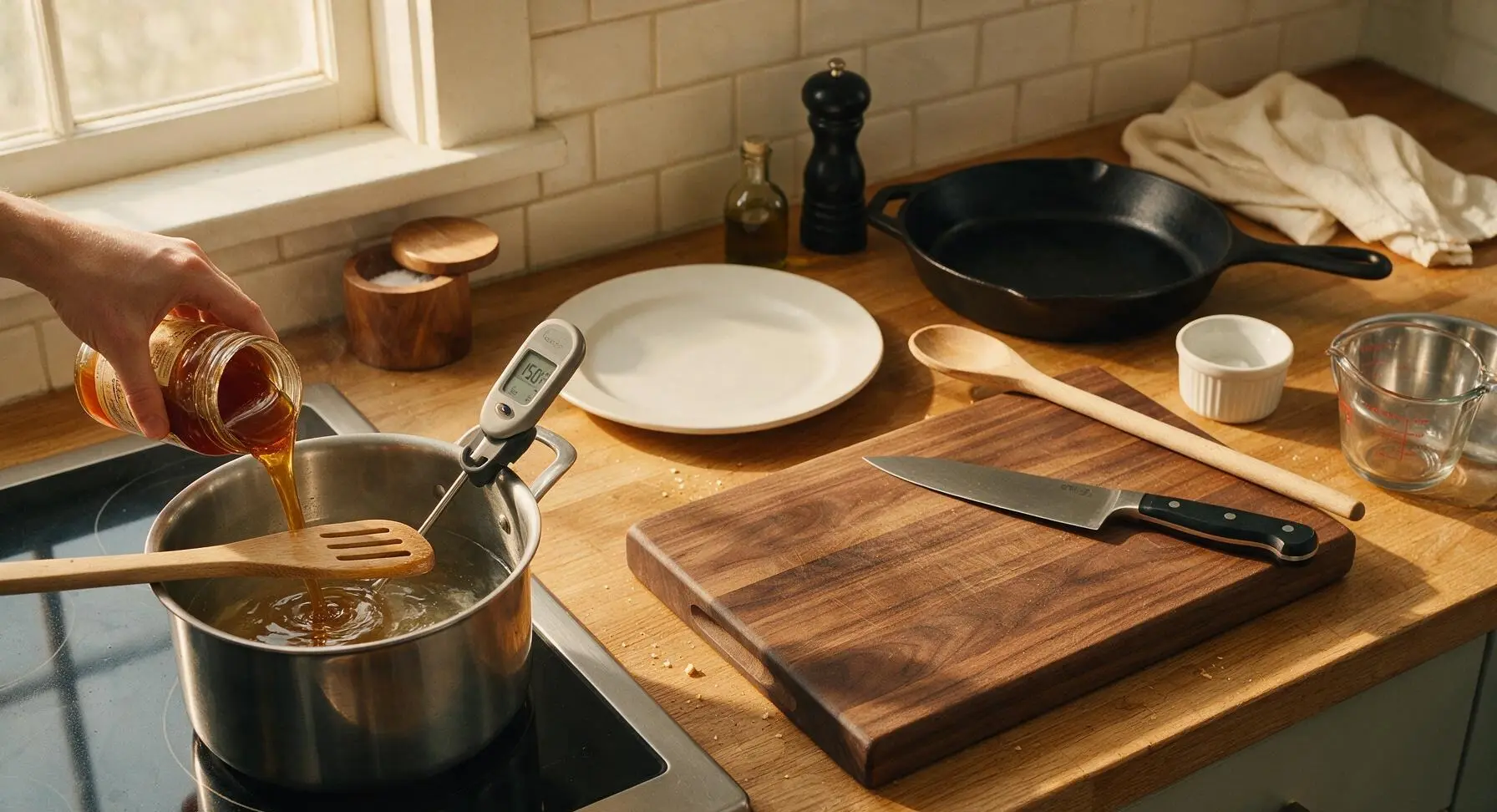
Pour 1 gallon of filtered water into the sanitized stock pot, set heat to medium-high. When the digital thermometer reads 150°F, stir in the full 2 lbs of light liquid malt extract with the slotted spoon until fully dissolved, creating a pale gold, sweet wort. Bring the wort to a gentle rolling boil (212°F at sea level), adjusting heat to avoid sticky boilovers. Start a 60-minute timer as soon as a steady boil is reached.
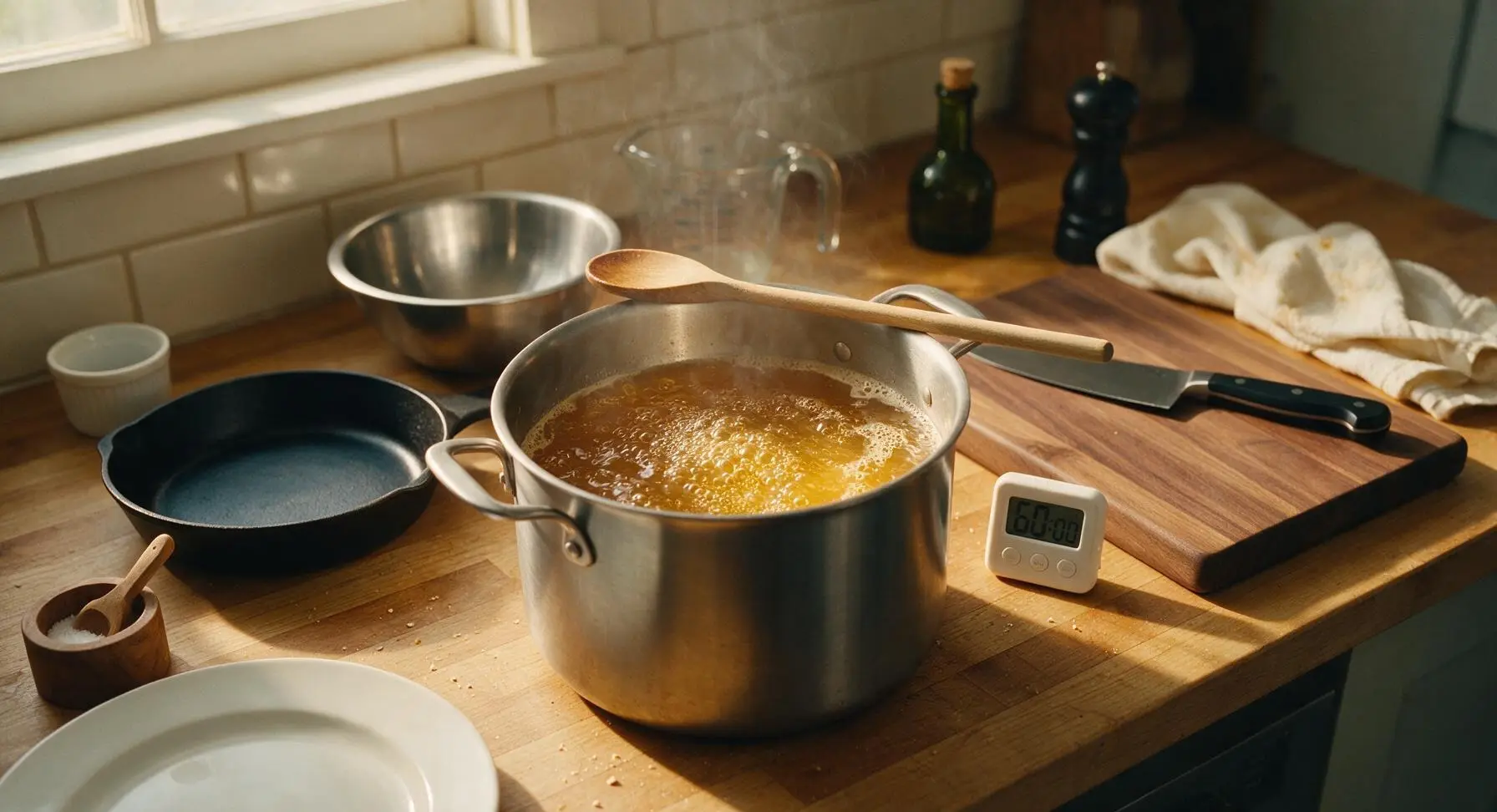
Step 2
step2:Heat and Boil Wort
Step 2
step2:Heat and Boil Wort
3

Add Bittering Hops

Immediately after starting the 60-minute boil timer, add 0.75 oz of Cascade hop pellets to the boiling wort. Stir gently to submerge the pellets, which will break down quickly to release bright citrus-pine bitterness that balances the sweet malt. Keep the pot uncovered, and monitor closely for rising foam that signals an impending boilover, adjusting heat as needed for the remainder of the boil.
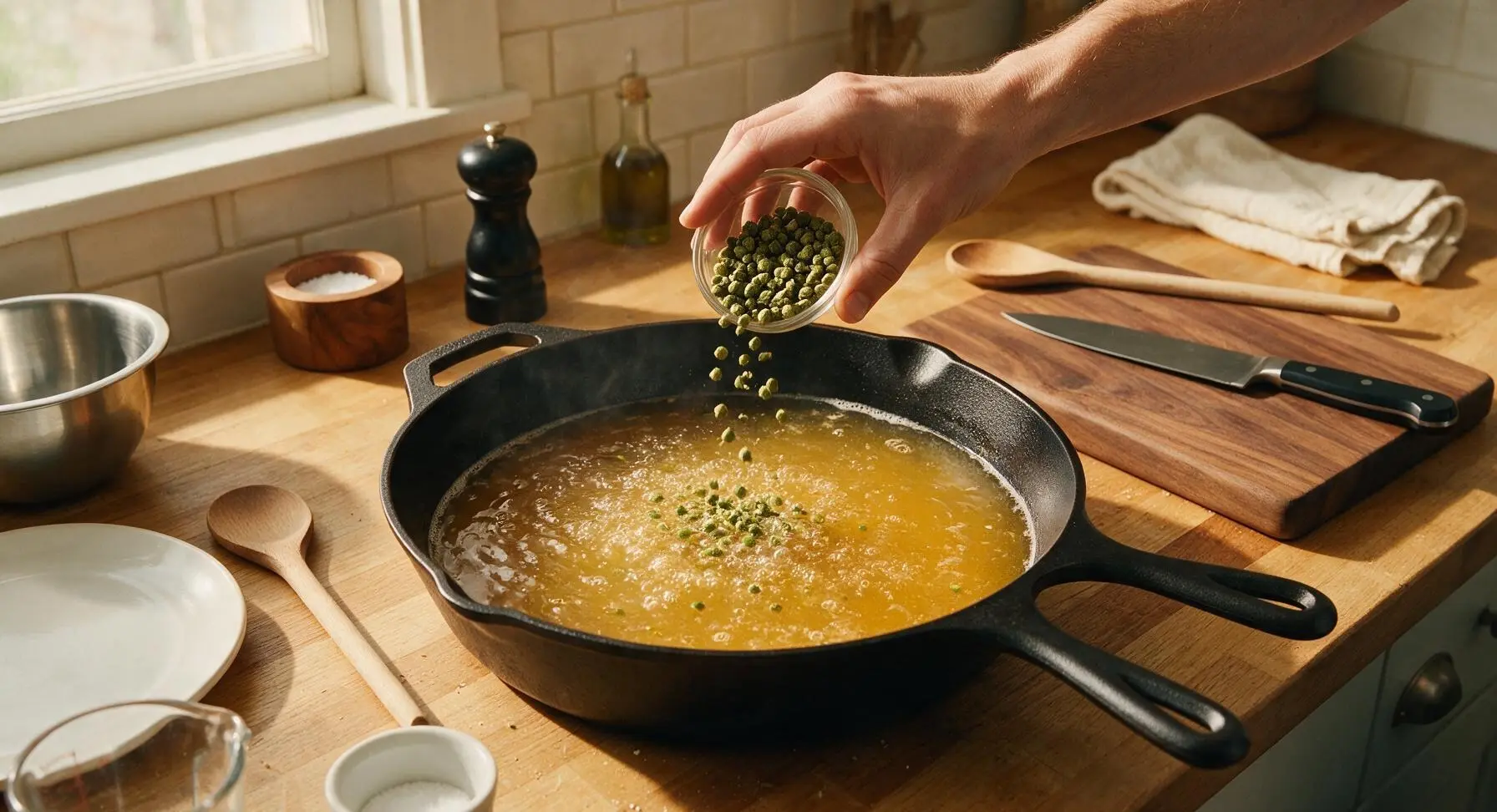
Step 3
step3:Add Bittering Hops
4

Prep Fresh Apricots

While the wort boils, pull the bamboo cutting board to center counter. Wash the 4 ripe apricots under cool running water, pat dry with the corner of the navy towel. Use the paring knife to cut each apricot in half along its natural seam, twist to separate halves, remove the hard inner pit, then chop fruit into rough 1/2-inch chunks (peeling is not required). Measure 8 oz of chopped fruit into a sanitized prep bowl, set aside.
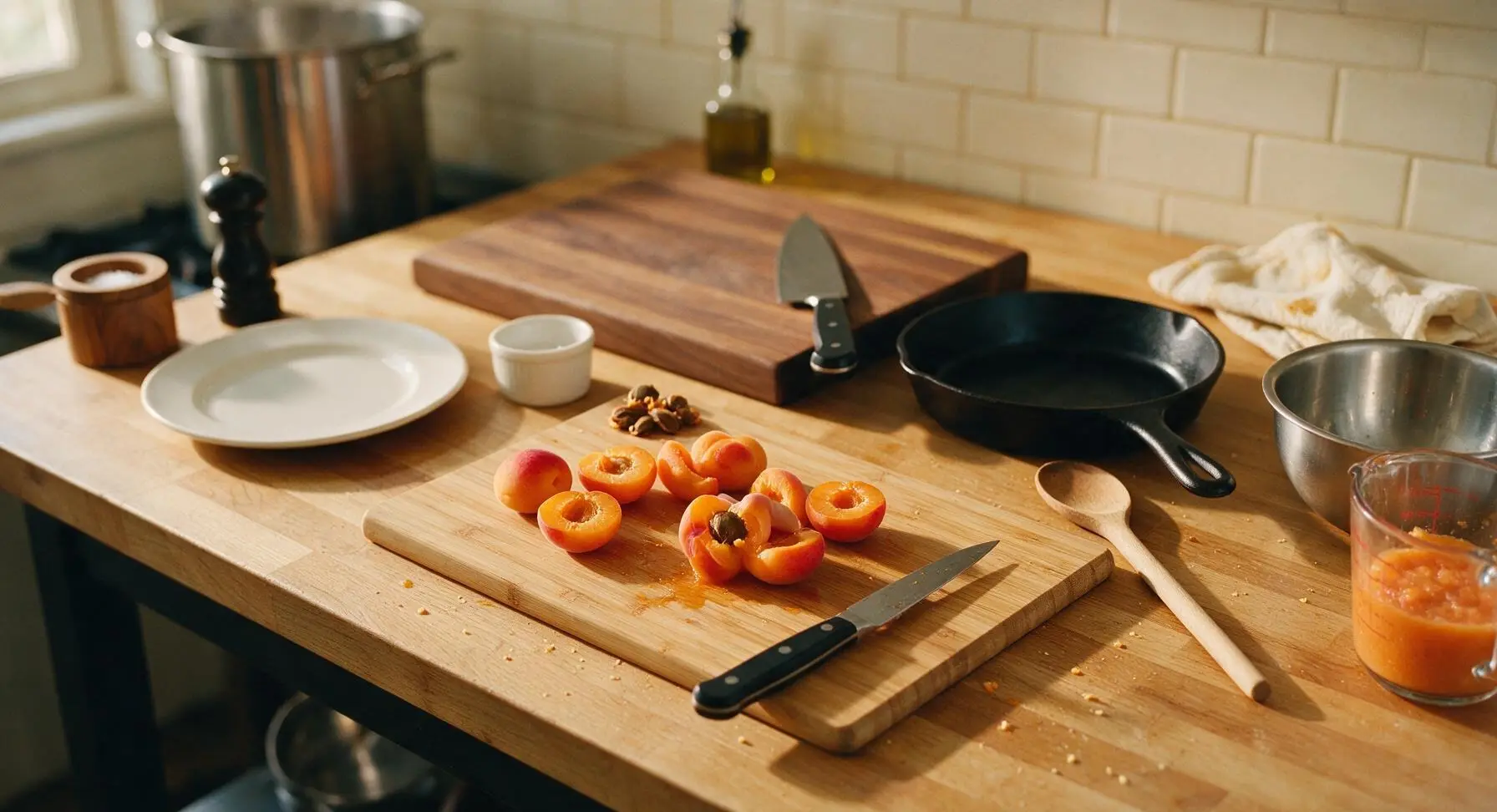
Step 4
step4:Prep Fresh Apricots
5

Cool and Strain Wort

When the 60-minute boil ends, turn off the heat. Add the remaining 0.25 oz of Cascade hop pellets for bright, fresh aroma, then stir once. Move the pot to a sink filled with ice water to cool the wort quickly to 70°F (approximately 20 minutes), to avoid off-flavors from slow cooling. Once cooled, pour the wort through the fine-mesh strainer into the sanitized glass carboy to filter out solid hop debris.
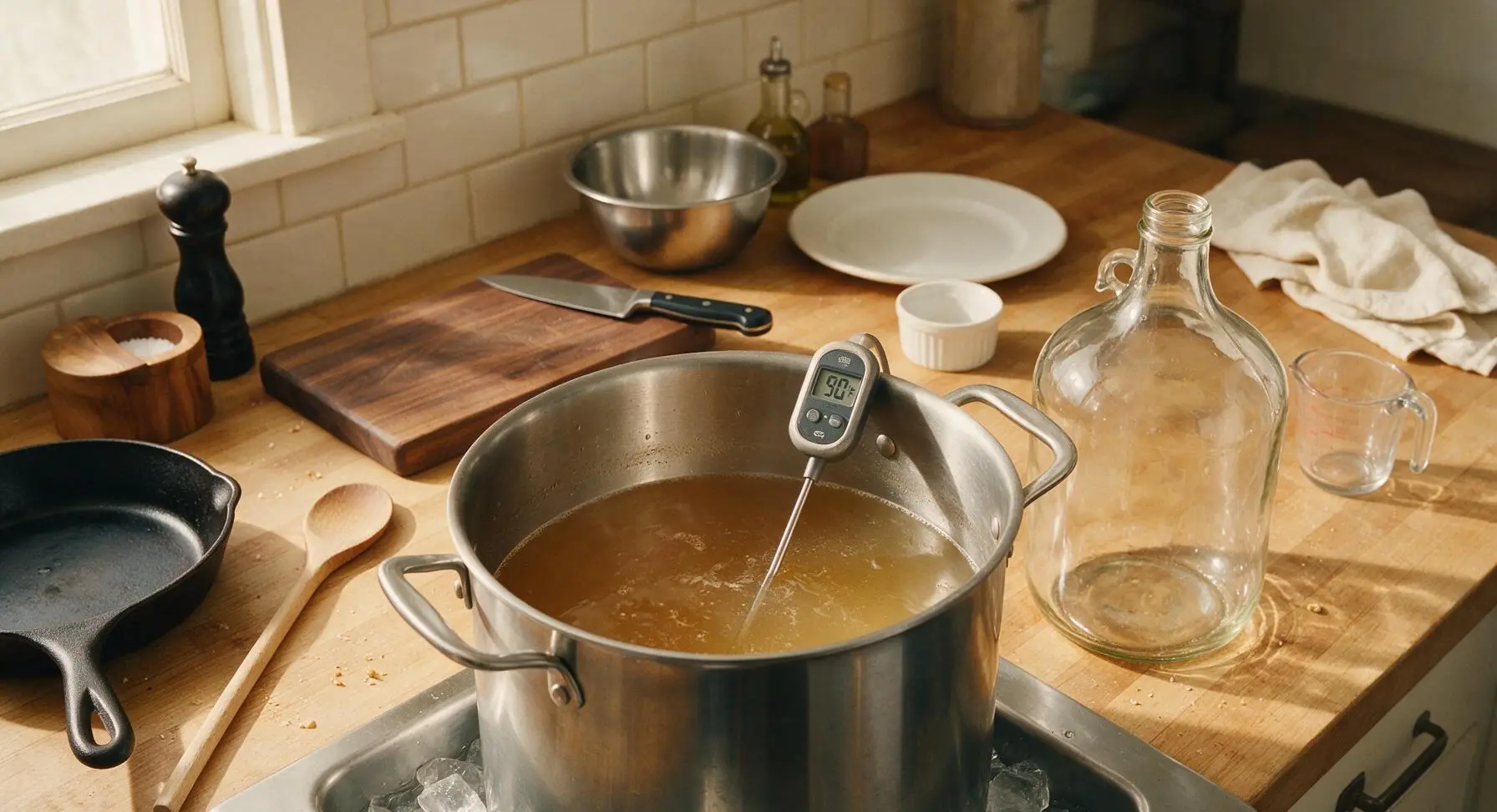
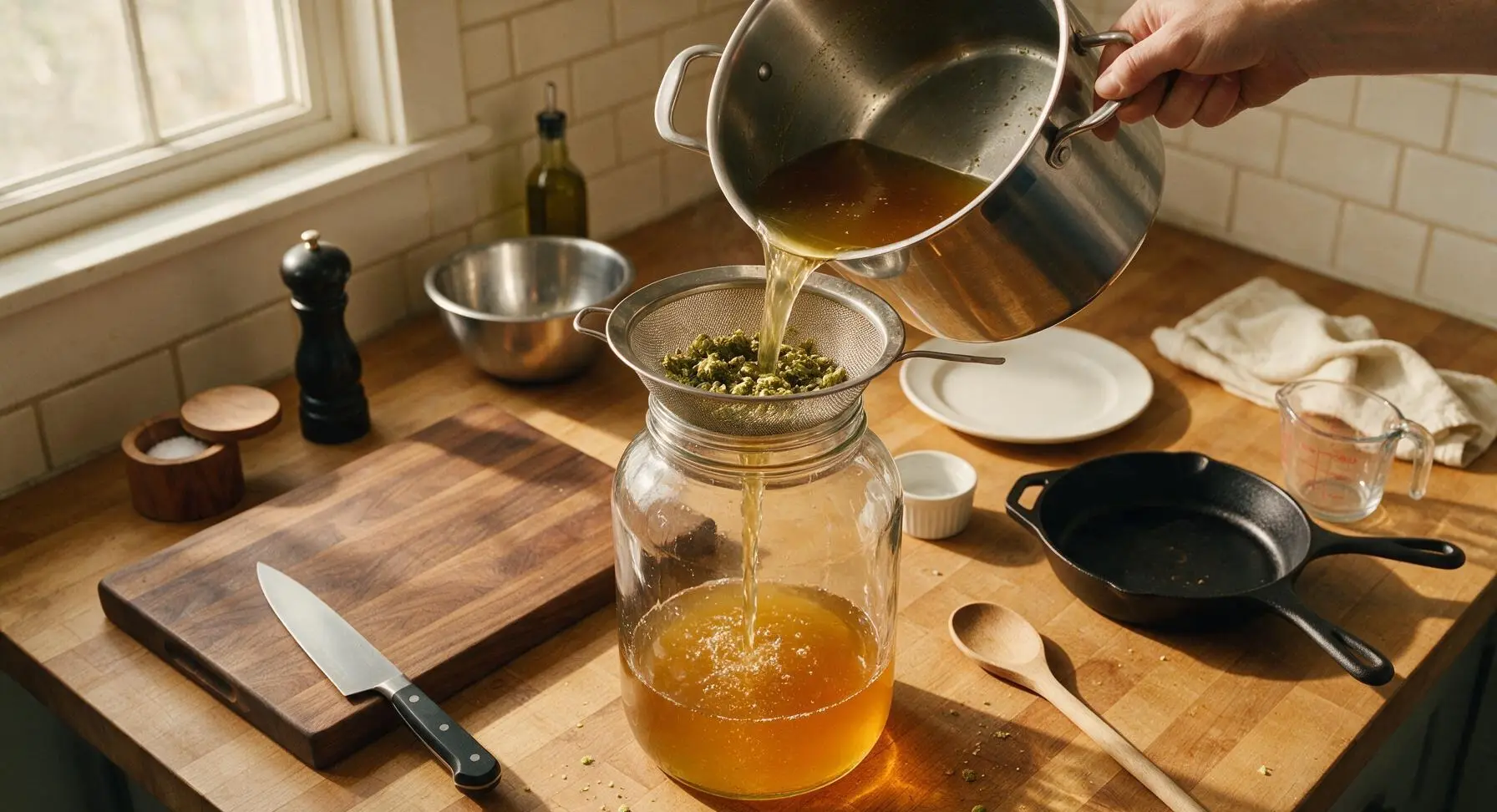
Step 5
step5:Cool and Strain Wort
Step 5
step5:Cool and Strain Wort
6

Pitch Yeast and Seal

Top up the wort in the carboy with cool filtered water to reach the 1-gallon mark, if evaporation reduced volume during the boil. Sprinkle the full 5g packet of American ale yeast evenly over the wort surface; stirring is not required, as the yeast will hydrate on its own. Fill the 3-piece airlock halfway with sanitizer solution, then press it firmly into the carboy mouth to create an airtight seal that lets fermentation gas escape without letting contaminants in.
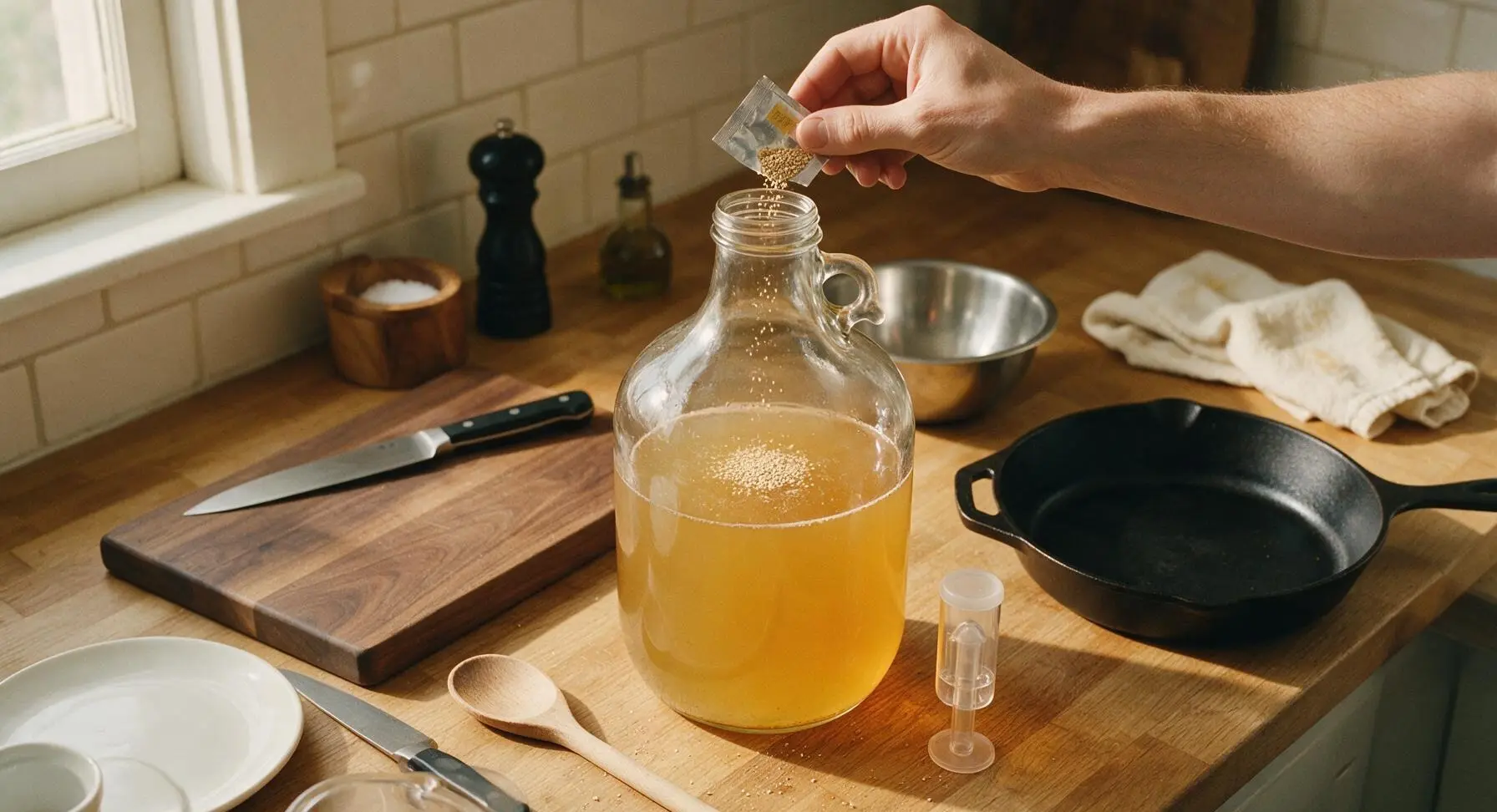
Step 6
step6:Pitch Yeast and Seal
7

Add Apricots Mid-Ferment

Move the sealed carboy to a dark, 65-70°F space to ferment for 3 days, until bubbling in the airlock slows to 1 bubble every 30 seconds, signaling primary fermentation is winding down. Sanitize the carboy opening again, then add the reserved 8 oz of chopped apricots directly to the wort. Reseal the airlock, and let ferment for 7 more days, until airlock bubbling stops completely and the beer clarifies to a hazy golden-orange.
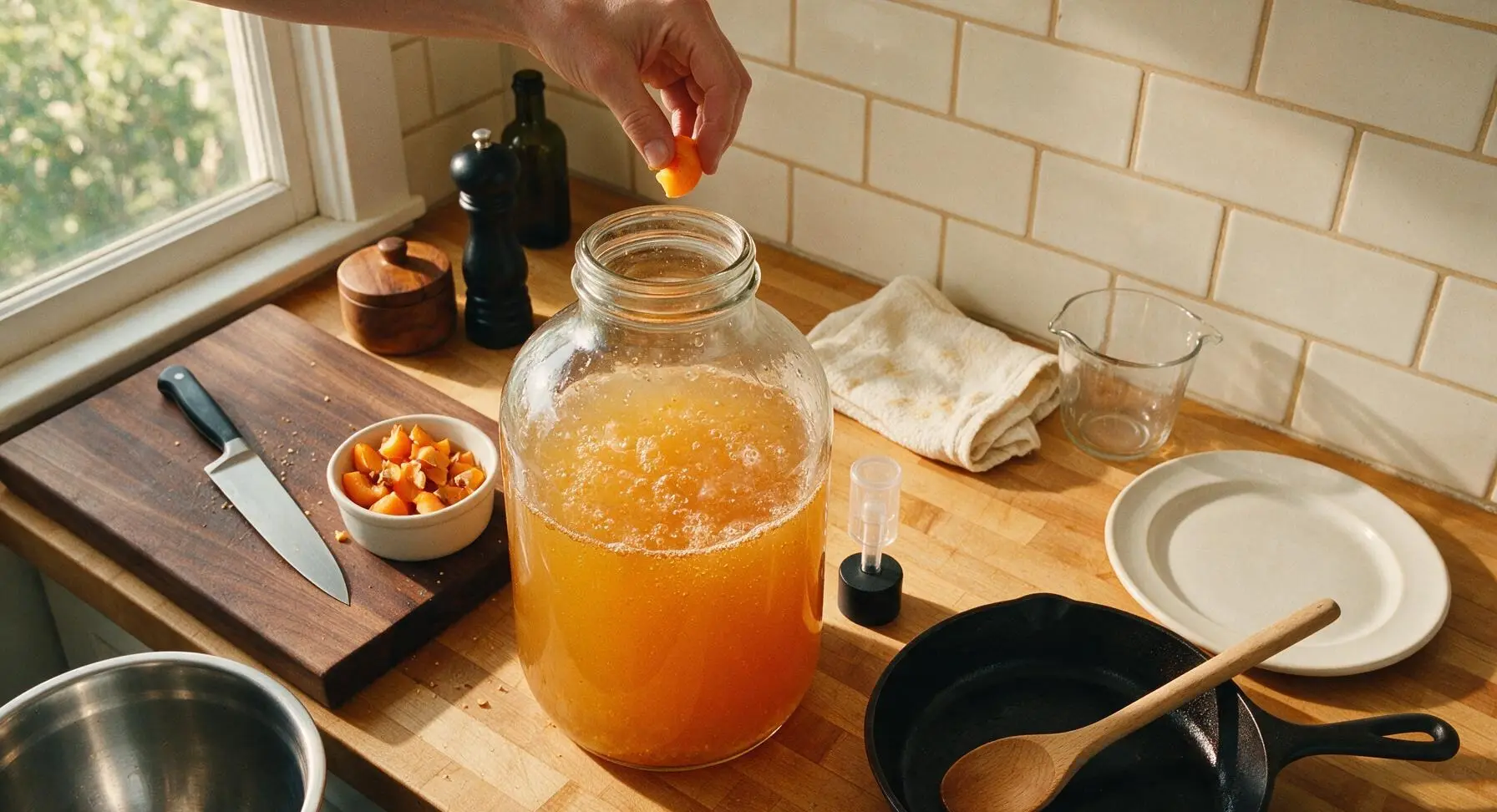
Step 7
step7:Add Apricots Mid-Ferment
8

Bottle and Condition Beer

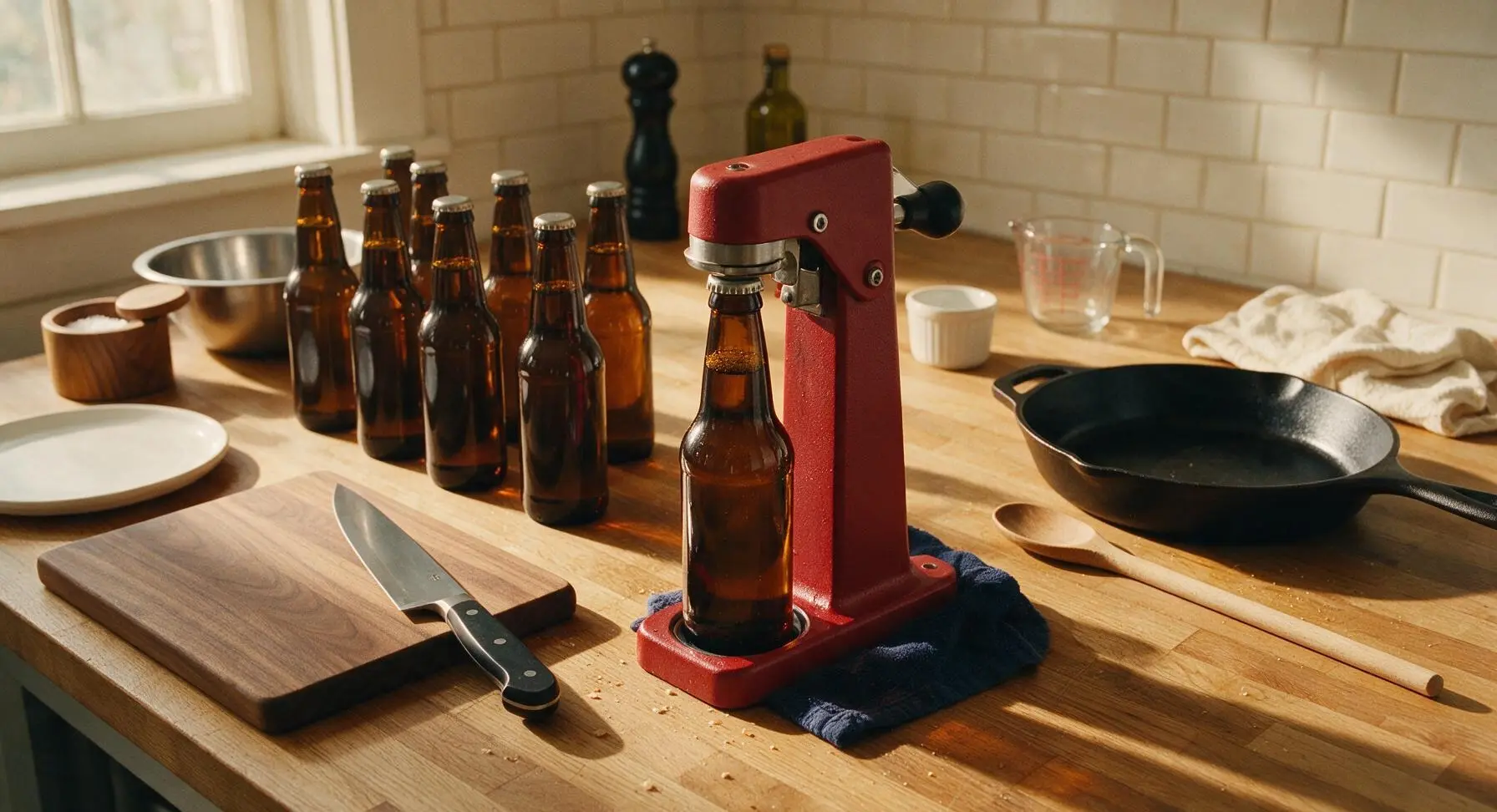
Once fermentation is complete (no airlock bubbles for 48 straight hours, clear beer with settled sediment at the carboy bottom), dissolve 3.5 oz of priming corn sugar in 1/4 cup boiling water, cool to 70°F, and add to a sanitized bottling vessel. Use the auto-siphon to transfer beer from the carboy into the vessel, mixing gently to evenly distribute the sugar, which will create natural carbonation in the bottle. Siphon beer into sanitized 12oz amber bottles, leaving 1 inch of headspace at the top, then crimp metal bottle caps onto each bottle with the red bottle capper. Let bottles condition at room temperature for 2 weeks to build carbonation, then chill for 24 hours before serving.
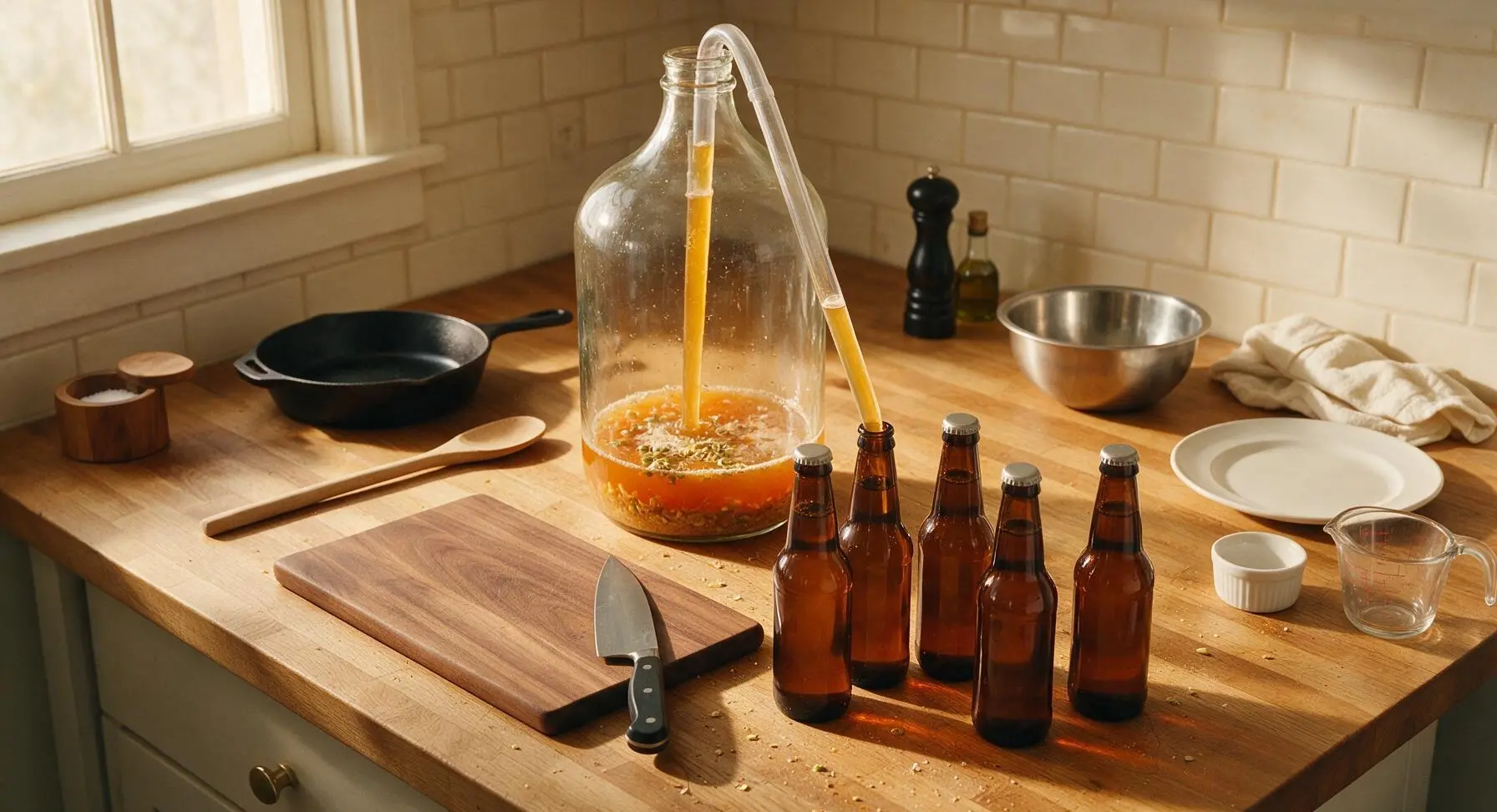
Step 8
step8:Bottle and Condition Beer
Step 8
step8:Bottle and Condition Beer

Tips

1.Never add apricots during the active boil: High heat destroys the delicate, bright stone fruit esters and creates a flat, cooked jam flavor instead of the fresh, bright apricot aroma this recipe is designed for. Adding fruit mid-fermentation lets yeast gently integrate fruit character without muted flavors.
2.Sanitize every surface that touches cooled wort or beer: Wild yeast and common household bacteria will create sour, vinegary, or otherwise off-flavors that can ruin an entire batch. No-rinse brewing sanitizer is low-cost and eliminates the need for repeated rinsing that can reintroduce contaminants.
3.Chill carbonated bottles for a full 24 hours before opening: Warm, newly carbonated beer will foam violently when opened, wasting beer and leaving sticky residue. Chilling helps CO2 fully dissolve into the liquid for a smooth, controlled pour with a perfect 1-inch frothy head.


✨ You May Also Like

Drinks & Beverages
🍜 Mexico

A bright, balanced tequila-based cocktail with zesty fresh lime, smooth orange liqueur, and a signature salt rim, perfect for warm summer sipping.

⏱️ 5 minutesDrinks & Beverages ★ 4.9
Drinks & Beverages
🍜 United States

Thick, creamy, nostalgic classic vanilla milkshake with a rich, smooth texture, topped with whipped cream and a cherry for cool, sweet refreshment.

⏱️ 5 minutesDrinks & Beverages ★ 4.7
Drinks & Beverages
🍜 United States

A bright, golden strong ale with fruity banana-clove notes, subtle hop spice, and soft carbonation, brewed in classic Trappist Tripel tradition.

⏱️ 2 hours aDrinks & Beverages ★ 4.5
Drinks & Beverages
🍜 United States

A frothy, nostalgic American soda fountain treat pairing bubbly cold root beer with creamy vanilla ice cream, perfect for cooling down at warm weather gatherings.

⏱️ 20 minuteDrinks & Beverages ★ 4.8
Drinks & Beverages
🍜 United States

Tart, funky, effervescent American Wild Ale is a complex fruity craft beer brewed with wild yeast, delivering bright, zesty notes perfect for warm-weather sipping.

⏱️ 2 hours aDrinks & Beverages ★ 4.4
Drinks & Beverages
🍜 United States

Bright, bubbly copycat of the iconic American caramel cola, balanced with citrus and warm spice, perfect for sipping ice-cold on hot days.

⏱️ 15 minuteDrinks & Beverages ★ 4.8

Apricot IPA:Frequently Asked Questions

1.How long does it take to make this Apricot IPA from start to finish? ▾
Plan for roughly 4 weeks total for a ready-to-drink batch. Primary fermentation with US-05 yeast takes 7–10 days, followed by a 3–5 day steep with apricots, then 2 weeks of bottle conditioning at room temperature to build proper carbonation. If kegging, you can cut total time by about a week by force carbonating.
2.Can I use canned or frozen apricots instead of fresh ripe ones? ▾
You absolutely can, especially when fresh apricots are out of season. Opt for unsweetened frozen apricots, thawed fully, or canned apricots packed in 100% juice (skip heavy syrup entirely). Avoid any fruit treated with potassium sorbate or other preservatives, as these will kill your yeast and ruin fermentation and carbonation.
3.What ABV should I expect from this standard Apricot IPA recipe? ▾
A standard 5-gallon batch will land between 5.5–6.2% ABV, which is perfectly sessionable for warm summer gatherings. If you prefer a slightly stronger brew, you can add 4 oz of extra light dry malt extract to the wort, but don’t overdo it—too much extra malt will mask the bright apricot and Cascade hop notes.
4.When is the right time to add apricots during the brewing process? ▾
Add your prepared apricots after primary fermentation slows, usually around day 7, right before moving to secondary if you use one. Adding fruit too early will blow off most of the delicate apricot aroma during aggressive active fermentation, and can also lead to unwanted, funky off-flavors in the finished beer.
5.Do I need to peel apricots before adding them to my brew? ▾
You don’t need to peel apricots at all, but you absolutely must remove every pit first. Apricot pits contain trace amounts of amygdalin, which creates harsh, bitter almond off-flavors in finished beer. Lightly crush chopped fruit to release juice, and leave skins on to add depth and that signature hazy golden color.
6.Can I substitute Cascade hop pellets for a different hop variety? ▾
Cascade is chosen for its bright citrus, pine, and subtle floral notes that pair perfectly with apricot, but you can substitute 1:1 with similar American hops like Centennial or Citra if needed. Skip overly earthy, spicy European hop varieties, as their bold, savory profiles will clash with the sweet, bright stone fruit flavor.
7.Why does the recipe call for filtered water instead of regular tap water? ▾
Most unfiltered tap water contains chlorine or chloramine, which creates harsh, medicinal, plastic-like off-flavors in homebrew that are impossible to fix once fermentation starts. If you only have tap water, treat it with one campden tablet 24 hours before brewing to neutralize chemicals, or use inexpensive bottled spring water as a backup.
8.How do I know when primary fermentation is done before adding apricots? ▾
Take consistent hydrometer readings over 2–3 consecutive days—once your specific gravity holds steady between 1.010 and 1.014 with no active bubbling in the airlock, primary is complete. Don’t rely solely on airlock bubbles, as temperature swings can create false bubbling even when fermentation has stalled or finished.
9.Do I need a separate secondary fermenter for this recipe? ▾
A secondary fermenter is not strictly required, but it helps produce a clearer, cleaner final beer and reduces off-flavor risk from sitting on spent yeast trub for too long. If you skip secondary, add prepared apricots straight to your primary once fermentation finishes, just rack beer off fruit and trub before bottling.
10.What level of carbonation is ideal for this Apricot IPA? ▾
Aim for 2.2–2.5 volumes of CO2, which creates the crisp, bubbly mouthfeel perfect for a hazy summer IPA. To hit that level when bottle conditioning, add 0.75 oz of corn sugar per gallon of beer, mix gently to avoid oxidation, cap tightly, and hold bottles at 65–70°F for 2 weeks to fully carbonate.
11.Can I use a different ale yeast instead of the recommended US-05? ▾
US-05 is ideal because it ferments clean and neutral, letting apricot and Cascade hop flavors take center stage, but you can use Wyeast 1056 as a direct 1:1 substitute. Skip fruity Belgian or hefeweizen yeasts, as their strong, signature ester flavors will completely overpower the delicate apricot notes in this recipe.
12.Why did my Apricot IPA turn out darker than the expected hazy gold? ▾
The most common culprit is boiling your malt extract for too long at too high a heat, which causes caramelization that darkens the wort. It can also happen if you used overripe, deeply colored apricots or added fruit during the boil instead of post-fermentation. The flavor will still be great, it just won’t have that bright pale hue.
13.How long will bottled Apricot IPA stay fresh and flavorful? ▾
Stored in a cool, dark spot away from direct sunlight, this beer will taste its best for 3–4 months after bottling. The bright apricot aroma and zesty Cascade hop notes fade faster than the malt base, so drink it within that window for the juicy, bright profile the recipe is designed for. Don’t store it longer than 6 months total.
14.Do I need to pasteurize fresh apricots before adding them to the fermenter? ▾
Yes, this is a critical step to avoid introducing wild yeast or bacteria that can turn your beer sour or grow mold. The easiest method is to pour boiling water over chopped, pitted apricots, let them sit 10 minutes, then cool fully before adding. Don’t boil fruit directly, as that cooks out the bright, fresh stone fruit flavor.
15.How bitter is this Apricot IPA supposed to taste? ▾
This recipe is balanced to hit 45–50 IBUs, so Cascade hop bitterness is present enough to cut sweet apricot and malt flavor, but not so sharp that it overwhelms the stone fruit notes. If you prefer a softer, fruit-forward brew, cut late Cascade additions by 25% to bring IBUs down to around 35 for a milder profile.
16.Can I keg this Apricot IPA instead of bottling it? ▾
Absolutely, kegging is a great low-fuss option for this recipe. After fermentation and the apricot steep are complete, rack cleared beer into a sanitized keg, force carbonate to 2.3 volumes of CO2 at 38°F for 5–7 days, and it will be ready to drink much faster than bottle-conditioned batches, with no risk of bottle bombs.
17.Why does my finished Apricot IPA have a thin, cidery off-flavor? ▾
Cidery off-flavors almost always come from fermenting wort at too high a temperature, especially with US-05 yeast. Keep fermentation steady between 65–68°F for the first 3 days of active fermentation, and avoid substituting table sugar for malt extract, which also creates thin, cidery notes that clash with apricot flavor.
18.How many apricots do I need for a standard 5-gallon batch? ▾
For a 5-gallon batch, use 3–4 lbs of fully ripe, fragrant fresh apricots, which works out to roughly 12–16 medium apricots depending on size. Using less than 2.5 lbs will give only a faint apricot note, while more than 5 lbs can make beer overly sweet, thin out malt body, and cause messy, overflowing fermentation.
19.Can I tweak this recipe to make it a juicier, hazy New England-style IPA? ▾
You can absolutely adjust it for a juicier profile: add 1 oz of dry Cascade hops during the last 3 days of the apricot steep, and replace 1 lb of light 2-row liquid malt extract with 1 lb of wheat malt extract to boost that signature haze. Don’t overdo dry hopping, or you’ll cover up the bright apricot aroma.

Comments (20)

2 hours ago

OMG this apricot IPA came out SO good on my first homebrew attempt! Brought a growler to our weekend campout and every single person asked for the recipe. The apricot flavor is bright but not cloying, doesn’t overpower the hop bite at all. Total game changer for summer cookouts.

3 days ago

Took me a little longer than the listed 1 hour 20 minutes because I messed up the mash temp the first go-around, but once I got that sorted the final product was chef’s kiss. My husband who swears he only drinks bitter west coast IPAs went back for three glasses last night at our bonfire.

1 week ago

Brewed a batch of this for our neighborhood block party potluck and it was gone in 45 minutes! People kept saying it tasted way better than the fancy craft apricot IPAs we buy at the local liquor store. Will absolutely be making this again for our Fourth of July cookout.

just now

Decent recipe, but I found the apricot note a little too subtle for my taste. Next time I’ll probably add a little extra apricot puree during secondary fermentation to make that fruit pop more. Still drinkable, just not as fruity as I hoped.

yesterday

I was so intimidated to try homebrewing because everyone says it’s super complicated, but this medium-difficulty recipe was totally approachable! My roommates and I did a taste test last night and we all agreed it’s smoother than most of the IPAs we pick up from the bodega. 10/10.

2 weeks ago

Brought a six pack of this out to our golf weekend with the guys and it was the perfect post-round drink. Light enough for 80 degree weather, has that nice hoppy kick, and the apricot adds such a fun summer twist. Only knock is I wish I made a double batch!

2 days ago

My teen kids (don’t worry, they didn’t taste it! 😂) helped me measure out the hops and apricot for this batch last weekend, and it turned out incredible. We served it at our Sunday family dinner for the adults, and my brother-in-law who’s a total craft beer snob asked me to teach him how to make it.

yesterday

So glad the whole family got to help with the brew day! The apricot addition really does win over even the pickiest craft beer fans, doesn’t it? If you do teach your brother-in-law, pro tip: remind him not to over-pour the fruit puree to avoid clogged airlocks!

3 days ago

Hmm, I followed the recipe exactly but my batch came out way too hoppy, like undrinkably bitter for me. I’m not sure if my hop pellets were extra fresh or what, but I was really looking forward to that balanced apricot flavor everyone is talking about. Bummed.

2 days ago

I had the same issue my first batch! Turns out I added the bittering hops 10 minutes too early. Try setting a timer next time and double check your hop schedule, it makes a huge difference! My second batch came out perfectly balanced.

1 week ago

Y’all, this apricot IPA is a GAME CHANGER. I brought a growler to my book club meeting (yes, we drink beer at book club, don’t judge) and even the ladies who usually only drink sweet wine were raving about it. The fruit flavor is so fresh, no weird artificial syrupy aftertaste at all.

5 days ago

Love that this won over the wine drinkers at book club! That fresh apricot note is exactly why we use real fruit puree instead of flavored extracts—no weird artificial taste, just bright, natural fruit flavor. So happy you enjoyed it!

5 days ago

Wait, I know this is beer but I actually used a non-alcoholic malt base to make a NA version of this apricot IPA for my sober friends at our weekly meal prep meetup, and it was such a hit! The hop and apricot flavors are so spot on, no one missed the alcohol at all.

3 days ago

Oh my gosh I’ve been looking for a NA hack for this recipe! Did you use the same amount of apricot or adjust it for the NA base? I’ve been nervous to mess with the ratios!

5 minutes ago

Made this over the weekend to beat the 110 degree heat here in AZ, and it was so refreshing. I loved that the recipe didn’t require a ton of fancy equipment I don’t have—just my basic starter homebrew kit was enough to pull it off, even with it being medium difficulty.

just now

So happy to hear the recipe works with basic starter kits! We designed it to be accessible for folks who don’t have top-of-the-line brew setups, without skimping on that great craft beer flavor. Enjoy that cold brew in the heat!

2 weeks ago

Really solid apricot IPA recipe. I swapped in Cascade hops instead of the recommended ones because that’s what I had in my pantry, and it still came out great. The apricot pairs so nicely with that citrusy hop flavor, I’ll definitely be tweaking this to make it my own.

1 week ago

Cascade is such a good swap! I did that too on my last batch and added a tiny bit of orange zest, it tasted like summer in a glass. Highly recommend that tweak if you haven’t tried it!

1 week ago

Brewed a batch of this for our beach trip last week, and it was the perfect sip while we watched the sunset. It’s light, fruity, not too heavy, and didn’t give me that bloated feeling I get from super heavy IPAs. My friends already are begging me to make another batch before our next trip.

5 days ago

Sunset on the beach with a cold apricot IPA sounds like absolute perfection! We love how light this one turns out too, it’s made for warm weather and good views. Cheers!

5 days ago

Tasted great once it was fully carbonated, but I had a little trouble with the carbonation levels when I first bottled it. A couple of my bottles were a little flat even after two weeks of conditioning. Not sure what I did wrong there, but the flavor was on point.

3 days ago

I had the same flat issue! Turns out I didn’t add enough priming sugar when I bottled. I measured wrong because I was rushing to get to a cookout, oops. Next time I’m being extra careful with that step!

2 days ago

Y’all, I made this for our Longhorns tailgate last weekend and it was an absolute smash hit. I had people coming over from the tailgate spots next to us asking for cups! The 1 hour 20 minute cook time was totally manageable even on a busy game day weekend, I was worried it would take all day. 10/10, will be a permanent tailgate staple from now on.

yesterday

Wait how far in advance did you brew it before the tailgate? I want to make this for our upcoming Cowboys tailgate but I’m worried I cut it too close with fermentation time!

2 hours ago

Great question! For best results, we recommend brewing this at least 2 weeks before you plan to serve it to give it enough time to ferment and carbonate properly. If you’re short on time, you can rush it a little but the flavor gets even better after a week or two of conditioning!

3 days ago

Really enjoyed this recipe! I brought a few cans on our hike last weekend and it was the perfect reward at the summit. My only note is that I wish the recipe called for a little less hop bitterness to let the apricot shine a bit more, but that’s just personal preference. Still super tasty.

2 days ago

I felt the same way! I cut the bittering hop addition by half an ounce on my second batch and it was perfect, the apricot comes through way more without losing that classic IPA bite.

yesterday

Great tip! Everyone’s bitterness preference is a little different, so feel free to scale back the bittering hops a touch if you prefer a more fruit-forward sip. We’re glad you enjoyed it even with the extra hop bite!

1 week ago

I’ve been homebrewing for 5 years now, and this is easily one of the best fruit IPA recipes I’ve ever tried. The balance is perfect, the apricot doesn’t taste artificial, and the instructions are clear enough that even my cousin who’s never brewed before was able to follow along when he helped me last weekend. Absolute banger of a recipe.

5 days ago

Wait how hard would you say this is for a total beginner? The page says medium difficulty and I’m nervous I’ll mess it up since I’ve never brewed anything before!

3 days ago

Total beginner here! I made it last month with zero prior experience and it turned out great. Just read the instructions twice before you start, set timers for every step, and you’ll be fine. You got this!

5 days ago

Made this for my partner’s birthday party last weekend and everyone was raving. We paired it with spicy grilled chicken wings and the apricot flavor cut through the heat so perfectly! I was worried a medium-difficulty brew would be too much to pull off while prepping all the party food, but the timing worked out perfectly.

3 days ago

That pairing sounds incredible! The sweet stone fruit notes in this IPA are made for spicy, savory grilled food—we love pairing it with hot wings too, great call! So glad it worked out for the birthday party.

2 days ago

Oh my gosh I never thought to pair this with spicy wings! I was planning on just drinking it on its own this weekend but now I’m definitely whipping up a batch of hot honey wings to go with it. That sounds chef’s kiss.

30 minutes ago

I was really excited for this recipe but I had a major boil over when I was adding the apricot puree, and it made a huge mess all over my stove. I wish the recipe had a bigger warning about how much the puree can make the wort foam up when you add it during the boil! Lost almost a third of my batch to the boil over.

5 minutes ago

Oh no, we’re so sorry that happened! That’s such a frustrating mess to deal with on brew day. We’ll make sure to add a bigger note in the instructions about turning the heat down slightly when adding the fruit puree to avoid boil overs—thanks so much for the heads up!

just now

Pro tip from someone who’s had this happen too! Keep a spray bottle of cold water next to the stove when you’re adding sugary additions like fruit puree, a quick spritz will knock the foam down immediately before it boils over. Saved my stove last batch!

yesterday

This apricot IPA is so much better than the commercial apricot IPA I usually pay $18 a four pack for! I did a side by side taste test with my friends last night, and every single person picked the homebrewed version as their favorite. The 1 hour 20 minute active cook time flew by, and the payoff is totally worth it.

2 hours ago

Wait how much does a batch of this end up costing roughly? I’m sick of paying insane craft beer prices too, if it’s cheaper I’m absolutely buying the supplies this weekend!

30 minutes ago

Depending on where you buy your supplies, a full 5 gallon batch of this usually costs around $30-$35, which works out to less than $1 per pint! Way cheaper than store-bought craft beer, and it tastes even better when you make it yourself.



