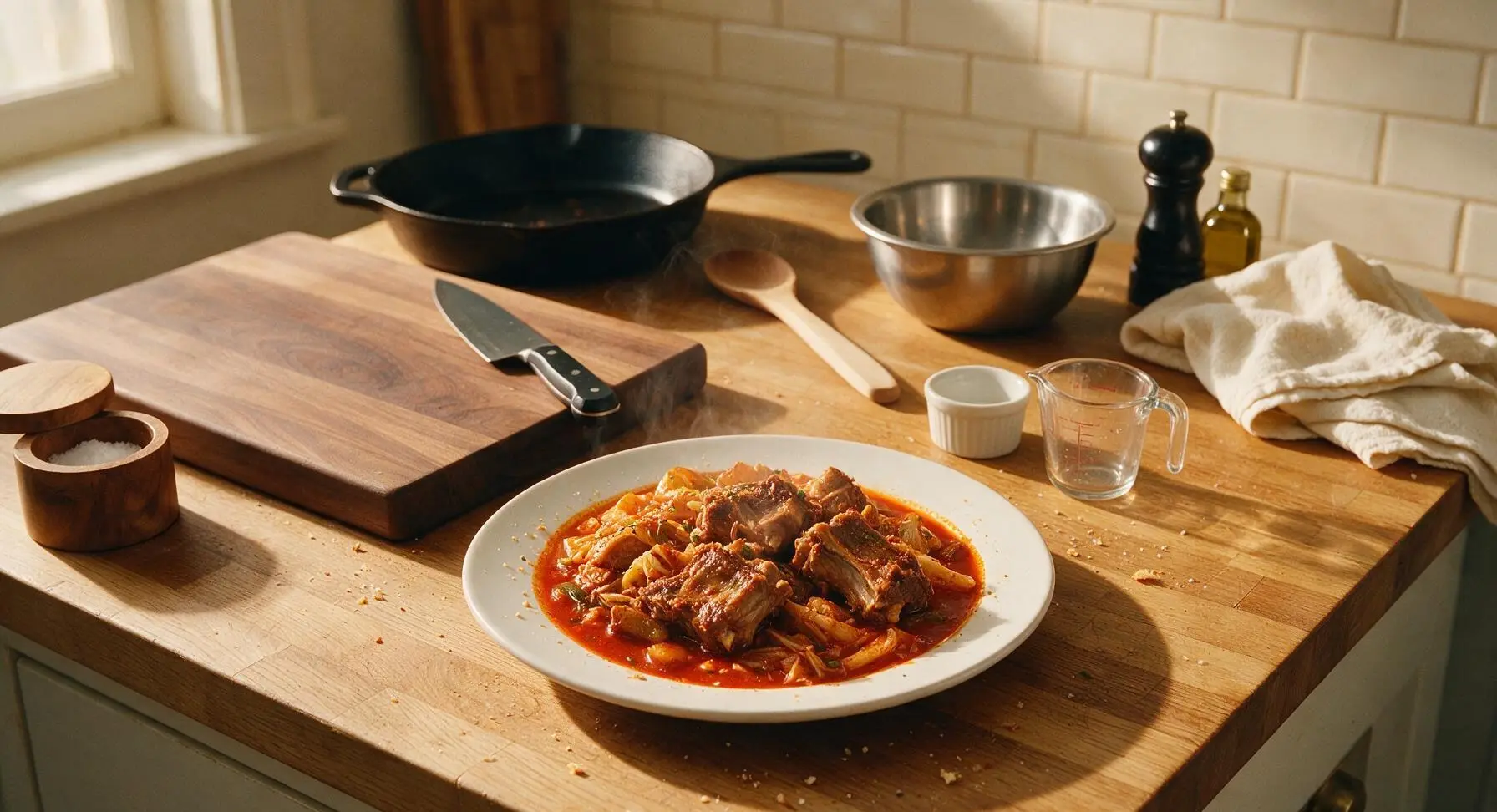
Army Stew Ribs

title 1
Army Stew Ribs
⏱️ cook time 1 hour 20 minutes
🍽️ servings 4
⚡ Difficulty medium

intro

Hearty, spicy, umami-packed Korean army stew elevated with fall-off-the-bone tender ribs, loaded with nostalgic classic ingredients, perfect for cozy shared winter meals.

Ingredients
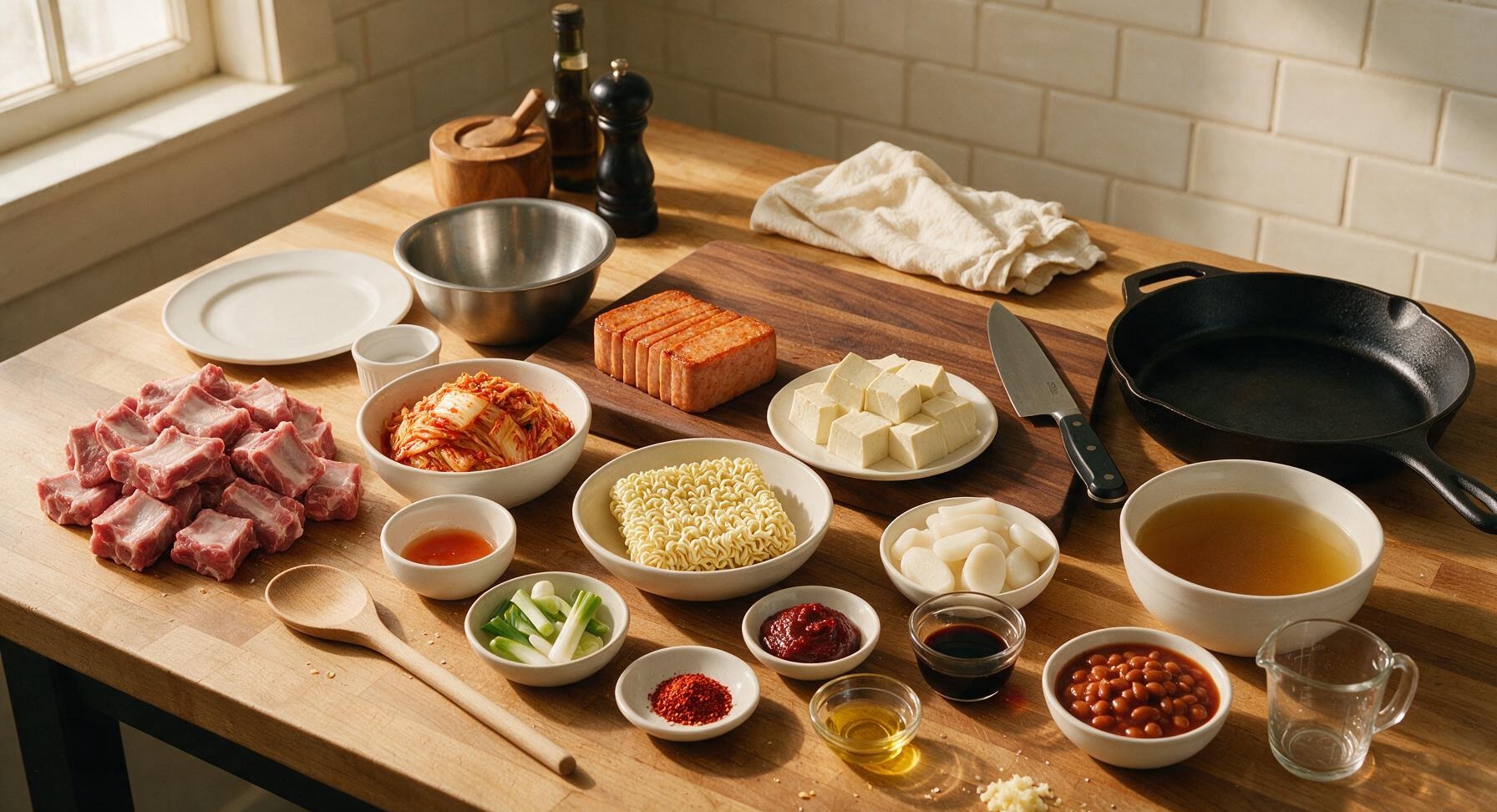
Pork spare ribs 800g, cut into 5cm individual rib pieces
Aged napa kimchi 200g, plus 2 tbsp reserved brine
Spam-style luncheon meat 340g (12oz can), sliced 1cm thick
Soft silken tofu 200g, cut into 3cm cubes
Korean ramyun noodles 110g (1 standard pack, seasoning packet discarded)
Sliced cylindrical rice cakes (tteok) 100g
Yellow onion 1 medium (150g), thinly sliced
Green onion 2 stalks (100g), cut into 2cm pieces, white/green parts separated
Garlic 3 cloves (15g), minced
Gochujang (Korean chili paste) 2 tbsp (30g)
Gochugaru (Korean chili flakes) 1 tbsp (10g)
Low-sodium soy sauce 1 tbsp (15ml)
Toasted sesame oil 1 tsp (5ml)
Low-sodium anchovy beef broth 1L
Plain baked beans 120g (1/2 can), drained

Steps

1

Blanch the Spare Ribs

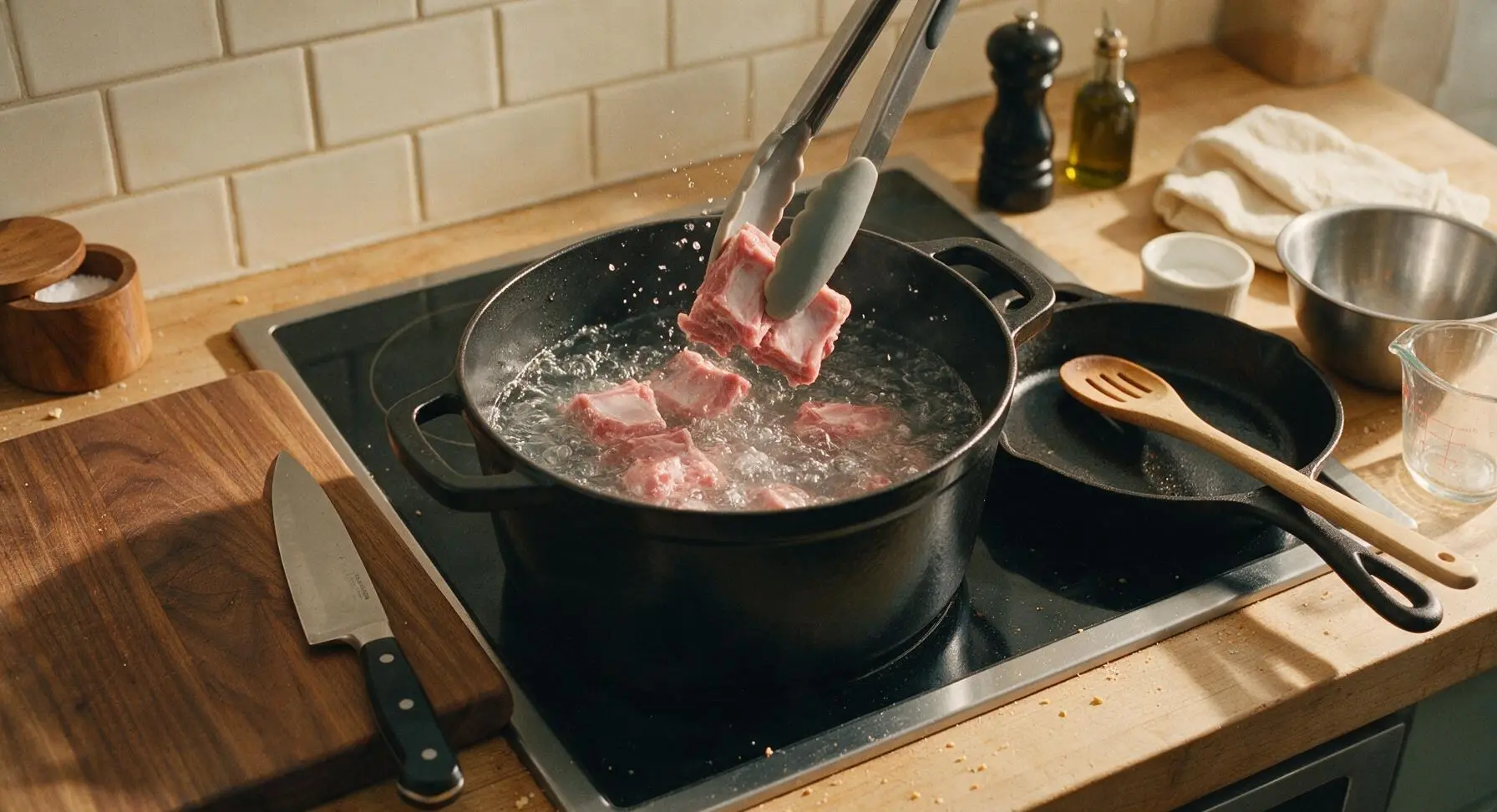
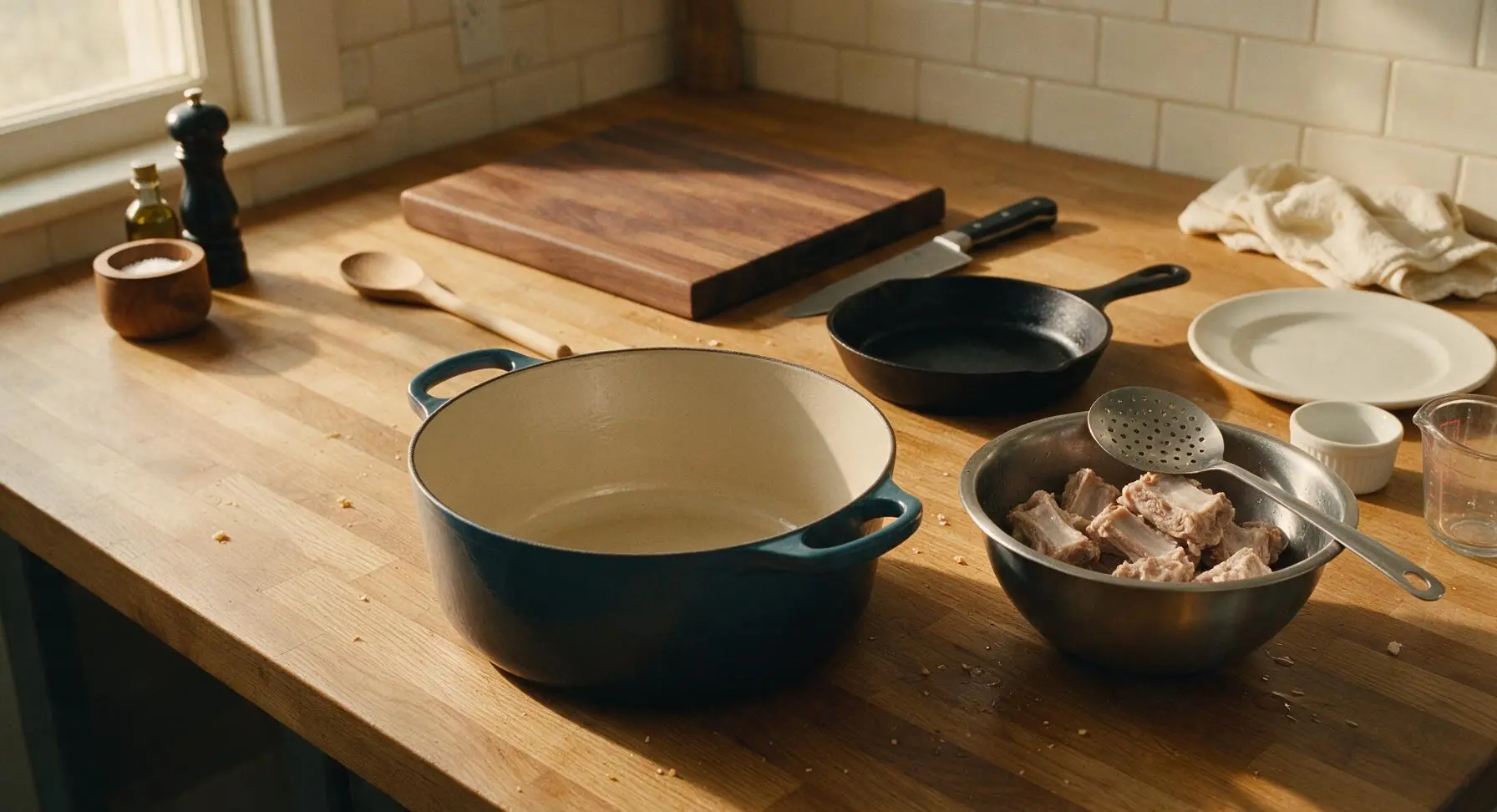
Fill the 5L enameled Dutch oven two-thirds full with cold water, set on the induction stovetop over high heat, and bring to a rolling boil. Add the cut spare ribs, boil uncovered for 7 minutes to draw out excess blood and impurities. Use the beech wood slotted spoon to transfer ribs to the stainless steel mixing bowl, rinse under cold running water to scrub off all gray foamy residue, and set aside. Discard blanching water and wipe the Dutch oven completely clean with the linen towel.
Step 1
step1:Blanch the Spare Ribs
Step 1
step1:Blanch the Spare Ribs
2

Sauté Kimchi Base

Return the clean Dutch oven to the stovetop over medium heat (160°C/320°F), add 1 teaspoon toasted sesame oil. Once oil shimmers, add sliced onion, minced garlic, and the white parts of the green onion, sauté for 3 minutes until soft and fragrant. Add chopped kimchi (reserve all brine for later), stir continuously with the slotted spoon for 5 minutes until kimchi darkens slightly, caramelizes at the edges, and releases its bright red juice.
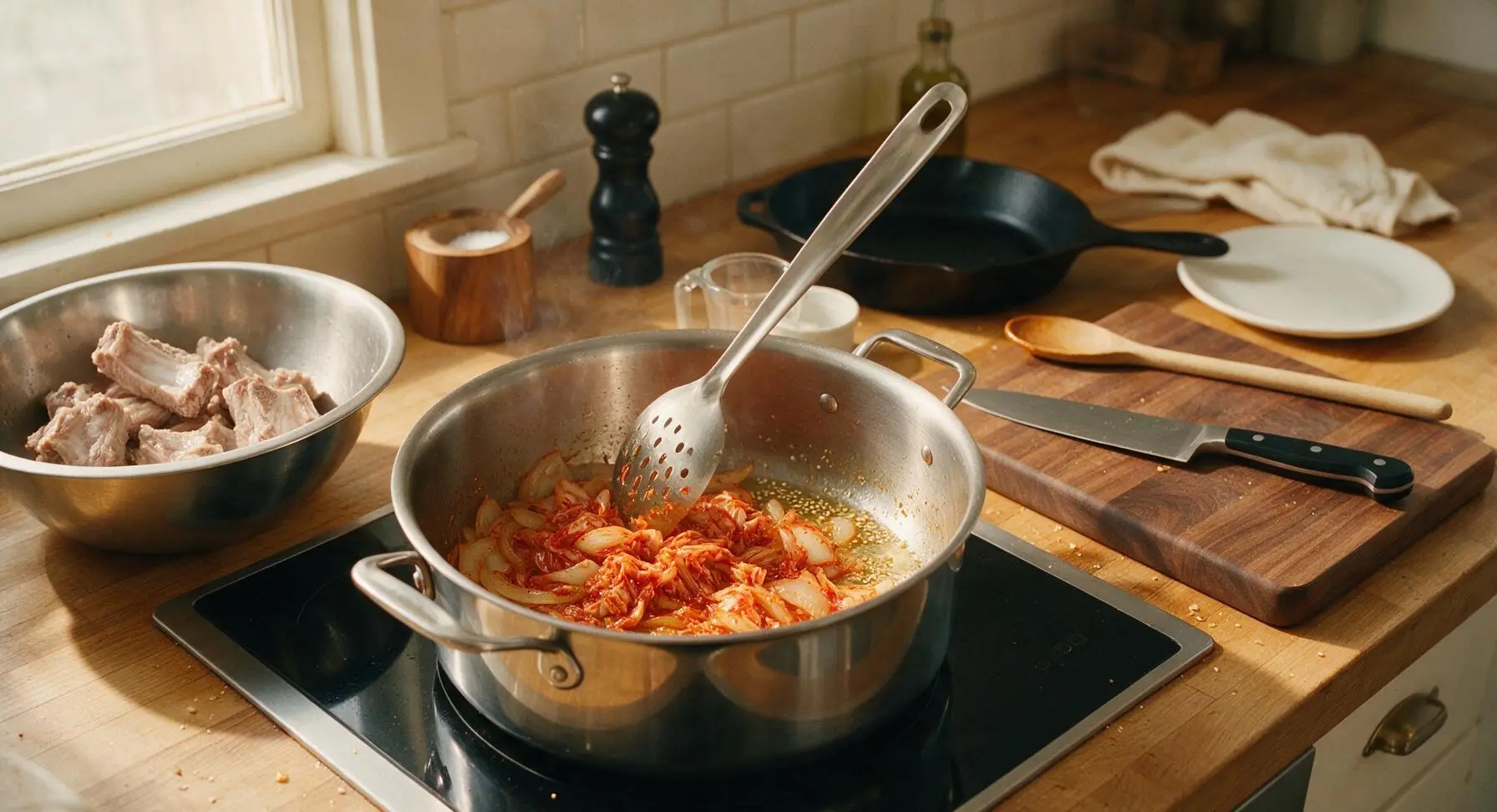
Step 2
step2:Sauté Kimchi Base
3

Braise Ribs in Broth

Add rinsed blanched ribs, gochujang, gochugaru, soy sauce, reserved kimchi brine, and 1L anchovy beef broth to the Dutch oven. Stir well to fully dissolve the chili paste into the broth, bring to a gentle boil then reduce heat to low (95°C/200°F). Cover with the lid and simmer for 50 minutes, checking at 40 minutes: ribs are ready for the next step when a fork pierces the meat easily but it does not yet fall completely off the bone.
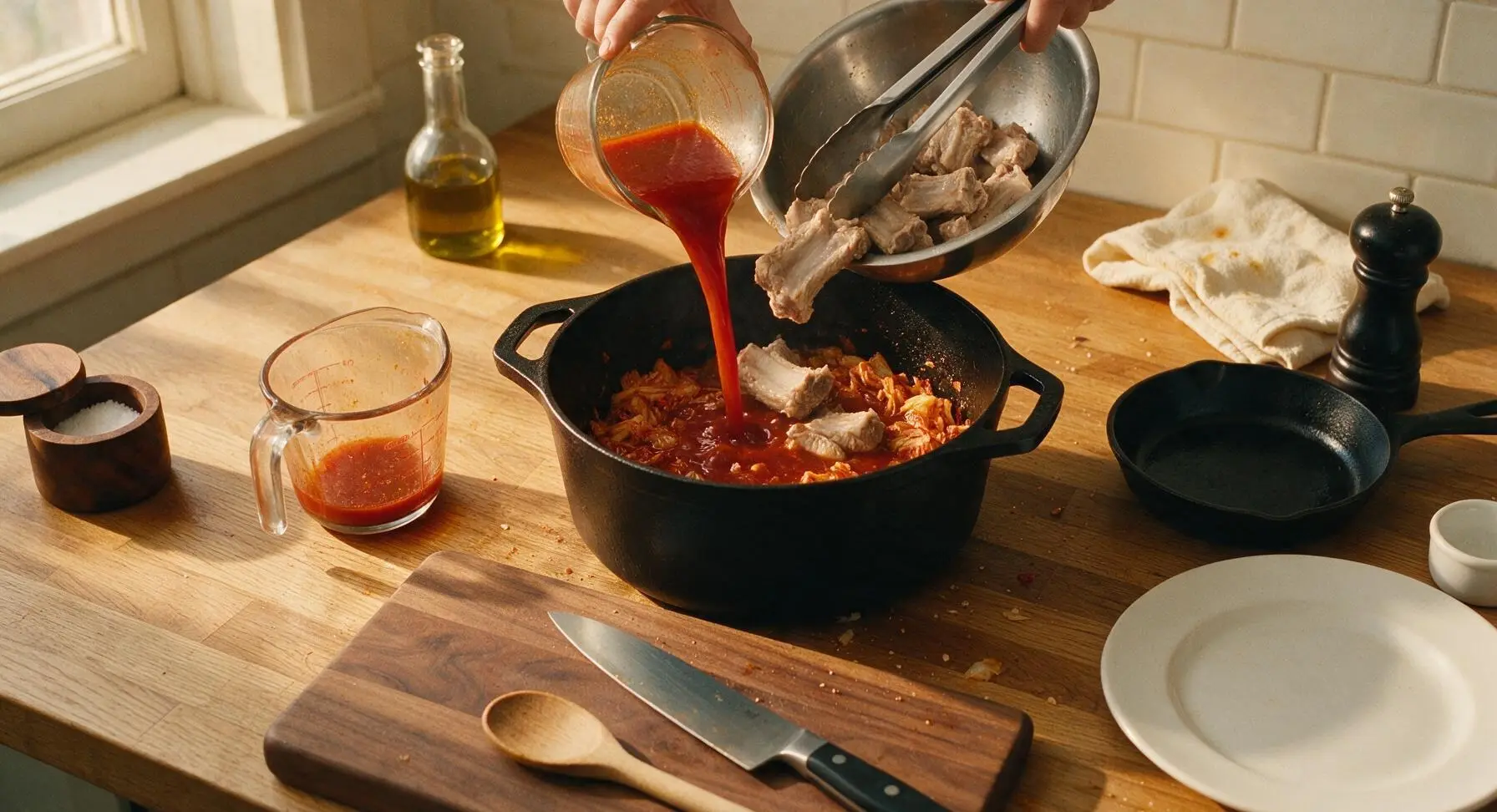
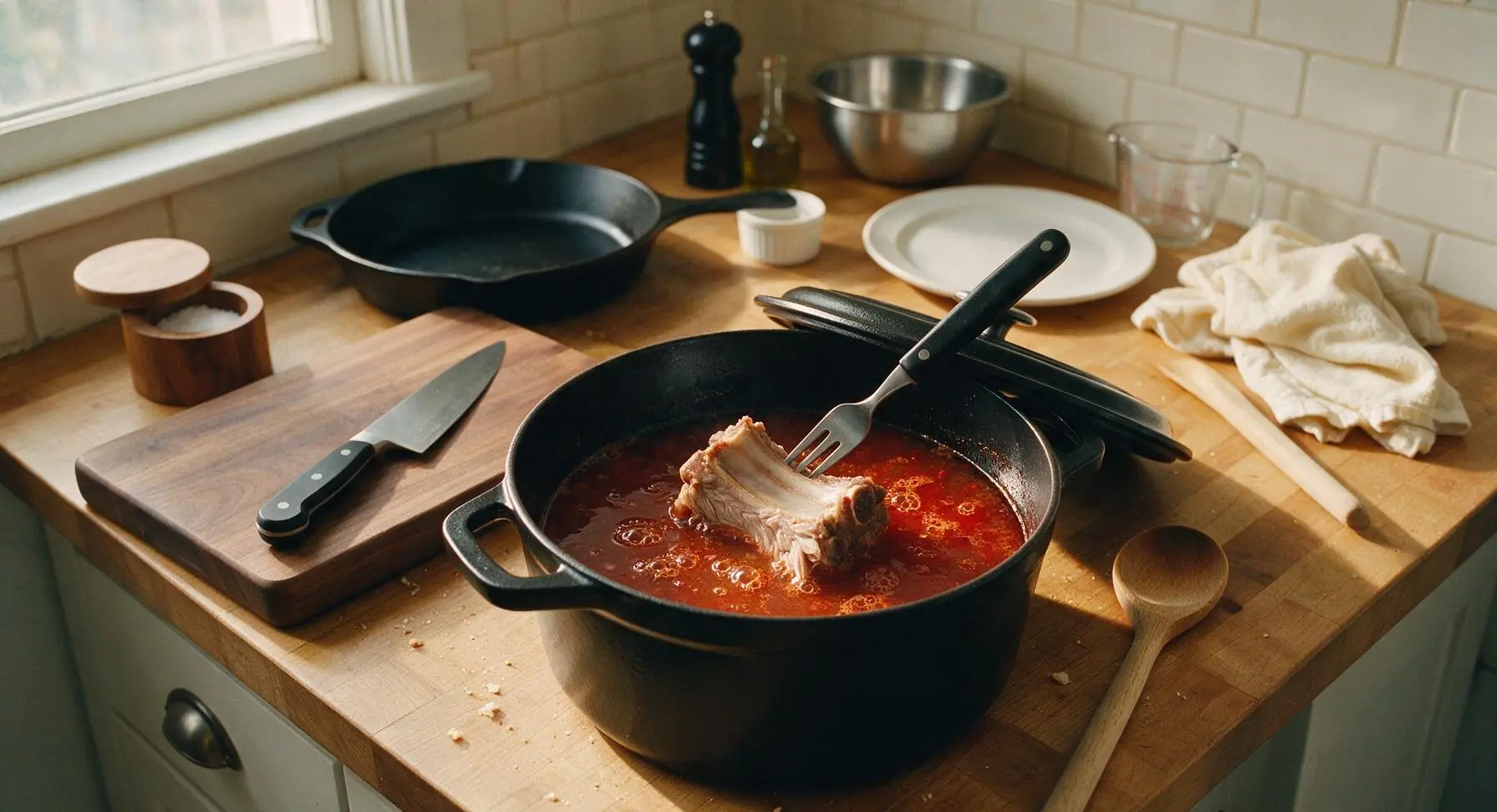
Step 3
step3:Braise Ribs in Broth
Step 3
step3:Braise Ribs in Broth
4

Add Hearty Ingredients

Remove the pot lid, increase heat to medium-low (120°C/250°F). Layer sliced luncheon meat, drained baked beans (shaken in the fine-mesh strainer to remove excess can sauce), and sliced rice cakes evenly across the top of the simmering ribs. Do not stir aggressively; let ingredients settle gently into the broth. Cover again and cook for 8 minutes until rice cakes are soft, chewy, and float slightly on the broth surface.
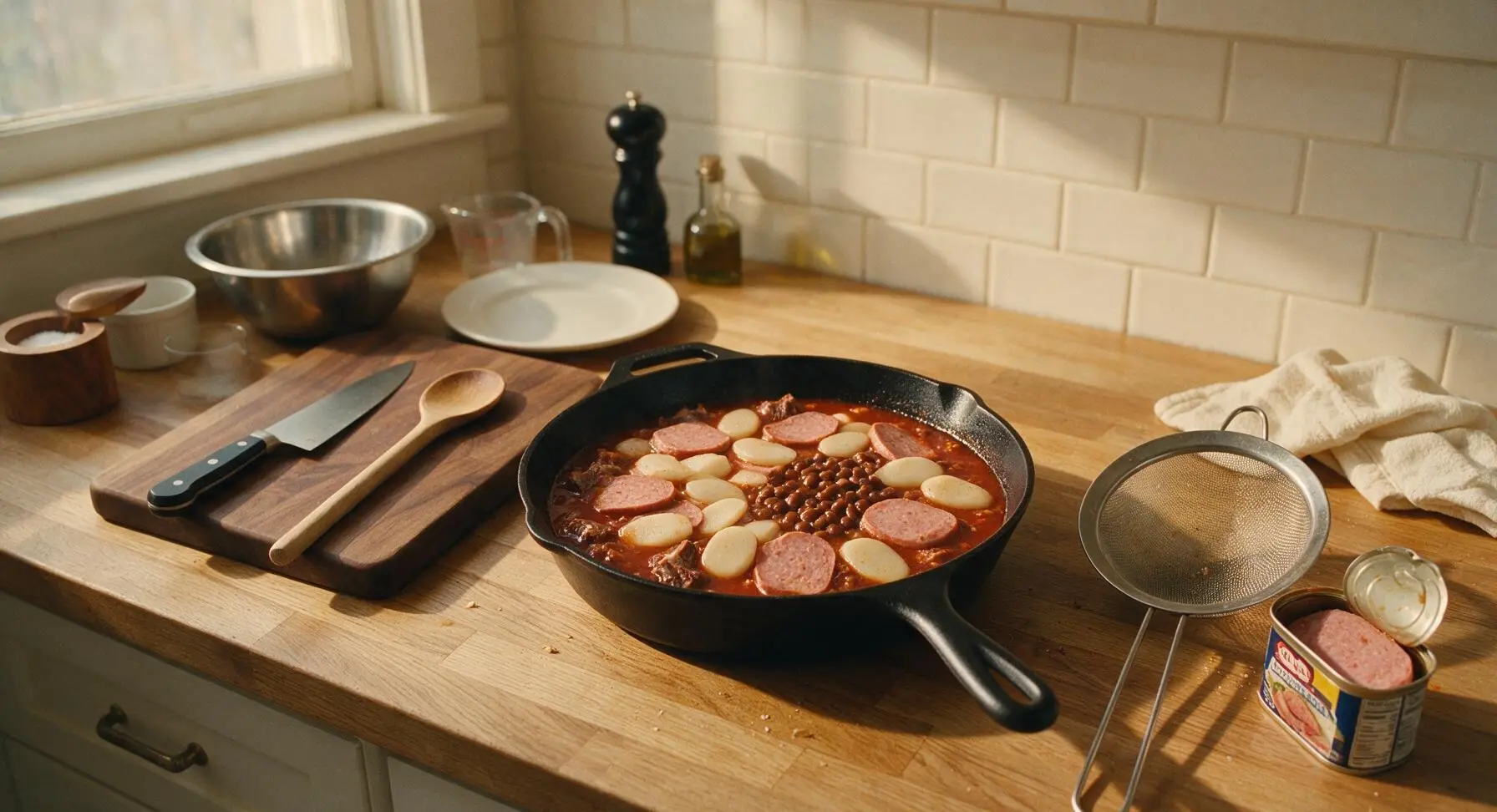
Step 4
step4:Add Hearty Ingredients
5

Add Tofu and Noodles

Remove the lid, nestle cubed soft tofu and the dry ramyun noodle block into the broth, gently pressing noodles down with the slotted spoon to fully submerge them (do not stir vigorously, as this will break the delicate tofu curds). Cover and cook for 3 minutes until noodles are just al dente, with a slight firm bite at the center.
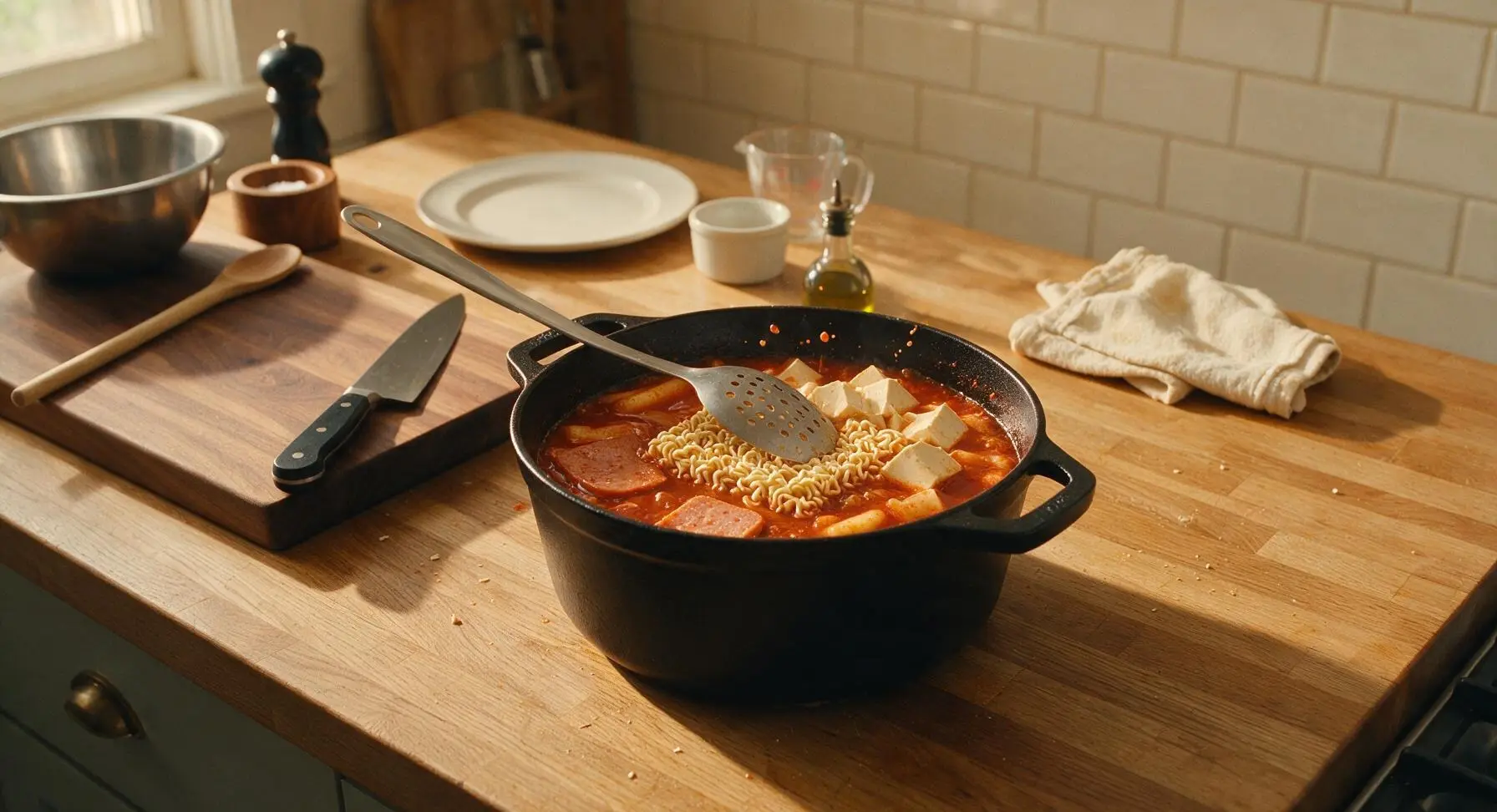
Step 5
step5:Add Tofu and Noodles
6

Finish and Season

Taste the broth, adjust with a pinch of flaky sea salt from the salt cellar or extra gochugaru if desired. Turn off the heat, sprinkle the reserved green onion greens evenly over the top of the stew, and drizzle with a tiny extra dash of sesame oil for nutty aroma. Let rest, uncovered, for 2 minutes to let flavors meld.
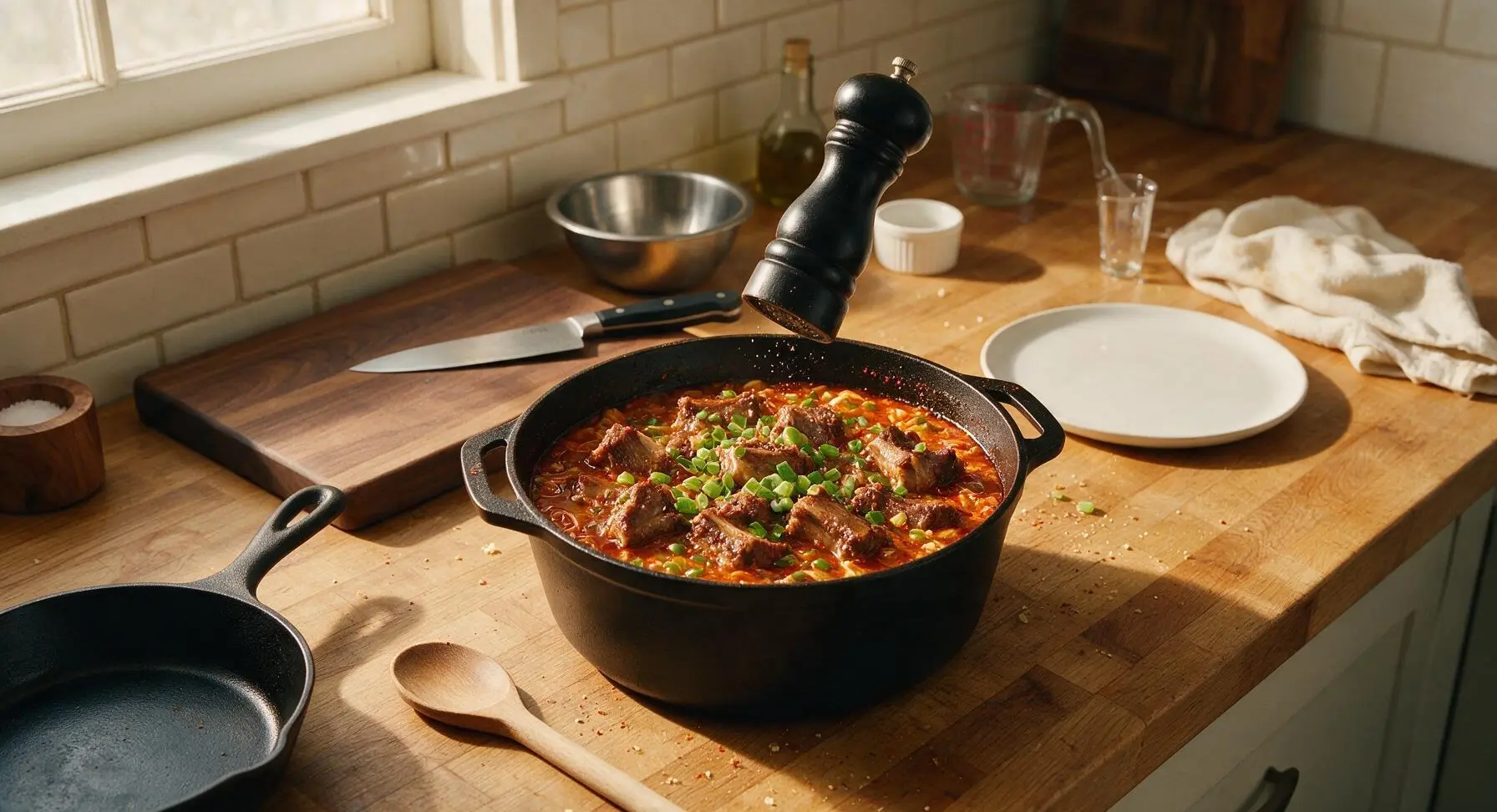
Step 6
step6:Finish and Season
7

Plate to Serve

Use the slotted spoon and tongs to transfer ribs, noodles, and solid stew components into the off-white ceramic serving bowl, arranging 3-4 rib pieces prominently across the top. Ladle enough red broth over the ingredients to cover three-quarters of the solids, letting it pool slightly at the bottom of the bowl.
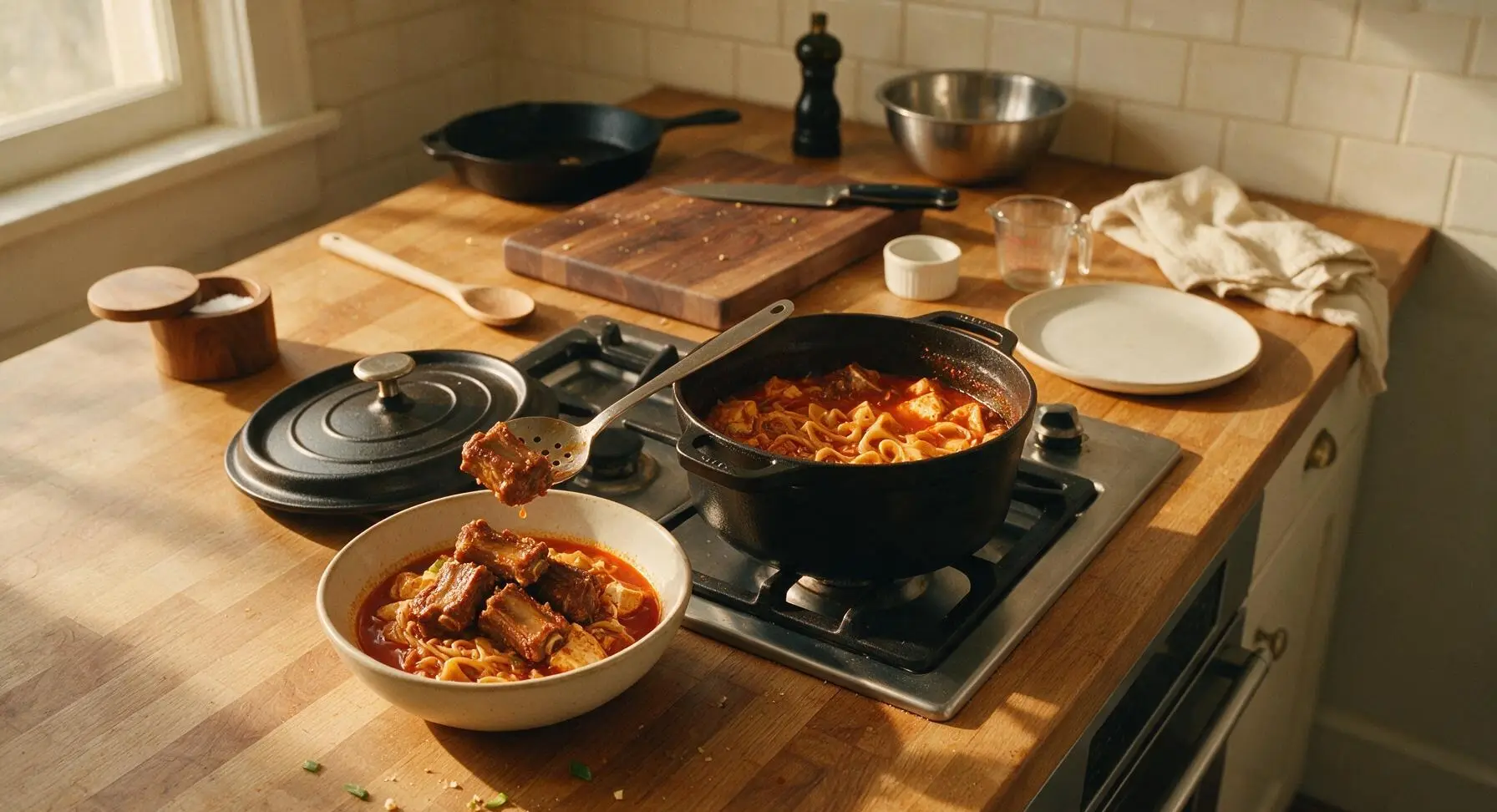
Step 7
step7:Plate to Serve

Tips

1.Use 2–3 week old fully fermented (sour) kimchi for the deepest, tangiest flavor; fresh, newly made kimchi will taste flat and lack the bright acidity that balances the rich ribs and salty luncheon meat. If your kimchi is mild, add 1 teaspoon of rice vinegar to the broth to boost tang.
2.Do not boil the stew at a rolling bubble after adding soft tofu, as aggressive turbulence will break the delicate curds into tiny pieces and cloud the bright red broth; keep heat at a gentle, steady simmer once tofu is added.
3.For an extra nostalgic classic army stew touch, lay a slice of processed American cheese over the noodles right before turning off the heat—its creamy, mild melt cuts through the spice and richness, though it can be omitted for a more traditional rib stew flavor.
✨ You May Also Like

Soups & Stews
🍜 Japan

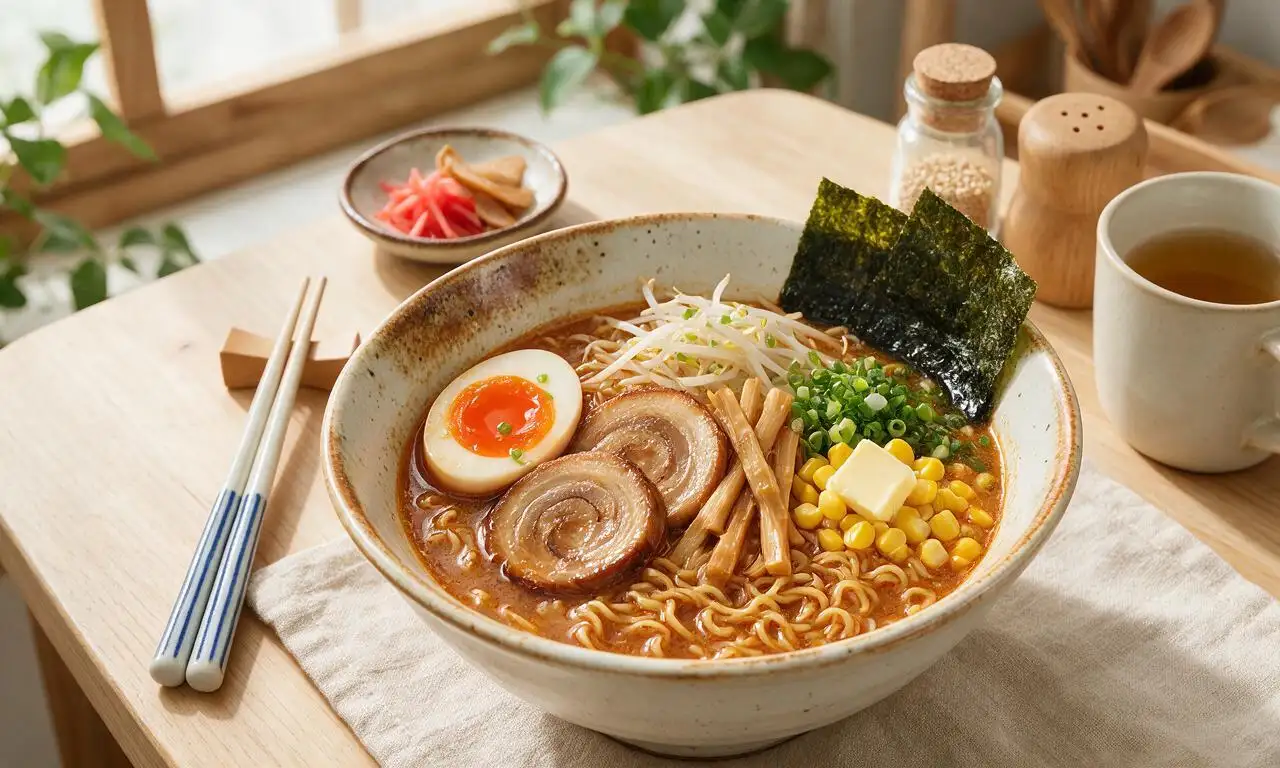
Rich, umami-dense Hokkaido-style miso ramen with chewy noodles, savory fermented broth, and classic toppings, a cozy, deeply satisfying warm meal.

⏱️ 45 minuteSoups & Stews ★ 4.5
Soups & Stews
🍜 United States

A hearty, peppery tripe and root vegetable stew with colonial Philadelphia roots, thick, warming, and packed with bold savory flavor for cold winter days.

⏱️ 2 hours 3Soups & Stews ★ 4.6
Soups & Stews
🍜 Mexico

Hearty, warming red pork posole loaded with tender hominy, slow-simmered in a rich smoky chile broth, served with zesty fresh garnishes for a deeply comforting, satisfying meal.

⏱️ 2 hours 3Soups & Stews ★ 4.7
Soups & Stews
🍜 United States

Warm, soothing classic chicken noodle soup loaded with tender chicken, soft egg noodles, and savory veggies, perfect for chasing chills and feeding the whole family.

⏱️ 40 minuteSoups & Stews ★ 4.9
Soups & Stews
🍜 France

Deeply savory caramelized onion broth topped with crusty bread and bubbly melted Gruyère, a timeless French bistro comfort food ideal for cold days.

⏱️ 1 hour 25Soups & Stews ★ 4.8
Soups & Stews
🍜 United States

Hearty, briny Maryland crab soup loaded with sweet blue crab, tender summer vegetables, and zesty Old Bay, a beloved Chesapeake Bay coastal comfort staple.

⏱️ 55 minuteSoups & Stews ★ 4.9

Army Stew Ribs:Frequently Asked Questions

1.Do I need to pre-cook the pork spare ribs before adding them to the army stew? ▾
Yes, absolutely. Parboil the ribs for 40–45 minutes first, skimming off any gray foam that rises to the top, to get that perfect fall-off-the-bone tenderness. Save the strained parboil liquid to use as your stew base—it adds rich, porky depth plain store-bought broth can’t match.
2.What type of kimchi works best for this recipe, and can I use fresh-made kimchi? ▾
Stick to aged, sour napa kimchi fermented for at least 2–3 weeks for the deepest, tangiest umami kick. Fresh, newly made kimchi is too crisp and mild here; if that’s all you have, leave it on the counter for 1–2 days to sour slightly before using.
3.Do I need to cook the Spam-style luncheon meat before adding it to the stew? ▾
It’s not strictly required, but I recommend pan-frying thin Spam slices for 1–2 minutes per side until lightly golden first. This caramelizes the edges, cuts the one-note canned salty taste, and adds a toasty, savory layer that makes the finished stew taste far more balanced.
4.When should I add the silken tofu so it doesn’t break apart in the stew? ▾
Add silken tofu during the last 5 minutes of cooking. Gently scoop large 2-inch chunks into the simmering stew instead of stirring aggressively, and don’t boil it hard after adding. This keeps the tofu soft, creamy, and intact rather than turning into tiny, broken bits in the broth.
5.When should I add the Korean ramyun noodles to avoid them turning mushy? ▾
Add ramyun noodles during the final 3–4 minutes of cooking, right after you tuck in the silken tofu. Make sure the stew is at a gentle rolling boil when you add them, and stir only once or twice to separate strands—overcooking leaves you with soggy, bloated noodles.
6.How spicy is this stew, and can I adjust the heat level for people who don’t like spicy food? ▾
Classic budae jjigae has a moderate, warming spice level from gochugaru and gochujang, but it’s super easy to adjust. Cut the amount of Korean chili paste and flakes in half for milder eaters, or set out extra gochugaru so guests can amp up the heat to their own taste.
7.Can I make this stew ahead of time for meal prep or a dinner party? ▾
You can prep all components and pre-cook the ribs 2–3 days in advance, stored separately in the fridge, but wait to add tofu and ramyun noodles until right before serving. If you store fully assembled stew with noodles, they’ll absorb all the broth and turn mushy when reheated.
8.What are the best side dishes to serve with this hearty rib army stew? ▾
This is a casual, shared family-style meal, so pair it with plain steamed white rice, quick pickled daikon radish, and a small dish of toasted sesame oil with salt for dipping the tender ribs. The bright, acidic pickles cut through the rich, spicy broth perfectly.
9.Can I swap the pork spare ribs for a different cut of pork if I can’t find them? ▾
If spare ribs are hard to track down, you can use bone-in country-style pork ribs or thick-cut pork belly, though you’ll miss that deep slow-cooked bone-in savoriness. If using pork belly, skip the long pre-cook: just sear it first and simmer 15 minutes before adding other ingredients.
10.I don’t eat processed meat—can I leave out the Spam-style luncheon meat? ▾
Absolutely, you can skip the Spam without ruining the stew. Swap it for sliced smoked sausage, pan-fried extra-firm tofu, or thick slices of meaty shiitake mushroom for umami bite, just adjust the salt level a touch since Spam adds quite a bit of sodium.
11.What’s the best pot to use for cooking and serving this army stew? ▾
Use a wide, shallow heavy-bottomed pot or Korean stone pot (dolsot) if you have one—these retain heat really well, so the stew stays bubbling hot at the table for family-style serving. For crowds, a portable tabletop burner works perfectly to keep it simmering the whole meal.
12.How should I store leftovers, and how long will they keep in the fridge? ▾
Store leftover stew (without ramyun noodles, which turn mushy) in an airtight container in the fridge for up to 3 days. When reheating on the stovetop, add a splash of water or broth to thin the liquid as needed, and toss in fresh noodles and tofu chunks when it returns to a simmer.

Comments (15)

3 days ago

Made this for our Sunday football potluck and the whole crew went crazy for it! I tossed in an extra tablespoon of gochujang since my friends love spicy food, and those pork ribs got so tender they were falling off the bone before we even served it. Way better than the sad takeout budae jjigae we usually order for game day. Will absolutely be making this again.

2 hours ago

Quick question before I make this for dinner this weekend! I don’t have a large Dutch oven, can I use my regular tall stock pot instead? I’m worried the ribs won’t cook evenly if I switch up the cookware.

30 minutes ago

Great question! A regular stock pot works perfectly for this recipe. Just keep the lid tightly secured while the ribs simmer to trap heat, and give the pot a stir every 15 minutes or so to prevent anything from sticking to the bottom. You’ll still get that fall-off-the-bone tender rib result we love!

1 week ago

This was SO good! I was a little intimidated by the medium difficulty rating at first, but the steps were super straightforward even for someone like me who burns white rice half the time. I tossed in extra ramen noodles and a handful of fermented kimchi on top when serving, total chef’s kiss.

5 days ago

Adding extra kimchi on top is non-negotiable for me too! I also throw a couple slices of American cheese on top right at the end like they do at the K-BBQ spots near my place, total game changer.

3 days ago

We love those customizations! Extra noodles and a melty slice of American cheese are some of our go-to tweaks too—this recipe is built to be adjusted to exactly what you love in your army stew.

2 weeks ago

Made this for meal prep this week and it held up so good! The flavors got even better after sitting in the fridge for a day, I just added a splash of broth when I reheated it for lunch. Perfect for busy work weeks when I don’t have time to cook every night.

5 days ago

This is hands down the best budae jjigae recipe I’ve tried making at home! The pork ribs add so much rich, meaty depth that the regular spam-and-hot-dog version just can’t compete with. My whole family was raving about it at dinner last night.

2 days ago

I was so skeptical ribs would make that big of a difference, but you’re so right! The flavor is next level. My husband already asked if we can swap this in for our usual taco night next week, lol.

2 weeks ago

OMG I can’t believe how well this turned out! I’ve only ever had army stew at Korean restaurants, so I was super nervous to try making it at home, but the instructions were so clear and easy to follow. That 1 hour 20 minute cook time was 100% worth it for how fall-apart tender those ribs got.

1 week ago

Same! I was convinced I’d mess up the broth ratio, but it came out exactly like the version from my favorite spot down the street. Saved a ton of money making it for the whole family instead of ordering takeout!

5 days ago

That makes us so happy to hear! The broth picks up so much rich, savory flavor from simmering with the ribs, and it makes the whole house smell incredible while it cooks, too.

1 week ago

Made this after a long day hike with friends and it hit the spot. Hearty, packed with flavor, and we loaded it up with extra hot dogs, spam, and rice cakes like we do when we go camping. Only note is I’d cut the ribs into smaller chunks next time so they’re easier to fish out of the pot.

yesterday

Made this in my tiny apartment kitchen for my roommates last night and we all ate way too much, lol. Quick question: I accidentally used beef short ribs once when the grocery store was out of pork ribs, and it was still really tasty! Would I need to adjust the cook time at all if I do that swap again?

5 minutes ago

Beef short ribs are such a great swap! Just add about 15 minutes of extra simmer time to make sure they get perfectly tender, since beef is a little denser than pork ribs. So glad you and your roommates loved the recipe!

2 days ago

My kids loved it! I was worried the spice level would be too much for my 7 and 9 year old, so I cut the gochujang in half and served extra on the side for my husband and I. We paired it with steamed rice and pickled radishes, it made for the coziest Sunday family dinner.

yesterday

Cutting the gochujang for the kids is such a smart move! I made it full spice last time and my 6 year old took one bite and chugged a whole glass of milk, oops. Definitely stealing that trick next time I make this.

2 hours ago

The pickled radish side is chef’s kiss! It cuts through the rich, savory stew so perfectly, I always keep a jar in my fridge just for budae jjigae nights.

1 week ago

I’ve tried so many budae jjigae recipes over the years and this one is easily top tier. The ribs make the broth so much heartier than regular versions, I don’t think I can go back to making it without ribs now. Even my super picky sister asked for the recipe after she tried a bowl when she visited last week.

3 days ago

You’re so right! I made this for a work potluck last week and three different coworkers tracked me down to ask for the recipe link. No leftovers at all, which is always the best sign a recipe slaps.

5 days ago

Tried making this on my outdoor propane burner last weekend when we had friends over for a backyard hang, and it worked perfectly. We set all the toppings out buffet style so people could add whatever they wanted—extra spam, rice cakes, noodles, cheese, you name it. Such a fun group meal.

30 minutes ago

I followed the recipe exactly but my ribs came out a little tough when I made this tonight. Did I not simmer them long enough? I kept the heat on medium the whole time, but I think my apartment stovetop runs way hotter than most standard ones.

5 minutes ago

So sorry to hear the ribs came out tough! That’s almost always from the heat being too high during the simmer step—you want a gentle, low bubble, not a rolling boil. If your stovetop runs hot, turn it down to medium-low and add 10 extra minutes of simmer time next time, that should give you that perfect tender texture!

yesterday

Total game changer! I’ve been making regular army stew for years and never thought to add pork ribs, but this is the upgrade I didn’t know I needed. I smoked the ribs for 30 minutes before adding them to the stew for a little extra smoky depth, and it was absolutely insane.

2 hours ago

Smoking the ribs first? That is such a genius call. I have a tiny offset smoker in my backyard, I’m absolutely doing that next time I make this. The smokiness would pair so perfectly with the spicy, savory broth.

30 minutes ago

What an incredible hack! That hint of smokiness on the ribs sounds like it would take this stew completely over the top. We might have to test that version ourselves for a future recipe update!

3 days ago

This is my new go-to for Sunday meal prep! I portion it out into containers with a scoop of steamed rice for work lunches all week, and it reheats like an absolute dream. I tossed in extra shiitake mushrooms and bamboo shoots because I love loading my stew up with veggies, and it worked perfectly with the rest of the flavors.

2 days ago

Adding bamboo shoots is such a good call! I love the little crisp crunch they add to the stew, but I always forget to pick them up when I run to the Asian market. Need to add them to my list for next time.

just now

Made this over our camp stove on our last fall camping trip and it was the perfect cold-weather meal. We were all half-frozen after hiking all day, and a hot, spicy bowl of this stew with those tender ribs hit better than any restaurant meal I’ve had in months. Pro tip: prep all your veggies and portion out the sauce at home before you leave, it makes camp cooking so much less chaotic.