asian broth

title 1
asian broth
⏱️ cook time 1 hour 15 minutes
🍽️ servings 6
⚡ Difficulty easy

intro

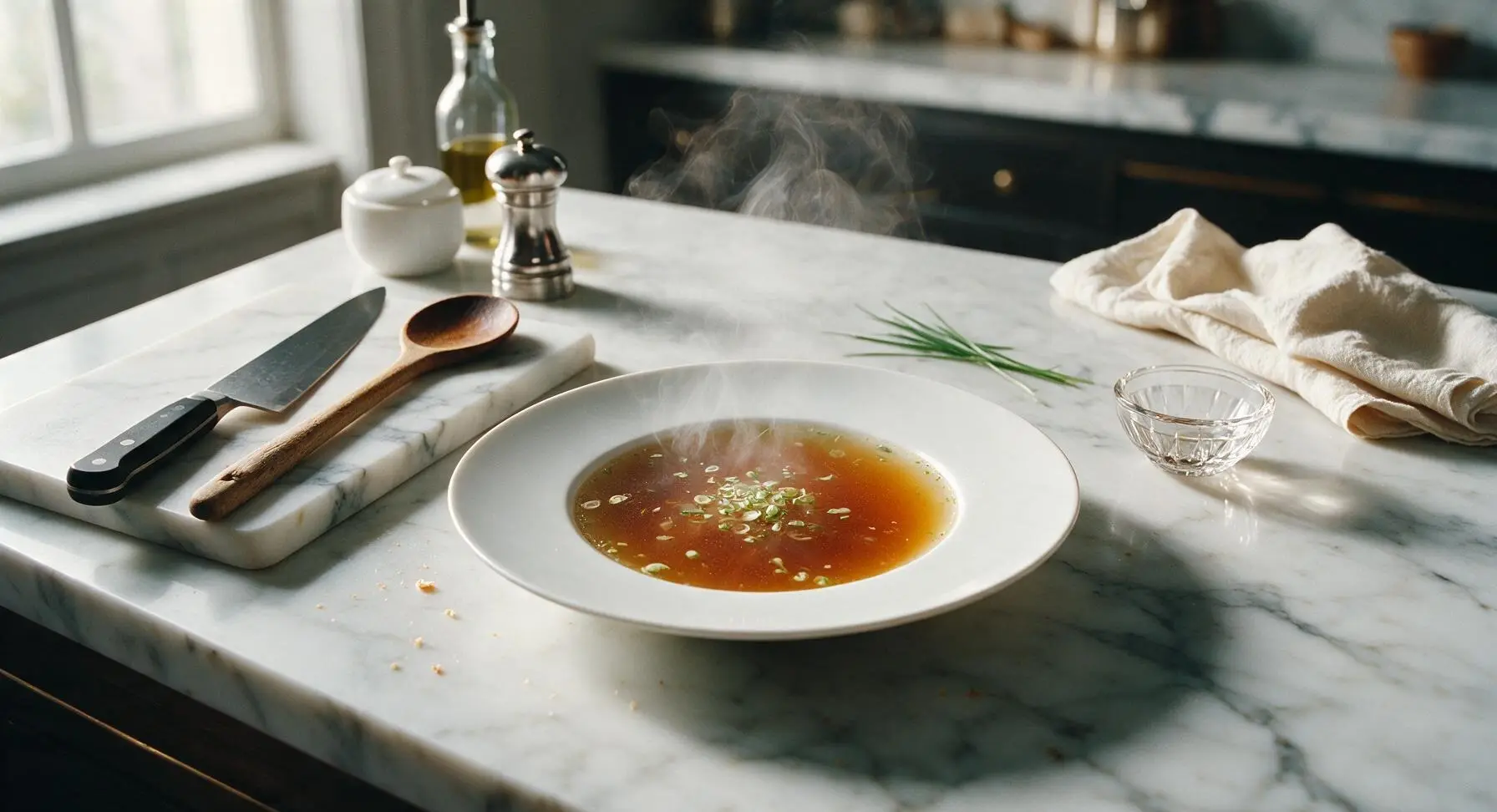
Deeply umami, aromatic all-purpose Asian broth, ideal for noodle soups, poaching proteins, or sipping plain. Balances savory, subtly sweet, warm spice notes without heaviness.

Ingredients
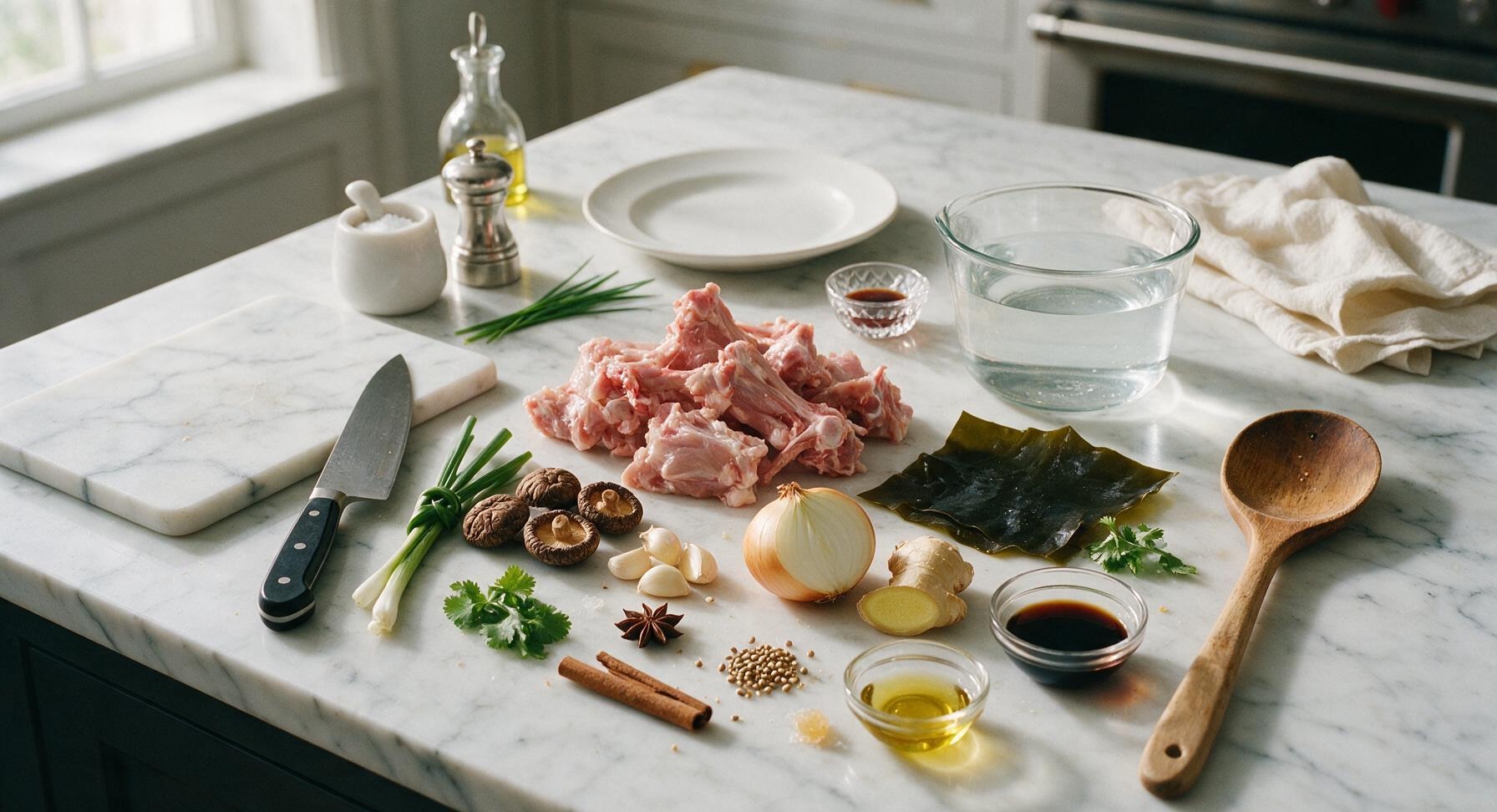
Trimmed chicken bones (back and neck, excess fat removed) 1kg
Cold filtered water 3L
Dried kombu (kelp) 1 10x10cm piece
Dried shiitake mushrooms 4 large (15g total)
Large yellow onion 1 (200g, halved)
Fresh ginger 10cm piece (60g, thickly sliced)
Garlic cloves 6 whole (lightly crushed)
Scallions 3 whole (tied in a loose knot)
Whole star anise 2 pods
Cassia cinnamon stick 1 (5cm length)
Whole coriander seeds 1 tsp
Light soy sauce 2 tbsp
Yellow rock sugar 1 tsp
Toasted sesame oil 1 tsp
Fresh cilantro sprigs (for garnish) 5g

Steps

1

Blanch Chicken Bones

Place the 1kg trimmed chicken bones into the 7L tri-ply stainless steel stock pot, cover with 1L of the cold filtered water, and bring to a rolling boil over medium-high induction heat (180C setting). Boil for 5 minutes, until thick grey foamy scum rises aggressively to the surface. This blanching step removes blood and impurities that would otherwise make the finished broth cloudy or bitter.
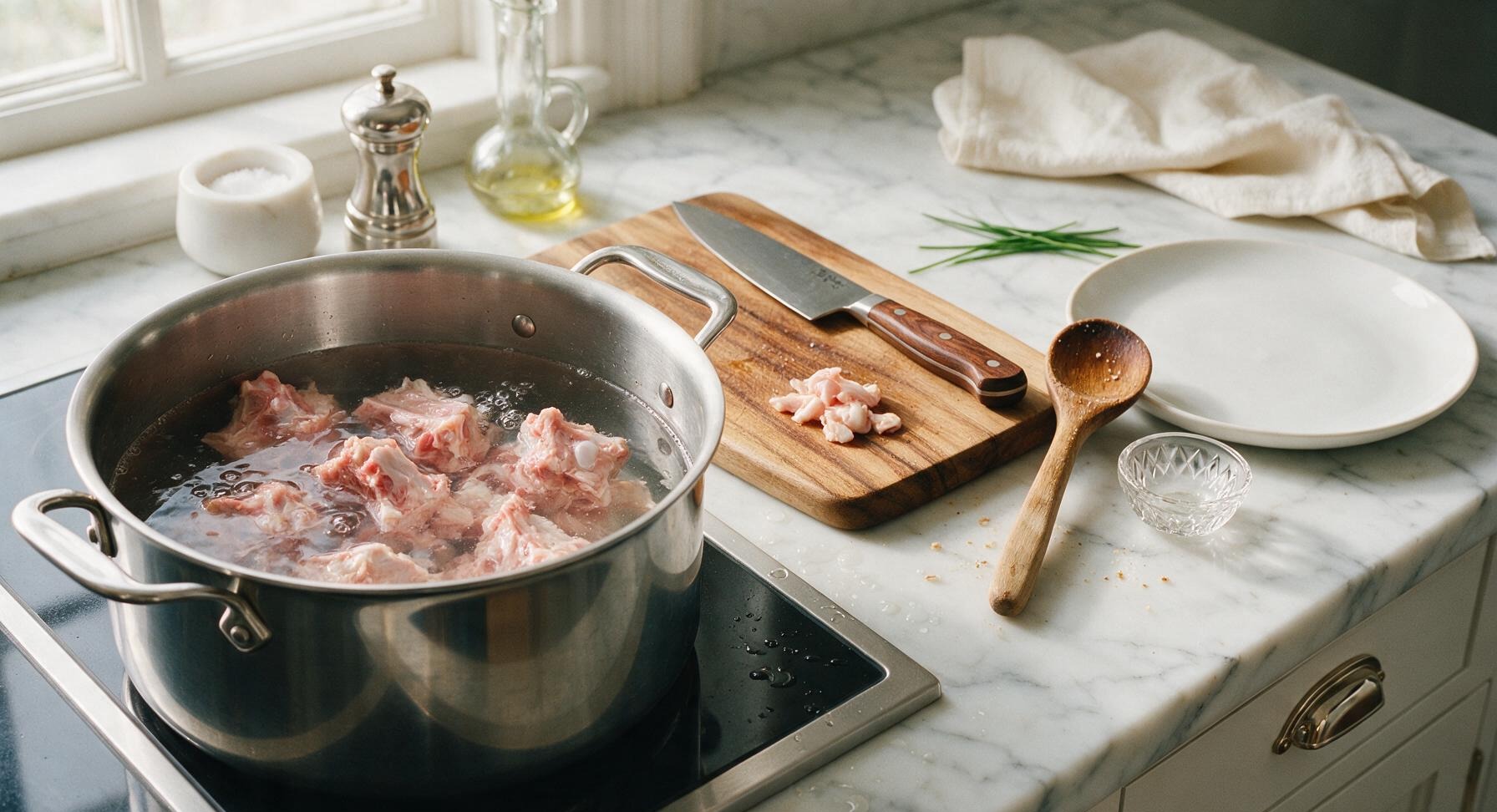
Step 1
step1:Blanch Chicken Bones
2

Rinse Bones and Pot

Drain all cloudy blanching water from the pot completely. Rinse the chicken bones under cool running water to wash away any clinging grey scum, and wipe the inside of the stock pot clean of all residue with a paper towel. Return the fully rinsed, pale clean bones to the wiped pot. Skipping this rinse step will result in a murky, off-flavored broth.
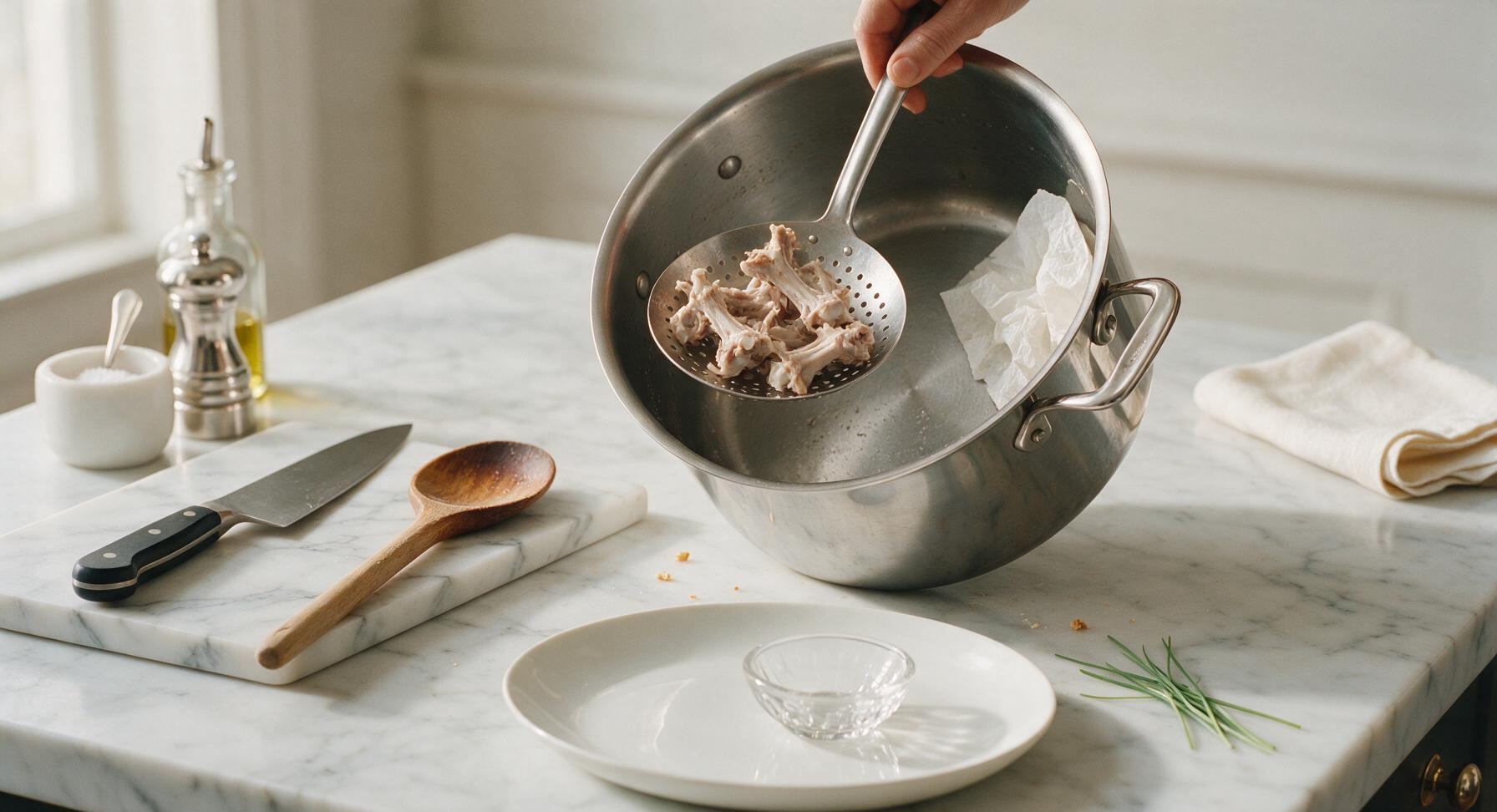
Step 2
step2:Rinse Bones and Pot
3

Char Aromatics for Depth

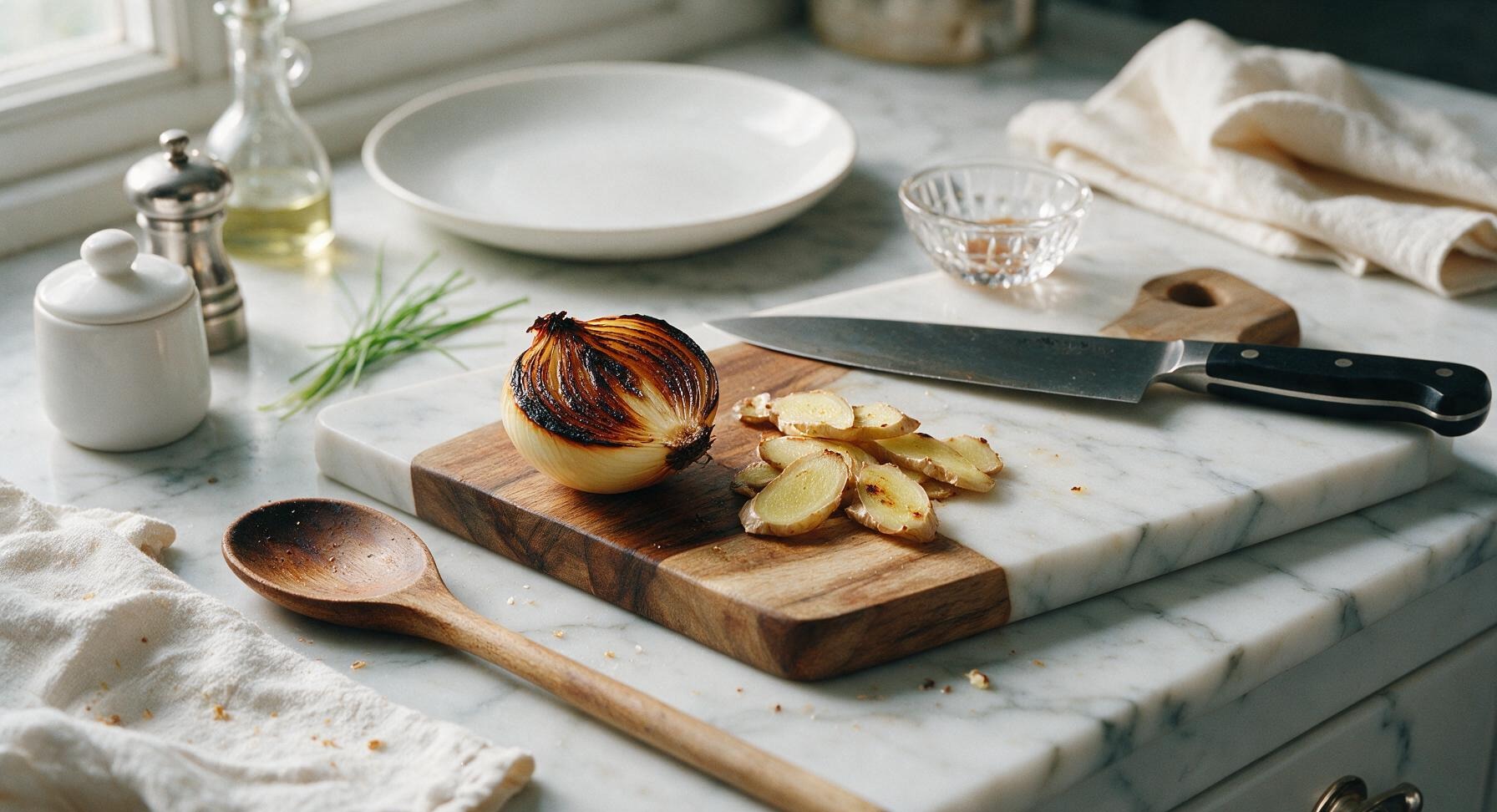
Place the halved yellow onion cut-side down directly on the dry right induction burner set to medium heat (160C) for 4 minutes, until the cut surface is deeply charred dark brown with scattered blackened edges. Add the thick ginger slices and crushed garlic cloves to the burner for the final 1 minute to lightly toast and bring out their aromatic oils. This light char adds a subtle smoky sweetness that matches restaurant-quality Asian broth.
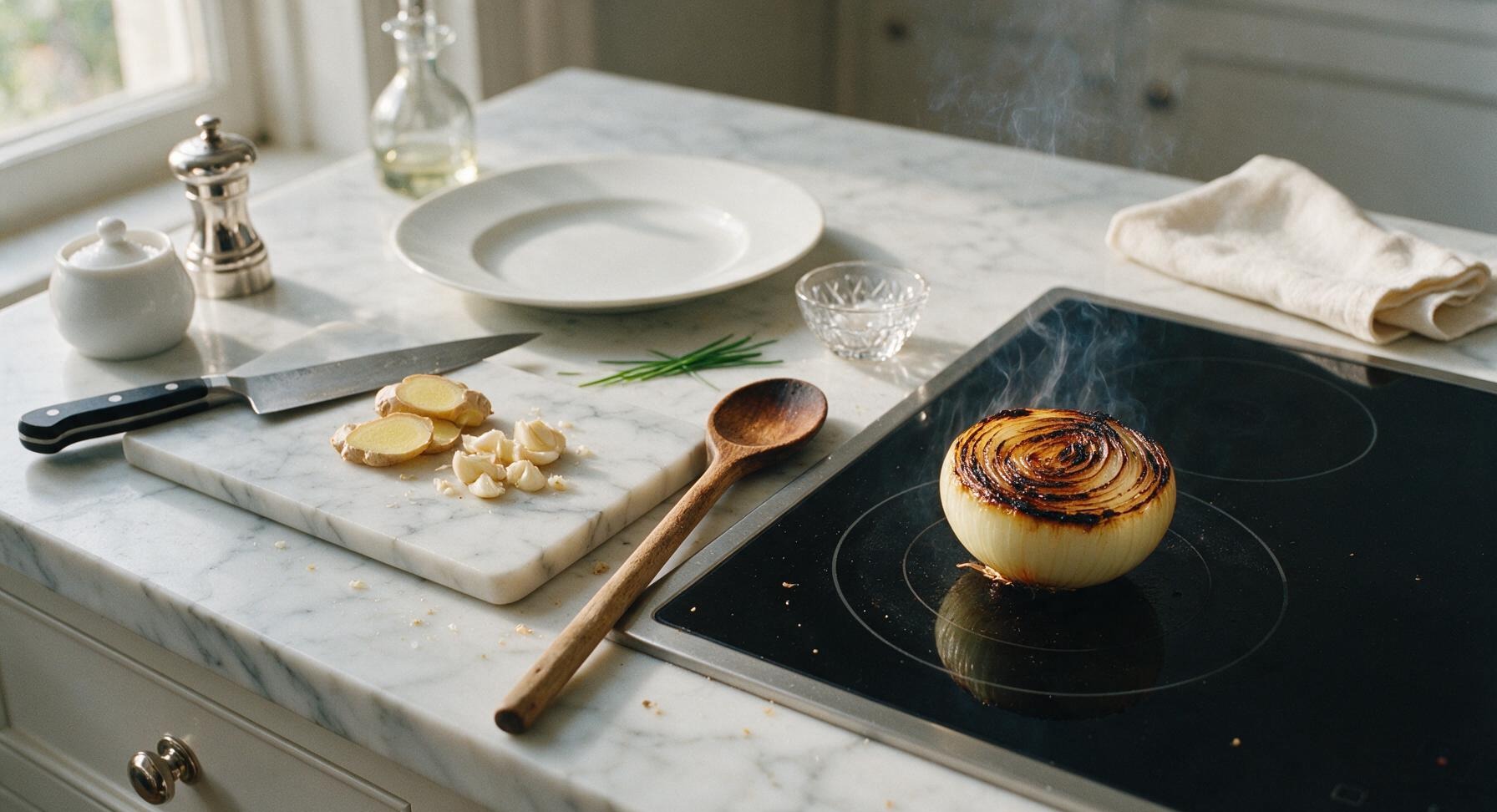
Step 3
step3:Char Aromatics for Depth
Step 3
step3:Char Aromatics for Depth
4

Combine All Ingredients

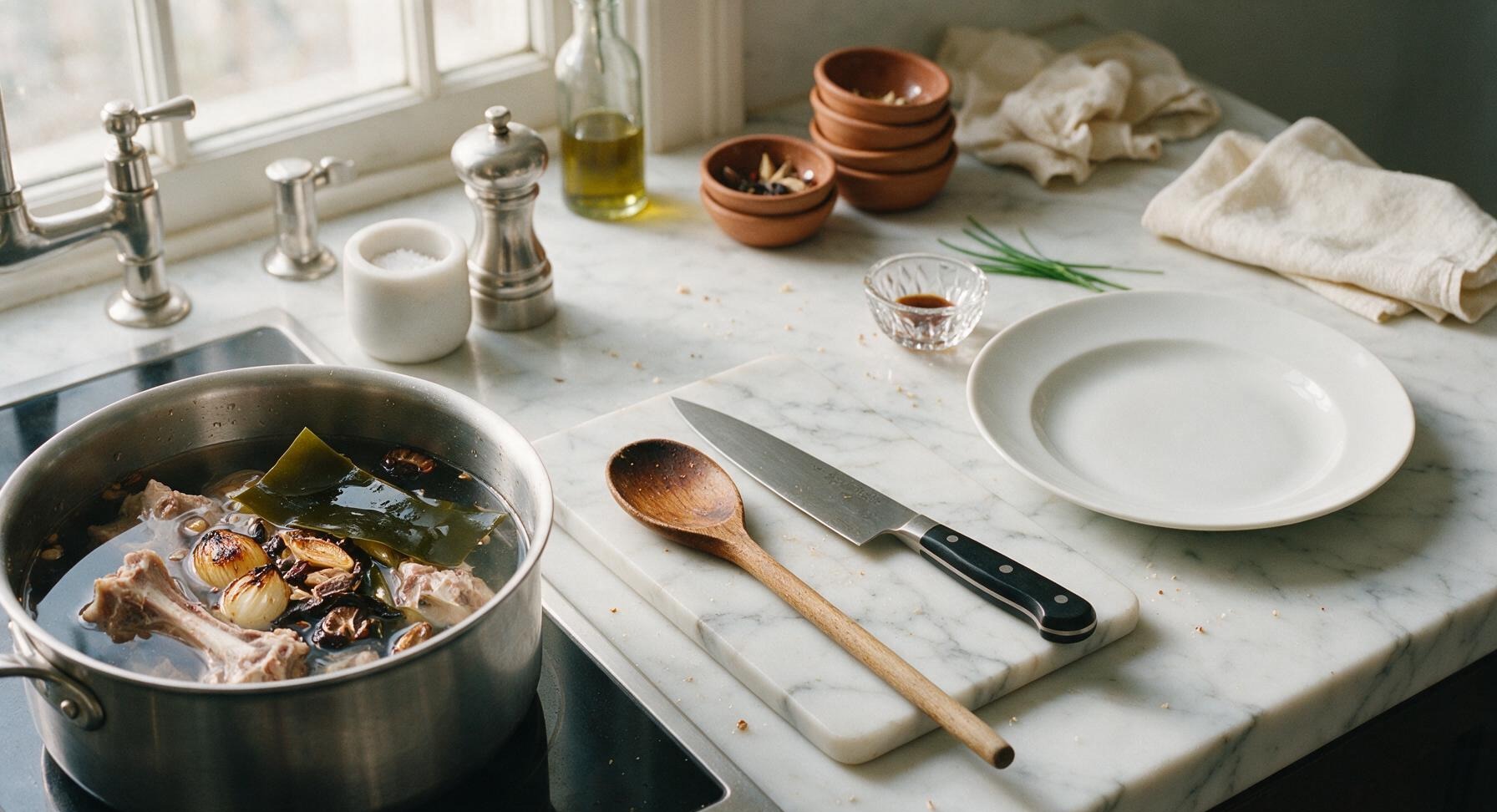
Add the rinsed chicken bones back to the clean stock pot, pour in the remaining 2L cold filtered water, then add the charred onion, toasted ginger and garlic, tied scallion knot, dried kombu, dried shiitake mushrooms, star anise, cinnamon stick, coriander seeds, and 1 tsp yellow rock sugar. Press ingredients down gently to ensure all are fully submerged; add a splash more cold water if any pieces float above the water line.
Step 4
step4:Combine All Ingredients
5

Simmer Broth Gently

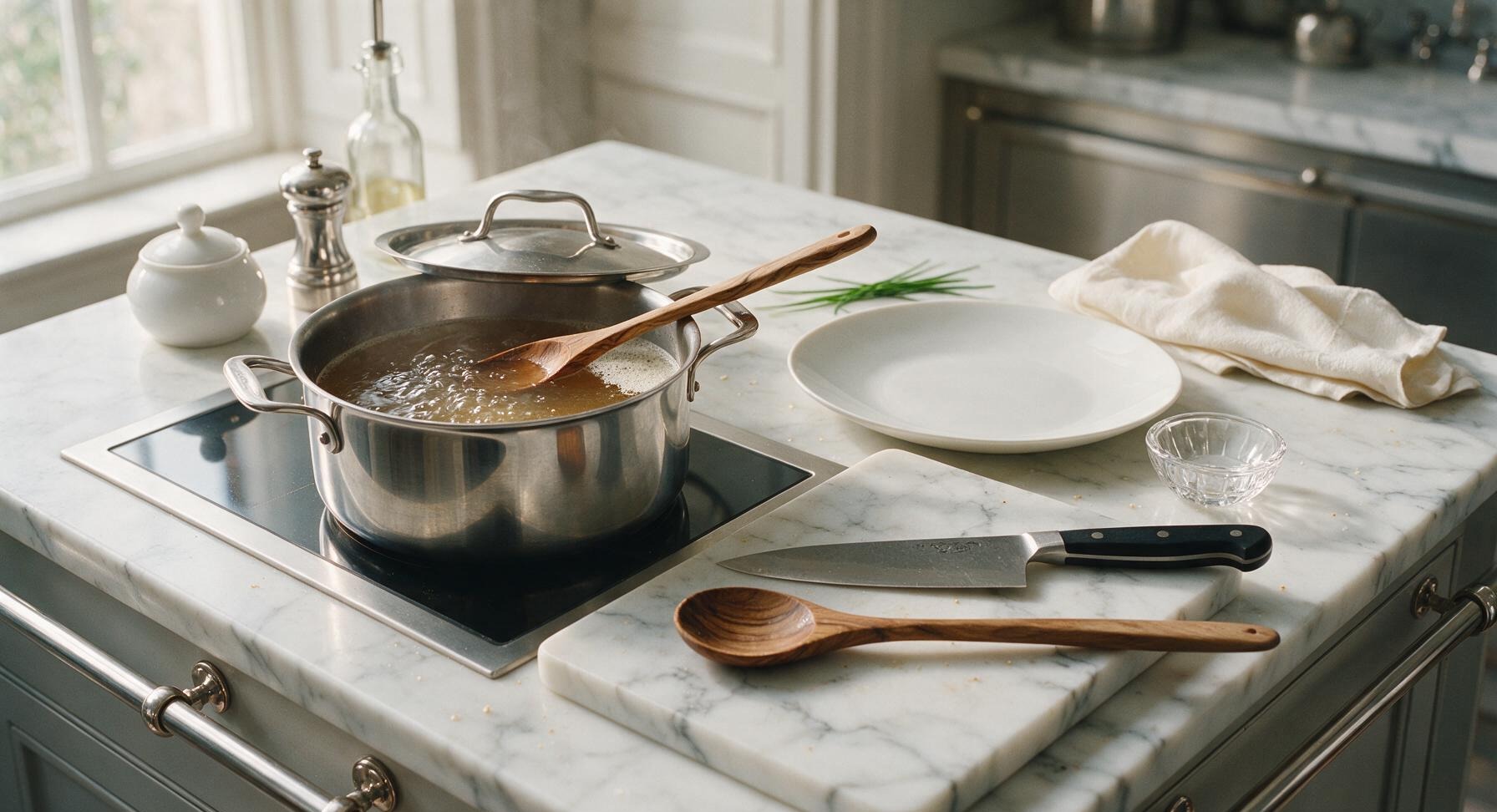
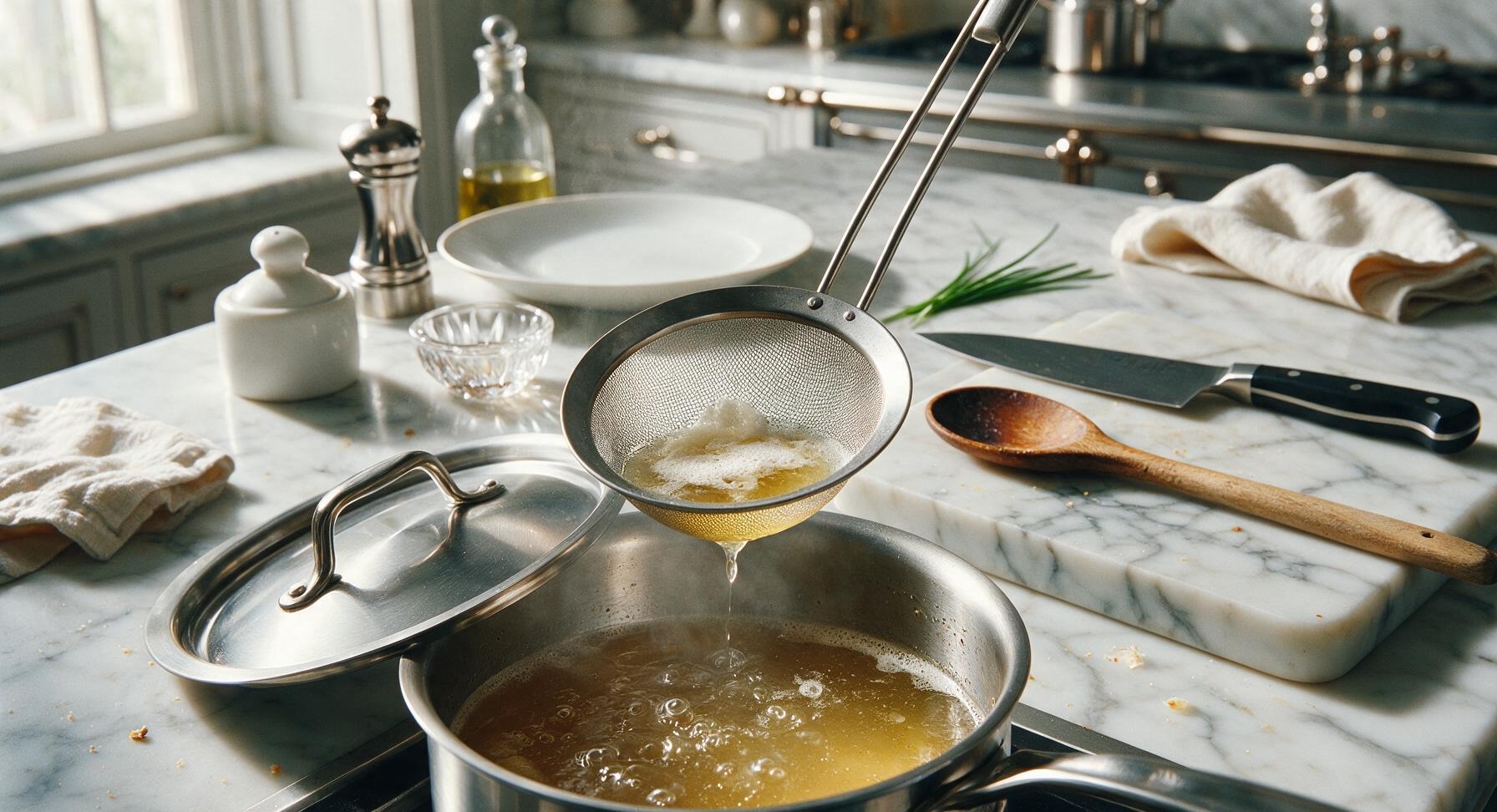
Bring the pot to a very gentle simmer (90-95C, where small bubbles break the surface every 2-3 seconds, never a rolling boil) over low heat. Once simmering, set the stainless steel lid askew on the pot, leaving a 2cm gap for steam to escape. Maintain this gentle simmer for 1 hour, skimming any small patches of foam or rendered fat that rise to the surface with the stainless steel skimmer every 20 minutes. Rapid boiling will emulsify fat into the broth, making it cloudy and greasy.
Step 5
step5:Simmer Broth Gently
Step 5
step5:Simmer Broth Gently
6

Season Broth Lightly

After 1 hour of simmering, use the skimmer to remove the kombu piece to avoid the broth turning slimy from over-steeped kelp, then stir in 2 tablespoons of light soy sauce. Taste the broth: it should taste savory, slightly sweet, with subtle warm spice notes, not overly salty. Simmer for an additional 10 minutes to let the seasoning integrate fully with the liquid.
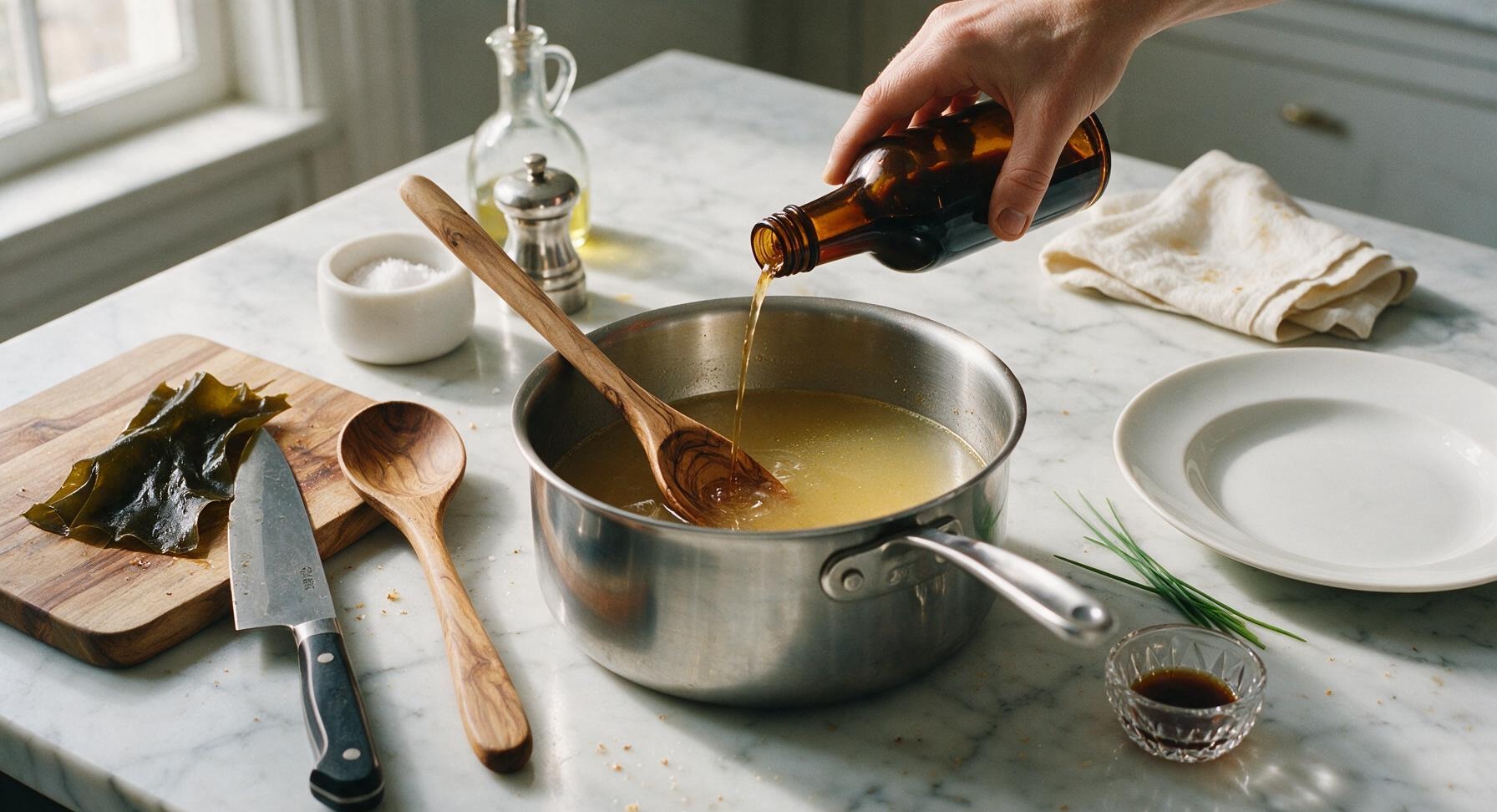
Step 6
step6:Season Broth Lightly
7

Strain Broth Smooth

Turn off the heat. Use the skimmer to lift out and discard all large solid ingredients (bones, aromatics, mushrooms, spices) from the pot. Place the fine-mesh stainless steel strainer over a large heatproof glass bowl set on the counter, and pour the broth slowly through the strainer to catch all fine particles, leaving a perfectly clear, golden-amber broth.
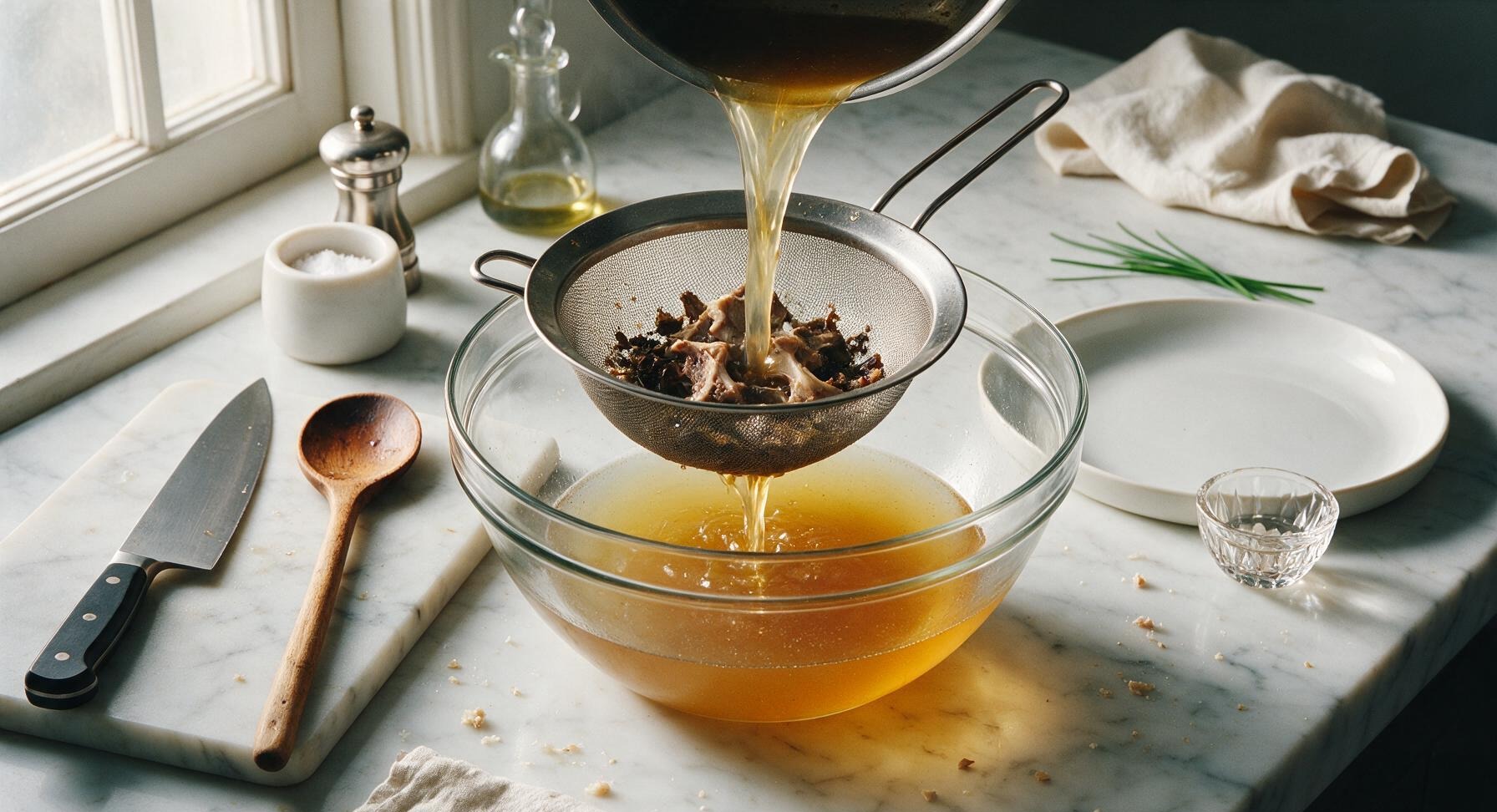
Step 7
step7:Strain Broth Smooth
8

Finish with Sesame Oil

Stir 1 teaspoon of toasted sesame oil into the strained broth. Taste and adjust seasoning with a tiny pinch of flaky sea salt from the terracotta salt cellar if needed, then ladle into the serving bowl. The broth is now ready to use for noodle soups, hot pot, poaching proteins, or sipping directly.
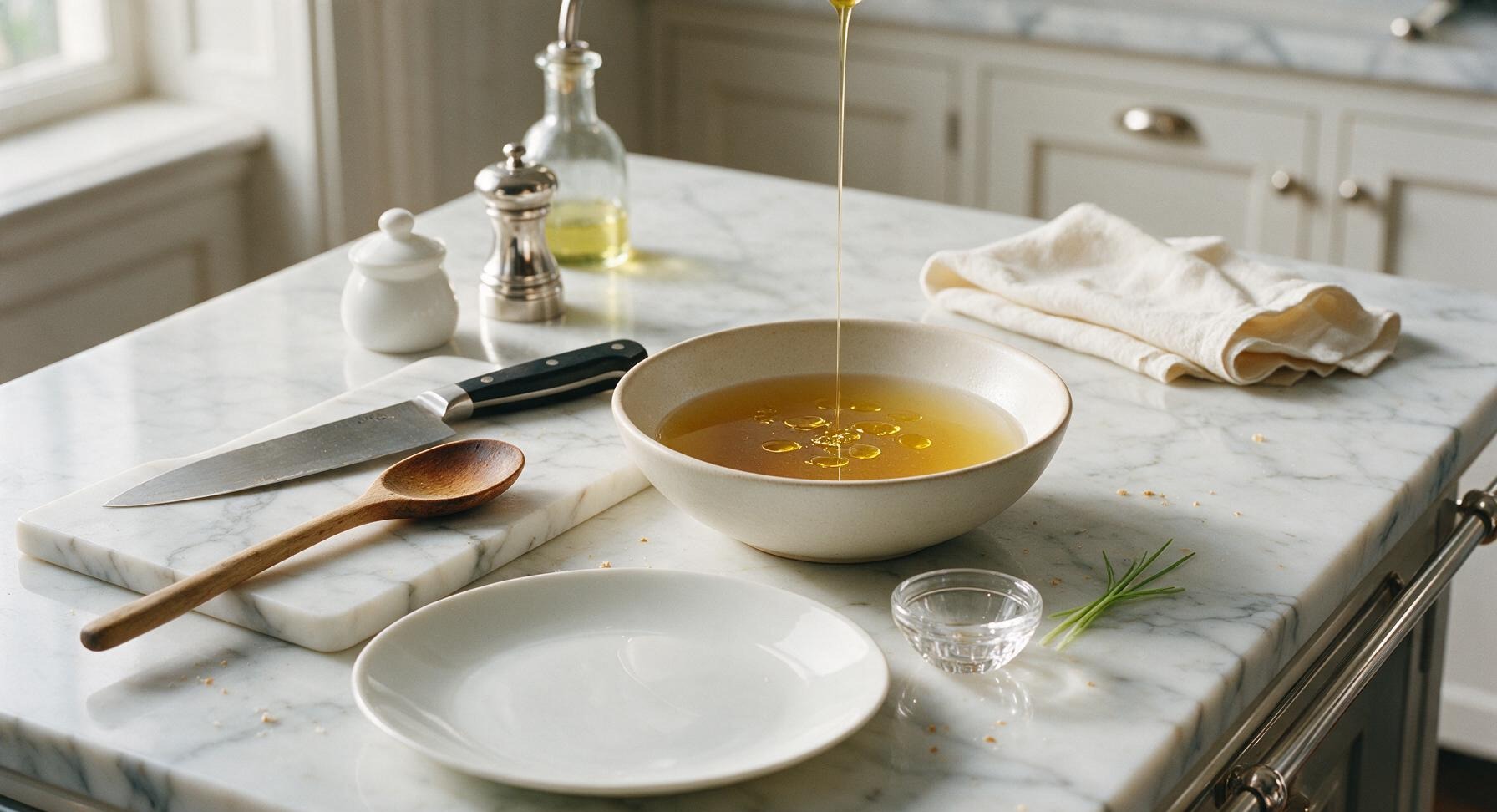
Step 8
step8:Finish with Sesame Oil

Tips

1.Never boil the broth rapidly after adding the main ingredients: violent water movement emulsifies fat and fine solid particles into the liquid, resulting in a cloudy, greasy broth instead of the desired clear, clean-tasting, jewel-toned result.
2.Cool leftover broth completely before storing in sealed glass containers: it will keep for up to 5 days in the refrigerator, or 3 months in the freezer. The thin layer of fat that solidifies on the surface acts as a natural seal, and can be easily scraped off before reheating for a lighter broth.
3.For a vegan/gluten-free version, swap chicken bones for 2 extra dried shiitake mushrooms and an additional 5x10cm piece of kombu, replace light soy sauce with gluten-free tamari, and reduce total simmer time to 45 minutes. Over-simmering kombu releases bitter alginate compounds that will ruin the broth flavor.

✨ You May Also Like

Soups & Stews
🍜 Japan

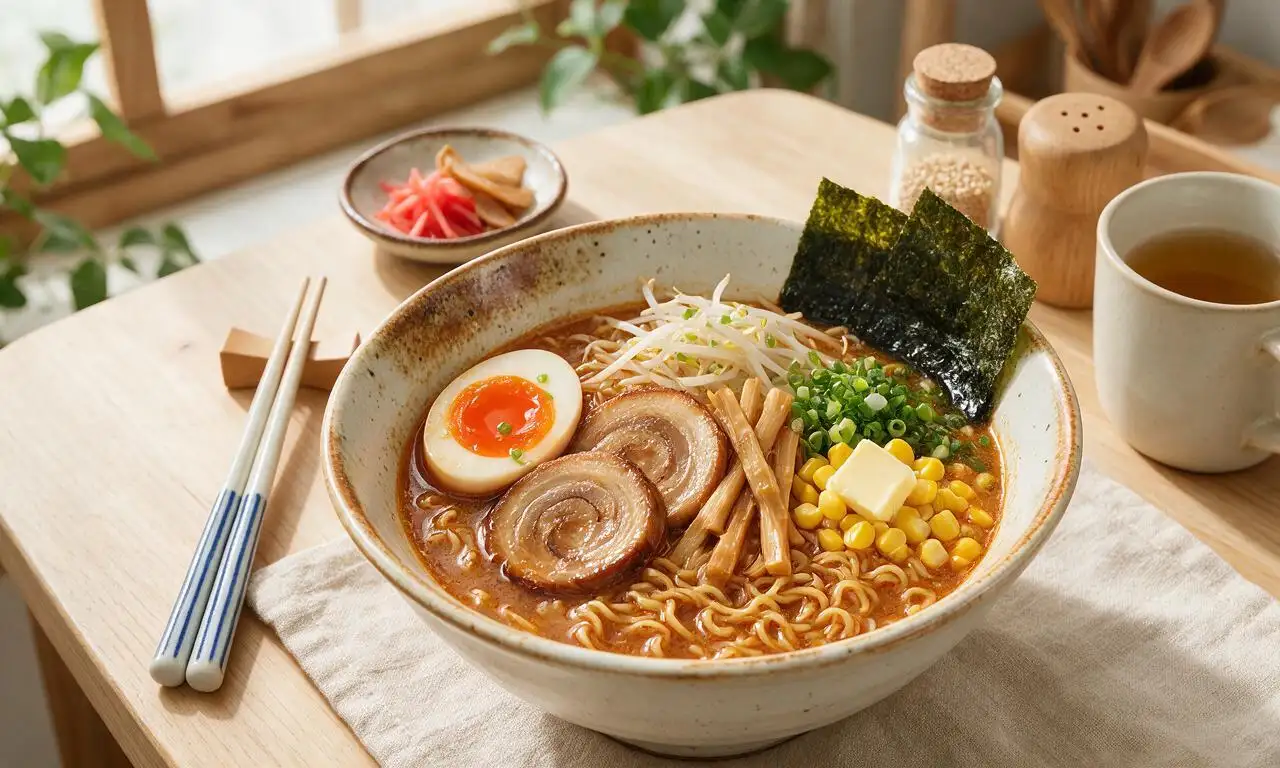
Rich, umami-dense Hokkaido-style miso ramen with chewy noodles, savory fermented broth, and classic toppings, a cozy, deeply satisfying warm meal.

⏱️ 45 minuteSoups & Stews ★ 4.5
Soups & Stews
🍜 United States

A hearty, peppery tripe and root vegetable stew with colonial Philadelphia roots, thick, warming, and packed with bold savory flavor for cold winter days.

⏱️ 2 hours 3Soups & Stews ★ 4.6
Soups & Stews
🍜 Mexico

Hearty, warming red pork posole loaded with tender hominy, slow-simmered in a rich smoky chile broth, served with zesty fresh garnishes for a deeply comforting, satisfying meal.

⏱️ 2 hours 3Soups & Stews ★ 4.7
Soups & Stews
🍜 United States

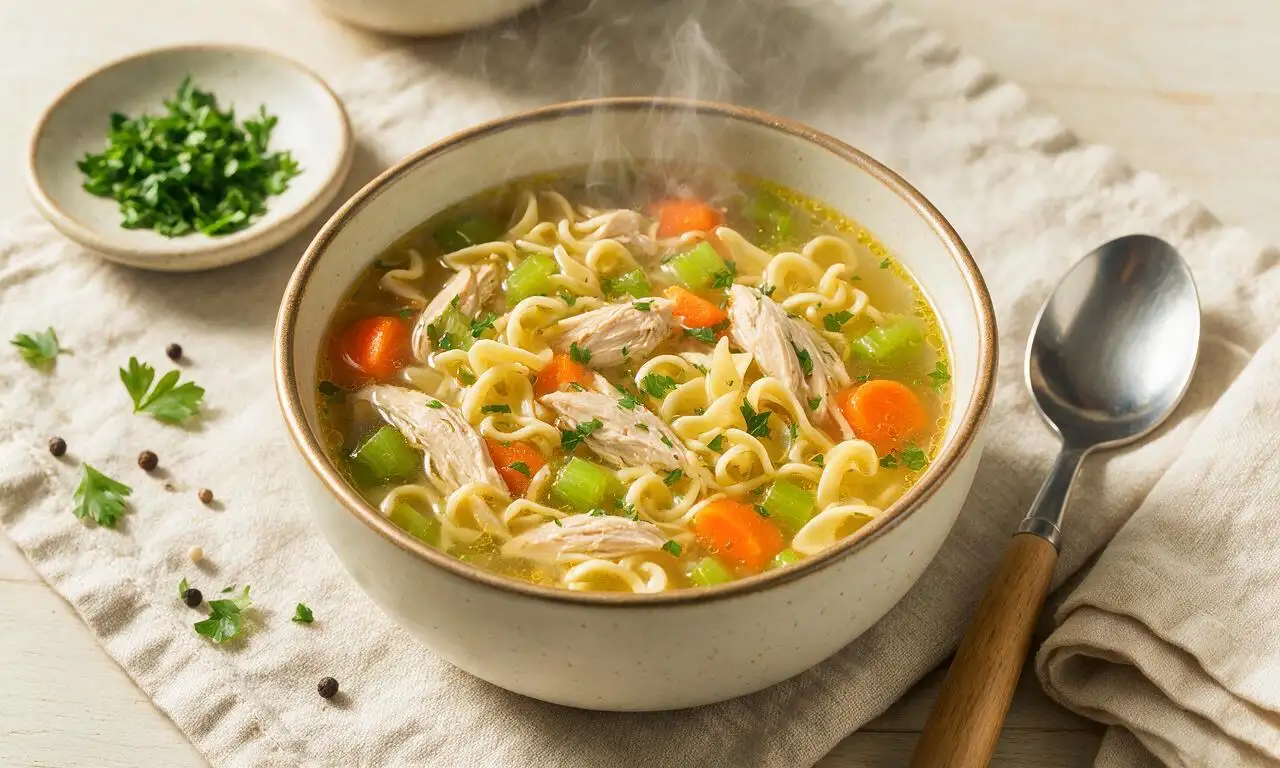
Warm, soothing classic chicken noodle soup loaded with tender chicken, soft egg noodles, and savory veggies, perfect for chasing chills and feeding the whole family.

⏱️ 40 minuteSoups & Stews ★ 4.9
Soups & Stews
🍜 France

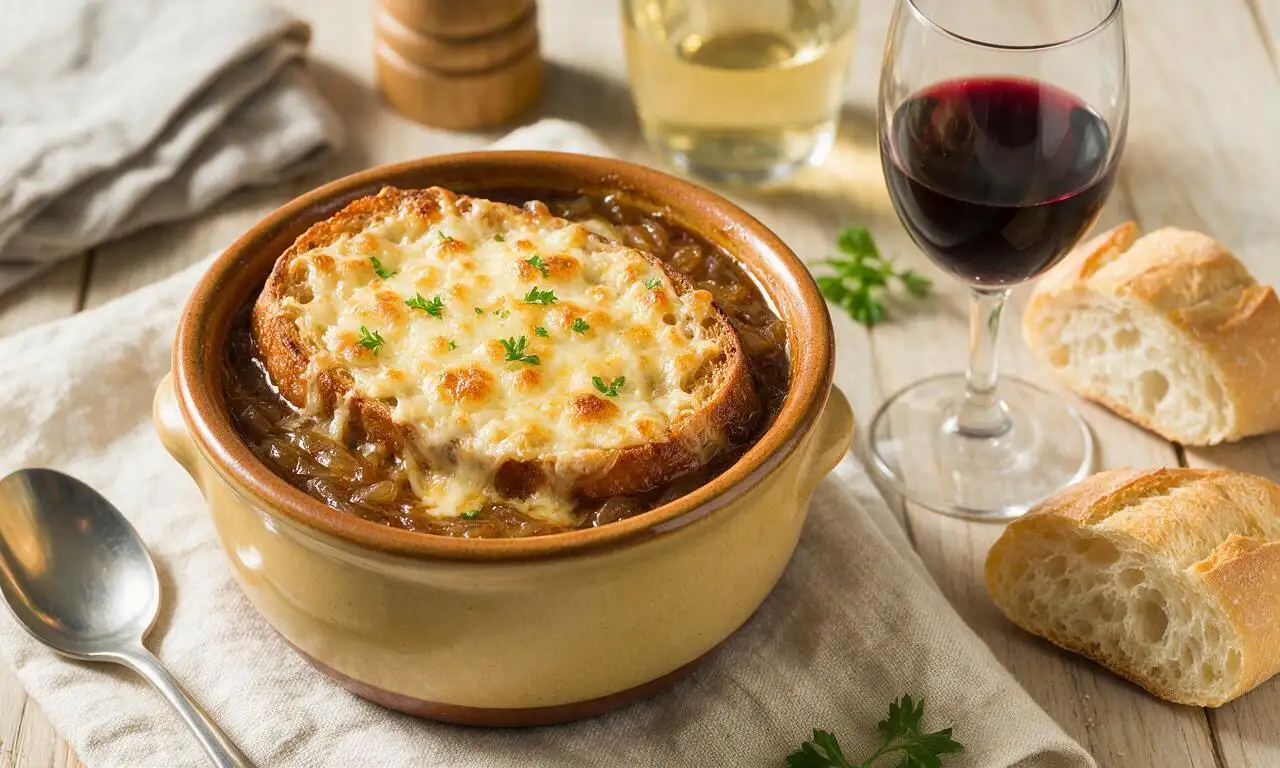
Deeply savory caramelized onion broth topped with crusty bread and bubbly melted Gruyère, a timeless French bistro comfort food ideal for cold days.

⏱️ 1 hour 25Soups & Stews ★ 4.8
Soups & Stews
🍜 United States

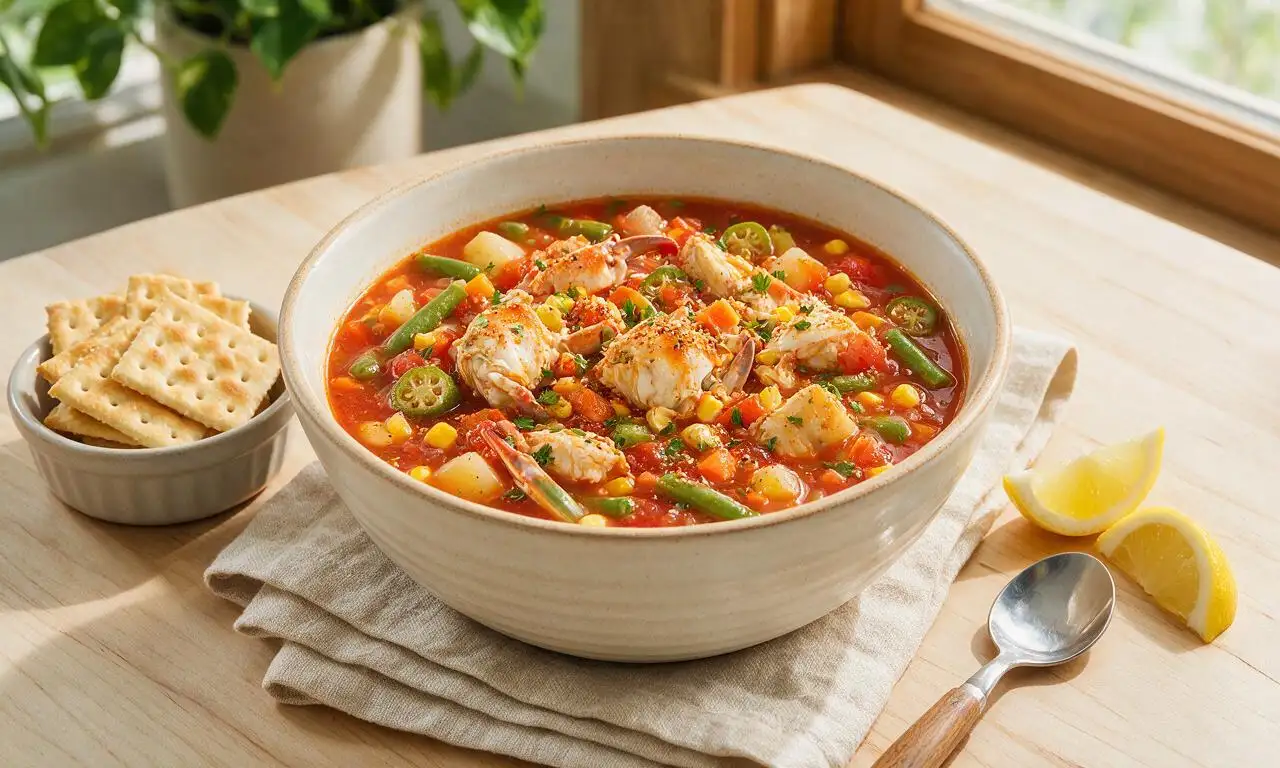
Hearty, briny Maryland crab soup loaded with sweet blue crab, tender summer vegetables, and zesty Old Bay, a beloved Chesapeake Bay coastal comfort staple.

⏱️ 55 minuteSoups & Stews ★ 4.9

asian broth:Frequently Asked Questions

1.Why do you specify cold filtered water for this broth instead of hot tap water? ▾
Starting with cold water slowly draws out soluble proteins and umami compounds from the bones and aromatics as it heats, creating a clearer, more evenly flavored final broth. Hot water makes surface proteins seize up immediately, trapping flavor and leading to cloudy, uneven results. Filtered water also avoids off-flavors from tap chlorine or harsh mineral buildup.
2.Can I make this broth fully vegetarian or vegan? ▾
Absolutely! Swap the trimmed chicken bones for 1 pound of extra dried shiitake stems, 4 ounces of fresh daikon chunks, and 1 small dried burdock root if you have it. Keep the kombu, dried shiitake caps, and onion exactly as directed, and skip animal-based add-ins for a 100% plant-based broth with just as much deep umami depth.
3.How long should I simmer this broth to get the best umami flavor? ▾
Aim for a gentle, barely bubbling simmer of 2.5 to 3 hours total. Add the kombu for the first 45 minutes only, pulling it out before the water hits a rolling boil to avoid slimy, bitter results. Let the bones, shiitakes, and onion simmer the remaining time to pull out every bit of savory depth, and avoid hard boiling to keep the broth clear.
4.Why do I need to trim excess fat off the chicken bones before simmering? ▾
Trimming excess surface fat from chicken backs and necks keeps the broth light and balanced, rather than heavy, greasy, or overly rich, which supports its all-purpose use. A small amount of fat adds nice flavor, but thick globs of unrendered fat will make the broth coat your mouth unpleasantly and overpower the subtle kombu and shiitake umami notes.
5.What happens if I leave the kombu in for the entire simmer time? ▾
Leaving kombu in through a full, long simmer leaches bitter, slimy alginate compounds into the broth, throwing off its clean, savory balance. Pull kombu right when the water sends up tiny steady bubbles (around 140–150°F) before a full boil hits—this lets it release all its glutamate-rich umami without the unpleasant bitter, slimy side effects.
6.Can I use fresh shiitake mushrooms instead of dried for this recipe? ▾
Dried shiitakes are preferred because their drying process concentrates guanylate compounds that amp up umami exponentially more than fresh mushrooms. If you only have fresh, use 1 pound of sliced fresh shiitakes (caps and stems) and add 1 tablespoon of tamari at the end to boost missing umami depth, though the flavor won’t be quite as complex.
7.How do I store leftover broth, and how long will it keep? ▾
Let finished, strained broth cool completely to room temperature within 2 hours of cooking, then transfer it to sealed airtight containers. It will keep for up to 4 days in the fridge, or up to 6 months in the freezer. I recommend freezing some in 1-cup ice cube trays for quick, small portions to use in stir-fries or sauces.
8.Do I need to roast the chicken bones or onion first for deeper flavor? ▾
Roasting is totally optional! This broth is designed to be light and versatile, so raw bones and raw onion create a clean, neutral base that works for every application. If you prefer a deeper, toastier flavor for hearty ramen, roast bones and halved onion at 400°F for 30 minutes before adding them to the pot, no other changes needed.
9.Why is large yellow onion specified instead of white or red onion for this broth? ▾
Large yellow onions have the perfect balance of sweet, mild, savory flavor when simmered, without the sharp, harsh bite of white onions or the earthy, almost bitter notes red onions can leach into long-simmered broths. They add subtle warmth and sweetness that complements kombu and shiitake umami without overpowering other ingredients.
10.Do I need to add salt or other seasonings to the broth while it simmers? ▾
I recommend holding off on adding salt, soy sauce, or strong seasonings during the simmer. Since this is an all-purpose broth, salting it early locks you into a fixed sodium level, which can make it too salty when reduced for sauces or used in already-salty noodle bowls. Taste and adjust salt right before using it for your chosen dish.
11.Can I use this broth to poach chicken, shrimp, or tofu? ▾
Absolutely—this is one of my favorite uses for it! The gentle umami depth infuses proteins with subtle, savory flavor without overwhelming them. Keep the broth at a very low, shivering poach (no rolling boils): 8–10 minutes for boneless chicken thighs, 2–3 minutes for shrimp, 4–5 minutes for pressed tofu for tender, flavorful results.
12.What’s the best way to skim impurities from the broth as it simmers? ▾
For the first 30 minutes of simmering, check the pot every 10 minutes and use a fine-mesh skimmer or shallow metal spoon to lift off the gray, foamy scum that rises to the surface. This scum is made of coagulated protein particles that will make your broth cloudy and slightly off-flavored if left to mix back in.
13.Can I use leftover roasted chicken bones from a dinner instead of raw trimmed bones? ▾
Definitely! Leftover roast chicken bones (from backs, necks, even full carcass bits) work beautifully, and they add a subtle toasty, roasted note to the final broth. Just pick off any large chunks of leftover skin or excess fat before adding them to the pot to keep the broth from getting too greasy, then follow the recipe as written.
14.How do I fix a broth that tastes bitter or overly strong? ▾
If your broth is bitter from over-simmered kombu or over-roasted aromatics, stir in a tiny pinch of sugar (1/4 teaspoon per quart) and a thin slice of peeled fresh ginger, then let it simmer 10 more minutes before straining. The small amount of sugar balances bitter notes, and ginger adds bright, fresh flavor that mutes harsh, over-extracted tones.
15.Can I add other aromatics like garlic, ginger, or star anise to the broth? ▾
You can add extra aromatics, but use them sparingly to keep the broth all-purpose. For a standard 4-quart batch, stick to 2 crushed garlic cloves, one 2-inch slice of peeled ginger, and 1 whole star anise at most. Too many strong spices will make the broth too niche, so it won’t work as well for poaching, sipping, or general use.
16.Is this broth good to sip plain as a comforting drink, or does it need mix-ins? ▾
It’s perfect for sipping plain! Just warm a mugful, add a tiny pinch of flaky sea salt and a thin slice of scallion if you’d like, and enjoy it straight. The balanced umami, subtle onion sweetness, and gentle warm notes make it a light, satisfying pick-me-up when you’re under the weather or craving something savory without heavy richness.
17.Why do you recommend chicken backs and necks specifically instead of breast bones or wing tips? ▾
Chicken backs and necks have the ideal ratio of connective tissue, small amounts of meat, and bone to add rich, savory flavor and a light, silky mouthfeel without excess fat. Breast bones are too sparse in connective tissue and make thin, flat broth, while wing tips carry more fat that can make the broth greasy if not heavily trimmed. Backs and necks are also very budget-friendly.
18.Should I leave the onion skin on or peel it off when adding it to the pot? ▾
You can leave the thin, papery golden outer skin on the yellow onion for a deeper, warmer amber broth color and a tiny hint of toasty sweetness! Just trim off the root end and any bruised, moldy outer layers, cut the onion in half, and drop it straight in. For a very pale, clear broth for delicate soups, peel off all papery skin before adding it.
19.Can I reuse the bones or aromatics to make a second batch of broth? ▾
You can make a light, mild second-brew broth by covering used bones, shiitakes, and onion with fresh cold water and simmering for another 2 hours, but it will be far less umami-dense than the first batch. Use this weaker second batch for cooking rice, steaming vegetables, or thinning sauces, rather than as a standalone soup base.
20.What’s the easiest way to remove any remaining fat from the finished broth? ▾
The simplest no-fuss method is to chill strained broth completely in the fridge for 6 to 8 hours; all fat will rise to the top and solidify into a hard white layer you can lift right off with a spoon. If you need broth right away, use a fat-separating measuring cup, or drag a few paper towels across the warm broth surface to soak up floating fat.

Comments (3)

2 days ago

OMG this broth is a total game changer! I made a big batch on Sunday for meal prep, and I’ve used it for ramen, wonton soup, and even to cook my stir-fry veggies this week. My picky 7-year-old asked for seconds of the noodle soup I made with it last night — that’s basically a Michelin star in my book. So much deeper flavor than the store-bought broth I used to grab, and it was way easier than I thought it’d be for how rich it tastes. 10/10 will be a staple in my house from now on!

1 day ago

Wait, using it to cook stir-fry veggies is such a good call! I’ve only used mine for soba soup so far, I’m definitely trying that trick tomorrow. Did you just simmer the veggies in a splash of it instead of oil?

1 day ago

So glad to hear it’s a hit with your kid, Mia! That veggie stir-fry trick is one of my favorite weeknight hacks too — you can even reduce a little bit of it down to toss with noodles for a quick, savory umami sauce. Enjoy!

5 days ago

Super solid recipe! I was a little worried I didn’t have all the exact ingredients — I swapped the dried shiitakes for regular white mushrooms I had in the fridge and added a tiny splash of fish sauce because I had an open bottle — and it still turned out SO good. I brought a pot of hot pot with this broth to our friend group potluck last weekend, and everyone was asking for the recipe. The hour and 15 minute cook time felt totally manageable even on a lazy Saturday, no fancy skills needed which is perfect for me because I’m definitely not a pro cook.

4 days ago

Love that you made it your own with the swaps, Mike! The fish sauce addition sounds like a perfect umami boost — this broth is super forgiving, so don’t be afraid to tweak it to match what you have on hand. So stoked it was a hit at your potluck!

1 week ago

This is exactly what I’ve been searching for! I do a lot of backcountry camping, and I froze portions of this broth to take on my last trip — just boiled it up with some dehydrated veggies and rice noodles at camp, and it was the coziest, most satisfying meal after a 10-mile hike. Way better than the sad dehydrated soup packets I used to pack, and the flavor held up perfectly even after being frozen for a week. So easy to make, I’ll absolutely be making a double batch before my next trip out.