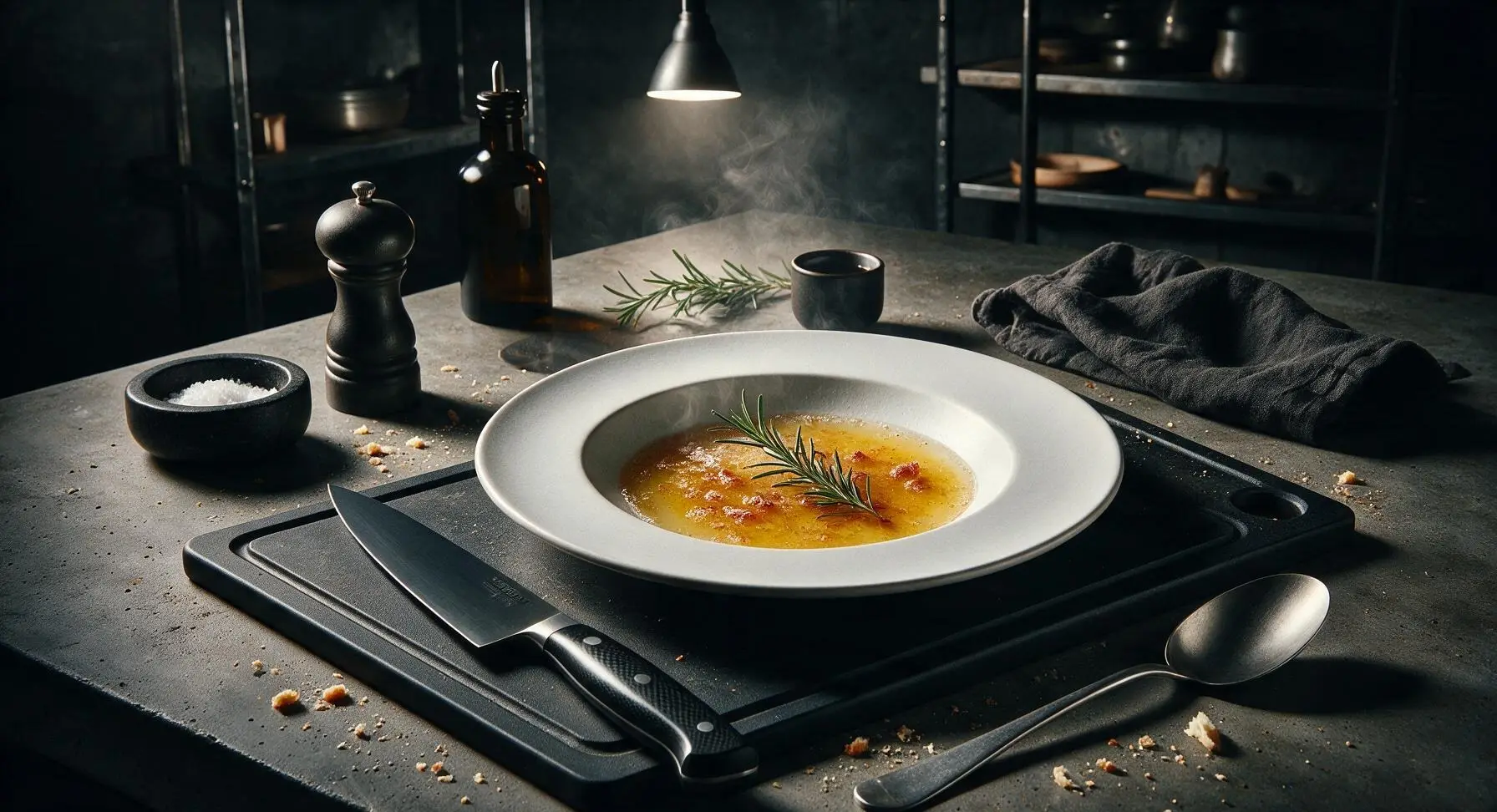
bacon drippings

title 1
bacon drippings
⏱️ cook time 12 minutes
🍽️ servings 16
⚡ Difficulty easy

intro

Golden, smoky, deeply savory rendered bacon drippings are a beloved zero-waste Southern pantry staple, perfect for adding rich umami to eggs, veggies, cornbread, and more.

Ingredients
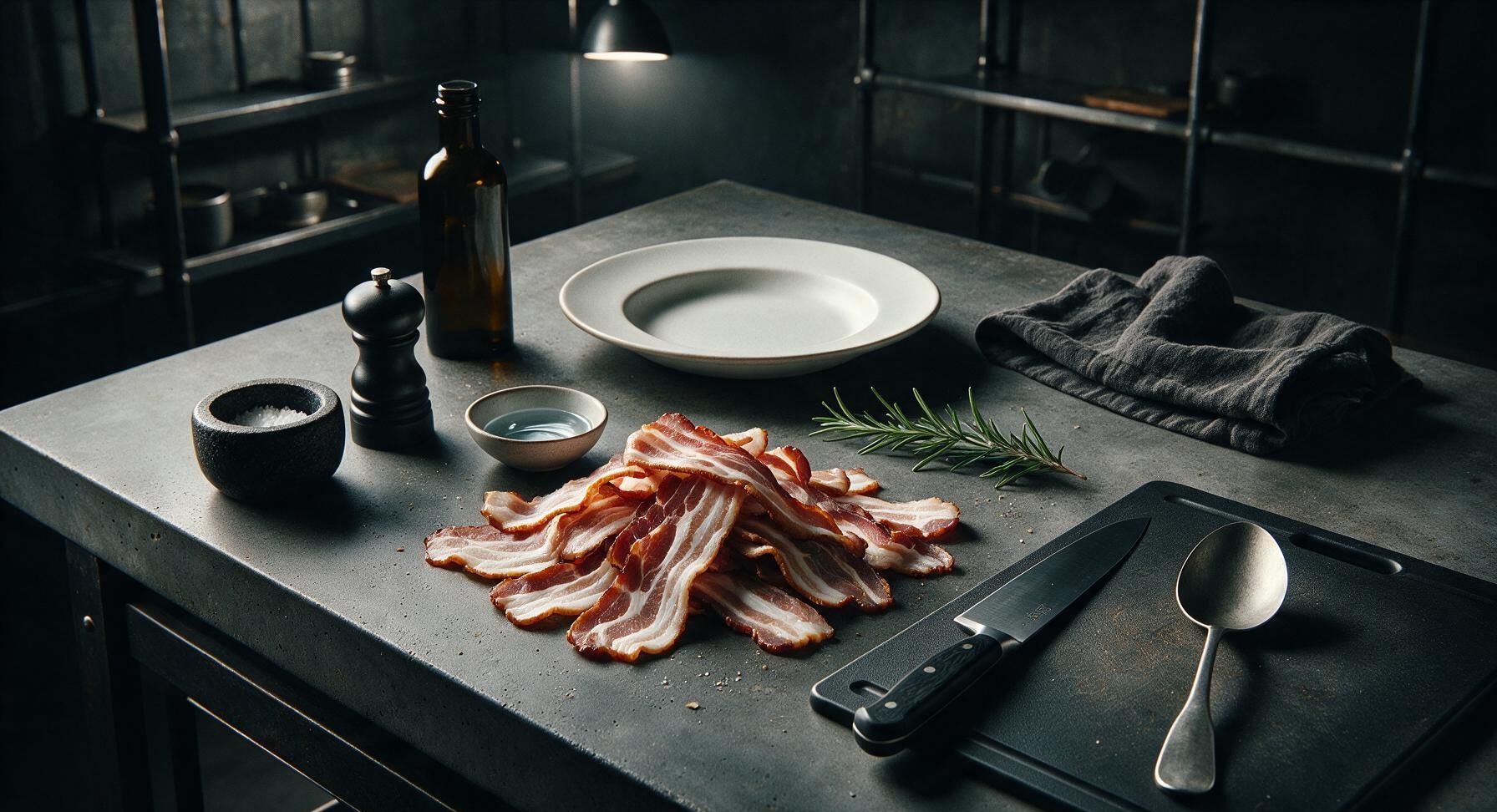
Thick-cut smoked bacon 450g (1 lb, ~12 slices)
Cold water 2 tablespoons

Steps

1

Prep bacon in cold pan

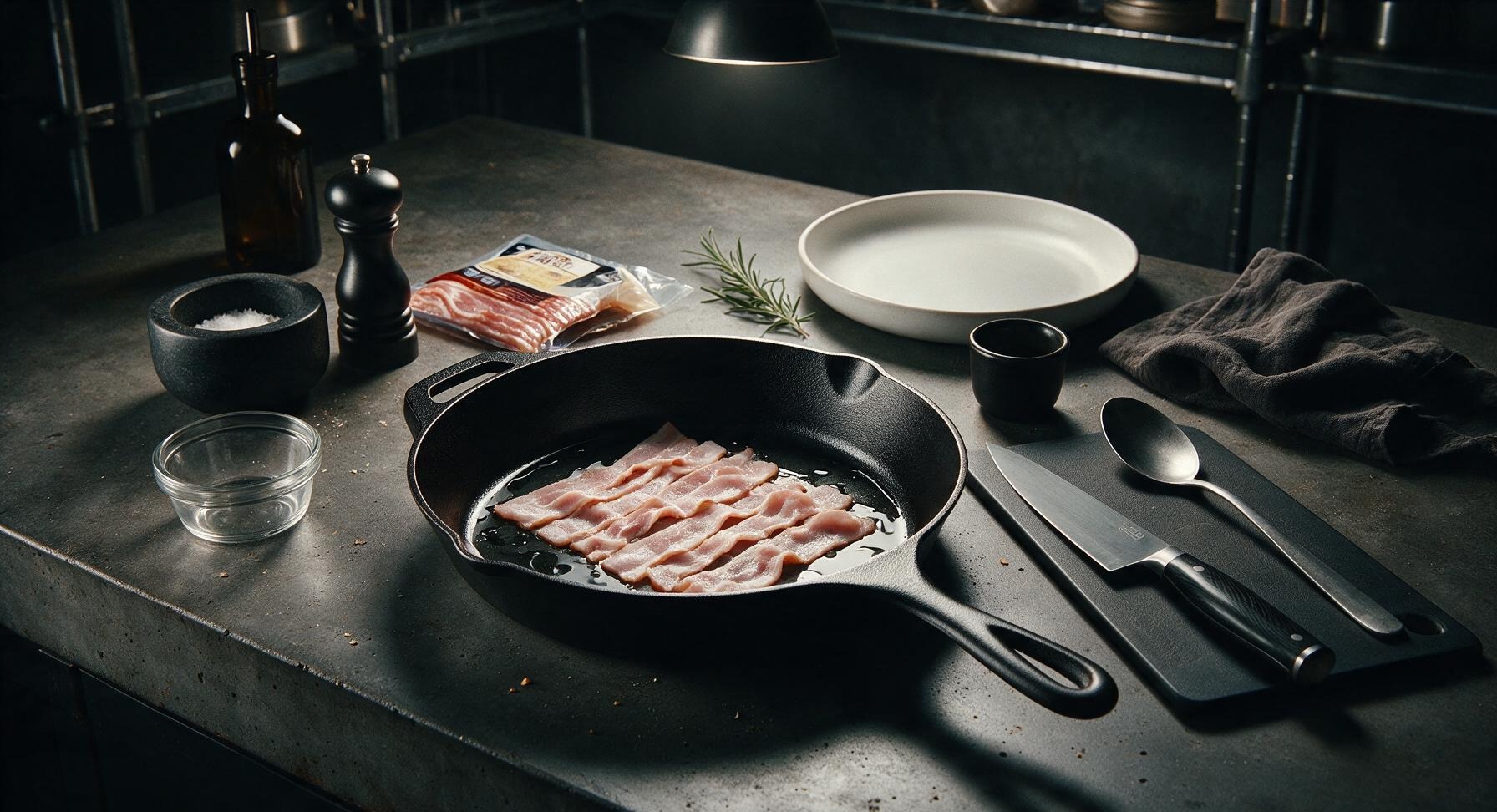
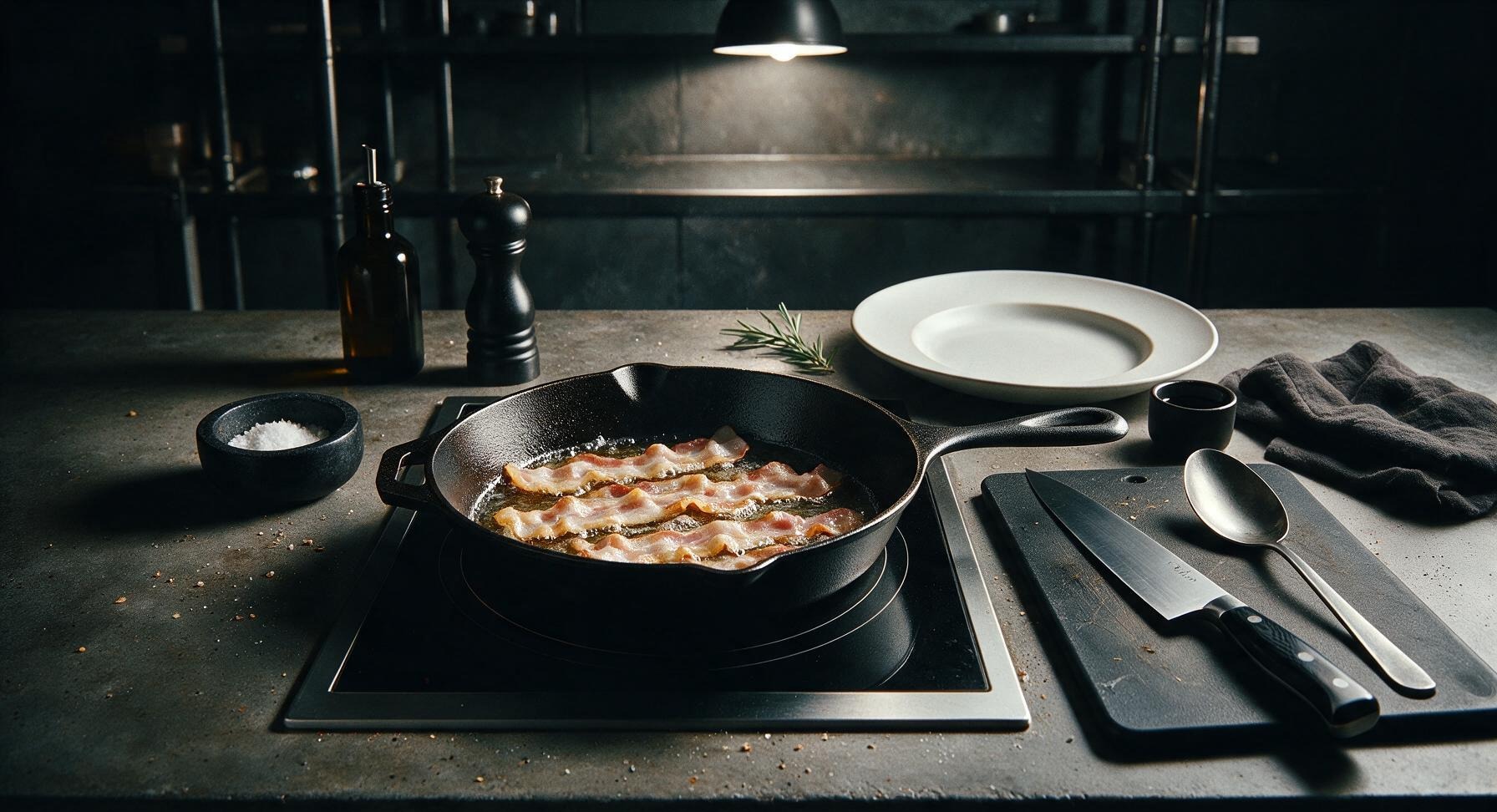
Remove thick-cut bacon slices from the package, separating each slice carefully to avoid tearing. Place the 12-inch cast iron skillet on the central counter work area. Do not preheat the pan—starting with a cold pan prevents bacon from burning before fat fully renders. Pour the 2 tablespoons of cold water into the bottom of the skillet, then arrange bacon slices in a single, slightly overlapping layer across the pan bottom.
Step 1
step1:Prep bacon in cold pan
2

Render fat over low heat

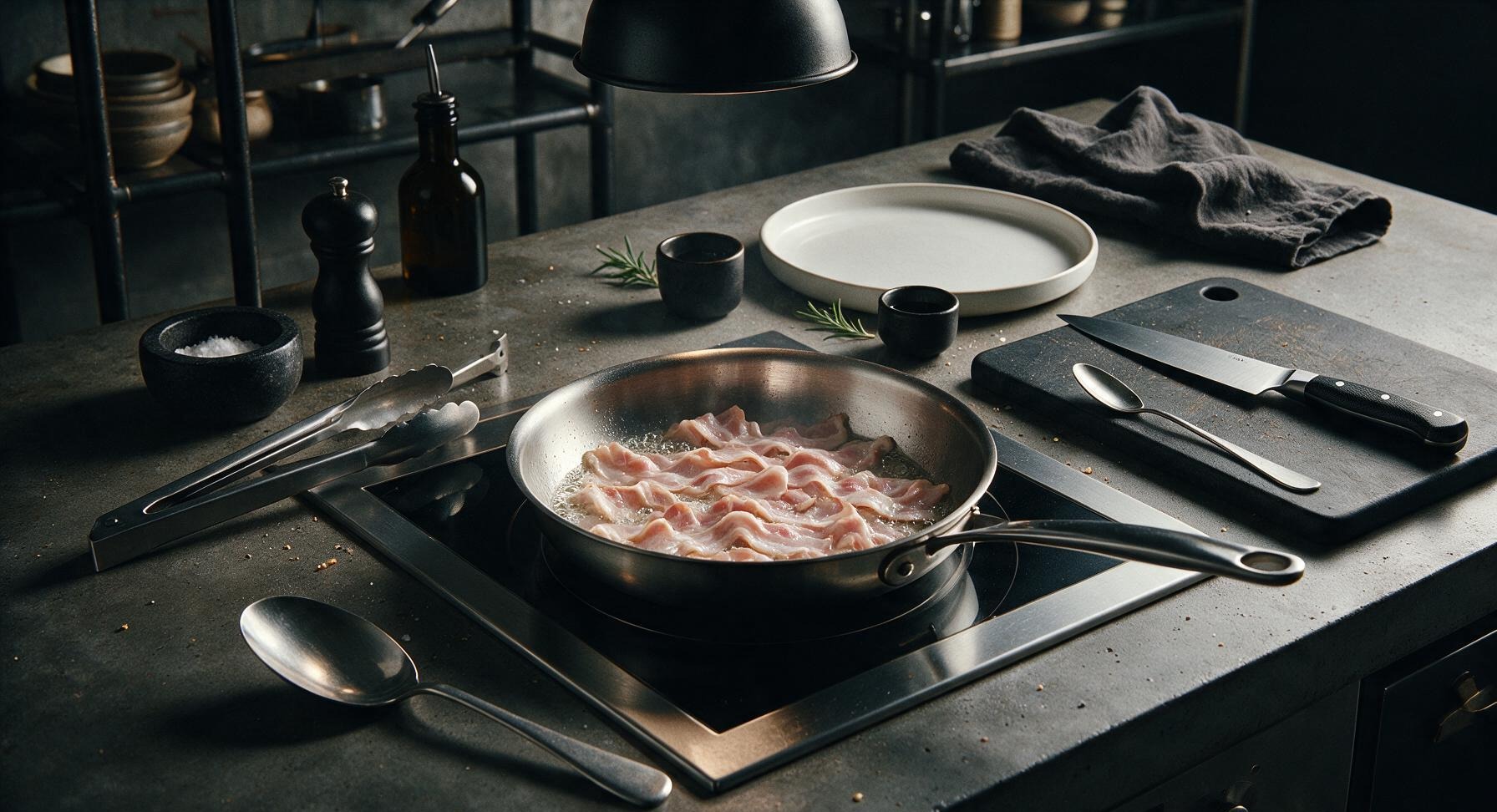
Place the skillet on the central flush induction burner set to medium-low heat (325°F / 160°C). Cook slowly, resisting the urge to turn up the heat. The water will first simmer and evaporate over 3-4 minutes, after which fat will begin to render out of the bacon strips. Cook for 8 minutes total, using the silicone-tipped tongs to flip slices every 2 minutes once water evaporates. Watch for pale golden fat pooling in the pan, with bacon that is light golden (not dark brown) at this stage.
Step 2
step2:Render fat over low heat
Step 2
step2:Render fat over low heat
3

Flip bacon for even crisping

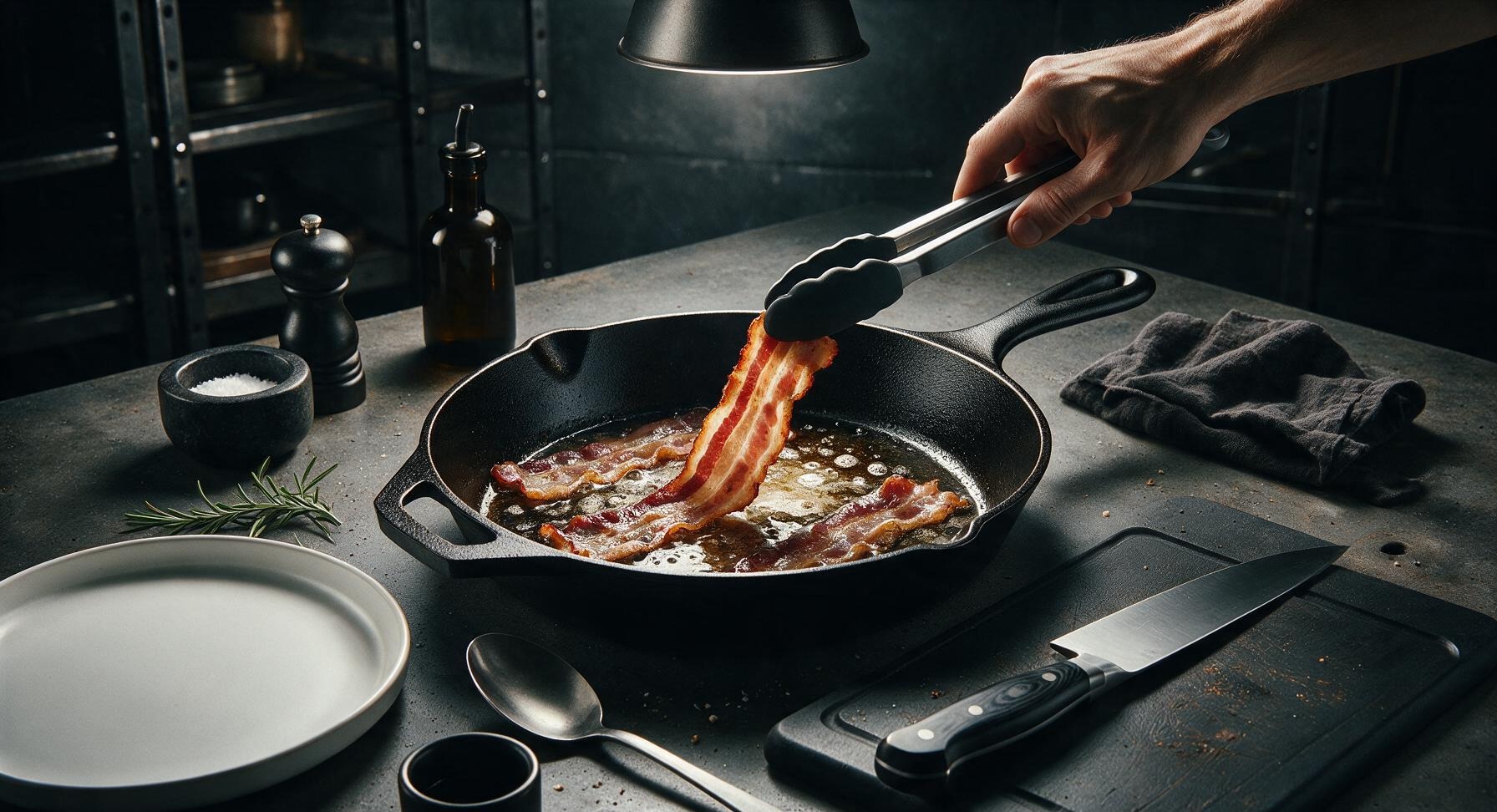
Use the tongs to flip each bacon slice carefully once the first side is lightly golden. Continue cooking over medium-low heat for another 4 minutes, flipping once more halfway through, until bacon is deep golden and crispy but not burnt. Dark, blackened edges will give drippings a bitter, acrid flavor, so turn heat down to low if the fat starts to send up thin wispy smoke.
Step 3
step3:Flip bacon for even crisping
4

Remove cooked bacon strips

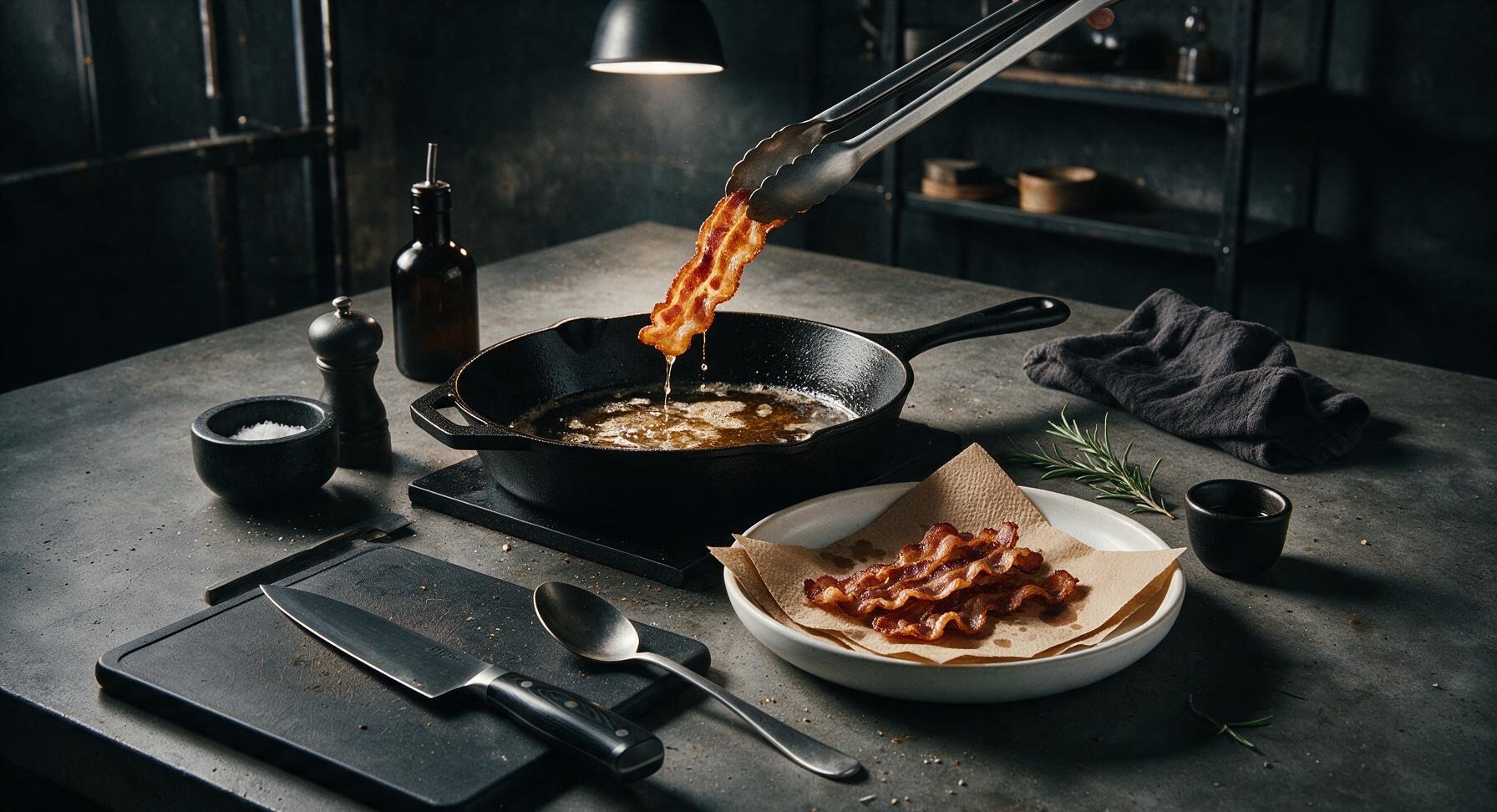
Once bacon is evenly crispy, use the tongs to lift each strip out of the skillet, letting excess fat drip back into the pan for 2-3 seconds per strip. Transfer cooked bacon strips to the speckled cream ceramic plate, lined with 2 layers of brown paper towel to absorb excess surface fat. Set the plate aside to cool; the bacon is ready to eat, or reserve for other recipes.
Step 4
step4:Remove cooked bacon strips
5

Let drippings settle briefly

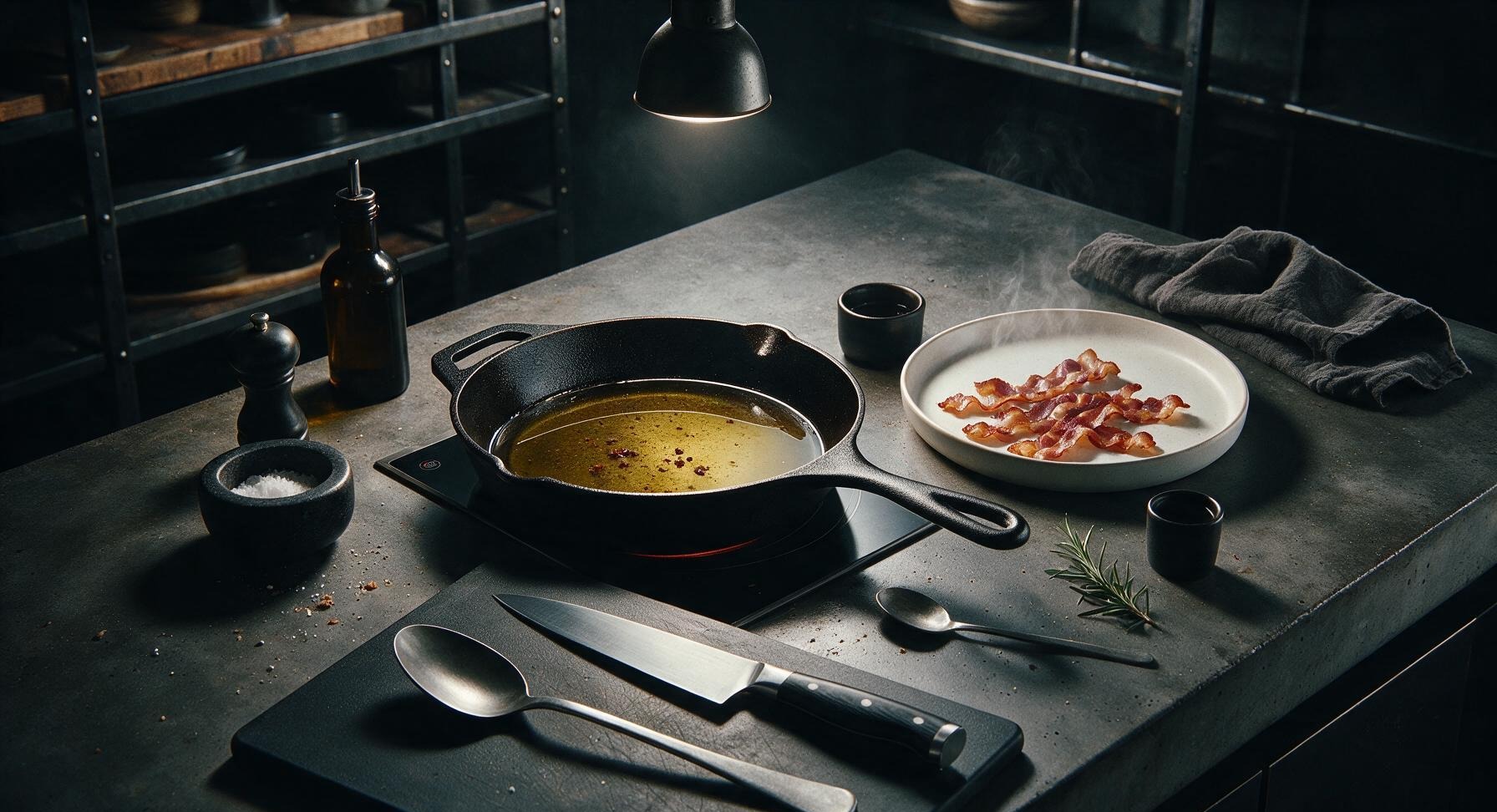
Turn off the heat under the skillet. Let the pan of hot bacon drippings sit for 2 minutes off the heat, moved slightly to the side of the induction burner, allowing tiny browned bacon sediment bits to settle to the pan bottom. This prevents burnt bits from making stored drippings taste bitter, and makes straining easier.
Step 5
step5:Let drippings settle briefly
6

Strain fat into storage jar

Set the fine-mesh stainless steel strainer over the opening of the clean glass mason jar. Carefully pour warm (not boiling hot) bacon drippings from the skillet’s pour spout through the strainer, catching all small bacon bits and sediment in the mesh. Leave the last tablespoon of fat in the pan, as it holds the highest concentration of settled sediment; discard this portion or use it for immediate cooking.
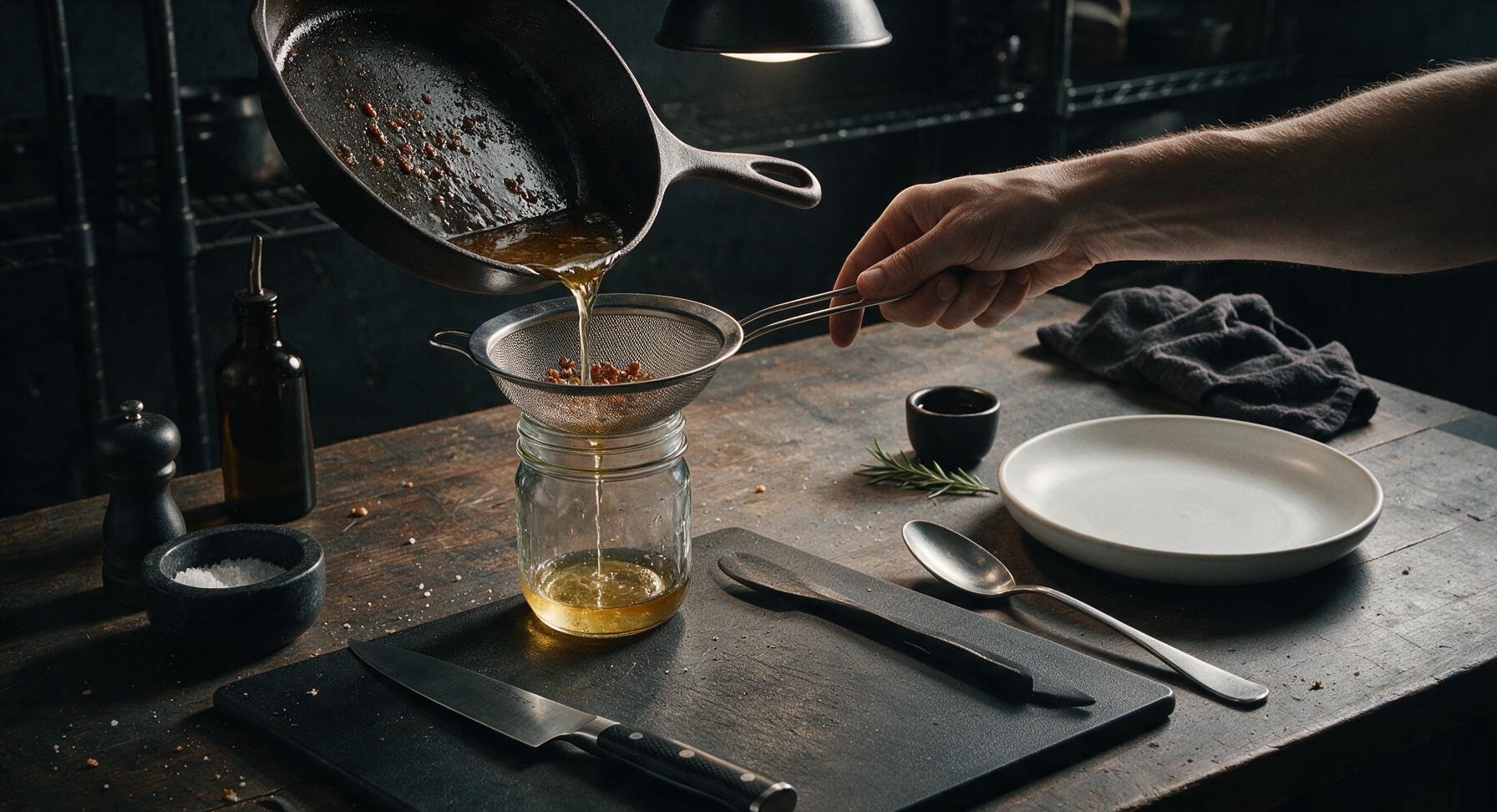
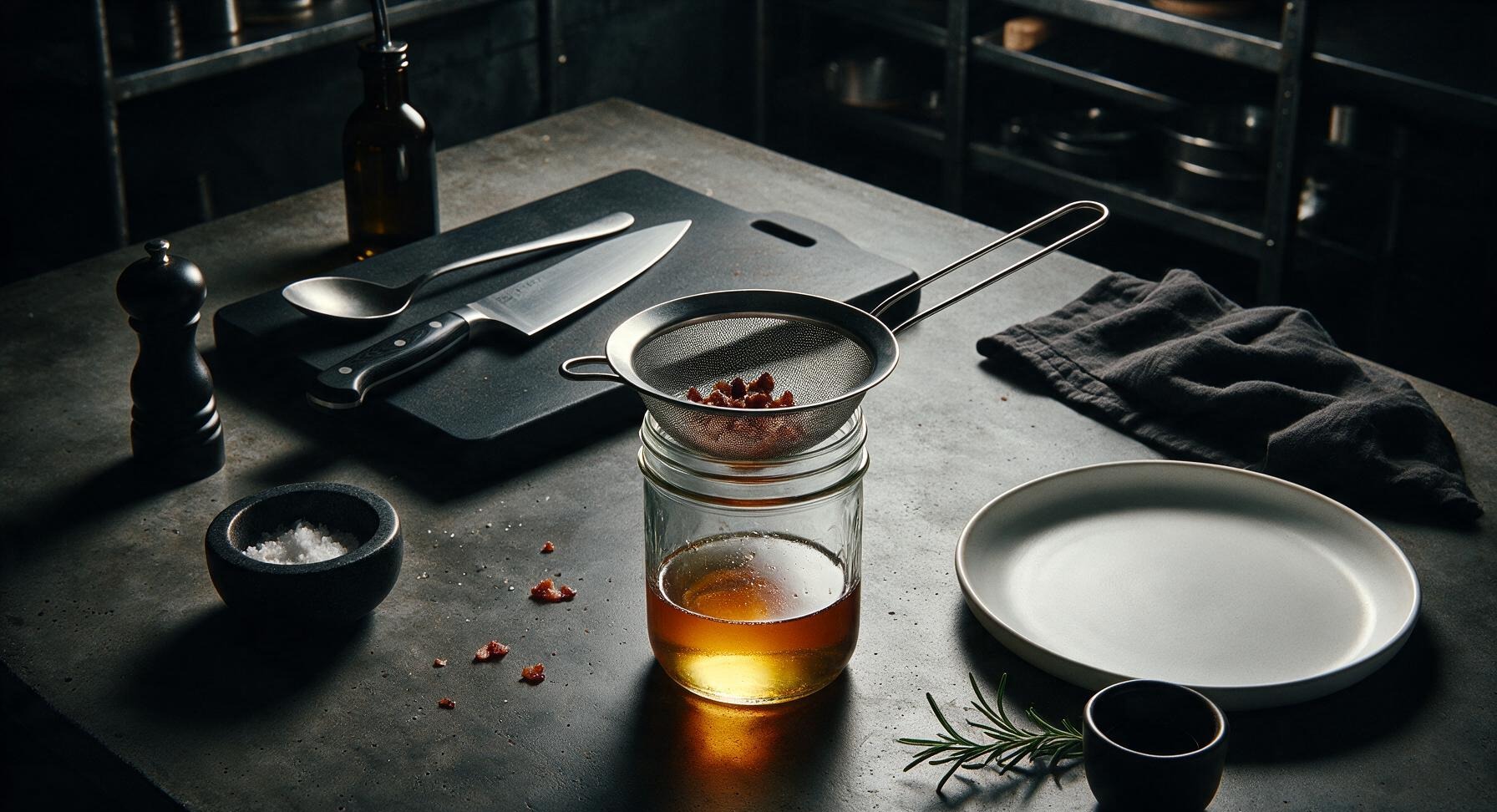
Step 6
step6:Strain fat into storage jar
Step 6
step6:Strain fat into storage jar
7

Cool and store drippings

Let strained drippings sit uncovered at room temperature for 30 minutes, until they cool completely and turn from clear golden liquid to opaque, creamy pale white solid fat. Wipe any drips from the outside of the jar, then seal tightly with the metal lid. Store in the refrigerator for up to 6 months, or in a cool, dark pantry for up to 3 months.
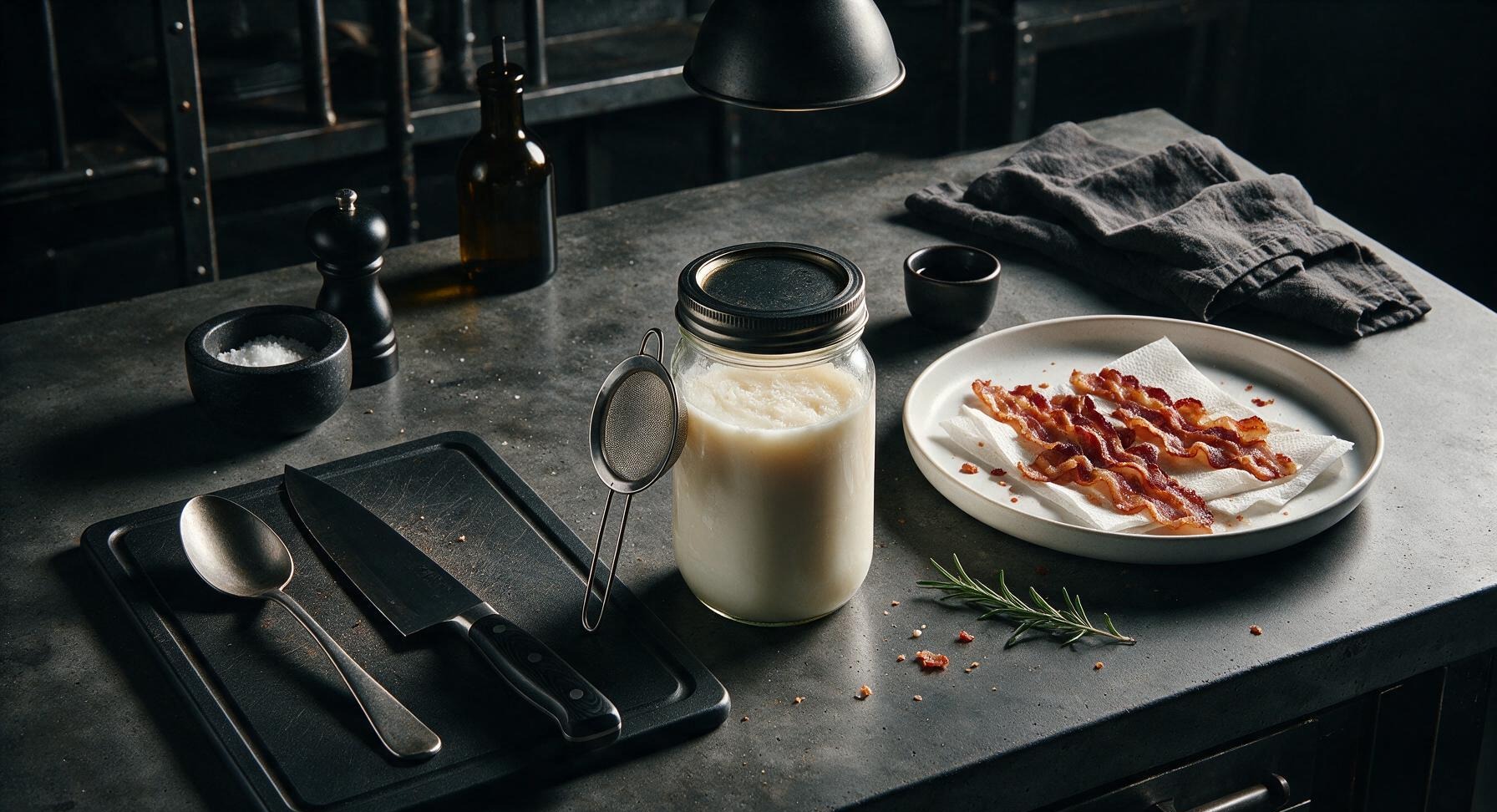
Step 7
step7:Cool and store drippings

Tips

1.Opt for thick-cut smoked bacon when making drippings: thin-cut slices burn easily before fully rendering their fat, producing a smaller yield of drippings with a harsh, bitter burnt note.
2.Never pour hot bacon drippings down your kitchen drain: liquid fat solidifies as it cools, building up over time to cause stubborn pipe clogs. Saving the fat turns a plumbing hazard into a free, flavorful cooking ingredient.
3.Skip adding the last tablespoon of fat from the skillet to your storage jar: this portion holds the majority of settled browned bacon sediment, which turns rancid much faster than pure strained fat, cutting the shelf life of your drippings in half.
✨ You May Also Like

Breakfast
🍜 United States

Crisp-edged, fluffy lard griddle cakes are a nostalgic homestyle staple, with rich savoriness from rendered lard, perfect topped with maple syrup or savory gravy.

⏱️ 25 minuteBreakfast ★ 4.8
Breakfast
🍜 United States

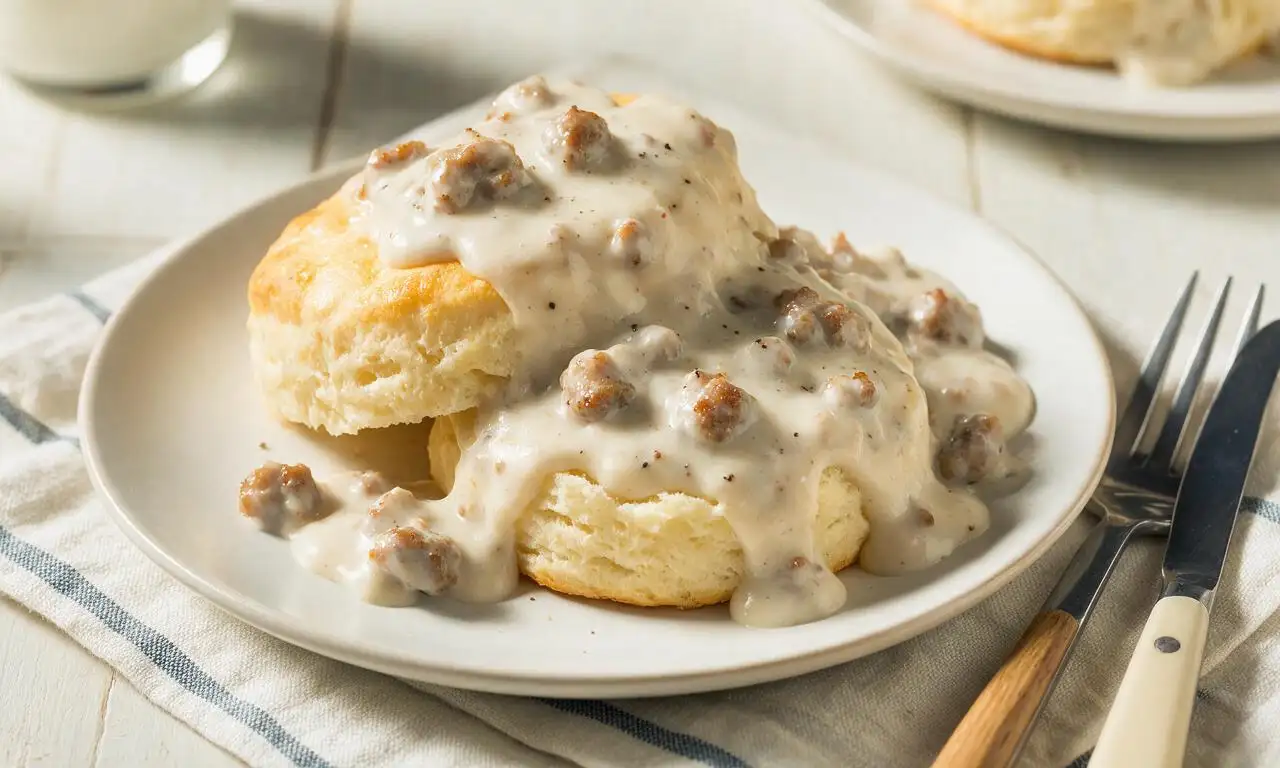
Flaky, buttery homemade buttermilk biscuits smothered in creamy, peppery pork sausage gravy: a beloved, hearty Southern American comfort food classic.

⏱️ 35 minuteBreakfast ★ 4.8
Breakfast
🍜 United States

Golden, custardy brioche stuffed with sweet cream cheese and fresh berries, pan-fried to crisp perfection. An indulgent, cozy breakfast perfect for slow weekend mornings.

⏱️ 30 minuteBreakfast ★ 4.7
Breakfast
🍜 United States

Flaky, buttery Southern-style biscuits stuffed with savory salty country ham, a portable, satisfying classic perfect for casual on-the-go meals.

⏱️ 25 minuteBreakfast ★ 4.8
Breakfast
🍜 United States

Iconic puffy baked pancake popularized in Seattle, with crisp golden edges and soft custardy center, served warm with classic sweet toppings.

⏱️ 35 minuteBreakfast ★ 4.6
Breakfast
🍜 United States

Fluffy, golden pancakes studded with juicy peak-summer mixed berries, drizzled with maple syrup for a bright, comforting, crowd-pleasing family breakfast.

⏱️ 25 minuteBreakfast ★ 4.7

bacon drippings:Frequently Asked Questions

1.Why do you add cold water when making bacon drippings? ▾
Adding cold water at the start of rendering raises the cooking temperature gradually, so fat melts slowly instead of searing bacon immediately. This prevents burnt, bitter drippings, yields a smooth, pale golden final fat, and leaves you with crisp, evenly cooked bacon bits you can save for toppings. It’s a tried-and-true old-Southern trick for perfect drippings every time.
2.Can I use thin-cut bacon instead of thick-cut smoked bacon for this recipe? ▾
You can, but thick-cut smoked bacon is far more reliable for high-quality drippings. Thin-cut bacon cooks much faster, so fat often doesn’t render fully before the bacon burns, and you’ll get far less total drippings per batch. If you only have thin-cut, lower your stovetop heat by 25% and watch closely to avoid scorching the fat.
3.How long will homemade bacon drippings stay fresh in the refrigerator? ▾
Properly strained to remove all solid bacon bits, homemade drippings will stay fresh for up to 6 months in a sealed, airtight glass jar in the fridge. If you leave any cooked bacon solids in the fat, it will go rancid much faster—usually within 2 weeks—since the trapped, protein-rich bits spoil quickly even when submerged in fat.
4.Do I have to strain out the bacon bits before storing drippings? ▾
For long-term storage, yes, you absolutely should. Tiny cooked bacon bits trapped in the fat will turn rancid quickly, ruining the whole batch. Use a fine-mesh sieve lined with cheesecloth or a coffee filter to pour hot fat into your storage jar, and save the strained crispy bits to sprinkle on salads, baked potatoes, or cornbread if they’re not burnt.
5.Can I freeze bacon drippings to extend their shelf life? ▾
Definitely! Freezing is a great option if you don’t use drippings regularly. Pour cooled, strained drippings into an ice cube tray, freeze solid, then pop the cubes into a labeled freezer bag. They’ll stay fresh for up to 1 year, and you can grab one cube at a time to fry eggs or sauté veggies without thawing the whole batch.
6.What are the best ways to use homemade bacon drippings in cooking? ▾
Think of it as a smoky, umami-packed swap for butter, oil, or lard in almost any savory dish. Use it to fry eggs, roast Brussels sprouts or potatoes, stir into cornbread batter for classic Southern depth, sauté collard greens, add a spoonful to bean soups, or mix it into rich, smoky gravy and salad dressings. A little goes a long way, so start with 1-2 teaspoons.
7.Why did my bacon drippings turn out cloudy instead of clear golden? ▾
Cloudy drippings usually stem from one of two common missteps: either you didn’t strain out all the tiny fine bacon solids, or you cooked the fat at too high a heat, which caused burnt particulate to suspend in the fat. If it’s just unstrained bits, it’s safe to use quickly, but if it smells burnt, it will add bitter off-flavor so it’s best discarded.
8.Is it safe to leave bacon drippings out on the counter like my grandparents did? ▾
While generations of Southern cooks kept a drippings can by the stove, modern food safety guidance recommends refrigerating it for long-term use. The high saturated fat content makes it shelf-stable for short 1-2 week stints in a cool, dark spot in a sealed jar, but refrigeration eliminates rancidity risk, especially in warm, steamy home kitchens.
9.Can I use flavored bacon, like maple or peppered, to make drippings? ▾
You absolutely can, just know it will shift the final flavor of your drippings! Maple-cured bacon adds subtle sweet notes that work beautifully in cornbread or roasted root veggies, while peppered or extra-hickory varieties add bold savoriness for gravies and fried potatoes. Avoid sugar-glazed bacon for all-purpose drippings, as the sugar burns easily during rendering.
10.How much rendered drippings will I get from one pound of thick-cut bacon? ▾
A standard 1-pound pack of thick-cut smoked bacon will usually yield between ¾ and 1 full cup of clean, strained golden drippings, depending on the specific cut’s fat content. That may not sound like a lot, but the concentrated smoky flavor means you only need 1-2 tablespoons per recipe to add massive depth, so that batch will last quite a while.
11.Do I need a special container to store bacon drippings? ▾
No fancy gear is required! The classic, most reliable choice is a clean, heatproof glass jar with a tight-sealing lid—regular mason jars work perfectly, as do vintage ceramic drippings keepers with built-in strainers. Avoid thin plastic containers, since hot melted fat can warp plastic or leach off-flavors into your drippings as it cools.
12.Why does my rendered bacon fat sometimes taste bitter? ▾
Bitter drippings almost always mean you rendered the bacon at too high a temperature, which burned the fat and tiny browned bits at the bottom of the pan. The cold water method helps prevent this by keeping initial cook temperatures low, but you should also keep your stovetop on medium-low the whole time, and pull the pan off heat as soon as the fat is pale golden, not dark brown.
13.Is it okay to mix fresh, hot bacon drippings with older stored drippings? ▾
You can, as long as the older drippings smell fresh and have no signs of rancidity—like a sour, paint-like smell or dark, discolored appearance. Always let new hot drippings cool slightly before pouring them into a jar of cold, refrigerated drippings to avoid condensation inside the jar, which introduces moisture that speeds up spoilage.
14.Are bacon drippings the same thing as lard? ▾
They’re similar rendered pork fats, but not identical! Lard is made from unsmoked, uncured pork fat, so it has a mild, neutral flavor. Bacon drippings are rendered from cured, smoked bacon, so they carry distinct salty, smoky umami notes plain lard lacks. You can swap them in recipes if you adjust for extra salt and smoke, but don’t expect a mild, neutral flavor from drippings.
15.What should I do if small bacon bits end up in my strained drippings? ▾
Don’t panic! If you only have a few stray bits, you can either re-strain the cooled, re-melted drippings through a coffee filter for perfectly clear fat, or just plan to use that batch within 2-3 weeks instead of storing it long-term. The bits won’t hurt you, they just shorten shelf life because they contain protein and moisture that turn rancid faster than pure fat.
16.Can I use bacon drippings for baking, or is it only for savory stovetop cooking? ▾
It shines in savory bakes for sure—stirring a couple tablespoons into cornbread, buttermilk biscuits, or savory pie crust adds that iconic smoky Southern depth. I don’t recommend it for most sweet baked goods like cookies or cakes, since the salty, smoky flavor clashes with sweet notes, unless you’re making a playful sweet-savory treat like bacon chocolate chip cookies.
17.Is making homemade bacon drippings actually a zero-waste cooking practice? ▾
It absolutely is! Instead of pouring leftover rendered bacon fat down the drain—which causes costly, messy plumbing clogs, by the way—you’re repurposing a cooking byproduct into a versatile, flavorful pantry staple. You can also save the crispy cooked bacon bits for toppings, so there’s zero food waste from the process, just rich fat and tasty bacon bits to use in other meals.

Comments (7)

2 days ago

OMG I can’t believe I ever bought those weird store-bought bacon drippings in a jar before! This was so easy, 12 minutes flat and I had a whole mason jar of liquid gold to use for roasted veggies, fried eggs, you name it. Game changer for my Sunday meal prep!

yesterday

Wait do you strain out the little bacon bits first or leave them in? I love the crunchy bits for frying potatoes but wasn’t sure if they make it go bad faster!

2 hours ago

Great question! You can absolutely leave the bits in if you plan to use the drippings within a week (kept in the fridge), but straining them will help the drippings last up to 3 months refrigerated. Either way works, just depends on how fast you go through it!

5 minutes ago

Super straightforward even for a total kitchen newbie like me! I saved all the drippings from the bacon I made for breakfast sandwiches this week and used it to make popcorn last night. SO good, my roommates thought I was a professional chef lmao

1 week ago

Brought a batch of cornbread made with these homemade drippings to our neighborhood potluck last weekend and people would NOT stop asking for the recipe! Nobody could put their finger on what made it taste so rich and cozy, total secret weapon. 10/10, will be making this on repeat from now on

5 days ago

That cornbread hack is one of our all-time favorite uses for homemade drippings—so glad it was a hit at the potluck! Thanks so much for sharing how it turned out 😊

30 minutes ago

Wait, hold on—this is literally just saving the grease from cooking bacon? Why did I think this was some fancy complicated process for years? I’ve been pouring this down the drain this whole time!!! Total facepalm moment. Can’t wait to start hoarding this for all my skillet meals

5 minutes ago

Right?! I used to pour it down the drain too until my grandma yelled at me for clogging the pipes lmao. Now I keep a jar right by the stove, it saves me so much money on cooking oil!

just now

So glad this clicked for you! Quick pro tip: never pour hot bacon grease down the drain—even if you run hot water, it will solidify and clog pipes over time. Storing it in a jar is way better for your plumbing and your cooking!

yesterday

Used these drippings to baste my burgers at last night’s family dinner and my kids said they were the best burgers I’ve ever made. Didn’t even tell them my secret, let them think I just developed some new fancy grill skill. Easy, no mess, 12 minutes exactly like the recipe said, zero complaints here

2 weeks ago

As someone who cooks 90% of my meals at home for my gluten-free diet, having a reliable fridge-stable cooking fat that doesn’t have weird added ingredients is such a win. This was so easy to make, I just cooked a big batch of bacon for breakfast and saved every last drop. So much better than the expensive specialty cooking fats I was buying before!

1 week ago

Oh fellow GF home cook here! I started using this for my roasted Brussels sprouts last month and it makes them taste like they came from a fancy restaurant, I swear. Game changer for veggie sides!

3 days ago

Wait a quick question—how long does this actually last in the fridge? I made a jar about a month ago and it still smells fine but I don’t want to accidentally make myself sick using old grease. Otherwise this is dead simple, I love that it doesn’t require any fancy ingredients or tools!

2 days ago

Great question! If you strain out all the solid bacon bits, properly stored bacon drippings will last up to 6 months in the fridge, and even longer in the freezer. If it smells rancid or has odd discoloration, toss it—but if it smells just like fresh cooked bacon, it’s totally safe to use!