
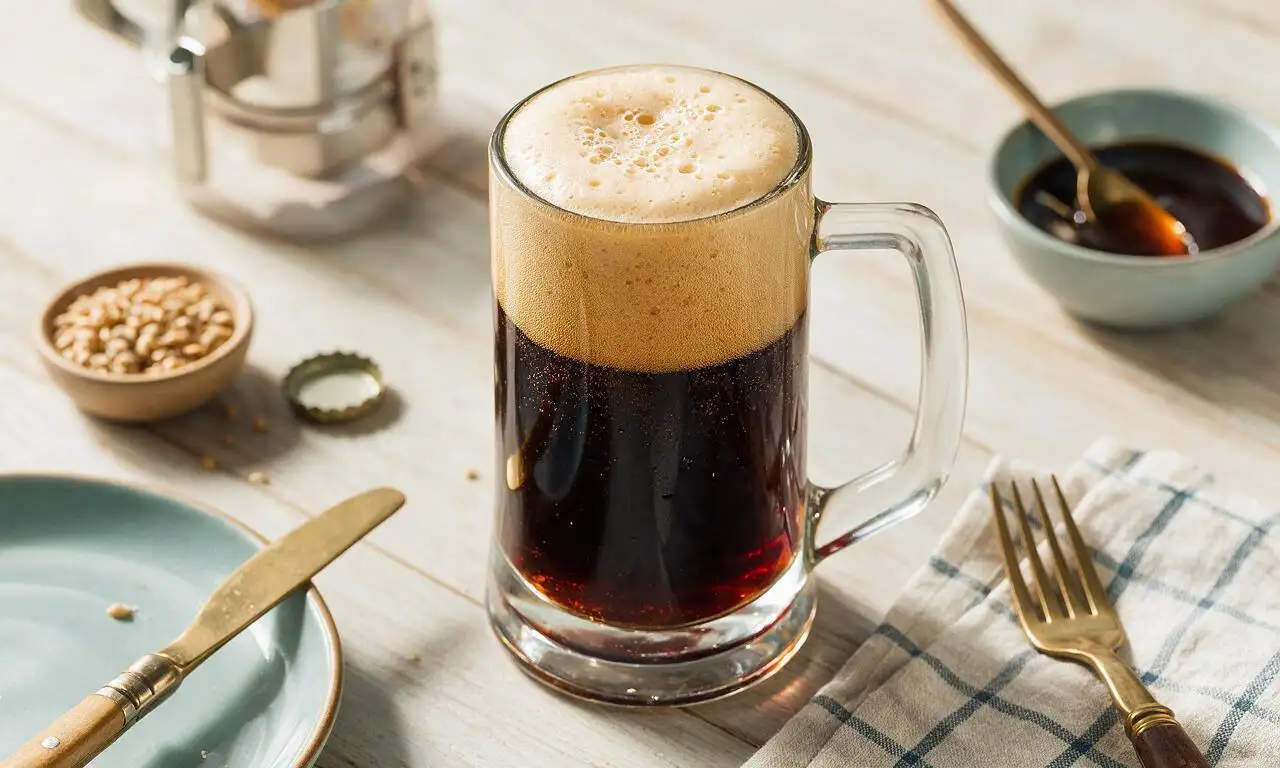
Baltic Porter

title 1
Baltic Porter
⏱️ cook time 2 hours active prep, 4 weeks total
🍽️ servings 10
⚡ Difficulty medium

intro

Rich, smooth, full-bodied dark lager with roasted malt, dark fruit, and subtle chocolate notes. This homebrew recipe delivers classic, warming Baltic Porter perfect for cold winter evenings.

Ingredients

Crushed Pale Munich malt (10L) 900 grams
Crushed chocolate malt (350L) 85 grams
Crushed caramel malt (60L) 57 grams
Crushed roasted barley 28 grams
Hallertau noble hop pellets 14 grams
Baltic lager yeast (Wyeast 2124) 11 gram packet
Priming dextrose (corn sugar) 28 grams
Filtered water 4500 ml

Steps

1

Mash the grain bill

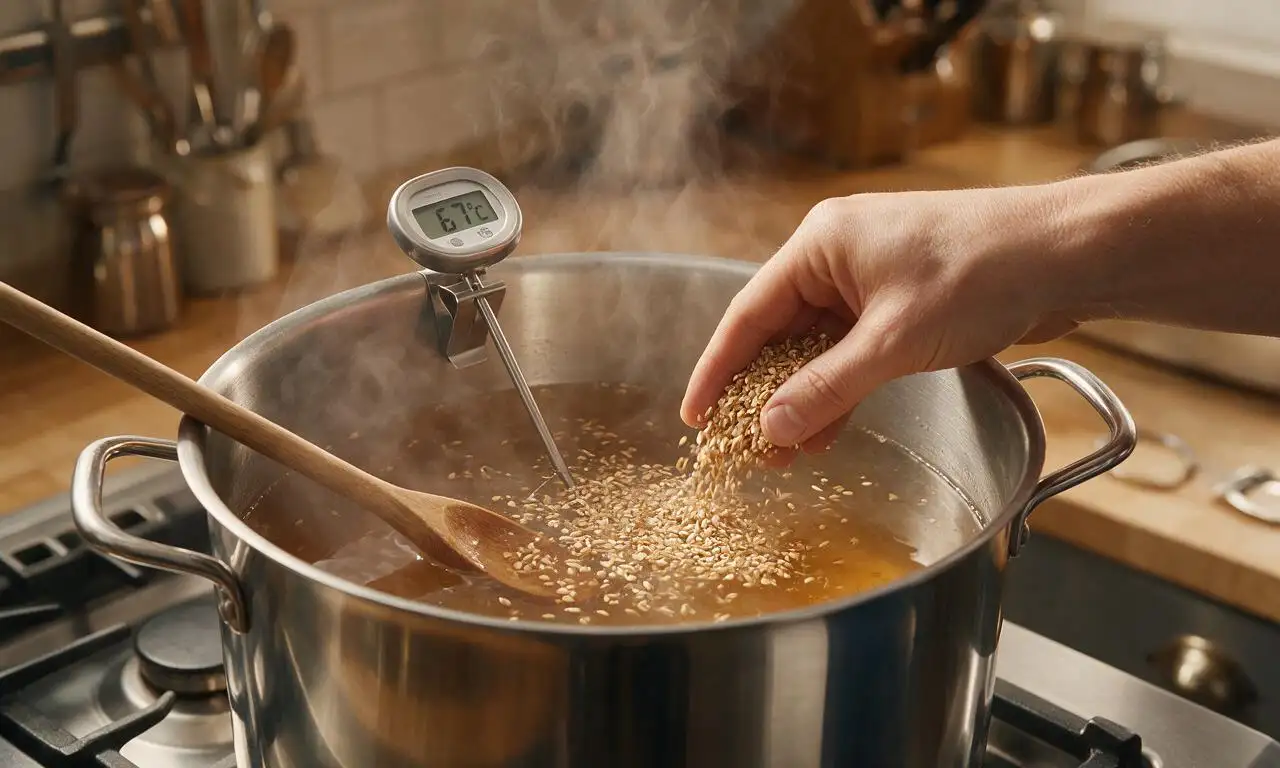
Heat 3000 ml of filtered water to 67°C (153°F) in a large 6L stockpot over medium heat. Add all crushed malts (Munich, chocolate, caramel, roasted barley) and stir thoroughly to eliminate dry clumps. Hold the temperature steady at 65–68°C (149–154°F) for 60 minutes, keeping the pot covered and checking temperature every 10 minutes; add 60ml increments of boiling water if the temperature drops below range. The finished mash will smell of sweet, toasted grain with dark chocolate notes.
Step 1
step1:Mash the grain bill
2

Strain and sparge grains

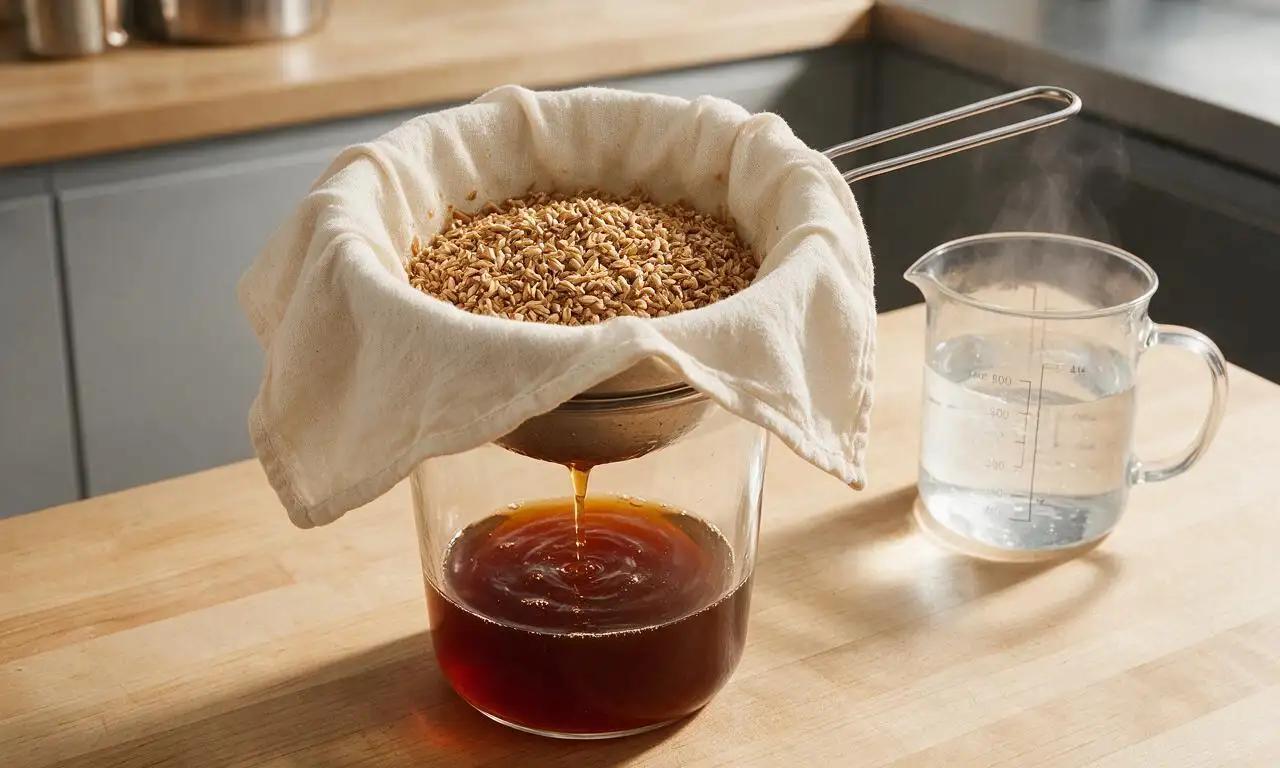
Set a fine-mesh strainer lined with double-layer cheesecloth over a second clean 6L stockpot. Pour the entire mash (grain and sweet wort) through the strainer to separate liquid from spent grains. Slowly pour 1000 ml of 77°C (170°F) filtered water over the grain bed to rinse residual sugars from the grains, collecting all dark runoff in the pot below. Discard the spent, damp grains once draining completes.
Step 2
step2:Strain and sparge grains
3

Boil wort with hops

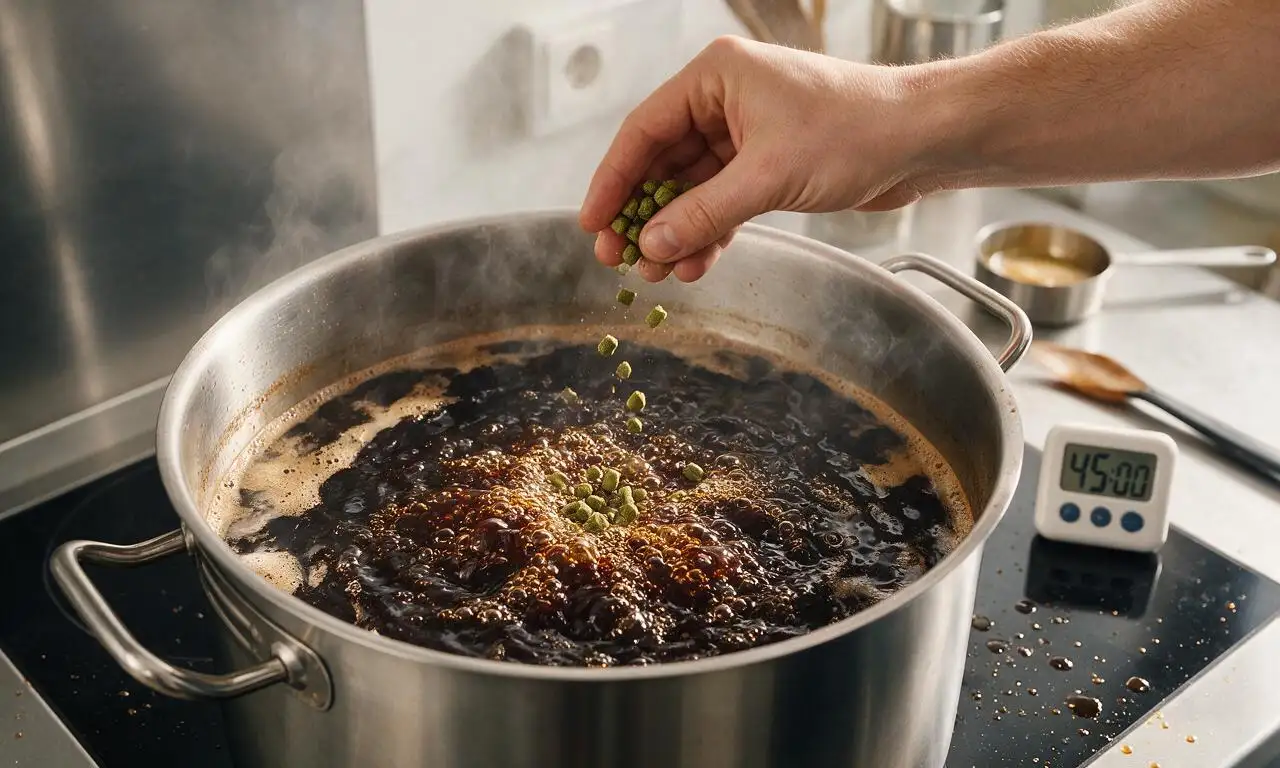
Place the pot of collected wort on the stovetop over high heat, bring to a steady rolling boil (100°C/212°F), then set a timer for 60 minutes. Add 10 grams of Hallertau hops immediately at the start of the boil for mild bitterness, then add the remaining 4 grams of Hallertau hops during the final 15 minutes of the boil for aroma. Keep the pot partially covered to prevent boilovers, adjusting heat to medium-high to maintain a gentle roll without spilling.
Step 3
step3:Boil wort with hops
4

Cool and pitch yeast

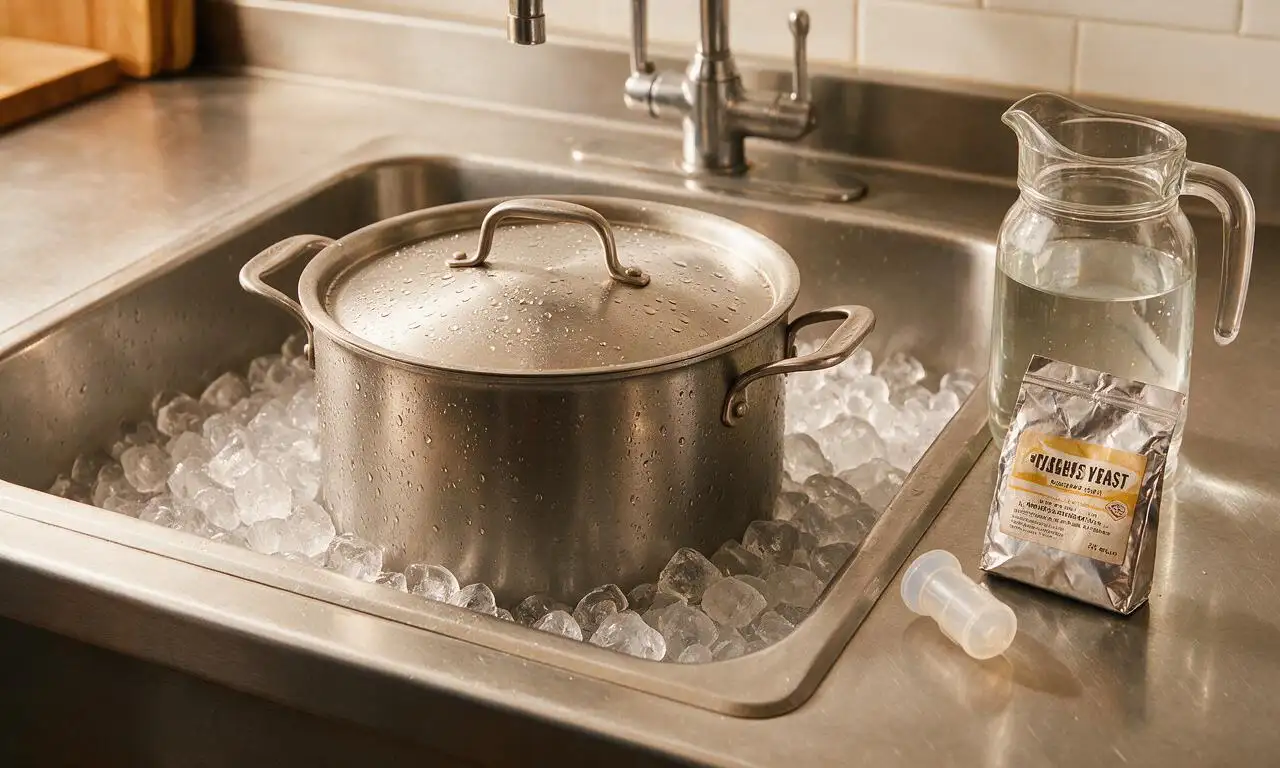
When the 60-minute boil ends, turn off the heat and set the sealed pot in an ice bath (kitchen sink filled with equal parts cold water and ice) until the wort cools to 12°C (54°F), about 20 minutes. Pour the cooled wort into a sanitized 4L (1-gallon) glass fermentation jug, add the entire packet of Baltic lager yeast, and seal the jug with an airlock filled halfway with no-rinse brewing sanitizer.
Step 4
step4:Cool and pitch yeast
5

Conduct primary fermentation

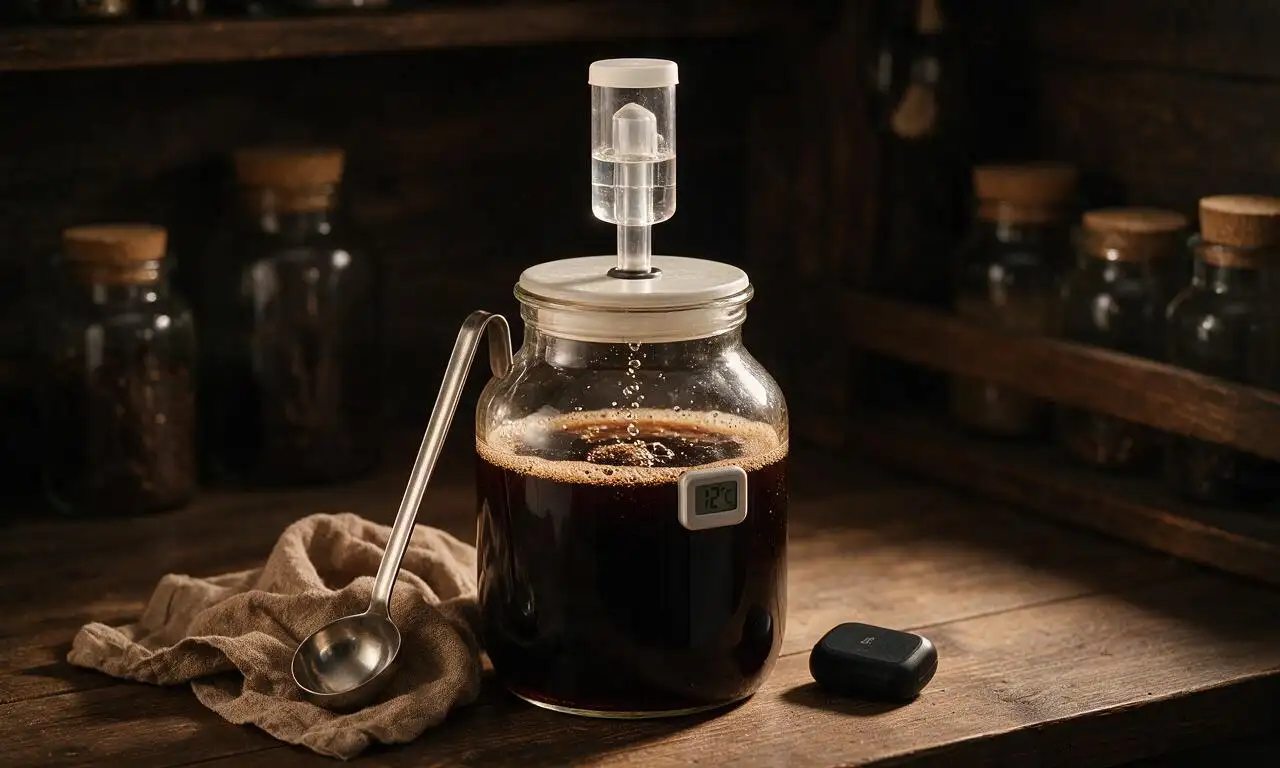
Move the sealed fermentation jug to a dark, temperature-controlled space held steady at 10–13°C (50–55°F) for 2 weeks. Check the airlock every 3 days to confirm active fermentation (steady bubbling) slows to 1 bubble every 30 seconds or less by the end of the 2-week period. Do not open the jug during this time to avoid bacterial contamination.
Step 5
step5:Conduct primary fermentation
6

Bottle with priming sugar

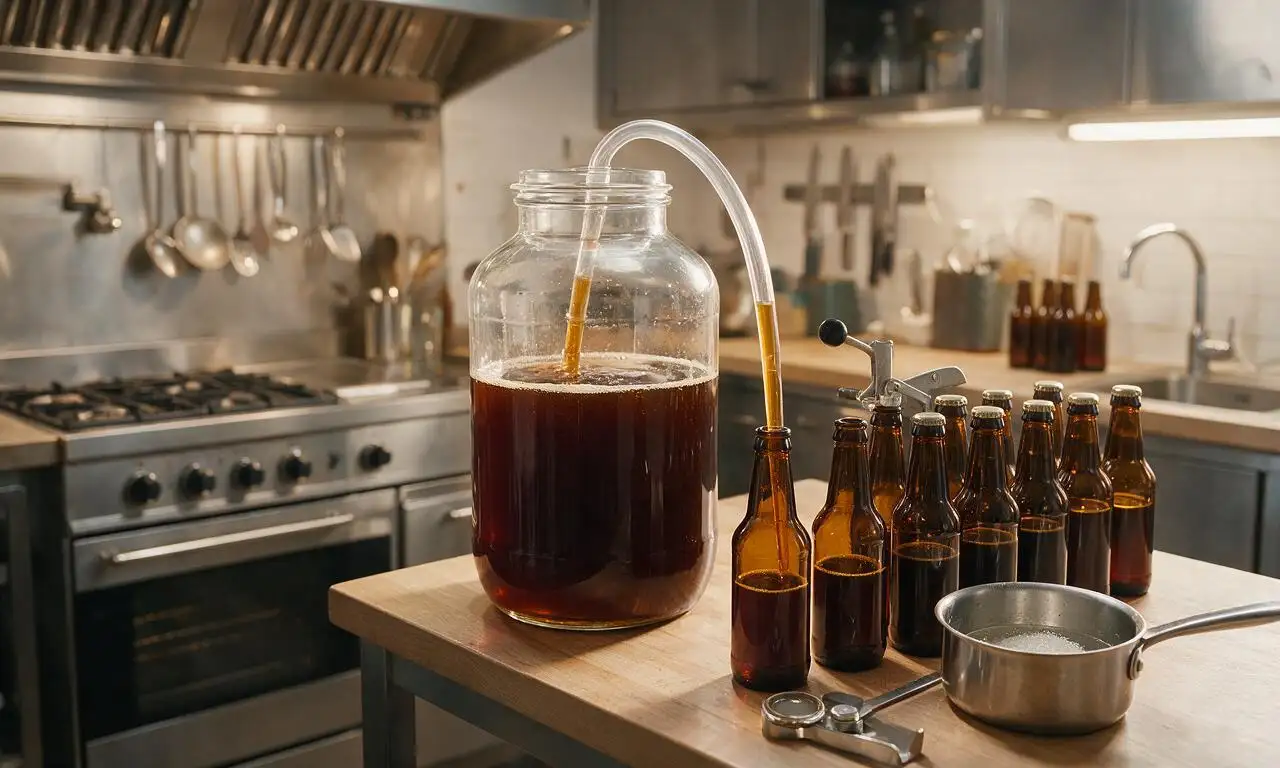
Boil 28 grams of dextrose in 100 ml of filtered water over high heat for 5 minutes, then cool to 12°C and add to a sanitized food-grade plastic bottling bucket. Siphon the fully fermented porter from the glass jug into the bottling bucket, stirring gently with a sanitized spoon to evenly mix the sugar solution. Fill sanitized 355ml (12oz) brown glass bottles, cap tightly with sanitized metal crown caps, and return bottles to the same dark 10–13°C space.
Step 6
step6:Bottle with priming sugar
7

Condition, chill, and serve

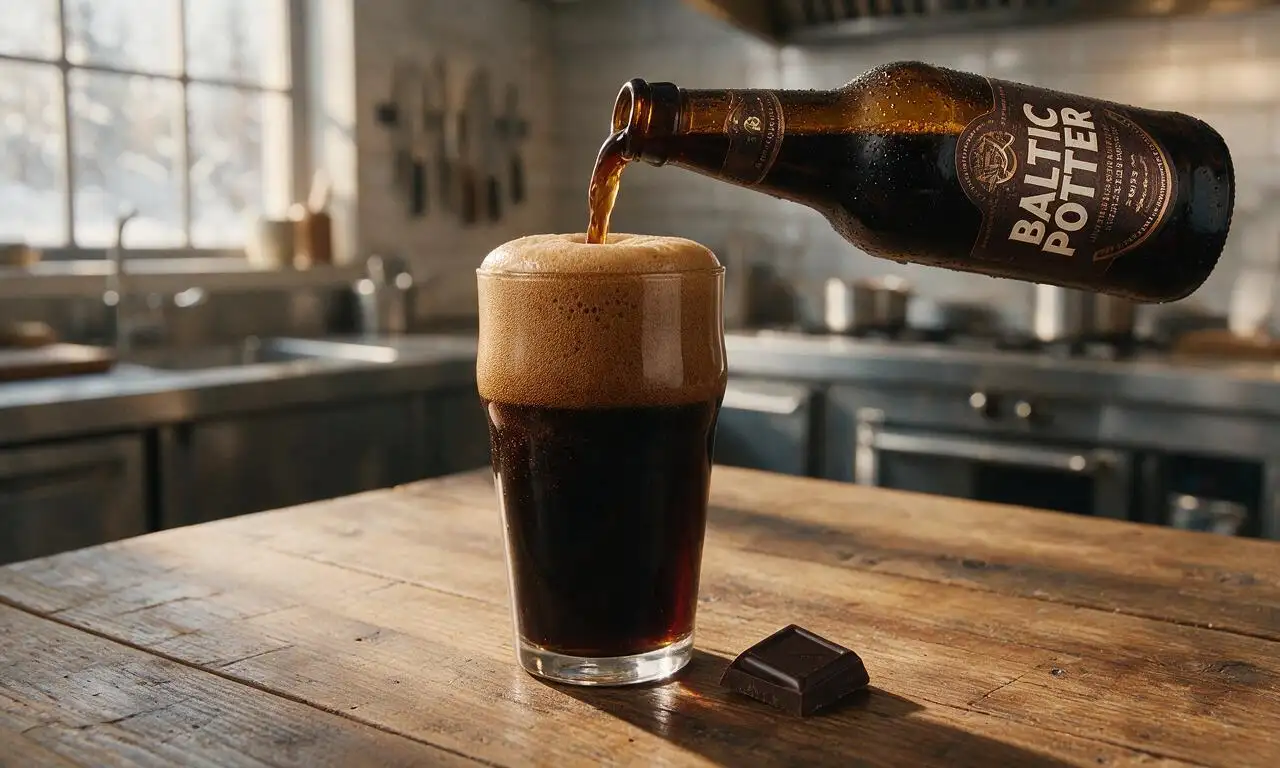
Let bottles condition and carbonate at 10–13°C for 2 full weeks, then move bottles to a refrigerator set to 4°C (39°F) for 48 hours to chill completely. Pour slowly into a thick-walled pint glass, leaving the thin layer of yeast sediment at the bottom of the bottle, to serve. The finished porter will pour deep ebony with a thick, tan, creamy head.
Step 7
step7:Condition, chill, and serve

Tips

1.Sanitize every piece of equipment that touches cooled wort (fermenter, airlock, siphon, bottles, caps) with food-grade no-rinse brewing sanitizer — even a tiny amount of bacteria can create off-flavors that ruin the batch.
2.Maintain the steady 10–13°C (50–55°F) fermentation temperature strictly; warmer temperatures will produce fruity, solvent-like off-flavors that clash with Baltic Porter’s signature smooth, clean lager profile.
3.Resist the urge to open bottles early: the full 2 weeks of conditioning time allows carbonation to develop and harsh young beer flavors to mellow into the style’s characteristic rich, rounded taste.


✨ You May Also Like

Drinks & Beverages
🍜 Mexico

A bright, balanced tequila-based cocktail with zesty fresh lime, smooth orange liqueur, and a signature salt rim, perfect for warm summer sipping.

⏱️ 5 minutesDrinks & Beverages ★ 4.9
Drinks & Beverages
🍜 United States

Thick, creamy, nostalgic classic vanilla milkshake with a rich, smooth texture, topped with whipped cream and a cherry for cool, sweet refreshment.

⏱️ 5 minutesDrinks & Beverages ★ 4.7
Drinks & Beverages
🍜 United States

A bright, golden strong ale with fruity banana-clove notes, subtle hop spice, and soft carbonation, brewed in classic Trappist Tripel tradition.

⏱️ 2 hours aDrinks & Beverages ★ 4.5
Drinks & Beverages
🍜 United States

A frothy, nostalgic American soda fountain treat pairing bubbly cold root beer with creamy vanilla ice cream, perfect for cooling down at warm weather gatherings.

⏱️ 20 minuteDrinks & Beverages ★ 4.8
Drinks & Beverages
🍜 United States

Tart, funky, effervescent American Wild Ale is a complex fruity craft beer brewed with wild yeast, delivering bright, zesty notes perfect for warm-weather sipping.

⏱️ 2 hours aDrinks & Beverages ★ 4.4
Drinks & Beverages
🍜 United States

Bright, bubbly copycat of the iconic American caramel cola, balanced with citrus and warm spice, perfect for sipping ice-cold on hot days.

⏱️ 15 minuteDrinks & Beverages ★ 4.8

Baltic Porter:Frequently Asked Questions

1.What makes this Baltic Porter different from a regular stout or everyday porter? ▾
Great question! Unlike roasty, often sharp stouts fermented with ale yeast, this is a cold-fermented dark lager that’s ultra-smooth with no harsh bitter edge. The blend of Munich, chocolate, caramel malt and roasted barley delivers layered dark fruit, subtle chocolate, and toasty notes without the acrid bite common in heavier, hoppier dark beers.
2.Do I need to crush my own malts for this recipe, or will store-bought pre-crushed malts work? ▾
Pre-crushed malts work totally fine as long as they’re fresh—aim for sealed, nitrogen-flushed bags packaged within the last 3 months for the best, brightest, truest flavor. If you do crush your own, aim for a coarse, even crush (not powdery fine) to avoid extracting harsh, astringent tannins from grain husks during the mash step.
3.Why does this recipe use Hallertau noble hops instead of bolder, high-alpha hop varieties? ▾
Hallertau noble hops have a soft, floral, slightly spicy low-bitterness profile that lets the signature malt flavors shine, which is non-negotiable for a classic, well-balanced Baltic Porter. Bolder high-alpha hops would overpower the delicate chocolate, dark fruit, and toasty Munich malt notes; we only use enough hops to balance rich malt sweetness, not add prominent, punchy hoppy flavor.
4.What fermentation temperature will give me that signature smooth Baltic Porter profile? ▾
Since this is a dark lager, hold fermentation at a steady 45–55°F (7–13°C) for the first two weeks with a clean lager yeast, then ramp up 5°F for a 3-day diacetyl rest before cold conditioning. Skip warm ale-fermentation temps, which create fruity, off-flavors that clash with the beer’s smooth, rich roasted character.
5.How long do I need to condition this porter before it’s ready to drink? ▾
Plan for a minimum of 4 weeks of cold conditioning at 35–40°F (2–4°C) after primary fermentation wraps, though 6–8 weeks is even better. Baltic Porter smooths out dramatically with time: harsh young roast notes mellow, dark fruit and chocolate flavors meld, and carbonation settles into that classic creamy, full-bodied mouthfeel.
6.I don’t have roasted barley on hand—can I swap it for extra chocolate malt? ▾
I don’t recommend a straight 1:1 swap, because roasted barley adds a signature dry, subtle coffee-like backbone without the sweeter, richer profile of chocolate malt. If you’re in a pinch, use 3/4 the amount of extra chocolate malt plus a tiny pinch of black patent malt to replicate that dry roasty balance, so the beer doesn’t taste cloyingly sweet.
7.What ABV can I expect from this homemade Baltic Porter recipe? ▾
When brewed correctly with a standard 60-minute mash and full attenuation from a clean lager yeast, this recipe lands right in the classic 6.5–7.5% ABV range. It’s strong enough to have that nice, gentle warming effect perfect for cold winter evenings, but not so boozy that alcohol flavor overpowers the smooth malt and subtle chocolate notes.
8.Will this porter taste too bitter or roasty for people who don’t usually like dark beers? ▾
Not at all! The caramel and Munich malts add soft toffee and bready sweetness that balances the small portion of roasted barley and chocolate malt, and the low hop addition keeps IBUs around 25–30—lower than most commercial craft porters on shelves today. You’ll get gentle chocolate and dark fruit notes, no sharp, burnt aftertaste.
9.What’s the best way to serve this homemade Baltic Porter? ▾
Skip the ice-cold serving temp you’d use for light lagers! Pour this into a tulip or stout glass at 45–50°F (7–10°C) to let the roasted malt, dark fruit, and subtle chocolate notes open up fully. It pairs beautifully with slow-cooked beef stew, sharp aged cheddar, or dark chocolate desserts for a cozy cold-weather spread.

Comments (10)

2 weeks ago

I was worried the 4 week total time would feel like forever but it’s so worth it! My whole family loved this at our Sunday dinner last weekend—even my brother who swears he only drinks IPAs went back for a second glass. Will absolutely be making this again.

1 week ago

Right?! My IPA-obsessed roommate did the exact same thing, said it was way smoother than he thought dark beer could be. I’m already planning a double batch for our Fourth of July cookout.

1 week ago

Pro tip for anyone making this: I added a half ounce of cold steeped dark cocoa nibs during the last 3 days of conditioning and it took this porter to a whole other level. Brought a growler to our weekly game night and the guys begged me for the recipe immediately. 10/10 will brew this every winter from now on.

5 days ago

Oh that sounds amazing! Did you sanitize the nibs before adding them? I’ve had bad luck with additions causing off flavors from not sanitizing enough before.

4 days ago

Love that cocoa nib mod! Quick note for folks trying this: a quick soak in high-proof vodka for 10 minutes will sanitize nibs (or any fruit/add-in) perfectly without adding weird flavors to your final brew.

5 days ago

Just bottled my first batch yesterday! The sample I pulled during gravity check was chef’s kiss—smooth, roasty, not too heavy, perfect for sipping on the patio while we grill out. I can’t wait to crack the first one in a couple weeks once it bottle conditions properly.

4 days ago

So stoked to hear how it’s turning out! Pro move to save a little sample at bottling to compare to the final carbonated pour—it’s wild how much the flavors mellow and meld over those couple weeks in the bottle.

3 days ago

Made this for my husband’s birthday and he said it’s better than the fancy Baltic porter we had at that craft beer bar in Denver on our honeymoon! Total win. I did adjust the water profile a tiny bit to match my local tap and it came out perfect.

2 days ago

That is such a sweet birthday idea! I’ve been nervous to mess with water chemistry, did you use one of those online water profile calculators to get it right?

2 days ago

OMG this Baltic porter recipe is a total game changer! I brought my first batch to our neighborhood potluck last weekend and every single person was raving about it—rich, malty, just the right hint of chocolate, no weird bitter aftertaste like some store-bought porters I’ve tried. Only question: I accidentally let the primary fermentation go 2 days longer than the recipe says, will that mess with the final flavor too much?

1 day ago

I did the exact same thing on my first batch! It ended up being a little smoother actually, no off flavors at all, just don’t rush the cold conditioning step and you’ll be golden.

1 day ago

Great question! A couple extra days in primary won’t hurt at all—like Carrie said, it can even round out the harsher notes a bit. Just make sure you hold that final 2 week cold crash temp steady and you’ll end up with a perfect pour.

yesterday

Wait, as someone who’s only ever done basic extract homebrew kits before, is this actually doable for a medium skill level? I’ve been nervous to step up to all-grain but this Baltic porter sounds SO good, my partner is obsessed with dark beers and I want to make a batch for our anniversary dinner next month.

10 hours ago

I’m also an extract-only brewer and I nailed this on my first try! Just read through the steps twice before you start, have all your target temps pre-marked on your brew kettle, and take it slow. You got this!

7 hours ago

So glad you’re excited to try it! I designed this to be super approachable for folks moving from extract to all-grain—there are notes in the recipe card for small extract substitutions if you don’t want to jump all in on all-grain right away, too. Happy brewing!

2 hours ago

Heads up for new brewers: make sure you have a big enough brew kettle! I only had a 5 gallon pot and almost had a boil over mess 20 minutes into my active prep, had to run to my neighbor’s to borrow his 8 gallon one mid-brew. My kids loved it when I pulled up a step stool for them to watch the mash, they kept asking when the “fancy root beer” would be carbonated and ready to try. Other than that hiccup the recipe steps were super straightforward and easy to follow.

1 hour ago

That’s such a good callout! I recommend at least a 7.5 gallon kettle for this recipe to avoid messy boil overs— I’ll add that note to the top of the recipe card so folks don’t run into the same last minute scramble!

30 minutes ago

Just got started on my active prep 30 minutes back! Kitchen smells like toasted malt and coffee right now, it’s heavenly. I prepped all my brew day snacks ahead of time so I don’t have to step away and miss a critical temp check, fingers crossed it turns out as good as everyone says it does. Already can tell this is going to be a new regular in my brew rotation.

5 minutes ago

As a total first time homebrewer I was intimidated by the medium difficulty rating but the step by step instructions were so easy to follow! Just got my batch into the primary fermenter a few minutes back, it’s already bubbling away like crazy, and I’m so excited to taste the final product. Already planning to bring a few bottles to my office potluck next month once it’s ready.

just now

SO good. I’ve brewed probably 12 different porter recipes over the last 5 years and this is easily top 2. The balance of dark malt, subtle licorice note, and clean finish is exactly what I look for in a Baltic porter. No weird fusel alcohol taste even with the higher ABV, which is a common problem with bigger dark beer recipes. Just cracked my first fully conditioned bottle tonight and knew I had to leave a review immediately.



