basic yorkshire pudding

title 1
basic yorkshire pudding

⏱️ cook time 30 minutes
🍽️ servings 6
⚡ Difficulty easy

intro

Crisp, golden, and sky-high puffed with a light, hollow center, these classic Yorkshire puddings are the iconic essential side for traditional British Sunday roasts.

Ingredients
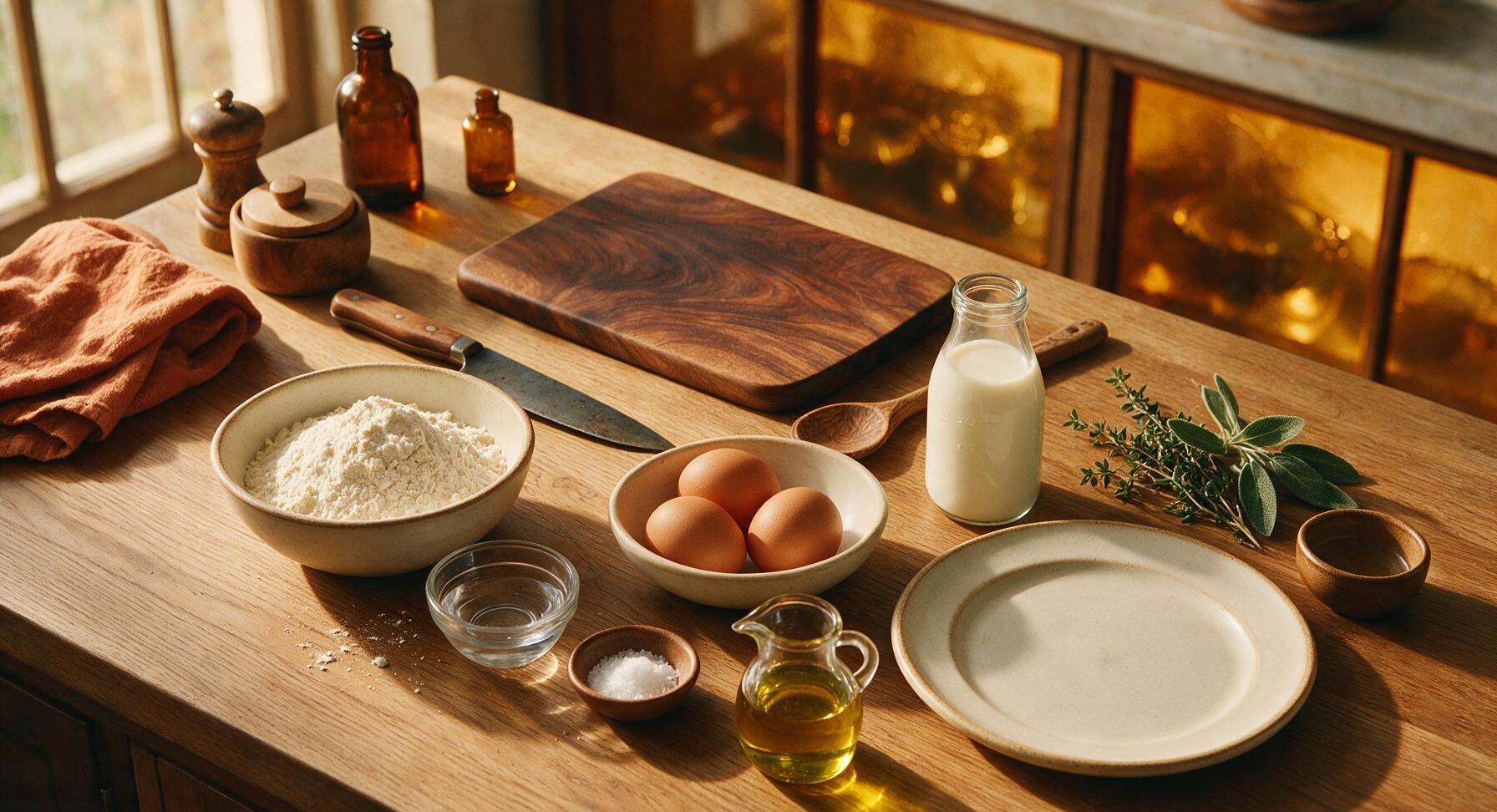
Plain (all-purpose) flour 100g
Large eggs 3
Whole milk 150ml
Cold water 50ml
Fine sea salt 1/2 tsp
Sunflower oil 3 tbsp

Steps

1

Sift Flour and Salt

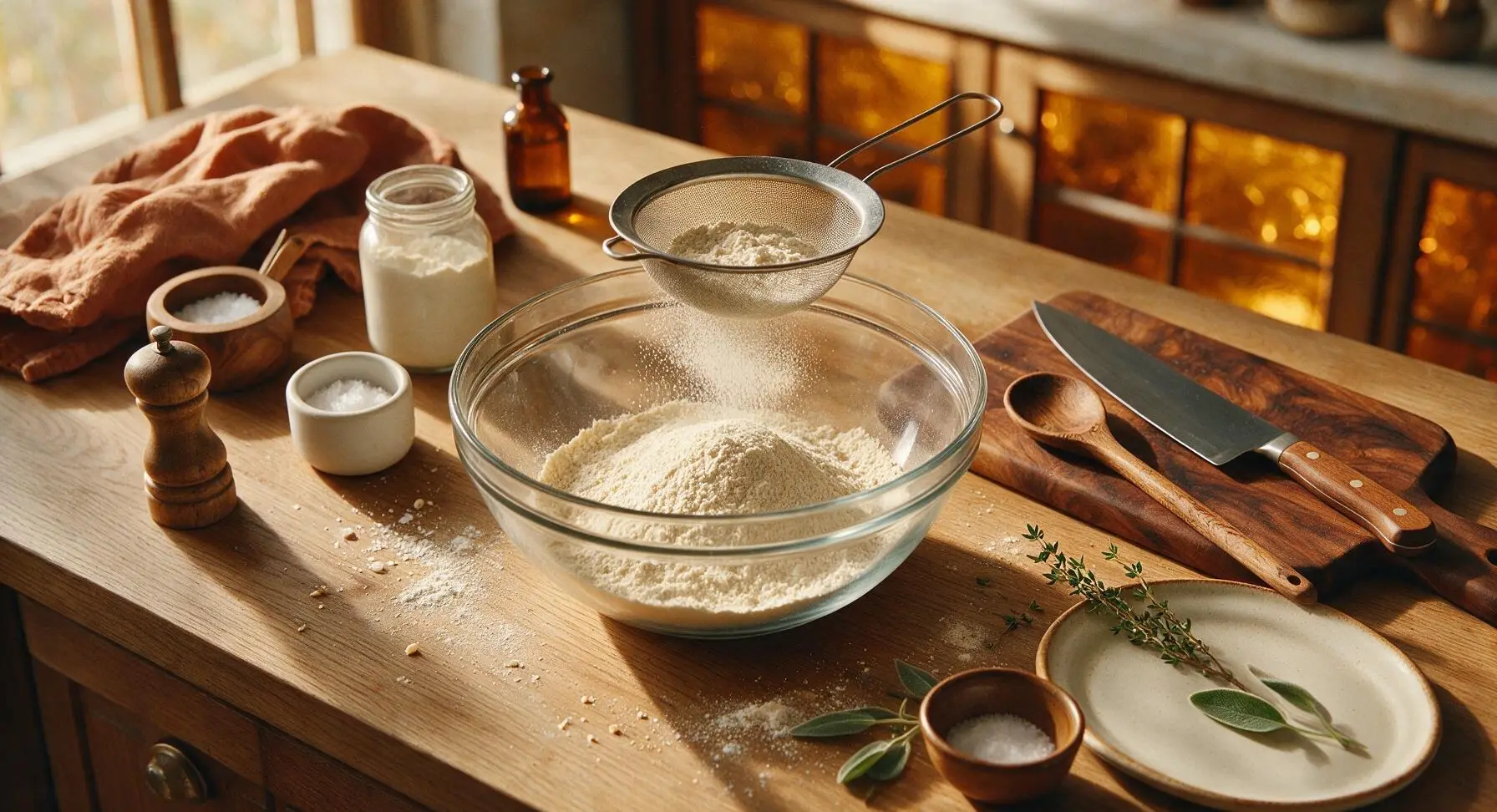
Set the clear glass mixing bowl in its fixed position on the counter. Measure 100g plain all-purpose flour and 1/2 tsp fine sea salt into a fine sieve held over the bowl, tapping the sieve edge gently to sift the mixture into the bowl, removing any small lumps. The finished sifted flour will form a light, loose, even pile at the bottom of the bowl.
Step 1
step1:Sift Flour and Salt
2

Whisk Eggs Into Flour

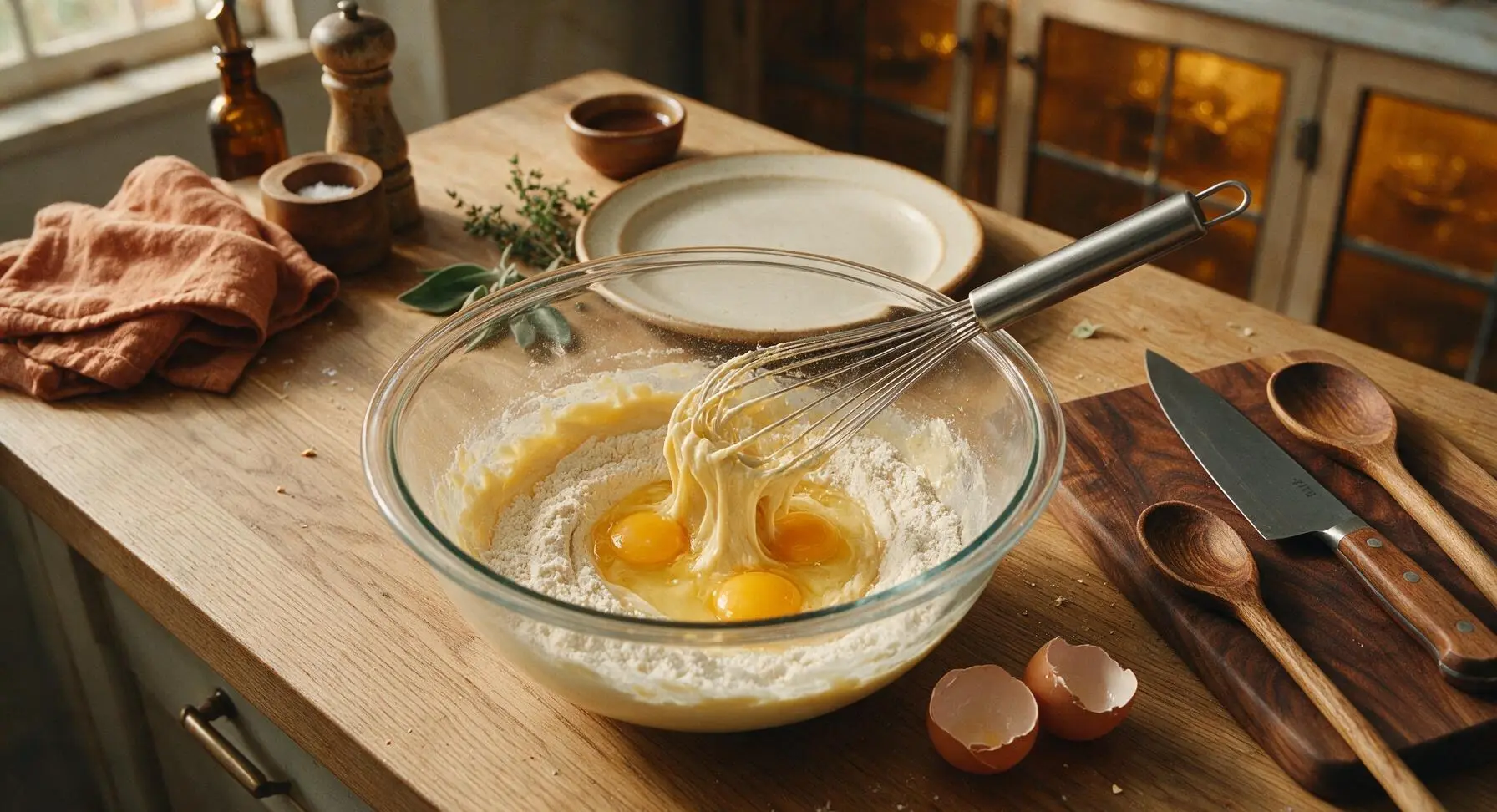
Crack the 3 large eggs directly into the center of the sifted flour in the mixing bowl. Use the stainless steel wire whisk to beat the eggs into the flour, starting slowly to avoid flour splatters, until a thick, smooth, lump-free paste forms after roughly 1 minute of steady whisking. The paste will pull away from the bowl sides in thick, slow ribbons when you lift the whisk.
Step 2
step2:Whisk Eggs Into Flour
3

Incorporate Milk and Water

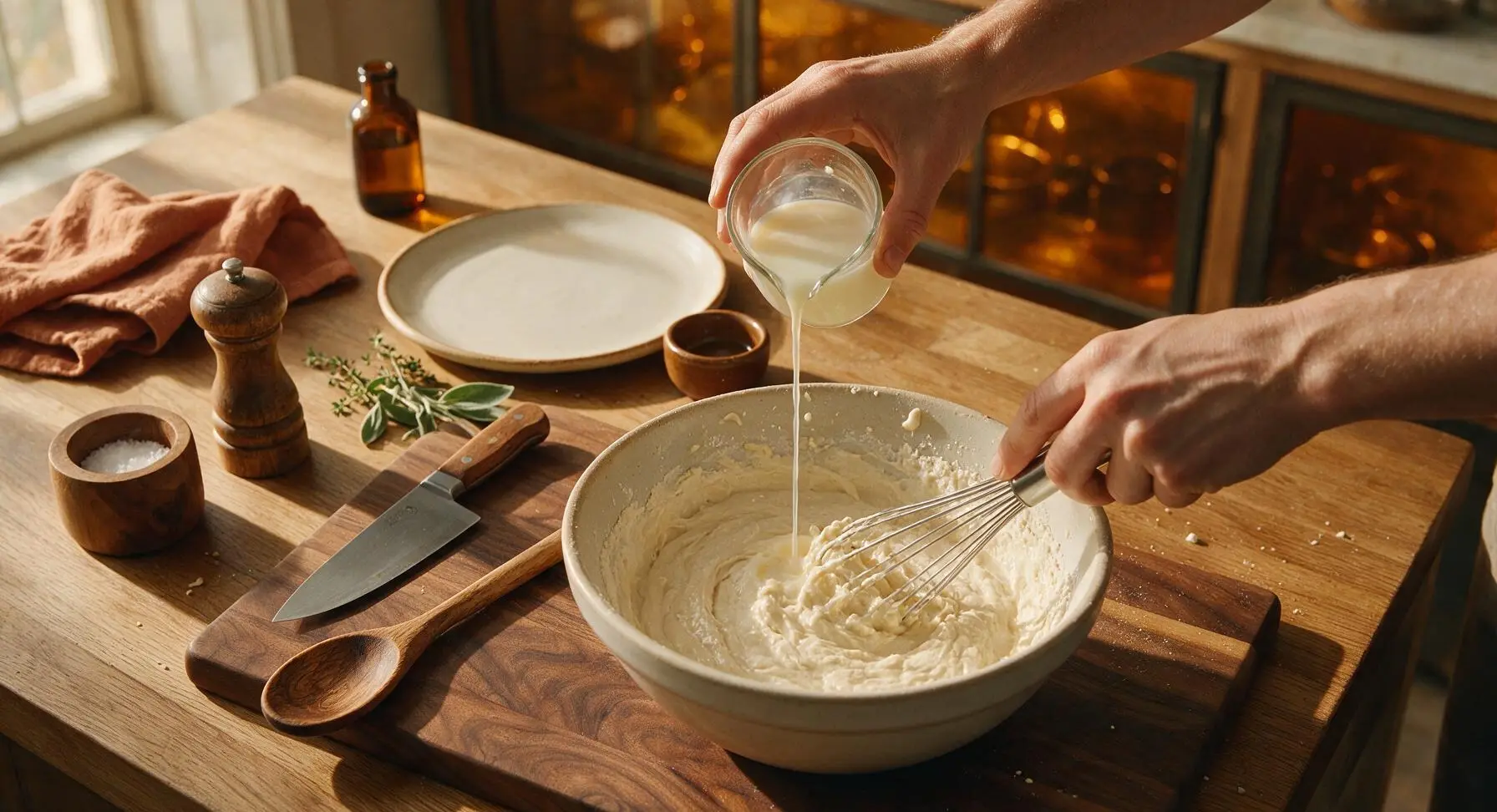
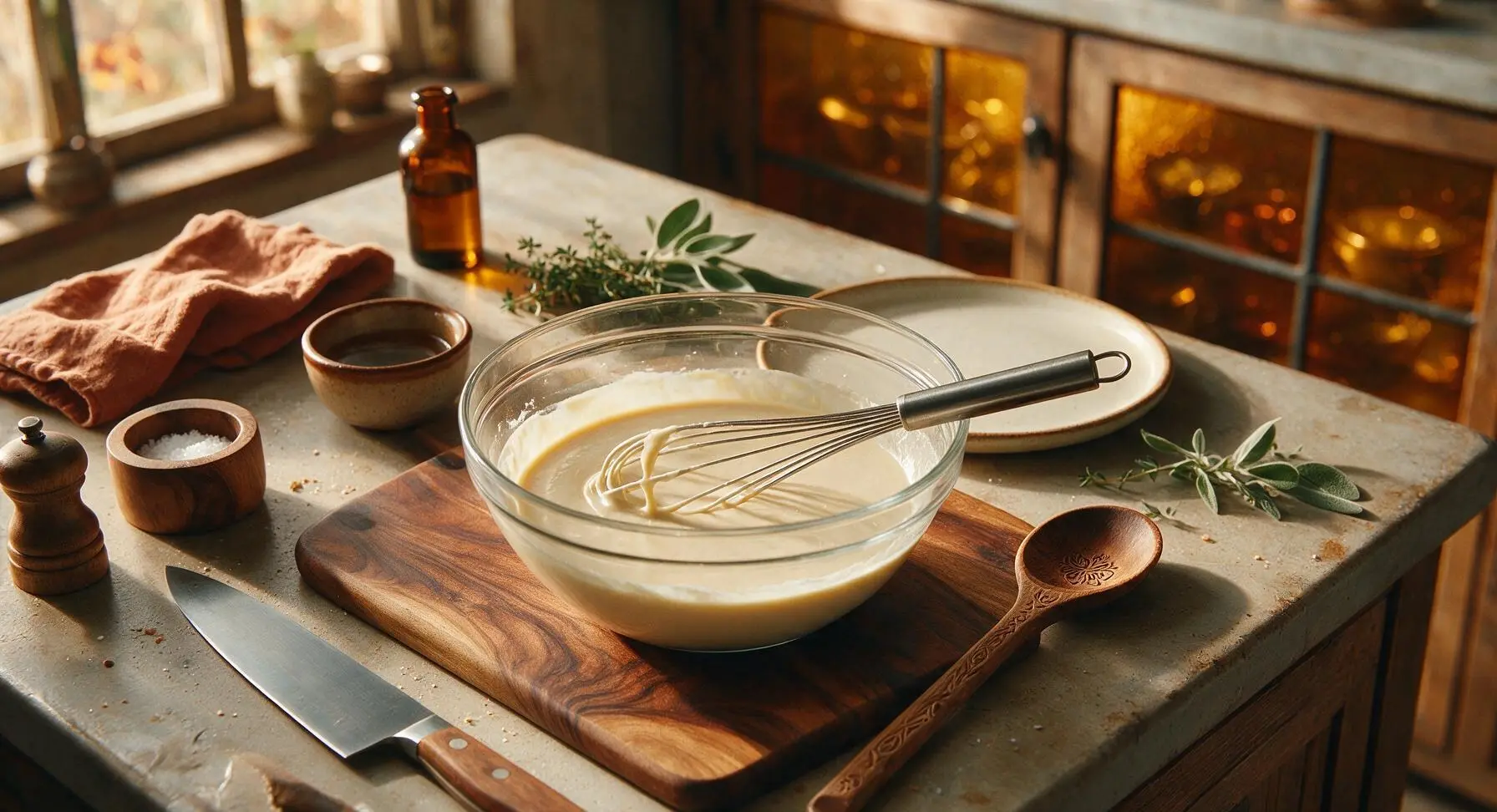
Gradually pour the combined 150ml whole milk and 50ml cold water into the thick flour-egg paste, whisking constantly in slow, steady circles to prevent lumps from forming. Continue whisking for roughly 2 minutes until the batter is completely smooth, with the thin, pourable consistency of light (single) cream. Avoid over-whisking, as excess gluten development will make the finished puddings tough.
Step 3
step3:Incorporate Milk and Water
Step 3
step3:Incorporate Milk and Water
4

Rest the Batter

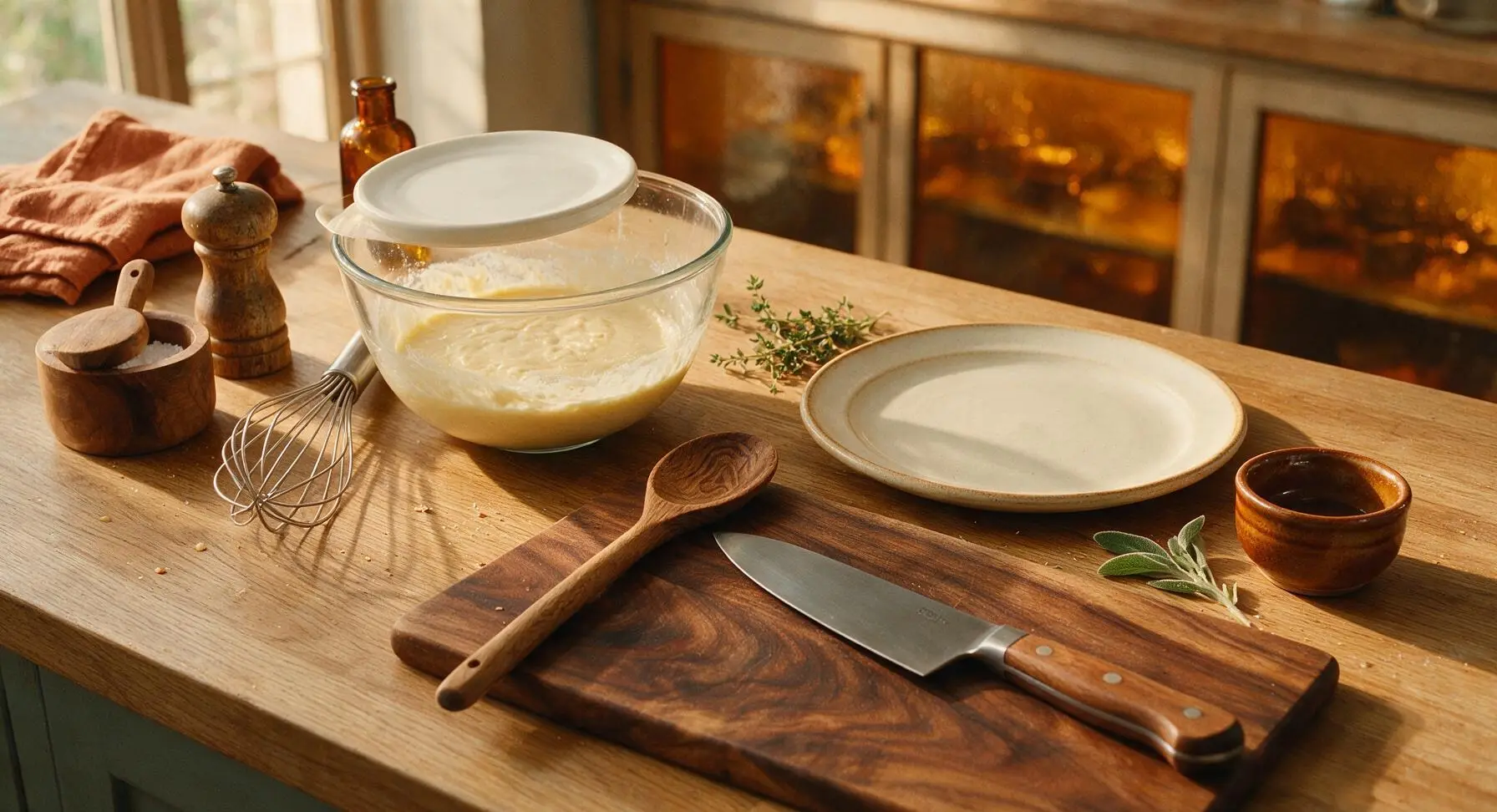
Cover the mixing bowl with a small clean plate and leave the batter to rest at room temperature for 30 minutes. This rest period allows gluten strands in the flour to relax, which ensures the puddings rise evenly and do not shrink or turn tough after baking. Do not skip this resting step.
Step 4
step4:Rest the Batter
5

Heat Oil in Muffin Tin

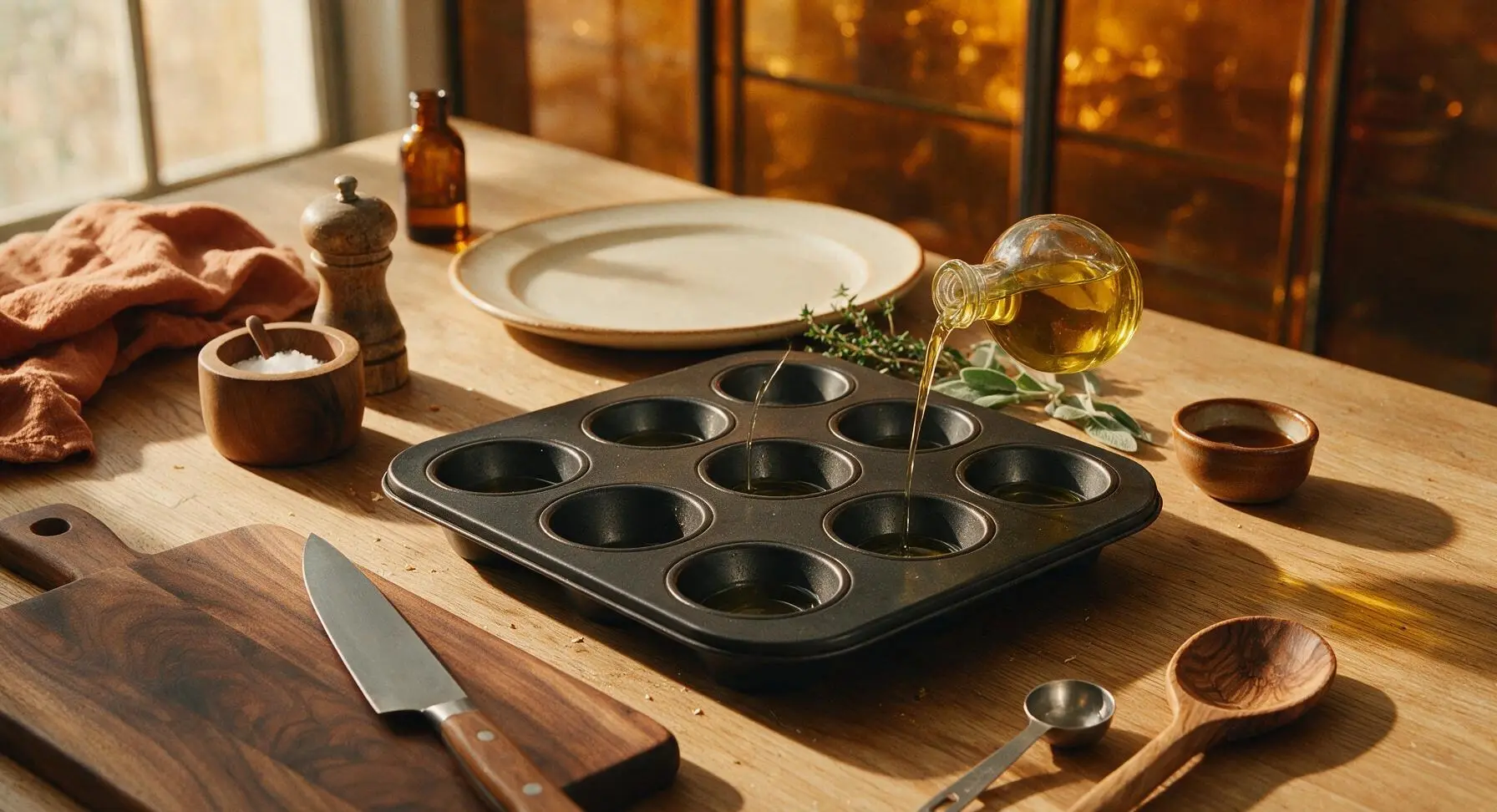
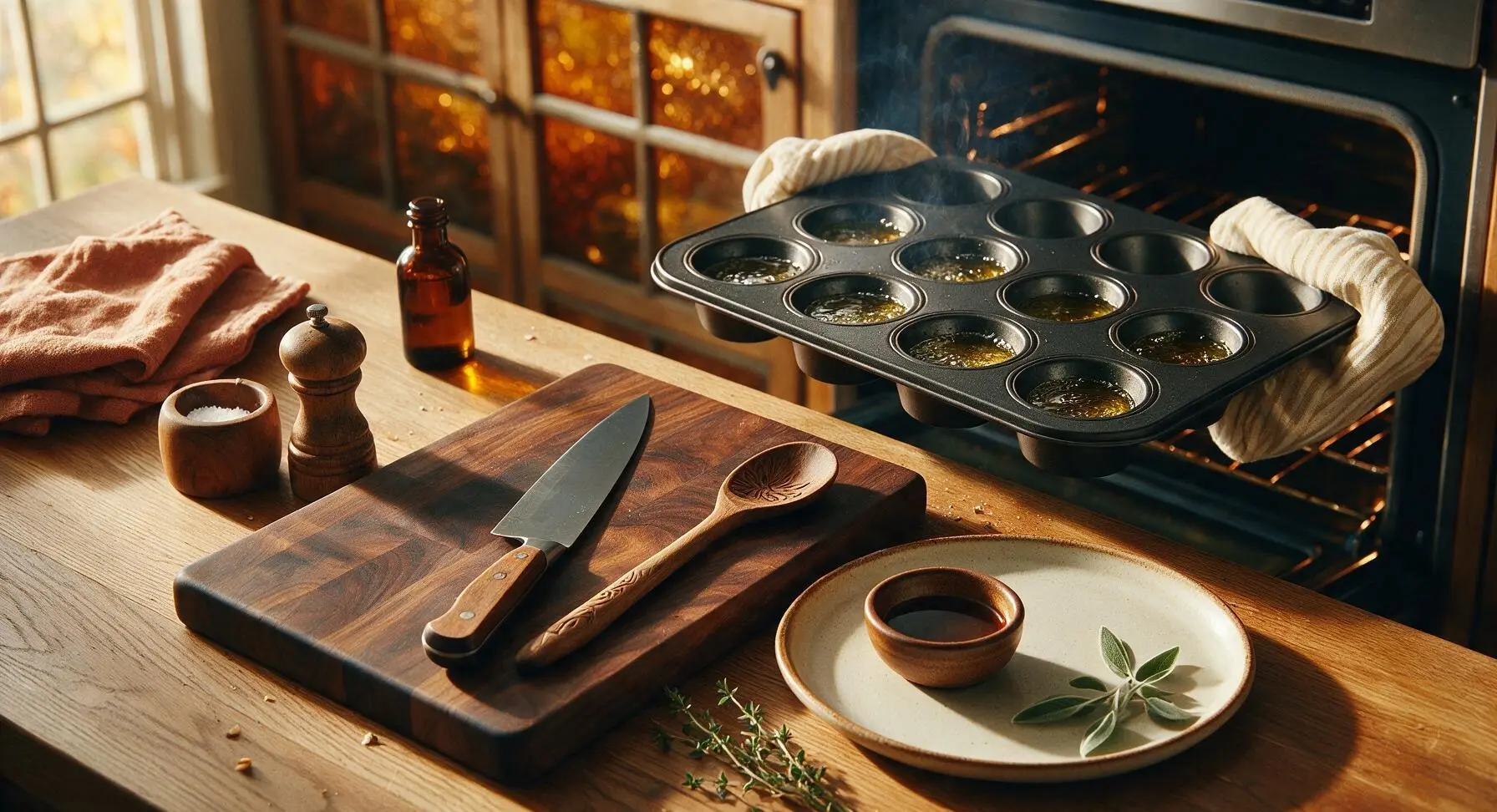
Adjust your oven rack to the middle position, then preheat the oven to 220C (425F, 200C fan). Pour 1.5 teaspoons of sunflower oil into 6 cups of the matte black 12-cup muffin tin, leaving the remaining 6 cups empty. Place the tin in the preheated oven for 10 minutes, until the oil is shimmering and nearly smoking. Extremely hot oil is non-negotiable for the signature tall, crisp rise of Yorkshire puddings.
Step 5
step5:Heat Oil in Muffin Tin
Step 5
step5:Heat Oil in Muffin Tin
6

Pour Batter Into Hot Cups

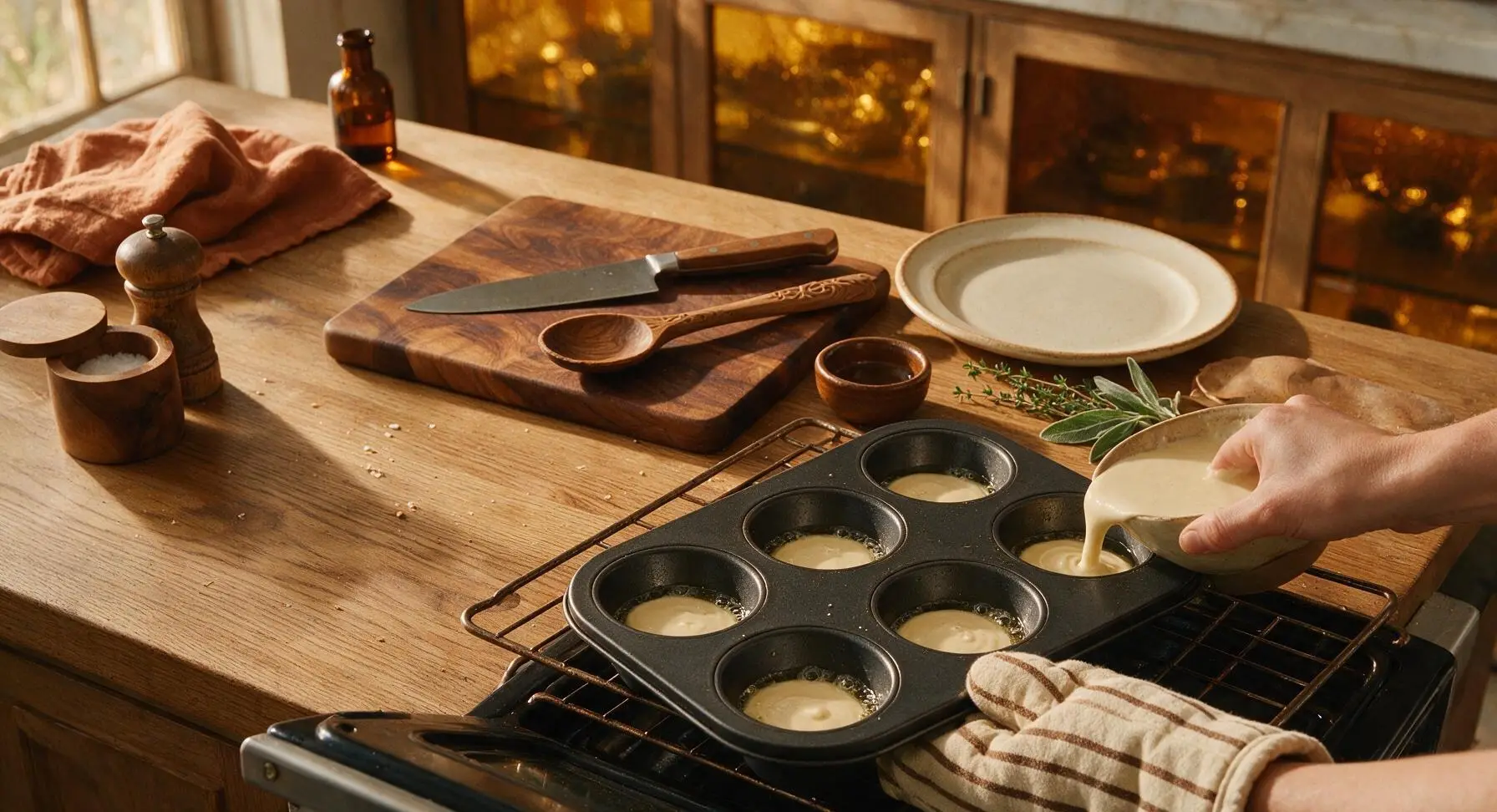
Keep the hot tin held steady on the extended oven rack with the oven mitts. Give the rested batter one quick, gentle stir to reincorporate any settled flour, then pour equal amounts of batter into each of the 6 hot, oiled cups, filling each no more than 1/3 full. You will hear a loud, sharp sizzle as the cold batter hits the hot oil — this sound confirms your oil is hot enough for a good rise.
Step 6
step6:Pour Batter Into Hot Cups
7

Bake Until Golden Puffed

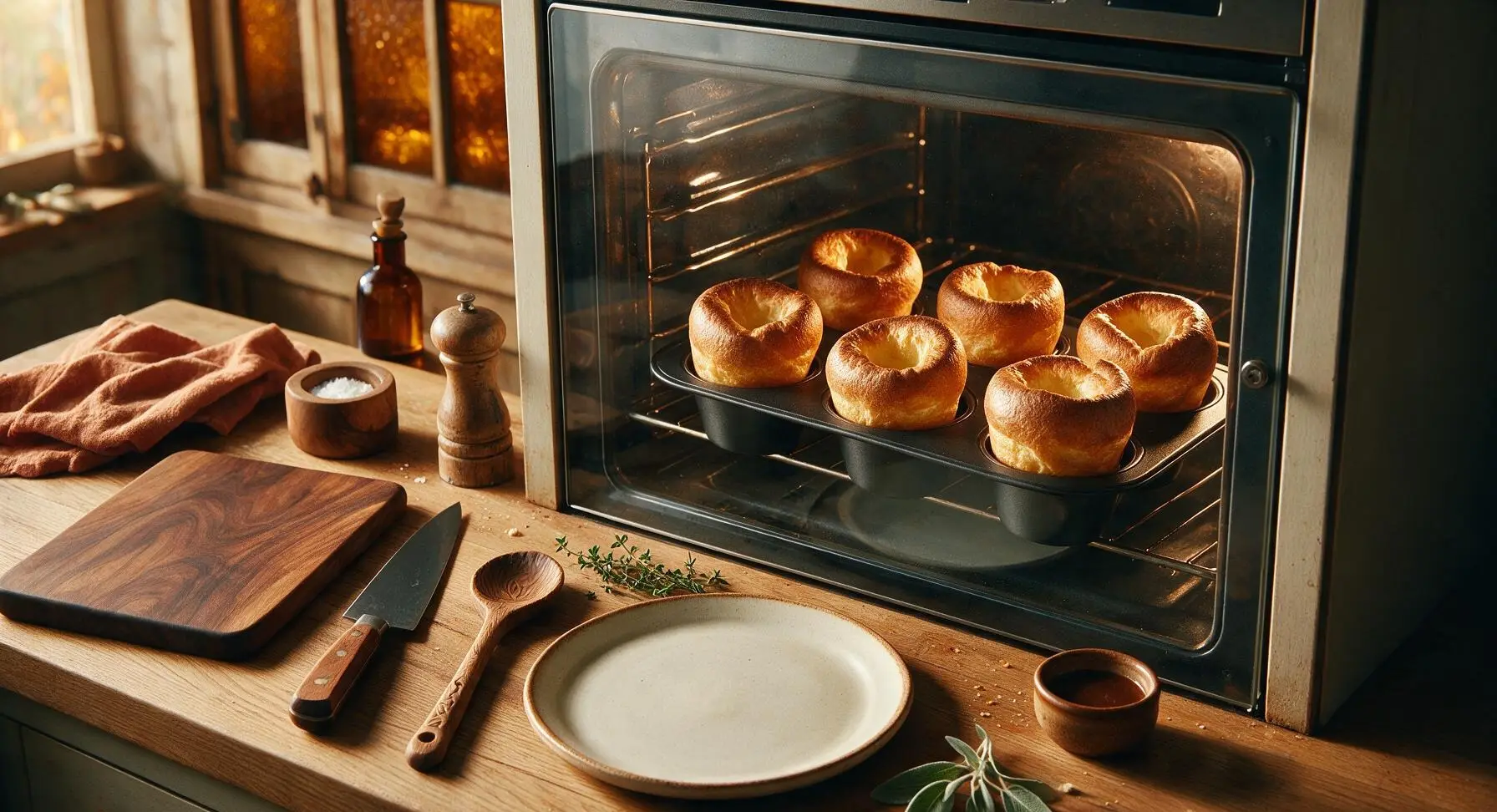
Carefully push the oven rack back into place and close the oven door. Bake for 20 minutes, and do NOT open the oven door for the first 15 minutes of baking, as the sudden temperature drop will cause the rising batter to deflate. The puddings are finished when they are tall, deep golden brown, crisp to the touch, and have a light, hollow center.
Step 7
step7:Bake Until Golden Puffed
8

Serve Puddings Hot

Once fully baked, use the cream striped oven mitts to remove the tin from the oven. The puddings will pop easily out of the non-stick cups; transfer them immediately to the round cream ceramic serving platter. Add a tiny pinch of flaky sea salt if desired, and serve right away while the puddings are hot, crisp, and holding their tall shape.
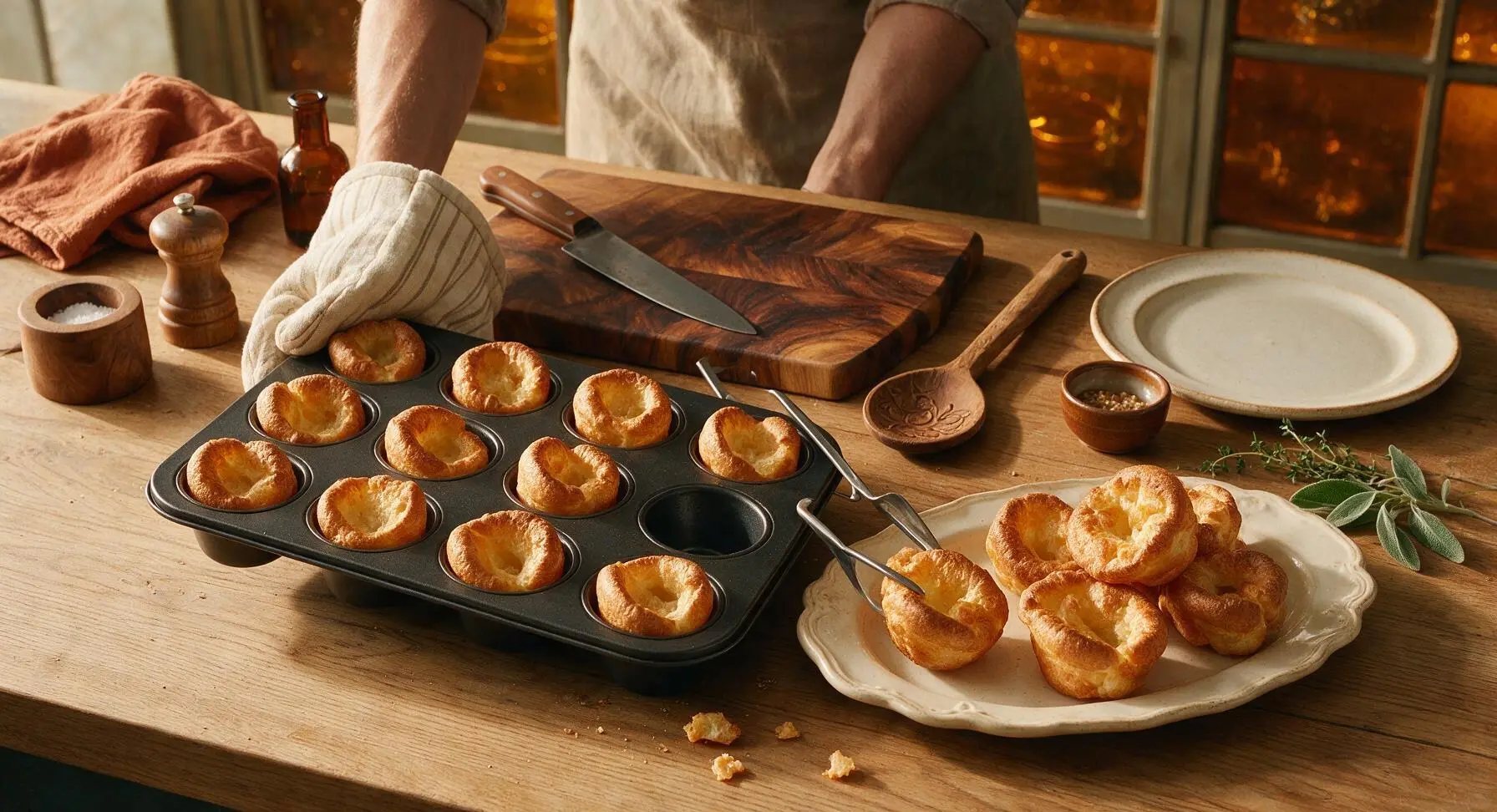
Step 8
step8:Serve Puddings Hot

Tips

1.Never open the oven door before the 15-minute baking mark: the sudden rush of cold room-temperature air will cause the steam-leavened batter to deflate instantly, resulting in flat, dense, greasy puddings instead of tall, crisp ones.
2.Always heat the oil until it is almost smoking before adding batter: the instant searing heat creates rapid steam in the cold batter, which is what pushes the pudding up to its signature tall shape; lukewarm oil will lead to flat, soggy results.
3.For an extra-rich, authentic flavor and even crisper crust, replace sunflower oil with rendered beef dripping when serving with roast beef; its high smoke point is perfectly suited to the 220C baking temperature, and it adds a deep, savory note to the puddings.


✨ You May Also Like

Side Dishes
🍜 India

Velvety, aromatic all-purpose curry sauce perfect for tossing with roasted veggies, grilled protein, or rice for fast, cozy, flavorful meals.

⏱️ 25 minuteSide Dishes ★ 4.8
Side Dishes
🍜 Spain

Tender, starchy boiled yuca tossed in bright, garlicky citrus mojo sauce—an iconic, zesty side that pairs beautifully with roasted pork, grilled meats, and rice and beans.

⏱️ 40 minuteSide Dishes ★ 5
Side Dishes
🍜 United States

Tender, paper-thin potato flatbread, a beloved Norwegian-American Minnesota Christmas staple, griddled until softly spotted and served warm with butter.

⏱️ 1 hour 30Side Dishes ★ 4.6
Side Dishes
🍜 United States

Rich, deeply savory cured salt pork, a long-lasting kitchen staple perfect for frying crispy as a side or adding umami to stews, beans, and chowders.

⏱️ 7 days (2Side Dishes ★ 4.9
Side Dishes
🍜 United States

Crispy, tangy classic Southern fried green tomatoes with a crunchy cornmeal crust, served hot for a nostalgic, comforting summery bite.

⏱️ 25 minuteSide Dishes ★ 4.9
Side Dishes
🍜 United States

Moist, golden-crusted savory muffins with sweet corn, zesty jalapeño, and melted cheddar, perfect for pairing with smoky summer grilled fare.

⏱️ 30 minuteSide Dishes ★ 4.9

basic yorkshire pudding:Frequently Asked Questions

1.Why won’t my Yorkshire puddings puff up tall and light like the classic recipe shows? ▾
The two most common culprits are insufficiently hot tins/fat and opening the oven too early. Preheat your muffin tin with fat until it’s just smoking before pouring batter, and resist peeking for the first 20 minutes of baking. Overmixing batter can also limit rise by overdeveloping gluten, so stop mixing as soon as no dry flour streaks remain.
2.Do I really need to rest the Yorkshire pudding batter, and how long is best? ▾
Yes, resting batter is key for evenly textured, high-rising puddings. Resting lets gluten strands formed while mixing relax, allows flour starch to swell, and lets the cold water in the batter chill the mixture for an extra dramatic rise. Aim for a minimum of 30 minutes at room temperature, or up to 24 hours covered in the fridge, with a gentle stir before pouring.
3.Can I swap ingredients if I don’t have the exact large eggs, all-purpose flour, or whole milk listed? ▾
Stick to the specified large eggs, all-purpose flour, and whole milk for the most reliable, classic results, but small swaps work in a pinch. 2% milk works if you don’t have whole milk, but skim milk produces less rich, less crisp puddings. Use 3 medium eggs if you don’t have large, and skip self-rising or bread flour, which create lopsided or tough results. Don’t skip the fine sea salt—it adds critical savoriness to balance the mild batter.
4.Why do my Yorkshire puddings come out dense and soggy in the middle instead of light and hollow? ▾
Soggy, dense centers almost always come from underbaking, too low an oven temperature, or overfilling your tins. Keep your oven at a steady 425°F, fill each preheated tin no more than ⅓ full of batter, and bake until deep golden all over (20-25 minutes). If you pull them too early, their structure won’t set, and they’ll collapse and turn mushy as they cool.
5.What fat should I use if I don’t have traditional beef drippings for the tins? ▾
While rendered beef drippings add that classic rich, savory flavor, high-smoke-point neutral oils like canola or avocado oil work fantastically for tall, crisp puddings. Skip olive oil or butter, as they have low smoke points and will burn before your tin reaches the high heat needed to trigger the fast initial rise that creates the signature hollow center.
6.Can I make Yorkshire puddings ahead of time, and how do I reheat them without sogginess? ▾
You absolutely can prep them ahead to cut down on roast day work. Bake fully, cool completely, then store in an airtight container for up to 2 days at room temperature, or freeze for up to 3 months. Reheat directly on a wire rack over a baking sheet at 400°F for 3-5 minutes until crisp; never use the microwave, which turns them chewy and soft.

Comments (5)

2 days ago

OMG, I was so intimidated to make Yorkshire pudding for our annual Sunday prime rib dinner and this recipe was SO easy! They puffed up perfectly golden, no sad deflated lumps here. My kids devoured them before I even got the rest of the sides on the table. Total game changer, I’ll never buy the frozen ones again!

yesterday

So glad these worked out for your family dinner, Molly! Quick pro tip for next time: let your batter rest in the fridge for 30 minutes before pouring, and make sure your oil or drippings are screaming hot in the tin for extra tall, crispy-edged puddings every time.

yesterday

Second that pro tip! I made these last week for a work potluck and preheated the tins with beef drippings for 10 minutes first, they came out so tall people thought I bought them from a fancy British pub downtown. SO good, I’m already planning to make them for our family Christmas dinner this year.

1 week ago

Really solid base recipe! I made these for a casual weeknight roast chicken dinner and they turned out great, though I added a little pinch of garlic powder and dried thyme to the batter for extra savoriness. My husband asked when we’re having them again before he even finished his first one, which is always a win in my book.

5 days ago

Love the garlic powder and thyme addition, Mia! This is such a flexible base recipe, so feel free to mix in fresh herbs, shredded parmesan, or even a crack of black pepper to match whatever main dish you’re serving that night. So glad your husband enjoyed them!

30 minutes ago

As a broke college student with basically zero fancy cooking skills, I cannot believe how well these turned out! I didn’t have beef drippings so I used regular melted butter, and they still puffed up like crazy. So cheap to make too, perfect for meal prep this week to pair with sausage and gravy for quick breakfasts between classes. 10/10, will be making these on repeat.

2 weeks ago

I’ve been making Yorkshire pudding for 50+ years and I have to say, this no-fuss easy recipe is just as good as my old tattered handwritten one! No fancy steps, no weird hard-to-find ingredients, just perfect, crispy, golden puddings every time. I brought a batch to my granddaughter’s birthday potluck last weekend and everyone asked for the recipe. Can’t beat a simple, reliable recipe!

1 week ago

So cool to see a long-time home cook vouch for this! I’m a total beginner and was super nervous to try Yorkies for the first time to go with our Sunday pot roast, but your comment made me pull the trigger. Made them last night and they were chef’s kiss. Thanks for the nudge!

yesterday

Flavor was 10/10, but my first batch completely deflated right when I pulled them out of the oven. What did I do wrong? I followed the measurements exactly, preheated the oven like the recipe said, but they went flat within 2 minutes. Still edible, just not the tall, puffy ones I see in all the recipe photos. Bummed but ready to give it another shot this weekend!

2 hours ago

Hi Jake! So sorry your first batch deflated on you— that’s such a common frustration when you’re first learning to make Yorkies! The number one culprit is opening the oven door too early. Try to keep the oven completely closed for the first 20 minutes of cook time so the hot air doesn’t escape and cause the puddings to collapse. Using ice-cold batter poured into screaming hot oil or beef drippings also helps give them extra lift to stay puffy once you pull them out!

30 minutes ago

I had the exact same issue my first try! Next time don’t overmix the batter either— a few small lumps are totally fine, overworking the gluten makes them heavy and way more likely to fall. My second batch was so puffy they almost touched the top oven rack, you got this!