
beef brisket noodle soup
intro
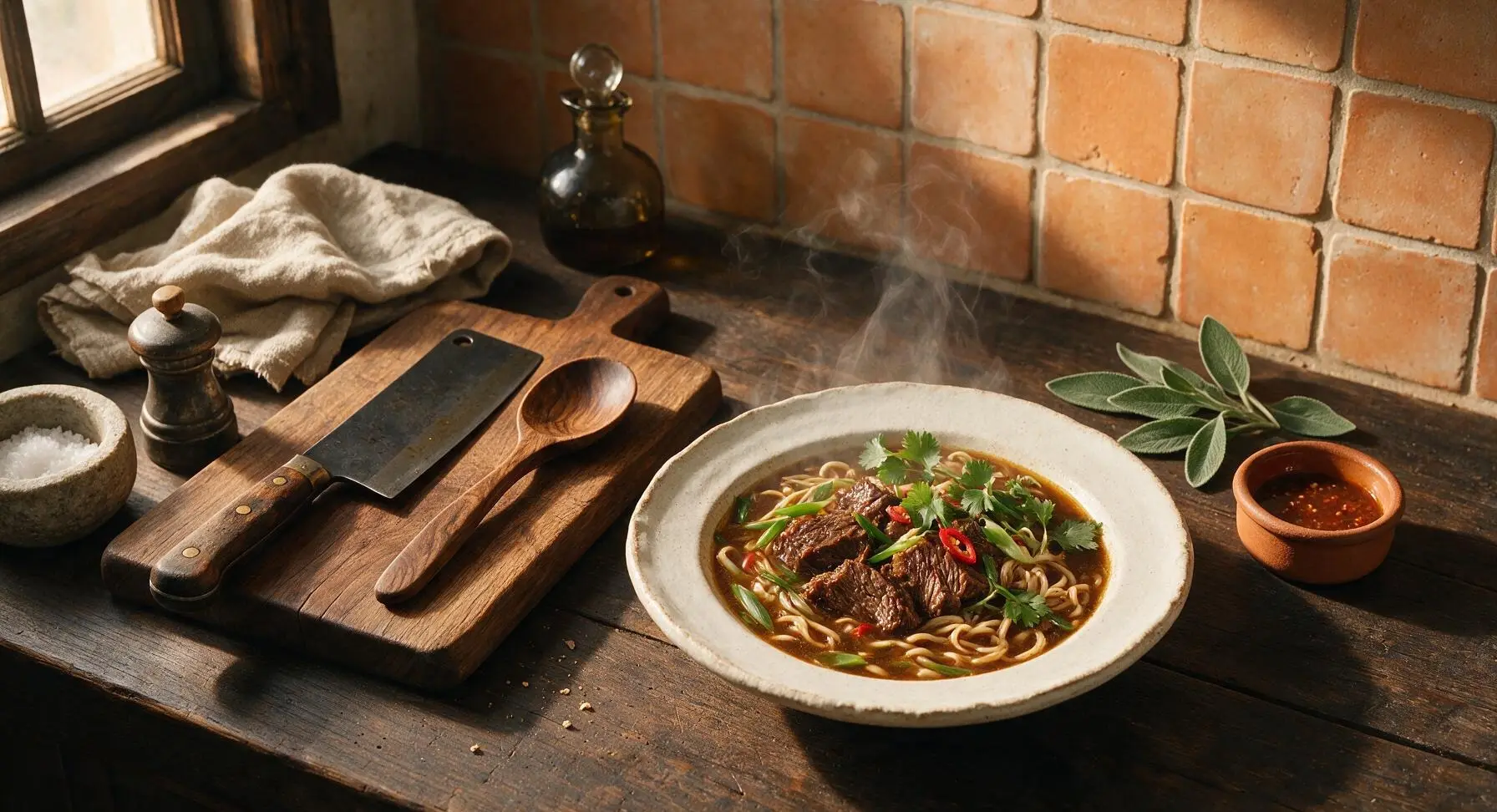
Tender slow-braised spiced brisket, rich savory broth, and chewy wheat noodles make this soul-warming Cantonese classic the ultimate cozy cold-weather family meal.
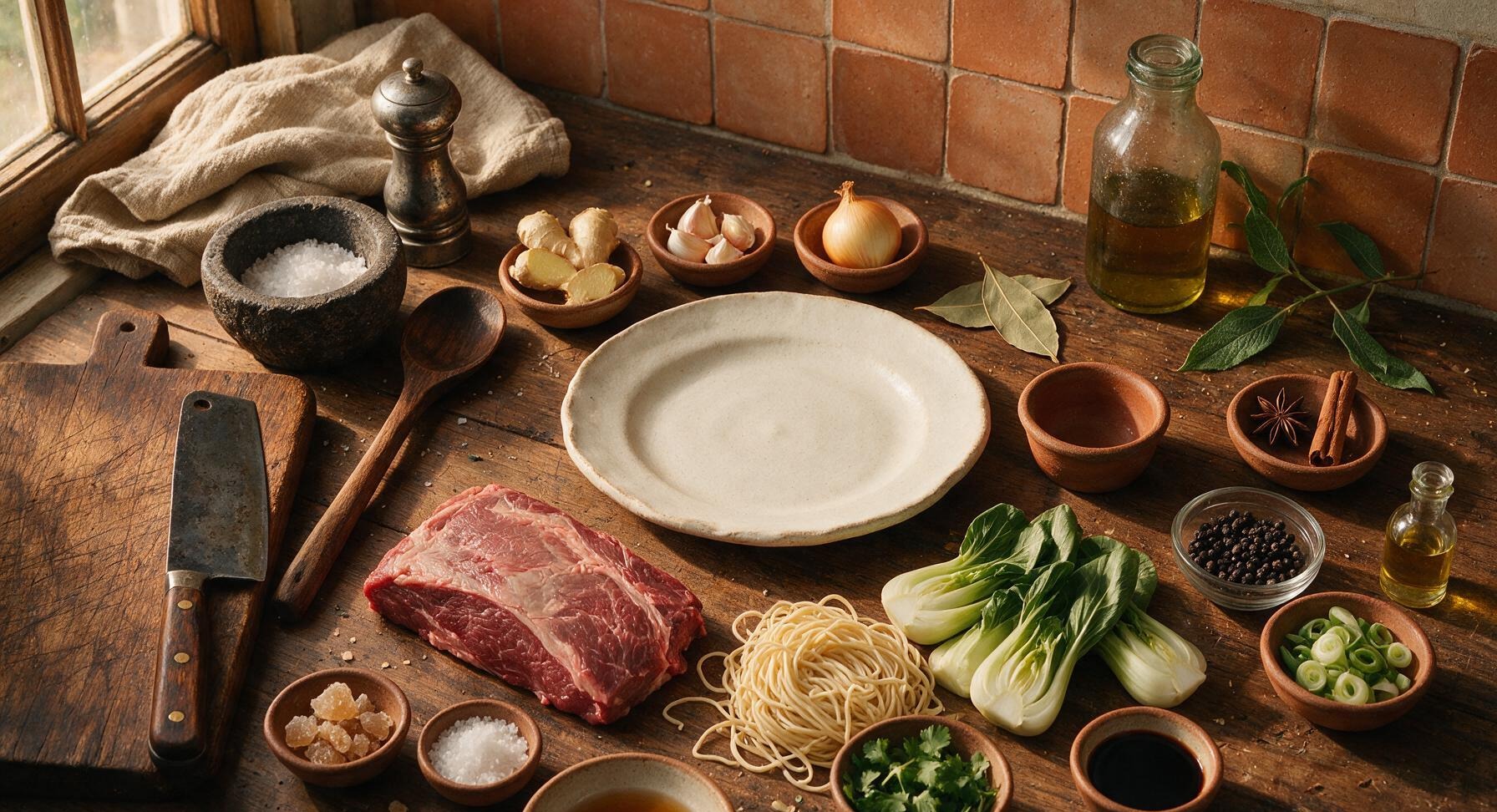
Ingredients
Steps
Blanch the beef brisket
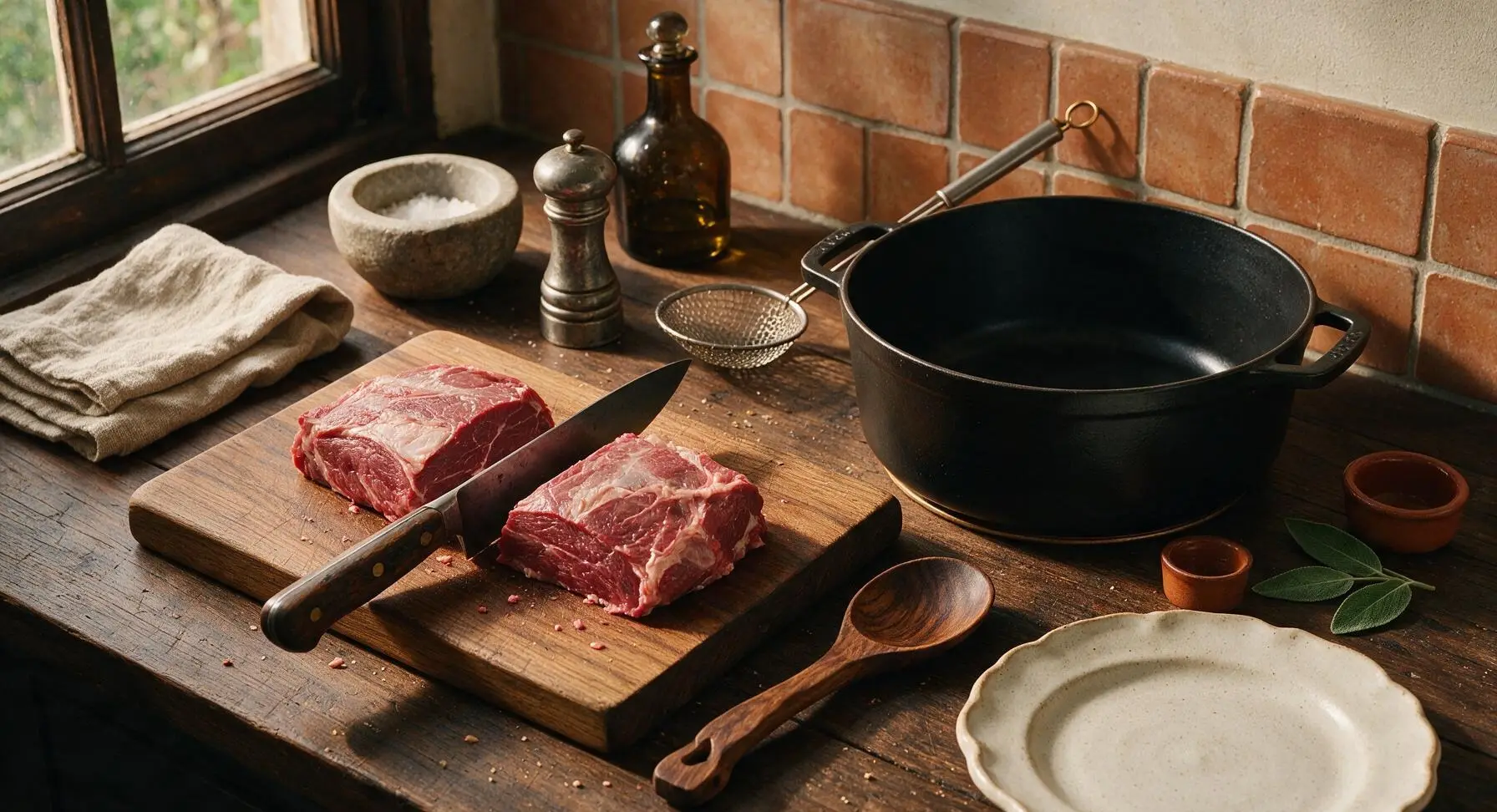
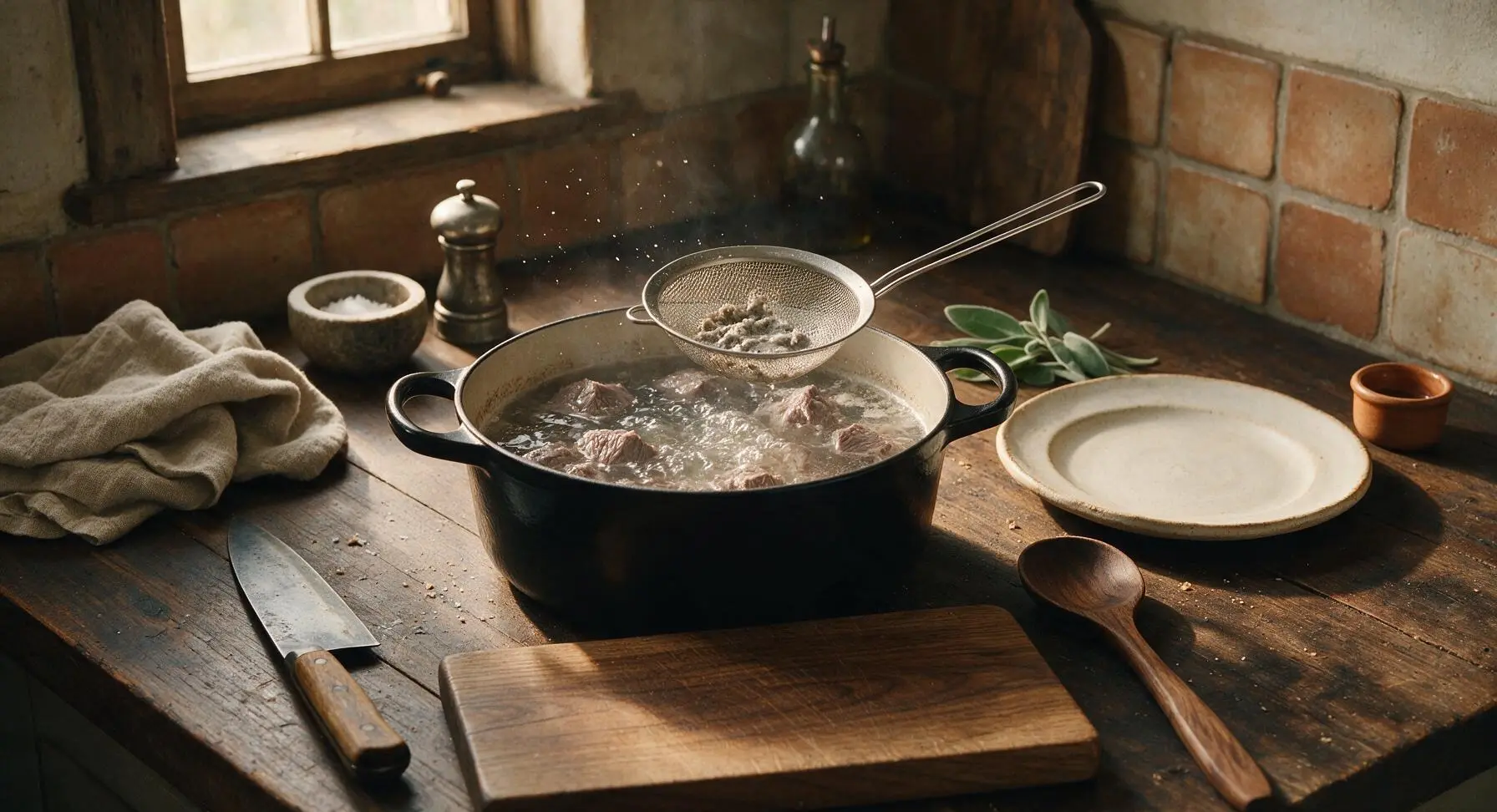
Cut the 1kg raw beef brisket into two equal 500g chunks on the acacia wood cutting board using the 8-inch chef knife. Fill the 7L matte black enameled Dutch oven two-thirds full of cold water, bring to a rolling boil over high heat. Add brisket chunks to boiling water, cook for 8 minutes until thick gray foam rises steadily to the surface. Use the fine-mesh stainless steel skimmer to remove all surface scum, then transfer blanched brisket back to the cutting board, rinse with warm water to wash away any remaining foam residue. Pour out blanching water and wipe the Dutch oven dry with the indigo cotton kitchen towel.
Toast the aromatics
Heat 1 tbsp neutral cooking oil in the cleaned, dried Dutch oven over medium heat (170C/340F). Add crushed ginger, smashed garlic, halved onion, star anise, cinnamon stick, bay leaves, and whole peppercorns. Toast for 3 minutes, stirring occasionally with the long beech wood cooking spoon, until onion edges turn golden brown and a warm spiced aroma is released. Do not burn the spices, as this will add bitter notes to the broth.
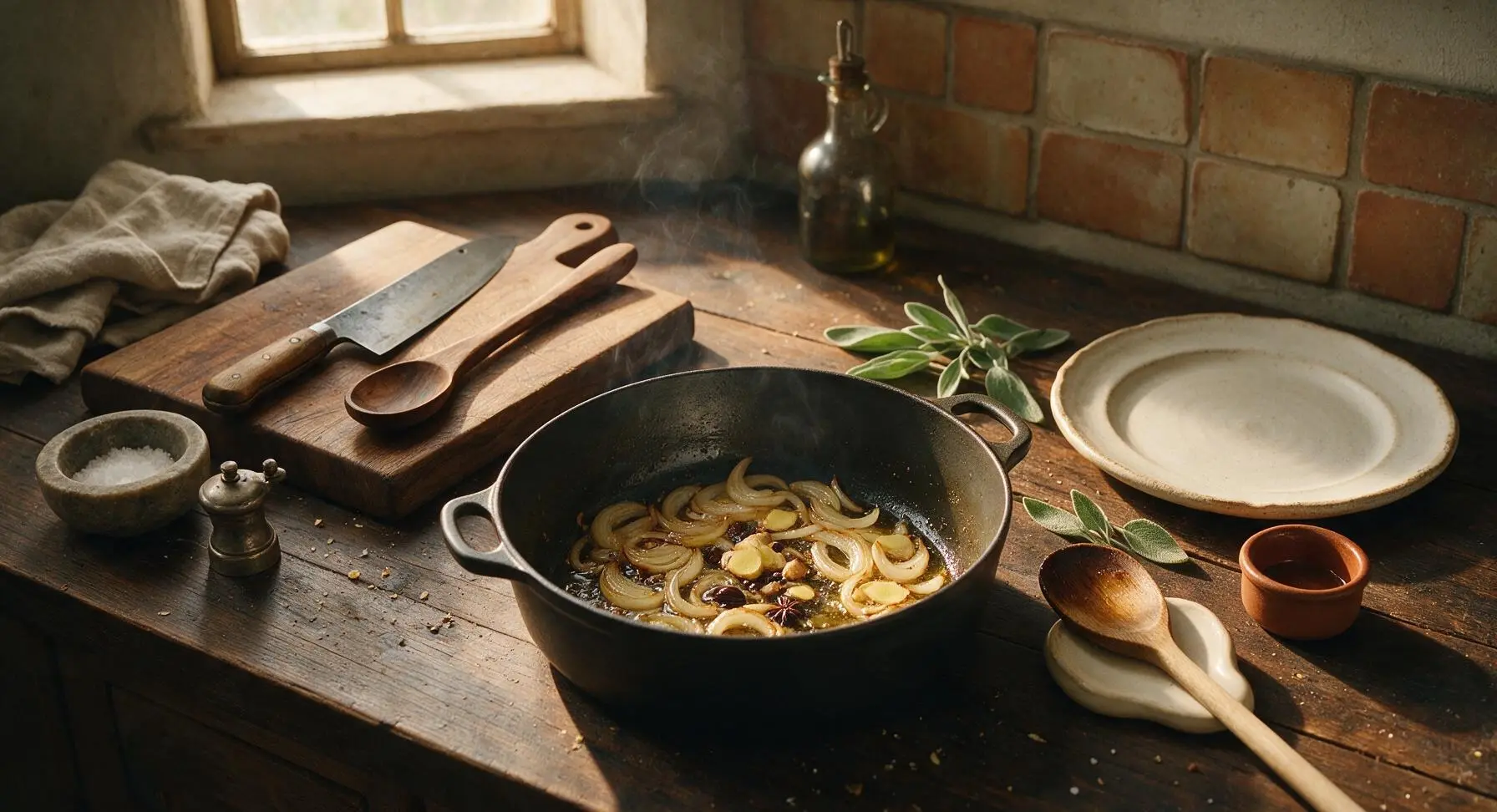
Slow braise the brisket
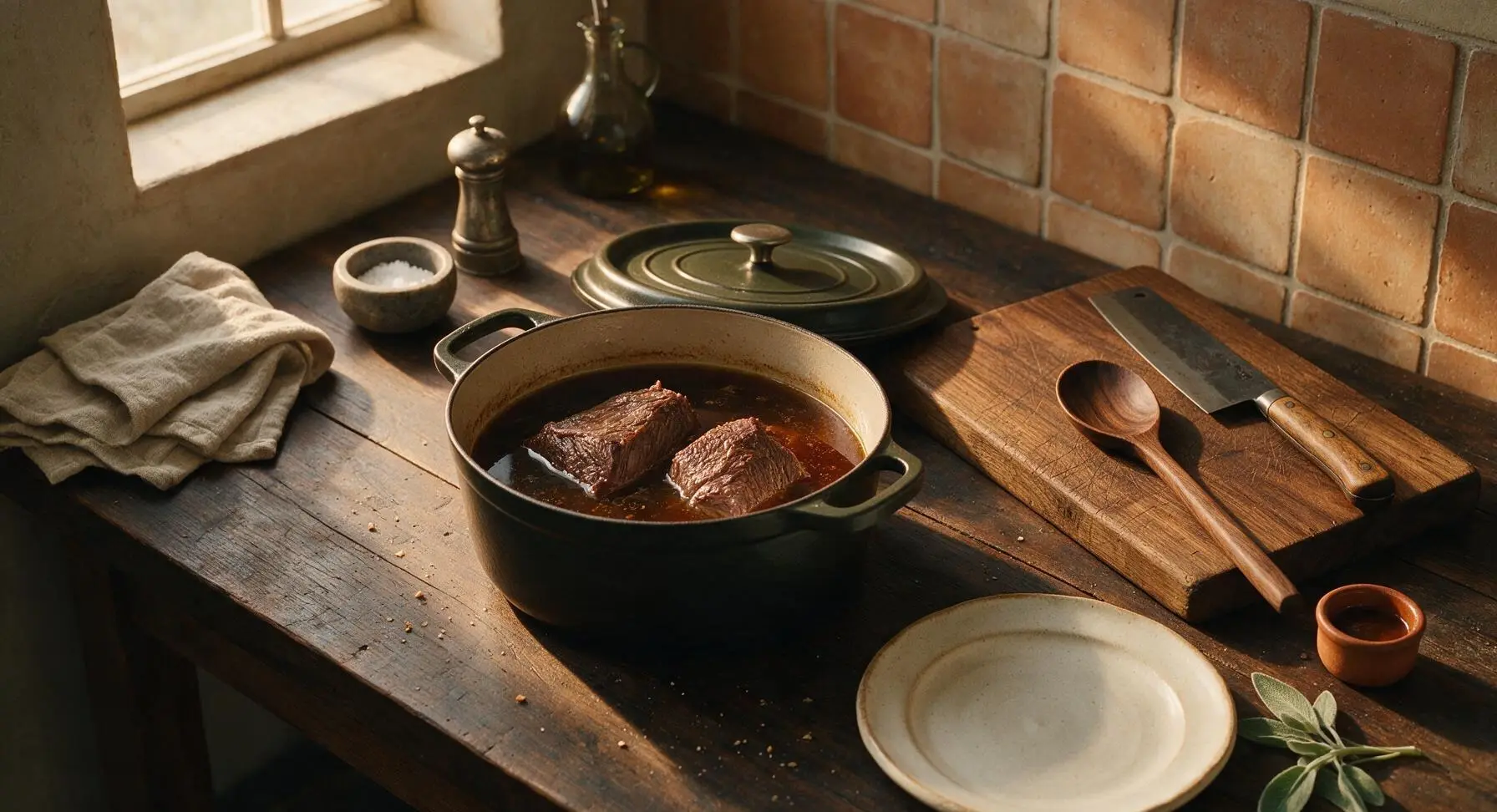
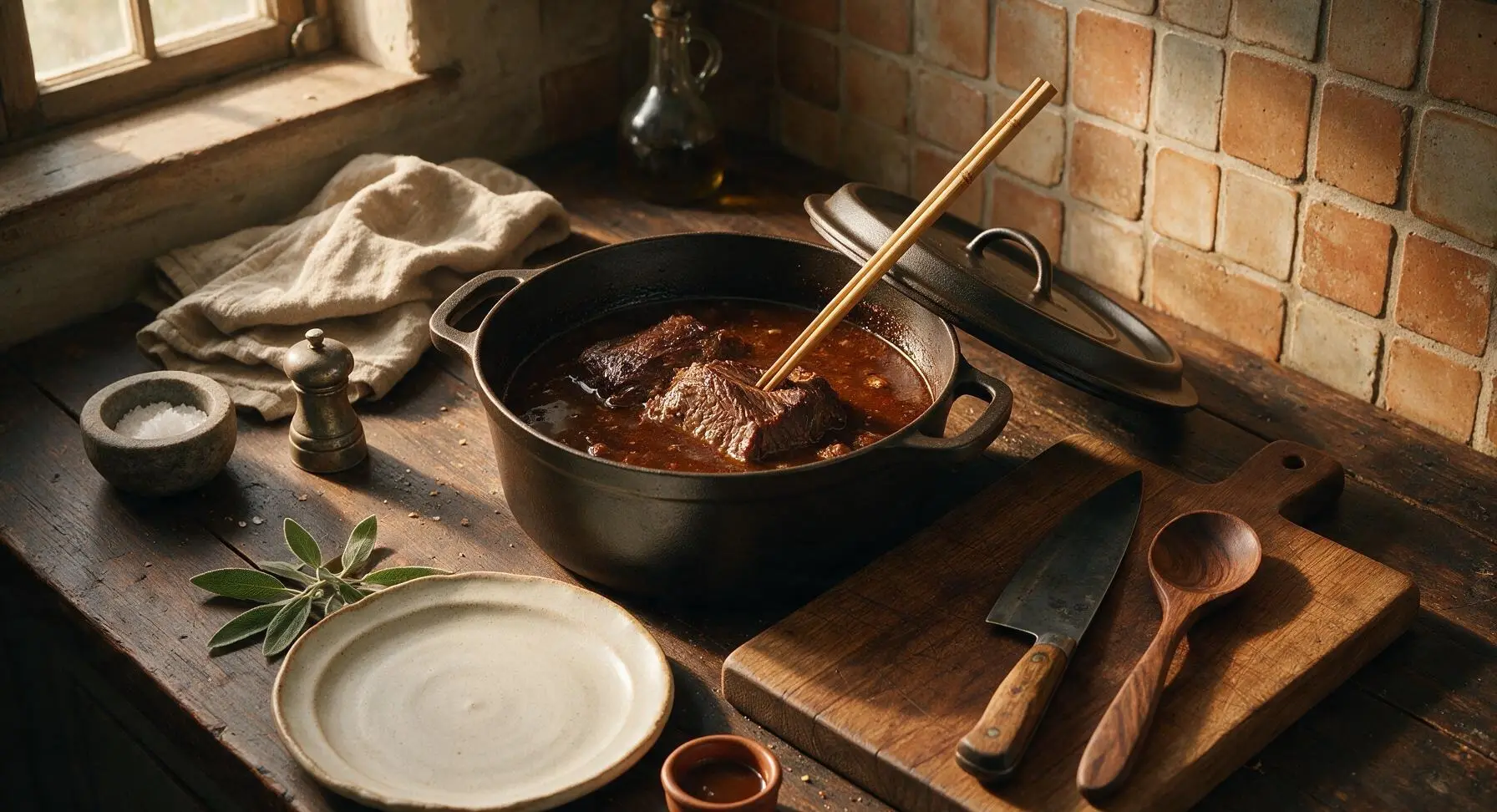
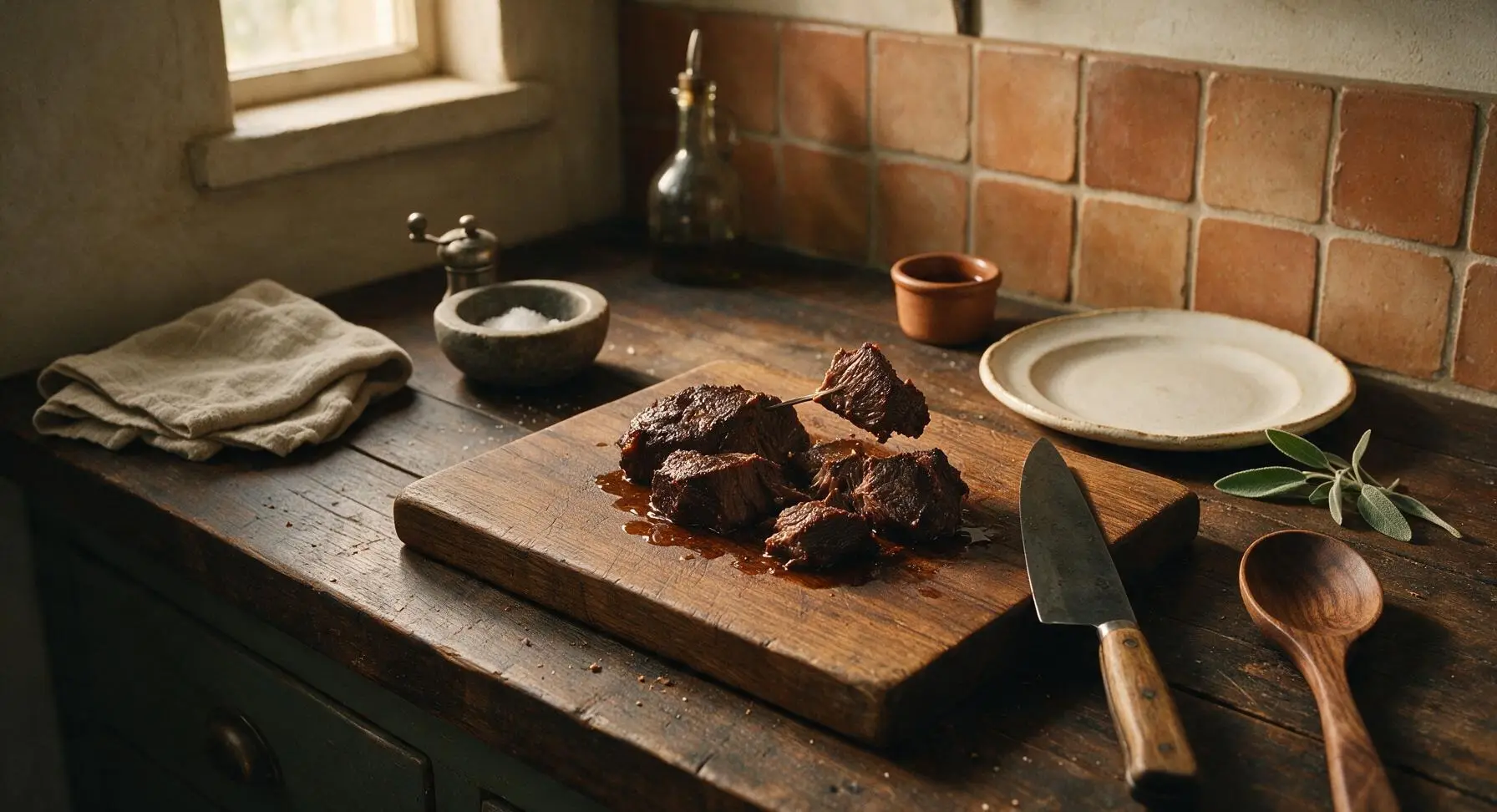
Return the blanched brisket chunks to the Dutch oven with toasted aromatics. Add light soy sauce, dark soy sauce, rock sugar, and enough hot water to submerge the brisket by 2cm. Bring liquid to a gentle simmer, then reduce heat to low to maintain a temperature of 95C/203F (only small, occasional bubbles breaking the surface). Cover and braise for 2 hours, turning the brisket once after 1 hour for even cooking, until a bamboo chopstick pierces the meat easily with gentle pressure. Do not allow the liquid to boil rapidly, as this will make the brisket tough.
Cook the wheat noodles
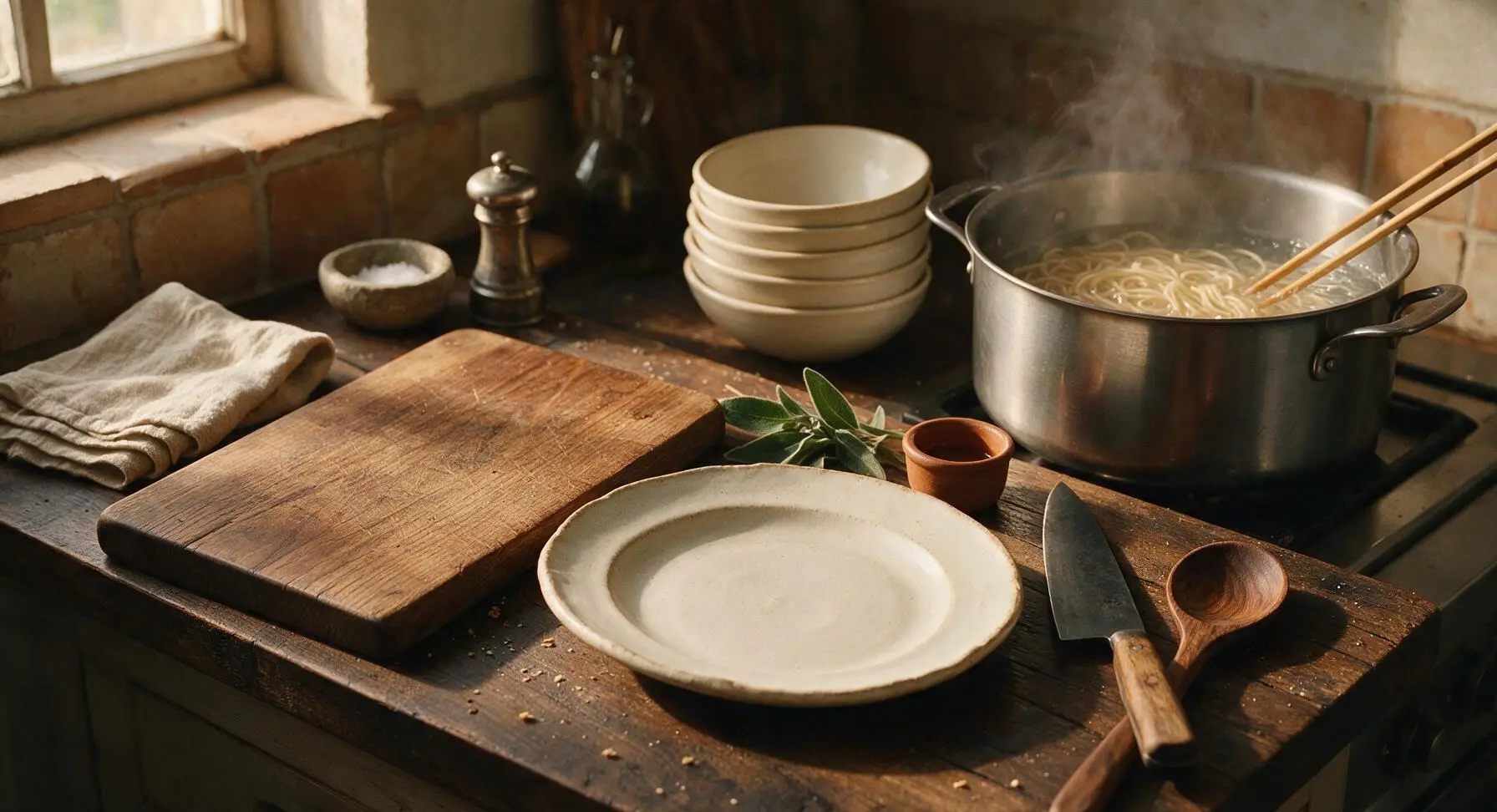
While the brisket finishes braising, fill the 4L stainless steel stock pot with cold water and bring to a rolling boil over high heat. Add thick dried wheat noodles, cook for 6-7 minutes, stirring occasionally with the bamboo chopsticks to prevent sticking, until noodles are chewy with a slight firm bite at the center (they will continue to soften when hot broth is added). Drain noodles well, then divide evenly between the four matte cream ceramic noodle bowls.
Blanch baby bok choy
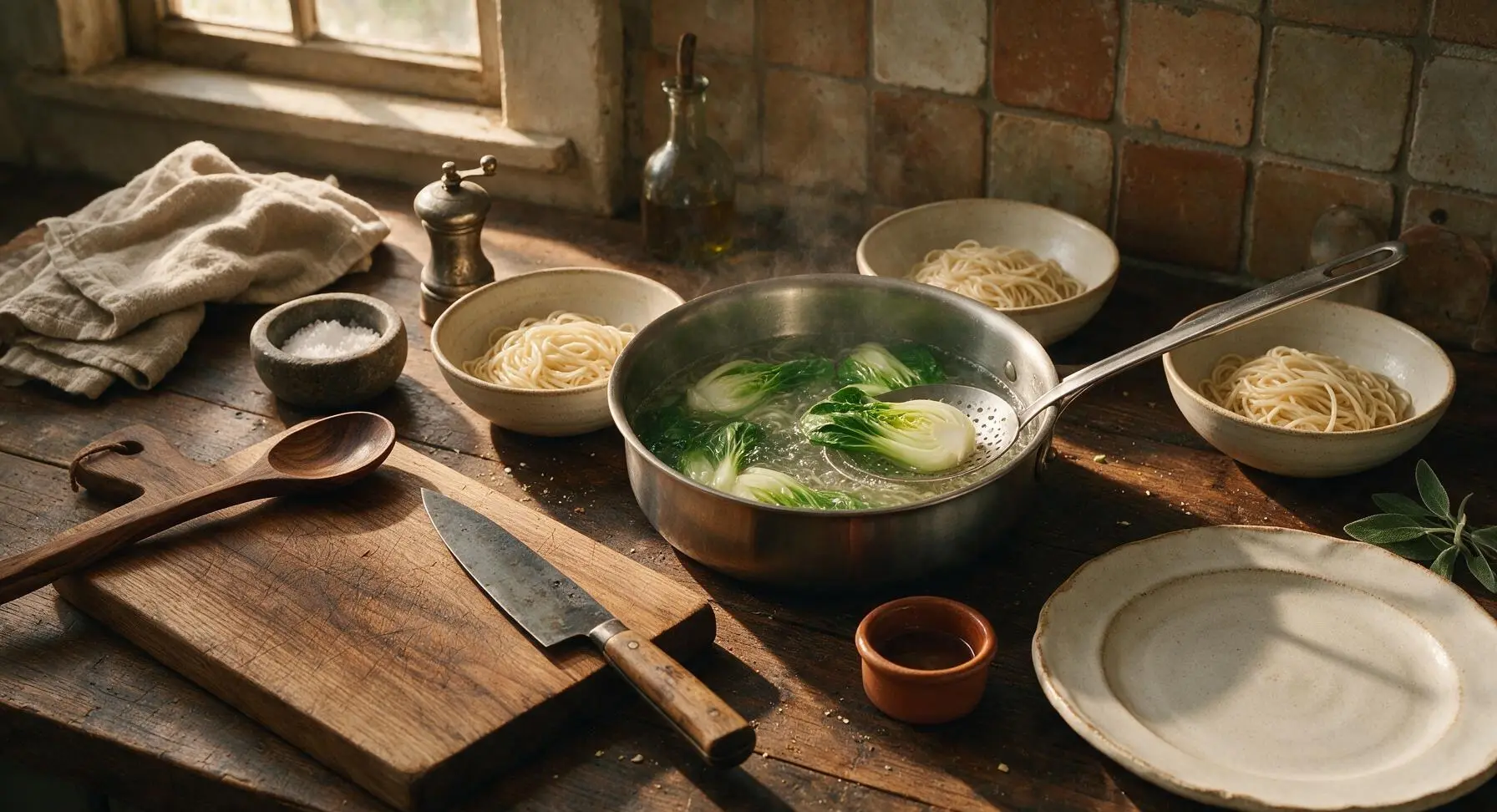
Add halved baby bok choy to the same boiling noodle water, blanch for 90 seconds until stems are tender-crisp and leaves turn a bright, vivid green. Use the stainless steel skimmer to remove bok choy from the water, shaking off excess moisture, then tuck one piece into each noodle bowl against the noodle mound. Do not overcook bok choy to a dull olive green or mushy texture.
Slice the tender brisket
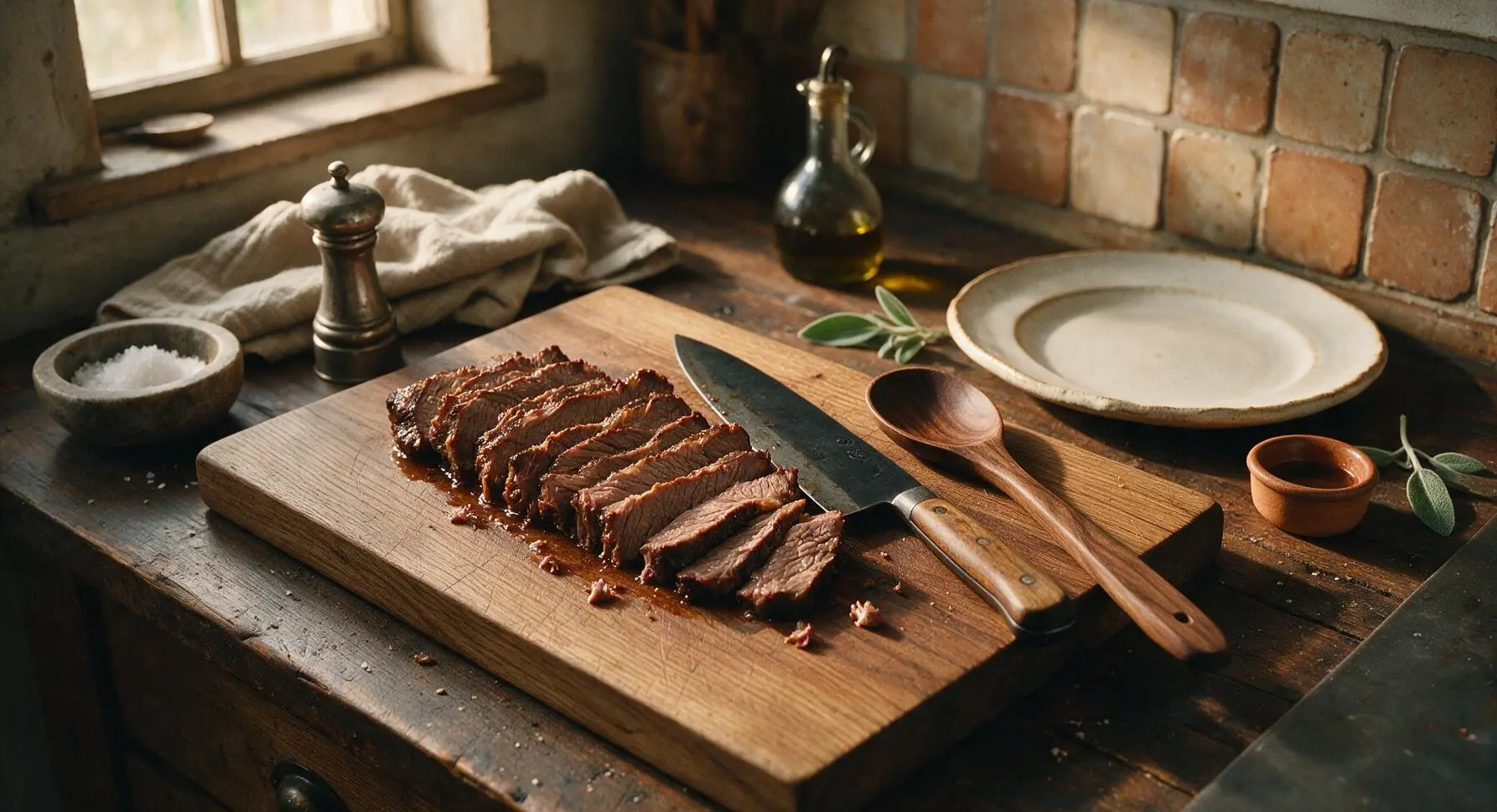
Use the skimmer and bamboo chopsticks to lift cooked brisket chunks from the braising liquid, transfer to the acacia cutting board, and let rest for 5 minutes to allow juices to redistribute. Use the chef knife to slice brisket against the grain into 1cm thick slices, trimming any overly thick, hard fat pieces if desired. Strain the braising broth through a fine sieve to remove all aromatics and whole spices, taste, and adjust salt if needed, then keep at a gentle simmer.
Assemble the soup bowls
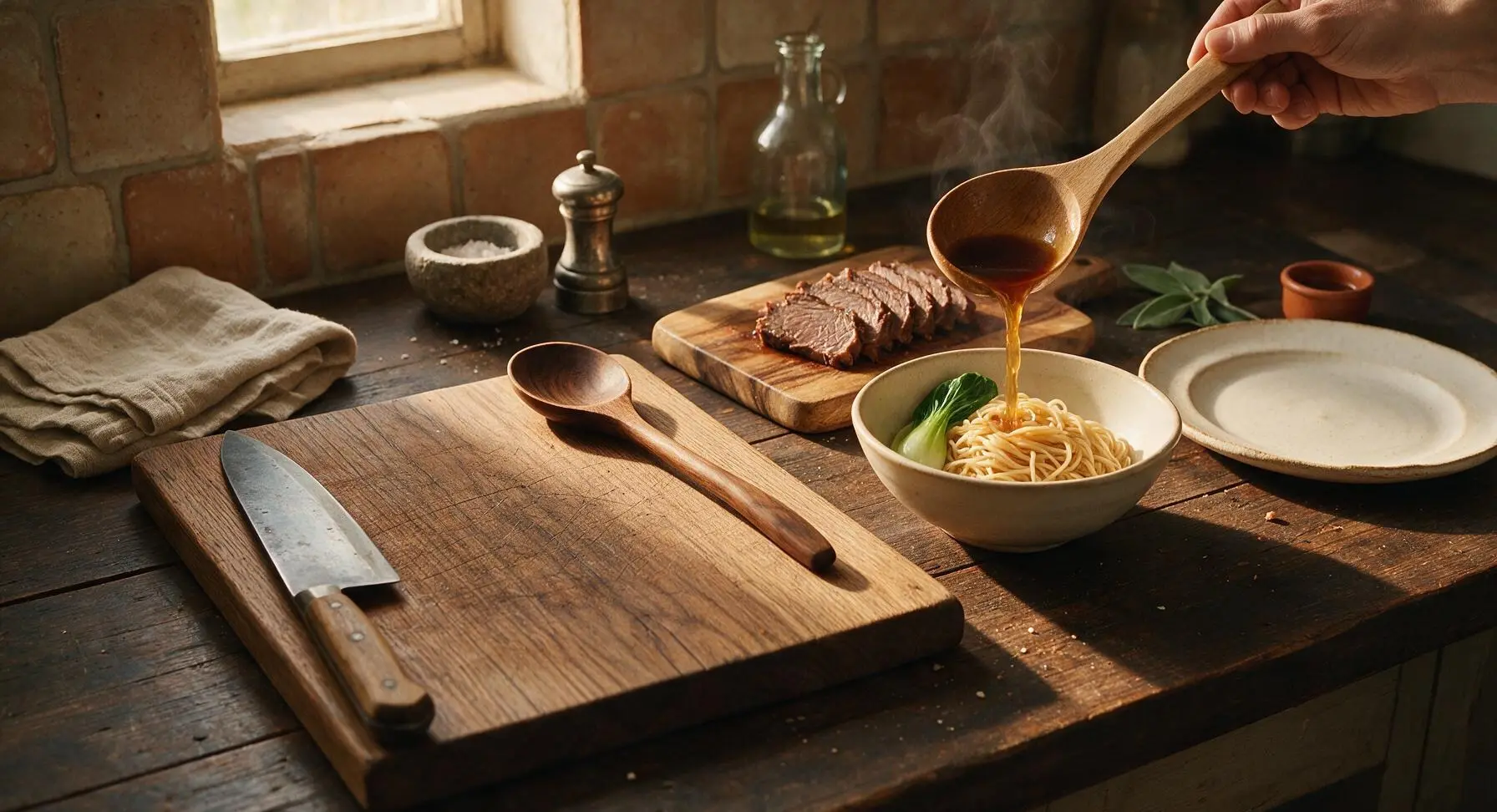
Ladle 300ml of hot strained braising broth into each noodle bowl, pouring over the noodles until the liquid comes three-quarters of the way up the bowl. Arrange 3-4 slices of brisket on top of each noodle mound, then garnish with a sprinkle of thinly sliced green onion and chopped cilantro. Serve immediately while hot, with extra soy sauce or chili oil on the side if desired.
Tips
2.Maintain a bare simmer (not a rolling boil) during braising: high heat causes brisket muscle fibers to seize and tighten, leading to tough, stringy meat even after hours of cooking, while low, gentle heat breaks down tough connective tissue into rich, tender bites.
3.Let the cooked brisket rest 5 minutes before slicing, and always cut against the grain: resting lets juices redistribute through the meat instead of pooling on the cutting board, and cutting against the grain shortens muscle fibers for maximum tenderness in every bite.
OMG this is exactly the beef brisket noodle soup I used to get at my local Cantonese spot growing up in NYC! The 2.5 hour cook time is totally worth it, the brisket was fall-apart tender and the broth had that deep, umami kick I’ve been chasing for years. My kids devoured two bowls each and asked when we’re making it again. Total game changer for our Sunday family dinner rotation!
Really solid recipe! I was a little intimidated by the medium difficulty rating but the steps were super easy to follow. Only note is I added a little extra star anise because I love that licorice note, and it turned out chef’s kiss. Made a big batch for meal prep this week and my coworkers kept stopping by my desk to ask what smelled so good when I heated it up for lunch.
SO good!!! I was worried 2.5 hours was too long for a weeknight but I made it on a rainy Sunday and portioned it out, and it’s even better reheated? The brisket soaks up even more of that broth flavor after a day in the fridge. 10/10, already sent the recipe to my entire group chat.
Flavor was great but my brisket came out a little tougher than I expected? I followed the simmer time exactly, maybe I cut the pieces too big? Also, I couldn’t find the wonton noodles the recipe calls for so I used regular udon, which was fine but not quite the same.
Brought this to my neighborhood potluck last weekend and people were lining up for seconds! I set out a little topping bar with extra chili oil, chopped scallions, and bean sprouts so people could customize their bowls. Such a crowd pleaser, will absolutely be making this for our next block party.
Made this in my tiny dorm apartment kitchen with my roommate! We didn’t have a big enough pot so we split the brisket between two smaller ones, and it still turned out fire. Only reason it’s not 5 stars is we forgot to buy the rock sugar so it was a little less balanced than it should have been, but even then it was way better than the takeout near campus.
Quick question for anyone who’s made this – can I swap the regular wheat noodles for rice noodles to make this gluten free? I already have gluten free soy sauce at home to use in the broth, just want to make sure the rest of the recipe works with that swap!
This recipe hit me right in the childhood. My grandma used to make this for me every time I visited her in Hong Kong, and I haven’t had a version that tastes this close since I was a kid. The chu hou paste is non-negotiable, don’t skip that! I almost did because my grocery store didn’t carry it, but I made a special trip to the Asian market and it made all the difference.
Pro tip for everyone making this: save the leftover broth! I strained it and froze it in ice cube trays, then used a few cubes to stir fry veggies earlier this week and it was insane. It’s like concentrated beefy umami gold, don’t pour it down the drain!
I was nervous the spice blend (cinnamon, star anise, cloves) would make the broth taste like holiday potpourri, but it’s so well balanced! I cut the clove amount in half just to be safe, and it was perfect. The brisket was so juicy, I even snuck a few pieces straight out of the pot before assembling the noodles, no regrets.
Made this for my boyfriend’s birthday since it’s his favorite takeout order, and he said it’s better than the restaurant we usually get it from! We ate it while watching our favorite show and it was the coziest date night ever. 10/10, will be making this for every special occasion from now on.
I spent 20 years working in restaurants and I’m super picky about my Cantonese beef brisket, and this recipe nails it. The blanching step for the brisket before simmering is such an important step that a lot of home recipes skip, and that’s why the broth comes out so clear and flavorful instead of murky and gamey. Hats off to the chef for writing such a precise, tested recipe.