bird nest soup

title 1
bird nest soup
⏱️ cook time 40 minutes
🍽️ servings 4
⚡ Difficulty medium

intro

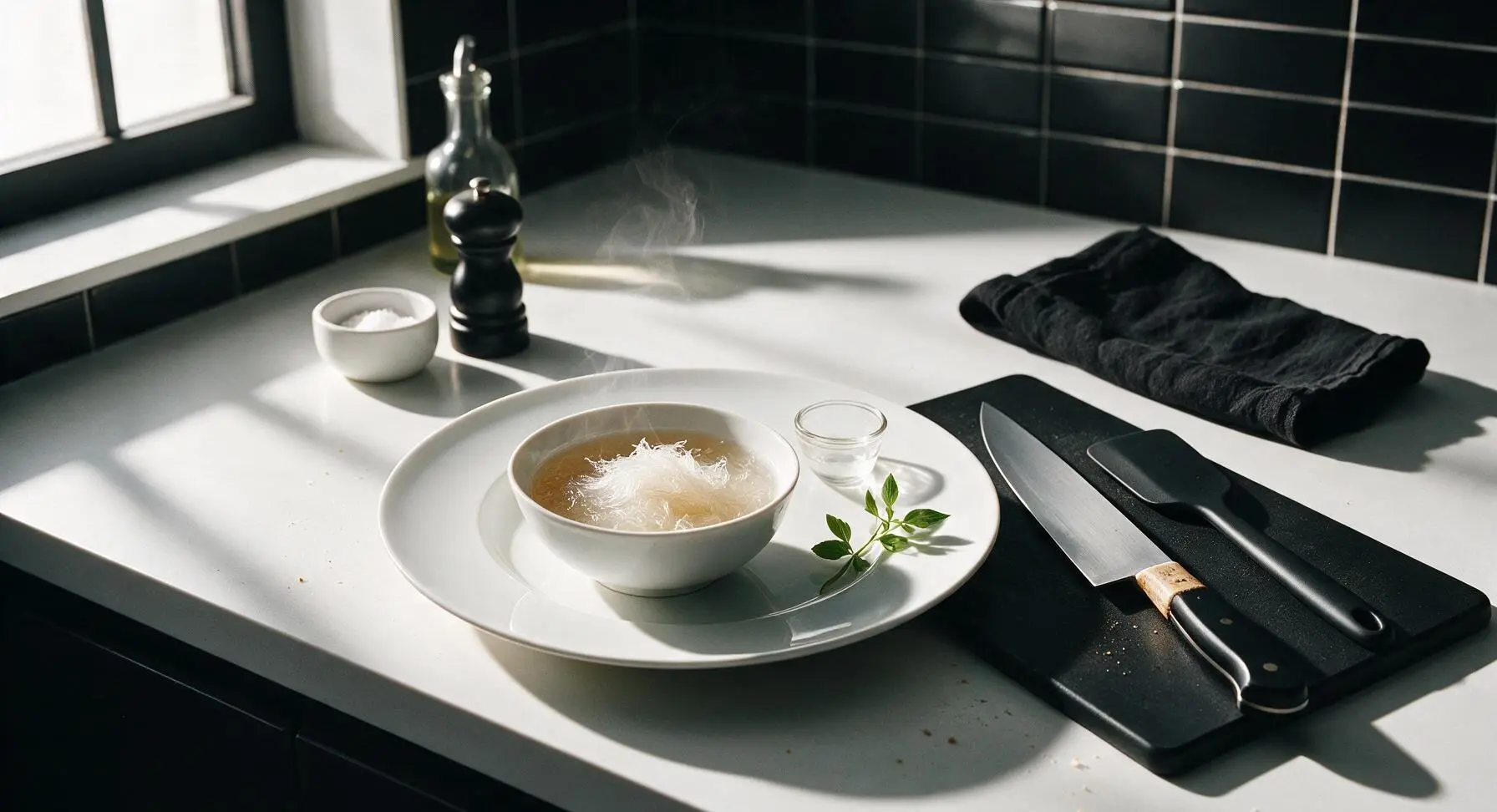
Delicate, silky luxury Cantonese tonic soup made with premium edible swiftlet nest, gently simmered in clear rich broth for a uniquely soft, gelatinous texture, perfect for special New Year winter celebrations.

Ingredients
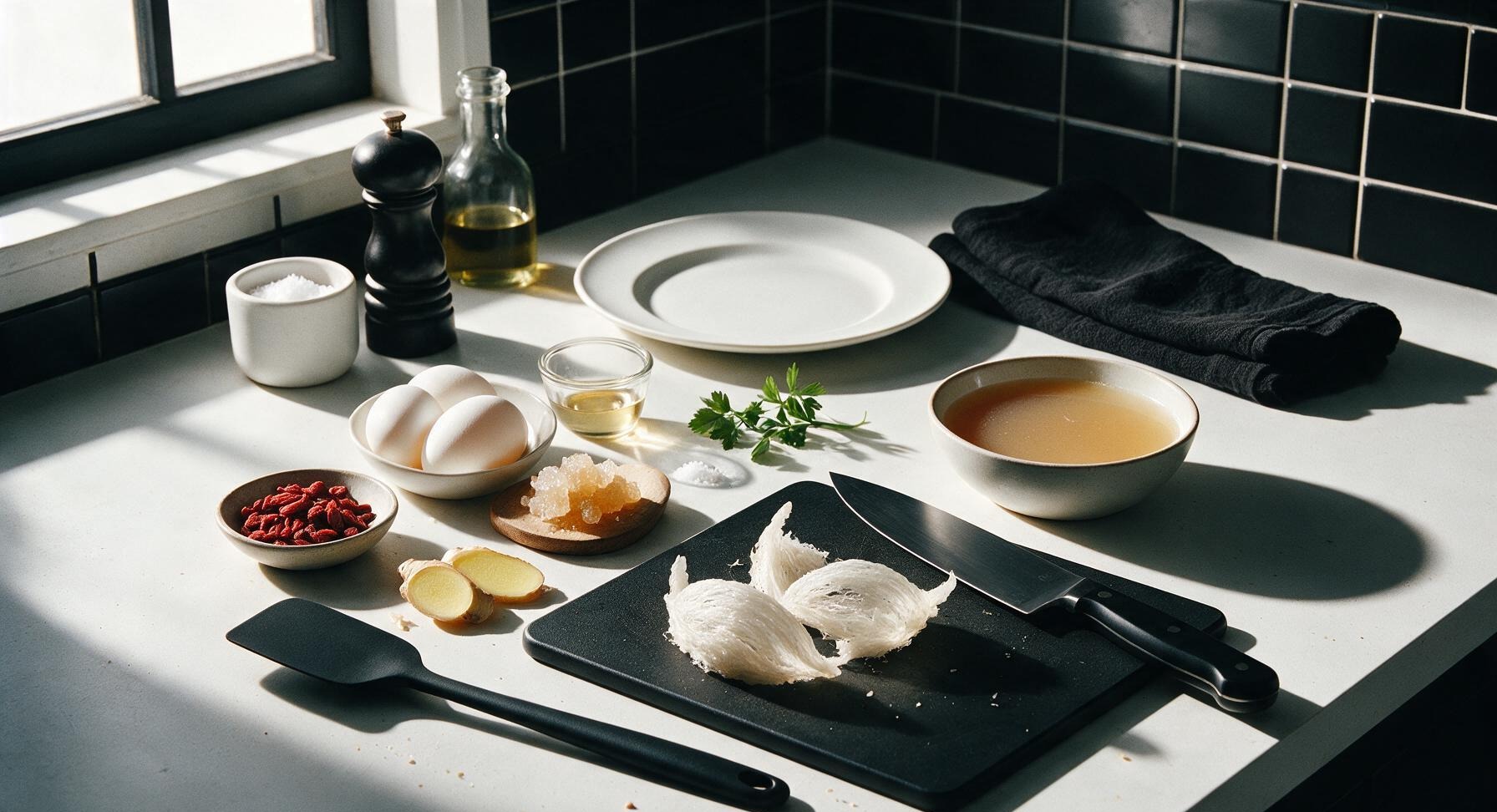
Dried premium white edible swiftlet bird nest 20g
Clarified low-sodium rich chicken broth 4 cups (960ml)
Large egg whites 2 (60g)
Pale yellow rock sugar 15g
Fresh ginger, peeled 2 thin slices (5g)
Dried goji berries 1 tablespoon (10g)
Fine sea salt 1/4 teaspoon
Toasted sesame oil 1/4 teaspoon

Steps

1

Soak dried bird nest

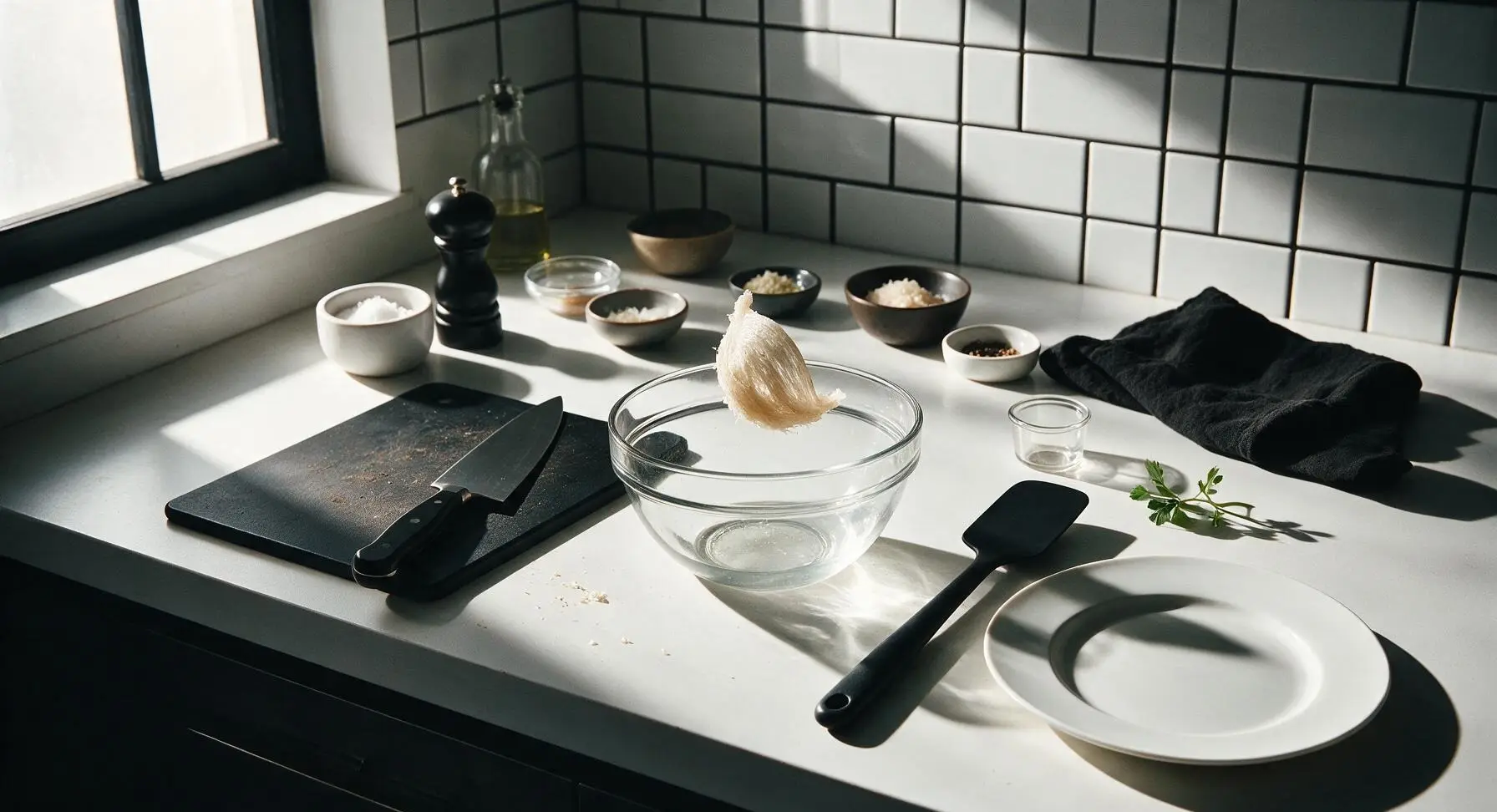
Place the 20g of dried white bird nest into the medium clear glass soaking bowl, cover completely with 4 cups of cold filtered water. Set aside at room temperature for 6 hours, until the nest softens fully, expands to 3-4 times its dry size, and individual strands separate easily. Do not use warm or hot water, as this will damage the delicate gelatinous texture.
Step 1
step1:Soak dried bird nest
2

Clean soaked nest strands

After 6 hours of soaking, drain the water from the soaking bowl. Gently tease the softened nest strands apart with your fingertips, using the small paring knife to pick out any tiny dark feather fragments or debris. Rinse the cleaned strands gently under cold running water, drain well, and set aside. The cleaned nest should be uniformly translucent, pale ivory, with no dark specks remaining.
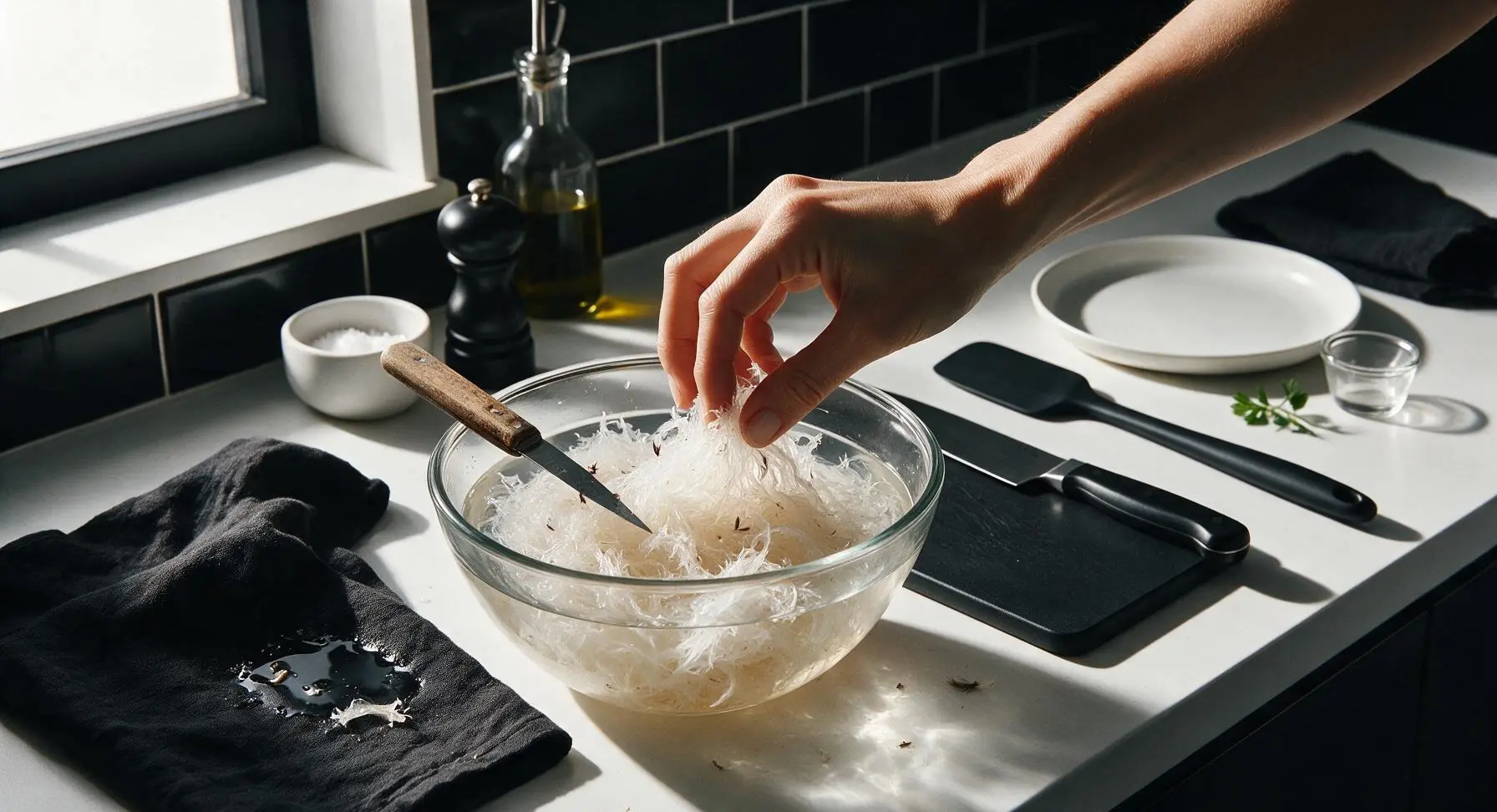
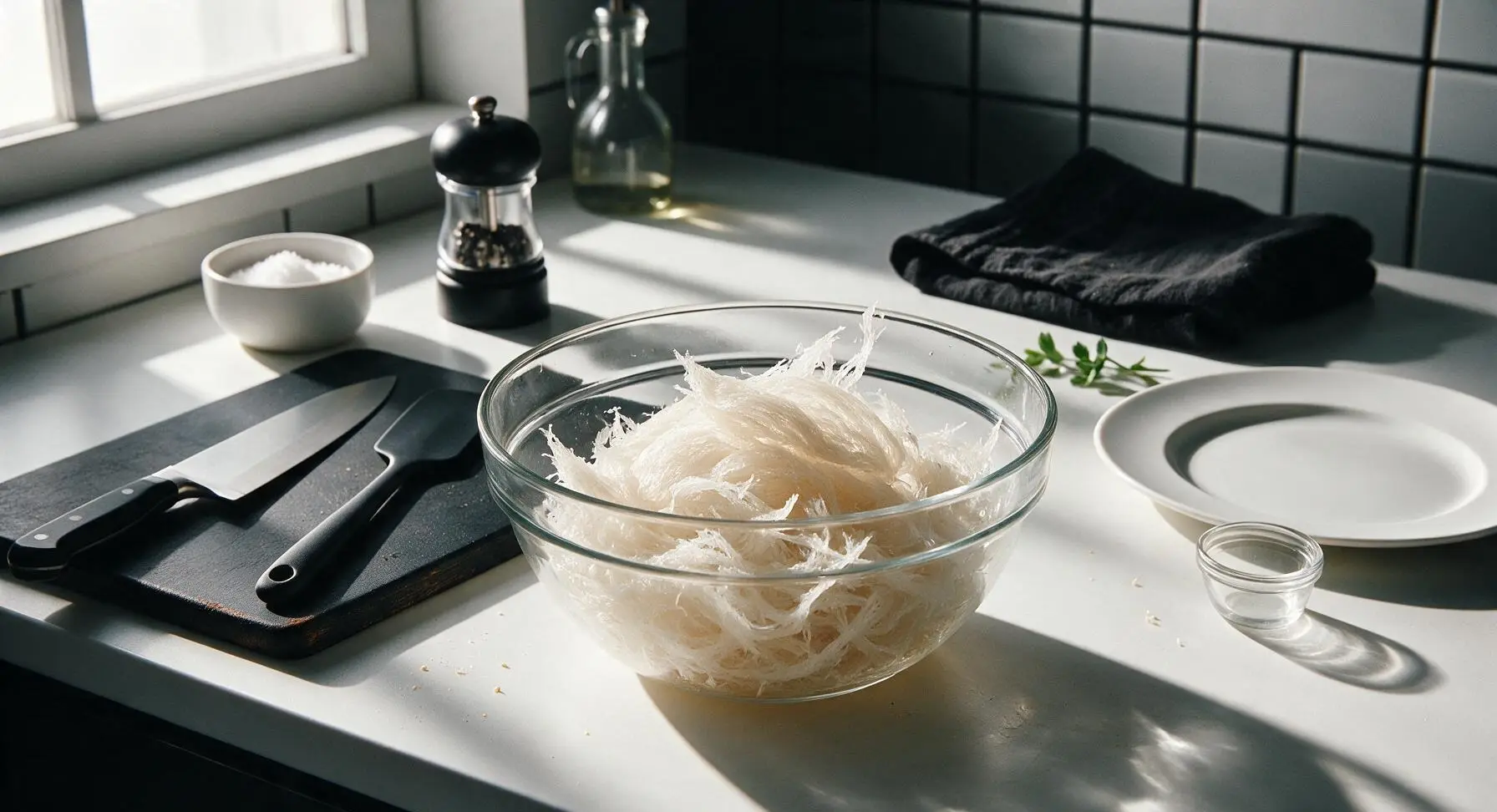
Step 2
step2:Clean soaked nest strands
Step 2
step2:Clean soaked nest strands
3

Simmer ginger-infused broth

Pour the 4 cups of clarified chicken broth into the 2-quart matte cream ceramic soup pot, add the 2 thin slices of peeled ginger. Place over medium-low heat, bring to a gentle bare simmer (small bubbles breaking slowly at the edge, 180°F / 82°C, not a rolling boil), then cook for 10 minutes to infuse the ginger flavor into the broth. Use the fine-mesh stainless steel skimmer to remove any small foam or impurities that rise to the surface.
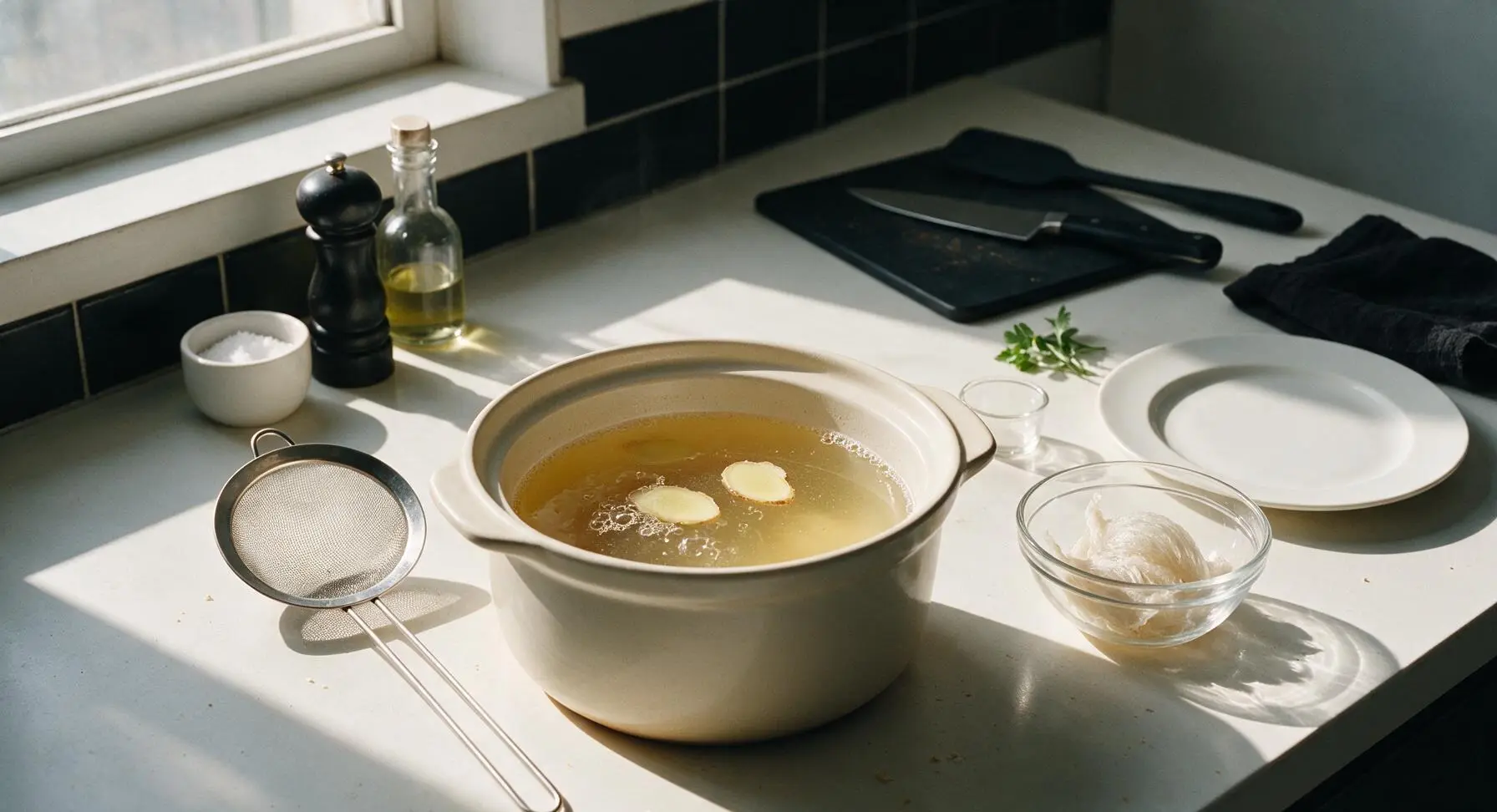
Step 3
step3:Simmer ginger-infused broth
4

Add nest and rock sugar

Remove the ginger slices from the simmering broth using the skimmer, discard. Add the cleaned, drained bird nest strands and the 15g of rock sugar to the pot. Stir gently with the porcelain soup ladle to distribute the strands, return to a bare simmer, then cook for 25 minutes at the same low heat. Do not boil rapidly, as high heat will break down the delicate nest strands and turn the broth cloudy.
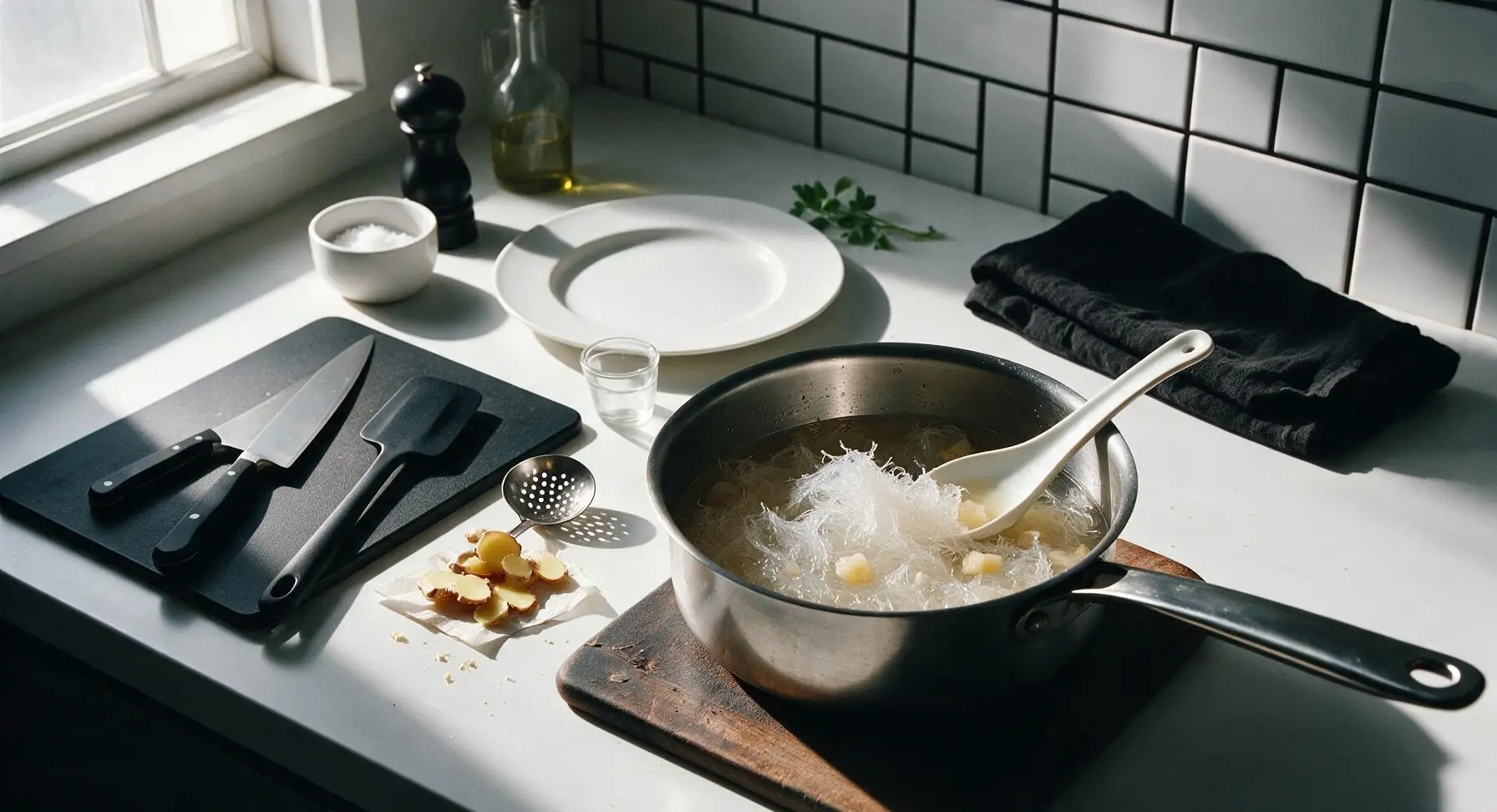
Step 4
step4:Add nest and rock sugar
5

Stream beaten egg whites

Lightly beat the 2 egg whites until just frothy (do not whip to stiff peaks). Hold the sieve over the simmering soup, pour the beaten egg white through the sieve in a slow, thin stream, while stirring the soup very gently in one direction with the soup ladle. This will create fine, silky wispy strands of egg white throughout the broth, rather than large lumps. Return to a bare simmer for 2 minutes after adding the egg whites.
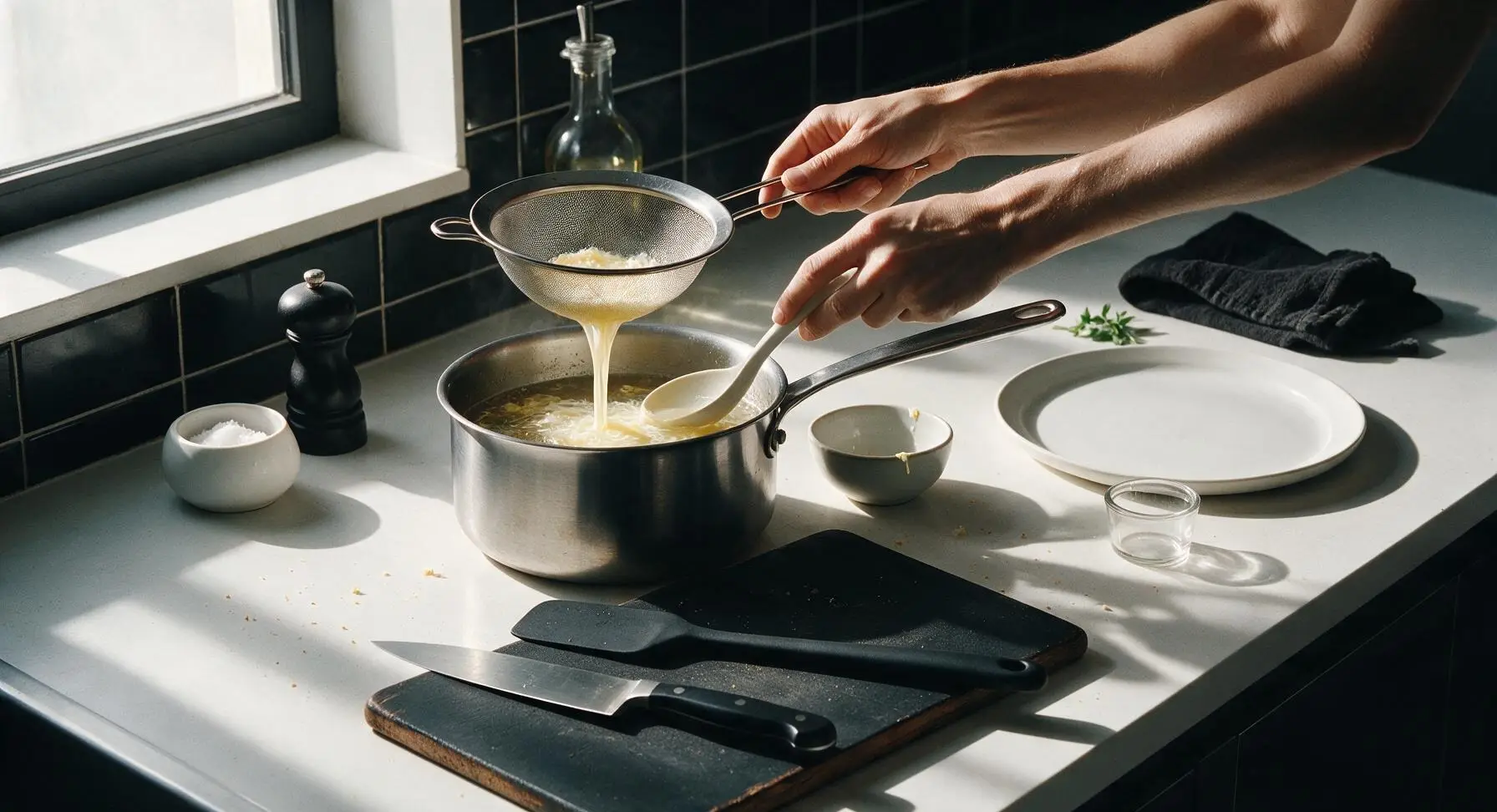
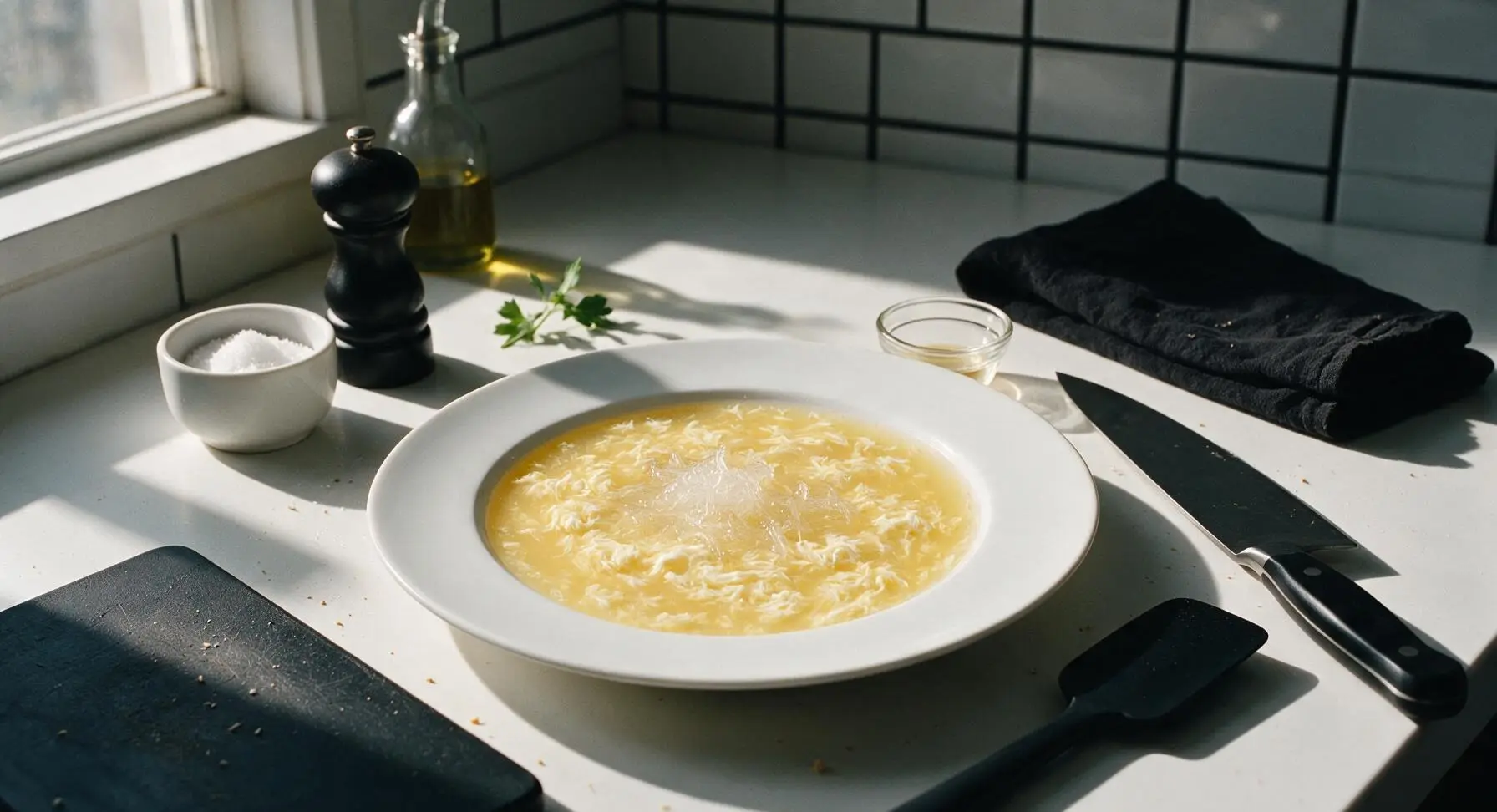
Step 5
step5:Stream beaten egg whites
Step 5
step5:Stream beaten egg whites
6

Season the finished soup

Add the 1/4 teaspoon of fine sea salt to the soup, stir gently to dissolve. Taste and adjust salt if needed, the soup should have a delicate, lightly savory-sweet flavor. Turn off the heat, stir in the 1/4 teaspoon of toasted sesame oil. Add the dried goji berries to the pot, let sit for 1 minute to allow the goji berries to plump slightly in the hot soup.
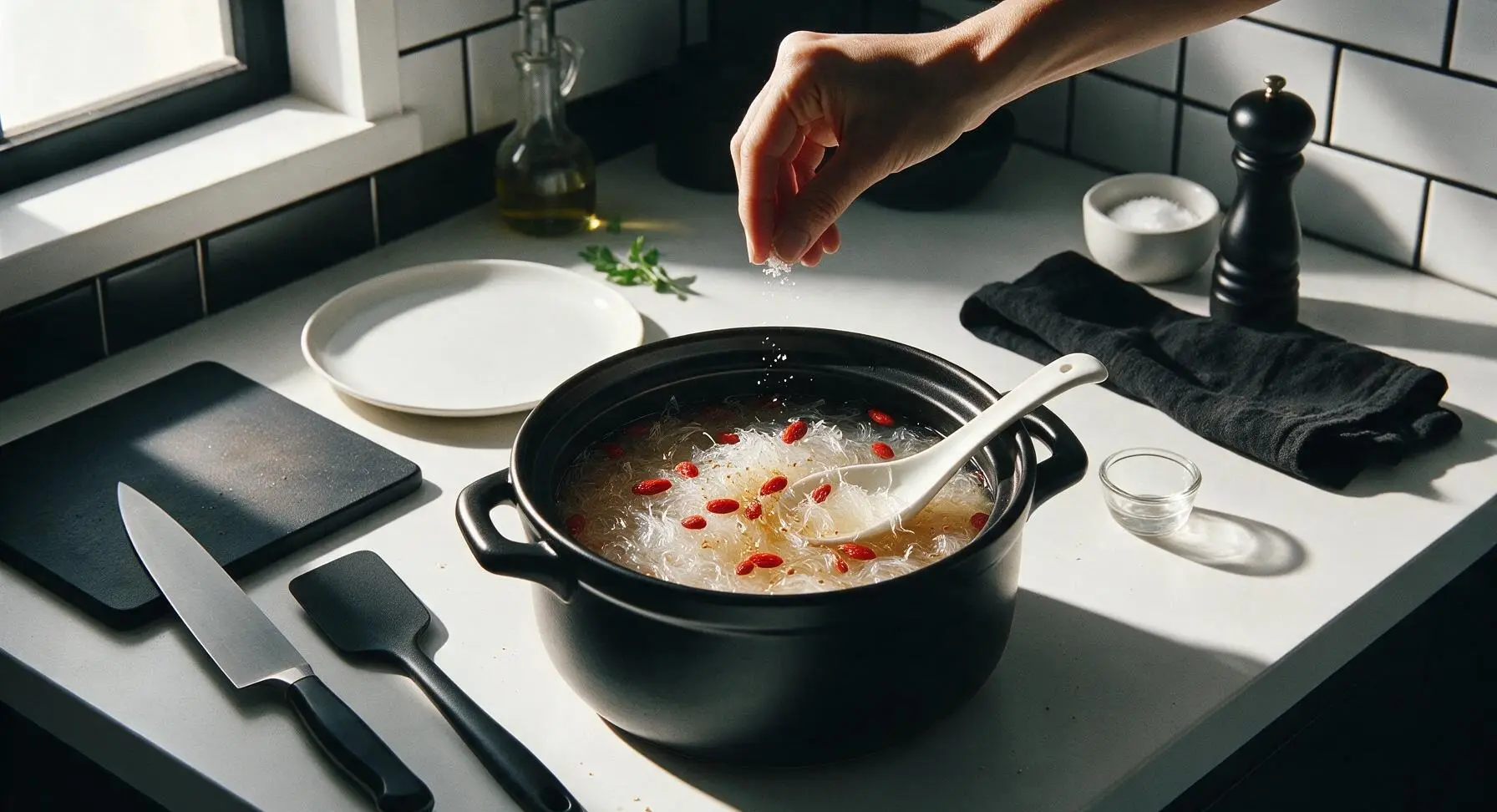
Step 6
step6:Season the finished soup
7

Ladle soup for serving

Use the porcelain soup ladle to divide the soup evenly between the 4 glossy white fluted porcelain soup bowls, making sure each bowl gets an equal portion of bird nest strands, egg wisps, and 3-4 goji berries. Serve immediately while hot, paired with the matching porcelain soup spoons.
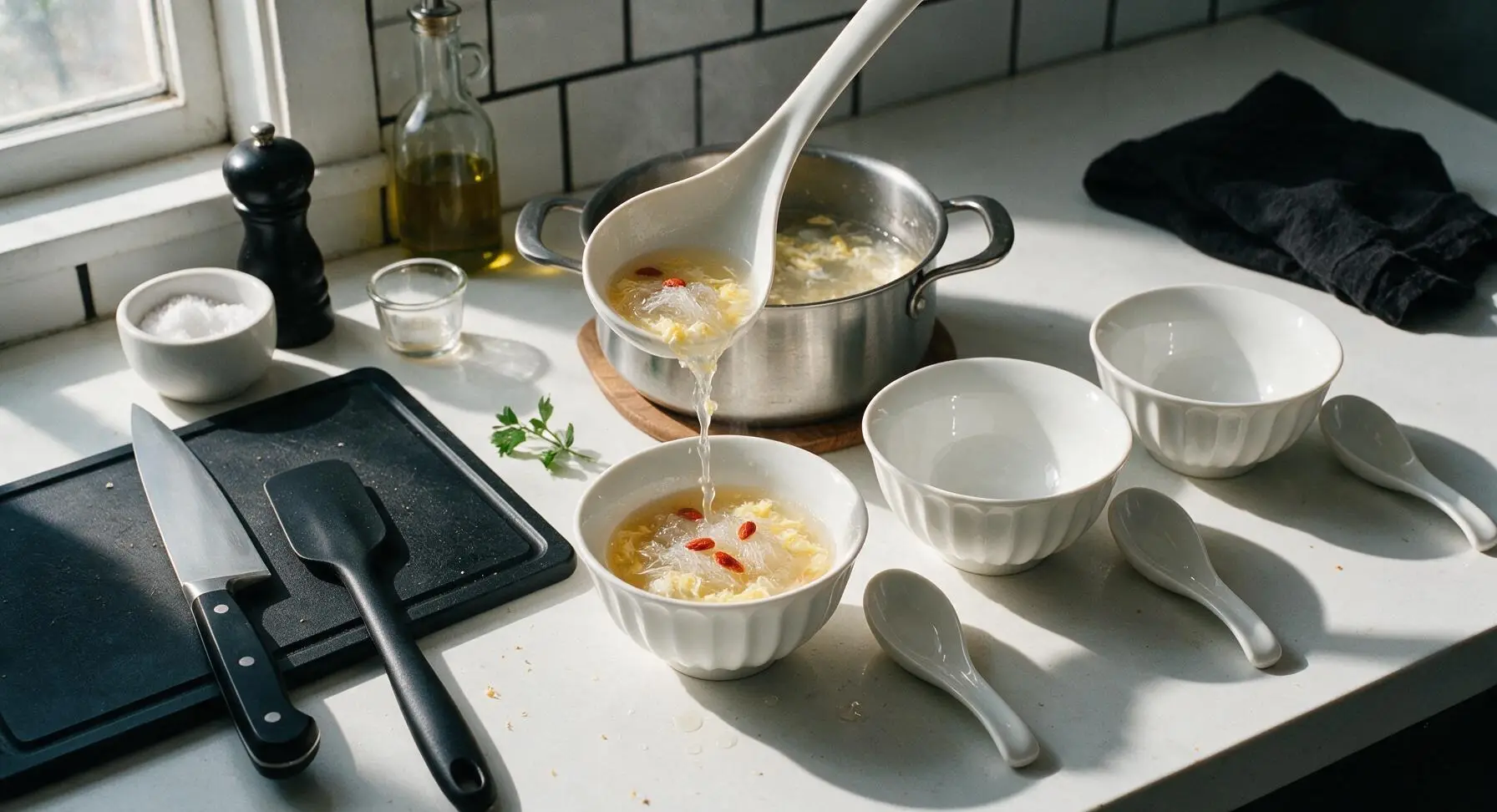
Step 7
step7:Ladle soup for serving

Tips

1.Never cook bird nest at a rolling boil: High heat breaks down the delicate glycoprotein strands that give bird nest its signature silky, gelatinous texture, and will turn the clear broth cloudy. Maintain a bare simmer (175–185°F / 80–85°C) for the entire cooking time for the best texture and clearest broth.
2.Source dried bird nest from certified, reputable suppliers: Low-quality or fake bird nest is often bleached bright white (natural premium nest is pale ivory) or treated with harsh chemicals, which ruins flavor and poses food safety risks. Good quality nest has a faint, clean mineral scent with no strong off-odors.
3.Always strain beaten egg white through a fine sieve when adding to the soup: Skipping this step results in large, lumpy egg curds instead of the delicate, cloud-like egg wisps classic to this soup. Stirring slowly in one direction while pouring helps distribute strands evenly without breaking up the tender bird nest.

✨ You May Also Like

Soups & Stews
🍜 Japan

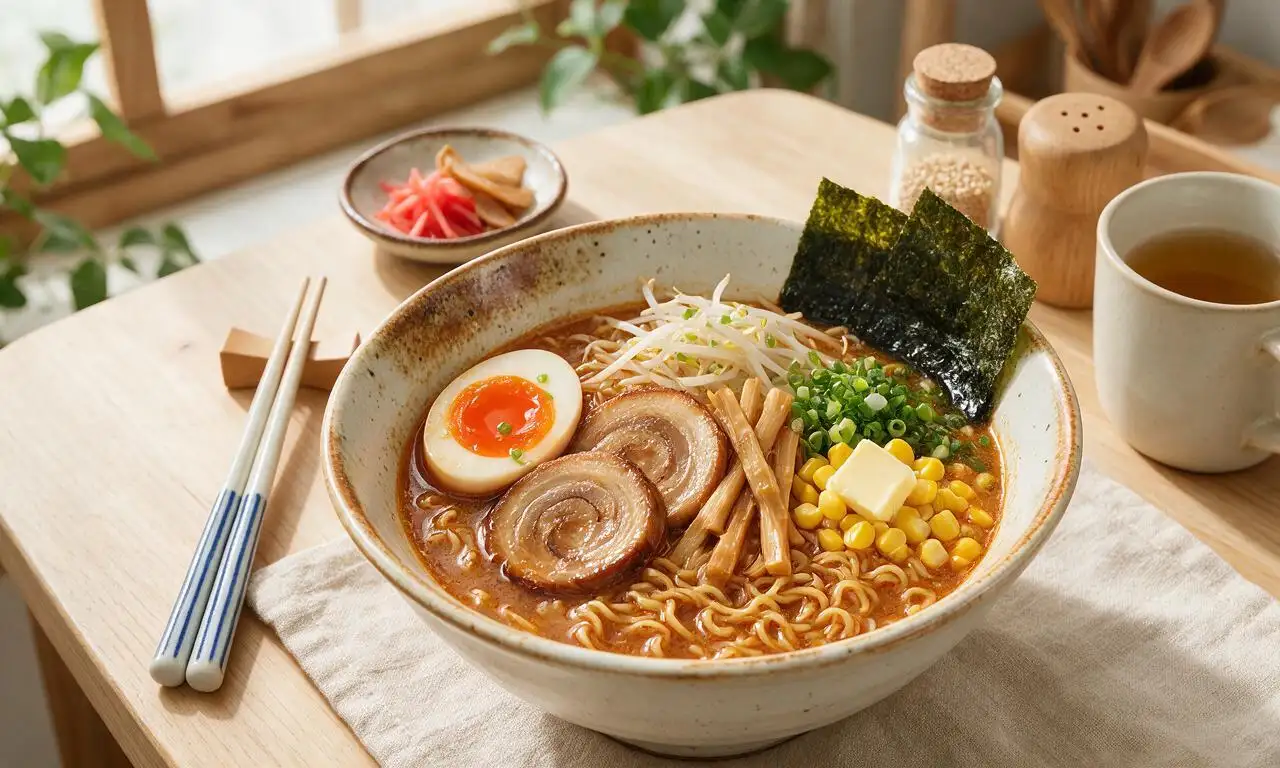
Rich, umami-dense Hokkaido-style miso ramen with chewy noodles, savory fermented broth, and classic toppings, a cozy, deeply satisfying warm meal.

⏱️ 45 minuteSoups & Stews ★ 4.5
Soups & Stews
🍜 United States

A hearty, peppery tripe and root vegetable stew with colonial Philadelphia roots, thick, warming, and packed with bold savory flavor for cold winter days.

⏱️ 2 hours 3Soups & Stews ★ 4.6
Soups & Stews
🍜 Mexico

Hearty, warming red pork posole loaded with tender hominy, slow-simmered in a rich smoky chile broth, served with zesty fresh garnishes for a deeply comforting, satisfying meal.

⏱️ 2 hours 3Soups & Stews ★ 4.7
Soups & Stews
🍜 United States

Warm, soothing classic chicken noodle soup loaded with tender chicken, soft egg noodles, and savory veggies, perfect for chasing chills and feeding the whole family.

⏱️ 40 minuteSoups & Stews ★ 4.9
Soups & Stews
🍜 France

Deeply savory caramelized onion broth topped with crusty bread and bubbly melted Gruyère, a timeless French bistro comfort food ideal for cold days.

⏱️ 1 hour 25Soups & Stews ★ 4.8
Soups & Stews
🍜 United States

Hearty, briny Maryland crab soup loaded with sweet blue crab, tender summer vegetables, and zesty Old Bay, a beloved Chesapeake Bay coastal comfort staple.

⏱️ 55 minuteSoups & Stews ★ 4.9

bird nest soup:Frequently Asked Questions

1.How do I properly prep dried bird nest before cooking to remove grit or tiny feather fragments? ▾
Start by soaking the dried nest in cold filtered room-temperature water for 4 to 6 hours until fully rehydrated. Use clean tweezers to pluck out any tiny swiftlet feathers or dark debris, then gently rinse the strands under slow running cold water. Never use hot water for this initial soak, as it will break down the nest’s delicate gelatinous texture before cooking.
2.Can I use regular unclarified chicken broth instead of clarified low-sodium broth for this recipe? ▾
You can, but you’ll miss out on the signature crystal-clear, elegant broth that defines this celebratory Cantonese soup. If you skip clarifying, skim every bit of surface fat and strain the broth through a fine cheesecloth twice to remove sediment, and cut all added salt to avoid overpowering the bird nest’s mild flavor.
3.Why does this recipe use egg whites, and will they make the soup taste strongly eggy? ▾
Lightly beaten egg whites serve two purposes: they create delicate, silky wispy strands in the clear broth, and they help pull out remaining tiny impurities for a cleaner finish. If you drizzle them slowly into the barely simmering soup off heat, they won’t clump or leave a strong, noticeable eggy aftertaste at all.
4.How long should I simmer bird nest to get that perfect soft, gelatinous texture? ▾
Never boil bird nest at a rolling boil, or it will turn mushy and lose its signature subtle springy bite. Gently poach it in barely simmering broth over the lowest stovetop heat for 20 to 25 minutes, until it softens into translucent strands that hold their shape instead of dissolving into the liquid.
5.Is pale yellow rock sugar required, or can I substitute regular white granulated sugar? ▾
Pale yellow rock sugar is traditional because it has a mellow, less cloying sweetness that doesn’t overpower the bird nest’s subtle, faintly briny-sweet flavor. If you don’t have it, use half the measured amount of white granulated sugar as a substitute, adding it a little at a time to avoid making the soup overly sweet.
6.What purpose does fresh ginger serve in this soup, and can I leave it out? ▾
Thin slices of peeled fresh ginger cut any faint, gamey aftertaste from the rehydrated bird nest and add a soft, warm aromatic note that balances the rich chicken broth. You only need 2 to 3 thin slices to get this effect. If you have a ginger sensitivity, leave it out and add a tiny splash of mild rice wine to replicate that balancing depth.
7.How far in advance can I soak dried bird nest before making the soup? ▾
Once you’ve finished soaking and cleaning the bird nest, you can store it drained in a sealed airtight container in the fridge for up to 48 hours before cooking. Don’t soak it for longer than that, as the delicate strands will start to break down, and never leave rehydrating nest at room temperature for more than 8 hours to avoid spoilage.
8.Can I make this soup ahead for a Lunar New Year dinner, and how do I store leftovers? ▾
You can make the soup 1 full day ahead, store it in a sealed glass container in the fridge, and reheat very gently over low heat, stirring slowly to avoid breaking the bird nest strands. Leftovers keep for up to 3 days refrigerated, but never freeze it—freezing completely ruins the nest’s signature soft, bouncy gelatinous texture.
9.What grade of dried white swiftlet nest is best for this traditional recipe? ▾
Stick with sustainably sourced, premium grade AAA white bird nest from a reputable supplier for the best results. This grade has fewer feathers and impurities, long intact strands, and a clean, naturally sweet flavor. Avoid heavily processed bleached nests, which have a flat chemical aftertaste and turn unpleasantly mushy when cooked.
10.Why is my finished bird nest soup cloudy instead of the traditional clear version? ▾
Cloudiness almost always stems from three common mistakes: using unclarified, fatty broth, boiling the soup too hard while the bird nest cooks, or adding egg whites too quickly at high heat. You can fix minor cloudiness by straining the finished soup once through a fine cheesecloth, and remember to keep heat at a bare simmer through the whole cook time.
11.Do I need to add tonic ingredients like goji berries or red dates for an authentic version? ▾
Those add-ins are popular in home-style, more medicinal variations, but the classic Cantonese banquet version served at New Year celebrations keeps ingredients minimal to highlight the bird nest’s delicate texture and flavor. If you do add them, use just 2 to 3 goji berries per serving, added in the last 5 minutes to avoid discoloring the broth.
12.How much rock sugar is the right amount, so the soup doesn’t turn out too sweet? ▾
Traditional bird nest soup is only subtly sweet, not dessert-sweet—you want just enough sugar to round out the savory chicken broth and highlight the nest’s natural mild sweetness. Start with 1 small lump (about 15 grams) of rock sugar per 2 servings, stir to dissolve, taste, and add more only if you prefer a sweeter profile.
13.Why do some bird nest soup recipes use coconut milk or papaya, and is that traditional Cantonese style? ▾
Those coconut milk or papaya versions are modern, dessert-style cafe variations, not the classic savory-sweet Cantonese banquet soup this recipe makes. The traditional version uses a clear chicken broth base with minimal seasoning to keep focus on the bird nest’s unique silky texture, rather than bold mix-ins that cover its delicate flavor.
14.Can I use a slow cooker or Instant Pot to make this soup instead of stovetop simmering? ▾
A slow cooker on the lowest warm or low setting works well if you prop the lid slightly ajar to prevent rolling boils, and cook the nest for 30 to 35 minutes. Skip the Instant Pot entirely, though—its high pressure and rapid boiling will break delicate nest strands into mush, ruining both the clear broth and signature bouncy texture.
15.How do I tell when the bird nest is done cooking, so I don’t overcook it? ▾
Perfectly cooked bird nest will be fully translucent, soft, and have a slight springy, gelatinous bite when you taste a strand, with no hard, dry crunchy bits left from rehydration. If strands start to dissolve into the broth and turn mushy, you’ve cooked it too long, so pull the pot off heat as soon as it hits that soft but bouncy stage.
16.Is this soup suitable for kids or people with mild food sensitivities to enjoy at holiday meals? ▾
As long as you use high-quality, properly cleaned bird nest and low-sodium broth, this mild, gentle soup is suitable for most people, including kids over 1 year old, as long as no one has a specific bird nest or egg allergy. Skip extra add-ins like strong herbs or wine when serving sensitive eaters, and keep sugar levels very low for young guests.

Comments (5)

2 days ago

OMG I was so nervous to make bird nest soup for our Lunar New Year family dinner since I’ve only ever had it at restaurants, but this recipe was so straightforward! Cook time was exactly 40 minutes like it said, the texture came out perfectly silky, no weird fishy aftertaste at all. My 7 year old even asked for a second bowl! SO good, will be making this for every special occasion from now on.

yesterday

Wait did you soak the bird nest ahead of time like the recipe says? I’m making this for a potluck next weekend and don’t want to mess up the texture!

yesterday

Great question! We recommend soaking the cleaned bird nest in cold filtered water for 4-6 hours (or overnight in the fridge) before cooking to get that signature soft, silky texture. Make sure to pick out any tiny feather fragments before soaking too! Hope it’s a hit at your potluck.

1 week ago

Game changer of a recipe! I’ve tried making bird nest soup a couple times before and it always came out either too watery or way too thick with rock sugar. This ratio of rock sugar to coconut milk is perfect, not cloyingly sweet at all. Made a big batch for meal prep this week and it’s held up great in the fridge.

5 days ago

So glad the ratios worked for you! Quick tip: if you’re storing leftovers, keep it in an airtight glass container for up to 3 days, and reheat gently on low heat to avoid breaking down the bird nest texture.

3 days ago

Pretty solid recipe overall! I’d rate this a 4 instead of 5 only because I wish there was a note about how to pick high quality bird nest before starting. I almost bought a fake/processed version at my local Asian market last minute, had to run to a different store. Flavor was amazing once I got the right ingredients though, my whole extended family loved it at our Sunday dinner.

yesterday

Who knew making fancy restaurant-style bird nest soup at home was this doable? Medium difficulty is totally accurate—you don’t need any special equipment, just a little patience prepping the nest. I added a tiny splash of ginger like my grandma used to and it paired perfectly with the base recipe. 10/10.

2 hours ago

Oh the ginger addition sounds chef’s kiss! I’m making this for my mom’s birthday dinner tomorrow, definitely going to toss a thin slice in while it simmers. Thanks for the tip!

5 minutes ago

Made this last night for my partner who grew up eating bird nest soup in Hong Kong, and he said it tasted exactly like his mom’s! I was so worried I’d mess it up since I’d never cooked with bird nest before, but the step by step instructions were super clear. The only thing I did differently was use a little less rock sugar because we prefer less sweet desserts, and it turned out perfect.

just now

How much less rock sugar did you use? I’m not a huge fan of super sweet soups either, don’t want it to taste like candy!

just now

Great question! You can absolutely cut the rock sugar by 25-50% based on your preference, the soup will still have that rich, comforting flavor without being overly sweet. You can also add a few goji berries at the end for a tiny pop of natural sweetness if you’d like!