boneless chuck steak

title 1
boneless chuck steak
⏱️ cook time 1 hour 30 minutes
🍽️ servings 4
⚡ Difficulty medium

intro

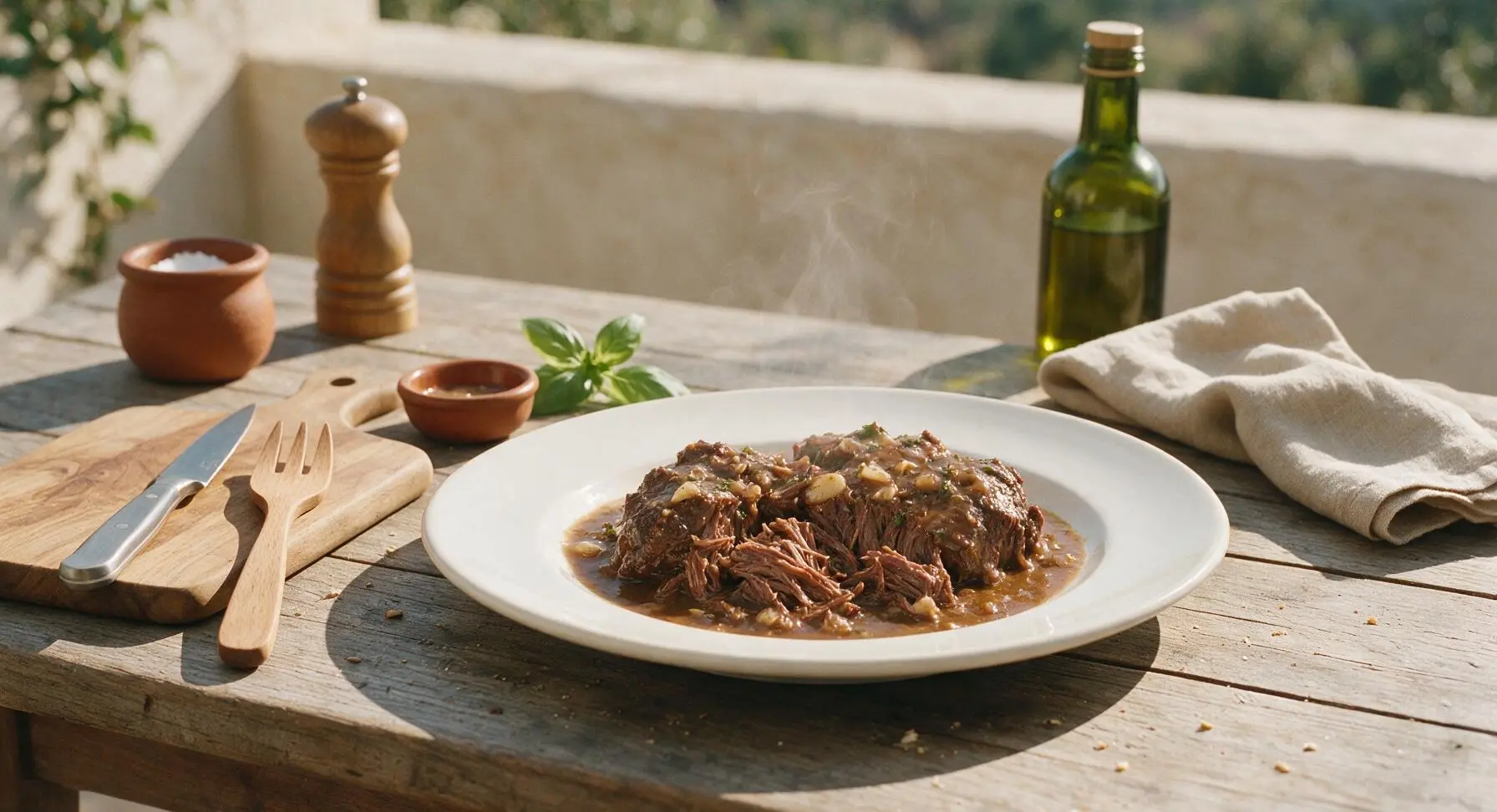
Tender, fall-apart boneless chuck steak slow-braised with garlic, herbs, and rich pan gravy, a cozy, satisfying classic for gathering around the family table.

Ingredients
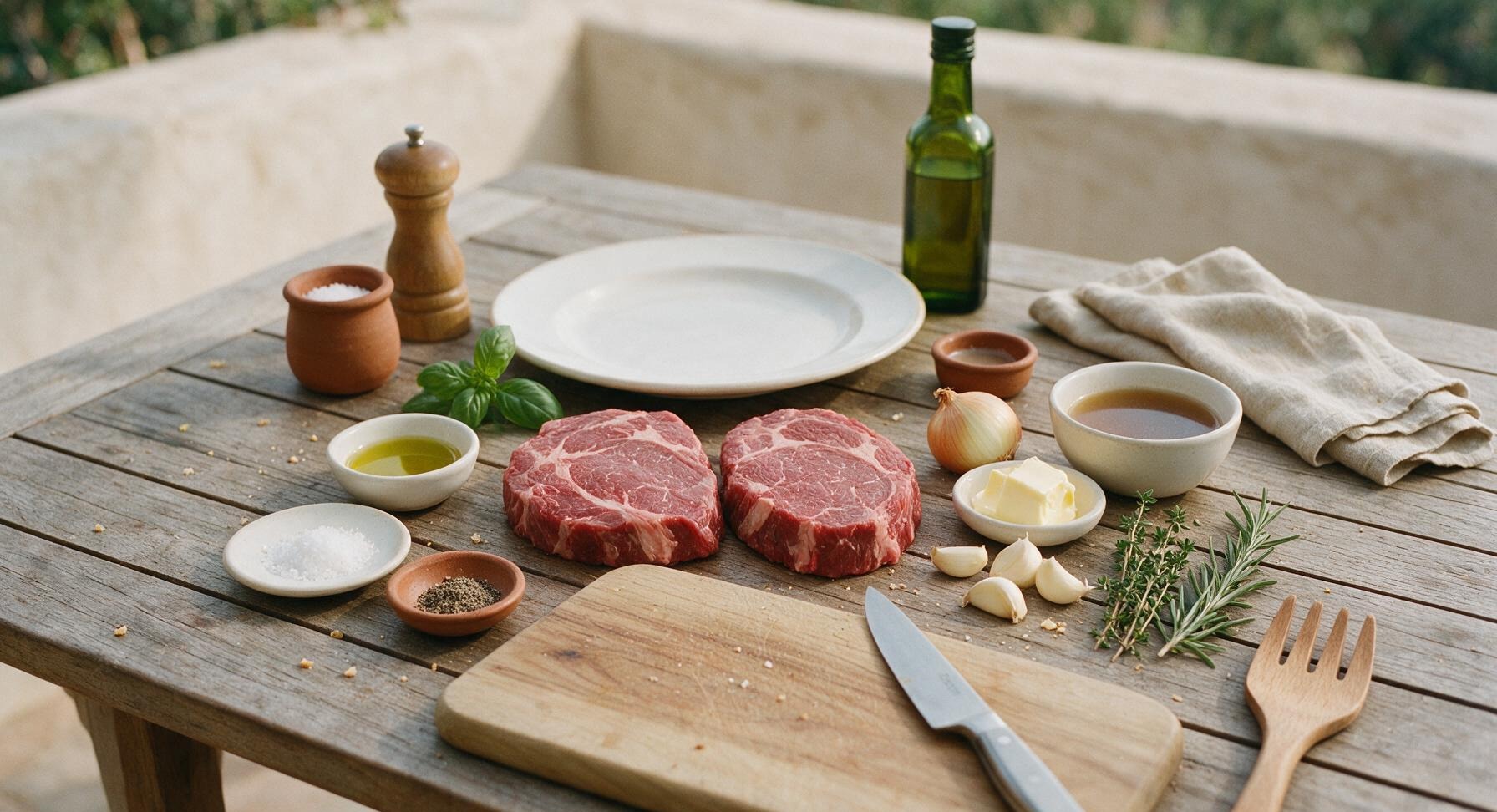
Boneless chuck steak (1.5-inch thick) 900g (2 steaks)
Extra-virgin olive oil 1 tablespoon
Kosher salt 1.5 teaspoons
Freshly ground black pepper 1 teaspoon
Unsalted butter 2 tablespoons
Small yellow onion 1 (150g, quartered)
Garlic cloves 4 large (lightly crushed)
Fresh thyme 4 sprigs
Fresh rosemary 1 sprig
Low-sodium beef broth 1 cup (240ml)

Steps

1

Pat Dry, Season Steaks

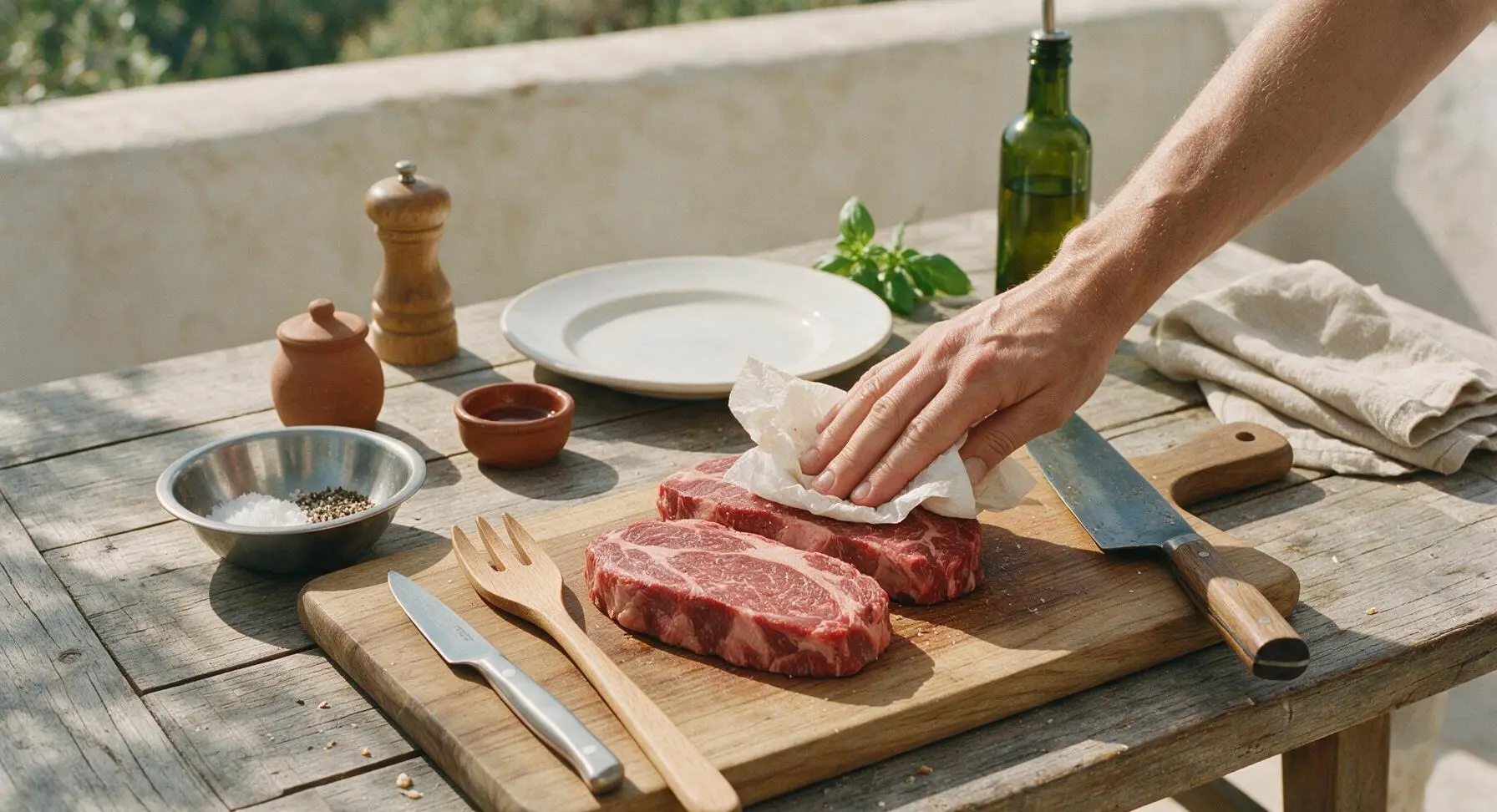
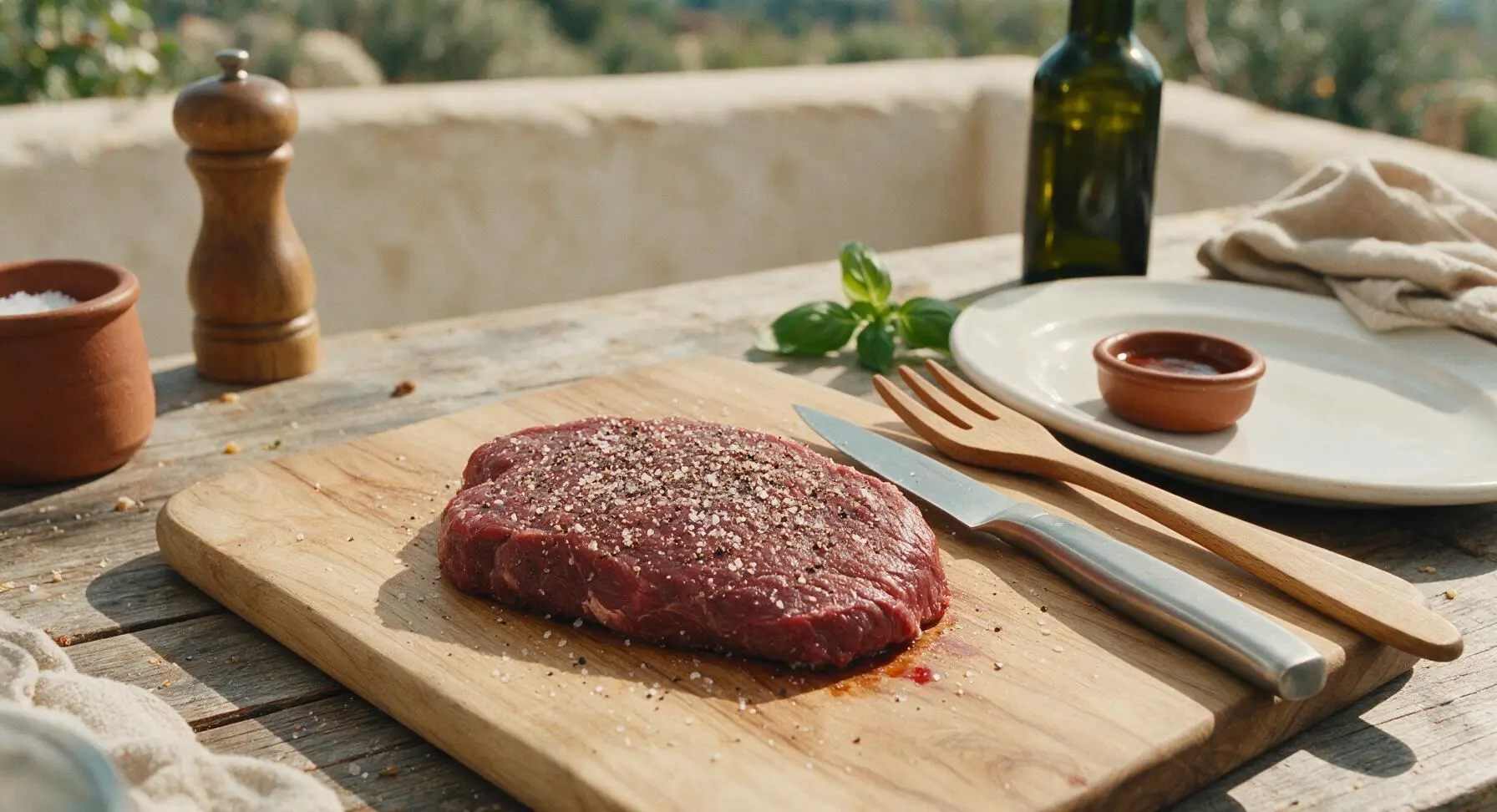
Remove boneless chuck steaks from the refrigerator 30 minutes prior to cooking to bring to room temperature for even searing (this is passive resting time, not active prep). Place steaks on the acacia wood end-grain cutting board, and pat every surface completely dry with paper towels, discarding used towels immediately. Evenly sprinkle 1.5 teaspoons kosher salt and 1 teaspoon freshly ground black pepper across all sides of the steaks, pressing seasoning gently into the meat to help it adhere, so no loose seasoning rolls off the surface.
Step 1
step1:Pat Dry, Season Steaks
Step 1
step1:Pat Dry, Season Steaks
2

Sear Steaks Deeply

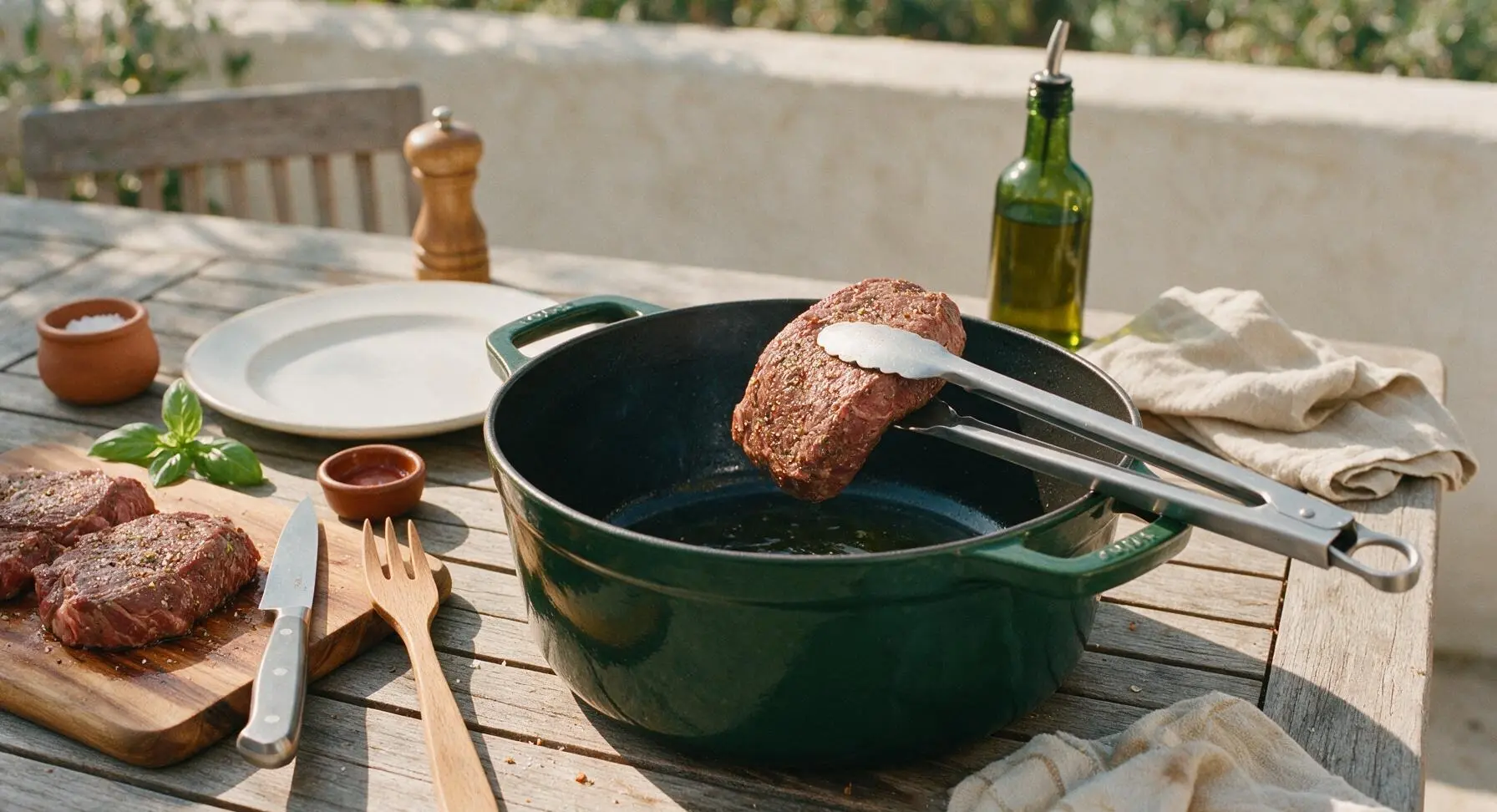
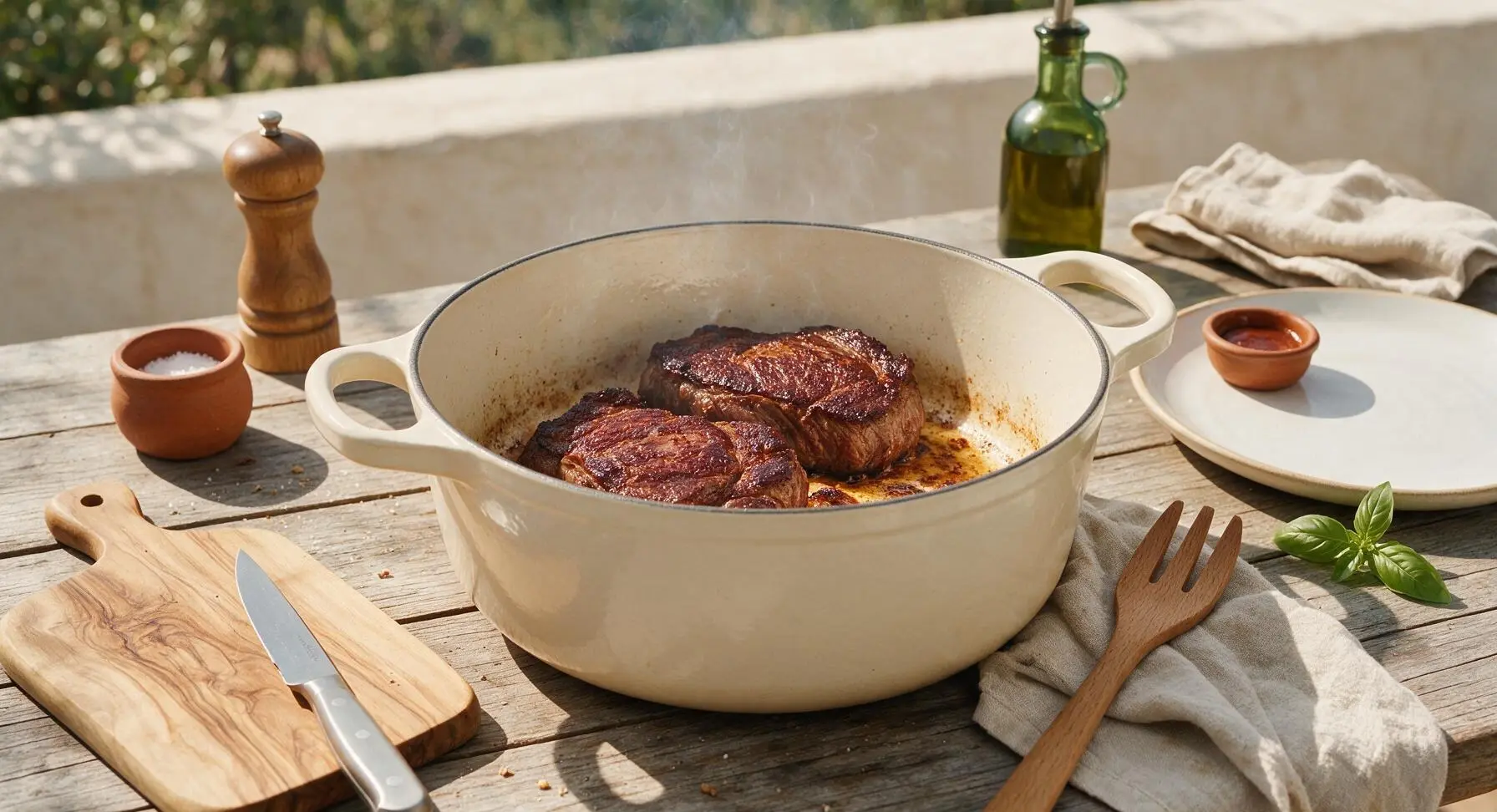
Set the 5-quart enameled cast iron Dutch oven over medium-high stovetop heat, add 1 tablespoon extra-virgin olive oil, and heat until oil shimmers and just begins to send up faint wisps of smoke (approximately 2 minutes). Use the long-handled stainless steel tongs to carefully lower seasoned steaks into the pot. Sear without moving for 3–4 minutes per side, until a deep mahogany crust forms; hold steaks upright with tongs to sear thin edges for 1 minute each, for total searing time of 9–10 minutes. A layer of dark golden fond (cooked meat bits) will coat the cream enamel pot bottom, which builds the base for rich pan gravy.
Step 2
step2:Sear Steaks Deeply
Step 2
step2:Sear Steaks Deeply
3

Rest Seared Steaks

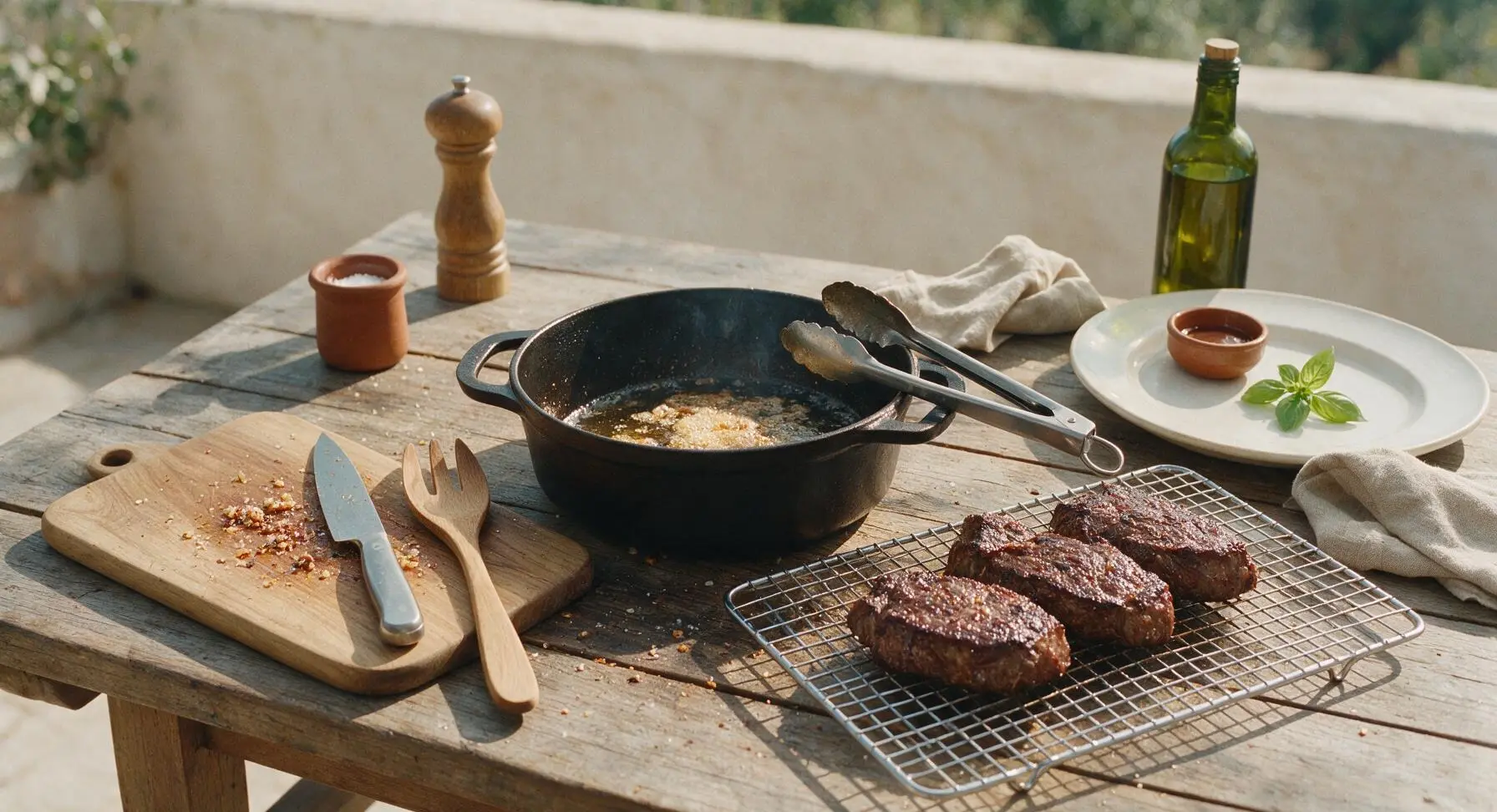
Once seared on all sides, use tongs to lift the steaks out of the Dutch oven, transferring them to the chrome-plated wire cooling rack set to the right of the pot. Let steaks rest for 5 minutes while preparing aromatics, so surface juices settle and do not cause hot oil to splatter when adding vegetables.
Step 3
step3:Rest Seared Steaks
4

Sauté Braising Aromatics

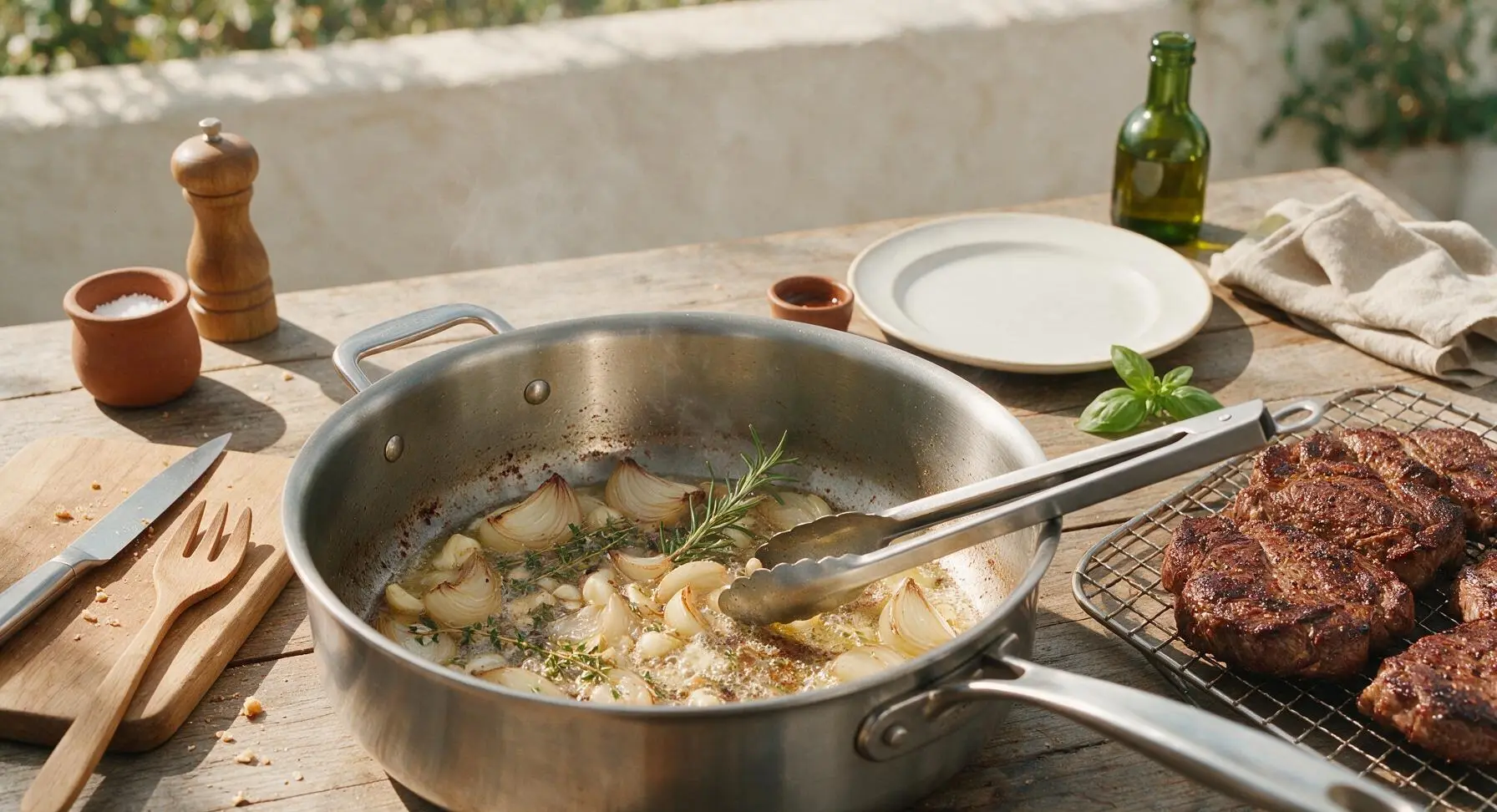
Reduce stovetop heat to medium, add 2 tablespoons unsalted butter to the Dutch oven with the residual oil and fond. Once butter melts and foaming subsides, add the quartered yellow onion, lightly crushed garlic cloves, 4 fresh thyme sprigs, and 1 fresh rosemary sprig. Sauté for 4–5 minutes, stirring occasionally with tongs, until onion edges soften and turn pale golden, and garlic releases a warm, nutty aroma. Watch closely to ensure garlic does not turn dark brown or burn, which will create a bitter off-flavor in the final gravy.
Step 4
step4:Sauté Braising Aromatics
5

Braise Low and Slow

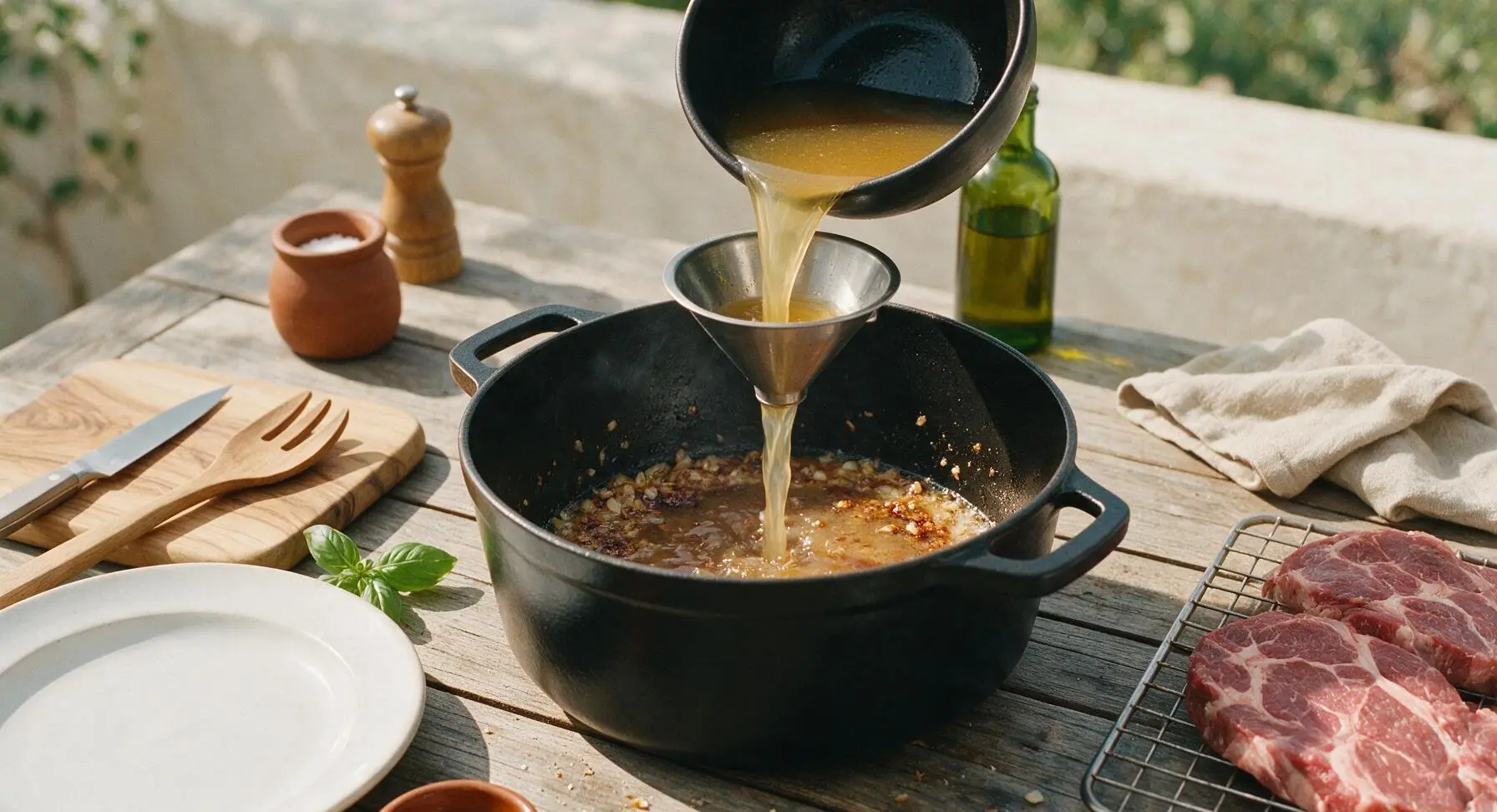
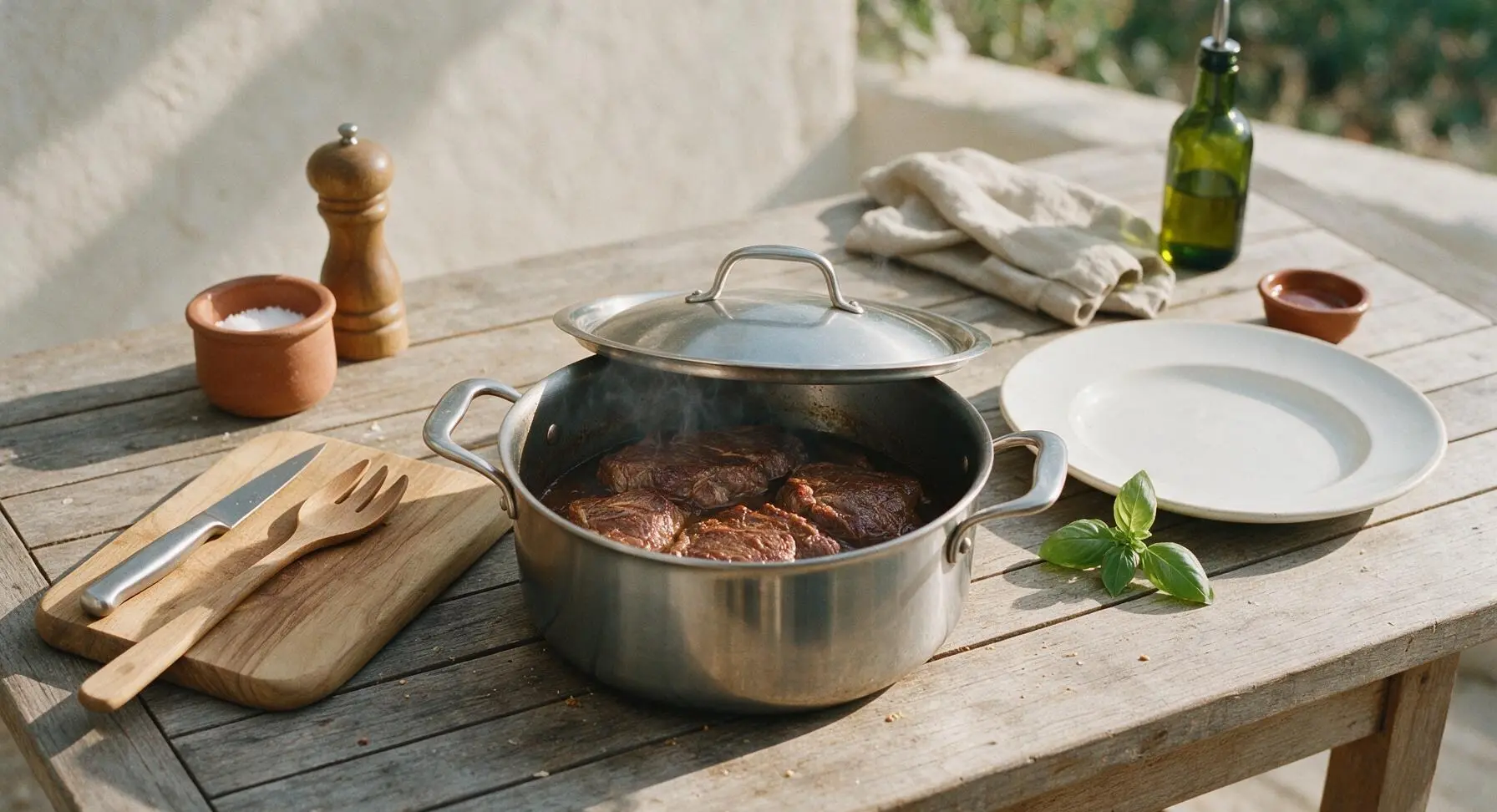
Pour 1 cup low-sodium beef broth into the Dutch oven, using the tip of the tongs to scrape all browned fond bits from the pot bottom, stirring them into the liquid to create a flavorful gravy base. Bring liquid to a gentle, low simmer, then return rested steaks to the pot, nestling them into the broth and aromatics; liquid should cover ½ to ⅔ of the steak height, not submerge them completely. Set the matching Dutch oven lid slightly ajar (to allow small amounts of steam to escape and prevent rapid boiling), then transfer the pot to a preheated 325°F (160°C) oven. Braise for 1 hour 15 minutes, until steaks yield easily when pressed with a fork, and a thin knife slides into the thickest part with no resistance.
Step 5
step5:Braise Low and Slow
Step 5
step5:Braise Low and Slow
6

Rest Braised Steaks

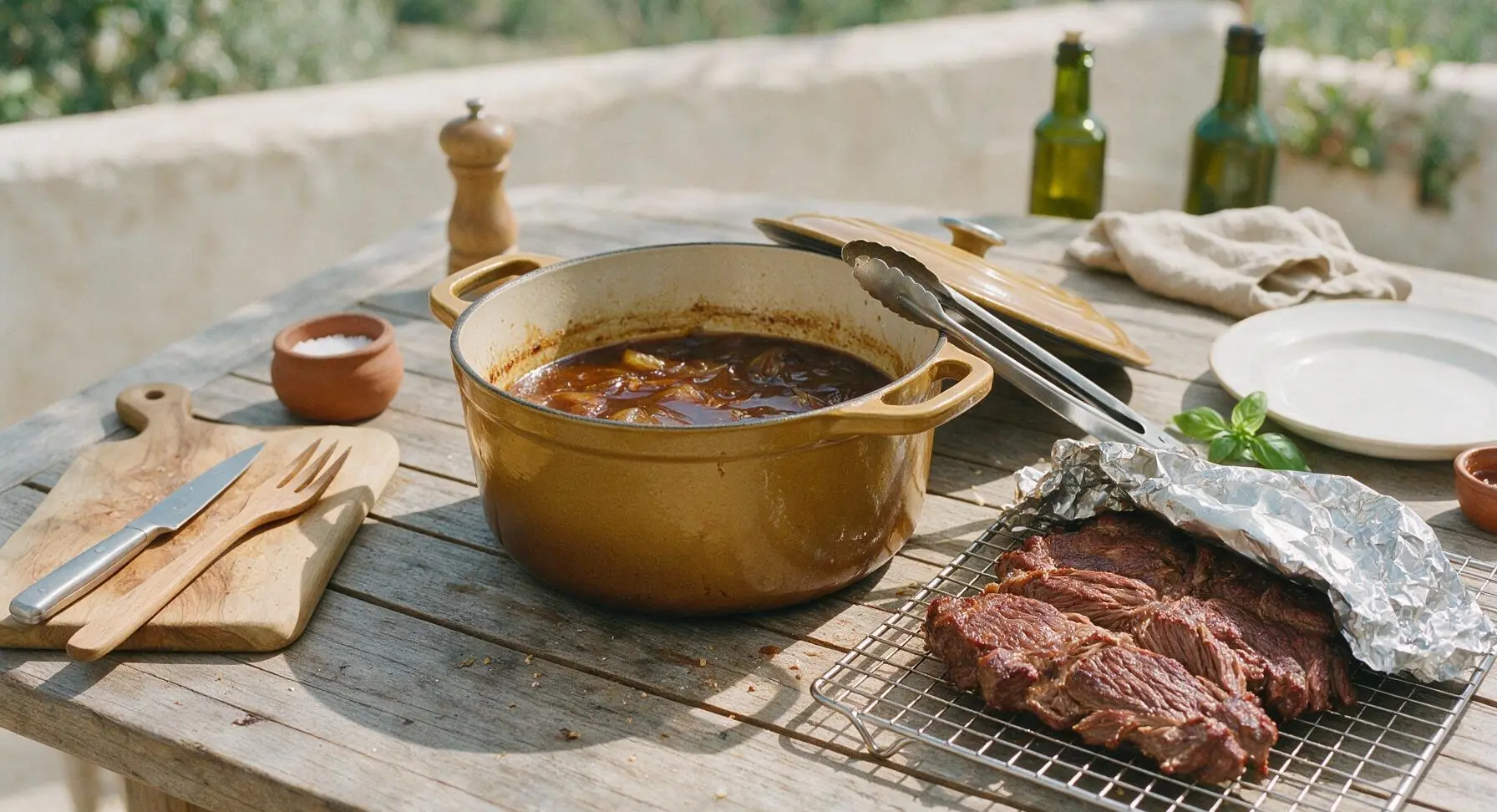
Once braised to fork-tenderness, use oven mitts to carefully remove the Dutch oven from the oven. Transfer steaks back to the chrome wire cooling rack, and tent loosely with a small sheet of aluminum foil. Let rest for 10 minutes to allow muscle fibers to relax and reabsorb juices, ensuring every bite stays moist rather than leaking juice onto the plate when sliced. While resting, leave the braising liquid in the pot to use as gravy, straining if a smoother texture is preferred.
Step 6
step6:Rest Braised Steaks
7

Slice Against the Grain

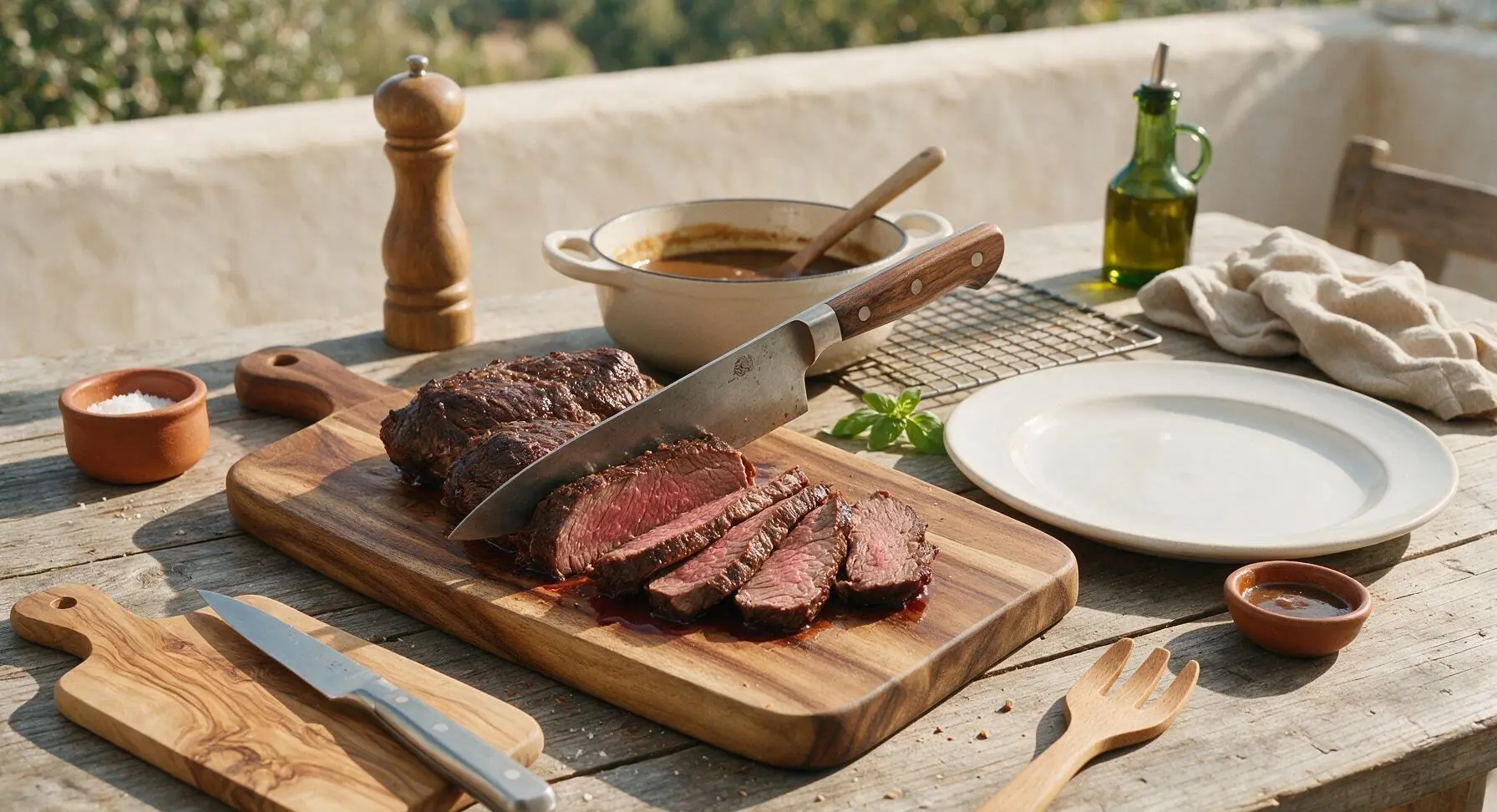
After resting, transfer steaks to the acacia wood cutting board. Use the 10-inch carbon steel chef's knife to slice the steaks against the visible direction of the muscle fibers into ½-inch thick slices, using smooth, clean cuts rather than sawing, to maximize tenderness.
Step 7
step7:Slice Against the Grain
8

Plate and Serve Warm

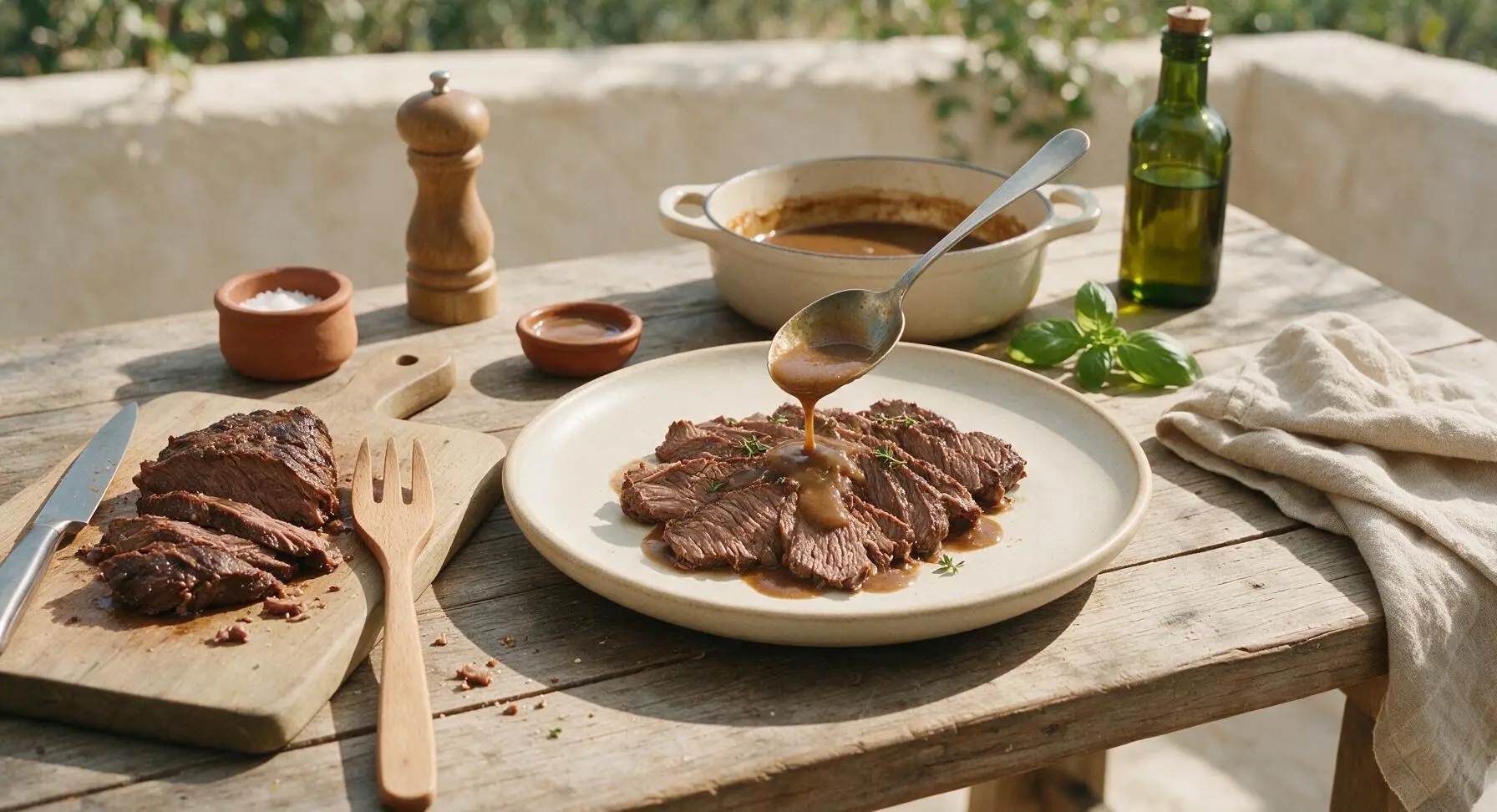
Arrange sliced steak in a gentle fan across the center of the matte cream stoneware dinner plate. Spoon 2–3 tablespoons of warm pan gravy over the top of the slices, letting it pool lightly around the base of the meat. Garnish with a few picked fresh thyme leaves for a bright pop of color, and serve immediately while hot.
Step 8
step8:Plate and Serve Warm

Tips

1.Always pat chuck steak completely dry before searing: residual surface moisture will cause the meat to steam instead of forming a deep, maillard-reaction crust, which is the foundation of the rich, savory pan gravy.
2.Avoid fully submerging steaks in braising liquid: partial submergence allows the top of the meat to tenderize in moist steam, while full submersion boils the meat, leading to a mushy, waterlogged texture and diluted beef flavor.
3.Never skip slicing against the grain: chuck steak is made of long, tough interconnected muscle fibers; cutting perpendicular to those fibers shortens them, resulting in melt-in-your-mouth tender bites even with perfectly cooked meat.
✨ You May Also Like

Main Course
🍜 United Kingdom

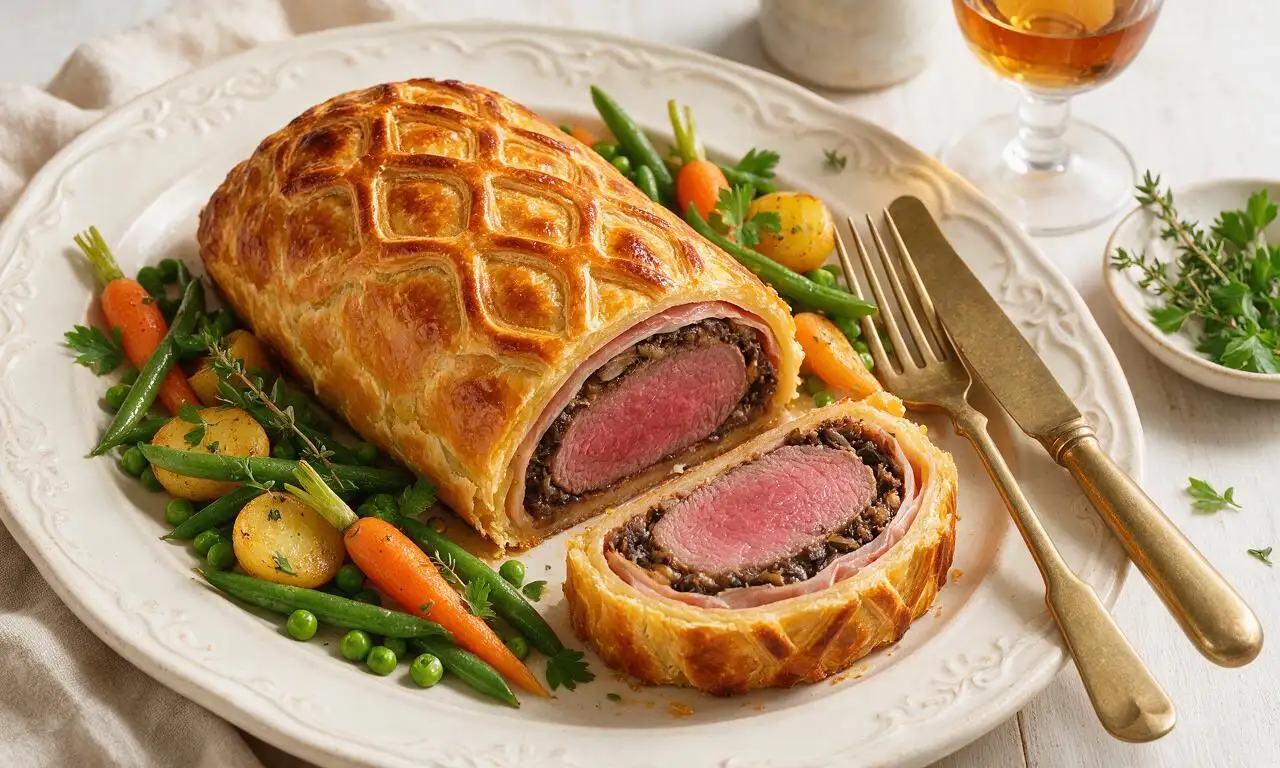
A showstopping classic of tender seared beef, savory mushroom duxelles, and crisp prosciutto wrapped in flaky golden puff pastry, baked to juicy perfection.

⏱️ 2 hours 1Main Course ★ 4.7
Main Course
🍜 India

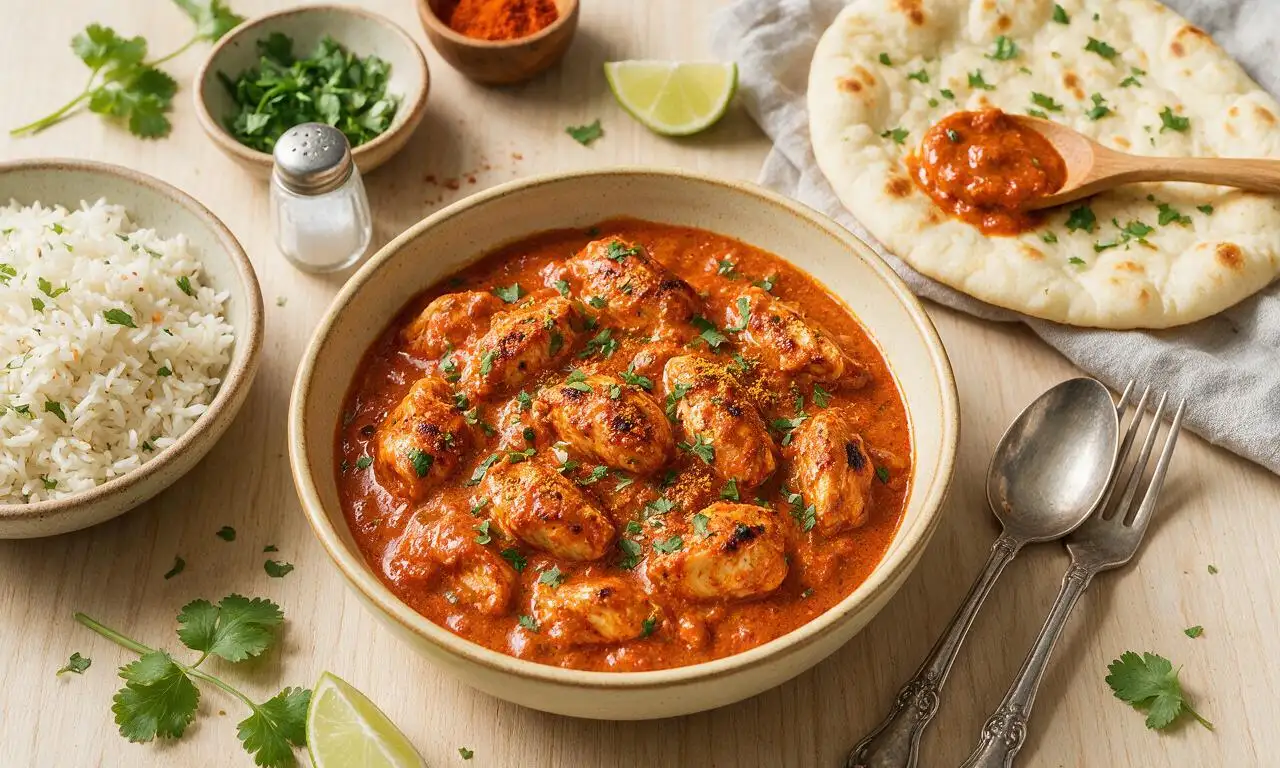
Tender charred marinated chicken simmered in a rich, spiced creamy tomato sauce, this iconic Anglo-Indian curry pairs perfectly with basmati rice or warm naan.

⏱️ 50 minuteMain Course ★ 4.6
Main Course
🍜 Thailand

Classic tangy, sweet, and savory Thai stir-fried rice noodles with shrimp, tofu, and crunchy garnishes, balancing all five core Thai flavor profiles.

⏱️ 30 minuteMain Course ★ 4.5
Main Course
🍜 United Kingdom

Crispy golden beer-battered cod and fluffy double-fried chips, served with tangy tartar sauce and malt vinegar: the timeless, beloved British pub comfort classic.

⏱️ 45 minuteMain Course ★ 4.7
Main Course
🍜 Mexico

Smoky, chile-marinated pork tacos with caramelized pineapple, fresh cilantro, and lime: a beloved classic Mexican street food perfect for casual summer gatherings.

⏱️ 1 hour 45Main Course ★ 4.8
Main Course
🍜 United States

Crunchy Fritos corn chips layered with savory beef chili and melted cheddar, topped with cool, zesty fixings for a beloved, cozy Tex-Mex comfort food.

⏱️ 35 minuteMain Course ★ 4.8

boneless chuck steak:Frequently Asked Questions

1.Why do you recommend boneless chuck steak over leaner cuts like sirloin for this recipe? ▾
Great question! Chuck comes from the heavily worked shoulder area of the cow, so it has rich marbling and tough connective tissue that melts into silky, flavorful gelatin during slow braising. Leaner cuts like sirloin lack that fat and collagen, so they’ll turn dry and stringy instead of tender and fall-apart, no matter how long you cook them.
2.How thick should my boneless chuck steak be for the best braising results? ▾
Stick to the 1.5-inch thickness called for in the recipe, if you can. Thinner cuts (under 1 inch) will overcook and dry out before connective tissue fully breaks down, while cuts over 2 inches thick take too long to cook evenly through the center and may end up unevenly seasoned.
3.Do I really need to sear the steak before slow braising it? ▾
Absolutely—don’t skip this step! Searing over medium-high heat creates a deep, caramelized crust on the steak that adds layers of rich, nutty, beefy flavor you can’t get from slow cooking alone. It also leaves browned bits (called fond) in the pan that form the base of your delicious pan gravy.
4.Can I use table salt instead of kosher salt for seasoning this steak? ▾
You can, but you’ll need to adjust the amount! Table salt is much finer and denser than kosher salt, so use half the measured amount if you swap it in. Kosher salt is preferred here because it distributes more evenly across the steak surface and seasons more consistently without making the dish overly salty.
5.What temperature should I set my oven to for slow braising this chuck steak? ▾
Aim for a steady 325°F (163°C) for oven braising. This low, even temperature is hot enough to gently break down the steak’s tough connective tissue over time, but not so hot that the liquid boils rapidly, which can make the meat tough and stringy instead of melt-in-your-mouth tender.
6.How long does it actually take for the chuck steak to get that fall-apart tender texture? ▾
For a 1.5-inch thick boneless chuck steak, plan on 2.5 to 3 hours of covered braising time. You’ll know it’s done when you can pierce the center easily with a fork with no resistance, and the meat pulls apart without much effort. Don’t rush it—low and slow is non-negotiable here.
7.Can I make this recipe in a slow cooker instead of using the oven? ▾
Totally! After searing the steak and sautéing your garlic and herbs, transfer everything to your slow cooker with the braising liquid. Cook on the LOW setting for 6 to 7 hours, or HIGH for 3 to 3.5 hours, until the meat is fork-tender. Finish the gravy right in the insert for easy cleanup.
8.What kind of liquid works best for braising the chuck steak? ▾
Low-sodium beef broth is the classic, reliable base, but you can swap in ¼ cup of dry red wine for depth, add a splash of Worcestershire for savoriness, or mix in a bit of canned diced tomatoes for brighter flavor. Just cover the steak about ⅔ of the way, don’t fully submerge it.
9.Why do you call for unsalted butter instead of more olive oil in this recipe? ▾
Unsalted butter adds a rich, creamy, nutty depth that olive oil can’t match, and it helps create a smoother, more velvety pan gravy. Using unsalted butter also lets you control the total salt level of the dish, so you don’t end up with overly salty gravy from added salt in regular salted butter.
10.Should I keep the pan covered the entire time the steak is braising? ▾
Keep the pan tightly covered for at least the first 2 hours of cooking. Trapped steam creates a moist, even cooking environment that breaks down connective tissue faster and prevents the top of the steak from drying out. You can uncover it for the last 20 minutes if you want a more concentrated gravy.
11.How do I make smooth, lump-free pan gravy from the braising drippings? ▾
After removing the cooked steak to rest, set your pan over medium stovetop heat. Whisk the pan drippings continuously as you simmer, and for a thicker gravy, stir in a slurry of 1 tsp cornstarch mixed with 2 tbsp cold water. Strain through a fine sieve if you want an ultra-silky texture.
12.Can I add vegetables to the braise along with the chuck steak? ▾
Absolutely! Hearty, slow-cooking veggies work best here—think quartered yellow onions, chunky carrot sticks, celery pieces, or halved baby potatoes. Add them during the last 45 minutes to 1 hour of cooking so they get tender but don’t turn mushy by the time the steak is done.
13.My steak came out tough even after braising—what did I do wrong? ▾
The most common culprits are cooking it too hot, not cooking it long enough, or using too lean a cut. If your oven was over 350°F, the liquid boiled instead of gently simmering, which tightens meat fibers. If it’s chewy, pop it back covered for another 30 to 45 minutes until it pulls apart easily.
14.How long should I let the steak rest after it finishes braising? ▾
Let it rest for 10 to 15 minutes, tented loosely with foil, before slicing or pulling it apart. This gives the meat fibers time to reabsorb all the juicy, flavorful liquid, so you don’t end up with all the delicious juices running out onto your plate and leaving the meat dry.
15.Can I use dried herbs instead of fresh for this braise? ▾
You absolutely can! Dried herbs are more concentrated than fresh, so use ⅓ the amount of dried herbs as you would fresh. Hardy dried herbs like thyme, rosemary, and oregano work beautifully for long braises, since they release their flavor slowly over cooking time instead of wilting immediately.
16.What’s the best way to store leftover braised chuck steak? ▾
Let the cooked steak and gravy cool completely to room temperature within 2 hours of cooking, then transfer to an airtight container and store in the fridge for up to 4 days. The flavor actually gets better the next day, as the meat absorbs more of the herb and garlic notes from the gravy as it sits.
17.Can I freeze leftover braised chuck steak for later meals? ▾
Definitely! Portion the steak and gravy into freezer-safe, airtight containers or heavy-duty freezer bags, squeeze out excess air, and freeze for up to 3 months. Thaw overnight in the fridge before reheating gently on the stovetop over low heat, adding a splash of broth if the gravy is too thick.
18.Do I need to trim all the fat off the chuck steak before braising? ▾
You don’t need to trim every last bit! Trim any large, thick, hard chunks of external fat that are more than ¼ inch thick, but leave thinner marbled fat and small bits of connective tissue intact. Those will melt down during braising to add flavor and moisture, and you can skim excess fat off the gravy later.
19.What are good side dishes to serve with this slow-braised chuck steak? ▾
This rich, cozy steak pairs perfectly with starchy sides that soak up the delicious pan gravy! Try creamy mashed potatoes, buttered egg noodles, crusty artisan bread, roasted root vegetables, or a simple crisp green salad with a tangy vinaigrette to cut through the meat and gravy’s richness.
20.Can I use this recipe for bone-in chuck steak instead of boneless? ▾
You sure can! Bone-in chuck steak has even deeper, beefier flavor, but you’ll need to add 30 to 45 minutes of extra braising time to account for the bone slowing heat transfer to the meat’s center. Aim for an internal temp of 200–205°F in the thickest part for perfect fall-apart texture.

Comments (3)

3 days ago

OMG this slow-braised chuck steak was a total game changer for our Sunday family dinner! I was worried it would be tough since I’ve messed up cheaper cuts before, but it came out fall-apart tender, and the gravy was SO good over mashed potatoes. My kids even asked for seconds, which never happens with beef dishes in our house. Only tweak I made was adding a handful of sliced mushrooms because we love them, will 100% be making this for our next potluck too!

2 days ago

Wait adding mushrooms is such a good call! I made this last week too and thought it was missing a little something, I’m totally stealing that tip for when I meal prep this on Sunday. How long did you sauté them before tossing them in the braise?

yesterday

So glad your whole family loved this! Adding mushrooms is a fantastic customization, that earthy flavor pairs perfectly with the rich braising liquid. If you’re prepping it ahead, it actually tastes even better the next day once the flavors meld together!

5 days ago

Great recipe overall, though I will say the cook time was a little longer than the listed 1 hour 30 minutes for me? I have an older Dutch oven that doesn’t hold heat as well, so I ended up needing an extra 25 minutes to get the steak to that pull-apart texture I wanted. Flavor was spot on though, super easy to throw together after work even with the extra time, and I’ve been eating the leftovers for lunch all week. Would recommend to anyone who’s intimidated by braising!

3 days ago

Thanks so much for the honest feedback! Cook times can definitely vary a bit depending on your Dutch oven’s heat retention and how thick your chuck steak cut is, so we appreciate you calling that out for other home cooks. Great call giving it extra time to get that perfect tender texture!

2 hours ago

Made this for my partner’s birthday dinner last night and he said it’s better than the steak we got at that fancy steakhouse downtown for our anniversary! I served it with roasted garlic broccoli and creamy polenta instead of potatoes, and the pan sauce drizzled over everything was chef’s kiss. Only note is I wish I’d made a double batch because we ate almost every last bite, zero leftovers which is rare for us. 10/10, will be in our regular rotation for sure!