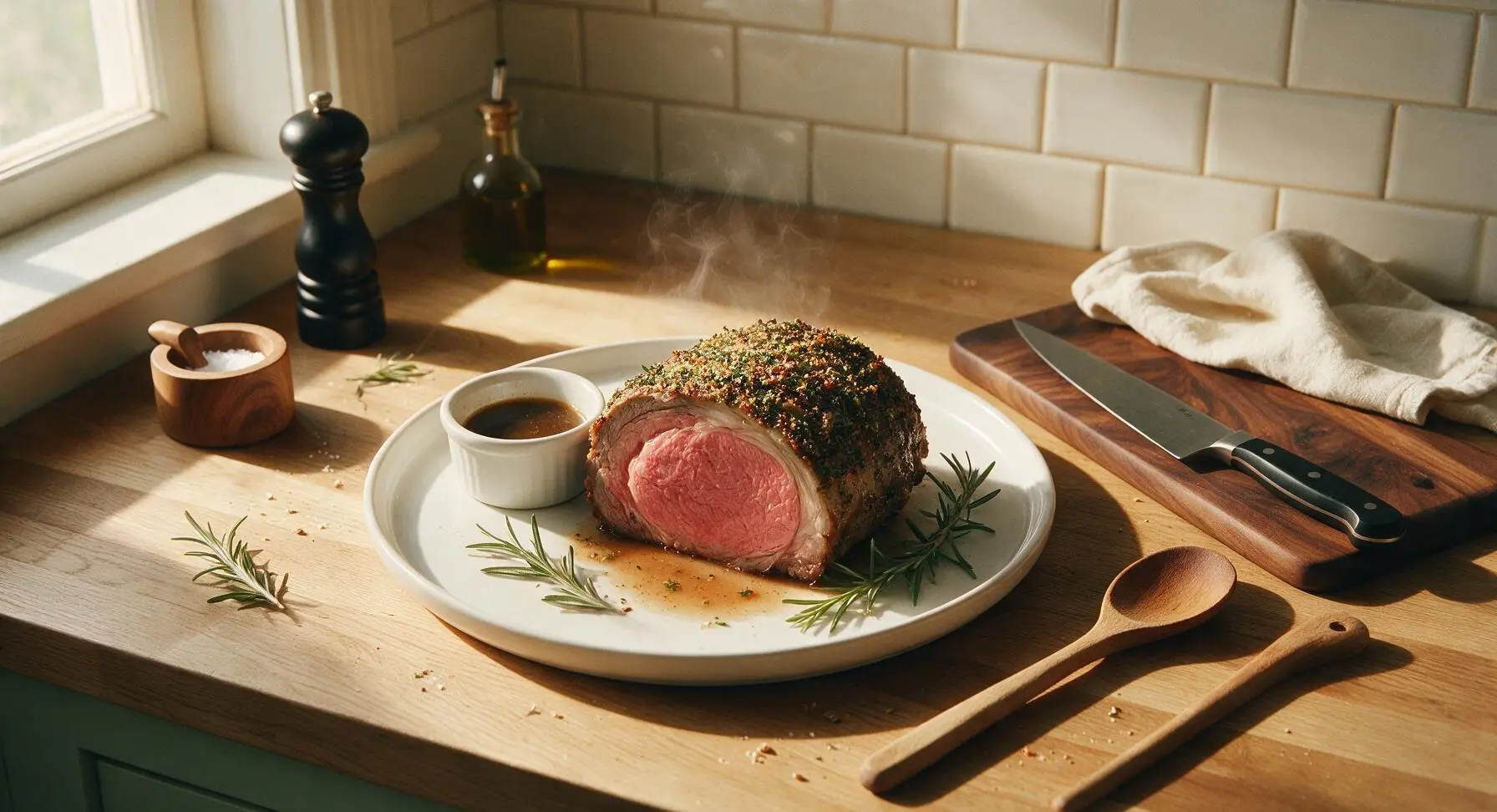
boneless prime rib

title 1
boneless prime rib
⏱️ cook time 2 hours 10 minutes
🍽️ servings 6
⚡ Difficulty medium

intro

Buttery, herb-crusted boneless prime rib with a perfectly rosy medium-rare center, crisp savory crust, and rich pan au jus. A showstopping winter holiday roast that feels luxurious but is simple to make at home.

Ingredients
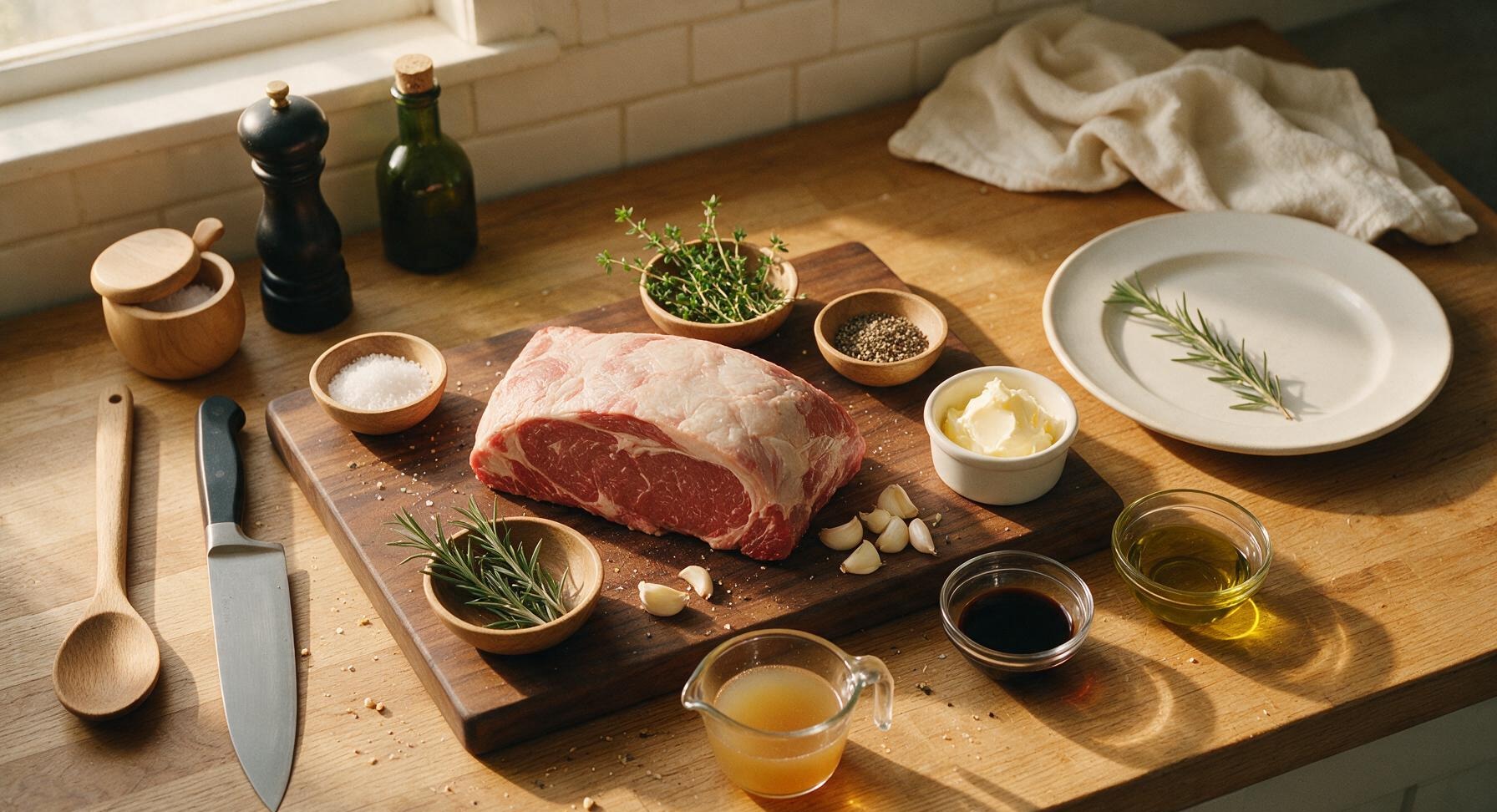
Boneless prime rib roast (ribeye roll) 4 lb (1.8kg)
Kosher salt 1.5 tbsp
Coarsely ground black pepper 1 tbsp
Garlic cloves 6 whole, crushed
Fresh rosemary 3 sprigs
Fresh thyme 6 sprigs
Unsalted butter 2 tbsp, softened
Worcestershire sauce 1 tsp
Extra-virgin olive oil 1 tbsp
Low-sodium beef broth 1/4 cup (60ml)

Steps

1

Trim and Tie Roast

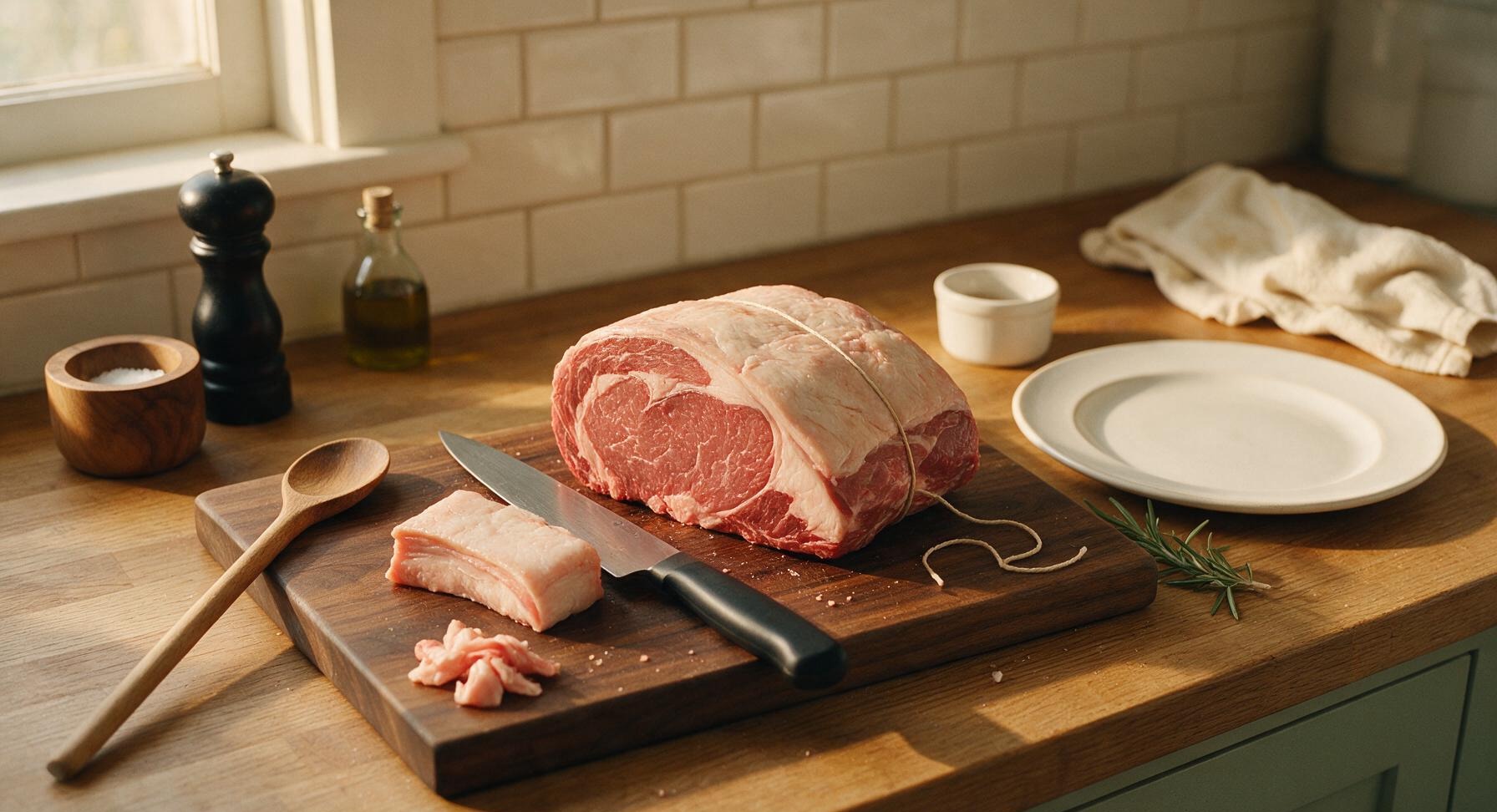
Place the 4lb boneless prime rib on the end-grain maple cutting board. Use the chef knife to trim the fat cap to an even 1/4-inch thickness, removing any loose silver skin or hard fat chunks from the meat surface. Tie the roast at 2-inch intervals with kitchen twine to hold a uniform shape for even cooking. Pat the entire surface completely dry with paper towels.
Step 1
step1:Trim and Tie Roast
2

Season Roast Generously

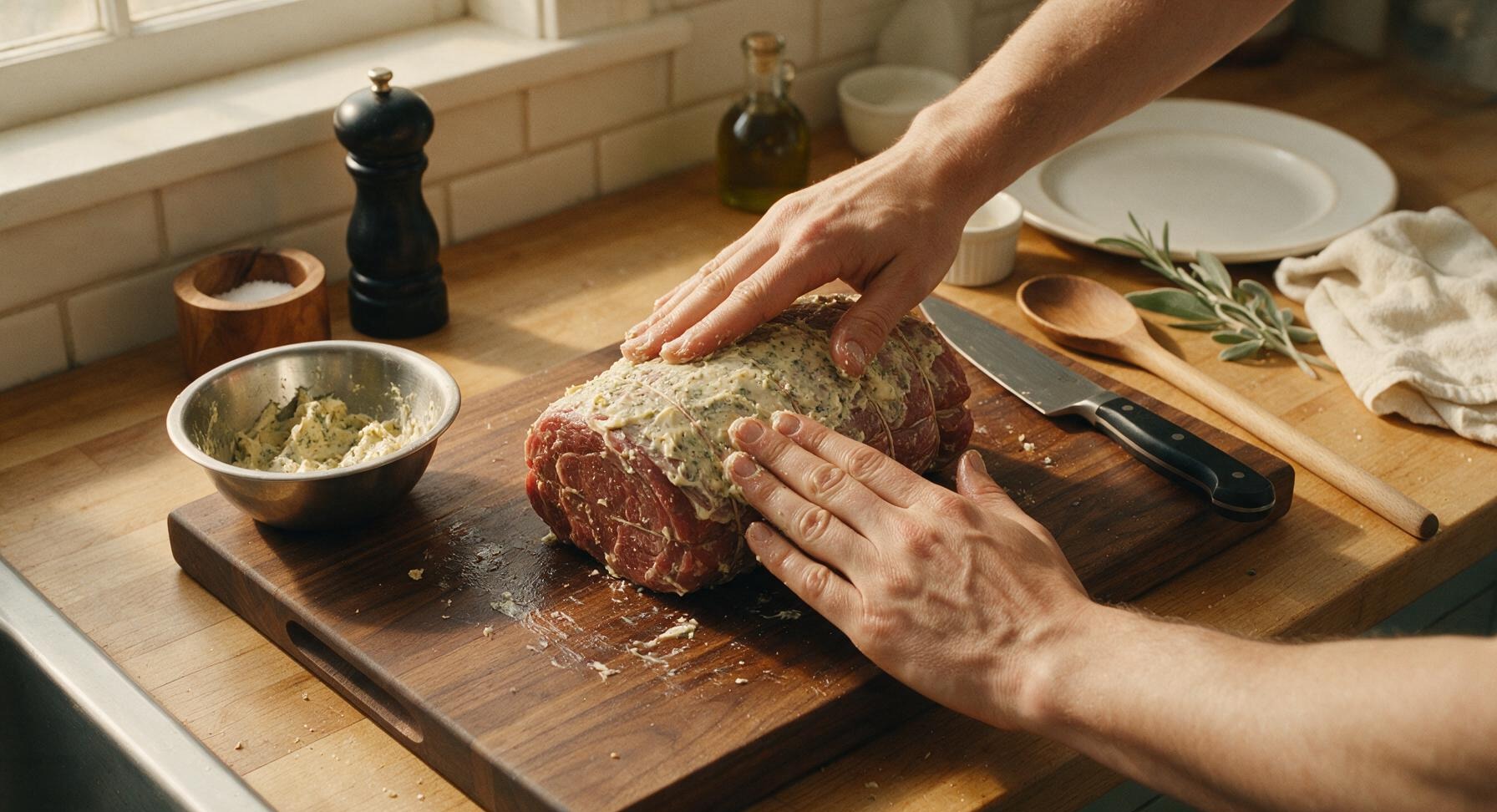
In the small stainless steel prep bowl, mix 1.5 tbsp kosher salt, 1 tbsp coarse black pepper, 1 tsp Worcestershire sauce, 1 tbsp olive oil, and 2 tbsp softened unsalted butter to form a thick, spreadable paste. Rub the paste evenly over every surface of the trimmed, tied roast, pressing firmly to help the seasoning adhere. Tuck 3 crushed garlic cloves and half the rosemary and thyme sprigs under the kitchen twine, pressed directly against the meat surface.
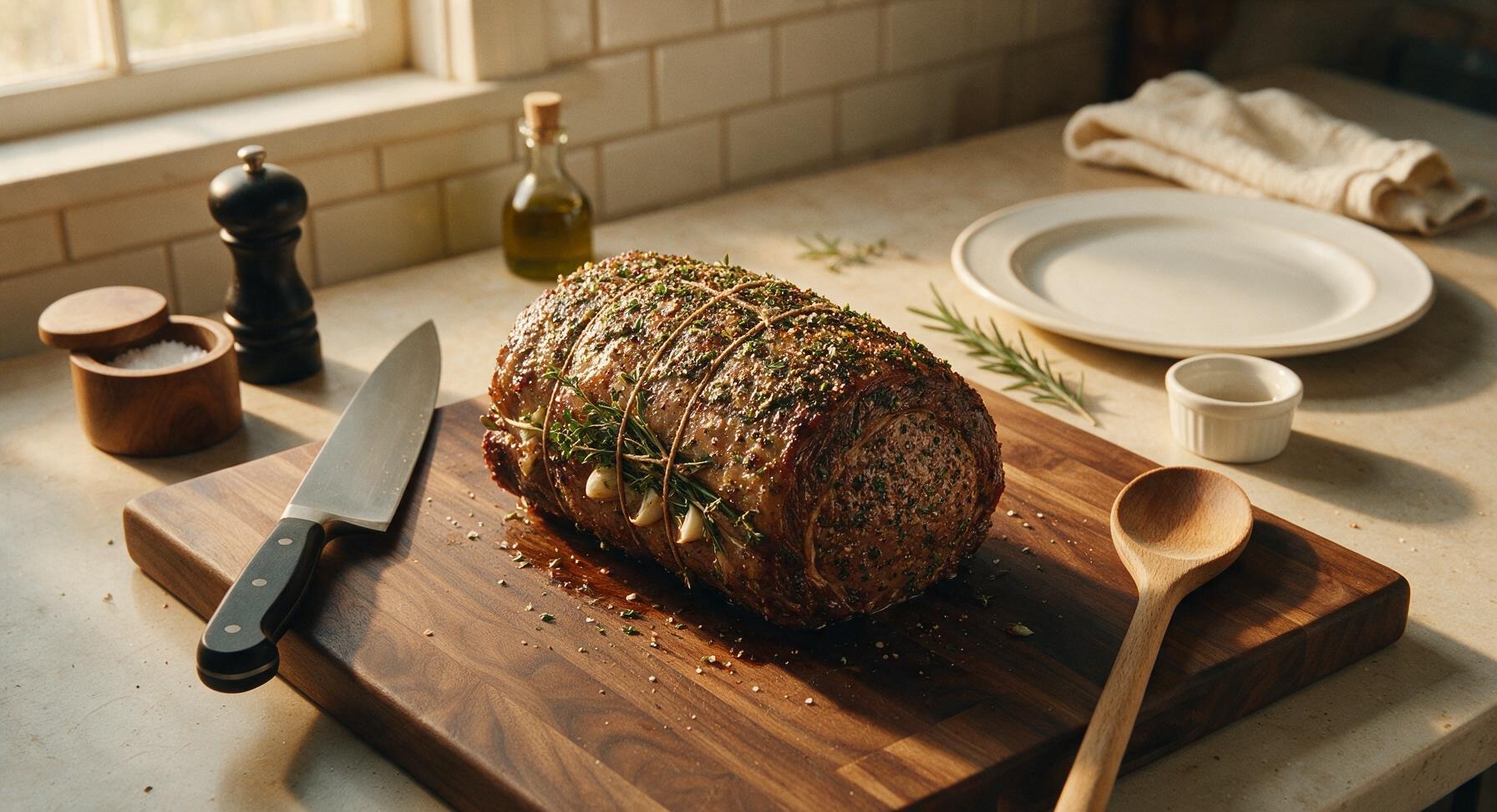
Step 2
step2:Season Roast Generously
Step 2
step2:Season Roast Generously
3

Rest to Room Temp

Leave the seasoned roast on the cutting board on the counter (do not return to the refrigerator) for 1 hour, until it reaches a consistent internal temperature of 65-70°F (18-21°C). This passive rest eliminates temperature gradients in the meat for perfectly even cooking.
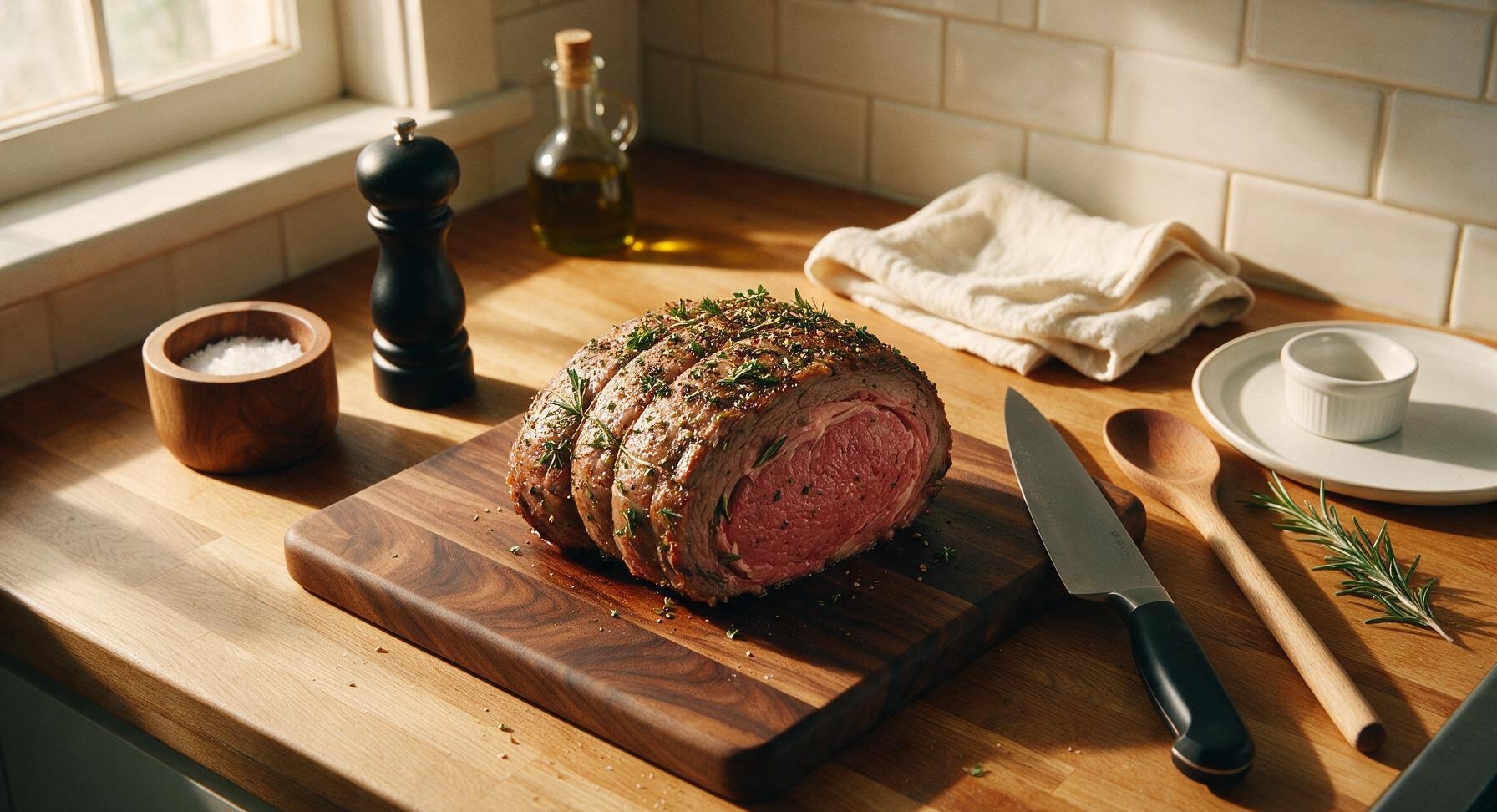
Step 3
step3:Rest to Room Temp
4

Prep Roasting Pan

Adjust your oven rack to the middle position and preheat the oven to 325°F (165°C). Set the stainless steel flat rack inside the heavy-gauge roasting pan, scatter the remaining 3 crushed garlic cloves and leftover herb sprigs across the pan bottom, then set the room-temperature roast fat-side up on the elevated rack.
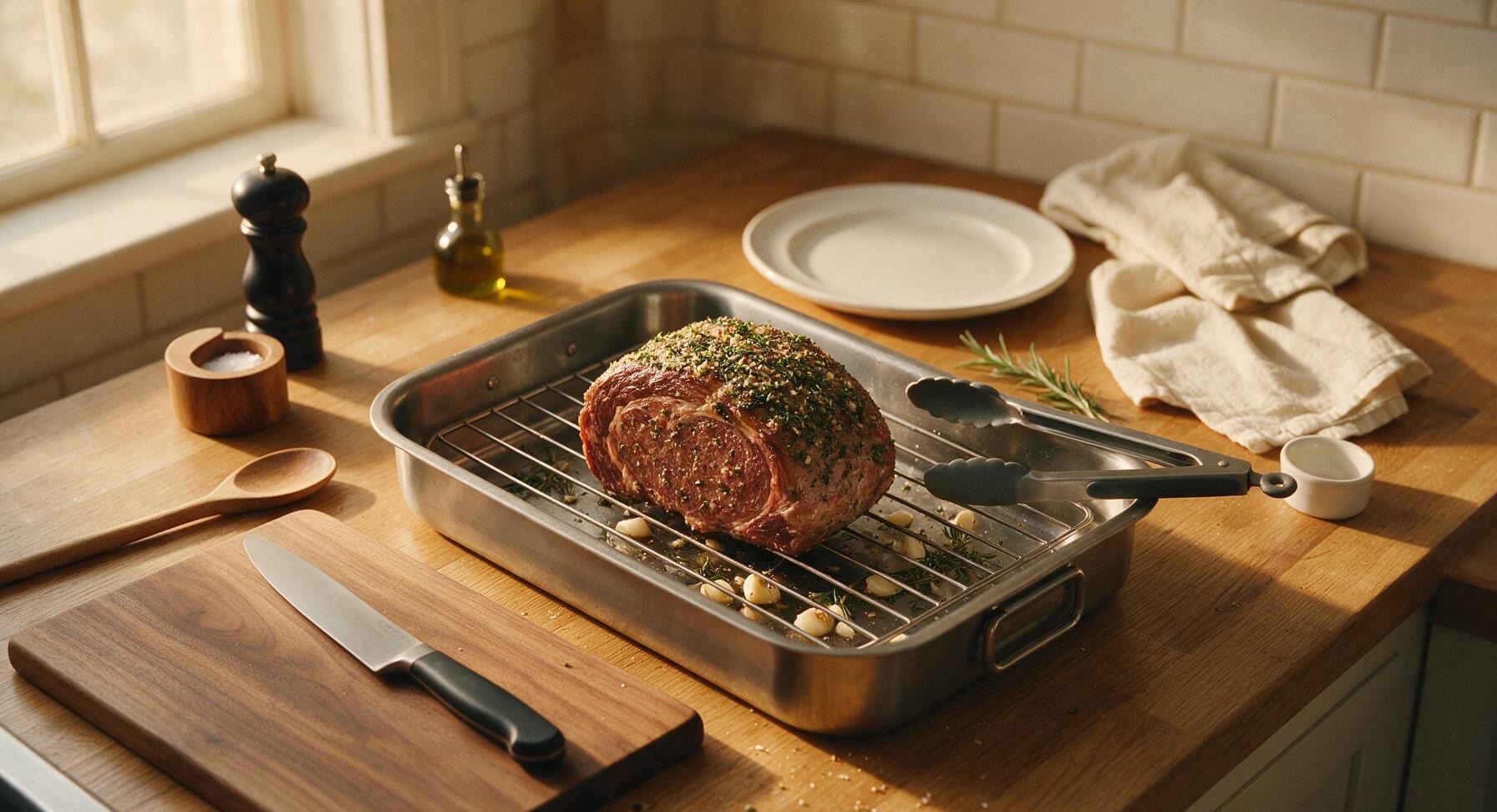
Step 4
step4:Prep Roasting Pan
5

Slow Roast to Temp

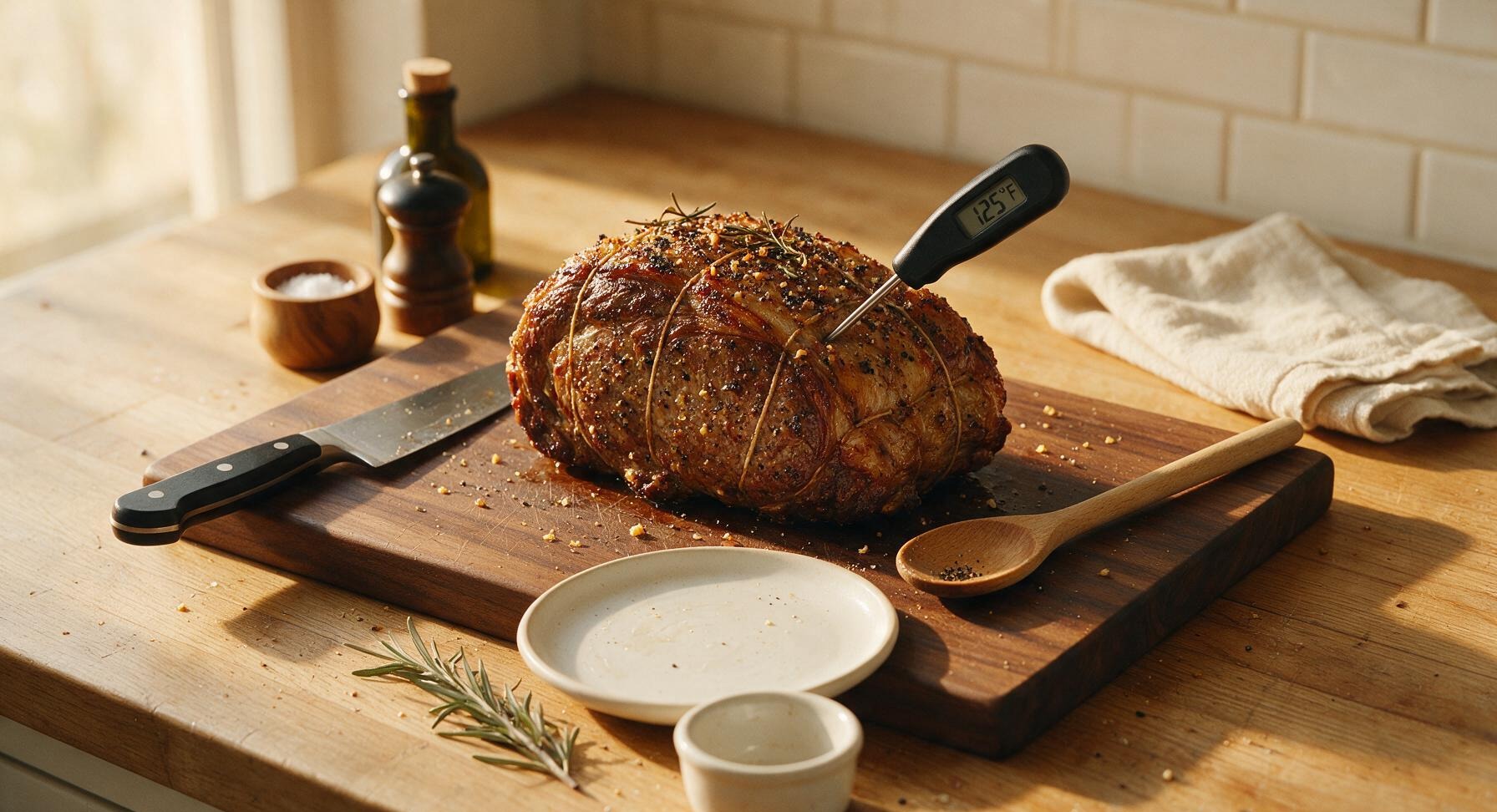
Transfer the roasting pan to the preheated oven. Cook for approximately 2 hours, avoiding opening the oven door for the first 90 minutes to maintain consistent heat. Check doneness by inserting the instant-read thermometer into the thickest part of the roast (avoiding fat or twine); pull the roast when it reads 125°F (52°C) for perfect medium-rare.
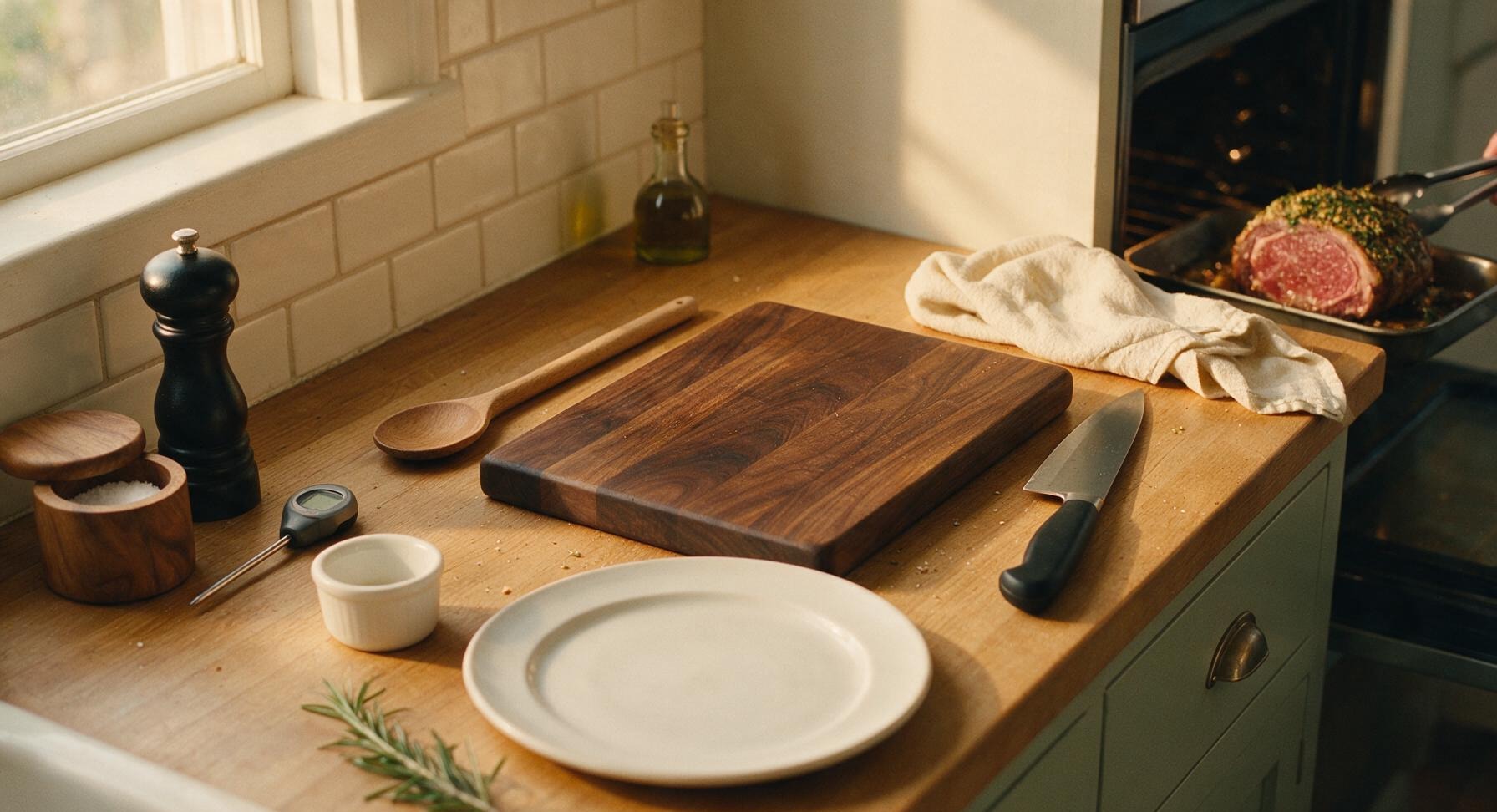
Step 5
step5:Slow Roast to Temp
Step 5
step5:Slow Roast to Temp
6

Rest Cooked Roast

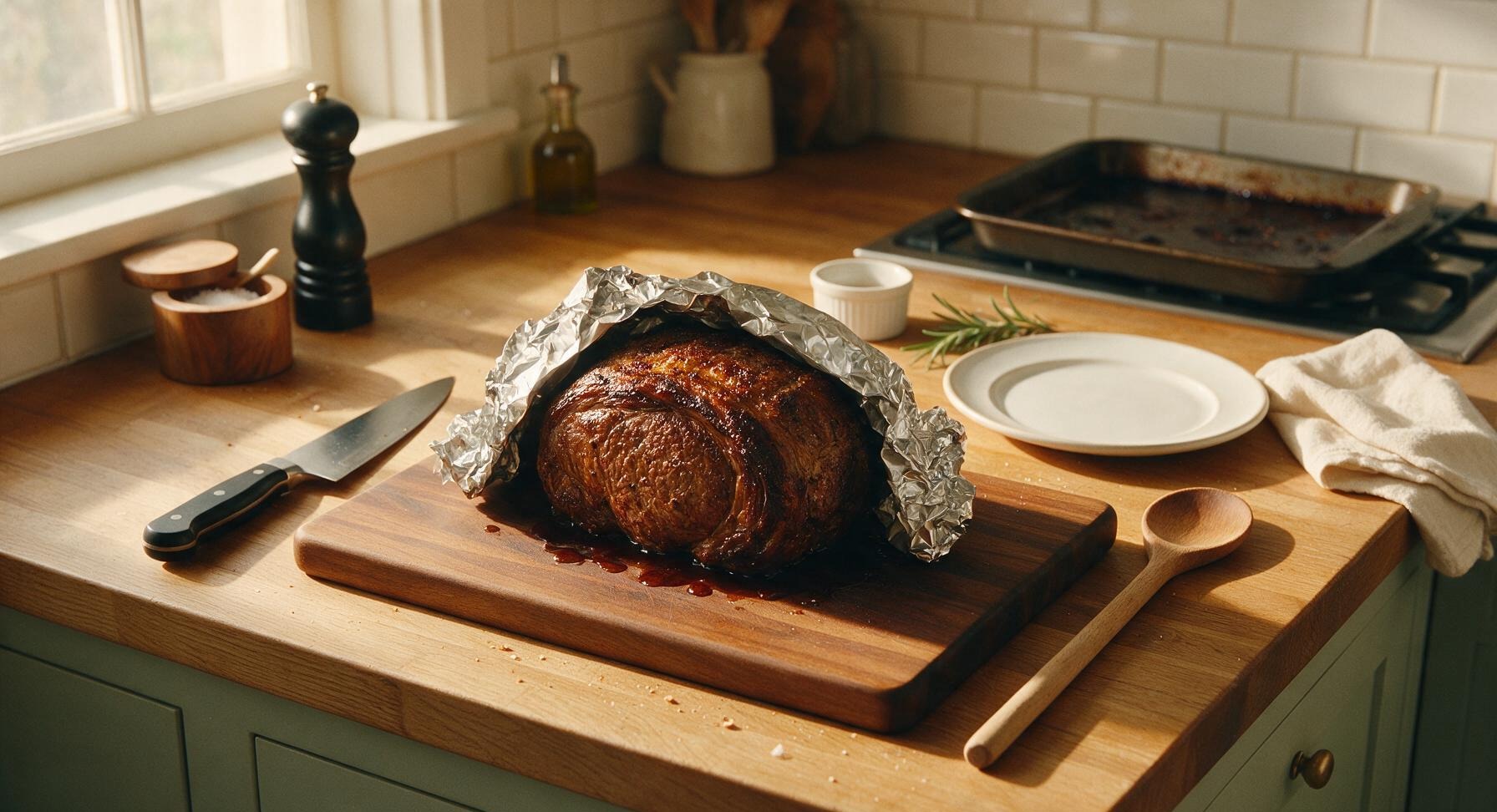
Use the silicone tongs to transfer the hot roasted prime rib back to the maple cutting board. Tent loosely with a sheet of crinkled aluminum foil, and let rest for 30 full minutes to allow muscle fibers to reabsorb juices before slicing.
Step 6
step6:Rest Cooked Roast
7

Make Pan Au Jus

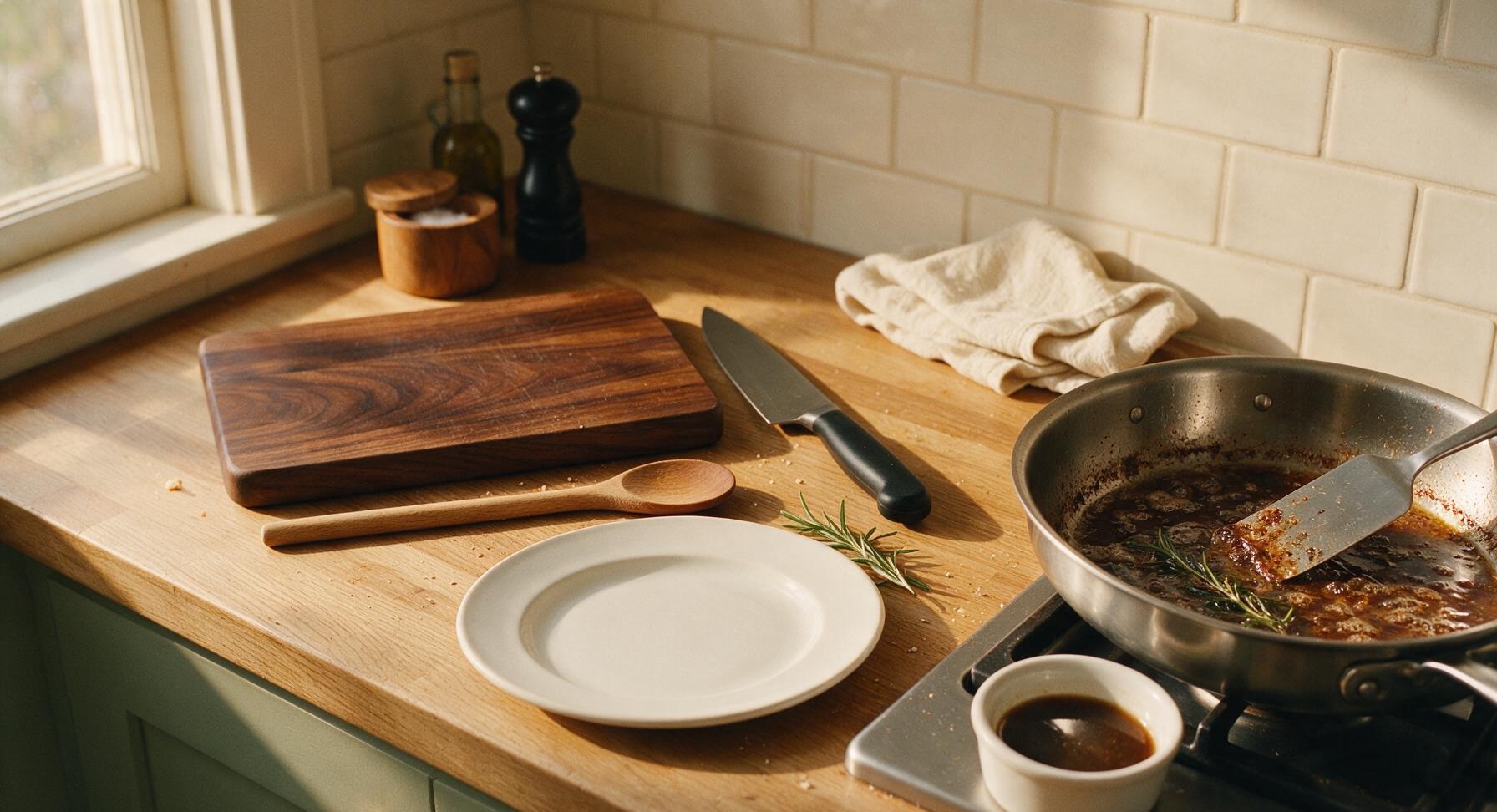
Set the roasting pan with collected drippings on the stovetop over medium heat. Add 1/4 cup low-sodium beef broth, and use the stainless steel spatula to scrape all browned, flavorful fond bits from the pan bottom. Simmer for 3 minutes until slightly reduced, then strain the liquid into a small matte white ramekin, discarding the cooked herbs and garlic solids.
Step 7
step7:Make Pan Au Jus
8

Slice and Plate

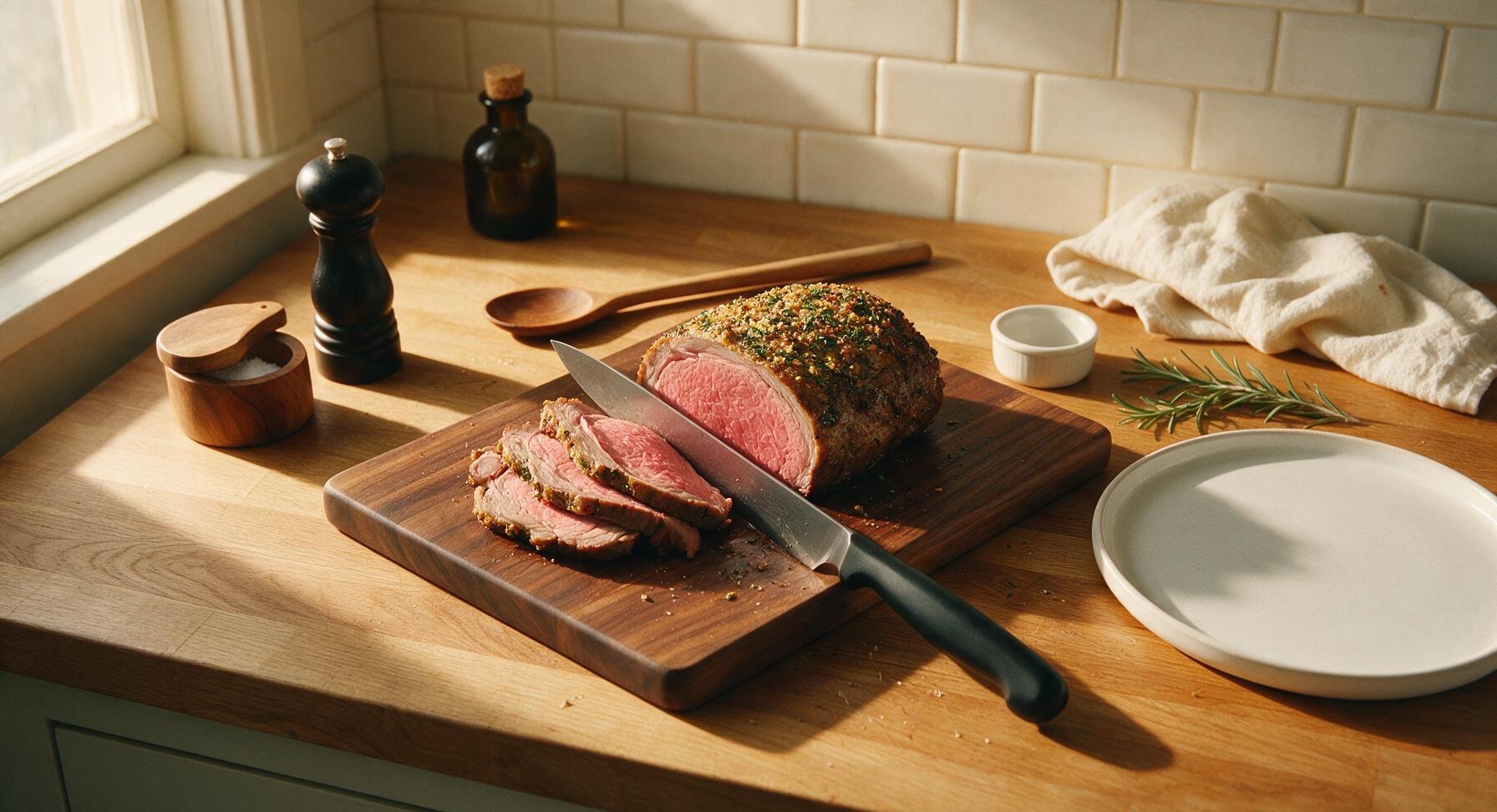
Remove and discard the kitchen twine from the rested roast. Use the chef knife to cut the meat into even 1/2-inch thick slices, cutting against the grain for maximum tenderness. Arrange slices fanned on the large oval matte white serving platter, garnish with a fresh rosemary sprig, and serve alongside the warm au jus.
Step 8
step8:Slice and Plate

Tips

1.Always let your roast come to room temperature for 1 full hour before cooking: cold meat cooks unevenly, creating a thick overcooked gray ring around the edge before the center reaches temperature, while room-temperature meat cooks evenly from edge to center.
2.Pull the roast 5°F before your target doneness: residual carryover cooking will raise the internal temperature by 5°F as it rests, so pulling at 125°F yields a perfect 130°F medium-rare center without any overcooked sections.
3.Resist the urge to slice immediately: a full 30-minute rest allows the meat’s muscle fibers to relax and reabsorb juices, so every bite stays juicy instead of letting all the flavorful liquid run out onto the platter when you cut.
✨ You May Also Like

Main Course
🍜 United Kingdom

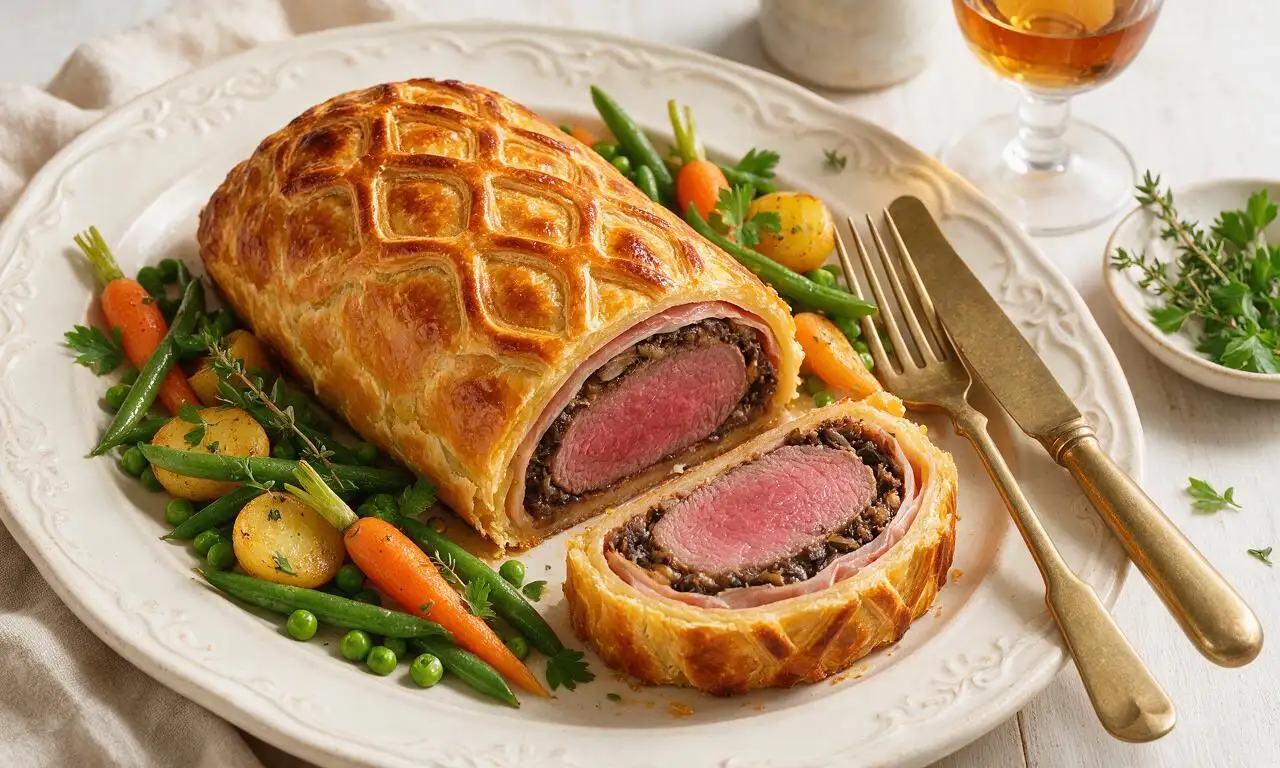
A showstopping classic of tender seared beef, savory mushroom duxelles, and crisp prosciutto wrapped in flaky golden puff pastry, baked to juicy perfection.

⏱️ 2 hours 1Main Course ★ 4.7
Main Course
🍜 India

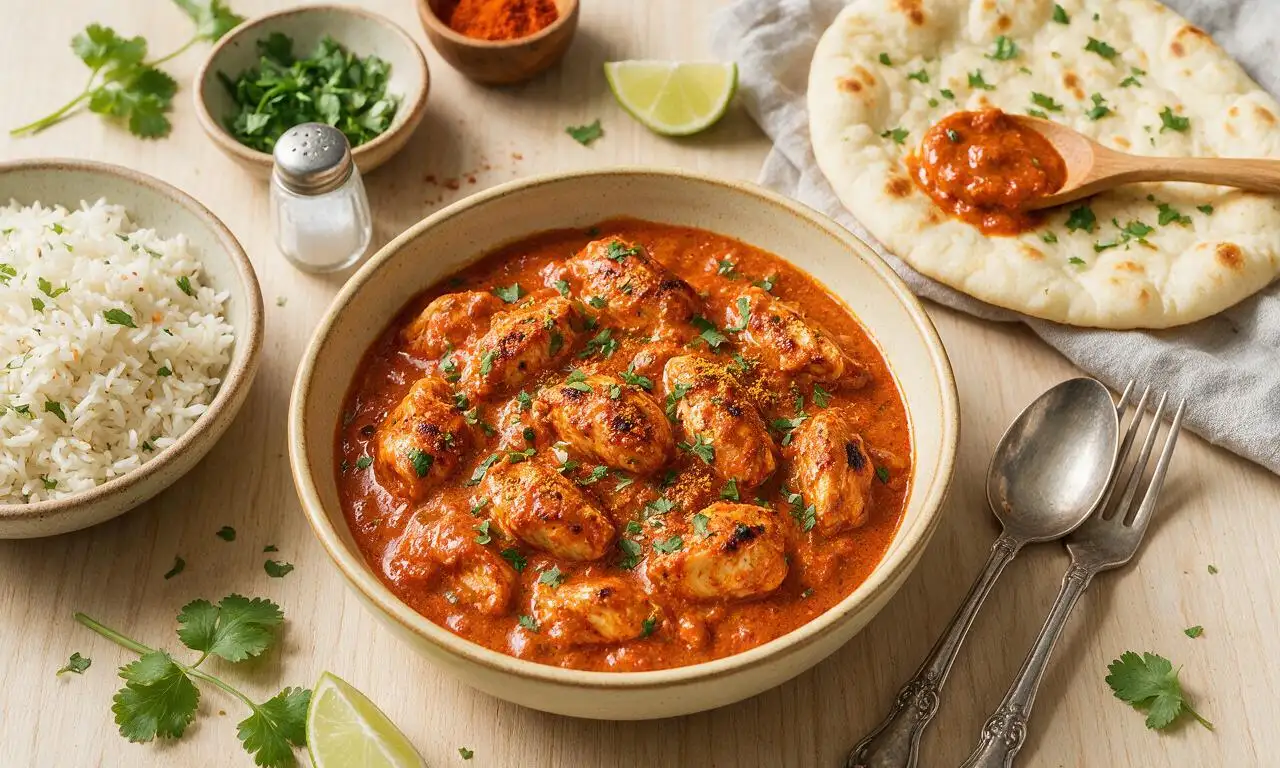
Tender charred marinated chicken simmered in a rich, spiced creamy tomato sauce, this iconic Anglo-Indian curry pairs perfectly with basmati rice or warm naan.

⏱️ 50 minuteMain Course ★ 4.6
Main Course
🍜 Thailand

Classic tangy, sweet, and savory Thai stir-fried rice noodles with shrimp, tofu, and crunchy garnishes, balancing all five core Thai flavor profiles.

⏱️ 30 minuteMain Course ★ 4.5
Main Course
🍜 United Kingdom

Crispy golden beer-battered cod and fluffy double-fried chips, served with tangy tartar sauce and malt vinegar: the timeless, beloved British pub comfort classic.

⏱️ 45 minuteMain Course ★ 4.7
Main Course
🍜 Mexico

Smoky, chile-marinated pork tacos with caramelized pineapple, fresh cilantro, and lime: a beloved classic Mexican street food perfect for casual summer gatherings.

⏱️ 1 hour 45Main Course ★ 4.8
Main Course
🍜 United States

Crunchy Fritos corn chips layered with savory beef chili and melted cheddar, topped with cool, zesty fixings for a beloved, cozy Tex-Mex comfort food.

⏱️ 35 minuteMain Course ★ 4.8

boneless prime rib:Frequently Asked Questions

1.What size boneless prime rib do I need per person? ▾
Plan for 8 ounces of raw boneless prime rib per guest, which cooks down to roughly 5–6 ounces of finished, tender meat as fat renders. If you want leftovers for sandwiches or quick weeknight meals, bump that up to 10–12 ounces per person. This 25% cook shrinkage buffer ensures no one leaves your holiday table hungry.
2.How far in advance should I salt the prime rib for the best results? ▾
For the juiciest, most evenly seasoned roast, salt it heavily with kosher salt 24–48 hours before cooking, leaving it uncovered on a wire rack in the fridge. This dry brine lets salt penetrate deep into the meat, breaks down tough muscle fibers, and helps the herb crust stick tightly to the exterior when you roast.
3.Can I use dried rosemary instead of fresh for the herb crust? ▾
Fresh rosemary delivers the brightest, most aromatic crust, but you can substitute dried if that’s all you have on hand. Use 1 teaspoon of crumbled dried rosemary for every 1 tablespoon of fresh, and mix it with garlic and pepper right before rubbing it on. Skip dried rosemary that’s been in your pantry over 6 months, as it will have little flavor left.
4.What internal temperature should I aim for to get a perfect medium-rare center? ▾
Pull the roast out of the oven when its thickest part registers 125°F on an instant-read thermometer for that ideal rosy medium-rare. It will continue to cook 5–10°F as it rests, bringing the final temperature up to 130–135°F, which is tender, juicy, and free of unappetizing gray, overcooked edges.
5.Do I need to tie the boneless prime rib before roasting? ▾
Yes, tie it at 1.5-inch intervals with plain cotton kitchen twine before applying the herb rub. Boneless ribeye rolls have uneven marbling and loose sections that spread apart as they cook, and tying keeps the roast a uniform, compact shape so it cooks evenly, slices cleanly, and holds its crisp herb crust all over.
6.How long should I let the roast rest before slicing, and why is that step important? ▾
Let the roast rest for 20–30 minutes tented loosely with foil before slicing. As it cooks, all the meat’s juices get pulled toward the hot exterior; resting lets those juices redistribute evenly through every slice, so you don’t end up with a pool of liquid on your cutting board and dry, flavorless meat.
7.My pan drippings look really dark—can I still use them to make au jus? ▾
Deep brown, caramelized drippings are ideal for rich au jus, but if you spot hard, blackened burnt bits, scrape those out and discard them first. Add a half cup of low-sodium beef broth and quarter cup of water to the pan, simmer over medium heat while scraping up golden fond, then strain lightly for a smooth, bitter-free jus.
8.Can I cook this prime rib in a convection oven instead of a conventional one? ▾
Absolutely—convection ovens circulate hot air, which creates an even crispier herb crust and more consistent cooking. Lower your oven temperature by 25°F from the standard recipe setting, and start checking the roast’s internal temperature 15 minutes early, since convection cooks about 25% faster than conventional heat.
9.What oven rack position is best for roasting prime rib? ▾
Place your roast on the middle oven rack, set in a heavy-bottomed roasting pan fitted with a wire rack. Elevating the roast off the pan bottom lets hot air circulate under it for an even crust all around, and the middle position keeps the herb crust far enough from the heating element to avoid burning before the center cooks through.
10.Can I add other herbs to the crust besides rosemary? ▾
Of course! Fresh thyme, chopped fresh sage, or a tiny bit of minced oregano pair beautifully with rosemary for the crust. Stick to hardy, woody herbs that stand up to high roast heat without burning; delicate herbs like parsley or basil work best as a post-cook garnish, since they turn bitter when roasted for long periods.
11.How do I keep the garlic in the crust from burning while the roast cooks? ▾
Mince garlic finely rather than leaving it in large chunks, and press it firmly into the meat along with rosemary and pepper so it adheres to the surface instead of falling into the hot pan. If you notice garlic turning dark brown more than 30 minutes before the roast is done, tent the top loosely with a small piece of foil to shield it.
12.What if some of my guests prefer their prime rib more done than medium-rare? ▾
The easiest fix is to carve off a few thinner end slices first, which are naturally slightly more well-done from being closer to the roast’s exterior. Pop those slices on a hot skillet with a splash of au jus for 30–60 seconds to bring them up to medium or medium-well, so you don’t overcook the entire roast for everyone else.
13.Do I need to sear the prime rib on the stovetop before roasting to get a crisp crust? ▾
You don’t need a separate stovetop sear if you start the roast at 450°F for the first 15 minutes to kickstart crust formation, then drop the heat to 325°F for the remainder of cook time. That initial high heat caramelizes the meat’s surface and toasts the herb rub perfectly, without the hassle of maneuvering a heavy hot roast on the stove.
14.Can I make this roast ahead of time for a holiday dinner? ▾
For the best texture and crisp crust, prime rib is best cooked right before serving, but you can apply the salt and herb rub 24 hours in advance and keep it in the fridge to cut down on day-of work. If you cook early, hold it wrapped tightly in a 200°F oven for up to an hour; avoid refrigerating and reheating, which makes meat tough and crust soggy.
15.What’s the best way to slice boneless prime rib for serving? ▾
Use a long, sharp carving knife to cut clean, even ½-inch thick slices against the grain of the meat. You don’t need to saw back and forth—let the weight of the knife glide through the tender roast to keep slices neat, and serve them immediately with a spoonful of warm pan au jus drizzled lightly over the top.
16.Why is my prime rib coming out tough instead of melt-in-your-mouth tender? ▾
Tough prime rib almost always stems from one of two common issues: either it was cooked to too high of an internal temperature, drying out the tender marbled meat, or it was sliced with the grain instead of against it. Double check your thermometer as you cook, and identify the muscle grain direction before carving for perfect tender slices.
17.Can I turn the pan au jus into thicker gravy if I prefer that? ▾
Absolutely! If you want a richer, thicker gravy instead of thin au jus, sprinkle 1–2 tablespoons of all-purpose flour into the pan drippings after removing the roast, cook for 1 minute over medium heat to eliminate raw flour taste, then whisk in beef broth slowly until it reaches your desired thickness, and season with extra black pepper to taste.
18.What side dishes pair best with this herb-crusted prime rib? ▾
This rich, savory roast pairs perfectly with classic holiday sides that cut through its fatty, beefy flavor: creamy horseradish sauce, buttery mashed potatoes, roasted root vegetables, crisp green beans almondine, or a light arugula salad with lemon vinaigrette. Stick to sides that don’t overpower the herb and beef flavors for a perfectly balanced meal.

Comments (8)

2 days ago

OMG this prime rib was the star of our Sunday family dinner last weekend! The herb crust was so fragrant and crispy, and the au jus was perfect for dipping — not too salty, just deep, rich beefy flavor. My husband said it’s better than the steakhouse we go to for our anniversary, and my kids loved it so much they even asked for seconds! Total game changer for special occasion meals. Only tiny note: I didn’t have fresh thyme so I used dried, and it still turned out amazing.

yesterday

Wait how much dried thyme did you use instead of fresh? I never know the conversion for herbs and I’m making this for my in-laws this weekend!

2 hours ago

So glad your family loved it! For future reference, the general dried-to-fresh herb ratio is 1:3, so if the recipe calls for 1 tablespoon of fresh thyme, use 1 teaspoon of dried. Hope your in-laws are impressed!

yesterday

Made this for my girlfriend’s birthday dinner last night and she absolutely lost her mind. The crust had that perfect crunch, the meat was juicy all the way through, and the au jus came together so easily with the pan drippings — I didn’t even have to run to the store for extra ingredients. Cook time was spot on too, I didn’t have to guess when it was done thanks to the temp guide. 10/10 will be making this for our next holiday potluck.

2 hours ago

Love to hear that! The pan drippings are really the secret to that deep au jus flavor, no store-bought stock needed if you scrape up all those browned bits from the pan. Hope you two had a wonderful birthday celebration!

3 days ago

SO good! I was a little intimidated because prime rib feels like such a fancy, easy-to-mess-up cut, but the step-by-step instructions made this totally approachable even for a medium-difficulty recipe. I made a 4lb roast on Sunday and sliced up the leftovers for French dip sandwiches all week — game changer for work lunches, I didn’t get bored of it once! The herb crust adds so much flavor even to the cold leftover slices.

1 week ago

Tried this for our Christmas early dinner with the extended family and it was a hit, but I ran into a small issue! My crust got a little too dark almost burnt about 45 minutes before the roast hit the target temp. Did I do something wrong? The meat itself was perfect, just the crust was a touch charred for some of my pickier relatives.

5 days ago

I had the same thing happen the first time I made it! I just tented a little piece of foil over the top once the crust got to that golden brown color I wanted, and it didn’t burn at all the second time. Worked like a charm!

3 days ago

Sorry to hear the crust got a little too dark! Oven temps can vary a lot between models, so if your crust reaches your desired crispness before the roast is done, tent loosely with aluminum foil as mentioned above to prevent burning. Next time it’ll be perfect!

5 days ago

First time ever making prime rib and I was so nervous, but this recipe made me look like a total pro! The au jus is so much better than the packet stuff my mom always used, I can’t believe I ever bought the pre-made version. My new husband already requested this for every birthday and Thanksgiving from now on. Only thing I wish I’d done is let the meat come to room temp a little longer like the note said, it took a tiny bit longer to cook, but no big deal!

3 days ago

Congrats on nailing your first prime rib! That room temp note is easy to skip but it makes such a difference for even cooking — you’re already ahead of the game for next time. So glad it’s a new household favorite!

2 weeks ago

Made this after a long weekend backpacking trip with my buddies as a celebratory feast, and holy cow it hit the spot. The herb blend is chef’s kiss — rosemary, garlic, a little black pepper, it doesn’t overpower the beef but complements it perfectly. We dipped our roasted potatoes in the extra au jus too, zero waste over here. Will absolutely be adding this to my regular rotation for group trips when we have access to an oven.

3 days ago

Brought this to my neighborhood block party last weekend and people were hovering around the platter before I even set it down! I was worried a boneless roast would be less flavorful than bone-in, but the herb crust and au jus more than make up for it. I got at least 8 requests for the recipe, which is always the sign of a winner. Pro tip: slice it a little thinner than you think for potlucks so more people can get a serving!

30 minutes ago

Thanks for the thin slice tip! I’m bringing this to my office holiday potluck next week and was worried I wouldn’t have enough for everyone, that’s such a smart call.

2 hours ago

Quick question before I make this for my New Year’s Eve party! I’ve heard so many good things about this recipe and I’m so excited, but can I prep the herb rub and coat the roast the night before, or will that make the crust soggy? I want to get as much prep done ahead as possible so I can hang out with my guests instead of being stuck in the kitchen the whole time. Also, does the pan au jus reheat well if I make it a little ahead too?

30 minutes ago

I prepped the rub and coated my roast 12 hours ahead last week, kept it covered in the fridge, and the crust was still perfectly crispy when I cooked it! Just take it out of the fridge an hour before cooking to come up to temp like the recipe says. I reheated the leftover au jus in the microwave for 30 seconds and it was totally fine, no weird texture.

5 minutes ago

Great question! You absolutely can apply the herb rub to the roast the night before — just keep it loosely covered in the fridge, and it will actually help the flavors penetrate the meat even better. The au jus reheats beautifully on the stovetop over low heat or in short microwave bursts, just give it a quick stir before serving. Hope your NYE party is a hit!