
Bourbon Barrel Imperial Stout

title 1
Bourbon Barrel Imperial Stout
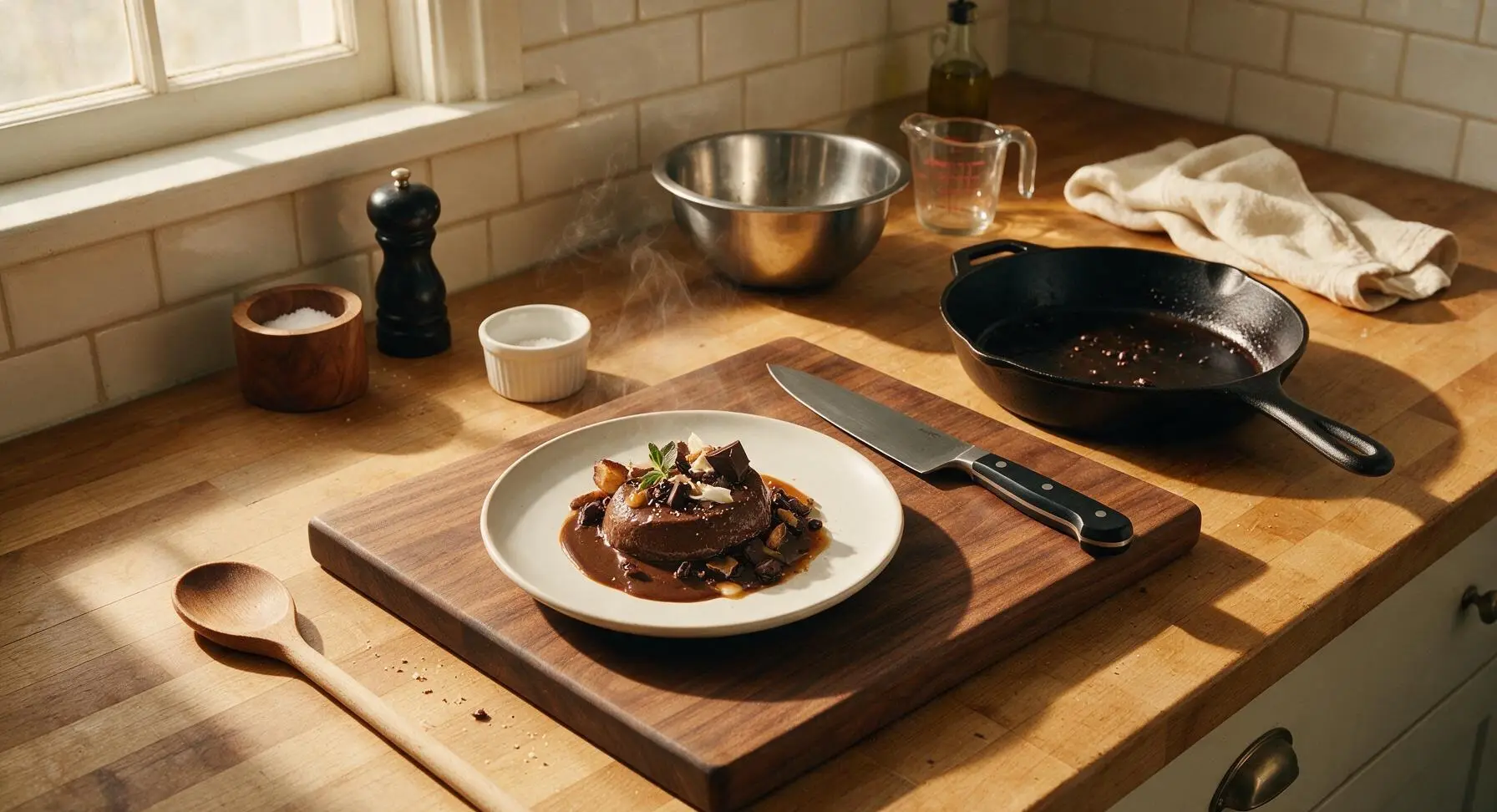
⏱️ cook time 2 hours (plus 6 weeks passive fermentation, aging, and carbonation)
🍽️ servings 40
⚡ Difficulty hard

intro

Velvety, 10% ABV imperial stout aged on bourbon-soaked oak, with layered notes of dark chocolate, roasted coffee, vanilla, and warm caramel, perfect for slow winter sipping.

Ingredients
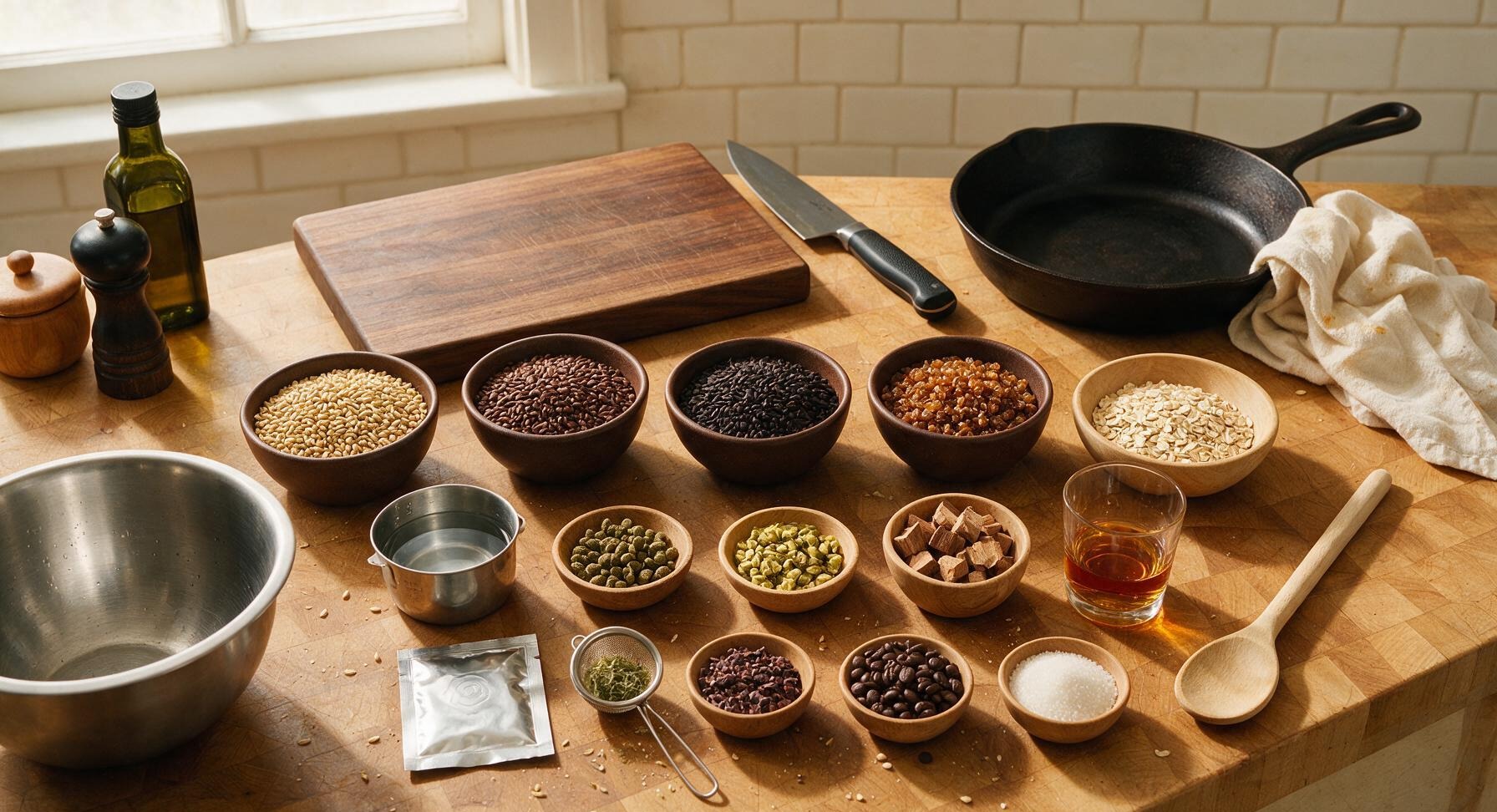
Filtered water 5 gallons
2-row pale malt 10 lb
Chocolate malt 2 lb
Roasted barley 1 lb
Caramel malt 120L 1 lb
Flaked oats 8 oz
Northern Brewer hops 2 oz
Cascade hops 1 oz
US-05 American ale yeast 1 packet (11.5g)
Medium toast oak cubes 4 oz
Small-batch bourbon 2 oz
Roasted cacao nibs 2 oz
Medium roast whole coffee beans 1 oz
Irish moss 1 tsp
Priming corn sugar 4 oz

Steps

1

Sanitize Brewing Equipment

Start by spraying all wort-contact surfaces of the brew kettle, mash paddle, stirring spoon, strainer, carboy, airlock, and thermometer with no-rinse food-grade sanitizer. Wipe away excess sanitizer with a clean section of the navy cotton towel, checking every surface to ensure no dry, unsanitized spots remain. Proper sanitization prevents bacterial infections that cause sour off-flavors, and takes approximately 15 minutes to complete.
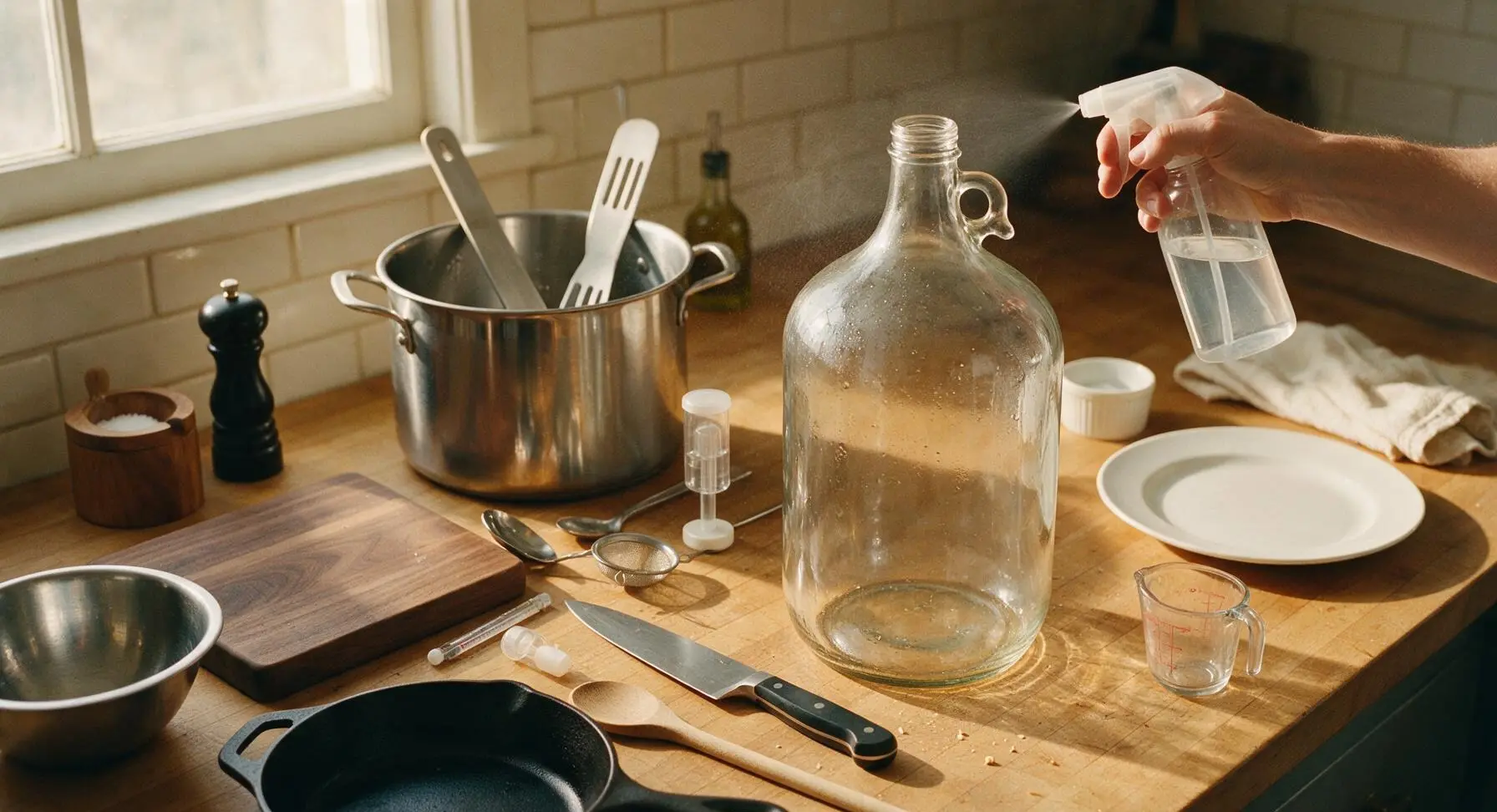
Step 1
step1:Sanitize Brewing Equipment
2

Heat Mash Water

Pour 4 gallons of filtered water into the sanitized brew kettle, and set over medium-high heat. Clip the digital thermometer to the kettle rim, and heat the water to a steady 152°F (67°C), adjusting heat as needed to avoid boiling. This temperature is ideal for converting grain starches into fermentable sugar during the mash.
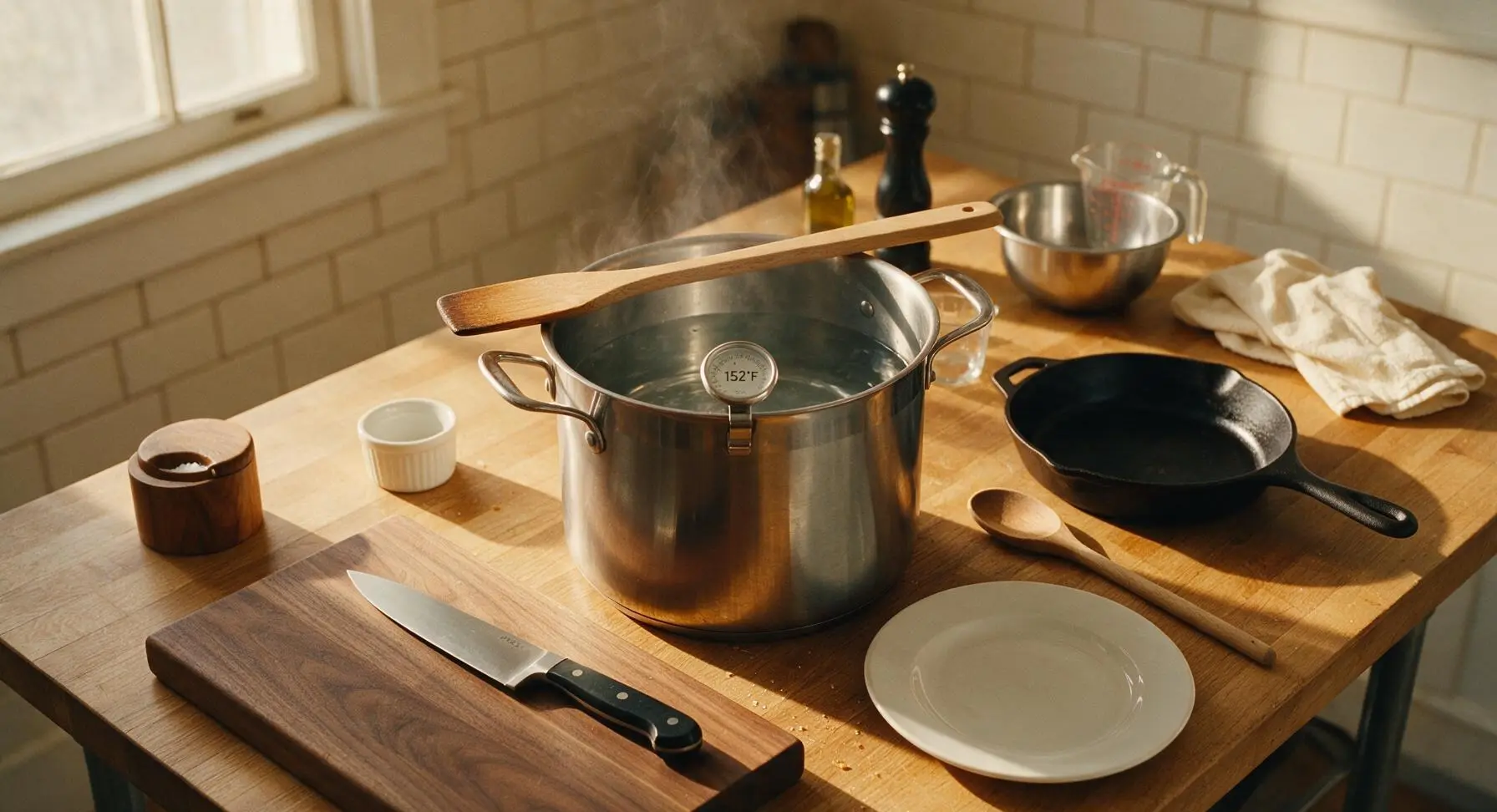
Step 2
step2:Heat Mash Water
3

Mash the Grain Bill

Slowly pour all crushed malts (2-row pale, chocolate malt, roasted barley, caramel 120L, flaked oats) into the heated water, stirring continuously with the mash paddle to break up dry flour clumps. Once all grain is added, the thick, porridge-like mash is held at a steady 150-155°F for 60 minutes, stirring every 15 minutes to prevent hot spots. The liquid will darken to a deep chocolate brown as sugars leach from the grains.
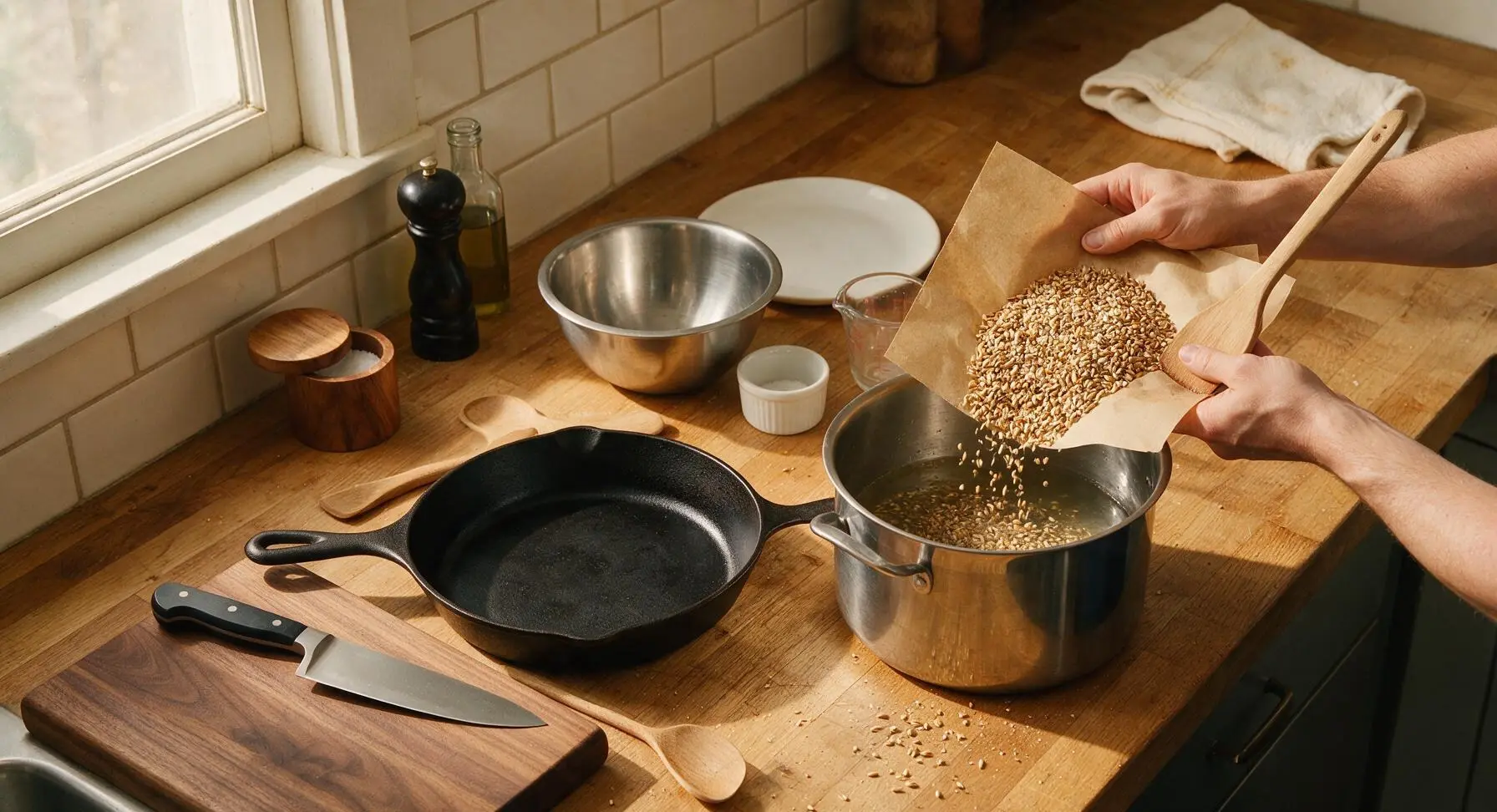
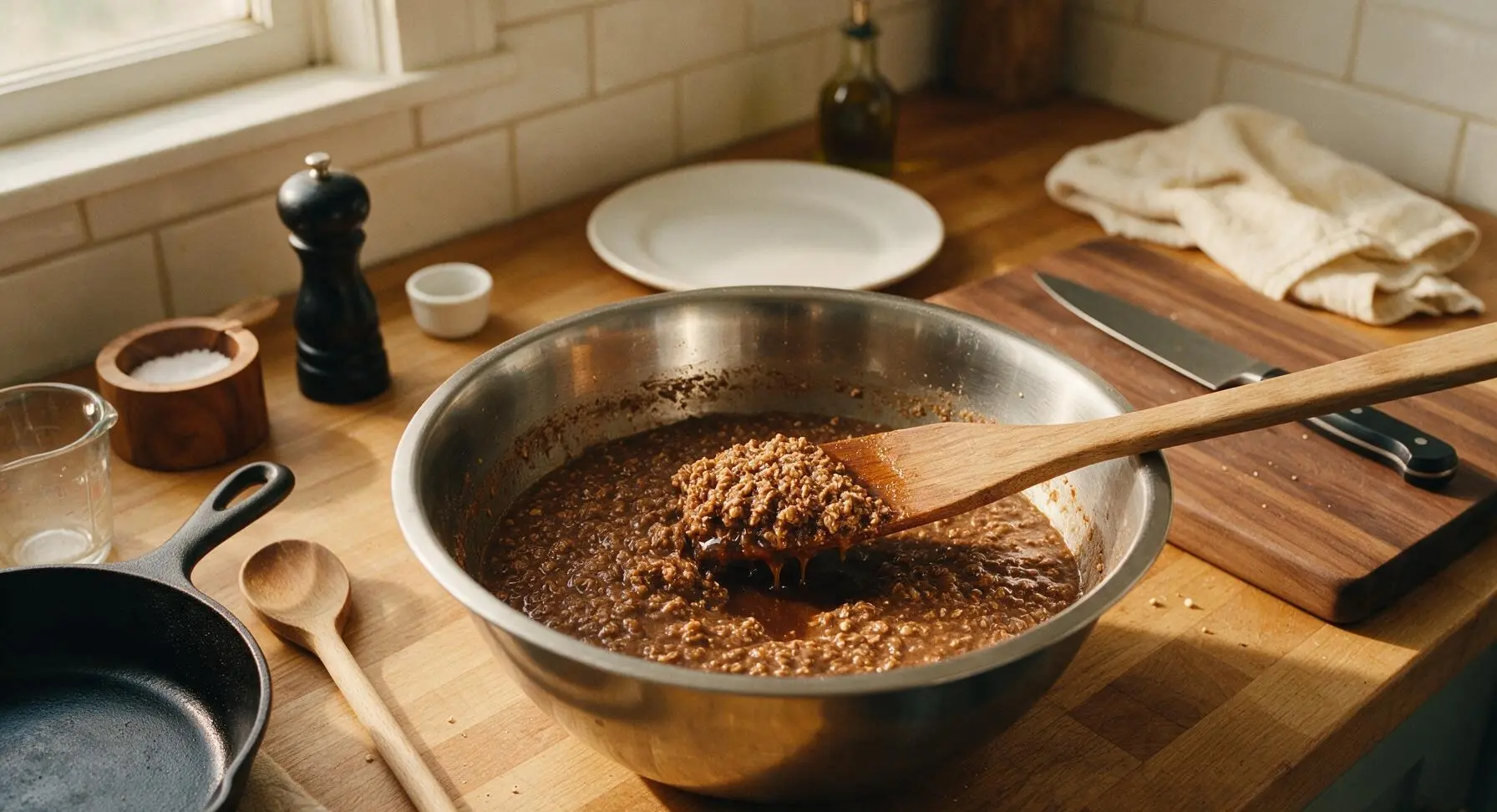
Step 3
step3:Mash the Grain Bill
Step 3
step3:Mash the Grain Bill
4

Boil the Sweet Wort

After the 60-minute mash completes, add 1 gallon of additional filtered water to the kettle, then raise heat to bring the strained sweet liquid (called wort) to a gentle rolling boil. Maintain the boil for 60 minutes total: add 2oz Northern Brewer hops at the start of the boil for bittering, add 1 tsp Irish moss with 15 minutes remaining for clarity, and add 1oz Cascade hops with 5 minutes remaining for bright citrusy aroma. Adjust heat as needed to prevent messy boilovers.
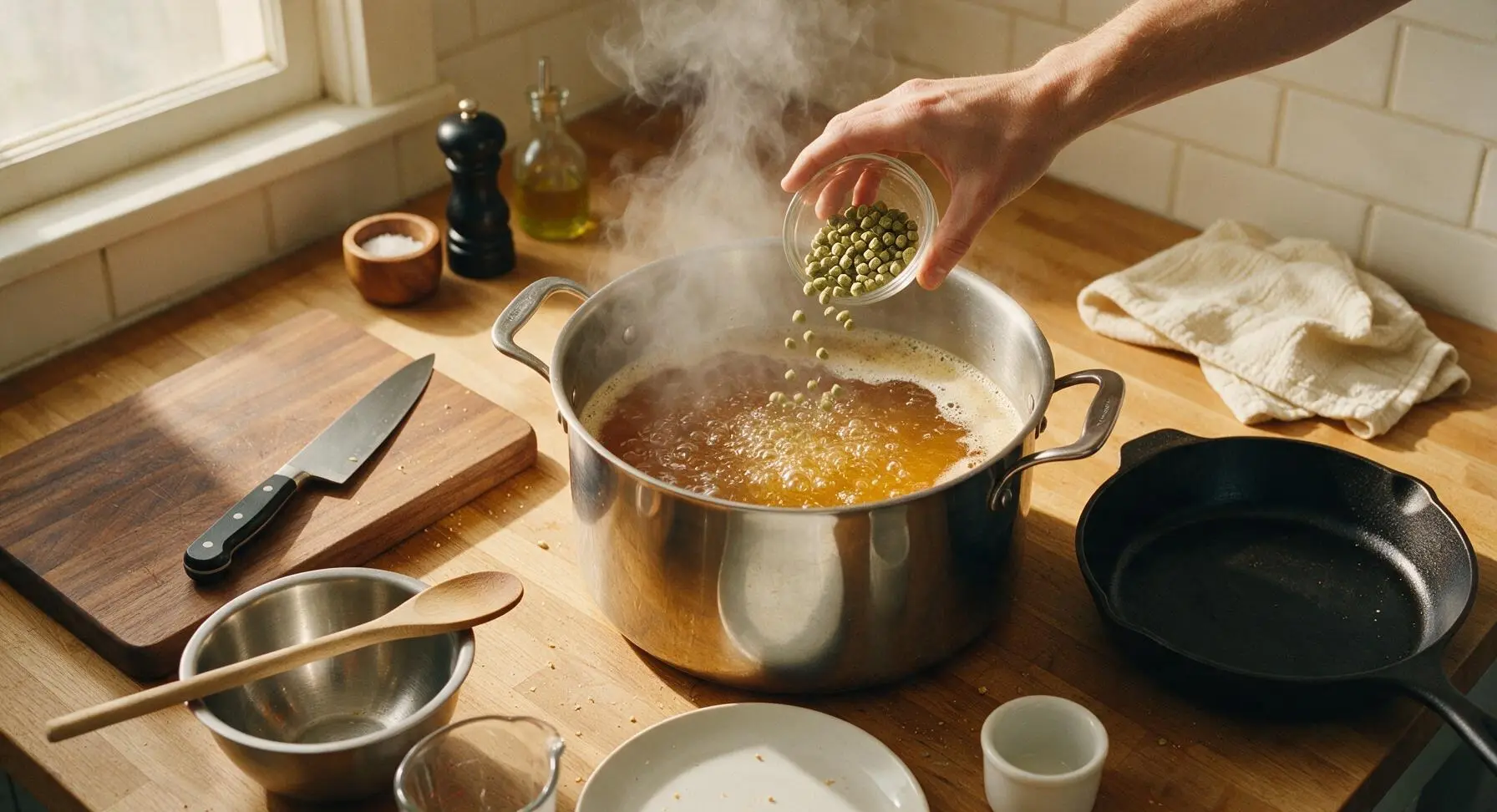
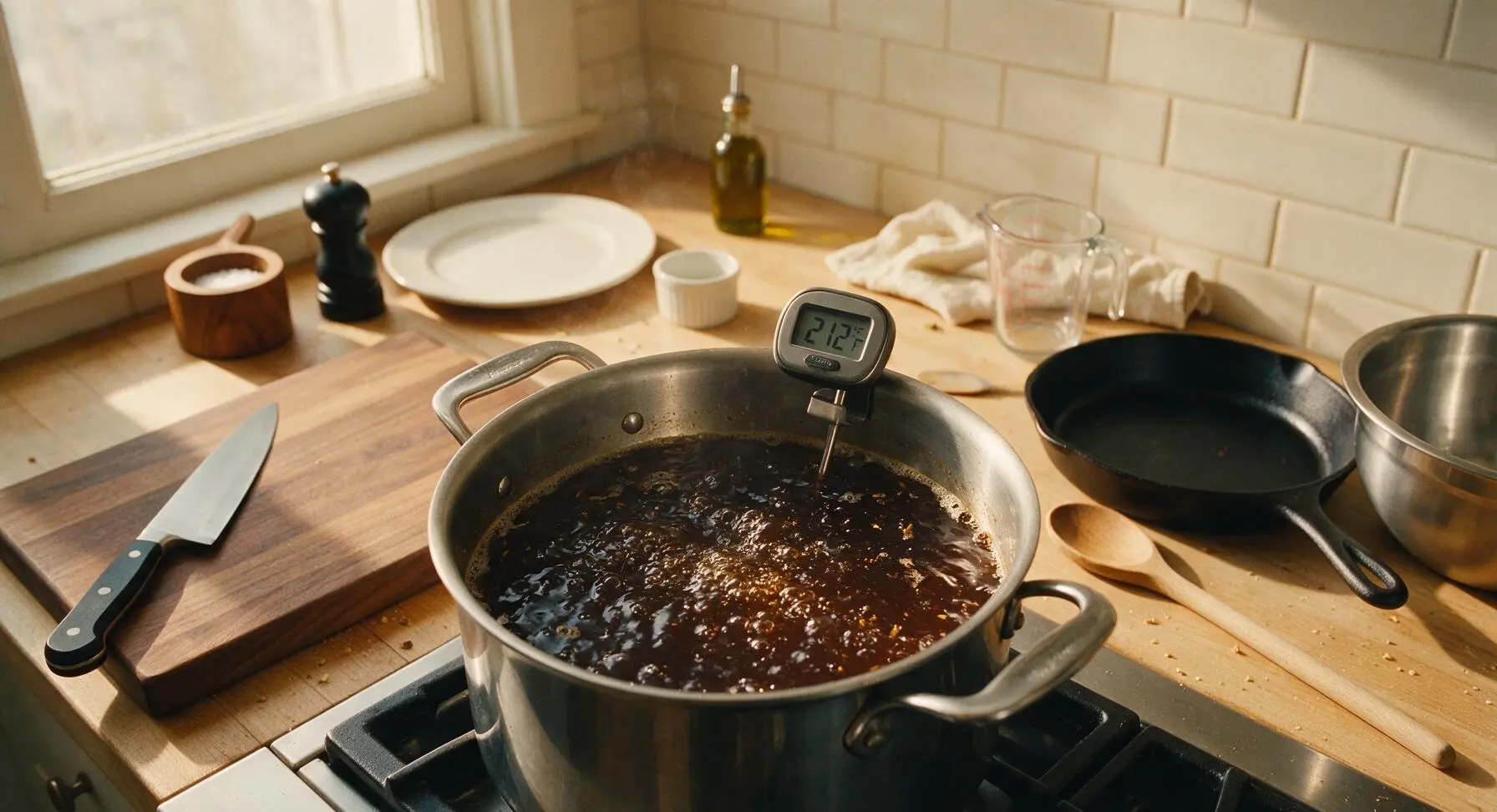
Step 4
step4:Boil the Sweet Wort
Step 4
step4:Boil the Sweet Wort
5

Cool and Transfer Wort

Remove the kettle from heat once the boil finishes, and cool the wort as quickly as possible to 70°F (21°C) using an ice bath (positioned just off frame). Once cooled, pour the wort through the fine-mesh strainer into the sanitized glass carboy, straining out all spent grain and hop sediment. Top up with small amounts of filtered water if needed to reach exactly 5 gallons of liquid in the carboy.
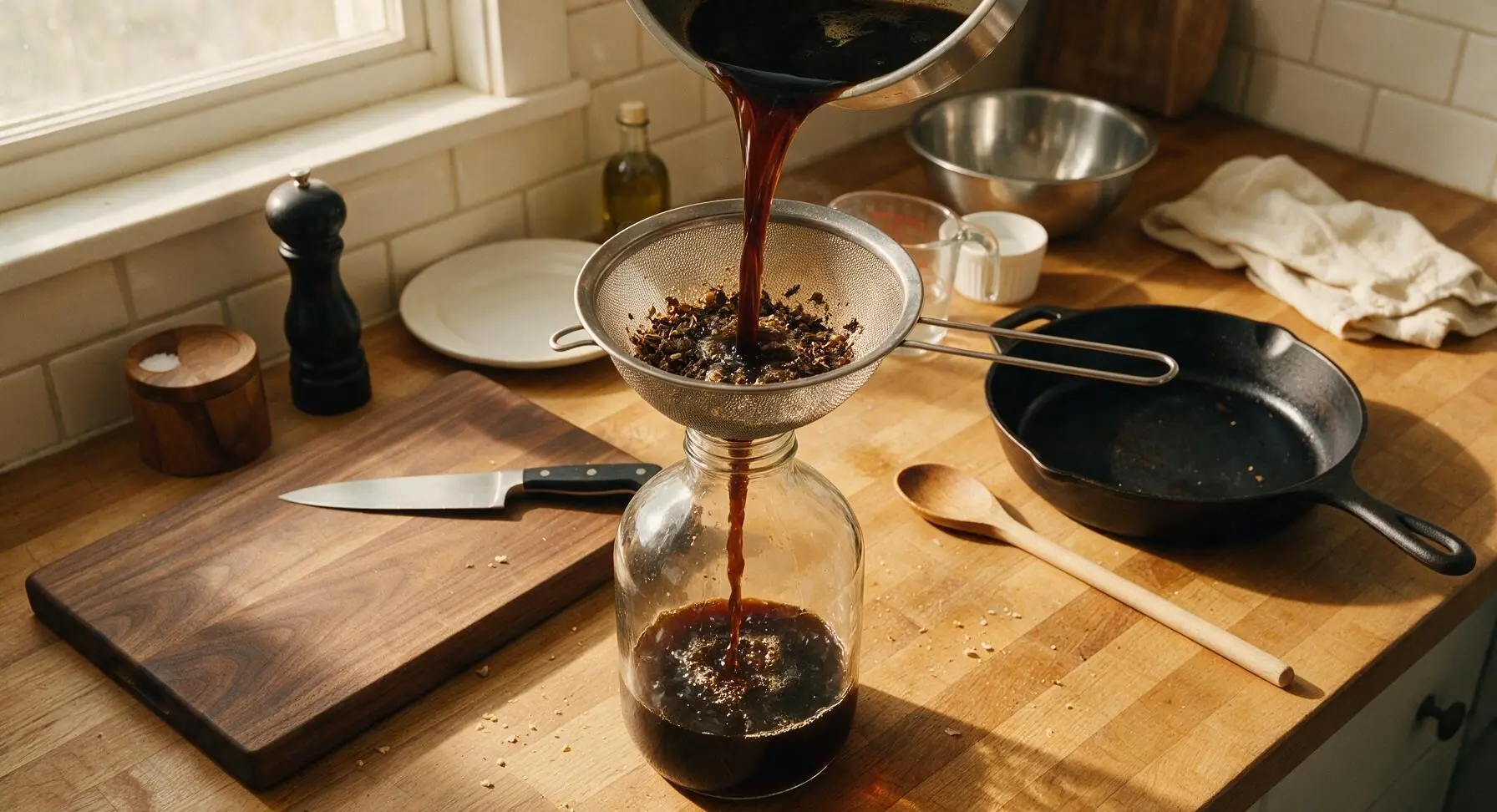
Step 5
step5:Cool and Transfer Wort
6

Pitch Ale Yeast

Sprinkle the entire packet of US-05 American ale yeast evenly across the surface of the cooled wort in the carboy. Seal the carboy neck with a sanitized rubber stopper, then insert the water-filled 3-piece airlock into the stopper. Store the carboy in a dark, 68°F (20°C) space for 2 weeks of primary fermentation, until airlock bubbling slows to less than 1 bubble per minute, signaling fermentation is nearly complete.
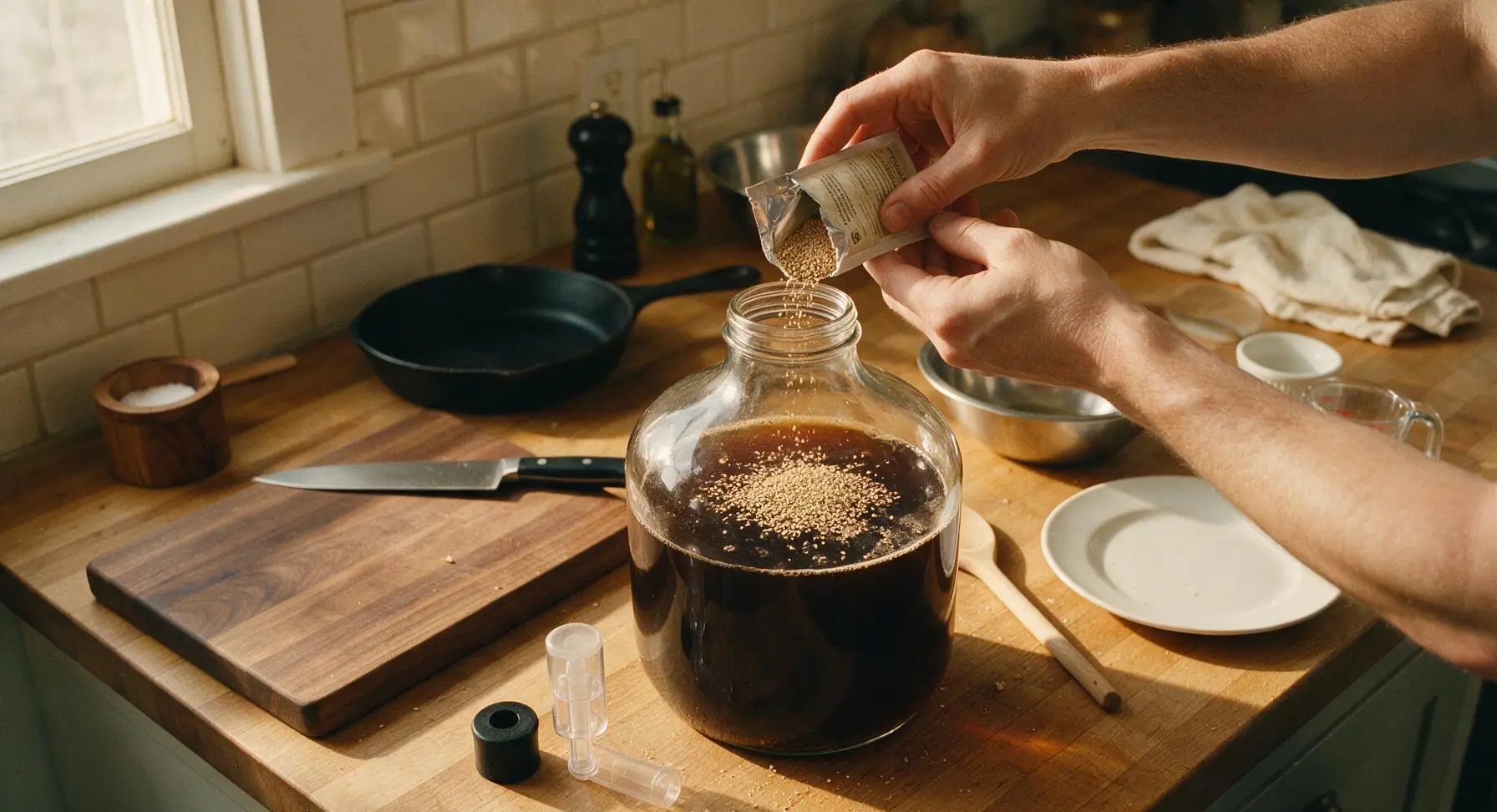
Step 6
step6:Pitch Ale Yeast
7

Add Bourbon Oak Adjuncts

After 2 weeks of primary fermentation, sanitize the carboy opening, then add the bourbon-soaked oak cubes (pre-soaked 48 hours in 2oz bourbon), roasted cacao nibs, and whole coffee beans directly to the fermented stout. Reseal the carboy with the airlock, and let the beer condition for 2 additional weeks at 68°F to infuse bourbon, vanilla, chocolate, and coffee flavors. Taste a small sample after 10 days, leaving the beer on adjuncts longer for a stronger barrel character if desired.
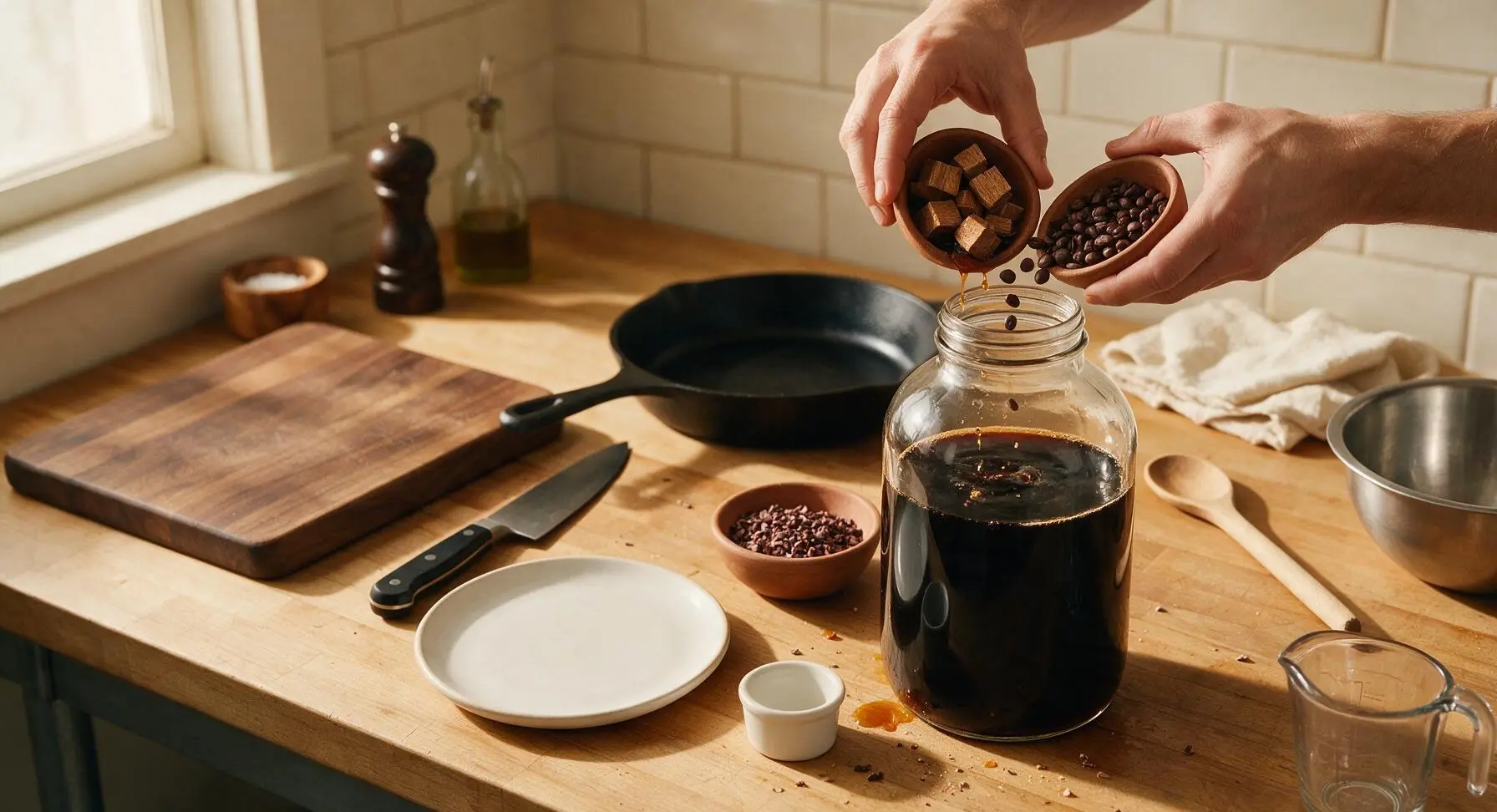
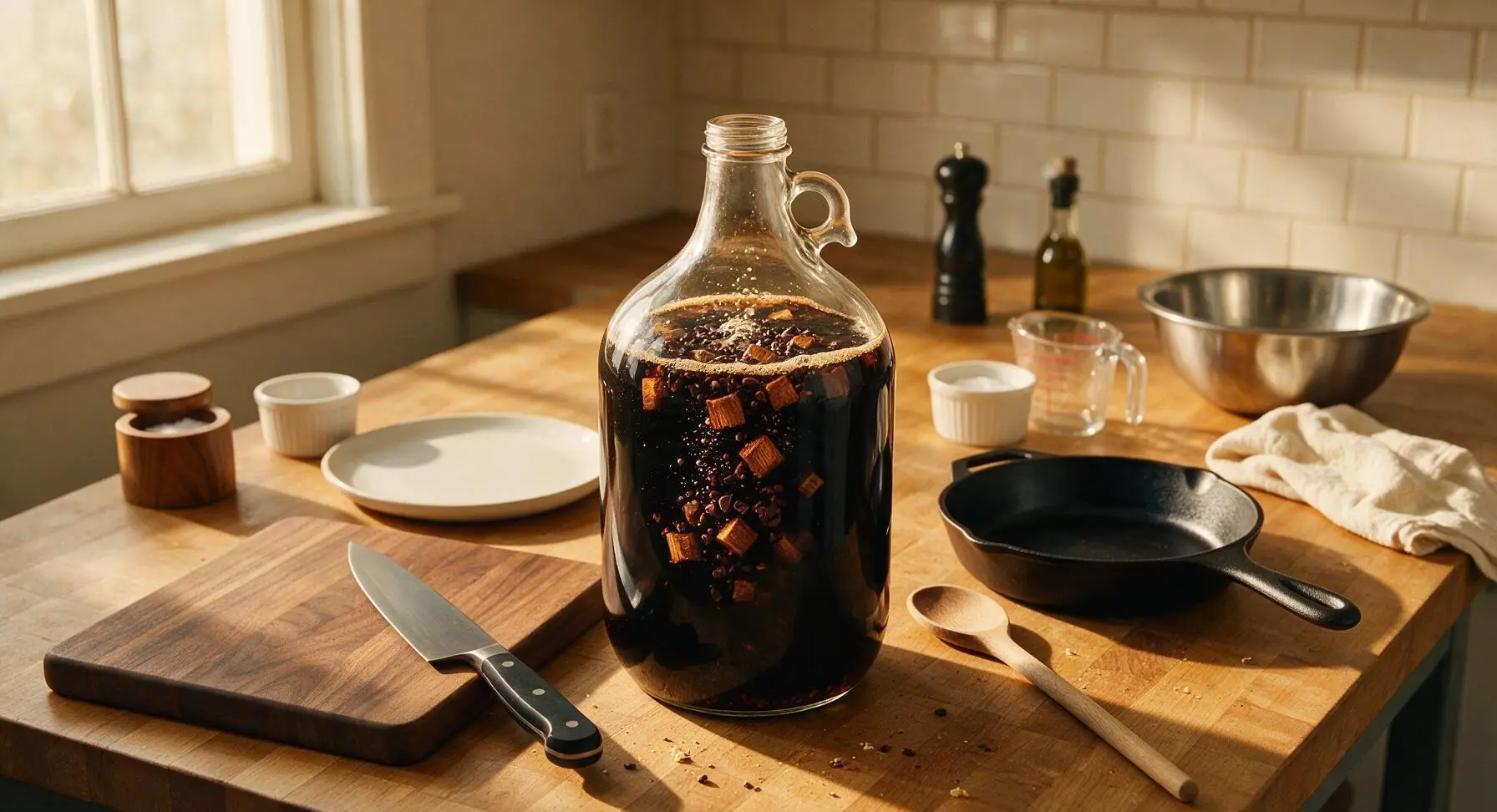
Step 7
step7:Add Bourbon Oak Adjuncts
Step 7
step7:Add Bourbon Oak Adjuncts
8

Bottle and Carbonate

After 2 weeks of conditioning on oak and adjuncts, siphon the finished stout into sanitized 12oz amber beer bottles, adding dissolved corn sugar evenly across the batch to create natural carbonation. Cap bottles tightly, and store in a dark 68°F space for 2 final weeks to carbonate and mellow. Once carbonated, chill bottles to 50°F (10°C) before serving for the best flavor.
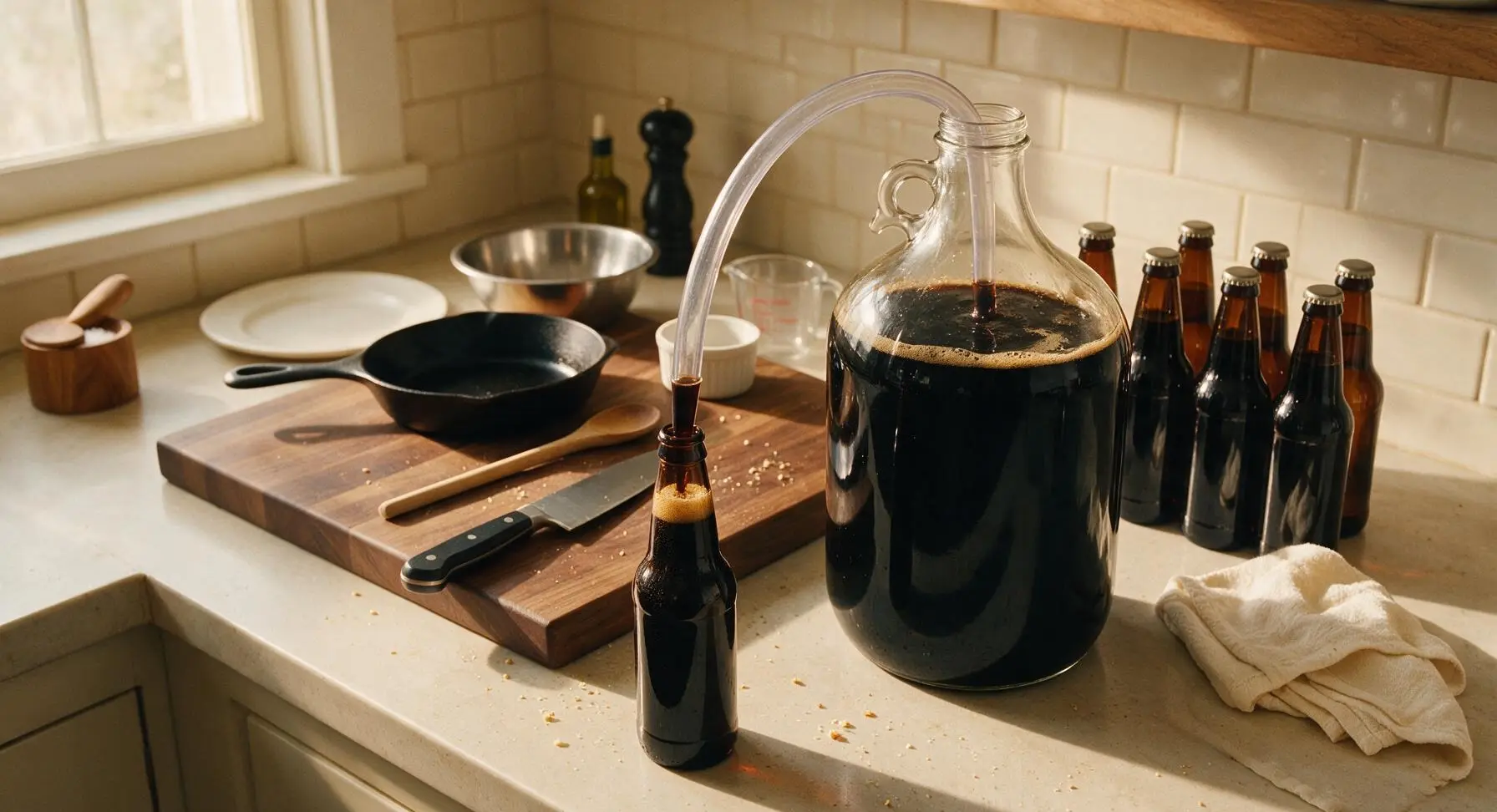
Step 8
step8:Bottle and Carbonate

Tips

1.Always fully sanitize every surface that will touch cooled wort: even trace amounts of common kitchen bacteria will create sour, vinegary off-flavors that ruin an entire batch. No-rinse brewing sanitizer is far more reliable than household bleach, which can leave plastic-like off-flavors if not rinsed completely.
2.Soak oak cubes in 2oz of bourbon for 48 hours before adding them to the fermenter: this pulls more vanilla and caramel notes from the charred oak, and the small amount of added bourbon amplifies the classic barrel-aged profile without making the beer taste harsh or overly boozy.
3.Serve this stout at 50-55°F (10-13°C), not ice cold: near-freezing temperatures mute the rich chocolate, vanilla, and bourbon notes, while the slightly warmer serving temperature lets all the layered, roasty flavors come through for slow sipping.


✨ You May Also Like

Drinks & Beverages
🍜 Mexico

A bright, balanced tequila-based cocktail with zesty fresh lime, smooth orange liqueur, and a signature salt rim, perfect for warm summer sipping.

⏱️ 5 minutesDrinks & Beverages ★ 4.9
Drinks & Beverages
🍜 United States

Thick, creamy, nostalgic classic vanilla milkshake with a rich, smooth texture, topped with whipped cream and a cherry for cool, sweet refreshment.

⏱️ 5 minutesDrinks & Beverages ★ 4.7
Drinks & Beverages
🍜 United States

A bright, golden strong ale with fruity banana-clove notes, subtle hop spice, and soft carbonation, brewed in classic Trappist Tripel tradition.

⏱️ 2 hours aDrinks & Beverages ★ 4.5
Drinks & Beverages
🍜 United States

A frothy, nostalgic American soda fountain treat pairing bubbly cold root beer with creamy vanilla ice cream, perfect for cooling down at warm weather gatherings.

⏱️ 20 minuteDrinks & Beverages ★ 4.8
Drinks & Beverages
🍜 United States

Tart, funky, effervescent American Wild Ale is a complex fruity craft beer brewed with wild yeast, delivering bright, zesty notes perfect for warm-weather sipping.

⏱️ 2 hours aDrinks & Beverages ★ 4.4
Drinks & Beverages
🍜 United States

Bright, bubbly copycat of the iconic American caramel cola, balanced with citrus and warm spice, perfect for sipping ice-cold on hot days.

⏱️ 15 minuteDrinks & Beverages ★ 4.8

Bourbon Barrel Imperial Stout:Frequently Asked Questions

1.How long do I need to age this stout to get balanced bourbon oak flavor without harsh woody notes? ▾
Aim for 2–4 weeks on bourbon-soaked oak at cool room temperature during secondary fermentation, then bottle condition for a minimum of 3 months total. Taste a small sample every week after the first 2 weeks on oak; pull the oak too early and you’ll miss rich vanilla depth, too long and you’ll get astringent, woody bitterness that overwhelms chocolate and roast notes.
2.Do I need special yeast to hit this recipe’s 10% ABV target? ▾
Yes, skip standard low-tolerance ale yeasts—opt for a high-alcohol-tolerant strain like US-05 or WLP007, and add a dose of yeast nutrient 72 hours into fermentation to avoid stuck fermentation. Be sure to aerate your wort thoroughly before pitching yeast; under-aerated or underpitched batches will stall early, leaving cloying, off-flavors instead of a smooth, boozy finish.
3.Can I get that signature bourbon barrel flavor without buying a full used bourbon barrel? ▾
Absolutely—most homebrewers don’t have space or budget for a 53-gallon bourbon barrel! Use 1–2 ounces of medium-toast American oak cubes soaked for 48 hours in 4 ounces of 90+ proof bourbon, then add the cubes (and a splash of the bourbon, to taste) to secondary. This delivers that same warm vanilla and bourbon depth at a fraction of the cost and hassle.
4.What’s the best serving temperature and glassware for this stout? ▾
Skip the ice-cold temps you’d use for light lagers—pour this stout at 55–60°F (13–16°C) into a wide-mouth snifter or tulip glass to let dark chocolate, roasted coffee, and caramel notes open up. Let it rest 2–3 minutes after pouring; you’ll pick up far more subtle vanilla and bourbon warmth when it’s not chilled to near-freezing.
5.I don’t have Caramel Malt 120L on hand—what’s a reliable substitute? ▾
If you can’t source 120L caramel malt, swap it for an equal weight of 80L caramel malt plus 10% extra chocolate malt to boost that deep, toffee-like caramel backbone. Don’t use lighter caramel malts (like 20L or 40L) as a straight 1:1 swap; they won’t deliver the rich, dark caramel sweetness that balances the bitter bite of roasted barley and chocolate malt.
6.How long will this imperial stout stay drinkable after bottling? ▾
Stored in a cool, dark spot away from big temperature swings (a basement or interior closet works perfectly), this stout will age beautifully for 1–2 years. The sharp boozy bourbon edge will mellow over time, and the roast and chocolate notes will blend into an even smoother sip. Just avoid storing it in direct sun or above 70°F, which causes stale, skunky off-flavors fast.
7.Why does the recipe call for filtered water instead of regular tap water? ▾
Unfiltered tap water often contains chlorine, chloramine, or unbalanced mineral levels that clash with the stout’s layered flavors. Chlorine in particular reacts with roasted malts to create harsh, medicinal, band-aid-like off-flavors that ruin the final brew. If you only have tap water, run it through a basic activated carbon filter first, or leave it uncovered for 24 hours to let free chlorine dissipate.

Comments (7)

1 week ago

OMG, I’ve been chasing that perfect bourbon barrel stout taste from my favorite local brewery for years and this recipe is an absolute game changer! Yeah the 6 week wait was torture, but that first sip? Smooth, boozy, hints of vanilla and oak, exactly what I wanted. Brought a growler to our last potluck and everyone was begging for the recipe. 10/10 would make again, already got a second batch going with some extra cocoa nibs added in.

3 days ago

Wait how much extra cocoa nibs did you add? I’m about to rack mine to secondary and was thinking of tossing some in too!

2 days ago

So glad you loved it! For anyone adding cocoa nibs, we recommend 2-4 oz of roasted nibs added during secondary fermentation to avoid harsh bitter notes. Can’t wait to hear how your tweaked batch turns out!

2 weeks ago

Full transparency, I was intimidated by how hard this recipe was labeled at first, but the step-by-step instructions made it so much less scary! My husband is a huge stout fan and I made this for his birthday, he said it’s better than the $15 bomber bottles we pick up at the liquor store. Only thing I messed up was my first gravity reading, oops, but it still turned out SO good. Already planning to brew this for our fall family dinner next month.

1 week ago

That makes our day to hear! Don’t stress too much about the gravity reading slip-up—so many home brewers do that when they’re first starting out, and it’s awesome your batch still came out great. Happy early birthday to your husband, and we hope the family dinner batch is a hit!

5 days ago

Solid recipe, don’t get me wrong, but wow that 2 hour active cook time is no joke! I had to run out mid-boil for a kid emergency and almost burned the wort, definitely block off the full time with no distractions. The end result was great after the 6 weeks, though mine came out a little less oaky than I expected, probably because I skimped a little on the bourbon oak cubes. Next time I’ll follow the measurements exactly, no cutting corners.

2 days ago

Wait, hold up—has anyone tried making this with a lower ABV tweak? I love the flavor profile but I’m bringing drinks to a neighborhood cookout next month and don’t want everyone getting knocked on their butts after one pint, lmao. The flavor sounds chef’s kiss, just need it a little more sessionable for a daytime event.

1 day ago

I did that last batch! Cut the base malt by 2 lbs and skipped the extra brown sugar, got it down to around 7% instead of the 11% the original recipe makes, still had that great bourbon vanilla note. Perfect for cookouts, I brought mine to a 4th of July party and it went fast!

3 days ago

Game. Changer. I’ve been home brewing for 8 years and this is hands down the best imperial stout recipe I’ve ever tried. The bourbon barrel notes are so spot on, no weird artificial extract flavor here, just that smooth, warm barrel-aged taste you pay premium prices for. My buddies from my home brew club did a blind taste test against a commercial barrel stout and mine won! I will say, don’t skip the wait time— I snuck a sip at 4 weeks and it was way too harsh, that extra 2 weeks of aging makes all the difference.

30 minutes ago

Oh that’s such good info about the wait time! I’m at week 4 right now and was so tempted to crack a bottle this weekend, I’ll force myself to hold off for two more weeks now. Congrats on the blind taste test win, that’s legendary!

5 minutes ago

That blind taste test win is the highest compliment we could ask for! You’re so right about the aging time—those harsh fusel alcohols mellow out so much in those last two weeks, it’s worth the patience. Great tip for new brewers reading this!

yesterday

Okay, full disclaimer I’m brand new to home brewing so take this with a grain of salt, but I totally messed up the fermentation temp on my first go round and got some weird off flavors. I followed the boil steps exactly, I think my apartment was just too warm when I let it ferment because my AC went out that week. Bummed because it smelled so good while I was brewing it! I’m gonna give it another shot once the weather cools down, I know the flavor is there if I can get the temp right.

2 hours ago

So sorry your first batch had off flavors—temperature control is one of the trickiest parts of brewing big stouts like this, especially for new folks! If you don’t have a dedicated fermentation chamber, try keeping your carboy in a cool, dark closet wrapped in a damp t-shirt next to a small fan for next time, it works as a DIY temp control hack. Can’t wait to hear how your second batch turns out!

just now

SO good! I tossed in 2 oz of coarsely ground cold brew coffee into secondary fermentation and it paired unbelievably well with the rich bourbon, oak, and dark chocolate notes from the base recipe. My roommate and I blew through half the case in the first week after carbonation finished, zero regrets. Already passed this recipe along to everyone in my local home brew meetup—yes, it’s hard, yes the 6 week wait feels endless, but that first sip is so worth it. If you’re on the fence about trying this, stop overthinking and go grab the ingredients, you won’t be sorry.



