
caesar sauce
intro
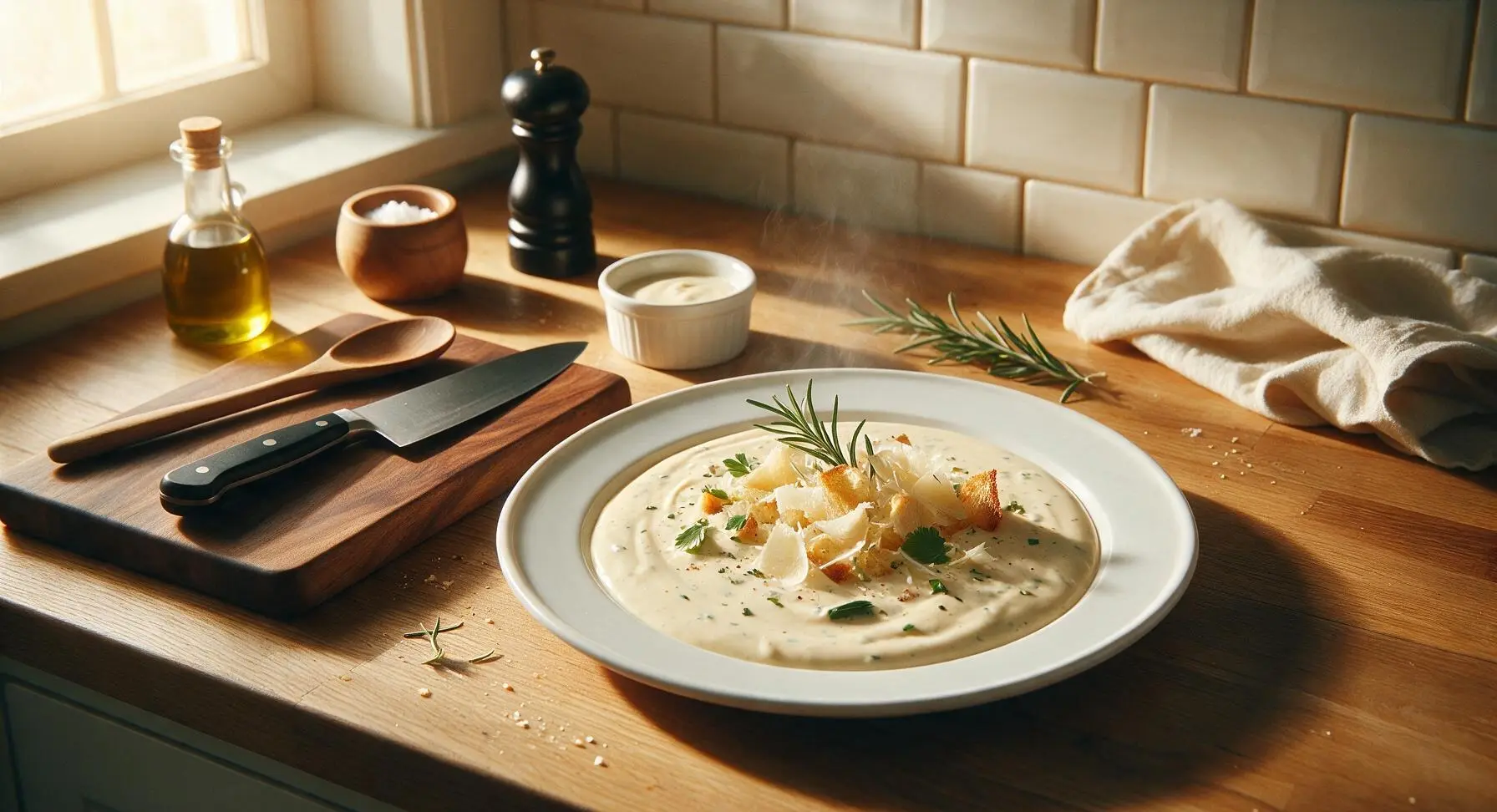
Rich, perfectly emulsified Caesar sauce with bright umami from anchovies, nutty parmesan, and zesty lemon—no gloopy store-bought texture, ideal for crisp summer salads.
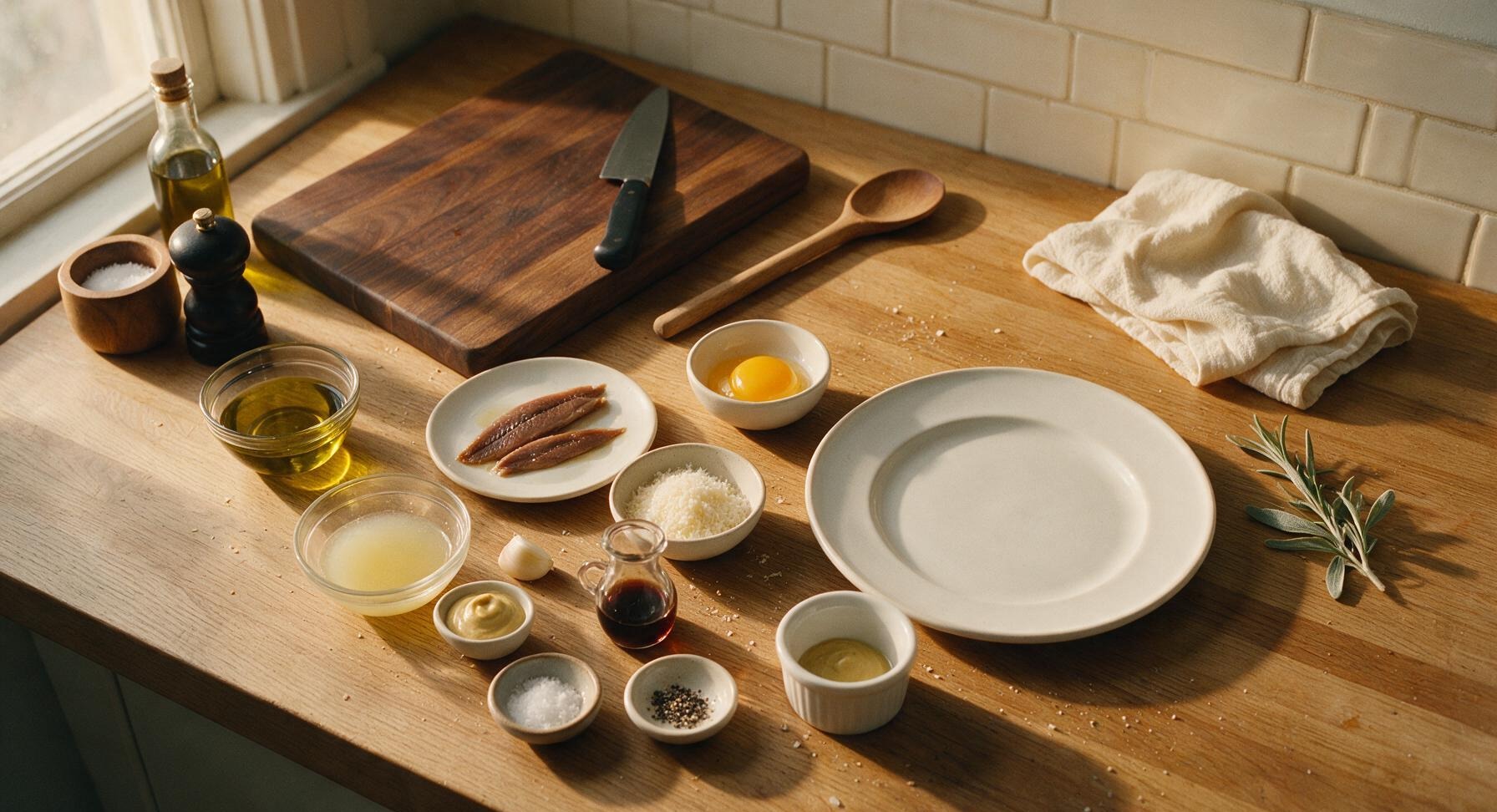
Ingredients
Steps
Coddle the Egg
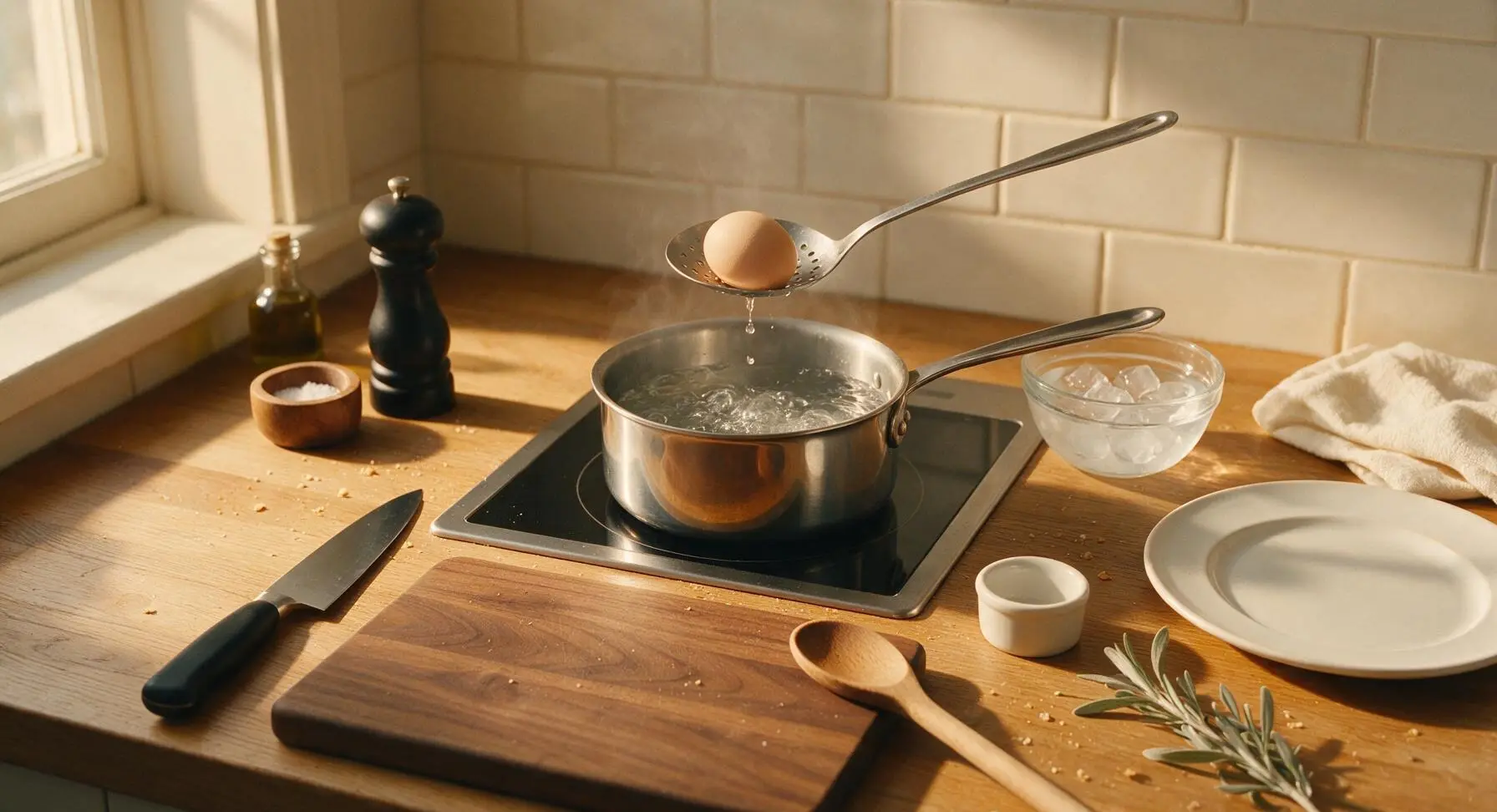
Bring 2 cups of water in the 1-quart stainless steel saucepan to a gentle rolling boil over medium heat on the induction burner. Lower 1 large room-temperature egg into the boiling water using the slotted spoon, set a timer for exactly 1 minute. When the timer goes off, immediately lift the egg out and submerge it fully in the small glass bowl of ice water for 2 minutes to stop the cooking process. Crack the egg, separate the soft, slightly set yolk into one of the white ceramic ramekins; discard the partially set white or reserve for another use. The yolk will be runny but lightly pasteurized for food safety.
Mince Aromatic Paste
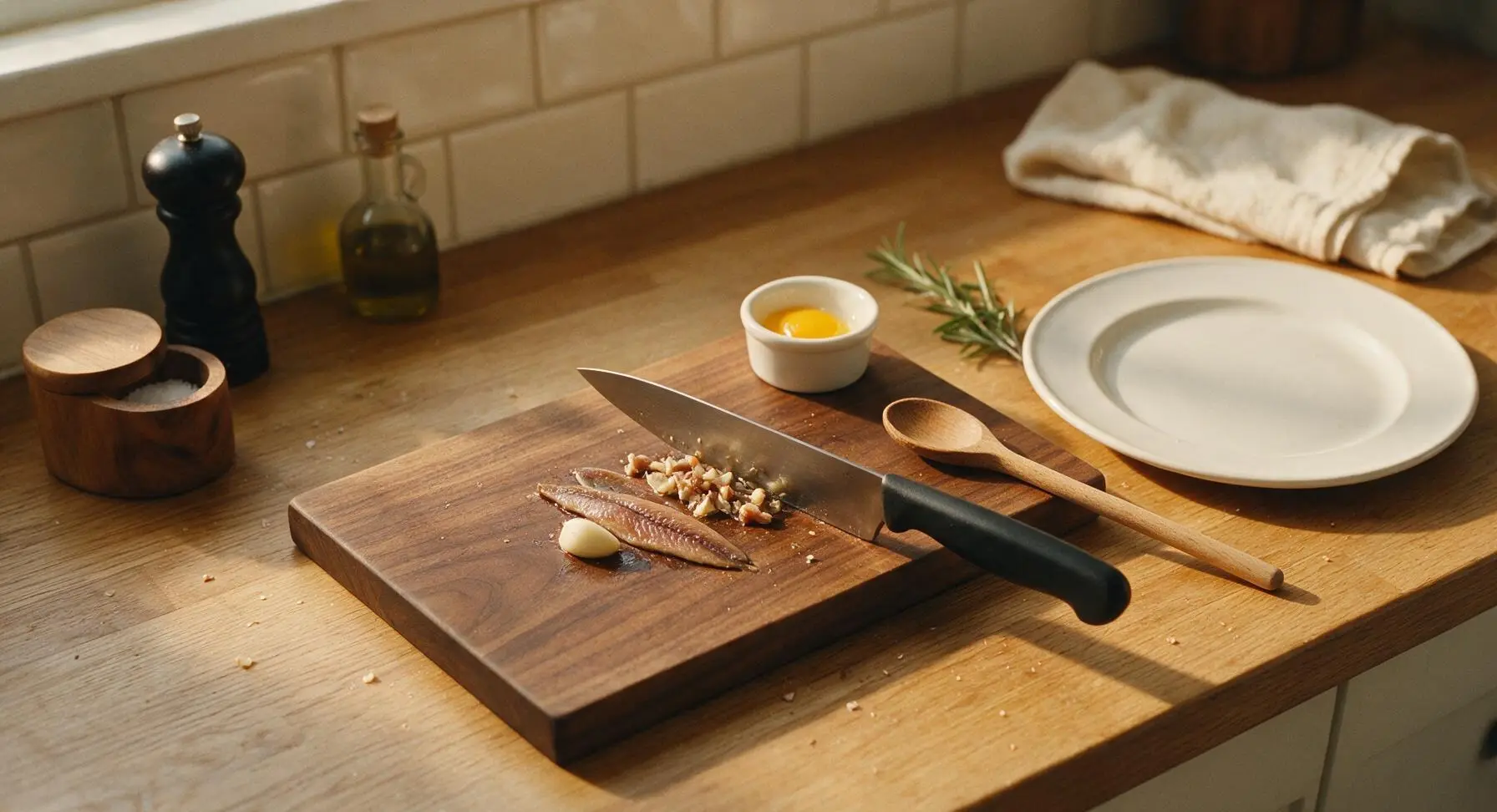
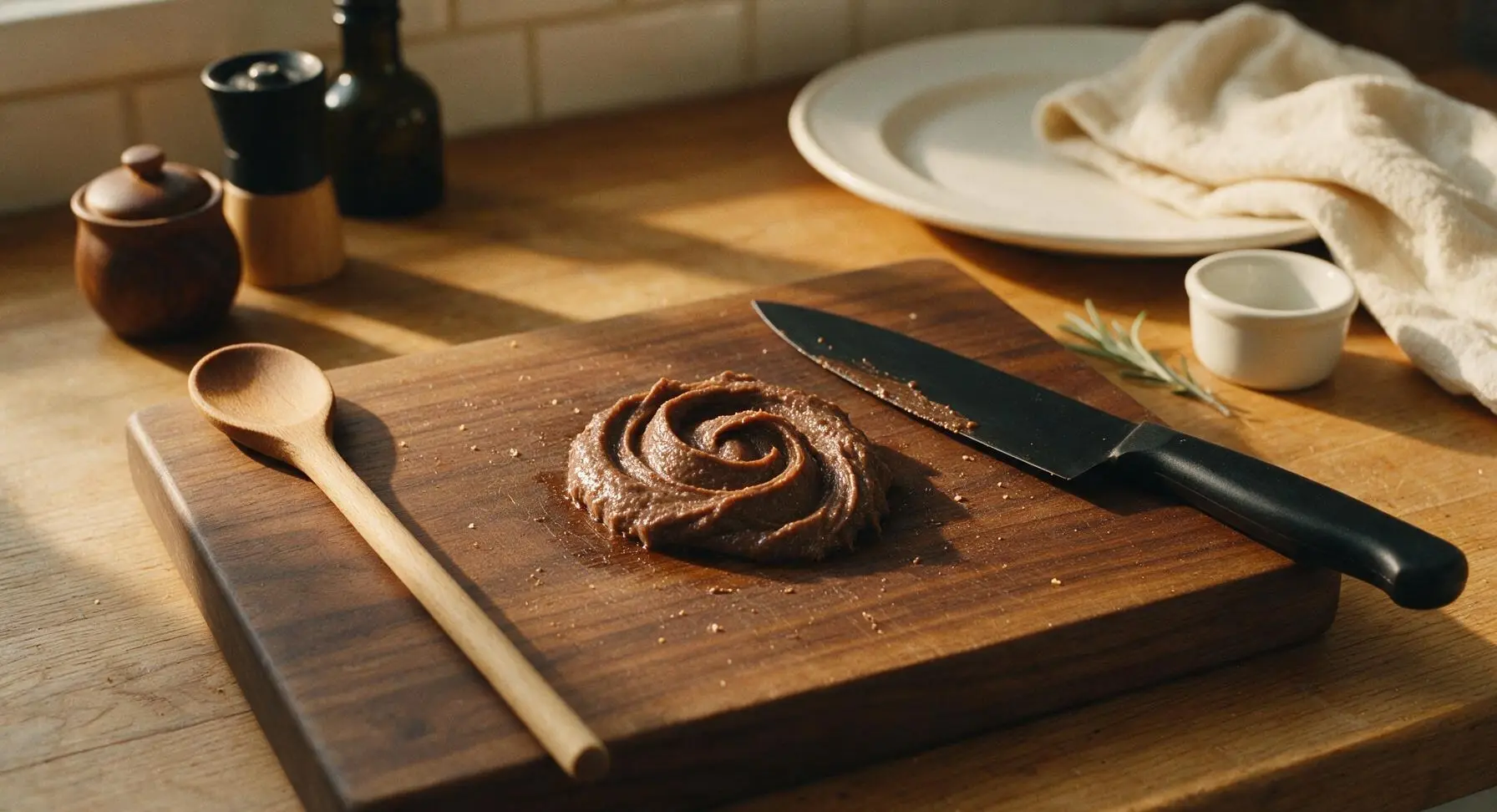
Place the 2 drained anchovy fillets and peeled garlic clove in the center of the maple cutting board. Hold the chef knife at a shallow 20-degree angle, rocking the blade back and forth over the ingredients, scraping the mixture into a tight pile every 10 seconds with the knife edge. Continue chopping for approximately 2 minutes, until you have a completely smooth, spreadable dark paste with no visible chunks of anchovy or garlic. Scrape the entire paste into the clear glass mixing bowl.
Whisk Base Mixture
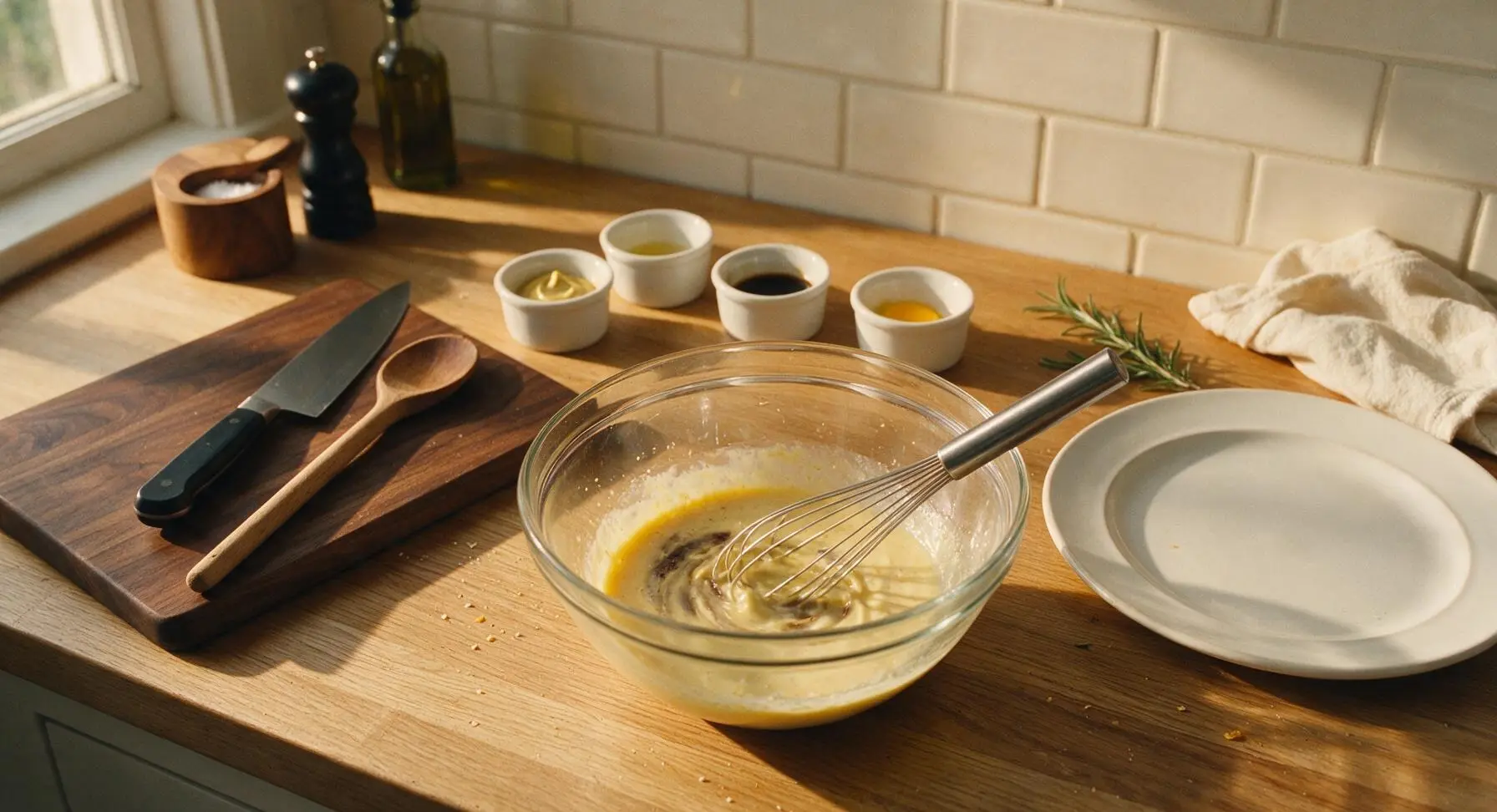
Add the reserved coddled egg yolk, 1 teaspoon Dijon mustard, 2 tablespoons fresh lemon juice, 1 teaspoon Worcestershire sauce, and 1/8 teaspoon kosher salt to the glass mixing bowl with the anchovy-garlic paste. Use the stainless steel whisk to stir all ingredients together for 30 seconds, until the mixture is completely uniform, pale golden yellow, and free of lumps. Scrape down the sides of the bowl with the whisk edge to ensure no anchovy paste is stuck above the liquid line.
Emulsify with Olive Oil
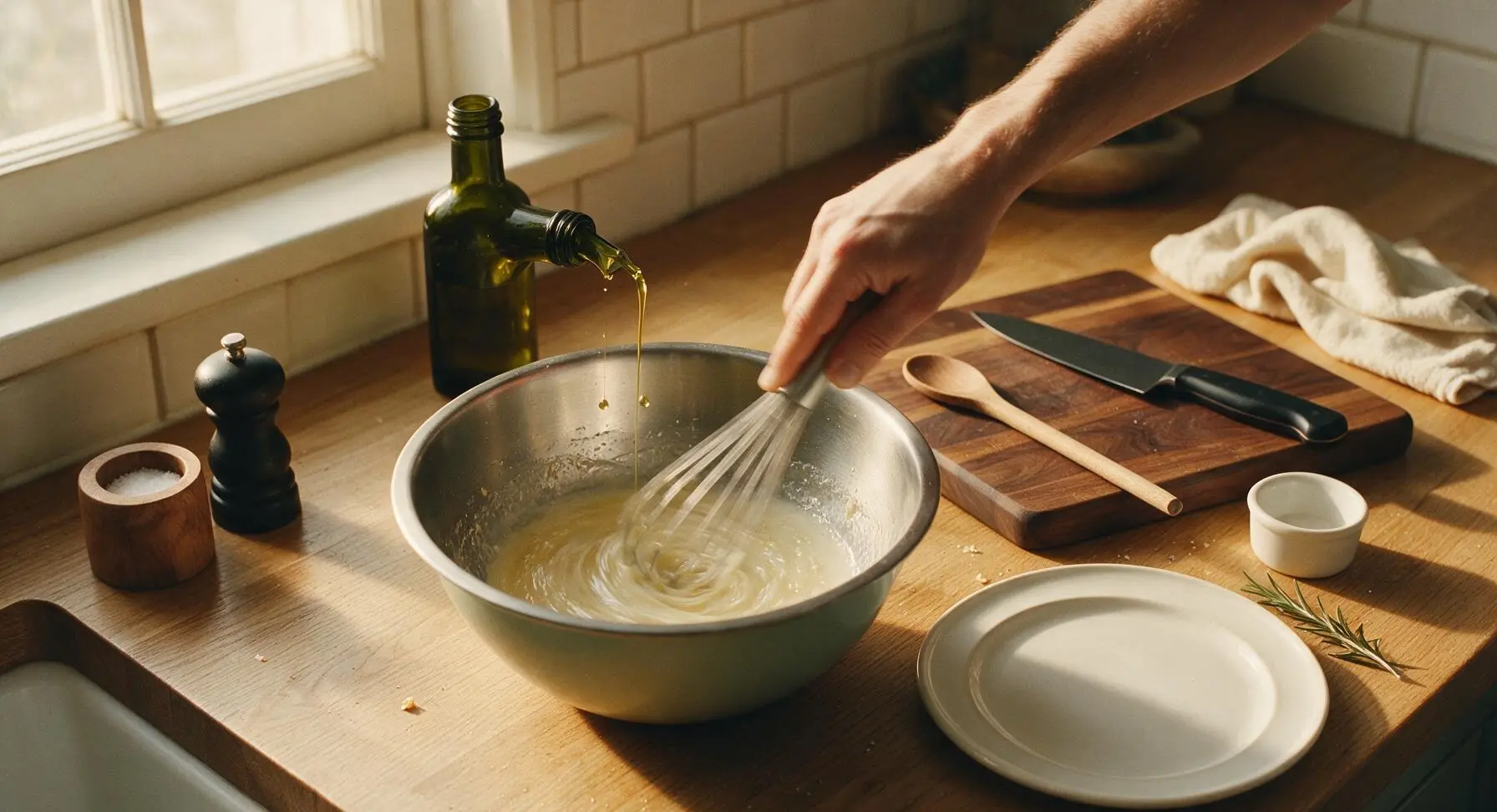
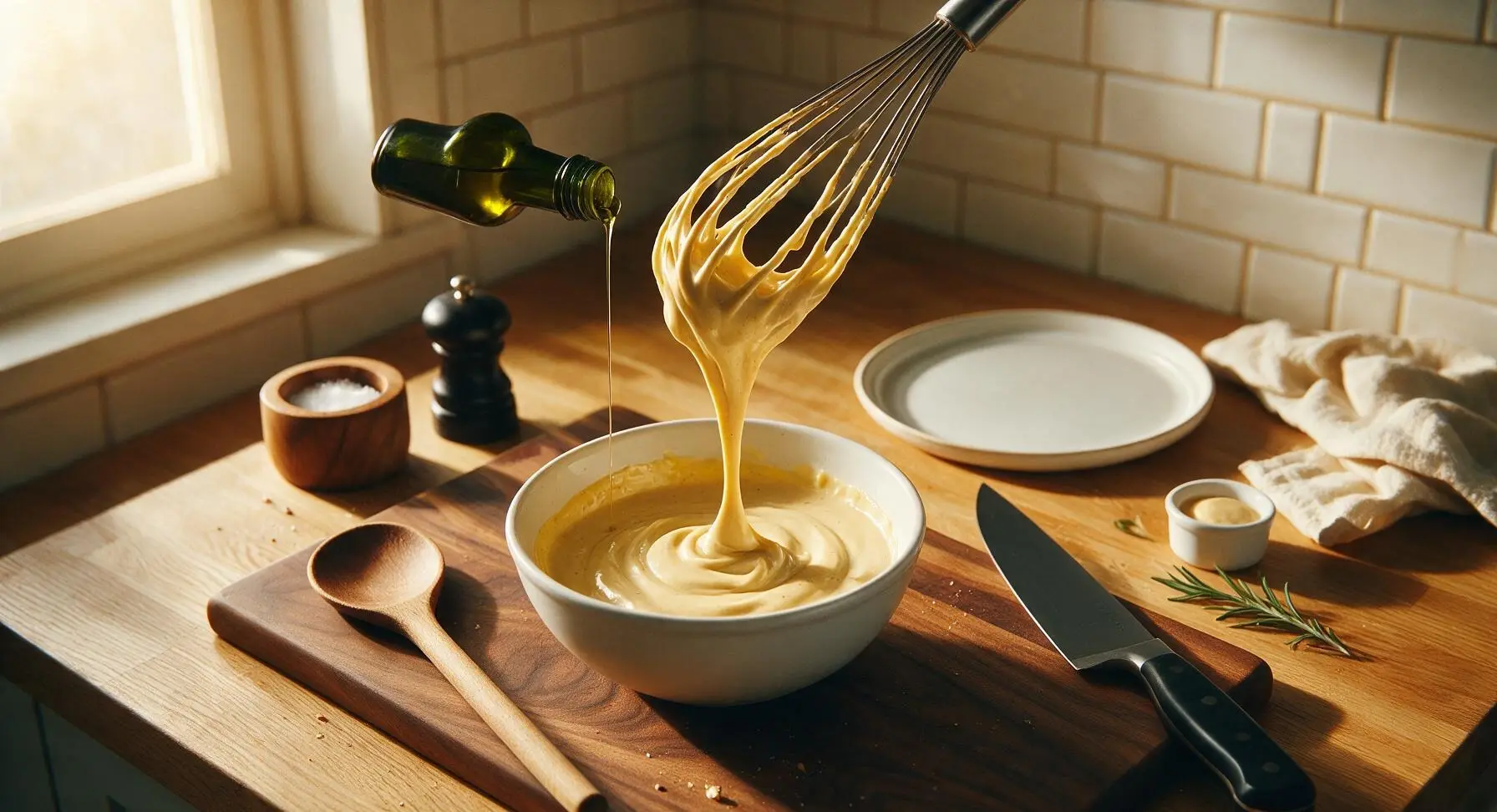
This is the most critical step for a smooth, unbroken sauce. Tilt the dark green olive oil bottle to pour oil in an extremely thin, slow stream (1-2 drops per second initially) into the bowl, while whisking constantly and rapidly in tight circular motions. Continue adding oil at this slow pace, never pausing whisking, until all 1/2 cup of olive oil is fully incorporated. The sauce will thicken gradually, developing a creamy, pale golden, mayonnaise-like consistency that coats the back of a spoon when ready. If the sauce appears separated or curdled at any point, add 1 teaspoon cold water and whisk vigorously to rebind the emulsion.
Fold in Cheese and Pepper
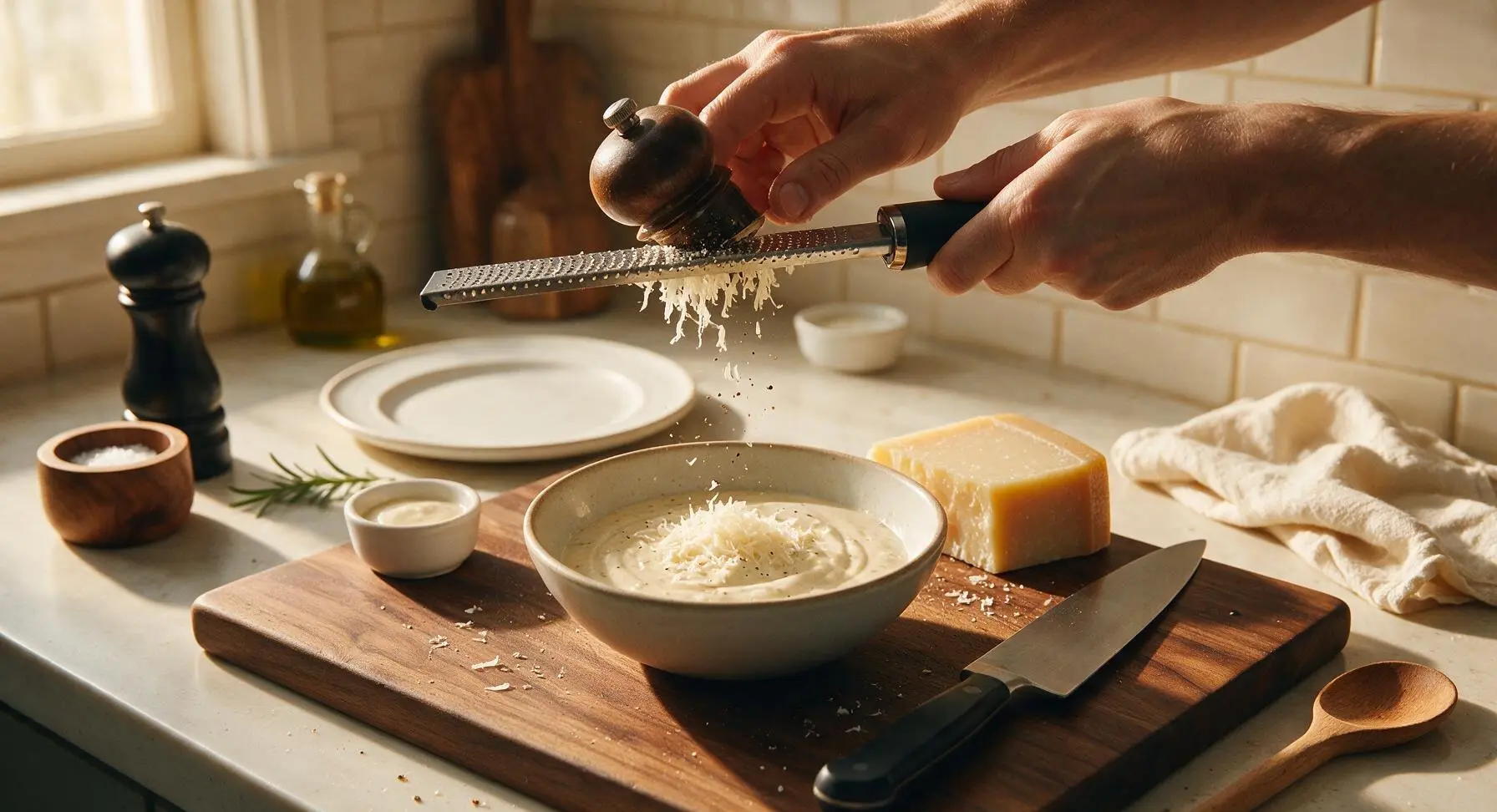
Hold the microplane zester over the mixing bowl, and grate the Parmigiano-Reggiano block directly into the sauce to make 1/4 cup finely grated cheese (pre-grated cheese contains anti-caking agents that create a grainy texture, so always grate fresh). Add 1/4 teaspoon freshly cracked black pepper from the pepper mill, then use the whisk to gently fold the cheese and pepper into the sauce for 20 seconds, until evenly distributed. Avoid over-whisking at this stage, as aggressive stirring can break the delicate emulsion.
Taste and Adjust Seasoning
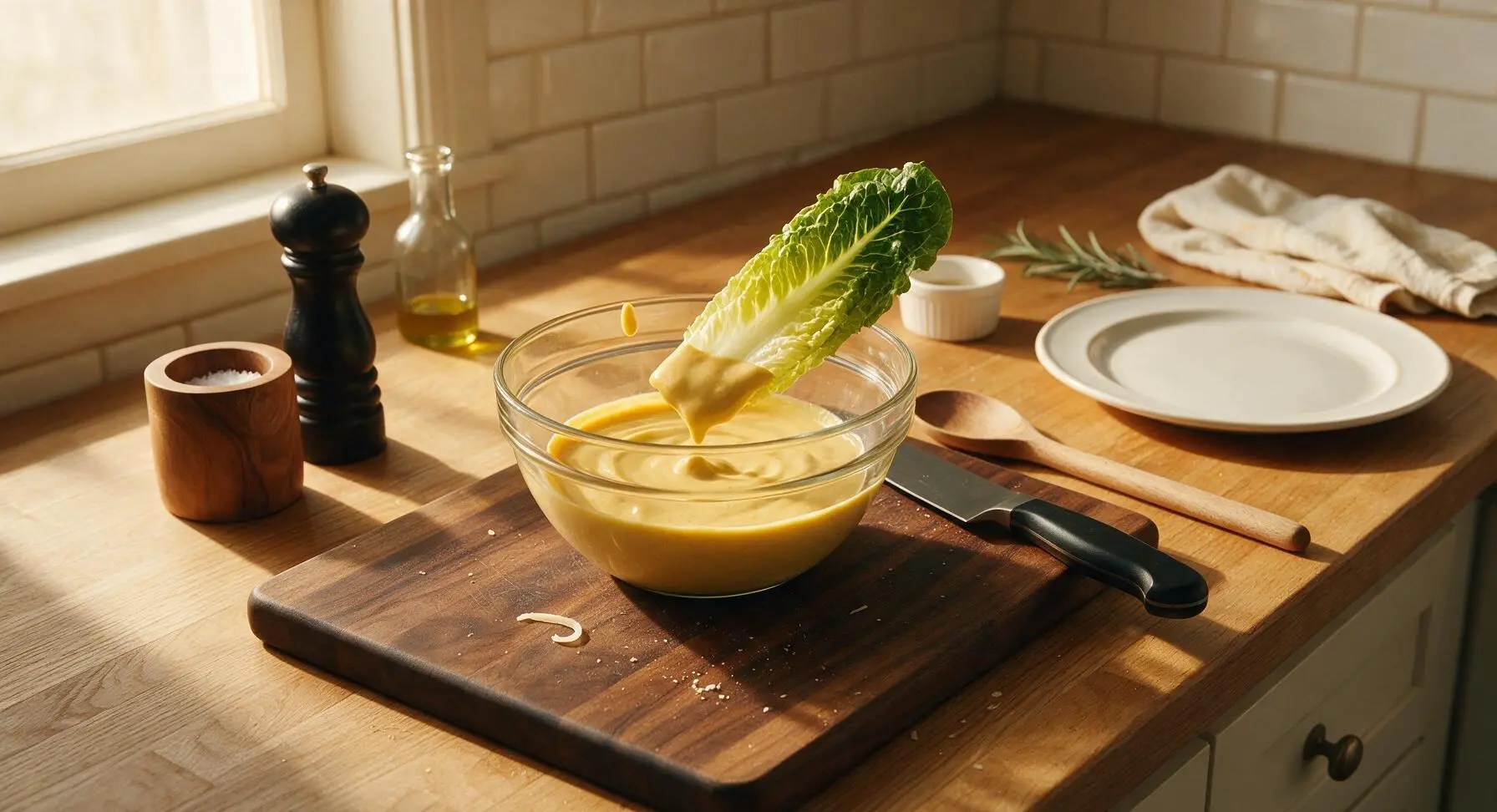
Dip the reserved romaine heart leaf into the sauce to taste (this gives a more accurate sense of how the sauce will taste on salad than tasting from a spoon). Add more lemon juice for extra brightness, a pinch more salt if needed, or an extra crack of pepper to suit your preference. If the sauce is too thick to coat lettuce evenly, thin it with 1-2 teaspoons of cold water, whisking gently, until it reaches a thick but pourable consistency.
Transfer to Serve
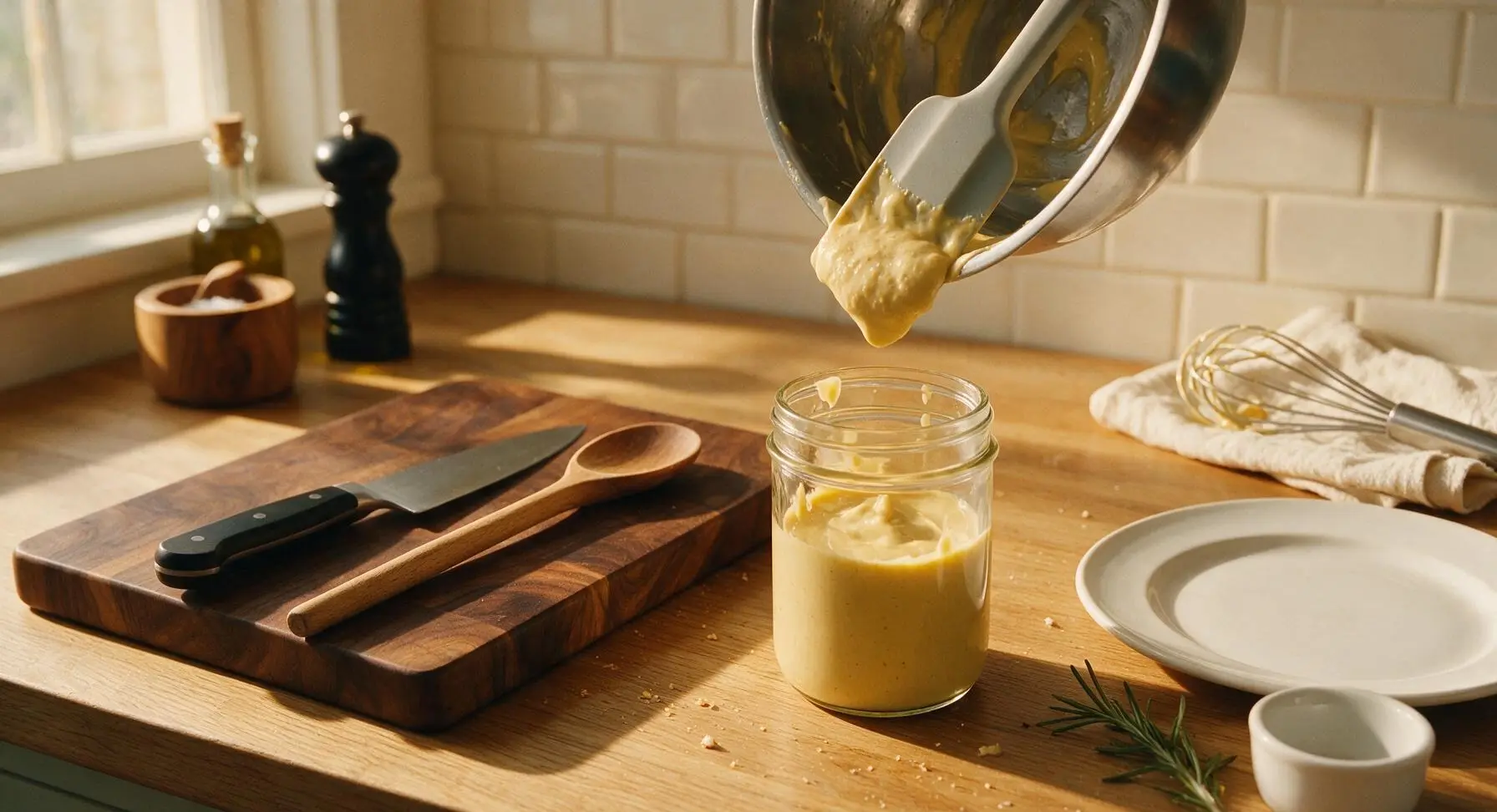
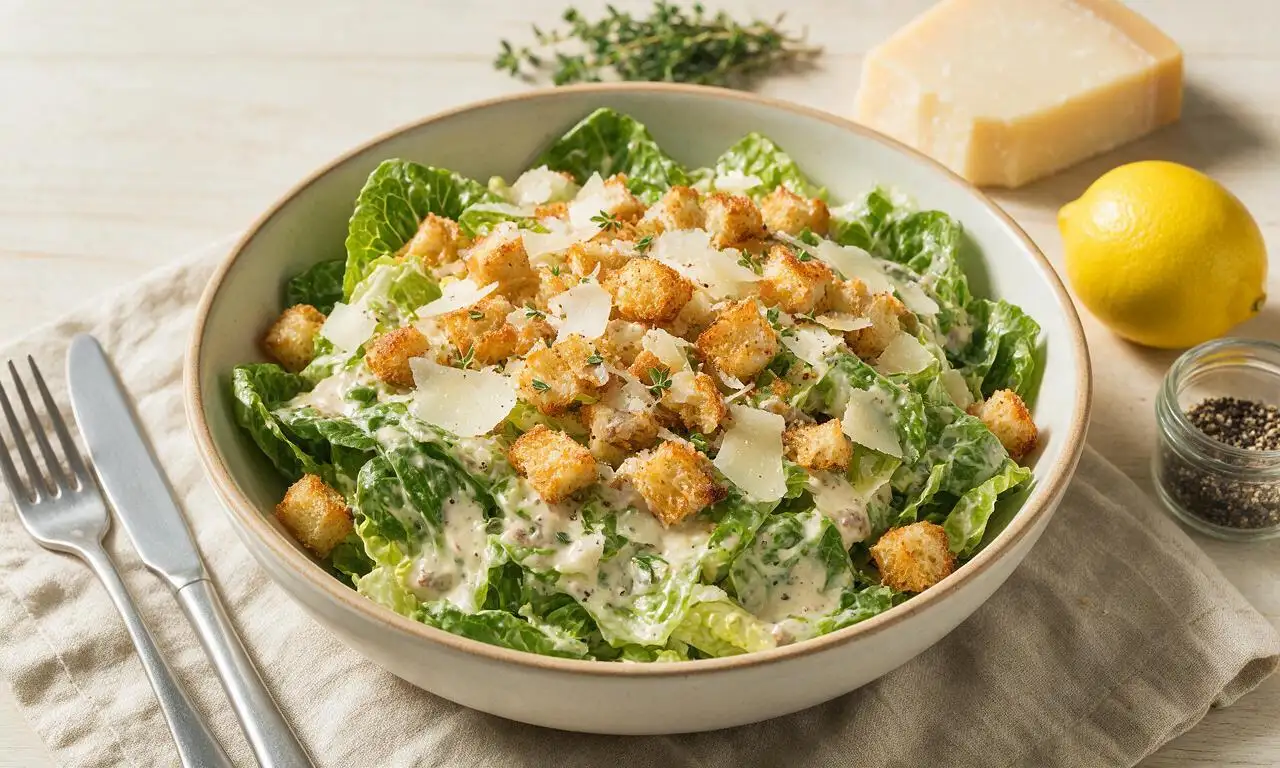
Use the light grey silicone spatula to scrape every bit of finished sauce from the mixing bowl into the clear glass serving jar. The sauce can be used immediately tossed with crisp chopped romaine, homemade croutons, and extra parmesan for classic Caesar salad, or sealed tightly and stored in the refrigerator for up to 3 days. Do not freeze the sauce, as the emulsion will break and separate when thawed.
Tips
2.Add olive oil at a slow, drop-by-drop pace at the start of emulsification: pouring oil too quickly prevents the yolk from properly encapsulating fat molecules, leading to a runny, curdled texture instead of a thick, creamy consistency.
3.Grate parmesan fresh directly into the sauce: pre-shredded store-bought parmesan is coated in anti-caking potato starch that creates a gritty texture and mutes the cheese's nutty, salty flavor.


OMG this Caesar sauce is SO good! I’ve been buying the bottled stuff for years because I thought homemade was too much work, but 1 minute? Are you kidding? Tossed it with romaine, croutons, and some grilled chicken for family dinner last night and my kids asked for seconds. Total game changer.
Super easy to throw together, but I swapped the raw egg for a pasteurized one because my wife is pregnant and I didn’t want to risk serving raw egg to her. Turned out great! Tangy, creamy, exactly the Caesar flavor I was missing from takeout salads.
Made this for our neighborhood potluck over the weekend and people were begging for the recipe! I did add a tiny extra splash of lemon juice because I love that zing, but otherwise followed it exactly. Way better than the sad grocery store dressing I used to bring.
Perfect for my weekly meal prep! I whipped up a batch on Sunday, tossed it with kale and roasted chickpeas for grab-and-go salads, and it stayed creamy all week without getting weirdly separated. Only note is I went a little light on the anchovies because I’m not a huge fish fan, and it still slapped.
Wait, is there a good substitute for Worcestershire sauce? My husband is vegan so we don’t keep any in the house, but I’ve been craving a good Caesar for weeks.
Tried this last night to go with our steak dinner side salad, and wow—tastes exactly like the Caesar dressing they serve at my favorite old-school Italian restaurant. I was worried I’d mess it up since I’m terrible at sauces, but it came together in literally 60 seconds like the recipe says. 10/10.