
California Common (Steam Beer) Craft Beer

title 1
California Common (Steam Beer) Craft Beer
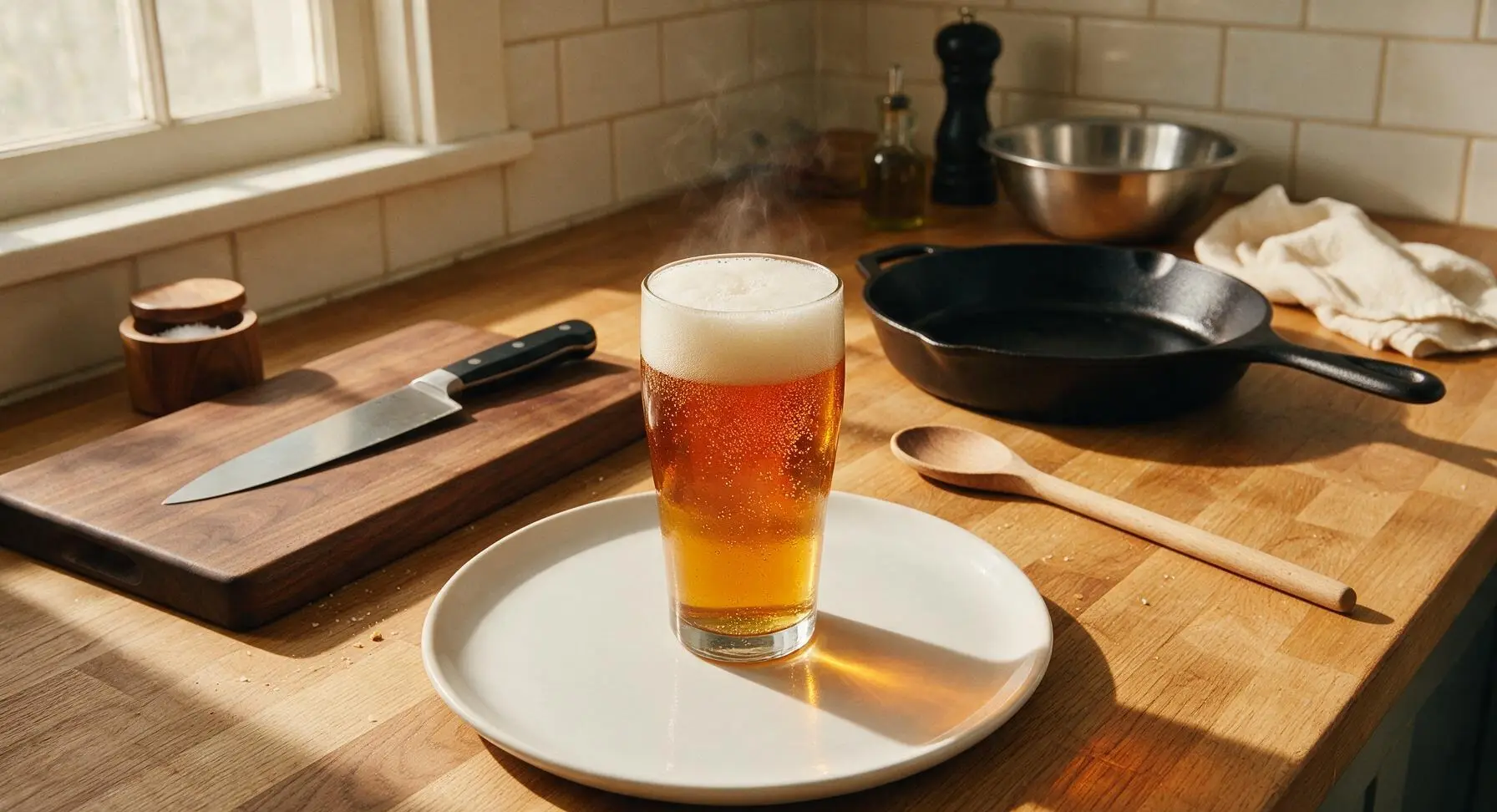
⏱️ cook time 2 weeks total (2 hours active brew day, 10 days primary fermentation, 4 days bottle conditioning)
🍽️ servings 48
⚡ Difficulty medium

intro

Iconic Gold Rush-era American steam beer: crisp, toasty, lightly piney amber beer brewed with lager yeast at warm ale temperatures, with a bright, carbonated finish ideal for casual gatherings.

Ingredients
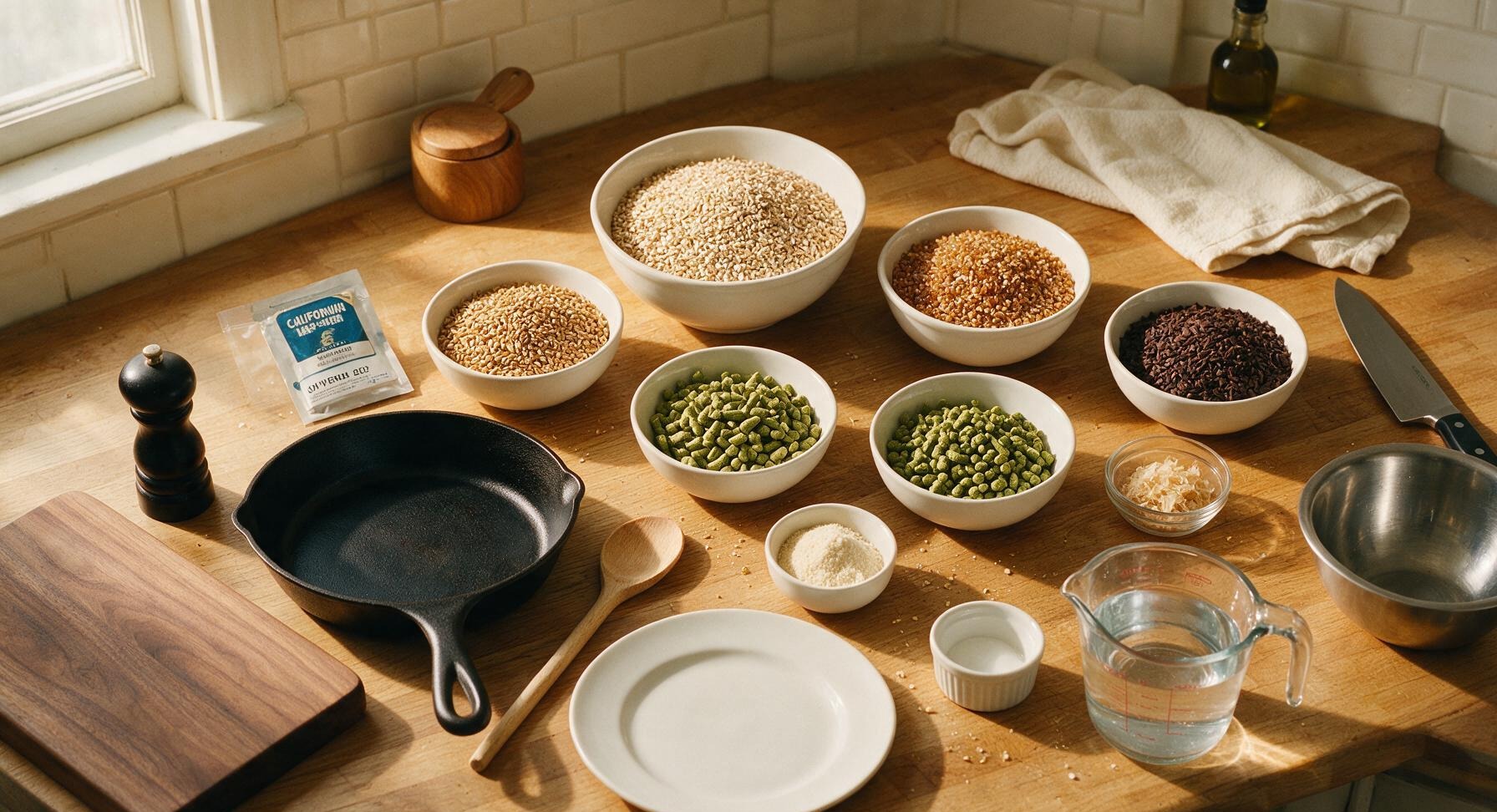
Crushed 2-row pale malt 7 lbs
Crushed crystal 40L malt 1 lb
Crushed Munich malt 8 oz
Crushed chocolate malt 4 oz
Northern Brewer hop pellets 2 oz
Cascade hop pellets 1 oz
California Lager yeast (Wyeast 2112) 1 packet (11.5g)
Irish moss (clarifier) 1 tsp
Corn sugar (priming) 5 oz
Filtered cold water 6 gallons

Steps

1

Sanitize Brewing Equipment

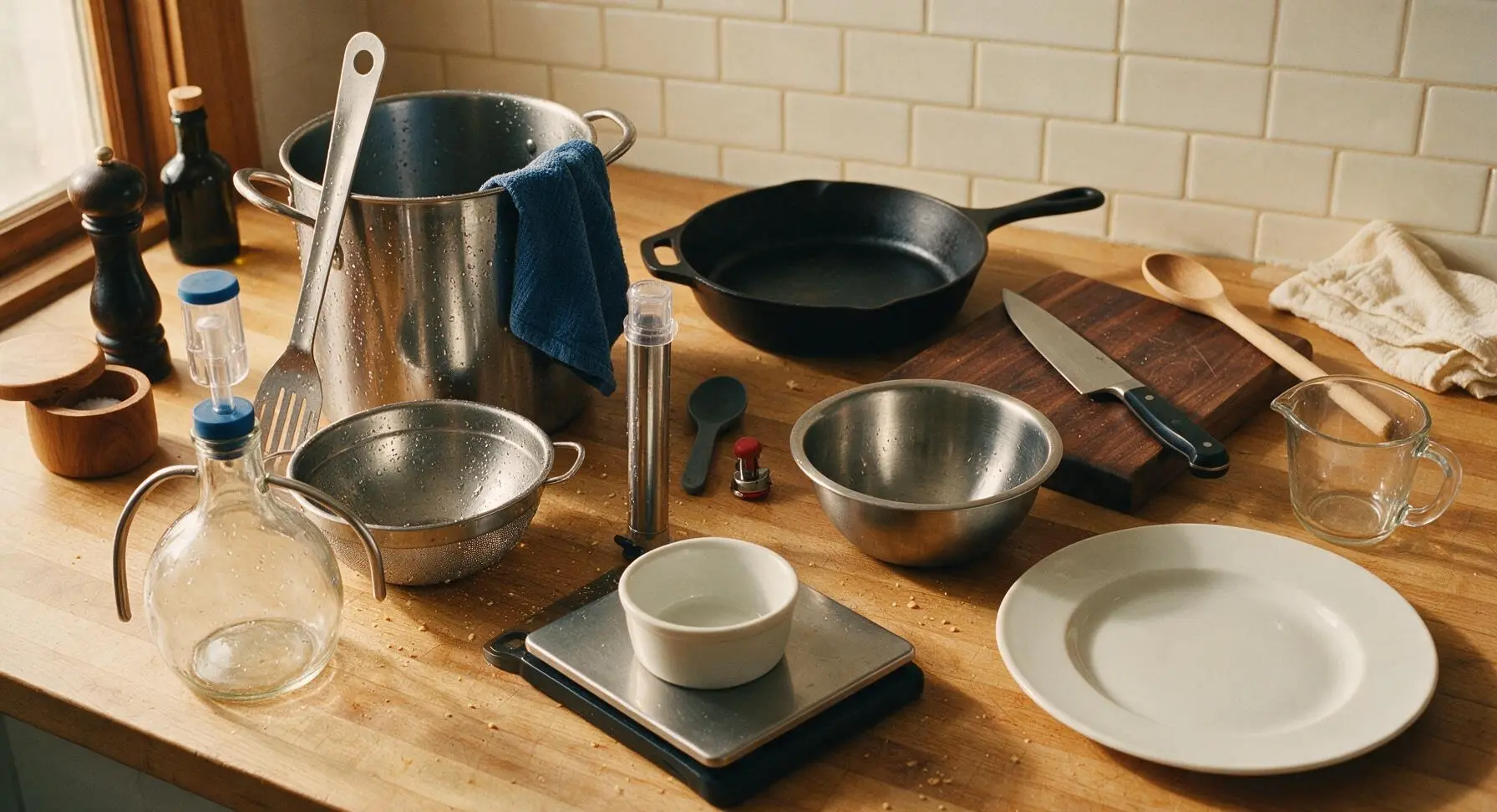
First, wash all brewing tools (brew kettle, mash paddle, strainer, carboy, airlock, auto-siphon, silicone spoon, bottle capper) with fragrance-free dish soap, then soak in no-rinse food-grade brewing sanitizer for 2 minutes per manufacturer instructions. Drain tools completely, as residual sanitizer can kill yeast and create harsh off-flavors. This step is non-negotiable to prevent bacterial contamination that ruins batches.
Step 1
step1:Sanitize Brewing Equipment
2

Heat and Mash Grains

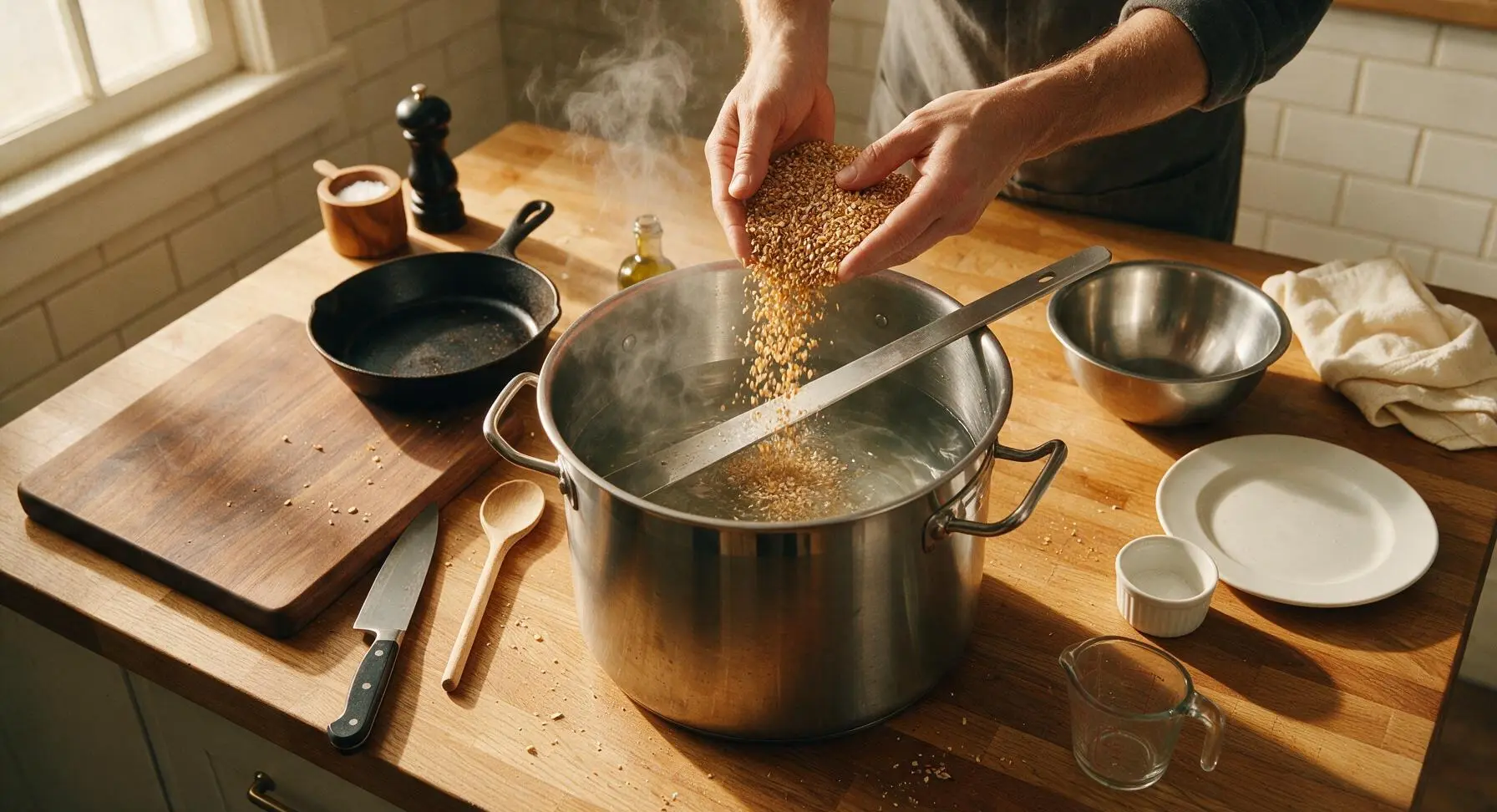
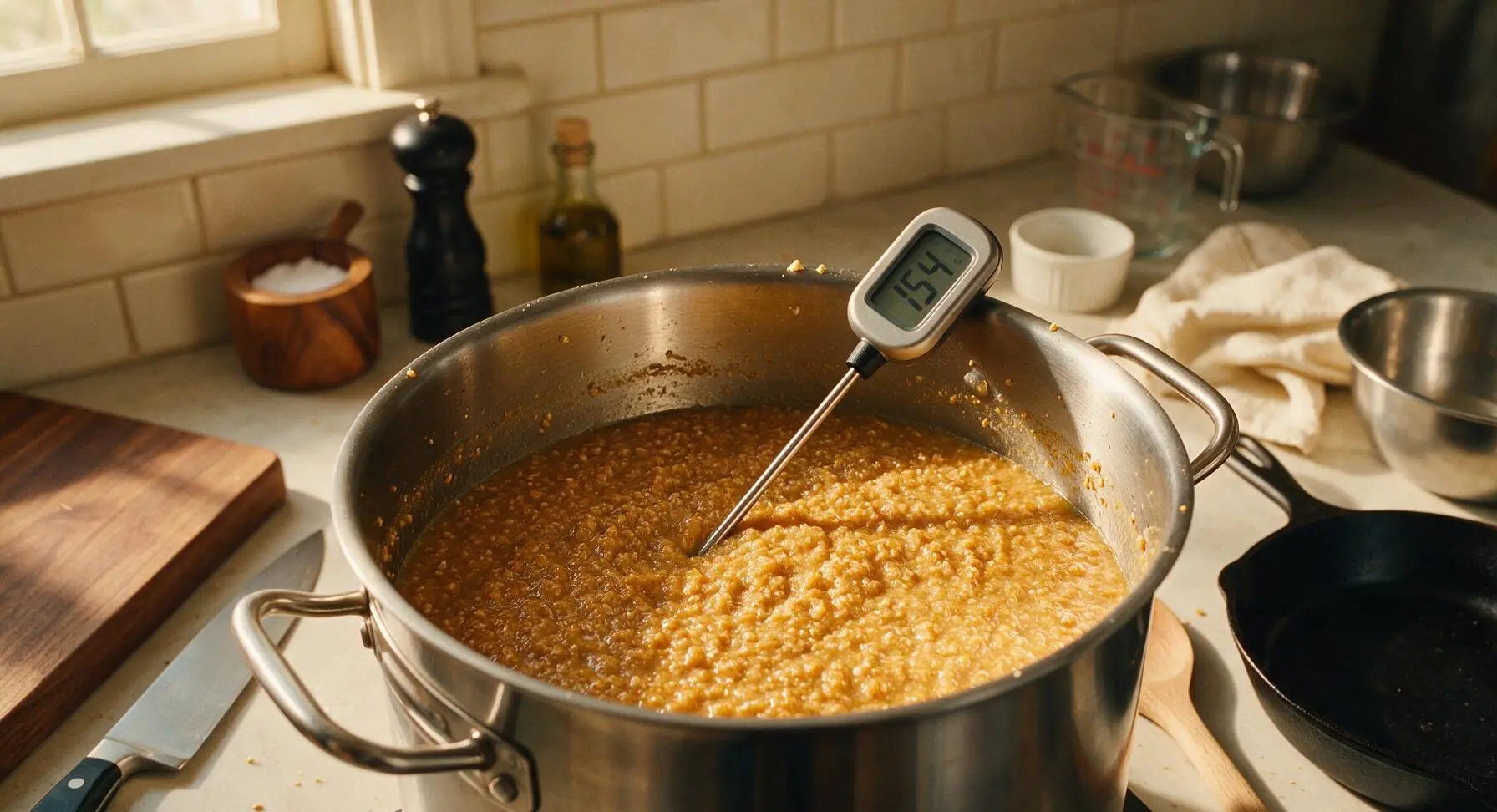
Pour 3 gallons of filtered water into the stainless steel brew kettle, heat to 155°F on the countertop burner. Slowly stir in all crushed malts (2-row, crystal 40L, Munich, chocolate) with the long stainless steel mash paddle, stirring constantly to break up dry floury clumps. Hold the mash temperature steady at 152–155°F for 60 minutes, covering the kettle with a lid to retain heat. The finished mash will smell sweet and toasty, with the thick texture of warm oatmeal.
Step 2
step2:Heat and Mash Grains
Step 2
step2:Heat and Mash Grains
3

Sparge to Collect Wort

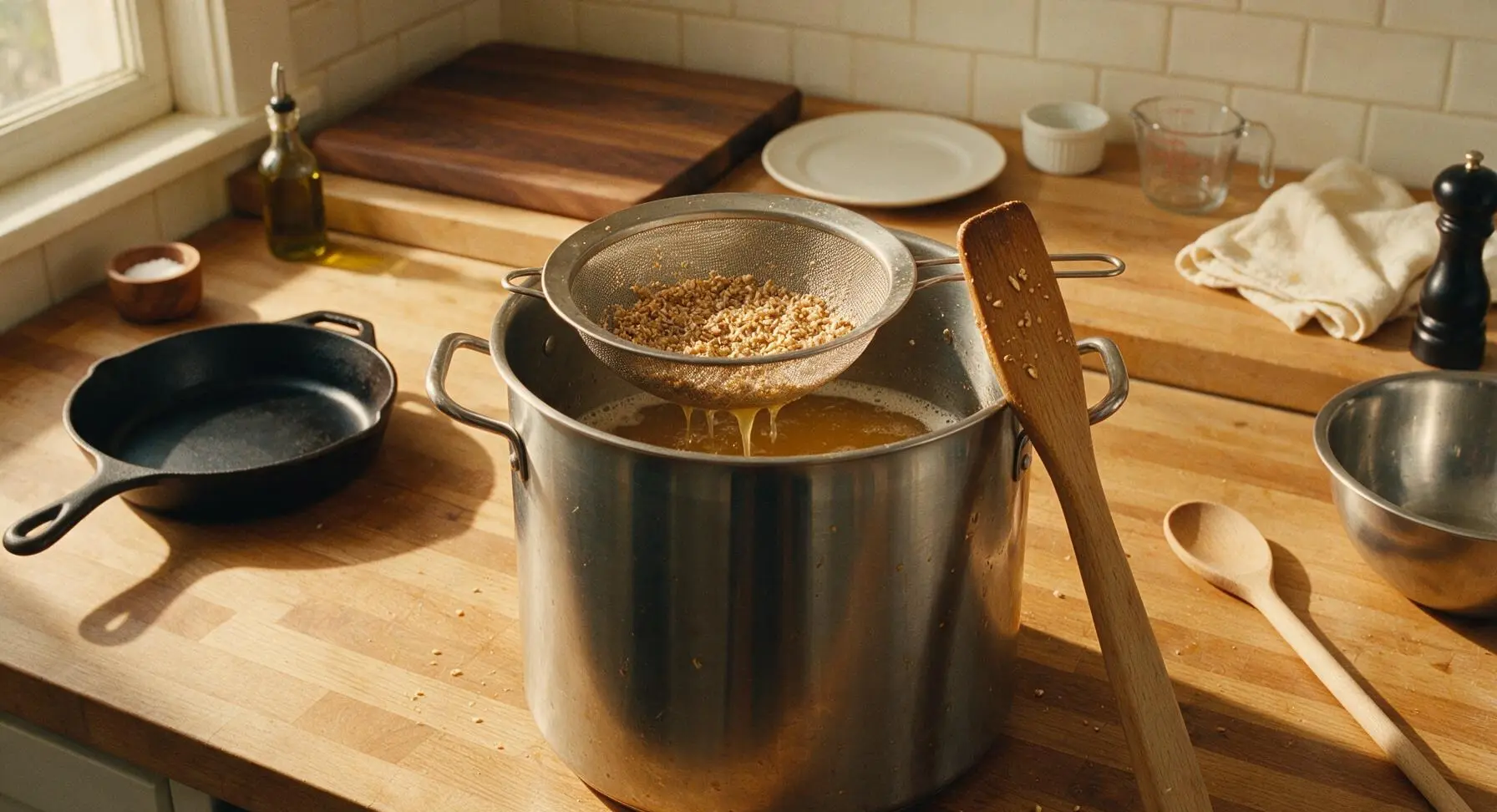
After the 60-minute mash rest, slowly pour 2 gallons of 170°F filtered water over the grain bed to rinse (sparge) residual sugars from the malt. Position the fine mesh stainless steel strainer over the kettle, then pour the mash through the strainer to separate the sweet, sugar-rich liquid (called wort) from the spent grain. Collect 5 gallons of wort in the brew kettle, discarding the damp, light brown spent grains.
Step 3
step3:Sparge to Collect Wort
4

Boil Wort and Add Hops

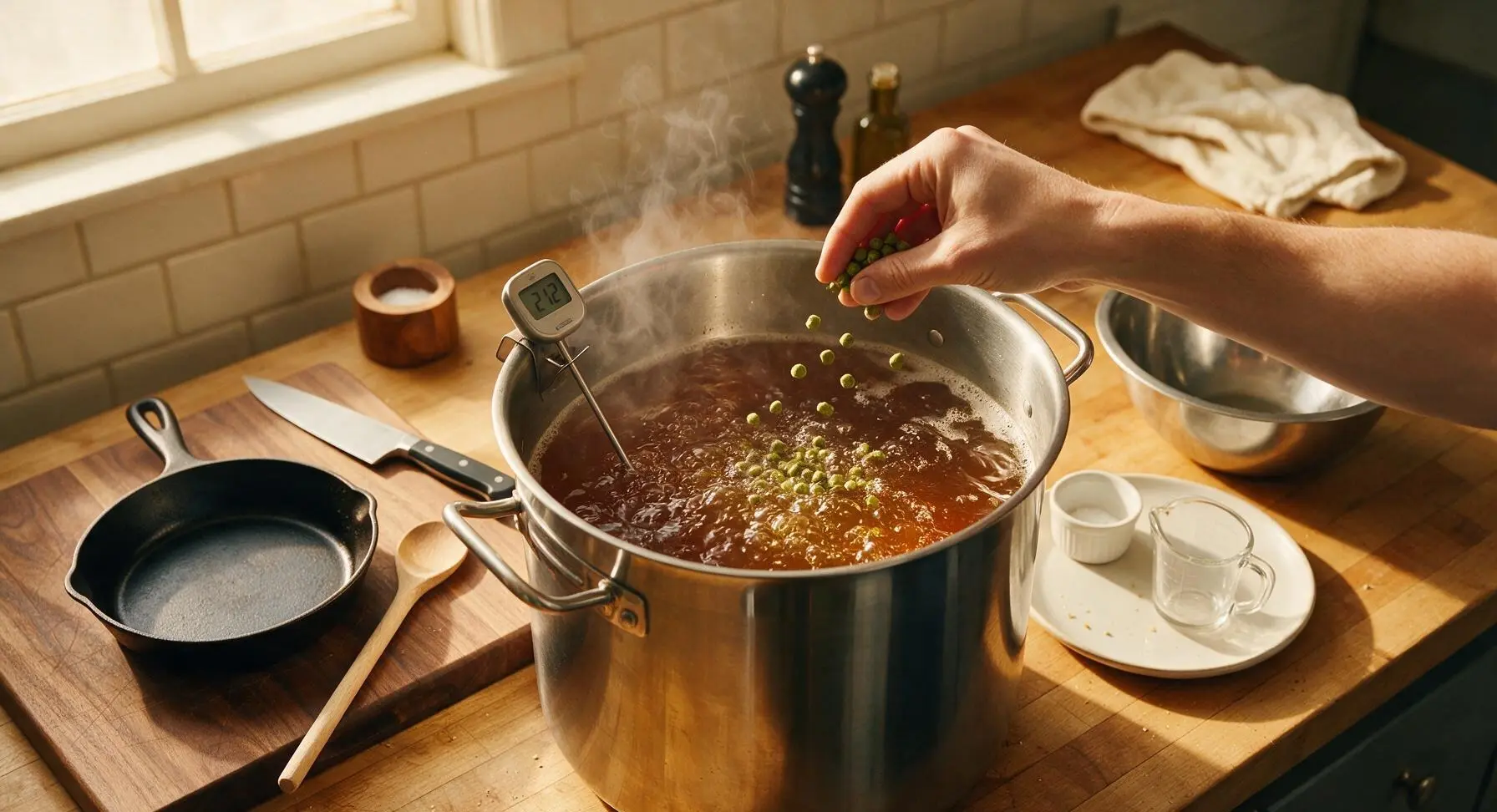
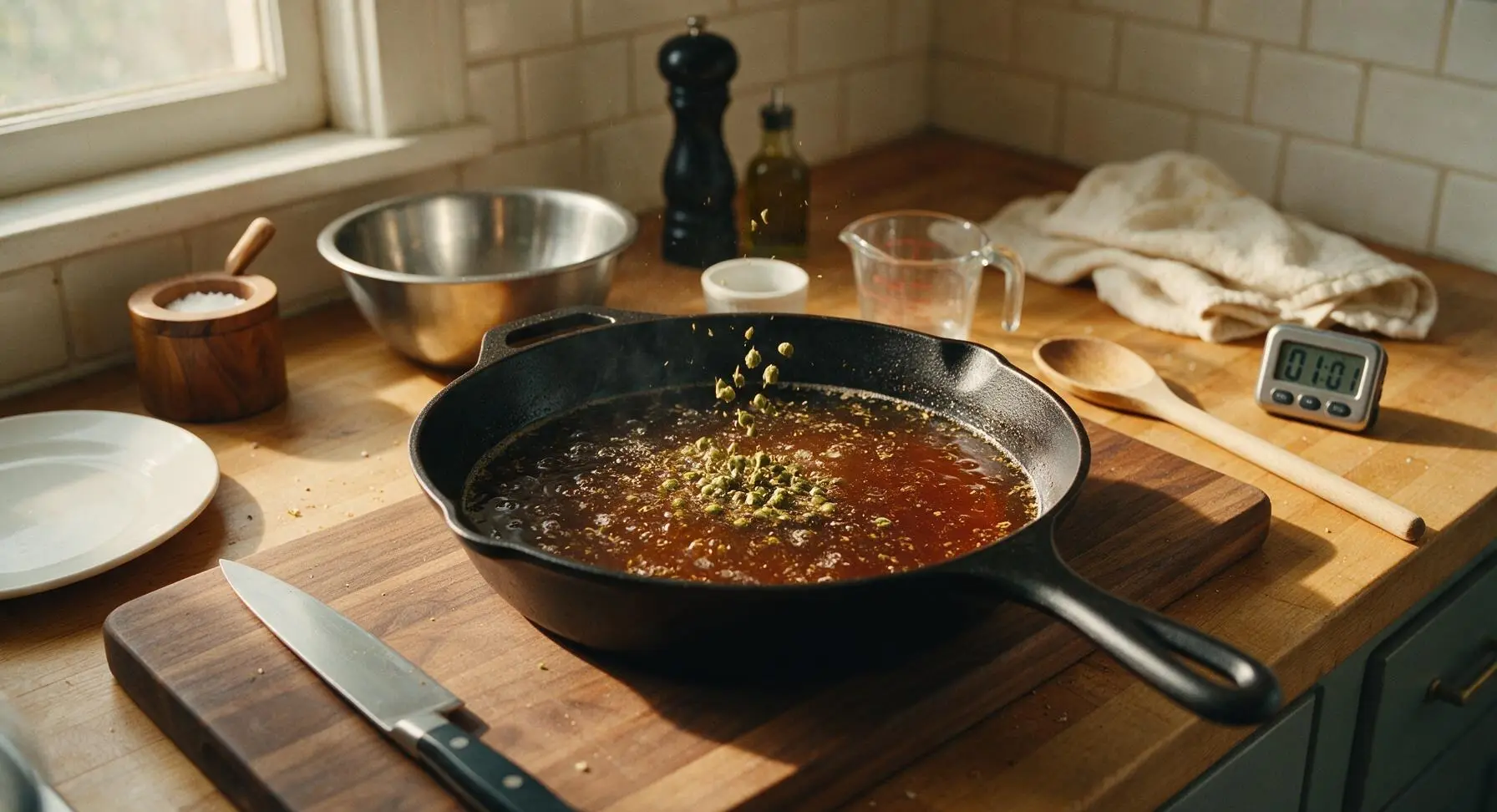
Bring the collected wort to a gentle rolling boil, adjusting heat as needed to prevent messy boilovers. Once boiling steadily, add 1.5 oz of Northern Brewer hop pellets for bittering, then set a timer for 60 minutes of total boil time. With 15 minutes left in the boil, add the Irish moss to help clarify the final beer. With 1 minute left in the boil, add the remaining 0.5 oz Northern Brewer and 1 oz Cascade hop pellets for bright, piney-citrus aroma. The wort will darken to a rich deep amber as it boils, filling the space with floral, piney hop scent.
Step 4
step4:Boil Wort and Add Hops
Step 4
step4:Boil Wort and Add Hops
5

Cool Wort and Pitch Yeast

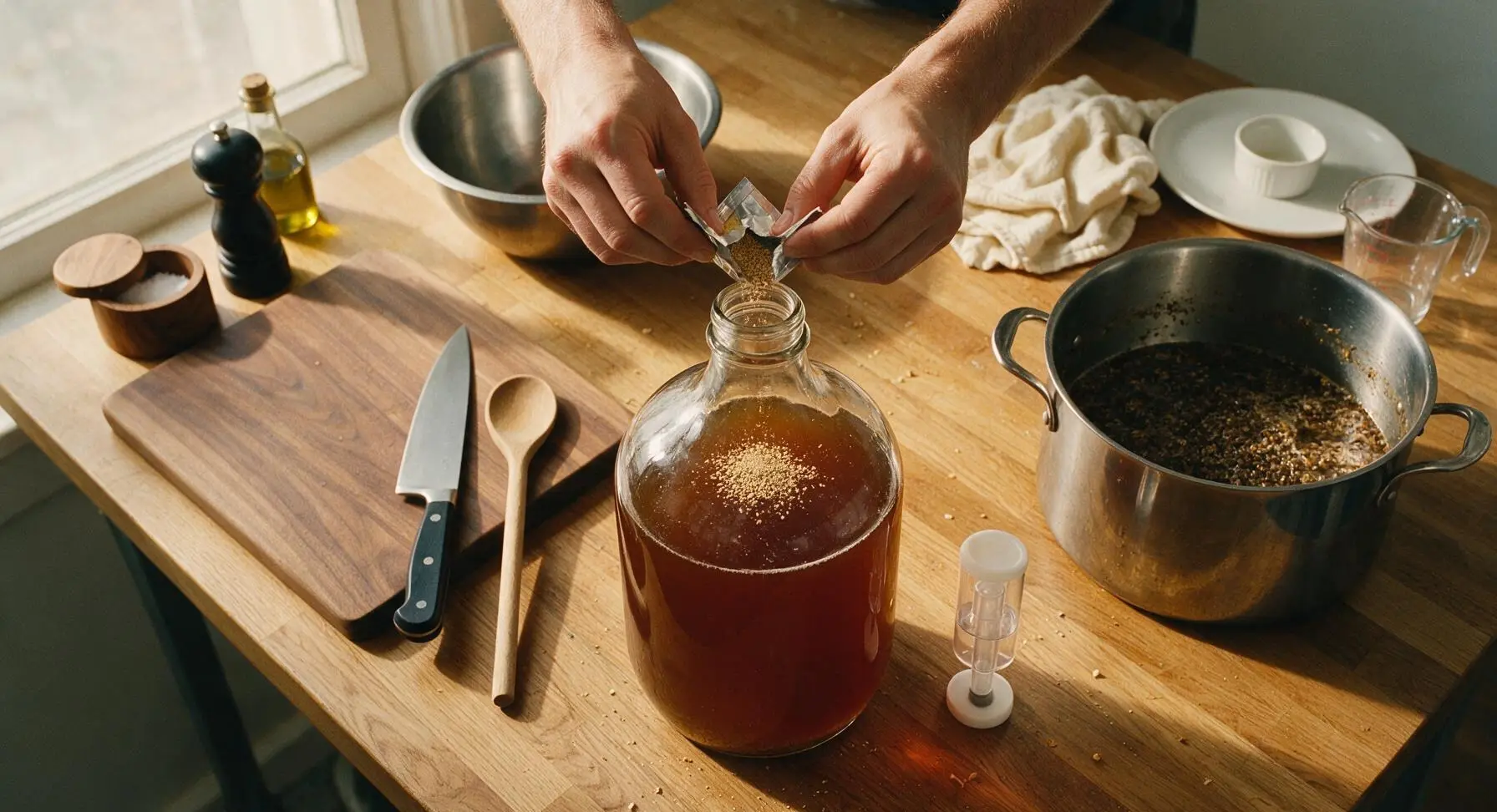
As soon as the 60-minute boil ends, remove the kettle from heat and submerge the lower half in an ice bath to cool the wort rapidly to 65–70°F (about 20 minutes). Rapid cooling prevents contamination and reduces off-flavors. Once cooled, pour the wort through the fine mesh strainer into the clear glass carboy, leaving the thick layer of hop sediment (trub) in the bottom of the kettle. Sprinkle the California Lager yeast over the wort surface, seal the carboy with a rubber stopper, and insert the 3-piece airlock filled halfway with sanitizer.
Step 5
step5:Cool Wort and Pitch Yeast
6

Ferment the Beer

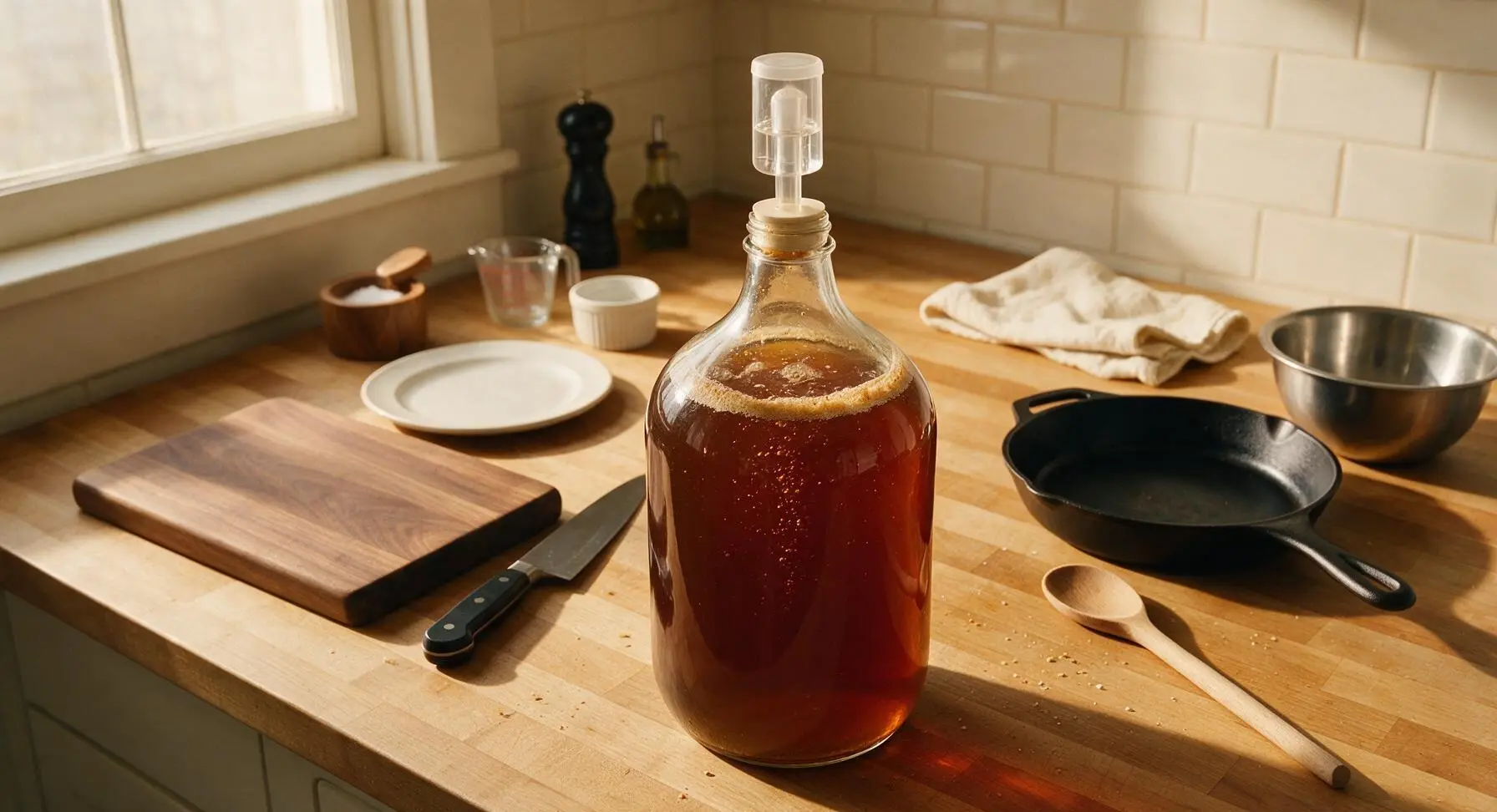
Leave the sealed carboy in a dark, temperature-stable spot held at 60–65°F (warmer than standard lager fermentation, the key to California Common's signature profile) for 10 days. Bubbles will begin rising through the airlock within 24–48 hours, signaling active fermentation. Do not open the carboy during this time, as oxygen exposure will spoil the beer. Fermentation is complete when no bubbles pass through the airlock for 48 consecutive hours, and the beer clears from hazy to bright amber.
Step 6
step6:Ferment the Beer
7

Prime and Bottle Beer

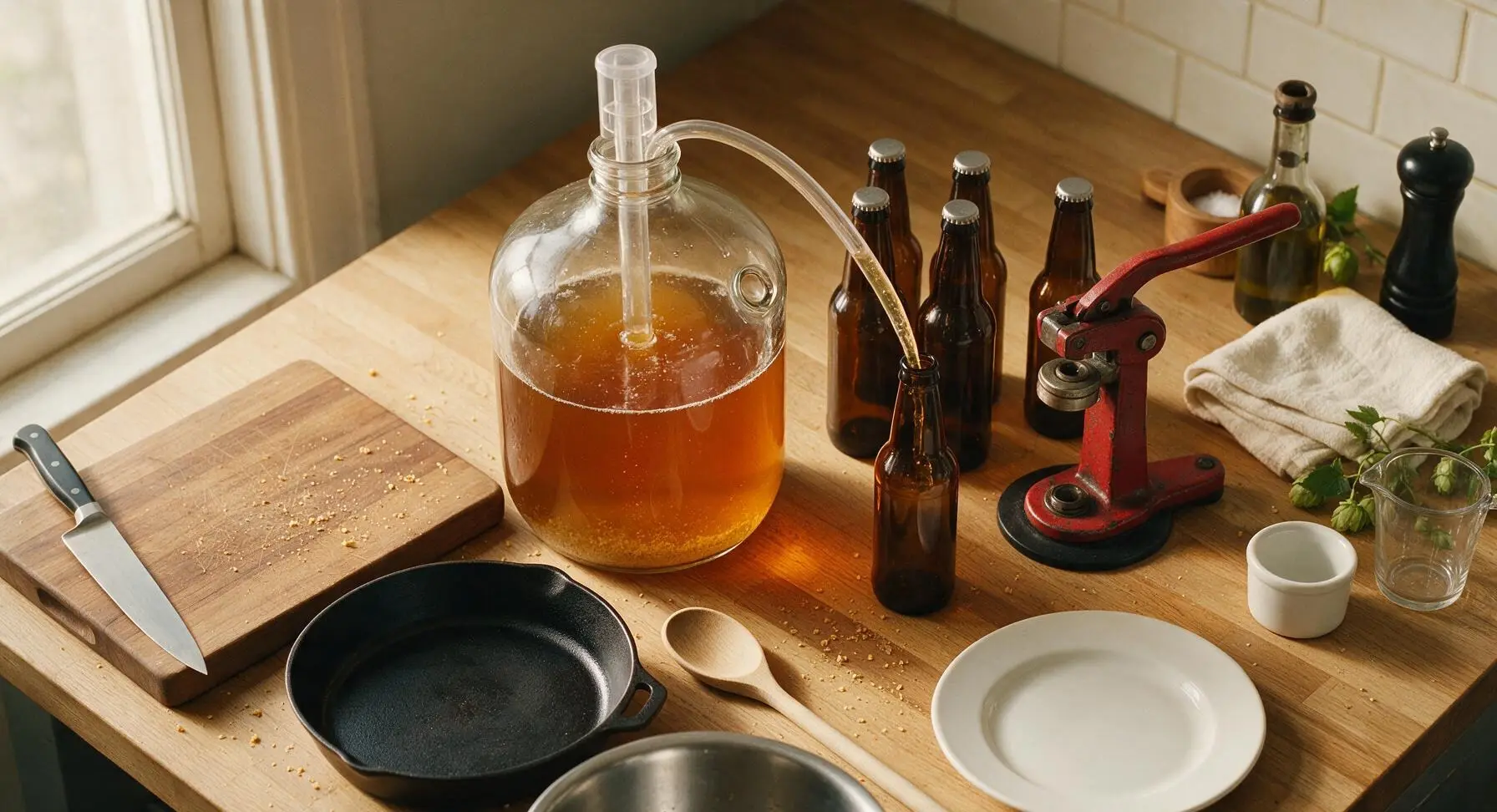
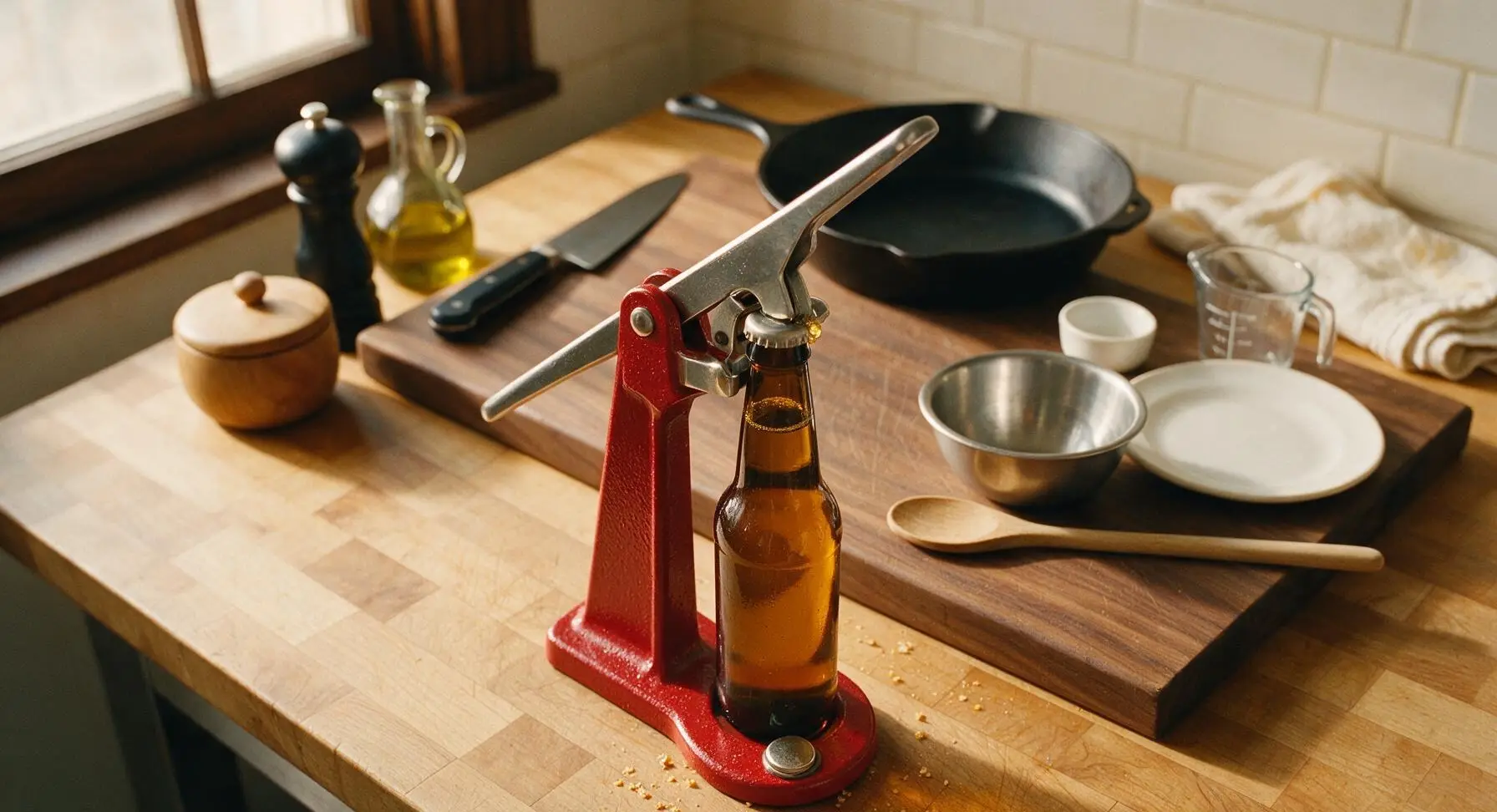
Once fermentation is complete, boil the 5 oz of corn priming sugar in 1 cup of water for 5 minutes, cool to room temperature, and add to a clean sanitized bottling bucket. Use the clear plastic auto-siphon to transfer clear beer from the carboy into the bottling bucket, stirring gently with the silicone spoon to evenly distribute the priming sugar (this creates natural bottle carbonation). Fill each sanitized amber 12oz bottle to 1 inch below the rim, then use the red bench capper to crimp a sanitized metal bottle cap onto each bottle.
Step 7
step7:Prime and Bottle Beer
Step 7
step7:Prime and Bottle Beer
8

Condition to Carbonate

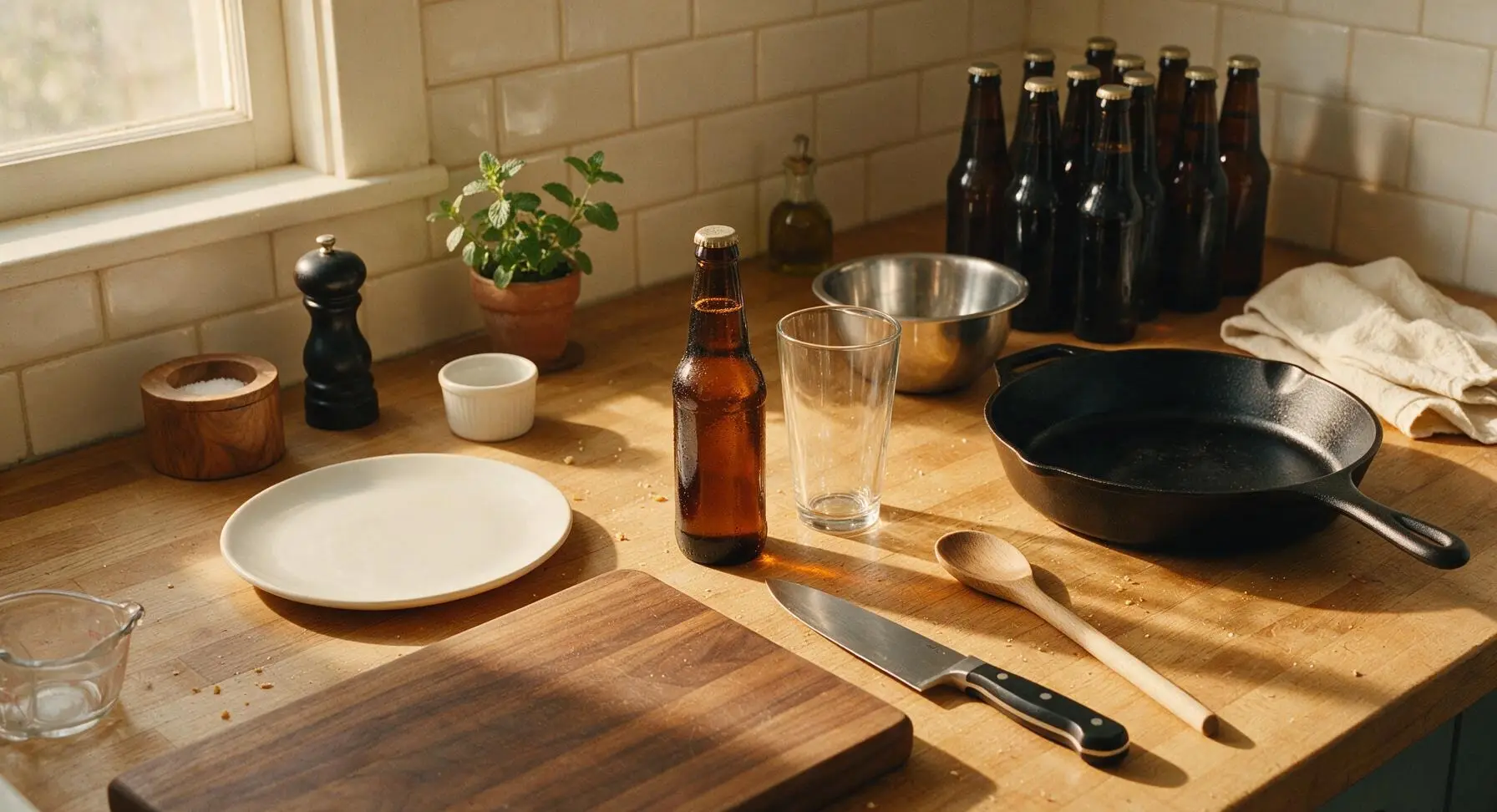
Store sealed, capped bottles in the same dark, 60–65°F space for 4 days to allow carbonation to develop as remaining yeast consumes the priming sugar. After 4 days, move bottles to the refrigerator to chill for at least 24 hours before serving. The finished beer will have a toasty malt backbone, subtle piney hop bite, and crisp, dry finish.
Step 8
step8:Condition to Carbonate

Tips

1.Hold fermentation temperature strictly between 60–65°F: the specialized California Lager yeast produces clean, crisp flavor only in this range; colder temps stall fermentation, while warmer temps create buttery, diacetyl off-flavors that ruin the classic profile.
2.Leave the last ½ inch of hop sediment (trub) in the boil kettle when transferring wort to the carboy: pouring this heavy, grassy sediment into the fermenter will create harsh, astringent bitterness in the finished beer, so strain slowly and err on the side of leaving a small amount of wort behind with the trub.
3.Do not chill bottles before carbonation is complete: cold temperatures make yeast go dormant, so chilling too early will stop the yeast from consuming priming sugar, resulting in flat, under-carbonated beer. Wait the full 4 days at room temperature before moving bottles to the fridge.


✨ You May Also Like

Drinks & Beverages
🍜 Mexico

A bright, balanced tequila-based cocktail with zesty fresh lime, smooth orange liqueur, and a signature salt rim, perfect for warm summer sipping.

⏱️ 5 minutesDrinks & Beverages ★ 4.9
Drinks & Beverages
🍜 United States

Thick, creamy, nostalgic classic vanilla milkshake with a rich, smooth texture, topped with whipped cream and a cherry for cool, sweet refreshment.

⏱️ 5 minutesDrinks & Beverages ★ 4.7
Drinks & Beverages
🍜 United States

A bright, golden strong ale with fruity banana-clove notes, subtle hop spice, and soft carbonation, brewed in classic Trappist Tripel tradition.

⏱️ 2 hours aDrinks & Beverages ★ 4.5
Drinks & Beverages
🍜 United States

A frothy, nostalgic American soda fountain treat pairing bubbly cold root beer with creamy vanilla ice cream, perfect for cooling down at warm weather gatherings.

⏱️ 20 minuteDrinks & Beverages ★ 4.8
Drinks & Beverages
🍜 United States

Tart, funky, effervescent American Wild Ale is a complex fruity craft beer brewed with wild yeast, delivering bright, zesty notes perfect for warm-weather sipping.

⏱️ 2 hours aDrinks & Beverages ★ 4.4
Drinks & Beverages
🍜 United States

Bright, bubbly copycat of the iconic American caramel cola, balanced with citrus and warm spice, perfect for sipping ice-cold on hot days.

⏱️ 15 minuteDrinks & Beverages ★ 4.8

California Common (Steam Beer) Craft Beer:Frequently Asked Questions

1.Why is this beer style nicknamed “steam beer”? ▾
The name dates back to Gold Rush-era San Francisco, when brewers had no access to refrigeration. They fermented lager yeast in shallow open pans at warm room temps, then tapped highly carbonated kegs in cool cellars — the sudden rush of released CO2 looked like puffs of visible steam when serving to patrons.
2.Do I really need to use lager yeast if I’m fermenting at warm ale temperatures? ▾
Yes! That non-negotiable quirk is what defines California Common. Using standard ale yeast will produce a generic amber ale, not that signature crisp, clean finish with subtle toasty notes. Grab a California common-specific lager strain (like WLP810 or W-34/70), which is formulated to perform well at those warmer 60–65°F temps.
3.Can I substitute any of the crushed malts if I’m missing one for the batch? ▾
You can make small swaps without ruining the brew, but stick close for authentic flavor. If you’re out of crystal 40L, use crystal 60L cut with a touch of pale malt to match sweetness; swap Munich malt for Vienna malt if needed. Skip swapping the chocolate malt — that tiny addition creates the classic deep amber hue without heavy roast.
4.Why does the recipe specify Northern Brewer hop pellets specifically? ▾
Northern Brewer hops are non-negotiable for that signature woody, lightly piney, subtle minty bite that defines classic steam beer. Other high-alpha hops like Cascade lean too citrusy and throw off the balanced profile. If you have whole leaf Northern Brewer instead of pellets, use 10–15% more by weight to account for lower boil utilization.
5.What temperature should I hold fermentation at for the best results? ▾
Aim for a steady 60–65°F for the first 7 days of primary fermentation — that’s the sweet spot for this lager yeast to stay clean without producing harsh, fruity esters you’d get at higher temps. Avoid letting it creep above 68°F, as that can add unwanted solvent-like off-flavors that overpower soft malt and piney hop notes.
6.Do I need any special homebrewing equipment to make this batch? ▾
You don’t need fancy professional gear! A standard 5-gallon homebrew setup works perfectly: a boil kettle, fermentation bucket with airlock, auto-siphon, hydrometer, and bottling wand are all you need. You don’t require a temp-controlled fridge if you have a cool, consistent closet that stays steady in that 60–65°F range.
7.How long does the whole process take from brew day to drinkable beer? ▾
Plan for about 4 weeks total for a great-tasting batch. You’ll spend 1–2 hours on active brew day tasks, 7–10 days in primary fermentation, then 2 weeks of bottle conditioning to build that bright, crisp carbonation. You can age it an extra 1–2 weeks for smoother, more integrated malt flavor if you have the patience.
8.Why is my finished batch darker than the classic amber steam beer I expected? ▾
That almost always comes from over-steeping the chocolate malt, or steeping grains at too high a temperature. Keep grain steep temps between 150–155°F, and don’t let that small portion of chocolate malt steep longer than 30 minutes. Even an extra half ounce of chocolate malt can push color too deep and add unwanted harsh roast notes.
9.How do I avoid buttery, buttered popcorn-like off-flavors in my finished beer? ▾
That distinct buttery flavor is diacetyl, a super common misstep with this style. Make sure you let fermentation finish completely (wait until your hydrometer reads the same final gravity two days in a row) before bottling, and hold temp steady at 65°F for the last 2 days of fermentation to let yeast clean up that diacetyl.
10.What carbonation level is right for authentic California Common? ▾
Aim for 2.5–2.7 volumes of CO2, which is a little brighter than a standard lager but not as fizzy as a hazy IPA. That level delivers the signature crisp, refreshing finish that made steam beer a Gold Rush favorite for hot days. Use 4 ounces of corn sugar for priming a 5-gallon batch to hit that exact mark.
11.Can I keg this beer instead of bottling it? ▾
Absolutely! Kegging actually cuts down your wait time a little, since you don’t need 2 full weeks of bottle conditioning. Force carbonate at 12 PSI for 5–7 days at 40°F to hit that target 2.6 volumes of CO2, and you’ll have perfectly carbonated steam beer faster. It stays fresh in a sealed, cold keg for 3–4 months.
12.What kind of water profile works best for this recipe? ▾
Classic San Francisco steam beer uses moderately hard water with a slight mineral boost to make piney hops and toasty malt pop. If you have soft tap water, add 1 teaspoon of gypsum and half a teaspoon of calcium chloride to your 5-gallon batch before the boil. Skip distilled water, as it lacks the minerals yeast need for clean, healthy fermentation.
13.How bitter should the finished steam beer taste? ▾
Aim for 35–40 IBUs, which is a balanced, moderate bitterness that doesn’t overpower the soft toasty malt backbone. Most of that bitterness should come from a 60-minute addition of Northern Brewer hops, with a tiny late addition 10 minutes before flameout to add subtle pine aroma without harsh extra bitterness.
14.Do I need to do a secondary fermentation for this recipe? ▾
Nope, secondary fermentation is totally unnecessary for this style. You’ll get perfectly clear, clean beer by leaving it in primary for the full 10 days, letting yeast and sediment settle out on its own. Racking to a secondary only risks exposing the beer to oxygen, which can cause stale, cardboard-like off-flavors that ruin the bright, fresh finish.
15.What’s the best way to serve this beer once it’s ready? ▾
Serve it cold, around 45–50°F, in a standard shaker pint to show off that deep amber color and fluffy off-white head. Skip serving it ice-cold like a light lager, because that mutes the subtle toasty malt and soft pine hop notes. It pairs perfectly with grilled burgers, fried seafood, or spicy garlic fries for casual gatherings.
16.How long will my homemade steam beer stay fresh after bottling? ▾
Stored in a cool, dark place away from direct sunlight, your bottles will stay fresh and crisp for 4–6 months. After that, the bright pine hop notes will start to fade, and the malt will take on a stale, papery flavor. Keep stored bottles at a steady 55–60°F for longest shelf life, and avoid big temperature swings that can skunk the beer.
17.My finished beer tastes a little cidery — what went wrong? ▾
That cidery, thin, sharp flavor almost always comes from fermenting at too high a temperature (above 70°F) during the first 3 days of active fermentation, or using too much simple sugar for priming. Next batch, keep fermentation locked in the 60–65°F range, and stick to the 4-ounce priming sugar measurement to avoid that unwanted tart edge.
18.Can I scale this recipe up to make a 10-gallon batch for a large gathering? ▾
Definitely! Just double all your malt, hop, and yeast measurements evenly, and make sure your boil kettle and fermentation vessels are sized to hold the extra volume without overflowing during active fermentation. You won’t need to adjust fermentation times or temps, just double priming sugar to 8 ounces for bottling to keep perfect carbonation.

Comments (15)

2 weeks ago

OMG, I’ve been trying to nail a California common for 3 years and this recipe is a total game changer! Got that perfect toasty, slightly caramel malt profile with that crisp, fruity lager yeast kick you expect from steam beer. My whole homebrew club went nuts for it at our last potluck, already got 3 people asking for the link. Only note is I bumped the Northern Brewer hops a tiny bit for extra pine, turned out chef’s kiss.

1 week ago

Wait, how much extra hops did you add? I’m about to do my first brew day for this tomorrow and I love that piney kick!

1 week ago

Love that tweak, Jake! If you’re adding extra Northern Brewer, just make sure to keep your fermentation temp steady between 58-62°F like the recipe says so you don’t get off-flavors that compete with that hop profile. So stoked your club loved it!

1 week ago

SO good! I was nervous about medium difficulty since I’ve only done 2 extract brews before, but the step-by-step instructions were so easy to follow. Ended up with way better carbonation than my last couple batches after the 4 day bottle condition, my husband said it tastes better than the commercial steam beer we buy at the liquor store. Already planning to make a double batch for our fall tailgates!

5 days ago

So happy it worked out for you even as a newer brewer! That steady fermentation temp is the secret to getting that authentic California common taste, so great job nailing it. The double batch for tailgates sounds like a perfect call!

3 days ago

Had a little mishap on brew day – forgot to chill the wort fast enough and it sat at 80 degrees for almost an hour before I got it down to pitching temp. Anyone else have that happen? Worried I ruined the whole batch.

2 days ago

I did that my first time making this! It ended up having a tiny bit of extra fruity ester but it was still totally drinkable, no skunk or anything. Just let it ferment a couple extra days before bottling if you can, you’ll be fine.

2 days ago

Don’t panic! A short warm spell pre-pitch usually doesn’t ruin a batch, especially with this yeast strain which is a little more forgiving than pure lager yeast. Just keep a close eye on it as fermentation kicks off, and if it smells/tastes normal when you take a gravity sample at day 10, you’re good to bottle.

5 days ago

Made this for my brother’s birthday cookout last weekend and everyone was raving! I was worried because my apartment is usually a little warmer than the ideal fermentation temp, but I rigged up a cheap swamp cooler and kept it right at 60 the whole time. Got that classic smooth, crisp finish, no weird off flavors. 10/10 will brew again.

3 days ago

Wait what kind of swamp cooler setup do you use? I’m in Florida too and my place is always 75+ inside, struggling to keep ferment temps down for lager-adjacent styles!

2 days ago

Took a chance on this as my first all-grain brew and I’m hooked! The mash temp instructions were spot on, I hit 152 exactly and got that perfect medium body that’s not too heavy, not too thin. The only reason I’m not giving 5 stars is I wish the recipe noted how much corn sugar to use for priming a little more clearly – I had to look up a standard calculator to double check.

yesterday

Thanks so much for the feedback! I just updated the priming sugar section to call out 5 oz of corn sugar for a standard 5 gallon batch to match the 2.4 volumes of CO2 this style needs, that’s a great catch. Congrats on nailing your first all-grain brew, that’s huge!

yesterday

Game changer for my weekend cookouts! I brewed this 2 weeks ago exactly, cracked the first bottle last night and it’s perfect. Got that subtle woody hop note, clean finish, goes so good with burgers and grilled brats. My neighbor brought over a fancy store-bought craft lager and everyone picked my homebrew over it, no cap.

2 hours ago

No way, I’m in ATL too! Did you have any trouble keeping fermentation temp down with this weird 80 degree October weather we’ve been having?

30 minutes ago

I kept my carboy in the basement closet where it stays a steady 60, worked like a charm! No need for a fancy temp controller if you’ve got a cool spot in the house.

3 days ago

I’ve been making IPAs for years but never branched out to hybrid styles, and this recipe made me wonder why I waited! It’s so crushable, not too bitter, just enough malt sweetness to balance the hops. I brought a growler to my office potluck and even the people who say they hate craft beer loved it. My kids (well, adult kids) kept asking for refills, haha.

2 days ago

That’s the best compliment when non-craft beer fans love it! California common is such an approachable style for that exact reason – it’s got all the craft flavor without being overly bitter or heavy. So glad you branched out!

5 minutes ago

Wait, is this supposed to have that slight metallic twang I remember from old school steam beer? I bottled mine 4 days ago, cracked a test bottle and it’s got that tiny mineral note I can’t place, wondering if I messed up my water chemistry.

just now

That metallic note is usually from your bottle caps if you didn’t sanitize them right? Wait no, or if you used tap water with high iron content. I used filtered spring water for this recipe and didn’t get that note at all.

just now

Great call from WindCityWort! That faint metallic flavor is almost always either high mineral content in your brewing water or a reaction from low-quality bottle caps. If it’s really faint, it’ll likely mellow out after another week or two of conditioning, so don’t dump the batch yet!

2 weeks ago

Super impressed with how straightforward this was! I was worried the medium difficulty tag meant I’d need a bunch of fancy equipment, but I already had everything from my basic homebrew kit. The 2 hour active brew day flew by, I didn’t even feel like I was spending all day in the kitchen. Carbonation was perfect after 4 days, just like the recipe said. Will absolutely be making this a regular in my rotation.

1 week ago

Same! I was over here thinking I’d need a temp controller and all that, but I just kept the carboy in my coolest closet and it turned out perfect. Such a great recipe for people who don’t have a full brew setup yet.

1 week ago

I did a dry hop addition with a half ounce of Cascade on day 8 of primary and it turned out insane! Added a little extra citrus note that pairs so well with the classic Northern Brewer pine. My wife said it’s the best beer I’ve ever made, which is saying something because I’ve been brewing for 7 years.

5 days ago

Oh that sounds amazing! Did you cold crash before bottling after the dry hop, or just bottle straight from primary?

3 days ago

Love that dry hop tweak! Cascade is such a natural pairing for this style, that citrus kick complements the caramel malt perfectly. If you’re dry hopping, just make sure to avoid introducing oxygen when you add the hops so you don’t get stale flavors down the line.

2 days ago

Took this to my fantasy football draft night last week and it was gone by the end of the first round! I was a little worried because my primary fermentation ran 12 days instead of 10 because I got busy and forgot to take a gravity reading, but it didn’t seem to hurt it at all. Super smooth, no harsh alcohol bite, exactly what a steam beer should taste like.

yesterday

So glad it was a hit at draft night! An extra couple days in primary never hurts, it just lets the yeast clean up any off-flavors and gives you a cleaner final beer. Great call waiting until you had time to bottle instead of rushing it.

30 minutes ago

First time making a steam beer and I’m obsessed! I was intimidated by the hybrid yeast but the instructions made it foolproof. Cracked a bottle last night after the full 2 week timeline and it’s so crisp, perfect for these weird warm fall days we’re having in NYC. Already sent the recipe to my whole brew group.

2 hours ago

Solid recipe, turned out great. My only feedback is I wish it had a little more guidance on water chemistry for people who don’t brew that often – I had to look up a recommended profile for California common to adjust my tap water, but once I did it turned out perfect. Will make again next time I want an easy, drinkable crowd-pleaser.

5 days ago

SO good! I made this for a camping trip last weekend and it was the perfect beer to sip around the campfire. Not too heavy, great carbonation, that little caramel malt flavor hit so good after a day of hiking. My friends already made me promise to brew another batch before our next trip.

just now

I’ve had bad luck with bottle conditioning in the past – either flat beer or gushers – but the timing and priming sugar notes here were spot on. Every bottle was perfectly carbonated, no mess, no flat pours. Tastes exactly like the steam beer I used to get when I visited San Francisco back in college. Total nostalgia trip, 10/10.



