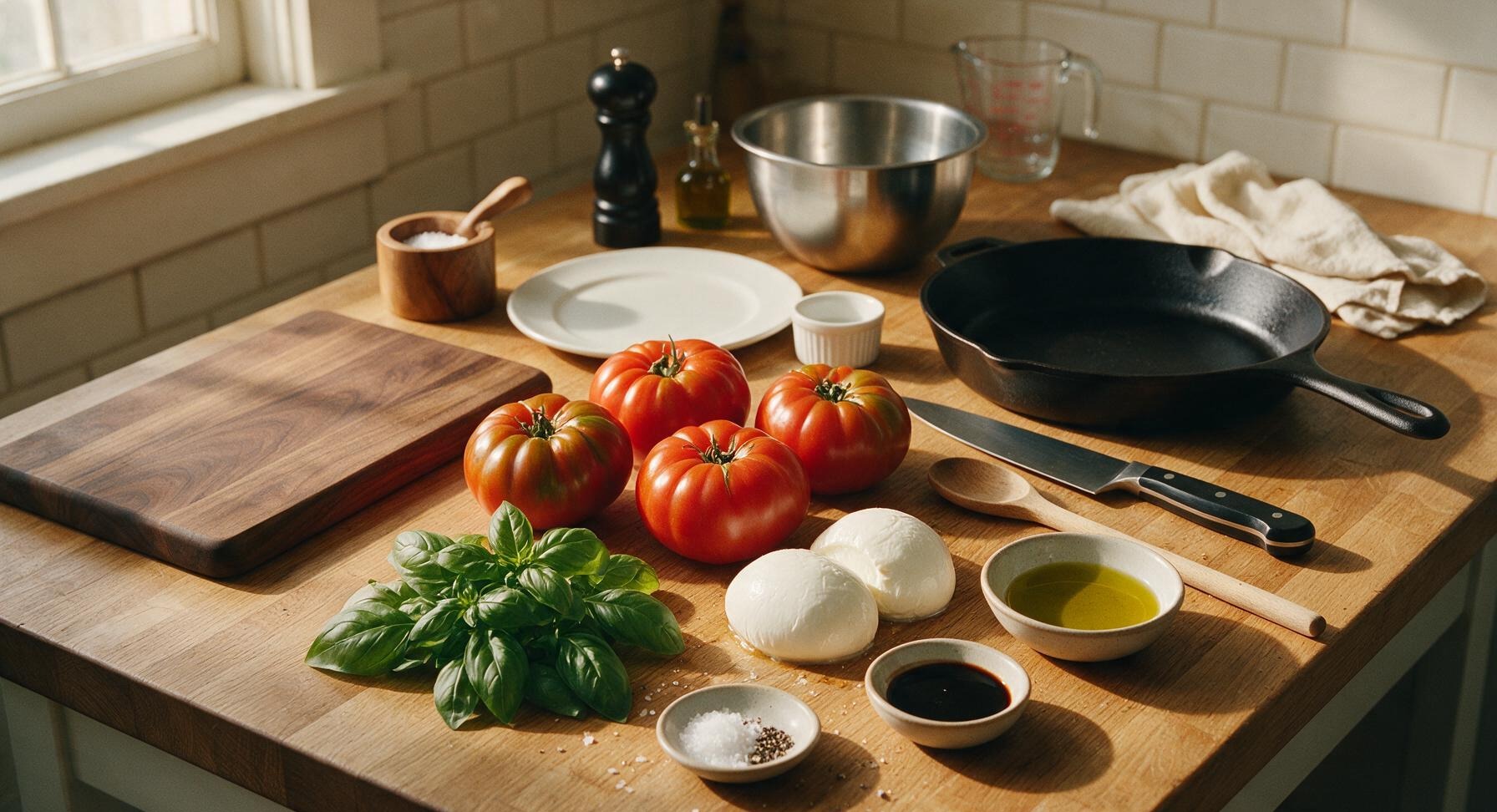
1.Do I really need heirloom tomatoes for classic Caprese, or will regular grocery store tomatoes work?
▾
Heirlooms are ideal for their sweet, complex, juicy flavor and bright, low-acid profile, but ripe in-season beefsteak or cherry tomatoes work great if heirlooms aren’t available. Skip hard, out-of-season hothouse tomatoes—they’re bland and mealy. If you only have firmer store-bought tomatoes, let them ripen at room temp for 1-2 days, then pat cut surfaces lightly to remove excess watery seepage before assembling.
2.Why does my Caprese salad always turn out watery and soggy?
▾
Sogginess almost always comes from two common culprits: overly moist mozzarella or un-drained tomatoes. Always pat mozzarella slices gently with paper towels to remove excess brine before assembling, and if your tomatoes are extra juicy, lightly seed them or let sliced pieces rest on a paper towel for 5 minutes first. Never dress the salad until right before serving to avoid pulling out excess tomato moisture early.
3.Can I use low-moisture shredded mozzarella instead of fresh water-packed mozzarella?
▾
Skip low-moisture shredded mozzarella for classic Caprese—it’s firm, salty, and formulated for melting on pizza, not eating raw in a cold salad. Fresh water-packed mozzarella has a soft, creamy, mild flavor and delicate texture that balances bright tomatoes perfectly. If you’re in a pinch, small fresh mozzarella pearls (ciliegine) work, just drain and pat them extra well first.
4.Is balsamic vinegar or glaze a traditional addition to Caprese salad?
▾
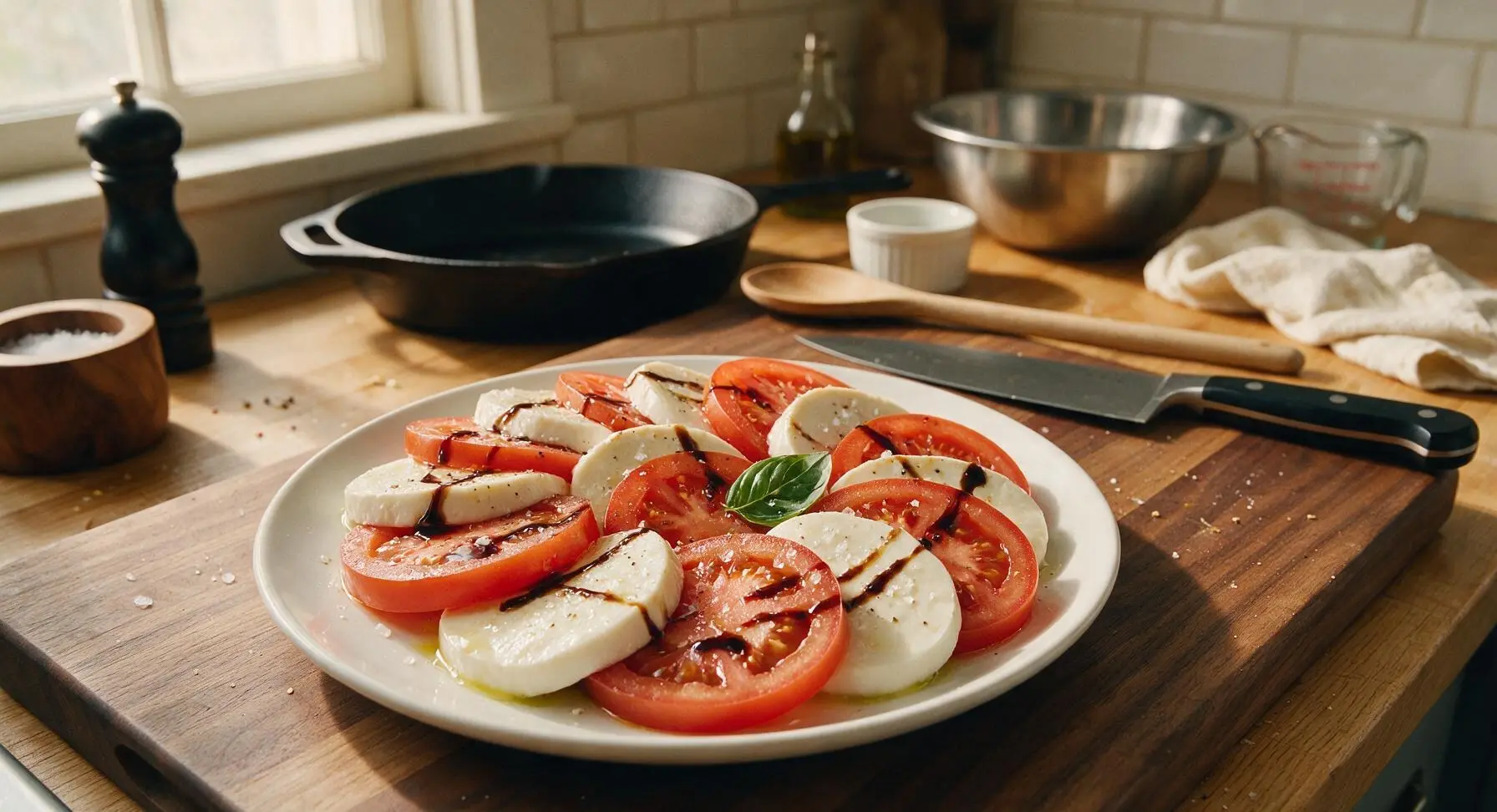
Traditional Neapolitan Caprese doesn’t include balsamic at all—its bright, simple flavor relies solely on olive oil, salt, tomatoes, mozzarella, and basil. That said, a tiny drizzle of thick, high-quality aged balsamic glaze is a popular American variation if you love that sweet-tart kick. Avoid thin, sharp grocery store balsamic, as it will overpower delicate ingredients and make the salad soggy.
5.How far in advance can I assemble Caprese salad?
▾
Caprese is best assembled and served immediately, right before you plan to eat it. If you need to prep ahead, you can slice tomatoes and mozzarella up to 2 hours early, store them separately on paper-towel lined plates in the fridge, then pat dry, arrange with basil, dress, and salt right before serving. Assembled salad left longer than 15 minutes will get soggy and lose its bright, fresh flavor.
6.What kind of olive oil works best for Caprese salad?
▾
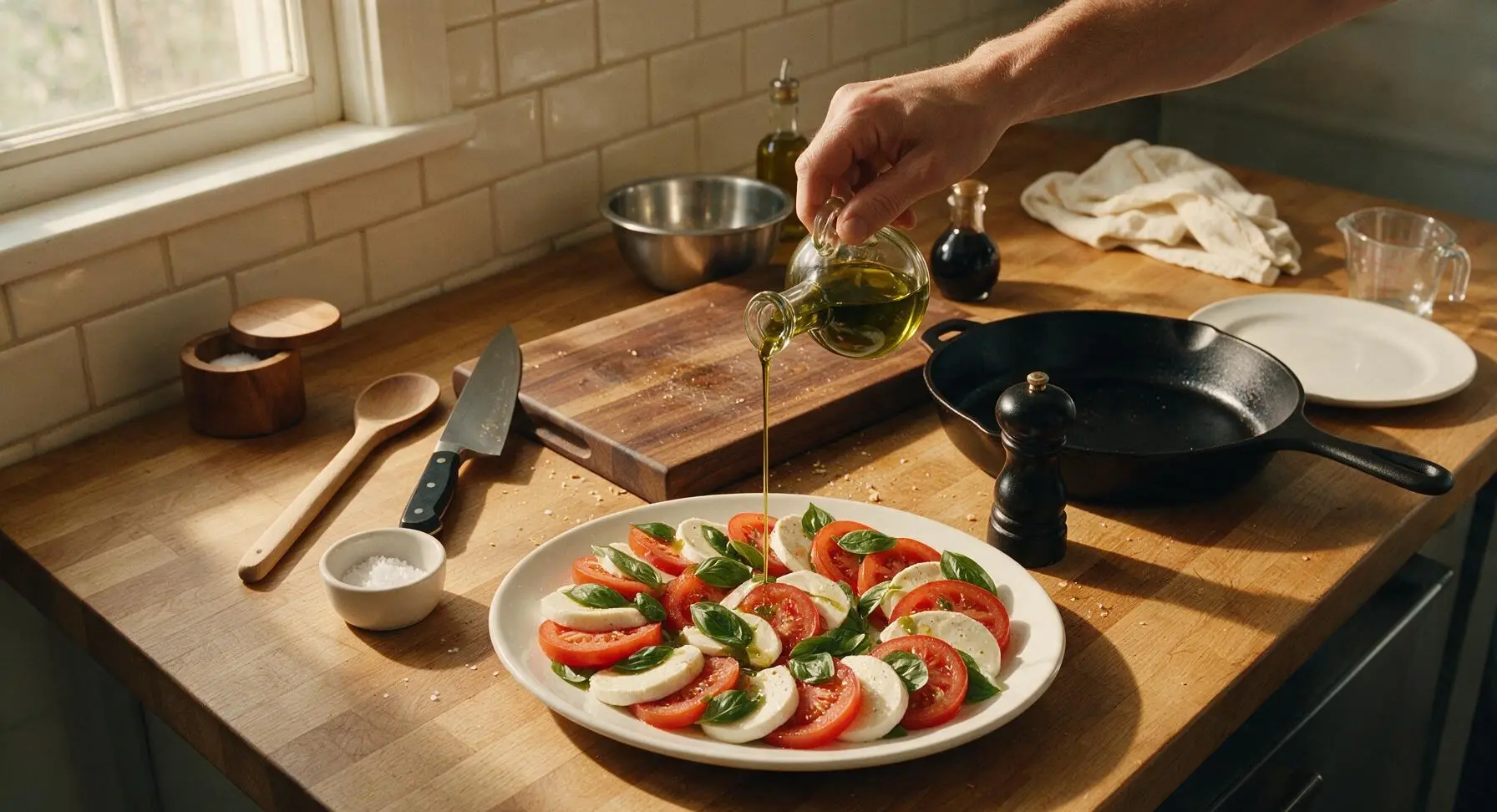
Reach for a high-quality, grassy, peppery extra-virgin olive oil (EVOO) for Caprese—this is not the time to use neutral cooking oil or cheap, bland EVOO. Since oil is a core flavor component, pick one you love the taste of raw: look for cold-pressed, early-harvest options with bright, green, grassy notes to complement sweet tomatoes and creamy cheese. A light drizzle is all you need.
7.Why do most recipes recommend serving Caprese at room temperature instead of cold?
▾
Cold temperatures mute the bright, sweet flavor of ripe tomatoes and make fresh mozzarella taste rubbery and bland, rather than soft and creamy. For the best flavor, take tomatoes and mozzarella out of the fridge 30 to 45 minutes before assembling. The only exception is 90°F+ summer days, where 15 minutes out of the fridge is enough to avoid warm, mushy cheese.
8.What type of salt should I use, and is table salt okay for Caprese?
▾
Flaky sea salt (like Maldon) is ideal because its light, crisp crystals dissolve slowly, adding bright pops of salty flavor without making the salad overly briny. Avoid fine table salt—it dissolves too fast, draws moisture out of tomatoes quickly, and can leave a harsh, metallic aftertaste. If you only have fine sea salt, use half the amount of flaky salt, and sprinkle it on right before serving.
9.Can I add extra ingredients like olives or arugula to classic Caprese?
▾
The core classic recipe sticks to five key ingredients to mirror the red, white, and green of the Italian flag, but there’s no rule against gentle additions if you want to mix it up. Peppery arugula under the slices, a handful of briny Kalamata olives, a light sprinkle of dried oregano, or a twist of fresh black pepper are all complementary. Just skip heavy additions that weigh down the salad’s light profile.
10.My fresh basil wilts and turns dark right after I add it—how do I prevent that?
▾
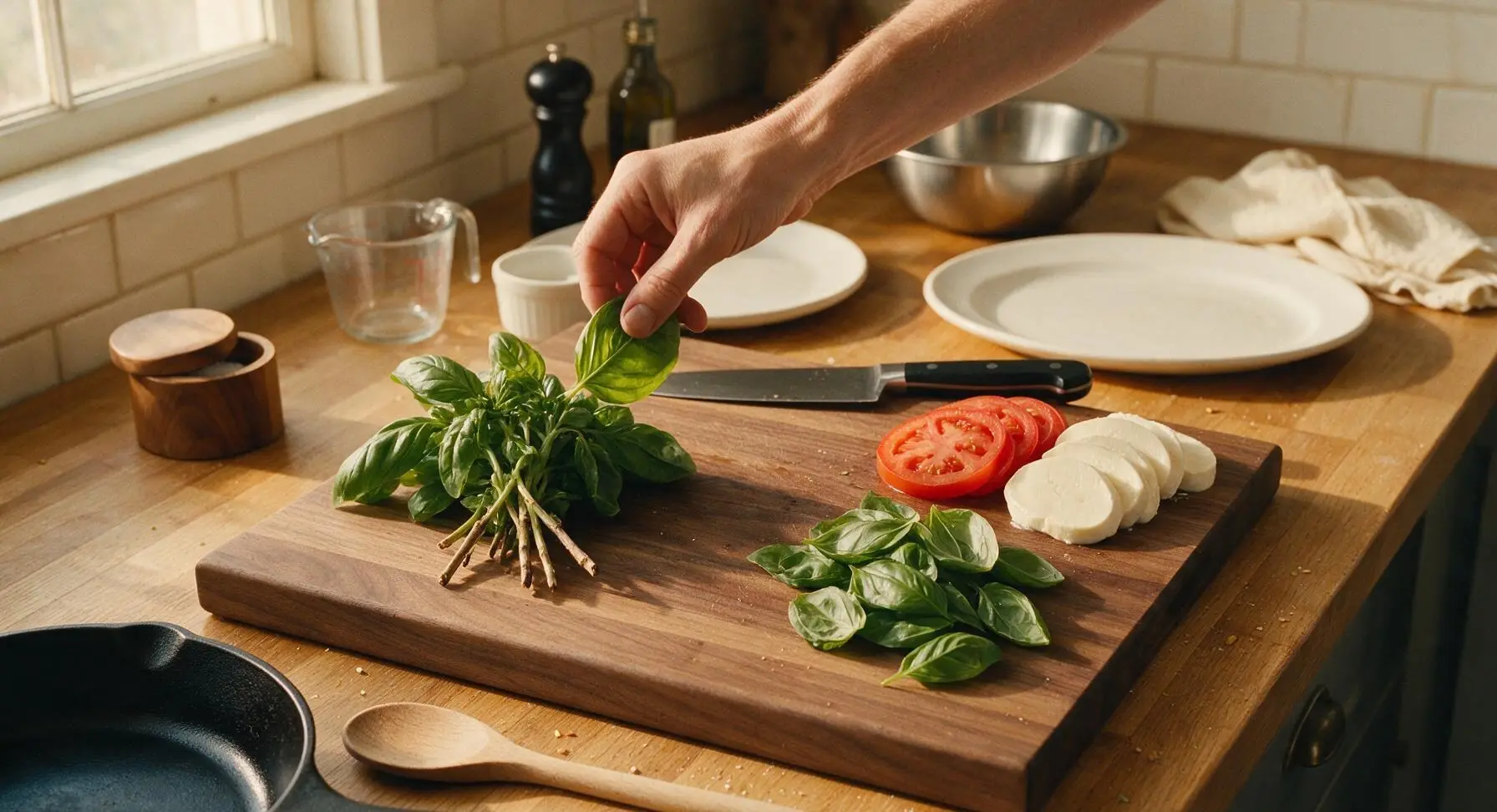
Wilting, bruised basil happens when you tear or cut it too early, or douse it in oil and salt long before serving. For perky, bright basil, pluck whole leaves from the stems right before assembling, and tuck them between tomato and mozzarella slices instead of chopping them finely. Don’t drizzle oil directly onto basil leaves if prepping ahead, as that makes them turn dark and soggy fast.
11.Is burrata an acceptable swap for fresh mozzarella in Caprese?
▾
Burrata makes an incredibly rich, luxurious twist on classic Caprese, though it’s not traditional. Its oozing, creamy center pairs beautifully with sweet tomatoes, but it’s much softer and higher moisture than regular fresh mozzarella. If you use burrata, place a whole ball in the platter center instead of slicing it, pat the outer skin dry, and cut into it tableside to avoid a runny, soggy salad.
12.How thick should I slice the tomatoes and mozzarella for the best texture?
▾
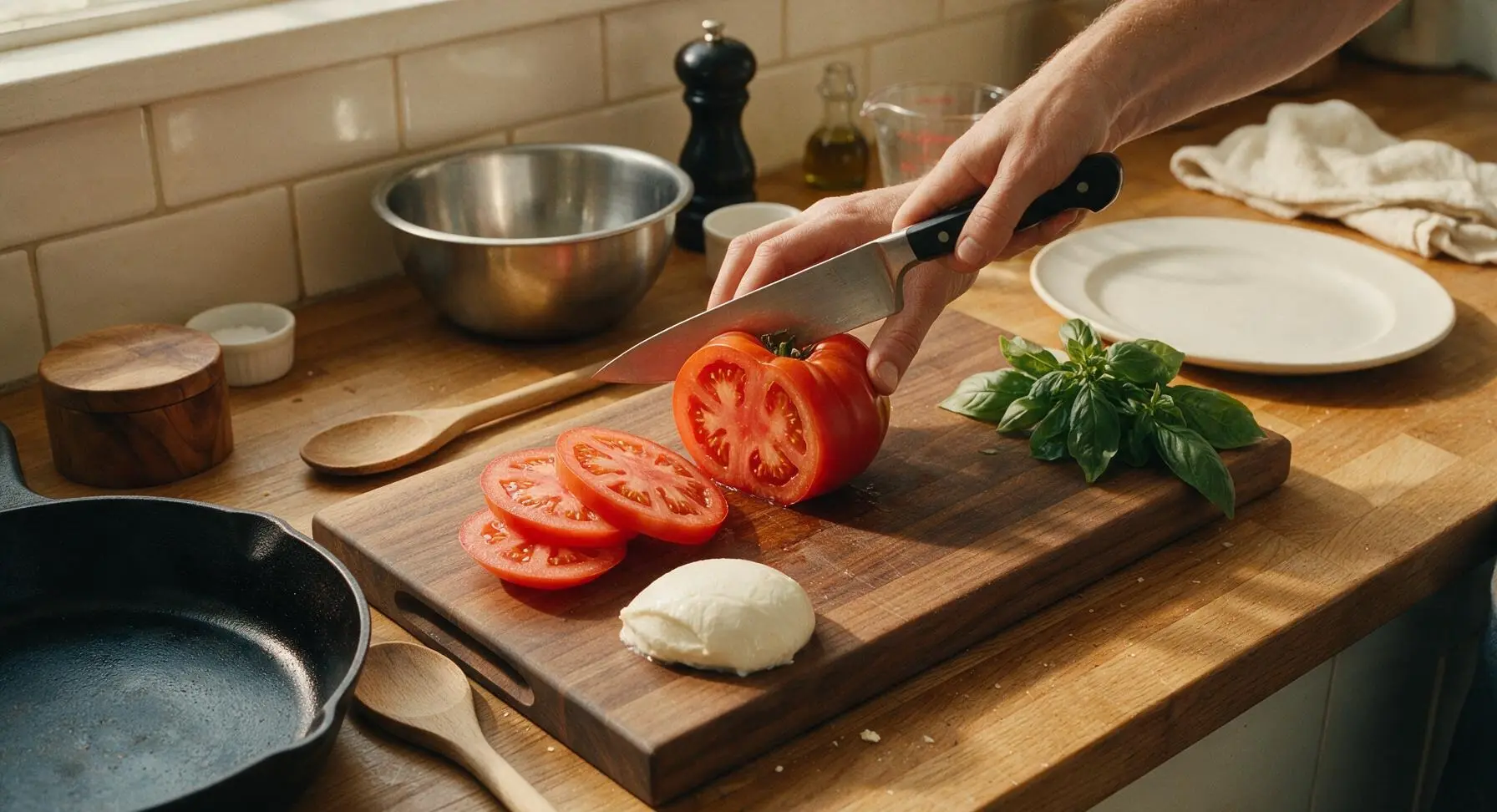
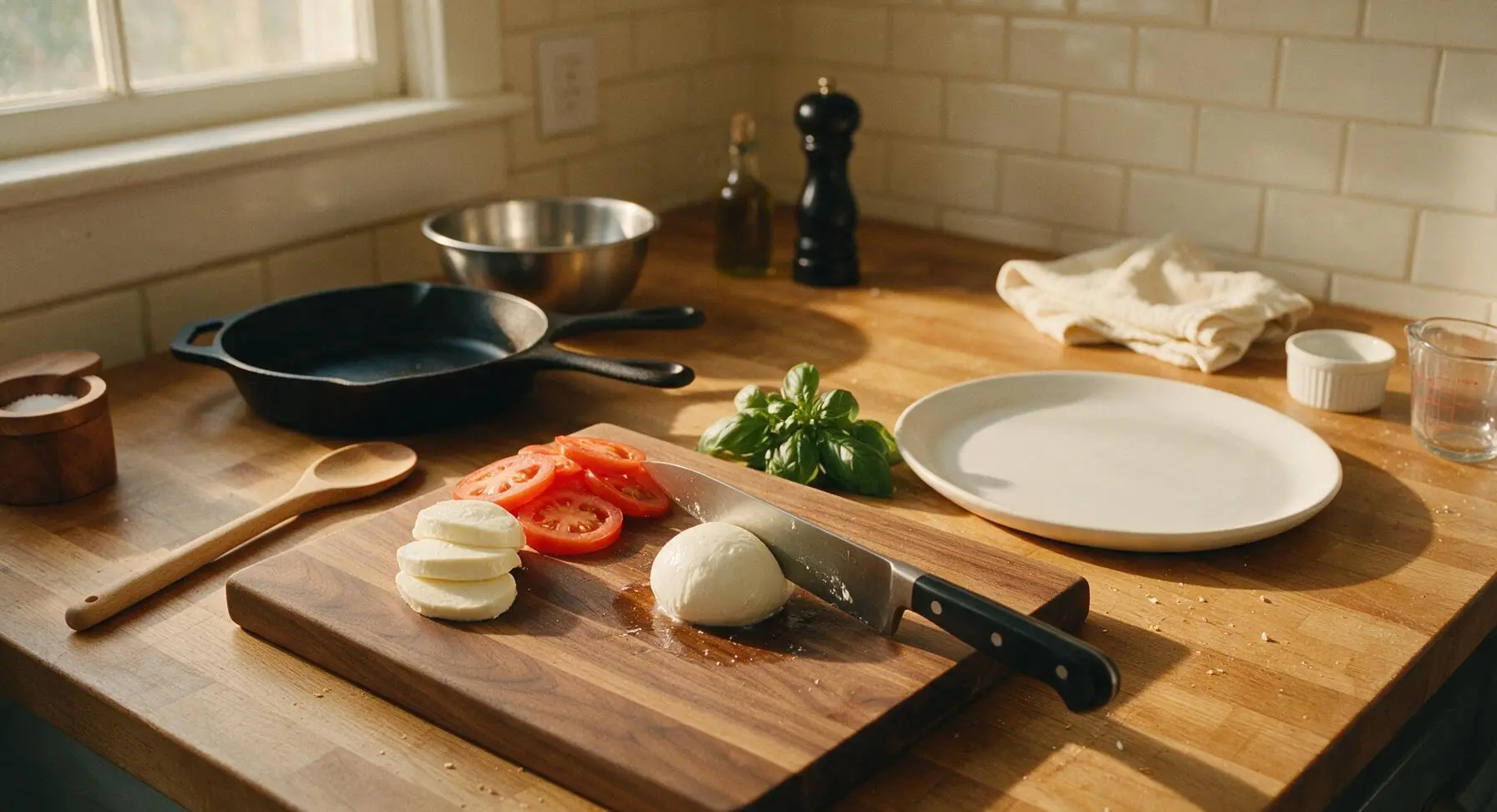
For the classic stacked or shingled presentation, slice both tomatoes and mozzarella into uniform ¼-inch thick rounds. This thickness gives you the perfect bite ratio of tomato to cheese, lets flavors meld evenly, and prevents thin slices from getting mushy or thick slices from feeling unwieldy to eat. If using cherry tomatoes, halve them and pair with bite-sized ciliegine mozzarella pearls for easy serving.
13.Why does my fresh mozzarella sometimes taste sour or rubbery in Caprese?
▾
Sour, rubbery mozzarella usually means it’s past its prime, or it was stored in overly salty brine for too long. Always check the expiration date on water-packed mozzarella, and use it within 2 to 3 days of opening for the best flavor. If your mozzarella tastes overly briny, soak it in cold fresh water for 10 minutes before using, then pat it completely dry to bring back its creamy, mild flavor.
14.Do I need to peel the tomatoes for Caprese salad?
▾
Peeling tomatoes is totally optional for classic Caprese, and most traditional preparations leave skins on for color, texture, and extra nutrients. The only time you might want to peel them is if you have extra-thick, tough-skinned hothouse tomatoes that feel chewy when raw. If you do peel them, blanch in boiling water for 10 seconds, then shock in ice water to slip skins off easily before slicing.
15.Can I make good Caprese salad with out-of-season tomatoes in the winter?
▾
You can, but it won’t have the bright, sweet flavor of summer in-season Caprese. If you’re craving it in winter, skip pale, mealy grocery store slicing tomatoes and use sweet, bright cherry or grape tomatoes grown in a local greenhouse, which tend to have far better flavor. Roasting winter tomatoes lightly for 10 minutes can also concentrate their flavor for a more satisfying cold-weather version.
16.Should I add black pepper to classic Caprese salad?
▾
Traditional Neapolitan Caprese doesn’t include black pepper, but a light twist of freshly cracked black pepper right before serving is a widely loved, subtle addition that won’t throw off the classic flavor balance. Skip pre-ground black pepper, which tastes flat and dusty, and go easy—you only want a faint warm, peppery note, not enough to overpower the sweet tomatoes, creamy cheese, and bright basil.
17.What’s the best way to store leftover Caprese salad?
▾
Caprese doesn’t keep particularly well, as tomatoes get mushy, mozzarella gets rubbery, and basil wilts quickly once dressed. If you have leftovers, store them in an airtight container in the fridge for no more than 1 day, and drain off any excess collected liquid before eating. Don’t freeze Caprese, as the texture of both tomatoes and fresh mozzarella will break down completely and turn unpleasantly mushy when thawed.
18.What’s the easiest, most attractive way to arrange Caprese for a party platter?
▾
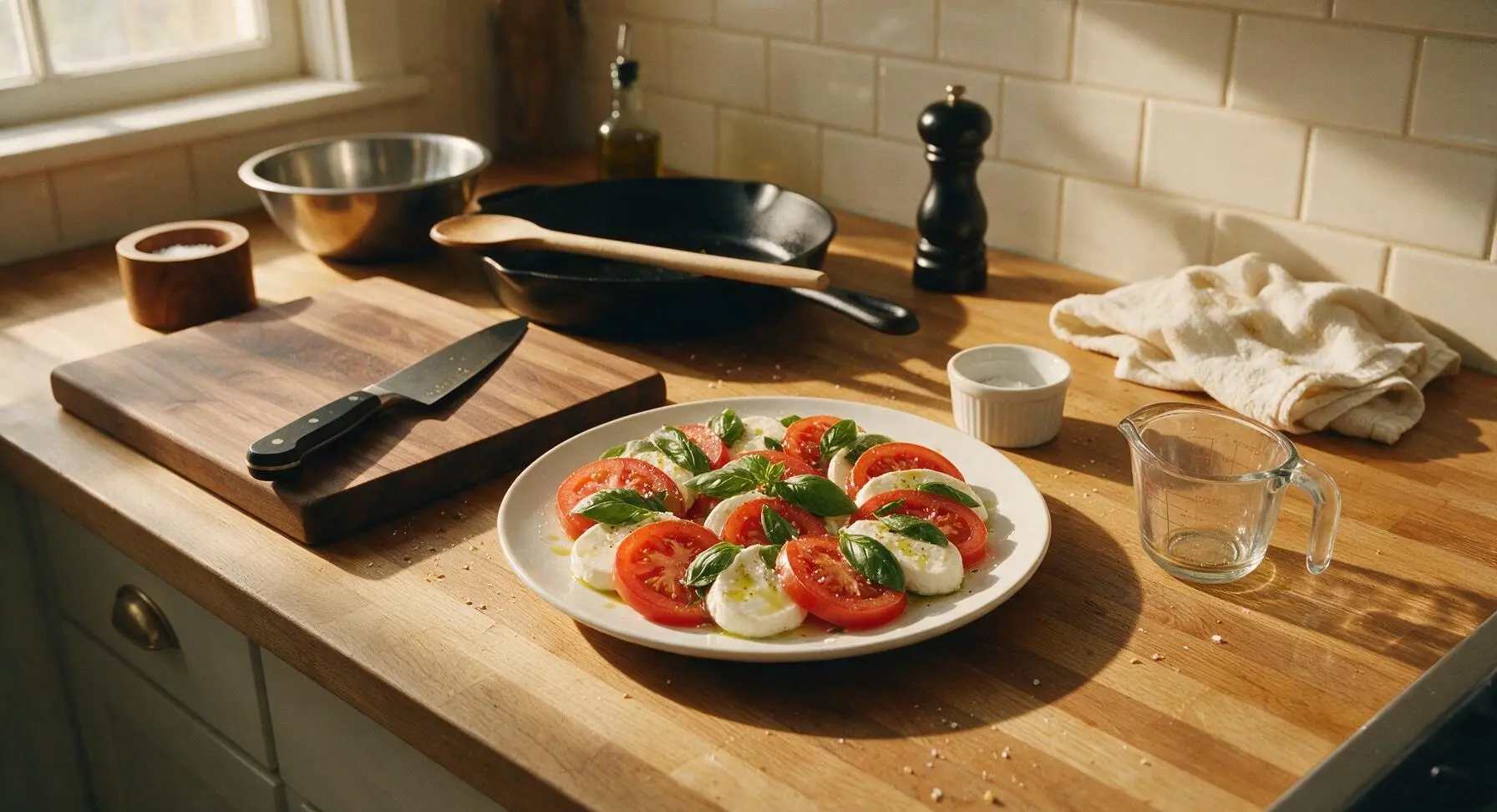
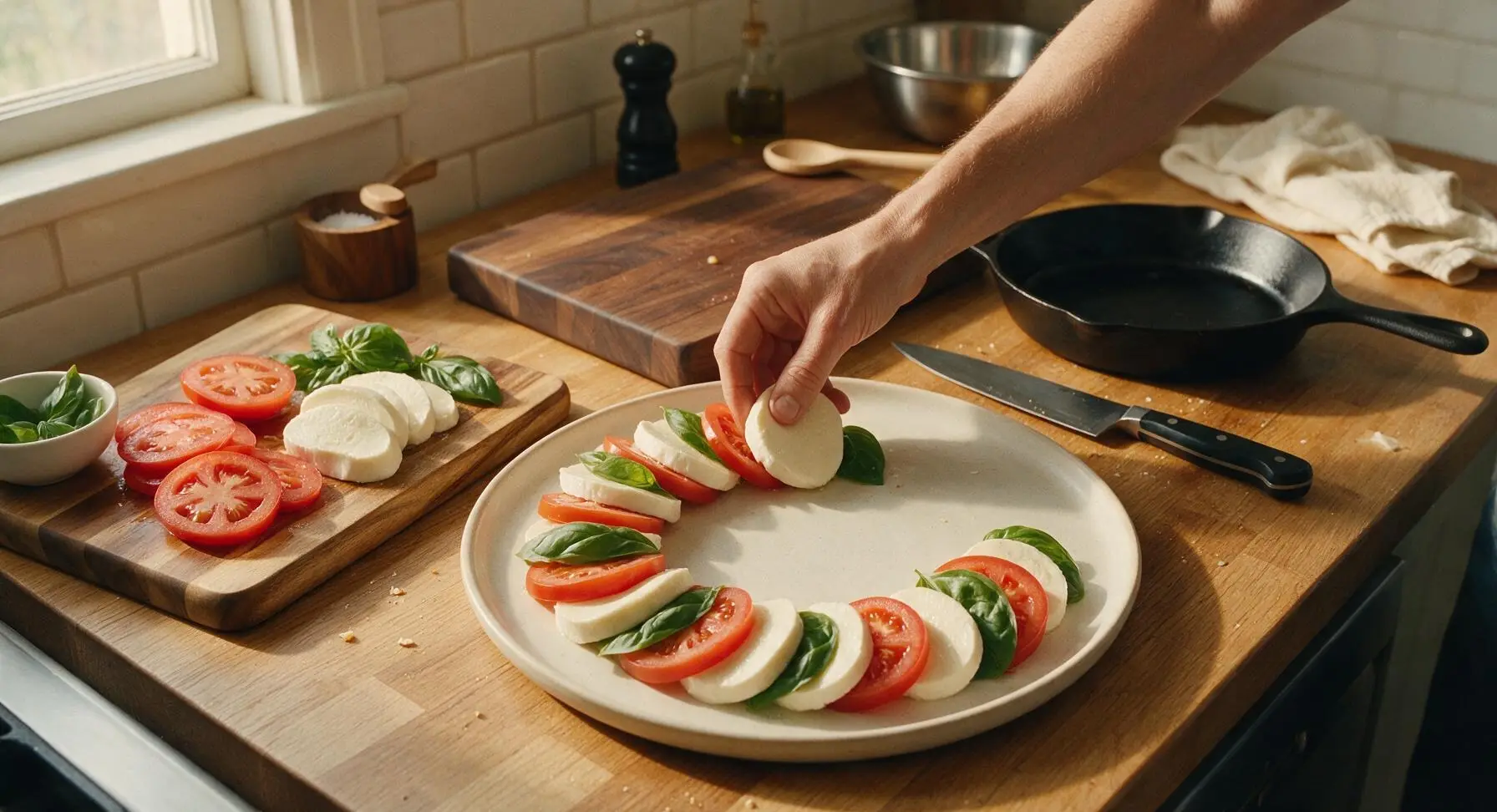
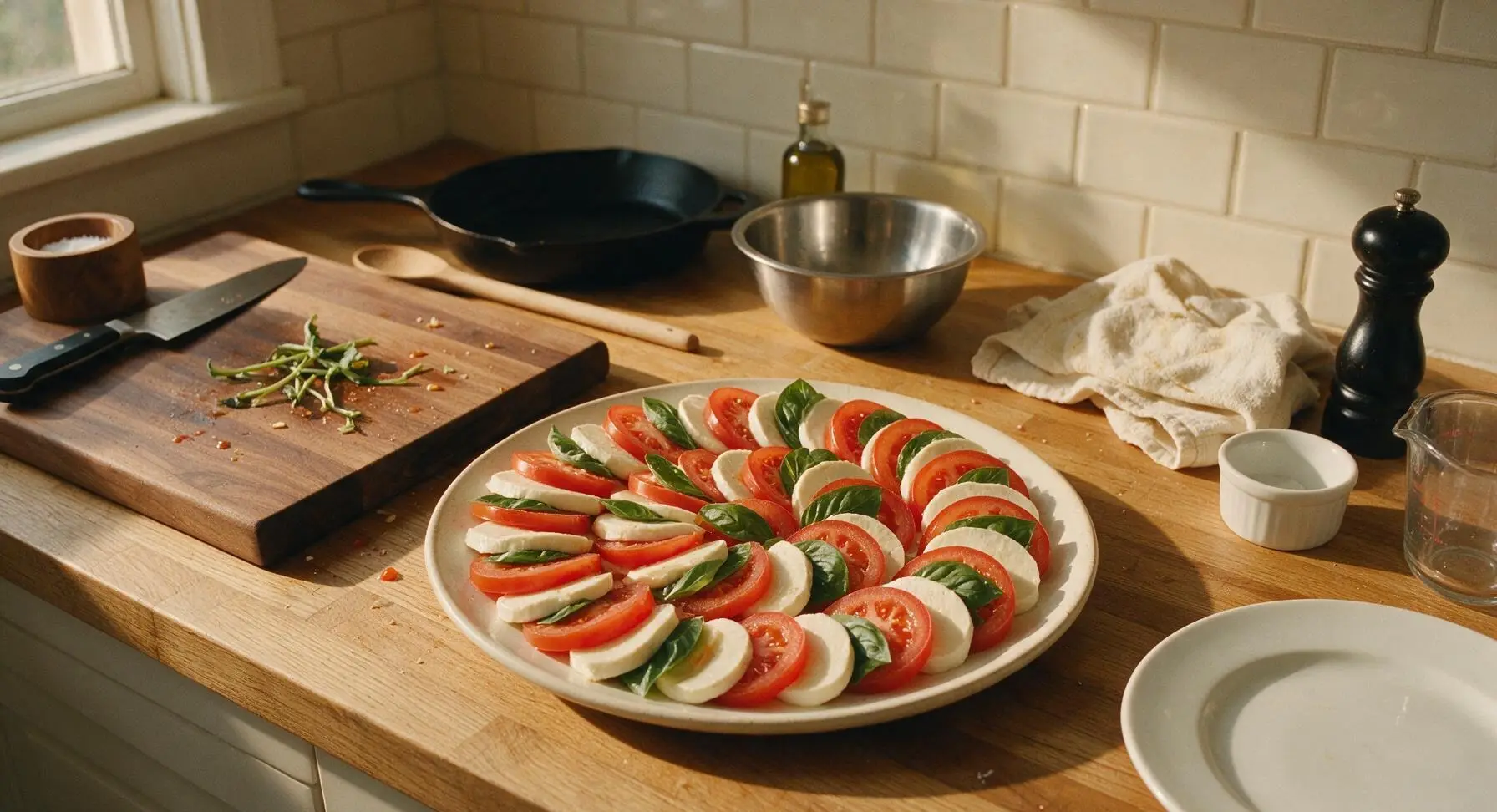
The most classic presentation is shingled alternating slices of tomato, mozzarella, and whole basil leaves in a repeating pattern around a round platter, mimicking the red, white, and green of the Italian flag. Drizzle lightly with olive oil and sprinkle with flaky salt right before setting it out, and leave a small serving spoon nearby so guests can lift slices easily without messing up the platter.
19.Why do some chefs say you should never cut basil with a knife for Caprese?
▾
The longstanding chef’s rule of tearing basil by hand instead of cutting it with a metal knife comes from the idea that sharp metal blades bruise basil edges, making them turn brown faster and release bitter, grassy compounds. For the best flavor and brightest color, gently tear large basil leaves by hand right before assembling. If you do use a knife, pick a very sharp stainless steel or ceramic blade to minimize bruising.
20.Is Caprese only an appetizer, or can it be served as a main course?
▾
Classic Caprese is traditionally served as a light antipasto (appetizer) or side dish, paired with grilled bread, grilled chicken, or crusty sourdough to soak up olive oil and tomato juices. To turn it into a satisfying light summer main, double the portion size, add a bed of peppery arugula and a handful of toasted pine nuts, and serve with thick slices of grilled crusty bread to make it filling enough for a full meal.



OMG this is exactly the no-fuss caprese I’ve been searching for! I brought it to our neighborhood block party potluck last weekend and every last bite was gone before I even got a second helping. The fresh basil + ripe tomato + creamy mozz combo is unbeatable, no fancy add-ins needed. 10/10 will make again for our next family dinner!
Super easy to throw together on a busy weeknight! My only note is that I wish I’d waited to add the balsamic glaze until right before eating, because it made the tomatoes a little soggy when I prepped it ahead for meal prep. Still tasted amazing though!
Game changer for summer cookouts! I used heirloom tomatoes from my backyard garden and fresh mozz from the local Italian market down the street, and my kids loved it so much they asked for seconds before they even finished their burgers. Zero cook time? Sign me up all summer long.
It was fine, but I felt like it was missing something? I followed the recipe exactly but it felt a little plain for my taste. Maybe I need better quality tomatoes?
Just whipped this up for a quick lunch and wow, why did I ever overcomplicate caprese with random add-ins? The simple ratio here is perfect. I ate the whole bowl by myself no shame.
Made this for my wife’s birthday dinner as a starter and she said it tasted just like the caprese we had on our honeymoon in Italy. No cooking required meant I didn’t have to stress about messing something up while I was making the main course. Absolute win.
SO good! I added a little sprinkle of crushed red pepper on my portion for a tiny kick and it was chef’s kiss. Great base recipe to tweak a little to your taste.
Perfect easy recipe for dorm living since I don’t have access to a stove! Only downside is fresh mozz is a little pricey on my student budget, but it was worth it for a nice weekend treat.
I’ve been making caprese for 40 years and I have to say, this recipe gets the ratios exactly right. No weird extra ingredients, just the classic combo everyone loves. My grandkids devoured it when they came over for Sunday supper.
Packed this for a post-hike picnic last weekend and it held up perfectly (I kept the mozz and tomatoes in a cooler until we got to the viewpoint, then assembled quickly on site). Light, fresh, and exactly what we wanted after a 5 mile uphill climb. Will be a regular in my picnic rotation!