
Chamomile Bourbon Barrel Aged IPL

title 1
Chamomile Bourbon Barrel Aged IPL
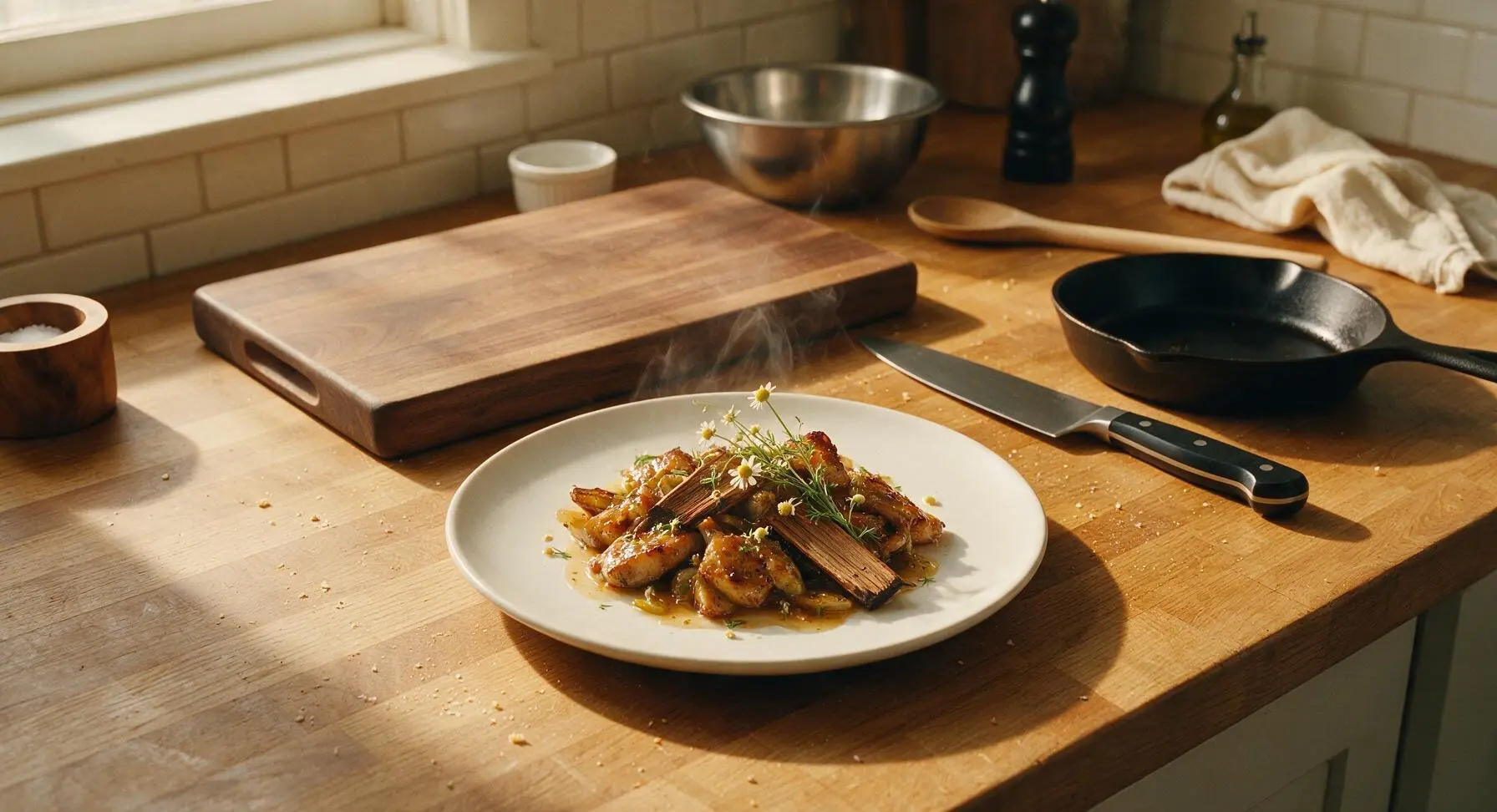
⏱️ cook time 1 hour 30 minutes
🍽️ servings 8
⚡ Difficulty medium

intro

Crisp, cold-fermented India Pale Lager aged on bourbon oak staves with soft chamomile, balancing bright hops, warm vanilla, and delicate floral sweetness for a smooth fall sip.

Ingredients
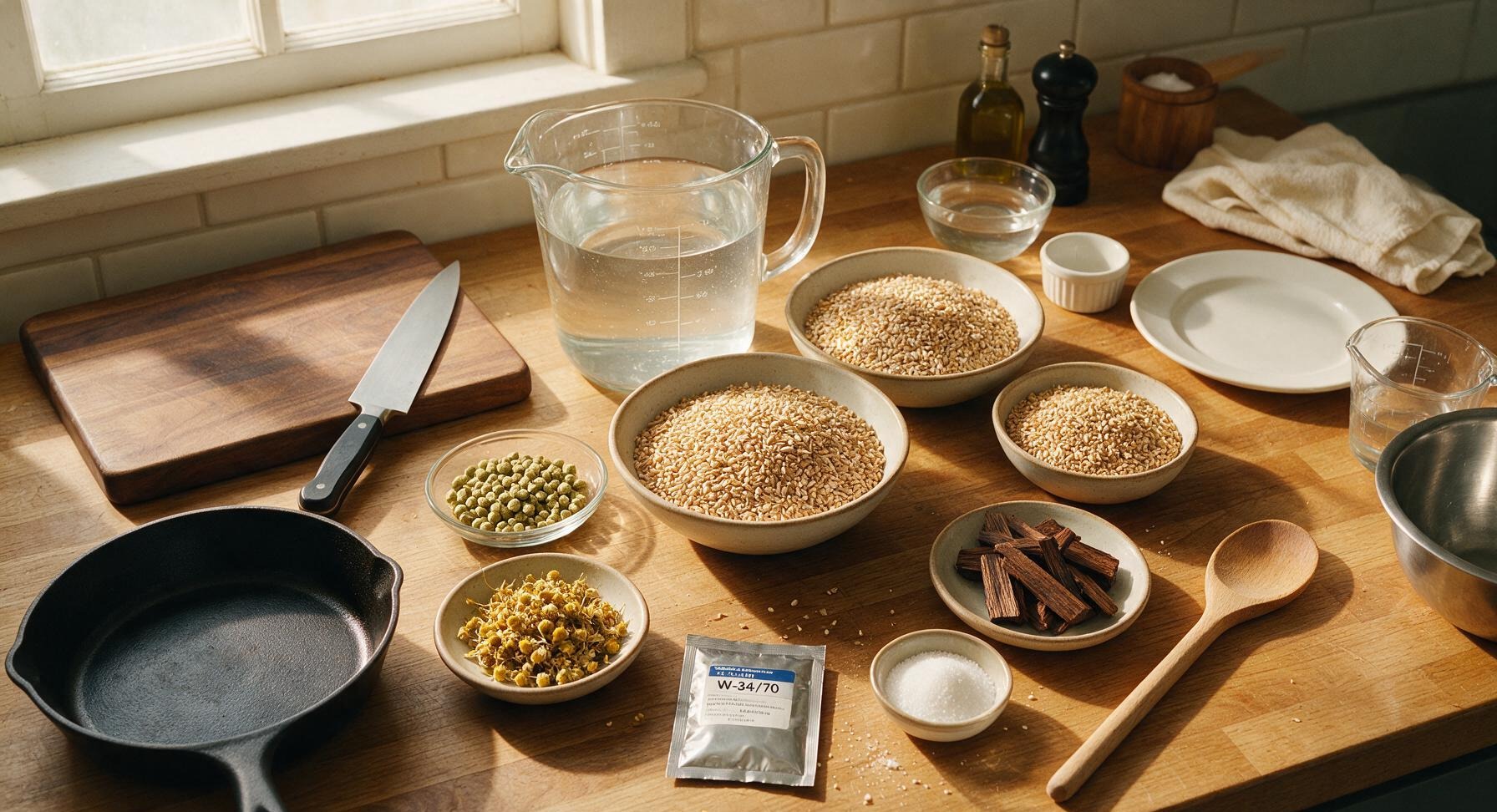
Filtered brewing water 1.5 gallons
Crushed 2-row pale malt 2 lbs
Crushed light Munich malt (10L) 4 oz
Cascade hop pellets 0.5 oz
Hallertau Mittelfruh hop pellets 0.75 oz
Dried organic chamomile flowers 0.25 oz
Bourbon-soaked medium toast American oak staves 1 oz
Lager yeast (W-34/70 strain) 1 packet (5g)
Priming corn sugar 1 oz
No-rinse brewing sanitizer 1 tbsp

Steps

1

Sanitize Brewing Gear

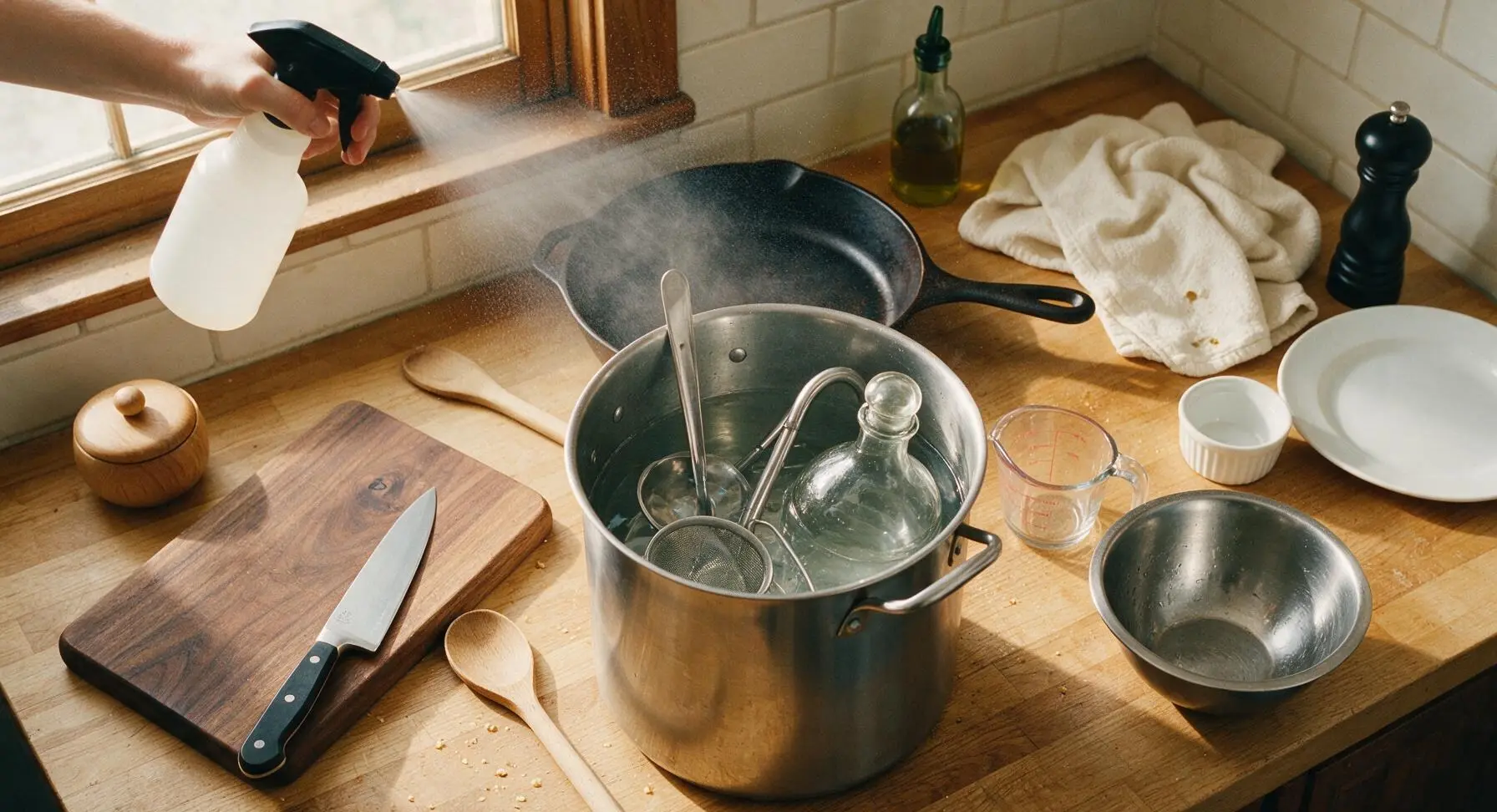
First, mix 1 tablespoon no-rinse brewing sanitizer with 1 gallon of cool water in the 8-quart stainless steel brew kettle. Submerge the stainless steel stirring spoon, mesh strainer, auto-siphon, muslin hop sack, and glass carboy openings for 2 minutes, then use the sanitizer spray bottle to mist all counter work surfaces. Allow all gear to air dry completely before use; avoid wiping, as this can reintroduce bacteria, and ensure no strong sanitizer odor remains on equipment.
Step 1
step1:Sanitize Brewing Gear
2

Mash Base Grains

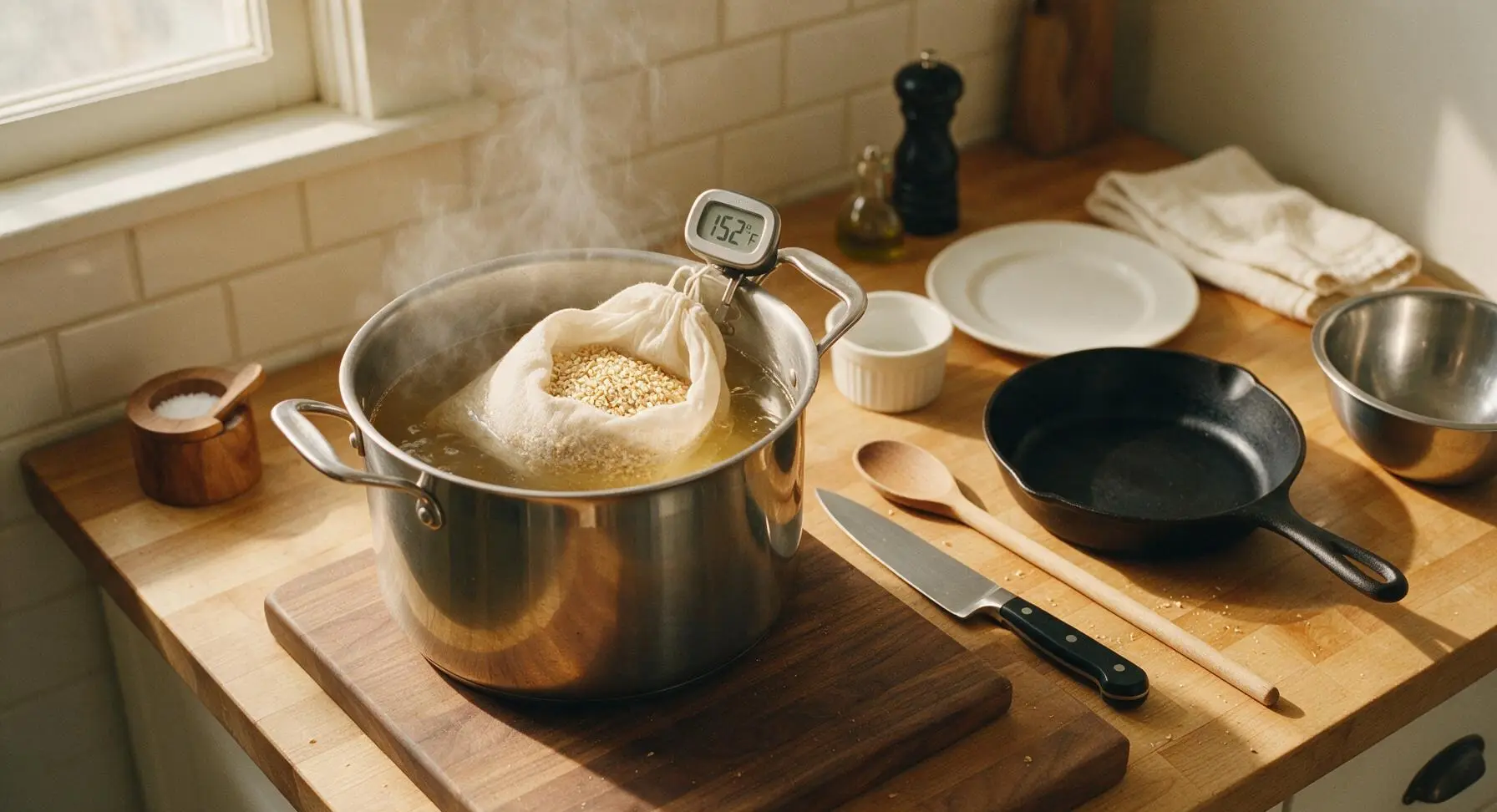
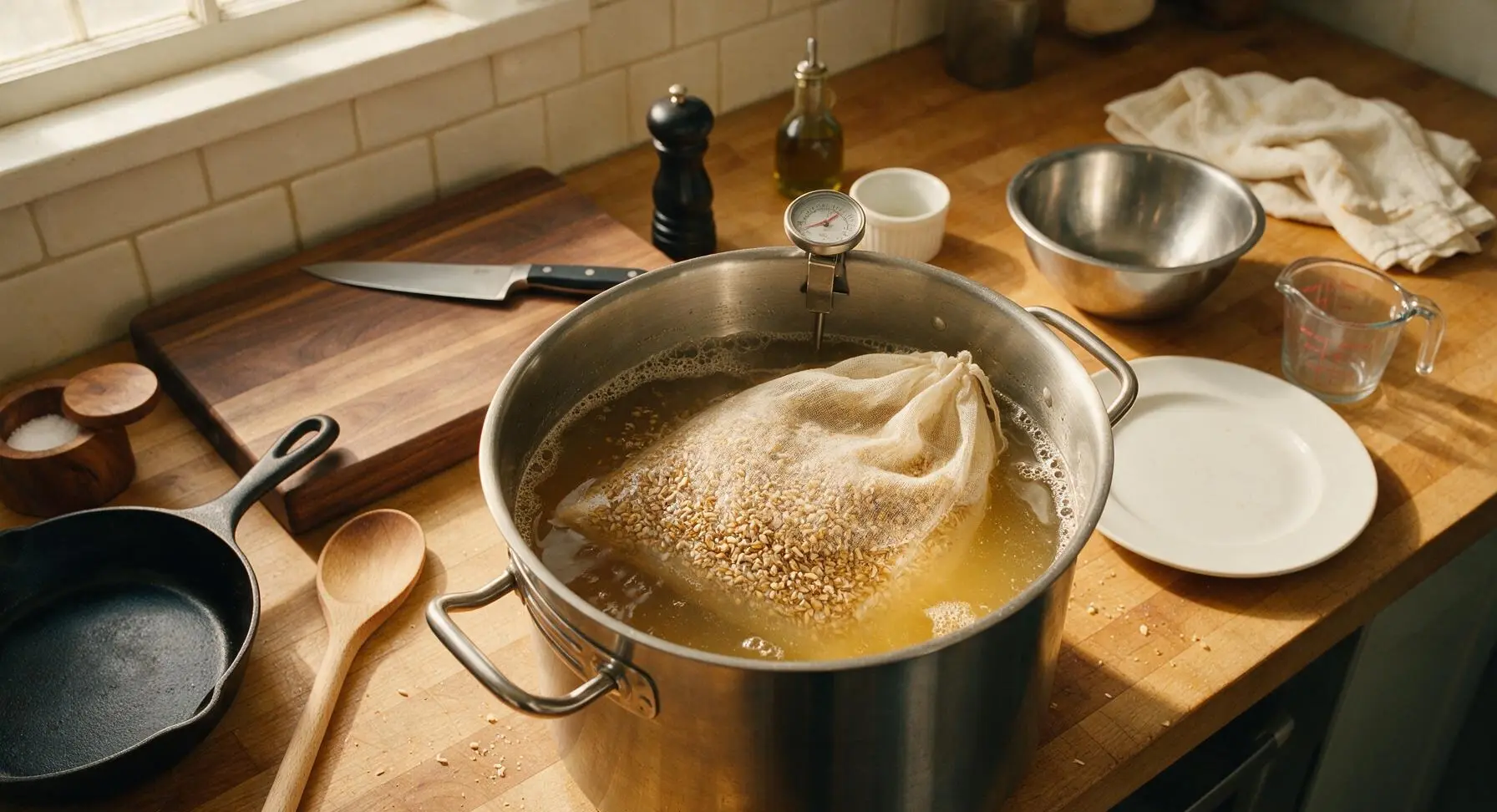
Heat 1 gallon of filtered brewing water in the brew kettle to 152°F, monitored with the clip-on digital thermometer fastened to the kettle rim. Place the crushed 2-row pale malt and light Munich malt in the muslin hop sack, tie the drawstring loosely, and submerge fully in the heated water. Hold the mash temperature steady between 150-154°F for 60 minutes, covering the kettle with a lid to retain heat. The sweet, bready-smelling wort will turn a pale straw gold as grain sugars extract.
Step 2
step2:Mash Base Grains
Step 2
step2:Mash Base Grains
3

Sparge and Heat Wort

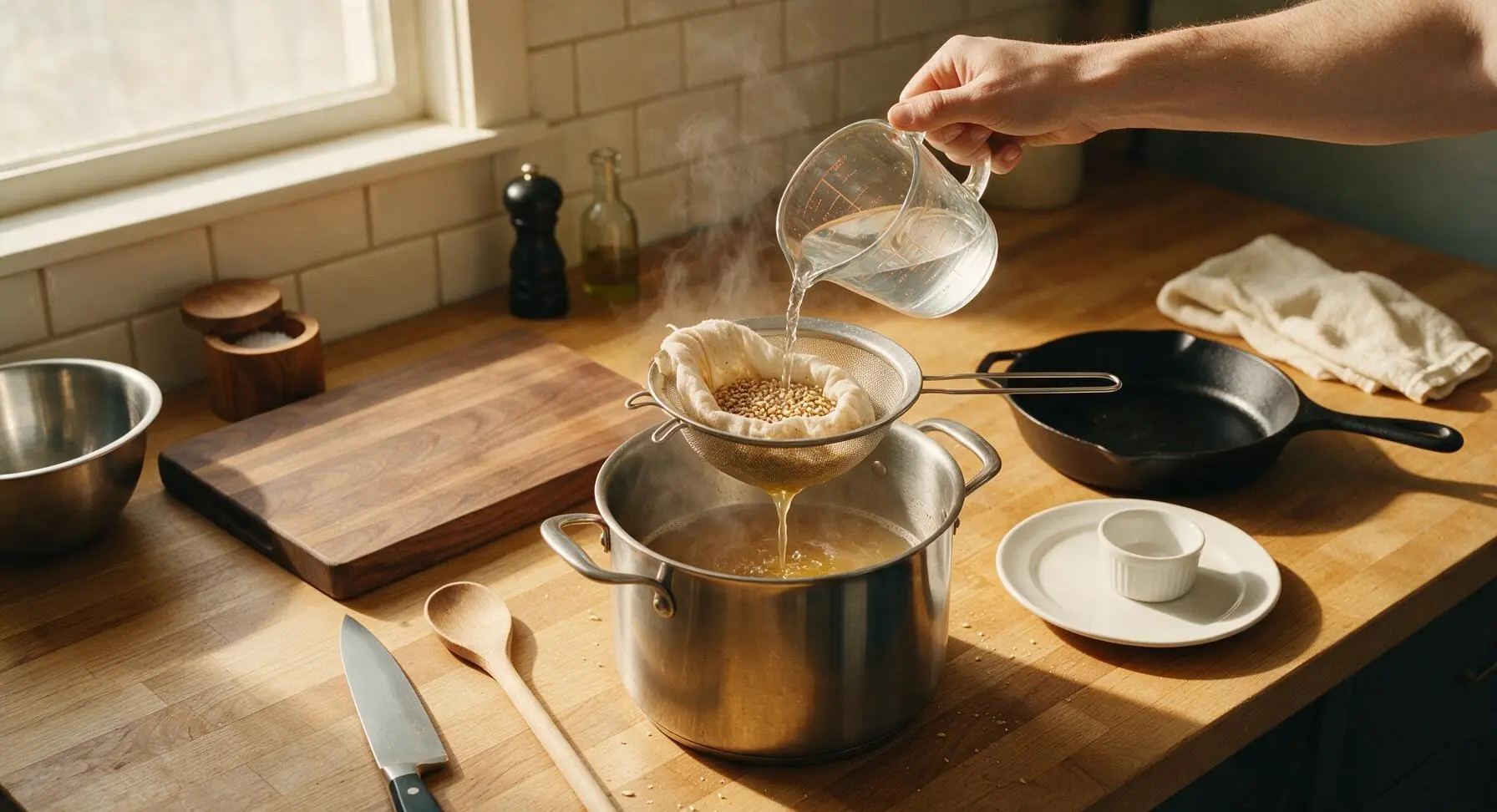
After the 60-minute mash rest, lift the grain sack out of the wort, set it in the fine mesh strainer perched over the kettle, and let it drain for 5 minutes—do not squeeze the sack, as this extracts harsh astringent tannins. Slowly pour 0.5 gallons of 170°F filtered water over the grain sack from the 1-cup glass measuring cup to rinse remaining sugars into the kettle. Discard the spent grains, then bring the collected wort to a gentle rolling boil over medium heat, watching closely to prevent foamy boilovers.
Step 3
step3:Sparge and Heat Wort
4

Add Bittering Hops

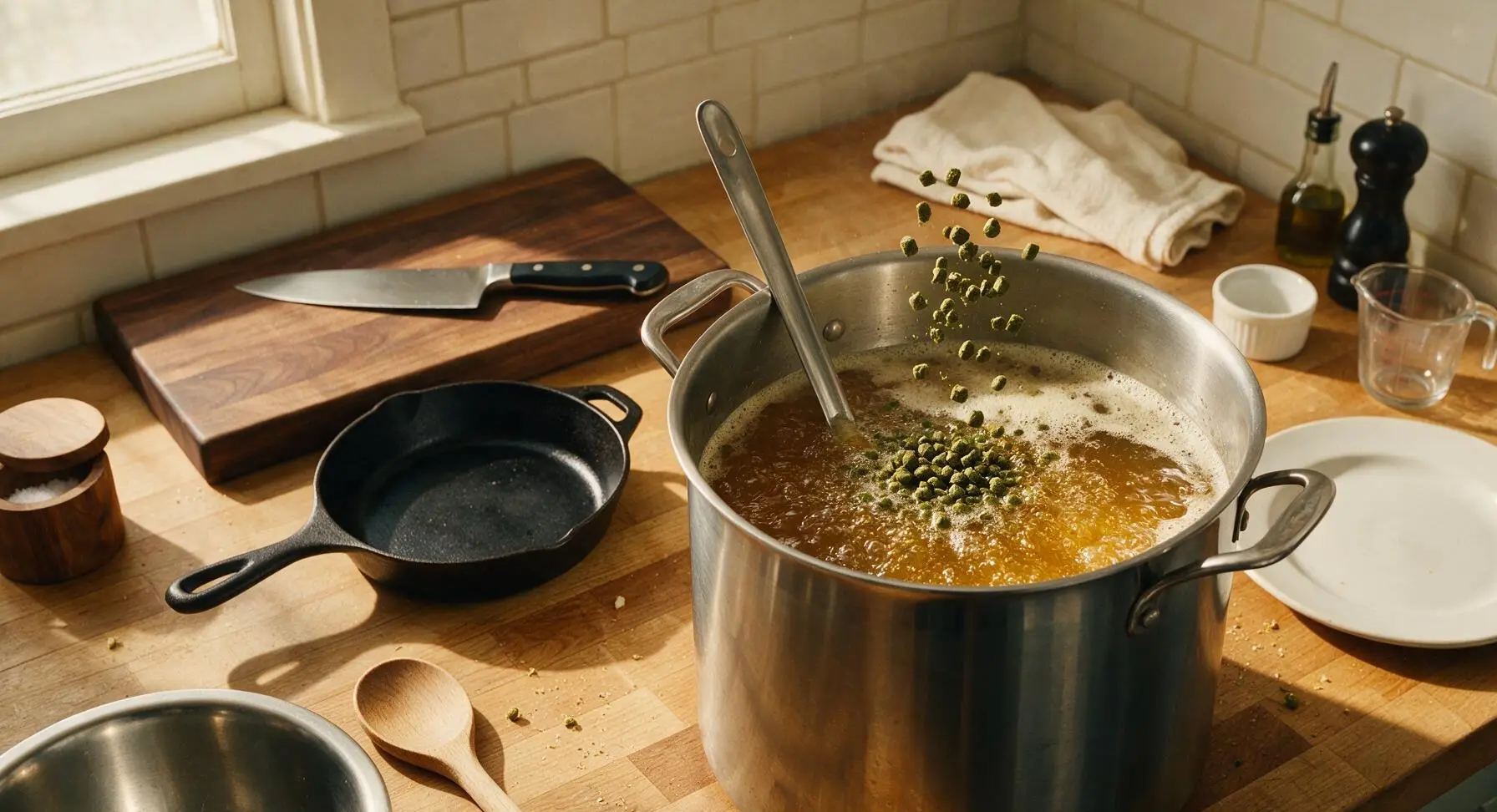
Once the wort reaches a steady rolling boil, set a 60-minute timer. Add 0.5 oz of Cascade hop pellets directly to the boiling wort, stirring gently with the long stainless steel spoon to fully submerge the pellets. Maintain a gentle rolling boil (not violent, frothing) for the full 60 minutes, adjusting heat as needed to prevent boilovers. This addition adds a balanced, citrusy bitterness that anchors the beer's flavor.
Step 4
step4:Add Bittering Hops
5

Add Late Floral Additions

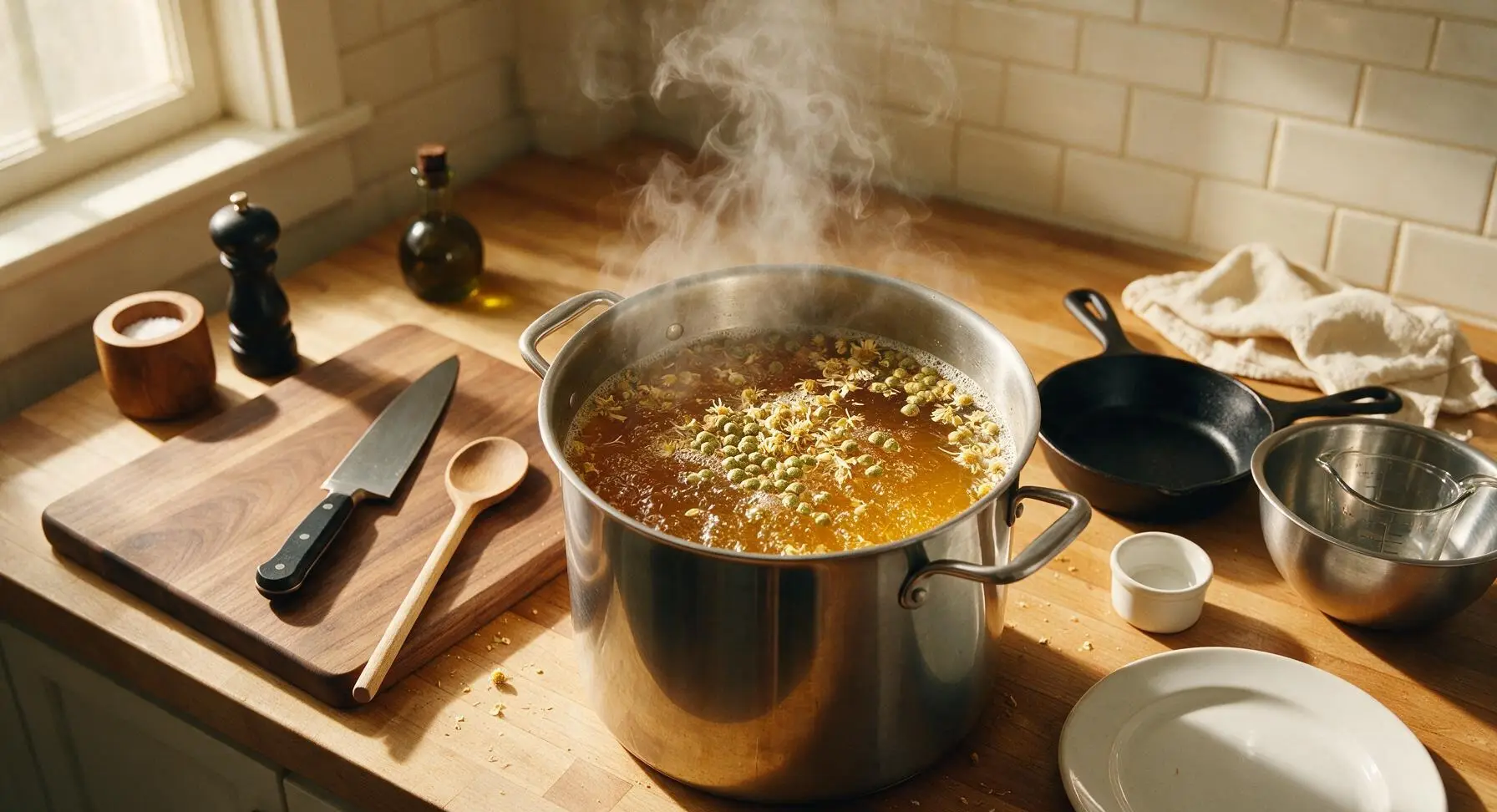
When the 60-minute boil timer shows 5 minutes remaining, add 0.5 oz of Hallertau Mittelfruh hop pellets and 0.2 oz of dried chamomile flowers directly to the wort. Stir once to incorporate, then finish the boil. These late additions contribute bright, honeyed floral notes without adding harsh bitterness, complementing the upcoming oak and chamomile character.
Step 5
step5:Add Late Floral Additions
6

Cool Wort and Pitch Yeast

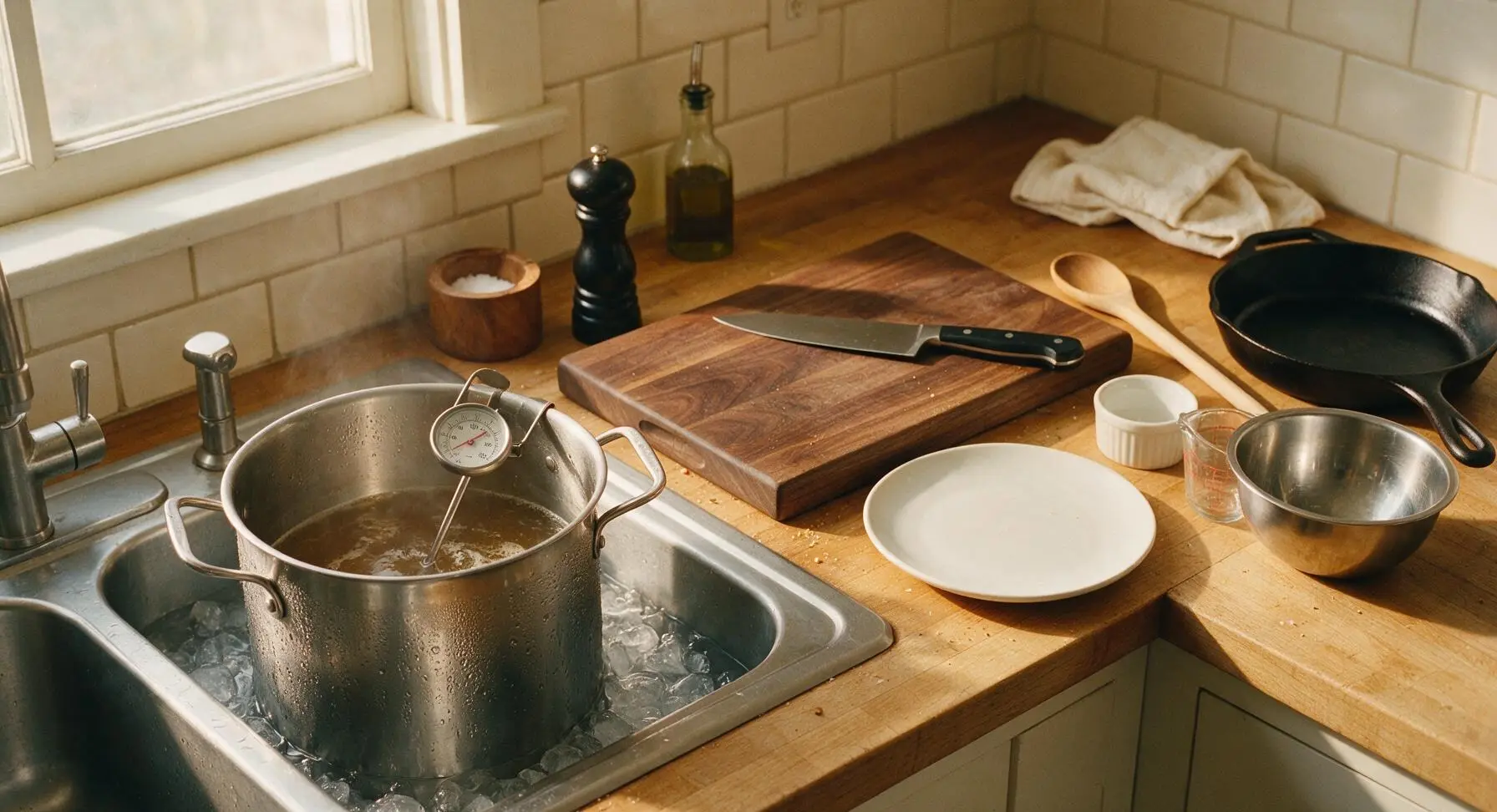
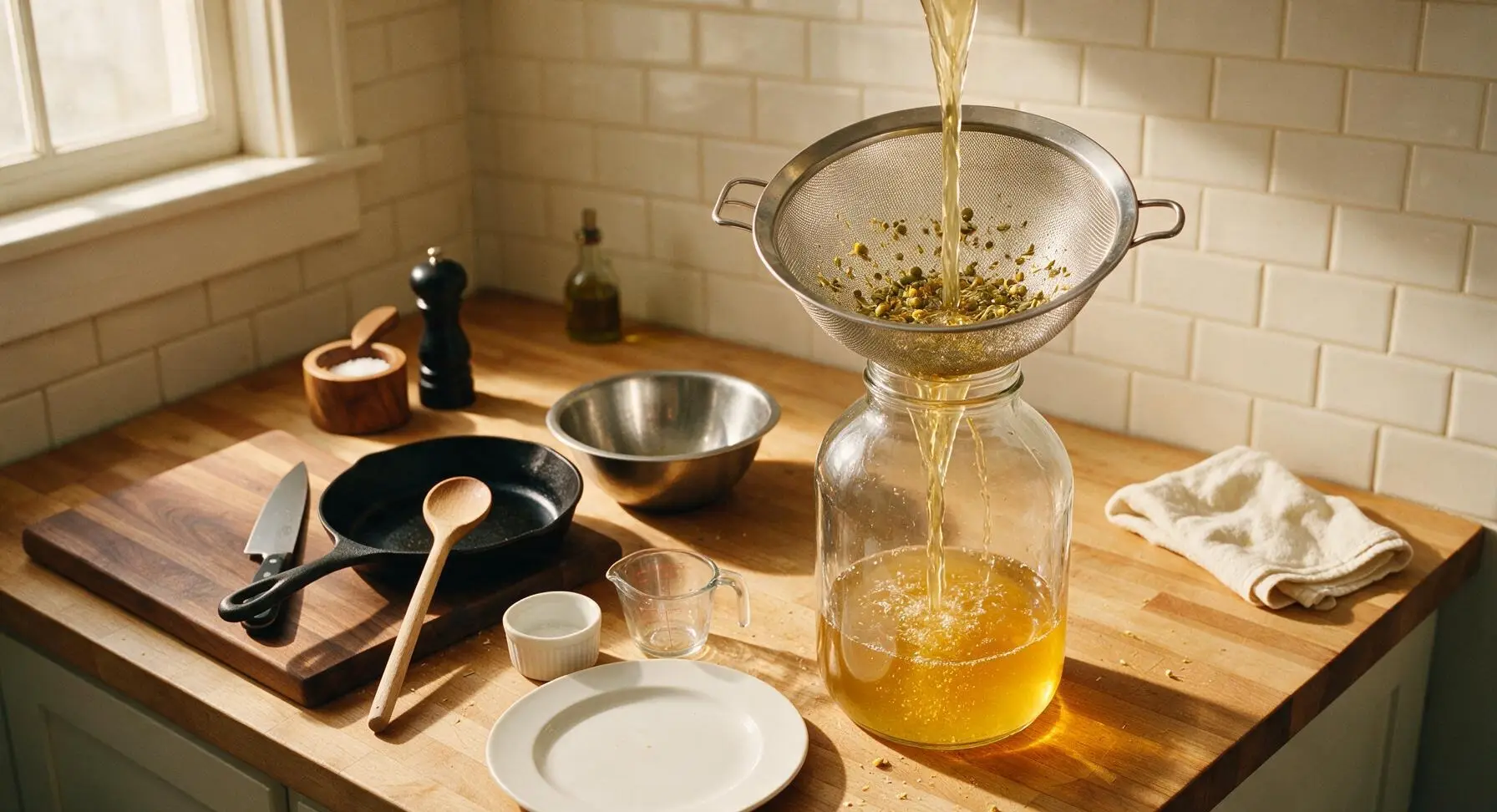
When the boil ends, cover the kettle and set it in an ice bath in the adjacent stainless steel sink until the wort cools to exactly 55°F (about 20 minutes). Once cooled, pour the wort through the sanitized fine mesh strainer into the wide-mouth glass carboy, leaving all dense hop and grain sediment (trub) behind in the kettle. Sprinkle the lager yeast over the wort surface, seal the carboy with a sanitized airlock half-filled with sanitizer solution, and place in a dark, temperature-controlled space held at 50-55°F for 2 weeks of primary fermentation. Steady bubbles passing through the airlock every few seconds will confirm active fermentation.
Step 6
step6:Cool Wort and Pitch Yeast
Step 6
step6:Cool Wort and Pitch Yeast
7

Age With Bourbon Oak

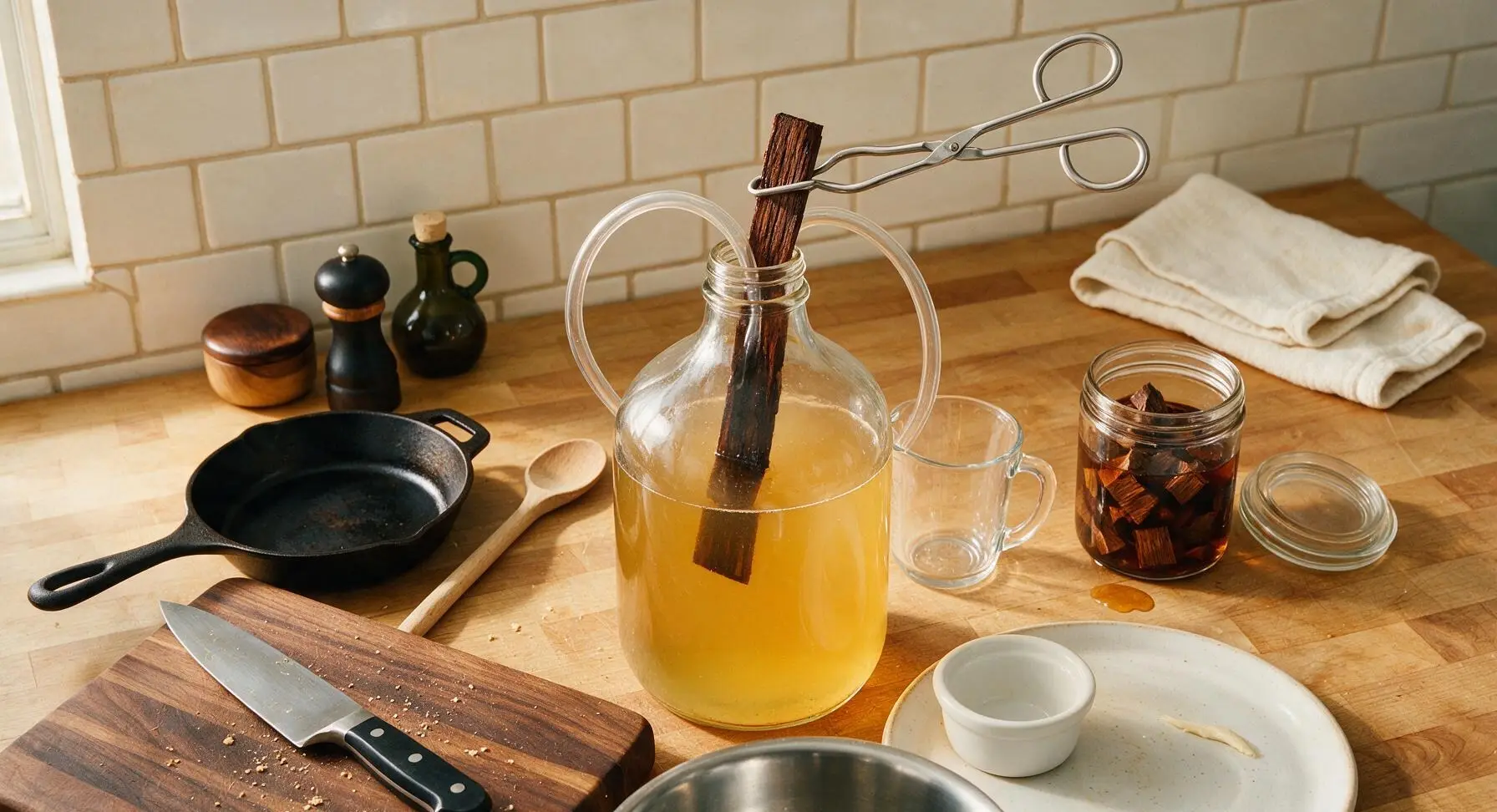
After 2 weeks of primary fermentation, when airlock bubbles slow to one every 2 minutes, use the sanitized auto-siphon to transfer the clear, bright beer off the layer of yeast sediment at the bottom of the primary carboy into a second sanitized carboy. Add the 1 oz bourbon-soaked medium toast oak staves, remaining 0.25 oz Hallertau hop pellets, and remaining 0.05 oz dried chamomile flowers. Seal with an airlock, and hold at 50°F for 4 additional weeks of cold conditioning and oak aging. Over this time, the beer will develop soft vanilla, caramel, and subtle warm bourbon notes from the staves.
Step 7
step7:Age With Bourbon Oak
8

Carbonate and Serve

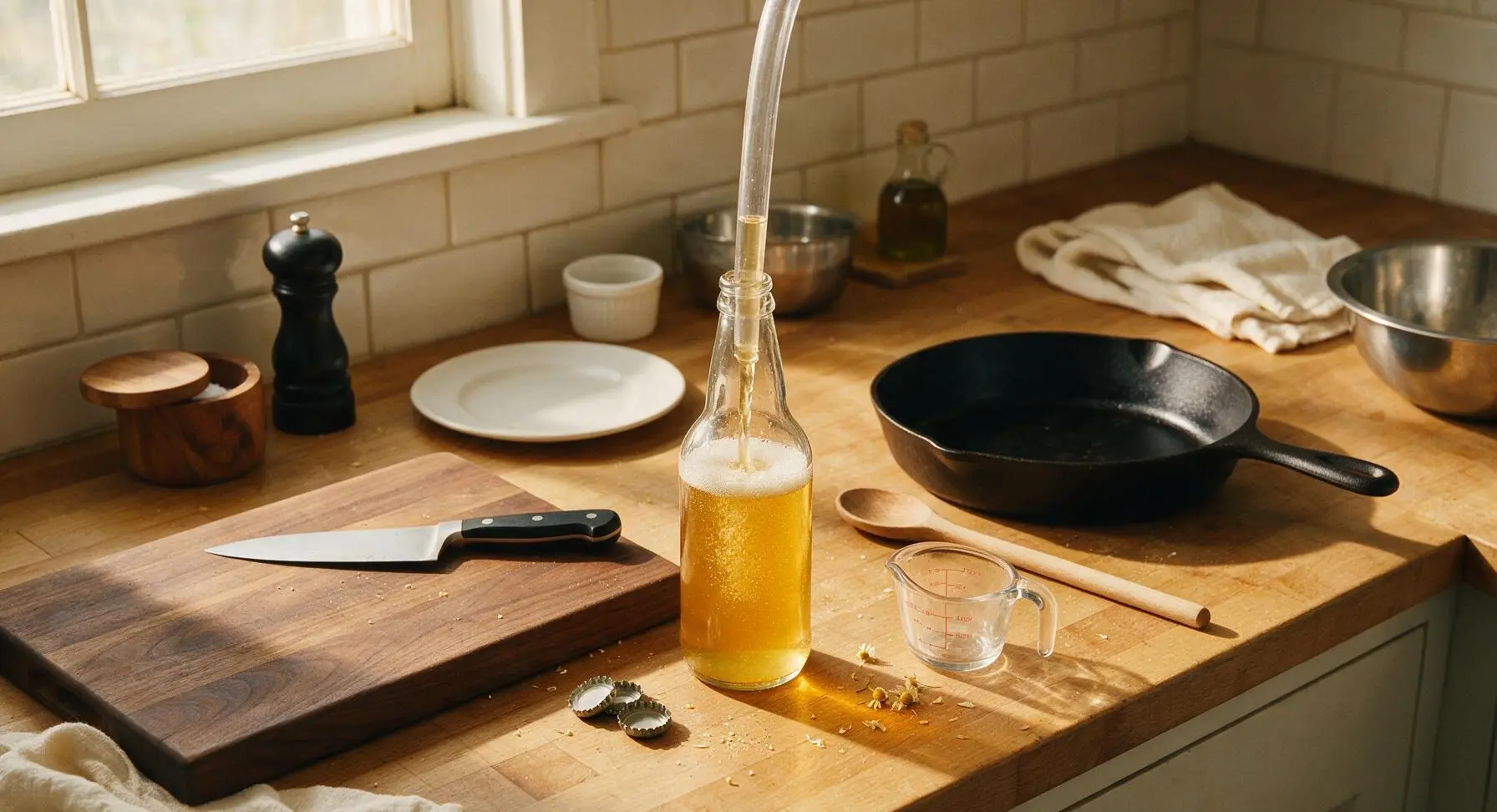
After 4 weeks of oak conditioning, dissolve 1 oz of priming corn sugar in 2 tablespoons of boiling water, cool to room temperature, and add to a sanitized bottling bucket. Use the auto-siphon to transfer the aged beer into the bucket, stir gently with the sanitized stainless steel spoon to evenly distribute the sugar, then fill and cap sanitized 16oz bottles. Let bottles condition at 65-70°F for 2 weeks to build natural carbonation, then chill to 42°F before serving. Pour slowly into a tulip glass, leaving the thin layer of yeast sediment at the bottom of the bottle, to enjoy the bright, balanced flavor.
Step 8
step8:Carbonate and Serve

Tips

1.Never squeeze the muslin grain bag during mashing or sparging: this extracts harsh, astringent tannins from grain husks that will leave the beer tasting dry and bitter, overriding the soft chamomile and smooth oak notes.
2.Hold lager fermentation temperatures steady at 50-55°F for the full primary phase: temperature swings above 60°F cause fruity, solvent-like off-flavors, while temperatures below 48°F can stall yeast activity entirely.
3.Taste the beer every 3 days during the oak aging phase: if you prefer a lighter bourbon and vanilla character, remove the oak staves early; for a bolder barrel profile, leave staves for up to 6 weeks, but avoid over-oaking which creates a bitter, woody aftertaste.


✨ You May Also Like

Drinks & Beverages
🍜 Mexico

A bright, balanced tequila-based cocktail with zesty fresh lime, smooth orange liqueur, and a signature salt rim, perfect for warm summer sipping.

⏱️ 5 minutesDrinks & Beverages ★ 4.9
Drinks & Beverages
🍜 United States

Thick, creamy, nostalgic classic vanilla milkshake with a rich, smooth texture, topped with whipped cream and a cherry for cool, sweet refreshment.

⏱️ 5 minutesDrinks & Beverages ★ 4.7
Drinks & Beverages
🍜 United States

A bright, golden strong ale with fruity banana-clove notes, subtle hop spice, and soft carbonation, brewed in classic Trappist Tripel tradition.

⏱️ 2 hours aDrinks & Beverages ★ 4.5
Drinks & Beverages
🍜 United States

A frothy, nostalgic American soda fountain treat pairing bubbly cold root beer with creamy vanilla ice cream, perfect for cooling down at warm weather gatherings.

⏱️ 20 minuteDrinks & Beverages ★ 4.8
Drinks & Beverages
🍜 United States

Tart, funky, effervescent American Wild Ale is a complex fruity craft beer brewed with wild yeast, delivering bright, zesty notes perfect for warm-weather sipping.

⏱️ 2 hours aDrinks & Beverages ★ 4.4
Drinks & Beverages
🍜 United States

Bright, bubbly copycat of the iconic American caramel cola, balanced with citrus and warm spice, perfect for sipping ice-cold on hot days.

⏱️ 15 minuteDrinks & Beverages ★ 4.8

Chamomile Bourbon Barrel Aged IPL:Frequently Asked Questions

1.What exactly is an IPL, and how is it different from a standard IPA? ▾
IPL stands for India Pale Lager, so unlike an ale-based IPA that ferments warm with ale yeast, this brew uses cold-fermented lager yeast for a crisp, clean, smooth base. That neutral, bright foundation lets the chamomile, bourbon oak, and hop notes shine without the fruity, estery notes common to many American IPAs.
2.Do I need a full-size bourbon barrel to make this recipe at home? ▾
You absolutely don’t need a costly, space-hogging 53-gallon bourbon barrel for homebrew batches. Food-grade, pre-soaked bourbon oak staves (or cubes, if staves are hard to source) deliver that same warm vanilla, oaky bourbon note. Use 1-1.5 oz of staves per 5-gallon batch, and sanitize them thoroughly before adding to secondary.
3.When should I add chamomile to avoid soapy, off-flavors in the finished beer? ▾
Add dried, food-grade chamomile flowers either during the last 5 minutes of the boil, or directly to secondary fermentation for 3-5 days before cold crashing. Stick to 0.5-0.75 oz per 5-gallon batch; steeping chamomile too long or using too much pulls out bitter, soapy compounds that throw off the beer’s delicate balance.
4.What type of lager yeast works best for this specific IPL? ▾
Reach for a clean, neutral cold-fermenting lager yeast like W-34/70 or California Lager yeast, both of which ferment crisp without heavy sulfur notes that would clash with delicate chamomile and bright hops. Hold fermentation steady at 50-55°F for the first two weeks, then do a short diacetyl rest before aging.
5.Can I use whole-leaf hops instead of the specified Cascade and Hallertau Mittelfruh pellets? ▾
Absolutely, you can swap pellet hops for whole-leaf versions, just increase total hop weight by 10-15% because whole hops have lower utilization during the boil. Keep late and dry hop additions gentle, as overly pungent hop aroma will overpower the soft chamomile and warm oak bourbon notes in the final sip.
6.How long should I age this beer on bourbon oak staves for the best flavor? ▾
For a standard 5-gallon batch, age on sanitized bourbon oak staves for 10-21 days in secondary fermentation, pulling a small sanitized sample every 3 days after the first week to test flavor. Remove the staves as soon as you hit that ideal vanilla, subtle bourbon warmth to avoid overly woody, astringent beer.
7.What’s the ideal serving temperature to show off all this beer’s flavors? ▾
Serve this fall-focused IPL between 42-48°F, a touch warmer than mass-market lager but colder than a hazy IPA. That temperature lets bright Cascade citrus hop notes pop, while letting soft chamomile, vanilla oak, and subtle bourbon warmth come through without being muted by ice-cold serving temps.
8.Can I skip the light Munich malt if I don’t have it in my homebrew stash? ▾
You can skip the 10L light Munich malt in a pinch, but you’ll lose that subtle toasty, bready malt backbone that balances bright hops and sweet bourbon oak. If you need a substitute, swap in an equal weight of Vienna malt, or add 2 oz of aromatic malt to keep that soft, rounded malt character.
9.How do I keep the beer from tasting too boozy or overloaded with bourbon flavor? ▾
Stick to the recommended 1-1.5 oz oak stave dosage per 5 gallons, and don’t add extra straight bourbon unless you want a much stronger profile. If you accidentally overdo oak or bourbon notes, let the beer condition in bottles for an extra 2-3 weeks at cellar temp; sharp boozy notes will mellow as flavors blend.
10.Is this recipe approachable for people who are new to homebrewing? ▾
This is a great intermediate homebrew project, but total beginners can pull it off with a little planning. The only extra steps beyond a standard pale lager are timing the chamomile addition correctly, monitoring oak aging, and maintaining steady cold fermentation temps with a basic temperature control setup.
11.How should I time hop additions to get that bright, balanced hop character? ▾
Add 60% of your Cascade hops early in the 60-minute boil for mild, balancing bitterness, then add Hallertau Mittelfruh and remaining Cascade during the last 15 minutes and at flameout for bright, citrusy, herbal hop aroma. Skip heavy dry hopping, as too much hop punch will overpower chamomile and oak.
12.How long will this IPL stay fresh after I bottle it? ▾
When stored in a cool, dark spot at 50-55°F away from direct sunlight, this IPL will stay well-balanced for 6-8 months after bottling. Oak and bourbon notes mellow slightly over time, while chamomile fades faster than hop and malt notes, so aim to drink most of your batch within the first 5 months for peak flavor.
13.Can I leave the chamomile out if I don’t like floral beer flavors? ▾
Absolutely—you can omit chamomile entirely for a straightforward bourbon barrel-aged IPL, and you’ll still get that crisp lager base, bright citrus-herbal hops, and warm vanilla bourbon finish. If you want a similar soft, sweet note without florals, swap chamomile for 0.5 oz of dried orange peel added at flameout for a cozy fall twist.
14.Beyond filtered water, what water profile works best for this recipe? ▾
Aim for a soft to moderately hard water profile with 50-70 ppm of calcium, low bicarbonate, and a 1 tsp per 5-gallon addition of gypsum to make hop flavors pop without tasting sharp. Avoid very hard, high-mineral tap water, which can make oak and chamomile notes taste astringent or unpleasantly metallic.
15.Do I need to do a diacetyl rest when brewing this lager? ▾
Yes—once primary fermentation is 75% complete, usually around day 10-12 at 52°F, ramp fermentation temp up to 60°F for 2-3 days to let yeast clean up diacetyl, that buttery off-flavor that clashes with this IPL’s crisp profile. Skipping this step can leave a weird, slick buttered popcorn note that throws off the whole batch.
16.What carbonation level is best for this chamomile bourbon IPL? ▾
Aim for a moderate carbonation level of 2.3-2.5 volumes of CO2, slightly fizzier than a British ale but less bubbly than a light American lager. That carbonation level lifts bright hop and chamomile notes without making the bourbon oak taste thin, or getting so fizzy that it masks that smooth, warm vanilla character.
17.Can I add oak directly to bottles instead of aging on staves in secondary? ▾
You can add tiny, sanitized oak spirals or chips directly to individual bottles for small-batch brews, but it’s much harder to control consistent oak flavor that way. For even flavor across your whole batch, aging on staves in bulk secondary before bottling is far more reliable, so you don’t get over-oaked or under-oaked bottles.
18.What foods pair best with this finished fall-focused IPL? ▾
This crisp, spiced-smooth beer pairs beautifully with smoked turkey, roasted butternut squash, sharp aged cheddar, or spiced apple crisp. Bright hops cut through rich, fatty foods, warm oak and vanilla complement cozy fall spices, and soft chamomile adds a delicate floral lift that matches warm, autumnal meal flavors perfectly.
19.Why does the recipe use both Cascade and Hallertau Mittelfruh hops? ▾
Cascade brings bright, zesty grapefruit and pine notes that give the beer that classic IPA bite, while Hallertau Mittelfruh adds soft, herbal, slightly spicy noble hop character that complements delicate chamomile and smooth vanilla oak without being overly pungent. The blend keeps the beer balanced, so no single flavor overpowers the others.

Comments (10)

2 days ago

OMG, this chamomile bourbon barrel IPL is a total game changer! I brought a batch to my neighborhood potluck last weekend and people were begging for the recipe before I even set the growler down. The chamomile adds such a soft, floral note that cuts the bourbon warmth perfectly, no weird harsh aftertaste at all. 10/10 will brew again for my fall bonfire nights!

yesterday

Wait did you use actual bourbon barrel staves or the oak chip soak method? I’m trying to decide which is easier for my small apartment setup!

yesterday

So glad it was a hit at your potluck! For small spaces, toasted oak chips soaked in bourbon for 48 hours work beautifully as a barrel alternative — just make sure to taste daily so you don’t over-oak it!

5 days ago

SO good! I was worried the medium difficulty would be too much for me as a new homebrewer, but the step-by-step instructions were super clear. The only tweak I made was adding a tiny extra handful of chamomile at dry hop because I love that honeyed floral vibe. My partner said it’s better than the fancy craft IPL we pay $18 a four-pack for at the liquor store!

3 days ago

Love that extra chamomile tweak! It’s such a flexible recipe, so adjusting floral notes to taste is always a great call. So stoked you and your partner enjoyed it!

1 week ago

Made this for my annual guys’ fishing trip last week and it was the hit of the cooler. The bourbon barrel depth is chef’s kiss, and the chamomile keeps it from feeling too heavy like some barrel-aged beers can get. My kids even thought the little floral aroma was cool when I was bottling, ha. Will absolutely be adding this to my regular brew rotation.

3 days ago

Took me a minute to source the right chamomile (make sure you get food-grade, not the stuff from the craft store candle aisle! Learned that the hard way on my first try) but once I did, this turned out incredible. Perfect balance of crisp lager bite, vanilla bourbon notes, and that soft chamomile finish. Great recipe!

2 days ago

Oh no I almost bought craft store chamomile last week! Thanks for the heads up, that would’ve been such a waste of ingredients. Gonna hit the homebrew shop tomorrow for the right stuff.

yesterday

I don’t even usually like barrel-aged beers because they taste too boozy to me, but this? Obsessed. The chamomile smooths everything out so nicely, it’s so drinkable. I made a half batch for my dinner party last night and every single glass was gone by the end of the main course. Even my friend who only drinks seltzer loved it!

2 hours ago

Wait did you do the full 1.5 hour boil? I’m in a tiny NYC apartment with a tiny stove so I’m worried about boil over mess.

30 minutes ago

So happy this converted you to barrel-aged brews! For small stovetops, just drop your boil strength by 10% and keep a spray bottle of cold water handy to knock down foam if it starts to rise — works like a charm for apartment setups!

2 weeks ago

Made this for our college football tailgate a couple weeks back and let me tell you, it went faster than the brisket. The bourbon notes pair so well with smoky BBQ food, I couldn’t believe how perfectly it matched. Only note: give it an extra couple days of bottle conditioning if you can, it gets even smoother with a little extra time.

1 week ago

That brisket pairing sounds like absolute heaven! You’re so right about the extra bottle conditioning — that soft carbonation really lets all the chamomile and bourbon flavors meld even better. Great tip!

30 minutes ago

I was a little nervous about how the floral chamomile would play with the bourbon barrel flavors, but it’s such a unique, delicious combo. I’ve been brewing for 6 years and this is one of the most creative recipes I’ve tried lately. It’s got enough complexity to impress my homebrew club friends, but it’s not so fussy that it’s stressful to make. Great call on the medium difficulty rating, totally accurate.

5 minutes ago

Meal prep but for beer, am I right? I blocked off the 1.5 hours on a Sunday afternoon to brew this, had a football game on in the background, and it was such a chill process. The end result is so smooth, I’ve been bringing a can to work for our Friday happy hours and my coworkers keep asking when I’m making more. 10/10, no notes.

just now

Wait how long did you age it for after bottling? I’m trying to time a batch for my holiday party in December and don’t want to rush it.

just now

Love the Sunday brew day vibe! For December, if you brew now, 3 weeks of bottle conditioning plus 1 week of cold crash will give you perfectly mature, smooth flavor right in time for the party.

1 week ago

Tried this last month and it’s easily my new go-to fall brew. The chamomile gives it almost a cozy, tea-like warmth that pairs so perfectly with the vanilla and oak from the bourbon barrel. I brought a growler to my book club and even the people who swear they don’t like IPAs (wait, IPL!) were going back for seconds. Oops, I always mix those up!

5 days ago

I mix up IPL and IPA all the time too, no shame! The crisp lager base makes this so much more crushable than a hazy IPA in my opinion, can’t wait to try it.

2 hours ago

Really solid recipe! The only reason I’m not giving it 5 stars is I wish the instructions had a little more guidance on how much bourbon to use for the oak soak if you’re not using an actual barrel. I overdid it a little on my first batch so the bourbon was a touch overpowering, but once I diluted it with a little extra plain lager base it turned out great. Will absolutely make again, just going lighter on the bourbon soak next time!



