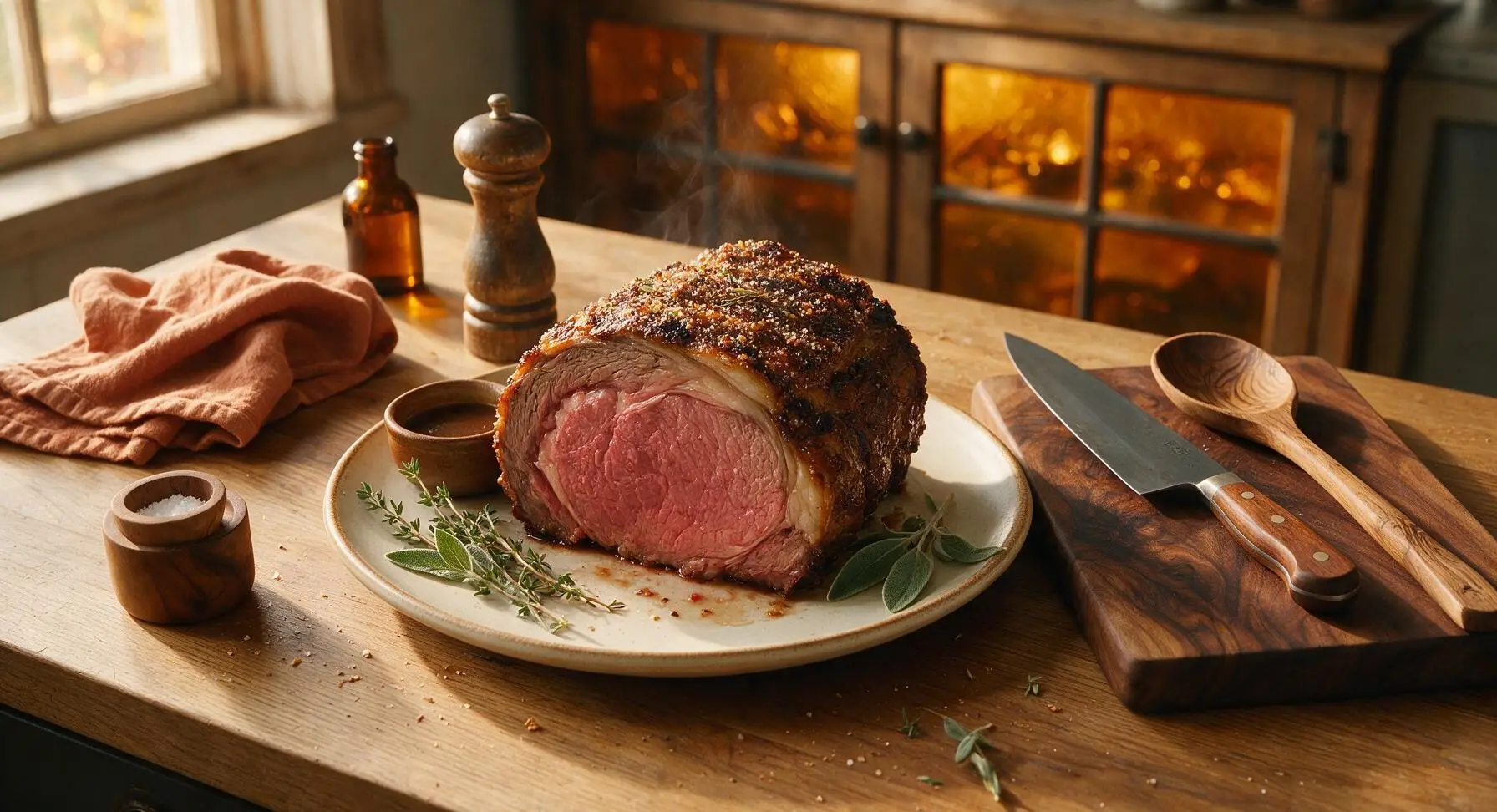
chef john prime rib

title 1
chef john prime rib
⏱️ cook time 2 hours 30 minutes
🍽️ servings 6
⚡ Difficulty medium

intro

Chef John’s no-fail slow-roasted prime rib boasts a crisp salty crust, evenly juicy medium-rare center, and rich beefy flavor, perfect for holiday feasts.

Ingredients
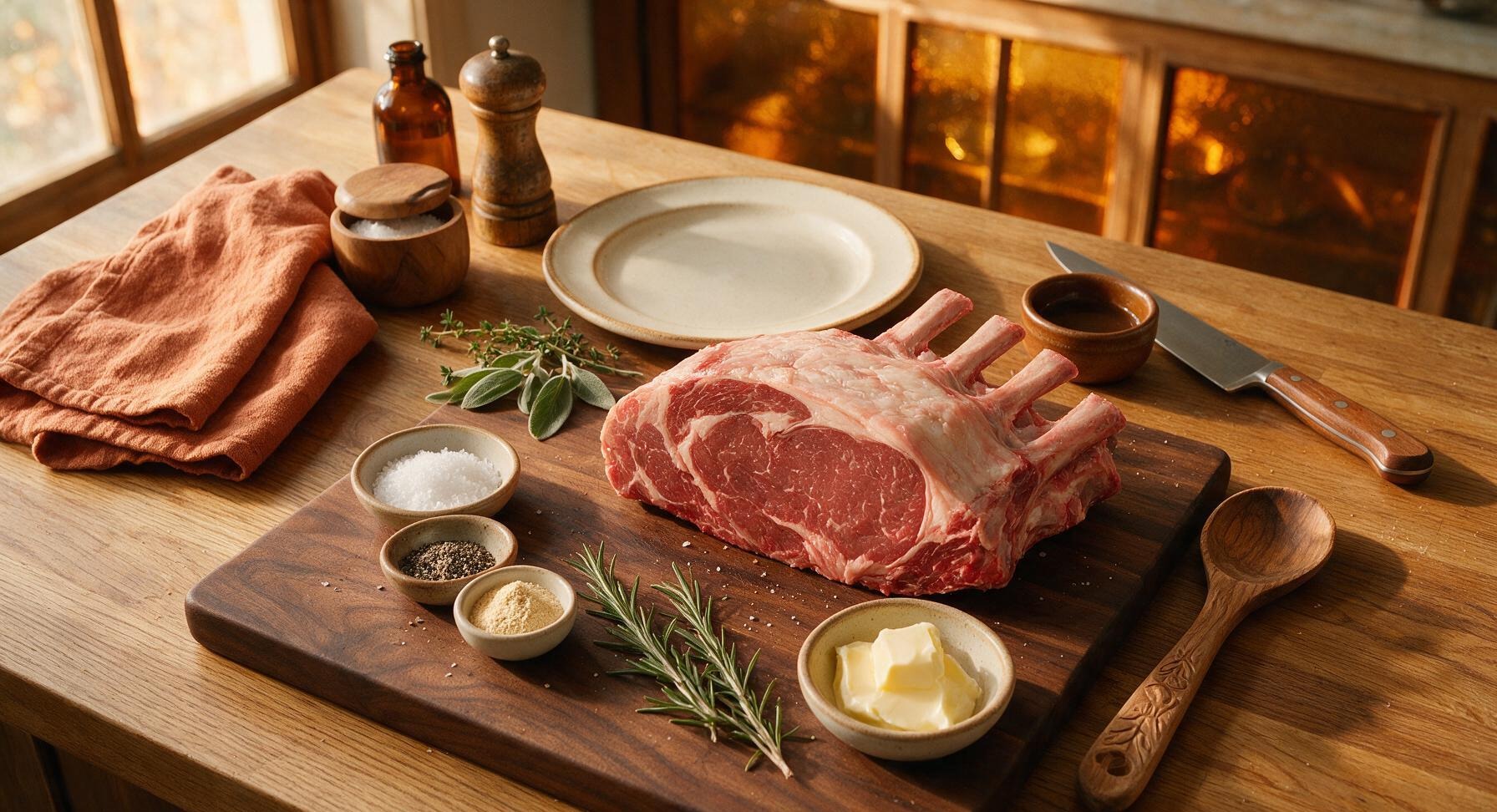
Bone-in standing prime rib roast (4-bone) 8 lbs (3.6kg)
Kosher salt 3 tbsp
Coarsely ground black pepper 1 tbsp
Garlic powder 1 tsp
Fresh rosemary 2 sprigs
Unsalted butter, softened 2 tbsp

Steps

1

Prep the Rib Roast

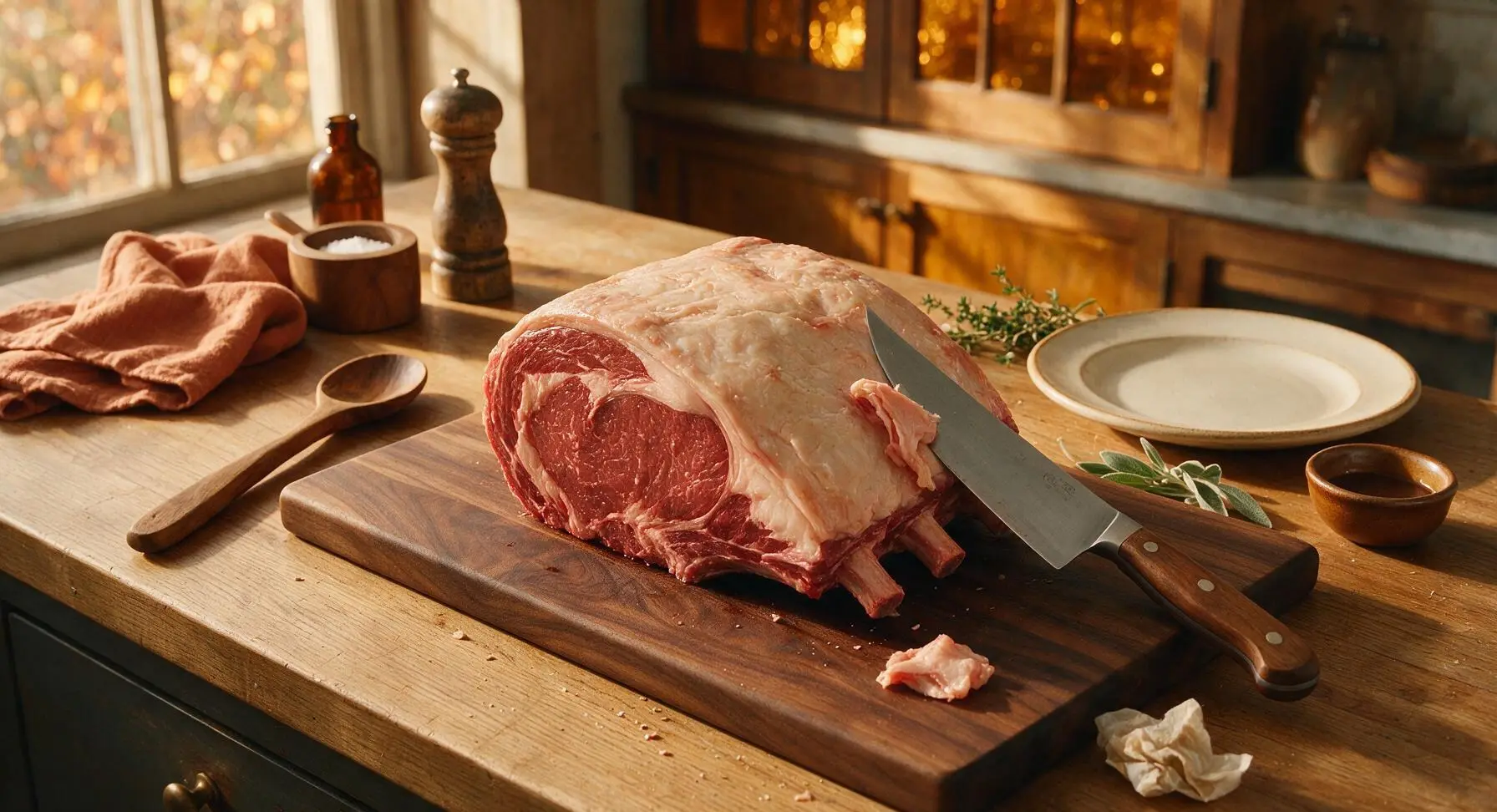
Remove the 8lb 4-bone prime rib from the refrigerator 2 hours before cooking to bring it to room temperature for even cooking. Place it on the central maple cutting board. Use the 8-inch chef’s knife to trim any loose fat or silver skin from the roast, leaving a uniform 1/4-inch thick fat cap across the top. Pat the entire surface of the roast completely dry with paper towels.
Step 1
step1:Prep the Rib Roast
2

Mix Dry Seasoning

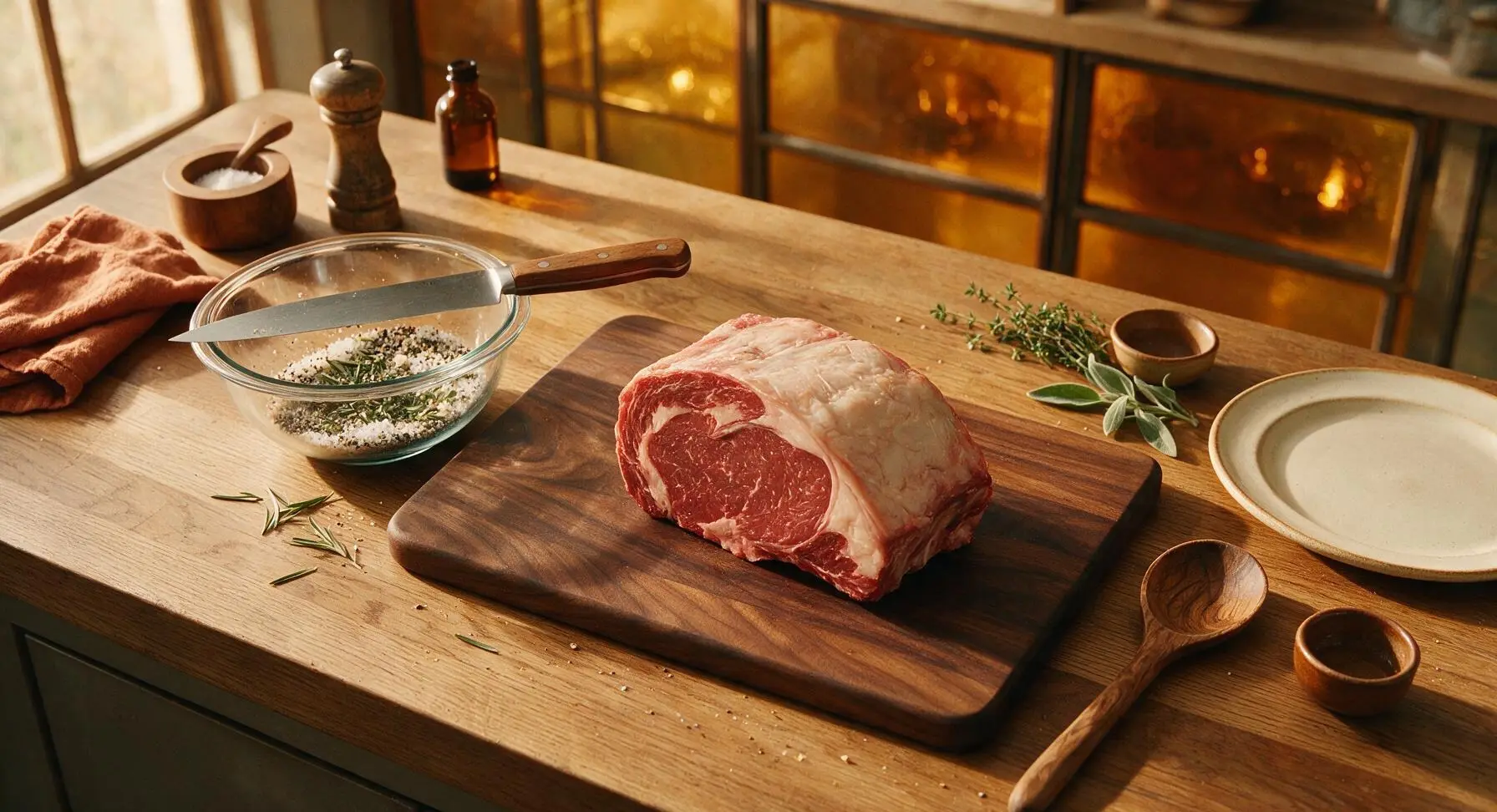
In the clear glass mixing bowl positioned left of the cutting board, combine 3 tablespoons kosher salt, 1 tablespoon coarsely ground black pepper, and 1 teaspoon garlic powder. Stir with the tip of the chef’s knife to evenly combine the spices. Pick leaves from 1 rosemary sprig, finely chop them, and stir into the spice mix.
Step 2
step2:Mix Dry Seasoning
3

Season Roast Generously

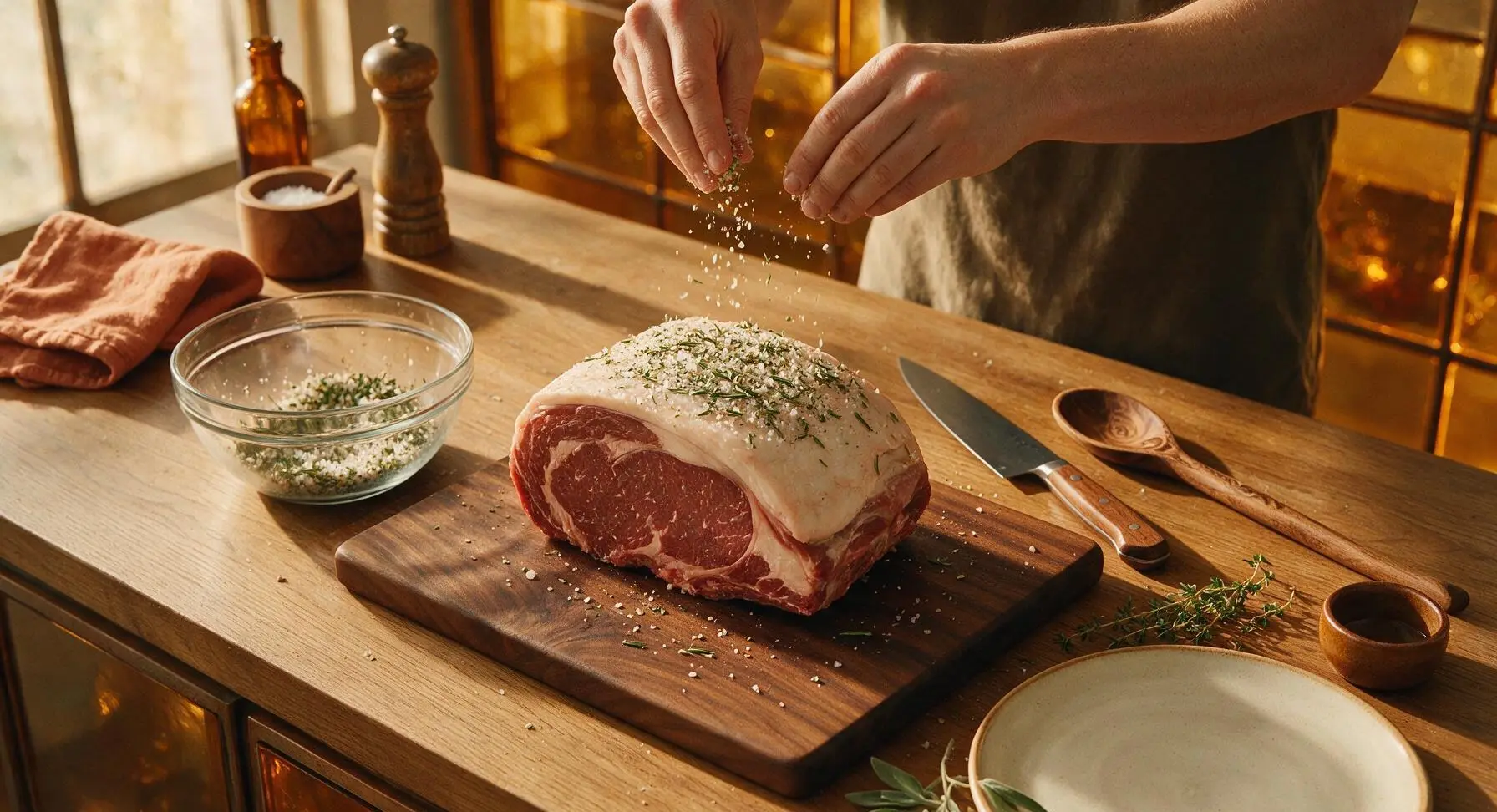
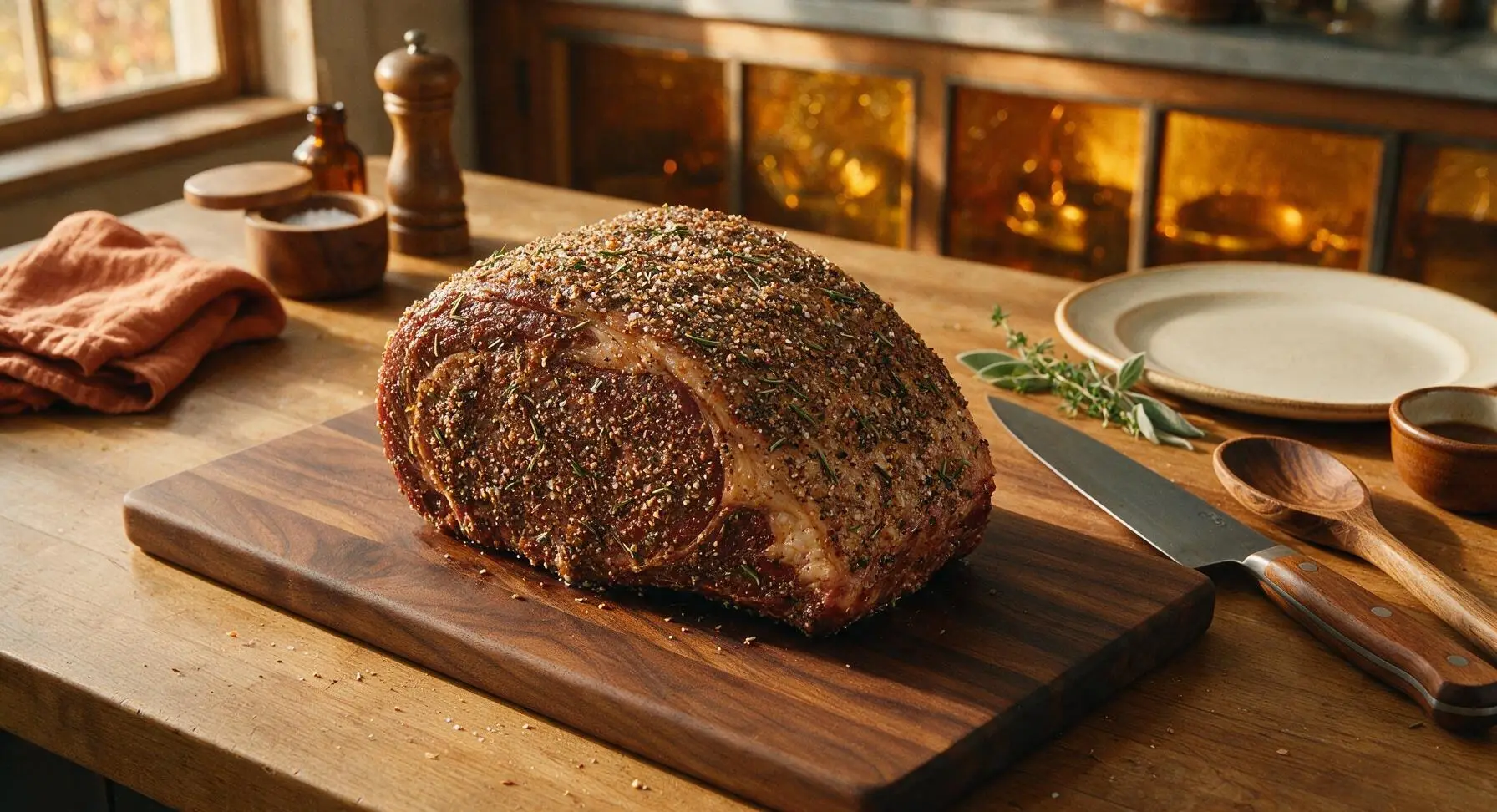
Sprinkle the entire surface of the room-temperature roast (top, sides, and bottom, including areas between the rib bones) with the spice mix, pressing gently with clean hands to adhere the seasoning firmly to the meat. Use every bit of the spice mix to create a thin, even coating across every surface, with no bare patches of meat remaining.
Step 3
step3:Season Roast Generously
Step 3
step3:Season Roast Generously
4

Set Up Roasting Pan

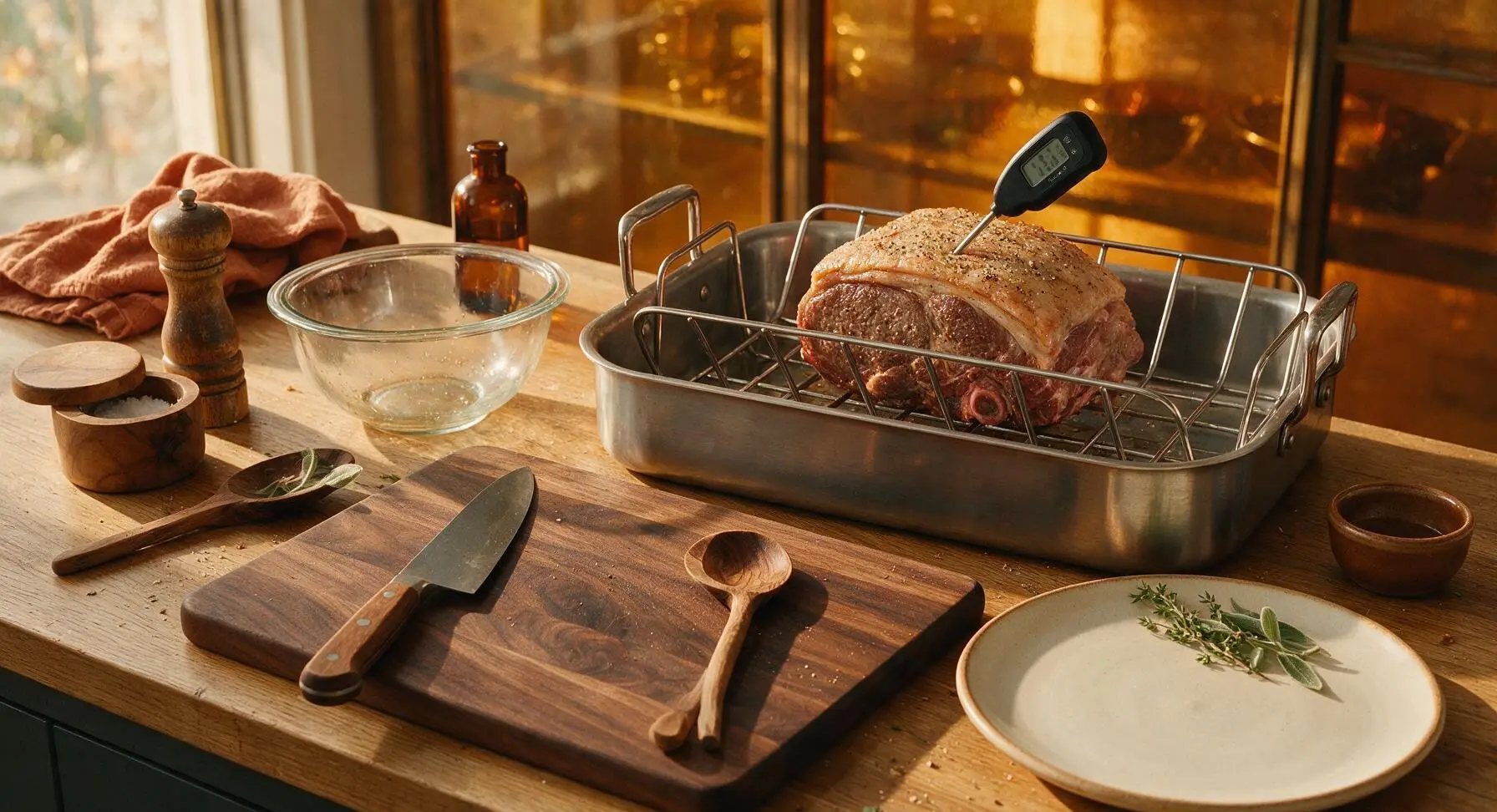
Retrieve the heavy-gauge stainless steel roasting pan from the under-counter cabinet, set the chrome wire roasting rack inside it. Place the seasoned roast bone-side down (fat cap up) directly on the wire rack so the meat is elevated and air can circulate evenly around it. Insert the tip of the digital meat thermometer into the thickest part of the roast, making sure it does not touch bone.
Step 4
step4:Set Up Roasting Pan
5

Slow Roast to Temp

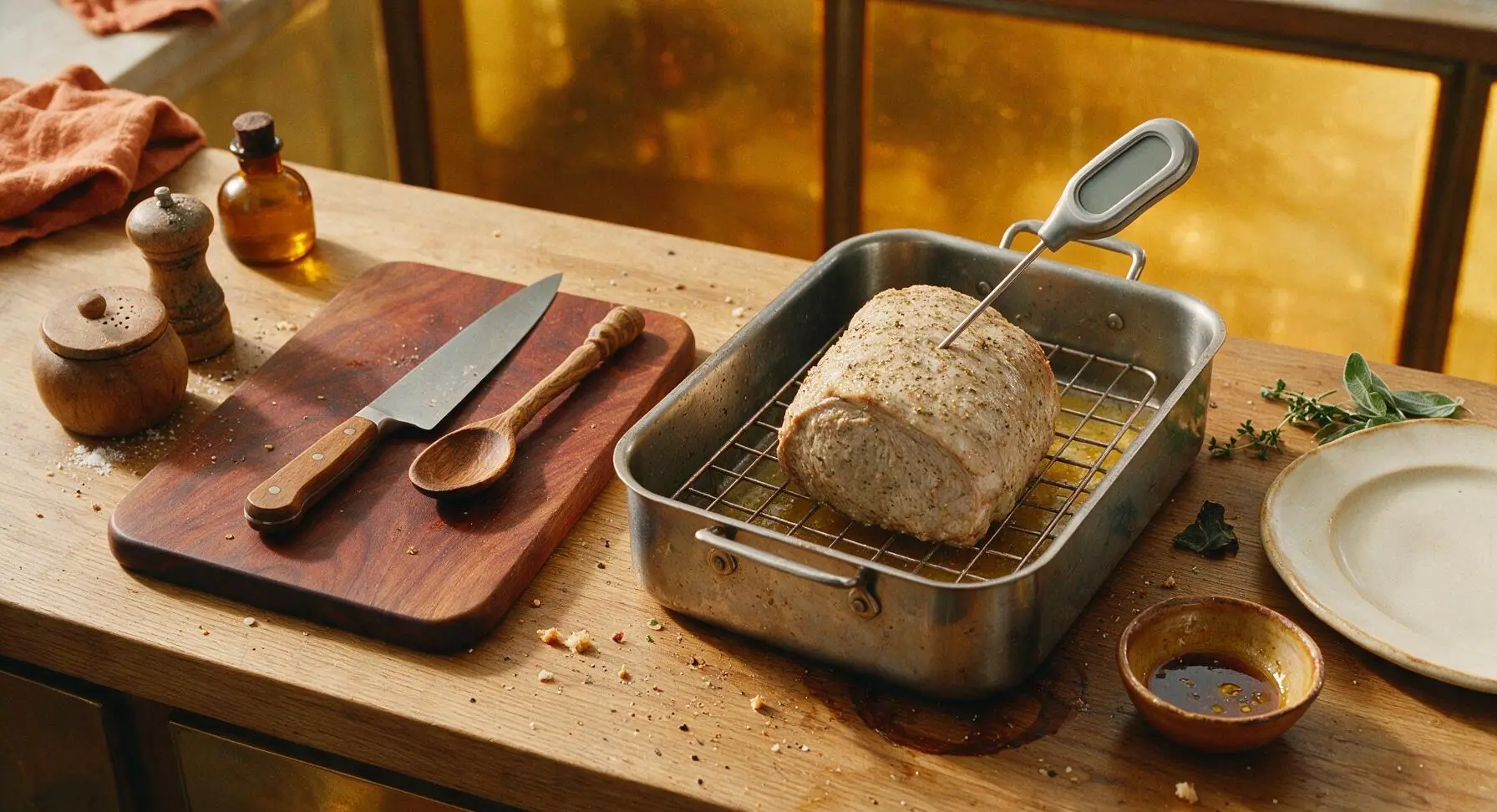
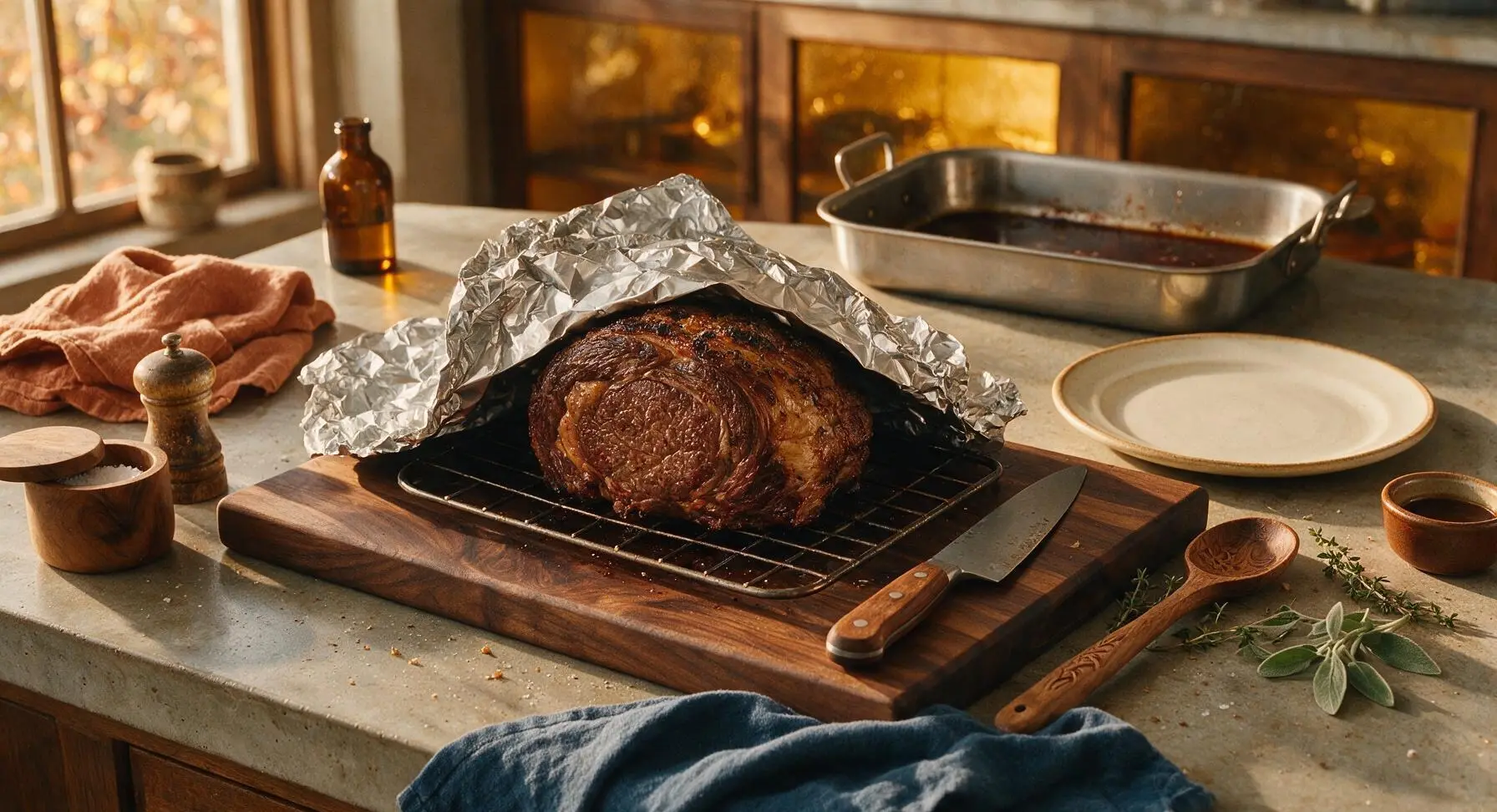
Place the roasting pan with the roast in a preheated 200°F (93°C) oven. Roast for approximately 2 hours to 2 hours 15 minutes, until the instant-read thermometer reads an internal temperature of 120°F (49°C) in the thickest part. This low-temperature cook creates an evenly pink, juicy center from edge to edge with no overcooked gray band. Remove the pan from the oven once target temp is reached, transfer the roast (still on the rack) back to the maple cutting board, tent loosely with foil, and let rest for 30 minutes.
Step 5
step5:Slow Roast to Temp
Step 5
step5:Slow Roast to Temp
6

Sear to Crisp Crust

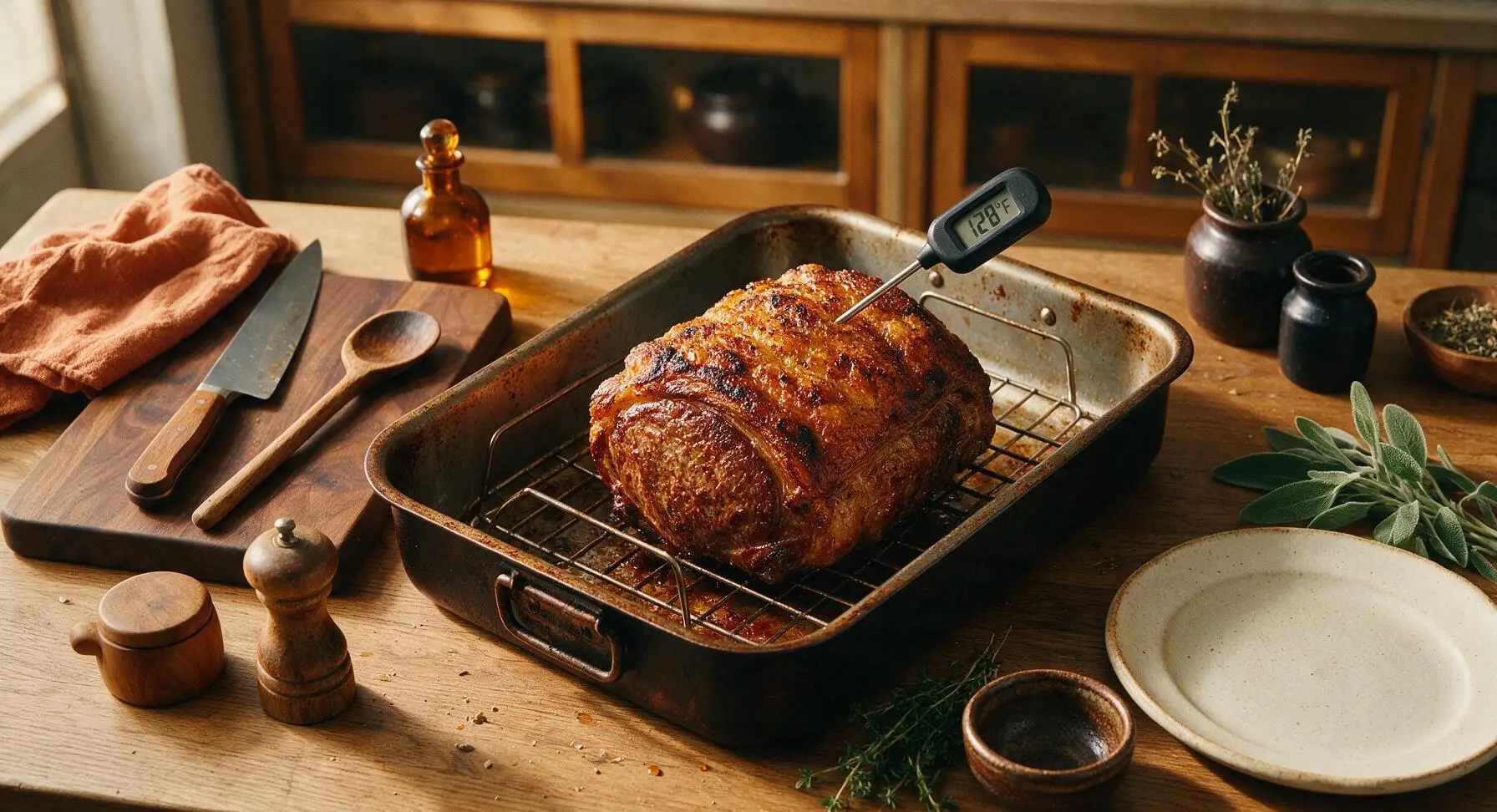
After the 30-minute rest, remove the foil from the roast. Increase the oven temperature to 500°F (260°C). Once the oven is fully preheated, return the roast (still on the rack in the roasting pan) to the oven. Cook for 8-10 minutes, watching closely, until the surface forms a deep golden-brown, crisp, crackling crust. Do not walk away during this step, as high heat can burn the crust quickly. Remove from oven once the crust is deep amber and crisp.
Step 6
step6:Sear to Crisp Crust
7

Rest and Butter Roast

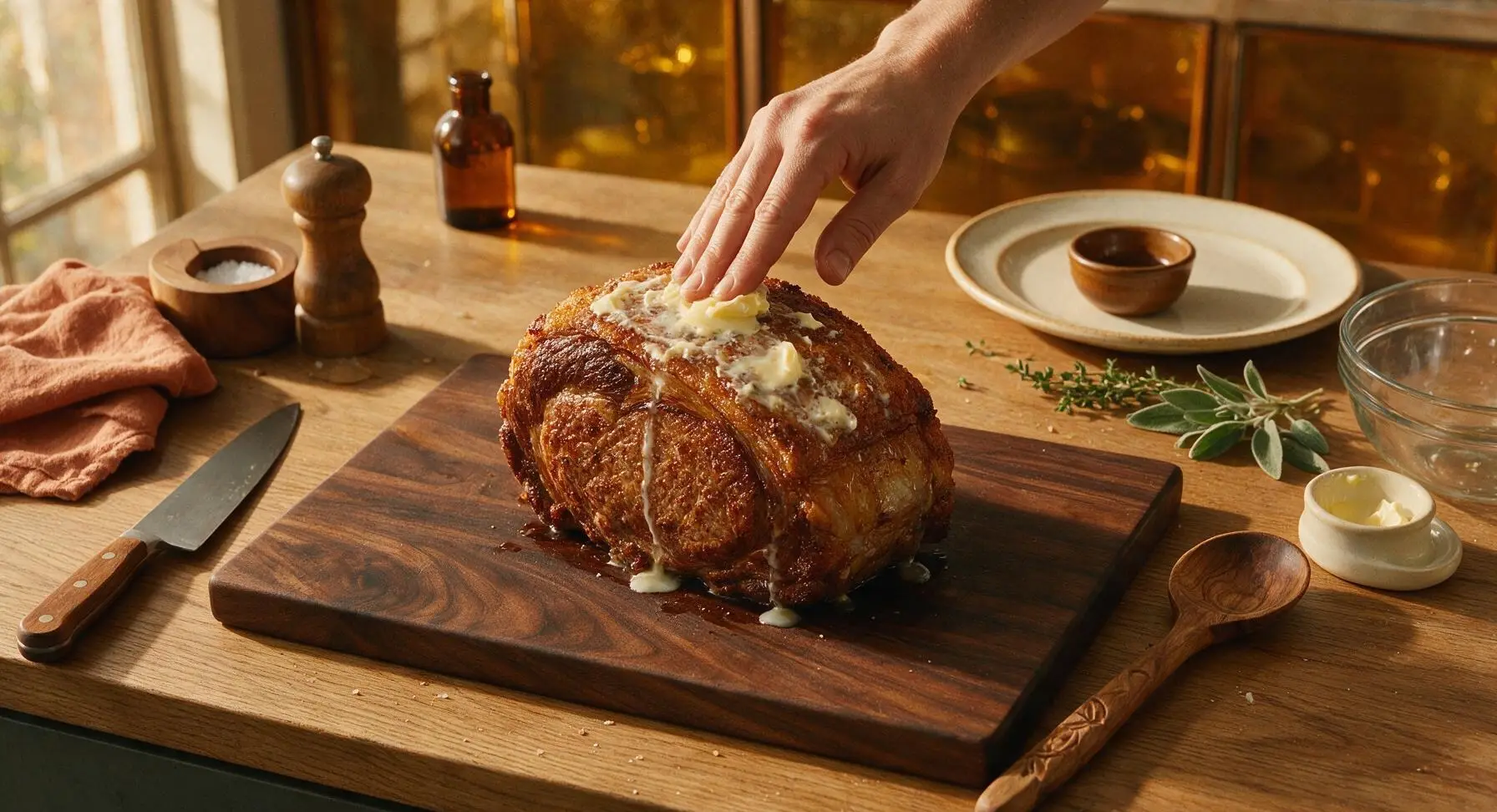
Transfer the seared roast back to the maple cutting board. Rub the entire crisp surface with 2 tablespoons of softened unsalted butter, which will melt and mingle with meat juices for extra richness. Let the roast rest for an additional 10 minutes before slicing to allow juices to redistribute, so they do not run out when cut.
Step 7
step7:Rest and Butter Roast
8

Slice and Plate Roast

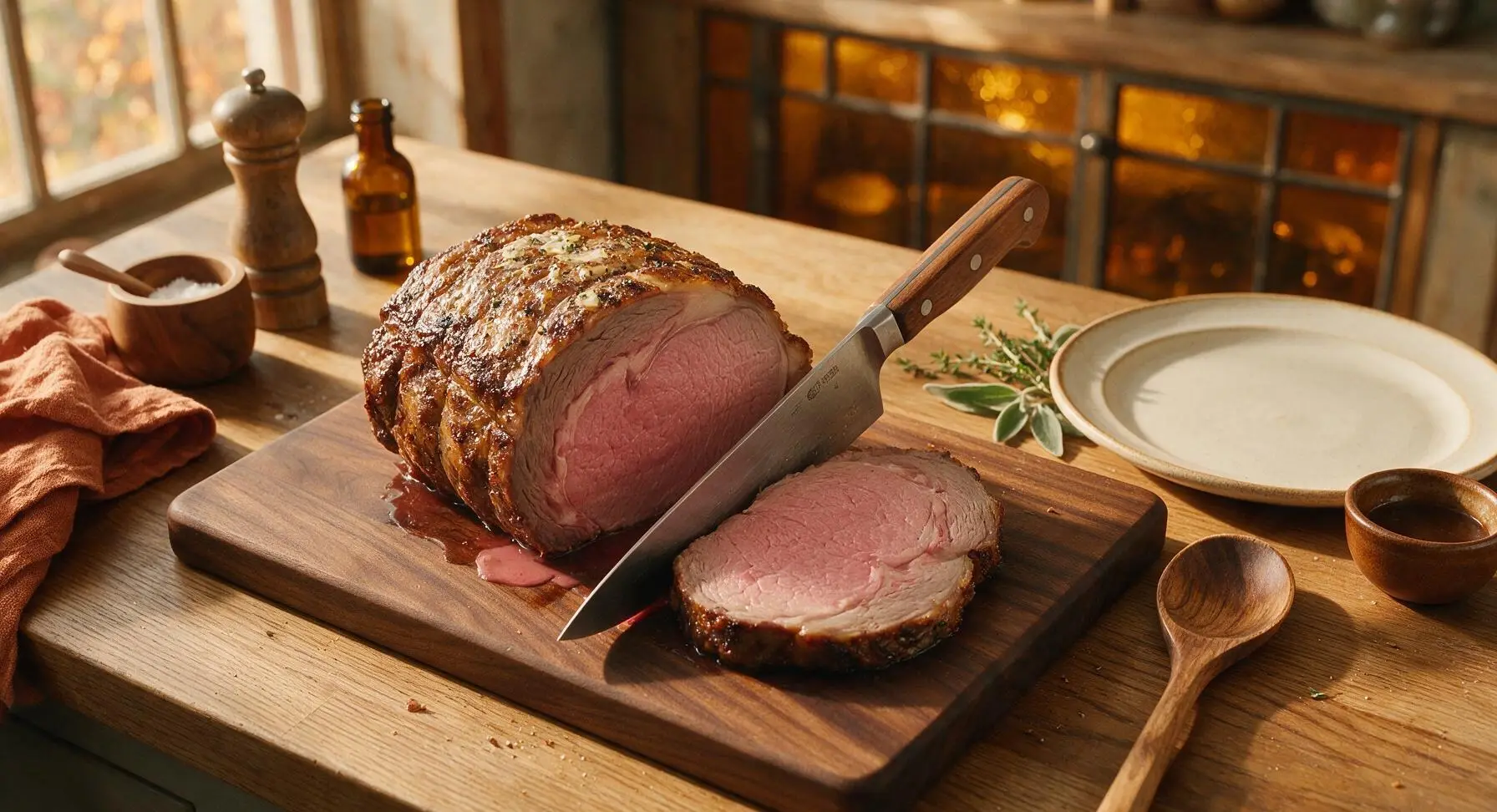
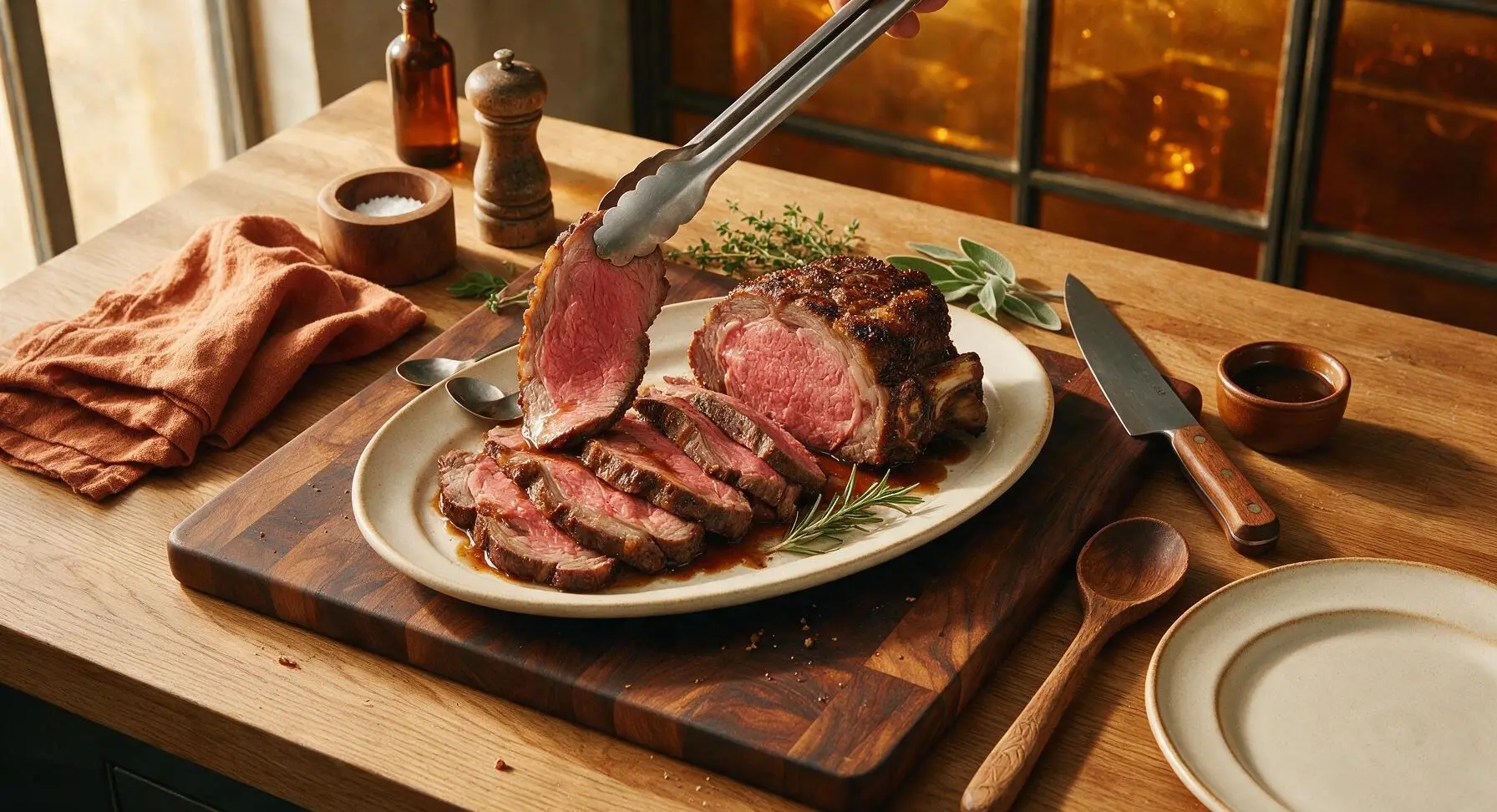
Remove the meat thermometer from the roast. Use the 8-inch chef’s knife to cut the roast away from the rib bones first, then slice the meat into even 1/2-inch thick slices against the grain. Arrange the slices and bone-in roast end on the matte cream white oval serving platter, drizzle with a spoonful of collected pan juices from the roasting pan, and tuck a fresh rosemary sprig on the platter for garnish.
Step 8
step8:Slice and Plate Roast
Step 8
step8:Slice and Plate Roast

Tips

1.Always let the roast come to room temperature for a full 2 hours before cooking: a cold roast will cook unevenly, creating a thick band of overcooked gray meat around the edges even when using the low-temperature roasting method.
2.Never tightly wrap the roast in foil during the first rest period: a tight seal traps steam that will soften the crisp, crackling crust from the high-heat sear, leaving you with a chewy, soft exterior instead of the desired crunchy crust.
3.Insert your meat thermometer at least 1 inch away from rib bones when checking temperature: bone conducts heat faster than muscle tissue, so a reading touching bone will be 5-10°F higher than the actual meat temperature, leading to undercooked beef.
✨ You May Also Like

Main Course
🍜 United Kingdom

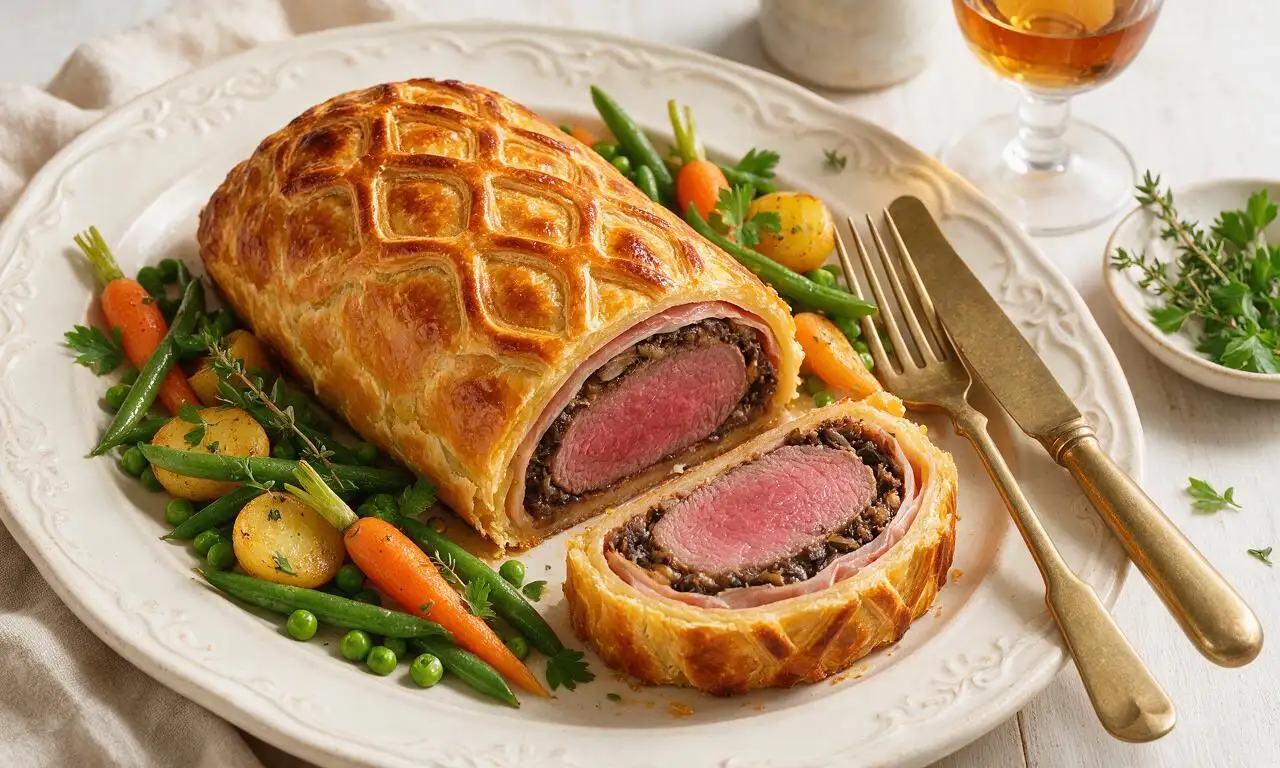
A showstopping classic of tender seared beef, savory mushroom duxelles, and crisp prosciutto wrapped in flaky golden puff pastry, baked to juicy perfection.

⏱️ 2 hours 1Main Course ★ 4.7
Main Course
🍜 India

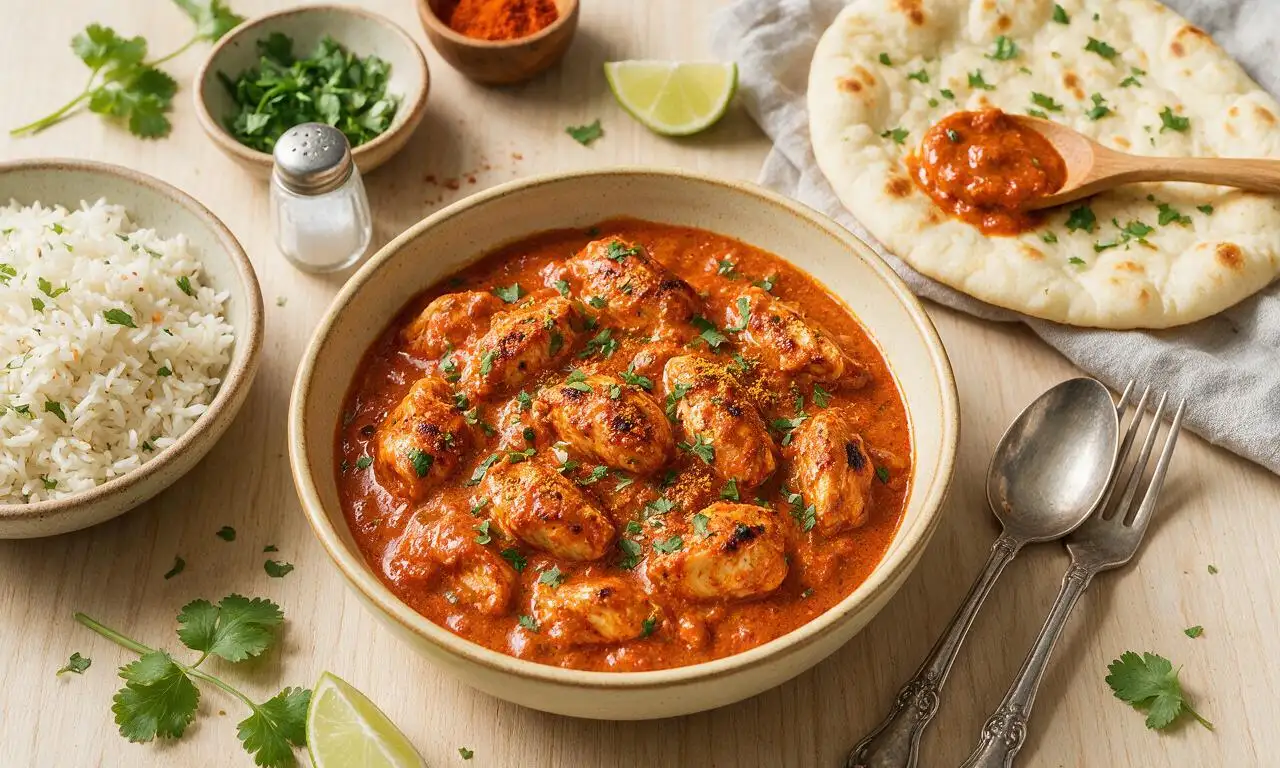
Tender charred marinated chicken simmered in a rich, spiced creamy tomato sauce, this iconic Anglo-Indian curry pairs perfectly with basmati rice or warm naan.

⏱️ 50 minuteMain Course ★ 4.6
Main Course
🍜 Thailand

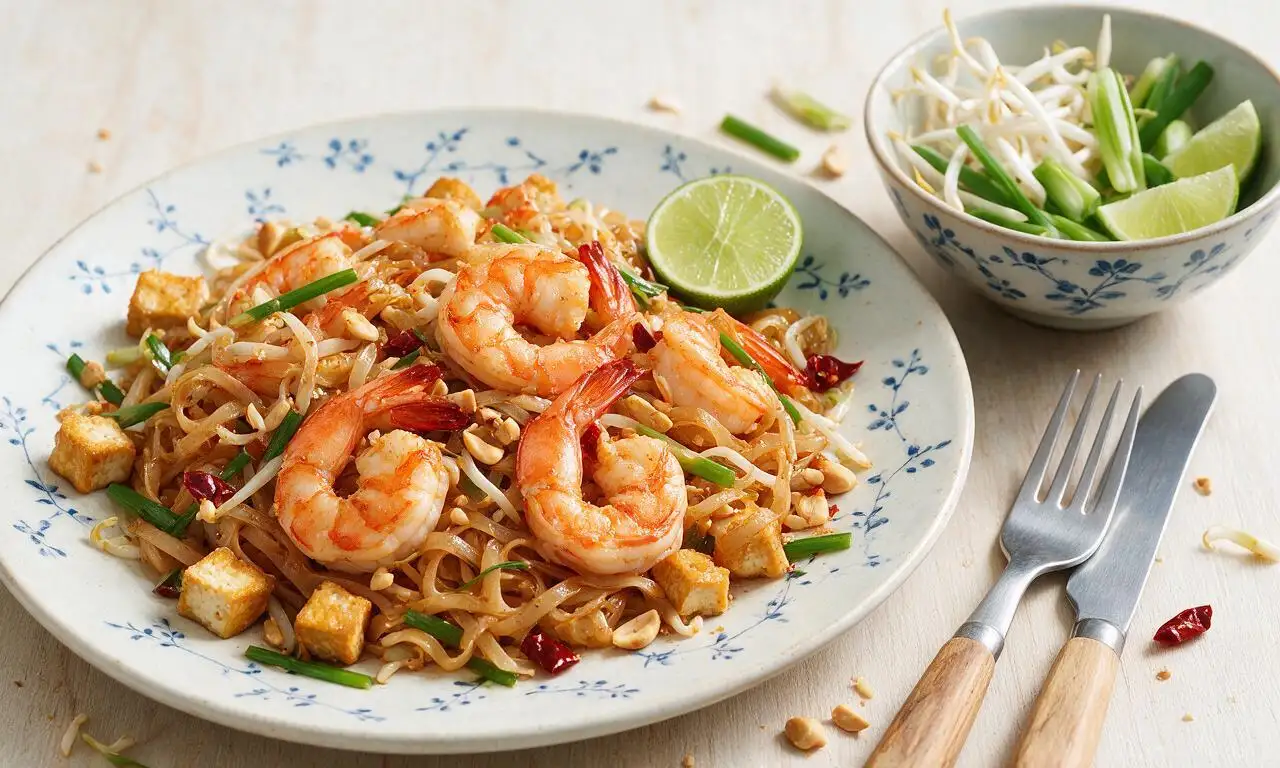
Classic tangy, sweet, and savory Thai stir-fried rice noodles with shrimp, tofu, and crunchy garnishes, balancing all five core Thai flavor profiles.

⏱️ 30 minuteMain Course ★ 4.5
Main Course
🍜 United Kingdom

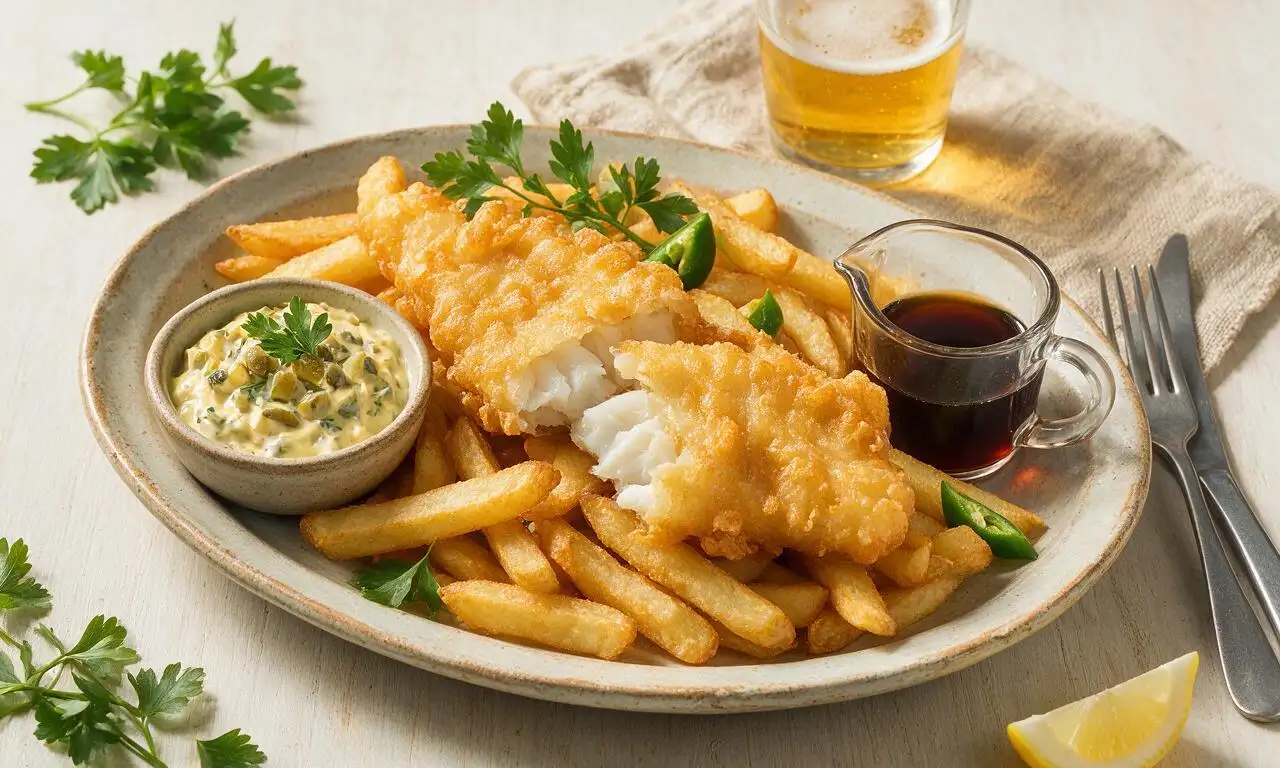
Crispy golden beer-battered cod and fluffy double-fried chips, served with tangy tartar sauce and malt vinegar: the timeless, beloved British pub comfort classic.

⏱️ 45 minuteMain Course ★ 4.7
Main Course
🍜 Mexico

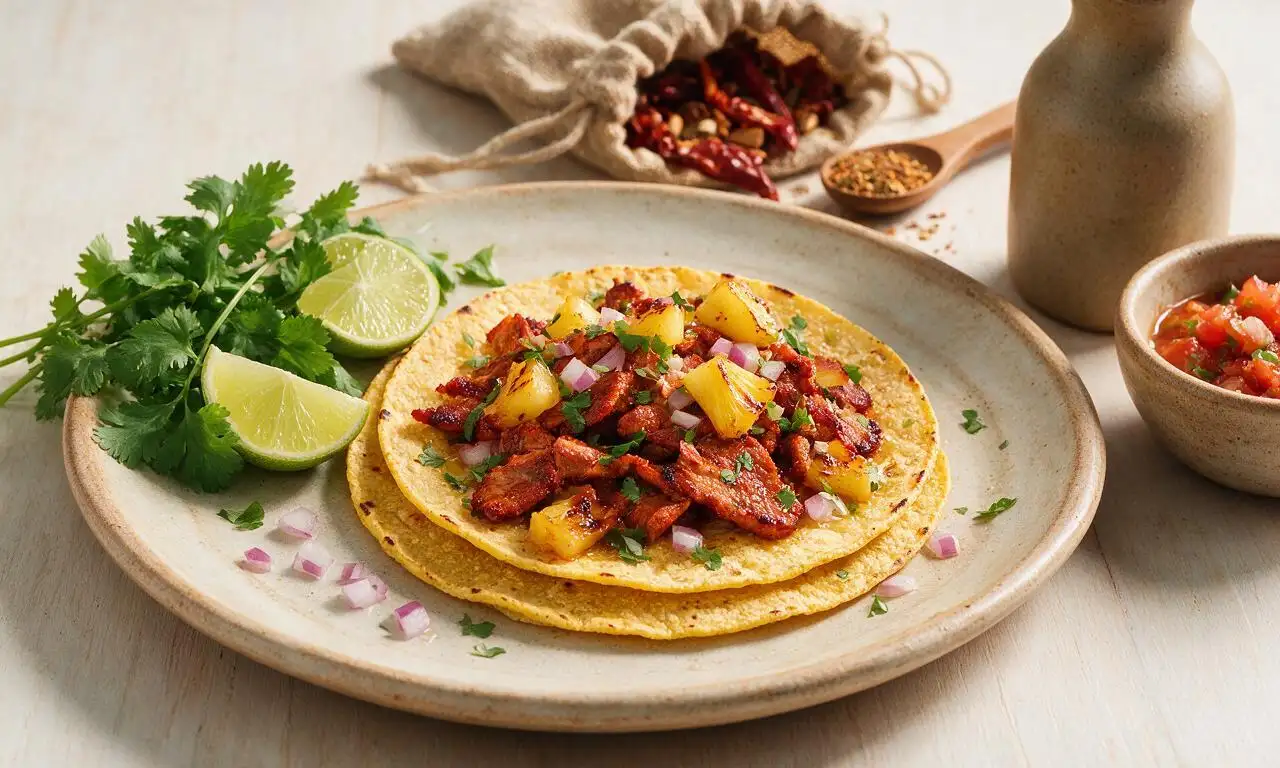
Smoky, chile-marinated pork tacos with caramelized pineapple, fresh cilantro, and lime: a beloved classic Mexican street food perfect for casual summer gatherings.

⏱️ 1 hour 45Main Course ★ 4.8
Main Course
🍜 United States

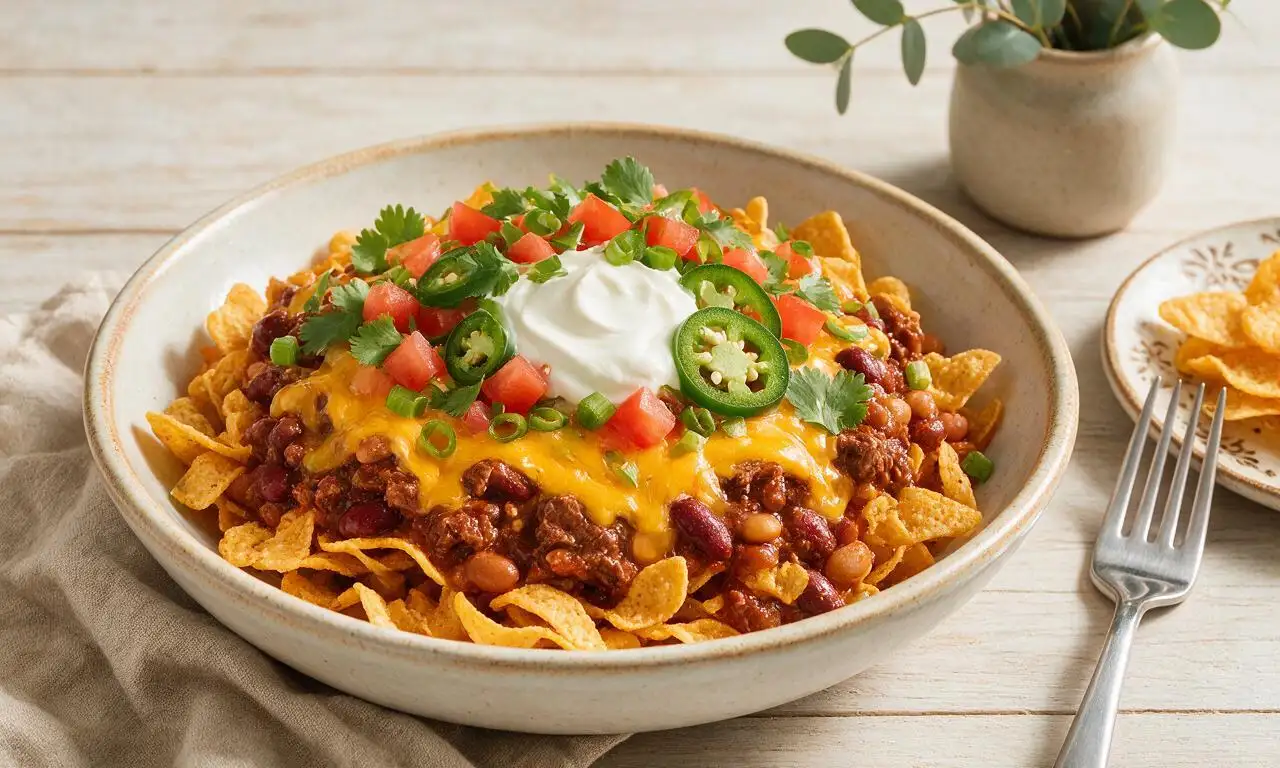
Crunchy Fritos corn chips layered with savory beef chili and melted cheddar, topped with cool, zesty fixings for a beloved, cozy Tex-Mex comfort food.

⏱️ 35 minuteMain Course ★ 4.8

chef john prime rib:Frequently Asked Questions

1.What size 4-bone prime rib roast do I need to feed a typical holiday crowd? ▾
A standard 4-bone standing rib roast weighs 8 to 10 pounds, and will comfortably feed 8 to 10 adults, accounting for roughly 1 pound per person (the dense rib bones make up a portion of that weight). If you want leftovers for sandwiches or beef hash the next day, opt for a heavier 10-pound roast.
2.How far in advance should I salt my roast to get the signature crisp crust and deep beefy flavor? ▾
For best results, salt your 4-bone roast heavily with kosher salt 24 to 48 hours before roasting, leaving it uncovered on a wire rack in your fridge. If you only have table salt, use half the amount to avoid over-seasoning. This dry brine tenderizes meat, boosts flavor, and dries the surface for that perfect crisp crust.
3.Do I need to sear the roast first to get a crispy crust like I do with other beef cuts? ▾
No high-heat sear is required for this no-fail method! The long, slow roast paired with the fully dried surface from pre-salting builds that shatteringly crisp, salty crust on its own. Searing first can cause overcooked, gray edges, so skip that extra step for the most consistent, even results.
4.What oven temperature should I use for this slow-roast method to avoid overcooking? ▾
Set your oven to a steady 325°F for the entire roast, no random temperature spikes needed. This low, consistent heat cooks the roast gently from edge to center, so you won’t get that thick band of overcooked gray meat around the pink middle that plagues high-heat prime rib recipes.
5.Do I need to bring my cold roast all the way to room temperature before putting it in the oven? ▾
You don’t need to let it sit out for hours to hit room temp, which is a real food safety risk for large, dense cuts like this. Just take it out of the fridge 30 to 45 minutes before roasting to take the sharp chill off, which supports even cooking without unnecessary bacteria risk.
6.Is it better to roast the prime rib with the bones down or up in the pan? ▾
Roast it bone-side down the entire time. The curved rib bones act as a natural built-in roasting rack, elevating the meat off the hot pan surface to let hot oven air circulate evenly around every side. You won’t need a separate metal rack, which cuts down on post-holiday cleanup too.
7.What internal temperature should I pull the roast at to get a perfect even medium-rare center? ▾
Pull your roast out of the oven when the very center hits 125°F on a reliable instant-read thermometer, then tent it loosely with foil to rest. Carryover cooking will raise the internal temp another 5 to 10°F as it sits, landing you right at that ideal 130 to 135°F medium-rare edge to edge.
8.How long do I need to let the prime rib rest before carving, and why is that step non-negotiable? ▾
Let your roast rest for a full 25 to 30 minutes before slicing. Resting lets the hot, tight muscle fibers relax and reabsorb all that delicious moisture, so you won’t lose pools of beefy juice onto your cutting board. Skipping rest guarantees dry slices, no matter how perfectly you roasted it.
9.How do I keep the fresh rosemary from burning and turning bitter during the long roast? ▾
Chop the fresh rosemary finely so it adheres close to the roast surface instead of sitting as loose, dry needles that burn easily. Apply it right before you put the roast in the oven, rather than adding it during the initial dry brine, to keep its bright, piney flavor without bitter burnt notes.
10.Can I add other seasonings besides the black pepper and garlic powder listed in the recipe? ▾
You absolutely can, but keep it simple to let that rich, beefy prime rib flavor shine! A little smoked paprika, dried thyme, or light dusting of onion powder works great, but skip heavy, sugary rubs—they’ll burn during the long roast and ruin that crisp, savory crust.
11.Can I make this recipe with a boneless prime rib roast instead of bone-in? ▾
You can, but you’ll lose a little of that deep, rich flavor the rib bones impart, and you’ll need to set the roast on a metal roasting rack to mimic the even air flow the bones provide. Plan for slightly shorter cook time too—boneless roasts cook 10 to 15 minutes faster per pound.
12.What do I do if some of my guests want their meat more done than medium-rare? ▾
Once you’ve carved all the perfect medium-rare slices from the center, set the end pieces (which are naturally slightly more done) on a small sheet pan in a 400°F oven for 2 to 3 minutes to bring them up to medium or medium-well, without overcooking the rest of the roast.
13.What’s the easiest way to remove the rib bones before carving for clean, uniform slices? ▾
Once the roast is done resting, run a sharp, thin carving knife right along the curve of the bones where they meet the meat, keeping the blade pressed tight against the bone to leave as much edible meat on the roast as possible. Save the removed bones for the cook—they’re a delicious, well-earned savory snack!

Comments (5)

2 days ago

OMG, I made this for our Christmas family dinner last weekend and every single person asked for the recipe! I was so nervous to mess up prime rib because it’s such an expensive cut, but this no-fail method actually lived up to the hype? My roast came out perfectly medium-rare edge to edge, no weird gray overcooked ring around the outside. My 10 year old even said it’s better than the prime rib we get at our favorite local steakhouse. SO good, this will be my go-to for every special occasion from now on!

1 day ago

Same! I was so stressed about making this for my in-laws’ visit over the holidays and it turned out perfect. Did you let it rest the full 30 minutes like the recipe says? I almost skipped that step because I was running behind, and I’m so glad I didn’t!

1 day ago

So glad it was a hit for your family dinner, Molly! Resting is such a key step to make sure all those juicy flavors stay locked in instead of running all over your cutting board — happy to hear you didn’t cut that corner!

1 week ago

Absolute game changer for potlucks. I brought this to my office holiday potluck last week and people were literally hovering by the platter waiting for slices. I was worried the 2 hour 30 minute cook time would be too much for a weeknight, but I prepped the rub the night before, popped it in the oven right after work, and it was ready right when I needed to head out. Leftovers made incredible prime rib hash for brunch over the weekend, too. SO good.

30 minutes ago

Quick question — has anyone made this with a boneless roast instead of bone-in? I grabbed a 3lb boneless prime rib on sale at the grocery store and I don’t want to mess it up for my anniversary dinner with my husband tomorrow night! Should I adjust the cook time at all, or keep it the same as the recipe says?

5 minutes ago

Great question, Lena! For a 3lb boneless roast, you can shave about 15-20 minutes off the total 2.5 hour cook time, just make sure to use a reliable meat thermometer to pull it when it hits 120°F internally for perfect medium-rare. Hope your anniversary dinner is absolutely delicious!

yesterday

Made this for my oldest kid’s birthday dinner last night, total win! Both my picky 7 and 9 year old cleaned their plates, which never happens when I make red meat. The only small swap I made was using dried rosemary instead of fresh because I forgot to grab some at the store, and it still turned out amazing. The crispy crust from the high-heat sear at the end? *Chef’s kiss.* 10/10, will make again for our next family gathering.

2 hours ago

Pro tip: dried rosemary works perfectly here, I do that all the time too! I save the leftover prime rib for meal prep sandwiches throughout the week — it’s so good sliced thin on crusty sourdough with a little horseradish cream. Game changer for work lunches!

3 days ago

I wanted to love this, and the flavor was incredible, but I followed the directions exactly and my roast came out a little more well done than I wanted on the end pieces. I used a meat thermometer like the recipe said, pulled it at 125°F, let it rest the full time, but the ends were almost medium well while the center was perfect medium rare. Still tasted great, just not the uniform medium-rare I was hoping for!

2 days ago

Oh that happened to me the first time I made this too! I realized my ancient apartment oven runs 25 degrees hot, so I picked up a cheap $10 oven thermometer to hang on the rack and now it turns out perfect every single time. Might be worth checking your oven calibration before your next go!

2 days ago

Sorry to hear the end pieces were more done than you preferred, Sarah! Joe’s tip about oven calibration is spot on — home ovens are often off by 25-50 degrees, which can make a huge difference with a delicate cut like prime rib. Next time, try pulling it 5 degrees earlier and tenting it loosely with foil while resting to prevent carryover cooking from overdoing the edges. I bet your next one will be perfect!