Chuck Eye Steak

title 1
Chuck Eye Steak
⏱️ cook time 12 minutes
🍽️ servings 2
⚡ Difficulty medium

intro

Richly marbled chuck eye steak—the affordable, juicy cousin of ribeye—seared to crispy perfection in cast iron with garlic-herb butter for a luxe at-home meal.

Ingredients
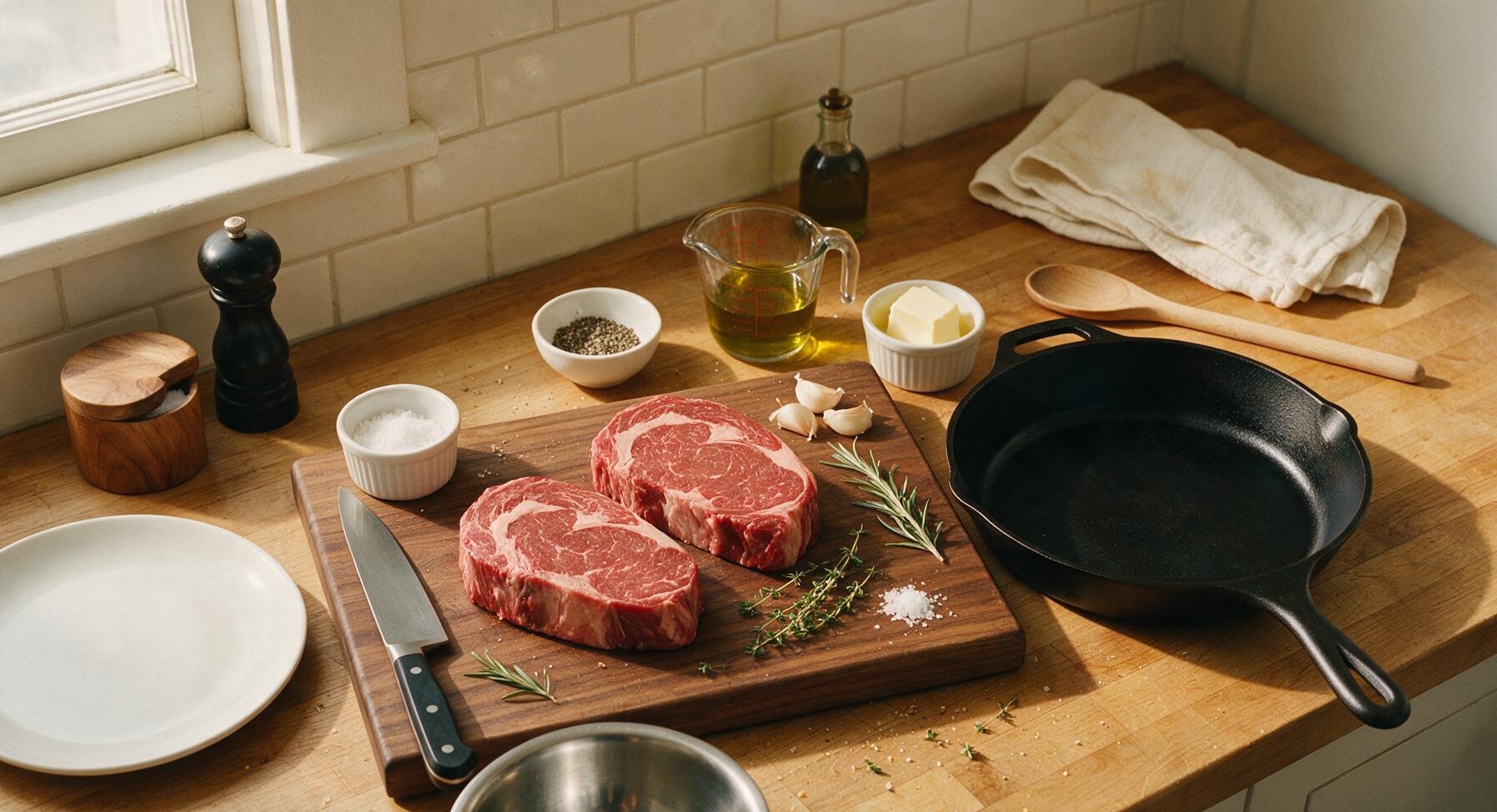
Boneless chuck eye steak (1.5 inches thick) 680g (2 x 340g steaks)
Kosher salt 1 tbsp
Freshly ground black pepper 1 tsp
Extra virgin olive oil 1 tbsp
Unsalted butter 2 tbsp (28g)
Garlic cloves, crushed 3 whole
Fresh rosemary sprigs 2 sprigs
Fresh thyme sprigs 3 sprigs
Flaky sea salt (for finishing) 1/2 tsp

Steps

1

Pat Steaks Completely Dry

Remove the two 340g chuck eye steaks from the refrigerator 20 minutes before cooking to bring to room temperature for even cooking. Place on the maple cutting board, then pat all surfaces (top, bottom, edges) thoroughly dry with paper towels until no surface moisture remains. Use the chef knife to trim any large, loose hard fat chunks from the steak edges, leaving 1/8 inch of fat for flavor. Visual cue: The steak surface feels matte and dry to the touch, not damp or slimy.
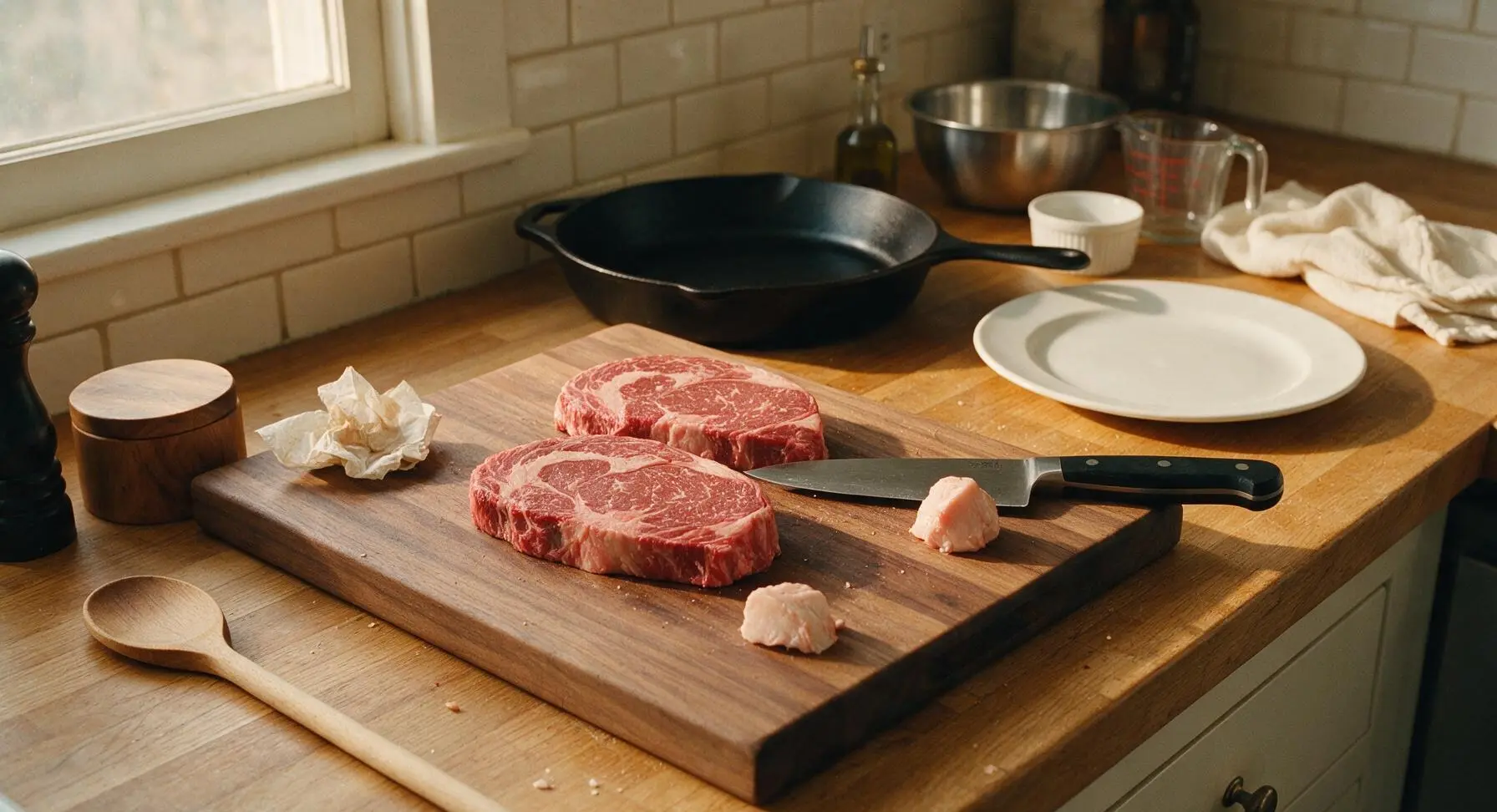
Step 1
step1:Pat Steaks Completely Dry
2

Season Steaks Generously

Season all surfaces of the dried steaks heavily with 1 tablespoon coarse kosher salt and 1 teaspoon freshly ground black pepper, pressing seasoning gently into the meat to help it adhere. Do not under-season—steaks require a full, even coating of salt to form a flavorful crust. Let seasoned steaks rest 10 minutes while the pan preheats; salt will draw out small beads of moisture that reabsorb into the meat to boost juiciness. Visual cue: No bare, unseasoned spots are visible on any steak surface, and small moisture beads start to form on the meat.
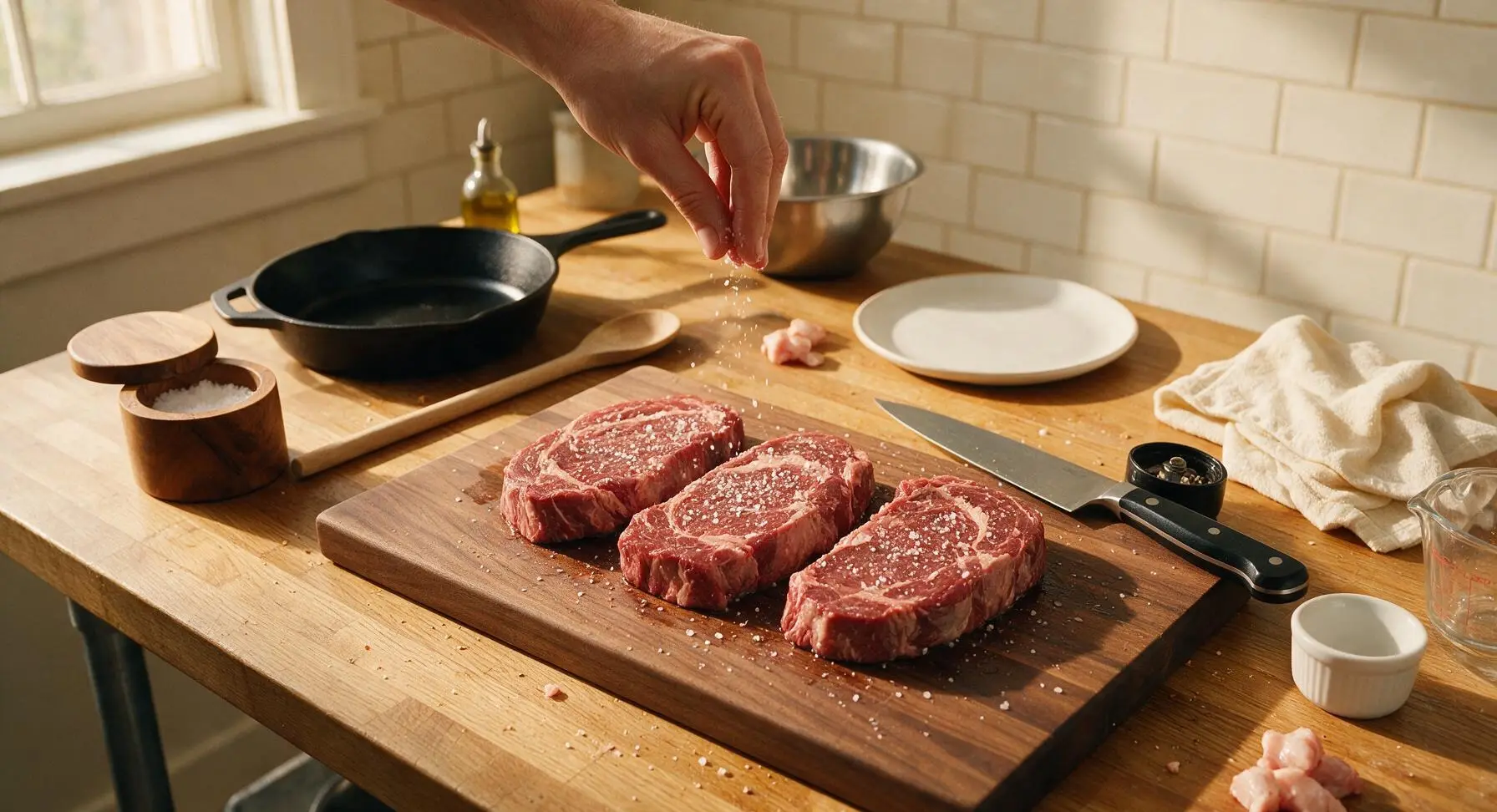
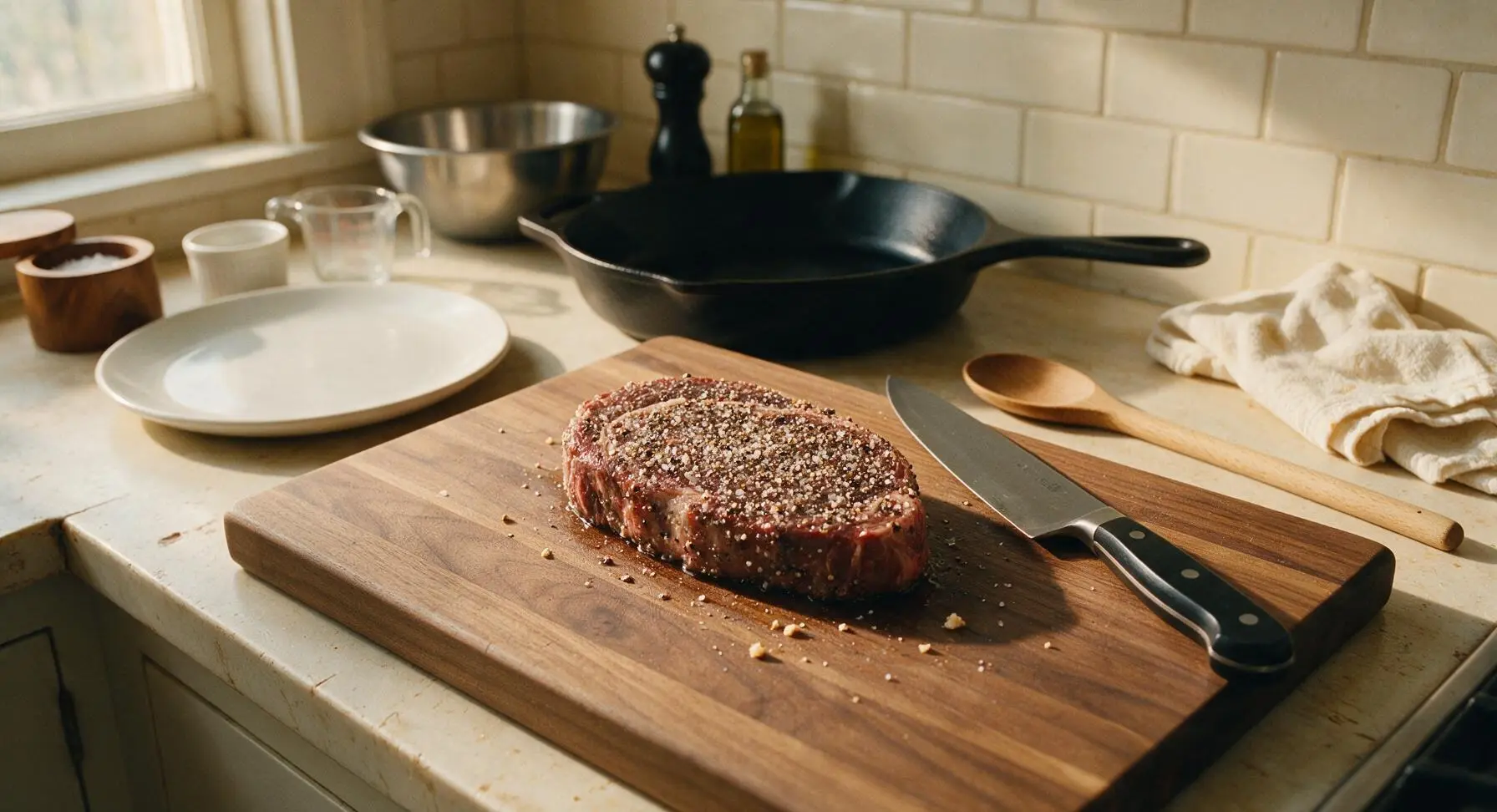
Step 2
step2:Season Steaks Generously
Step 2
step2:Season Steaks Generously
3

Preheat Cast Iron Skillet

Place the 12-inch cast iron skillet on the stovetop over medium-high heat, then add 1 tablespoon extra virgin olive oil. Heat the oil for 3-4 minutes until it shimmers and just starts to release thin wisps of smoke. Do not add steaks until the pan is fully hot, as this is required to create a deep maillard crust and prevent sticking. Visual cue: A drop of water flicked into the pan evaporates instantly on contact, and oil flows easily across the pan surface when tilted.
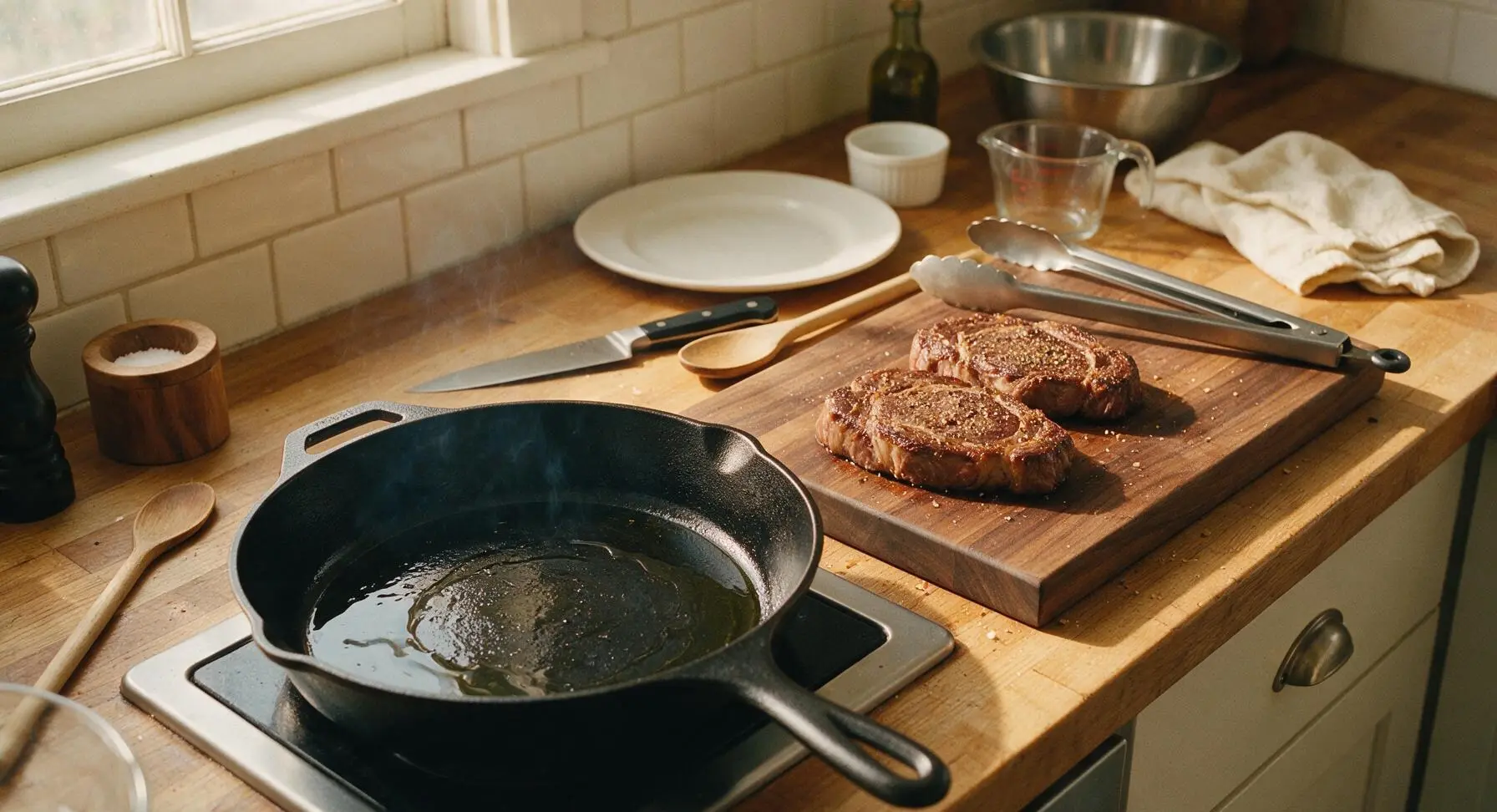
Step 3
step3:Preheat Cast Iron Skillet
4

Sear First Steak Side

Use the stainless steel tongs to carefully lay steaks in the hot pan away from your body to avoid oil splatters. Do not move, nudge, or press the steaks once placed. Sear for 3 full minutes on the first side, until a deep, dark golden-brown crust forms. Resist the urge to lift steaks early, as movement breaks crust formation. Visual cue: The steak edges touching the pan are deep mahogany brown (not pale gray), and the steak releases easily when gently tugged with tongs.
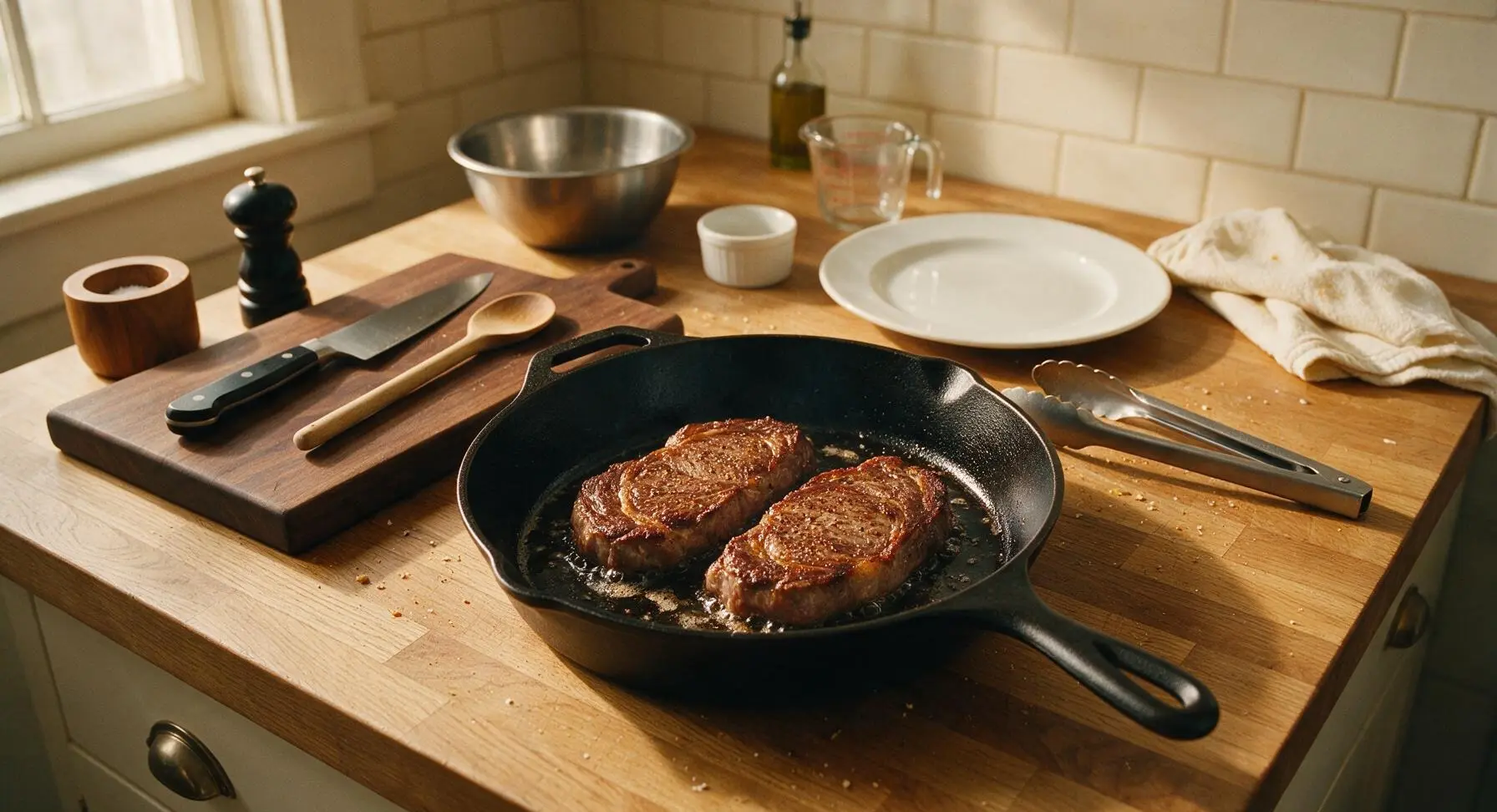
Step 4
step4:Sear First Steak Side
5

Flip and Add Aromatics

Use tongs to flip the steaks to their second side. Immediately add 2 tablespoons unsalted butter, 3 crushed garlic cloves, 2 rosemary sprigs, and 3 thyme sprigs (taken from the clear glass prep bowl) to the pan next to the steaks. Tilt the pan slightly so melted butter pools at the lower edge. Sear for 2 minutes on the second side. Visual cue: The butter melts into a golden, fragrant liquid, and garlic and herbs start to release their aroma as they warm.
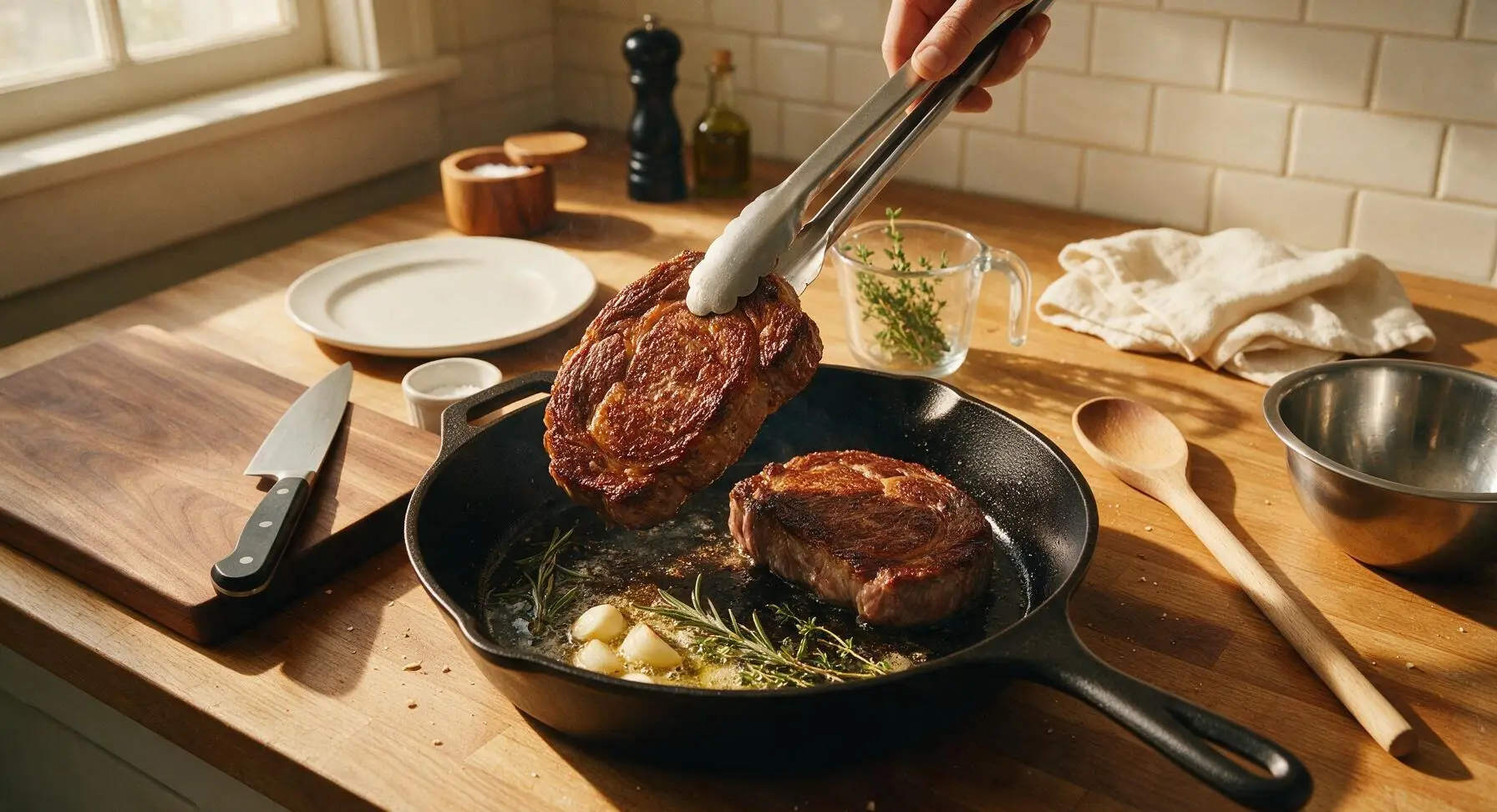
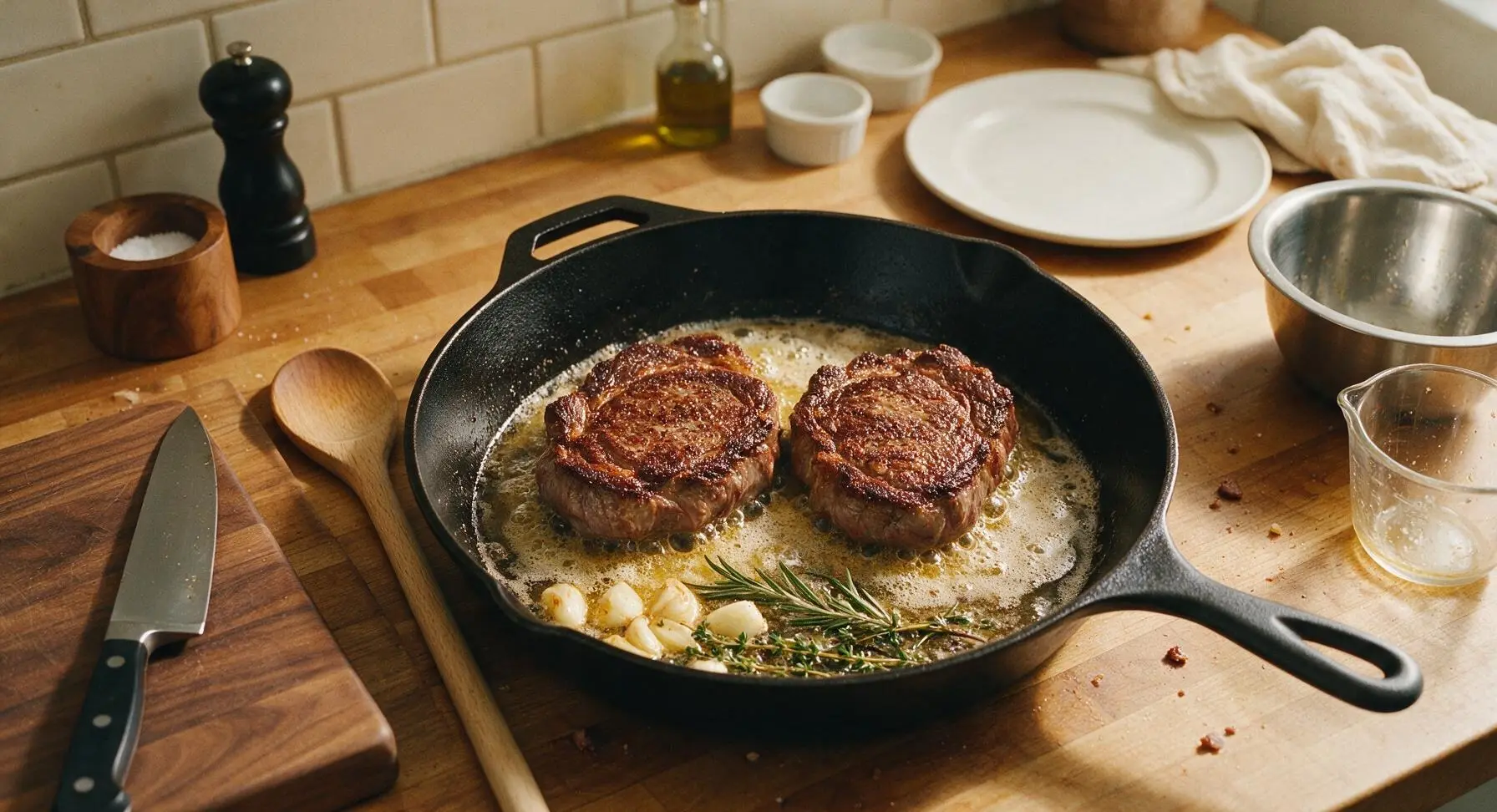
Step 5
step5:Flip and Add Aromatics
Step 5
step5:Flip and Add Aromatics
6

Baste Steak With Butter

Use the long stainless steel basting spoon to scoop the melted garlic-herb butter from the pooled pan edge and pour it repeatedly over the top of the steaks. Continue basting for 2-3 minutes, spooning butter over the steaks every 10 seconds. Insert the instant-read thermometer into the thickest part of the steak (avoiding fat pockets) to check doneness: remove steaks when internal temperature reaches 125°F (52°C) for medium-rare. Visual cue: The butter is nutty and golden, not dark brown or burnt, and garlic is soft pale gold, not charred.
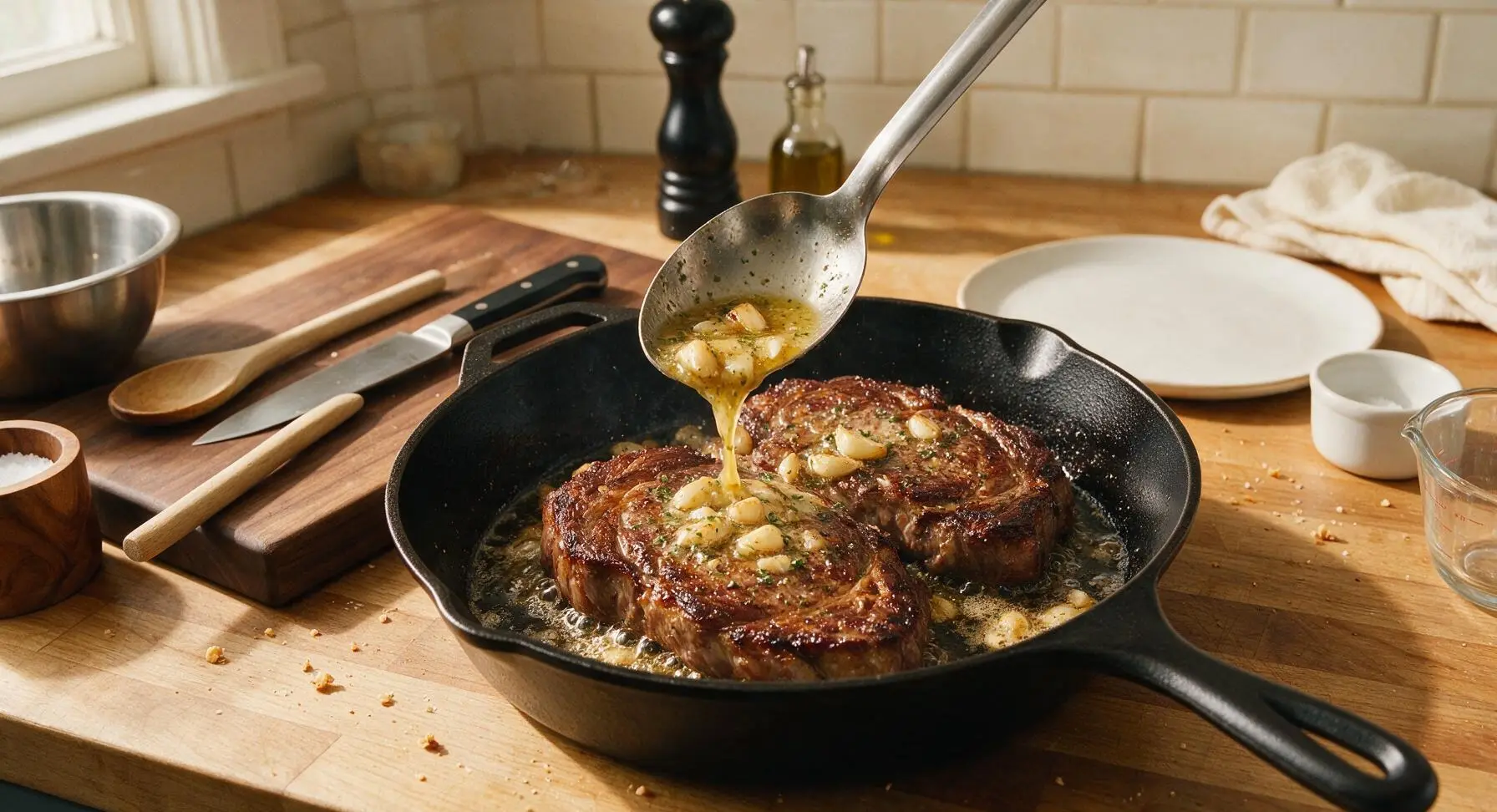
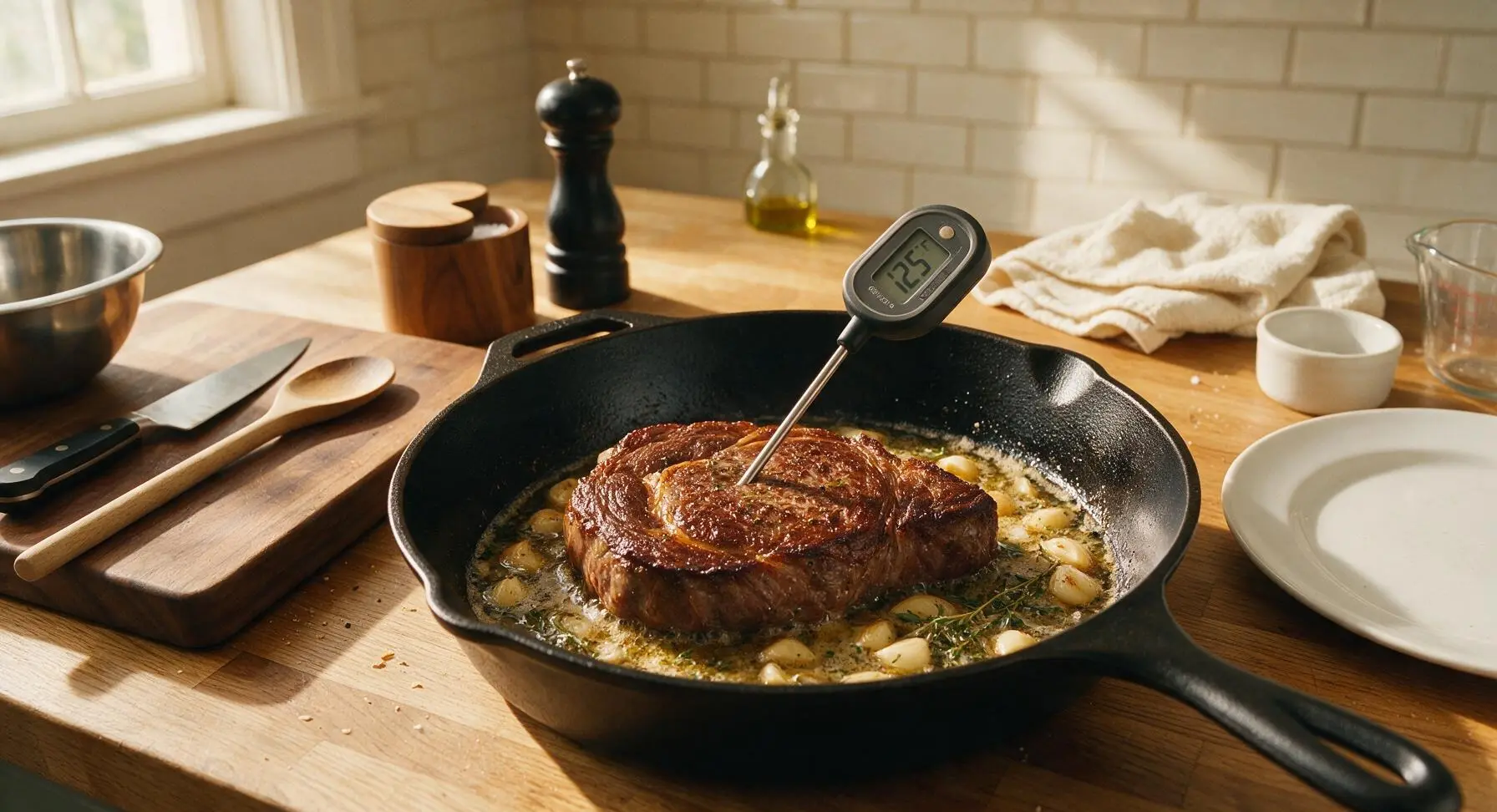
Step 6
step6:Baste Steak With Butter
Step 6
step6:Baste Steak With Butter
7

Rest Steak Before Slicing

Use tongs to transfer steaks from the skillet to the stainless steel wire resting rack set on the maple cutting board. Loosely tent steaks with a small piece of aluminum foil, and let rest for 8 full minutes. Resting allows muscle fibers to relax and reabsorb juices, so slices stay juicy instead of leaking liquid all over the plate. Do not skip this step. Visual cue: Small beads of juice form on the steak surface as it rests, with no excessive juice pooling under the rack.
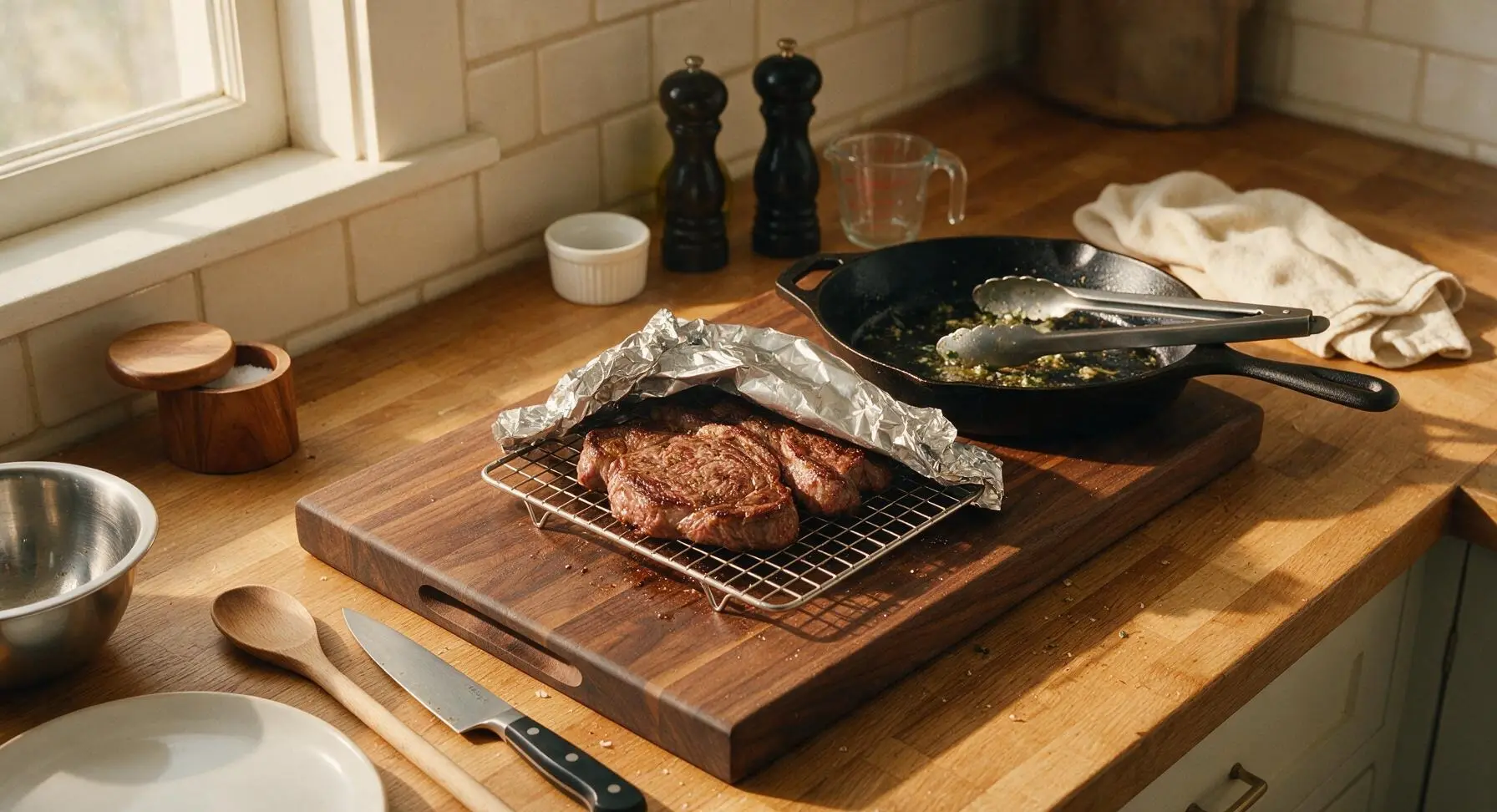
Step 7
step7:Rest Steak Before Slicing
8

Slice and Plate Steak

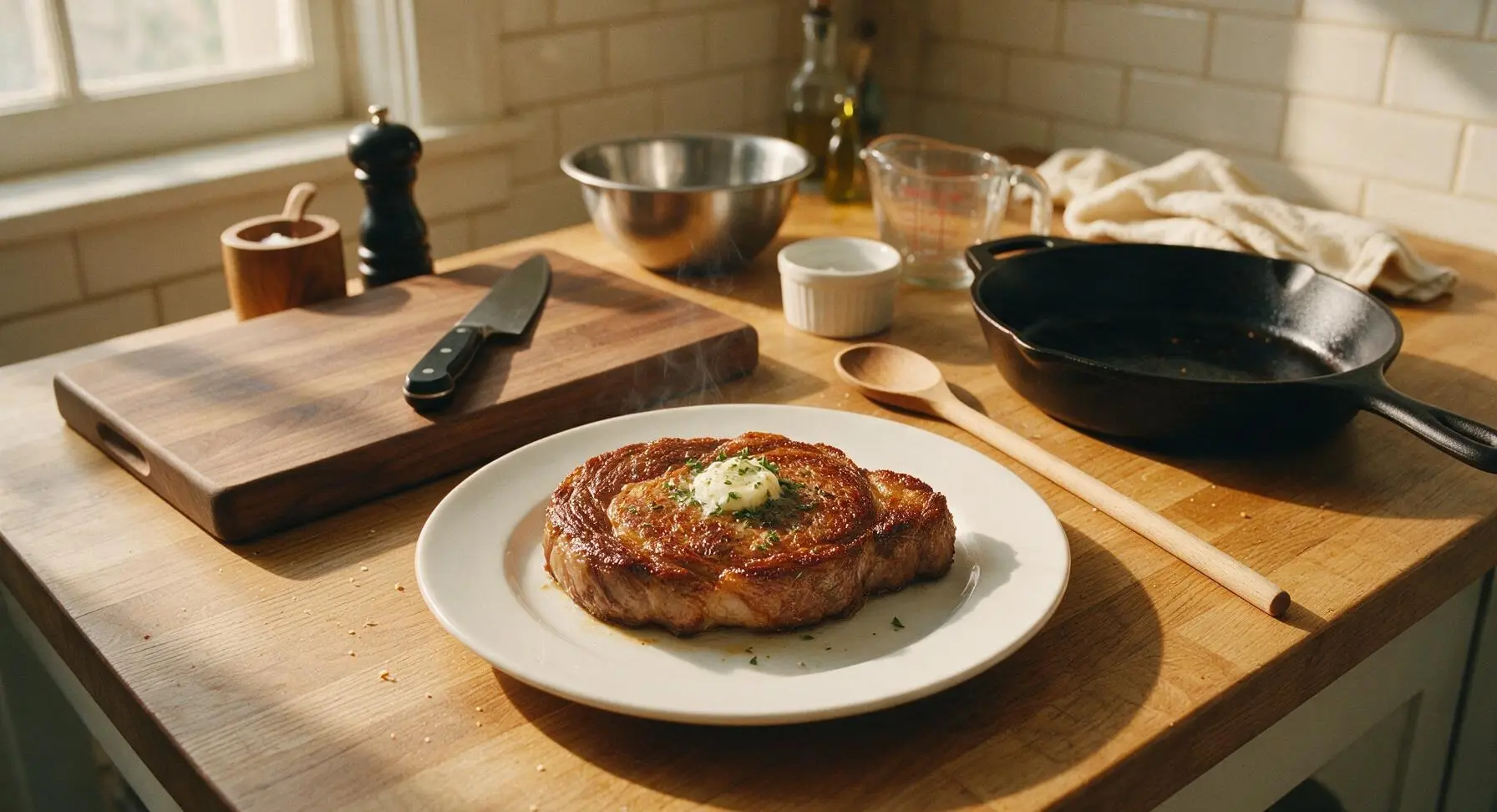
After resting, transfer steaks to a clean section of the cutting board. Use the chef knife to slice steaks against the grain into 1/2-inch thick slices. Arrange slices fanned slightly on the matte cream ceramic dinner plate, spoon 1 tablespoon of leftover warm herb butter from the skillet over the top, and sprinkle lightly with 1/2 teaspoon flaky sea salt. Garnish with a small fresh rosemary sprig. Visual cue: Sliced steak shows a consistent warm pink medium-rare center, with a 1/4-inch dark brown crust on the outer edge.
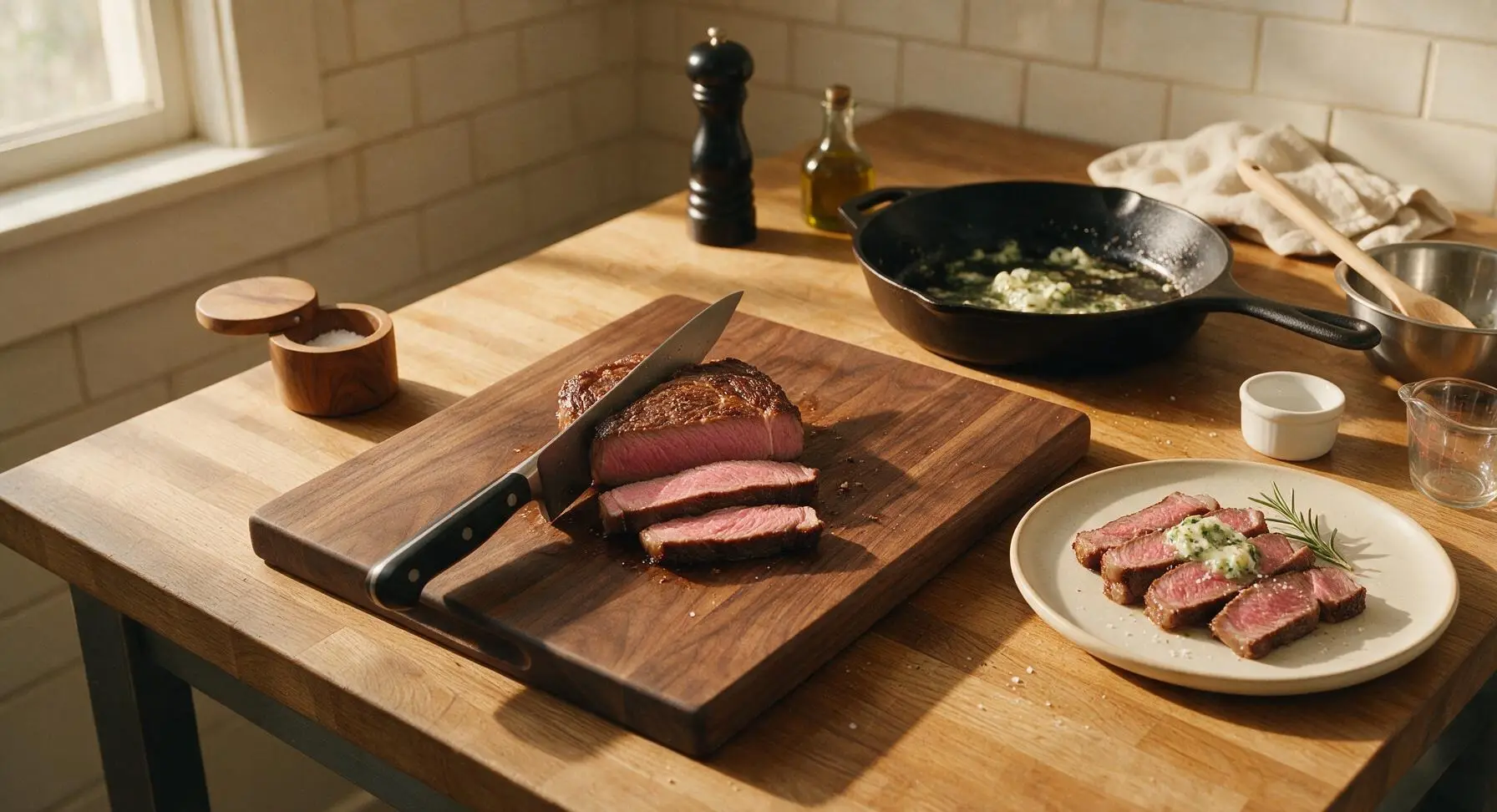
Step 8
step8:Slice and Plate Steak

Tips

1.Pat steaks completely dry before searing: Any residual surface moisture will create steam instead of a crispy maillard crust, leading to pale, flavorless steak and dangerous hot oil splatters.
2.Use a thermometer for perfect doneness: Pull steaks at 125°F for medium-rare, as carryover cooking will raise the internal temperature 5-10°F during resting—guessing by touch often leads to overcooked, tough steak.
3.Slice against the grain after resting: Chuck eye has long, dense muscle fibers; cutting perpendicular to the grain shortens these fibers, making every bite tender instead of chewy, even if you slightly overcook the meat.
✨ You May Also Like

Main Course
🍜 United Kingdom

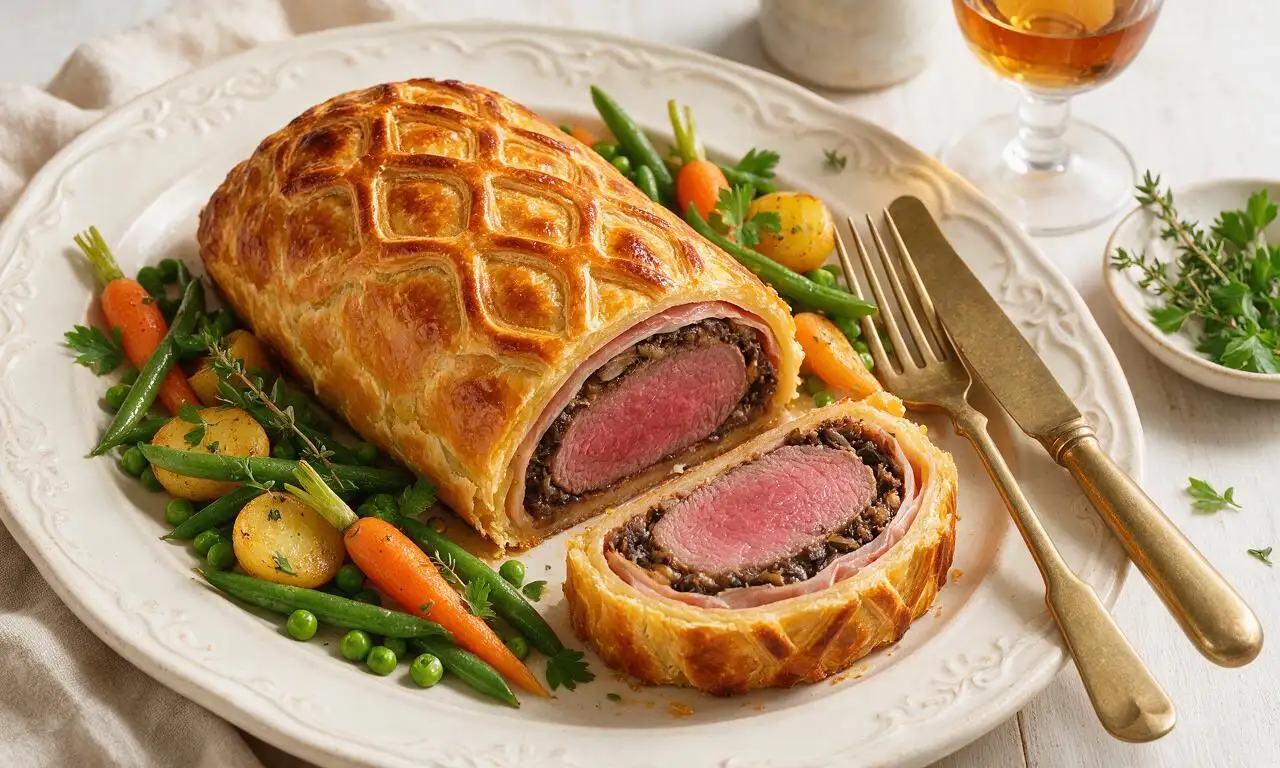
A showstopping classic of tender seared beef, savory mushroom duxelles, and crisp prosciutto wrapped in flaky golden puff pastry, baked to juicy perfection.

⏱️ 2 hours 1Main Course ★ 4.7
Main Course
🍜 India

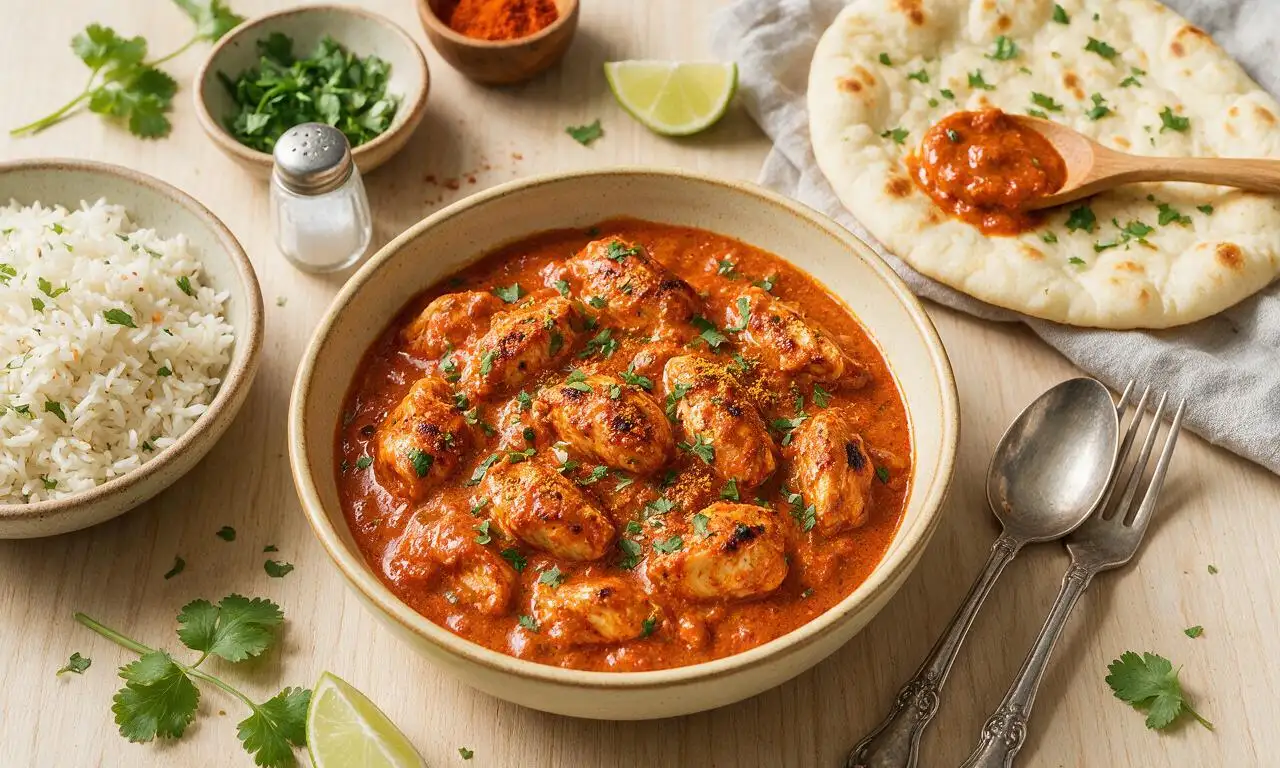
Tender charred marinated chicken simmered in a rich, spiced creamy tomato sauce, this iconic Anglo-Indian curry pairs perfectly with basmati rice or warm naan.

⏱️ 50 minuteMain Course ★ 4.6
Main Course
🍜 Thailand

Classic tangy, sweet, and savory Thai stir-fried rice noodles with shrimp, tofu, and crunchy garnishes, balancing all five core Thai flavor profiles.

⏱️ 30 minuteMain Course ★ 4.5
Main Course
🍜 United Kingdom

Crispy golden beer-battered cod and fluffy double-fried chips, served with tangy tartar sauce and malt vinegar: the timeless, beloved British pub comfort classic.

⏱️ 45 minuteMain Course ★ 4.7
Main Course
🍜 Mexico

Smoky, chile-marinated pork tacos with caramelized pineapple, fresh cilantro, and lime: a beloved classic Mexican street food perfect for casual summer gatherings.

⏱️ 1 hour 45Main Course ★ 4.8
Main Course
🍜 United States

Crunchy Fritos corn chips layered with savory beef chili and melted cheddar, topped with cool, zesty fixings for a beloved, cozy Tex-Mex comfort food.

⏱️ 35 minuteMain Course ★ 4.8

Chuck Eye Steak:Frequently Asked Questions

1.What exactly is chuck eye steak, and how does it compare to ribeye? ▾
Chuck eye is cut from the beef shoulder, directly adjacent to the premium ribeye primal, earning it the nickname “the poor man’s ribeye.” It has the same lush, beefy marbling as ribeye for 30-50% less cost, with just a touch more fine connective tissue that breaks down beautifully with proper high-heat searing.
2.How thick should my chuck eye steak be for best results? ▾
Aim for a 1.5-inch thick steak, as recommended in the recipe, for ideal texture and doneness. Steaks thinner than 1 inch will overcook long before you develop a crisp, deep sear, while steaks thicker than 2 inches will require extra oven time to cook through without burning the garlic or herb butter.
3.Do I have to use a cast iron pan to make this recipe? ▾
Cast iron is ideal because it holds consistent, high heat that creates that crave-worthy crispy, browned Maillard reaction crust without hot spots. If you don’t own cast iron, use a heavy-bottomed stainless steel pan. Skip nonstick pans, which can’t handle the required high searing heat without releasing fumes or damaging their coating.
4.How far in advance should I salt my steak before cooking? ▾
For the juiciest, most evenly seasoned result, salt your steak 45 minutes to an hour before cooking, or even overnight uncovered on a rack in the fridge. Salting right before searing draws out surface moisture that steams instead of sears; pre-salting lets that moisture reabsorb for tender, well-flavored bites.
5.What internal temperature should I aim for medium-rare doneness? ▾
Pull your steak from the pan when an instant-read thermometer inserted into the thickest part reads 130°F for perfect medium-rare, the ideal doneness for chuck eye. The temperature will rise 5°F as it rests, landing you at a juicy, evenly pink 135°F final temp with no tough, gray overcooked edges.
6.What herbs work best for the garlic-herb butter? ▾
Hearty, woody herbs pair perfectly with rich beef: mix 2 minced garlic cloves, 1 tablespoon each of chopped fresh rosemary and thyme, and a pinch of flaky salt into softened unsalted butter. Skip delicate herbs like basil or dill, which burn easily and taste mismatched against the bold, beefy flavor.
7.Do I really need to bring my steak to room temperature before searing? ▾
Let your steak sit on the counter for 30 to 45 minutes to take the fridge chill off before searing. An ice-cold steak will seize up when it hits hot metal, leading to uneven cooking, a less crisp crust, and a thick band of overcooked gray meat around the edges before the center reaches your target temp.
8.Why does my garlic always burn when I make pan-seared steak? ▾
Garlic burns in 30 seconds or less over high heat, so always turn the heat down to medium-low right before adding butter, garlic, and herbs. Tilt the pan and baste continuously once the butter melts, spooning it over the steak for 1 to 2 minutes max, to infuse flavor without creating bitter, acrid burnt garlic.
9.How long should I rest my steak after cooking? ▾
Let your steak rest for 5 to 7 minutes on a cutting board tented loosely with foil after searing. Resting lets the tight muscle fibers relax and reabsorb all the juicy, flavorful juices, so they don’t run all over your plate when you slice, leaving you with dry, bland meat even if you seared it perfectly.
10.Can I use salted butter instead of unsalted for the herb butter? ▾
You can use salted butter if that’s what you have on hand, just cut back the kosher salt you use to season the steak by about ¼ teaspoon per steak, and skip adding extra salt to the butter mix. Unsalted butter is preferred because it gives you full control over sodium levels to avoid an overly salty final dish.
11.Will chuck eye steak turn out tough if I don’t cook it right? ▾
Chuck eye can turn tough if you cook it past medium doneness, or slice it with the grain instead of against it. Stick to medium-rare or medium doneness max, rest it properly, and slice thin against the grain after resting to break up any remaining fine connective tissue for melt-in-your-mouth tender bites.
12.Do I need to add oil to the pan if I’m using butter for searing? ▾
Always start with a high-smoke-point oil like extra virgin olive oil for the initial high-heat sear. Butter has a low smoke point, so adding it at the start will burn before you develop a good crust, turning nutty and bitter instead of rich and fragrant—save it for the final low-heat basting step.
13.Can I cook this chuck eye steak straight from frozen? ▾
You can cook a frozen chuck eye steak in a pinch, but you’ll get far better results thawing it first in the fridge for 24 hours. If you cook from frozen, use slightly lower heat, add 3 to 4 minutes of total cook time, and skip the room-temperature rest to avoid burning the outside before the center cooks through.
14.What sides pair best with this garlic-herb butter steak? ▾
This rich, buttery steak pairs perfectly with simple, bright sides to cut through the fat: try crispy roasted potatoes, a lightly dressed arugula salad, roasted broccoli, or creamy mashed cauliflower. Skip heavy, cream-laden sides that will make the meal feel overly rich and weigh you down mid-meal.
15.Why won’t my steak develop a crispy, brown crust when I sear it? ▾
A lack of crisp crust almost always traces back to one of three issues: your pan wasn’t hot enough when you added the steak, you didn’t pat the steak completely dry with paper towels before searing, or you overcrowded the pan. Wait for the oil to shimmer and just start smoking before adding your fully dried steak for a perfect, crackly crust.
16.How do I store leftover cooked steak, and reheat it without making it tough? ▾
Store leftover sliced steak in an airtight container in the fridge for up to 3 days. To reheat without drying it out, wrap it in foil with a tablespoon of beef broth or leftover herb butter, and warm it in a 275°F oven for 8 to 10 minutes until just heated through. Skip the microwave, which turns steak rubbery fast.
17.Should I trim the fat cap off my chuck eye steak before cooking? ▾
Leave the thin fat cap intact while cooking! As the steak sears, that fat renders down, adding rich, beefy flavor and basting the meat naturally to create a crisp, craveable edge. You can trim any large, thick chunks of hard, unrenderable fat off before slicing if you prefer, but don’t remove the thin surface fat or marbling first.
18.Is it true I should only flip my steak once while searing? ▾
That old cooking advice is a myth! Flipping your steak every 1 to 2 minutes during the initial searing step actually leads to more even cooking, a thinner band of overcooked gray meat around the edge, and a more evenly crisp crust. Just use tongs to avoid piercing the meat and letting precious juices escape.

Comments (5)

2 days ago

OMG y’all, this recipe is a total game changer! I’ve always messed up chuck eye steaks by overcooking them or not getting that perfect crust, but 12 minutes total cook time? No way. The garlic-herb butter is so insane I ended up dipping my roasted broccoli in the leftover butter too. My husband and two kids loved it, even my super picky 8 year old asked for seconds. 10/10 will be making this for our weekly Sunday family dinner from now on!

yesterday

Wait did you use regular salted butter for the herb mix? I’ve got unsalted on hand and wondering if I need to adjust the salt!

yesterday

So glad your family loved it! If you’re using unsalted butter, just add an extra 1/4 tsp of flaky sea salt to the butter mix and you’ll be good to go. Don’t skip resting the steak for 5 minutes after searing, that’s key for juicy bites!

3 days ago

Super solid recipe for weeknights! I made three of these on Sunday to slice up for meal prep bowls all week, and the steak stayed tender even after reheating (I used the low oven reheat method so it didn’t get rubbery). Only note: I wish the recipe specified how thick the steak should be? I used 1.5 inch cuts and it came out perfect medium rare, but I almost grabbed thinner ones from the grocery store earlier.

2 days ago

Great call on the low oven reheat, that’s our go-to for leftover steak too! We recommend 1.25-1.5 inch thick chuck eye cuts for this recipe, we’ll add that note to the ingredient list ASAP—thanks for the heads up!

5 days ago

Tried this last night when it was pouring rain and I couldn’t fire up the grill, and wow—way better than I expected a pan-seared steak to be! I added a little extra rosemary to the butter because I’ve got a massive bush growing in my backyard, and it paired perfectly with some baked potatoes. SO good, didn’t even miss the grill marks tbh.

3 days ago

Baked potatoes on the side is such a call! I made mine with garlic mashed potatoes and the extra butter drizzled over top was chef’s kiss

1 week ago

Made this for my girls’ potluck last weekend and everyone was begging for the recipe! I used a cast iron skillet like the recipe said, got that perfect crispy crust, and the garlic-herb butter had such a bright, fresh flavor from the parsley and thyme. I paired it with a cab sauv and it was chef’s kiss. Only tiny complaint: my smoke alarm went off when I seared the steak on high heat, oops. Definitely remember to turn your range fan on folks!

5 days ago

Oh my god same thing happened to me! I live in a tiny studio and had to wave a dish towel at the smoke alarm for 5 minutes mid-sear, worth it though

3 days ago

So happy it was a hit at your potluck! A quick tip for less smoke: pat the steak completely dry with paper towels before adding it to the hot pan, that cuts down on splatter and smoke a ton. And yes, the range fan is non-negotiable for high-heat searing!

yesterday

Chuck eye is such an underrated cheap cut, this recipe makes it taste just as good as a fancy ribeye for half the price! I picked up two steaks on sale for $6 total, and the butter only uses ingredients I already had in my fridge (garlic, thyme, butter, leftover parsley from taco night). Perfect for anyone trying to eat good on a tight budget, no fancy ingredients needed.