Citrus Roasted Turkey

title 1
Citrus Roasted Turkey
⏱️ cook time 3 hours 30 minutes
🍽️ servings 10
⚡ Difficulty medium

intro

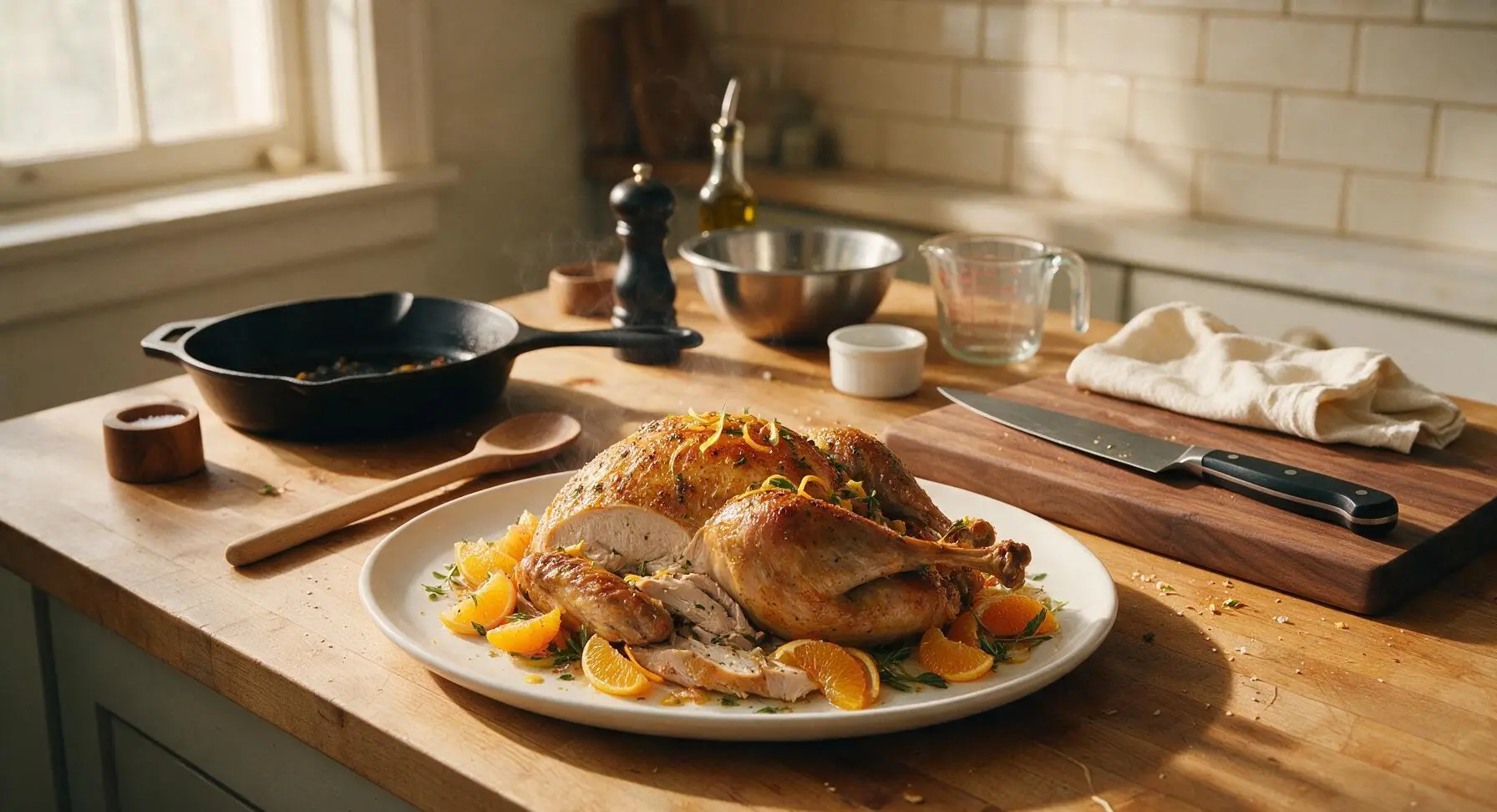
Juicy, herb-kissed roasted turkey brightened with zesty citrus, boasting crisp golden skin and tender, fragrant meat—ideal for a festive Thanksgiving gathering.

Ingredients
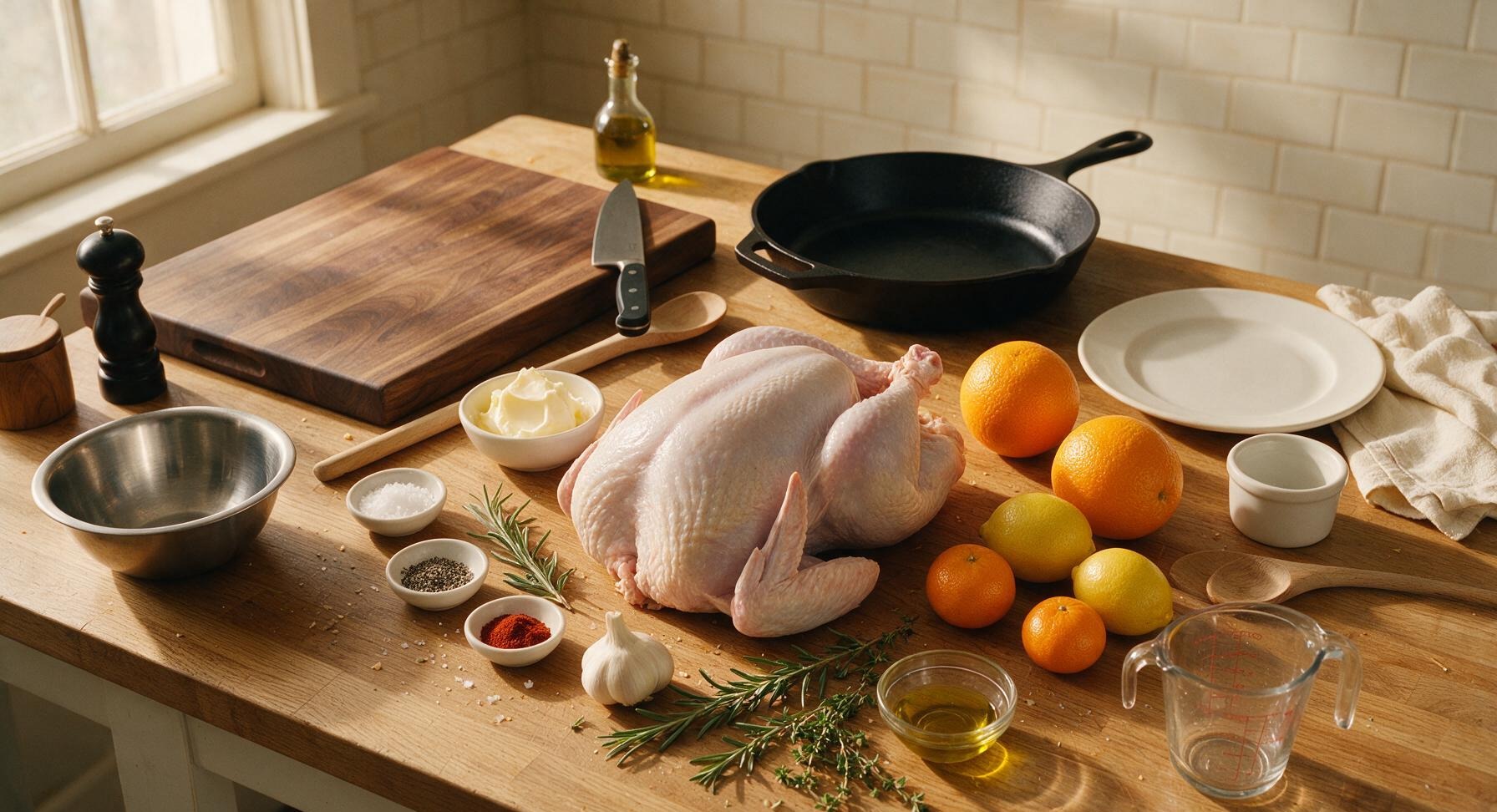
Whole young turkey (neck and giblets removed) 5.4kg / 12lb
Unsalted butter, softened 226g / 1 cup
Navel oranges 2 large
Lemons 2 medium
Clementines 3 small
Whole garlic head 1
Fresh rosemary 4 sprigs
Fresh thyme 6 sprigs
Coarse kosher salt 2 tbsp
Freshly ground black pepper 1 tbsp
Smoked paprika 1 tsp
Extra-virgin olive oil 1 tbsp

Steps

1

Prep Turkey and Citrus

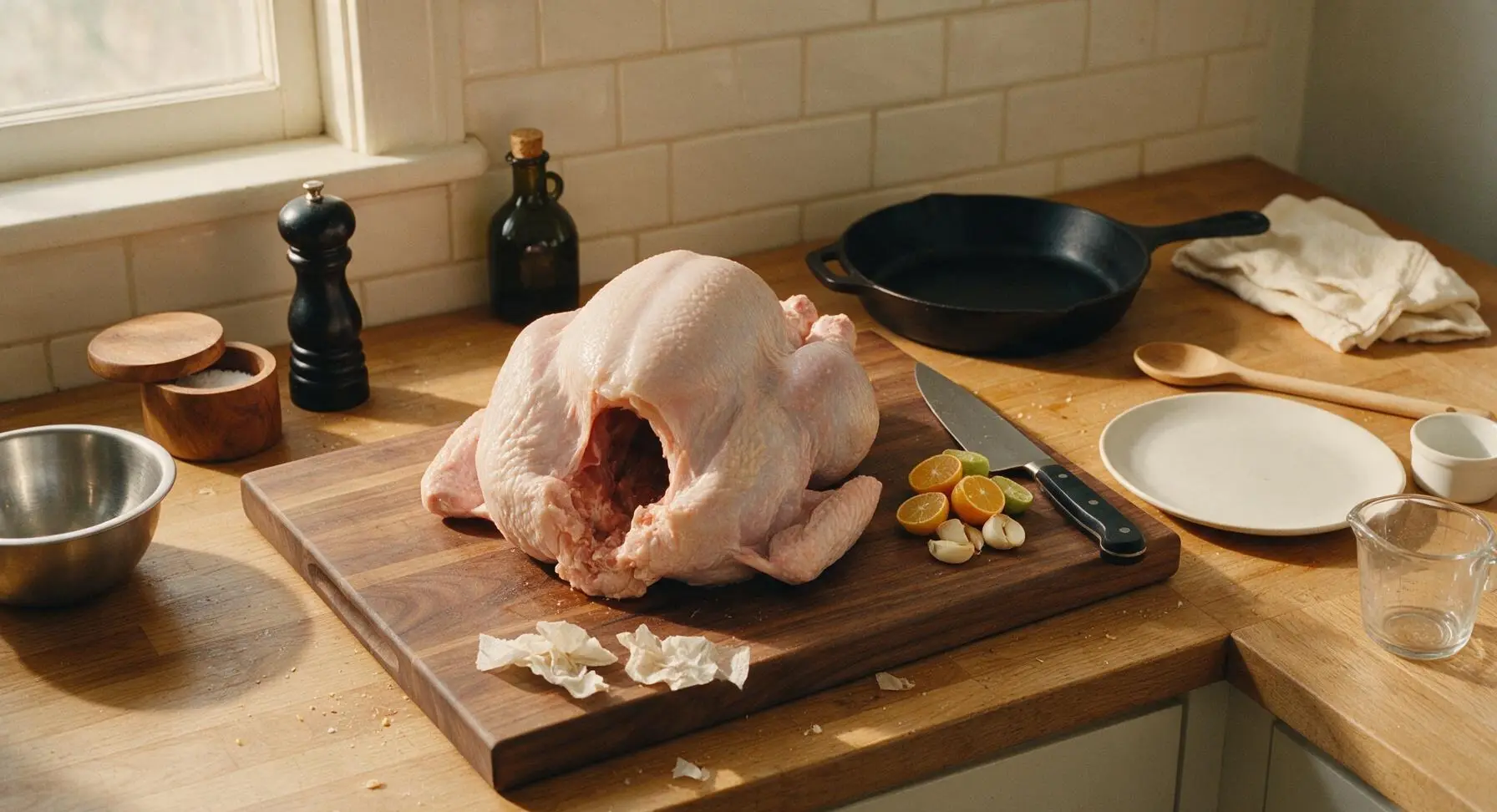
Place the whole turkey (neck and giblets removed from the cavity) on the large end-grain maple cutting board. Pat all skin surfaces and the interior cavity completely dry with paper towels—thoroughly dry skin is critical for achieving crisp, golden roasted skin. Cut 1 navel orange, 1 lemon, and all 3 clementines into 1cm thick crosswise halves; reserve the remaining whole orange and lemon for zesting. Slice the whole garlic head in half crosswise to expose the individual cloves.
Step 1
step1:Prep Turkey and Citrus
2

Make Citrus Herb Butter

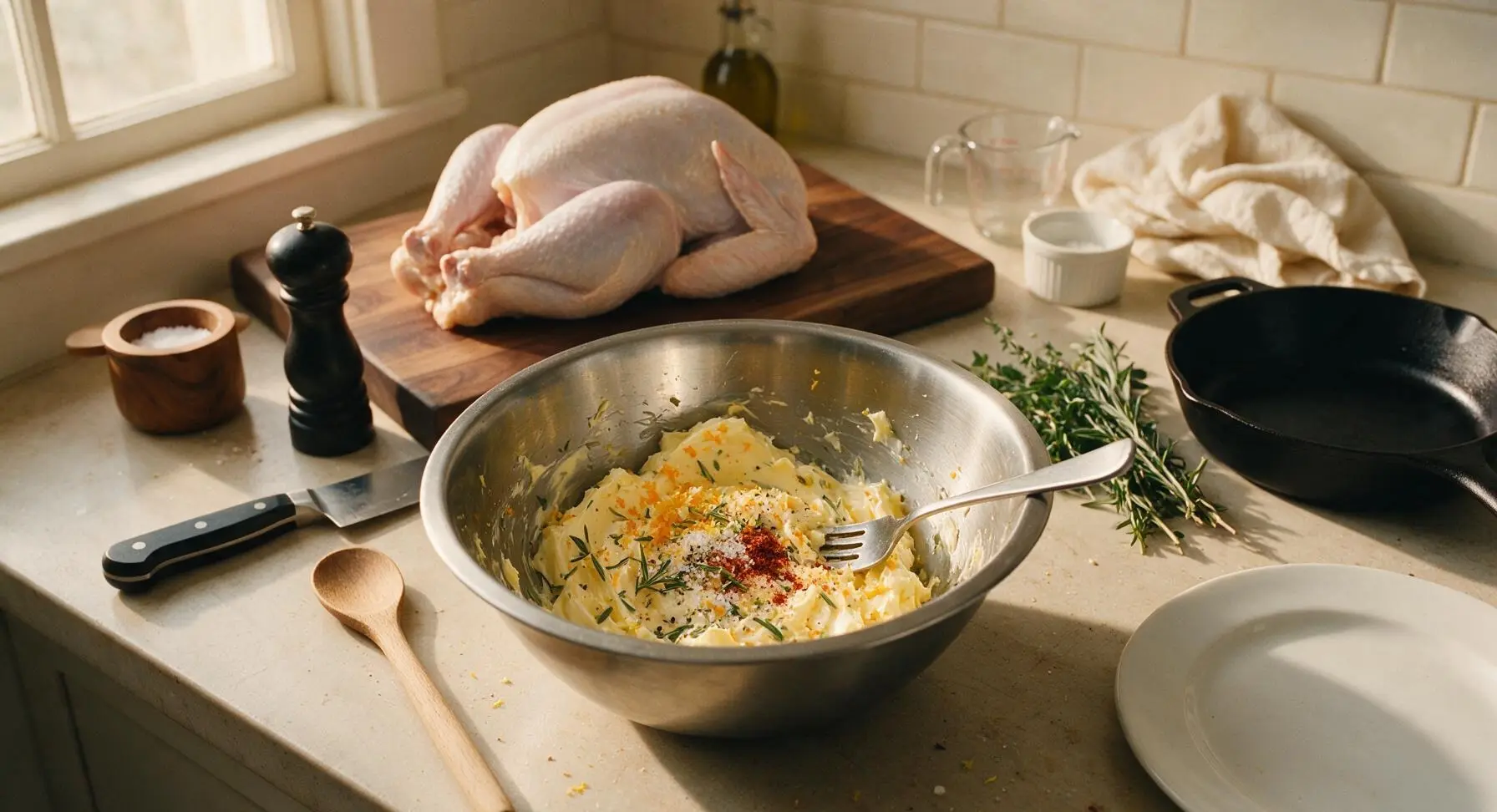
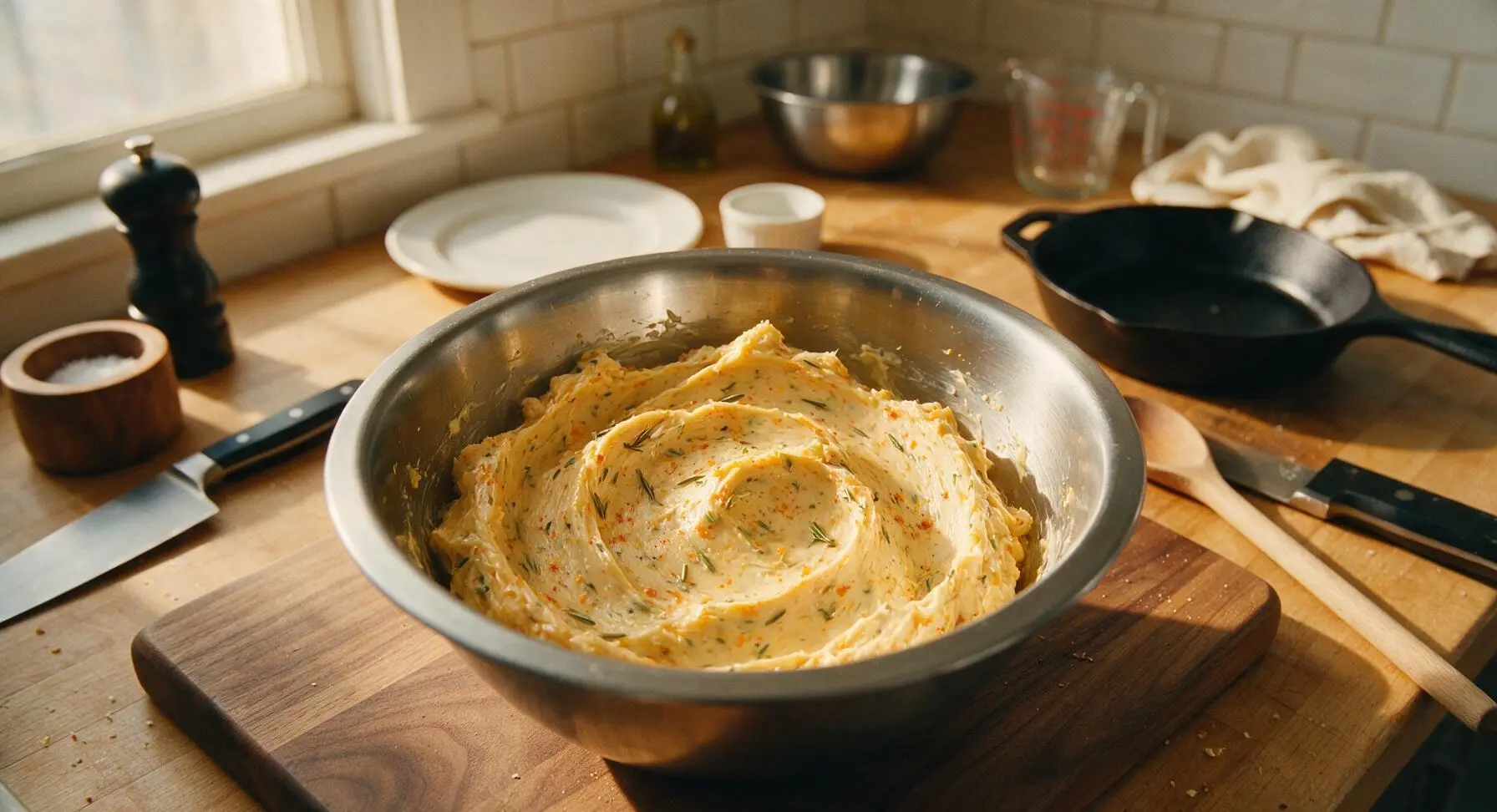
In the medium brushed stainless steel mixing bowl, combine the softened unsalted butter, 1 tablespoon finely grated zest from the reserved whole orange, 1 teaspoon finely grated zest from the reserved whole lemon, 1 teaspoon chopped fresh rosemary, 1 teaspoon chopped fresh thyme, 1 tablespoon kosher salt, 1 tablespoon black pepper, and 1 teaspoon smoked paprika. Use the stainless steel fork to mash and stir the mixture until completely smooth, with flecks of zest, herb, and spice evenly distributed throughout the pale yellow butter.
Step 2
step2:Make Citrus Herb Butter
Step 2
step2:Make Citrus Herb Butter
3

Season and Stuff Turkey

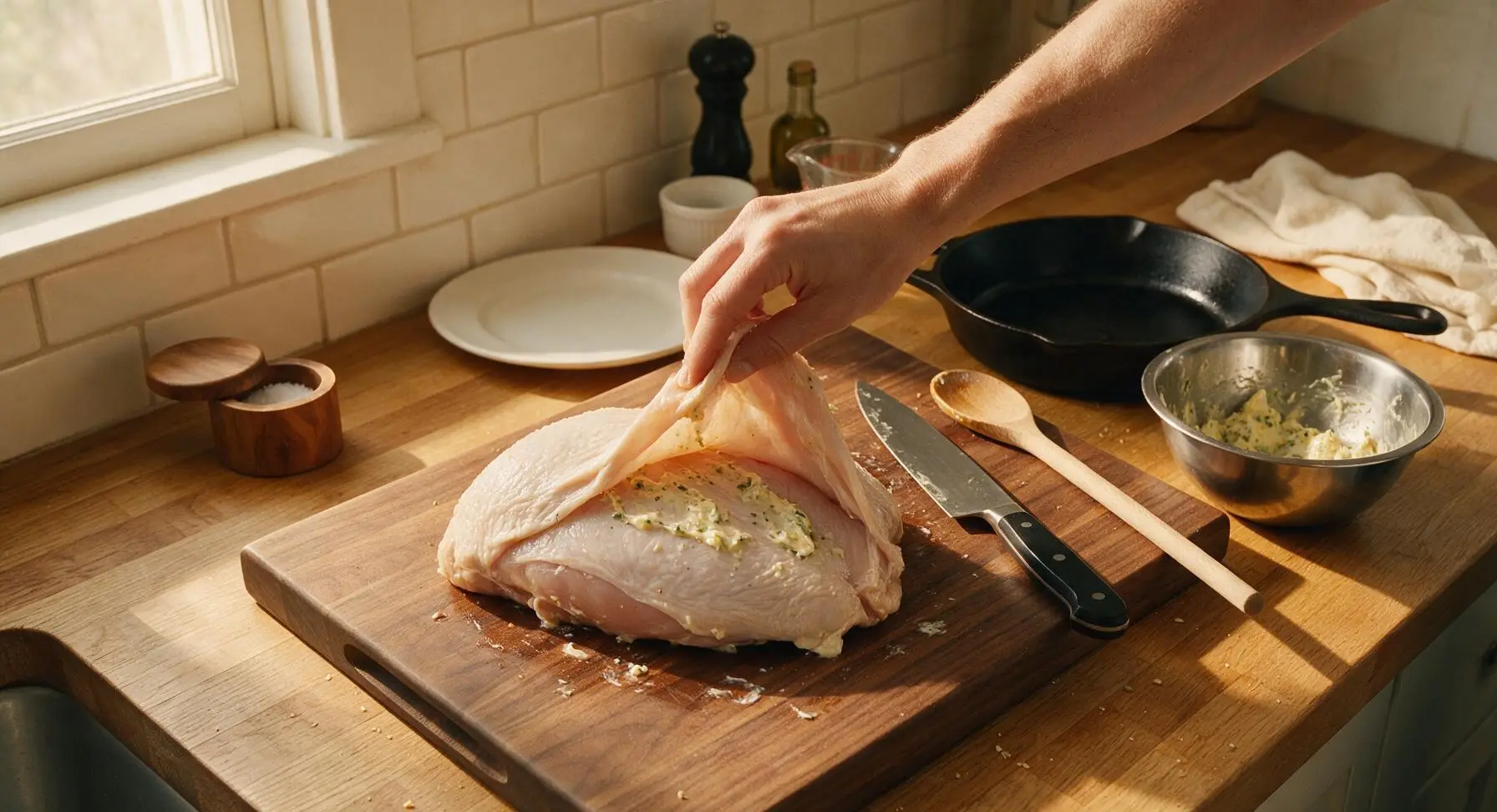
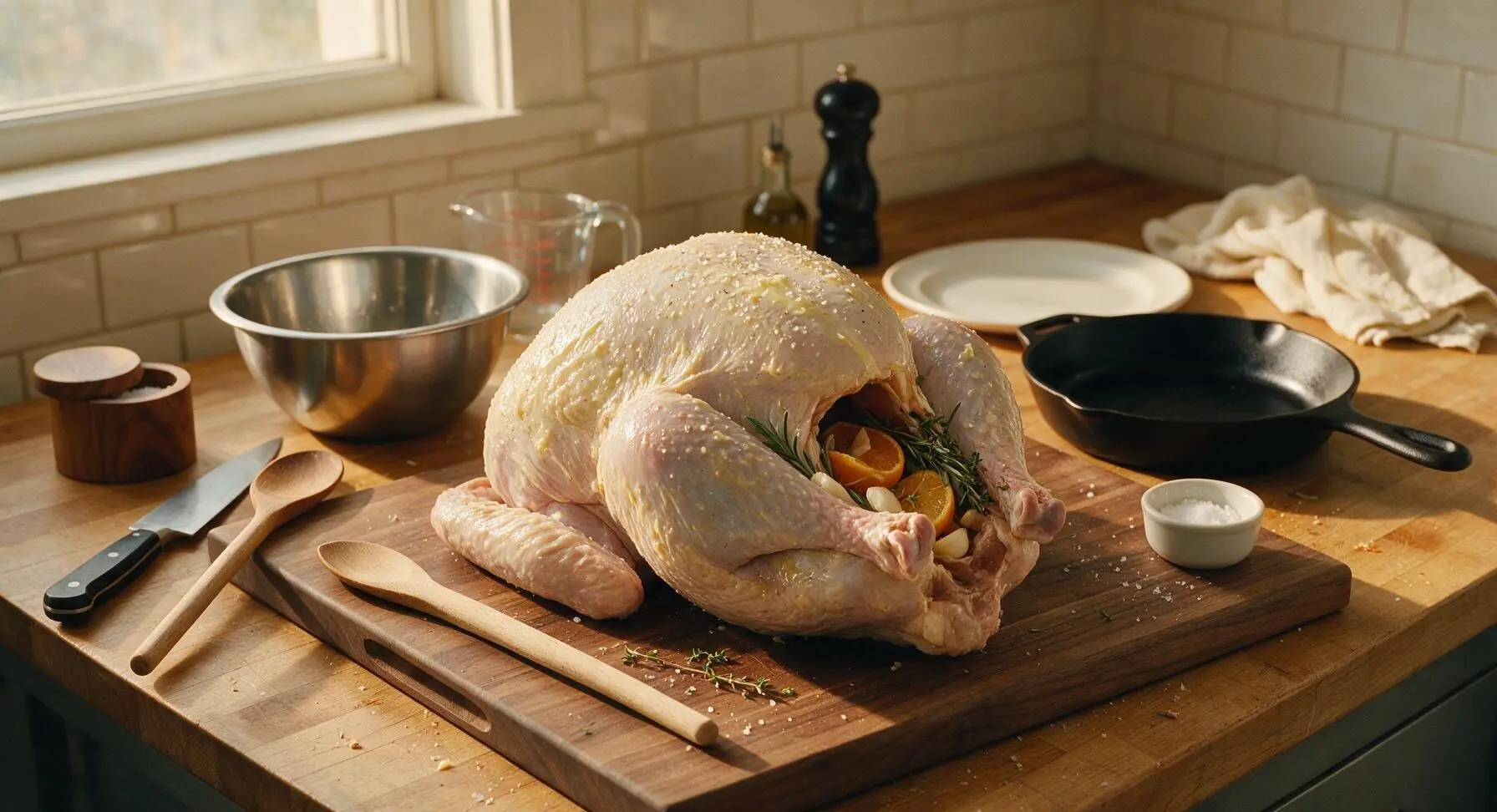
Gently lift the turkey skin away from the breast and thigh meat, taking care not to tear the delicate skin. Rub two-thirds of the citrus herb butter directly under the skin, spreading it evenly over the breast and thigh meat to infuse deep flavor during roasting. Rub the remaining butter all over the exterior skin of the turkey, then drizzle with 1 tablespoon extra-virgin olive oil and sprinkle with the remaining 1 tablespoon kosher salt, focusing extra salt on the thick breast and drumstick skin. Stuff the turkey cavity loosely with the cut citrus halves, halved garlic, 2 rosemary sprigs, and 4 thyme sprigs—do not pack tightly, as this will slow even cooking.
Step 3
step3:Season and Stuff Turkey
Step 3
step3:Season and Stuff Turkey
4

Truss the Turkey

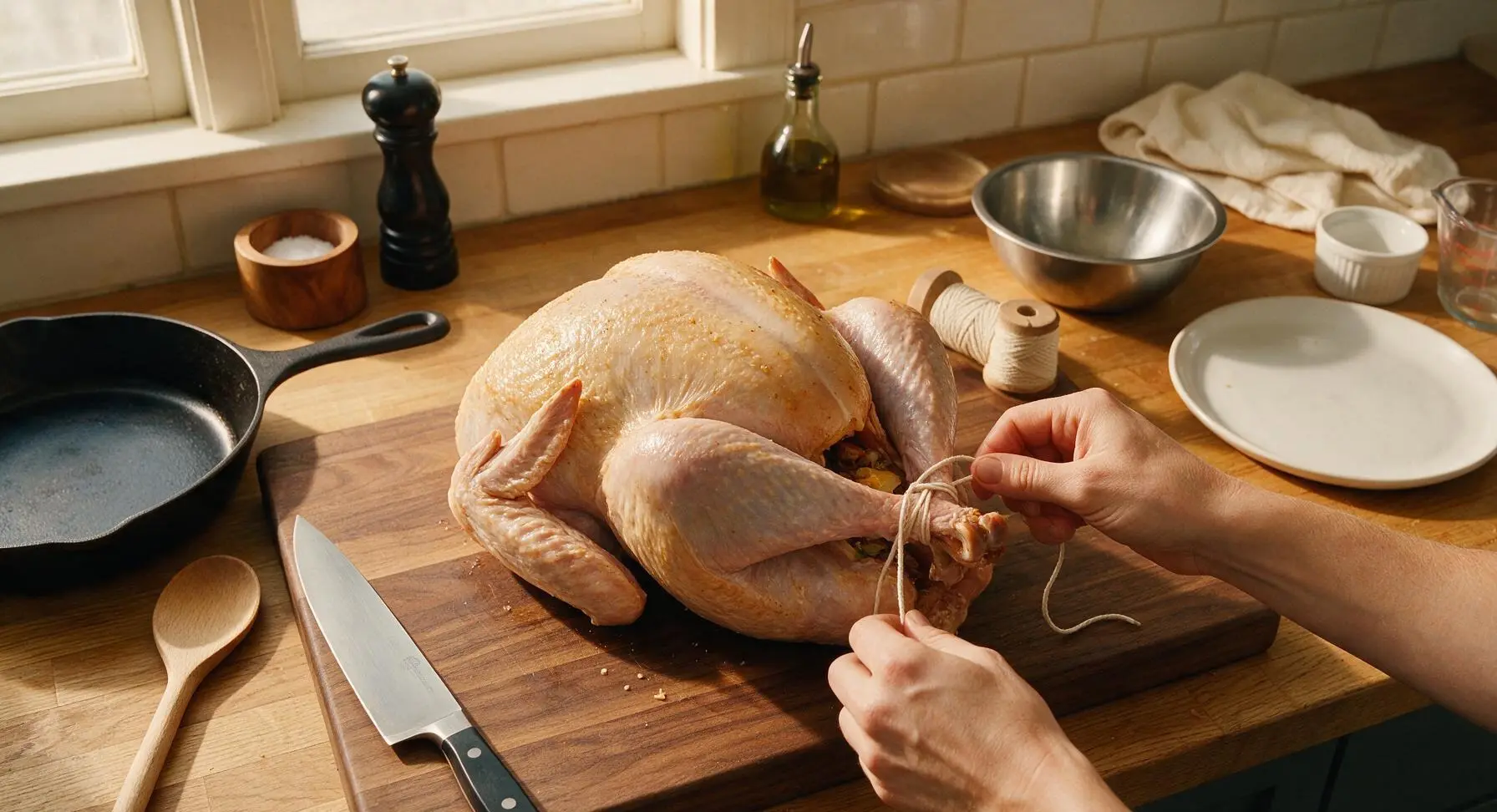
Cut a 60cm length of unbleached cotton kitchen twine from the wooden spool. Cross the turkey drumsticks at the ankle, tying them tightly together with the twine to hold a compact, even shape that promotes uniform cooking. Tuck the wing tips under the back of the turkey to prevent them from burning during the long roast.
Step 4
step4:Truss the Turkey
5

Roast the Turkey

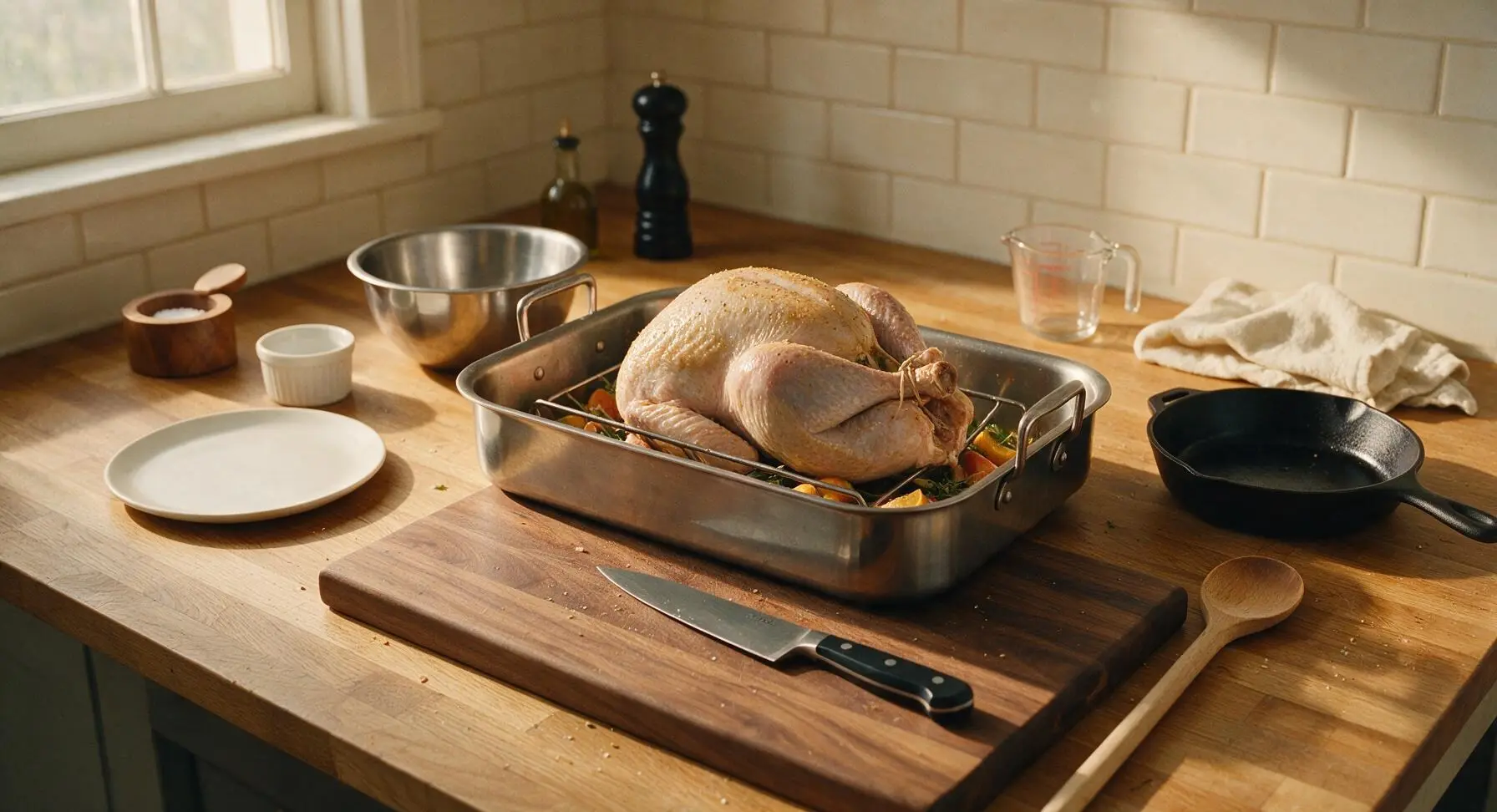
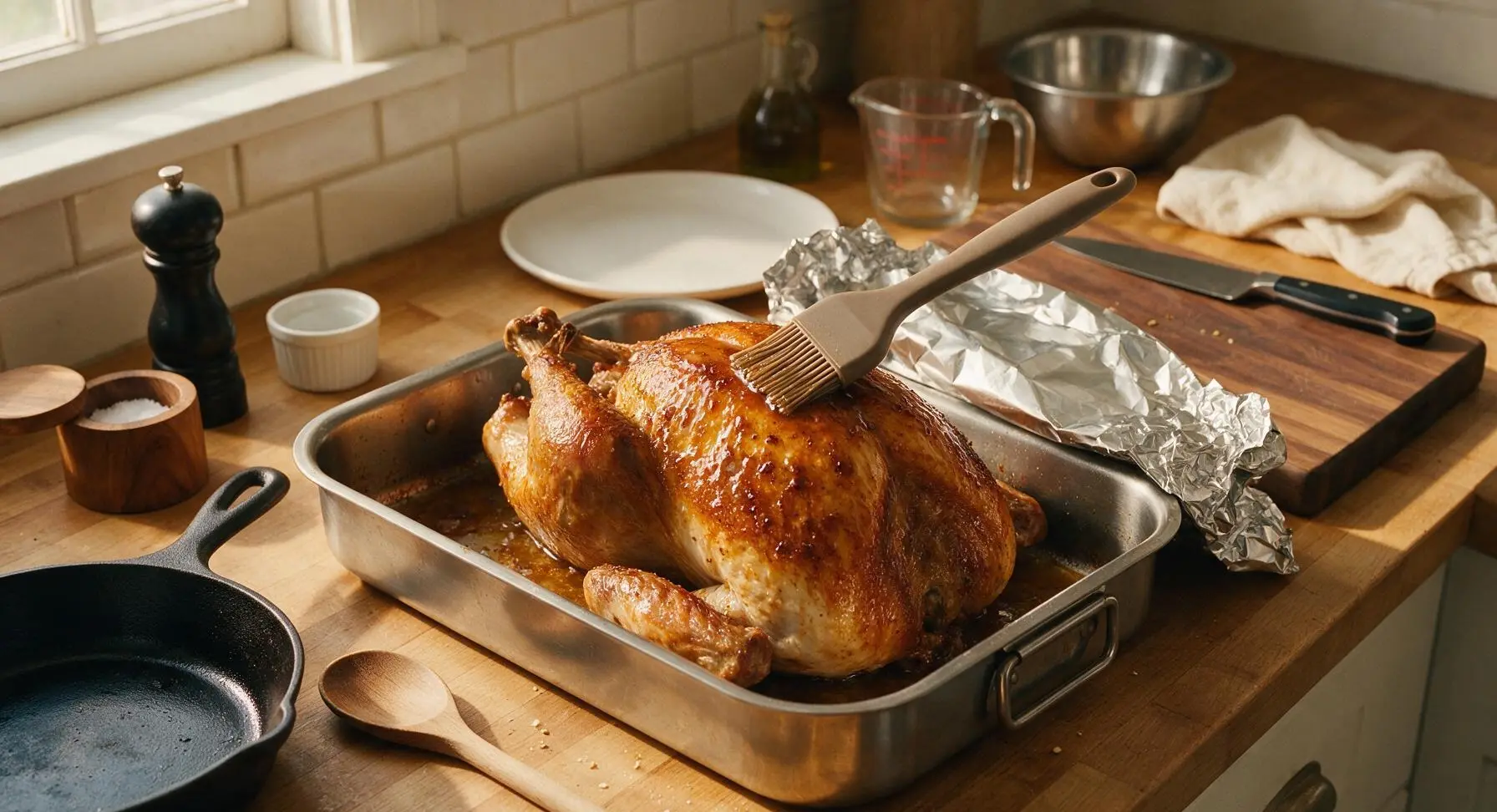
Adjust your oven rack to the lower third position, preheat oven to 165°C (325°F). Set the flat V-rack inside the large stainless steel roasting pan, then place the trussed turkey breast-side up on the rack. Scatter any leftover cut citrus and herb sprigs in the bottom of the pan around the turkey. Roast for 3 to 3.5 hours total, basting the skin with accumulated pan drippings every 45 minutes using the taupe-handled silicone basting brush. After 2 hours of roasting, loosely tent the turkey breast with heavy-duty aluminum foil if the skin is turning deep amber too quickly to prevent burning. The turkey is fully cooked when the digital instant-read thermometer inserted into the thickest part of the thigh (avoiding contact with bone) reads 75°C (165°F), and juices run completely clear with no pink tinge when the thigh is pierced.
Step 5
step5:Roast the Turkey
Step 5
step5:Roast the Turkey
6

Rest the Cooked Turkey

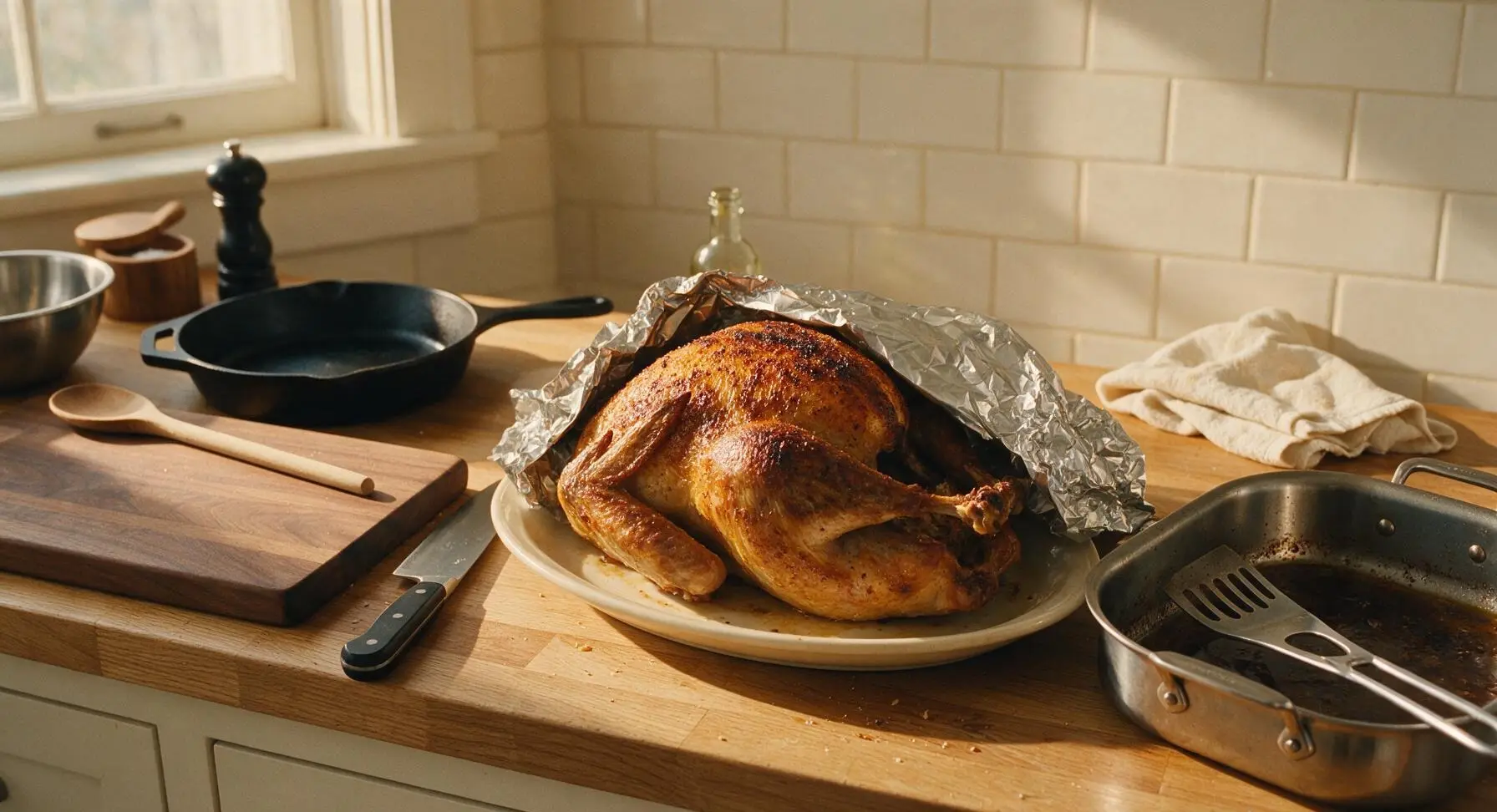
Once the turkey reaches the correct internal temperature, carefully lift it from the roasting pan using the stainless steel turkey lifter, transferring it to the large oval cream-white ceramic serving platter. Loosely tent the entire turkey with a fresh sheet of aluminum foil, and let it rest for 30 minutes at room temperature before carving. Resting allows the hot meat fibers to relax and reabsorb juices, ensuring every slice stays moist instead of losing juice to the platter when cut.
Step 6
step6:Rest the Cooked Turkey
7

Carve and Garnish

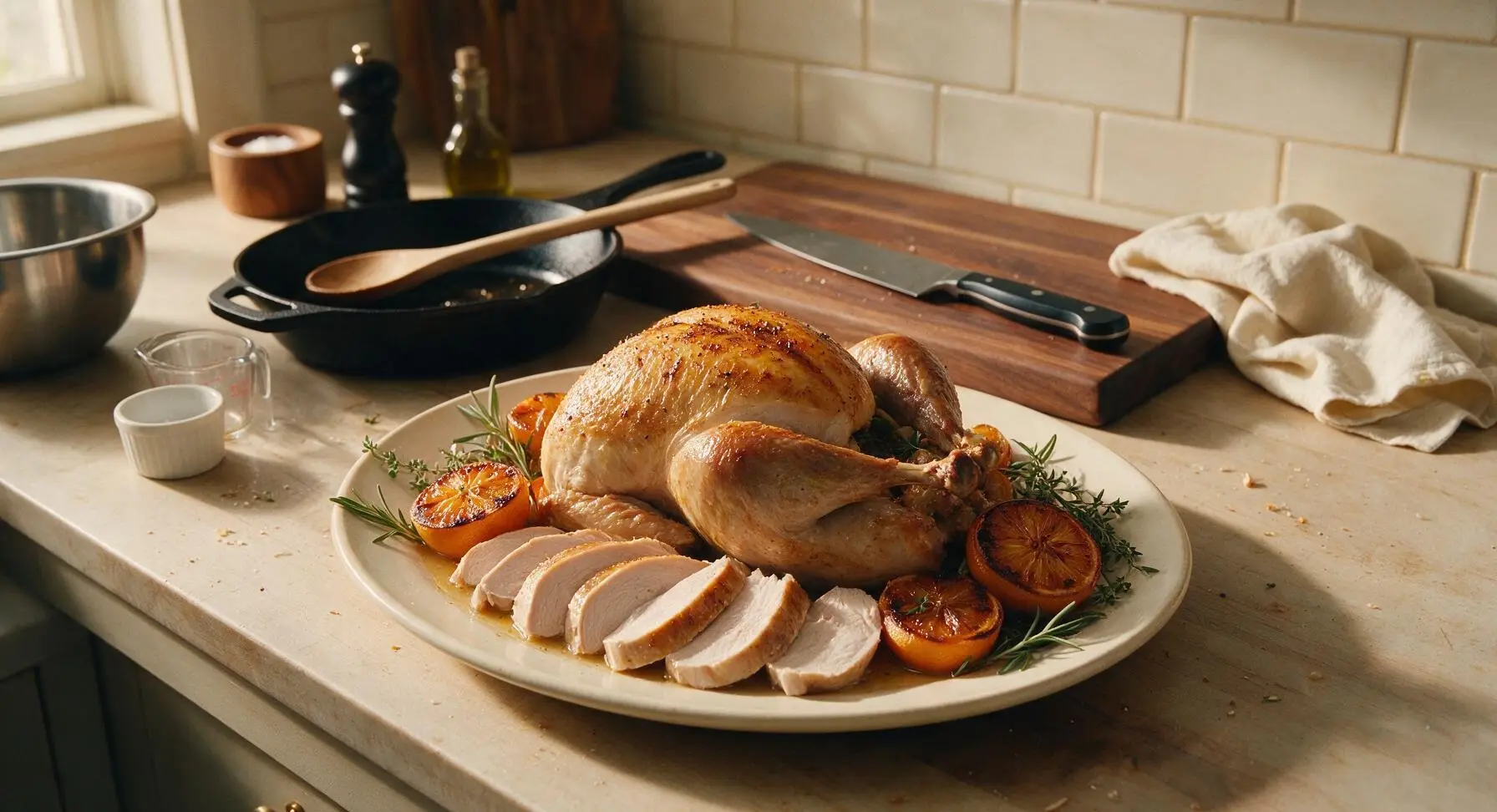
After the 30-minute rest, remove the foil tent. Use the 8-inch chef knife to carve thin, even slices of breast meat against the grain, then separate the drumsticks and thighs from the bone. Arrange the carved slices neatly around the remaining whole turkey on the platter. Tuck caramelized roasted citrus halves from the roasting pan and fresh rosemary and thyme sprigs around the turkey for garnish. Spoon 2–3 tablespoons of warm pan drippings over the carved meat to add extra moisture and a glossy sheen before serving.
Step 7
step7:Carve and Garnish

Tips

1.Pat turkey skin completely dry before applying butter: Any residual moisture on the skin will steam rather than crisp in the oven, leading to rubbery, pale skin instead of the desired shatteringly crisp, golden exterior.
2.Do not skip the 30-minute rest period: Cutting into a hot turkey straight from the oven causes all the flavorful, hot juices to run out onto the platter, leaving dry, bland meat; resting lets muscle fibers reabsorb moisture for perfectly juicy slices.
3.Add 1 cup low-sodium chicken broth to the bottom of the roasting pan before cooking: The broth mixes with citrus drippings and rendered turkey fat to create a ready-to-use base for quick pan gravy, while also preventing drippings from burning and smoking during the long roast time.
✨ You May Also Like

Main Course
🍜 United Kingdom

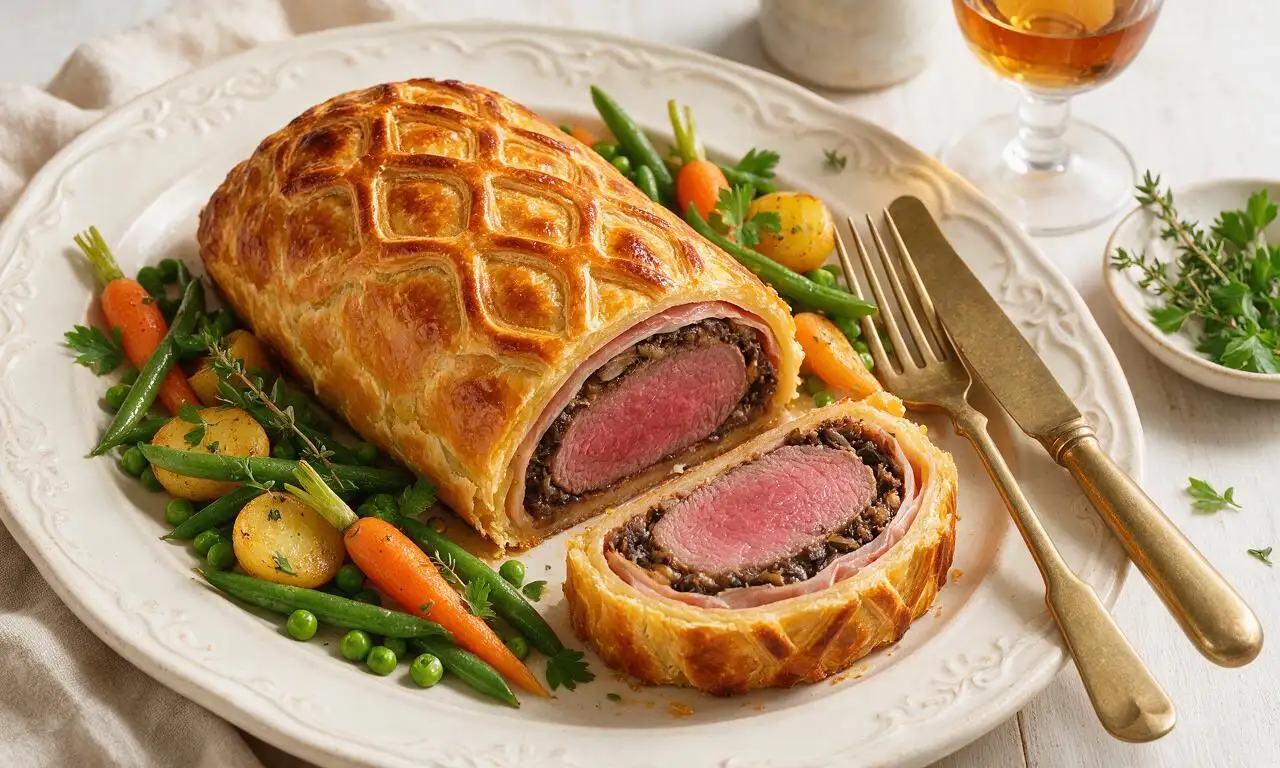
A showstopping classic of tender seared beef, savory mushroom duxelles, and crisp prosciutto wrapped in flaky golden puff pastry, baked to juicy perfection.

⏱️ 2 hours 1Main Course ★ 4.7
Main Course
🍜 India

Tender charred marinated chicken simmered in a rich, spiced creamy tomato sauce, this iconic Anglo-Indian curry pairs perfectly with basmati rice or warm naan.

⏱️ 50 minuteMain Course ★ 4.6
Main Course
🍜 Thailand

Classic tangy, sweet, and savory Thai stir-fried rice noodles with shrimp, tofu, and crunchy garnishes, balancing all five core Thai flavor profiles.

⏱️ 30 minuteMain Course ★ 4.5
Main Course
🍜 United Kingdom

Crispy golden beer-battered cod and fluffy double-fried chips, served with tangy tartar sauce and malt vinegar: the timeless, beloved British pub comfort classic.

⏱️ 45 minuteMain Course ★ 4.7
Main Course
🍜 Mexico

Smoky, chile-marinated pork tacos with caramelized pineapple, fresh cilantro, and lime: a beloved classic Mexican street food perfect for casual summer gatherings.

⏱️ 1 hour 45Main Course ★ 4.8
Main Course
🍜 United States

Crunchy Fritos corn chips layered with savory beef chili and melted cheddar, topped with cool, zesty fixings for a beloved, cozy Tex-Mex comfort food.

⏱️ 35 minuteMain Course ★ 4.8

Citrus Roasted Turkey:Frequently Asked Questions

1.What size turkey works best for this citrus roasted turkey recipe for a typical Thanksgiving gathering? ▾
For a typical 8–10 person Thanksgiving group, grab a 12–14 pound whole young turkey with the neck and giblets already removed for easier prep. This size cooks evenly, leaves enough for beloved leftovers, and pairs perfectly with the bright citrus and butter notes without being too unwieldy to handle in a standard home oven.
2.Can I prep the citrus and butter rub for the turkey the night before to save time on Thanksgiving? ▾
Absolutely! Mix your softened unsalted butter with finely grated zest from navel oranges, lemons, and clementines the night before, and store it covered in the fridge. Just pull it out 30 minutes before prepping the turkey so it spreads easily without tearing delicate skin, cutting down your holiday morning workload significantly.
3.How do I get that perfectly crisp, golden skin everyone looks for on roasted turkey? ▾
The trick is twofold: first, pat the turkey skin completely dry with paper towels before rubbing on softened unsalted butter, as excess moisture will steam skin instead of crisping it. Second, roast at 325°F, avoiding tight foil tenting for the first 2 hours, to let dry oven heat render fat and crisp skin to a perfect golden crunch.
4.Do I actually need to remove the neck and giblets from the turkey cavity before cooking? ▾
Yes, always! If your whole young turkey doesn’t come with neck and giblets pre-removed, reach into both the main body cavity and smaller neck cavity to pull out the packaged giblet bag. You can save those bits to make rich citrus-infused gravy later, but leaving them in throws off cook time and creates off-flavors in the roasted meat.
5.What’s the best way to tuck citrus into the turkey for the most flavor? ▾
Cut your navel oranges, lemons, and clementines into thick wedges or halves, instead of thin slices, so they release juice slowly as the turkey roasts. Loosely stuff the cavity with the citrus wedges—don’t pack it tight, or air won’t circulate and the turkey will cook unevenly—plus hardy herbs for that classic herb-kissed depth.
6.How long do I need to let the turkey rest after it comes out of the oven? ▾
Plan for a full 30 minutes of rest time once your citrus roasted turkey hits 160°F in the thickest part of the thigh. Residual heat will bring it up to the food-safe 165°F as it rests, letting juicy, citrus-infused juices redistribute back into the meat instead of running all over your cutting board when you slice.
7.Can I use salted butter instead of unsalted butter for this recipe if that’s what I have on hand? ▾
You can, just adjust any added salt accordingly to avoid over-seasoning. Unsalted butter lets you control exactly how much salt goes onto the turkey and into the citrus butter rub, which is extra helpful when balancing bright, tart notes from oranges, lemons, and clementines against rich, savory turkey flavor.
8.Why does my butter rub tear the turkey skin when I try to spread it? ▾
That almost always happens because your butter isn’t fully softened, or the turkey skin is still damp. Let your unsalted butter sit on the counter for 1 to 2 hours until it’s the consistency of mayonnaise, so it spreads smoothly without pulling. Pat the skin totally dry first, too, and you’ll rub butter evenly without tearing for flawless crisp skin.
9.Do I need to baste this citrus roasted turkey while it cooks, or is that an unnecessary step? ▾
Basting every 45 minutes with pan drippings mixed with a little squeezed citrus juice helps amp up bright zesty flavor and encourages even skin browning, but you don’t need to overdo it. Opening the oven too often drops internal temp and adds cook time, so stick to quick, periodic bastes instead of checking every 15 minutes.
10.Can I use other citrus varieties if I don’t have all three called for (navel oranges, lemons, clementines)? ▾
Absolutely, the recipe is flexible! If you’re missing clementines, swap in extra navel orange wedges, or use a little grapefruit if you prefer a more tart, bold citrus note. Just stick to about 4 total cups of cut citrus for the cavity and pan, so you get bright flavor without overwhelming the savory herb and turkey taste.
11.What internal temperature should I cook this citrus turkey to, to make sure it’s safe but still juicy? ▾
Use a meat thermometer inserted into the thickest part of the thigh, away from bone, and pull the turkey when it hits 160°F—residual heat will bring it up to the FDA-recommended 165°F as it rests. This prevents overcooking delicate breast meat, so you get tender, fragrant, citrus-kissed slices instead of dry, chalky turkey.
12.Should I place citrus slices under the turkey skin, or just in the cavity? ▾
For extra bright citrus flavor, you can tuck thin slices of clementine or orange, plus a little softened herb butter, between the breast skin and the meat. Just work slowly to separate skin from meat without tearing it, so the butter and citrus infuse directly into the breast as it roasts for extra juicy, flavorful white meat.
13.How do I prevent the citrus in the cavity from making the turkey taste bitter? ▾
Avoid using the thick, white pithy part of citrus peels in your rub or cavity stuffing, and don’t roast the turkey at a temp higher than 350°F, as high heat can burn citrus peel and create bitter notes. Stick to cut fruit wedges with intact peel, and the slow roast will release sweet, bright juice instead of harsh, burnt compounds.
14.Can I brine this citrus roasted turkey ahead of time for extra juiciness? ▾
Definitely! A simple wet or dry brine works beautifully with the citrus and herb flavor profile—just cut back on added salt in your butter rub if you use a pre-brined turkey or salted brine, so the final dish doesn’t come out too salty. The brine will help meat hold onto bright citrus and butter flavor for even more tender results.
15.Do I need to use a roasting rack when making this citrus turkey? ▾
A roasting rack is helpful, because it elevates the turkey so hot air circulates all the way around it for even cooking and crisp skin on every side, including the bottom. If you don’t have a rack, make a quick makeshift version out of thick orange, lemon, and clementine slices laid across the roasting pan to prop the turkey up.
16.How far in advance can I buy the citrus and turkey for this Thanksgiving recipe? ▾
You can pick up your whole young turkey up to 3 days ahead of time and keep it stored in the coldest part of your fridge, and your navel oranges, lemons, and clementines will stay fresh for up to a week in your fridge’s fruit crisper drawer. This takes the stress out of last-minute grocery runs during the busy Thanksgiving week.
17.Can I use the leftover citrus from the turkey cavity for anything after roasting? ▾
Skip eating the roasted cavity citrus directly, as it will be greasy and slightly bitter from absorbing turkey drippings, but you can squeeze the warm juice into pan drippings to make bright, zesty citrus gravy that pairs perfectly with tender turkey and all your classic Thanksgiving side dishes.
18.Why is my turkey skin turning out soggy instead of crisp, even when I use butter? ▾
Soggy skin almost always comes from excess moisture: either you didn’t pat the skin fully dry before applying butter, you tented the turkey too tightly with foil for most of the cook time, or your oven temp was too low. Make sure your oven is fully preheated, skip foil for the first half of cooking, and dry skin thoroughly for perfect golden crunch.
19.What herbs pair best with the citrus and butter flavors for this roasted turkey? ▾
Hardy, woody herbs work perfectly to complement the bright citrus and rich butter: think fresh rosemary, thyme, and sage, which you can tuck into the cavity alongside citrus wedges and mix into your softened butter rub. These add that warm, herb-kissed depth that balances zesty orange, lemon, and clementine notes for a classic festive Thanksgiving flavor.

Comments (5)

2 days ago

OMG this citrus roasted turkey was the star of our Sunday family dinner last weekend! I was worried the citrus would make it too tart, but the orange and lemon zest paired with the pan juices was such a game changer. My kids loved it — they usually pick at turkey and ask for chicken nuggets, but they went back for SECONDS. Even my picky mother-in-law asked for the recipe! 10/10, will be making this for Thanksgiving this year no question.

1 day ago

Wait did you stuff the cavity with the citrus wedges like the recipe says? I’m making this for our office potluck next week and wanna make sure I don’t skip that step!

1 day ago

So glad your whole family loved it! To answer Jake’s question too — absolutely don’t skip stuffing the cavity with the citrus, onion, and fresh herb bundle! It infuses the meat from the inside out and makes the pan drippings perfect for gravy. If you’re making it for a potluck, just tent it with foil after roasting to keep it juicy on the drive over!

3 days ago

This recipe was SO good, but I will say it took me a little closer to 4 hours total because my turkey was a pound bigger than the recipe called for. The citrus glaze got perfectly crispy on the skin, which is my favorite part. I did add a little extra garlic per my partner’s request and it slapped. Only note is make sure you have a good meat thermometer so you don’t overcook the breast meat!

2 days ago

Great call adding extra garlic, that sounds delicious! You’re totally right about cook time varying based on turkey size — the 3.5 hour estimate is for a 12-14lb bird, so always add 15 minutes per extra pound and rely on that meat thermometer to hit 165°F in the thickest part of the thigh. So glad you enjoyed the crispy skin!

1 week ago

Made a half batch of this (just a turkey breast instead of a whole bird) for my weekly meal prep and it held up so well all week! The citrus notes kept it from tasting bland even after reheating, which is usually my biggest issue with leftover turkey. Tossed it in salads, wraps, even had it with eggs for breakfast a couple days. Will absolutely be adding this to my regular rotation, not just holiday meals!

5 days ago

Tried this for our early Friendsgiving potluck and everyone was raving! I will say I messed up and used grapefruit instead of orange because that’s all I had on hand, and it was a little more bitter than I expected. Still good, but next time I’m sticking to the orange and lemon combo the recipe lists.

3 days ago

Oh I did the grapefruit swap last year too! I added a tablespoon of honey to the glaze to cut the bitterness and it worked like a charm, you should try that next time!

yesterday

Wait, has anyone tried spatchcocking the turkey for this recipe? I usually spatchcock my birds to cut down on cook time and get crispier skin all over, but I don’t want to mess with the citrus roast flavor profile. Medium difficulty feels right for this, by the way — I’m a pretty casual home cook and the instructions were super straightforward when I tested a small breast last week.

2 hours ago

I spatchcocked mine when I made this last week! Cook time was only 2 hours 45 minutes for a 13lb bird and the skin was insane. The citrus rub gets into every nook and cranny when it’s flattened, 10/10 recommend.

30 minutes ago

Spatchcocking is such a great hack for this recipe! Just keep your oven temp at 375°F like the recipe says, and keep an eye on the skin after the 2 hour mark to make sure the citrus glaze doesn’t burn. So glad you found the instructions easy to follow!