Coconut Water Brined Catfish

title 1
Coconut Water Brined Catfish
⏱️ cook time 12 minutes
🍽️ servings 4
⚡ Difficulty easy

intro

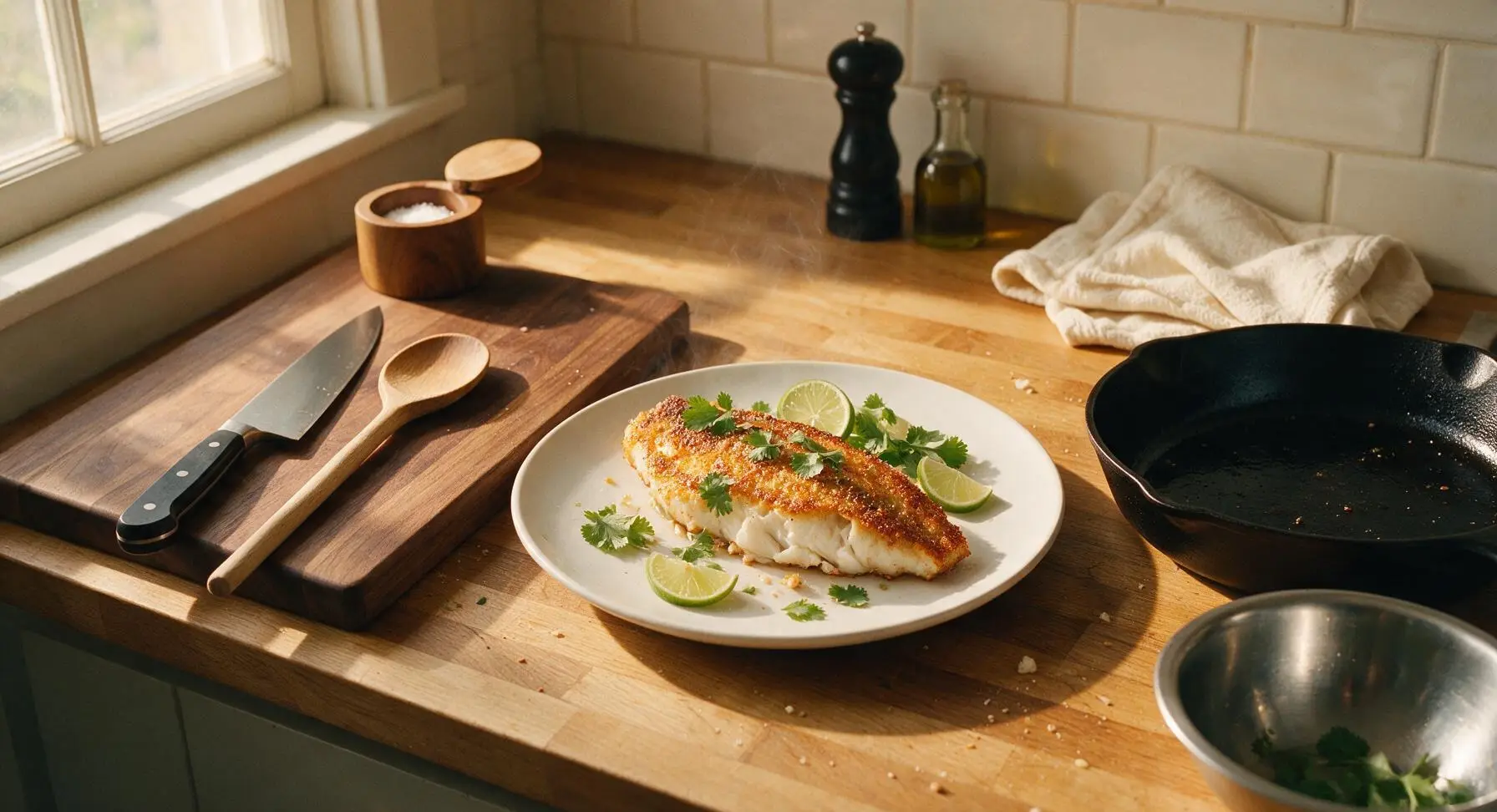
Tender, flaky catfish brined in young coconut water for subtle natural sweetness, pan-seared to a shatteringly crisp golden crust, with bright lime and cilantro notes for a light, satisfying summer meal.

Ingredients
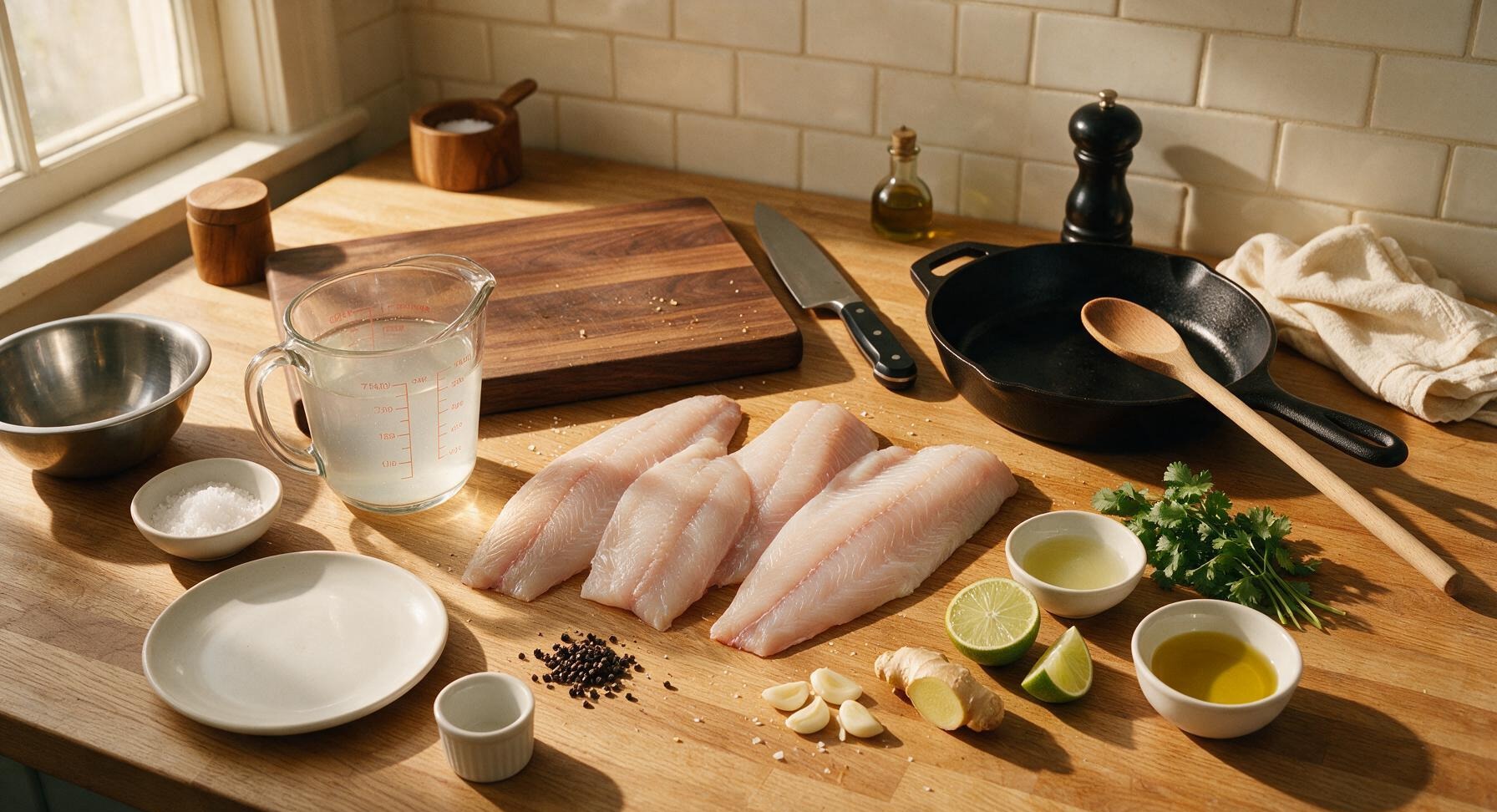
Skinless catfish fillets 4 (approx 170g each, 680g total)
Unsweetened young coconut water 750ml (3 cups)
Flaky sea salt 2 tbsp
Whole black peppercorns, crushed 1 tsp
Garlic cloves, thinly sliced 4
Fresh ginger, peeled and smashed 1 (2cm thick slice)
Fresh lime 2 (1 juiced, 1 cut into wedges)
Canola oil 2 tbsp
Fresh cilantro 1 small bunch

Steps

1

Mix Coconut Brine Base

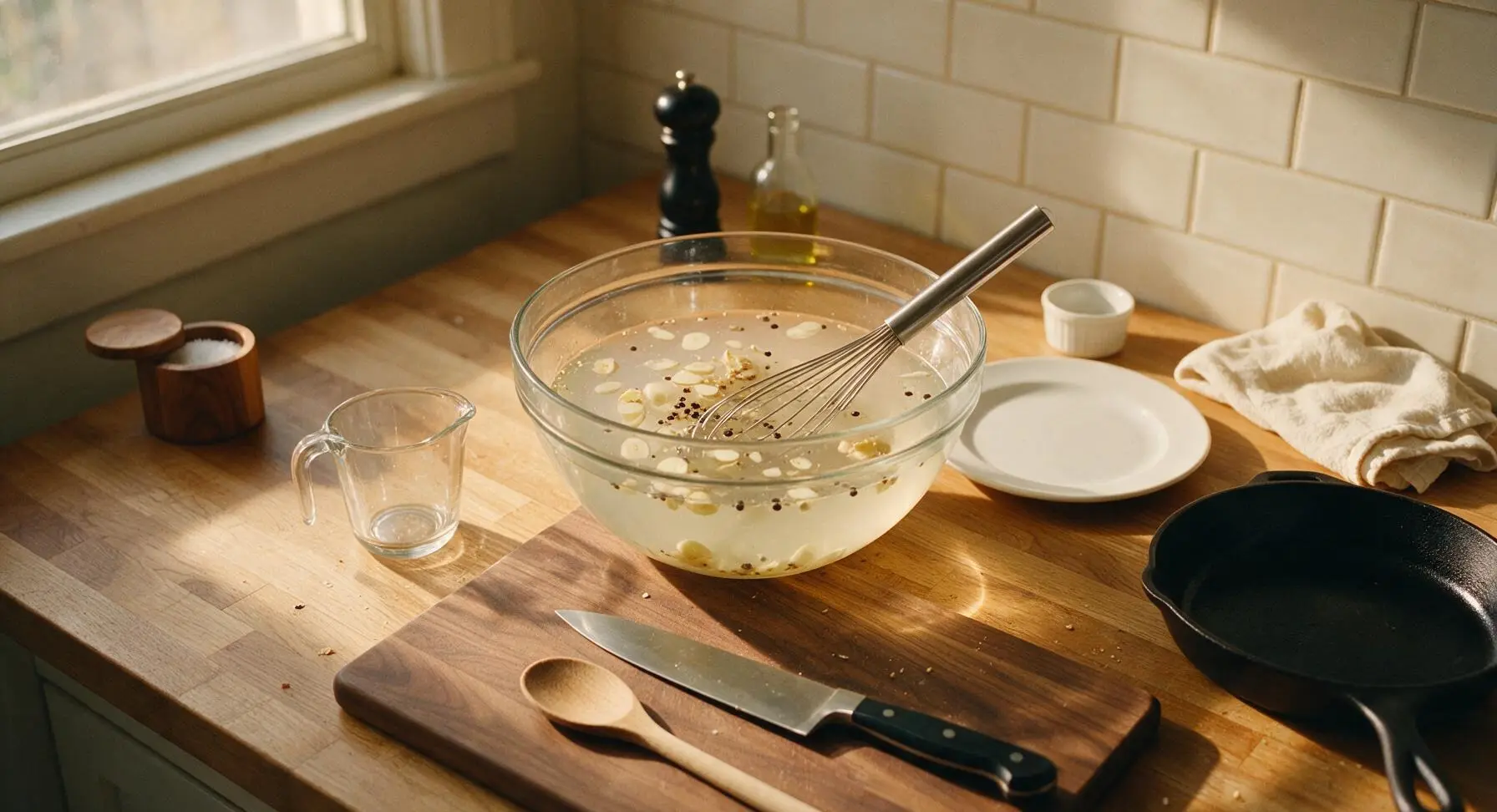
Place the large clear tempered glass mixing bowl on the central counter. Measure 750ml unsweetened young coconut water using the clear glass measuring cup, then pour into the bowl. Add 2 tablespoons flaky sea salt, 1 teaspoon crushed black peppercorns, 4 thinly sliced garlic cloves, the smashed 2cm ginger slice, and juice of 1 lime. Use the long-handled stainless steel whisk to stir continuously for 30 seconds until all salt is fully dissolved, with no grit remaining at the bottom of the bowl.
Step 1
step1:Mix Coconut Brine Base
2

Submerge Catfish in Brine

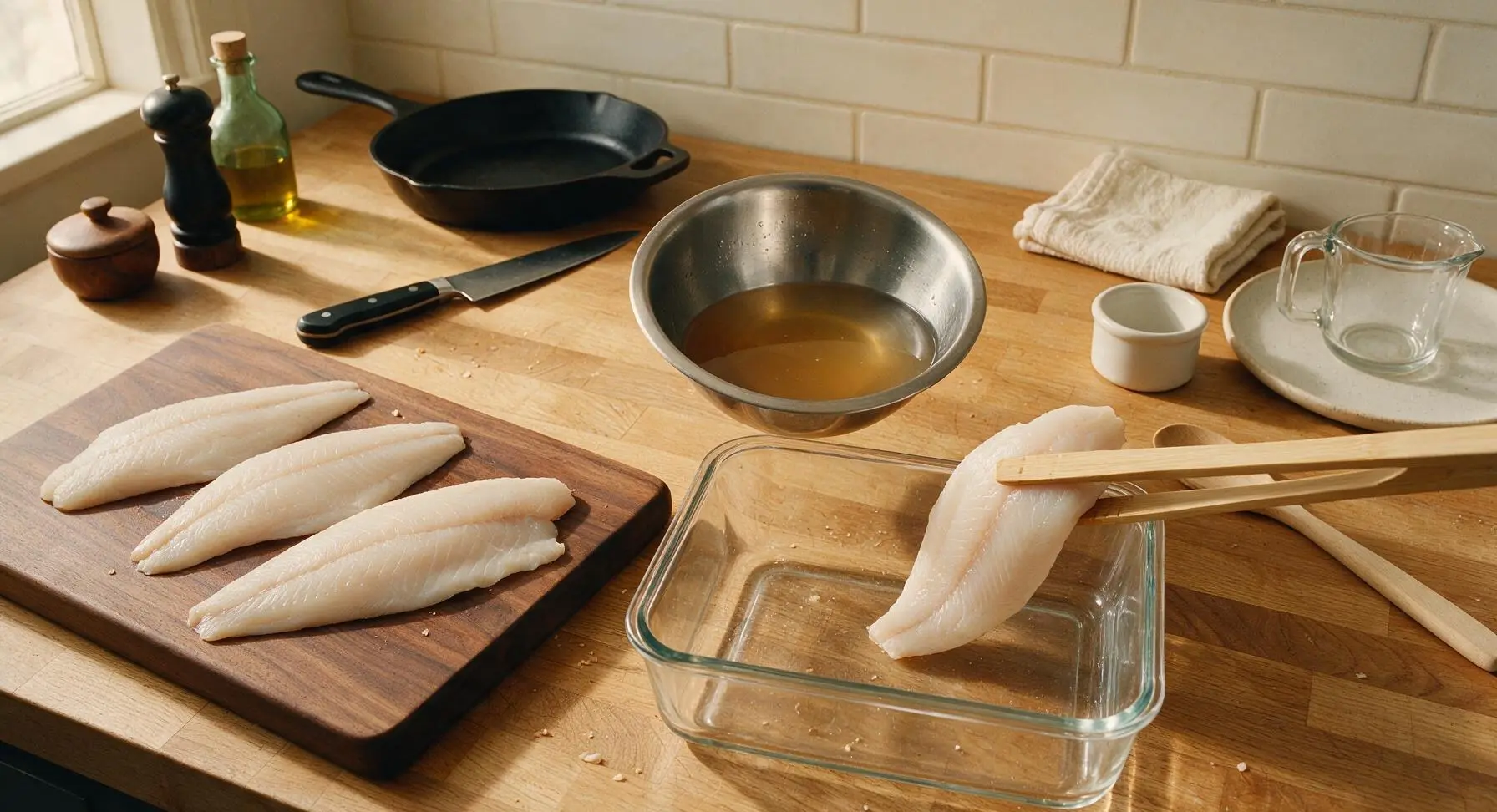
Pat the 4 catfish fillets lightly with paper towels to remove loose surface moisture, then arrange them in a single layer in the clear 2L rectangular food storage container. Pour the fully mixed coconut water brine over the fillets, ensuring all fish is fully submerged (place a small ceramic weight if needed to prevent floating). Seal the container tightly with its lid, then refrigerate for exactly 2 hours – do not brine longer than 3 hours, as coconut water’s natural proteolytic enzymes will break down delicate catfish flesh and cause a mushy texture.
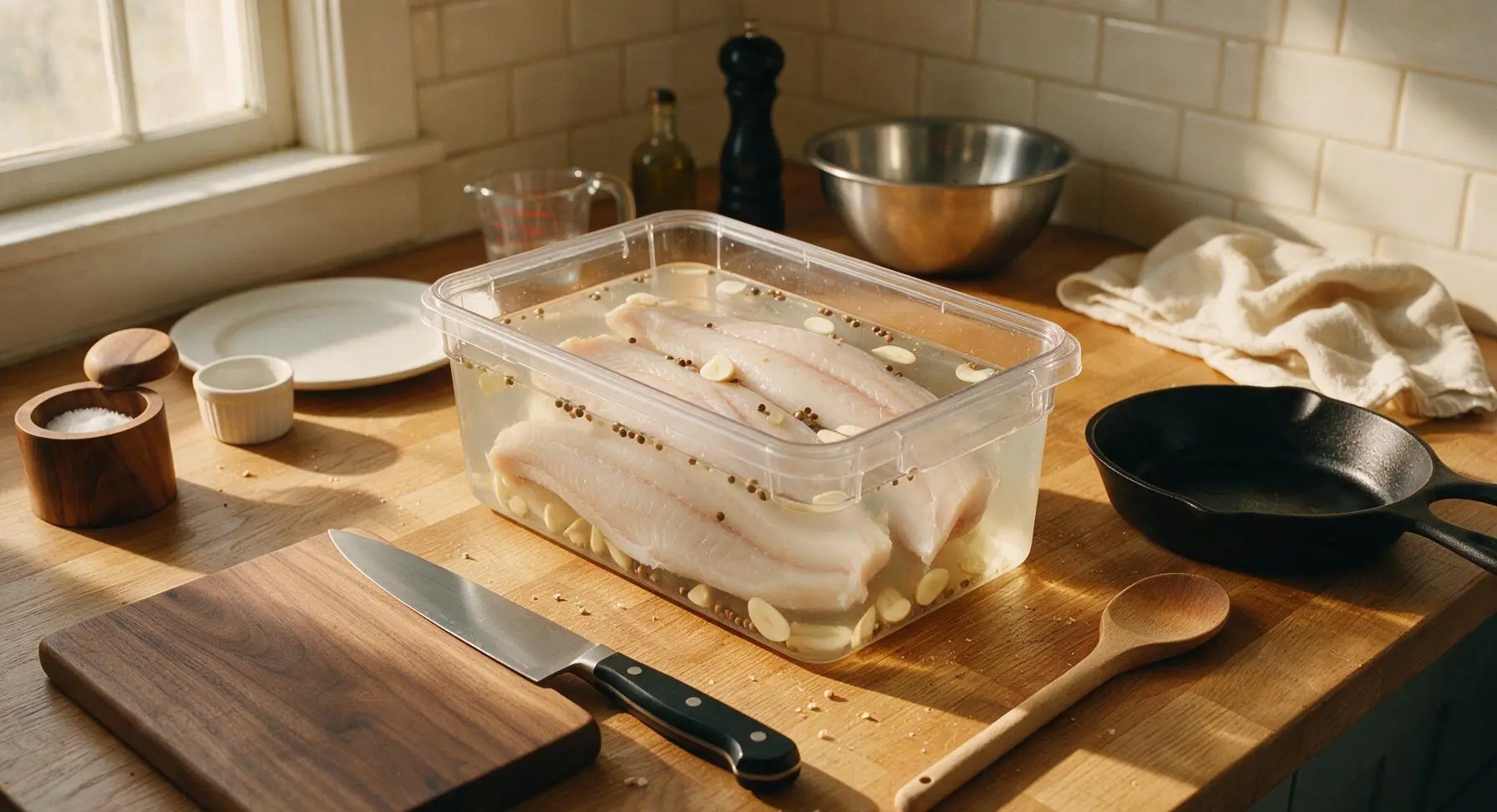
Step 2
step2:Submerge Catfish in Brine
Step 2
step2:Submerge Catfish in Brine
3

Pat Fillets Fully Dry

After 2 hours of brining, remove the storage container from the refrigerator. Use the small stainless steel tongs to lift fillets out of the brine, discarding the used brine, garlic, and ginger. Place fillets on the maple wood cutting board, run the stainless steel boning knife gently along the flesh to check for any remaining pin bones (remove if found), then pat thoroughly dry on all sides with unbleached paper towels. The fillet surface should feel completely dry to the touch, with no visible surface moisture, to guarantee a crispy sear.
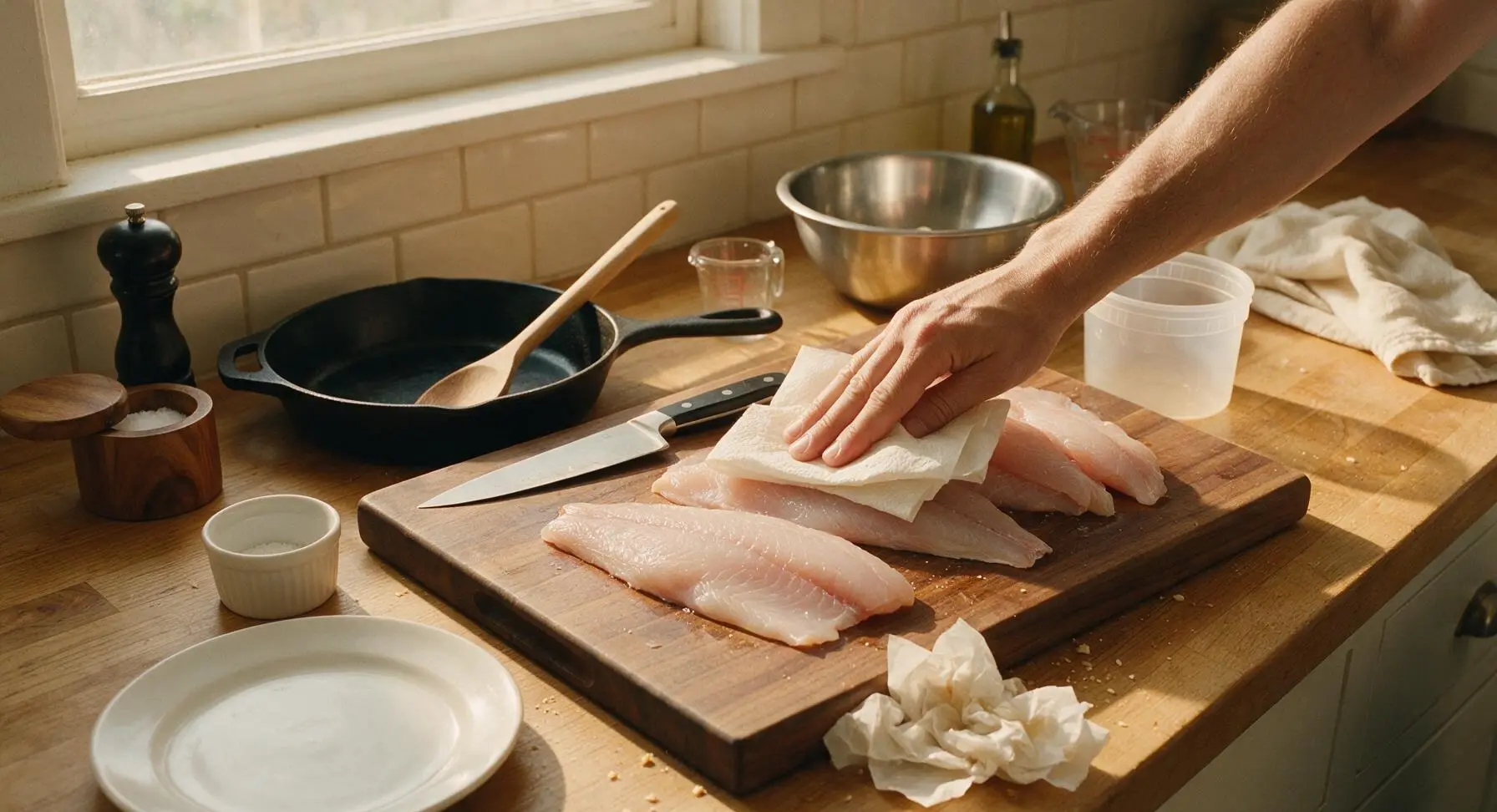
Step 3
step3:Pat Fillets Fully Dry
4

Preheat Skillet for Searing

Place the 30cm polished stainless steel skillet on the stovetop at the back of the work area, and turn heat to medium-high. Add 2 tablespoons canola oil, and heat for 2 minutes until the oil shimmers across the pan surface and sends up thin, wispy trails of smoke – do not let the oil darken or burn, as this will give the fish a bitter flavor.
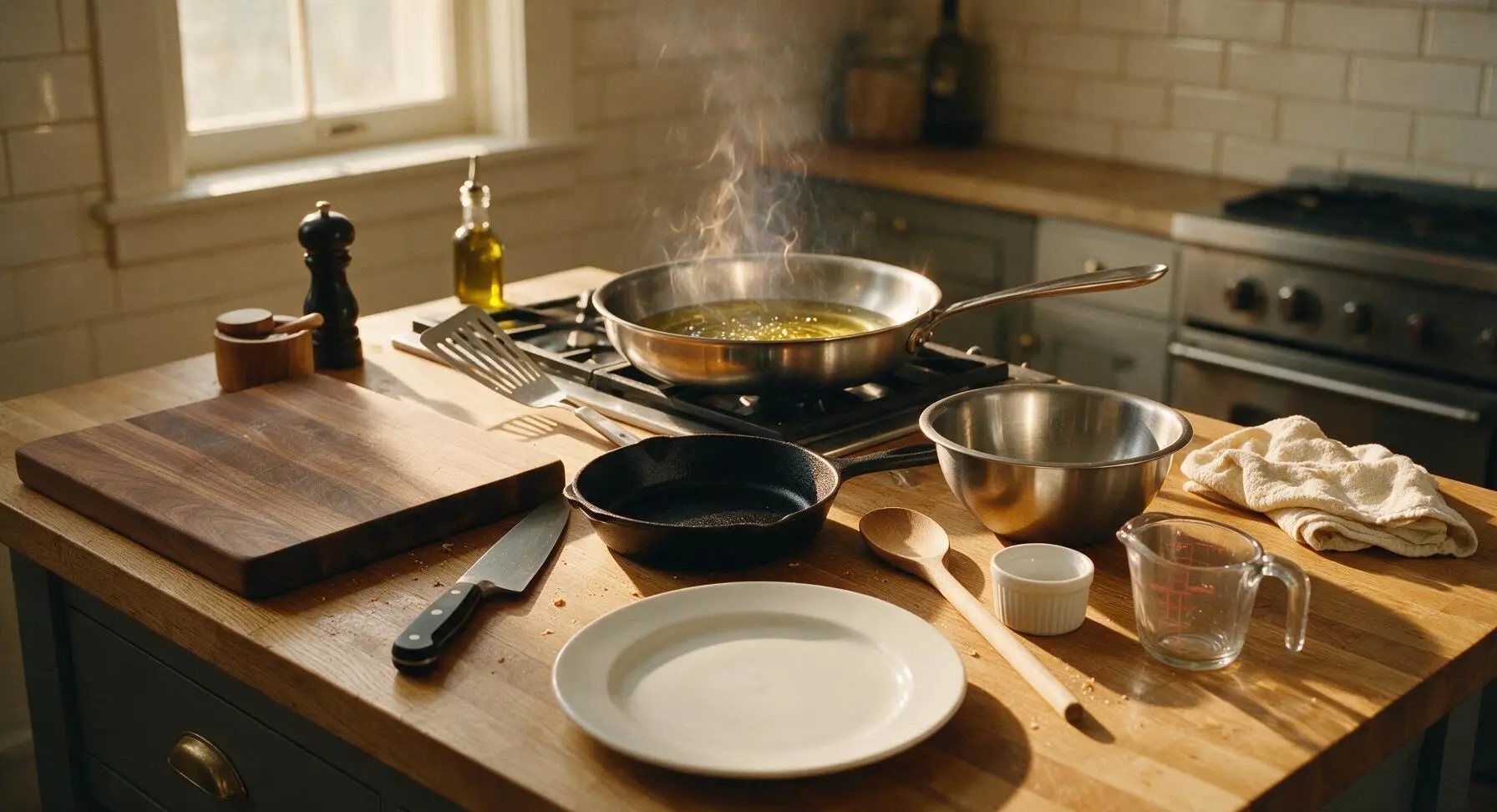
Step 4
step4:Preheat Skillet for Searing
5

Sear First Fillet Side

Carefully lay the dried catfish fillets in the hot skillet one at a time, placing them away from your body to avoid hot oil splatter. Do not move, nudge, or press the fillets for 4 full minutes, until the bottom edge forms a deep golden, crispy crust that releases easily when gently nudged with the fish spatula. Reduce heat to medium if the crust begins to darken too quickly before the 4 minute mark.
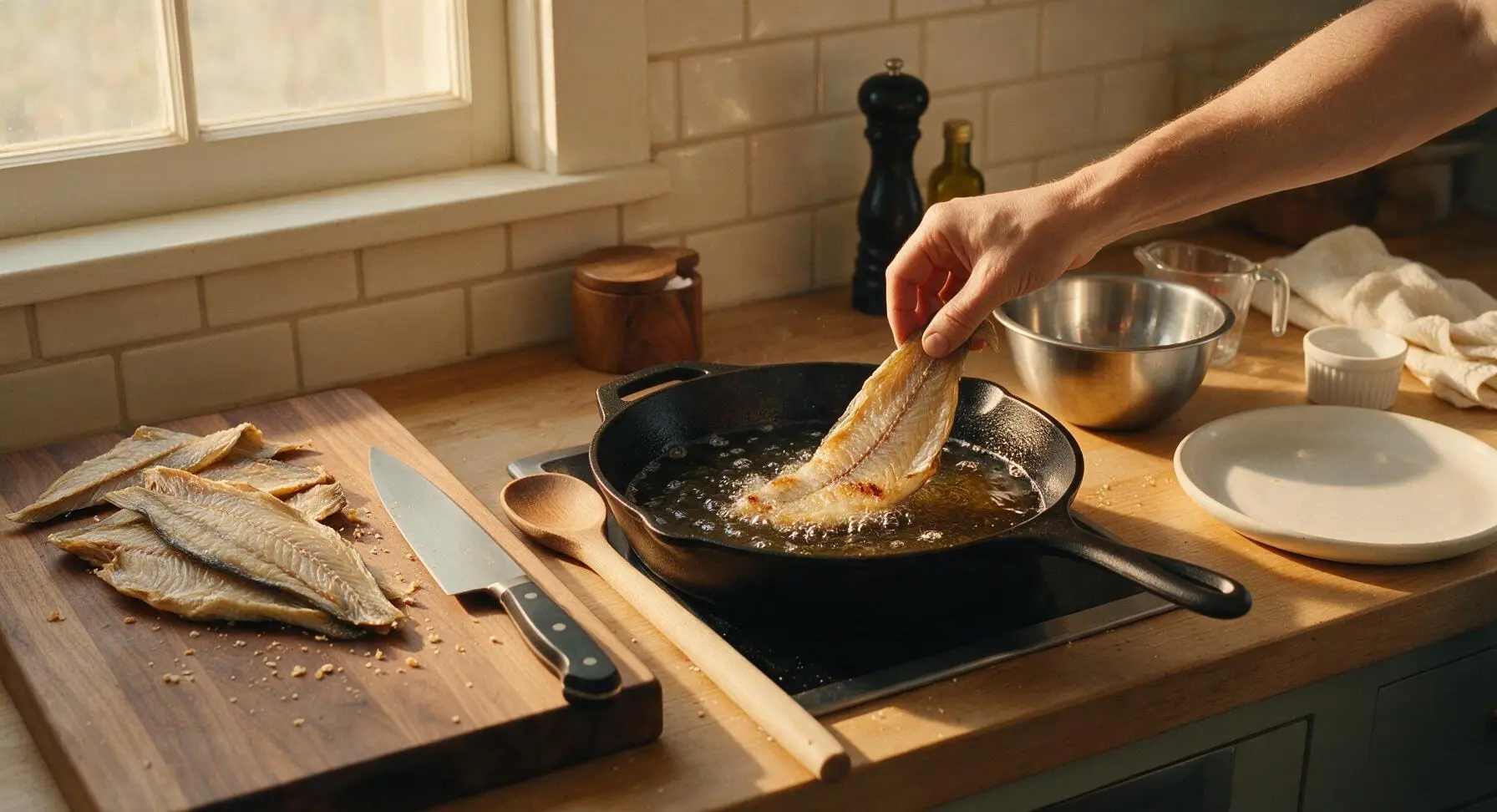
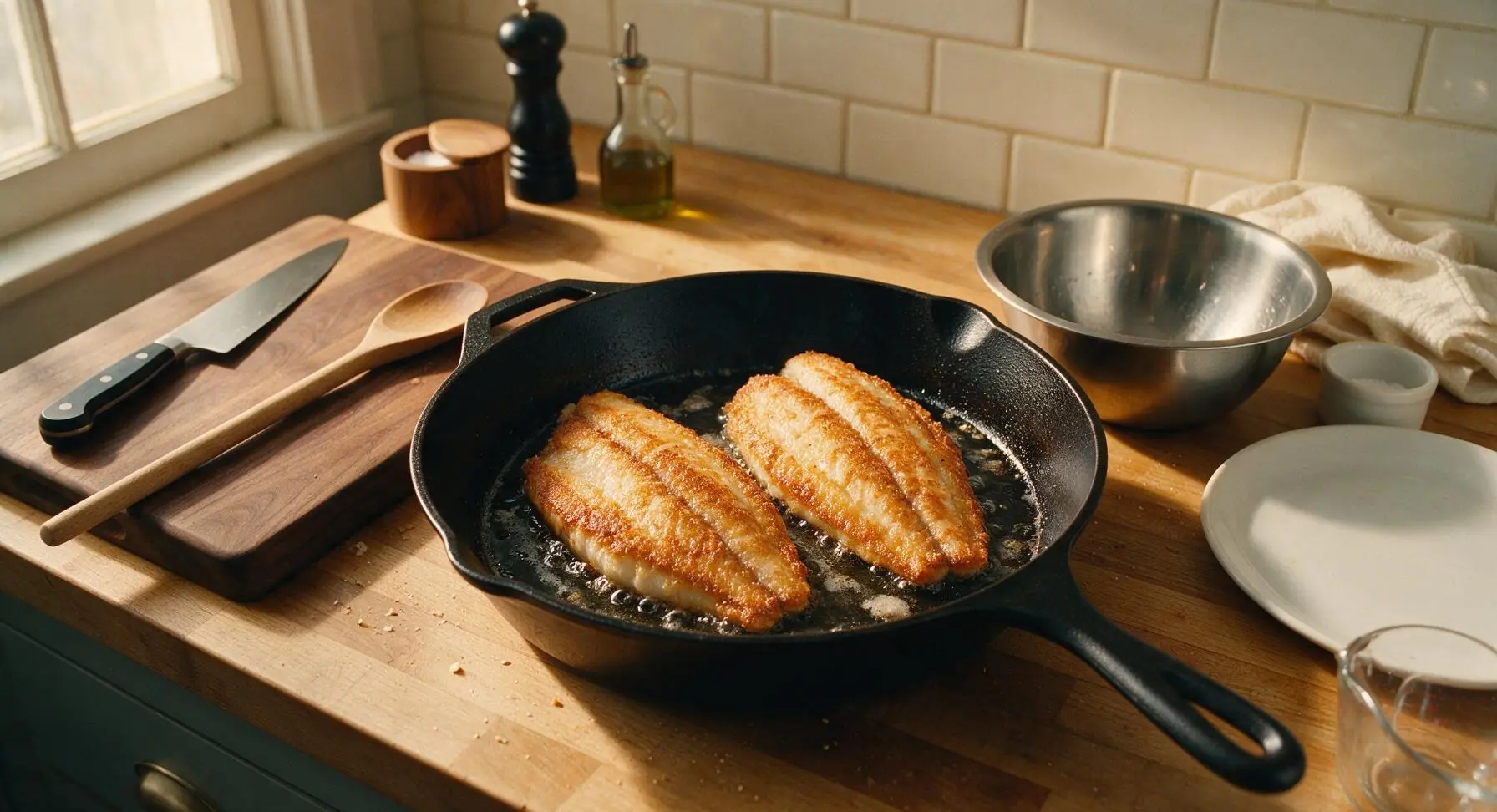
Step 5
step5:Sear First Fillet Side
Step 5
step5:Sear First Fillet Side
6

Flip and Cook Through

Use the slotted fish spatula to carefully slide under each fillet and flip to the second side. Cook for an additional 3 to 4 minutes, until the second side is equally golden and crispy, and the internal temperature of the thickest part of the fillet reaches 63°C (145°F). The flesh will flake easily with a fork, and be fully opaque white with no translucent raw patches at the center.
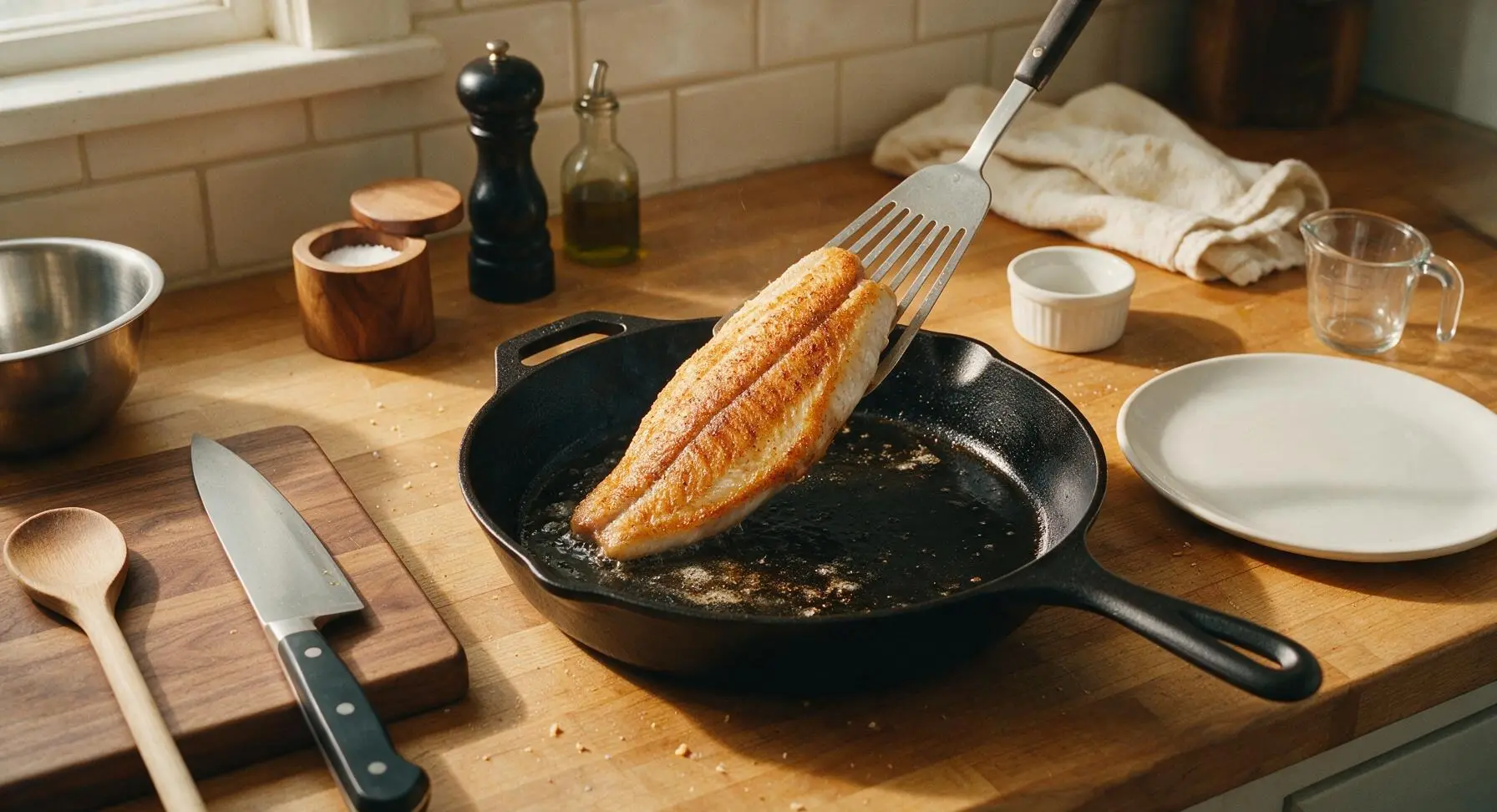
Step 6
step6:Flip and Cook Through
7

Rest and Plate Fish

Use the fish spatula to transfer cooked catfish fillets from the skillet to the matte off-white ceramic dinner plate, and let rest for 2 minutes to allow internal juices to redistribute. Garnish with fresh cilantro sprigs, and serve with lime wedges from the small ramekin for squeezing over top.
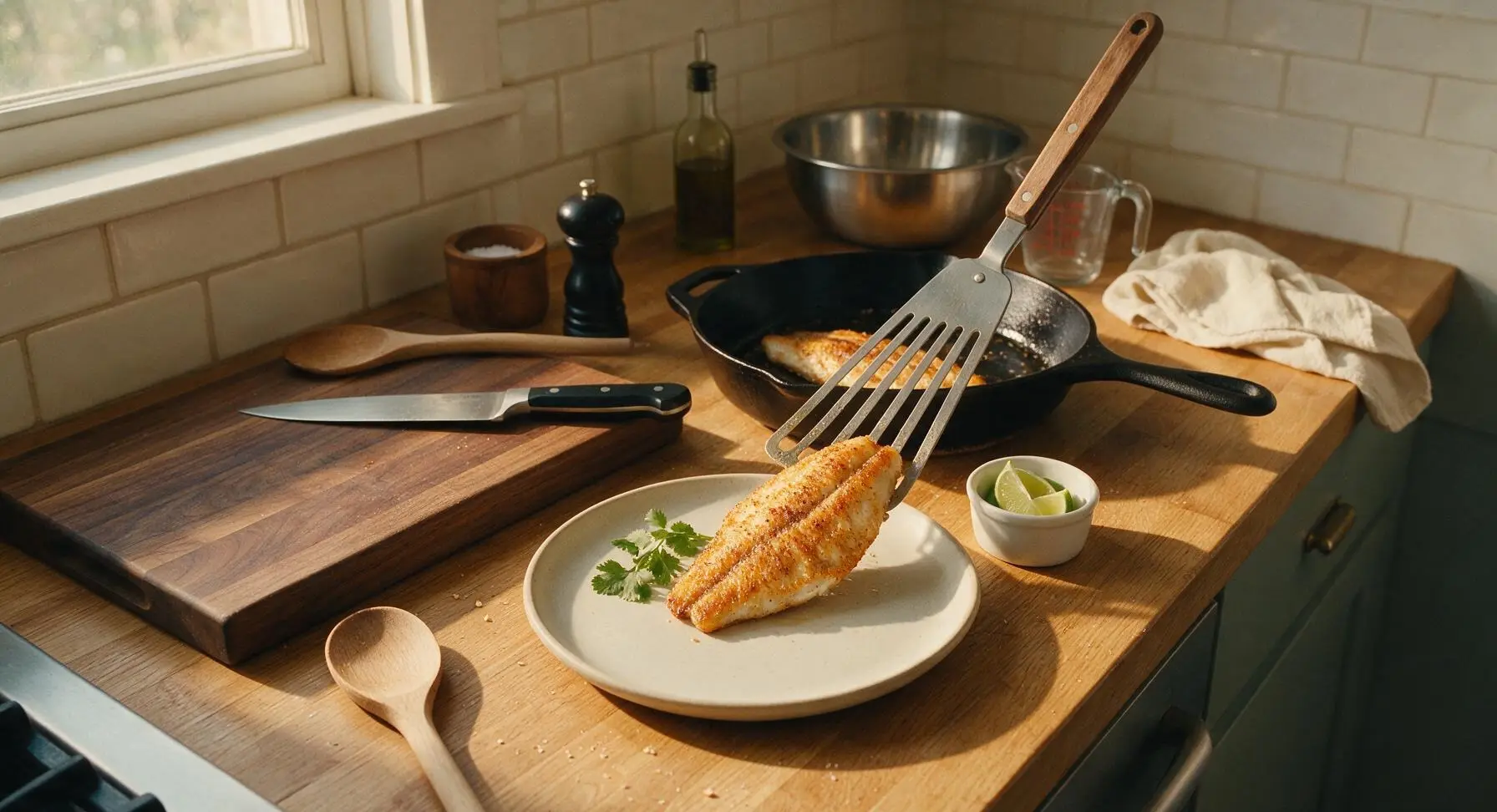
Step 7
step7:Rest and Plate Fish

Tips

1.Do not brine catfish for longer than 3 hours: young coconut water contains natural proteolytic enzymes that break down delicate fish protein, leading to mushy, soft flesh instead of the desired tender, flaky texture. A 2-hour brine is perfect for subtle coconut sweetness and evenly seasoned flesh.
2.Thoroughly drying fillets after brining is non-negotiable for a crispy crust: excess surface moisture will cause hot oil to splatter and steam the fish instead of searing it, resulting in a pale, soggy exterior that sticks to the pan.
3.Use only unsweetened, plain young coconut water for the brine: roasted, sweetened, or flavored coconut water products add cloying sweetness or artificial notes that overwhelm the mild, sweet flavor of fresh catfish. Look for cold-pressed young coconut water with no added sugar for best results.
✨ You May Also Like

Seafood
🍜 United States

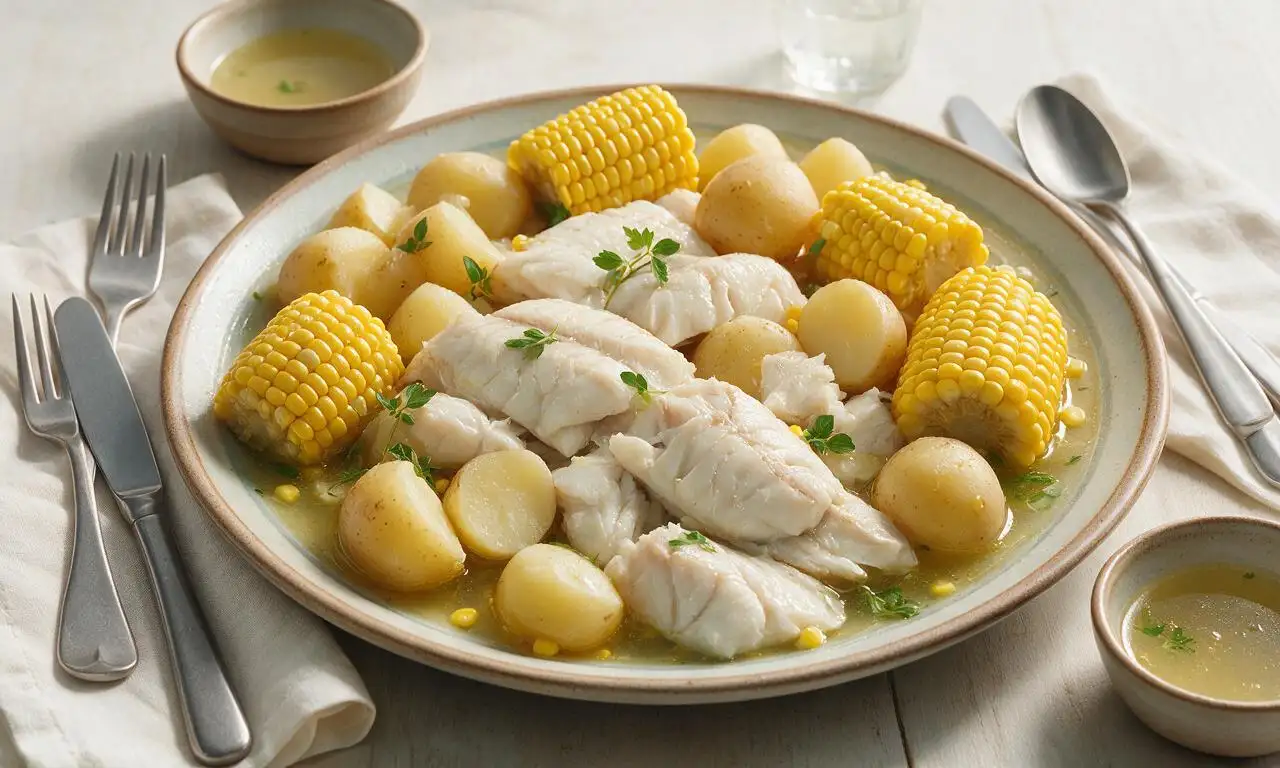
An iconic Door County, Wisconsin tradition of flaky boiled whitefish, tender potatoes, and sweet corn, cooked outdoors for casual, communal summer gatherings.

⏱️ 45 minuteSeafood ★ 4.7
Seafood
🍜 United States

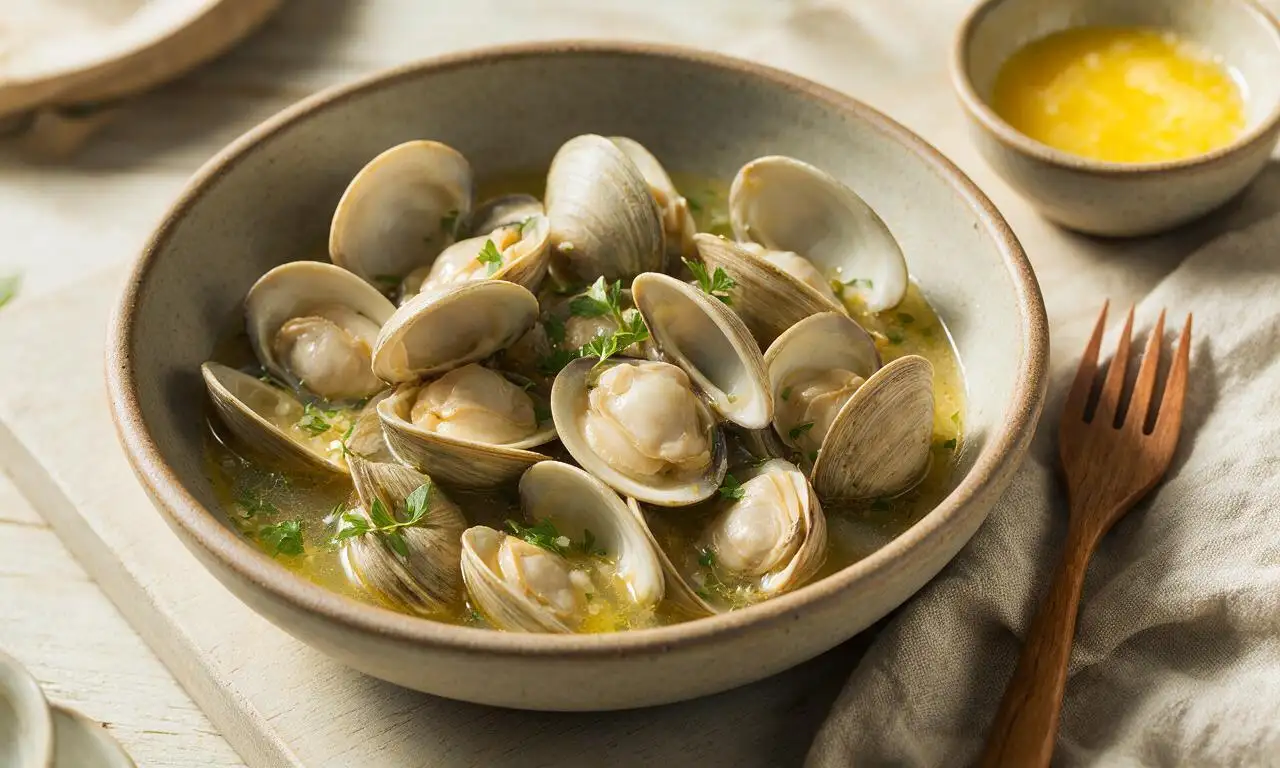
Tender, briny soft-shell clams steamed in garlicky white wine broth, served with warm broth and melted butter for dipping—classic coastal comfort food.

⏱️ 30 minuteSeafood ★ 4.7
Seafood
🍜 United States

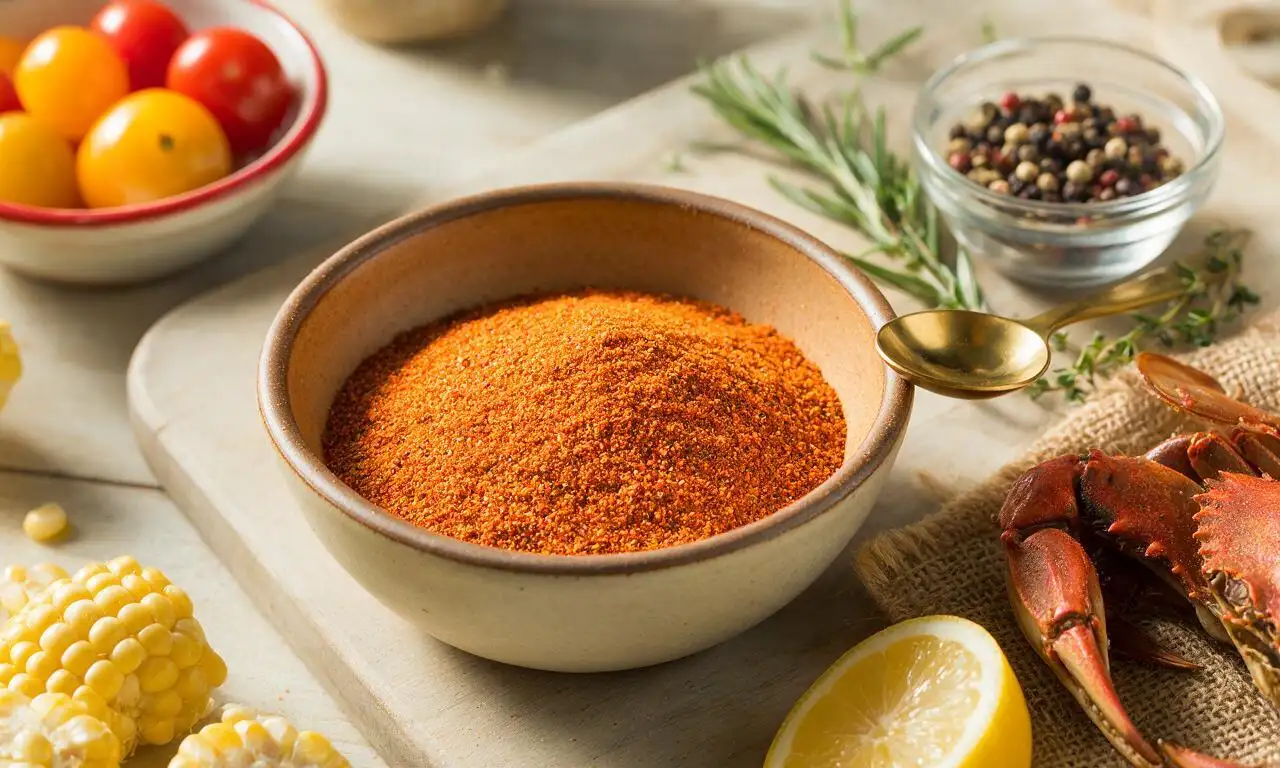
Iconic zesty, savory spice blend from Maryland’s Chesapeake Bay, perfect for seafood boils, grilled fare, fries, and corn, made fresh without preservatives.

⏱️ 10 minuteSeafood ★ 4.9
Seafood
🍜 China

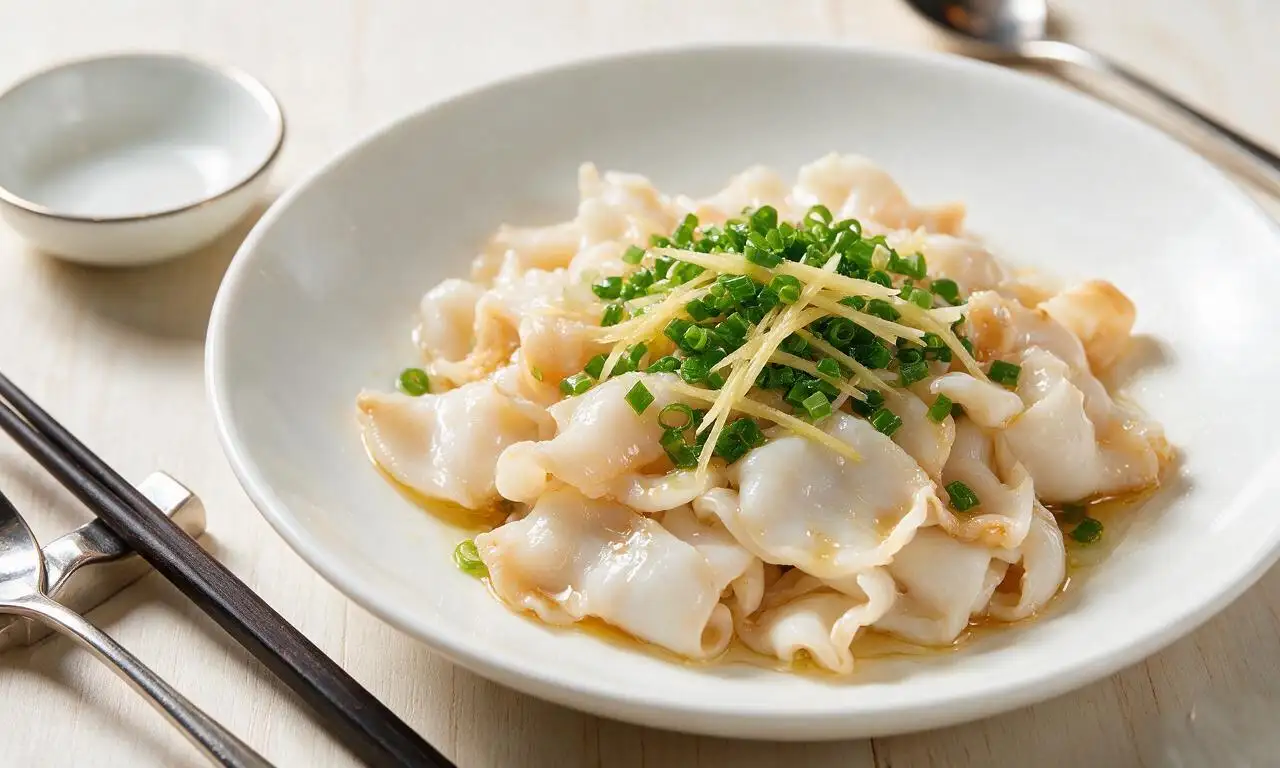
Tender, crisp, sweet blanched geoduck topped with fragrant sizzled ginger and scallion, a luxurious Cantonese dish highlighting the clam’s natural briny, delicate flavor.

⏱️ 30 minuteSeafood ★ 4.7
Seafood
🍜 United States

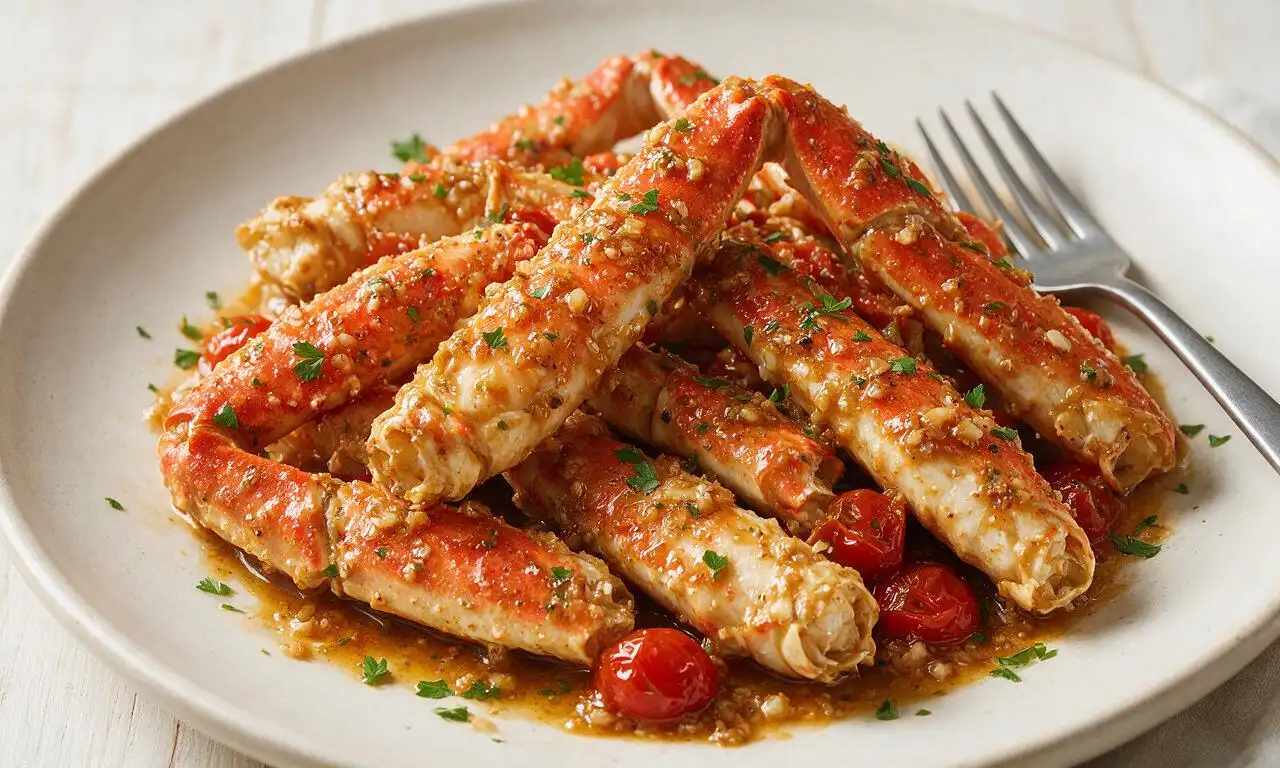
Succulent sweet crab legs coated in rich garlic butter, steamed to tender perfection for a juicy, indulgent seafood feast that requires minimal prep and cook time.

⏱️ 25 minuteSeafood ★ 4.7
Seafood
🍜 United States

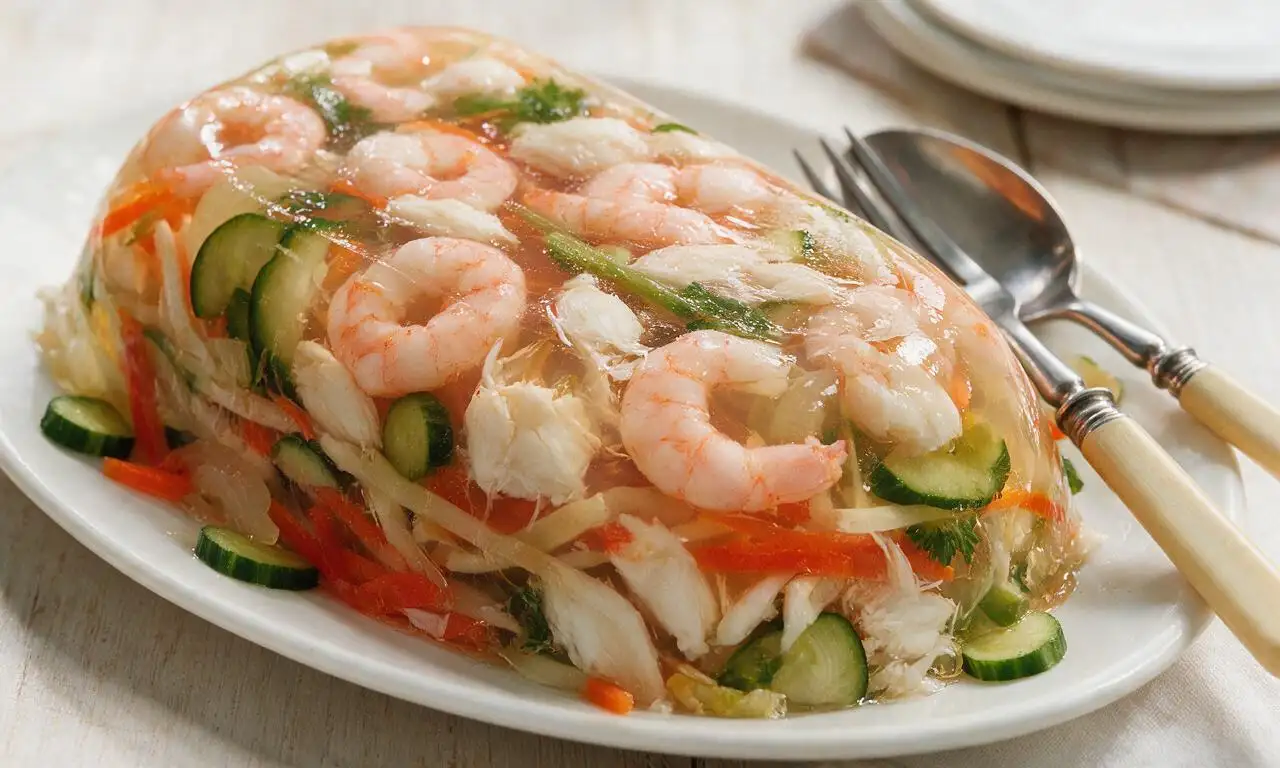
A nostalgic chilled jellied seafood staple of 1950s American potlucks, loaded with tender shrimp, lump crab, crisp veggies, and bright creamy tang.

⏱️ 4 hours 2Seafood ★ 4.6

Coconut Water Brined Catfish:Frequently Asked Questions

1.How long should I brine the catfish fillets to get the best texture and flavor? ▾
For standard 6–8 ounce, 1-inch thick skinless catfish fillets, aim for 45 minutes to 1 hour of brining time in the refrigerator. Don’t brine longer than 90 minutes, though—catfish has delicate flesh that will turn overly soft and salty if left in the brine too long. Always pat fillets completely dry before searing for that perfect crisp crust.
2.Can I use regular shelf-stable carton coconut water instead of fresh young coconut water? ▾
Unsweetened young coconut water is ideal for its mild, bright, subtle sweetness, but unsweetened plain mature carton coconut water works as a substitute. Skip any flavored or sweetened varieties entirely, and cut mature coconut water with 2 tablespoons of filtered water per cup to mellow its stronger, nuttier flavor so it doesn’t overpower the catfish.
3.Why does my seared catfish turn out soggy instead of shatteringly crisp? ▾
Soggy crust almost always traces back to two easy-to-fix mistakes: failing to pat brined fillets completely dry with paper towels before searing, or crowding the pan. Press firmly on both sides of fillets to remove all surface moisture, and sear in batches if you can’t leave 1 inch of space between fillets, using medium-high heat for even browning.
4.Do I need to rinse the brine off the catfish before I sear it? ▾
Give fillets a quick, light rinse under cold running water to knock off any stuck crushed peppercorns or sliced garlic bits from the brine, but don’t scrub them fully clean. Skipping this quick rinse can leave concentrated patches of salt on the fillet surface that taste overly sharp after searing. Always pat fillets totally dry after rinsing.
5.Can I freeze catfish in this brine for easy meal prep? ▾
Absolutely! Mix the brine, pour it over raw catfish fillets in a freezer-safe airtight bag, squeeze out all excess air, and freeze for up to 3 months. Thaw the sealed bag in the fridge for 24 hours before cooking—the fillets will brine as they thaw, so no extra brining time is needed. Just pat dry and sear as directed.
6.Can I use pre-ground black pepper instead of whole crushed peppercorns in the brine? ▾
You can, but adjust the amount to avoid overpowering the dish’s delicate coconut sweetness. Use 1/4 teaspoon of freshly ground black pepper per 2 cups of brine, rather than the full measure of crushed whole peppercorns. Ground pepper disperses much more intensely in brine, and using the same volume will leave an overly sharp, slightly gritty finish.
7.Does this brine work for thicker bone-in catfish steaks, not just thin fillets? ▾
It works beautifully, you’ll just need to adjust brining time to account for the extra thickness. For 1.5 to 2-inch thick bone-in catfish steaks, extend brining time to 1.5 to 2 hours in the fridge. Cook to an internal temperature of 145°F, about 4 minutes per side, until the flesh flaks easily right at the bone.
8.What sides pair best with this catfish for a light summer meal? ▾
Stick to bright, light sides that complement the fish’s subtle coconut sweetness and crisp crust: chilled cucumber-lime salad, lightly seasoned coconut rice, grilled corn with lime butter, or a simple avocado and mixed green salad all work perfectly. Skip heavy, creamy gravies or rich casseroles that will overpower the dish’s delicate, fresh flavor.
9.Will this brine help cut the muddy, off flavor some catfish has? ▾
That mild, earthy 'muddy' note in some farm-raised catfish comes from trace compounds in the fish’s fat, and this brine absolutely helps neutralize it. The gentle salt solution draws out those off-flavors during brining, while the subtle coconut sweetness and bright lime-cilantro finish leaves you with clean, sweet, flaky fish with no unpleasant aftertaste.

Comments (4)

2 days ago

OMG this coconut water brine is a total game changer! I’ve always found catfish can get a little mushy or have that weird muddy aftertaste, but I left mine in the brine for 2 hours (tossed in a pinch of Old Bay like I do for all my seafood) and it came out so flaky, perfectly seasoned, with that subtle sweet coconut note. My 8 and 10 year old devoured theirs and asked for seconds before I even sat down at the table — total win for a kid-approved weeknight dinner! That 12 minute cook time was a lifesaver for our chaotic Tuesday too, no slaving over the stove for hours after work.

1 day ago

Wait you added Old Bay? That’s such a smart call! I’m making this for our neighborhood potluck this weekend and was worried it might be too plain for the crowd, I’m totally stealing that trick.

1 day ago

So glad the whole family loved it! The Old Bay addition sounds chef’s kiss — feel free to toss a little smoked paprika in the brine too if you want an extra smoky kick for that potluck, it pairs so well with the subtle coconut sweetness.

3 days ago

SO good! I was super skeptical about coconut water brine at first, I thought it would make the catfish taste like a piña colada or some weird tropical dessert, but nope — it just keeps the fish so moist and cuts that sometimes strong fishy aftertaste perfectly. I made a big batch on Sunday to eat throughout the work week and it held up way better than my usual baked catfish, even when I reheated it in the air fryer for lunch. It’s so easy too, I’m definitely not a confident cook and I didn’t mess this up at all, total win!

2 days ago

Love that this worked for your meal prep! Quick pro tip for reheating: pop it in the air fryer at 350F for 3-4 minutes and it’ll get that crispy outside back, tasting just as fresh as the night you made it. So happy you gave the brine a shot even when you were skeptical!

1 week ago

Just got back from a fishing trip on Lake Erie where I hauled in a mess of channel catfish, so I was hunting for a new brine recipe instead of my go-to buttermilk soak. This did NOT disappoint. The coconut water gives it such a light, fresh taste that paired perfectly with hushpuppies and vinegar coleslaw at our cookout last weekend. My only note is I brined mine for 4 hours instead of the recommended 2 and it was still perfect, no overly salty fish at all.

5 days ago

Oh brining for 4 hours is such a helpful tip! I always panic about over-brining making fish too salty, so I usually cut soak times way short, I’ll have to try the longer brine next time I make this — thanks for sharing!

30 minutes ago

Made this last night for our weekly taco night! Cut the catfish into strips, brined it per the recipe, blackened it in my cast iron skillet, and stuffed it in warm corn tortillas with mango salsa and a little lime crema. Absolute home run, my roommate said it’s better than the fish tacos we get at that fancy taco spot downtown. Will 100% be making this on repeat — 12 minute cook time is exactly what I need on nights I don’t get home from the gym until 6:30, no fuss, all flavor.