
Coffee Rye Barrel Aged IPL

title 1
Coffee Rye Barrel Aged IPL
⏱️ cook time 2 hours (plus 4 weeks fermentation, 2 weeks barrel aging, 1 week bottle conditioning)
🍽️ servings 8
⚡ Difficulty hard

intro

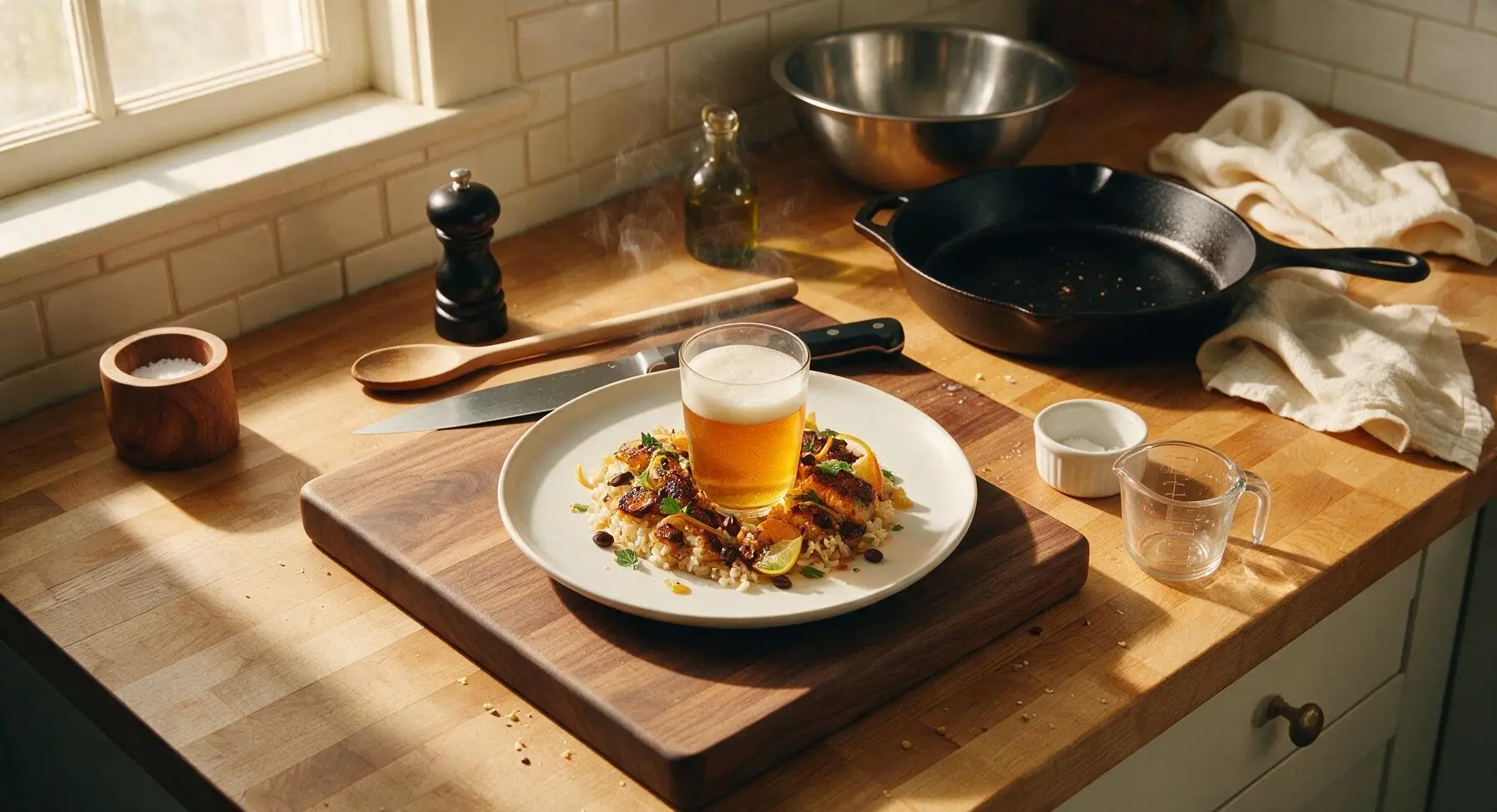
A crisp, bold India Pale Lager with roasted coffee depth, spicy rye bite, and smooth charred oak warmth, balanced by bright zesty citrus hop aroma.

Ingredients
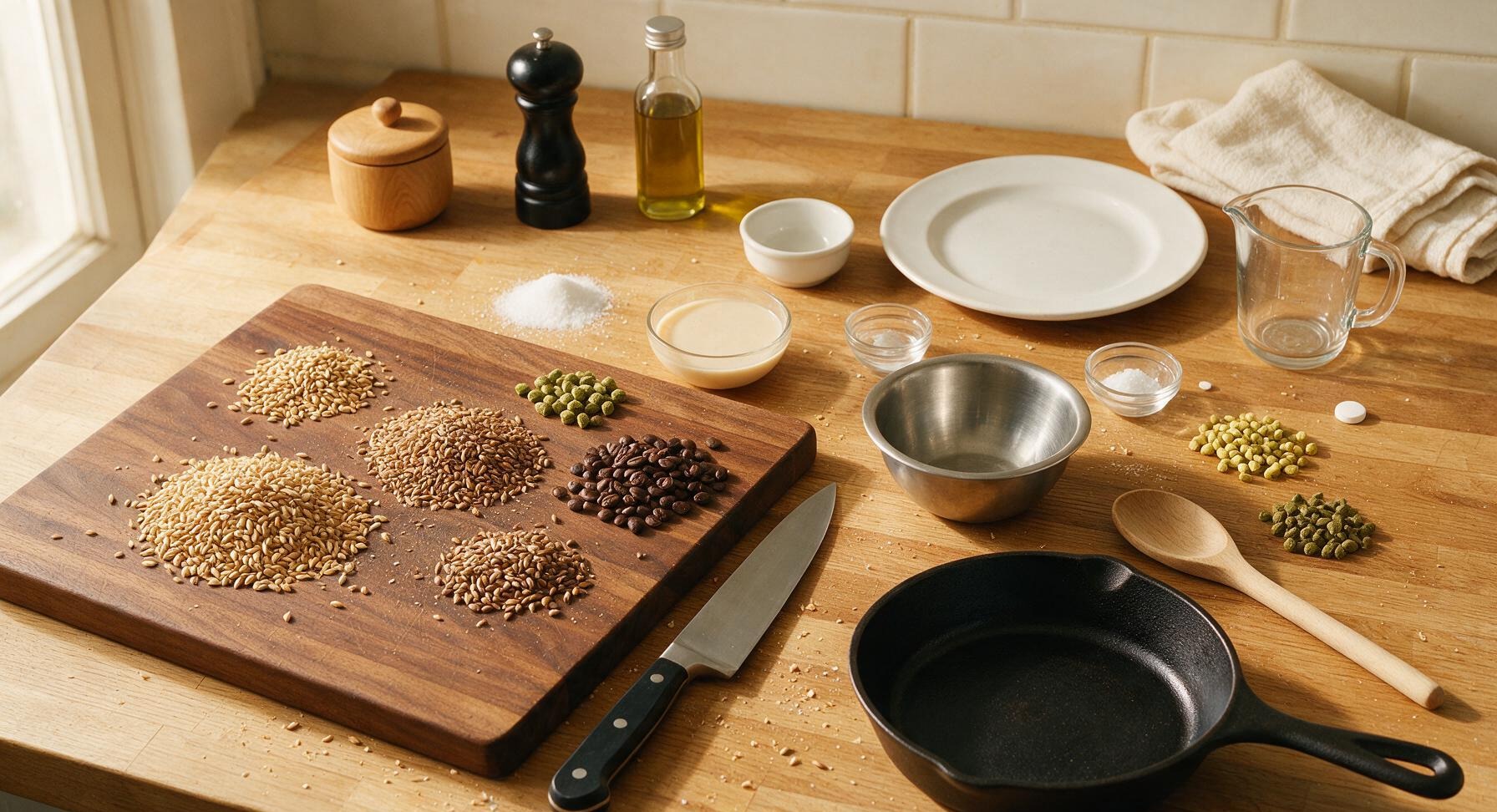
Pale 2-row malt 1.2kg (2.6 lbs)
Rye malt 220g (0.5 lbs)
Medium roast Ethiopian coffee beans 30g (1 oz)
Magnum hop pellets 10g (0.35 oz)
Citra hop pellets 15g (0.5 oz)
Czech Saaz hop pellets 10g (0.35 oz)
American Lager yeast (Wyeast 2035) 1 packet (11g)
Gypsum (brewing salt) 2g
Campden tablet 1 unit
Corn sugar (dextrose) 30g (1 oz)

Steps

1

Sanitize Brewing Equipment

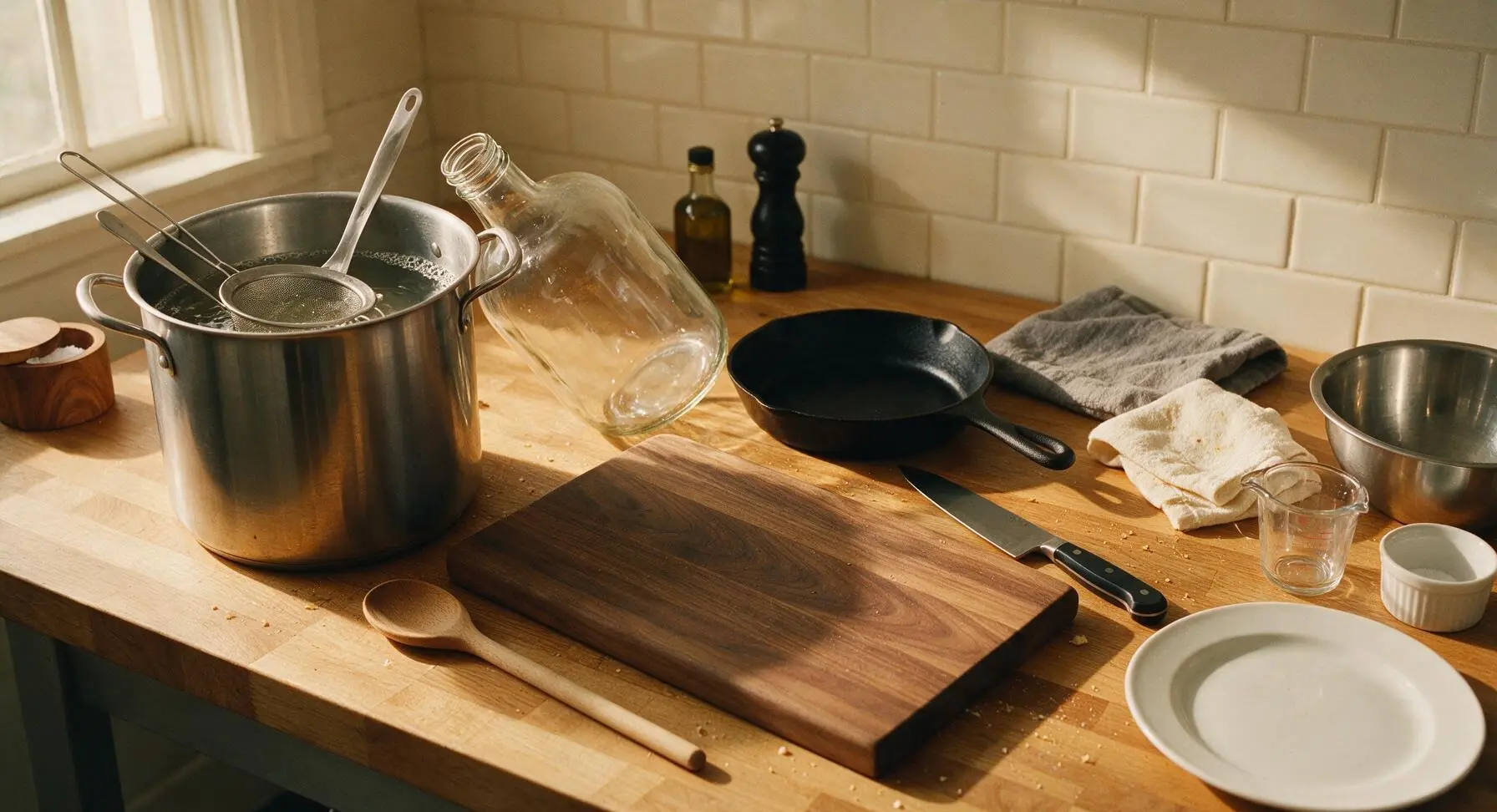
Fill the 2-gallon stainless steel brew pot with 4 liters of cold filtered water, add 1 Campden tablet to neutralize chlorine, then heat to 65C (149F). Submerge the mesh strainer, brewing spoon, auto-siphon, and fermentation carboy in the warm water for 2 minutes to fully sanitize all contact surfaces. Air dry equipment on the clean heather gray towel, ensuring no unsanitized surfaces touch interior parts of any brewing tool, as contamination is the most common cause of spoiled homebrew.
Step 1
step1:Sanitize Brewing Equipment
2

Mash Rye and Malt

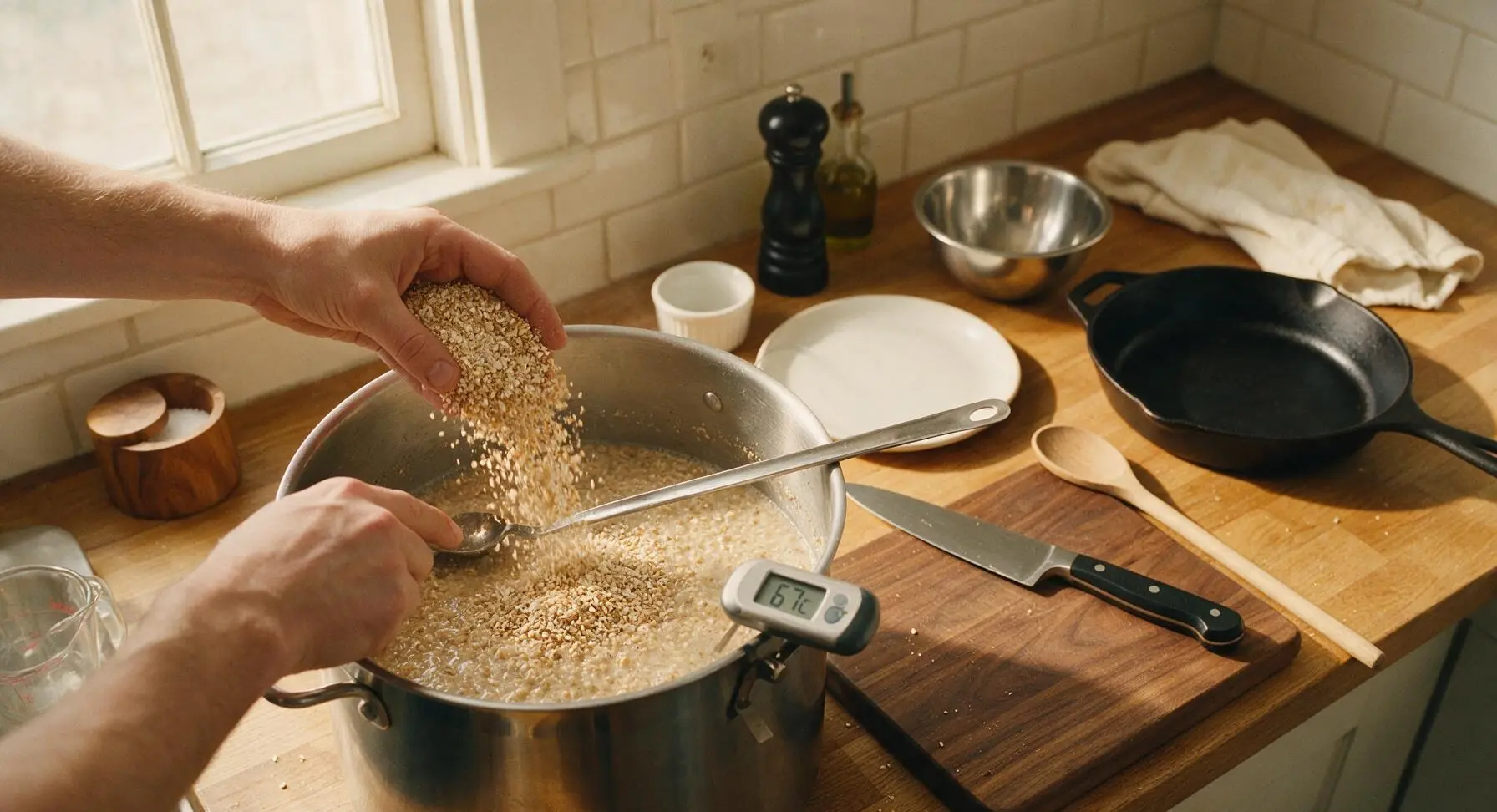
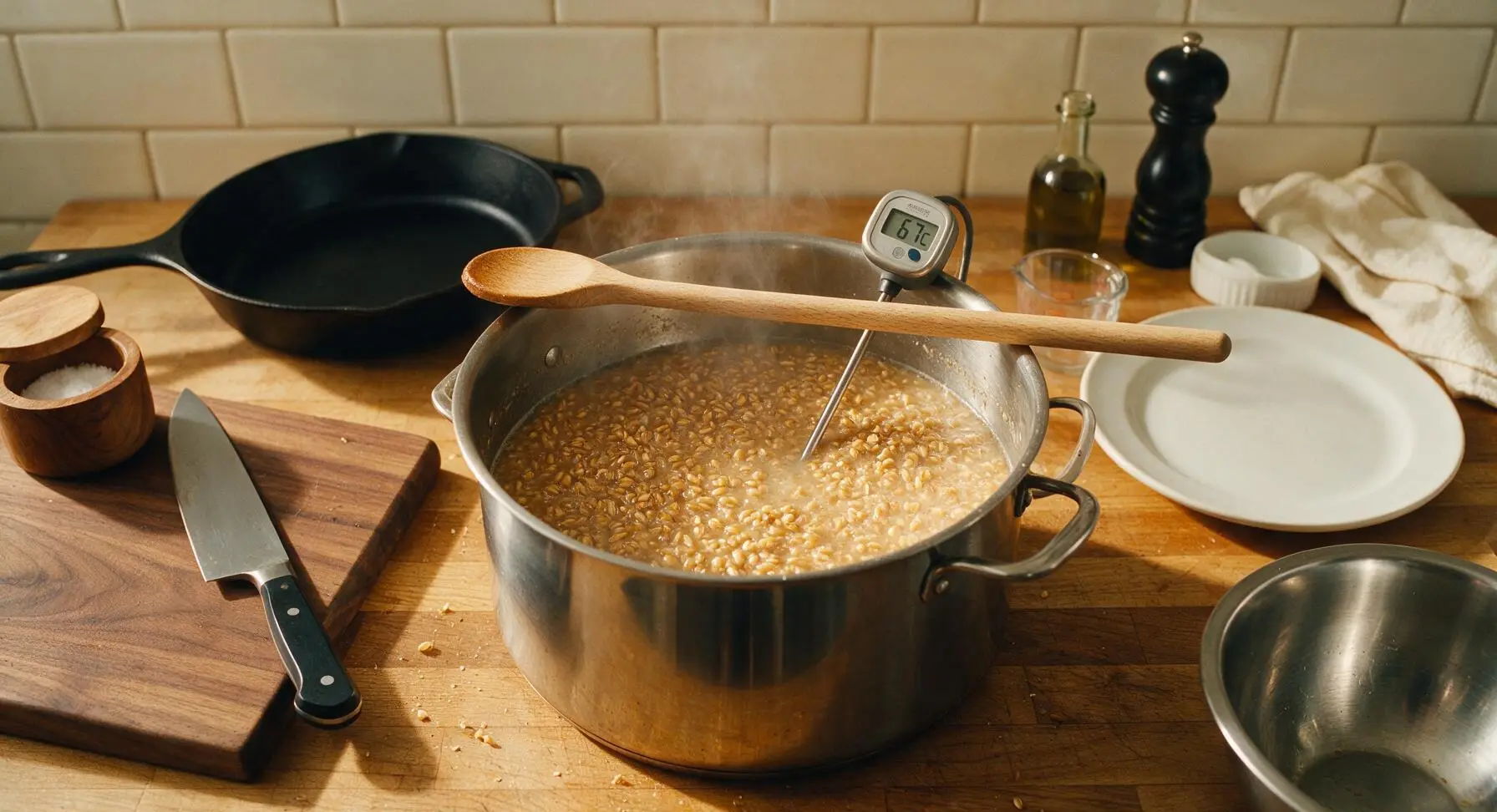
Heat 3.5 liters of filtered water in the sanitized brew pot to exactly 67C (153F). Slowly stir in the milled pale 2-row malt and rye malt, mixing with the long stainless steel brewing spoon to break up any dry clumps. Hold the temperature steady at 67C for 60 minutes, keeping the pot covered with its lid, and checking temperature with the digital thermometer every 10 minutes. The finished mash will smell sweet and bready, with a thick, porridge-like consistency.
Step 2
step2:Mash Rye and Malt
Step 2
step2:Mash Rye and Malt
3

Lauter and Boil Wort

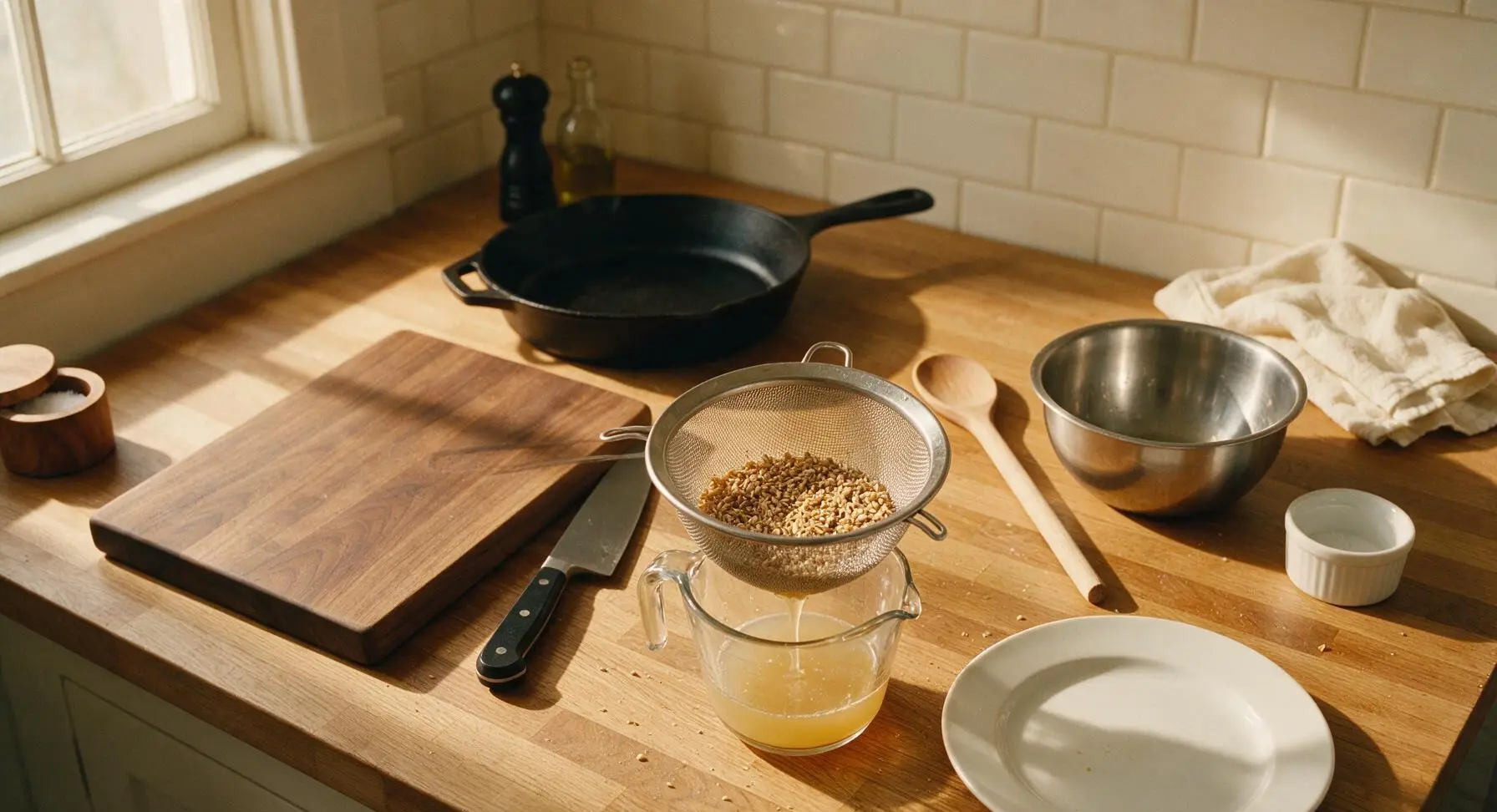
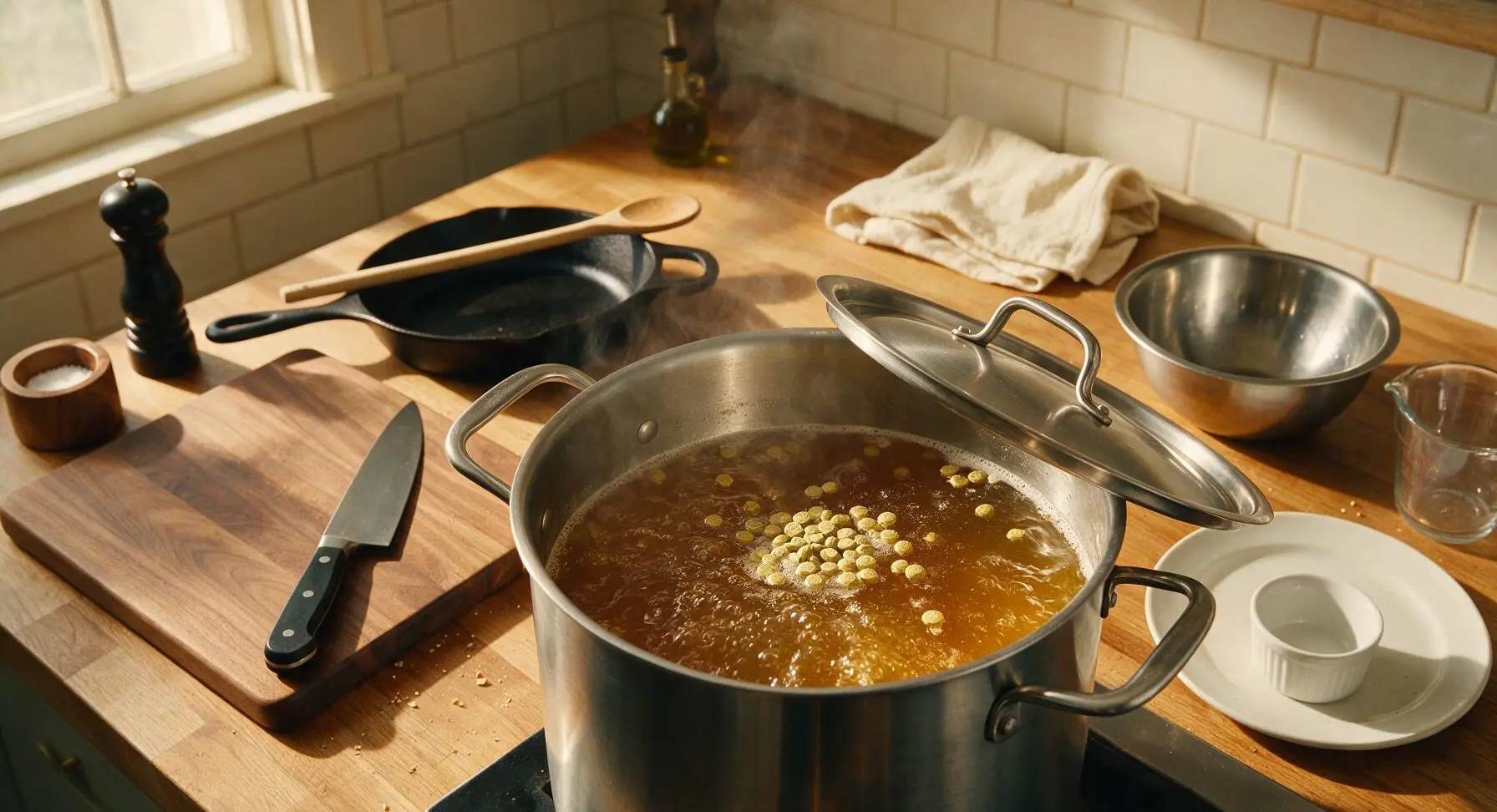
After the 60 minute mash rest, slowly pour the grain and liquid mixture through the stainless steel mesh strainer into the glass measuring cup, separating the sweet, clear wort from the spent grain. Discard the spent grain, then return the strained wort to the brew pot. Bring the wort to a gentle rolling boil (100C/212F) and hold for 60 minutes, adding all 10g of Magnum hop pellets at the very start of the boil to add clean, smooth bitterness. Keep the pot lid slightly ajar to prevent messy boil-overs.
Step 3
step3:Lauter and Boil Wort
Step 3
step3:Lauter and Boil Wort
4

Add Hops and Cool Wort

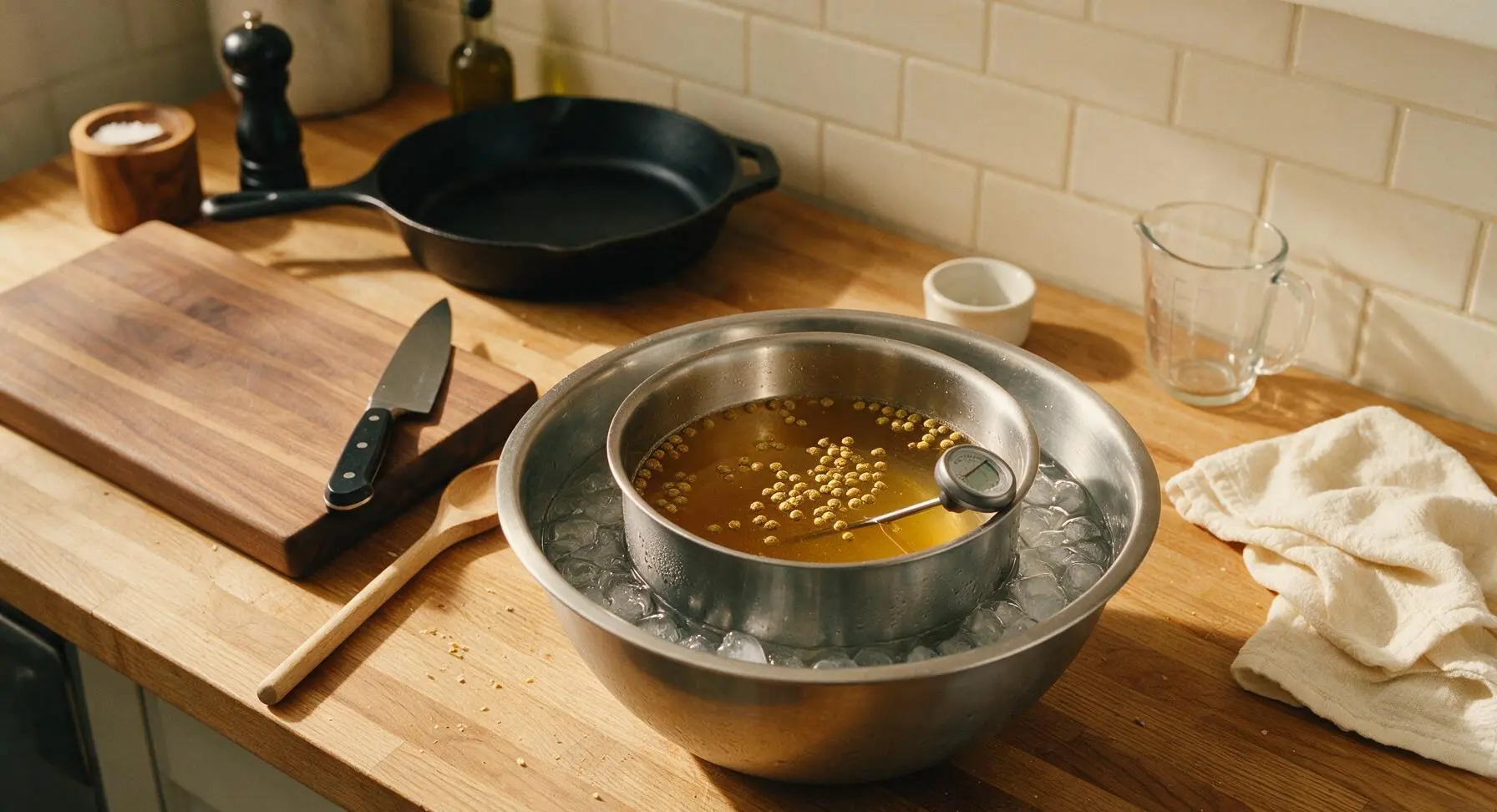
With 15 minutes remaining in the 60 minute boil, add 5g of Citra hops and 5g of Saaz hops to add bright, layered aroma. When the full 60 minute boil is complete, remove the pot from heat, add the remaining 10g Citra and 5g Saaz hops for whirlpool aroma, then nestle the pot inside the large stainless steel mixing bowl filled with ice water. Cool the wort to 13C (55F), about 20 minutes, avoiding splashing to prevent oxygen exposure that causes stale flavors.
Step 4
step4:Add Hops and Cool Wort
5

Ferment the Lager

Once the wort cools to exactly 13C (55F), pour it through the sanitized mesh strainer into the 1-gallon glass carboy, top up with cold filtered water to reach the 1-gallon volume mark, then sprinkle the dry lager yeast evenly across the wort surface. Seal the carboy with a water-filled airlock, and store in a dark, consistently 13C (55F) space for 4 weeks. Active fermentation will be visible as steady bubbles rising through the airlock for the first 10-14 days.
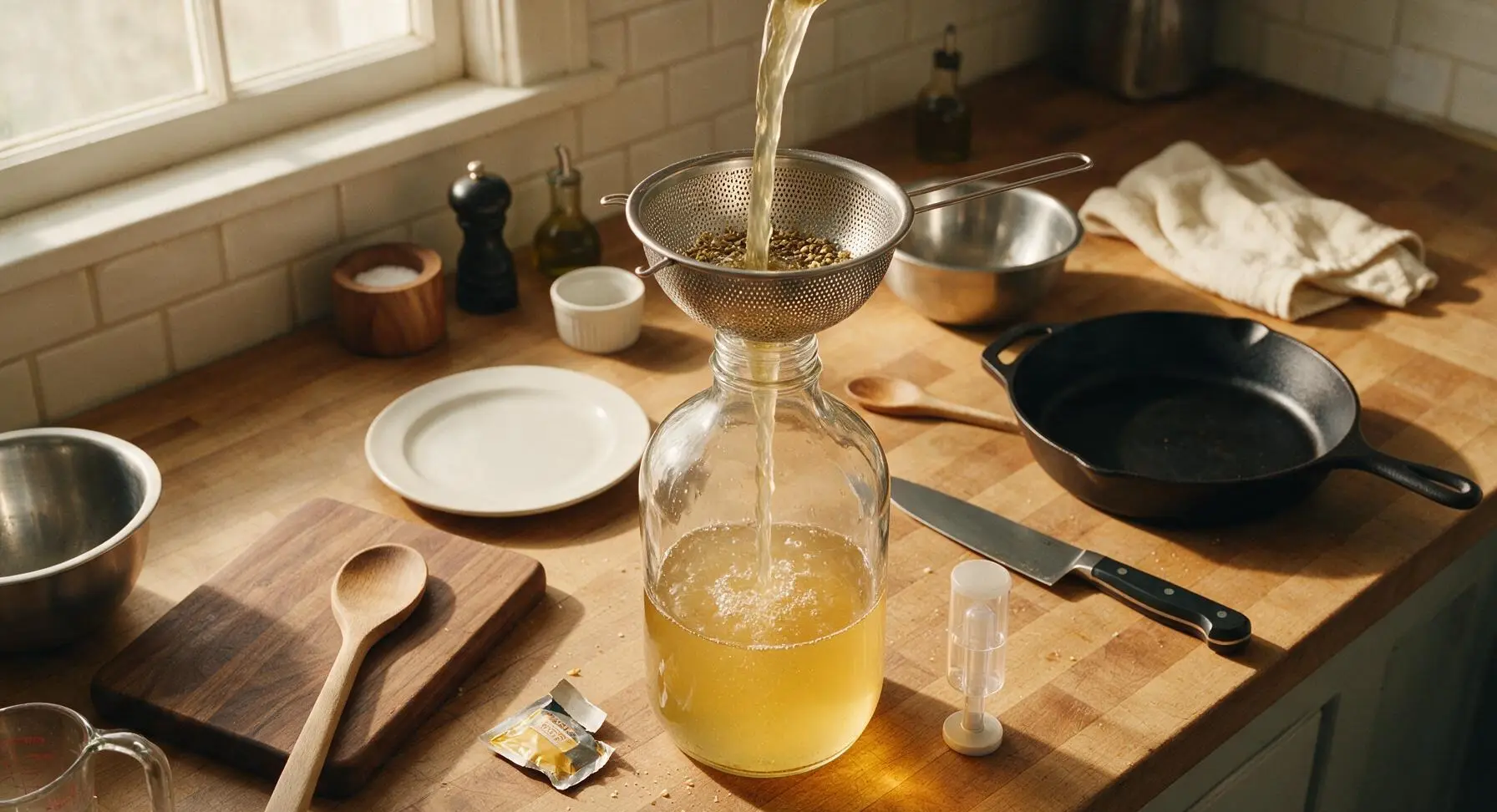
Step 5
step5:Ferment the Lager
6

Transfer to Oak Barrel

After 4 weeks of primary fermentation, when bubbling in the airlock has stopped completely and the beer is clear, use the sanitized silicone auto-siphon to rack the beer off the pale layer of yeast sediment at the bottom of the carboy into the sanitized 1-liter charred American oak mini barrel. Seal the barrel tightly with its wooden bung, and store in a cool, dark 13C (55F) space for 2 weeks, rotating the barrel 1/4 turn every 3 days to ensure even contact with the charred oak surface.
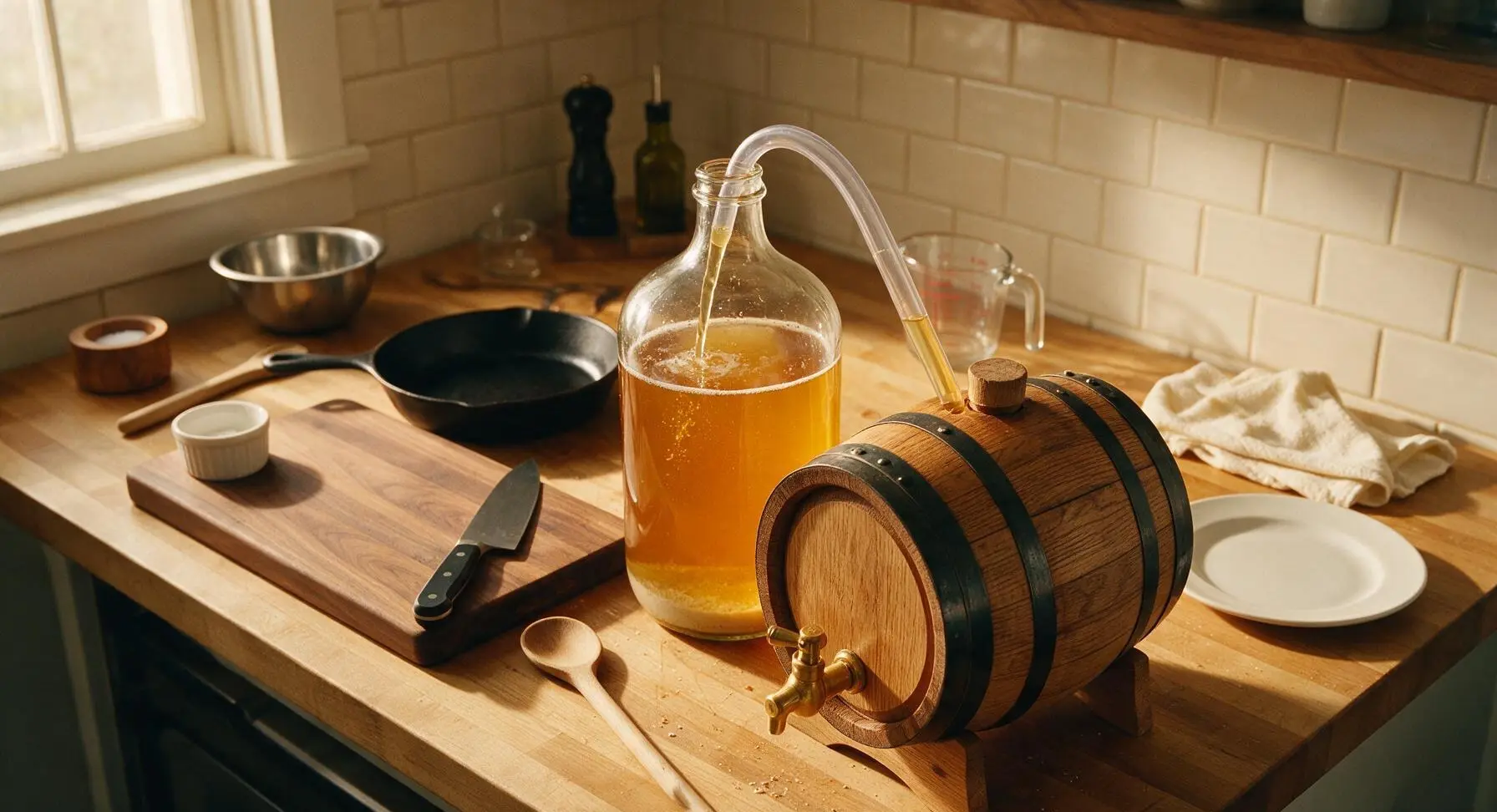
Step 6
step6:Transfer to Oak Barrel
7

Infuse Roasted Coffee

24 hours before the end of the 2 week barrel aging period, coarsely grind the 30g medium roast Ethiopian coffee beans, steep in 100ml cold filtered water for 12 hours, then strain through the fine mesh strainer lined with a paper filter to remove all fine grounds. Pour the smooth, cold coffee extract into the oak barrel, reseal the bung tightly, and let infuse for the final 24 hours of aging to add rich roasted coffee notes without harsh astringency.
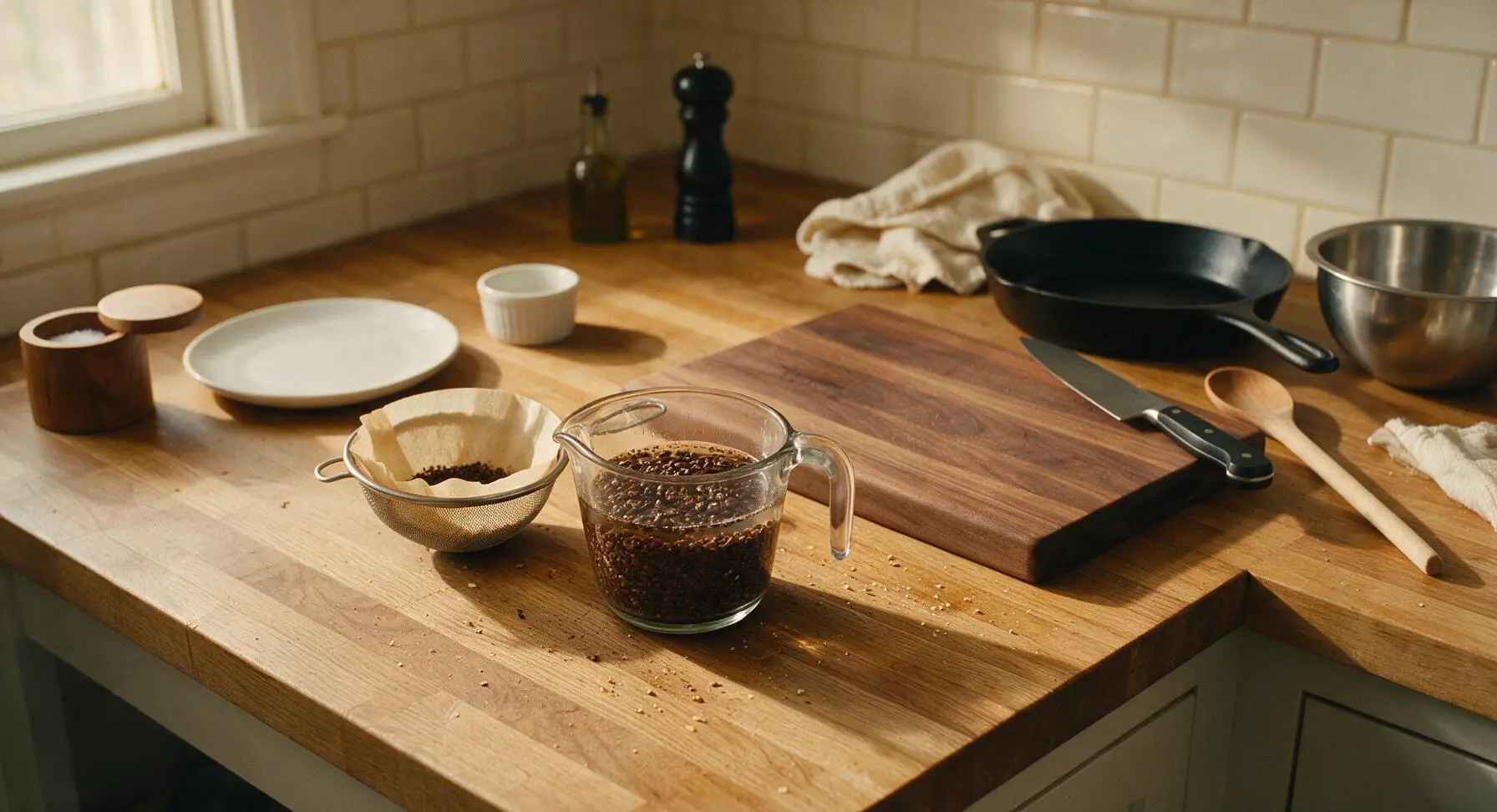
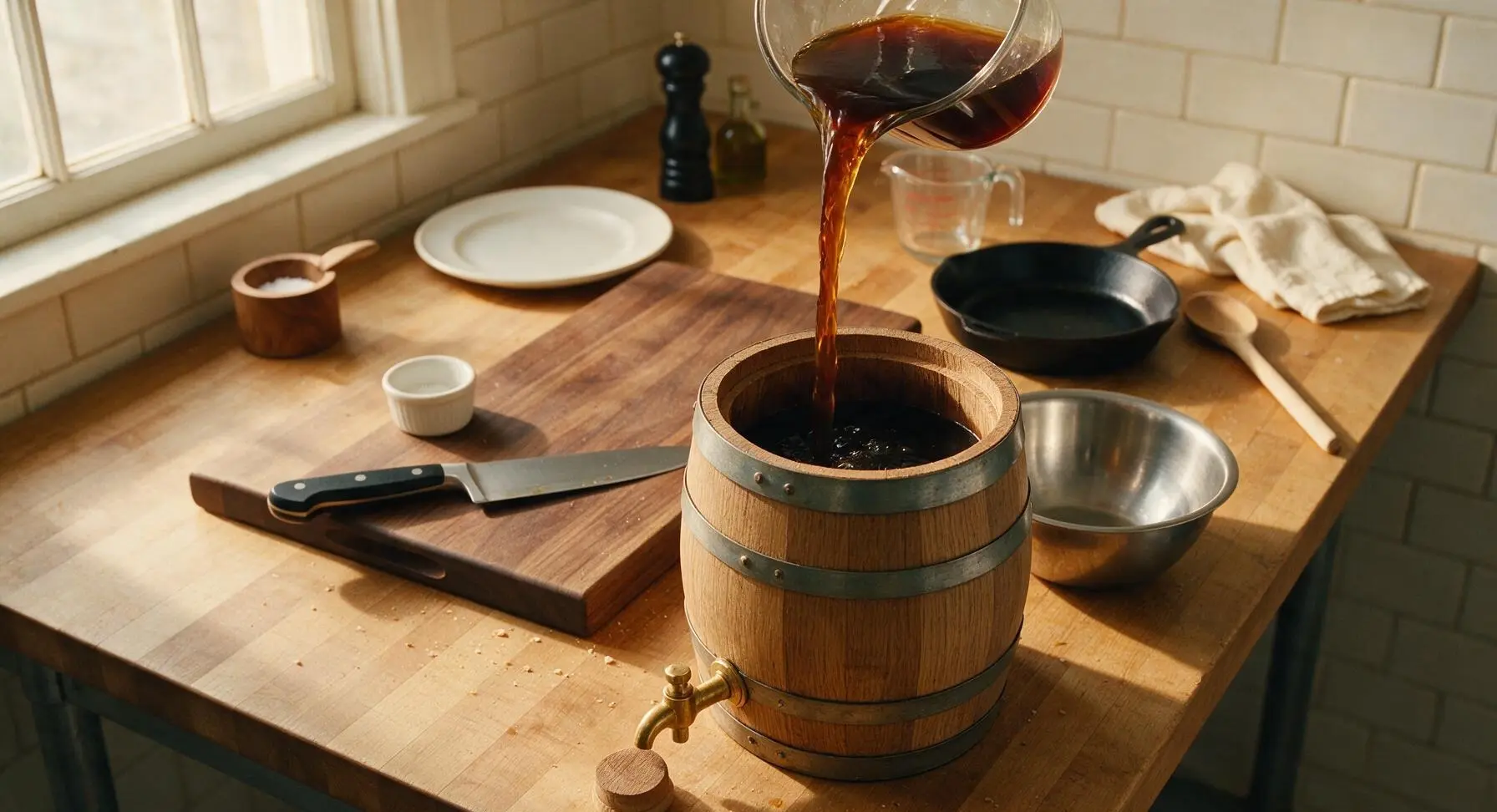
Step 7
step7:Infuse Roasted Coffee
Step 7
step7:Infuse Roasted Coffee
8

Bottle and Condition

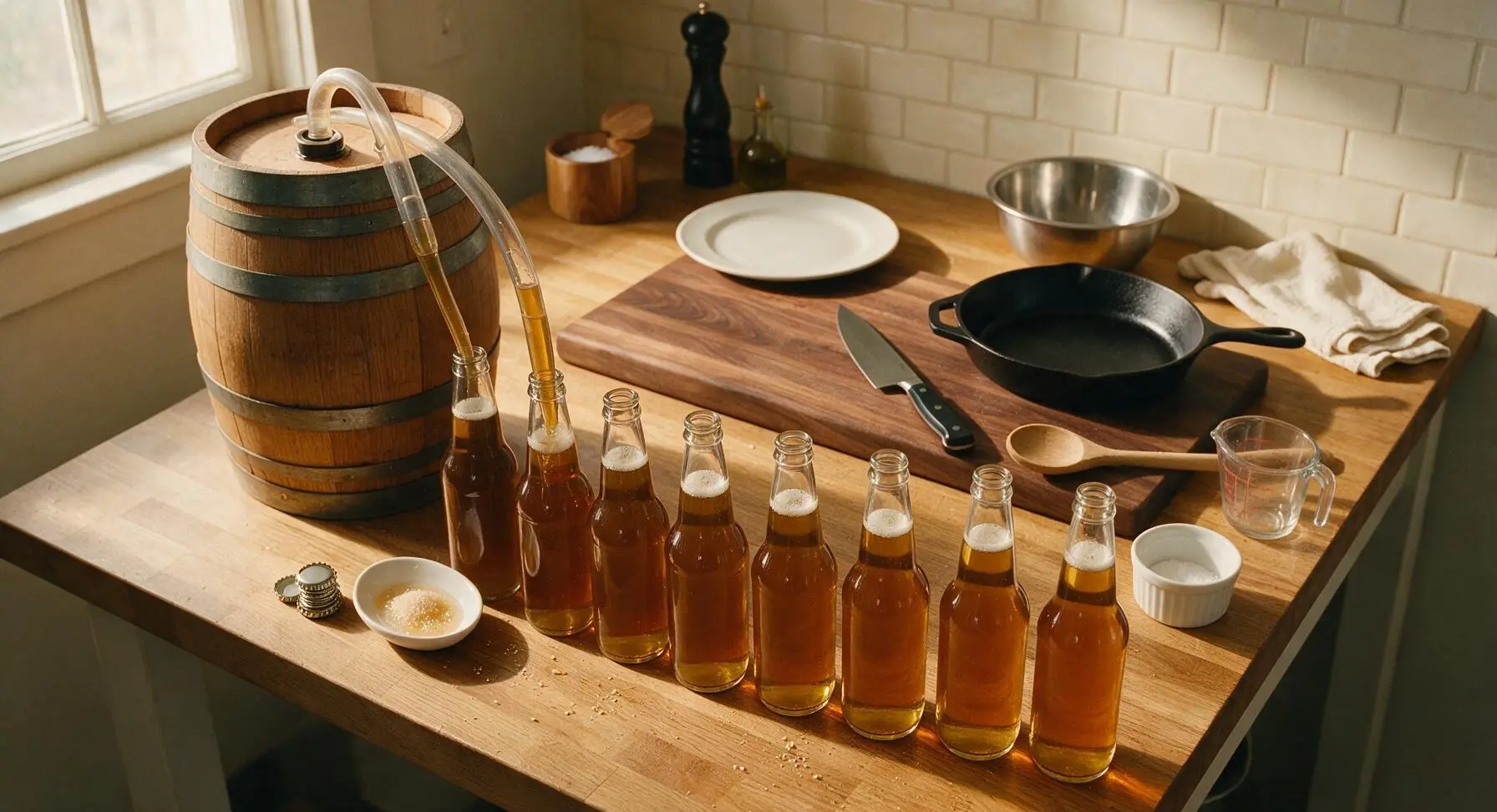
After the 2 week barrel aging and coffee infusion, sanitize 8 12oz glass beer bottles and metal crown caps. Dissolve the 30g corn sugar in 50ml boiling water, cool completely, and add to the bottom of a sanitized bottling vessel. Use the auto-siphon to transfer the finished beer from the oak barrel into the bottling vessel, mixing gently to evenly distribute the priming sugar. Fill each bottle to 1 inch below the rim, cap tightly, and store in a dark 18C (65F) space for 1 week to allow natural carbonation to develop before chilling and serving.
Step 8
step8:Bottle and Condition

Tips

1.Avoid steeping coffee for longer than 24 hours in the barrel, and always use a coarse grind: over-extraction will leach harsh, astringent bitter compounds that overpower the delicate spicy rye and bright citrus hop balance.
2.Maintain a steady 13C (55F) temperature throughout fermentation and barrel aging: fluctuating temperatures will produce off-flavors like rotten egg sulfur or overly fruity esters that clash with the smooth oak and roasted coffee character.
3.Before filling the oak barrel for aging, rinse it with hot filtered water and let it sit for 2 hours to check for leaks: a dry, unused barrel will have small gaps between staves that can seep beer, leading to oxidation or bacterial contamination that ruins the final batch.


✨ You May Also Like

Drinks & Beverages
🍜 Mexico

A bright, balanced tequila-based cocktail with zesty fresh lime, smooth orange liqueur, and a signature salt rim, perfect for warm summer sipping.

⏱️ 5 minutesDrinks & Beverages ★ 4.9
Drinks & Beverages
🍜 United States

Thick, creamy, nostalgic classic vanilla milkshake with a rich, smooth texture, topped with whipped cream and a cherry for cool, sweet refreshment.

⏱️ 5 minutesDrinks & Beverages ★ 4.7
Drinks & Beverages
🍜 United States

A bright, golden strong ale with fruity banana-clove notes, subtle hop spice, and soft carbonation, brewed in classic Trappist Tripel tradition.

⏱️ 2 hours aDrinks & Beverages ★ 4.5
Drinks & Beverages
🍜 United States

A frothy, nostalgic American soda fountain treat pairing bubbly cold root beer with creamy vanilla ice cream, perfect for cooling down at warm weather gatherings.

⏱️ 20 minuteDrinks & Beverages ★ 4.8
Drinks & Beverages
🍜 United States

Tart, funky, effervescent American Wild Ale is a complex fruity craft beer brewed with wild yeast, delivering bright, zesty notes perfect for warm-weather sipping.

⏱️ 2 hours aDrinks & Beverages ★ 4.4
Drinks & Beverages
🍜 United States

Bright, bubbly copycat of the iconic American caramel cola, balanced with citrus and warm spice, perfect for sipping ice-cold on hot days.

⏱️ 15 minuteDrinks & Beverages ★ 4.8

Coffee Rye Barrel Aged IPL:Frequently Asked Questions

1.What exactly is an IPL, and how is it different from a standard IPA for this recipe? ▾
IPL stands for India Pale Lager, meaning it ferments cool with clean lager yeast instead of the fruity ale yeast used for IPAs. Built on a pale 2-row malt base, that crisp, neutral foundation lets the rye spice, coffee depth, oak warmth, and bright Citra hop notes shine, without estery ale flavors muddling that carefully balanced bold, bright profile.
2.Why use medium roast Ethiopian coffee instead of a darker roast here? ▾
Medium roast Ethiopian beans bring subtle bright, fruity, floral notes that pair perfectly with Citra’s citrus zest, without the ashy, bitter burnt edge you get from dark French or Italian roasts. Dark roast would overpower the delicate rye spice and smooth oak character, throwing off the recipe’s balance of bold, bright, and warm flavors.
3.Do I need a full oak barrel to get that barrel-aged flavor, or can I skip that element? ▾
You absolutely don’t need a full-size charred oak barrel to nail that profile! Add 1–2 ounces of medium-toast charred American oak cubes (soaked in neutral bourbon for 48 hours for extra depth) to secondary for 10–14 days, and you’ll get that same smooth, warm oak note without the cost or hassle of a full barrel.
4.How much rye malt should I use to get that spicy bite without harsh astringency? ▾
Stick to 10–15% of your total grain bill for rye malt here. Any more than 15% and you’ll get harsh, grainy astringency and frustrating stuck mash issues, while less than 10% won’t deliver that signature peppery rye bite that cuts through rich coffee and smooth oak to keep the beer bright and crisp.
5.When is the best time to add coffee to avoid harsh, bitter coffee flavor? ▾
Add your crushed medium roast Ethiopian beans during the last 48 hours of secondary fermentation, not during the boil. Boiling coffee extracts harsh, bitter tannins and dulls its aromatic notes; cold steeping in nearly finished fermenting beer gives smooth, layered roasted coffee flavor that blends seamlessly with hops and oak, no acrid aftertaste.
6.What lager yeast works best for this specific IPL recipe? ▾
Reach for a clean, neutral American lager yeast like Wyeast 2112 California Lager or US-05 dry lager yeast, fermented at 55–60°F for the first week before slowly ramping down to lagering temps. This gives a crisp, clean backbone without strong sulfur notes that would clash with bright citrus hops and nuanced coffee flavor.
7.Why use Magnum hops for bittering instead of a more aromatic hop variety? ▾
Magnum is a high-alpha, clean bittering hop that delivers smooth, sharp bitterness without grassy, herbal, or fruity off-notes that would muddle the recipe’s balance. It provides the firm bitter backbone an IPL needs to stand up to rye and coffee, while letting bright, zesty Citra hops take center stage for aroma, no competing flavors.
8.How do I keep the bright Citra hop aroma from getting lost under coffee and oak? ▾
Add 70% of your Citra allotment as dry hops during the last 3 days of secondary, right alongside the coffee beans. Add them when fermentation is almost fully complete to preserve their volatile grapefruit and tropical citrus notes, so they pop on the first sip instead of getting scrubbed out by active CO2 or covered by oak and coffee.
9.How long do I need to lager this beer before it’s ready to drink? ▾
After primary fermentation and secondary conditioning on oak, coffee, and dry hops, hold the beer at 32–35°F for 3–4 weeks of lagering time. This cold conditioning smooths rough bitter edges from rye, hops, and coffee, lets flavors meld, and delivers that signature crisp, clean IPL mouthfeel without harsh young-beer bite.
10.Will the coffee make this beer taste heavy, like a breakfast stout? ▾
Not at all! Because we use a light pale 2-row lager base, a modest portion of rye, medium-roast (not dark) coffee, and bright citrus hops, the coffee reads as a subtle roasted depth note, not a heavy, thick stout-like flavor. It’s lighter-bodied, crisp, and snappily carbonated, perfect for cold sipping, not rich or cloying like a stout.
11.Can I use pre-ground grocery store coffee for this recipe? ▾
Skip pre-ground grocery store coffee if you can! Pre-ground coffee goes stale quickly, losing those bright, nuanced Ethiopian fruity notes and picking up flat, cardboard-like off flavors. Grind whole beans right before adding them to secondary, using a coarse cold-brew style grind, to get the smoothest, freshest coffee flavor possible.
12.What target ABV gives the best flavor balance for this IPL? ▾
Aim for a final ABV between 6.2–6.8% for ideal balance. That’s strong enough to hold up to bold coffee, rye spice, and oak warmth, but light enough to stay crisp and drinkable, with bright Citra hops cutting through so it never tastes boozy or heavy. Any higher and you’ll lose that bright, approachable IPL edge.
13.How do I prevent rye malt from causing a stuck mash during brewing? ▾
Rye has no hard outer husk, so it can turn gummy and clog your mash tun if you’re not careful. Add 1–2 pounds of rice hulls to your grain bill when mashing at 152°F, and don’t over-sparge with water hotter than 170°F. That keeps the mash bed loose, prevents stuck run-off, and cuts down on astringent tannin off-flavors.
14.If I can’t find Ethiopian coffee, what’s a good substitute? ▾
Reach for another medium roast Central American coffee, like Colombian or Costa Rican, if Ethiopian beans are hard to find. Look for beans with bright citrus or mild red fruit notes, not heavy, earthy, smoky, or dark chocolate-forward roasts. Skip dark roasts, flavored coffees, or instant coffee, as those will throw off the beer’s balanced profile.
15.How much oak is too much oak for a 5-gallon batch of this IPL? ▾
If using oak cubes, don’t add more than 2 ounces per 5-gallon batch, and taste the beer every 2 days after the first week of conditioning. Oak can quickly shift from a nice warm, charred vanilla note to an overpowering, woody, bitter taste that drowns out hops and coffee. Pull the cubes once you pick up that subtle, smooth barrel warmth.
16.What carbonation level works best for this Coffee Rye Barrel Aged IPL? ▾
Aim for 2.4–2.6 volumes of CO2 when carbonating, which is slightly higher than a standard ale but a little lower than a light mass-market lager. That carbonation level lifts bright Citra hop aroma, cuts through subtle coffee and oak richness, and highlights peppery rye bite, without feeling overly fizzy or thin on the palate.
17.Can I age this beer long-term, or is it best drunk fresh? ▾
This beer hits its peak 4–8 weeks after lagering finishes, when hop aroma is bright, coffee notes are fresh, and oak is smooth. You can age it for up to 3 months in a cold, dark place, but after that Citra hop aroma fades fast, coffee tastes stale, and you’ll lose that bright, balanced zing that makes this IPL work.
18.Why is it called barrel-aged if I can use oak cubes instead of a real barrel? ▾
The 'barrel aged' label refers to the signature charred oak flavor profile, not strictly requiring a used spirits barrel. Many pro brewers use oak alternatives (cubes, spirals, staves) for small batches because they’re consistent, affordable, and easy to control, delivering that warm, charred, subtly vanilla note people expect without the waste.
19.Will the rye make this beer taste like rye bread or rye whiskey? ▾
At 10–15% of the grain bill, rye adds a bright, peppery, subtle spicy bite, not a heavy bready rye bread or strong rye whiskey flavor. It acts as a middle note that bridges bright citrus hops, smooth coffee, and warm oak, adding just enough edge to keep the beer from tasting flat or one-note, with no heavy bread-like flavors.
20.What foods pair best with this finished Coffee Rye Barrel Aged IPL? ▾
This beer pairs beautifully with spicy smoked sausage, sharp aged cheddar, grilled citrus-marinated chicken, or even dark chocolate salted caramel cookies. The crisp carbonation cuts through fatty, rich foods, rye spice complements smoky flavors, and coffee and oak notes hold up to bold, savory or slightly sweet bites without getting overpowered.

Comments (8)

2 days ago

OMG, this Coffee Rye Barrel Aged IPL is an absolute game changer! I brought a batch to my neighborhood potluck last weekend and every single person was asking for the recipe. The coffee notes are perfectly balanced with the rye spice, and that barrel aging adds such a smooth, oaky finish I can’t get enough of. 10/10 worth every minute of waiting for fermentation and conditioning!

yesterday

Wait, what coffee beans did you use? I tried a test batch last month with a dark roast and it totally overpowered the rye, I’m gutted how it turned out.

2 hours ago

Great question! We recommend a medium roast single origin (we love Colombian for this recipe) added during cold crash to avoid extracting bitter, overly roasty notes that can drown out the rye and hop character. Start with 4 oz per 5 gallon batch and adjust to taste next time!

1 week ago

I was so intimidated by the 'hard' difficulty rating at first, but I followed the steps to a T and this came out SO good! My husband is a total coffee snob and he said this is better than most of the barrel aged IPLs we’ve paid $18 a four pack for at the liquor store. We cracked the first bottle at our Sunday family dinner and even my brother who hates IPAs loved it.

5 days ago

That makes us so happy to hear! The difficulty rating is mostly due to the long timeline and barrel aging step, so we’re stoked you gave it a shot even if it looked daunting at first. Cheers!

30 minutes ago

Tried this recipe over the long weekend, super excited to see how it turns out! Only note so far is that the 2 hour active cook time was pretty spot on, no weird surprise steps halfway through which I really appreciate. Fingers crossed the fermentation goes smooth, I already have my small oak barrel prepped and ready to go for the aging step.

5 days ago

Y’all, I messed up the barrel aging step the first time I made this (left it in 3 extra weeks because I went on vacation, oops) but somehow it still slapped? I will say it was a little more oaky than the recipe describes but the coffee and rye still came through, my friends drank every last bottle at our game night. Definitely making this again, but this time I’m setting 17 alarms so I don’t miss the bottling date.

3 days ago

Wait extra oak sounds like a feature not a bug to me! Did you notice any off flavors from the extra time in the barrel? I’m notorious for forgetting about my batches mid-process so that gives me hope.

2 days ago

No weird off flavors at all! I did make sure to sanitize the barrel super well before I poured the wort in, which I think helped. It just tasted like a more intense, oaky version, honestly still really drinkable!

3 days ago

Has anyone tried adapting this to use gluten free grains? I’m obsessed with coffee IPAs but I can’t do rye or regular barley, and I’ve been looking for a solid barrel aged lager recipe to test out for my next brew day. It looks so good I’m tempted to experiment even if I have to swap a few ingredients.

2 days ago

I did a test swap with 20% roasted buckwheat instead of rye and used GF pale malt as the base, it came out great! The coffee still shines, you just get a little nuttier note instead of the classic rye spice. Highly recommend giving it a shot!

2 weeks ago

Took a six pack of this on my recent camping trip with friends and it was the perfect post-hike drink. Cold, crisp, just the right hit of coffee flavor to wake us up after a long morning on the trail, not too bitter at all. Only reason I’m not giving 5 stars is I wish the rye flavor came through a little stronger on my batch, I’ll probably bump the rye malt up 10% next time I make it.

2 hours ago

This is my first ever attempt at brewing beer and I’m low-key panicking a little about the barrel aging step. I found a used bourbon barrel at my local homebrew shop, do I need to prep it any special way before pouring the fermented beer in? I don’t want to ruin 6 weeks of work over a silly mistake.

30 minutes ago

Don’t panic! First, rinse the barrel thoroughly with cool, sanitized water to remove any loose char or sediment. If it’s a used bourbon barrel, you don’t need to re-char it, but we recommend doing a quick smell test to make sure there’s no mold or off odors before transferring your beer. Fill it all the way to the bung to minimize oxygen exposure, and you’ll be golden!

yesterday

Game. Changer. I added a tiny extra dose of citrus hops at dry hop and it paired so perfectly with the cold brew coffee notes, I’ve already had three neighbors text me asking when my next batch is ready. I brought a few bottles to my office potluck last week and my boss even offered to pay me for a full case! That’s how good this is.

2 hours ago

What citrus hops did you use? I was thinking of adding some cascade or citra to my next batch to brighten it up a little, would you recommend that?

5 minutes ago

I used Citra! It added that perfect bright, tropical citrus note that cut through the rich coffee and oak so nicely. Would absolutely recommend, just don’t add too much or you’ll cover up that awesome rye spice.



