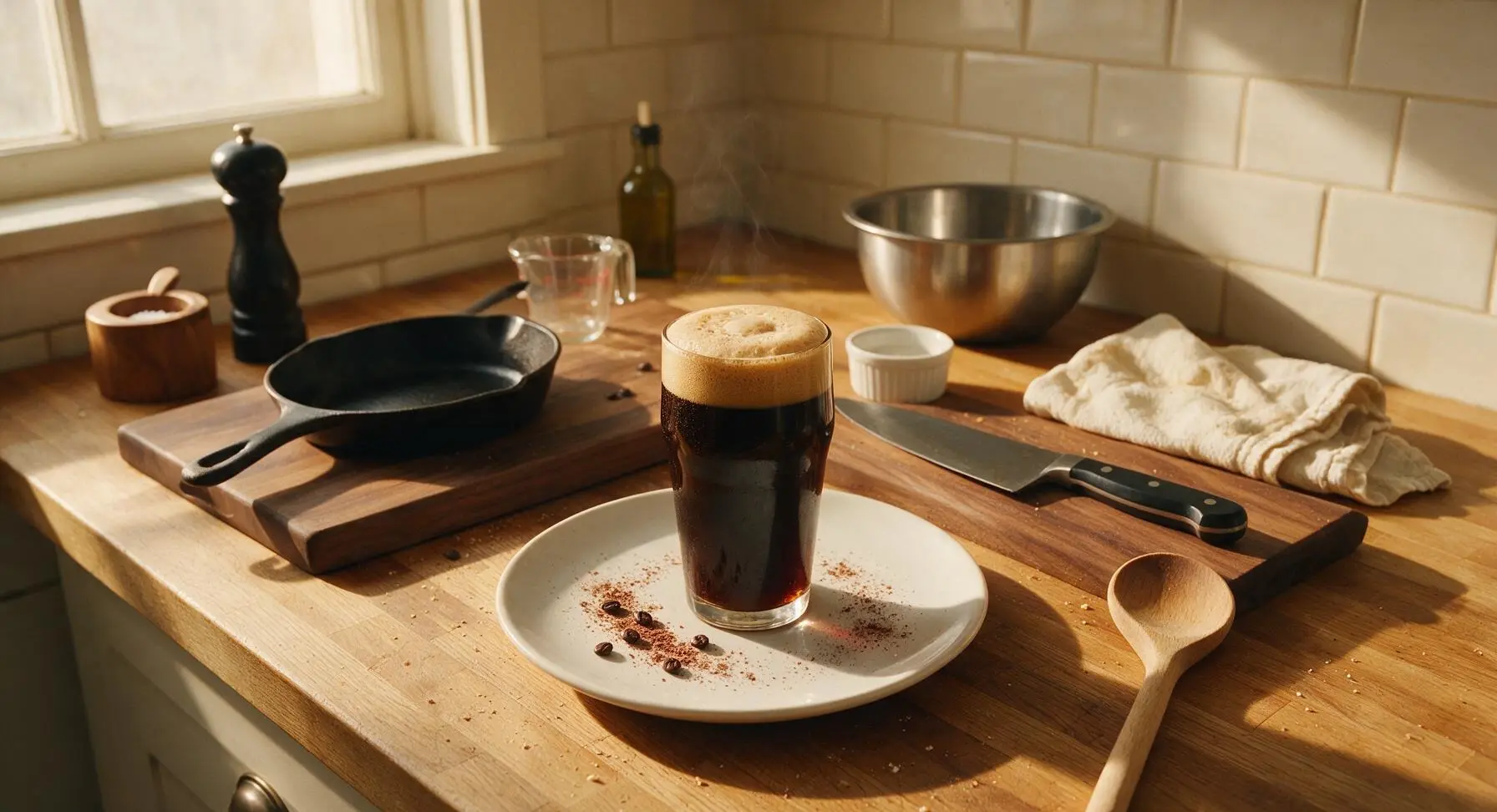
Coffee Stout Craft Beer

Coffee Stout Craft Beer
⏱️ cook time 2 weeks 1 hour (1 hour active boil, 2 weeks fermentation and conditioning)
🍽️ servings 8
⚡ Difficulty medium

intro

Rich, roasty homebrewed coffee stout layered with notes of dark chocolate, cold brew, and caramel, smooth enough for casual sipping and bold enough for dedicated craft beer fans.

Ingredients
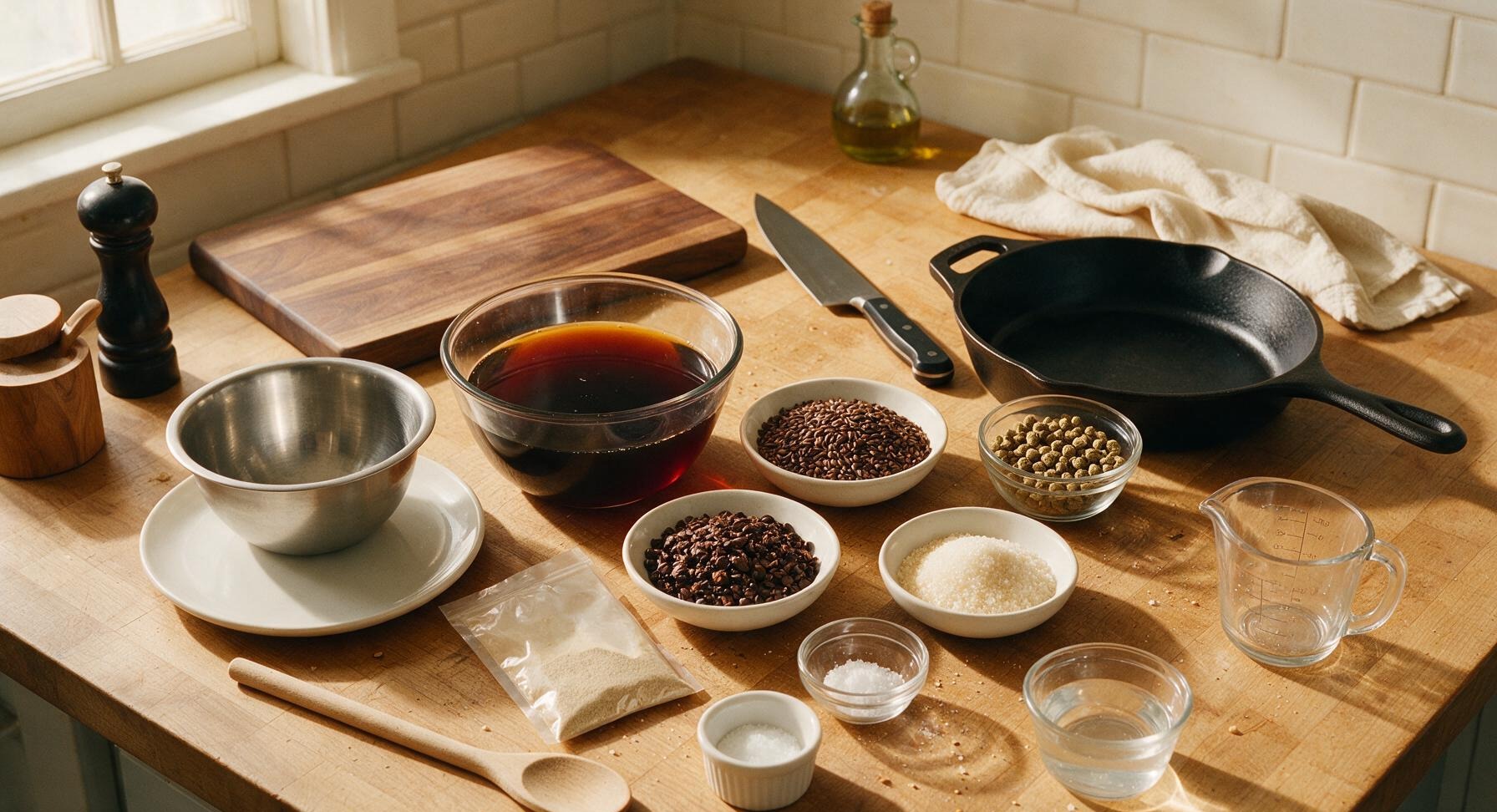
Dark liquid malt extract (60% pale / 40% roasted) 3.3 lbs (1.5kg)
Roasted barley grains 4 oz (113g)
Coarsely crushed medium-roast coffee beans 2 oz (57g)
Cascade hop pellets 1 oz (28g)
Dry English ale yeast 1 packet (11g)
Brewing salts (gypsum + calcium chloride blend) 1 tsp
Corn sugar (for carbonation) 2 oz (57g)
No-rinse food-grade brewing sanitizer 1 tbsp, mixed with 1 gallon cool water

Steps

1

Sanitize Brewing Equipment

First, mix 1 tablespoon no-rinse sanitizer with 1 gallon of cool water in the brew kettle. Submerge the stirring spoon, strainer, auto-siphon, fermentation carboy, airlock, rubber stopper, and beer bottles in the solution for 60 seconds, then spray all surfaces that will touch cooled beer with sanitizer. Allow gear to air dry completely; no residual sanitizer suds should be visible. This step prevents off-flavors and bacterial contamination.
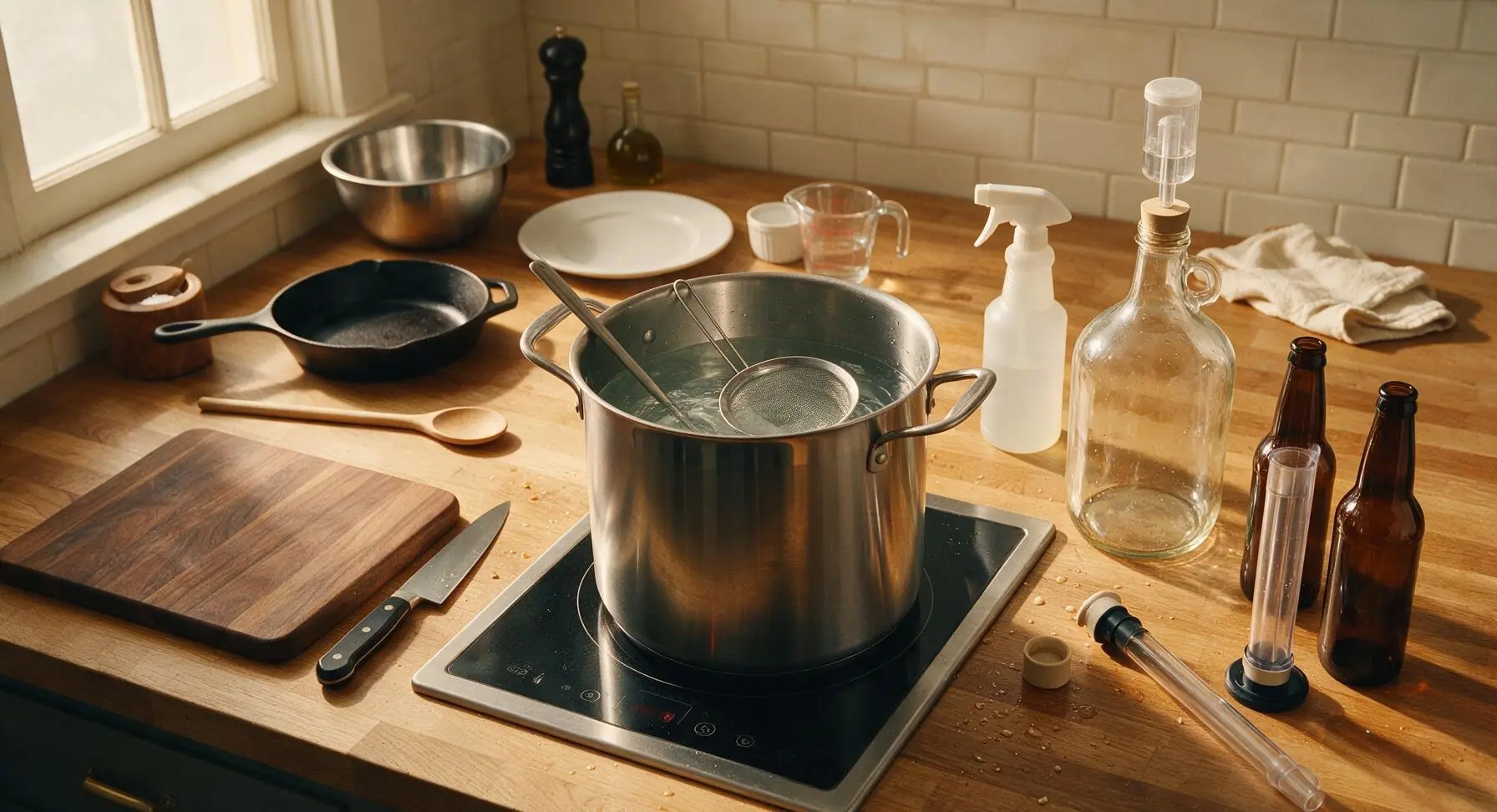
Step 1
step1:Sanitize Brewing Equipment
2

Steep Roasted Barley Grains

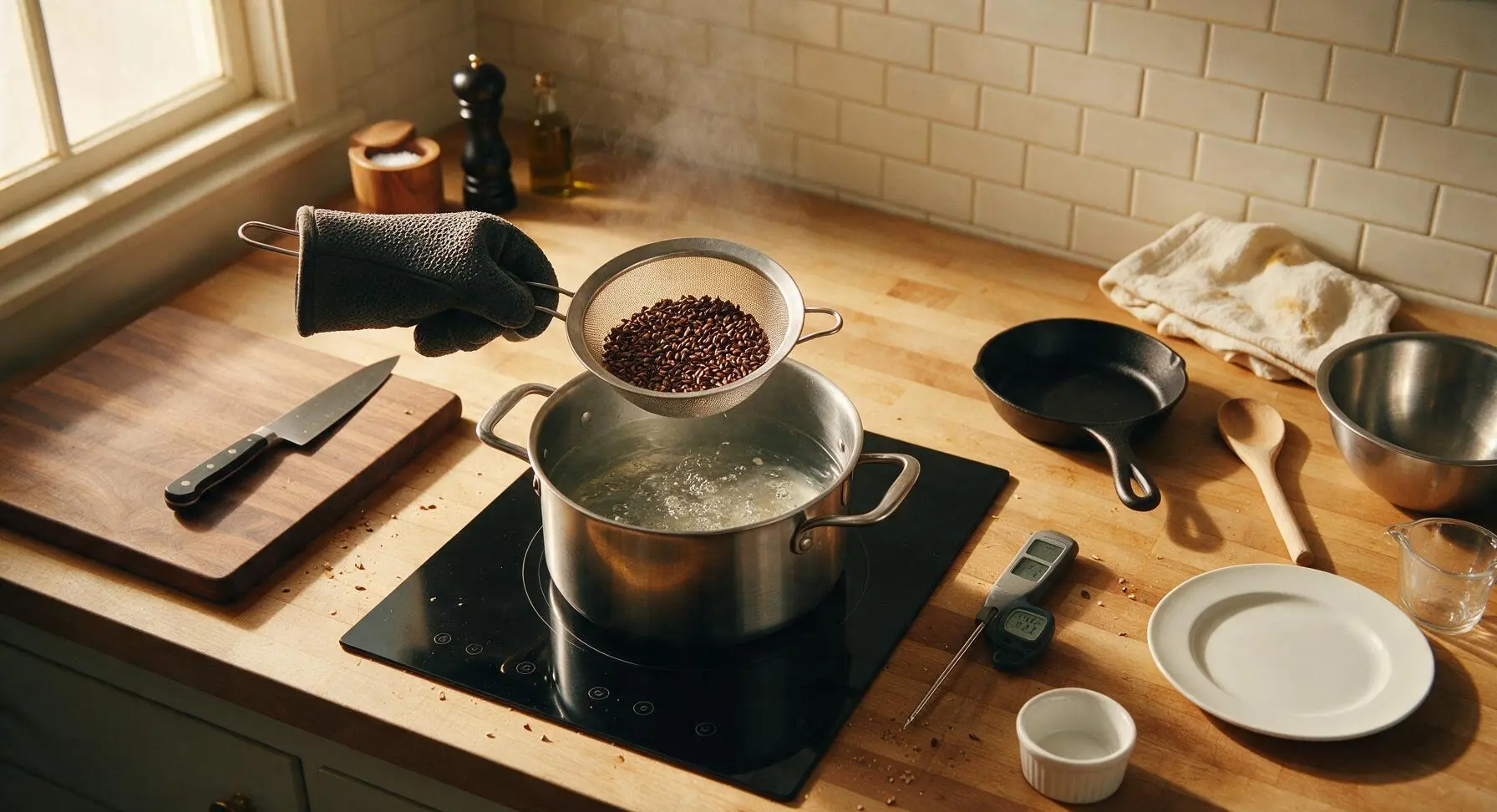
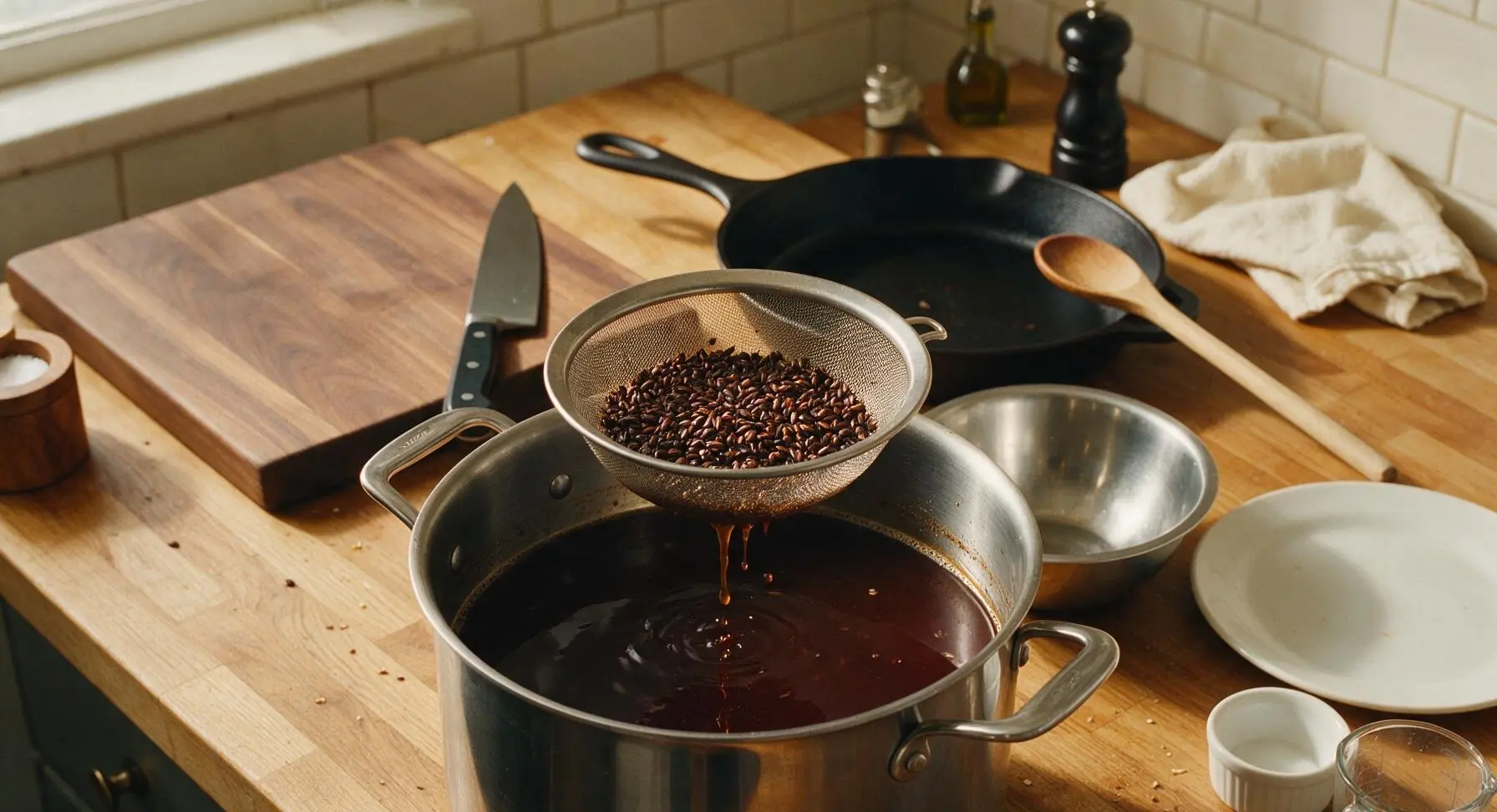
Fill the brew kettle with 1 gallon of cool filtered water, add brewing salts, and place over medium heat. Place roasted barley grains in the fine-mesh strainer, and submerge in the water once it reaches 150°F (66°C). Hold the temperature steady at 150-155°F for 20 minutes, then remove the grain strainer, allowing all liquid to drain back into the kettle. The water will turn a deep, dark mahogany color as the grains steep.
Step 2
step2:Steep Roasted Barley Grains
Step 2
step2:Steep Roasted Barley Grains
3

Boil the Wort Base

Turn the induction burner to high to bring the steeped grain water to a rolling, gentle boil (212°F / 100°C at sea level). Once boiling, slowly stir in all of the dark liquid malt extract with the long stainless steel spoon, stirring constantly until fully dissolved to prevent burning on the bottom of the kettle. Once dissolved, return the wort to a steady rolling boil, being careful to avoid boilovers.
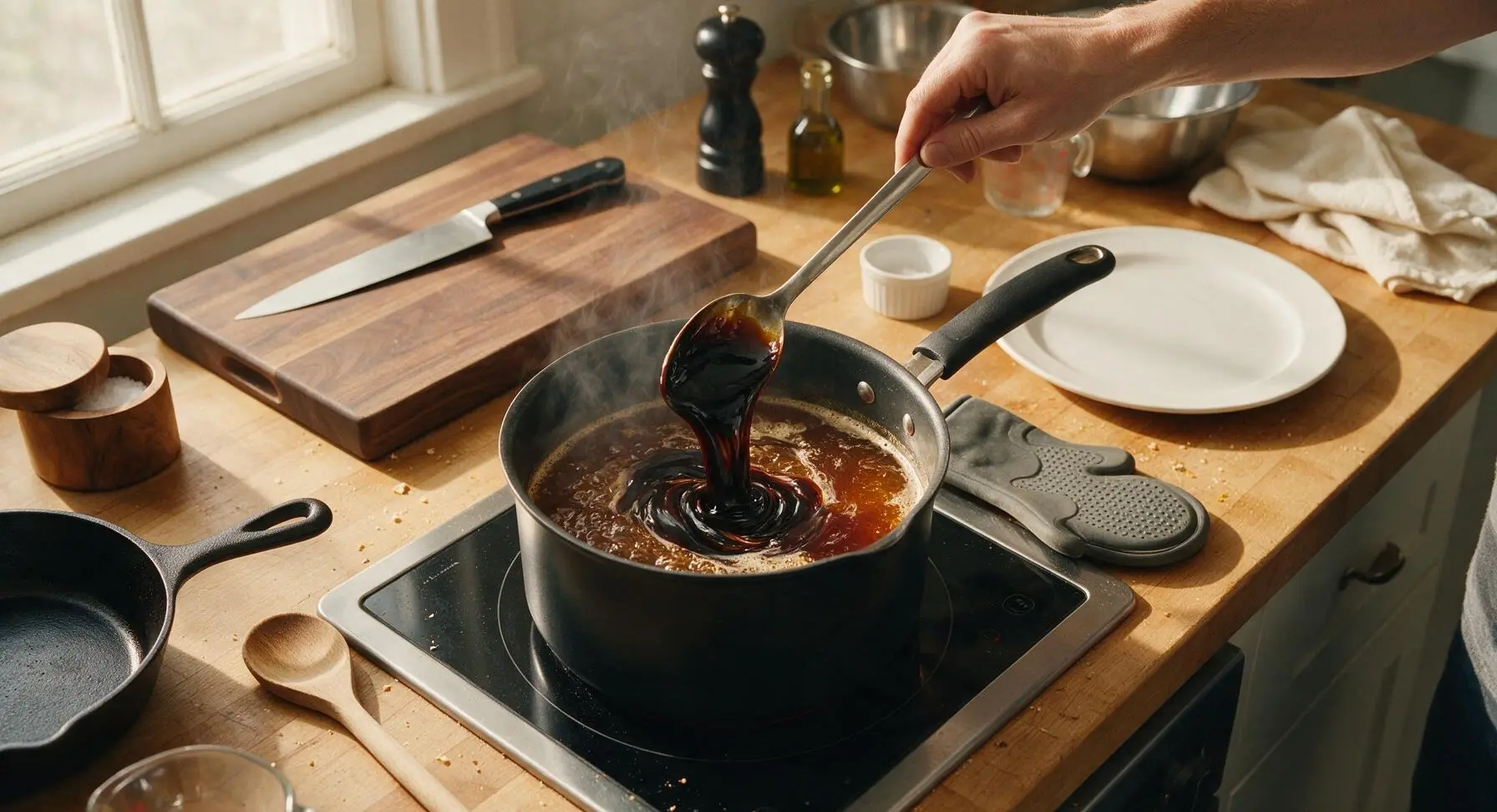
Step 3
step3:Boil the Wort Base
4

Add Hops on Schedule

Once the wort returns to a steady boil after adding malt, set a timer for 60 minutes. Add 0.75 oz of Cascade hop pellets at the start of the 60-minute boil for balanced bitterness. Add the remaining 0.25 oz of Cascade hops during the last 5 minutes of the boil for bright, citrusy aroma. Keep the boil gentle, adjusting heat as needed to prevent foam from boiling over the kettle edge. The wort will darken slightly and develop a rich, hoppy aroma as it boils.
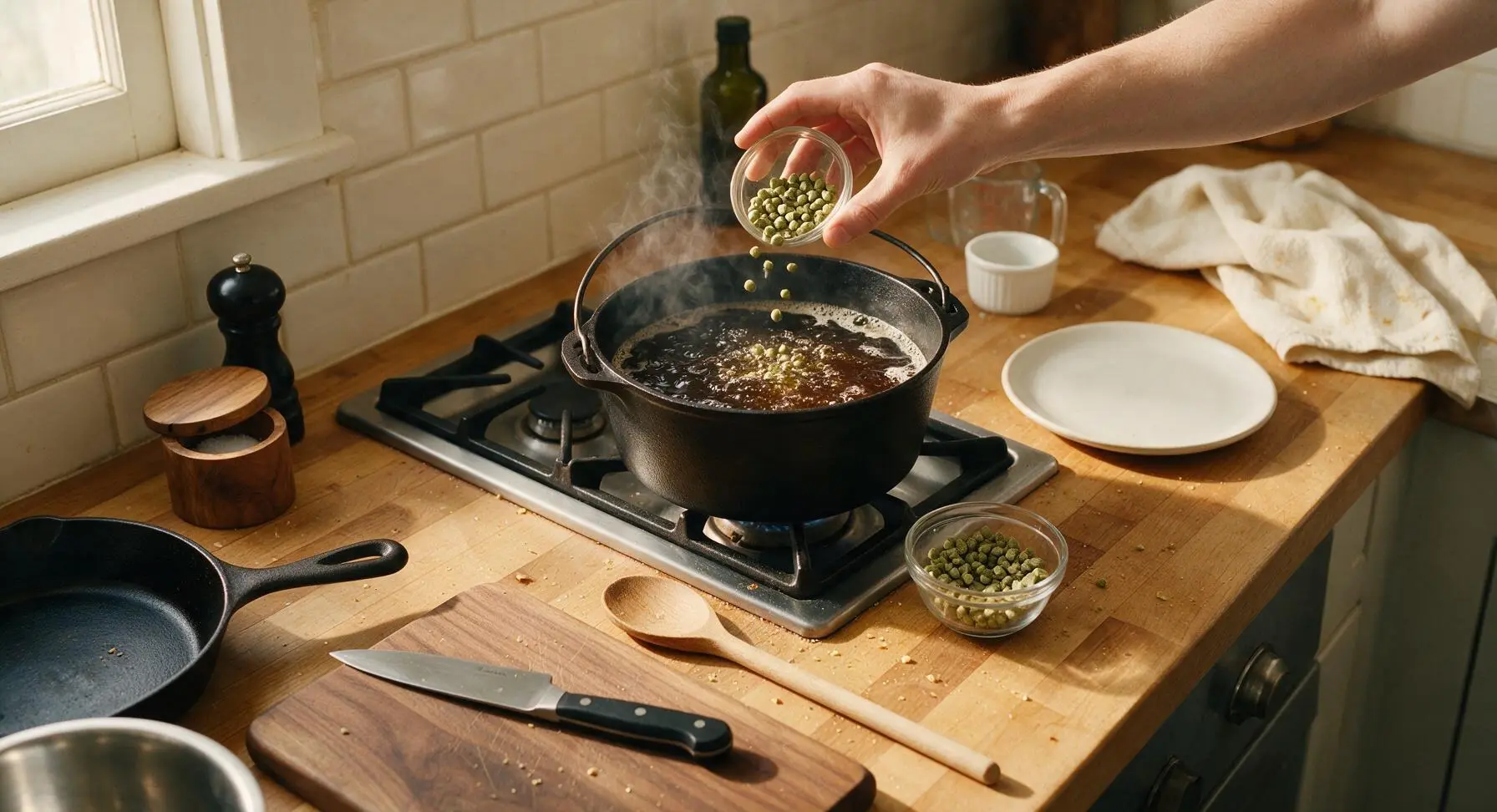
Step 4
step4:Add Hops on Schedule
5

Cool Wort and Pitch Yeast

After the 60-minute boil is complete, turn off the heat. Place the lid on the kettle and set it in an ice bath in a clean sink until the wort cools to exactly 70°F (21°C), measured with the digital instant-read thermometer (this takes approximately 20 minutes). Pour the cooled wort through the fine-mesh strainer into the sanitized glass carboy, then sprinkle the entire packet of dry English ale yeast evenly over the wort surface. Seal the carboy with the sanitized rubber stopper and airlock, filling the airlock halfway with sanitizer solution.
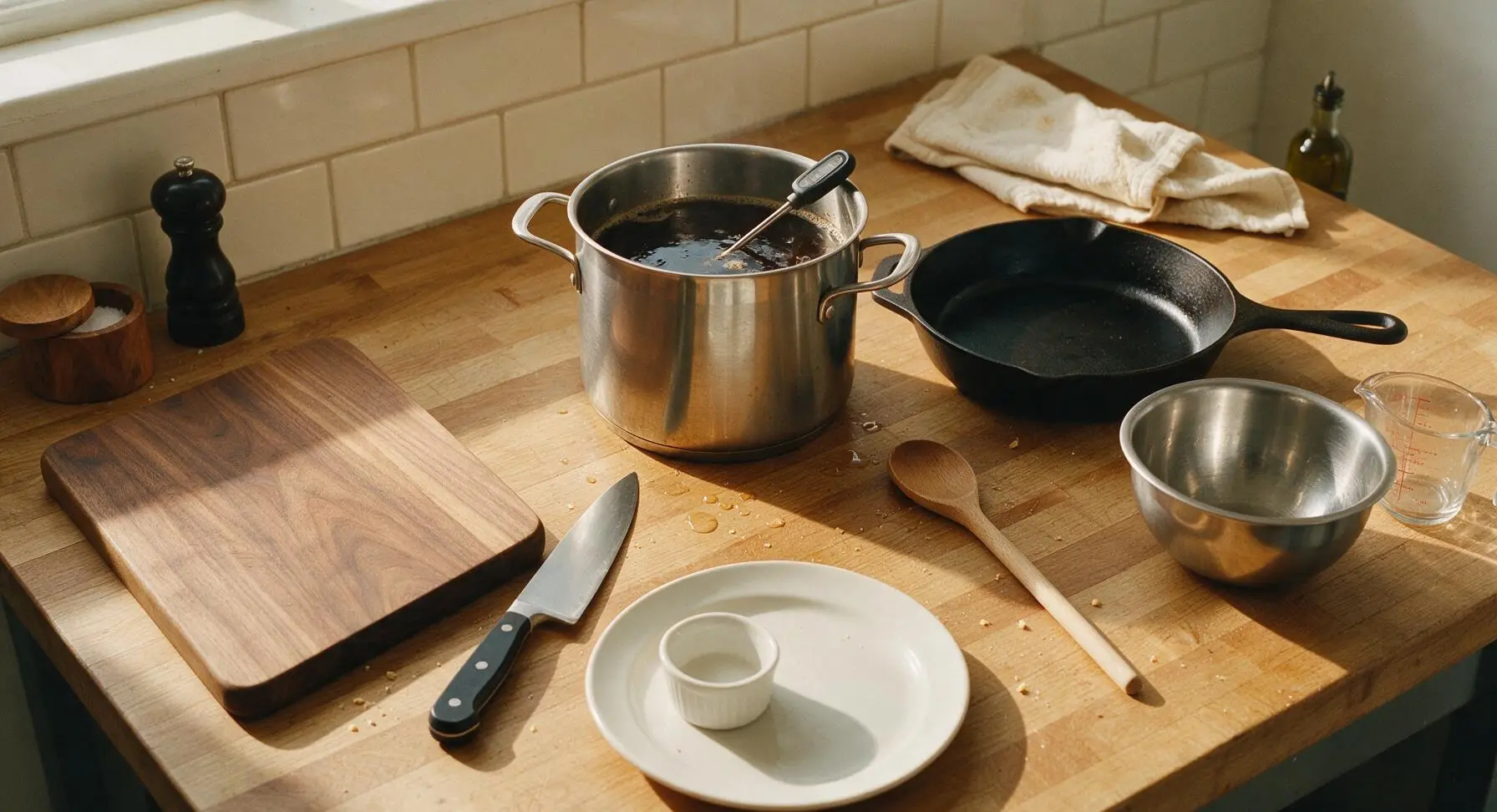
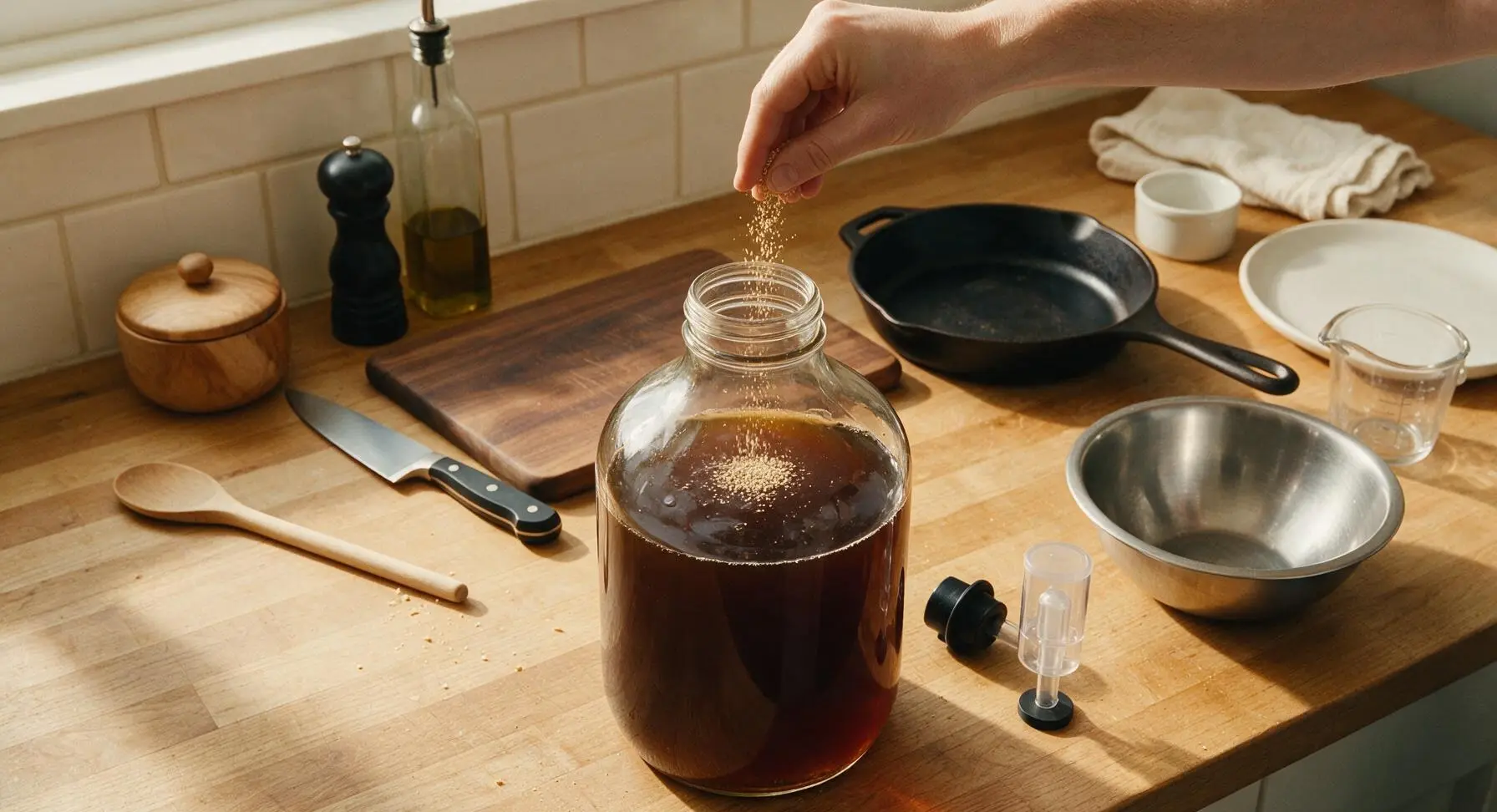
Step 5
step5:Cool Wort and Pitch Yeast
Step 5
step5:Cool Wort and Pitch Yeast
6

Infuse Coffee for Flavor

After 3 days of primary fermentation at a steady 65-70°F (18-21°C), when vigorous bubbling in the airlock slows to 1 bubble every 30 seconds, add the coarsely crushed coffee beans directly to the carboy through the neck (no need to strain immediately). Allow the coffee to infuse for 48 hours at the same steady temperature, which will extract smooth, roasty coffee notes without harsh bitter astringency.
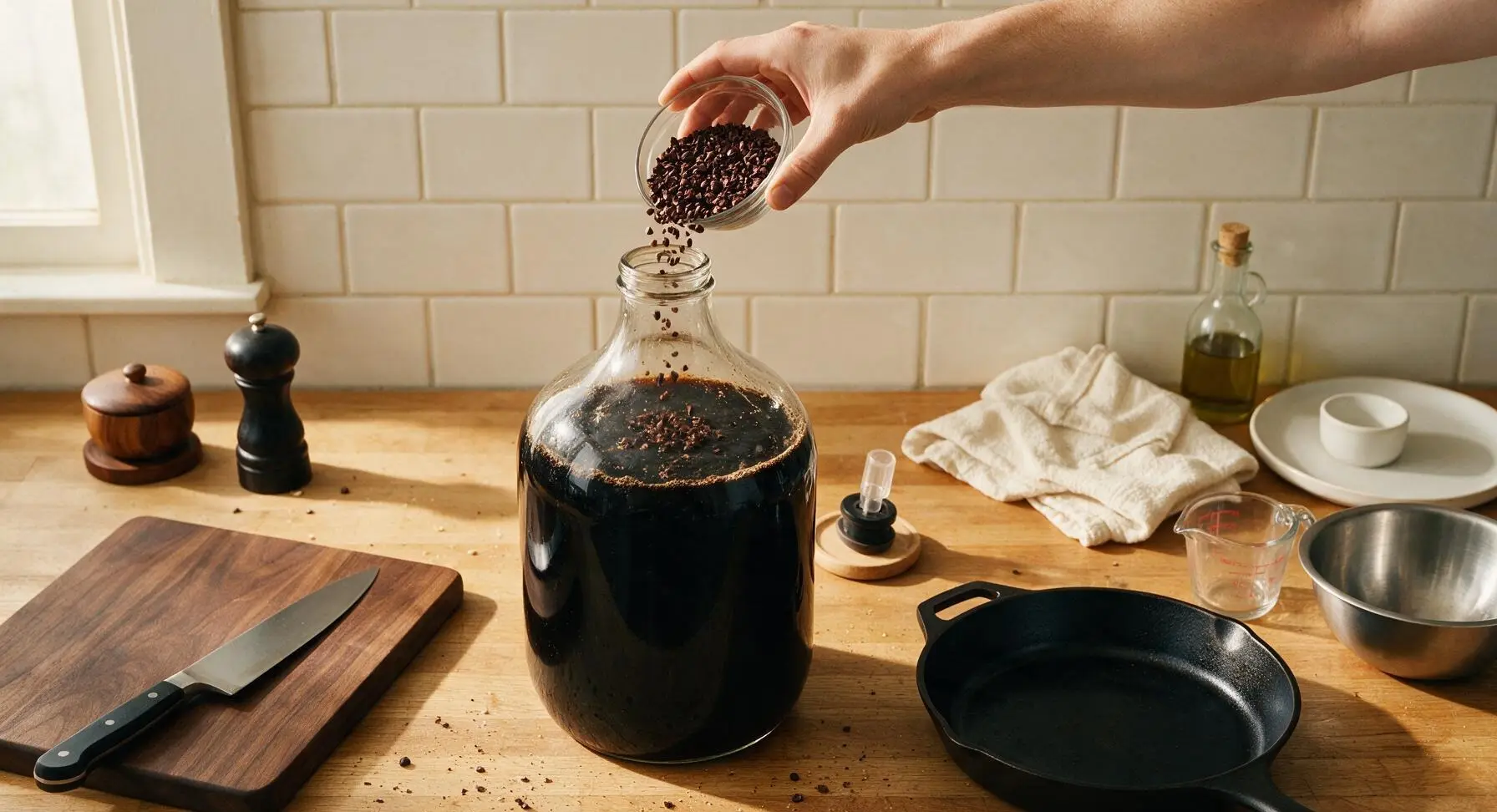
Step 6
step6:Infuse Coffee for Flavor
7

Bottle and Carbonate Beer

After 48 hours of coffee infusion, siphon the finished beer into sanitized amber glass bottles, adding 2 oz of corn sugar (dissolved in ¼ cup boiled, cooled water) evenly across the batch to create natural carbonation. Seal bottles tightly with sanitized crown caps, and store them in a cool, dark 65-70°F space for 1 week to allow carbonation to develop. After 1 week, move bottles to the refrigerator to chill for 24 hours before serving.
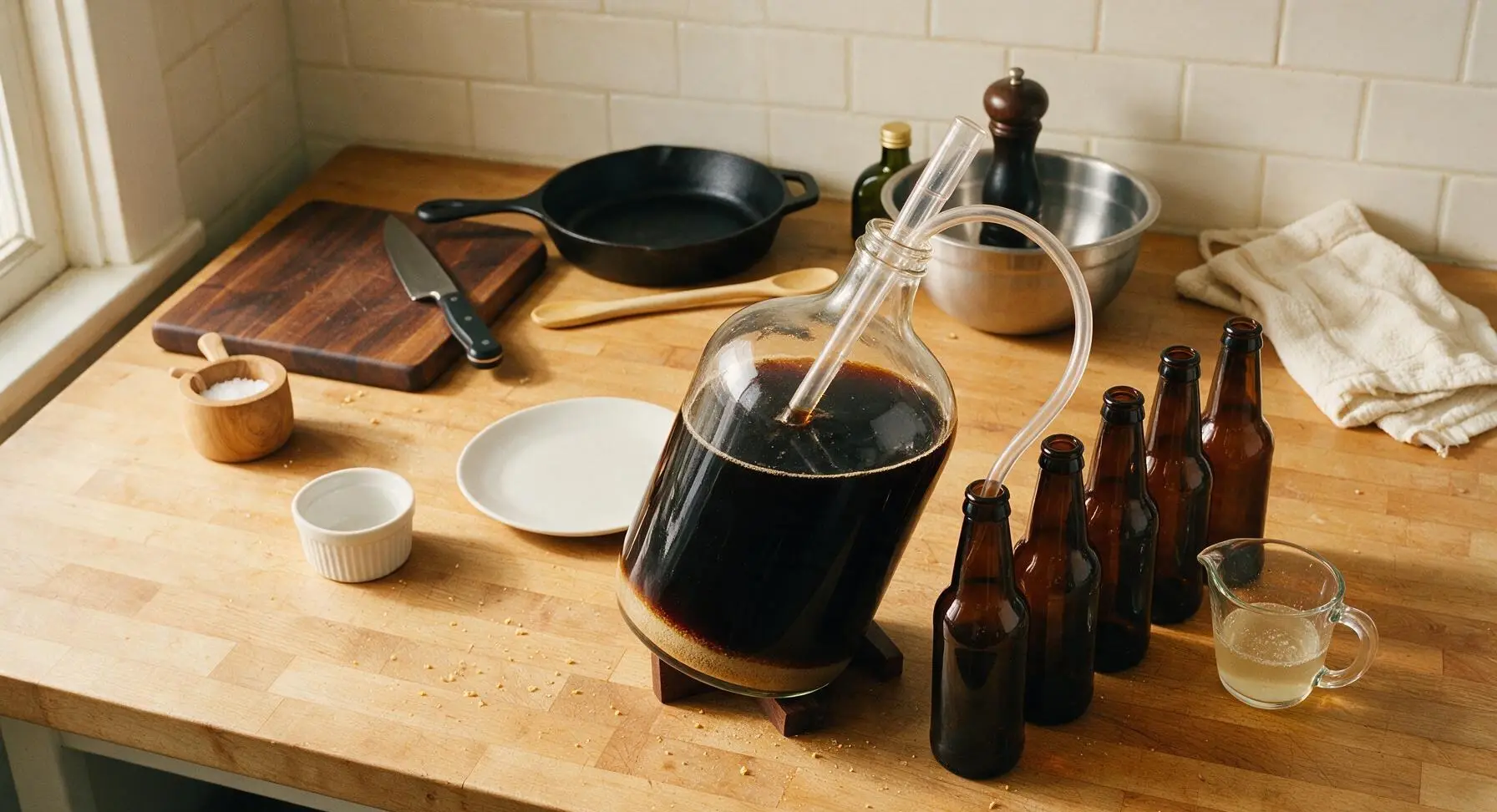
Step 7
step7:Bottle and Carbonate Beer
8

Pour and Enjoy Stout

Remove chilled bottles from the refrigerator, crack the cap, and pour slowly into the clear heavy-base pint glass held at a 45-degree angle, tilting the glass upright as you pour to build a 1-inch thick creamy tan head. Serve immediately, while cold and carbonated.
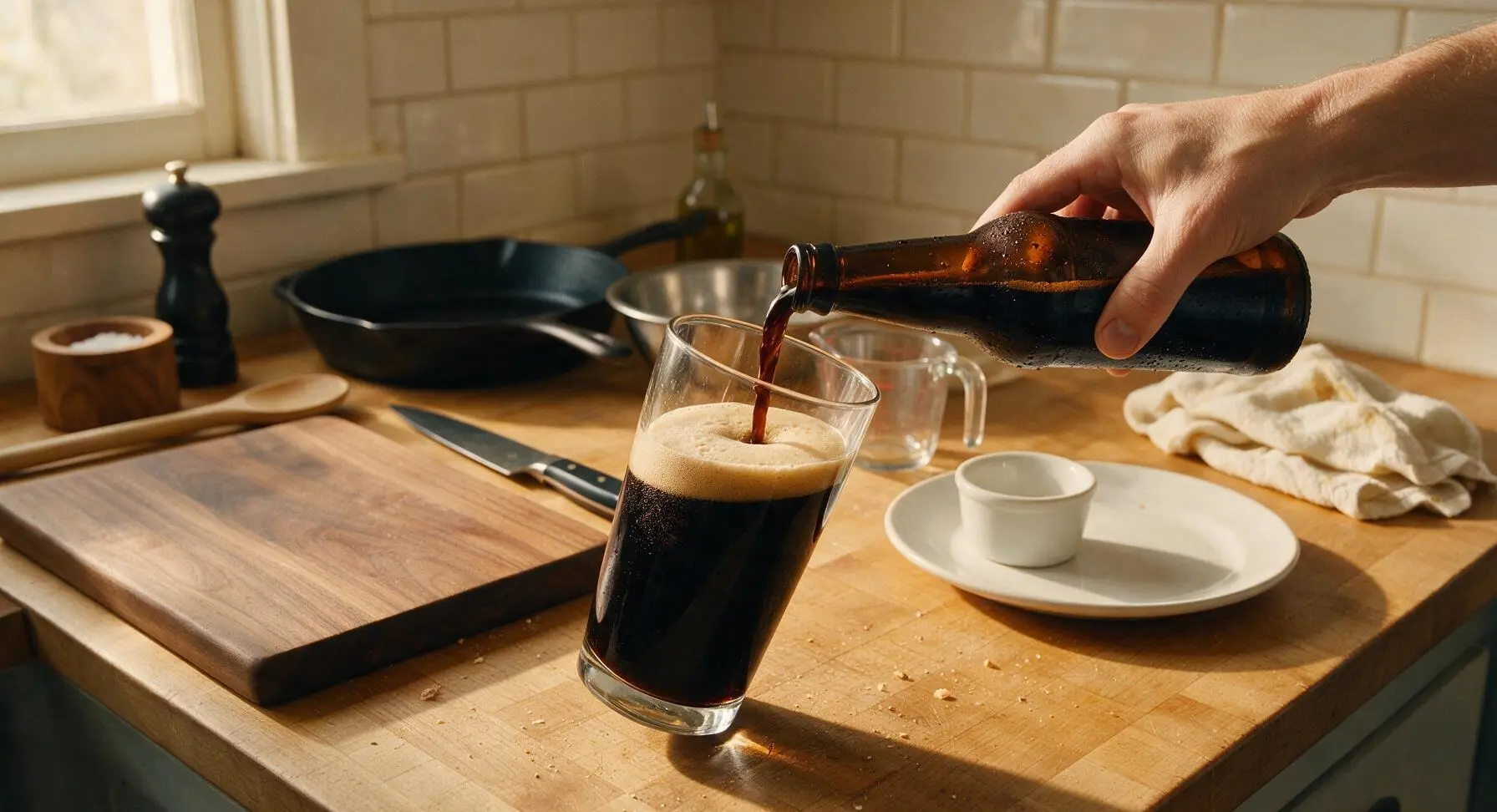
Step 8
step8:Pour and Enjoy Stout

Tips

1.Add coffee only after the first 3 days of vigorous primary fermentation, not during the boil. Boiling coffee extracts harsh, astringent tannins that make the beer taste overly bitter, while adding coffee during peak fermentation causes delicate coffee aromas to escape through the airlock as CO2 bubbles out.
2.Sanitize every single surface that will touch wort once it drops below 160°F. Wild yeast and bacteria present on un-sanitized gear can create sour, vinegary off-flavors that ruin an entire batch; no-rinse brewing sanitizer is food-safe and leaves no aftertaste, so no post-sanitizing rinse is required.
3.Measure priming corn sugar exactly using the digital scale, rather than estimating. Too much sugar creates over-pressurized bottles that can gush or even crack when opened, while too little sugar results in flat, lifeless stout with no signature creamy tan head.
✨ You May Also Like

Drinks & Beverages
🍜 Mexico

A bright, balanced tequila-based cocktail with zesty fresh lime, smooth orange liqueur, and a signature salt rim, perfect for warm summer sipping.

⏱️ 5 minutesDrinks & Beverages ★ 4.9
Drinks & Beverages
🍜 United States

Thick, creamy, nostalgic classic vanilla milkshake with a rich, smooth texture, topped with whipped cream and a cherry for cool, sweet refreshment.

⏱️ 5 minutesDrinks & Beverages ★ 4.7
Drinks & Beverages
🍜 United States

A bright, golden strong ale with fruity banana-clove notes, subtle hop spice, and soft carbonation, brewed in classic Trappist Tripel tradition.

⏱️ 2 hours aDrinks & Beverages ★ 4.5
Drinks & Beverages
🍜 United States

A frothy, nostalgic American soda fountain treat pairing bubbly cold root beer with creamy vanilla ice cream, perfect for cooling down at warm weather gatherings.

⏱️ 20 minuteDrinks & Beverages ★ 4.8
Drinks & Beverages
🍜 United States

Tart, funky, effervescent American Wild Ale is a complex fruity craft beer brewed with wild yeast, delivering bright, zesty notes perfect for warm-weather sipping.

⏱️ 2 hours aDrinks & Beverages ★ 4.4
Drinks & Beverages
🍜 United States

Bright, bubbly copycat of the iconic American caramel cola, balanced with citrus and warm spice, perfect for sipping ice-cold on hot days.

⏱️ 15 minuteDrinks & Beverages ★ 4.8

Coffee Stout Craft Beer:Frequently Asked Questions

1.When should I add the coffee beans to get smooth cold brew flavor without harsh bitterness? ▾
Add your coarsely crushed medium-roast beans during the last 5 minutes of the boil, or steep them in cooled, fermented beer for 24 to 48 hours before bottling. Avoid boiling coffee longer than that, as it extracts sharp, astringent compounds that overpower the smooth dark chocolate and caramel notes this recipe is built around.
2.Can I substitute dark liquid malt extract if I only have dry malt extract on hand? ▾
Absolutely! Swap liquid dark malt extract for dry dark malt extract at a 1:1.25 ratio (1 pound liquid = 1.25 pounds dry) to maintain the 60% pale/40% roasted malt balance. Stir dry extract fully into hot wort to avoid clumping or scorching on the bottom of your brew pot for consistent, rich flavor.
3.Why does this recipe use Cascade hops instead of higher-alpha bittering hops? ▾
Cascade hops bring a subtle, citrusy-pine backbone that cuts through heavy roast and coffee notes without competing with them. Higher-alpha hops can add sharp, harsh bitterness that clashes with smooth dark chocolate character; Cascade’s mild 4.5–7% alpha acid range gives just enough structure to keep the beer from tasting cloying.
4.How do I avoid astringent, harsh flavors from the roasted barley grains? ▾
Never steep roasted barley in water hotter than 170°F, and don’t let it steep longer than 30 minutes before removing the grains. Higher temperatures or extra steep time pull out tannins that create a dry, puckery, ashy taste. A gentle steep delivers smooth, nutty roast notes instead of that unpleasant harsh bite.
5.What fermentation temperature works best for the dry English ale yeast? ▾
Hold fermentation steady between 65°F and 68°F for the first 7 to 10 days after pitching your dry English ale yeast. This range lets the yeast produce clean, slightly fruity ester notes that complement caramel and coffee, without the solvent or overly banana-like off-flavors that pop up if fermentation gets too warm.
6.Do I need to rehydrate my dry English ale yeast before pitching it? ▾
Rehydrating is optional, but it does deliver a more consistent, faster fermentation start. If you skip it, simply sprinkle dry yeast directly onto the surface of cooled (65–70°F) wort and wait 15 minutes before stirring. If you rehydrate, use 80°F non-chlorinated water for 15 minutes to avoid shocking the yeast.
7.Can I use finely ground coffee instead of coarsely crushed beans for this stout? ▾
Skip finely ground coffee for this brew, as it over-extracts extremely quickly and leaves your stout with gritty texture and bitter, over-brewed coffee flavor. Coarsely crushed beans (the same grind used for cold brew) release smooth, rounded coffee notes without sediment or the harsh bite fine grounds bring to finished beer.
8.How long should I let this stout condition after bottling before drinking it? ▾
Let bottled stout condition at room temperature (65–70°F) for a minimum of 2 weeks, though 3 to 4 weeks delivers far better flavor. The first week is for carbonation, and extra time lets sharp roast, hop, and coffee notes mellow into that smooth, balanced blend of chocolate, caramel, and cold brew you want.
9.What’s the best way to serve this coffee stout to highlight its flavors? ▾
Serve it in a tulip or stout pint glass at 50–55°F, not ice cold. Frigid temperatures mute the dark chocolate, caramel, and cold brew notes, making the beer taste thin and overly roasty. That slightly cool serving temp lets layered flavors come through without making the beer feel heavy or cloying.
10.What’s a good substitute for Cascade hop pellets if I don’t have any on hand? ▾
If you don’t have Cascade, reach for Willamette or Centennial hop pellets as a 1:1 swap. Both have a mild, balanced bittering profile with subtle earthy or citrus notes that complement roasted malt and coffee, rather than overpowering it. Avoid bold, tropical hops like Citra or Mosaic, as they clash badly with the dark, roasty base.
11.How do I prevent my stout from coming out too thin and watery? ▾
Hit your target original gravity by measuring wort with a hydrometer before pitching yeast, and don’t over-dilute extract with extra water. The 60/40 pale to roasted dark malt ratio is designed for a medium-full mouthfeel; if you end up with thin beer, add a small amount of lactose at bottling on your next batch for a creamier finish.
12.Is it normal for this coffee stout to be nearly opaque when finished fermenting? ▾
That deep, near-black color is totally expected! Roasted barley and dark roasted malt extract create that classic opaque stout appearance, topped with a thick, tan, creamy head when poured. If your beer is see-through, you likely used too little roasted grain or missed the recipe’s 60/40 dark malt ratio.
13.Can I add extra coffee to make the cold brew flavor stronger without ruining the batch? ▾
You can bump up crushed coffee by up to 25% of the recipe amount, but don’t go overboard. Too much coffee adds harsh astringency and makes the beer taste like cold brew with a splash of beer, rather than a balanced stout. Add extra beans during secondary fermentation instead of the boil for smoother, deeper coffee flavor.
14.How long will this homebrewed coffee stout stay fresh when stored properly? ▾
Stored in a cool, dark place away from direct sunlight and temperature swings, your bottled stout will stay fresh for 6 to 8 months. Coffee notes will start to fade after about 4 months, leaving more prominent dark chocolate and caramel roast notes, but the beer won’t spoil as long as bottles were properly sanitized during packaging.
15.What sanitation steps are non-negotiable to avoid ruining this batch? ▾
Sanitize every piece of equipment that touches cooled wort or fermented beer—fermenter, airlock, siphon, bottles, and caps—with a no-rinse brewing sanitizer. Skip this step, and you risk bacterial contamination that causes sour off-flavors or gushing bottles. You don’t need to sanitize equipment used during the rolling boil, since heat kills bacteria.
16.Can I make a nitro-style version of this stout at home without a specialized tap? ▾
You can mimic that smooth, creamy nitro mouthfeel by adding 2 to 3 ounces of maltodextrin during the last 10 minutes of the boil, and conditioning bottles for an extra 2 weeks. It won’t be identical to a true nitro pour, but it adds that luxuriously velvety texture that pairs perfectly with coffee and dark chocolate notes.

Comments (13)

2 weeks ago

OMG this coffee stout recipe is a total game changer! I brought my first batch to a neighborhood potluck last weekend and everyone was begging for the recipe. The cold brew addition hits so smooth, no weird bitter aftertaste like some store-bought stouts I’ve tried. Only note is I used a medium roast from my local roaster in Denver and it came out chef’s kiss.

1 week ago

Wait did you hold primary fermentation at the full 65 degrees like the recipe says? I’m worried my basement is a little too cold right now to hit that temp consistently, I don’t want to mess up my first batch!

5 days ago

Awesome to hear the batch was a hit at the potluck, Jake! Great call using a local medium roast, that’s one of my favorite swaps. @HikingHannah if your space is too chilly, an inexpensive homebrew carboy heating wrap works perfectly to hold that steady 63-67F range — temperature swings are the #1 culprit for off-flavors in stouts!

1 week ago

SO good! I was nervous to try homebrewing for the first time because I thought it’d be way too complicated, but the step-by-step for the boil was so easy to follow. The finished stout has this perfect rich coffee note that pairs amazing with chocolate chip cookies. My husband is already asking when we’re making a second batch.

5 days ago

That makes my day, Mia! So glad the steps felt approachable for your first brew — once you get that first batch under your belt, it gets even easier. The chocolate chip cookie pairing is genius, I’m definitely stealing that idea for my next tasting night!

3 days ago

Made this for my husband’s birthday camping trip and all the guys in his friend group went crazy for it! I was worried the coffee flavor would be too strong for people who don’t drink black coffee, but it was mellow enough that even my sister who only drinks sweet lattes had a second glass. Will absolutely be adding this to our regular homebrew rotation.

5 days ago

Solid recipe, but I will say I let my conditioning go an extra week past the 2 week mark and it came out even smoother. The initial 2 week version was good, but that extra week let the coffee and roasted malt flavors meld so much better. Don’t rush the conditioning step, trust me!

2 days ago

Oh thanks for the tip! I just bottled my batch yesterday so I was planning to crack one open at exactly 2 weeks, I’ll hold off an extra week to let it mellow. Appreciate the heads up!

2 days ago

Help! I did the boil exactly as written, but when I checked my airlock after 24 hours there’s no bubbling. Did I kill my yeast? I’m so stressed, I dropped a pretty penny on the coffee beans for this and I really don’t want to dump the whole batch.

yesterday

Don’t panic! Airlock bubbling isn’t always a perfect sign of fermentation — sometimes the seal isn’t 100% airtight so gas escapes around the carboy opening instead. Check if you have a krausen ring forming on the top of the wort, that’s a way better sign.

yesterday

Totally agree with HomebrewVet! No bubbling in the first 24-48 hours is rarely a total loss. Double check that your yeast wasn’t expired, make sure the wort was at the right pitching temp (around 70F) when you added it, and look for that foamy krausen layer over the next day. Most of the time it kicks off just fine!

yesterday

Game changer for weekend cookouts! I served this on tap at our last taco night and it paired so well with the spicy chorizo tacos I made. The roasty, slightly coffee bitter notes cut through the grease and spice perfectly. Even my cousin who only drinks light lagers said he’d drink this again.

30 minutes ago

Wait a second, can I use decaf coffee for this? I love stouts but I’m super sensitive to caffeine, so if I drink regular coffee after 2pm I’m up half the night. Would swapping in a good decaf dark roast mess with the flavor at all?

5 minutes ago

Great question, Caro! You can absolutely swap in a high-quality decaf dark roast — just make sure it’s a Swiss water process decaf so you don’t get that weird flat, chemical taste some cheap decafs have. The flavor will be nearly identical, just without the caffeine jitters!

2 days ago

My kids loved helping me measure out the malt and sanitize the equipment for this! Wait, no — obviously they didn’t taste any of the finished beer, obviously, but they thought the whole brewing process was like a fun kitchen science experiment. The final stout came out rich, perfectly coffee-forward, way better than the $12 a four pack stuff I grab at the grocery store.

yesterday

Oh that’s such a fun idea! My boys are obsessed with science kits, I never thought to have them help with sanitizing and measuring for homebrew (they won’t be tasting either, obviously!) — that would be such a fun weekend activity.

yesterday

Love that you turned this into a family activity, Pete! Getting kids involved with the measuring and sanitizing (no tasting, of course!) is such a fun way to teach kitchen basics and science. So stoked the final brew turned out better than store bought — that’s the biggest win!

1 week ago

This was way more cost effective than I thought it would be! I was dropping $15+ a six pack on good coffee stouts, and a whole 5 gallon batch of this cost me like $30 in supplies total? Absolute steal. I did add a tiny splash of vanilla bean at bottling and it gave it this nice creamy, latte-like note that was chef’s kiss.

3 days ago

Oh the vanilla addition sounds insane! I’m making my first batch this weekend, I’ve got a spare vanilla bean in my pantry I was gonna save for cookies, but now I’m definitely tossing it in at bottling. Thanks for the hack!

5 days ago

Made this for our fantasy football draft party and it was a total hit. Everyone was raving about how smooth it was, no heavy boozy afterburn like some homemade stouts I’ve had in the past. I will say I used a dark French roast instead of medium, and it gave it an extra bold coffee kick that was perfect for early morning draft day sipping.

2 hours ago

Quick question for anyone who’s made this — do I really need to sanitize every single piece of equipment that touches the wort? I know sanitation is big for homebrewing but I’m short on time tonight and was wondering if I could skip sanitizing the stirring spoon if I run it through the dishwasher first.

30 minutes ago

I know it feels tedious, Sally, but don’t skip sanitizing anything that touches the cooled wort! Dishwashers don’t get hot enough long enough to kill all the wild bacteria that can spoil your batch. A no-rinse brewing sanitizer takes 2 minutes to mix up and will save you from dumping 5 gallons of spoiled beer down the drain — worth every second!

just now

Wait, how long does this stay good for after conditioning? I love meal prepping drinks for the month and was wondering if I could make a double batch and keep it in my kegerator to have on hand for last minute guests. Would it stay fresh tasting for a month or two?

just now

I’ve kept this exact recipe in my kegerator for 3 months before and it still tasted great! As long as you keep it cold and sealed, it doesn’t go bad fast — the coffee notes mellow a little over time but it’s still delicious.

just now

Ken is spot on! If you’re keeping it cold and carbonated in a kegerator, it’ll stay great for 2-3 months easily. Bottled versions kept in a cool, dark place stay good for 6+ months, though the coffee flavor will fade a little after the 3 month mark. Double batch away!

1 week ago

Tried this last month and was shocked how easy it was to get that professional craft beer taste at home. I brought a growler to my office happy hour and my coworkers thought I picked it up from the local brewery down the street. The balance of roasted malt and bright coffee is absolutely perfect, not too heavy, not too sweet. 10/10 will make again.