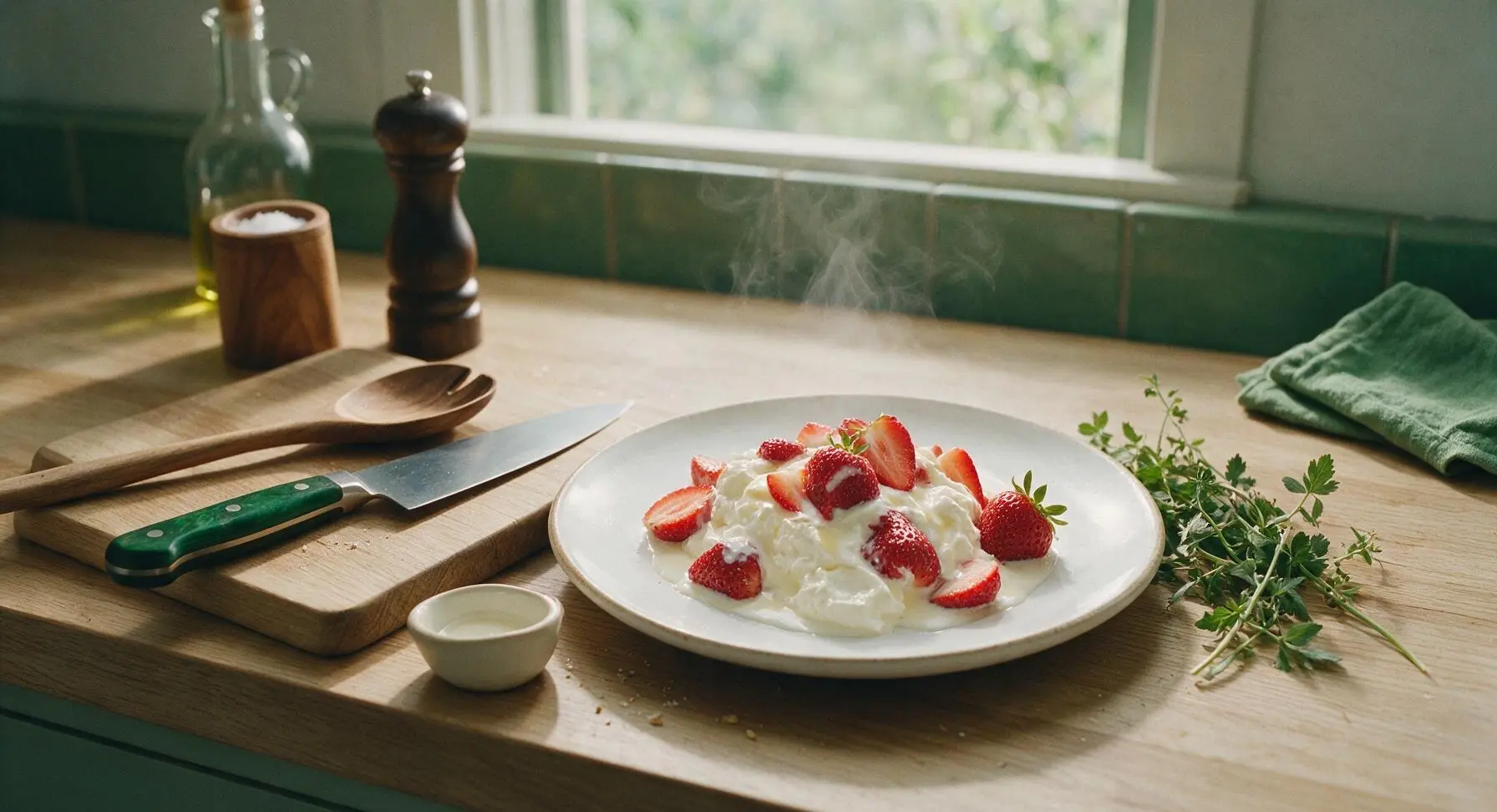
creole cream cheese

title 1
creole cream cheese
⏱️ cook time 18 hours (99% inactive: 12hr culture, 2hr drain, 4hr chill)
🍽️ servings 6
⚡ Difficulty medium

intro

Tangy, velvety fresh Creole cream cheese is a beloved New Orleans breakfast staple, soft and spoonable, perfect topped with fresh strawberries and cold cream for a nostalgic treat.

Ingredients
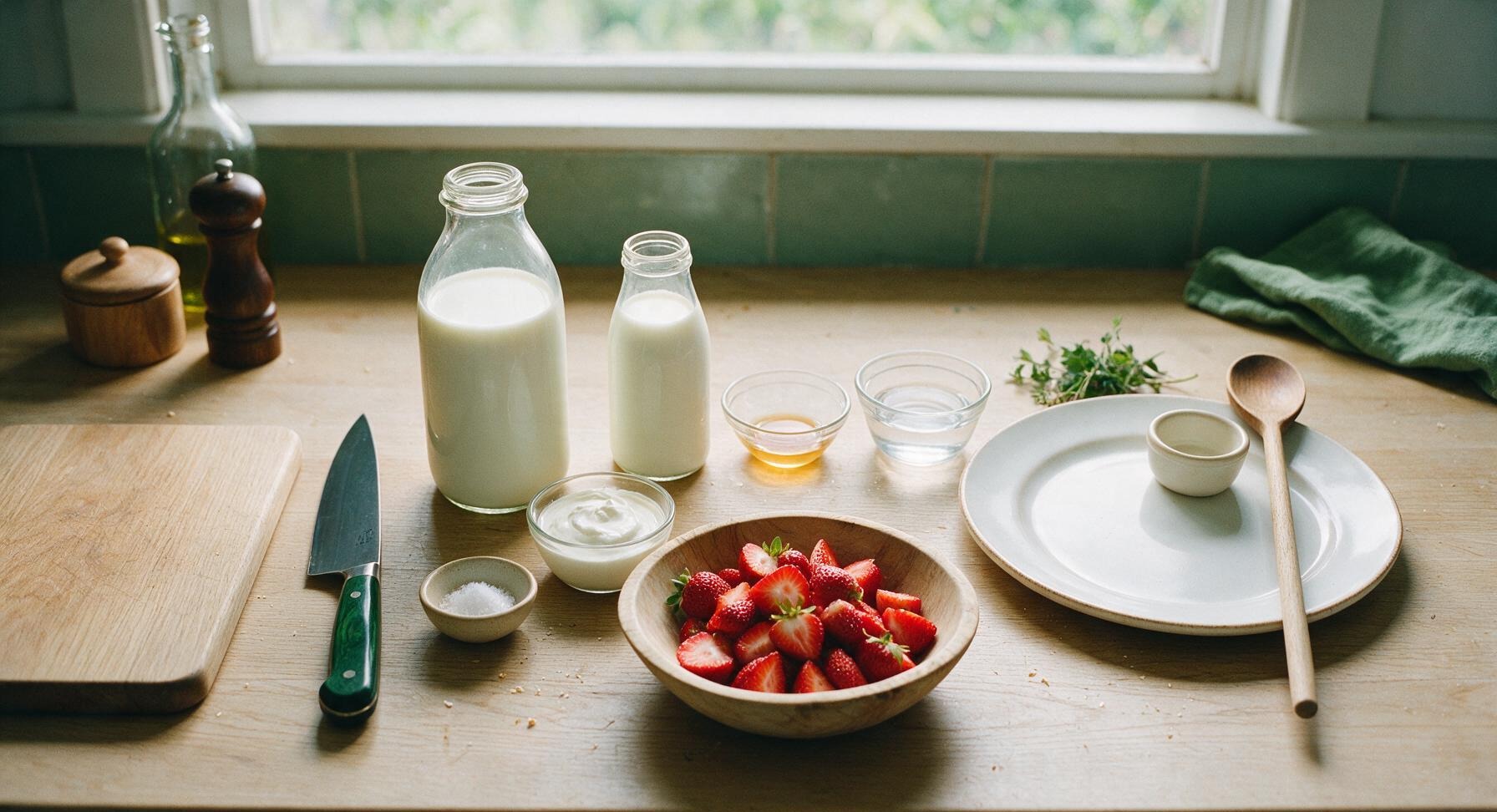
Whole milk (not ultra-pasteurized) 1.9L (2 quarts / half gallon)
Full-fat cultured buttermilk 240ml (1 cup)
Liquid vegetable rennet 1/4 teaspoon
Filtered cool water 2 tablespoons
Fine sea salt 1/2 teaspoon
Heavy whipping cream 120ml (1/2 cup)
Fresh ripe strawberries 150g (1 cup, hulled and sliced)

Steps

1

Warm Milk to Temperature

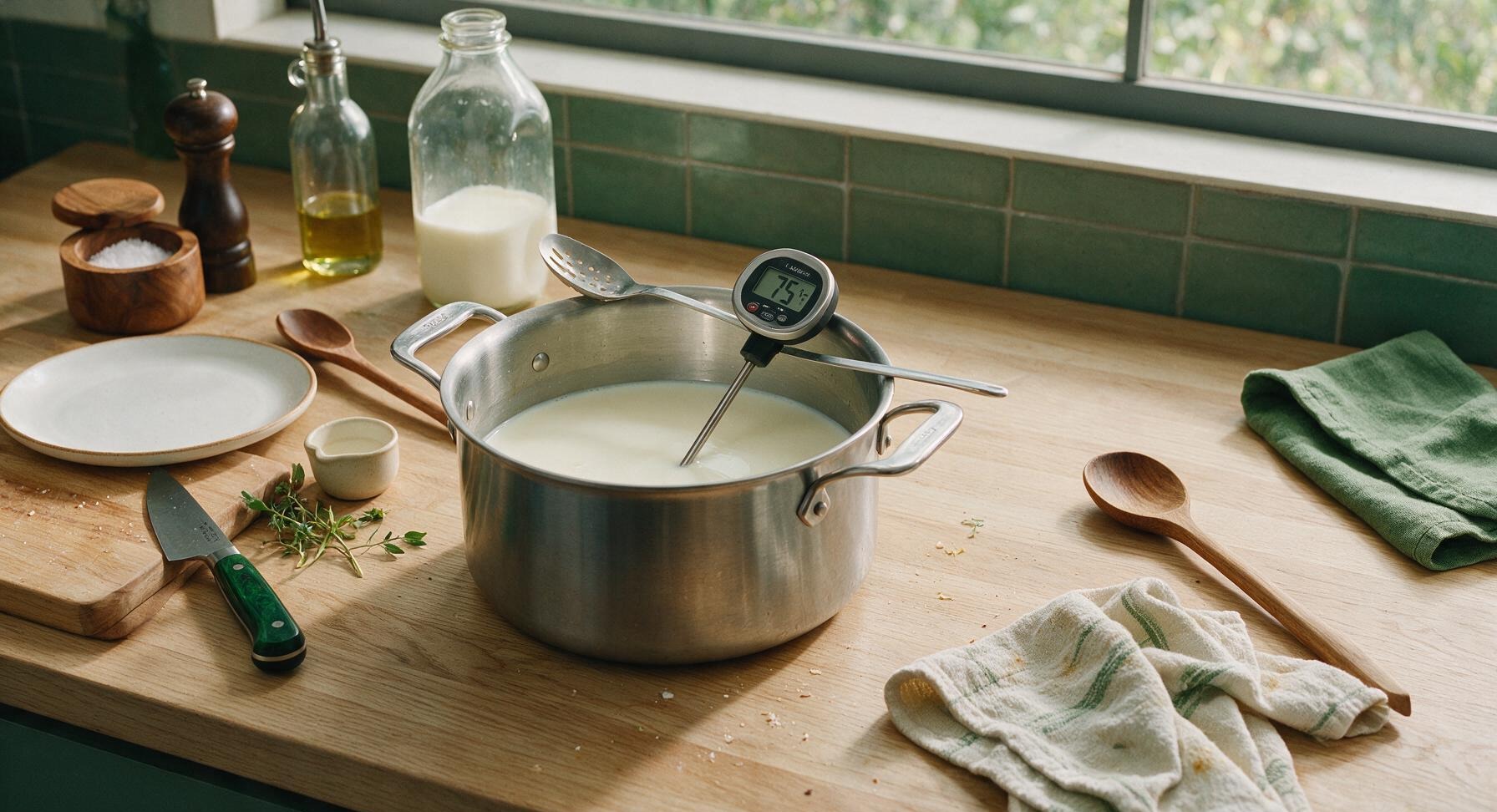
Pour the 1.9L whole milk into the 4-quart stainless steel stock pot. Place over low heat, stirring occasionally with the slotted spoon to prevent scorching on the bottom, until the milk reaches exactly 75°F (24°C) as measured with the digital instant-read thermometer. Do not overheat, as high temperatures will kill the culturing bacteria needed for proper curd formation. Return the pot to its fixed center-left position on the counter after heating.
Step 1
step1:Warm Milk to Temperature
2

Stir in Buttermilk Culture

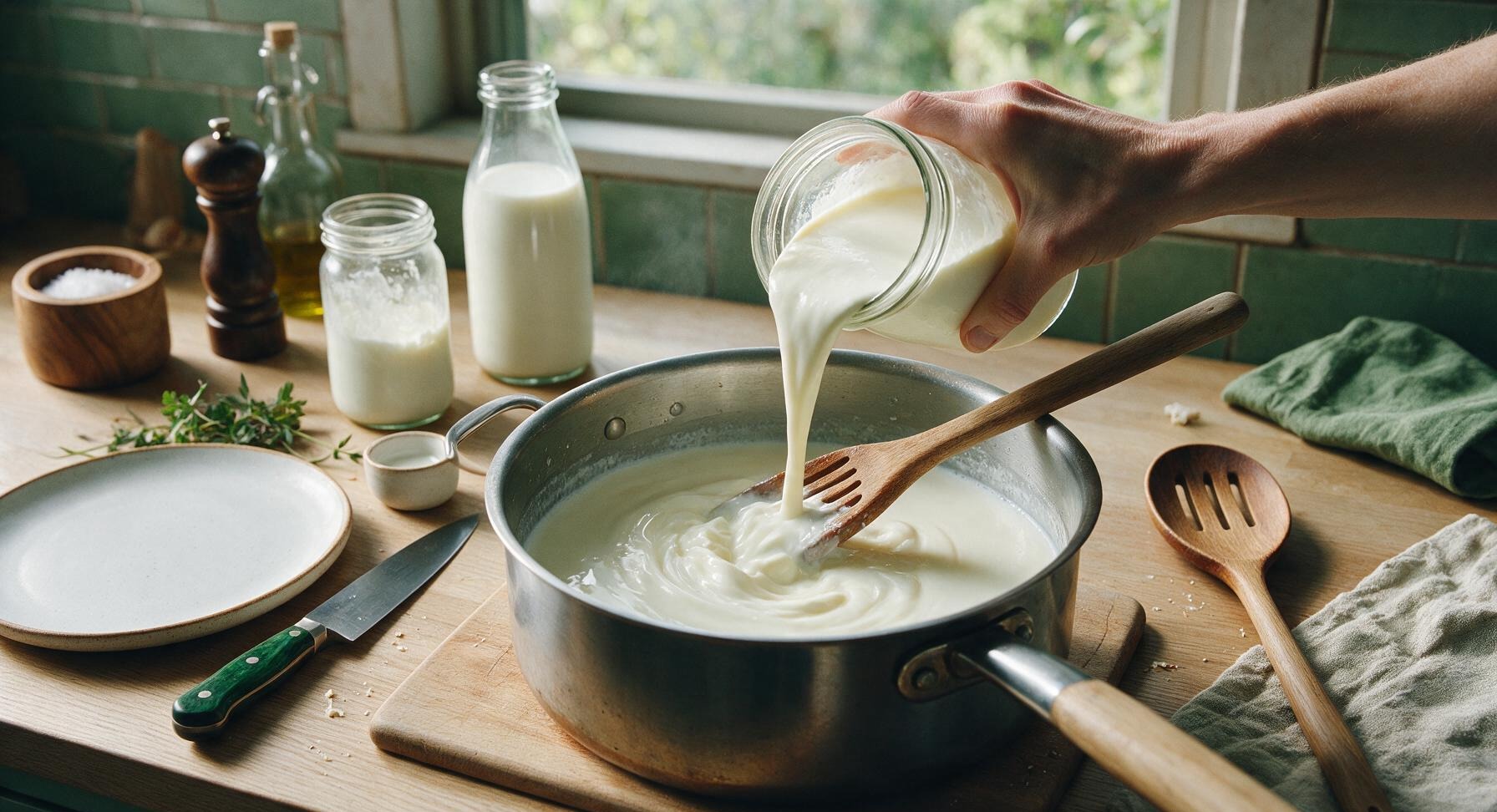
Pour the 240ml full-fat cultured buttermilk into the warmed milk, stirring slowly and thoroughly with the slotted spoon for 30 seconds to fully distribute the live cultures throughout the milk. Do not stir aggressively, as this can disrupt future curd formation. Let the mixture rest for 5 minutes at room temperature.
Step 2
step2:Stir in Buttermilk Culture
3

Mix in Diluted Rennet

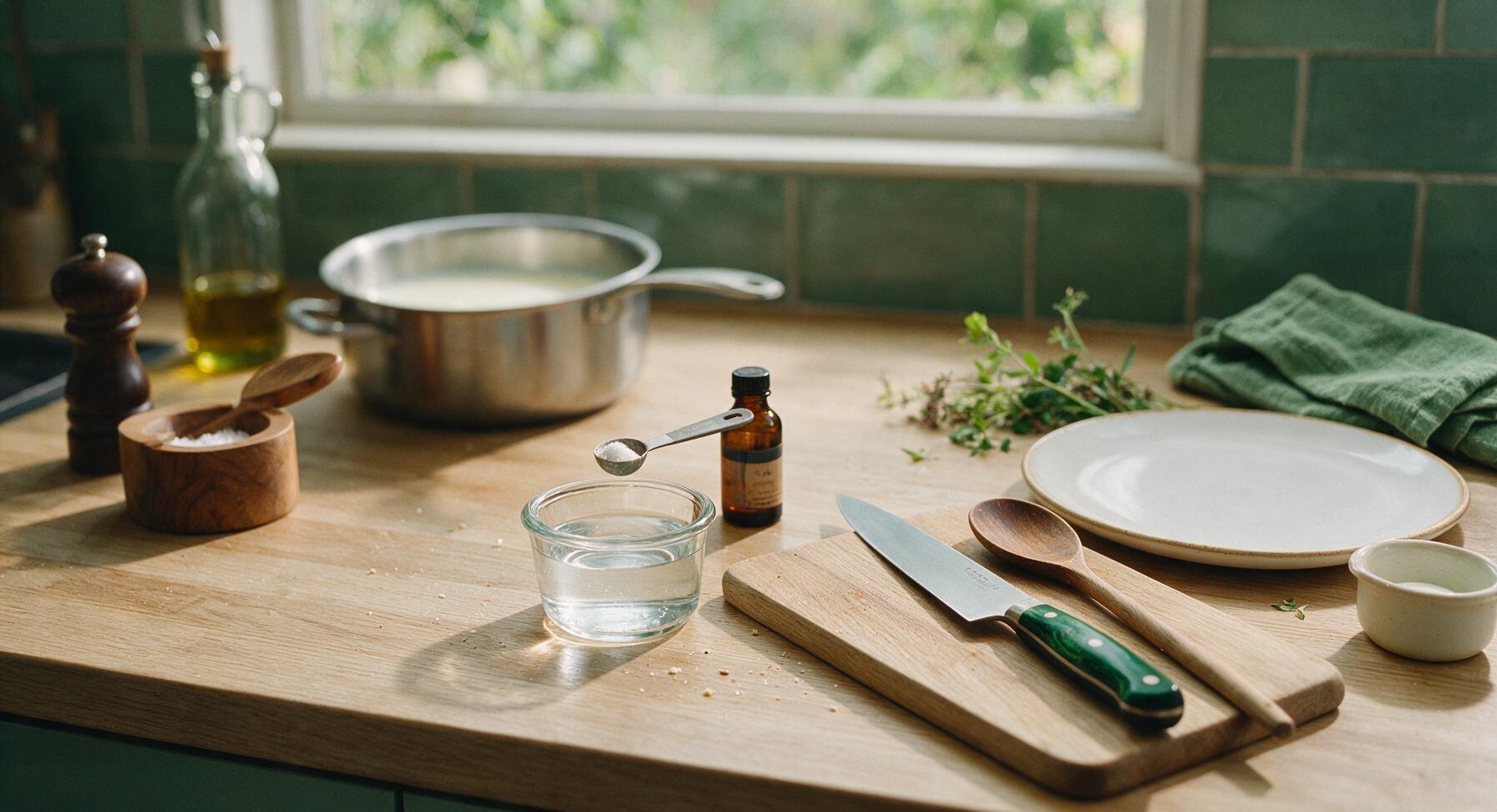
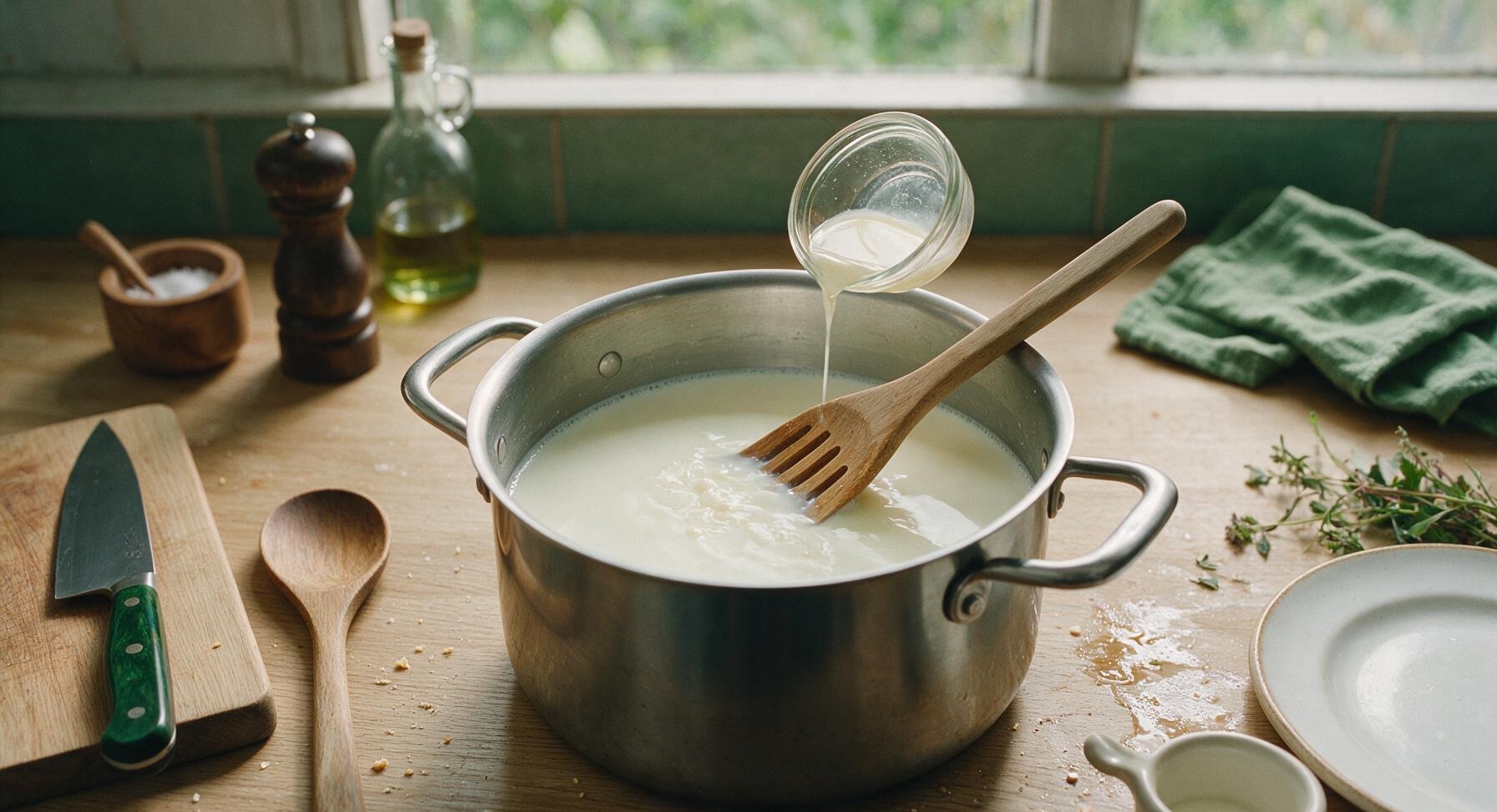
Stir 1/4 teaspoon liquid vegetable rennet into 2 tablespoons cool filtered water in the small clear glass ramekin to dilute it. Pour the diluted rennet into the milk mixture, stirring very slowly in up-and-down motions for 15 seconds to evenly distribute the coagulant. Stop stirring as soon as the rennet is fully incorporated to avoid breaking early curds.
Step 3
step3:Mix in Diluted Rennet
Step 3
step3:Mix in Diluted Rennet
4

Allow Curds to Form

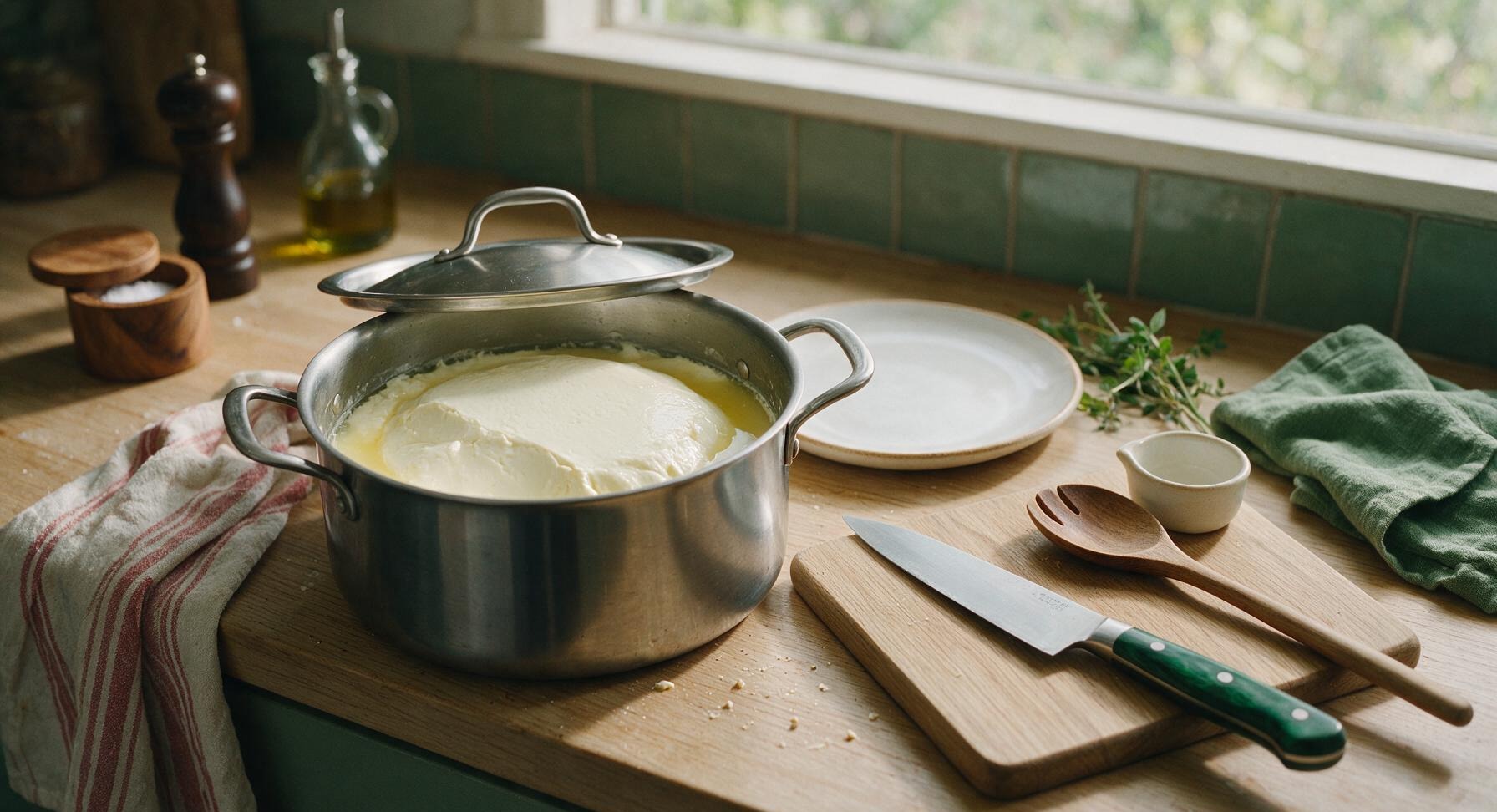
Cover the stock pot with its matching stainless steel lid, and leave it in its fixed center-left position in a draft-free spot away from direct window breeze to rest undisturbed for 12-18 hours at a steady 70-75°F (21-24°C). The curds are fully set when the mixture pulls away from the sides of the pot in a single soft mass, with clear pale yellow whey pooled around the edges, and a texture similar to soft silken tofu.
Step 4
step4:Allow Curds to Form
5

Cut Curds Into Cubes

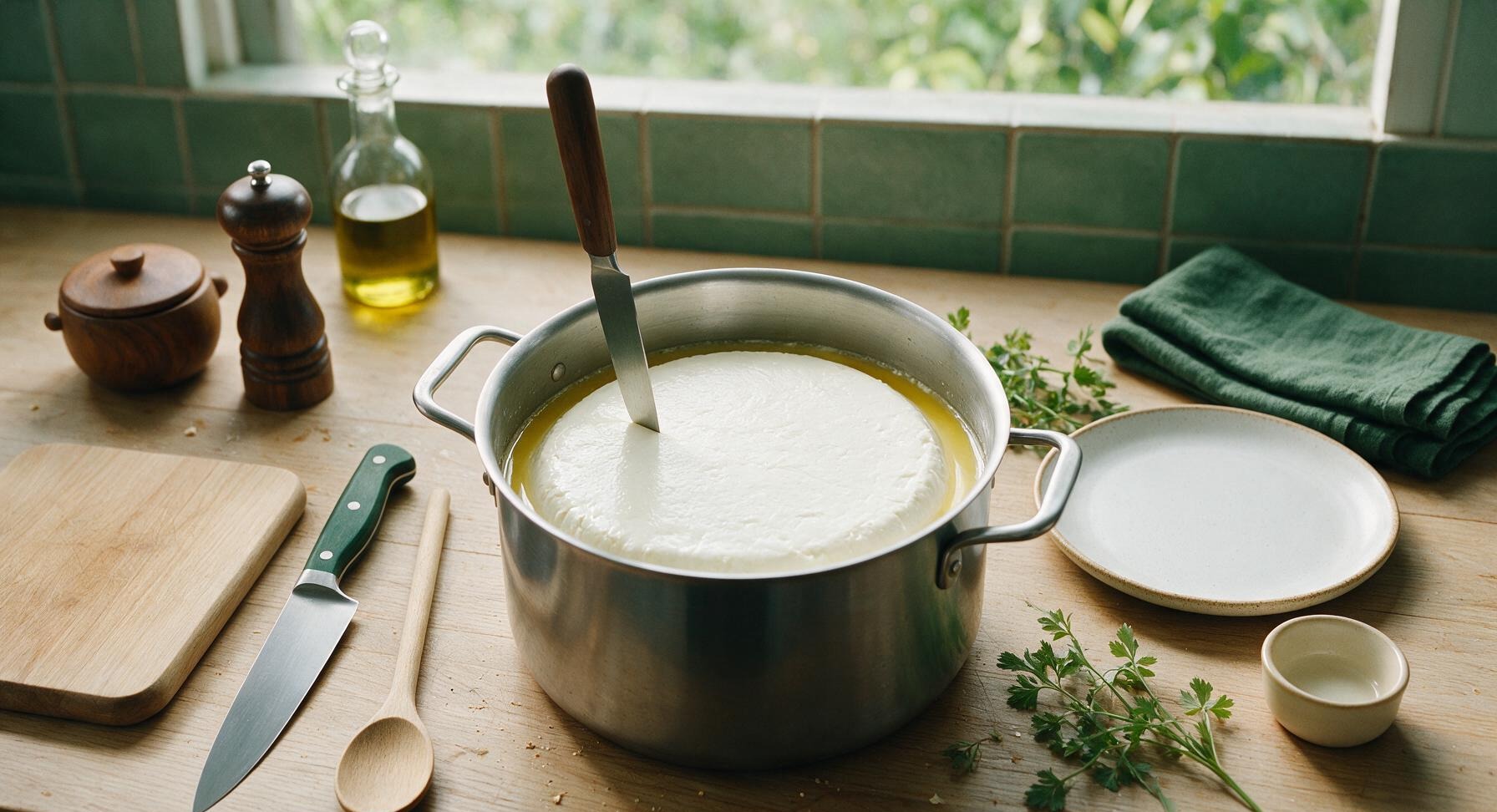
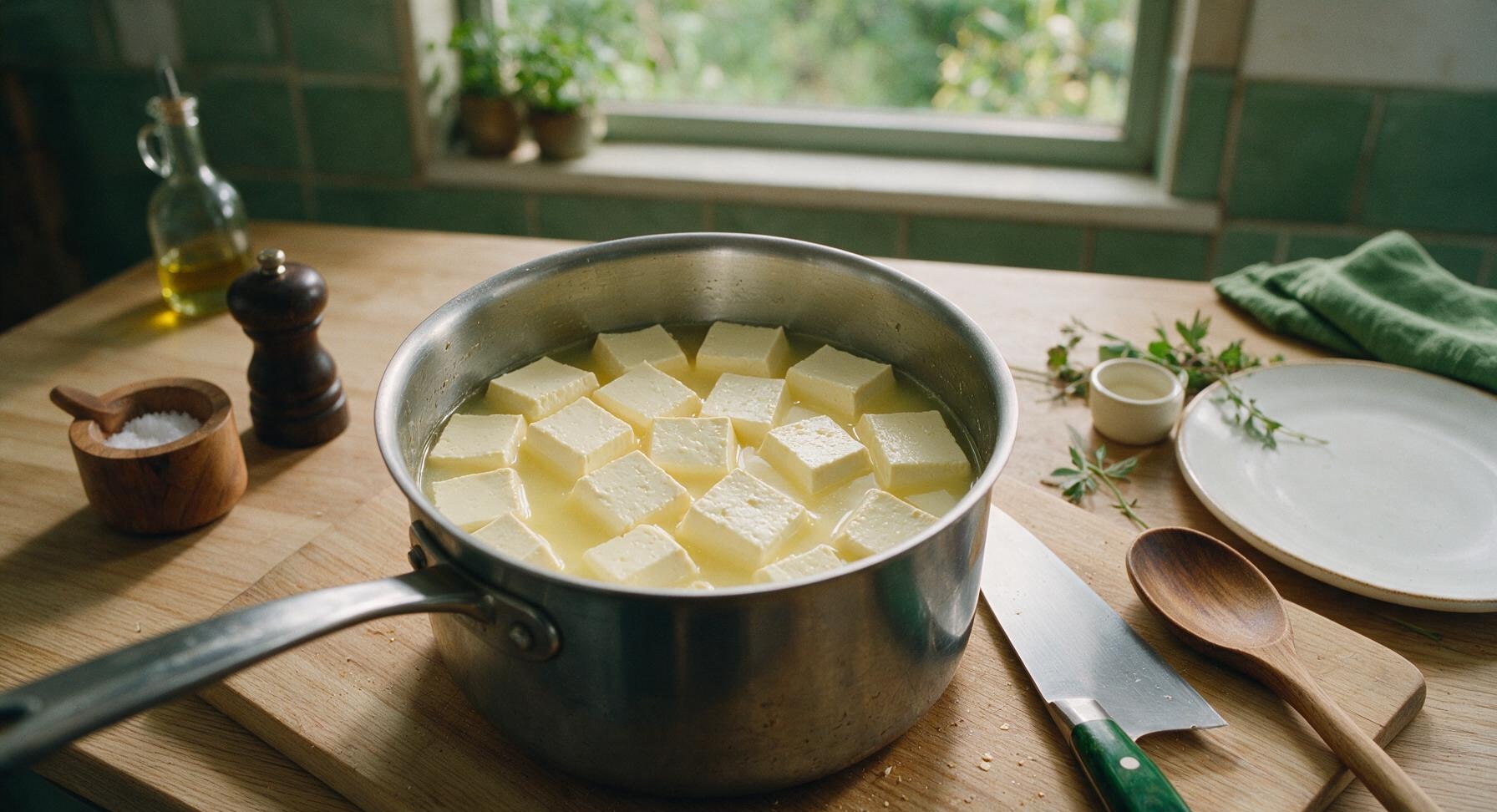
Uncover the pot. Use the stainless steel curd knife to cut the set curd mass into 2.5cm (1 inch) even cubes, slicing straight down first in parallel lines across the pot, then turning the pot 90 degrees and slicing again to make a grid. Let the cut curds rest for 10 minutes to allow whey to separate from the curd pieces, which will look like soft pale ivory cubes floating in clear yellow whey.
Step 5
step5:Cut Curds Into Cubes
Step 5
step5:Cut Curds Into Cubes
6

Drain Whey From Curds

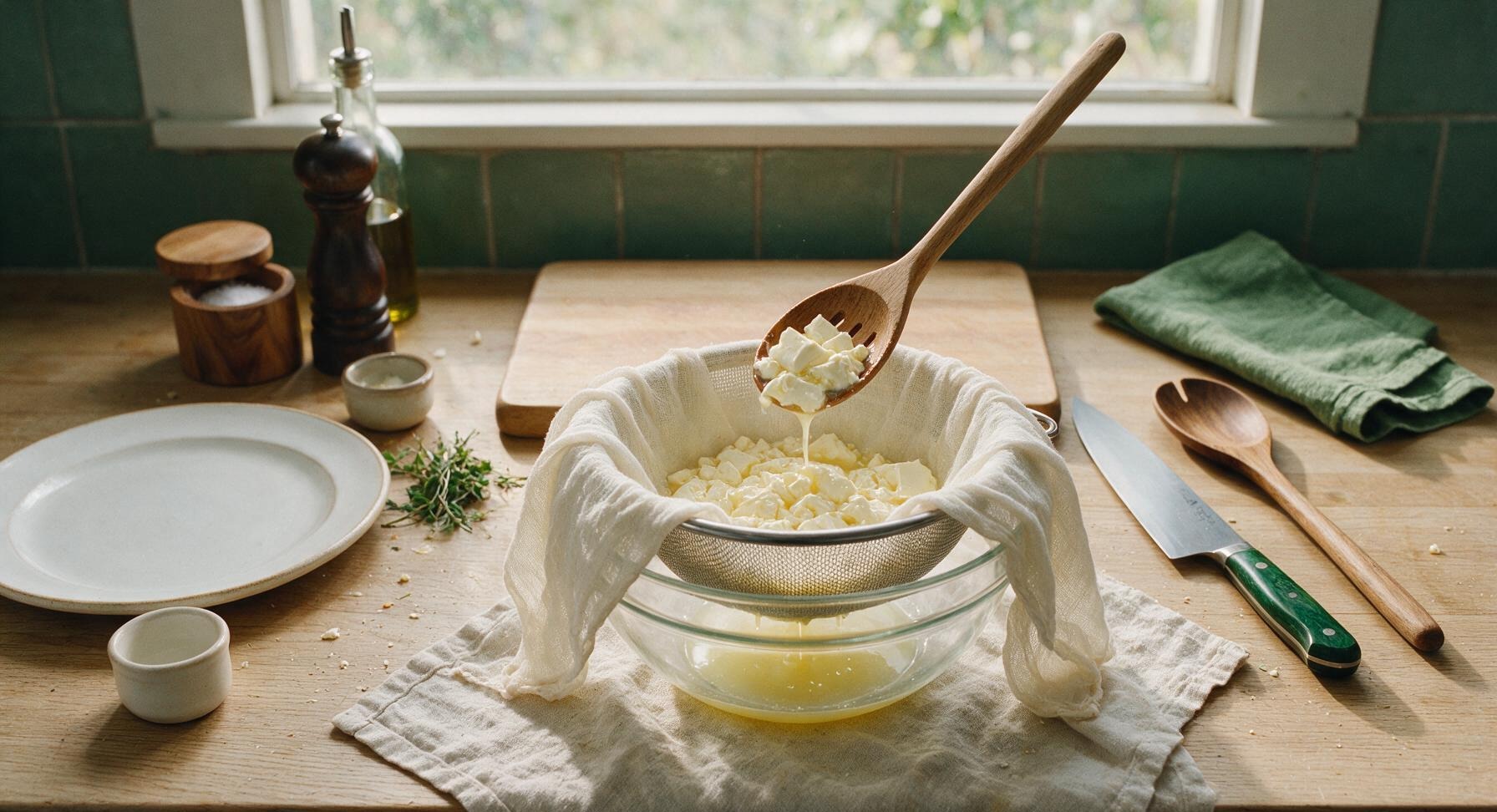
Line the 22cm stainless steel colander with the 3 layers of unbleached cheesecloth, making sure the cloth overhangs the edges by 5cm on all sides. Pull the 3-quart clear glass mixing bowl from under the colander and set the colander inside it to catch draining whey. Gently ladle the cut curds and whey into the cheesecloth-lined colander using the slotted spoon. Let the curds drain at room temperature for 2 hours, until the whey stops dripping and the curds form a thick, soft mass. Do not press the curds, as this will make the cheese too dense; traditional Creole cream cheese has a soft, spreadable, slightly lumpy texture.
Step 6
step6:Drain Whey From Curds
7

Season and Chill Cheese

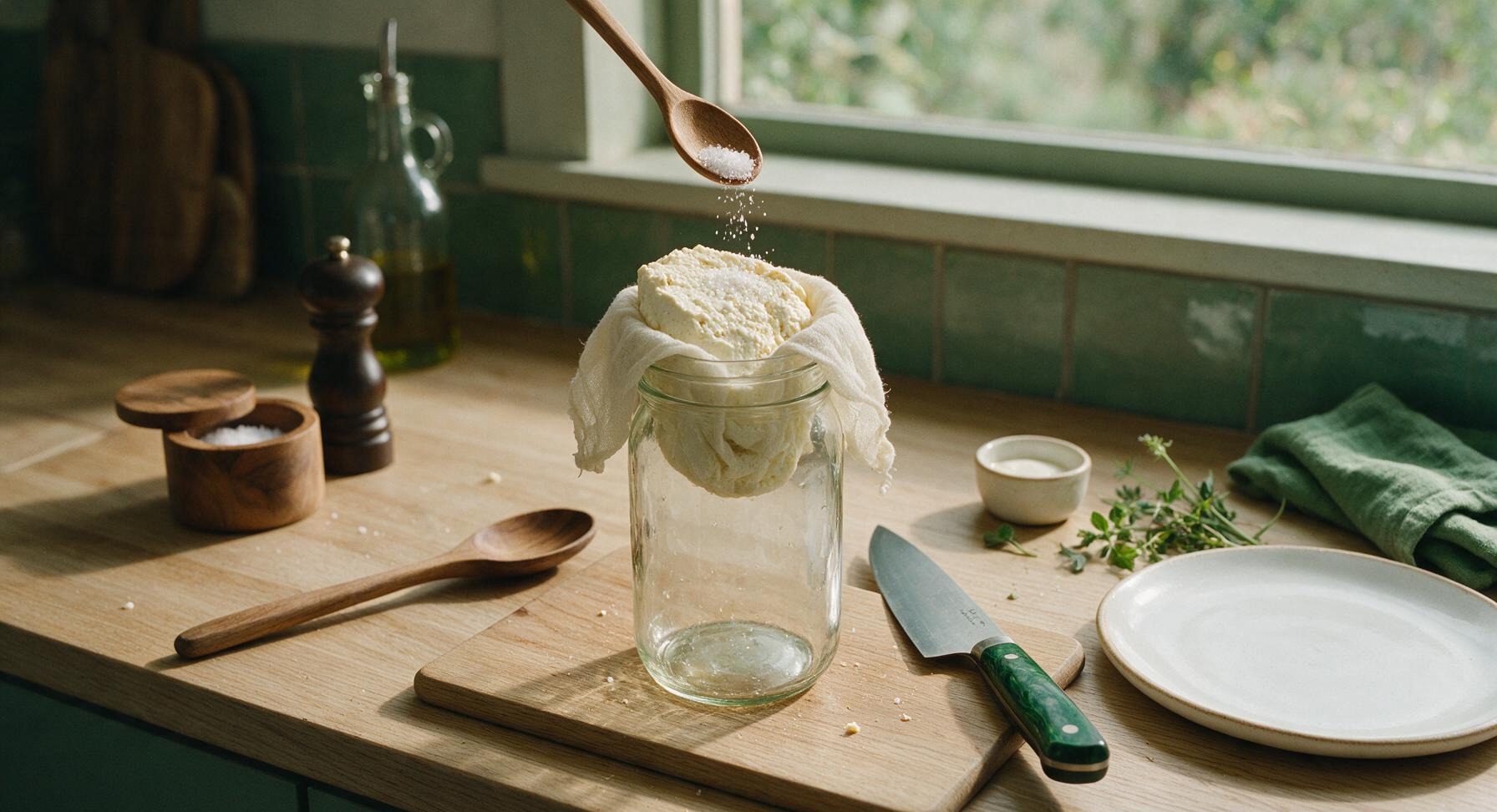
Gather the edges of the cheesecloth together to lift the drained curd mass, and transfer it to a clean bowl. Sprinkle 1/2 teaspoon fine sea salt over the curds, stirring very gently with the serving spoon to distribute the salt evenly without mashing the curds completely. Transfer the seasoned cheese to the clear glass mason jar, cover with its silver lid, and chill in the refrigerator for at least 4 hours before serving to allow the flavor to mellow.
Step 7
step7:Season and Chill Cheese
8

Plate With Classic Toppings

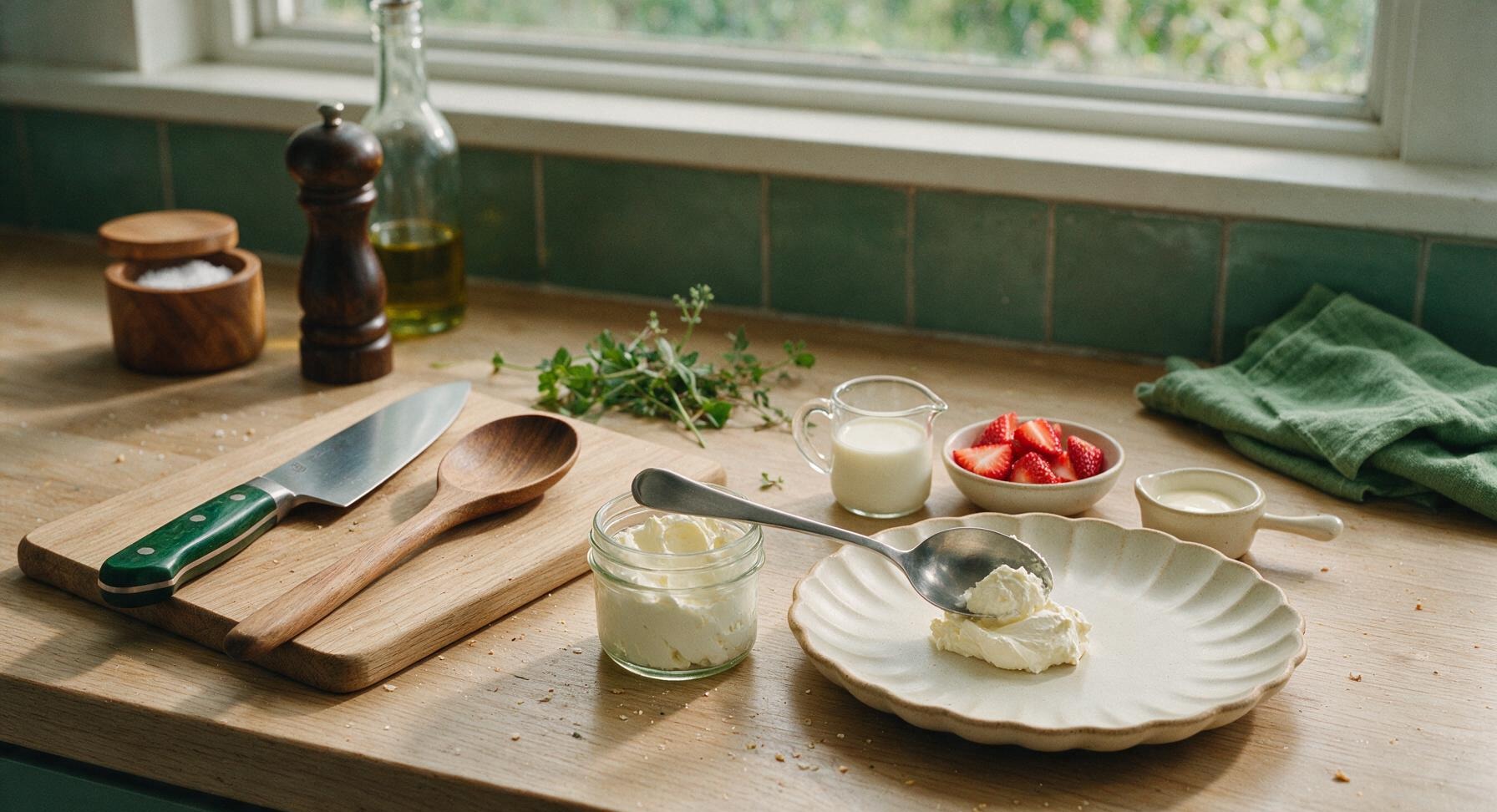
Scoop a 1/3 cup portion of the chilled Creole cream cheese onto the matte cream ceramic serving plate using the large stainless steel serving spoon. Pour 2 tablespoons of heavy cream from the glass creamer pitcher around the base of the cheese, top with sliced fresh strawberries, and a light sprinkle of raw cane sugar if desired. Serve immediately, chilled.
Step 8
step8:Plate With Classic Toppings

Tips

1.Always use non-ultra-pasteurized milk for this recipe. Ultra-high temperature (UHT) processing denatures milk proteins and kills active cultures, which will prevent soft curd formation and stop you from getting the signature tangy, delicate Creole flavor.
2.Never press or squeeze the curds during draining. Unlike firm cheeses such as paneer or cheddar, traditional Creole cream cheese has a soft, spoonable, slightly lumpy texture; pressing curds will squeeze out too much moisture and result in a dry, crumbly final product.
3.Save the drained pale yellow whey from the colander for use in biscuit dough, smoothies, or chicken brines. It is high in protein and lactic acid, adds a subtle tang to baked goods, and eliminates food waste from the cheesemaking process.


✨ You May Also Like

Breakfast
🍜 United States

Crisp-edged, fluffy lard griddle cakes are a nostalgic homestyle staple, with rich savoriness from rendered lard, perfect topped with maple syrup or savory gravy.

⏱️ 25 minuteBreakfast ★ 4.8
Breakfast
🍜 United States

Flaky, buttery homemade buttermilk biscuits smothered in creamy, peppery pork sausage gravy: a beloved, hearty Southern American comfort food classic.

⏱️ 35 minuteBreakfast ★ 4.8
Breakfast
🍜 United States

Golden, custardy brioche stuffed with sweet cream cheese and fresh berries, pan-fried to crisp perfection. An indulgent, cozy breakfast perfect for slow weekend mornings.

⏱️ 30 minuteBreakfast ★ 4.7
Breakfast
🍜 United States

Flaky, buttery Southern-style biscuits stuffed with savory salty country ham, a portable, satisfying classic perfect for casual on-the-go meals.

⏱️ 25 minuteBreakfast ★ 4.8
Breakfast
🍜 United States

Iconic puffy baked pancake popularized in Seattle, with crisp golden edges and soft custardy center, served warm with classic sweet toppings.

⏱️ 35 minuteBreakfast ★ 4.6
Breakfast
🍜 United States

Fluffy, golden pancakes studded with juicy peak-summer mixed berries, drizzled with maple syrup for a bright, comforting, crowd-pleasing family breakfast.

⏱️ 25 minuteBreakfast ★ 4.7

creole cream cheese:Frequently Asked Questions

1.Why can’t I use ultra-pasteurized whole milk for this Creole cream cheese recipe? ▾
Ultra-pasteurized milk is heated to extremely high temperatures that kill the beneficial bacteria needed for proper culturing, and it denatures milk proteins so they cannot form a soft, even curd. Stick to regular pasteurized whole milk to get that signature velvety, spoonable texture—using ultra-pasteurized milk will almost always lead to a batch that fails to set correctly.
2.Can I use low-fat or skim milk to make a lighter version of Creole cream cheese? ▾
I don’t recommend it. Traditional Creole cream cheese gets its rich, lush mouthfeel from the fat in whole milk. Using low-fat or skim milk will produce a thin, rubbery, bland curd that lacks the recipe’s characteristic bright tang, and it won’t hold up to classic toppings like fresh strawberries and cold pouring cream.
3.Where can I buy liquid vegetable rennet, and can I use rennet tablets instead? ▾
Liquid vegetable rennet is stocked at most well-stocked grocery stores near cheese-making supplies, at local homebrew shops, and from online specialty retailers. You can substitute crushed rennet tablets if needed—just use the equivalent amount listed on the tablet package, and fully dissolve it in cool filtered water before adding to avoid uneven curd set.
4.How long does it take for curds to set properly after I add the rennet? ▾
After mixing in dissolved rennet, cover your milk mixture and let it sit undisturbed at a steady 70–72°F room temperature for 12 to 18 hours. You’ll know it’s set when it pulls cleanly from the bowl sides, has a soft, jiggly yogurt-like consistency, and a thin layer of clear, pale whey pools across the top.
5.Do I really need to drain the curds, and how long should that step take? ▾
Yes, draining separates solid curds from watery whey to hit that perfect soft, spoonable Creole cream cheese texture. Line a colander with butter muslin or a double layer of fine cheesecloth, pour in cut curds, and let it drain in the fridge for 6 to 8 hours, until it holds its shape but stays scoopable, not dry or crumbly.
6.Can I leave out the fine sea salt if I’m watching my sodium intake? ▾
You technically can, but that small amount of fine sea salt does more than add subtle savoriness: it balances the bright tang of the cultured buttermilk, slows over-fermentation to keep your cheese fresh longer, and helps curds set to the right soft consistency. Skip it, and your cheese will taste flat and spoil much faster.
7.How long will homemade Creole cream cheese stay fresh in the refrigerator? ▾
Stored in a tightly sealed, airtight container in the coldest part of your fridge (skip the warm door shelf), your homemade Creole cream cheese will stay fresh for 7 to 10 days. Give it a gentle stir before serving if a small amount of whey separates, and discard it immediately if you notice off odors or fuzzy mold.
8.What’s the difference between Creole cream cheese and regular store-bought cream cheese? ▾
Regular commercial cream cheese is dense, firm, spreadable, and has a mild, low-tang flavor designed for bagels and baking. Authentic Creole cream cheese is softer, looser, and spoonable, with a brighter, more pronounced tang from cultured buttermilk. It’s traditionally served for breakfast topped with cream and fresh fruit, not used as a spread.
9.My batch didn’t form any solid curds—what did I do wrong? ▾
The most common culprit is using ultra-pasteurized milk, as its heat-damaged proteins won’t coagulate properly with rennet. Other frequent issues are using expired rennet that’s lost its potency, stirring the mixture too much after adding rennet, or letting it set in a spot below 68°F that’s too cold for cultures to activate.
10.Can I stir mix-ins like honey or fresh fruit into the cheese before storing it? ▾
It’s far better to add toppings or mix-ins right before serving, rather than blending them into the whole batch ahead of time. Sugary add-ins like honey, fresh fruit, or jam throw off the cheese’s pH during storage, causing excess whey separation, a mushy texture, and a much shorter shelf life for your finished batch.

Comments (6)

1 week ago

OMG, I’ve been looking for a real traditional Creole cream cheese recipe for YEARS! My grandma used to make this when I was a kid growing up outside New Orleans, and every store-bought version I’ve tried tastes like boring regular cream cheese. I was worried the 18 hour timeline would be a pain, but 99% of it is inactive time?? Total game changer. I set the culture before bed, drained it while I made brunch, and chilled it while we ate beignets. Tastes exactly like I remember. 10/10, serving this at our next family crawfish boil!

5 days ago

Wait, did you serve it with the cream top and a little cane syrup like the old school places do? I’ve been too nervous to try making it myself because I thought it was super finicky!

3 days ago

So glad you loved the recipe! It’s definitely not as finicky as folks think as long as you keep the culture at a steady temp while it sets. Serving it with cane syrup and fresh fruit is such a classic, delicious call!

2 days ago

Tried this for our neighborhood potluck last weekend and it was a huge hit! I was a little intimidated by the medium difficulty rating at first, but the instructions were super clear even for someone who’s never made homemade cheese before. My kids loved it slathered on homemade banana bread, and my husband ate half the batch with fresh strawberries before we even left for the potluck oops. Only note: I let mine drain a little extra long because I prefer a thicker, firmer texture, and it turned out perfect.

yesterday

Love that you adjusted the drain time to fit your preference! Extra drain time is totally a personal call, just don’t let it go so long it gets crumbly unless that’s what you’re going for. So happy the whole family enjoyed it!

3 days ago

Total win for meal prep! I make a batch every Sunday now, and it lasts all week in the fridge. Way less added garbage than the flavored cream cheeses at the grocery store, and I can mix in jams, honey, or even savory herbs depending on what I’m feeling for breakfast. The long inactive time is perfect because I don’t have to stand over the stove babysitting it. 10/10, will be making this on repeat.

5 days ago

Wait, has anyone tried this with raw milk instead of regular pasteurized? I get raw milk from a local farm out here and I’m curious if it’ll change the texture or flavor too much. I messed up a ricotta recipe a few months back using raw milk and don’t want to waste ingredients on this if it’s going to flop.

3 days ago

I used raw milk from my farm share last week and it turned out even richer! Just make sure you don’t heat it too hot when you add the culture, I kept mine right at 72 degrees like the recipe says and it worked great.

2 days ago

Great question! Raw milk works beautifully for this recipe, just like Tim said—just keep your temps steady and you’ll get an even deeper, creamier flavor than pasteurized. We don’t recommend ultra-pasteurized milk though, it won’t culture properly!

yesterday

Made this for my Creole-themed brunch last weekend and everyone was asking for the recipe! I will say, I messed up the first batch because I forgot to check the temperature of my milk before adding the culture (it was way too cold, oops) so it didn’t set right. Second batch was perfect though, so don’t skip that temp check step! SO good topped with praline pecans.

30 minutes ago

Praline pecan topping sounds insane! I’m definitely stealing that idea for my batch next week. Sorry your first batch flopped, I almost did the same thing because my kitchen was freezing when I set my culture out!

2 weeks ago

Pretty solid recipe! I was worried the 12 hour culture step would be too much for my busy schedule, but I just popped it in the oven with the light on before I left for work and it was ready to drain when I got home. The chill step is non-negotiable though— I tried a bite right after draining and it was fine, but after 4 hours in the fridge the flavor mellowed out so much and got that perfect tangy Creole taste. Will make again.