crispy french toast

title 1
crispy french toast
⏱️ cook time 15 minutes
🍽️ servings 4
⚡ Difficulty easy

intro

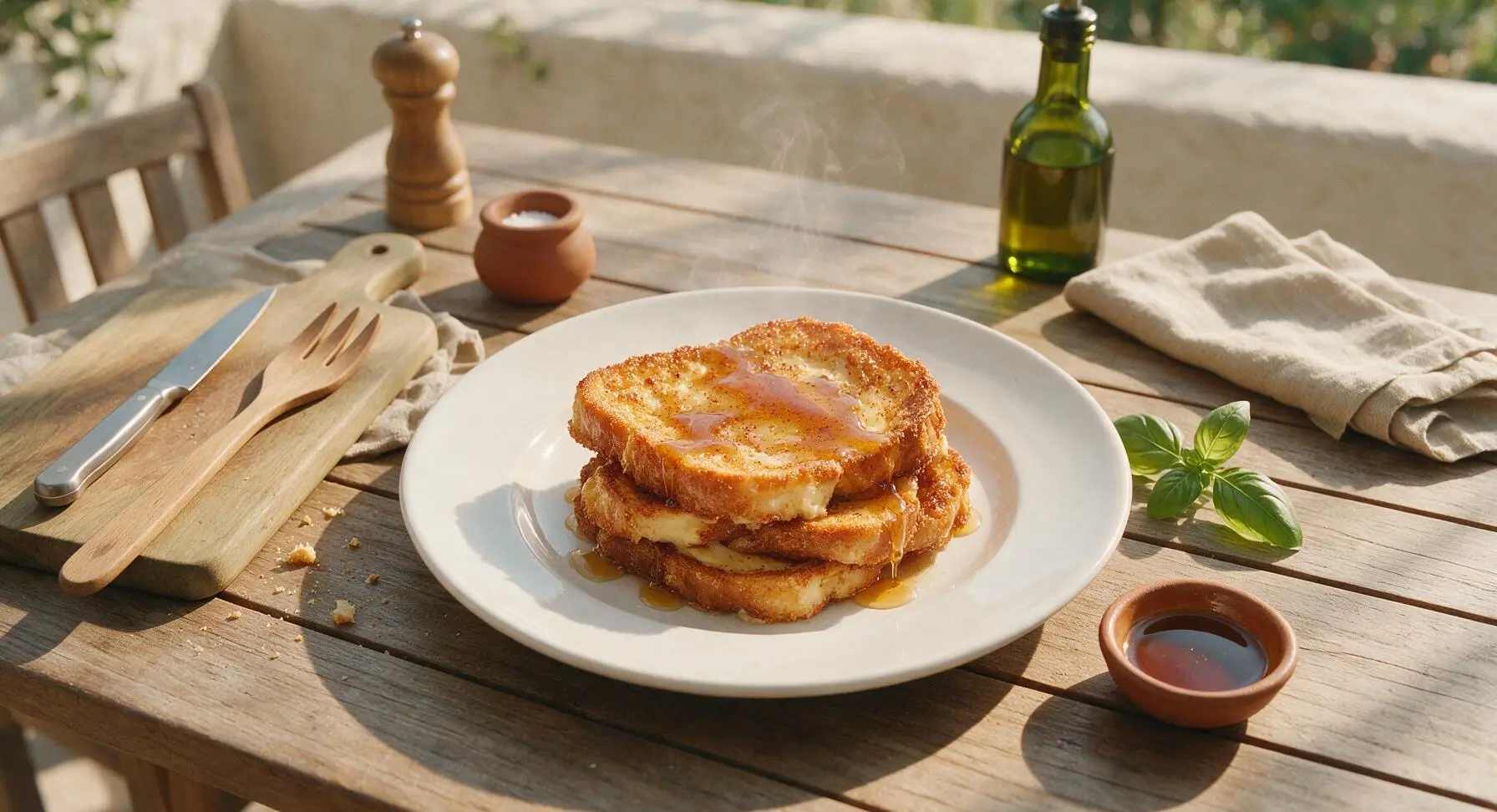
Shatteringly crisp golden French toast with a soft, velvety custard center, spiced with warm cinnamon, perfect for quick cozy meals topped with maple syrup.

Ingredients
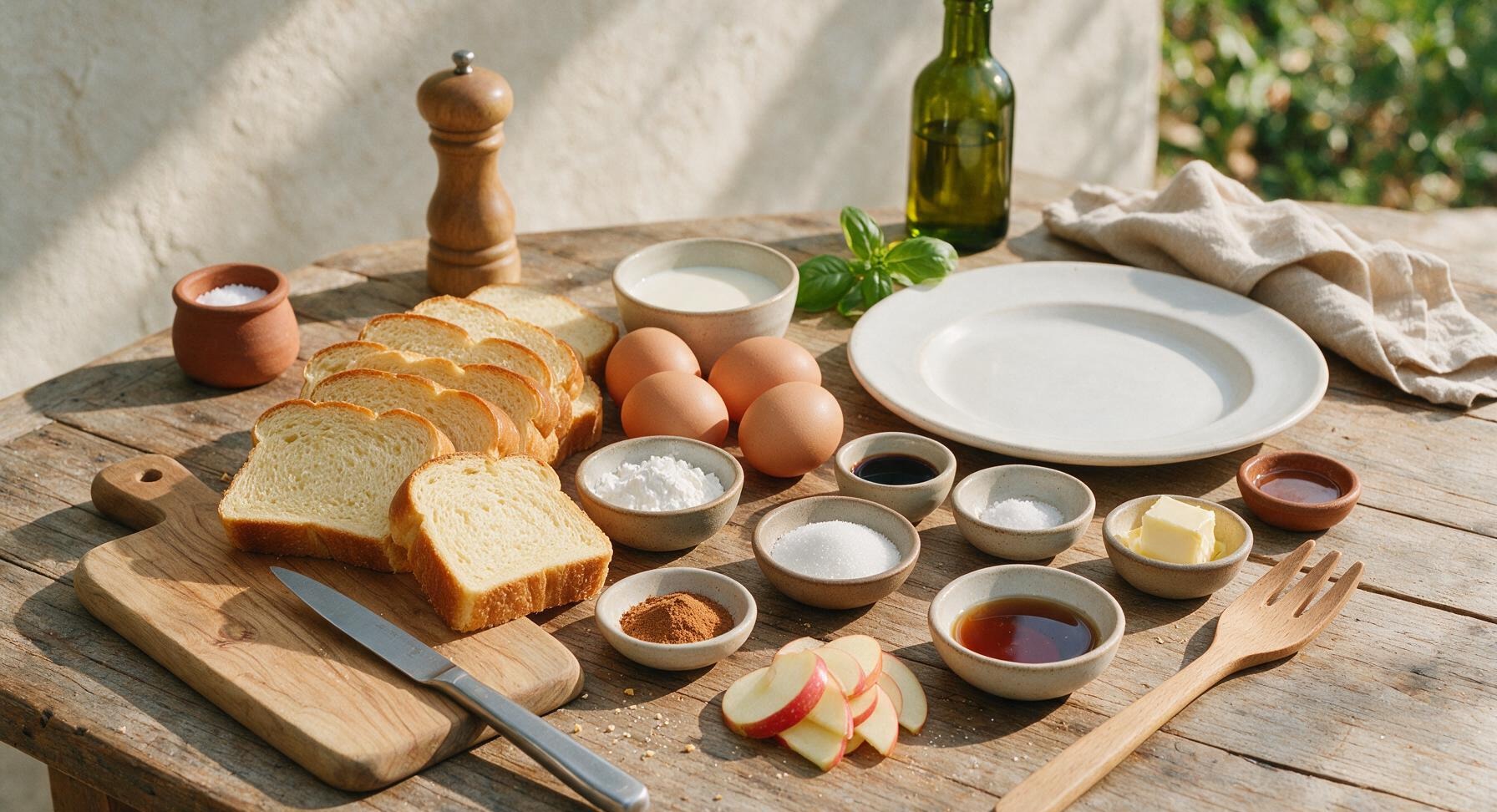
Day-old thick-cut brioche bread (1-inch slices) 8 slices
Large eggs 4
Whole milk 3/4 cup
Cornstarch 2 tablespoons
Granulated sugar 1 tablespoon
Ground cinnamon 1 teaspoon
Pure vanilla extract 1 teaspoon
Fine sea salt 1/4 teaspoon
Unsalted butter 4 tablespoons
Pure maple syrup 1/2 cup (for serving)
Honeycrisp apple (thin slices, for garnish) 1 small

Steps

1

Prep Thick Bread Slices

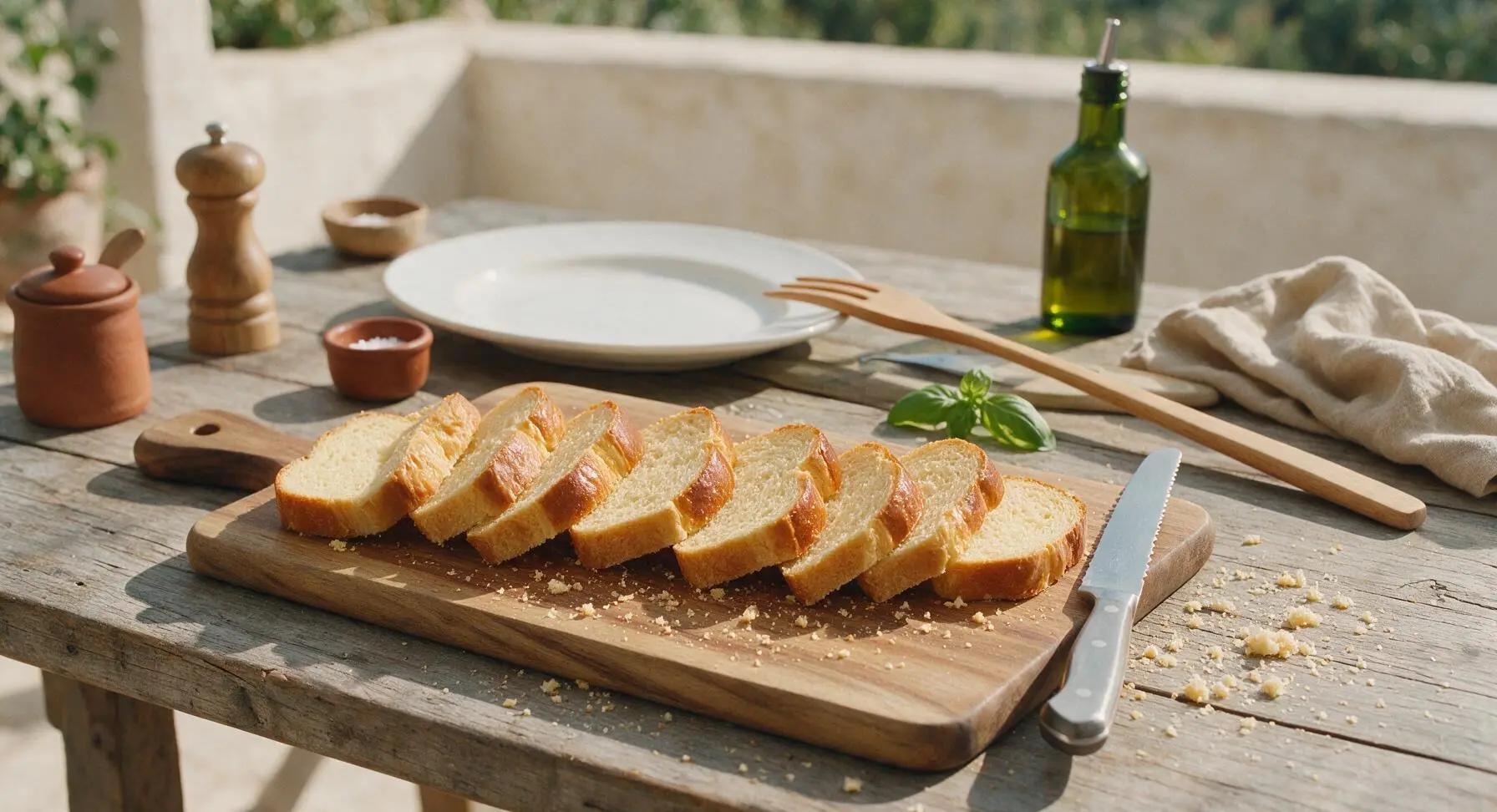
Arrange 8 1-inch thick slices of day-old brioche on the acacia wood cutting board. If using fresh brioche, leave slices uncovered on the board for 15 minutes to dry slightly, as excess moisture causes soggy toast. Use the serrated bread knife to trim any overly hard, dark crust edges if desired, though intact crusts add extra crisp texture. Dried bread absorbs custard evenly without turning mushy during cooking.
Step 1
step1:Prep Thick Bread Slices
2

Whisk Custard Base

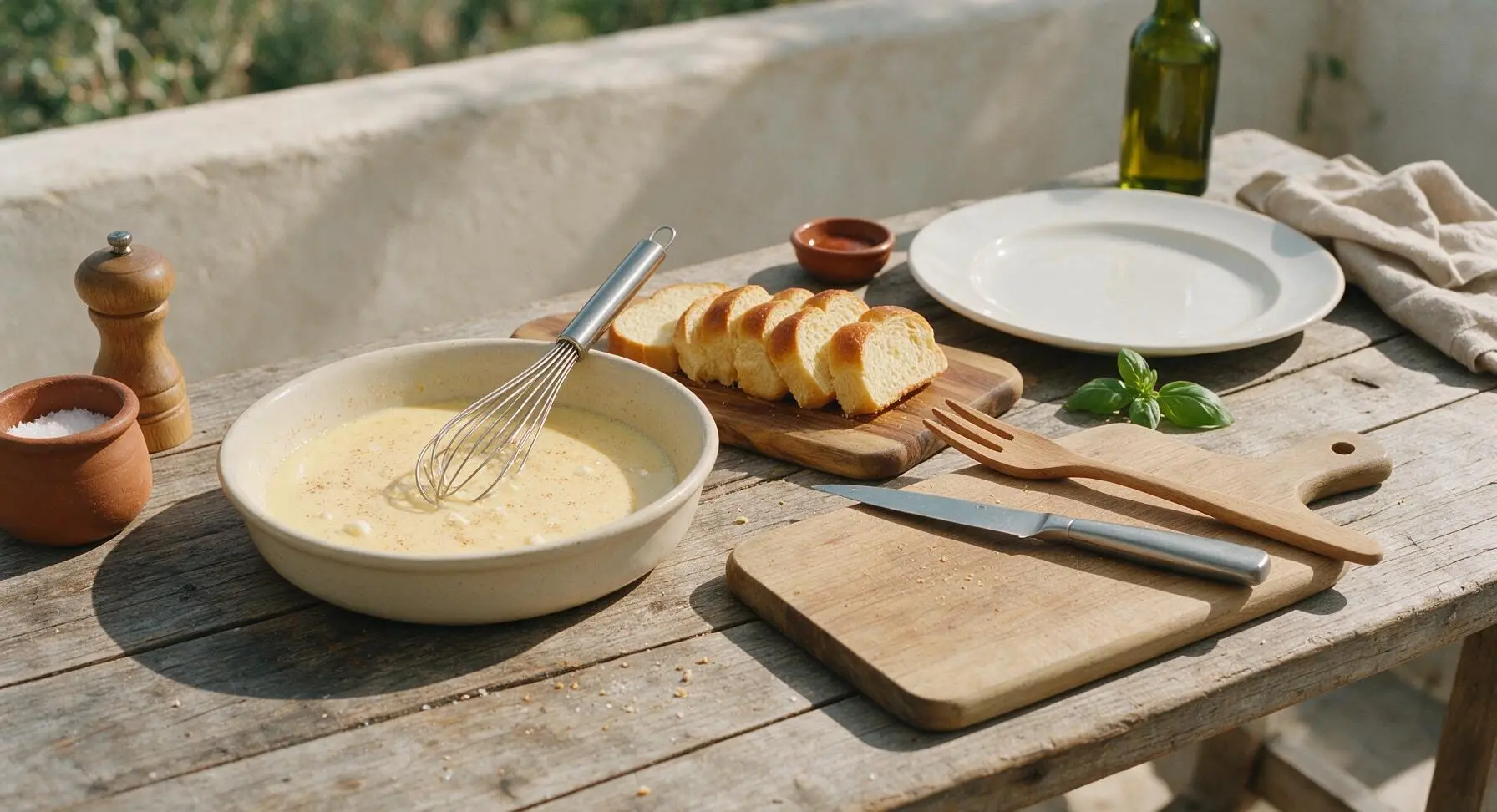
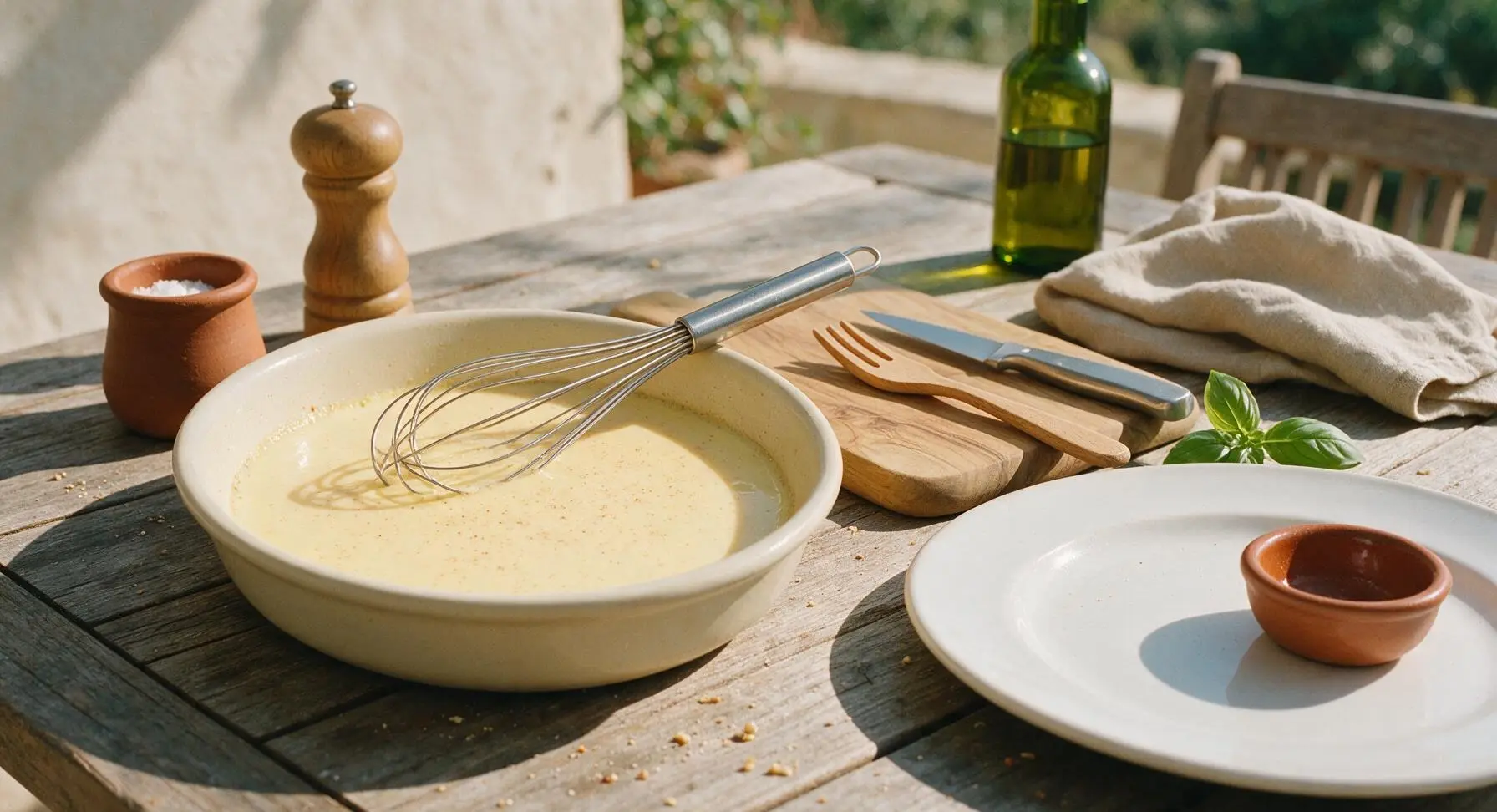
Set the shallow matte cream ceramic baking dish on the counter to the left of the cutting board. Add 2 tablespoons cornstarch to the dish first, then slowly whisk in 3/4 cup whole milk until no dry cornstarch lumps remain. Add 4 large eggs, 1 tablespoon granulated sugar, 1 teaspoon ground cinnamon, 1 teaspoon vanilla extract, and 1/4 teaspoon fine sea salt. Use the stainless steel wire whisk to mix the base for 1 minute until completely smooth, with no streaks of unincorporated egg white remaining. The finished custard should be a pale creamy yellow with evenly dispersed fine cinnamon flecks.
Step 2
step2:Whisk Custard Base
Step 2
step2:Whisk Custard Base
3

Preheat Cooking Skillet

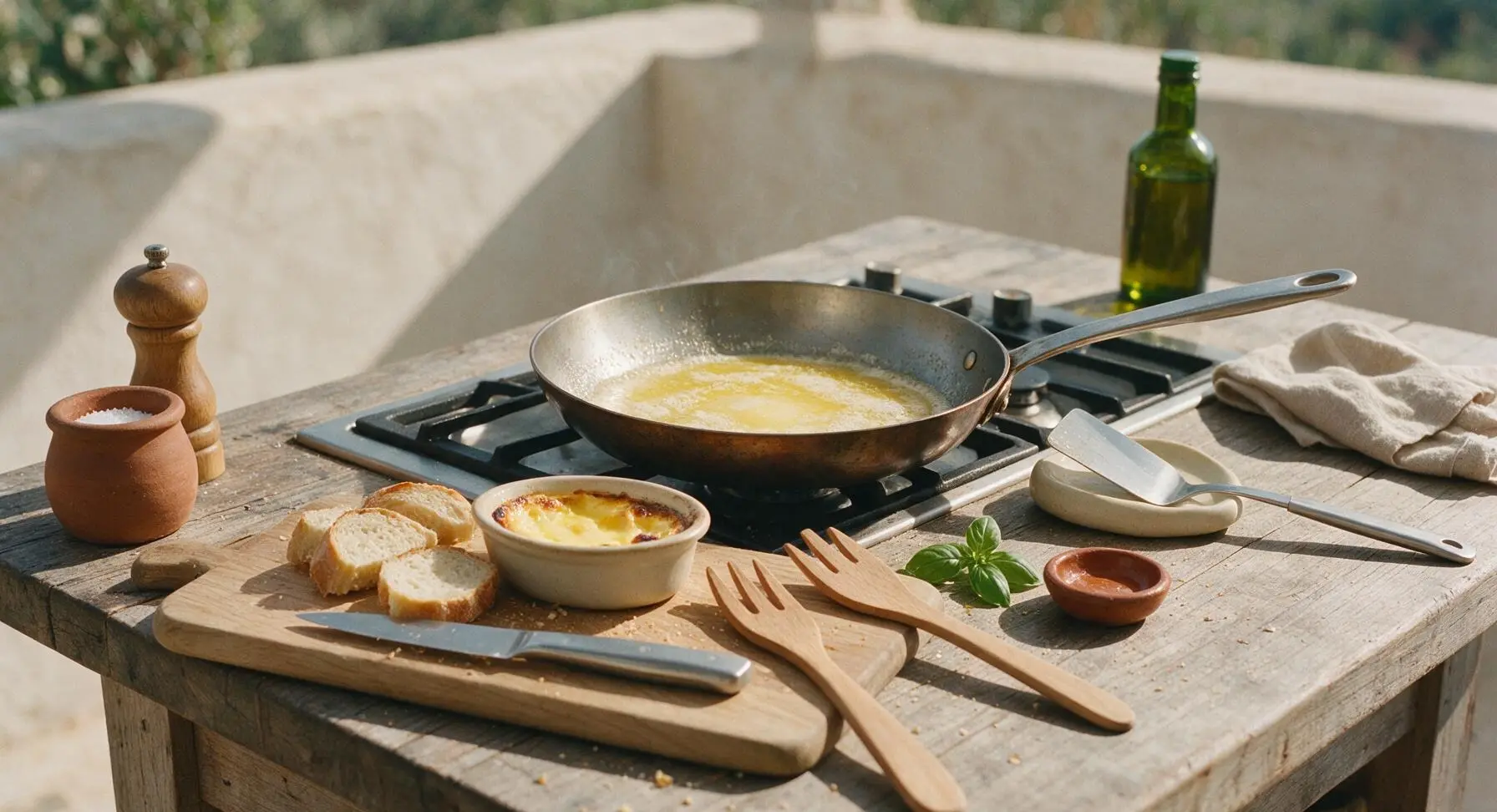
Place the 12-inch seasoned carbon steel skillet on the stovetop behind the counter work zone over medium heat (350°F / 175°C). Add 1 tablespoon of unsalted butter to the skillet, and allow it to melt and foam for 2 minutes until foaming subsides and the butter smells faintly nutty. Tilt the pan to coat the entire cooking surface evenly with melted butter. Do not let the butter turn dark brown, as burnt butter will create a bitter, over-darkened crust on the toast.
Step 3
step3:Preheat Cooking Skillet
4

Dip Bread in Custard

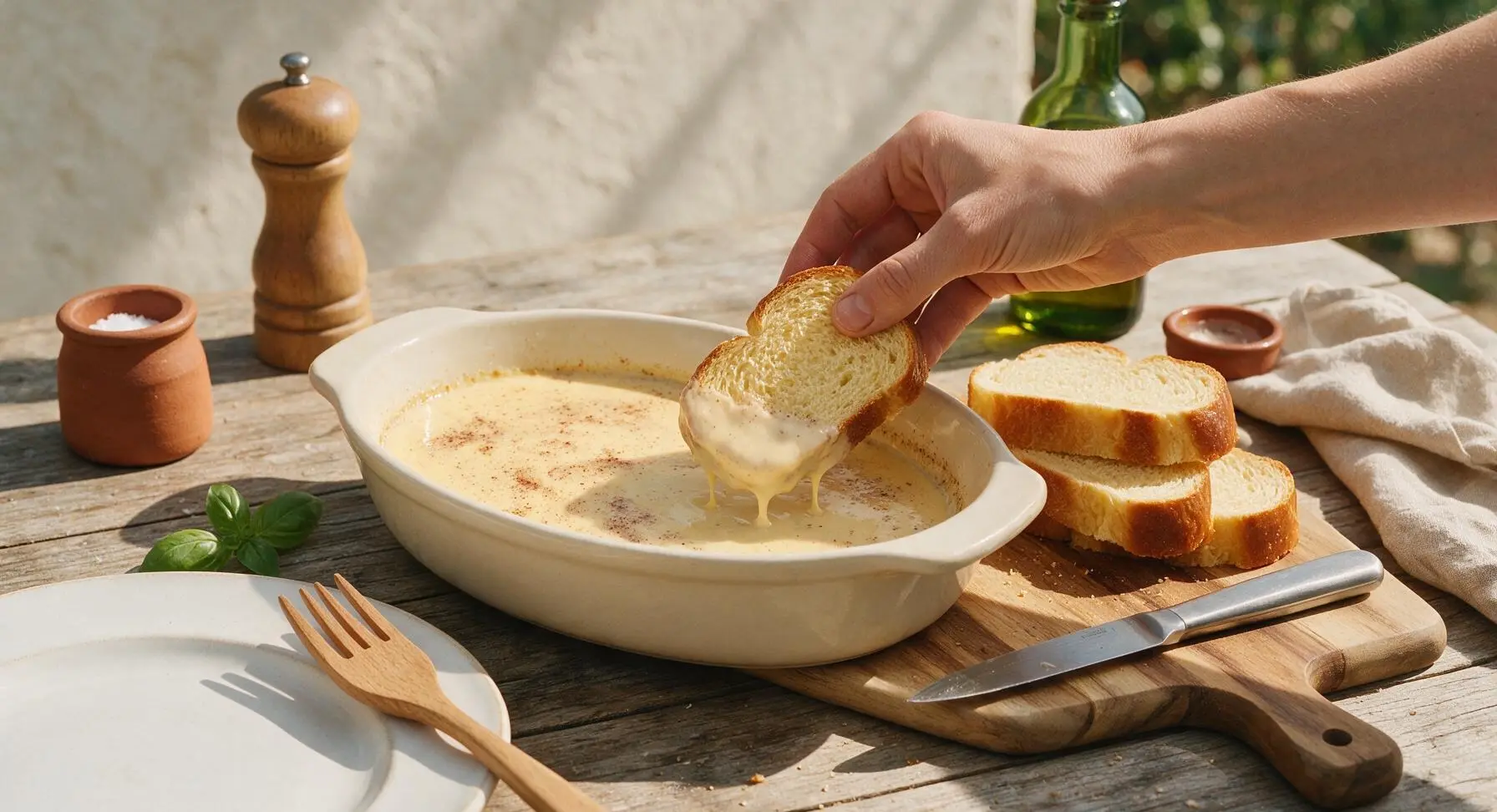
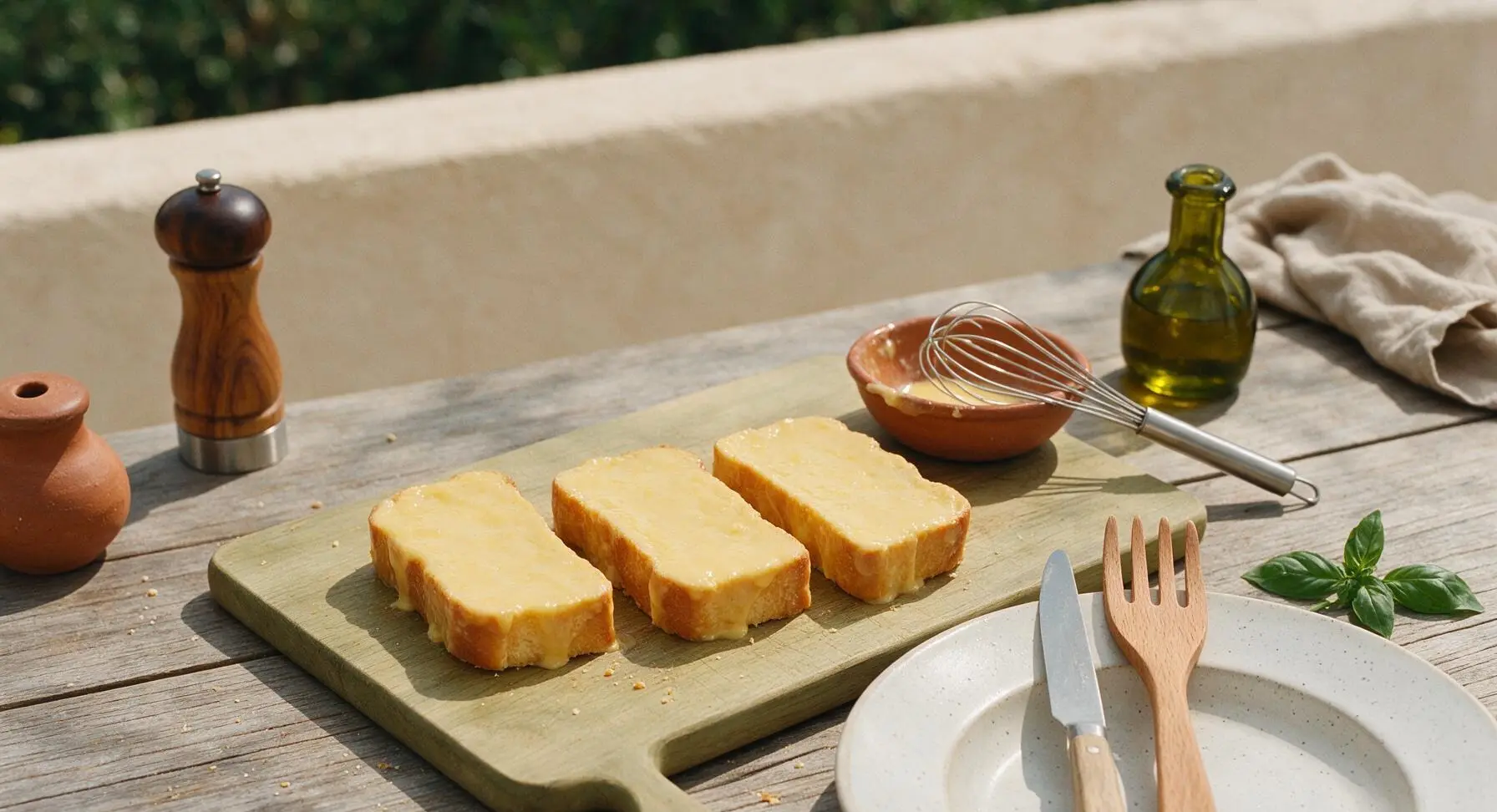
Working one slice at a time, dip a brioche slice into the custard mixture, holding it for exactly 10 seconds per side. Do not soak bread for longer than 10 seconds per side, as over-soaking leads to soggy, custard-heavy centers. Lift each slice and let excess custard drip back into the baking dish for 3 seconds, ensuring a thin, even coating on all surfaces. Set dipped slices on the empty edge of the acacia cutting board while you coat 2 more slices, to avoid overcrowding the skillet during cooking.
Step 4
step4:Dip Bread in Custard
Step 4
step4:Dip Bread in Custard
5

Fry to Golden Crisp

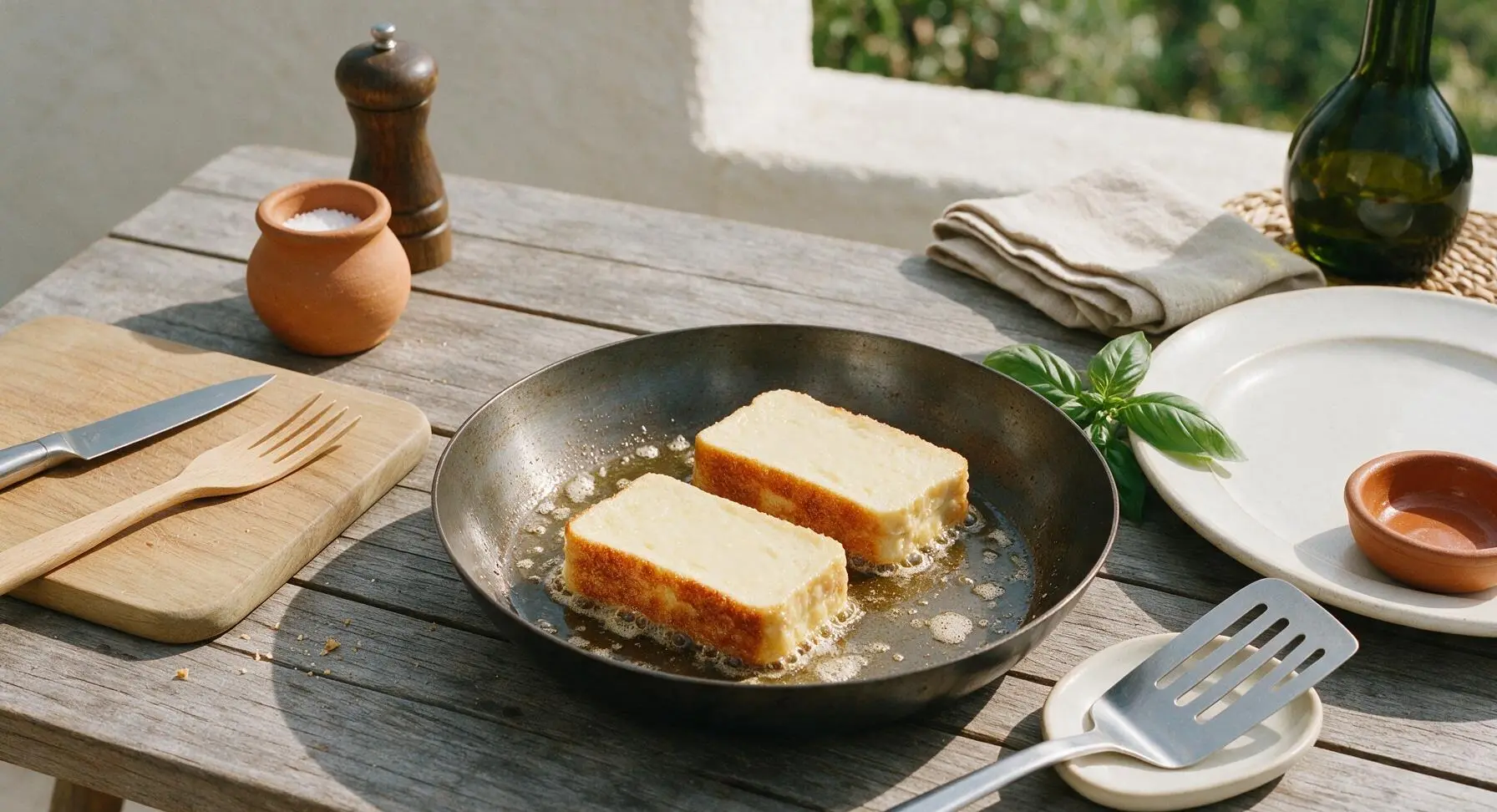
Carefully transfer 2-3 custard-coated bread slices to the preheated buttered skillet, leaving 1 inch of space between each slice to allow even crisping. Cook for 3-4 minutes on the first side, until the bottom is a deep even golden brown and crisp to the touch, with no pale wet custard spots visible. Use the stainless steel turner spatula to flip each slice, then add 1/2 tablespoon of additional butter to the pan per batch, letting it melt and bubble around the slices. Cook the second side for another 2-3 minutes, until equally golden and crisp across the entire surface.
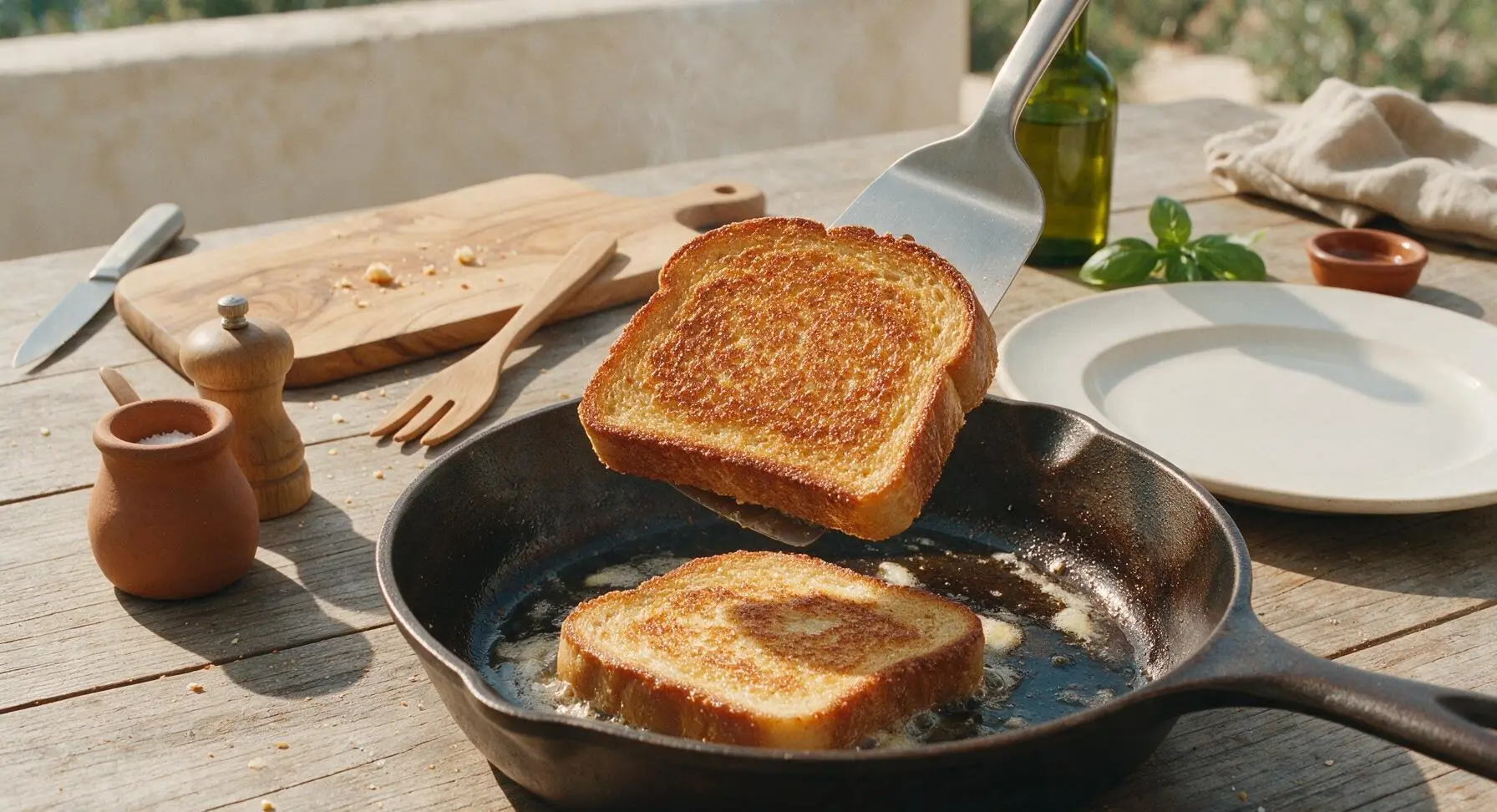
Step 5
step5:Fry to Golden Crisp
Step 5
step5:Fry to Golden Crisp
6

Keep Toast Crisp

As each batch finishes cooking, transfer the French toast slices to the chrome wire cooling rack set to the left of the stovetop, arranged in a single layer (do not stack slices, as trapped steam will soften the crisp crust). Keep the rack in a 200°F (95°C) warm oven while you cook the remaining batches, adding 1/2 tablespoon fresh butter to the skillet between each batch to prevent sticking and maintain even browning. Repeat the dipping and cooking process until all bread slices are cooked.
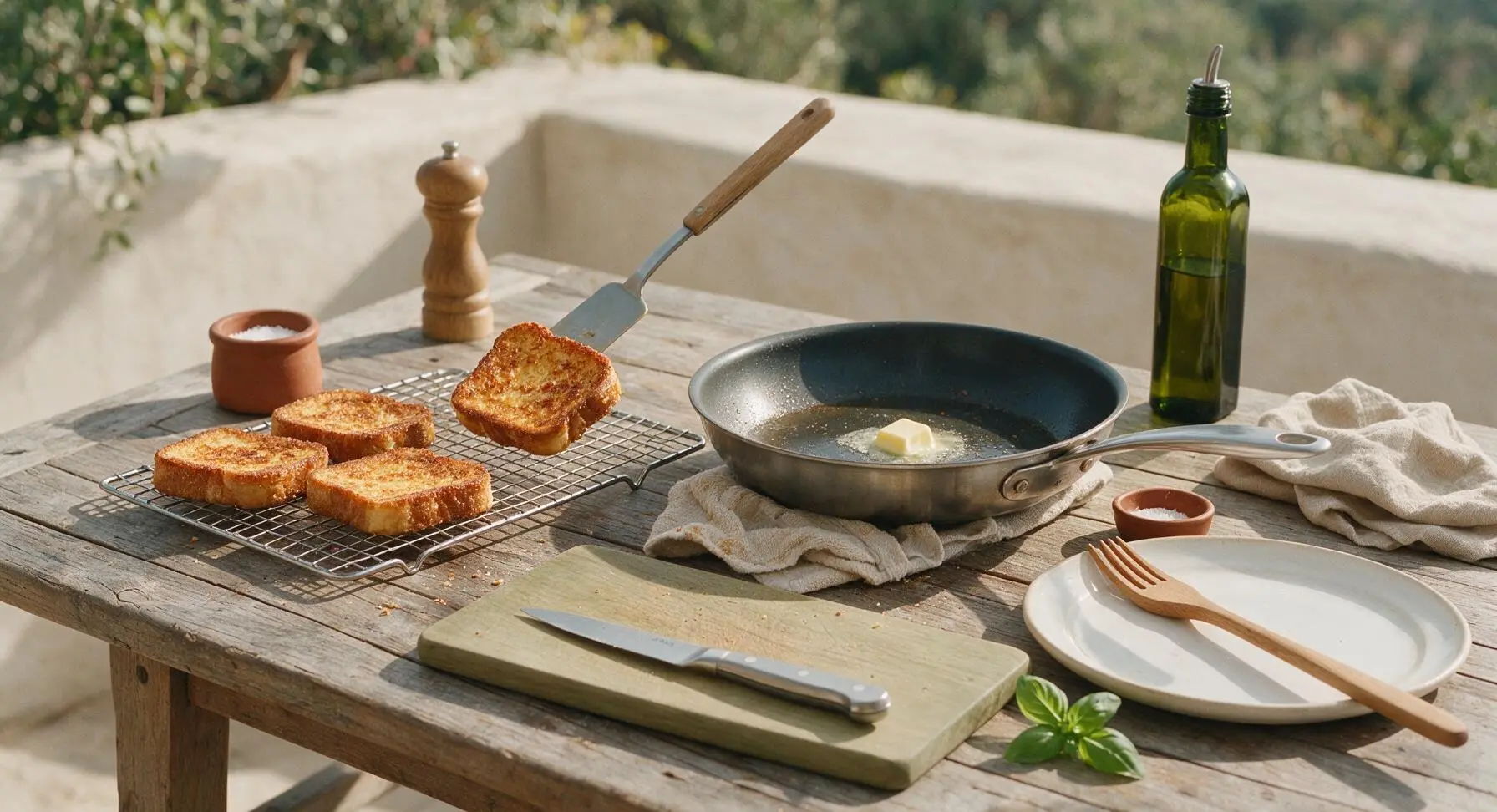
Step 6
step6:Keep Toast Crisp
7

Plate and Garnish

Remove the warm crispy French toast from the wire rack, slice each piece diagonally into two triangles, and arrange four triangles (two full slices per serving) slightly overlapping on the creamy off-white stoneware dinner plate pulled to the center front of the counter. Top with a tiny 1-teaspoon pat of salted butter, a light dusting of ground cinnamon, and a slow drizzle of pure maple syrup. Add two thin slices of fresh Honeycrisp apple and a small sprig of fresh thyme for garnish, if desired. Serve immediately while the crust is shatteringly crisp.
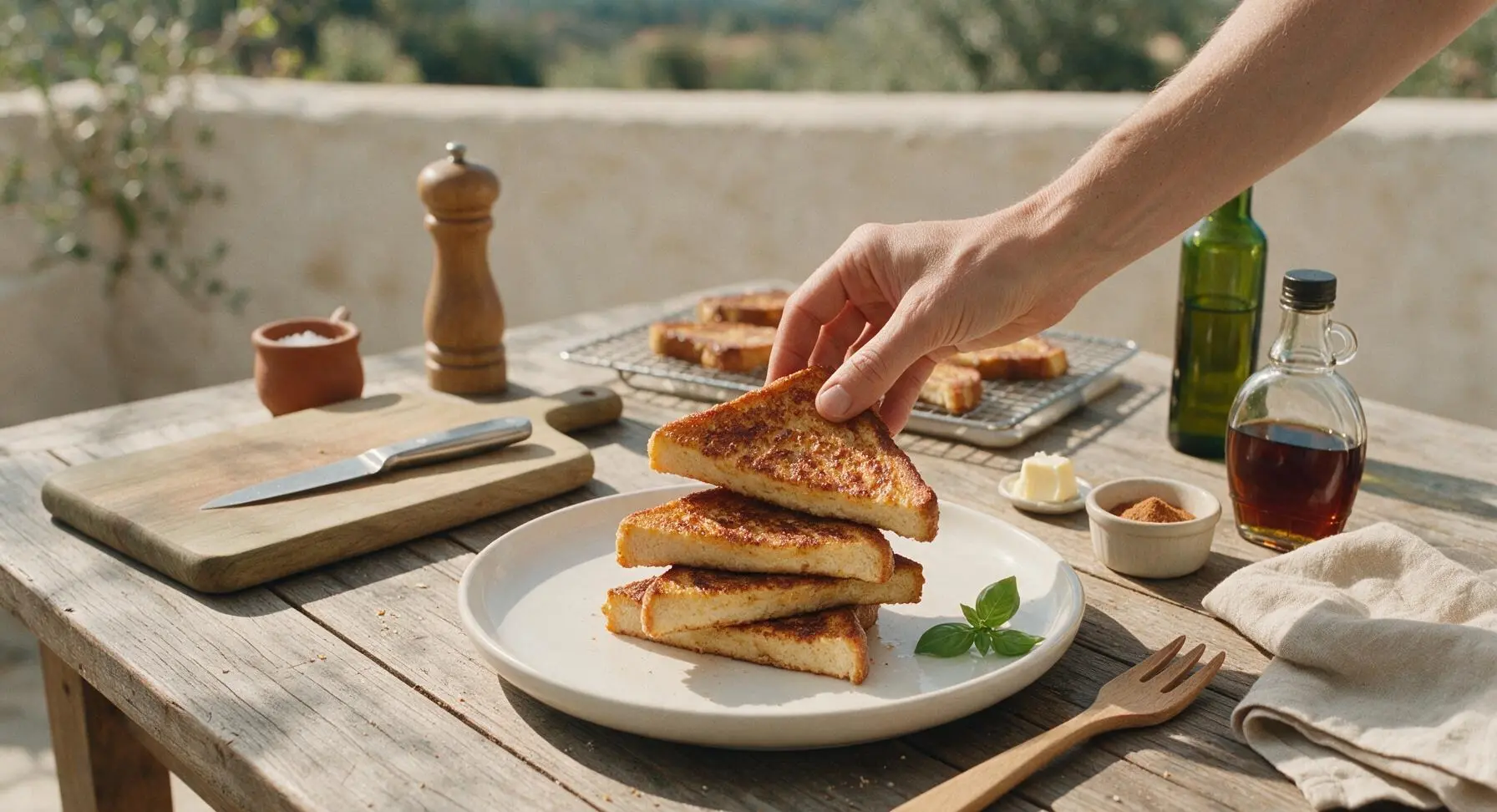
Step 7
step7:Plate and Garnish

Tips

1.Use day-old or slightly dried brioche: Fresh bread holds excess moisture that leads to soggy centers; dried bread absorbs custard evenly without turning mushy, creating an ideal crisp-to-soft ratio.
2.Whisk cornstarch into the custard base: Cornstarch eliminates the rubbery egg-only coating common in basic French toast, creating a thin, shatteringly crisp outer crust that stays crisp longer.
3.Rest cooked toast on a wire rack, not a plate: Stacking hot toast on a solid plate traps steam that softens the crisp crust in minutes; a wire rack allows air circulation to keep toast crisp while you cook remaining batches.
✨ You May Also Like

Breakfast
🍜 United States

Crisp-edged, fluffy lard griddle cakes are a nostalgic homestyle staple, with rich savoriness from rendered lard, perfect topped with maple syrup or savory gravy.

⏱️ 25 minuteBreakfast ★ 4.8
Breakfast
🍜 United States

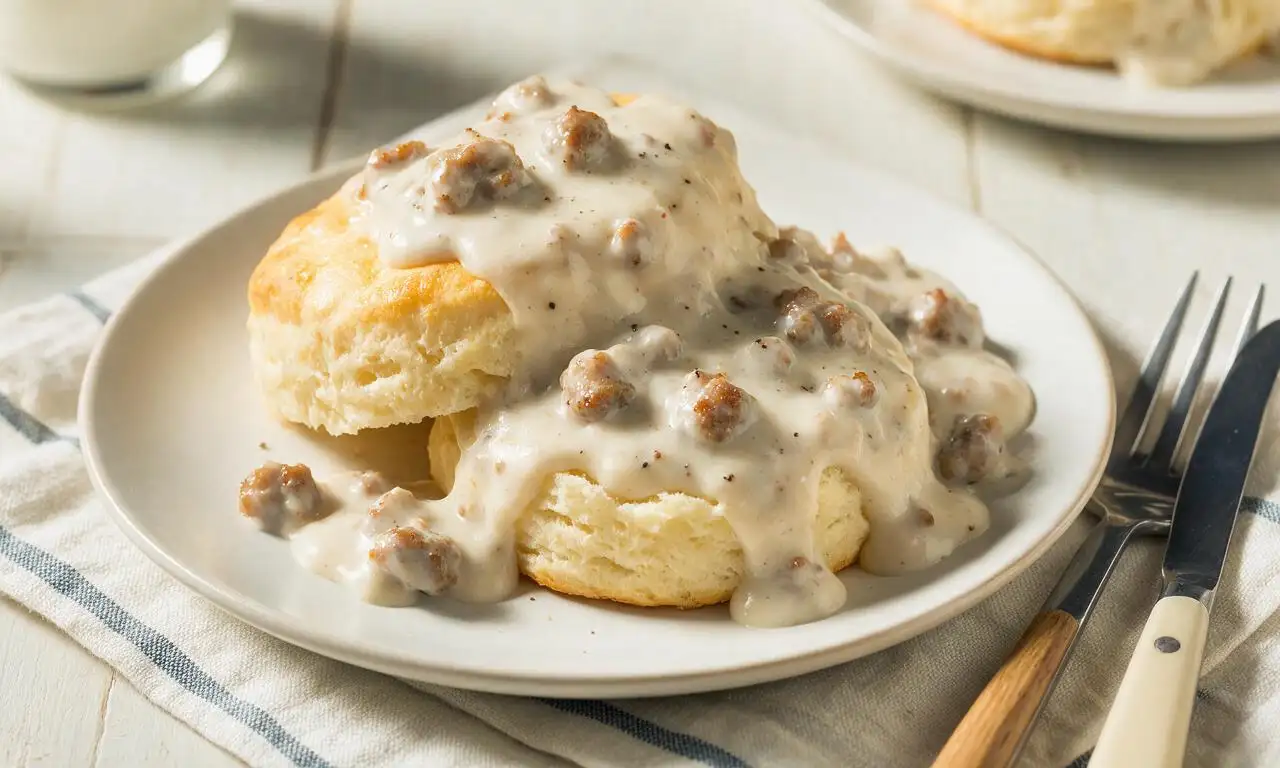
Flaky, buttery homemade buttermilk biscuits smothered in creamy, peppery pork sausage gravy: a beloved, hearty Southern American comfort food classic.

⏱️ 35 minuteBreakfast ★ 4.8
Breakfast
🍜 United States

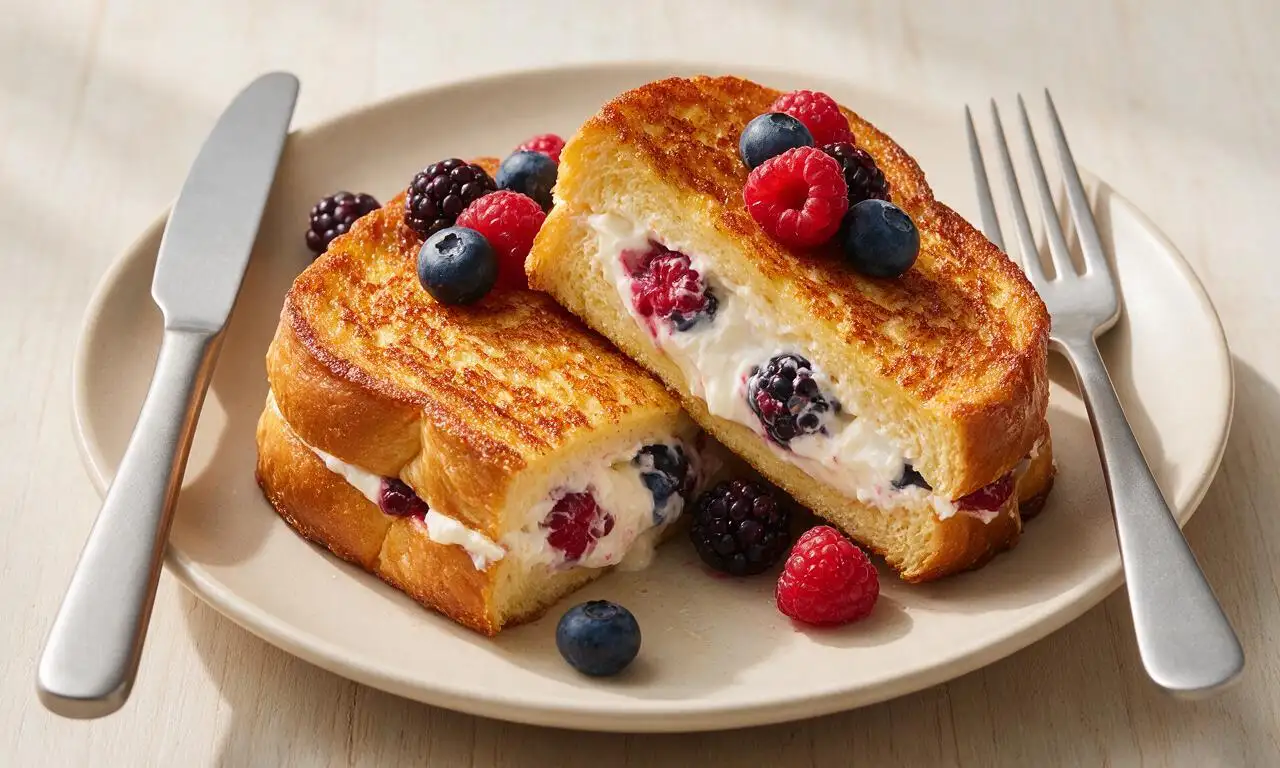
Golden, custardy brioche stuffed with sweet cream cheese and fresh berries, pan-fried to crisp perfection. An indulgent, cozy breakfast perfect for slow weekend mornings.

⏱️ 30 minuteBreakfast ★ 4.7
Breakfast
🍜 United States

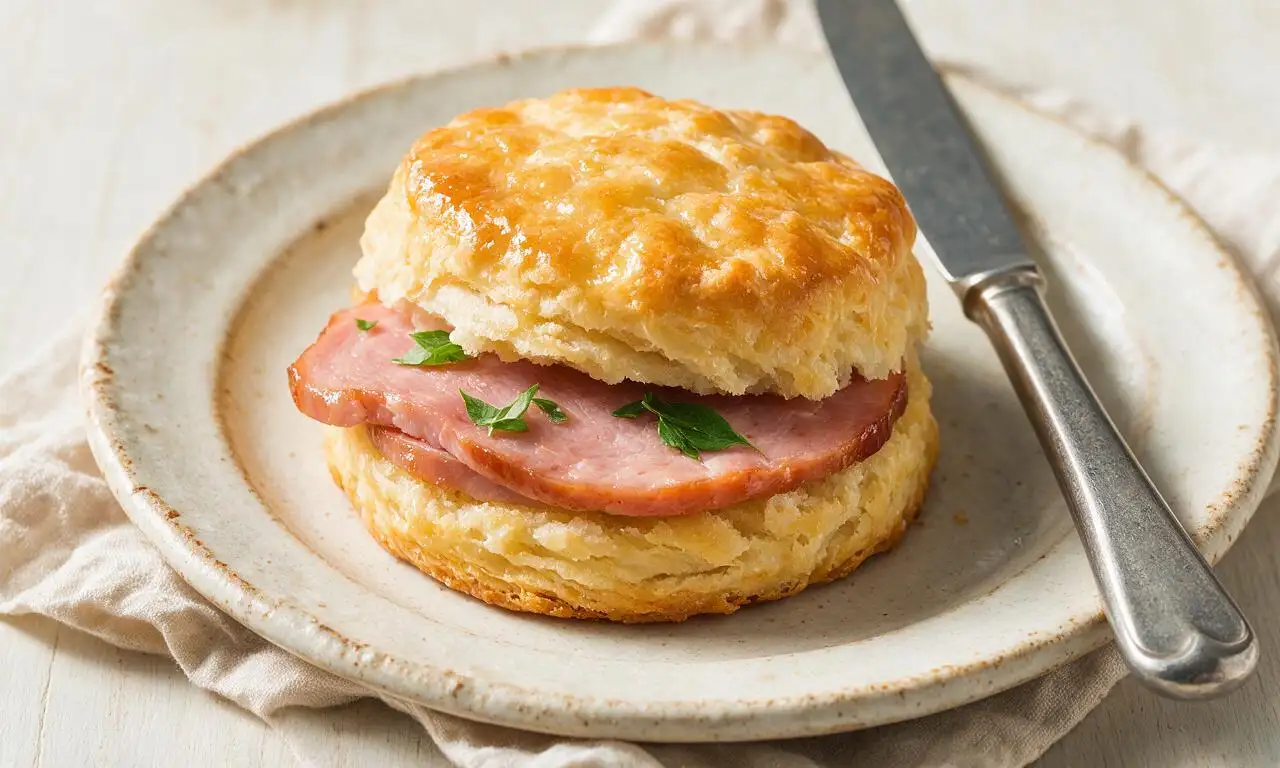
Flaky, buttery Southern-style biscuits stuffed with savory salty country ham, a portable, satisfying classic perfect for casual on-the-go meals.

⏱️ 25 minuteBreakfast ★ 4.8
Breakfast
🍜 United States

Iconic puffy baked pancake popularized in Seattle, with crisp golden edges and soft custardy center, served warm with classic sweet toppings.

⏱️ 35 minuteBreakfast ★ 4.6
Breakfast
🍜 United States

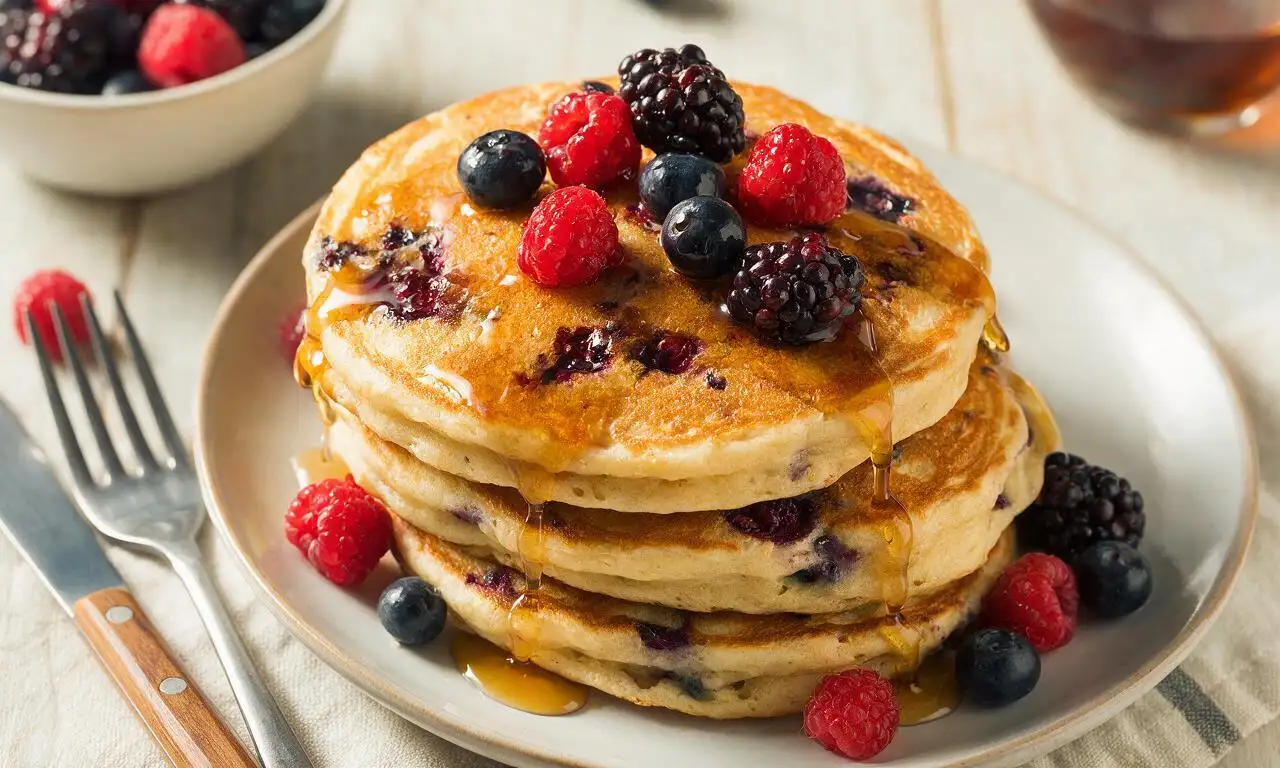
Fluffy, golden pancakes studded with juicy peak-summer mixed berries, drizzled with maple syrup for a bright, comforting, crowd-pleasing family breakfast.

⏱️ 25 minuteBreakfast ★ 4.7

crispy french toast:Frequently Asked Questions

1.Why does this recipe call for day-old brioche instead of fresh bread? ▾
Fresh brioche is too soft and moisture-dense, so it will turn soggy and fall apart when soaked in custard. Day-old, 1-inch thick slices have a slightly firmer crumb that soaks up just the right amount of custard, crisping up beautifully while keeping that soft velvety center without getting mushy.
2.What if I don’t have day-old brioche on hand to make this recipe? ▾
If you only have fresh brioche, toast 1-inch slices lightly in a 300°F oven for 8–10 minutes to dry them out slightly before using. You can also substitute thick-cut day-old challah or Texas toast, but skip thin soft sandwich bread—it won’t hold up to custard or develop that signature shatteringly crisp crust.
3.Why is cornstarch included in the custard? I thought French toast only uses eggs and milk. ▾
Cornstarch is the secret to that shatteringly crisp outer crust, instead of the soft, eggy exterior you get from standard French toast. It cuts down on excess egg sogginess, creates a light golden crunch when pan-fried, and helps the custard set into a velvety, not runny, center without making the coating tough.
4.How thick should I cut my bread slices if I’m prepping it from a whole loaf? ▾
Aim for uniform 1-inch thick slices, no thinner. Thinner slices will soak up too much custard and turn soggy before they can crisp up, while slices thicker than 1.5 inches won’t cook through evenly, leaving you with raw, runny custard in the middle even when the outside is fully browned.
5.How long should I soak bread slices in the custard to get the perfect texture? ▾
Don’t soak slices for more than 20–30 seconds per side. Over-soaking leads to soggy, dense toast that won’t crisp up, while too quick a dip leaves you with plain dry bread in the center. You want the bread surface coated and barely saturated, not so wet that custard drips heavily when you lift it.
6.What stovetop heat setting should I use to get crispy toast without burning it? ▾
Cook over medium-low heat, around 325°F if you’re using an electric griddle. Too high heat will burn the outside before the custard center cooks through, leaving a raw middle and bitter charred crust. Too low heat, and the bread will soak up extra butter, turn greasy, and never develop that crisp golden shell.
7.Can I make this French toast ahead for meal prep or a big weekend brunch crowd? ▾
You can prep the cinnamon-and-sugar spiced custard and slice your bread the night before to cut down on morning work, but cook the French toast right before serving for best crispness. If holding cooked slices for up to 30 minutes, set them on a wire rack over a baking sheet in a 200°F oven—don’t stack them, or steam will make them soggy.
8.Do I have to use whole milk, or can I swap in lower-fat or plant-based milk? ▾
Whole milk gives the richest, creamiest custard center, but you can swap in 2% milk if that’s what you have—just add an extra ½ teaspoon of cornstarch to make up for lower fat content. Unsweetened oat milk works as a plant-based swap, but skip skim milk; it’s too watery and will make toast soggy with no velvety texture.
9.How do I tell when the French toast is done so I don’t undercook the custard center? ▾
It’s done when the outside is deep golden brown, crisp to the touch, and the center feels set (not jiggly) when you nudge it with a spatula, about 3–4 minutes per side. For precision, the internal temperature of the custard center should hit 160°F to ensure eggs are fully cooked without turning rubbery.
10.Why does my French toast always turn out soggy instead of nice and crispy? ▾
Soggy French toast almost always comes down to three common mistakes: using thin fresh bread that over-soaks, cooking on too low heat so the crust never crisps, or stacking cooked slices on a plate where they trap steam. Stick to the recipe’s thick day-old brioche, cornstarch boost, and rack holding method for perfect crunch every time.
11.What toppings work best with this cinnamon-spiced crispy French toast? ▾
Pure maple syrup is the classic, cozy pairing called out for this recipe, but you can also top slices with salted butter, a light dusting of powdered sugar, fresh berries, a dollop of whipped cream, or toasted pecans for extra crunch. Skip adding very wet toppings like heavy compote early, as they will soak through the crisp crust quickly.
12.Can I freeze leftover cooked French toast for quick weekday breakfasts? ▾
Absolutely! Let cooked slices cool completely on a wire rack, then freeze them in a single layer on a baking sheet before transferring to a sealed freezer bag for up to 3 months. Reheat directly from frozen on a wire rack in a 375°F oven for 8–10 minutes—skip the microwave, as it will turn the crisp crust rubbery and soggy.

Comments (4)

2 days ago

OMG this crispy french toast was a total game changer for our Saturday breakfast! My kids are super picky and usually complain about soggy, mushy french toast, but they asked for SECONDS before I even sat down at the table. I added a little extra cinnamon like I usually do and it came out perfect every time in 15 minutes flat, no fancy skills needed. 10/10 will be adding this to our weekly rotation!

yesterday

Wait did you use regular soft sandwich bread or thick-cut brioche? I tried making crispy french toast last month and it still got soggy and mushy in the middle no matter how long I cooked it 😅

yesterday

Great question! We recommend using slightly stale thick-cut brioche or sourdough for the crispiest results — super soft fresh bread tends to hold too much egg mixture and go soggy even if you cook it longer! So glad your family loved the recipe, MamaBear2020!

1 week ago

Brought this to our neighborhood potluck brunch last weekend and people were hounding me for the recipe before I even set the platter down! The crispy cornflake crust is chef's kiss, I can't believe how easy this is to pull off even when you're making a big batch for a crowd. SO good, I'll be making this for every brunch event from now on.

5 days ago

So happy to hear this was a potluck hit, Jake! Pro tip for big batches: you can keep the cooked french toast warm on a wire rack set over a baking sheet in a 200°F oven while you cook the rest so it stays crispy instead of getting soggy piled on a plate!

3 days ago

Perfect for quick weekday breakfast meal prep! I made a full batch on Sunday, popped individual slices in the toaster oven to reheat during the week, and they stayed just as crispy as day one. Way better than the processed frozen french toast I used to buy, and it's so simple even I can't mess it up. Only note: I skipped the nutmeg because I don't keep it on hand and it still tasted amazing.

2 days ago

Oh I never thought to reheat these in the toaster oven! I've been zapping them in the microwave and they get all rubbery and soft, can't wait to try that trick next time I make a batch!

30 minutes ago

First time making french toast ever and this turned out insane? I was worried I'd burn it or it would be raw and eggy in the middle, but the 15 minute cook time was totally accurate, and the crispy crust is way better than the soggy stuff I get at the campus diner. Saved this recipe for sure, already told my roommates we're having it for our late night study snack this week during midterms.