
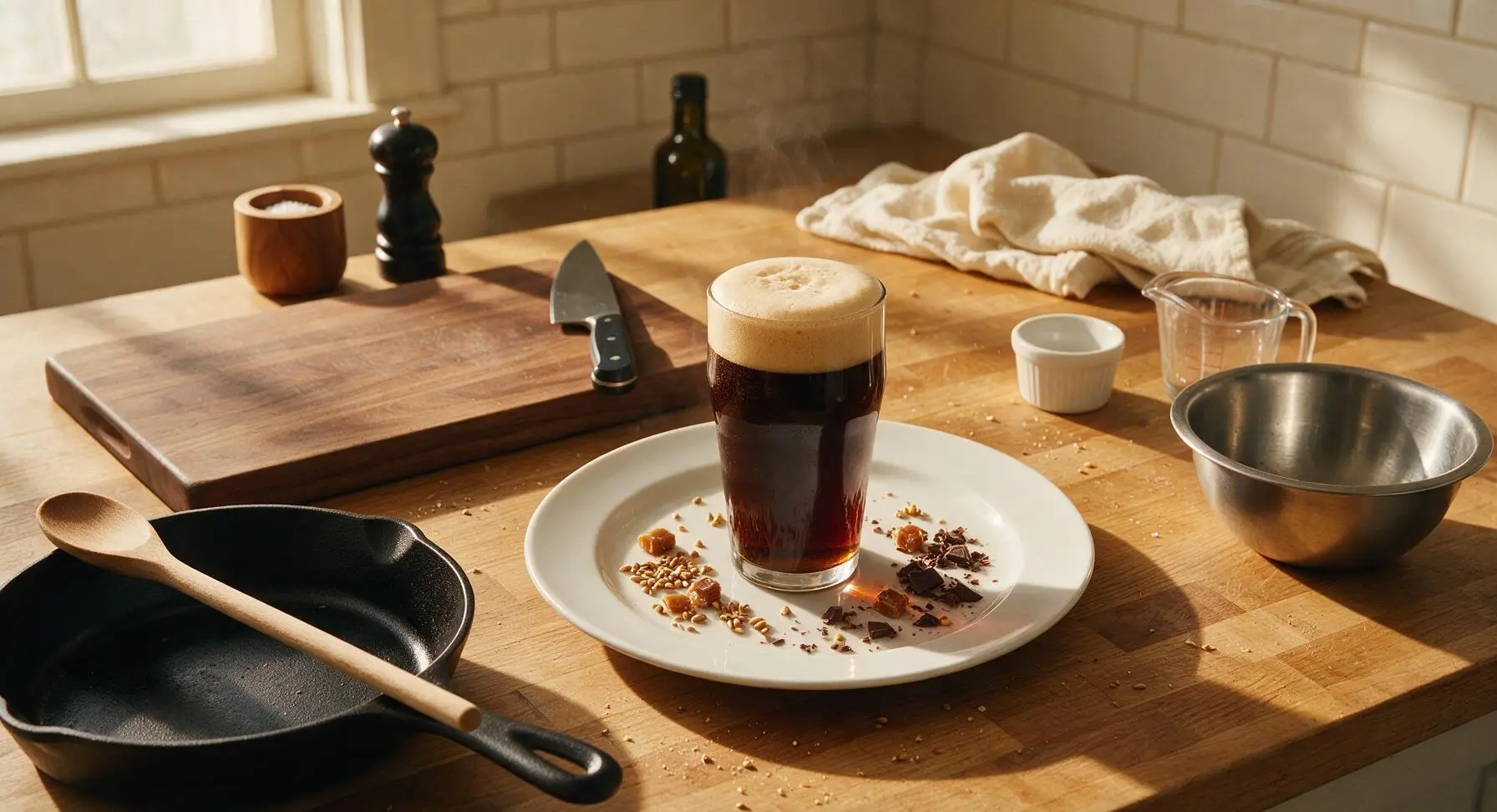
Dark Mild

title 1
Dark Mild
⏱️ cook time 1 hour 45 minutes
🍽️ servings 10
⚡ Difficulty medium

intro

A smooth, low-alcohol classic British session ale with rich toasted malt, subtle caramel, and faint dark chocolate notes, balanced for easy, refreshing sipping.

Ingredients
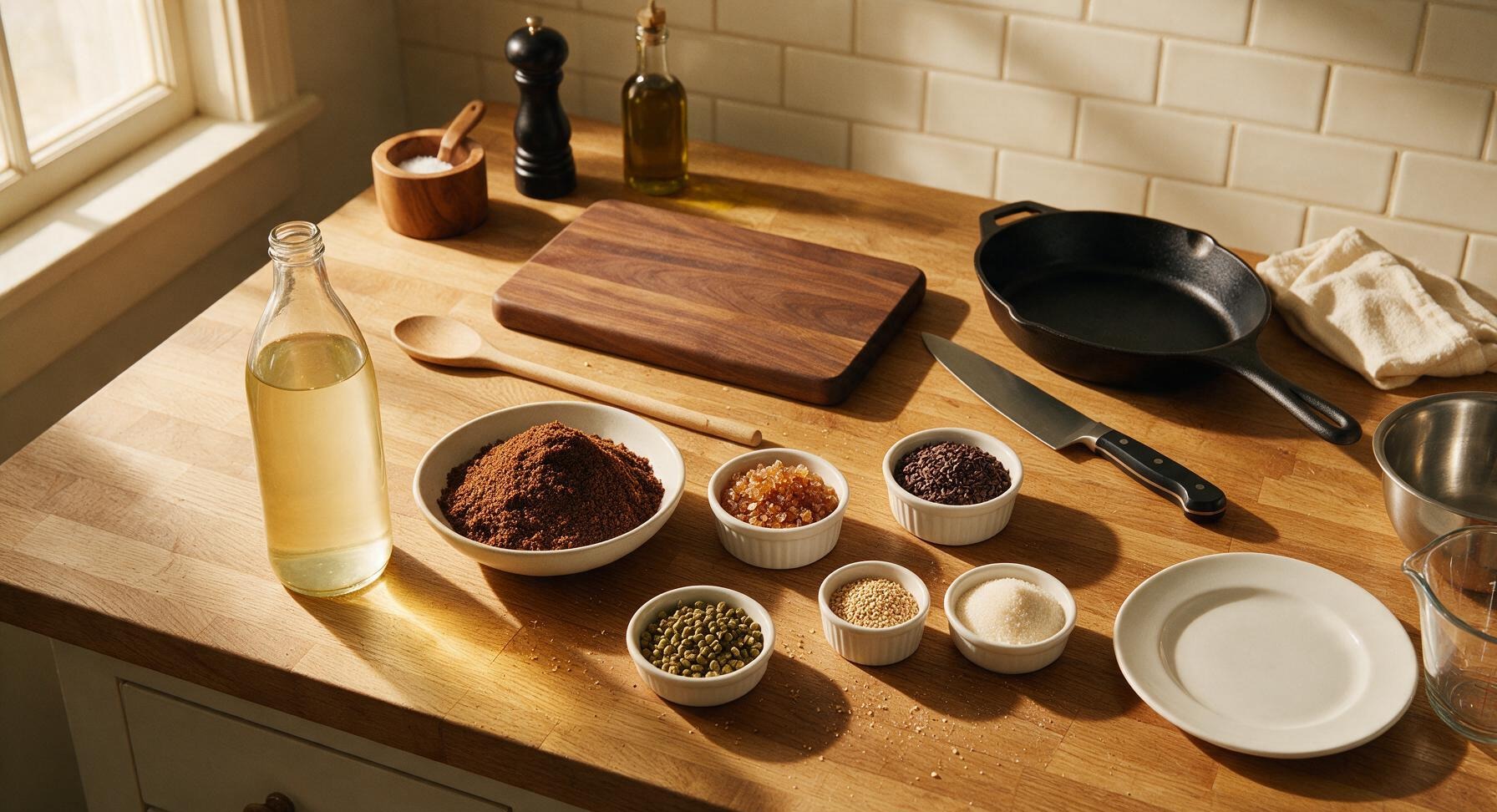
Filtered water 5L (1.3 gal)
Light dried malt extract (DME) 545g (1.2 lbs)
Crushed crystal malt (60L) 113g (4 oz)
Crushed chocolate malt 28g (1 oz)
East Kent Goldings hop pellets 14g (0.5 oz)
English ale yeast (S-04 strain) 5g (1 packet)
Corn sugar (for carbonation) 11g (0.4 oz)

Steps

1

Sanitize Brewing Equipment

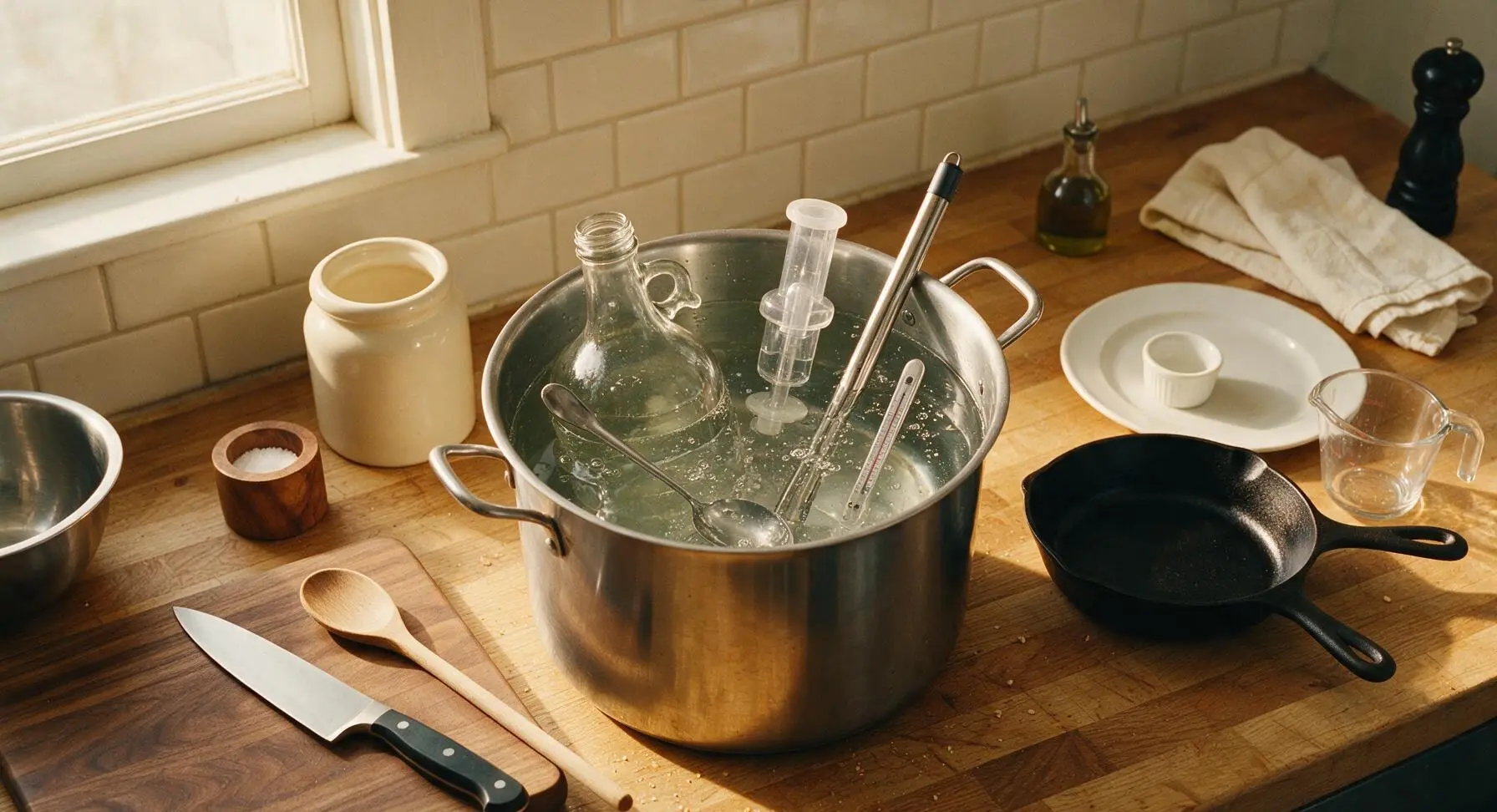
First, wash all tools that will contact cooled wort (fermentation carboy, airlock, auto-siphon, stirring spoon, thermometer) with warm soapy water, then soak in a no-rinse food-grade sanitizer for 1 minute per manufacturer instructions. Set sanitized items on the clean navy cotton towel to air dry completely to avoid bacterial or wild yeast contamination, which causes off-flavors. This step is non-negotiable for consistent, good-tasting beer.
Step 1
step1:Sanitize Brewing Equipment
2

Steep Specialty Grains

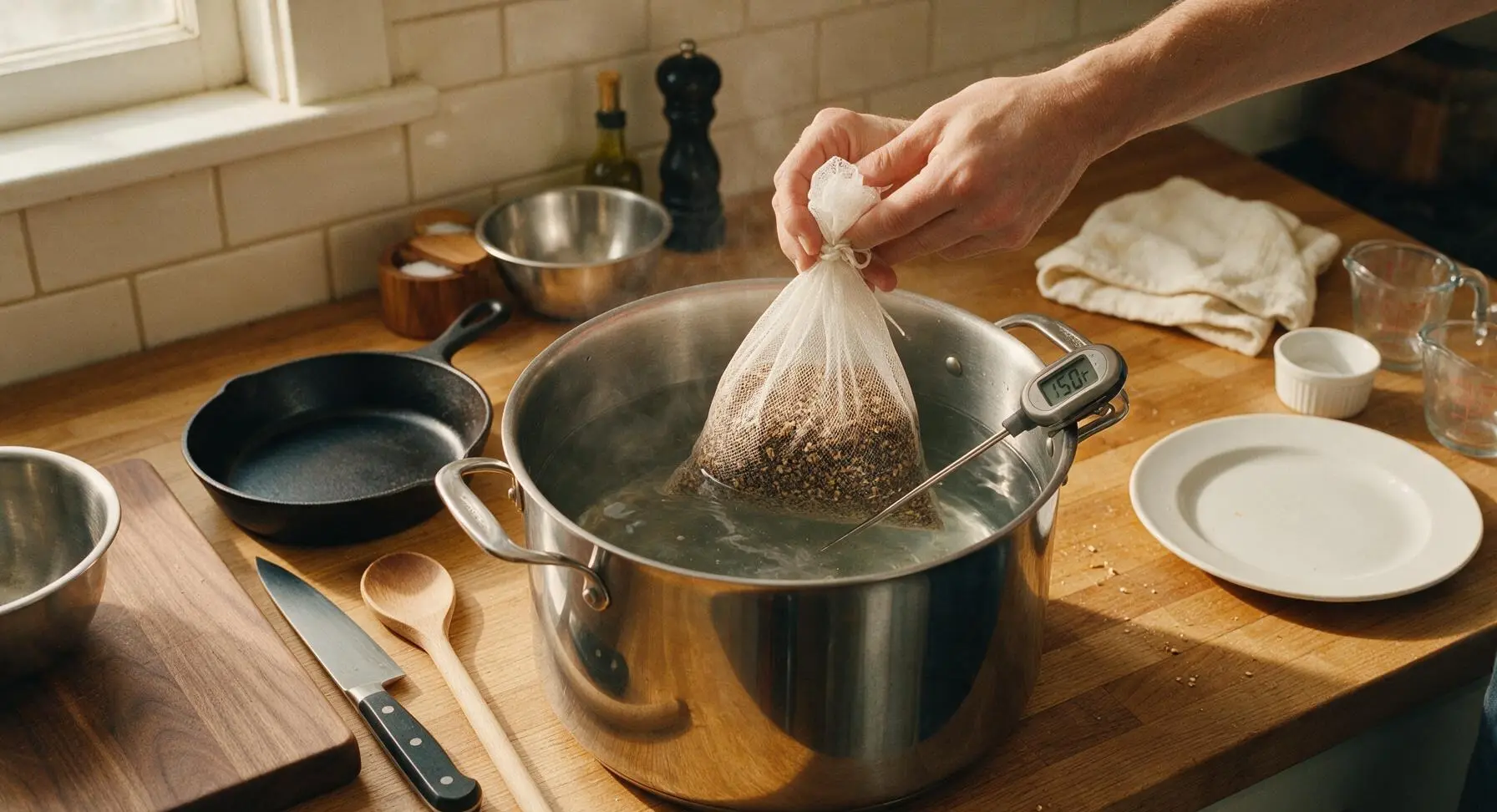
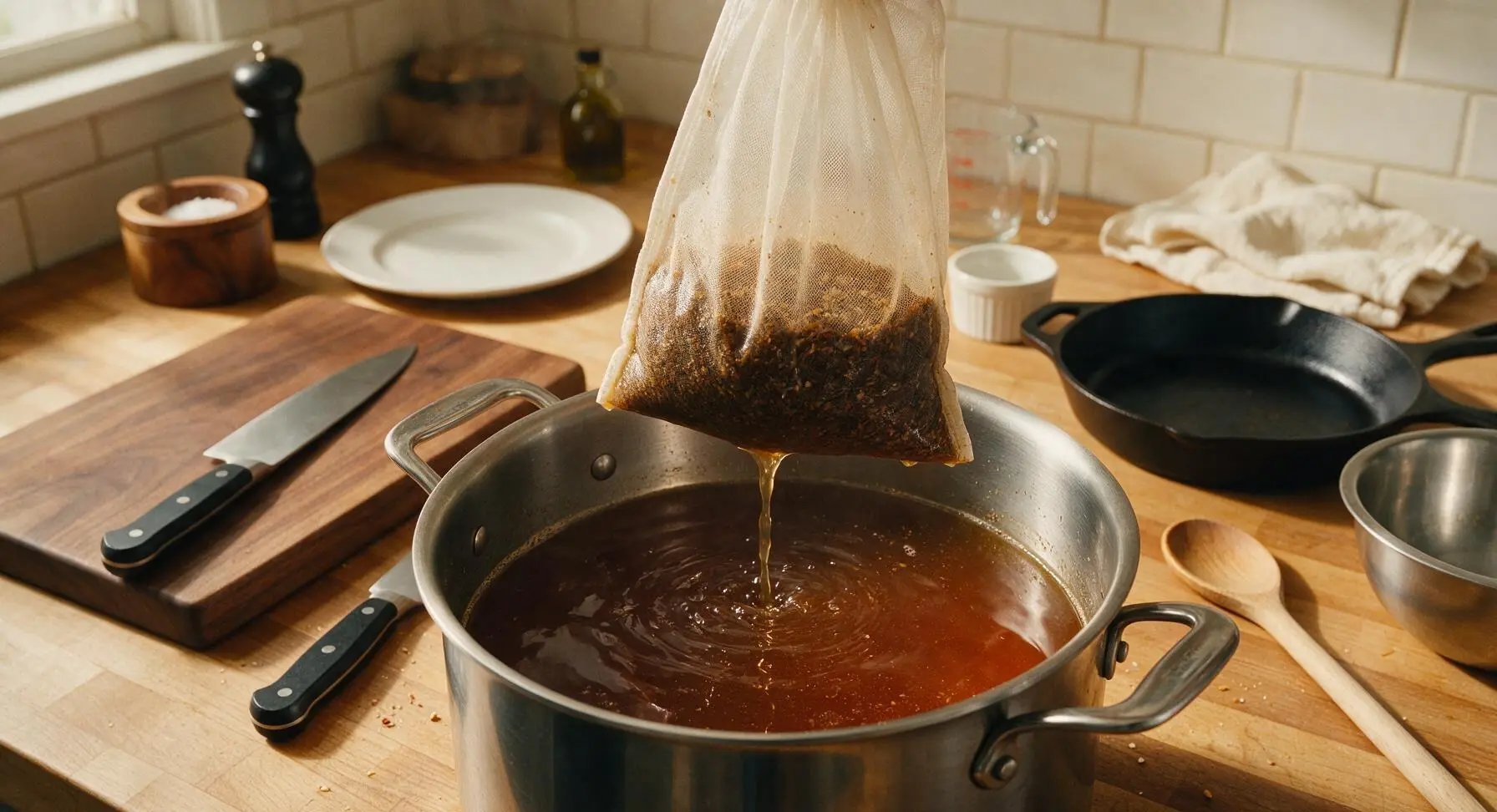
Pour 4L (1 gal) of filtered water into the sanitized stainless steel stock pot, place over medium heat to reach 68C (155F). Place crushed crystal malt and chocolate malt into the nylon mesh grain bag, tie the drawstring loosely, and submerge fully in the heated water. Maintain a steady 65-68C (149-155F) temperature for 30 minutes, adjusting heat as needed; do not let water exceed 70C (158F), as this extracts harsh bitter tannins from grain husks. The wort will deepen to a rich amber-brown as grains steep.
Step 2
step2:Steep Specialty Grains
Step 2
step2:Steep Specialty Grains
3

Bring Wort to Boil

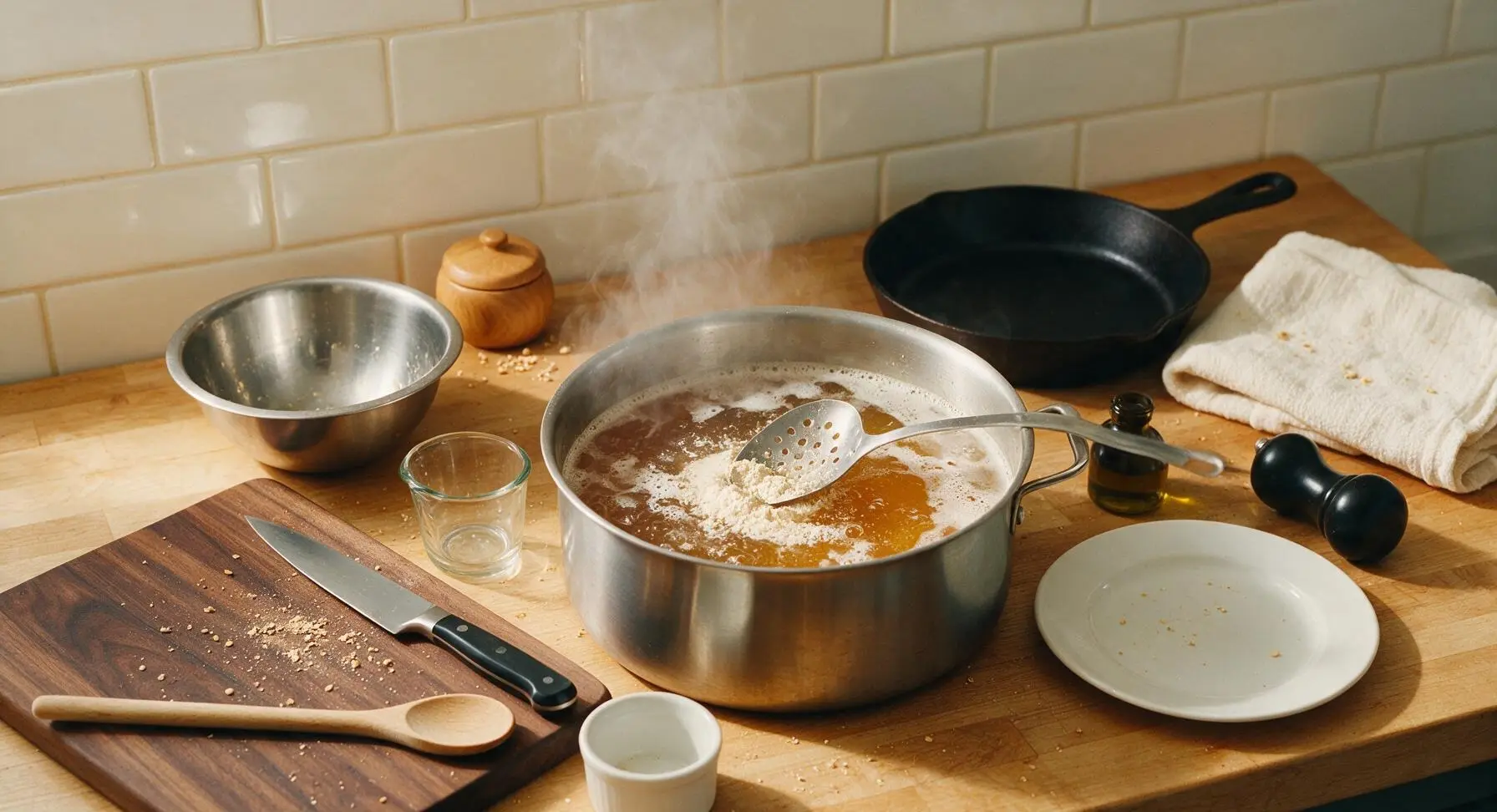
Lift the grain bag fully out of the pot, let it drain naturally over the wort for 2 minutes (do not squeeze the bag). Turn heat to medium-high to bring the wort to a gentle, rolling boil. Once boiling, slowly stir in all of the light dried malt extract with the slotted stainless steel stirring spoon until fully dissolved, with no dry clumps stuck to the pot bottom. Watch closely for boilovers, as the sugary wort foams easily when it reaches boiling temperature.
Step 3
step3:Bring Wort to Boil
4

Add Hops on Schedule

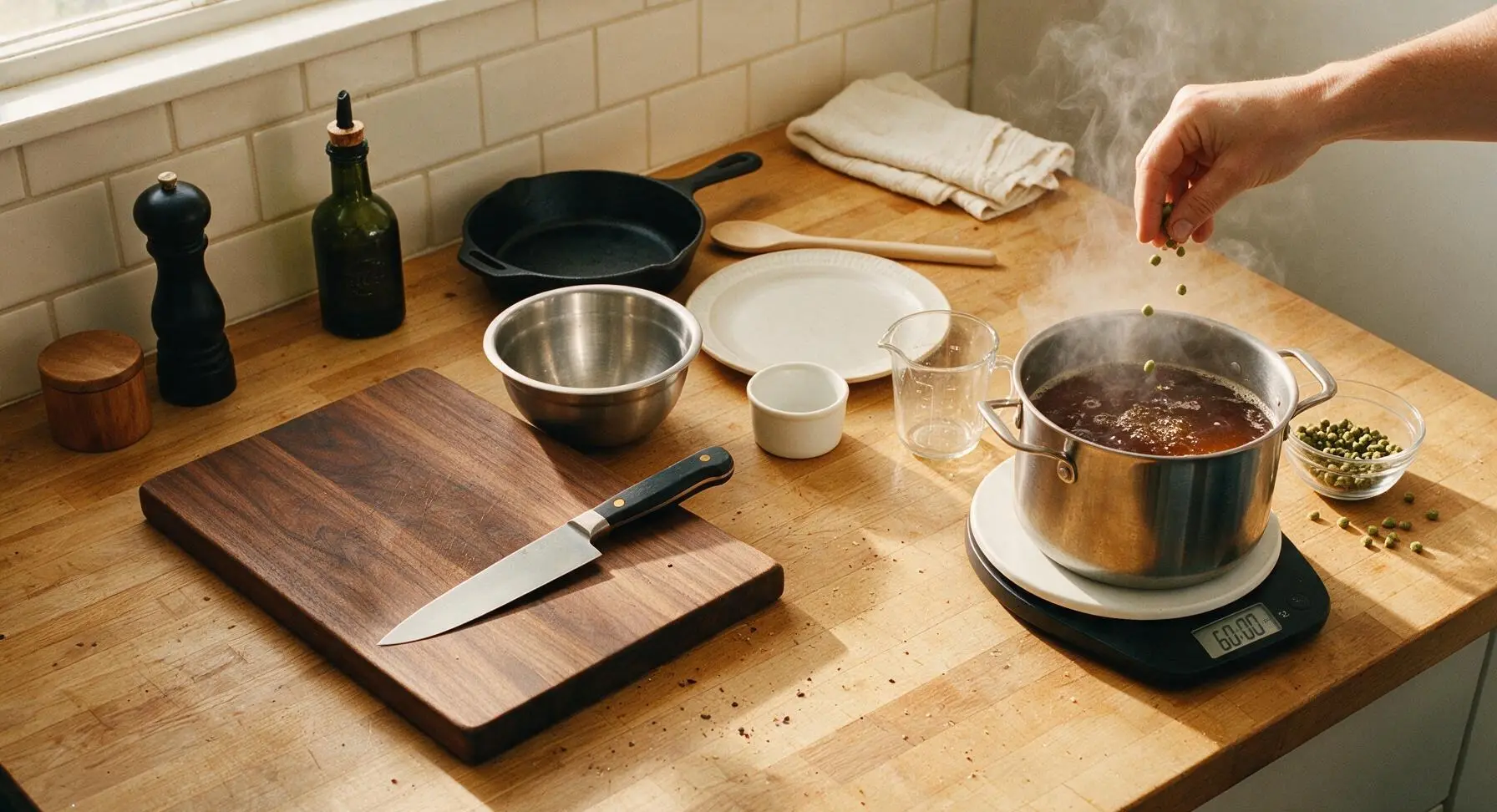
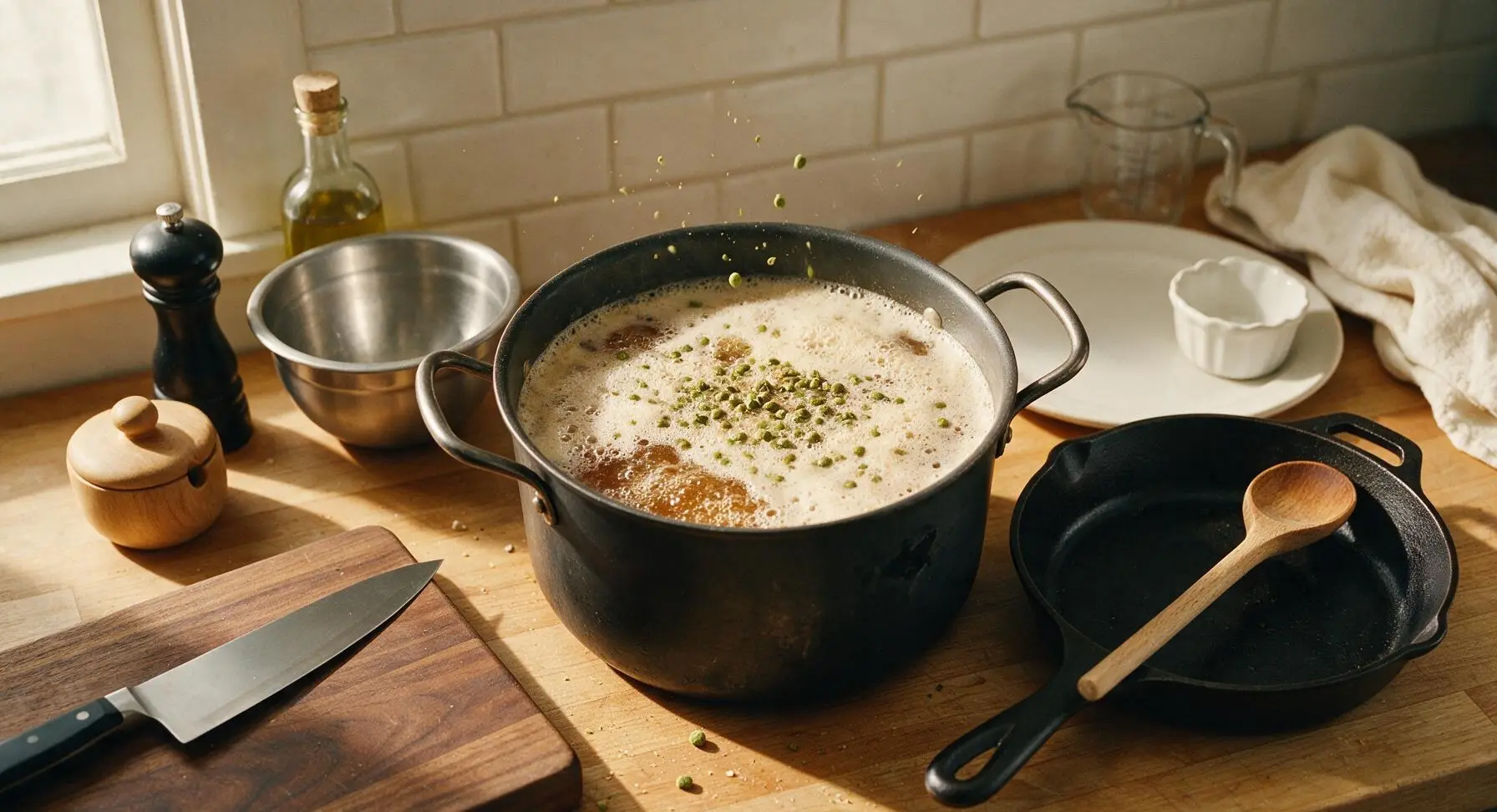
Once the malt extract is fully dissolved and the wort returns to a steady rolling boil, start a 60-minute timer. Add 10g (0.35 oz) of East Kent Goldings hop pellets at the start of the boil (60 minute mark) to add mild, earthy bitterness. Add the remaining 4g (0.15 oz) of hop pellets during the final 5 minutes of the boil to add delicate floral, honeyed aroma. Maintain a gentle boil, stirring occasionally to prevent scorching on the pot base.
Step 4
step4:Add Hops on Schedule
Step 4
step4:Add Hops on Schedule
5

Cool Wort Quickly

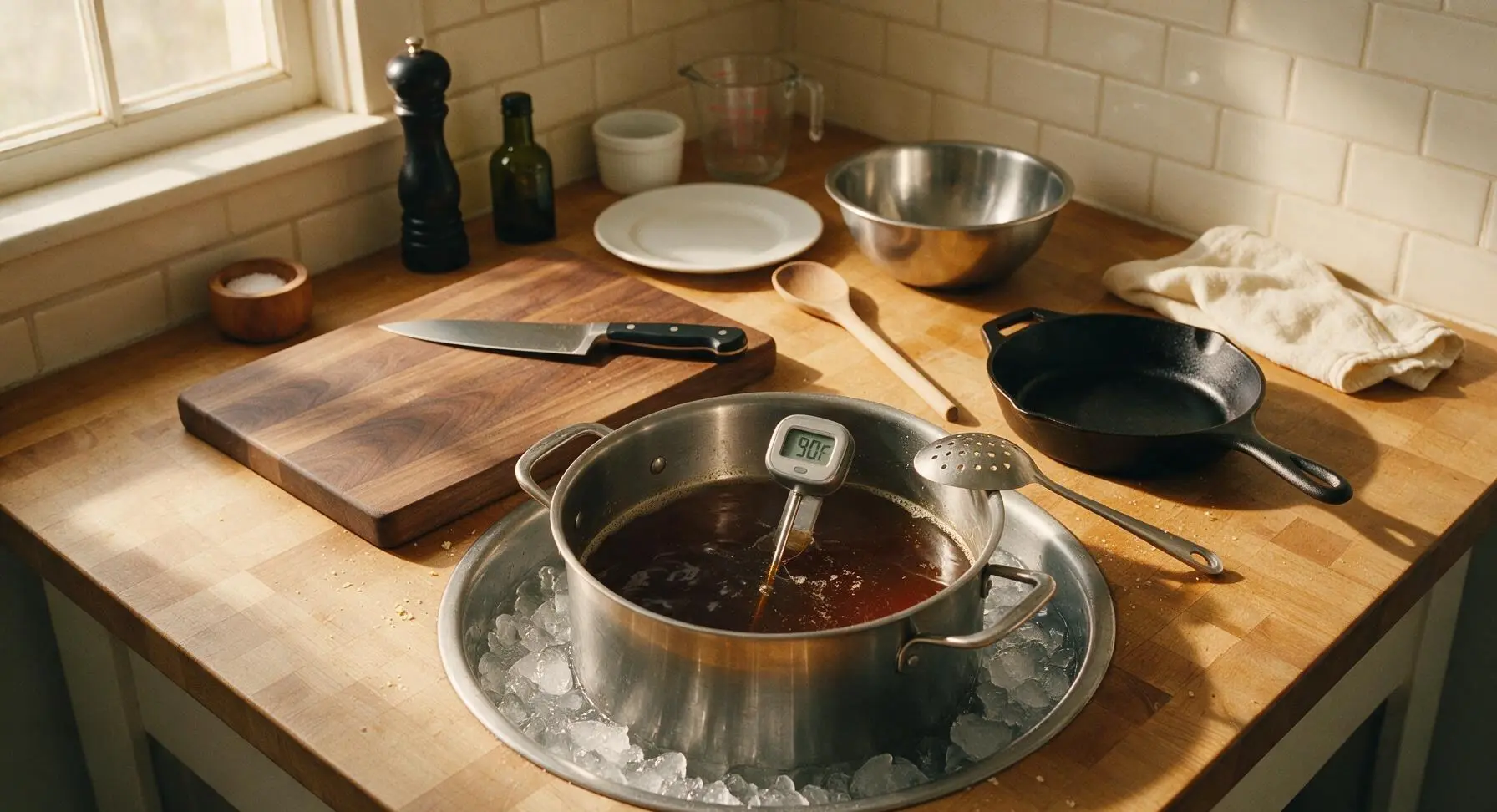
When the 60-minute boil finishes, turn off heat immediately. Carefully move the stock pot to a sink filled with ice water to cool the wort to 21C (70F) within 15-20 minutes. Stir the wort gently every 5 minutes to distribute cool temperature, checking progress with the sanitized instant-read thermometer. Do not allow ice or unsanitized water to touch the wort surface, as this can cause contamination.
Step 5
step5:Cool Wort Quickly
6

Transfer to Fermenter

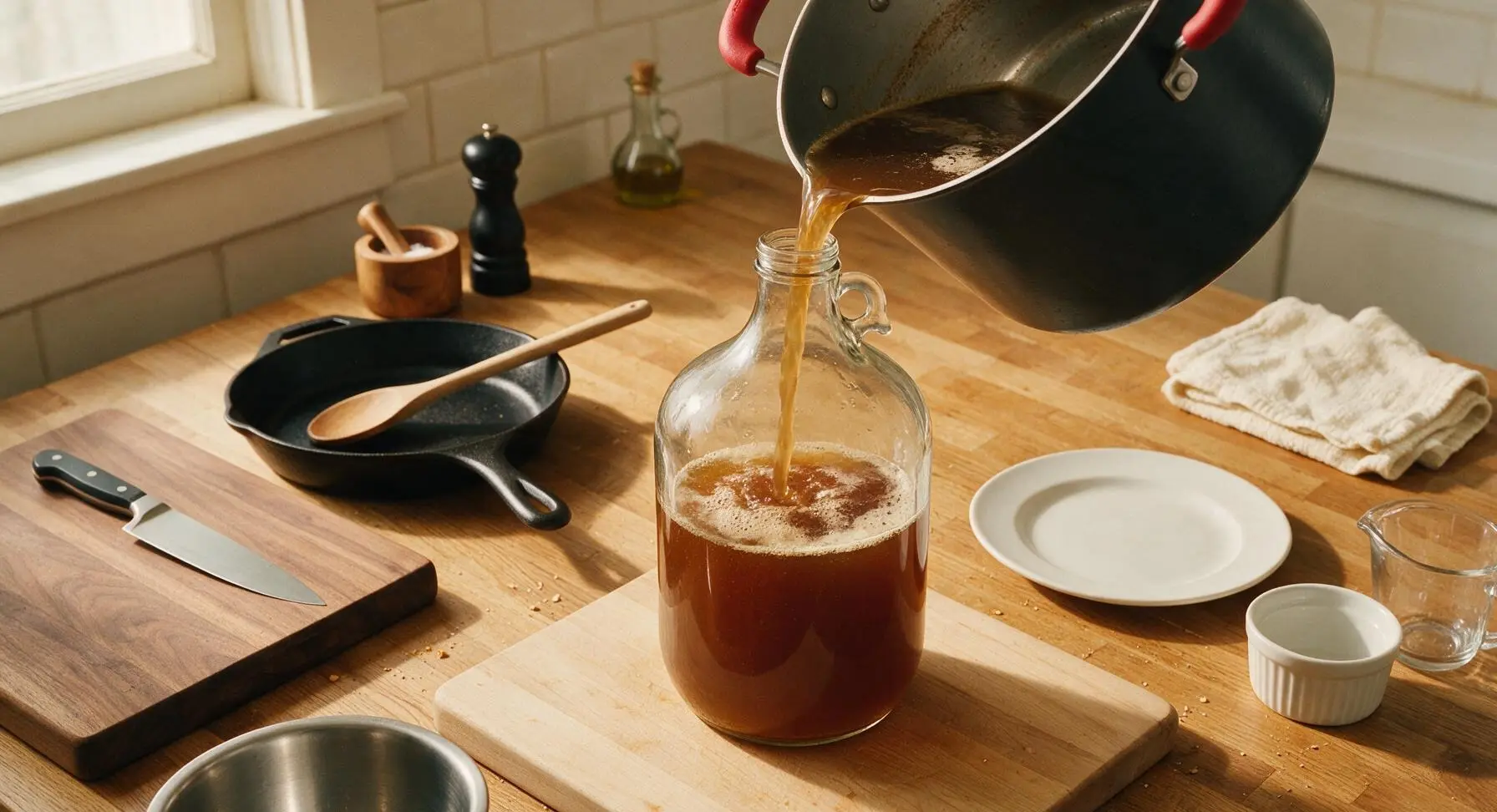
Once wort cools to exactly 21C (70F), pour it carefully into the sanitized 1-gallon glass carboy. Top up with additional filtered water as needed to reach the 1-gallon etched mark on the carboy shoulder. Seal the carboy opening with a sanitized rubber stopper, then shake the carboy gently for 30 seconds to aerate the wort; dissolved oxygen helps yeast start strong, healthy fermentation.
Step 6
step6:Transfer to Fermenter
7

Pitch Yeast and Seal

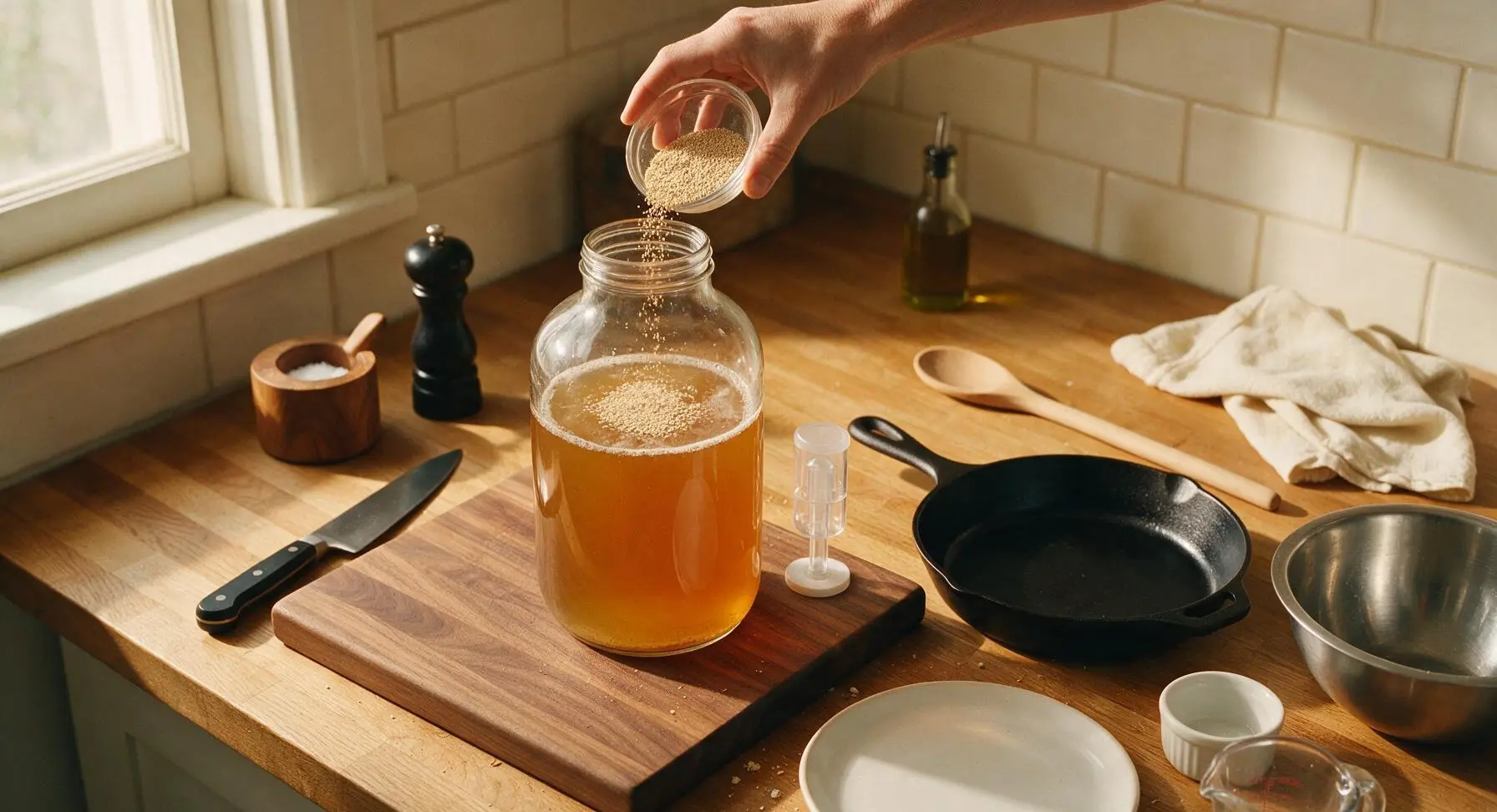
Remove the stopper from the carboy, sprinkle the entire 5g packet of English ale yeast evenly across the surface of the aerated wort. Fill the 3-piece airlock halfway with sanitizer solution, then press it firmly into the carboy stopper to create an airtight seal. Move the carboy to a dark, consistently cool spot (18-20C / 65-68F) away from direct sunlight to ferment for 2 weeks; bubbles will rise through the airlock within 24-48 hours as active fermentation begins.
Step 7
step7:Pitch Yeast and Seal
8

Bottle and Carbonate

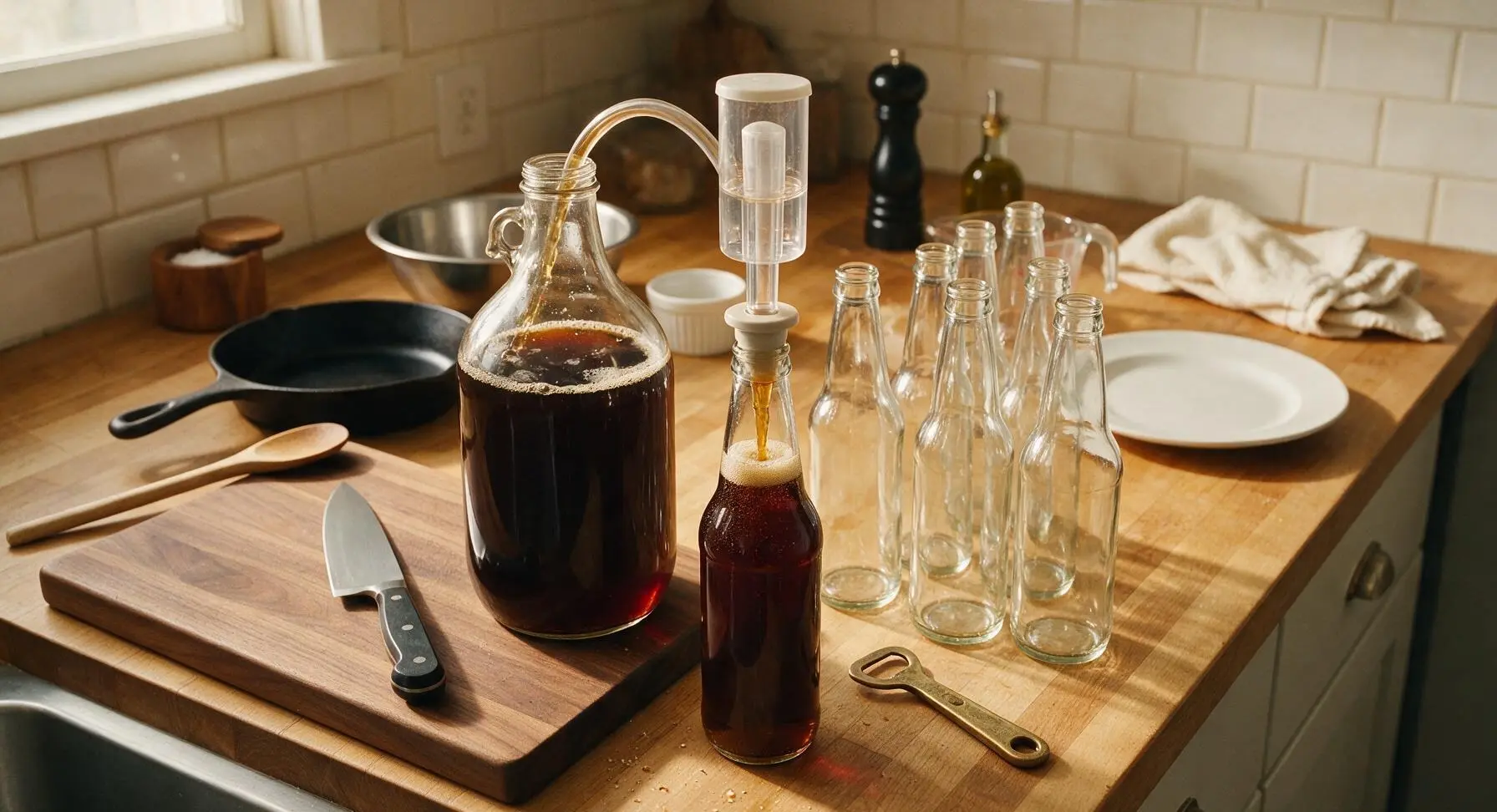
After 2 weeks of fermentation, when bubbles stop rising through the airlock for 48 consecutive hours, sanitize ten 12oz glass beer bottles, metal bottle caps, and the auto-siphon. Boil the 11g of corn sugar in 50ml of filtered water for 5 minutes, cool, and pour into the bottom of the sanitized stock pot. Use the auto-siphon to transfer fully fermented beer from the carboy into the pot, stirring gently with the sanitized spoon to evenly mix the priming sugar, which creates natural carbonation. Siphon beer into bottles, leaving 2.5cm (1 inch) of headspace, then crimp caps tightly. Let bottles condition at room temperature for 1 week to build carbonation, then chill to 7C (45F) before serving.
Step 8
step8:Bottle and Carbonate

Tips

1.Never squeeze the nylon grain bag after steeping: pressing the bag forces out harsh, astringent tannins from grain husks that will make your beer taste dry and overly bitter; instead, let the bag drain naturally over the pot for 2 full minutes before discarding spent grains.
2.Cool wort as quickly as possible after boiling: rapid cooling (under 20 minutes) reduces risk of contamination from wild yeast or bacteria, and prevents formation of dimethyl sulfide (DMS), an off-flavor that tastes like canned creamed corn.
3.Serve Dark Mild slightly chilled, not ice cold: this beer’s rich caramel, toasty bread, and faint chocolate notes are most prominent at 7-10C (45-50F), warmer than standard lager, as extreme cold mutes delicate malt flavors.


✨ You May Also Like

Drinks & Beverages
🍜 Mexico

A bright, balanced tequila-based cocktail with zesty fresh lime, smooth orange liqueur, and a signature salt rim, perfect for warm summer sipping.

⏱️ 5 minutesDrinks & Beverages ★ 4.9
Drinks & Beverages
🍜 United States

Thick, creamy, nostalgic classic vanilla milkshake with a rich, smooth texture, topped with whipped cream and a cherry for cool, sweet refreshment.

⏱️ 5 minutesDrinks & Beverages ★ 4.7
Drinks & Beverages
🍜 United States

A bright, golden strong ale with fruity banana-clove notes, subtle hop spice, and soft carbonation, brewed in classic Trappist Tripel tradition.

⏱️ 2 hours aDrinks & Beverages ★ 4.5
Drinks & Beverages
🍜 United States

A frothy, nostalgic American soda fountain treat pairing bubbly cold root beer with creamy vanilla ice cream, perfect for cooling down at warm weather gatherings.

⏱️ 20 minuteDrinks & Beverages ★ 4.8
Drinks & Beverages
🍜 United States

Tart, funky, effervescent American Wild Ale is a complex fruity craft beer brewed with wild yeast, delivering bright, zesty notes perfect for warm-weather sipping.

⏱️ 2 hours aDrinks & Beverages ★ 4.4
Drinks & Beverages
🍜 United States

Bright, bubbly copycat of the iconic American caramel cola, balanced with citrus and warm spice, perfect for sipping ice-cold on hot days.

⏱️ 15 minuteDrinks & Beverages ★ 4.8

Dark Mild:Frequently Asked Questions

1.What final ABV should I target for a traditional dark mild ale? ▾
Aim for a final ABV between 3.2% and 3.8% to stay true to the classic session style. This low alcohol level comes from sticking to the recommended light DME measurement, skipping extra sugar additions, and holding steady 65–68°F fermentation, so the beer stays smooth and refreshing for multi-pint sipping.
2.Can I use regular tap water instead of filtered water for this brew? ▾
You can, but I strongly recommend filtered water to avoid off-flavors from chlorine or chloramine common in municipal tap supplies. Those compounds create harsh, medicinal notes that clash with the soft malt and subtle hop character. If you only have tap, treat it with one campden tablet first to neutralize those chemicals.
3.How long should I steep the crushed crystal and chocolate malts for best flavor? ▾
Steep your crushed 60L crystal and chocolate malts in 150–155°F water for 20 to 30 minutes, max. Any longer, and you’ll pull harsh, astringent tannins from the grain husks that throw off the smooth, balanced profile. Don’t let steep water creep above 160°F either, for the exact same reason.
4.Why does this recipe call for light dried malt extract instead of darker DME? ▾
Light DME gives you a clean, neutral pale malt base that lets you control the exact depth of color and toast flavor from your specialty grains, rather than letting pre-darkened DME add overpowering roasty notes. This keeps the final beer soft, with just the right caramel and faint chocolate, no heavy burnt flavor.
5.Why are East Kent Goldings the right hop choice for this recipe? ▾
East Kent Goldings are a classic British hop with delicate, earthy, slightly floral notes that complement rather than overpower the mild’s soft malt character. Bolder, high-alpha hops like Cascade or Citra add loud citrus or pine that clashes with subtle caramel and chocolate, ruining the gentle, drinkable balance.
6.How bitter should a traditional dark mild taste? ▾
Target a low IBU (international bitterness unit) range of 15 to 20 total. This mild is malt-forward, so you only need enough hop bitterness to cut through sweet caramel notes, not make the beer taste hoppy. Add nearly all East Kent Goldings at the start of the boil for smooth, rounded bitterness, no big late-hop additions.
7.Do I need to mill my own crushed crystal and chocolate malt at home? ▾
If you buy pre-crushed malt sealed fresh from a homebrew shop, you don’t need to mill it again. Just double-check kernels are cracked open, not fully pulverized into powder—too much fine husk material leads to astringent off-flavors. If grains are still whole, coarse-crack them in a mill right before steeping for best freshness.
8.How do I avoid making my dark mild taste too strongly of roast or dark chocolate? ▾
Stick strictly to the measured amount of crushed chocolate malt—usually no more than 4–6 oz for a 5-gallon batch—and never steep it above 160°F. It’s easy to overdo chocolate malt, which pushes flavor from faint, pleasant dark cocoa to sharp, burnt coffee better suited for a stout, not a delicate mild.
9.What fermentation temperature works best for this dark mild recipe? ▾
Hold fermentation steady between 65°F and 68°F for the first 7 to 10 days if using a standard neutral ale yeast. Too warm, and you’ll get fruity, solvent-like off-flavors that overpower soft malt; too cold, and fermentation will stall, leaving the beer overly sweet and undercarbonated when bottled.
10.How long does this dark mild need to condition after bottling? ▾
Let bottles condition at room temperature (68–72°F) for a minimum of 2 weeks to build proper carbonation and let flavors meld. Unlike big, heavy stouts or barleywines, this mild doesn’t need months of aging—its soft, smooth character shines fresh, though it holds well for up to 3 months in a cool, dark spot.
11.What carbonation level is traditional for this dark mild style? ▾
Aim for a lower, softer carbonation level of 1.8 to 2.2 volumes of CO2, matching traditional British cask ale character. Over-carbonating to the level of a hazy IPA or lager will make the beer feel sharp and fizzy, masking the smooth, rounded malt flavors that make this style so easy to drink.
12.Can I add lactose or extra caramel to make the beer sweeter? ▾
I’d skip those additions for a traditional dark mild. The style relies on subtle caramel from the 60L crystal malt, not cloying added sweetness. Extra sugar or lactose will make the beer feel heavy and throw off the dry, crisp finish that makes it a refreshing session pick for long drinking sessions.
13.What’s the ideal serving temperature for this dark mild? ▾
Serve this ale between 50°F and 55°F, a little warmer than standard fridge temperature. Serving it ice-cold mutes the soft toasted malt, caramel, and faint chocolate notes, while serving it too warm makes it feel flat and overly sweet. This temp range lets every subtle flavor come through without feeling heavy.
14.My steeping water turned dark brown right away—am I doing something wrong? ▾
That’s totally normal! The crushed chocolate and 60L crystal malt will leach deep ruby-brown color quickly as they steep, creating the mild’s classic dark amber to light brown hue. As long as you keep temps in the 150–155°F range and pull grains after 30 minutes, you won’t get harsh off-flavors from that dark color.
15.Can I substitute liquid malt extract for the light dried malt extract here? ▾
Absolutely! Swap light DME for light liquid malt extract at a 1:1.2 ratio (1 lb DME = 1.2 lbs LME) to hit the same target ABV and clean base malt flavor. Just be sure to pick plain light LME, not wheat or dark Munich LME, to keep the base neutral enough to let the specialty grains shine.
16.How do I prevent chill haze in my finished dark mild? ▾
A little chill haze—faint cloudiness when the beer is cold—is totally traditional for this style, so don’t stress over perfectly clear beer. If you want clearer results, add Irish moss finings to the last 15 minutes of the boil, and give the beer 2–3 extra days of cold conditioning before bottling to let sediment settle.
17.What’s a good substitute for East Kent Goldings if I can’t find them? ▾
If you can’t source East Kent Goldings, use Fuggles hop pellets as the closest traditional British substitute. It has similarly soft, earthy, woody notes that won’t overpower the malt profile. Skip bright, citrusy American hops here—they’ll make the beer taste like a mismatched hybrid, not a classic mild.
18.How do I know when fermentation is complete before I bottle? ▾
Take hydrometer readings two days in a row—if the reading stays the same (usually around 1.008 to 1.012 for this mild), fermentation is done. Don’t rely solely on bubbling airlocks, since those can stop early or keep going from residual CO2, which leads to flat or dangerously overcarbonated bottles.
19.Can I brew this dark mild as a partial mash instead of using extract? ▾
Absolutely! Swap the light DME for 6–7 lbs of British 2-row pale malt, mashed at 154°F for 60 minutes, then keep the same 60L crystal and chocolate malt amounts and East Kent Goldings hop schedule. You’ll get even richer, more authentic toasted malt depth while keeping the style’s light, sessionable profile.
20.What foods pair best with this traditional dark mild? ▾
Its soft, toasty, slightly caramel flavor pairs beautifully with classic pub fare: think fish and chips, sharp cheddar cheese, savory meat pies, or simple roasted nuts. The low ABV and gentle bitterness cut through fried, salty, or rich foods without overwhelming delicate bites, just as it was designed to do in British pubs.

Comments (5)

2 days ago

OMG this Traditional Dark Mild Ale is an absolute game changer! I brewed a 5-gallon batch for our neighborhood potluck last weekend and it was gone before the burgers even came off the grill. It’s got that perfect smooth, malty flavor without that harsh bitter bite a lot of dark ales have, even my sister who only drinks hard seltzer had two full glasses. I let it condition an extra 3 days in the bottle and it came out so crisp, SO good.

yesterday

Wait how much priming sugar did you use when you bottled? I’m making a batch for my husband’s birthday cookout and I always mess up the carbonation level!

2 hours ago

Great question! For a 5-gallon batch of this mild, 3/4 cup of corn sugar gives the perfect gentle carbonation that matches traditional pub-style mild ale. If you like it a little fizzier you can bump it up to 1 cup, but I wouldn’t go higher than that to avoid off flavors.

3 days ago

I was so intimidated to try a medium-difficulty brew recipe after my last stout attempt turned out way too bitter and yeasty, but this one was so straightforward! The 1 hour 45 minute cook time felt totally manageable even on a weeknight after work, and the final flavor is exactly that cozy, nutty dark mild I remember trying on a trip to the Pacific Northwest a few years back. My kids even thought the house smelled like fresh baked bread while it was boiling, which was a fun bonus. My partner loved it so much he already asked me to brew a double batch for our annual camping trip.

2 days ago

So glad this felt approachable for you! A lot of homebrew recipes overcomplicate the process for dark milds, so we designed this one to cut out extra steps while keeping that classic, toasty flavor. That double batch for the camping trip sounds perfect – it holds up great in a cooler for a weekend outside!

1 week ago

Solid recipe overall. I swapped a half pound of the base malt for some roasted chocolate malt I had leftover from a previous batch and it added a really nice rich, slightly roasty note that paired perfectly with the smoked brisket I made for our football watch party. Knocked off a star because I wish the instructions had a quick note on adjusting for hard tap water, since our water out here is super mineral heavy and I had to guess on adjustments. Still turned out way better than any store-bought dark mild I’ve picked up lately, will make again.

1 week ago

Brewed this up for our tailgate before the UGA game last weekend and it went faster than the pulled pork sliders! Super smooth, no weird chemical aftertaste like some homebrews I’ve tried, even the folks in our group who only drink light lager tried a cup and said they were impressed. My only mess up was I forgot to adjust for the altitude out here so my first boil was a little too vigorous, but it still turned out great.

5 days ago

Ugh I feel you on altitude adjustments! I’m in the mountains too and I had to turn my burner down 20% to keep the boil from getting too crazy the first time I made this. Tasted perfect anyway though, right?!

30 minutes ago

Just pulled a sample of this while I was bottling today and wow, that toasty, slightly bready finish is unreal! It tastes just like the dark rye bread my grandma used to bake for our Sunday family dinners, I was half expecting a pat of butter on the side. I was worried I held the mash temp a little too high for 10 minutes, but the flavor is so smooth and balanced, I can already tell this is going to be a new staple for our holiday gatherings.

5 minutes ago

That bready note is exactly why I love this recipe! I’ve made it four times now and I always bring a growler to our weekly potluck at work, people go crazy for it. Pairs so good with sharp cheddar and soft pretzels, trust me!

just now

That warm, bready note is totally intentional! It comes from the lightly kilned mild malt in the grain bill, and it sounds like your mash temp was right on target even with the little extra hold time. Let us know how it tastes once it’s fully carbonated – I bet it’s going to be a hit at your holiday events!



