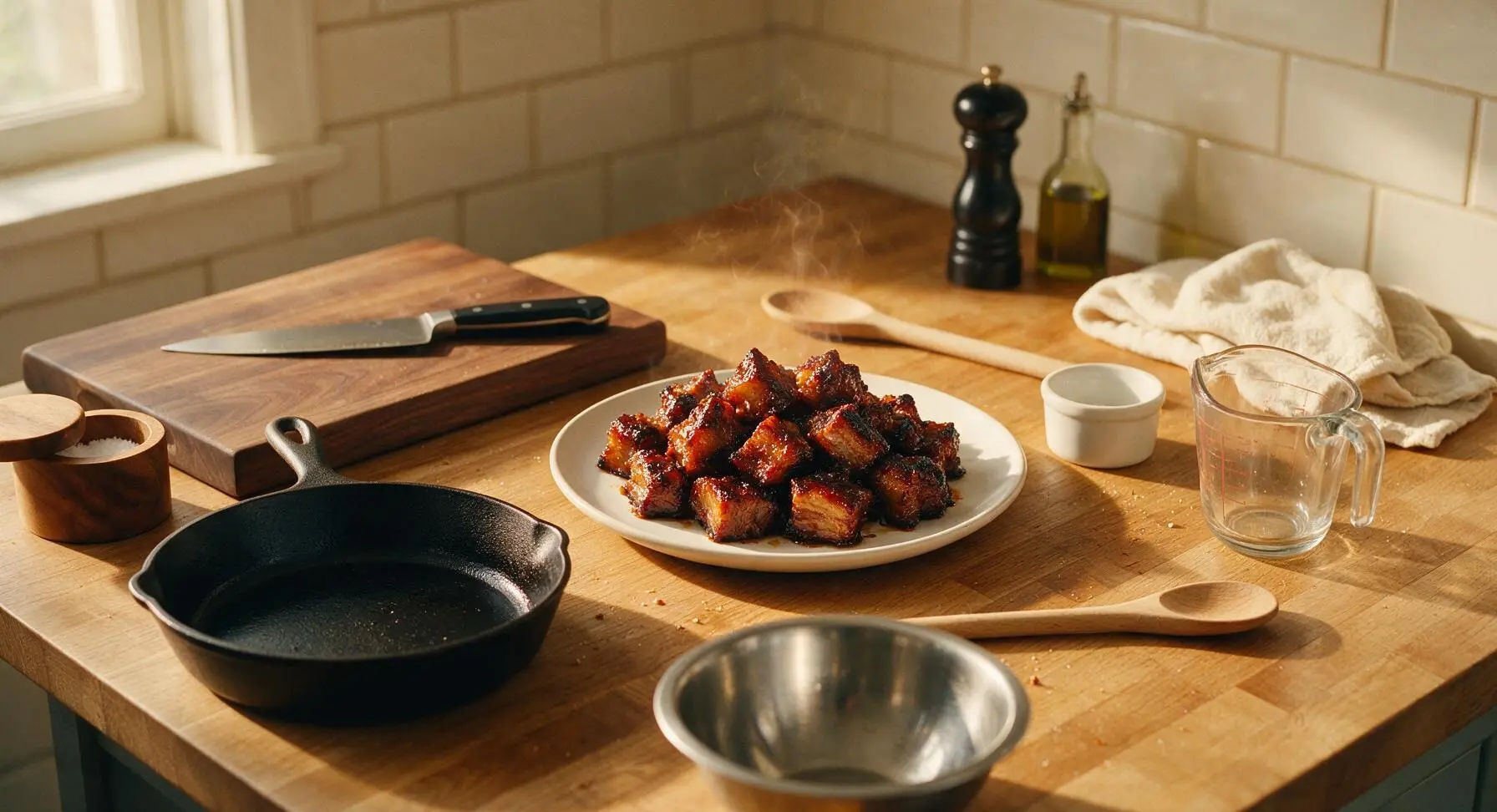
Doenjang Burnt Ends

title 1
Doenjang Burnt Ends
⏱️ cook time 2 hours 30 minutes
🍽️ servings 4
⚡ Difficulty medium

intro

Sticky, umami-packed pork belly burnt ends glazed with fermented doenjang, balancing deep savoriness, subtle sweetness, and crispy caramelized edges for a standout summer BBQ bite.

Ingredients
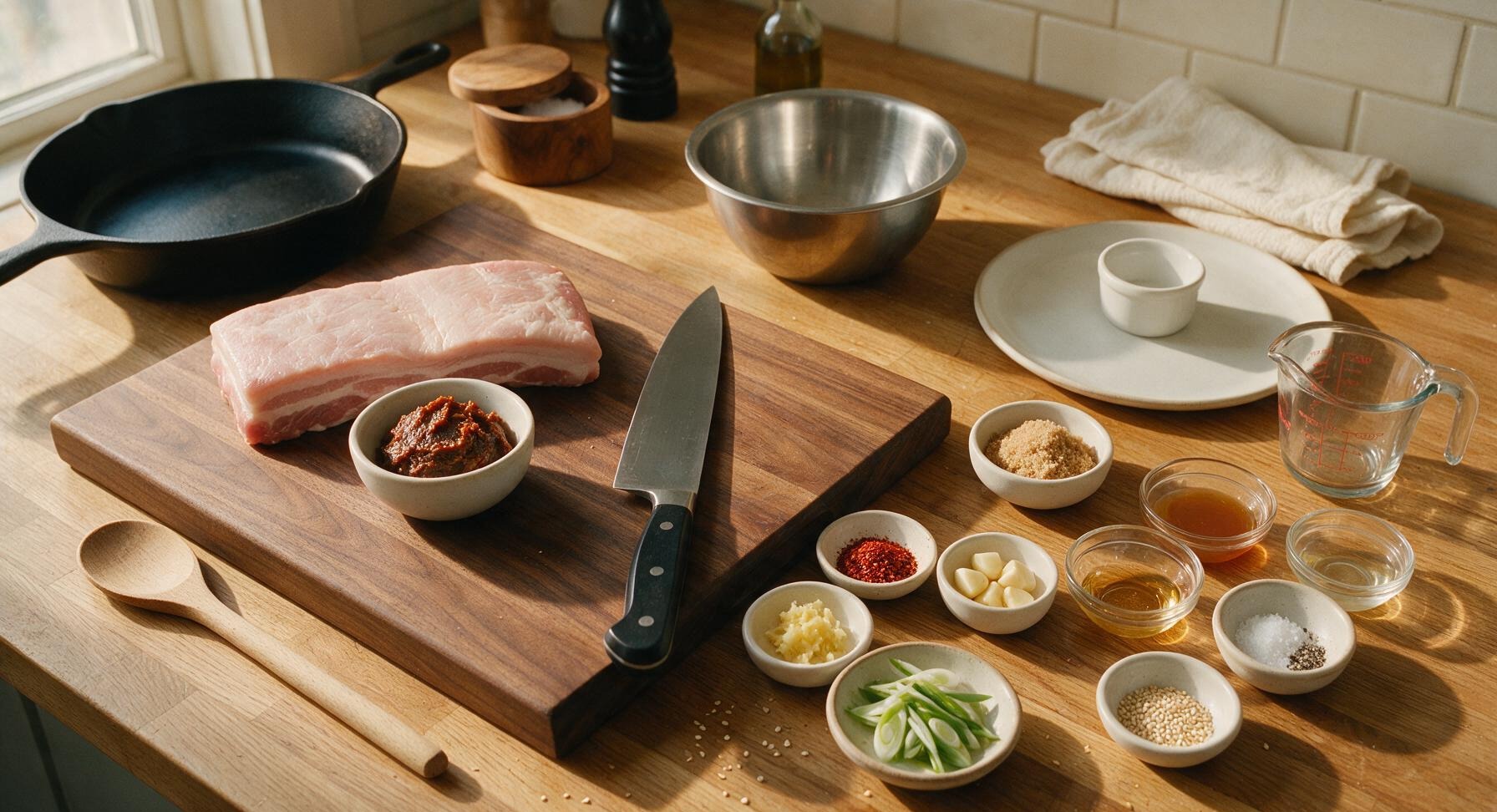
Skinless pork belly 1kg
Doenjang (Korean fermented soybean paste) 3 tbsp
Light brown sugar 2 tbsp
Gochugaru (Korean chili flakes) 1 tsp
Garlic cloves (minced) 4 cloves
Fresh ginger (grated) 1 tbsp
Rice syrup 2 tbsp
Toasted sesame oil 1 tsp
Rice vinegar 1 tsp
Coarse kosher salt 1 tsp
Freshly ground black pepper 1/2 tsp
Scallions (green parts only, thinly sliced, for garnish) 2 stalks
Toasted white sesame seeds (for garnish) 1 tsp

Steps

1

Trim Pork Belly Block

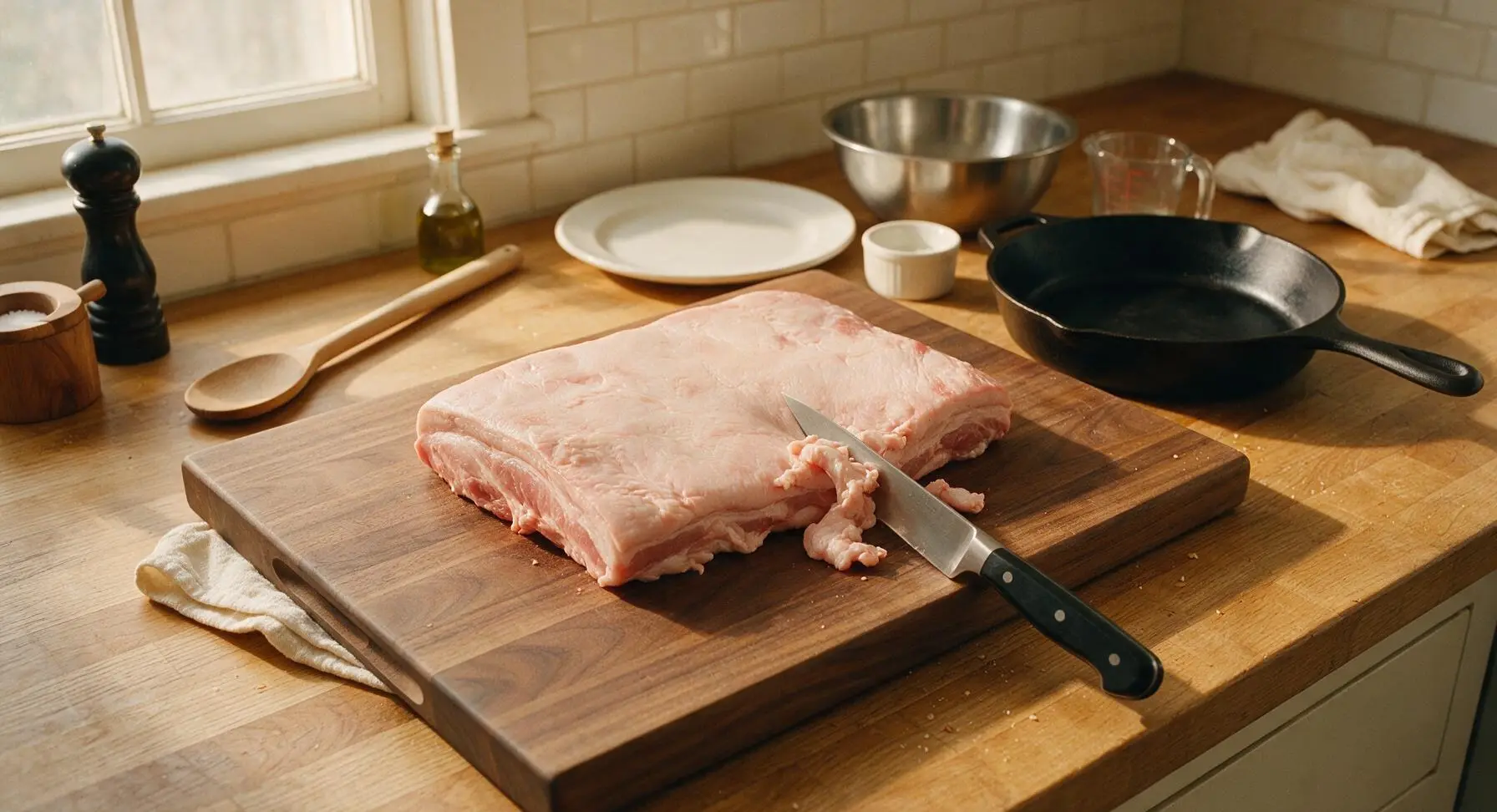
Place the 1kg skinless pork belly block on the maple cutting board. Use the chef knife to trim any loose, ragged edges and remove any remaining hard silver skin, leaving an even, uniform block approximately 5cm thick. Pat the entire surface completely dry with the corner of the cotton kitchen towel; a dry surface ensures better rub adhesion and crispier edges during cooking.
Step 1
step1:Trim Pork Belly Block
2

Season Pork Evenly

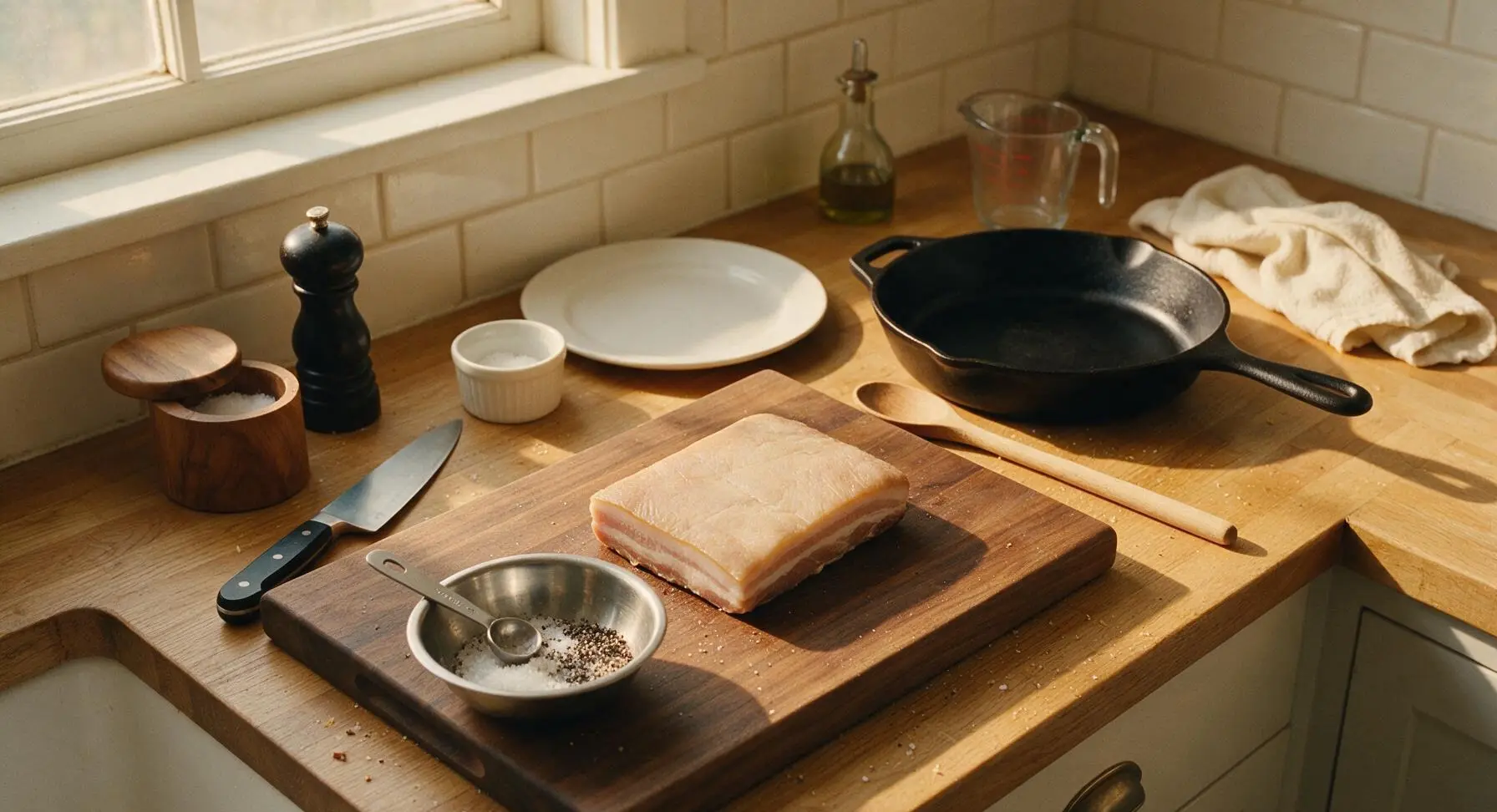
In the small stainless steel mixing bowl, combine 1 tsp kosher salt and 1/2 tsp black pepper, stirring with a measuring spoon to combine evenly. Sprinkle the salt and pepper mixture evenly over all sides of the trimmed pork belly block, pressing gently with your fingertips to help the seasoning adhere to the meat and fat.
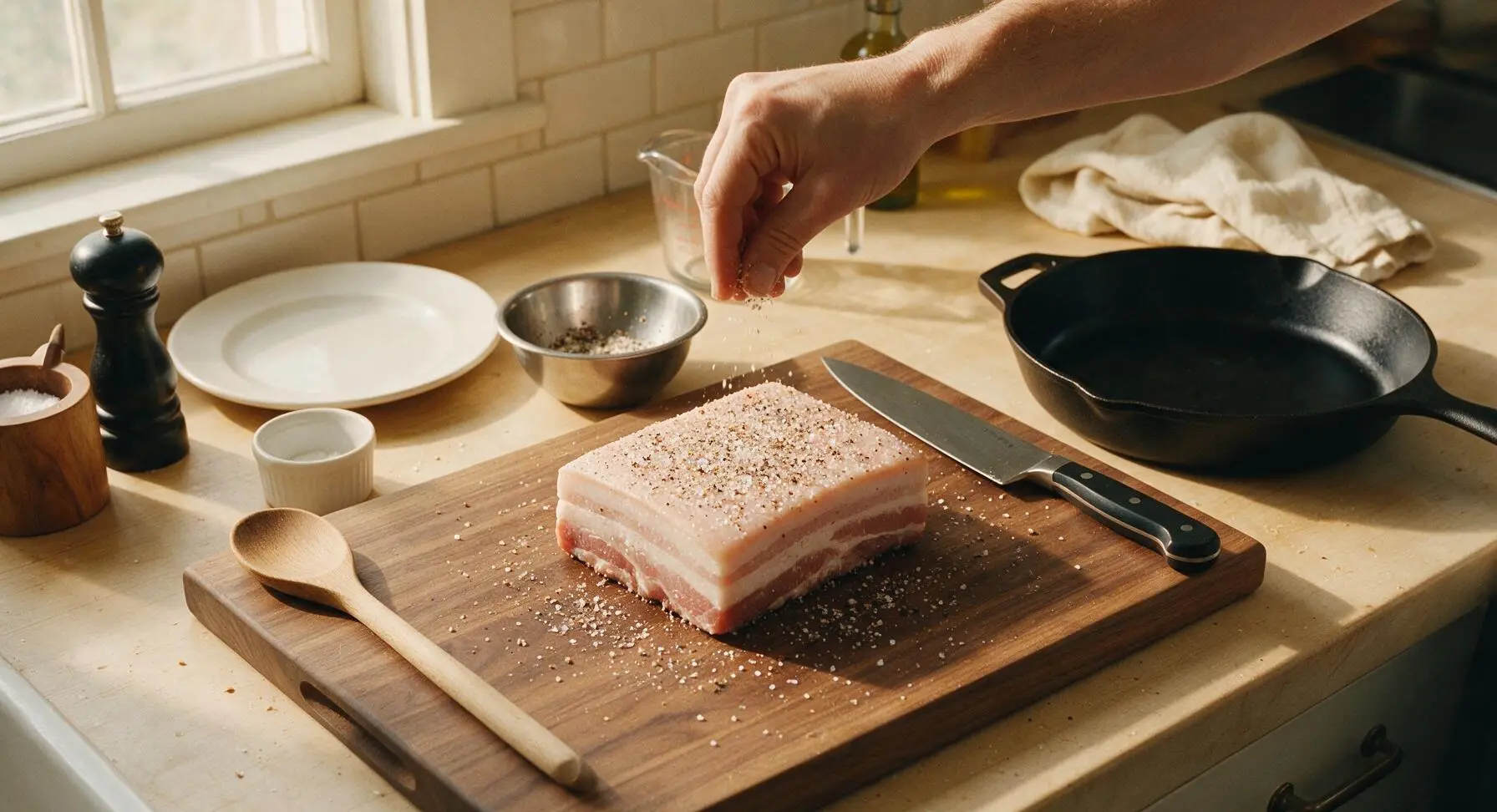
Step 2
step2:Season Pork Evenly
Step 2
step2:Season Pork Evenly
3

Smoke Low and Slow

Preheat a smoker to 120C (250F) with mild fruit wood (apple or cherry works best for complementary sweet smoke). Transfer the seasoned pork belly to the smoker grates, fat-side up, and cook for 2 hours. Remove the pork from the smoker once the digital thermometer reads an internal temperature of 93C (200F) and the meat feels soft when pressed gently with tongs, then transfer it back to the maple cutting board to rest for 10 minutes.
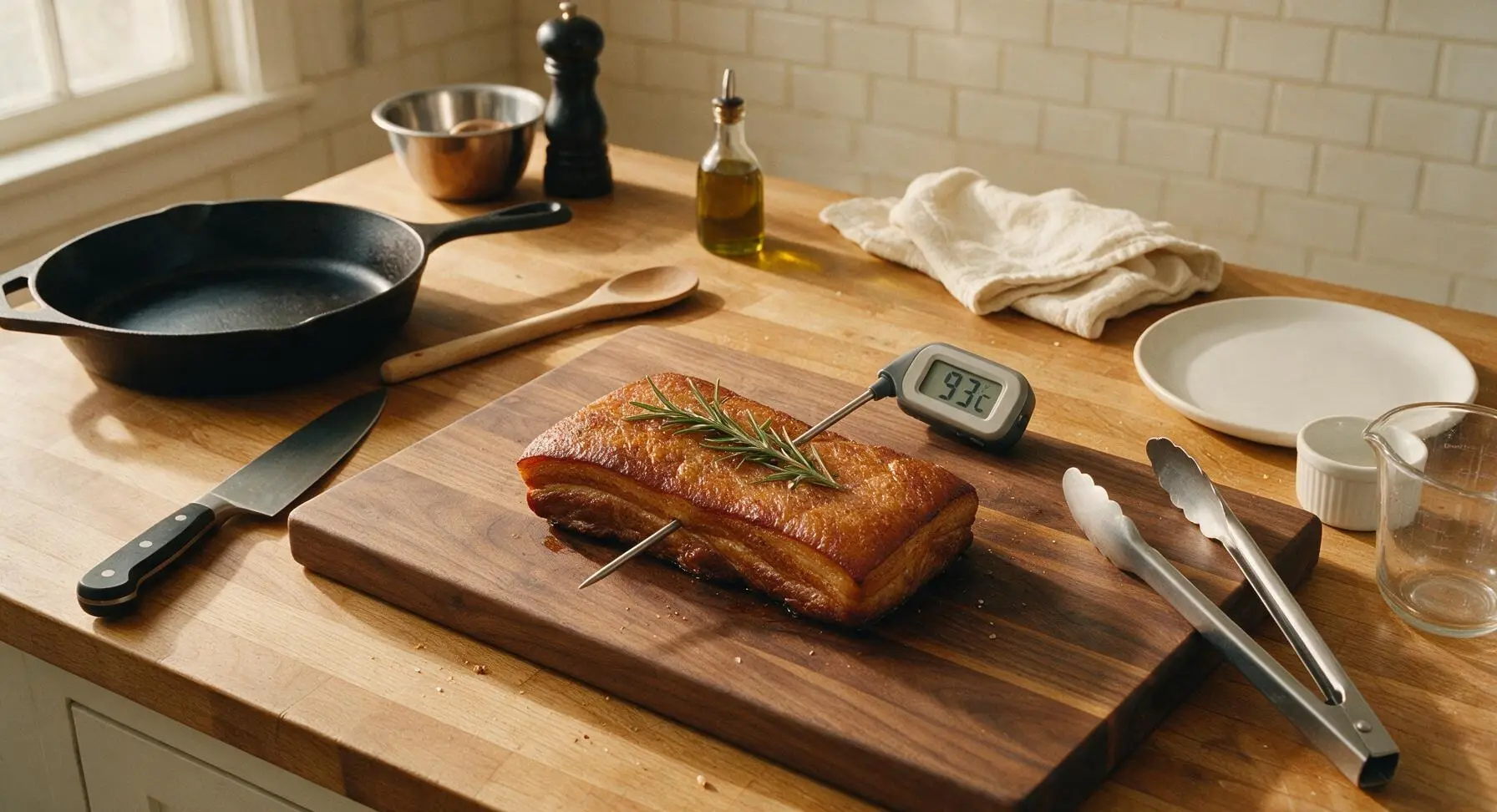
Step 3
step3:Smoke Low and Slow
4

Cube Cooked Pork

Once the smoked pork belly has rested for 10 minutes, use the chef knife to cut it into uniform 2.5cm (1 inch) cubes. Cut clean, even pieces so every bite has a balanced ratio of tender meat and soft fat; discard any overly charred or hard edge pieces if present.
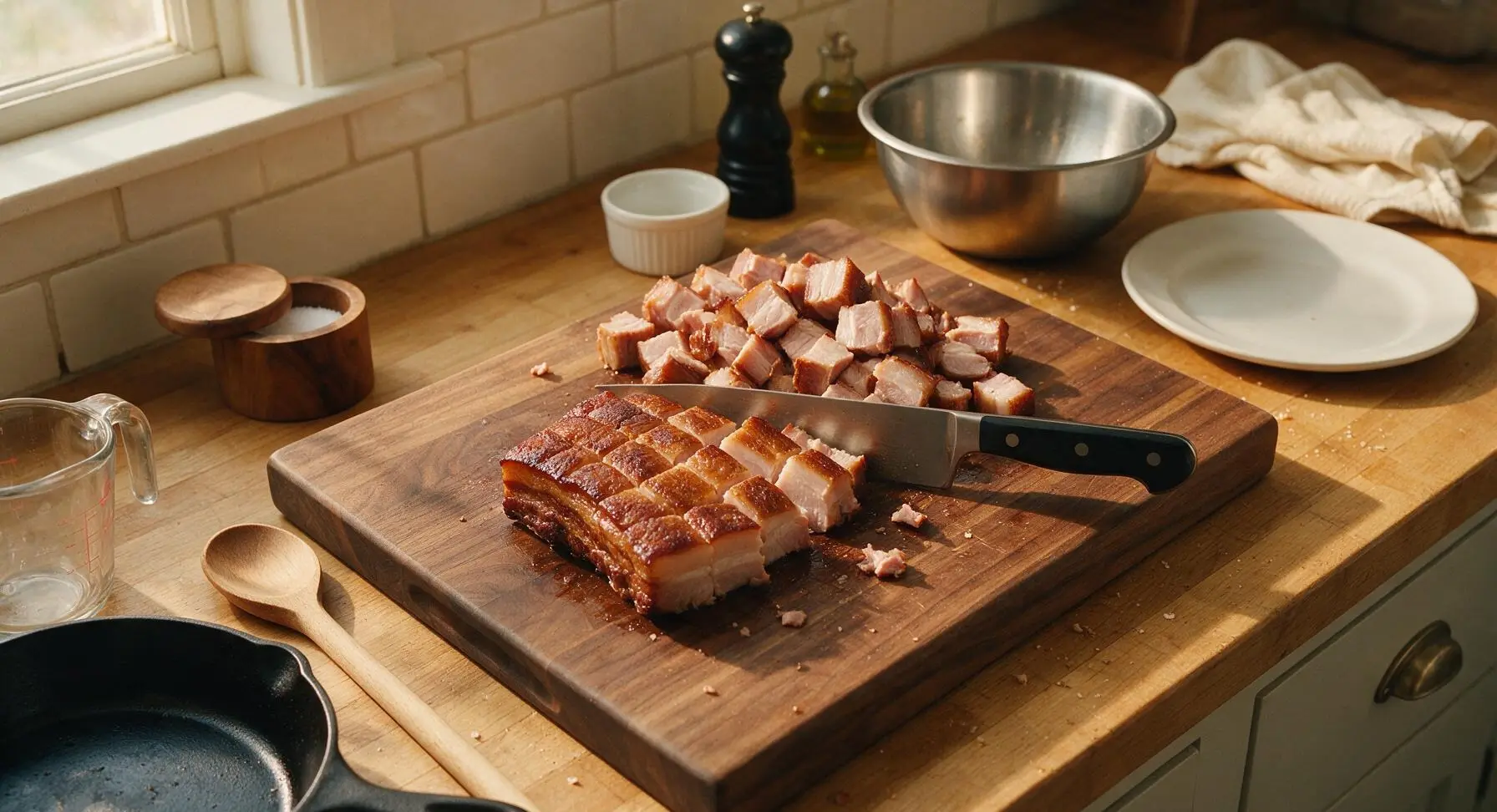
Step 4
step4:Cube Cooked Pork
5

Mix Doenjang Glaze

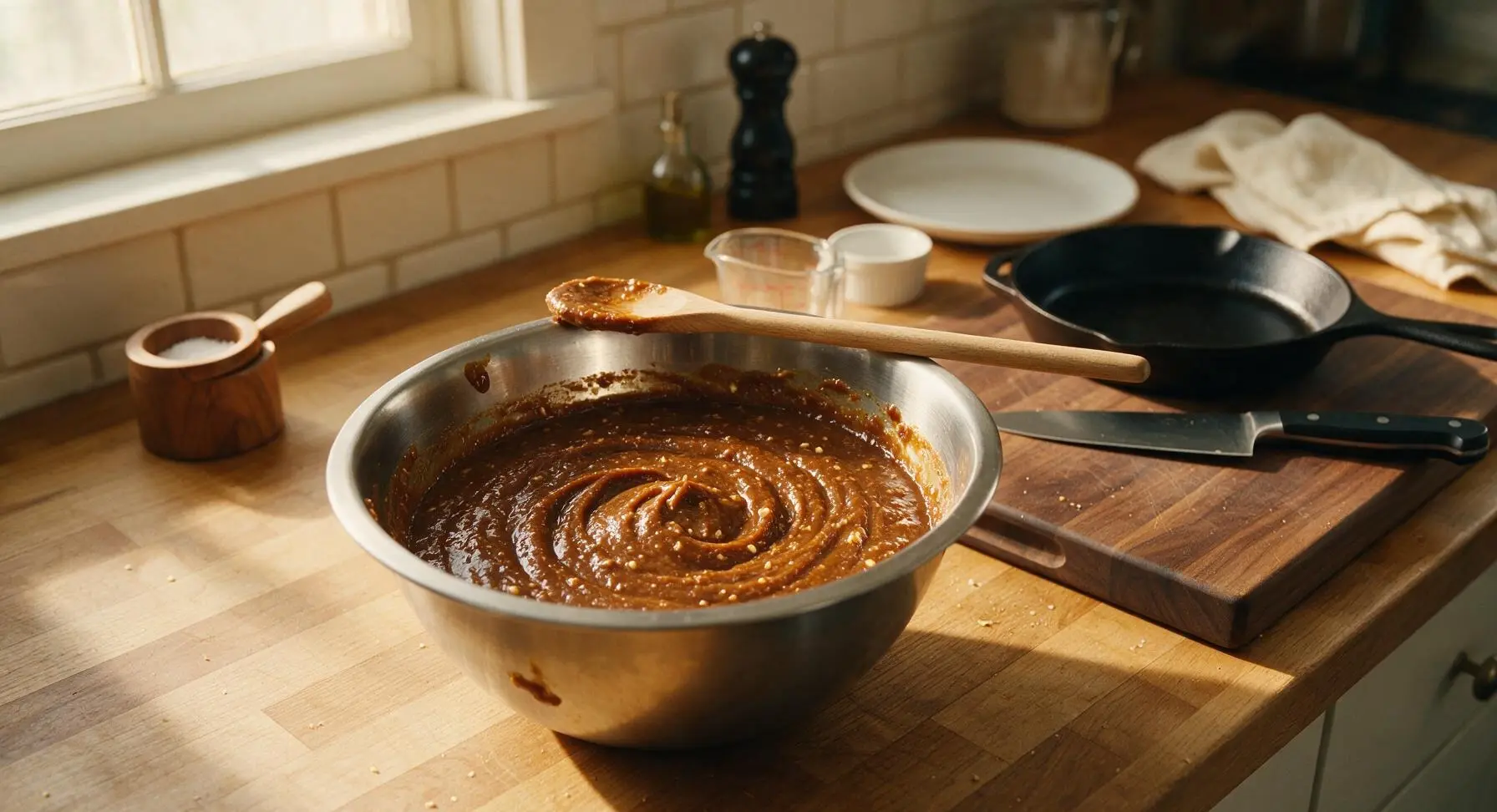
In the medium stainless steel mixing bowl, combine 3 tbsp doenjang, 2 tbsp light brown sugar, 1 tsp gochugaru, 4 minced garlic cloves, 1 tbsp grated ginger, 2 tbsp rice syrup, 1 tsp toasted sesame oil, and 1 tsp rice vinegar. Stir with a measuring spoon until completely smooth, with no lumps of doenjang remaining; the glaze should be thick but pourable, matching the consistency of thick barbecue sauce.
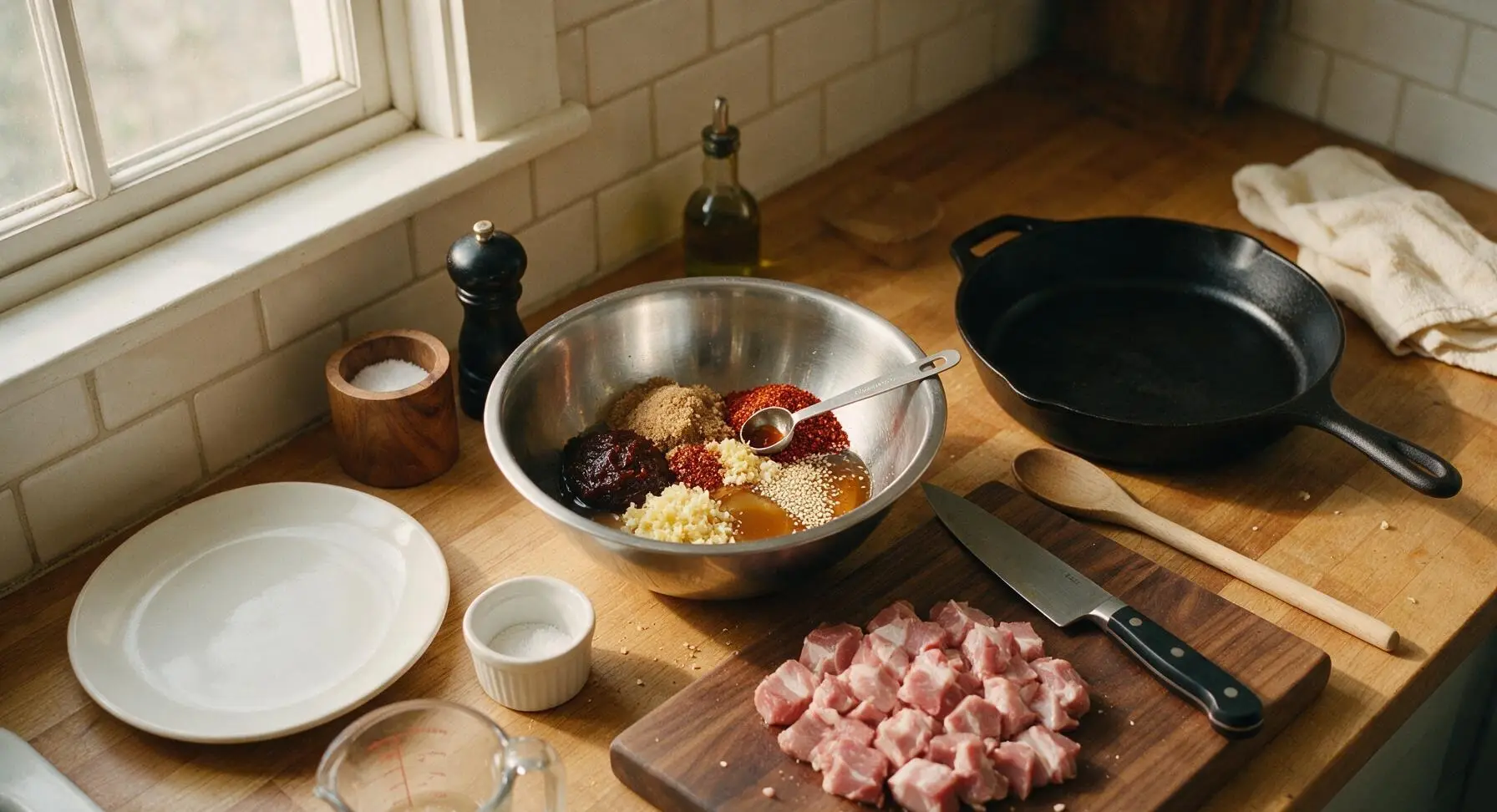
Step 5
step5:Mix Doenjang Glaze
Step 5
step5:Mix Doenjang Glaze
6

Toss Cubes in Glaze

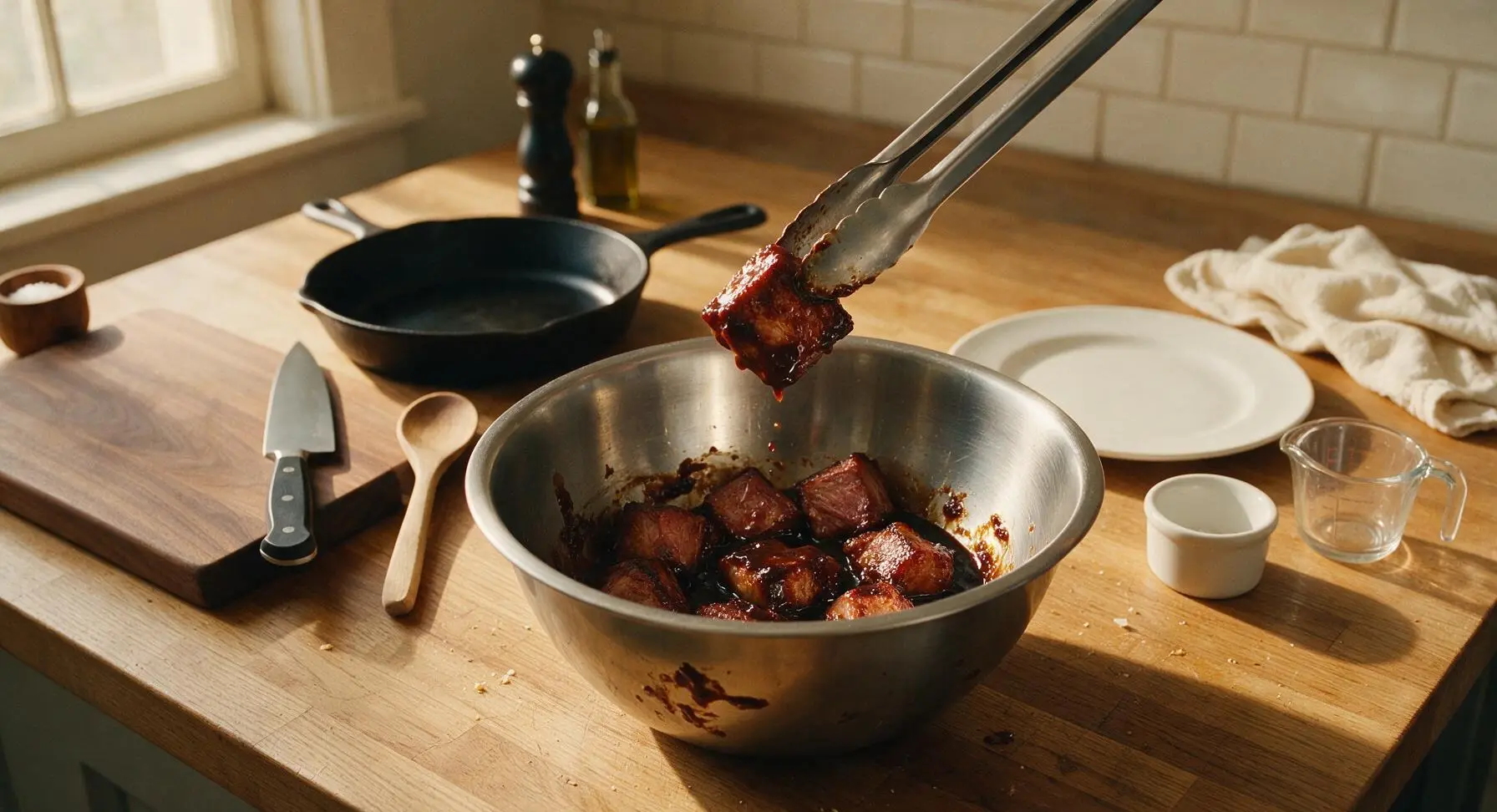
Transfer all the cubed smoked pork belly into the medium mixing bowl with the doenjang glaze. Use the metal tongs to toss the cubes thoroughly, ensuring every single cube is fully coated in the thick glaze, with no dry spots of meat visible.
Step 6
step6:Toss Cubes in Glaze
7

Caramelize Glazed Cubes

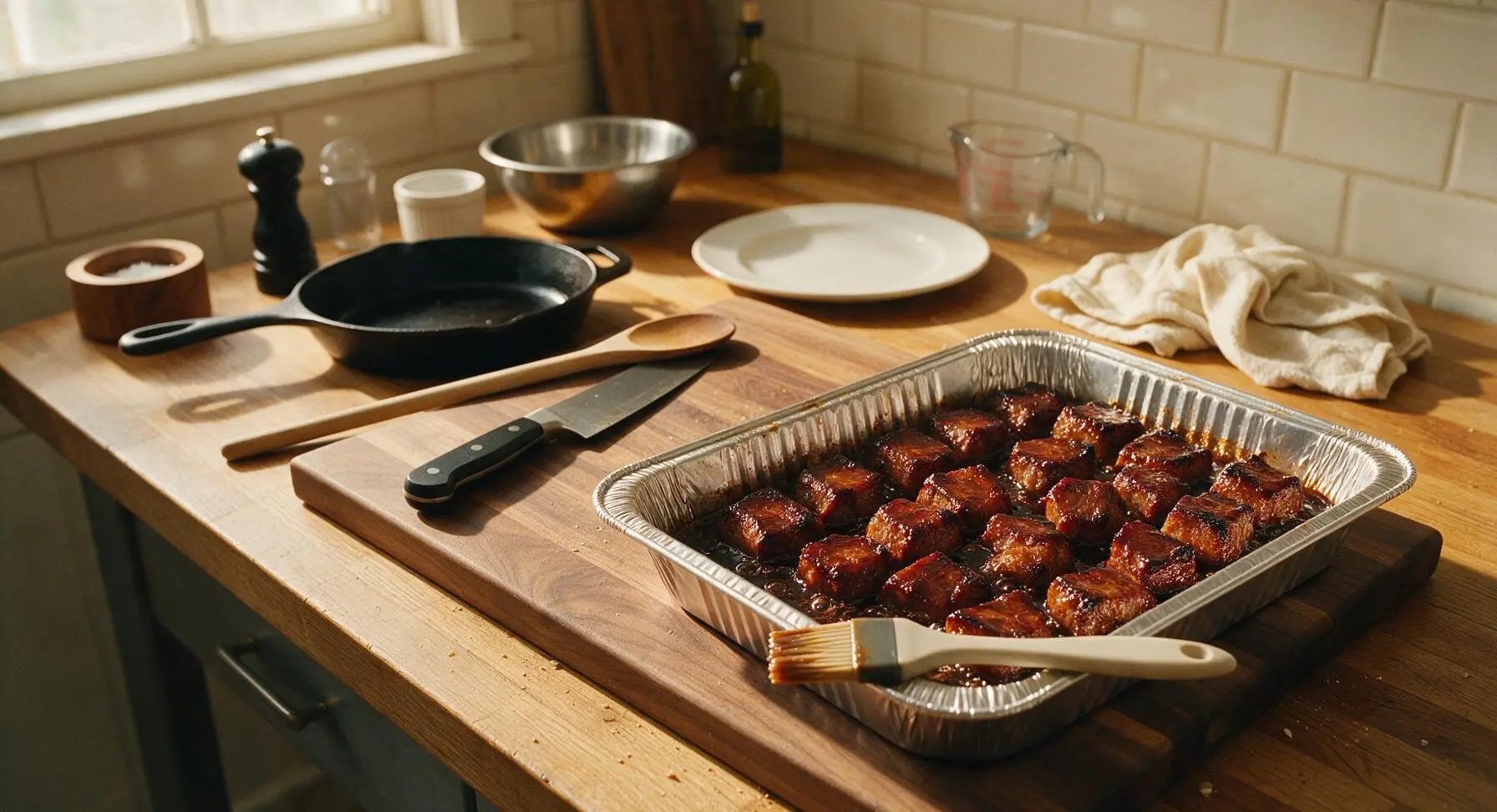
Transfer all the glaze-coated pork cubes into the heavy-duty aluminum foil pan, arranging them in a single even layer with 1cm space between each cube to prevent steaming. Return the pan to the smoker (still set to 120C/250F) and cook for 25 minutes total: after 15 minutes, use the heat-resistant basting brush to dab any remaining glaze from the bowl over the top of the cubes, then cook for the final 10 minutes until the glaze is bubbly and deeply caramelized, with dark, slightly charred spots on the cube edges. Remove the pan from the smoker and place it on the soapstone counter to cool for 5 minutes.
Step 7
step7:Caramelize Glazed Cubes
8

Plate and Garnish

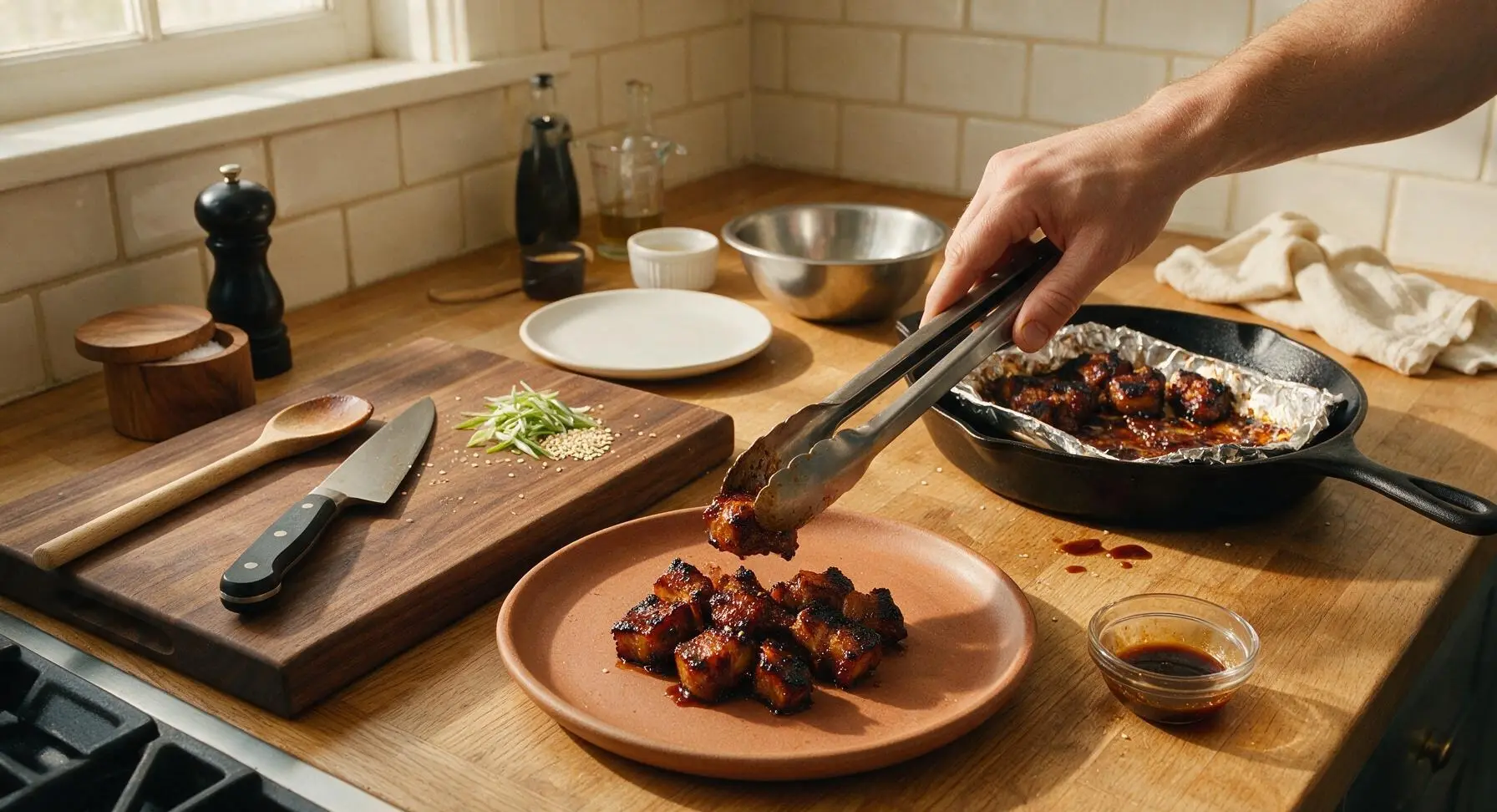
Use the metal tongs to pile the caramelized doenjang burnt ends onto the matte terracotta serving platter. Drizzle any remaining glaze from the foil pan over the top of the pile, then garnish with thinly sliced scallion greens and 1 tsp toasted white sesame seeds. Serve immediately while hot, with extra glaze in the small glass ramekin on the side for dipping.
Step 8
step8:Plate and Garnish

Tips

1.Opt for traditional, fully fermented doenjang rather than low-sodium or quick-fermented versions: the deep, salty, umami-rich fermented flavor balances the sweet glaze, and lower-quality doenjang will result in a flat, one-note taste.
2.Leave 1cm of space between each cube when arranging them in the foil pan for caramelization: crowded cubes will steam instead of developing the signature crispy, slightly burnt edges that define burnt ends, leading to soft, soggy bites.
3.Let the smoked pork belly rest for 10 minutes before cubing: this allows rendered juices and fat to redistribute through the meat, so you won't lose all the flavorful moisture on the cutting board when slicing, leading to juicier final bites.
✨ You May Also Like

BBQ & Grilling
🍜 United States

Tender, melt-in-your-mouth beef brisket with a crisp, spiced bark, slow-smoked to deep smoky perfection, the iconic centerpiece of Texas backyard barbecue.

⏱️ 12 hours BBQ & Grilling ★ 4.4
BBQ & Grilling
🍜 Korea

Tender, sweet-savory marinated beef short ribs, a beloved Korean BBQ staple with caramelized, slightly charred edges and deep umami flavor, perfect for outdoor summer gatherings.

⏱️ 4 hours 2BBQ & Grilling ★ 4.8
BBQ & Grilling
🍜 United States

Juicy grilled beef patties topped with smoky homemade chili, melted cheddar, and tangy pickles on toasted brioche buns for a hearty, flavor-packed handheld meal.

⏱️ 40 minuteBBQ & Grilling ★ 4.7
BBQ & Grilling
🍜 United States

A sweet, smoky, tangy BBQ sauce brightened with peak-season dark cherries, ideal for glazing grilled ribs, chicken, pork, or summer roasted veggies.

⏱️ 35 minuteBBQ & Grilling ★ 4.7
BBQ & Grilling
🍜 United States

Rich, smoky, slightly sweet homemade bourbon BBQ sauce with deep caramel notes, ideal for glazing grilled ribs, chicken, and burgers at cookouts.

⏱️ 25 minuteBBQ & Grilling ★ 4.7
BBQ & Grilling
🍜 United States

Iconic Alabama-style BBQ featuring tender hickory-smoked chicken slathered in tangy creamy white sauce, a beloved regional Southern cookout staple.

⏱️ 3 hoursBBQ & Grilling ★ 5

Doenjang Burnt Ends:Frequently Asked Questions

1.What cut of pork works best for doenjang burnt ends? ▾
Stick with the recipe’s called-for skinless pork belly for perfect results. Its even, rich fat marbling renders slowly during the low-and-slow cook, creating tender, juicy bites with crispy caramelized edges and no tough, dry spots. Skip lean cuts like pork loin—they lack enough fat to stand up to the bold glaze and will turn out dry and tough.
2.Can I use skin-on pork belly if that’s all I have on hand? ▾
You can, but you’ll need to adjust your prep first. Score the skin in a tight crosshatch pattern, taking care not to cut into the meat, and render the skin side low and slow for an extra 30 minutes before cubing to avoid chewy, rubbery skin. For the easiest, most consistent results though, skinless pork belly is always preferred.
3.What is doenjang, and what can I substitute if I can’t find it? ▾
Doenjang is a savory, deeply umami Korean fermented soybean paste that forms the core flavor of this glaze. If you can’t track it down, don’t use sweet Japanese miso as a 1:1 swap. Instead, mix 3 parts mild white miso with 1 part low-sodium soy sauce and a pinch of fermented black bean paste to mimic its earthy, less-sweet depth.
4.How spicy are these burnt ends from the gochugaru? ▾
The standard amount of gochugaru in this recipe adds warm, fruity, subtle heat—not a searing burn that will overpower the doenjang’s savoriness. If you’re sensitive to spice, cut the amount in half; if you love extra kick, add an extra half teaspoon plus a pinch of cayenne for bolder heat without throwing off the glaze balance.
5.Can I make these on a regular charcoal grill instead of a smoker? ▾
Absolutely! Set your charcoal grill up for indirect heat, holding a steady 275°F, and add a small foil pouch of soaked wood chips if you want that classic smoky BBQ note. Keep the meat on the indirect side the whole cook, turning cubes occasionally, until they hit that tender, caramelized sweet spot just like on a dedicated smoker.
6.What’s the total cook time I should plan for these burnt ends? ▾
Plan for roughly 2.5 to 3 hours total cook time at a steady 275°F. First, cube the pork belly and cook it unwrapped for 90 minutes to render excess fat, then toss with the doenjang glaze and cook another 60 to 90 minutes, basting every 20 minutes, until edges are crispy and the glaze is sticky and caramelized.
7.Why did my glaze burn instead of turning into a sticky caramelized crust? ▾
That almost always happens if your cook temperature is too high, or if you added the full sugar-heavy glaze—loaded with minced garlic, doenjang, and brown sugar—too early in the cook. Hold your temp steady under 300°F, and don’t toss the pork in glaze until fat has had time to render first—sugar and garlic burn fast at high heat, so low and slow is non-negotiable.
8.Can I prep these burnt ends ahead for a summer BBQ party? ▾
Definitely! You can cube the pork belly and mix up the doenjang glaze 2 days ahead, stored separately in airtight containers in the fridge. You can also cook the pork 90% of the way the day before, then finish it with a final glaze toss on the grill for 20 minutes right before serving to cut down on day-of party stress.
9.What size should I cut my pork belly cubes for the best results? ▾
Aim for uniform 1.5-inch cubes for ideal texture. Any smaller, and the fat will render out too fast, leaving you with dry, shriveled bits; any larger, and the center won’t get tender before the outside overcooks. Uniform sizing means every cube cooks at the same rate, so you don’t get a mix of overdone and underdone bites.
10.Can I make these in the oven if I don’t have access to a grill? ▾
You bet! Line a rimmed baking sheet with a wire rack, arrange the pork cubes in a single layer, and cook at 275°F following the same timing as the grill method. For that smoky BBQ edge, add 1/4 teaspoon of smoked paprika to the glaze, then broil for the last 2-3 minutes to crisp up the caramelized edges.
11.Do I need to wrap the pork belly in foil while it cooks? ▾
Skip the foil wrap for this recipe! Unlike brisket burnt ends, pork belly has enough natural fat to stay moist without trapping steam in foil. Wrapping will make the edges soggy instead of crispy, and prevent the doenjang glaze from caramelizing into that perfect sticky, chewy crust we’re aiming for.
12.What sides pair best with these umami-rich doenjang burnt ends? ▾
These bold, rich bites pair beautifully with bright, fresh sides to cut through the fat: think chilled cucumber kimchi, creamy coleslaw with a rice vinegar tang, buttered grilled corn, or cold rice salad. Skip heavy, ultra-creamy sides that will compete with the doenjang’s savoriness and make the meal feel overly heavy.
13.Can I use dark brown sugar instead of light brown sugar in the glaze? ▾
You can, but know it will add a deeper, more molasses-heavy sweetness that will slightly mellow the bright, earthy notes of the doenjang. If you do make the swap, cut the sugar amount by 1 tablespoon to keep sweetness balanced, so it doesn’t overpower the fermented savoriness and subtle gochugaru heat.
14.How should I store leftovers, and what’s the best way to reheat them? ▾
Store cooled leftovers in an airtight container in the fridge for up to 4 days. To reheat, spread the cubes on a baking sheet and warm in a 325°F oven for 8 to 10 minutes, until the glaze is bubbly and edges crisp back up. Avoid microwaving—it will make the pork rubbery and turn the sticky glaze soggy.
15.My last batch of pork belly burnt ends was really greasy—what went wrong? ▾
Greasy burnt ends usually mean you didn’t give the fat enough time to render before adding the glaze, or your cook temperature was too low. Make sure you cook the unglazed cubes for the full 90 minutes first to let excess fat drip away, and hold your temp steady at 275°F so fat renders slowly instead of sitting on the meat’s surface.
16.Can I add other flavors to the doenjang glaze to customize it? ▾
Absolutely! The base glaze is super versatile: add a teaspoon of grated ginger for extra zing, a splash of unseasoned rice vinegar for a bright tangy kick, or a drizzle of wildflower honey to round out the sweetness. Just don’t add so many extras that you cover up the doenjang’s nutty umami, the star of the dish.

Comments (3)

3 days ago

OMG these doenjang burnt ends were an absolute game changer for our neighborhood potluck last weekend! I was a little nervous mixing Korean doenjang with classic burnt ends, but that deep umami hit is unreal. My kids went back for thirds – even my super picky 8 year old who usually turns his nose up at anything that isn’t plain chicken nuggets. Total cook time was right at 2 and a half hours, I didn’t have to mess with adjusting temps at all. SO good, I already had three neighbors track me down to ask for the recipe before the potluck even ended!

2 days ago

Wait did you use homemade doenjang or the standard grocery store stuff? I tried this last week with a cheap off-brand jar and it came out way saltier than I expected, had to chug a glass of water halfway through my first serving. Wondering if I need to pick up a better quality version for my next cookout.

1 day ago

Thrilled to hear these were such a hit at your potluck! If you’re using extra salty store-bought doenjang, just cut the soy sauce in the glaze by half and add a tiny extra drizzle of maple syrup to balance the salt – that tweak works like a charm every time.

1 week ago

Took a stab at these doenjang burnt ends for my weekly meal prep, and wow, total home run. Only knocking off one star because I’m still pretty new to using my offset smoker, so I over-charred the first handful of meat cubes before I got the temp dialed in. The flavor combo is unbeatable though – I portioned them out with steamed rice and quick pickled cucumbers for work lunches all week, and they held up perfectly in the fridge even 4 days later. The difficulty rating is spot on as medium, don’t go into this thinking it’s a 30 minute weeknight meal, but every minute of the 2.5 hour cook time is so worth it.

5 days ago

Thanks so much for giving the recipe a try! Quick pro tip for new smokers: keep your temp steady at 275°F and toss the meat cubes every 30 minutes while they’re in the glaze, and you’ll get perfect, caramelized edges without over-charring. So stoked these worked out for your meal prep rotation!

2 hours ago

OMG, these were the absolute star of our Sunday family dinner! My dad is a diehard classic burnt ends fan who swears you shouldn’t mess with the original KC-style recipe, so I was low-key nervous to serve him this doenjang twist. One bite in and he was asking for seconds, then begged me to send him the recipe before he even drove home. The glaze has that perfect deep, savory umami kick without being too overpowering, and the cook time landed exactly at 2 and a half hours like the recipe said, no weird surprises. Already planning to make a double batch for our neighborhood block party next month, these are gonna fly off the platter.