Doenjang Jjigae Ribs

title 1
Doenjang Jjigae Ribs
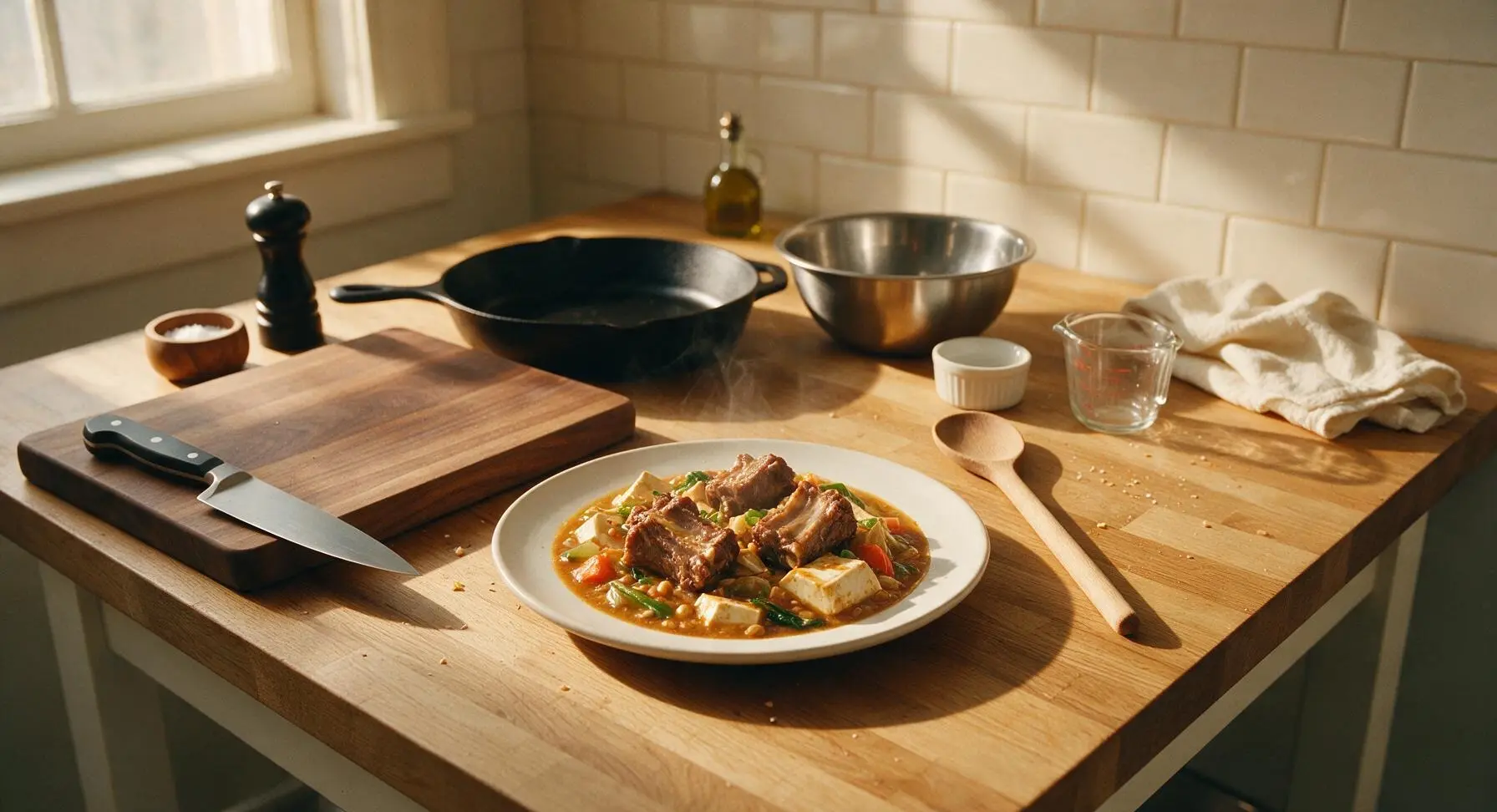
⏱️ cook time 1 hour 10 minutes
🍽️ servings 4
⚡ Difficulty medium

intro

Tender fall-off-the-bone pork ribs simmered in umami-rich fermented soybean stew with silky tofu and fresh vegetables, the ultimate cozy Korean family comfort food.

Ingredients
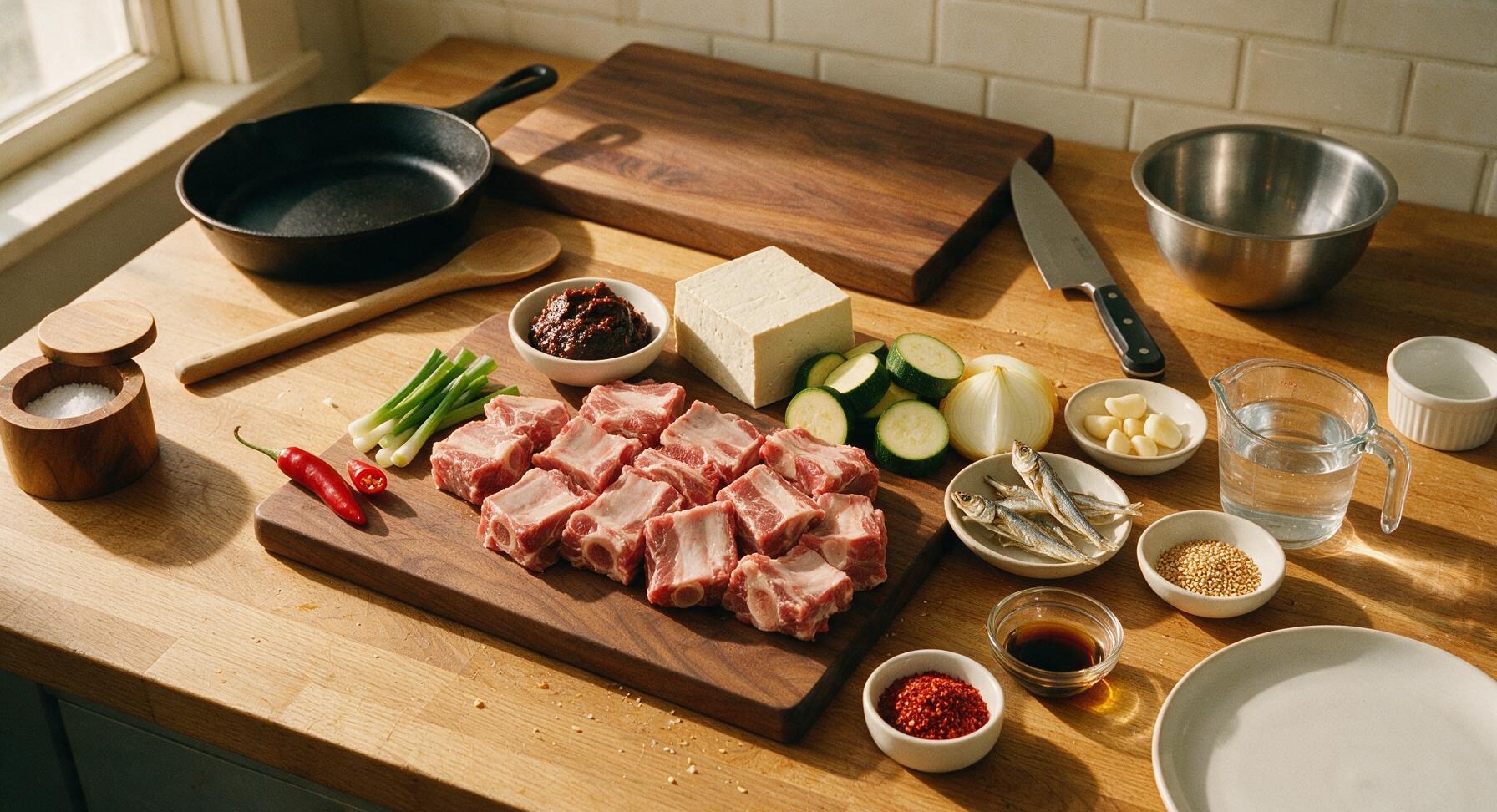
Bone-in pork short ribs (cut into 5cm pieces) 800g
Doenjang (Korean fermented soybean paste) 3 tbsp
Firm tofu 300g
Medium zucchini 1 (200g)
Yellow onion 1 medium (150g)
Garlic cloves 6 (minced)
Green onion 2 stalks
Fresh red chili 1
Dried large anchovies (gutted, heads removed) 5 (10g)
Gochugaru (Korean chili flakes) 1 tsp
Toasted sesame oil 1 tsp
Low-sodium soy sauce 1 tbsp
Cold water 6 cups
Toasted sesame seeds 1 tsp

Steps

1

Blanch the pork ribs

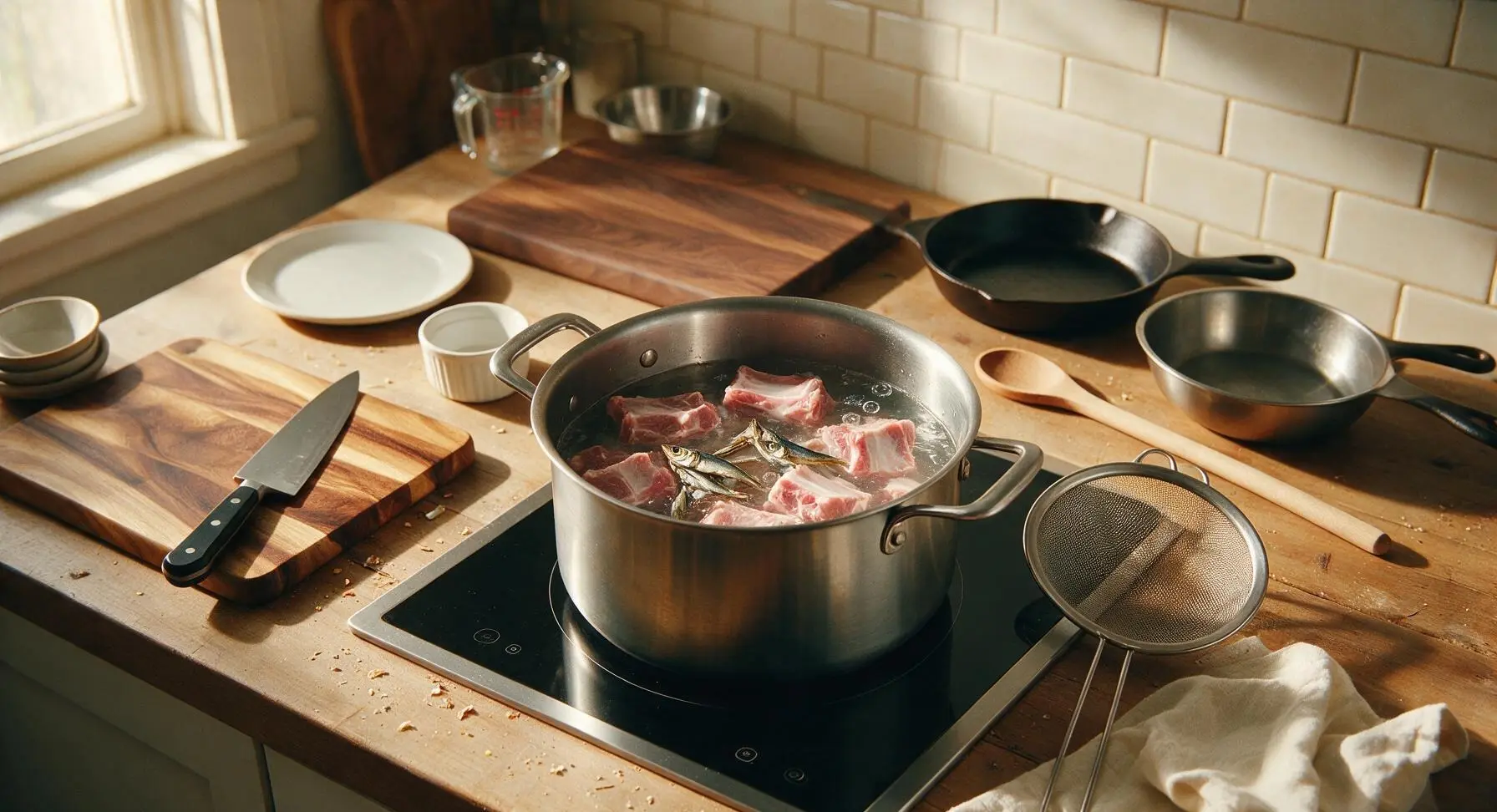
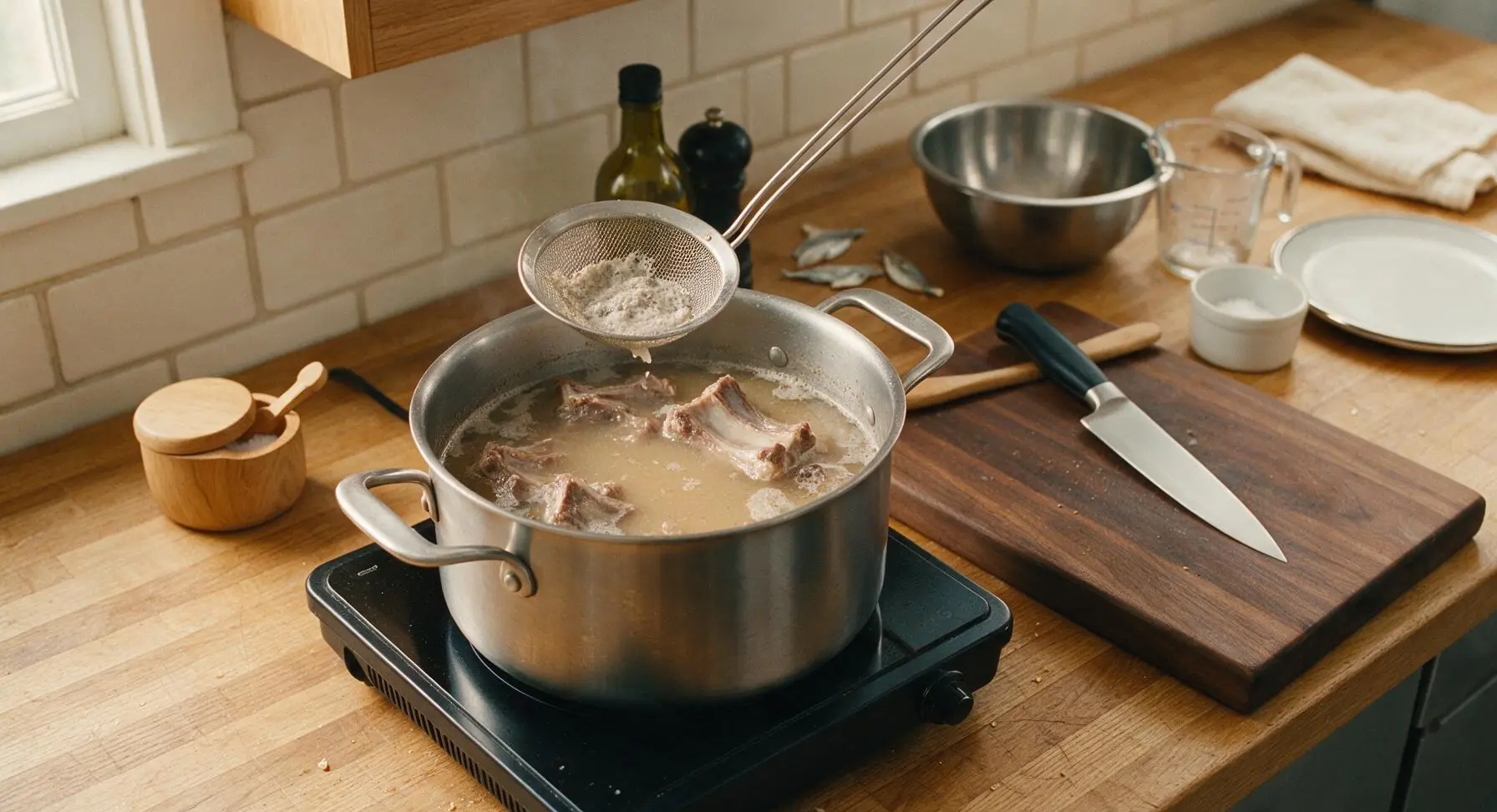
Fill the 5L stainless steel stock pot with 6 cups cold water, add the pre-soaked (30 minutes in cold water, drained) pork short ribs and 5 dried gutted anchovies. Place the pot on the matte black induction burner, bring to a rolling boil over medium-high heat, then reduce heat to maintain a steady simmer. Cook for 10 minutes, using the fine-mesh stainless steel skimmer to remove all grey foam and scum that rises to the surface. The broth will turn pale and slightly clear once all surface scum is removed.
Step 1
step1:Blanch the pork ribs
Step 1
step1:Blanch the pork ribs
2

Add doenjang base

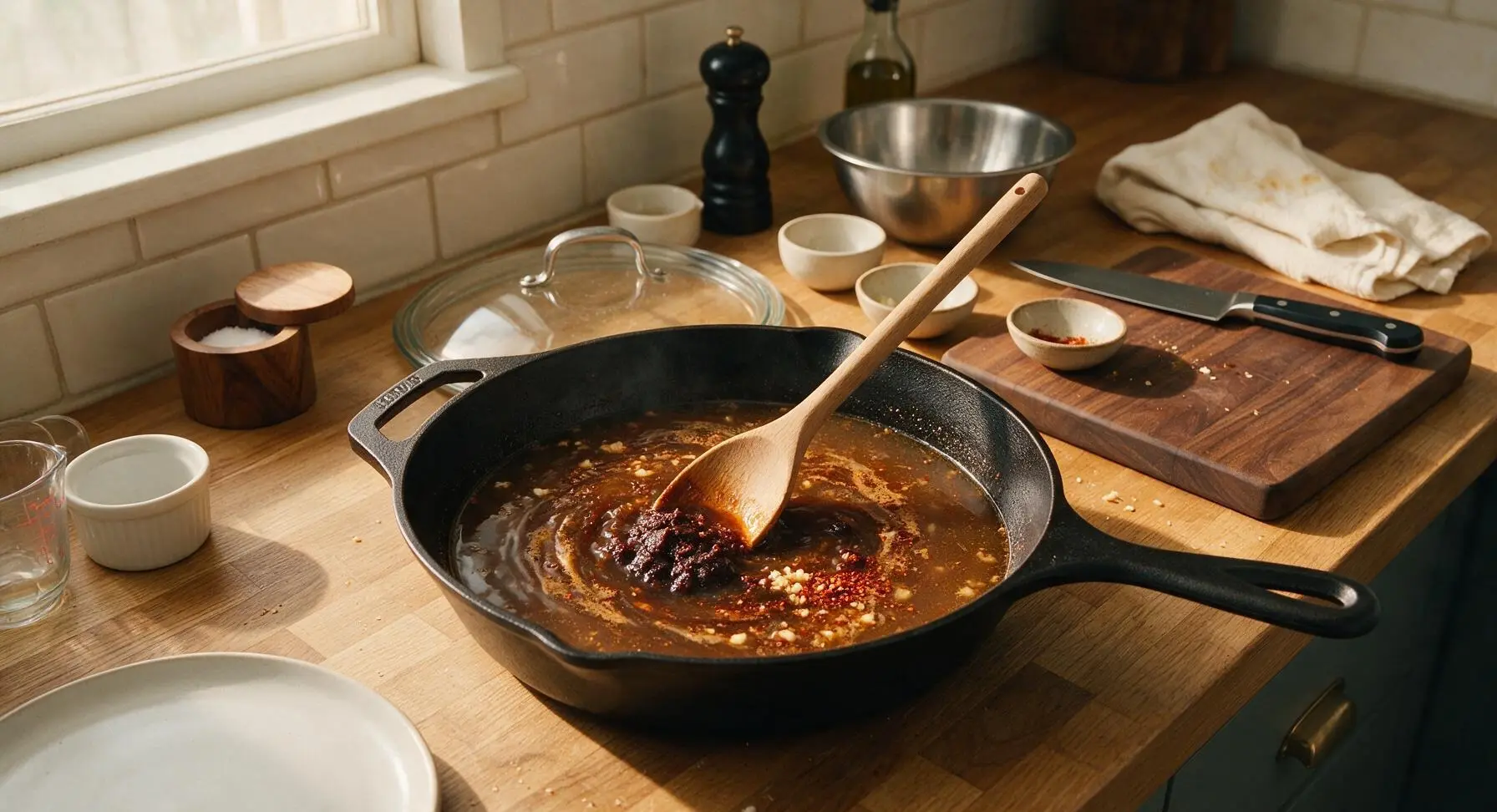
Once scum is fully removed, add 3 tablespoons doenjang, 1 tablespoon low-sodium soy sauce, 1 teaspoon gochugaru, and minced garlic to the pot. Stir gently with the beech wood spoon until the doenjang fully dissolves into the broth, with no large clumps remaining. Reduce heat to medium-low, cover with the glass lid, and simmer for 45 minutes, until the ribs are fork-tender but not yet falling off the bone.
Step 2
step2:Add doenjang base
3

Prep stew vegetables

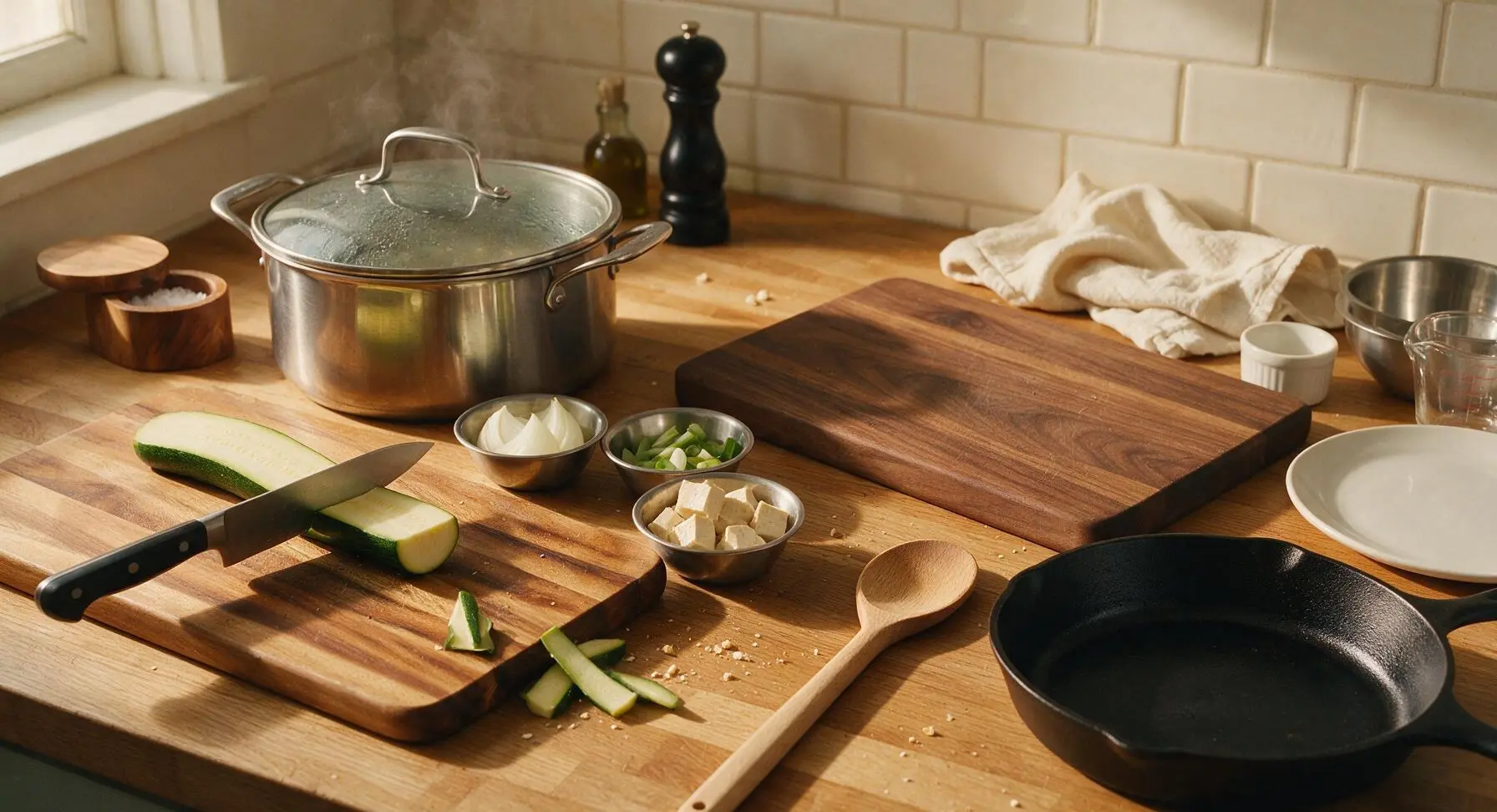
While the ribs simmer, use the chef knife on the acacia cutting board to slice the zucchini into 1cm half-moons, cut the yellow onion into 1cm wedges, slice one green onion stalk into 5cm pieces, and cut the firm tofu into 3cm cubes. Set prepped vegetables and tofu aside in small prep bowls, ready to add to the pot. Avoid cutting vegetables too small, as they will soften during simmering and turn mushy if cut too fine.
Step 3
step3:Prep stew vegetables
4

Add hardy vegetables

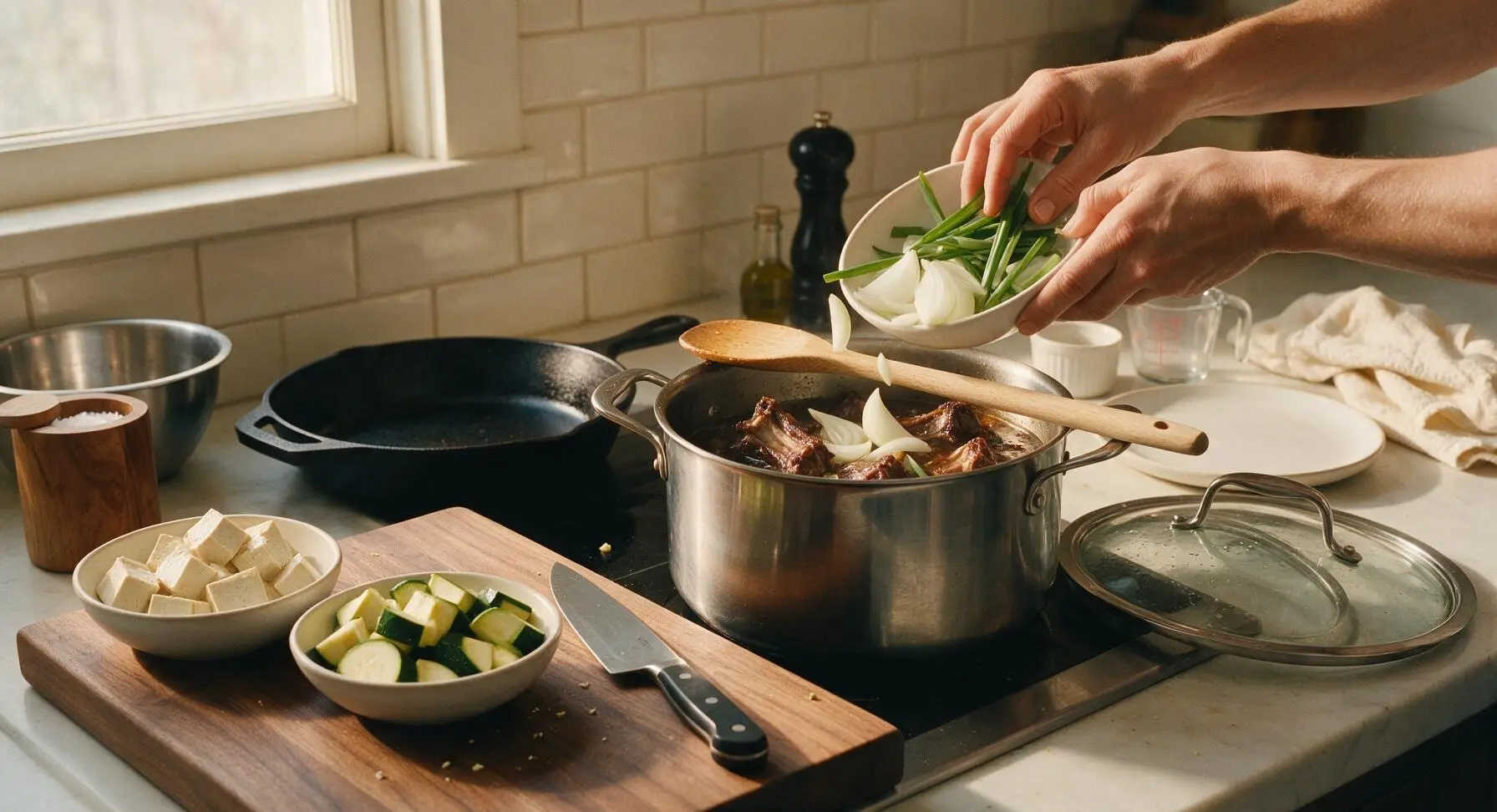
After the ribs have simmered 45 minutes and are fork-tender, remove the lid, add the onion wedges and 5cm green onion pieces to the pot. Stir gently to submerge the vegetables in the broth, replace the lid, and simmer for 5 minutes. The onions will turn slightly translucent at the edges as they start to soften.
Step 4
step4:Add hardy vegetables
5

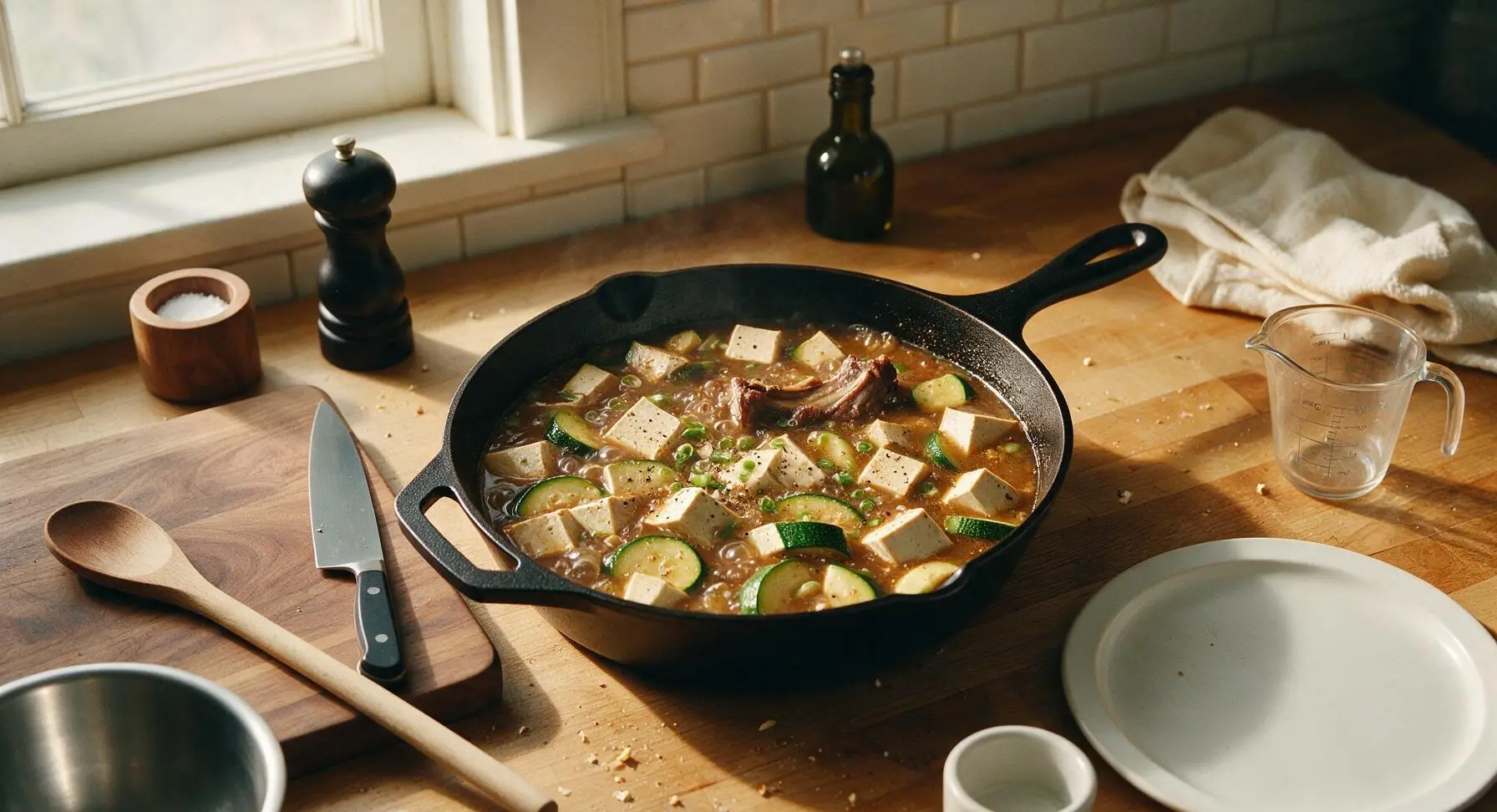
Add tofu and zucchini

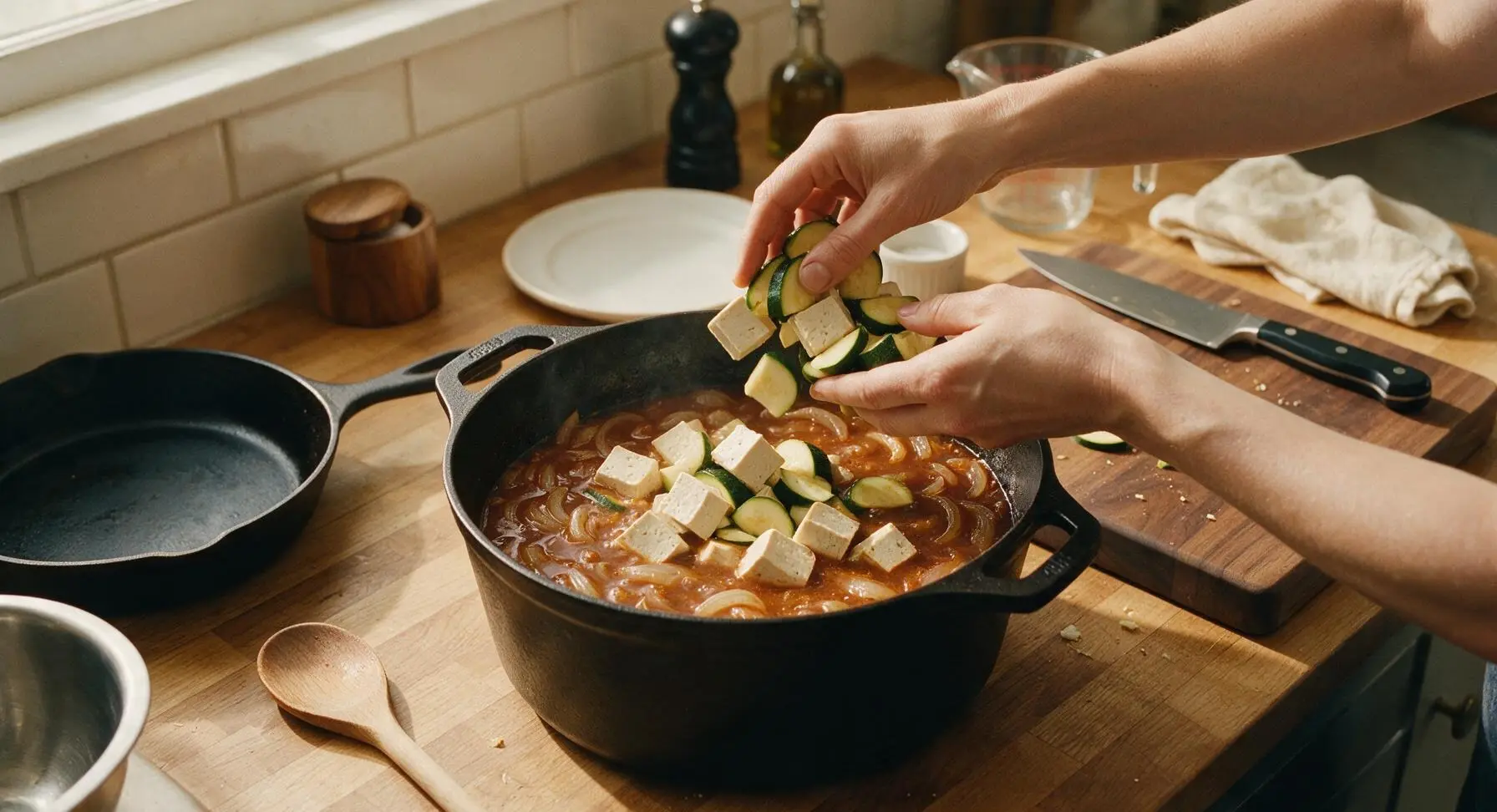
After the onions have simmered 5 minutes, add the cubed firm tofu and sliced zucchini to the pot, stirring very gently to avoid breaking the soft tofu cubes. Replace the lid and simmer for an additional 10 minutes, until the zucchini is tender-crisp and the tofu is heated through and has absorbed some of the broth flavor. Do not boil rapidly at this stage, as vigorous bubbles will break apart the tofu.
Step 5
step5:Add tofu and zucchini
Step 5
step5:Add tofu and zucchini
6

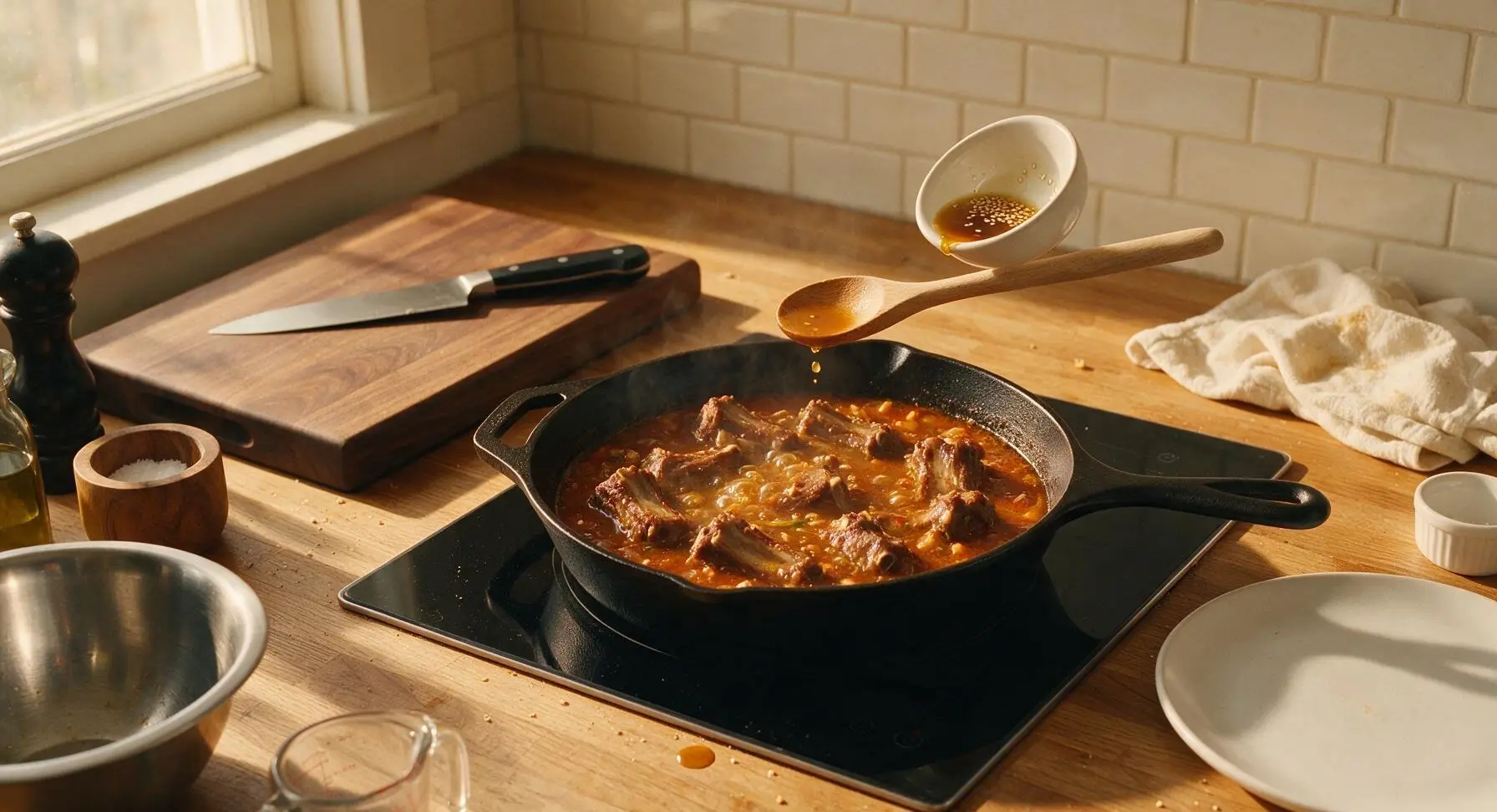
Finish and season stew

Taste the broth, adjust seasoning with a pinch of salt if needed (doenjang salt content varies by brand). Stir in 1 teaspoon toasted sesame oil, then turn off the heat. Let the stew rest for 2 minutes off the heat to allow flavors to meld.
Step 6
step6:Finish and season stew
7

Garnish and serve

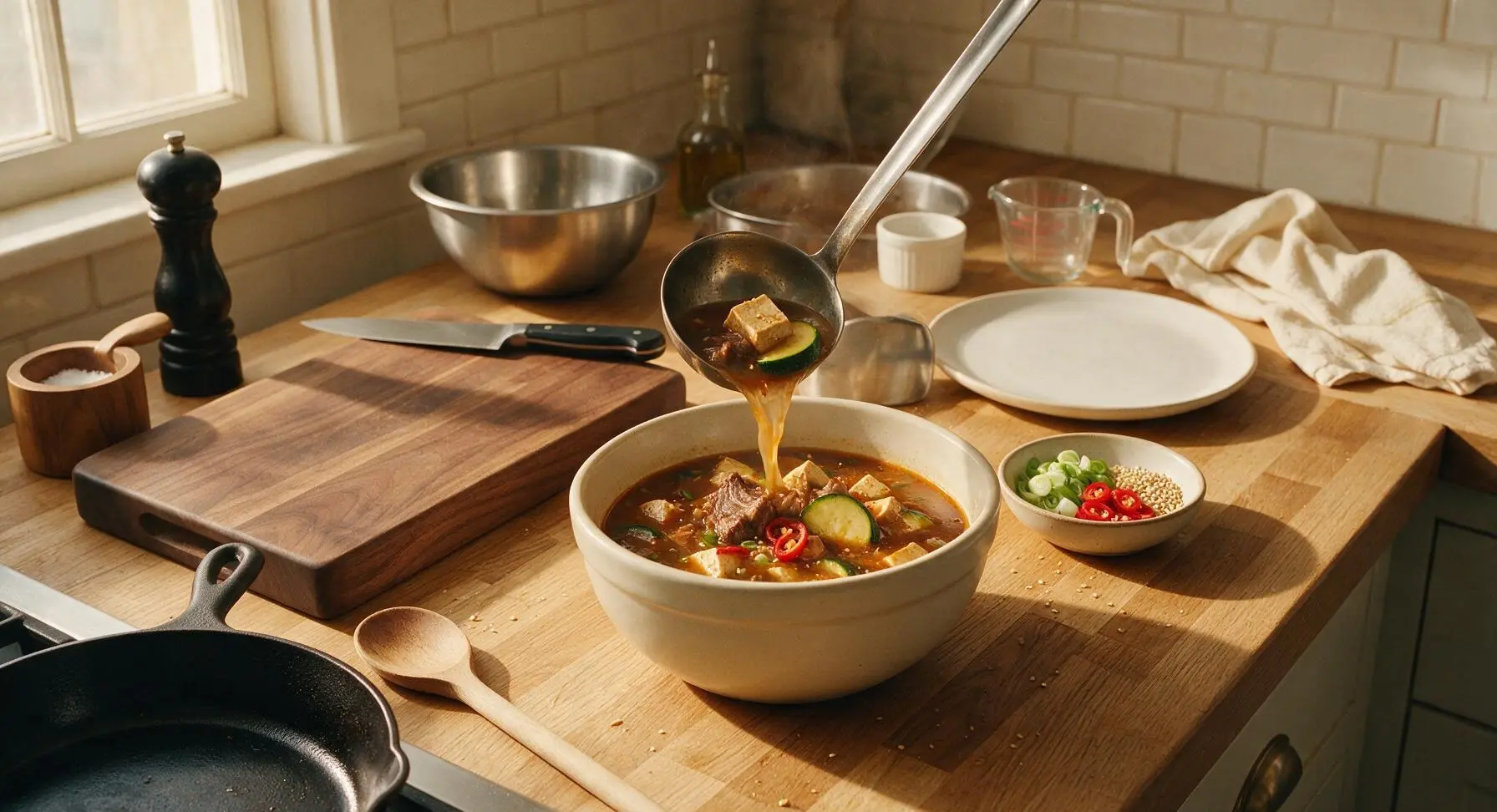
Carefully ladle the hot stew into the large matte cream ceramic stew bowl, arranging ribs and tofu evenly so ingredients are visible across the surface. Top with thinly sliced green onion, fresh red chili slices, and a sprinkle of toasted sesame seeds. Serve immediately while hot, with steamed rice on the side if desired.
Step 7
step7:Garnish and serve

Tips

1.Soak ribs in cold water for 30 minutes before cooking (a passive step you can complete while prepping vegetables) to draw out residual blood, which prevents cloudy, metallic-tasting broth and reduces the amount of scum you need to skim during blanching.
2.Stir doenjang into the broth off direct boil heat if you notice large clumps, as boiling the paste too hard can cause it to separate and create a grainy broth texture; stirring gently until fully smooth ensures a rich, uniformly flavored broth.
3.Add tofu and zucchini only in the final 10 minutes of cooking to keep tofu cubes intact and zucchini tender-crisp; adding them too early will cause tofu to break apart into small bits and zucchini to turn mushy and dull green.
✨ You May Also Like

Soups & Stews
🍜 Japan

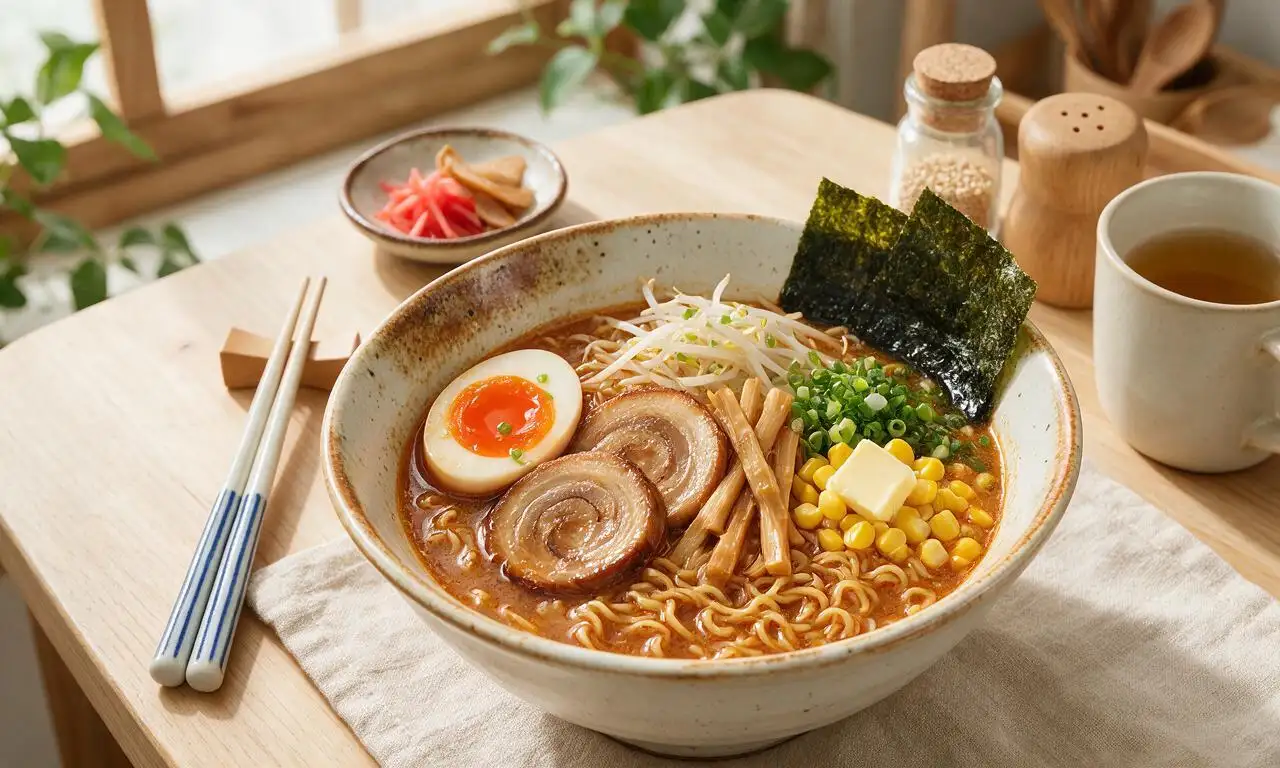
Rich, umami-dense Hokkaido-style miso ramen with chewy noodles, savory fermented broth, and classic toppings, a cozy, deeply satisfying warm meal.

⏱️ 45 minuteSoups & Stews ★ 4.5
Soups & Stews
🍜 United States

A hearty, peppery tripe and root vegetable stew with colonial Philadelphia roots, thick, warming, and packed with bold savory flavor for cold winter days.

⏱️ 2 hours 3Soups & Stews ★ 4.6
Soups & Stews
🍜 Mexico

Hearty, warming red pork posole loaded with tender hominy, slow-simmered in a rich smoky chile broth, served with zesty fresh garnishes for a deeply comforting, satisfying meal.

⏱️ 2 hours 3Soups & Stews ★ 4.7
Soups & Stews
🍜 United States

Warm, soothing classic chicken noodle soup loaded with tender chicken, soft egg noodles, and savory veggies, perfect for chasing chills and feeding the whole family.

⏱️ 40 minuteSoups & Stews ★ 4.9
Soups & Stews
🍜 France

Deeply savory caramelized onion broth topped with crusty bread and bubbly melted Gruyère, a timeless French bistro comfort food ideal for cold days.

⏱️ 1 hour 25Soups & Stews ★ 4.8
Soups & Stews
🍜 United States

Hearty, briny Maryland crab soup loaded with sweet blue crab, tender summer vegetables, and zesty Old Bay, a beloved Chesapeake Bay coastal comfort staple.

⏱️ 55 minuteSoups & Stews ★ 4.9

Doenjang Jjigae Ribs:Frequently Asked Questions

1.Do I have to use bone-in pork short ribs for this recipe, or can I substitute another cut? ▾
Bone-in 5cm-cut short ribs are ideal because their marrow and connective tissue melt into the broth for deep, rich savoriness, and turn perfectly fall-off-the-bone tender as they simmer. If you need a swap, use bone-in country-style pork ribs, but avoid lean boneless cuts—they’ll turn dry and won’t add the same layered umami to the stew base.
2.How do I prep the pork ribs to reduce any gamey, off-flavor before simmering? ▾
Give the 5cm rib pieces a quick 10-minute cold water soak to draw out excess blood, then drain and rinse well. For extra mildness, do a 3-minute quick blanch in boiling water with a thin slice of ginger, skim off the gray surface foam, then rinse the ribs before adding them to your doenjang broth.
3.What type of doenjang should I buy for the most authentic, balanced flavor? ▾
Skip the artificially flavored, mass-produced shelf-stable doenjang if you can. Look for naturally fermented Korean soybean paste in the refrigerated section of Korean grocery stores—it has a deeper, less salty, nuttier umami kick that makes the stew taste like classic home-style comfort food, not one-note briny.
4.Why does this recipe call for firm tofu instead of soft silken tofu? ▾
Firm tofu holds its shape beautifully through the long, gentle simmer with the ribs, soaking up all the savory doenjang broth without falling apart into mushy bits. Silken tofu is too delicate for this longer cook time; it will break down and cloud the stew if added too early, so stick with pressed firm tofu for the best texture.
5.How long do I need to simmer the ribs to get that signature fall-off-the-bone tenderness? ▾
Plan for a low, gentle simmer of 45 to 55 minutes after bringing the pot to a boil, before adding your softer vegetables and tofu. Don’t cook at a hard rolling boil—that will make the rib meat tough and stringy. Keep heat low enough that small bubbles just break the surface, and meat will pull cleanly from the bone when done.
6.Can I make this dish in a slow cooker instead of on the stovetop? ▾
Absolutely! Sear the blanched ribs first for extra depth, then add them with your doenjang broth base to the slow cooker. Cook on LOW for 6 hours, then add your cubed firm tofu, sliced zucchini, and onion during the last 30 minutes of cook time so the veggies stay tender-crisp instead of turning mushy.
7.When should I add the zucchini and onion so they don’t turn overcooked and mushy? ▾
Add your sliced yellow onion and cut medium zucchini during the final 15 to 20 minutes of simmer time, right after the ribs are fully tender. Both veggies have high water content and cook quickly; adding them too early will make them turn limp, watery, and lose their bright, fresh flavor that balances the rich, salty stew.
8.My finished doenjang jjigae turned out too salty—how can I fix that? ▾
First, note that brine levels vary wildly between doenjang brands, so always taste as you build the stew. If your finished pot is too salty, stir in a little extra unsalted broth, a tiny pinch of sugar to balance the salt, or a few extra cubes of tofu and zucchini to absorb excess salt as they cook. Skip adding plain water, which dilutes that hard-earned umami.
9.Do I need to add gochujang or chili flakes for spice, or is this stew traditionally mild? ▾
Classic home-style doenjang jjigae ribs is usually mild, focused on the nutty, savory fermented soybean flavor, but you can absolutely adjust heat to your taste. Add 1 teaspoon of gochujang or a pinch of Korean gochugaru to the broth base if you like a subtle warm kick, but don’t add so much that it overwhelms the earthy doenjang notes.
10.Can I prep components of this dish ahead of time for fast weeknight meals? ▾
Definitely! You can simmer the ribs in the doenjang broth base 2 to 3 days ahead, store it covered in the fridge, and skim off any solidified fat from the top before reheating. Wait to cube your firm tofu, slice the medium zucchini, and chop the yellow onion until right before you finish the stew, so those fresh ingredients hold their bright texture.
11.Why is my rib meat tough and chewy instead of melt-in-your-mouth tender? ▾
Tough, chewy ribs almost always come from cooking at too high a temperature, or not simmering long enough. High heat makes meat proteins seize up and turn stringy, while low, slow simmer gives connective tissue time to break down into silky, rich gelatin. If ribs are chewy, turn heat down, add a splash more broth, and simmer 10 to 15 more minutes.
12.What size should I cut the vegetables and tofu for even cooking? ▾
Cut your firm tofu into 2.5cm (1-inch) cubes, slice your medium zucchini into half-moons about 1cm thick, and cut your yellow onion into 2cm wedges. Cutting all ingredients to these uniform sizes means they’ll cook at the same rate, are easy to pick up with chopsticks or a spoon, and won’t turn into unevenly cooked, mushy bits.
13.Can I add other vegetables to this stew, or should I stick to zucchini and onion? ▾
Zucchini and yellow onion are classic, but you can absolutely add other common jjigae veggies to suit your taste. Great add-ins include sliced shiitake mushrooms, cubed potato, chopped napa cabbage, or a handful of fresh spinach added at the very end. Adjust cook times for denser veggies like potato, adding them 25 minutes before the stew finishes.
14.How should I store leftover Doenjang Jjigae Ribs, and how long will it keep? ▾
Let leftovers cool completely, then transfer to an airtight container and store in the fridge for up to 4 days. The flavor actually gets better the next day as the ribs and tofu absorb more of the doenjang broth. Reheat gently on the stovetop over low heat, adding a splash of water or broth if the stew has thickened too much in the fridge.
15.Do I need to marinate the ribs first before adding them to the stew? ▾
You don’t need a long marinade for this recipe! The slow, gentle simmer in the umami-rich doenjang broth infuses the ribs with deep savoriness as they cook. The only required prep is a quick cold water soak and optional blanch to remove excess blood, which cuts prep time and keeps the broth clean-tasting without dulling doenjang’s nutty notes.
16.What should I serve with Doenjang Jjigae Ribs for a full, balanced Korean meal? ▾
Serve this cozy stew piping hot alongside a bowl of steamed short-grain white rice, a small dish of tangy kimchi, and a few simple seasoned vegetable side dishes (namul) if you have them. The rice is perfect for sopping up the rich doenjang broth, and the bright, tangy kimchi cuts through the richness of the tender pork ribs beautifully.
17.My stew broth is thin and lacks deep umami flavor—what went wrong, and how do I fix it? ▾
Thin, flat broth usually means you used too little doenjang, diluted the base with too much water, or didn’t simmer the ribs long enough to release their rich marrow and gelatin. Start with 2 to 3 tablespoons of doenjang per 4 cups of broth, simmer low and slow, and add a tiny splash of fish sauce if you need a quick umami boost without overpowering the stew.

Comments (9)

2 days ago

OMG, this doenjang jjigae ribs recipe was an absolute game changer for our Sunday family dinner! I was a little nervous about the difficulty being medium since I don’t cook a ton of Korean food, but the steps were so straightforward. The ribs were fall-off-the-bone tender, and the doenjang broth was so rich and savory — my kids went back for seconds, and even my picky 7 year old asked if we can have it again next week! 10/10, will be adding this to our regular meal rotation.

yesterday

Wait, did you use a specific brand of doenjang? I tried making this last month with a random store brand and the flavor was super flat, wondering if I picked the wrong paste!

yesterday

So happy your family loved it, Liz! For the best flavor, I recommend using a traditional aged doenjang (look for ones sold in glass jars in the Korean market section, not the quick-fermented tubs) — it makes a huge difference in the depth of the broth. If you can’t find it locally, a good gochujang/doenjang combo brand like Sempio works great too!

3 days ago

Really solid recipe! Cook time was almost exactly 1 hour 10 minutes for me, which is perfect for Sunday meal prep — I portioned it out with rice for my work lunches all week, and it reheated beautifully. Only reason I’m not giving 5 stars is I wish it had a little note on how spicy this is? I added a big scoop of gochugaru like I do for regular jjigae and it was way too hot for my mild preference, oops. Still so good, just cut the pepper flake amount next time!

2 days ago

Thanks so much for the feedback, Jen! That’s a great note — I’ll add a line to the recipe about adjusting gochugaru to taste, since this version is meant to be pretty mild as written. So glad it worked out for your meal prep, it’s one of my favorite make-ahead meals too!

1 week ago

Brought this to my neighborhood potluck last weekend and people were literally hovering over the slow cooker (I transferred it after searing the ribs to keep it warm) asking for the recipe all night. The umami from the doenjang paired with the fatty ribs is insane, I didn’t change a single thing and it turned out perfect. Don’t skip the step of parboiling the ribs first to get rid of that excess gunk, that’s what keeps the broth so clean and flavorful!

5 days ago

Taste was great when it finally worked, but I definitely messed up the rib cook time? Mine were still tough after 45 minutes of simmering, I had to leave them on the stove for an extra 25 minutes. Did I cut the ribs too big? I used beef back ribs instead of the short ribs the recipe calls for, maybe that’s the issue?

3 days ago

Oh yeah, beef back ribs take way longer to get tender! I made that mistake once too — if you use short ribs like the recipe says, the timing is spot on. Next time give back ribs an extra 30 mins and they’ll be perfect, the flavor is still worth it!

yesterday

I’ve been ordering doenjang jjigae from my local Korean spot for years and never thought I could make it at home that tastes just as good, let alone with ribs! The trick of adding the zucchini and potato at the end so they don’t turn mushy? *Chef’s kiss.* My roommate walked in from work and thought I ordered takeout, that’s how good it smelled when it was simmering. SO worth the hour of cook time, trust me.

2 hours ago

Did you serve this with anything besides rice? I’m making it for date night this weekend and want to round out the meal without making too many extra sides!

30 minutes ago

Hi Hannah! That’s the best compliment ever, I’m so stoked it tasted restaurant-quality for you. @SeattleSoupLover — it pairs perfectly with quick pickled radishes, a little pan-fried kimchi, and some soft tofu if you want extra protein! Keeps the sides super simple so the ribs are the star.

2 weeks ago

Great recipe overall! I swapped the pork ribs for beef short ribs like my grandma used to make, and the flavor came out incredible. My only note is that my doenjang is pretty salty, so I had to cut back on the added soy sauce a bit. If you’re using a homemade or extra salty doenjang, definitely taste the broth as you go instead of dumping all the soy in at once. Would make again for sure!

2 hours ago

Wait this is so much easier than I thought it would be??? I’m a broke college student with a tiny stove and I pulled this off for me and my two roommates for under $20 total. We ate the whole pot in one sitting, no leftovers. 10/10, no notes, will be making this every time we have friends over now.

30 minutes ago

That makes me so happy to hear! This recipe is totally doable even in small kitchens, and it’s such a great budget-friendly crowd pleaser. Pro tip for next time: toss in a handful of chopped kimchi at the end for an extra tangy kick if you have it lying around!

30 minutes ago

I smoke ribs all the time for cookouts and was skeptical about a stewed rib recipe, but y’all. This might be my new favorite way to make ribs. The doenjang adds this deep, nutty umami that I never would have thought to pair with ribs, and the broth is so good sopped up with cornbread (don’t judge, it works). Game. Changer.

5 minutes ago

Wait cornbread with doenjang jjigae? That sounds insane, I need to try that combo next time I make this. I usually use white rice but cornbread would soak up that broth so perfectly!

just now

Made this last night for my partner who’s Korean and was super homesick, and he said it tasted exactly like his mom’s cooking!!! I was so nervous I’d mess it up, but the instructions were so clear, and the ribs were so juicy. We ate it with extra kimchi and rice, and he even took leftovers for lunch today which is the highest seal of approval I can get. Obsessed, will make this a million times.