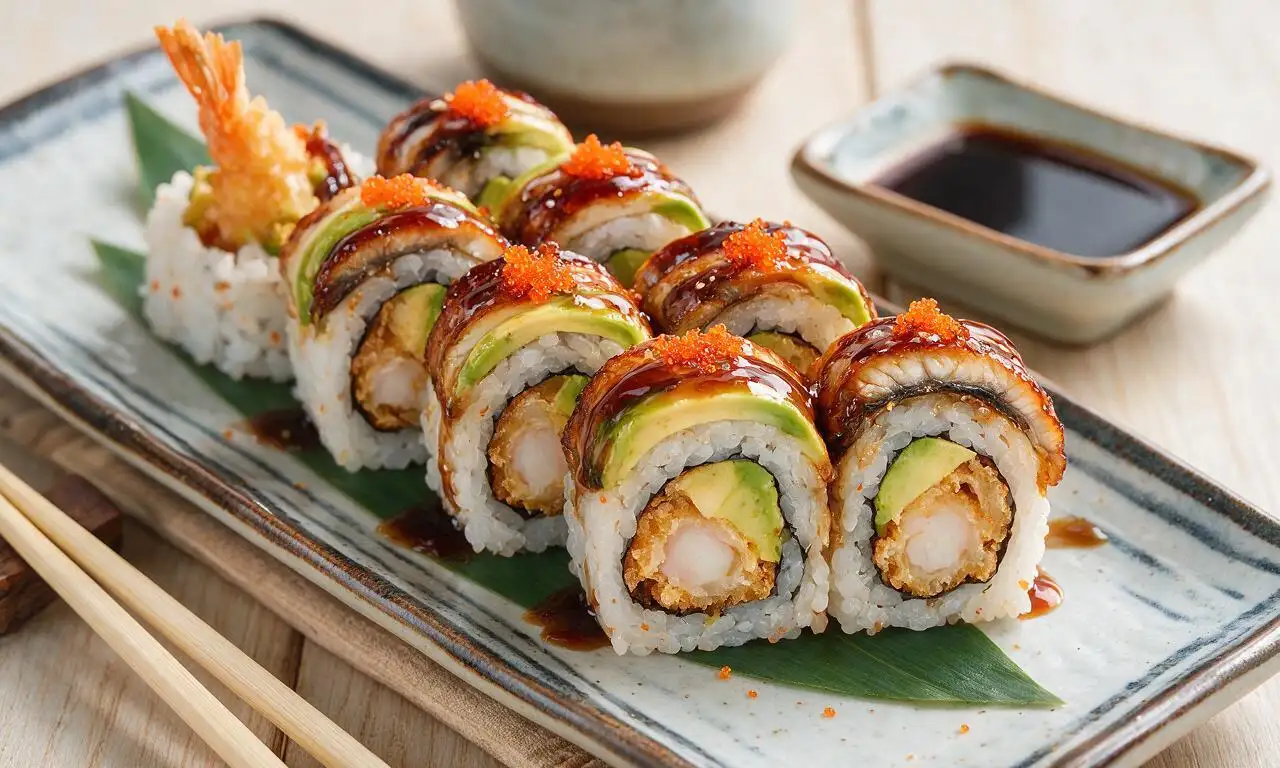
Dragon Roll

title 1
Dragon Roll
⏱️ cook time 45 minutes
🍽️ servings 4
⚡ Difficulty medium

intro

A showstopping uramaki sushi roll with crispy shrimp tempura, creamy avocado, and sweet glazed eel, finished with tobiko and savory eel sauce.

Ingredients

Short-grain sushi rice 360g (2 cups, uncooked)
Rice vinegar 75ml (1/3 cup, divided)
Granulated sugar 25g (2 tablespoons)
Fine sea salt 5g (1 teaspoon)
Large raw shrimp (peeled, deveined, tail-off) 8 pieces (120g total)
Tempura batter mix 100g (3/4 cup)
Ice-cold water 120ml (1/2 cup, for tempura)
Vegetable oil (for frying) 500ml
Pre-cooked grilled unagi (freshwater eel) 120g
Ripe avocado 1 large (150g)
Roasted nori sheets 4 full sheets
English cucumber 50g
Lemon juice 5ml (1 teaspoon)
Tobiko (flying fish roe) 45g (3 tablespoons)
Unagi (eel) sauce 60ml (1/4 cup)
Toasted white sesame seeds 10g (1 tablespoon)
Tap water 580ml (divided: 480ml for cooking rice, 100ml for hand-washing)

Steps

1

Prep seasoned sushi rice

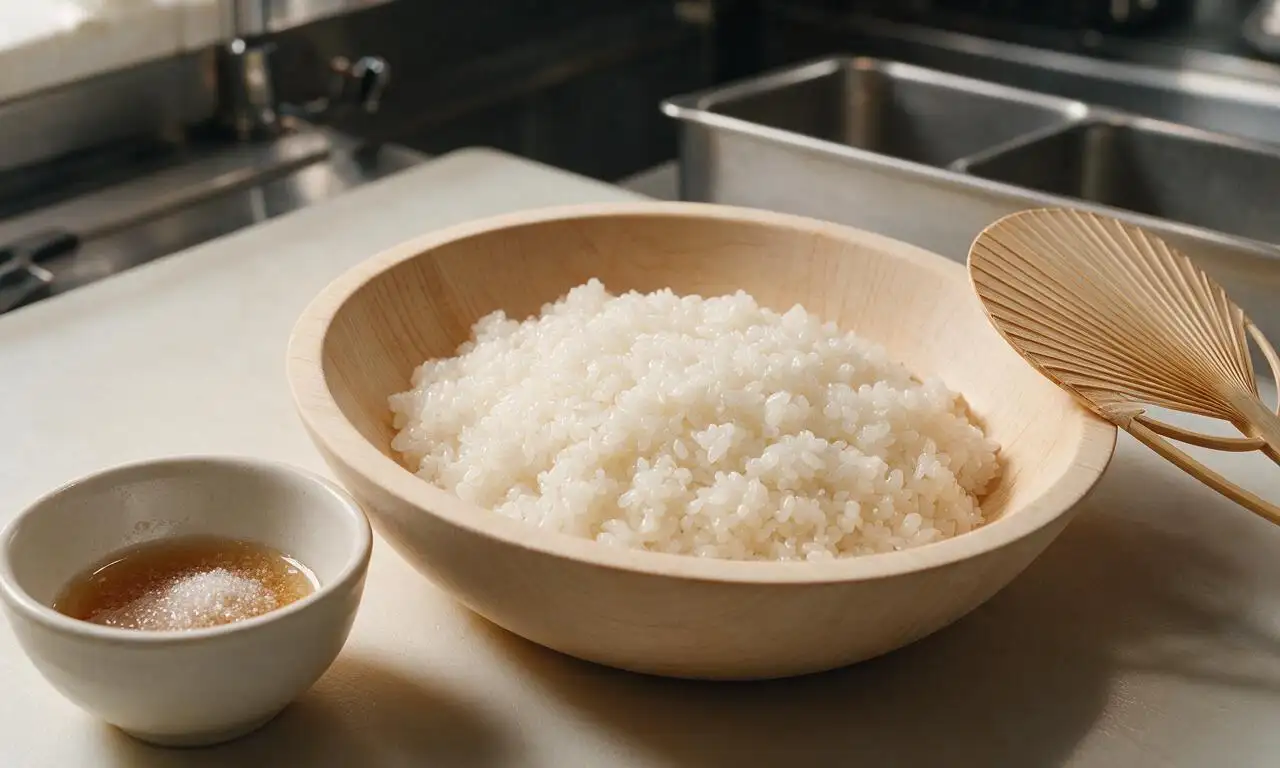
Rinse 360g short-grain sushi rice under cold running water until the water runs completely clear (about 3 minutes of rinsing), then cook in a rice cooker with 480ml tap water per standard rice cooker settings. Once cooked, transfer rice to a wide wooden bowl, gently fold in a cooled mixture of 60ml rice vinegar, 25g granulated sugar, and 5g fine sea salt (heated in a small pan over low heat for 1 minute until sugar and salt fully dissolve). Fan the rice continuously for 3-4 minutes until it cools to 23C (room temperature), taking care not to mash or over-stir the grains. Cover the rice with a damp lint-free tea towel to prevent drying until ready to assemble.
Step 1
step1:Prep seasoned sushi rice
2

Fry shrimp tempura

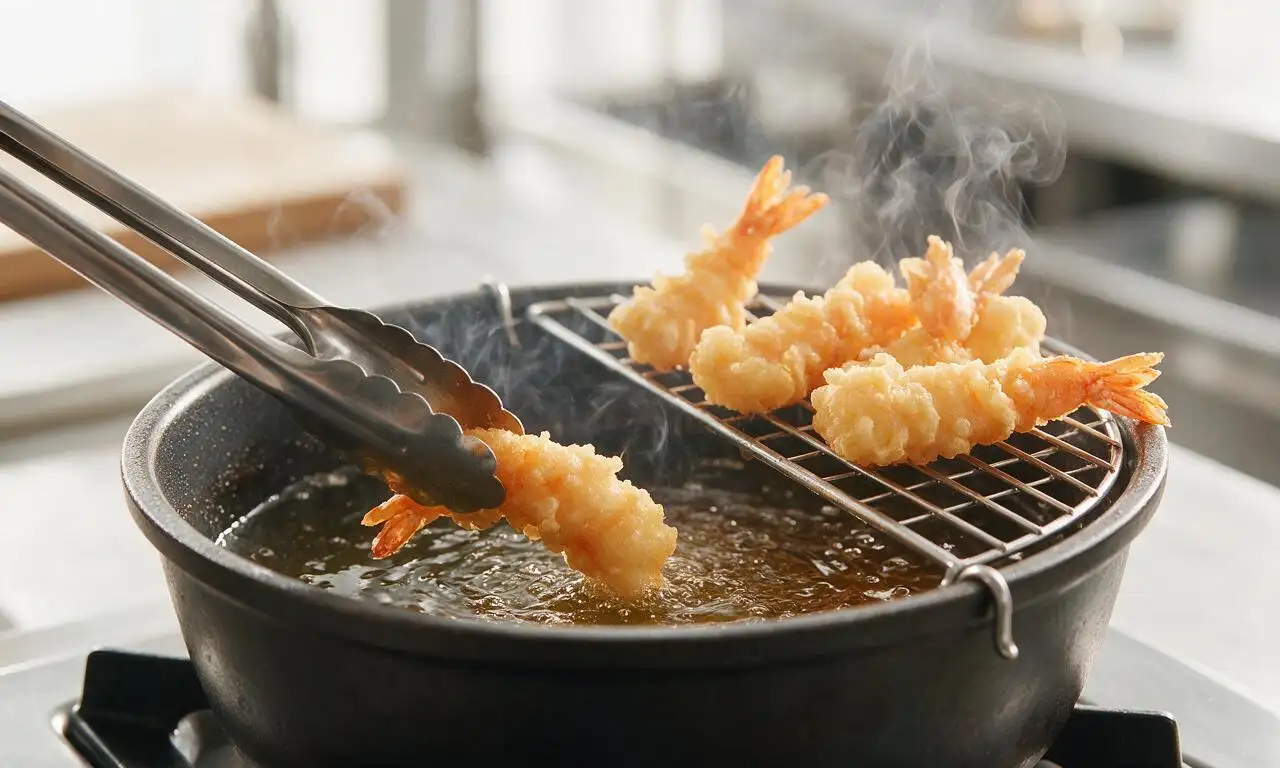
Pour 500ml vegetable oil into a deep, heavy-bottomed pot and heat to 175C (350F), verified with a candy thermometer. Pat 8 peeled, deveined shrimp completely dry with paper towels, then make 2 small 5mm cuts on the underside of each shrimp to prevent curling during frying. Whisk 100g tempura batter mix with 120ml ice-cold water until just combined (small lumps are expected; do not overmix, as this creates tough batter). Dip each shrimp fully in batter, lower gently into the hot oil, and fry for 2-3 minutes until pale golden and crisp, then transfer to a wire rack set over a baking sheet to drain for 2 minutes. Fry in 2 batches of 4 shrimp to avoid dropping oil temperature.
Step 2
step2:Fry shrimp tempura
3

Prep roll components

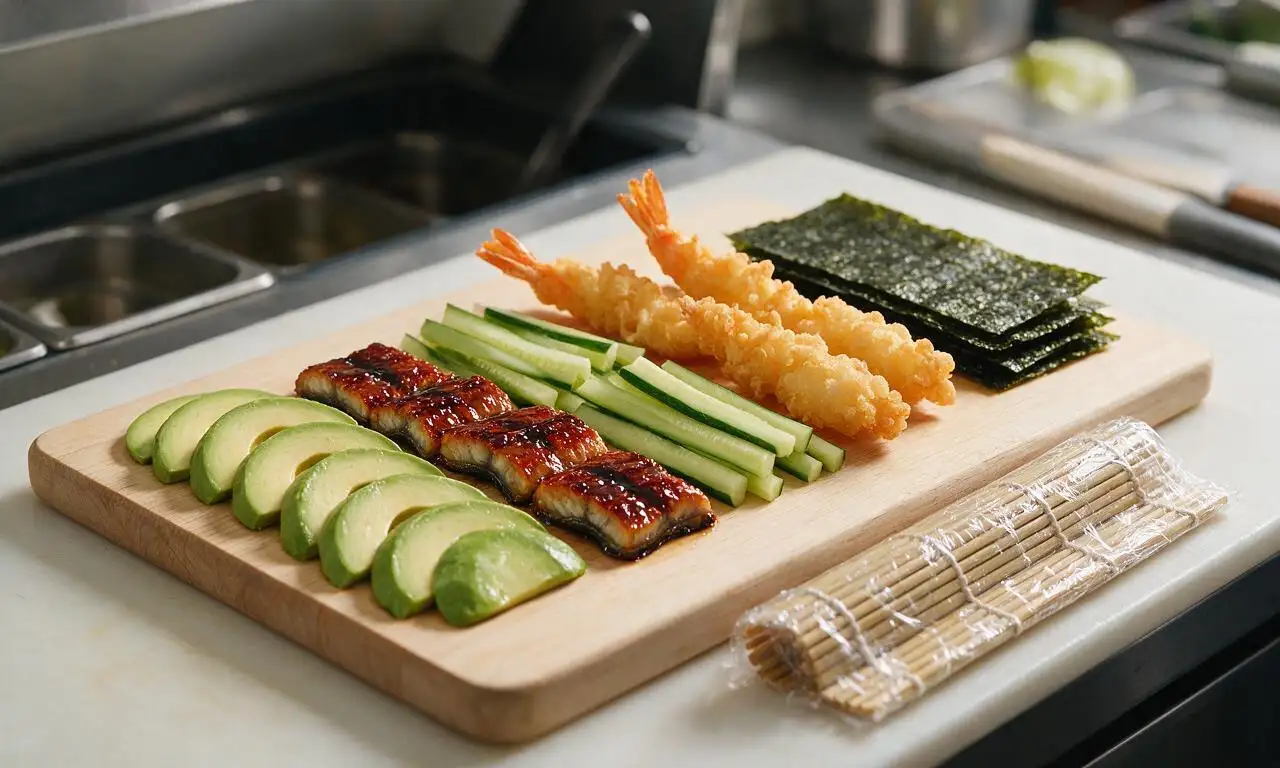
Slice 120g pre-cooked unagi into 1cm thick, 10cm long strips, then warm in a preheated 150C (300F) oven for 3 minutes to soften. Cut 50g seedless English cucumber into 10cm long, 1cm thick strips, discarding the soft seedy core. Halve the 150g ripe avocado, remove the pit, peel, and slice into uniform 2mm thin slices, then toss gently with 5ml lemon juice to prevent browning. Wrap a bamboo sushi rolling mat tightly in plastic wrap to prevent sticking, and arrange all prepped fillings, nori sheets, and seasoned rice within easy reach for assembly.
Step 3
step3:Prep roll components
4

Assemble roll base

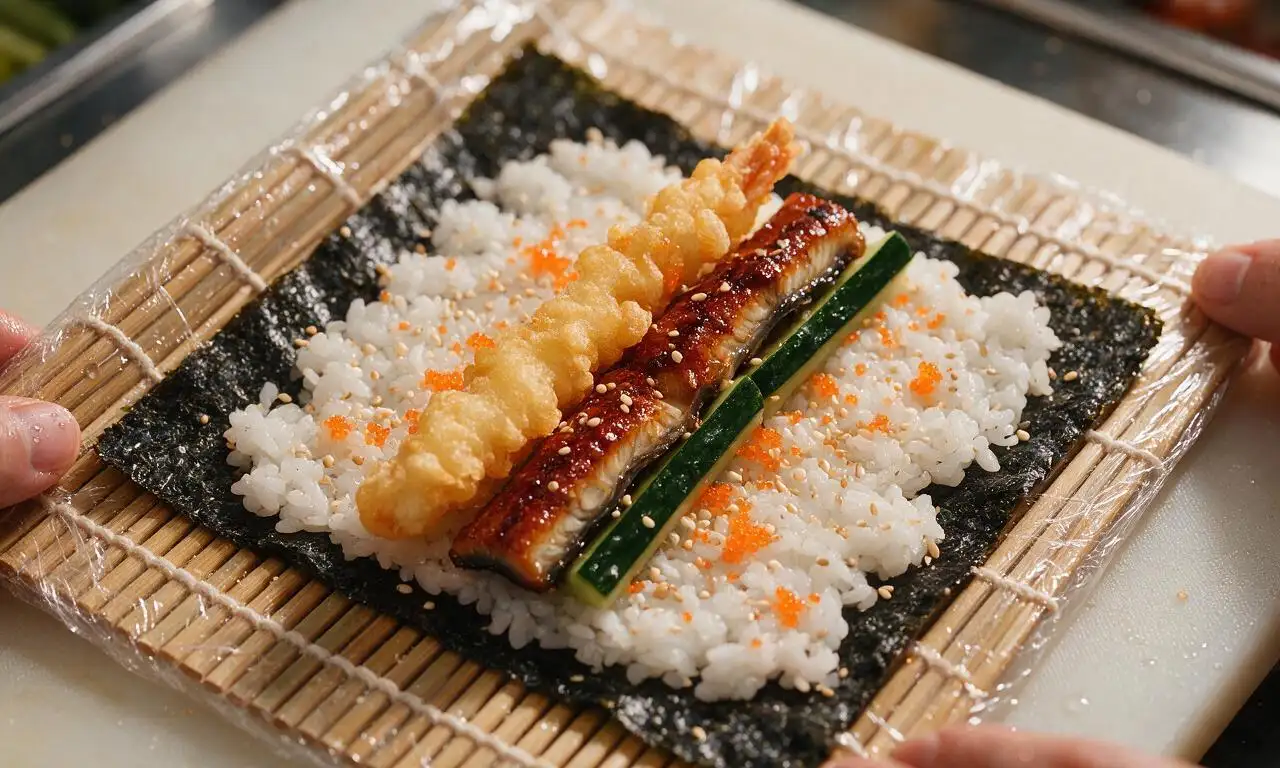
Place 1 full roasted nori sheet shiny-side down on the prepared bamboo mat. Mix 100ml tap water with the remaining 15ml rice vinegar to make hand-washing water, and dip your fingers in this solution to prevent rice from sticking. Spread 1/4 of the seasoned sushi rice (roughly 110g) in an even 5mm thick layer across the entire surface of the nori. Sprinkle 1/4 of the toasted sesame seeds and 1/4 of the tobiko evenly over the rice layer, then gently flip the nori sheet over so the rice side faces down against the mat, and the plain nori side faces up. Lay 2 shrimp tempura, 2 unagi strips, and 2 cucumber strips in a tight, straight line across the horizontal center of the nori.
Step 4
step4:Assemble roll base
5

Shape and top roll

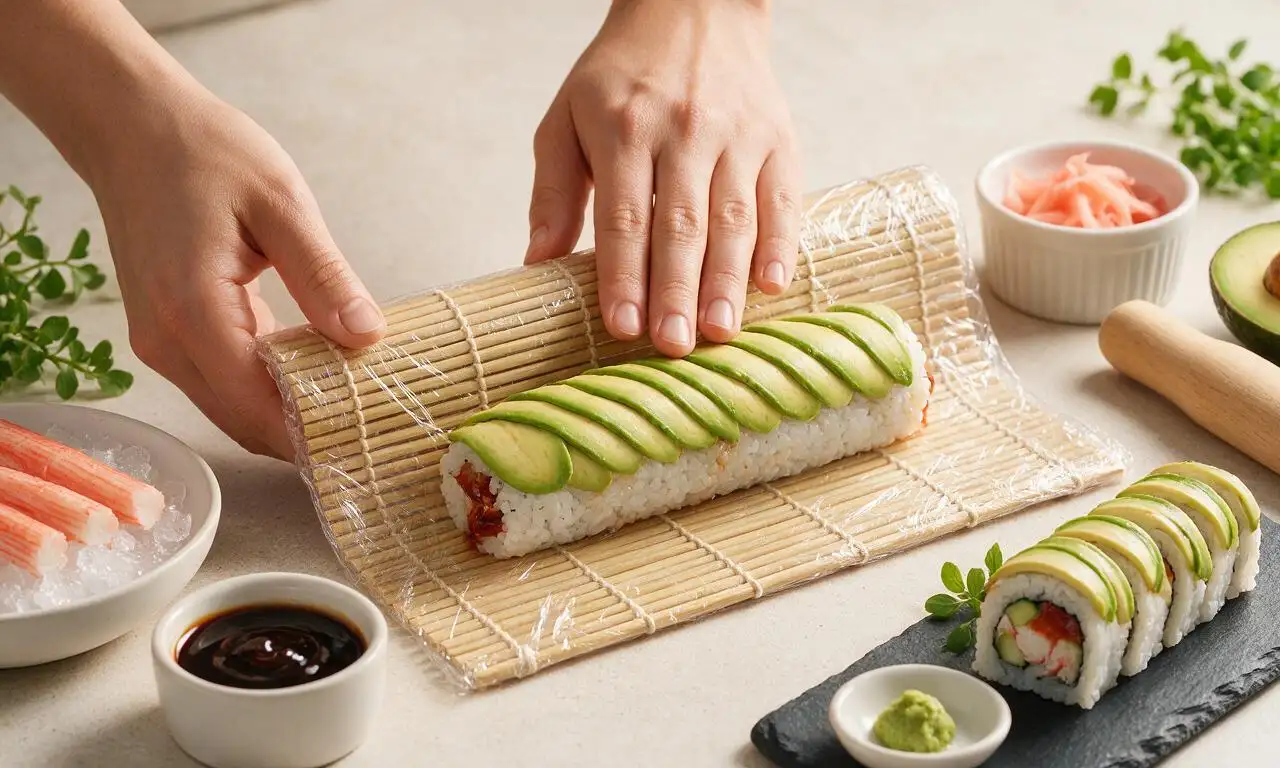
Lift the bottom edge of the bamboo mat up and over the line of fillings, tucking the edge firmly against the fillings to create a tight core, squeezing gently with even pressure to eliminate any air gaps. Continue rolling the mat forward in a smooth motion until the entire nori sheet is formed into a tight, even cylinder, pressing gently along the length of the mat to set the roll shape. Unwrap the mat to expose the rice-covered log, then lay the thin avocado slices in overlapping, shingle-like rows across the top of the roll to mimic dragon scales, covering the entire top surface. Lay a fresh sheet of plastic wrap over the avocado, then use the bamboo mat to press very gently so the avocado slices adhere smoothly to the rice without mashing.
Step 5
step5:Shape and top roll
6

Slice and garnish rolls

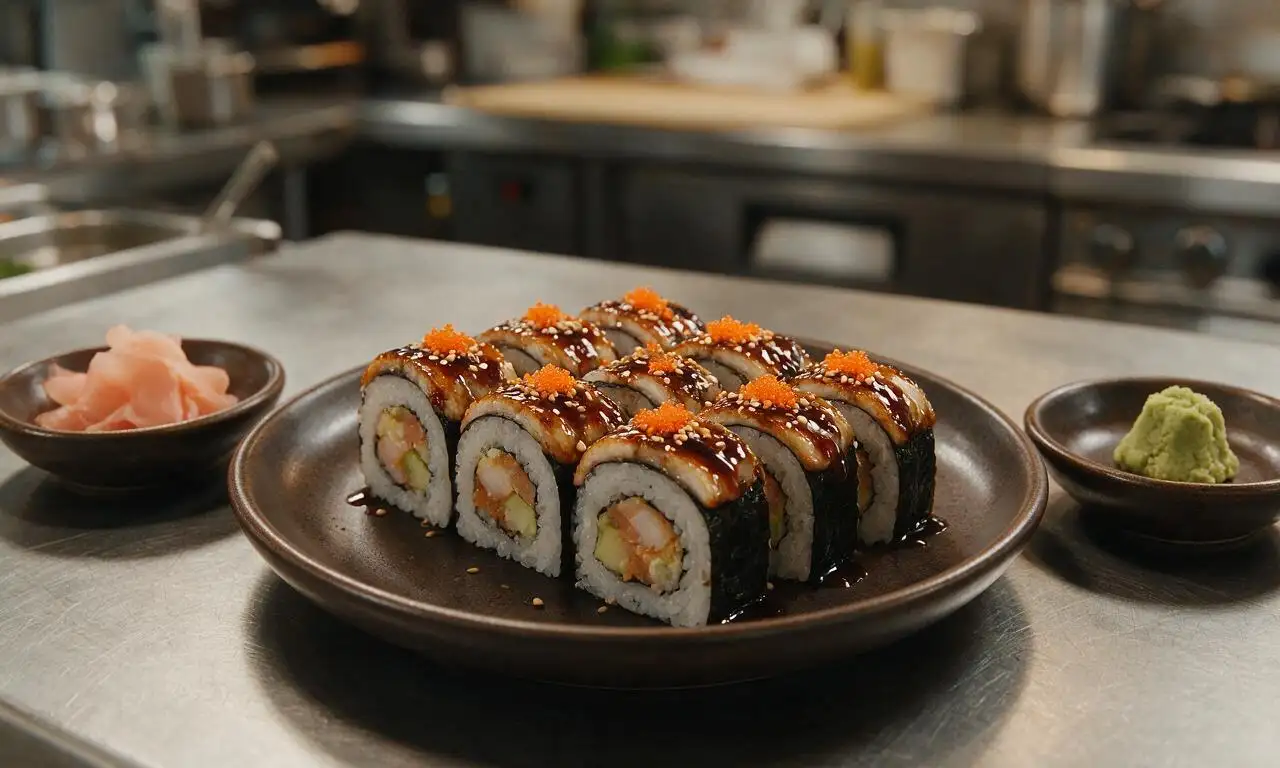
Remove the top layer of plastic wrap from the roll. Dip a sharp, long-bladed knife in cold water between every cut to prevent sticking, and slice each roll into 6 even pieces, roughly 2.5cm thick. Arrange the sliced pieces on a serving platter with the avocado side facing up, then drizzle 15ml of unagi sauce over each roll, and top with the remaining tobiko and sesame seeds. Serve immediately alongside pickled ginger, wasabi, and soy sauce for dipping, if desired.
Step 6
step6:Slice and garnish rolls

Tips

1.Wait until sushi rice cools fully to room temperature before rolling, as warm rice will make nori soggy and cause avocado slices to slide off the finished roll.
2.Do not overmix tempura batter—small lumps are intentional, as overmixing develops gluten and leads to tough, chewy tempura instead of a light, crispy coating.
3.Use a sharp, wet knife to slice rolls, dipping the blade in cold water between every cut to prevent sticking and create clean, even slices without mashing the rice or avocado.
✨ You May Also Like

Seafood
🍜 United States

An iconic Door County, Wisconsin tradition of flaky boiled whitefish, tender potatoes, and sweet corn, cooked outdoors for casual, communal summer gatherings.

⏱️ 45 minuteSeafood ★ 4.7
Seafood
🍜 United States

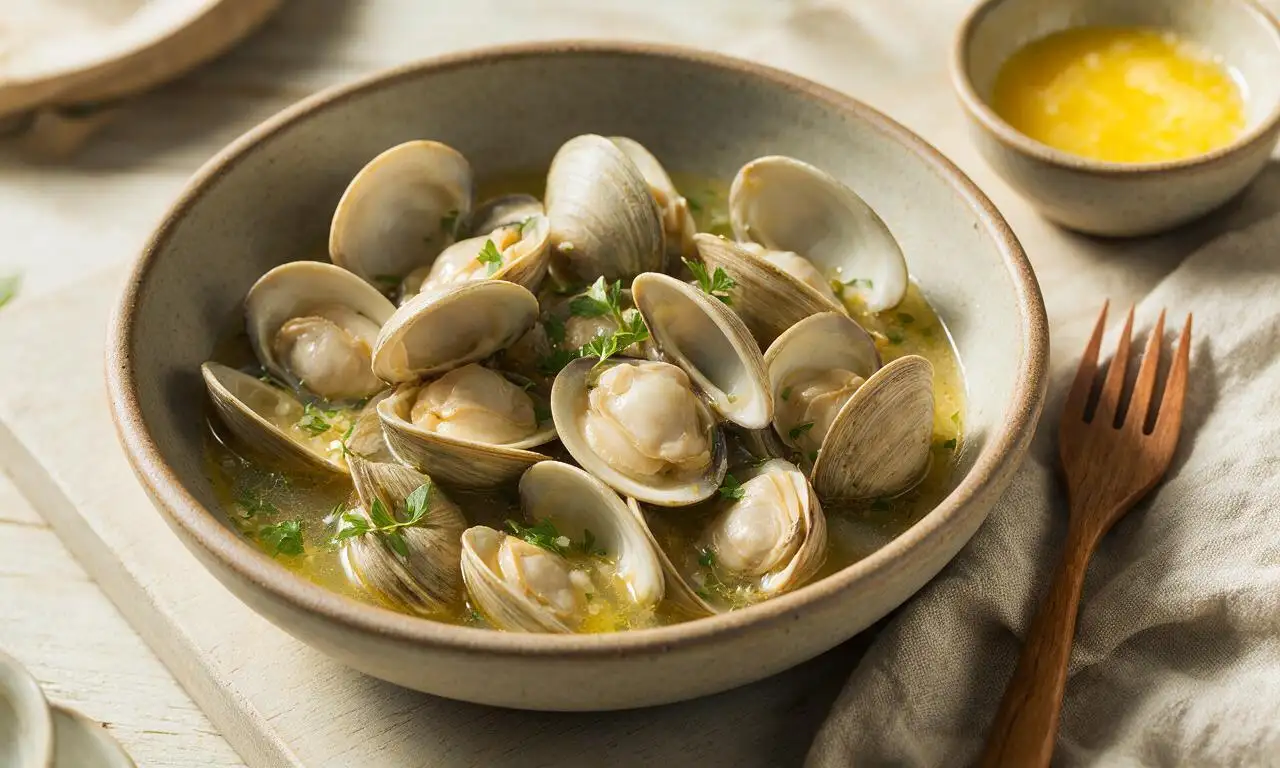
Tender, briny soft-shell clams steamed in garlicky white wine broth, served with warm broth and melted butter for dipping—classic coastal comfort food.

⏱️ 30 minuteSeafood ★ 4.7
Seafood
🍜 United States

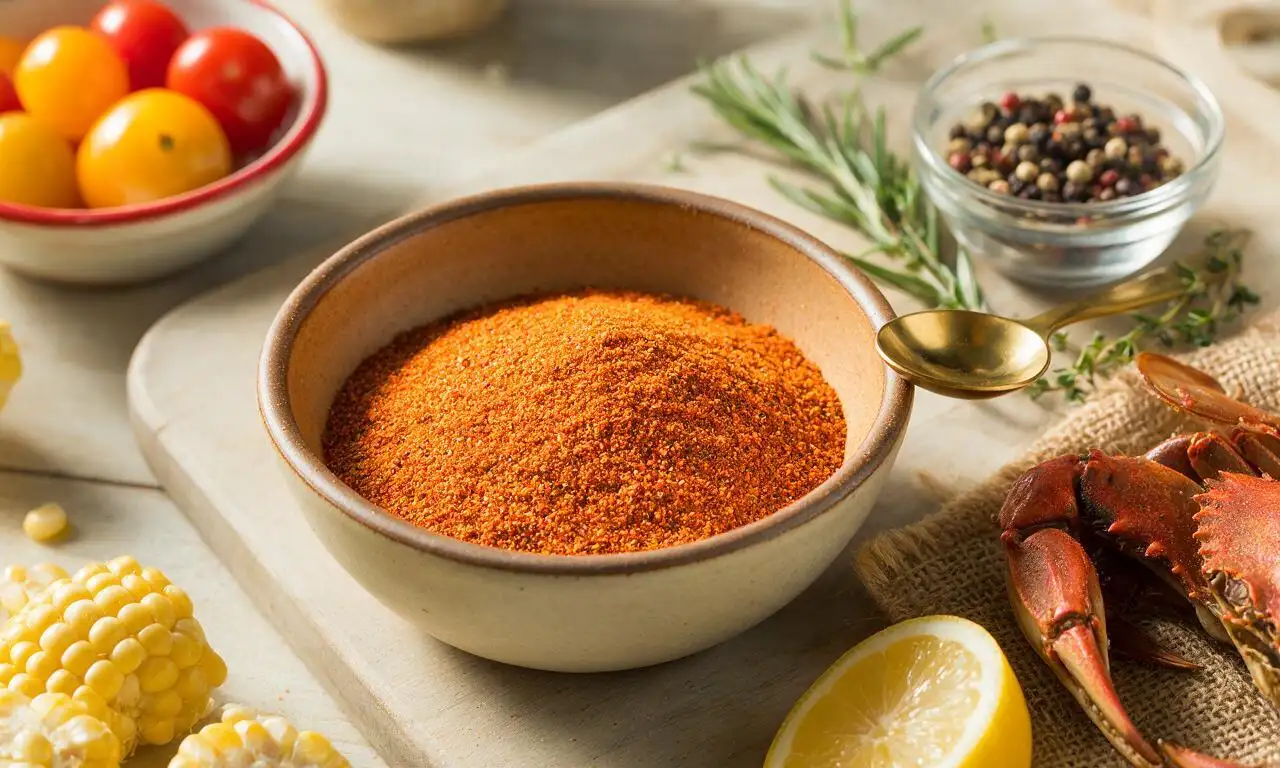
Iconic zesty, savory spice blend from Maryland’s Chesapeake Bay, perfect for seafood boils, grilled fare, fries, and corn, made fresh without preservatives.

⏱️ 10 minuteSeafood ★ 4.9
Seafood
🍜 China

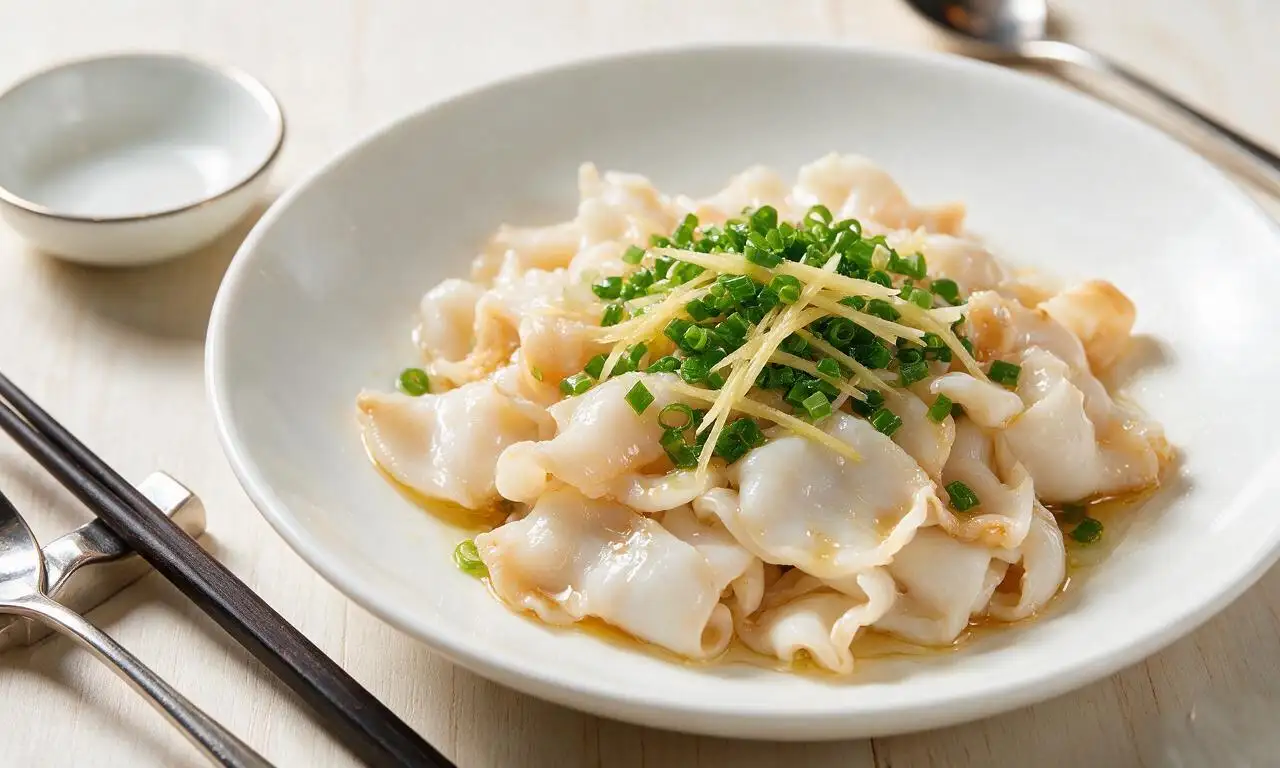
Tender, crisp, sweet blanched geoduck topped with fragrant sizzled ginger and scallion, a luxurious Cantonese dish highlighting the clam’s natural briny, delicate flavor.

⏱️ 30 minuteSeafood ★ 4.7
Seafood
🍜 United States

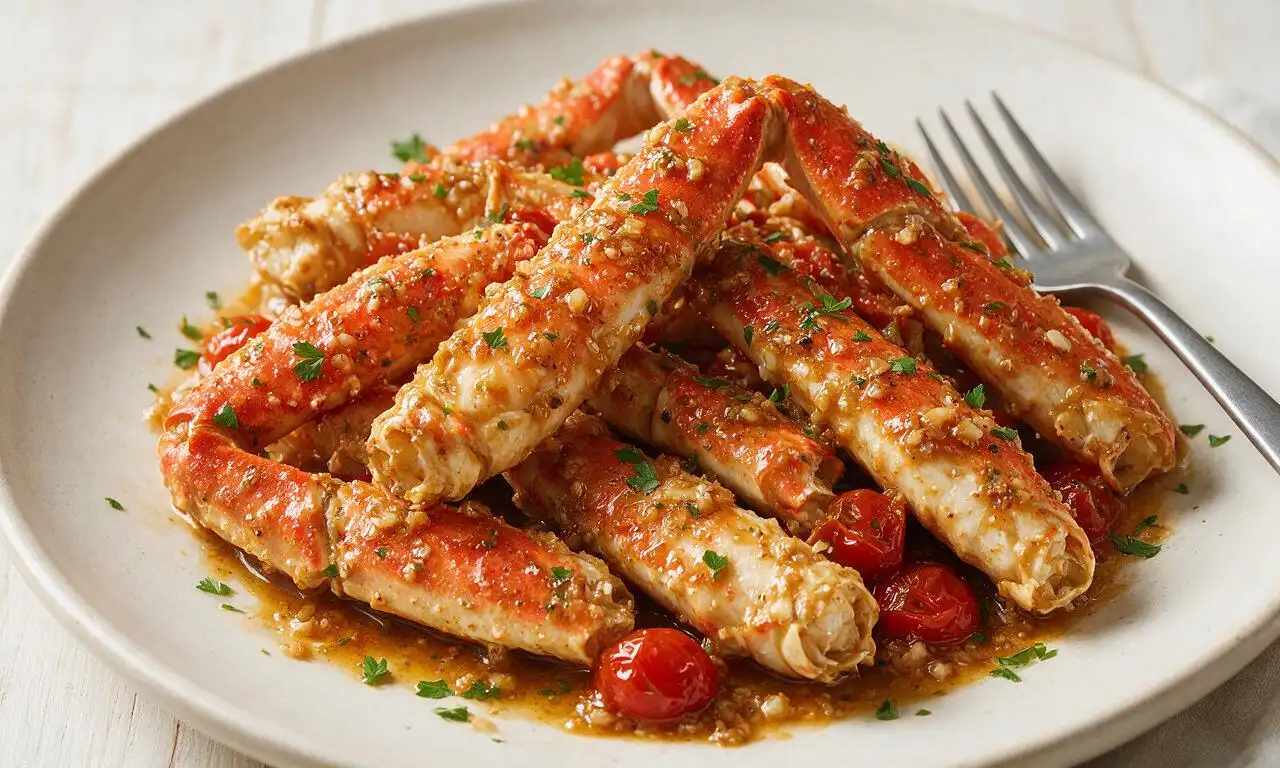
Succulent sweet crab legs coated in rich garlic butter, steamed to tender perfection for a juicy, indulgent seafood feast that requires minimal prep and cook time.

⏱️ 25 minuteSeafood ★ 4.7
Seafood
🍜 United States

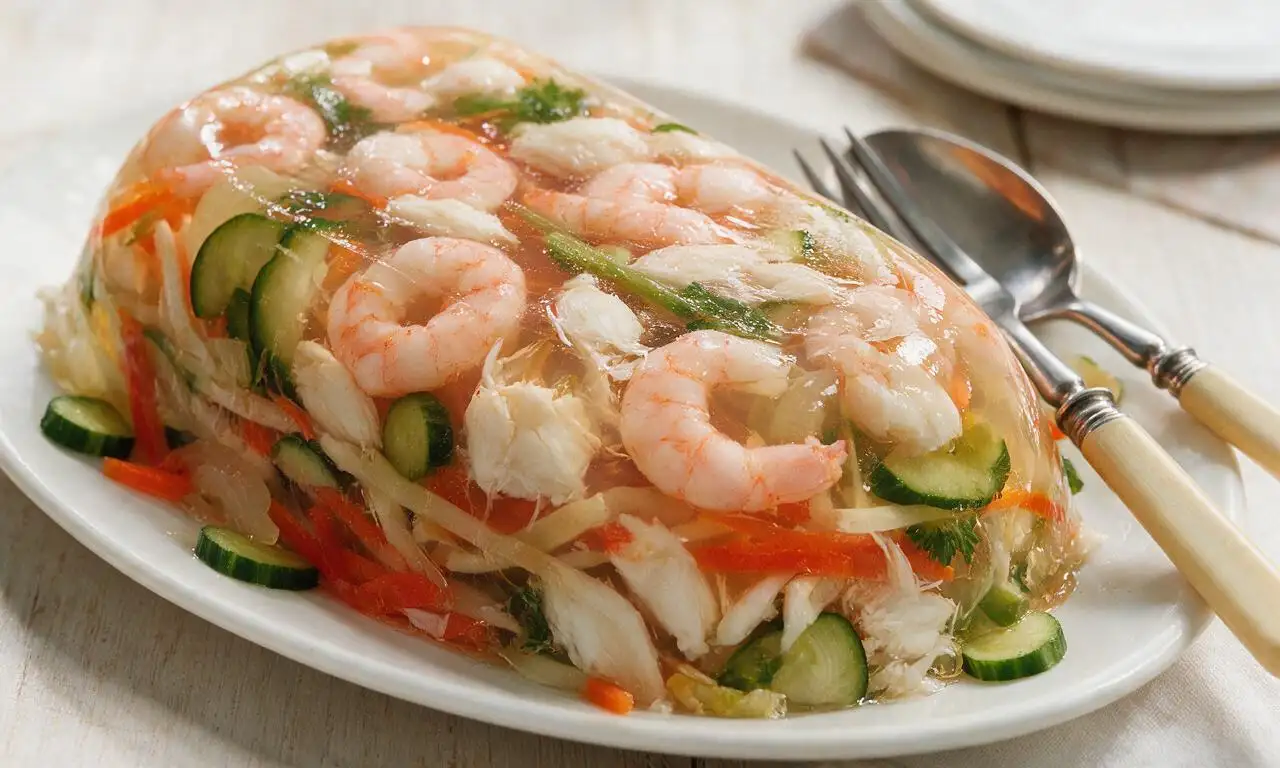
A nostalgic chilled jellied seafood staple of 1950s American potlucks, loaded with tender shrimp, lump crab, crisp veggies, and bright creamy tang.

⏱️ 4 hours 2Seafood ★ 4.6

Dragon Roll:Frequently Asked Questions

1.Why does my sushi rice turn out mushy instead of tender and sticky for dragon rolls? ▾
Mushy rice almost always comes from using too much cooking water, over-stirring rice as it cooks, or skipping the post-cook rest. For short-grain sushi rice, stick to a 1:1.2 rice to cold water ratio, rinse grains until water runs clear before cooking, and let it steam covered 10 minutes off heat before folding in your rice vinegar, sugar, and salt seasoning.
2.Can I make the shrimp tempura for dragon rolls ahead of time? ▾
For the crispiest results, fry shrimp tempura no more than 30 minutes before you assemble your rolls. If you prep it earlier, the crispy batter will turn soggy from trapped moisture as it sits. Hold fried tempura on a wire rack (not a paper towel-lined plate) in a 200°F oven if you need to keep it warm for a short window before rolling.
3.Why is this sushi called a dragon roll anyway? ▾
The name comes from its signature, eye-catching presentation! Thin, overlapping slices of avocado arranged on top of the roll mimic iridescent dragon scales, and the drizzle of dark, glossy eel sauce down the center looks like a dragon’s spine. It’s designed to be a real showstopper for any spread.
4.Do I have to use raw eel, or can I use pre-cooked unagi for this roll? ▾
Nearly all sushi restaurants use pre-cooked, frozen grilled unagi (freshwater eel) for dragon rolls, and you should too! Raw eel is tricky to prep safely and correctly at home. Thaw pre-grilled unagi, warm it briefly under the broiler for 1-2 minutes, and brush it with extra eel sauce before slicing it thin for your rolls.
5.My avocado slices on top keep browning before I serve the rolls—how do I stop that? ▾
Avocado oxidizes and browns fast once cut, so prep your avocado slices right before you top your assembled rolls. If you need a 10-15 minute buffer, spritz slices very lightly with fresh lemon or lime juice, and cover them tightly with plastic wrap pressed directly against the avocado surface to block air exposure.
6.What’s the best way to keep the roll from falling apart when I slice it? ▾
First, make sure your sushi rice is properly sticky and evenly spread across your nori sheet without mashing it. Use a very sharp, wet knife—wipe the blade with a damp cloth between every single slice—to avoid squishing the roll. Apply gentle, even pressure when cutting, rather than sawing, to get clean, intact slices.
7.Can I leave out the tobiko if I don’t like the texture of fish roe? ▾
Absolutely! Tobiko adds a fun, salty pop and bright orange color contrast, but it’s not a mandatory component for a delicious dragon roll. Easy swaps include toasted black or white sesame seeds, finely crushed tempura crumbs for extra crunch, or a sprinkle of finely sliced scallion for a fresh, sharp flavor kick.
8.How do I get that perfect glossy eel sauce finish without buying pre-made? ▾
Homemade eel sauce is super simple! Simmer ½ cup soy sauce, ½ cup mirin, ¼ cup granulated sugar, and 2 tablespoons of sake (if you have it) over medium heat for 8-10 minutes until it reduces to a thick, syrupy consistency that coats the back of a spoon. It will thicken more as it cools.
9.Is this roll served raw? I’m nervous about making raw seafood at home. ▾
Great news—classic dragon roll has no raw fish! The shrimp is fully cooked in crispy tempura, the unagi eel is fully grilled, and the core fillings are creamy avocado and seasoned rice. The only cured element is tobiko roe, which is safe to eat straight from the package, making this a great beginner sushi roll.
10.Why does my nori get chewy and tough instead of crisp-tender? ▾
Chewy nori usually happens when your rice is too hot when you spread it, or you let assembled rolls sit too long before serving. Let your seasoned sushi rice cool to just above room temperature (around 95°F) before spreading it on nori, and assemble and slice rolls right before you plan to eat them for the best texture.
11.Can I make this roll gluten-free for guests with dietary restrictions? ▾
You absolutely can, with a few easy swaps. Swap regular soy sauce in your eel sauce and rice seasoning for certified gluten-free tamari, double-check that your tempura batter is gluten-free (or make your own with rice flour and cold sparkling water), and confirm your unagi and tobiko have no hidden wheat-based additives.
12.How much filling should I add per roll so it doesn’t overstuff and burst? ▾
For a standard 8-piece cut roll, use 2 pieces of crispy tail-off shrimp tempura per roll, lined up end to end along the center of the nori. Add one thin strip of avocado and a strip of warmed unagi, and don’t overpack—overstuffing is the top reason rolls burst when you tuck and slice them.
13.Do I need a bamboo sushi mat to make dragon rolls at home? ▾
A bamboo makisu mat makes rolling tight, even uramaki (rice-outside) rolls much easier, but you can hack it if you don’t have one. Use a sheet of thick parchment paper or plastic wrap laid over a thin, flexible cutting board to apply even pressure as you tuck and roll fillings tight, just like you would with a bamboo mat.
14.How long do leftover dragon rolls stay good in the fridge? ▾
Sushi rolls are always best eaten fresh, right after assembly, because the nori gets chewy and the avocado browns quickly. If you have leftovers, wrap them tightly in plastic wrap and store in an airtight container in the fridge for no more than 24 hours. Skip freezing them—the rice and avocado will turn mushy when thawed.
15.Why is my shrimp tempura coming out greasy instead of light and crispy? ▾
Greasy tempura almost always traces back to oil that’s too cold, or overmixing your tempura batter. Heat your frying oil to a steady 350°F before adding shrimp, and mix your batter with ice-cold water just until combined—lumps are totally good! Overmixed batter develops gluten that makes tempura heavy and oil-soaked.

Comments (5)

2 days ago

OMG, I was so intimidated to try making dragon roll at home since it looks so fancy at restaurants, but this recipe broke every step down so clearly! The eel and avocado topping came out perfect, my whole family devoured the whole platter at our Sunday dinner. Total game changer, will be making this for our next potluck for sure! Only note: I added a tiny extra drizzle of spicy mayo on top and it was chef’s kiss.

yesterday

Wait did you use pre-cooked eel or make it from scratch? I’ve only ever bought the frozen pre-seasoned kind and wasn’t sure if that works here!

2 hours ago

So glad your family loved it! Frozen pre-seasoned eel works perfectly for this recipe — just pop it in the oven for a few minutes to warm it up before slicing, and you’re good to go. The extra spicy mayo drizzle sounds delicious too!

1 week ago

This was SO good, I prepped all the components on Sunday for weekday lunches and it held up way better than I expected! I did skip the cucumber because my partner hates it, swapped in a little pickled daikon instead, and it still tasted just like the rolls we get at our local sushi spot. The 45 minute cook time was totally accurate too, no weird hidden steps that add extra time.

5 days ago

Love that swap! Pickled daikon adds such a great tangy crunch that pairs perfectly with the creamy avocado and sweet eel. So happy this worked for your meal prep routine — that’s such a smart idea!

30 minutes ago

Tried this last night for date night and my boyfriend thought I ordered takeout lmao. The only mess up I had was my rice was a little too sticky at first so rolling was tricky, but once I got the hang of it the second roll came out flawless. Will absolutely be making this again, might even try adding tempura shrimp inside next time for extra crunch.

5 minutes ago

I had the same sticky rice issue my first try! Turned out I was using way too much rice vinegar, cut back by a tablespoon the second time and it was perfect. So good with tempura shrimp inside too, I did that last week!

just now

So glad it was a date night hit! The rice texture can be tricky at first — pro tip is to let your seasoned rice cool to room temp before you start rolling, it’s way less sticky and easier to work with. Tempura shrimp would make such a delicious addition, great call!

yesterday

My kids loved it!!! I was worried the eel would be too strong of a flavor for my picky 7 and 9 year old, but they asked for seconds and even begged to help roll the next batch. We skipped the sesame seeds on top because of a seed allergy in the house, used gluten free tamari for the rice since I’m gluten intolerant, and it didn’t take away from the flavor at all. 10/10, adding this to our regular weeknight rotation.

2 hours ago

Oh that’s such a relief to hear! My kid has a sesame allergy and I’m gluten free too, so I’ve been putting off trying homemade dragon rolls because I thought I’d have to sub too many things. Can’t wait to give this a shot now!

5 minutes ago

The medium difficulty rating was totally spot on! I’ve only ever made basic cucumber and avocado maki rolls before, so layering the avocado slices across the top felt super fussy at first. The tip about covering the whole roll with plastic wrap before slicing was a total lifesaver, kept everything from sliding apart. My rolls didn’t look half as pretty as the recipe photos, but they tasted exactly like the dragon rolls I order at my go-to sushi spot, so I’m counting that as a massive win. Next time I’ll practice my avocado slicing to get those paper-thin even pieces!