Eggs Benedict

Eggs Benedict
⏱️ cook time 35 minutes
🍽️ servings 4
⚡ Difficulty medium

intro

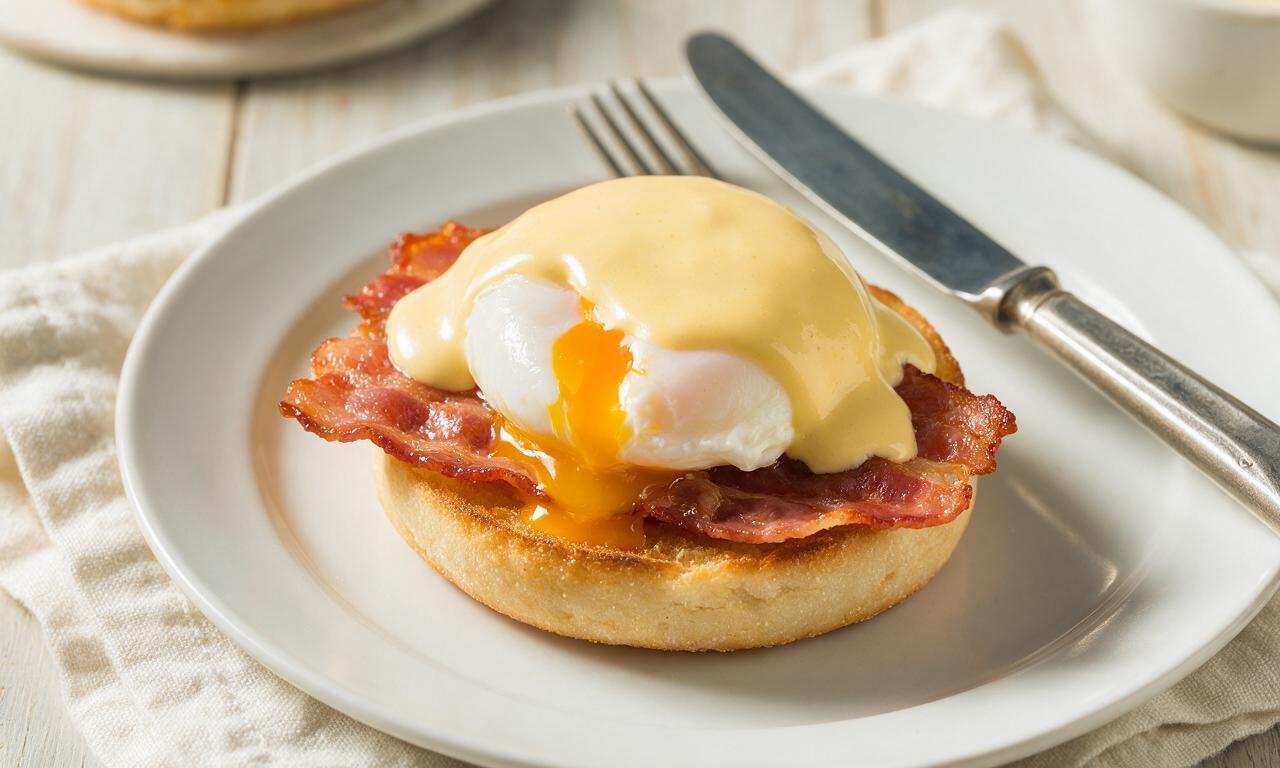
Indulgent classic American breakfast featuring runny poached eggs, savory Canadian bacon, and rich hollandaise on toasted English muffins, perfect for special weekend treats.

Ingredients

Large eggs (for poaching) 8 pieces (about 400g)
Canadian bacon 8 slices (225g)
English muffins 4 whole (split into 8 halves, 200g total)
Large egg yolks (for hollandaise sauce) 3 pieces (60g total)
Unsalted butter (melted, for hollandaise) 225g (1 cup)
White distilled vinegar (for poaching water) 2 tablespoons (30ml)
Fresh lemon juice 2 tablespoons (30ml)
Kosher salt 1 teaspoon (5g, divided)
Cayenne pepper 1/4 teaspoon (0.5g)
Fresh chives (finely chopped, for garnish) 2 tablespoons (6g)

Steps

1

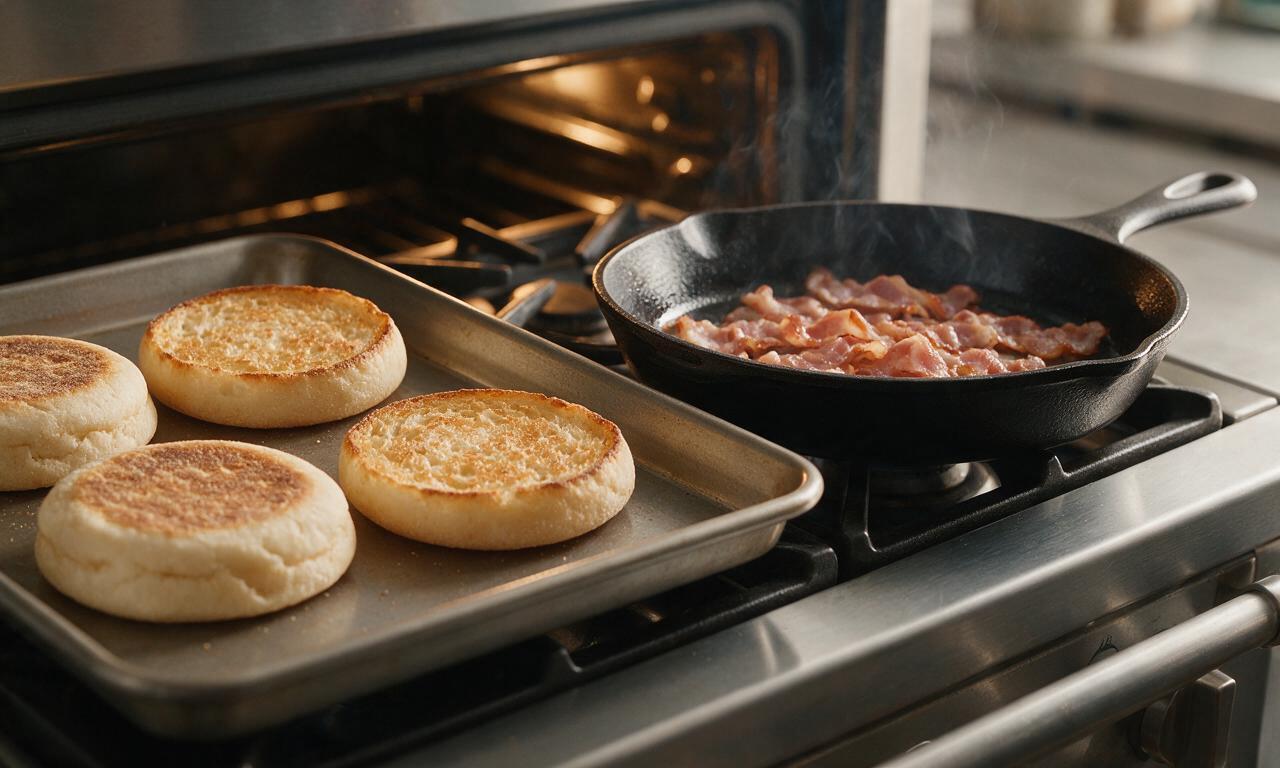
Preheat your oven to 95°C (200°F) to keep cooked components warm. Split the 4 English muffins, place them split-side up on a rimmed baking sheet, and toast for 5 minutes until lightly golden and crisp. While muffins toast, heat a large cast iron skillet over medium heat, add the 8 Canadian bacon slices, and cook 1 minute per side until lightly browned at the edges. Transfer toasted muffins and cooked bacon to the warm oven to hold while you prepare the remaining components.
Step 1
step1:
2

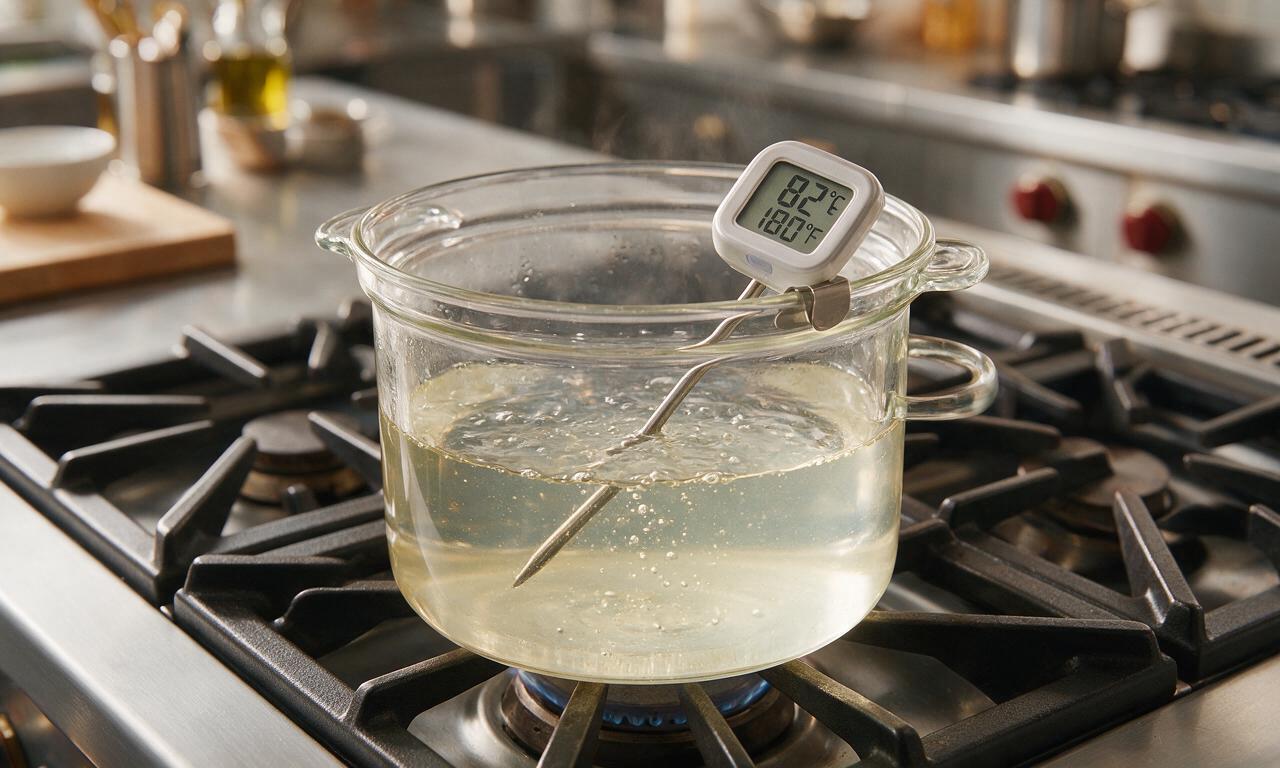
Fill a large, deep saucepan with 10cm (4 inches) of water, stir in the 2 tablespoons (30ml) white distilled vinegar and 1/2 teaspoon (2.5g) kosher salt, and bring to a gentle simmer over medium-low heat. Maintain a steady water temperature of 82°C (180°F), with tiny bubbles rising from the pan bottom—do not let the water reach a rolling boil, as this will break apart delicate poaching egg whites. Adjust heat as needed to hold this temperature throughout the poaching process.
Step 2
step2:
3

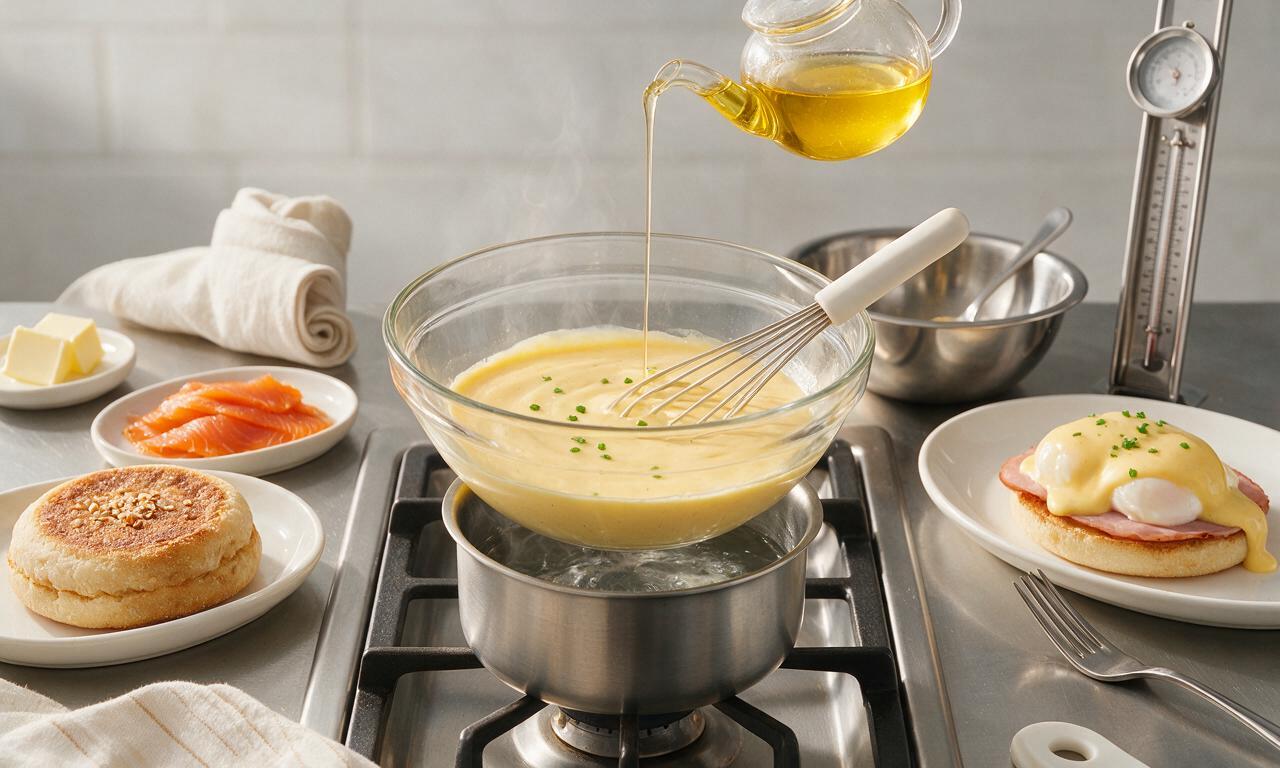
While poaching water heats, prepare the hollandaise sauce: Add the 3 large egg yolks, 2 tablespoons (30ml) fresh lemon juice, and remaining 1/2 teaspoon (2.5g) kosher salt to a heatproof glass bowl set over a small saucepan of gently simmering water (ensure the bowl bottom does not touch the water to avoid curdling eggs). Whisk continuously for 2-3 minutes until the yolk mixture thickens to a pale, creamy consistency that leaves a distinct trail when you lift the whisk. Very slowly drizzle in the 225g (1 cup) melted, warm unsalted butter, whisking constantly, until the sauce is smooth, thick, and fully emulsified. Stir in the 1/4 teaspoon (0.5g) cayenne pepper, then remove the bowl from heat and set it in a warm spot; do not cover the bowl, as trapped condensation will thin the sauce.
Step 3
step3:
4

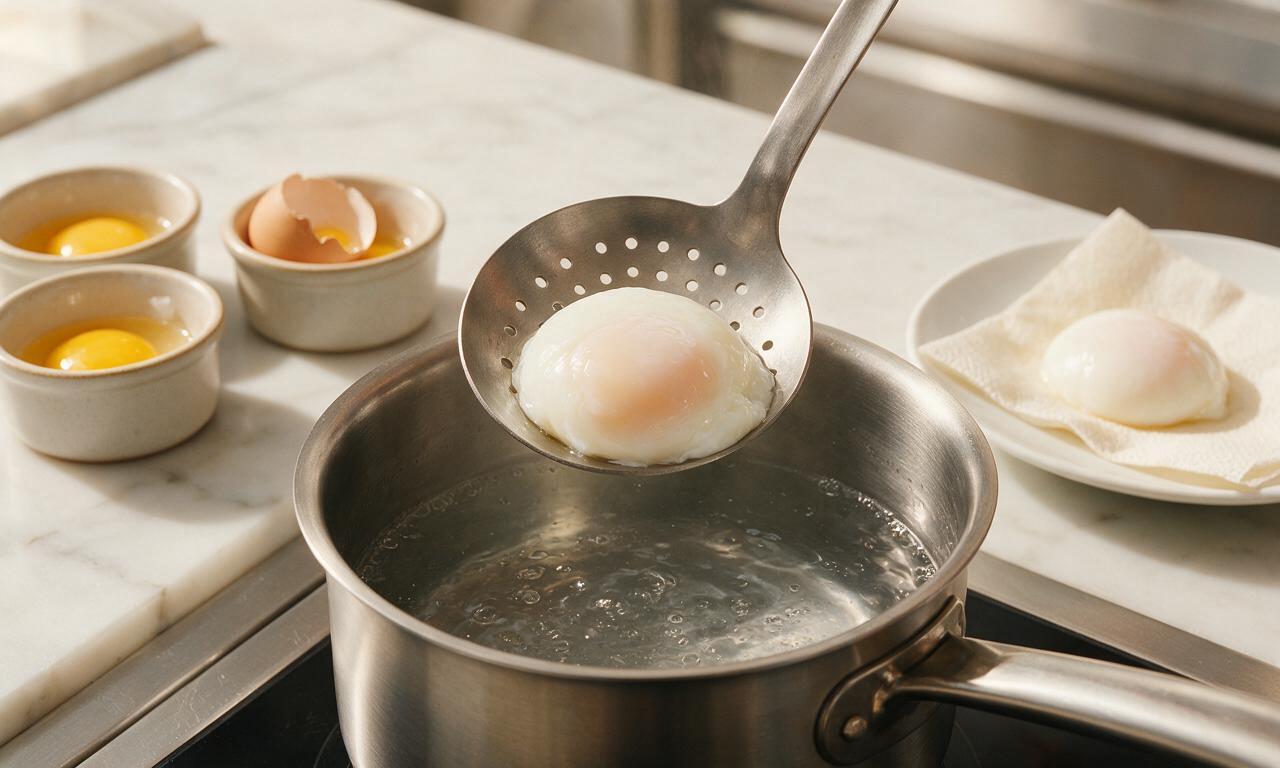
Crack each of the 8 cold large eggs into individual small ceramic ramekins (this prevents yolk breakage and helps eggs hold a neat shape). Stir the simmering poaching water in a wide circular motion to create a gentle vortex. Lower 4 eggs one at a time into the water, pouring each slowly close to the water surface. Cook for exactly 3 minutes for fully set whites and soft, runny golden yolks. Use a slotted spoon to lift each egg out, gently dabbing the bottom of the spoon on a paper towel to remove excess water, then transfer to a warm plate. Repeat the vortex and cooking process with the remaining 4 eggs, holding the first batch of poached eggs in the warm oven if needed.
Step 4
step4:
5

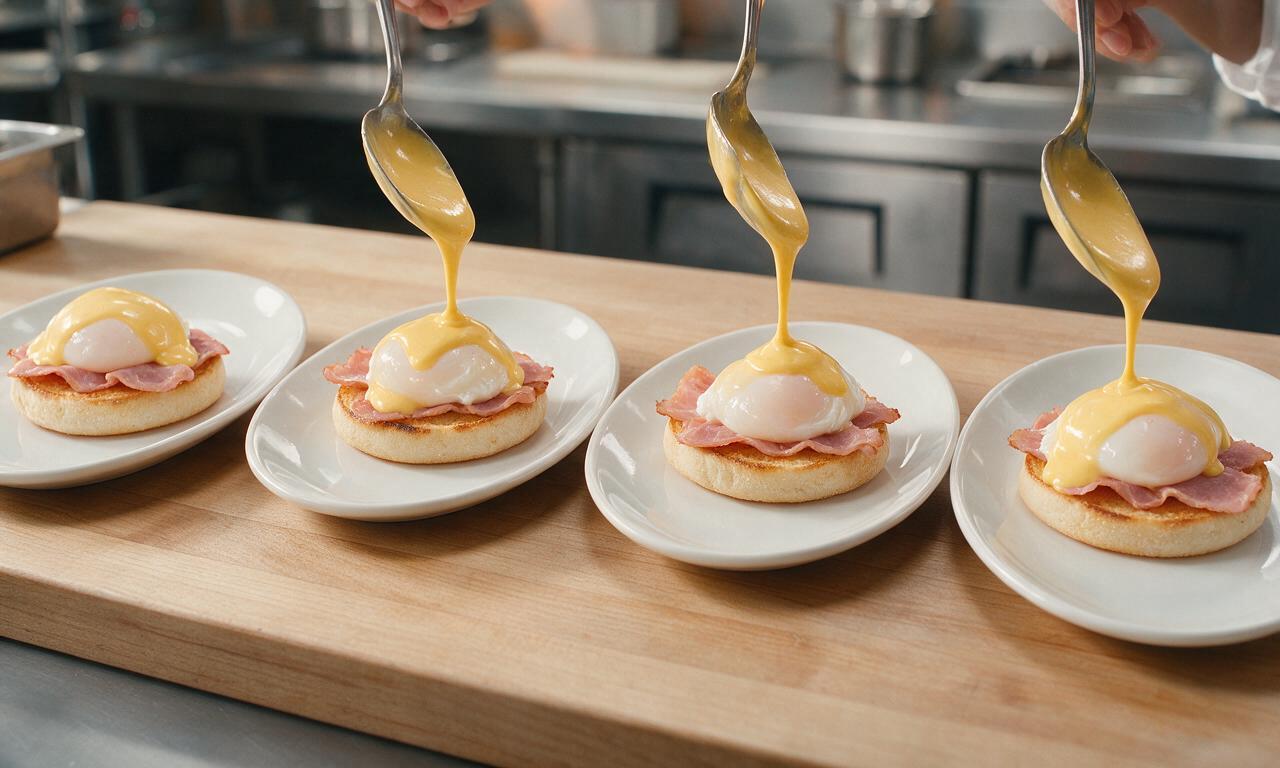
Remove the toasted English muffins and Canadian bacon from the warm oven. Place 2 toasted muffin halves on each of 4 serving plates, cut-side up. Top each muffin half with 1 slice of cooked Canadian bacon, followed by 1 drained poached egg, patting the top of each egg gently with a paper towel to remove any trapped excess water. Spoon 2 tablespoons of warm hollandaise sauce evenly over each poached egg, letting it drip slightly down the sides of the egg and muffin.
Step 5
step5:
6

Finish each plate with a light sprinkle of the 2 tablespoons (6g) finely chopped fresh chives, adding an extra tiny pinch of cayenne pepper for a subtle kick if desired. Serve immediately, as hollandaise sauce will break and poached eggs will continue to cook if left to sit for more than 2 minutes after assembly.

Step 6
step6:

Tips

1.Use cold eggs straight from the refrigerator for poaching: room-temperature eggs spread excessively in simmering water, creating thin, wispy white edges instead of neat, rounded poached eggs.
2.Add melted butter to hollandaise extremely slowly (1 teaspoon at a time at first) to avoid breaking the emulsion; if the sauce separates and turns greasy, whisk in 1 teaspoon of hot water to bring it back to a smooth consistency.
3.Hold poaching water at a gentle simmer (not a rolling boil) for the entire cooking process: violent, bubbling water will tear delicate egg whites and result in misshapen, unevenly cooked eggs with hard, overcooked yolks.

✨ You May Also Like

Breakfast
🍜 United States

Crisp-edged, fluffy lard griddle cakes are a nostalgic homestyle staple, with rich savoriness from rendered lard, perfect topped with maple syrup or savory gravy.

⏱️ 25 minuteBreakfast ★ 4.9
Breakfast
🍜 United States

Flaky, buttery homemade buttermilk biscuits smothered in creamy, peppery pork sausage gravy: a beloved, hearty Southern American comfort food classic.

⏱️ 35 minuteBreakfast ★ 5
Breakfast
🍜 United States

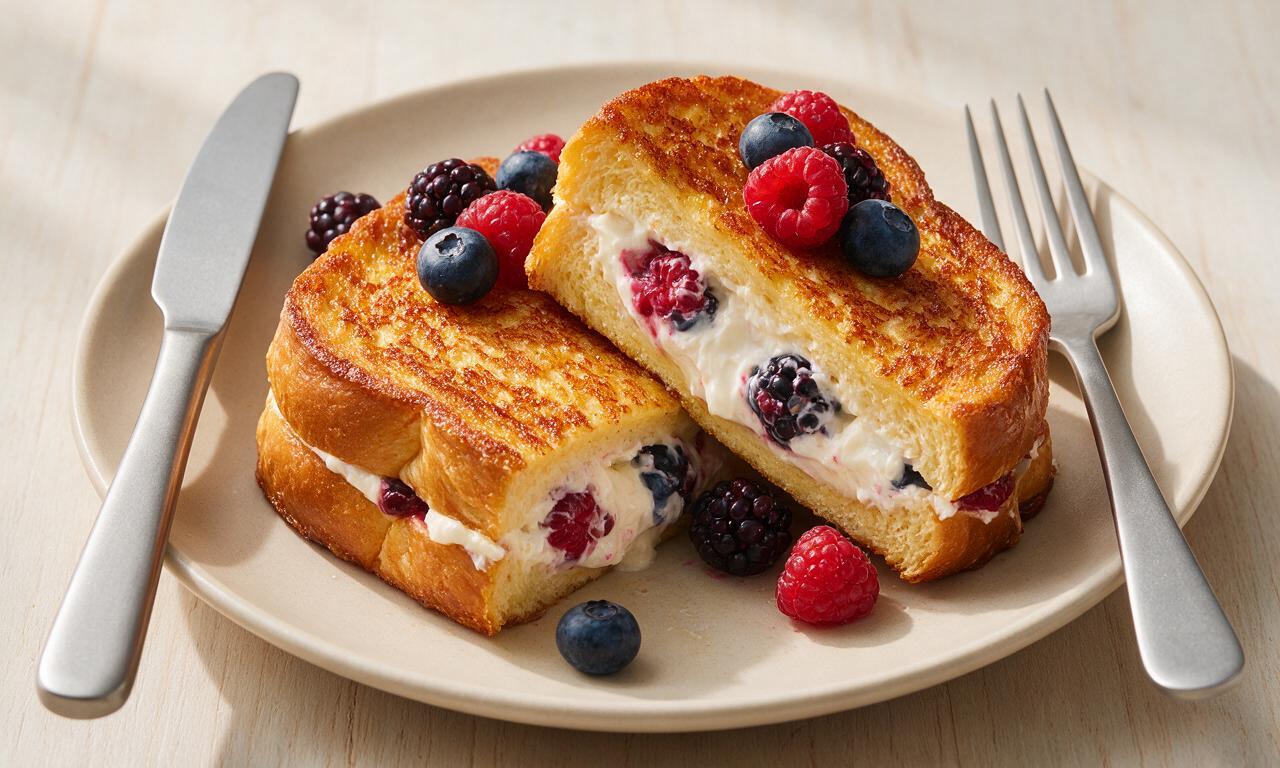
Golden, custardy brioche stuffed with sweet cream cheese and fresh berries, pan-fried to crisp perfection. An indulgent, cozy breakfast perfect for slow weekend mornings.

⏱️ 30 minuteBreakfast ★ 4.7
Breakfast
🍜 United States

Flaky, buttery Southern-style biscuits stuffed with savory salty country ham, a portable, satisfying classic perfect for casual on-the-go meals.

⏱️ 25 minuteBreakfast ★ 4.8
Breakfast
🍜 United States

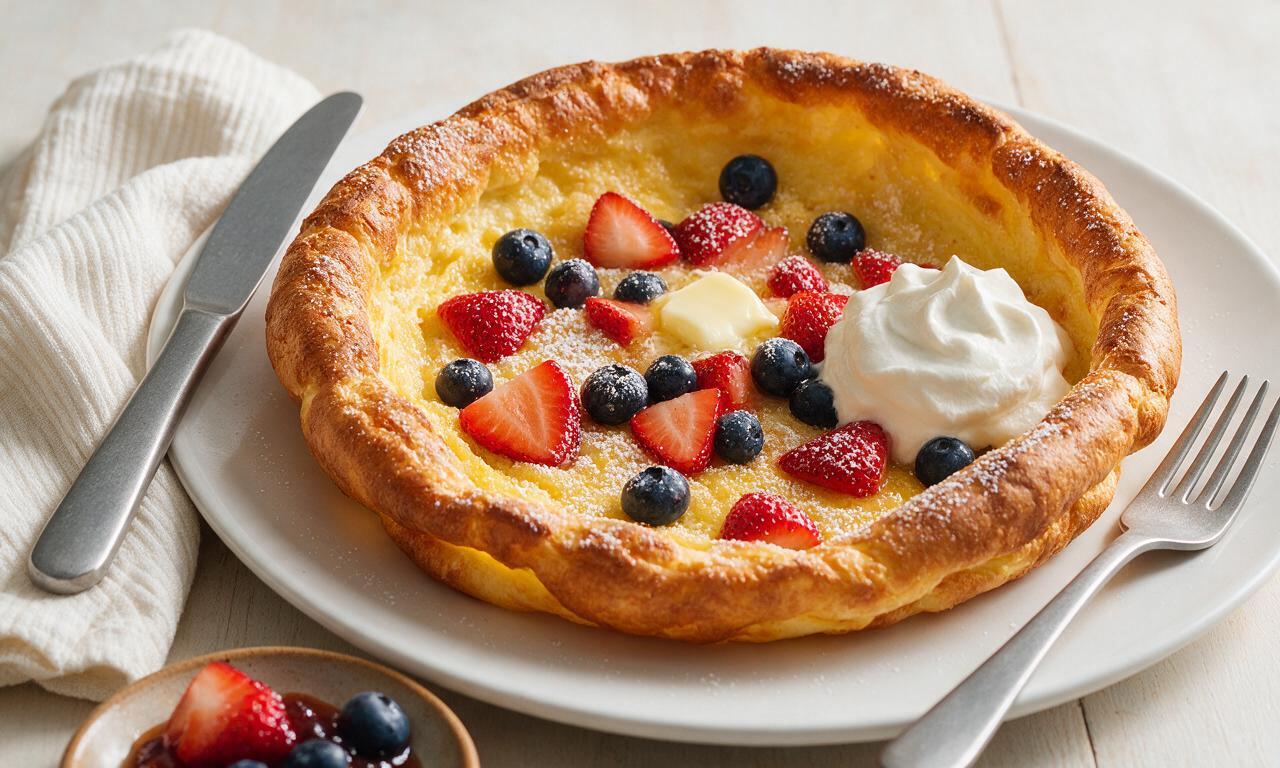
Iconic puffy baked pancake popularized in Seattle, with crisp golden edges and soft custardy center, served warm with classic sweet toppings.

⏱️ 35 minuteBreakfast ★ 4.6
Breakfast
🍜 United States

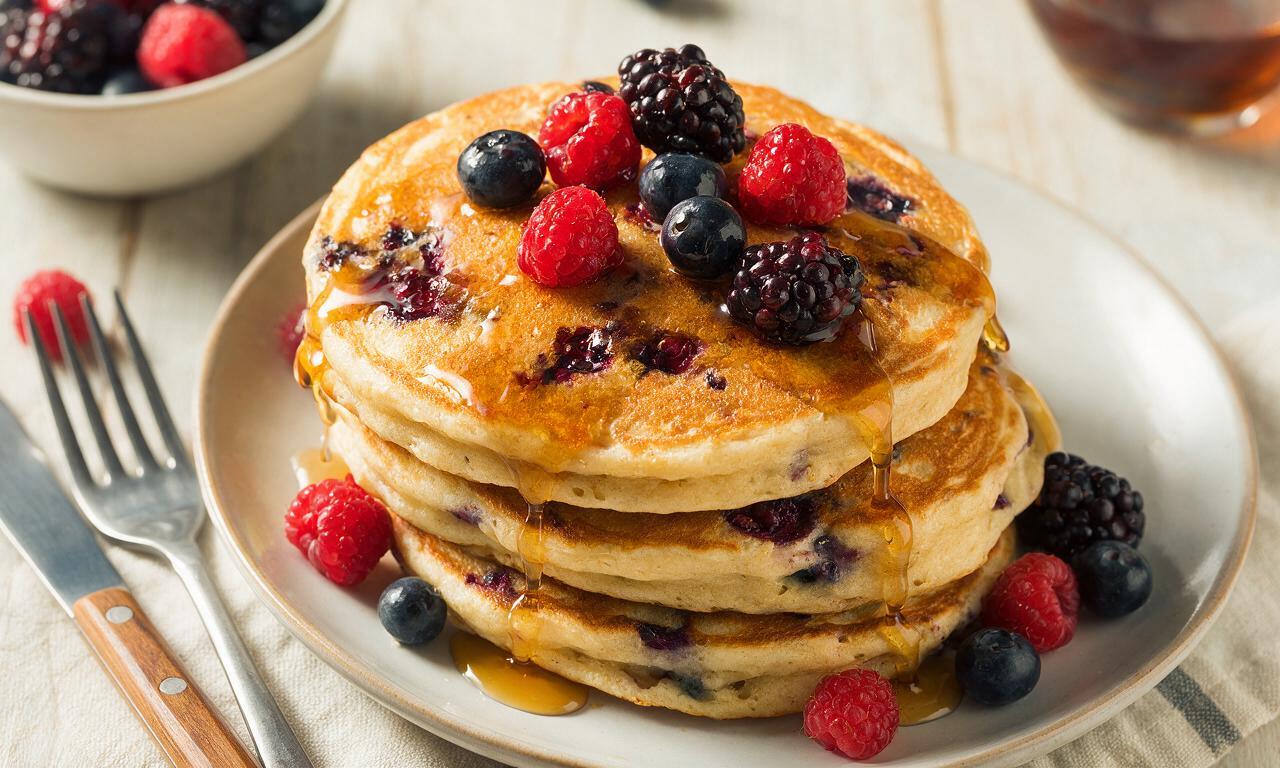
Fluffy, golden pancakes studded with juicy peak-summer mixed berries, drizzled with maple syrup for a bright, comforting, crowd-pleasing family breakfast.

⏱️ 25 minuteBreakfast ★ 4.8

Eggs Benedict:Frequently Asked Questions

1.How do I make perfectly runny poached eggs that don’t fall apart in the water?
Start with the freshest large eggs possible, as older eggs have thin, runny whites that spread easily. Bring 3 inches of water to a gentle, shivering simmer (not a rolling boil), add 1 teaspoon white vinegar, create a slow whirlpool, crack eggs into a small ramekin first then slide them in, cook 3 minutes, and lift out with a slotted spoon to drain on paper towels.
2.Can I make hollandaise sauce ahead of time, or does it have to be made right before serving?
Hollandaise tastes best fresh, but you can hold it for 1 to 2 hours if you store it in a pre-warmed thermos or insulated bowl set over warm (not hot) water held at 145°F. Never refrigerate it, as the melted unsalted butter will solidify and the egg yolk base will curdle when reheated; give it a gentle stir right before drizzling.
3.What’s the difference between Canadian bacon and regular bacon, and can I swap them?
Canadian bacon is lean, cured, fully cooked thick-cut pork loin with a mild, slightly smoky flavor, unlike fatty, streaky regular bacon that crisps up when cooked. You can absolutely swap it if you prefer—thick-cut ham, smoked salmon, or crispy regular bacon all work, just note you’ll stray from the classic balanced savory profile of the original dish.
4.Why does my hollandaise keep curdling or breaking when I make it?
Broken hollandaise almost always happens when you add melted unsalted butter too fast, or use too high heat that cooks the large egg yolks. Fix it by moving the sauce to a cool bowl, whisking in 1 teaspoon of ice-cold water one drop at a time until it smooths out; if that fails, start with a fresh egg yolk and slowly whisk in the broken sauce.
5.Do I have to use vinegar in poaching water, or is there an acceptable substitute?
Vinegar helps coagulate loose egg white quickly so it wraps tight around the yolk instead of forming wispy stray bits in the water. If you don’t have white vinegar, you can use fresh lemon juice as a swap, or skip it entirely if using super fresh eggs—just trim any stray white wisps off before plating.
6.How do I toast English muffins so they don’t get soggy under all the toppings?
Split English muffins by hand instead of cutting them with a knife to preserve their nooks and crannies that catch sauce, then toast them until deep golden and crisp on the cut side, not just lightly warmed. A thin spread of softened butter on the toasted surface creates a moisture barrier that keeps egg yolk and hollandaise from making the base soggy.
7.Can I use pre-separated egg yolks from a carton to make hollandaise?
For the silkiest, richest hollandaise, I always recommend using fresh separated large egg yolks straight from shell eggs. Carton egg yolks are often high-heat pasteurized, which makes them thinner and leads to a sauce that won’t emulsify as well; they also have a slightly flat, muted flavor that stands out in such a simple, delicate sauce.
8.How do I keep poached eggs warm while I prep the rest of the dish components?
Once you pull poached eggs from the simmering water, set them in a bowl of warm (120°F, not hot) tap water for up to 30 minutes while you toast English muffins, warm Canadian bacon, and finish hollandaise. Pat them dry gently with a paper towel before plating so excess water doesn’t thin out your sauce or make the muffin soggy.
9.How do I get hollandaise to the perfect thickness without it turning gloopy?
Start with room-temperature large egg yolks, whisk them constantly over a double boiler (make sure boiling water doesn’t touch the bowl) until pale and slightly thickened, then drizzle in melted unsalted butter very slowly at first. Finished sauce should coat the back of a spoon but pour easily; thin with lemon juice or warm water if it gets too tight.
10.Do I need to cook Canadian bacon before adding it to my Eggs Benedict?
Even though Canadian bacon is fully cured and pre-cooked when you buy it, you should always warm it for 1 to 2 minutes per side in a dry skillet over medium heat before assembling. This brings out its smoky, savory flavor, adds a slight crisp edge, and ensures no cold components throw off the warm, indulgent vibe of the finished dish.
11.Why do my poached eggs have solid, hard yolks instead of the classic runny center?
This almost always comes down to overheated water or overcooking. If your water is at a rolling boil, the rough agitation will break eggs apart and the high heat will cook yolks solid fast. Stick to a gentle simmer, set a timer for exactly 3 minutes for large eggs, and transfer to a quick ice bath if you aren’t serving right away to stop cooking.
12.Can I adapt this recipe to be dairy-free for guests with dietary restrictions?
You can absolutely adapt it! Swap the unsalted butter in the hollandaise for a high-fat, neutral dairy-free melted butter alternative (skip watery low-fat spreads), and use dairy-free spread to butter your toasted English muffins. The hollandaise may be slightly less rich, so add an extra pinch of salt and squeeze of lemon to amp up flavor.
13.What’s the correct order to assemble Eggs Benedict for the most balanced bites?
Start with a crisp, buttered toasted English muffin half, top it with a warmed slice of Canadian bacon, set your drained, dry poached egg right on top of the bacon, then spoon 2 to 3 tablespoons of smooth hollandaise over the egg so it drips slightly down the sides. A light sprinkle of paprika or chopped chives is a classic, simple optional finish.
14.Can I poach eggs ahead of time when making Eggs Benedict for a big brunch crowd?
Absolutely! Poach your large eggs 1 to 2 days ahead, cooking them for 2.5 minutes so they’re slightly underdone, then plunge them into an ice water bath to stop cooking and store them in cold water in the fridge. When ready to serve, drop them into simmering water for 30 to 45 seconds to reheat, pat dry, and plate for perfect runny yolks.
15.My hollandaise always tastes too heavy and rich—what am I doing wrong?
Classic hollandaise should be bright, not cloyingly fatty! Most home cooks skip the acid that cuts the richness of melted unsalted butter and egg yolks. Stir in 1 to 2 teaspoons of fresh lemon juice and a tiny pinch of cayenne or fine sea salt after emulsifying, tasting as you go, to balance the flavor so the sauce feels light, not heavy.

Comments (10)

3 days ago

Made this for our Sunday potluck brunch with neighbors and everyone was begging for the recipe! I was so nervous about the hollandaise because I’ve messed it up so many times before, but the step-by-step here made it totally foolproof. Game changer for weekend meals.

2 days ago

Wait did you use unsalted or salted butter for the hollandaise? I’m making this tomorrow for Mother’s Day and don’t wanna mess it up!

2 days ago

So glad it was a hit at your potluck! @Jake T. we recommend unsalted butter so you can adjust the salt level to taste — just make sure you melt it slow and don’t let it get too bubbly hot before adding to the eggs!

1 week ago

Took me a little longer than 35 minutes because I prepped homemade English muffins too, but man was it worth it. The poached egg trick with the vinegar worked perfectly, every egg had that perfect runny yolk. My teenage son said it’s better than the diner version we get on Saturdays.

yesterday

Okay I’ve tried so many eggs benedict recipes and this one is by far the closest to what I had on my trip to NYC last year! I added a tiny pinch of cayenne to the hollandaise for a little kick, chef’s kiss.

yesterday

Love the cayenne addition! That’s such a great way to cut through the richness of the hollandaise, we’ll have to add that as a pro tip next time we update the recipe!

30 minutes ago

Help! I tried making this last night for dinner and my hollandaise broke halfway through mixing 😭 Did I add the butter too fast? It tasted fine but looked lumpy and not smooth like the photos.

15 minutes ago

I had that happen the first time too! Take it off the heat immediately, add a single ice cube and whisk like crazy — it’ll come right back together, I promise!

10 minutes ago

Oh no, sorry the hollandaise gave you trouble! Adding the butter too quickly is usually the culprit — try streaming it in super slow, one tablespoon at a time, while whisking constantly over very low heat. @HomeCookHero’s ice cube trick is genius too, works every time!

2 weeks ago

I was skeptical eggs benedict could work for meal prep but I prepped the hollandaise and poached eggs ahead for busy work mornings, and it reheats shockingly well if you do it low and slow in the microwave. Saved me so much money on takeout breakfast this week!

5 days ago

OMG added crispy avocado slices and a drizzle of hot honey on top and I swear this is now my go-to weekend breakfast. My roommate walked in, took one bite, and demanded I make it for him every Sunday from now on lmao. SO good.

3 days ago

Oh the hot honey addition sounds insane! I’m making this for my girlfriend’s graduation brunch this weekend, I’m definitely stealing that idea.

2 days ago

Swapped the regular English muffins for gluten free ones and it worked perfectly! The hollandaise is naturally gluten free so this was such an easy win for my GF brunch with friends last weekend. My kids loved it too, even the non-GF ones didn’t notice the swap!

1 day ago

That’s such a great swap tip! We’re so glad it worked out for your friend group — we’ll make sure to note gluten free English muffins as an easy substitution on the recipe card soon!

2 hours ago

Wait is it weird that I made this for dinner instead of brunch? I had a random craving at 7pm and it hit every single spot. The Canadian bacon was perfectly salty, the lemon in the hollandaise was bright, not overpowering. 10/10 no notes.

1 hour ago

Not weird at all! I do breakfast for dinner at least once a week, eggs benedict is my go-to when I’m feeling fancy on a random weeknight lmao

45 minutes ago

Same! I served mine with a side of extra crispy hash browns and a cold mimosa (don’t judge, it was a rough work day) and it was better than any restaurant meal I’ve had lately.

just now

Full transparency: I burned the first batch of Canadian bacon and overpoached two eggs, but even with my mess ups this recipe still turned out way better than I expected for a medium difficulty dish. Can’t wait to practice more and nail it next time!

5 minutes ago

I’ve been making eggs benedict for over 40 years and I have to say, this recipe is right up there with the classic version I learned in culinary school back in the 80s. The tip to whisk the egg yolks off direct heat is exactly what keeps new cooks from scrambling them, great call.

2 minutes ago

Wow, that means so much coming from someone with so much experience making this classic! We’re so glad the tips hold up to the tried and true culinary school method, that’s exactly what we aim for with every recipe.