
ESB
intro
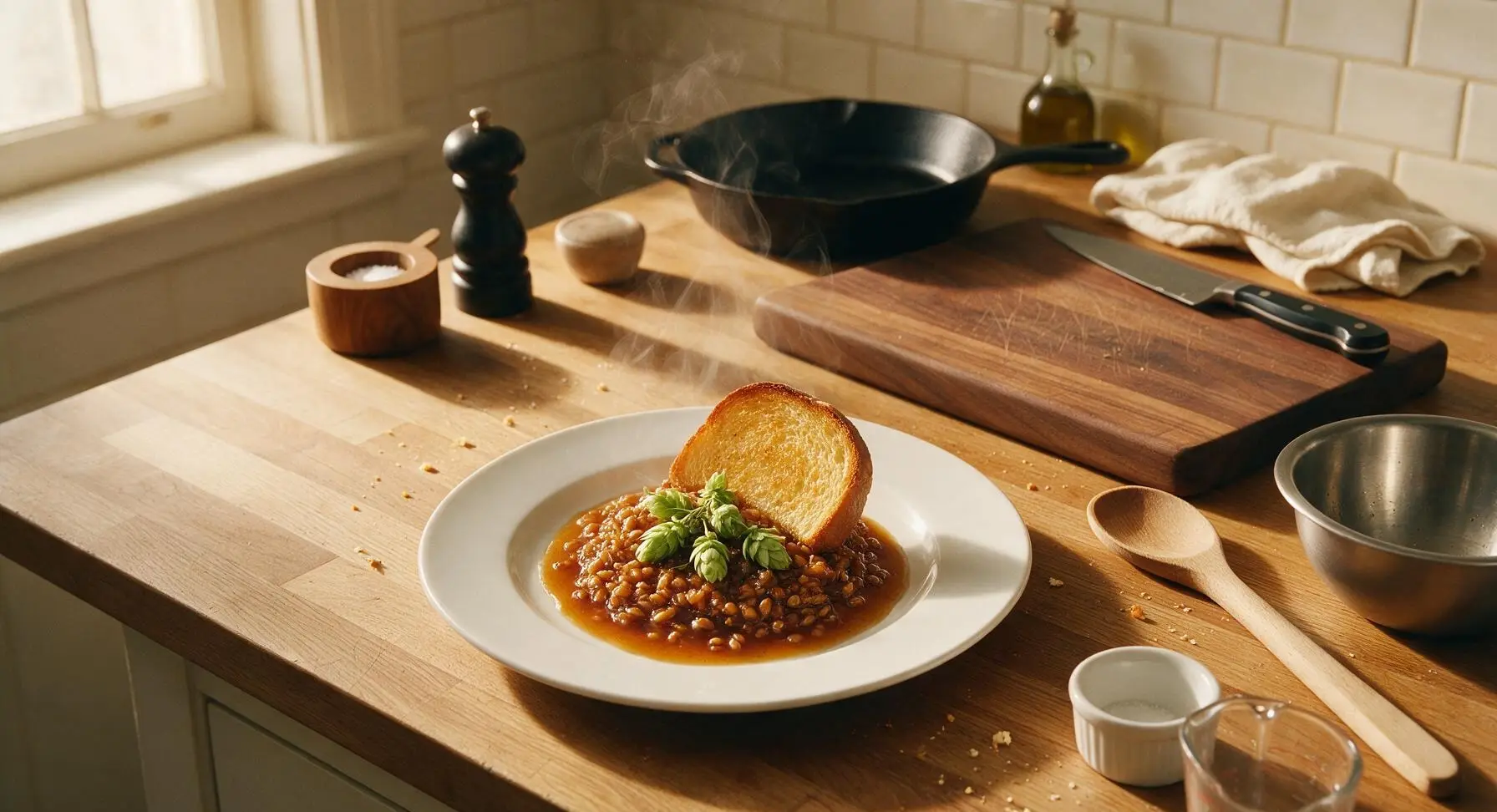
Rich, balanced traditional English Extra Special Bitter (ESB) with toasty malt, subtle floral hop character, and a smooth dry finish, perfect for sipping with hearty pub snacks.
Ingredients
Steps
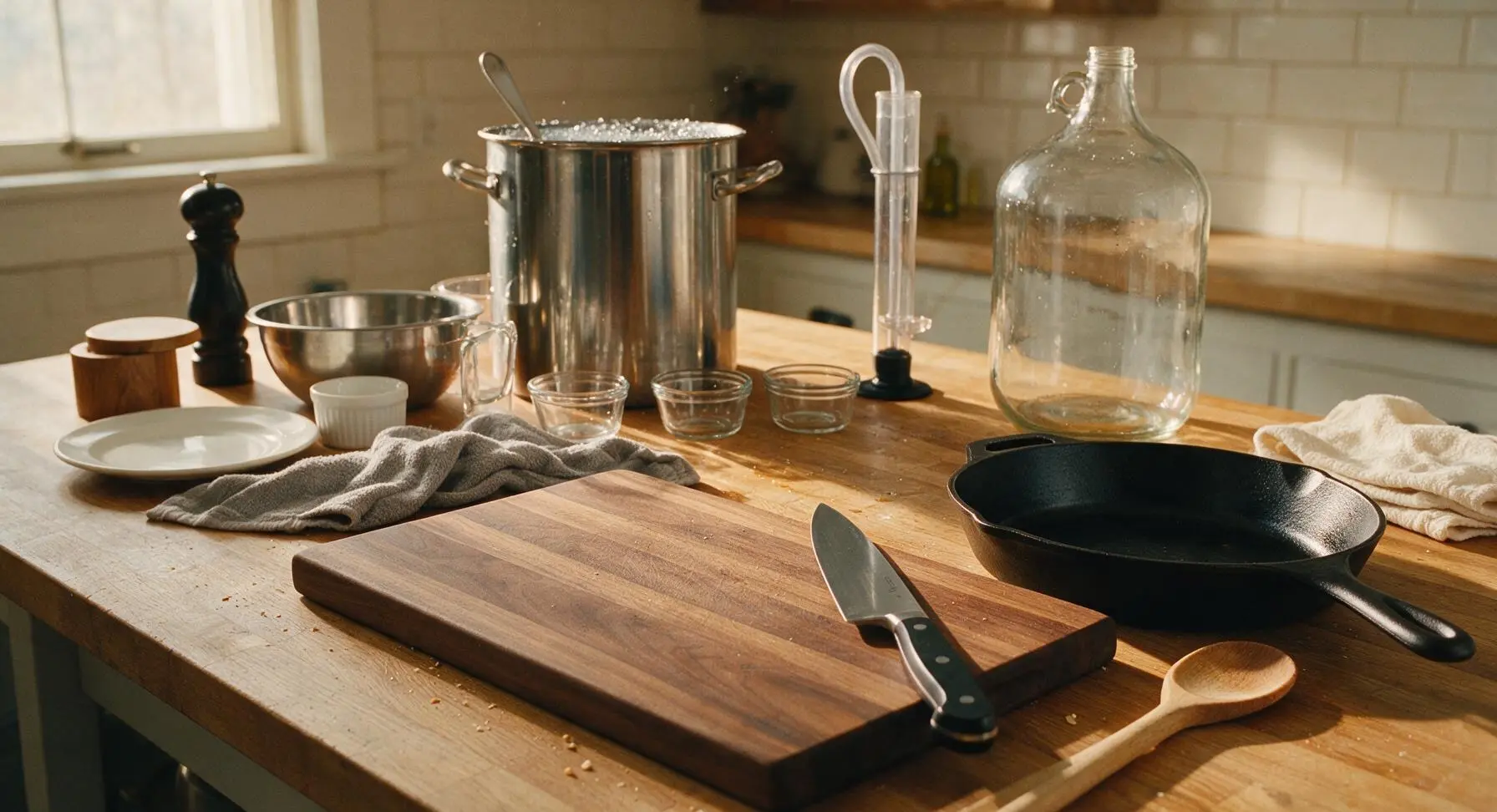
Sanitize Brewing Equipment
Wash the brew kettle, stirring spoon, auto-siphon, and glass carboy with warm unscented soapy water, then rinse thoroughly to remove all soap residue. Spray all food-contact surfaces with no-rinse brewing sanitizer, and let air dry for 5 minutes. Even trace amounts of soap or stray bacteria can create off-flavors, so inspect every surface for residue before proceeding.
Heat Mash Water
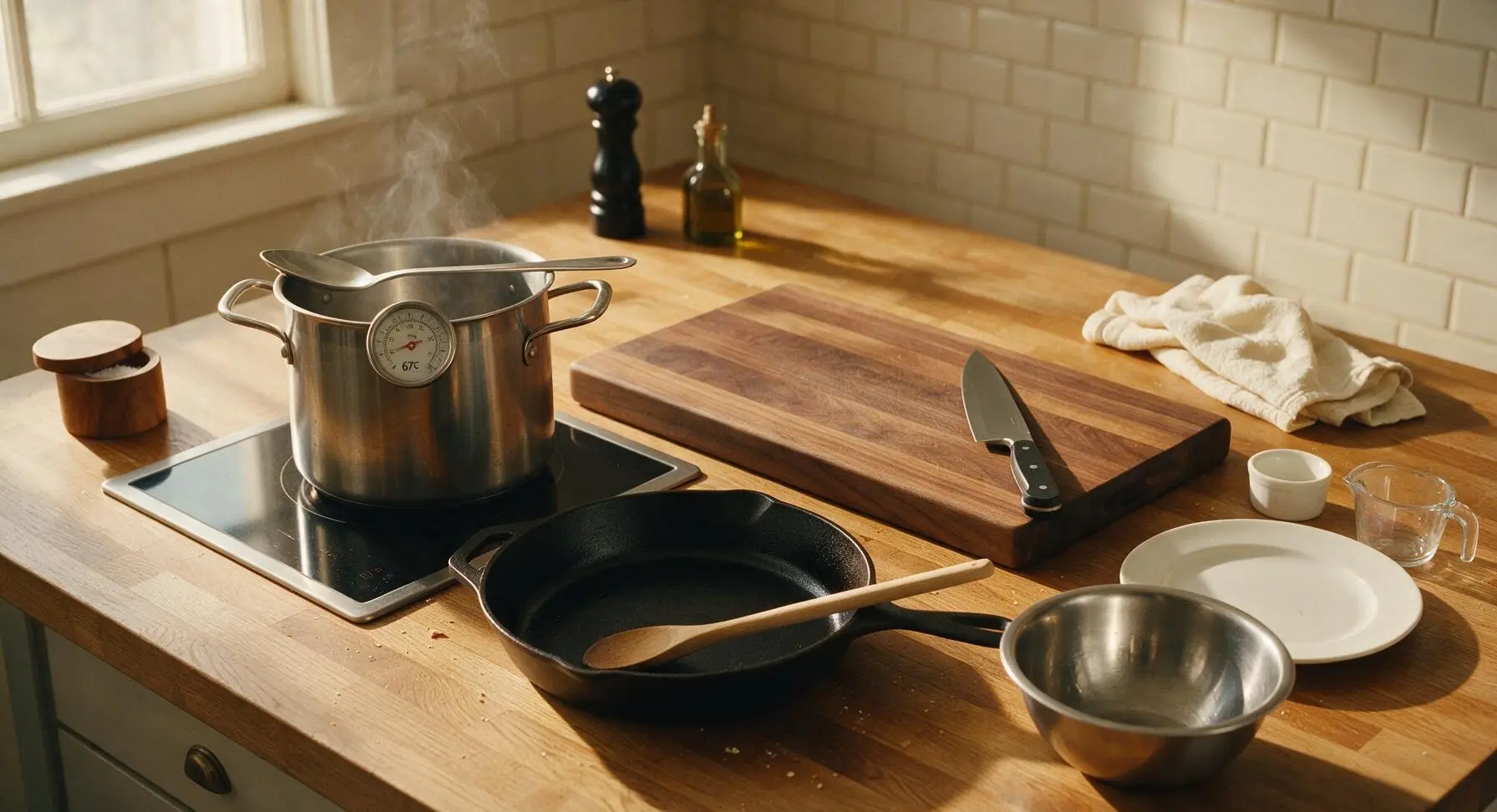
Pour 15L of filtered water into the sanitized brew kettle set on the left induction cooktop, affix the dial thermometer to the kettle exterior, and heat over medium heat until the water reaches a steady 67C (153F). Adjust heat as needed to hold this temperature for 5 minutes, avoiding spikes above 70C which will extract harsh grain compounds.
Mash the Grains
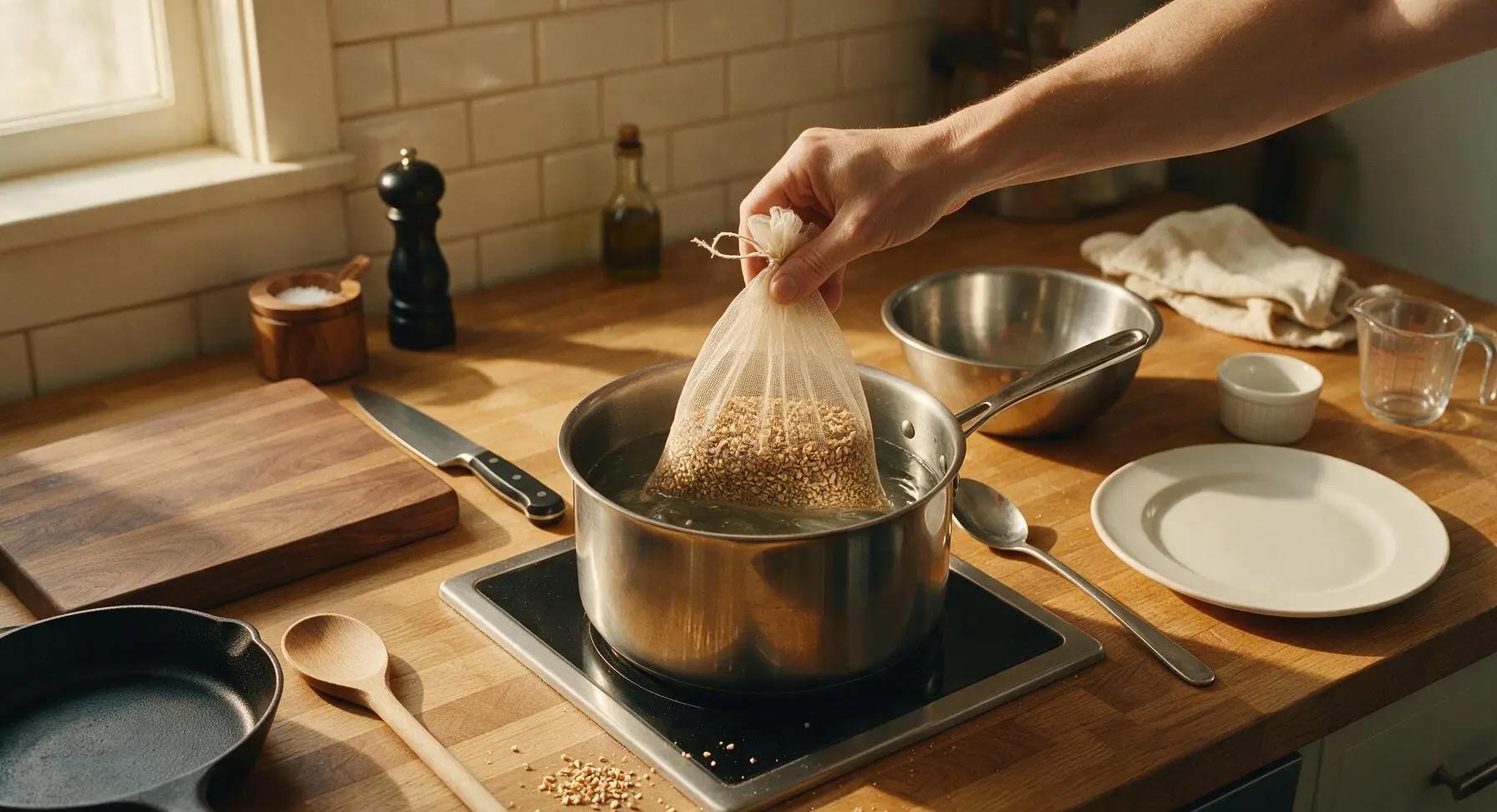
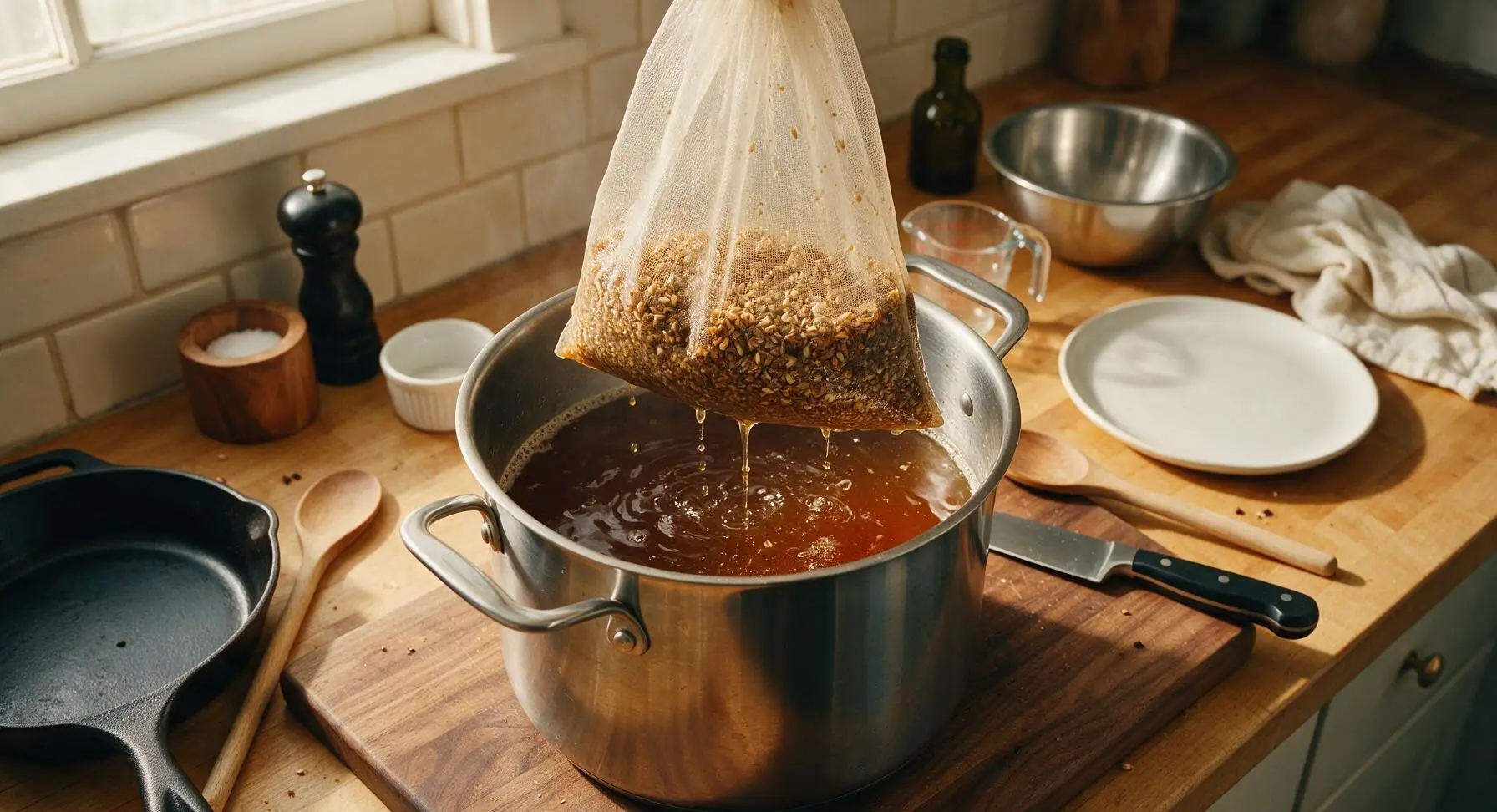
Combine all milled Maris Otter, crystal malt, and chocolate malt in the fine mesh grain bag, tie the top loosely with kitchen twine, and lower the bag fully into the heated water. Stir gently with the long stainless steel spoon to break up any dry clumps of grain, then cover the kettle and hold temperature at 65-68C (149-154F) for 60 minutes. The liquid (now called wort) will deepen to a rich amber color as grain sugars extract.
Drain Grains, Boil Wort
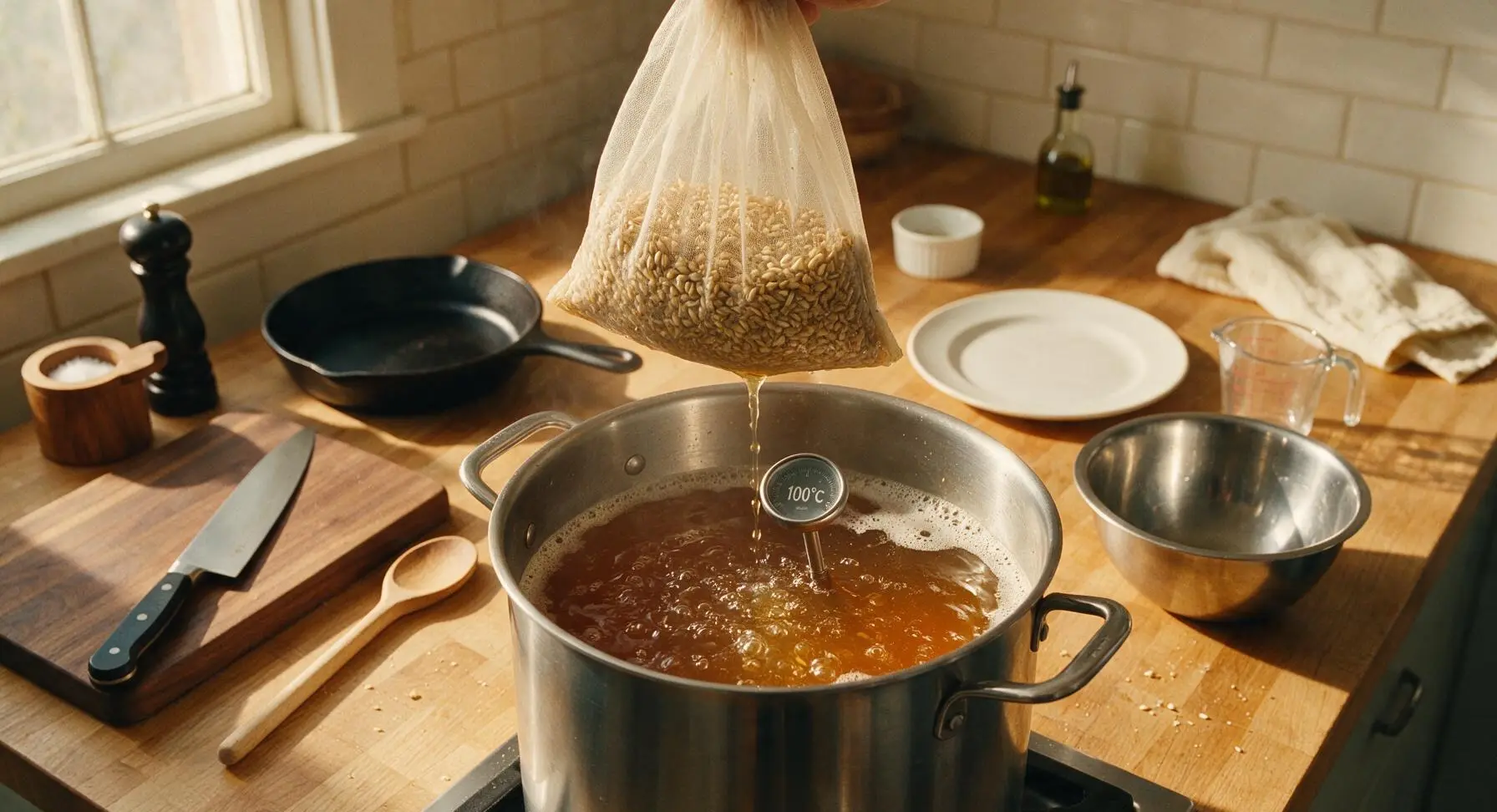
Lift the grain bag fully out of the wort, suspend it over the kettle opening, and let it drain naturally for 5 minutes. Do not squeeze the bag, as this presses harsh tannins from the grain husks into the wort. Discard spent grain (or reserve for baking), then turn heat to high and bring the wort to a gentle rolling boil (100C/212F). Watch closely as foam rises to avoid messy boil-over onto the cooktop.
Add Hops per Schedule
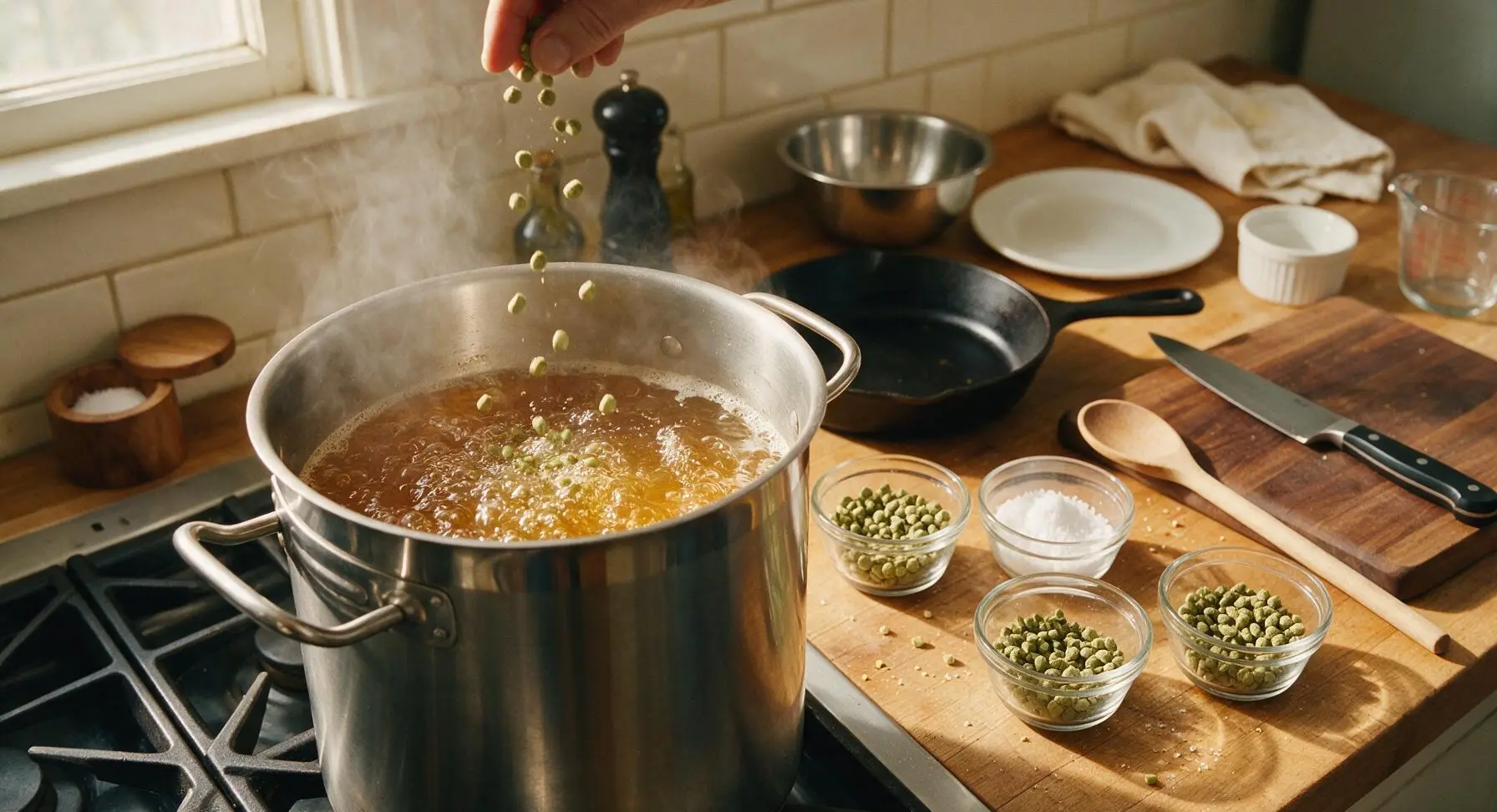
Once the wort holds a steady rolling boil, set a 60-minute timer. Add 28g of East Kent Goldings hops immediately (bittering addition), add 7g gypsum and 14g Fuggles hops when 15 minutes remain on the timer (flavor addition), and add the final 14g of East Kent Goldings the second you turn off the heat (aroma addition). Stir gently after each addition to fully submerge hop pellets. This schedule creates ESB’s signature balanced bitterness, earthy flavor, and subtle floral aroma.
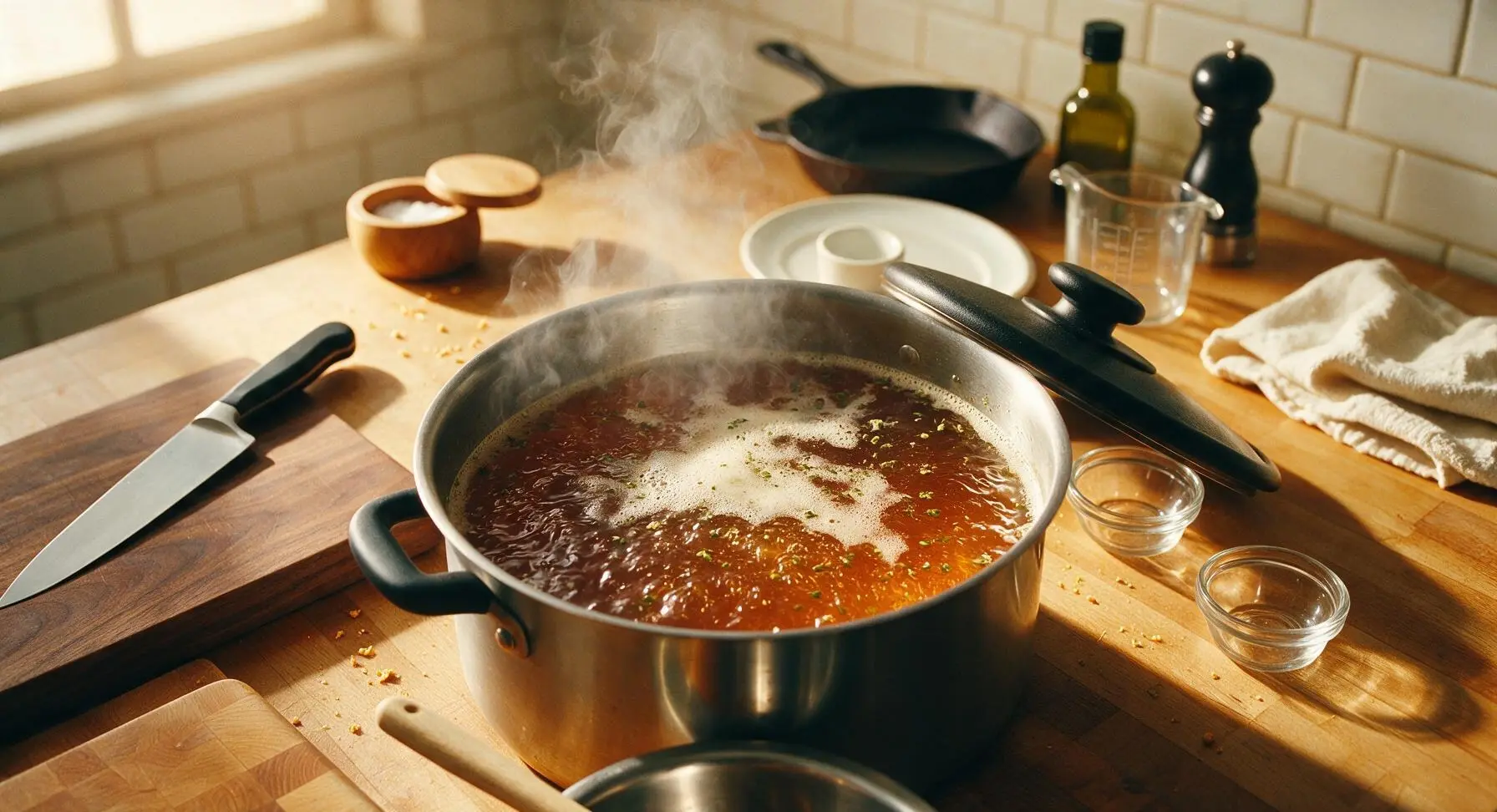
Cool Wort, Pitch Yeast
Cover the kettle immediately after the final hop addition, and cool the wort as quickly as possible to 20C (68F) using an ice bath (set the kettle in a sink of ice water off-frame, this takes ~20 minutes). Once cooled, siphon the wort into the sanitized glass carboy, top up to 19L total volume with cold filtered water if needed, then sprinkle the full 11g packet of English ale yeast evenly across the wort surface. Seal the carboy with a sanitized airlock half-filled with sanitizer solution.
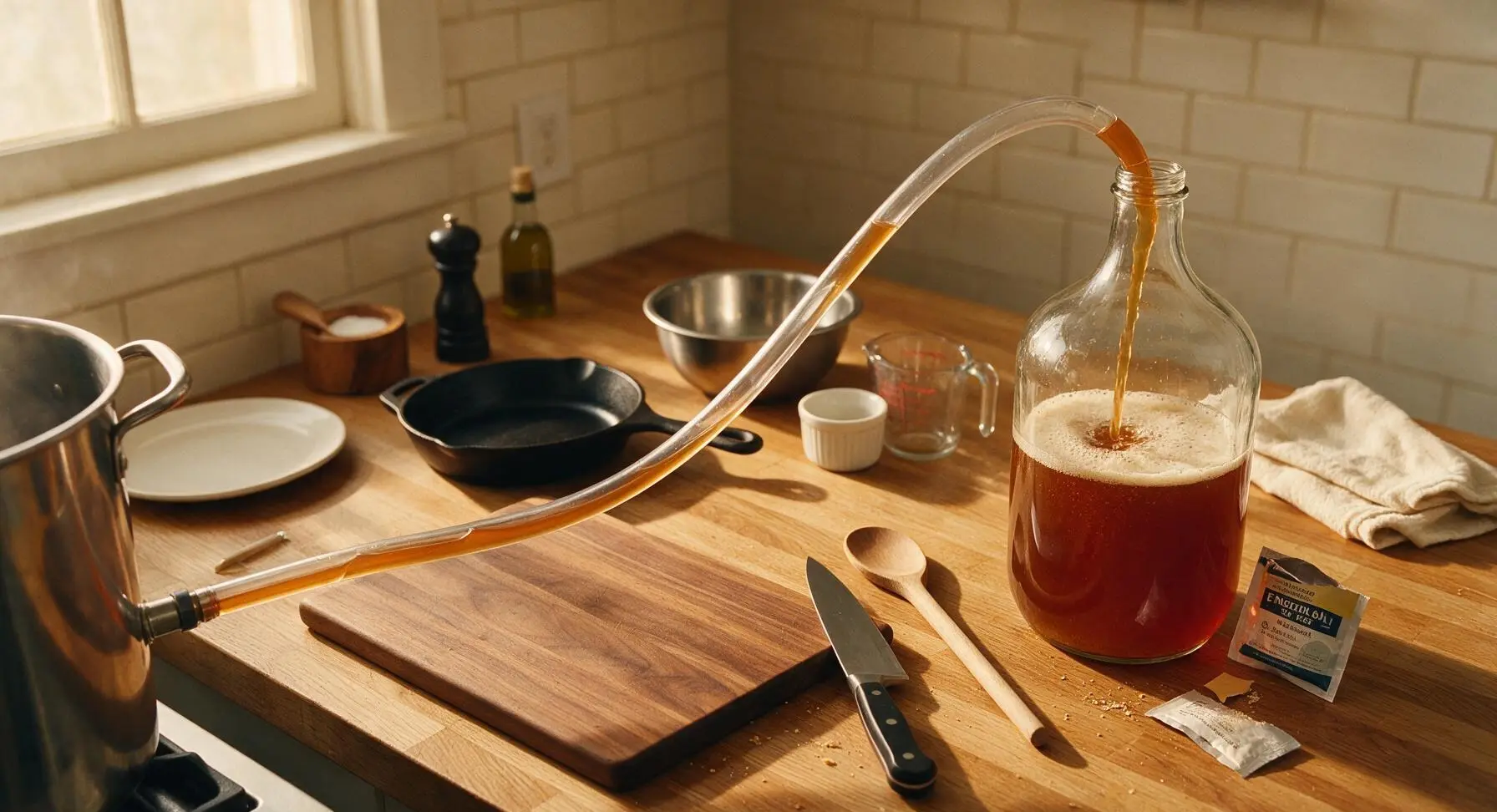
Ferment to Completion
Leave the sealed carboy in a dark, temperature-stable spot held at 18-20C (65-68F) for 14 days total. For the first 7 days, active fermentation will produce visible bubbles in the airlock (2-3 bubbles per second at peak). When bubbling slows to less than 1 bubble every 30 seconds and a 1cm thick layer of pale yeast sediment settles at the carboy bottom, the beer is fully fermented. Let it condition for the remaining 7 days to mellow harsh flavors and clarify.
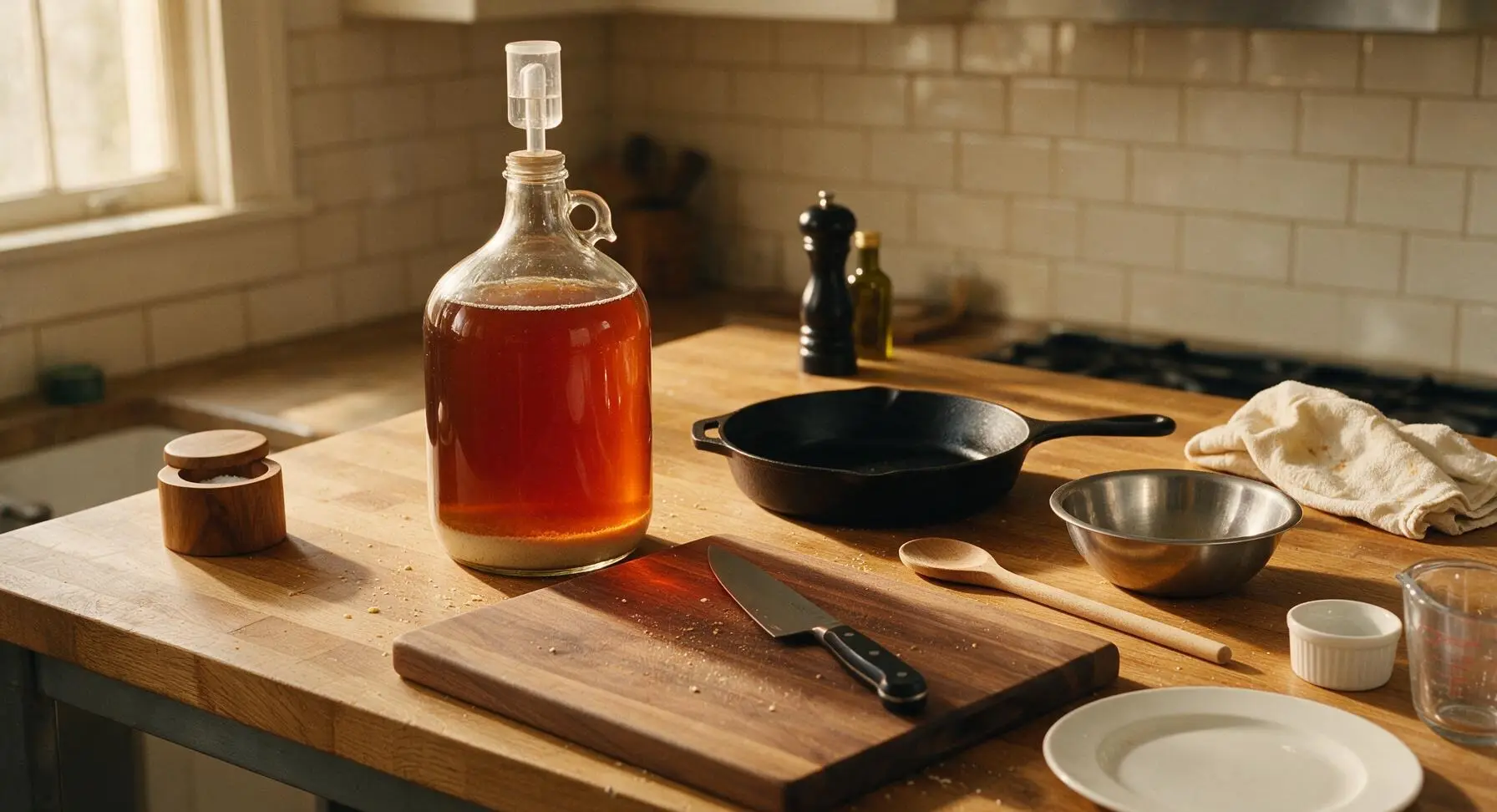
Pour and Enjoy
Chill the conditioned ESB to 10-12C (50-54F, traditional cask ale serving temperature—avoid icing it cold, as this mutes malt and hop flavors). Pour steadily down the side of a tilted nonic pint glass, straightening the glass as you pour to build a 2cm thick, creamy off-white head. Serve immediately.
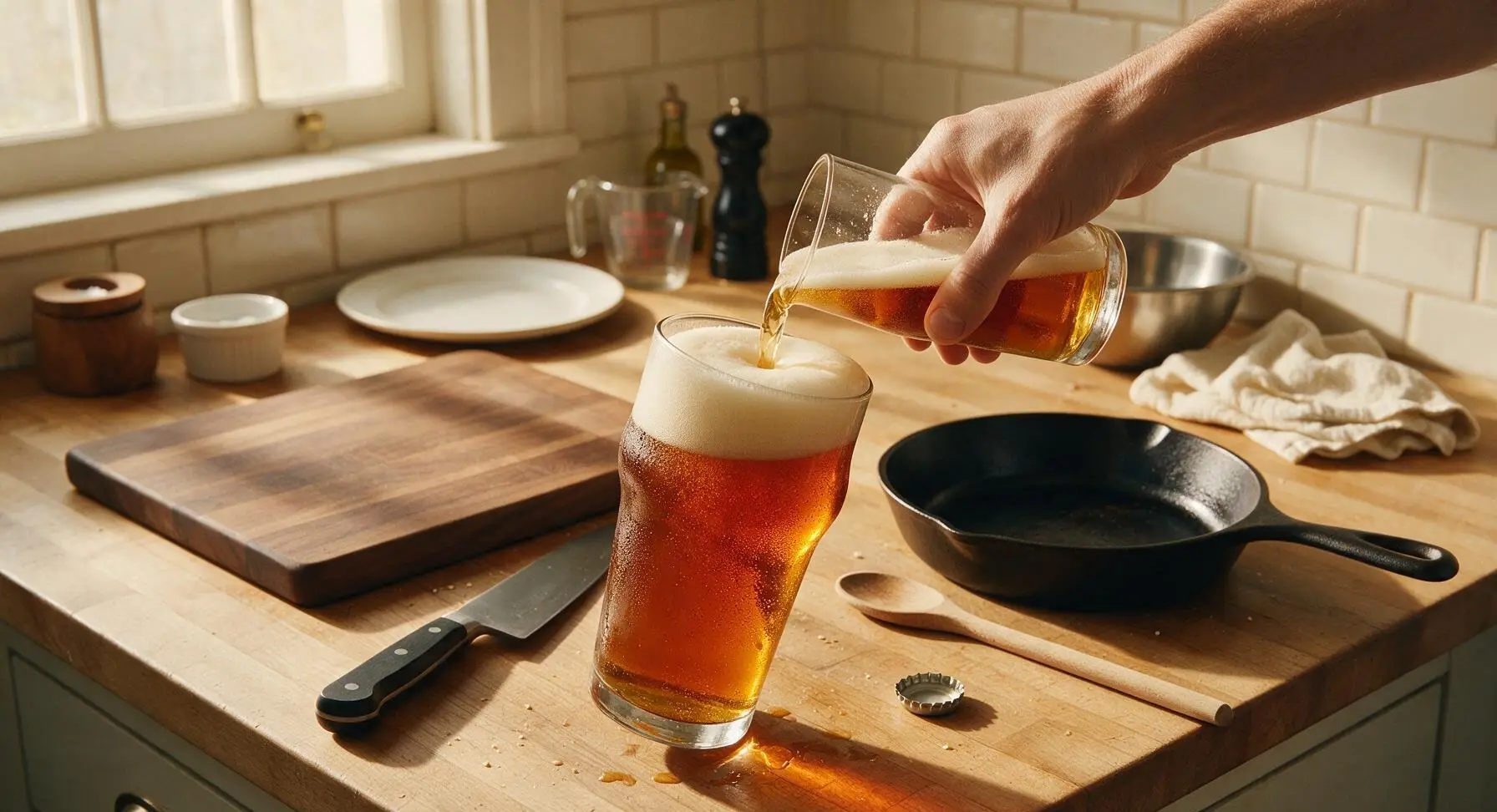
Tips
2.Skip ice-cold serving temperatures: ESB is designed to be served at 10-12C (50-54F), slightly cooler than room temperature. Colder temperatures mute the rich toffee, biscuit malt notes and delicate floral hop aroma, leaving the beer tasting thin and overly bitter.
3.Cool wort as rapidly as possible after boiling: quick cooling (to 20C in 20 minutes or less via ice bath) prevents formation of dimethyl sulfide (DMS), a compound that creates off-flavors reminiscent of canned corn, and reduces risk of bacterial contamination before yeast is added.






OMG, this ESB came out so much better than the kit I bought last month! Brought a growler to our neighborhood potluck last weekend and everyone was begging for the recipe. That balanced malt and hop kick is *chef's kiss*, no weird bitter aftertaste like my last attempt. My only note is I bumped the East Kent Goldings just a tiny bit because I love that earthy note, totally worth it.
Medium difficulty is no joke, y'all — don't skip the temperature checks during the mash! I messed up my first batch by letting it creep 10 degrees too high and it came out a little too thin, but my second go-round following the steps exactly was SO good. Perfect amount of caramel sweetness, exactly what I want from a traditional ESB.
Game changer! I’m relatively new to homebrewing and was super intimidated to try anything outside of basic wheat beers, but this recipe was laid out so clearly. Made it for my husband’s birthday cookout and he said it tasted just like the ESBs he drank on our trip to London a few years ago. Absolute win!
Wait, has anyone tried splitting this into smaller batches to test different dry hop additions? I’ve got a couple friends coming over for a tasting night next month and thought it’d be fun to do a side-by-side, but didn’t want to mess up the base recipe.
Cook time is spot on at 2.5 hours, don’t rush the boil! I tried to cut corners last time I brewed an ESB and ended up with DMS that made it taste like canned corn, no joke. Followed this timeline to the letter and zero off flavors, crystal clear, perfect amber color.
My whole extended family loved this at our annual Labor Day cookout! I was worried it would be too bitter for the folks who usually drink light beer, but the smooth malt balance won everyone over. Even my cousin who swears he ‘hates craft beer’ had three pints. Will absolutely be adding this to my regular brew rotation.
Quick question — I don’t have a dedicated mash tun right now, can I get away with using a large stock pot and a thermometer for the mash step? I’m trying to not drop a ton of cash on equipment before I know I love brewing darker, maltier beers.
This is hands down the best ESB recipe I’ve tried online! The ratio of crystal malt to pale malt is perfect, not too sweet, not too bready, just that classic British pub flavor. We brewed a 5 gallon batch last month and it’s already almost gone, my roommates keep stealing bottles out of the kegerator.
Paired this with my smoked brisket last weekend and holy cow, what a match made in heaven. The slight bitterness cuts through the fatty brisket perfectly, and the caramel notes complement the smoke so well. Already planning a double batch for our fall bonfire party next month.
How long do you all usually let this condition in the bottle before it’s ready to drink? I bottled mine last Saturday and the suspense is killing me, I keep sneaking sips that are definitely still flat lol.
Medium difficulty is fair — I’ve been brewing for 3 years and still had to pay close attention during the sparge step, but the end result is so worth it. My only tiny complaint is I wish the recipe listed water profile adjustments, my tap water is pretty hard and I had to guess a little on salt additions.
I know most people don’t think of homebrew as meal prep, but I love having a six pack of this in the fridge to unwind with after work during the week! It’s so smooth I don’t feel sluggish after one, way better than the over-hopped IPAs I used to buy at the liquor store.
Took this to our local homebrew club meetup last week and it took second place in the British ale category! The judges specifically called out the perfect balance between malt and hops, no off flavors, perfect carbonation level. Couldn’t have nailed it without this clear, easy to follow recipe.
Brewed this for our college football tailgate last weekend and it was a total touchdown! Even the guys who usually only drink cheap macro lager were coming back for refills. Super crushable even when it’s 85 degrees out, which I was worried about with a maltier beer.
My kids loved helping me stir the mash and add the hops for this batch! They thought it was so cool that we could make ‘real pub beer’ at home. We even designed custom spooky labels for the bottles to give out to neighbors for Halloween, it’s been such a fun family project.