
Extra Special Bitter

title 1
Extra Special Bitter
⏱️ cook time 2 hours 30 minutes (active brew time) + 17 days fermentation/carbonation
🍽️ servings 10
⚡ Difficulty medium

intro

This balanced amber ale boasts rich bready malt, subtle stone fruit notes, and an earthy hop finish, perfect for casual sipping with friends.

Ingredients
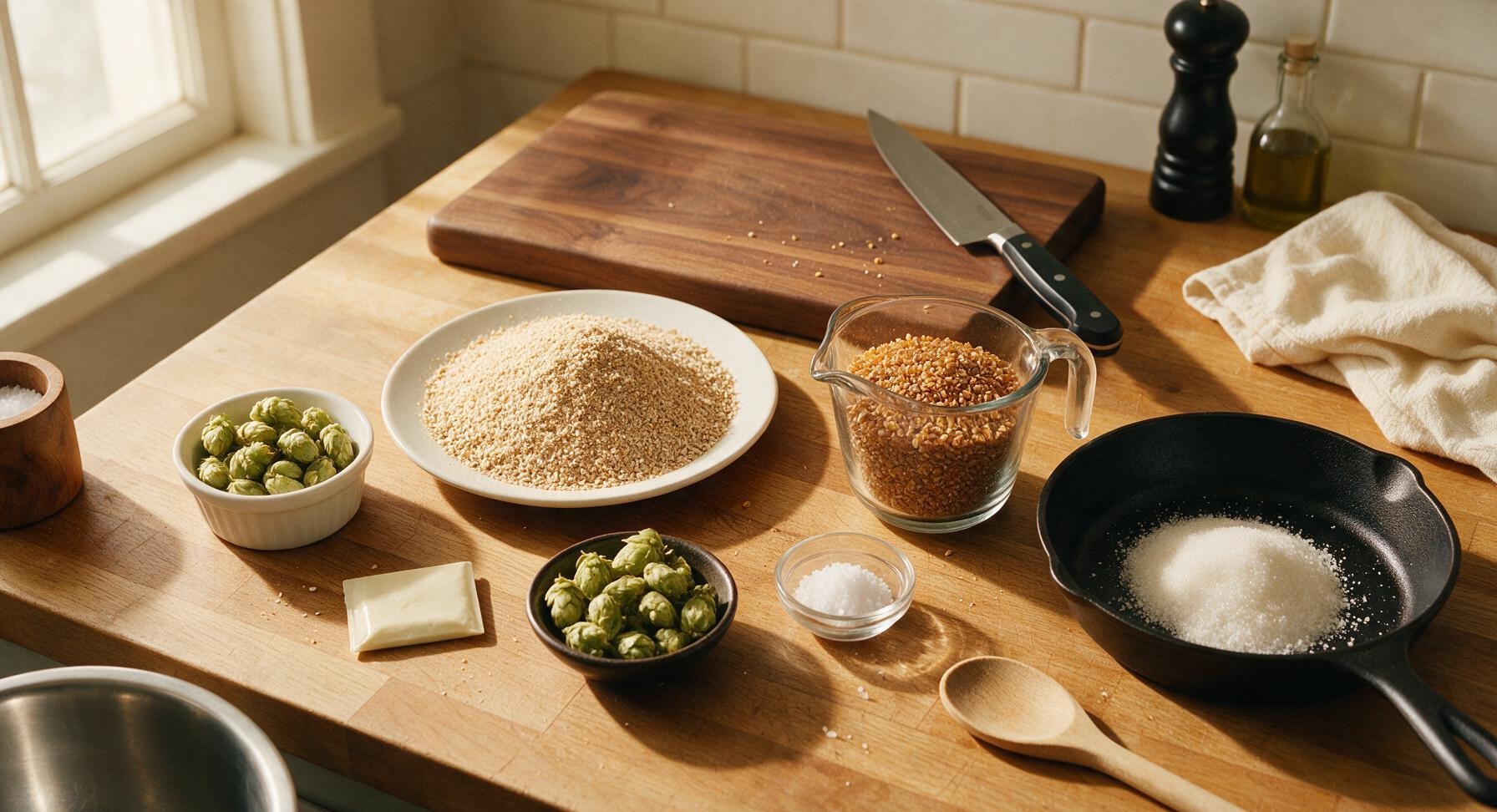
Milled pale ale malt 900g
Milled crystal malt (60L) 100g
East Kent Goldings whole hop cones 15g
Fuggle whole hop cones 10g
English ale yeast 11g (1 packet)
Gypsum (brewing salt) 1g
Corn sugar (priming sugar) 25g

Steps

1

Sanitize All Equipment

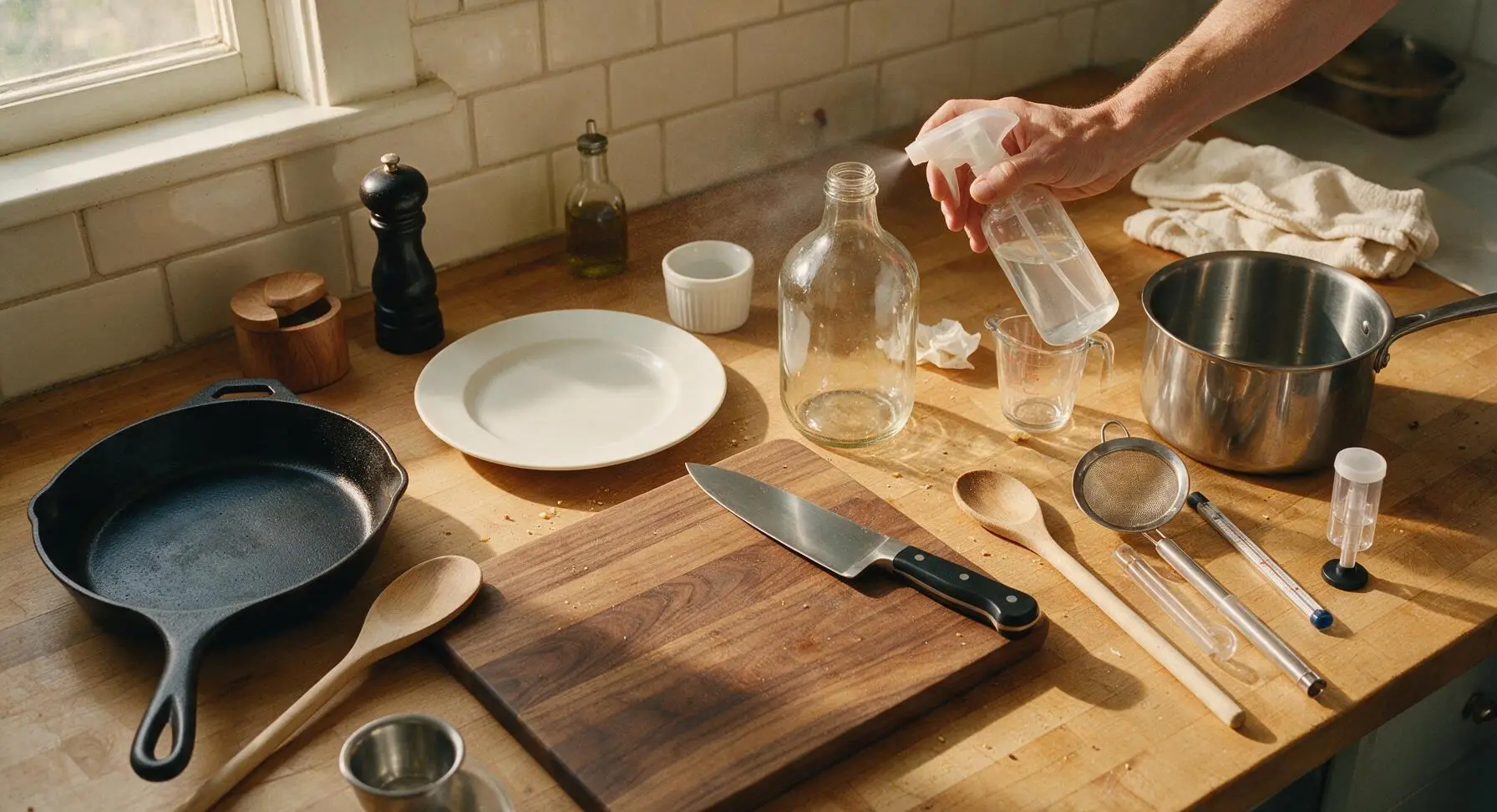
First, spray all contact surfaces of the brew pot, stirring spoon, strainer, fermentation jug, airlock, auto-siphon, and thermometer with the no-rinse food-grade sanitizer from the spray bottle. Let surfaces sit wet for 60 seconds, then air dry completely on the clean counter. No residual sanitizer suds should remain, as this can kill active yeast later in the process.
Step 1
step1:Sanitize All Equipment
2

Heat Mash Water

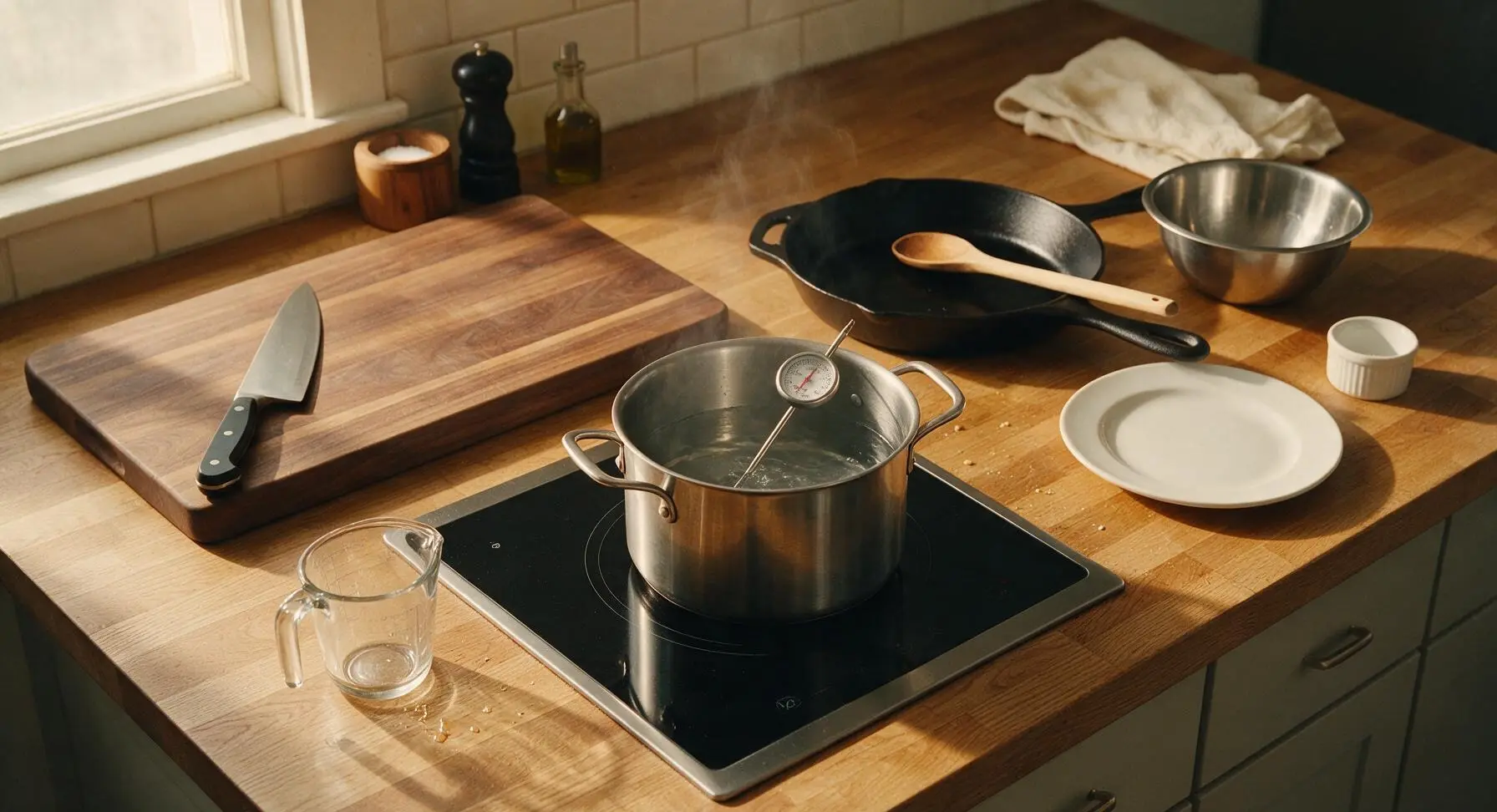
Measure 3.5L of filtered room-temperature water into the stainless steel brew pot using the 500ml glass measuring cup. Set the pot on the matte black induction burner, and heat the water to exactly 155°F (68°C), checking temperature with the instant-read thermometer. Turn off the burner heat once the target temperature is reached.
Step 2
step2:Heat Mash Water
3

Mash the Malted Grains

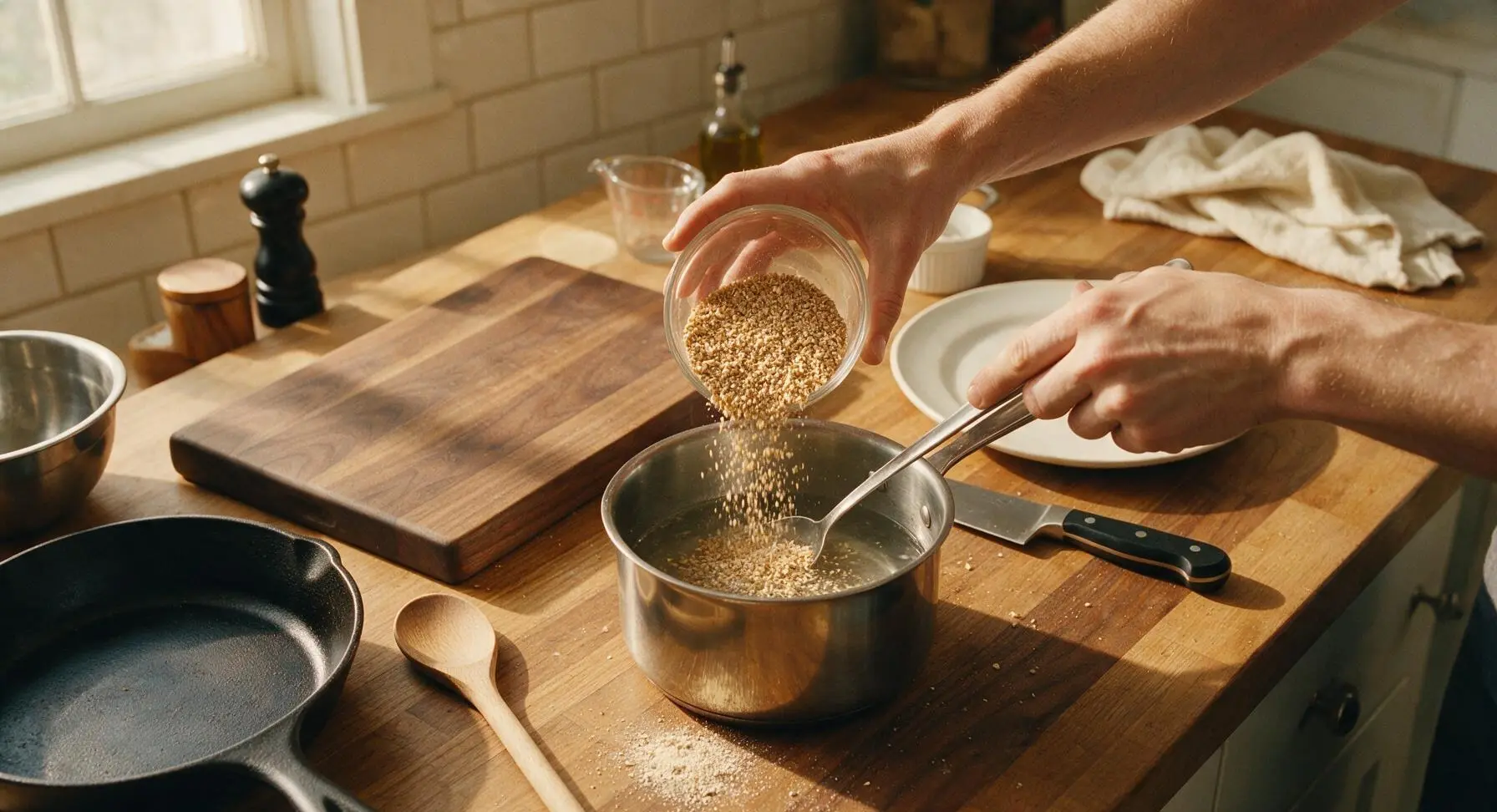
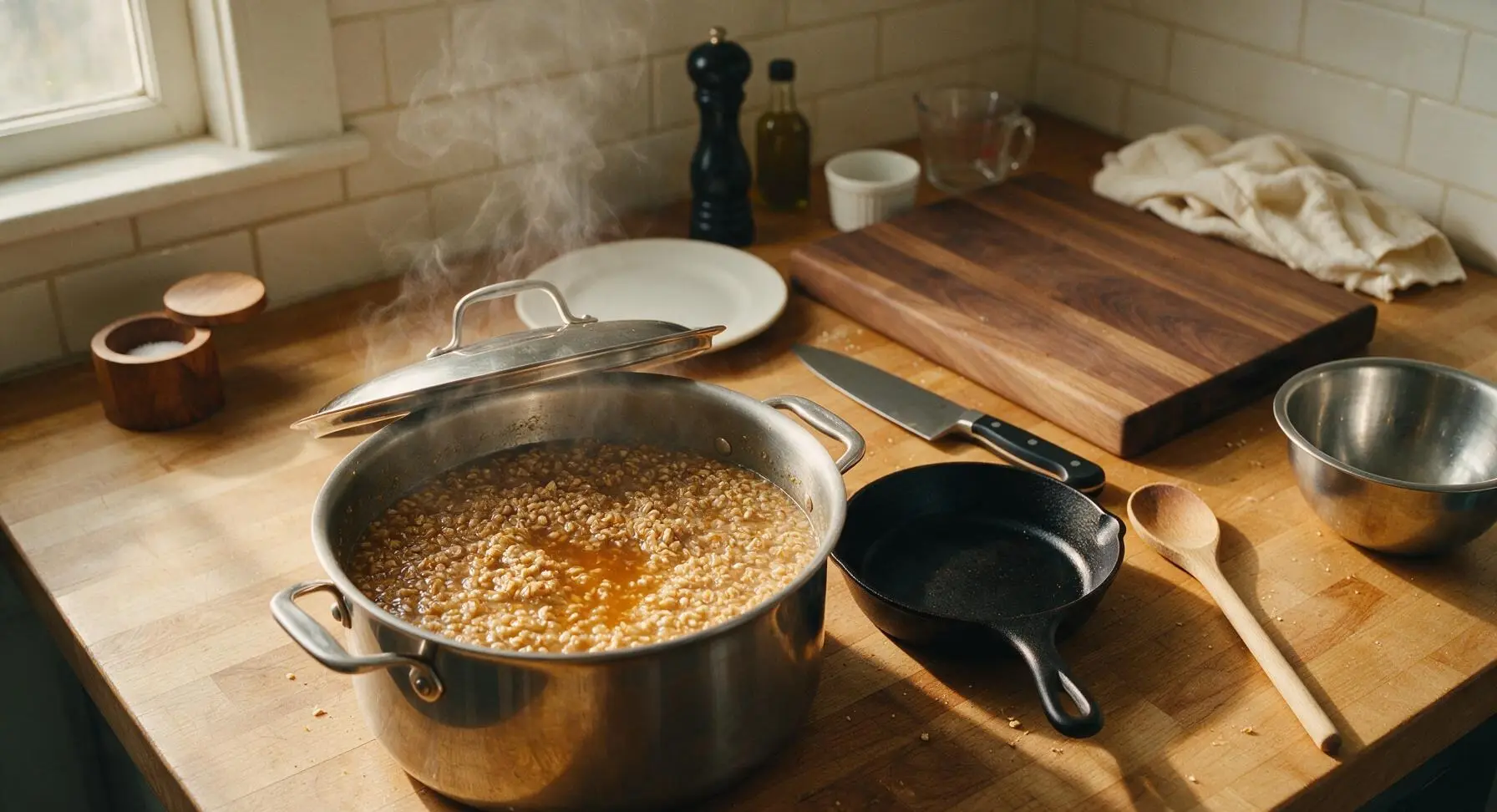
Slowly pour all of the milled pale ale malt and crystal 60L malt into the 155°F water, stirring constantly with the long stainless steel spoon to break up any dry clumps. The mixture will have a thick, porridge-like consistency. Cover the pot, hold the temperature steady at 150–155°F for 60 minutes, stirring every 15 minutes to prevent clumping. The liquid will deepen to a rich golden amber as sugars extract from the grain.
Step 3
step3:Mash the Malted Grains
Step 3
step3:Mash the Malted Grains
4

Strain and Boil Wort

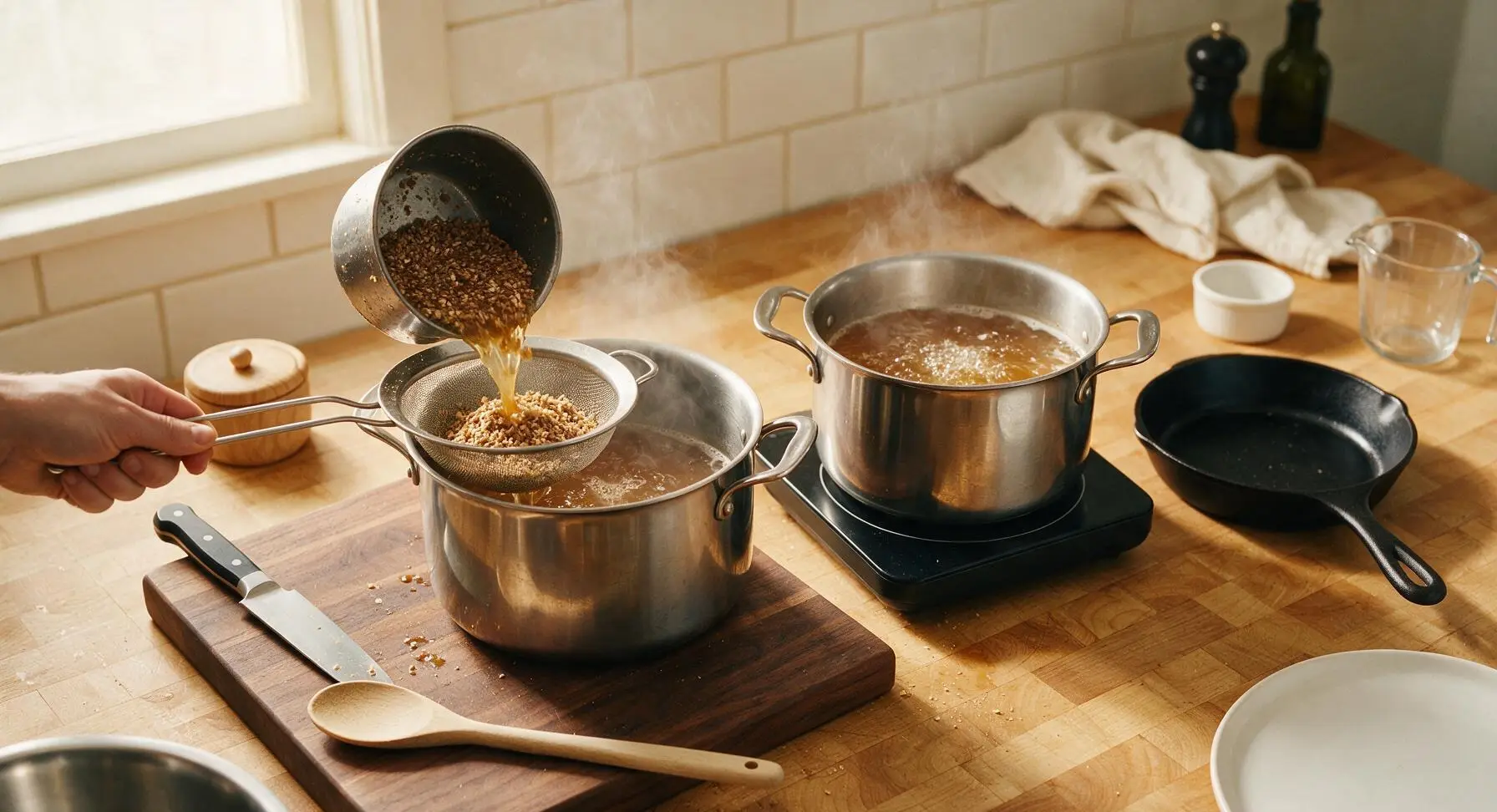
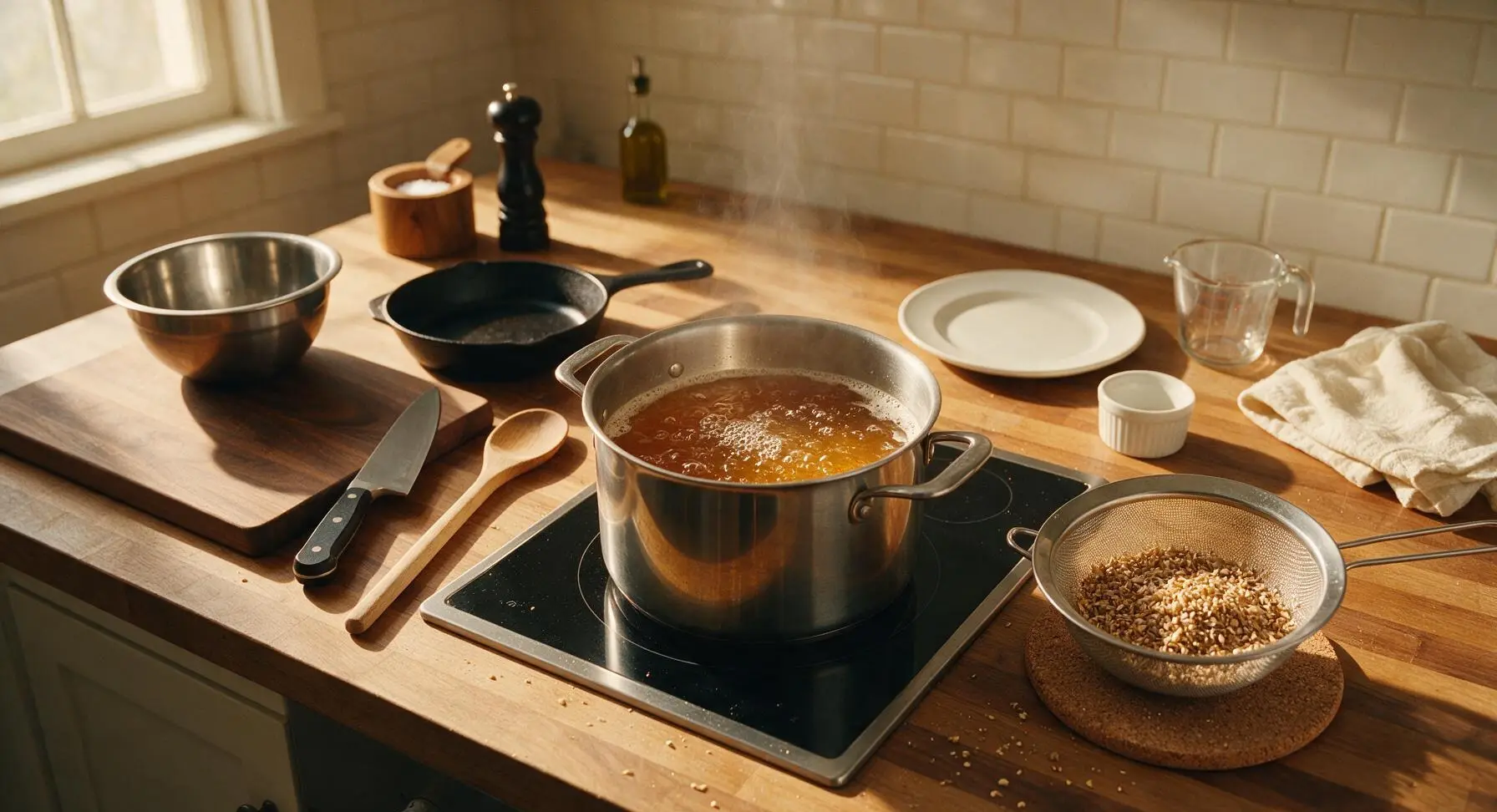
After the 60-minute mash is complete, place the fine-mesh stainless steel strainer over a clean section of the brew pot, then pour the mashed grain and liquid through the strainer to separate sweet, sugar-rich wort from spent grain. Return the pot of strained wort to the induction burner, bring to a gentle rolling boil (212°F / 100°C), and hold at a steady boil for 60 minutes, adjusting heat as needed to avoid sticky boilovers.
Step 4
step4:Strain and Boil Wort
Step 4
step4:Strain and Boil Wort
5

Add Hops in Stages

Once the wort reaches a steady rolling boil, add 7g of East Kent Goldings hops at the 60-minute mark (start of boil) for clean, balanced bitterness. At 15 minutes before the end of the boil, add 5g of Fuggle hops and the 1g of gypsum for earthy flavor and authentic minerality. When the 60-minute boil is complete, turn off the heat, add the remaining 8g East Kent Goldings and 5g Fuggle hops for bright, floral aroma, and stir once.
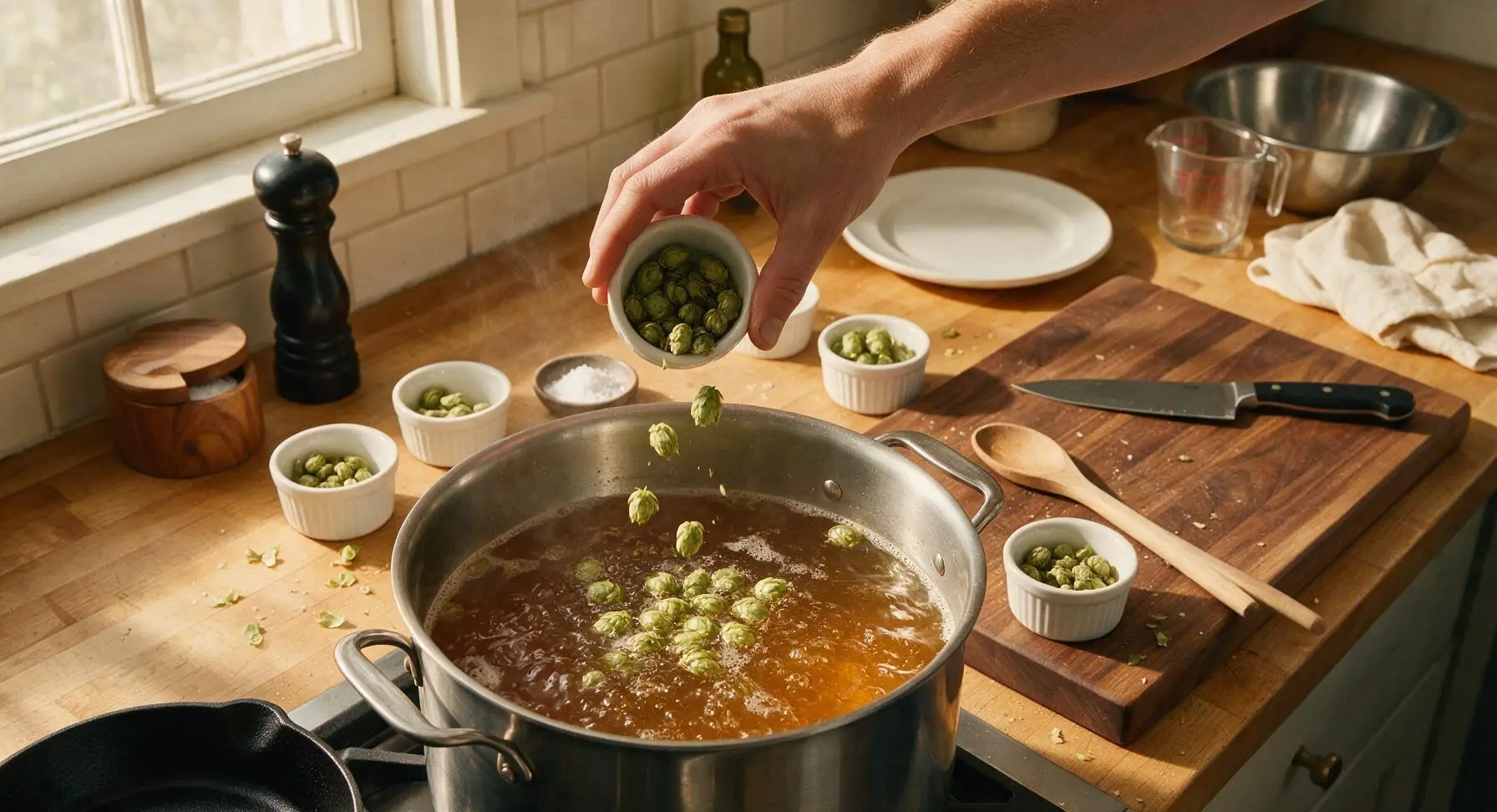
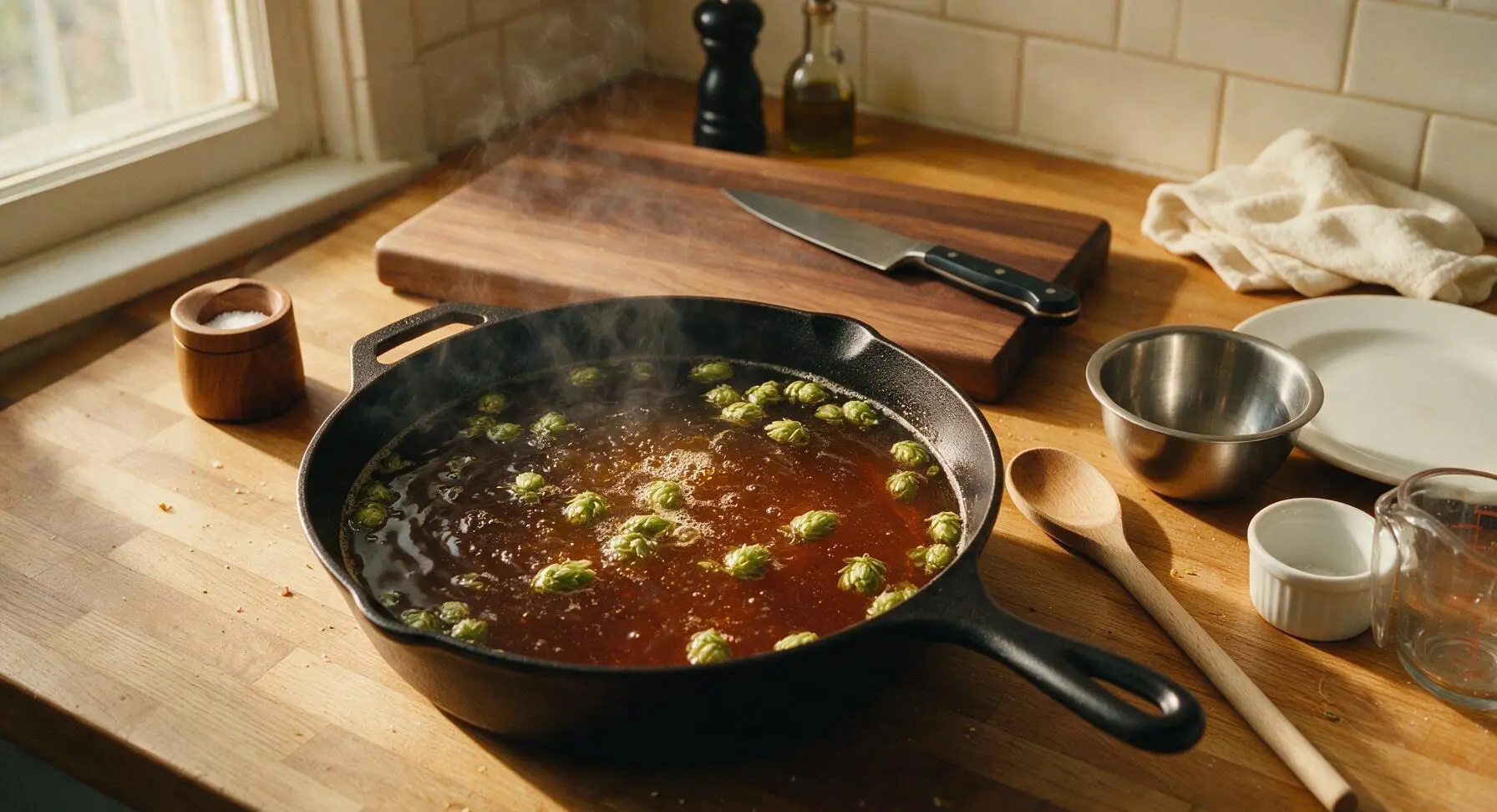
Step 5
step5:Add Hops in Stages
Step 5
step5:Add Hops in Stages
6

Cool and Transfer Wort

Once the boil is complete, remove the pot from the induction burner and set it on the cork trivet to cool to 70°F (21°C), approximately 30 minutes. Do not cover the pot while cooling, to avoid condensation dripping back into the wort. Once cool, pour the wort through the fine-mesh strainer into the sanitized 1-gallon glass fermentation jug, leaving all hop sediment and heavy trub in the bottom of the pot.
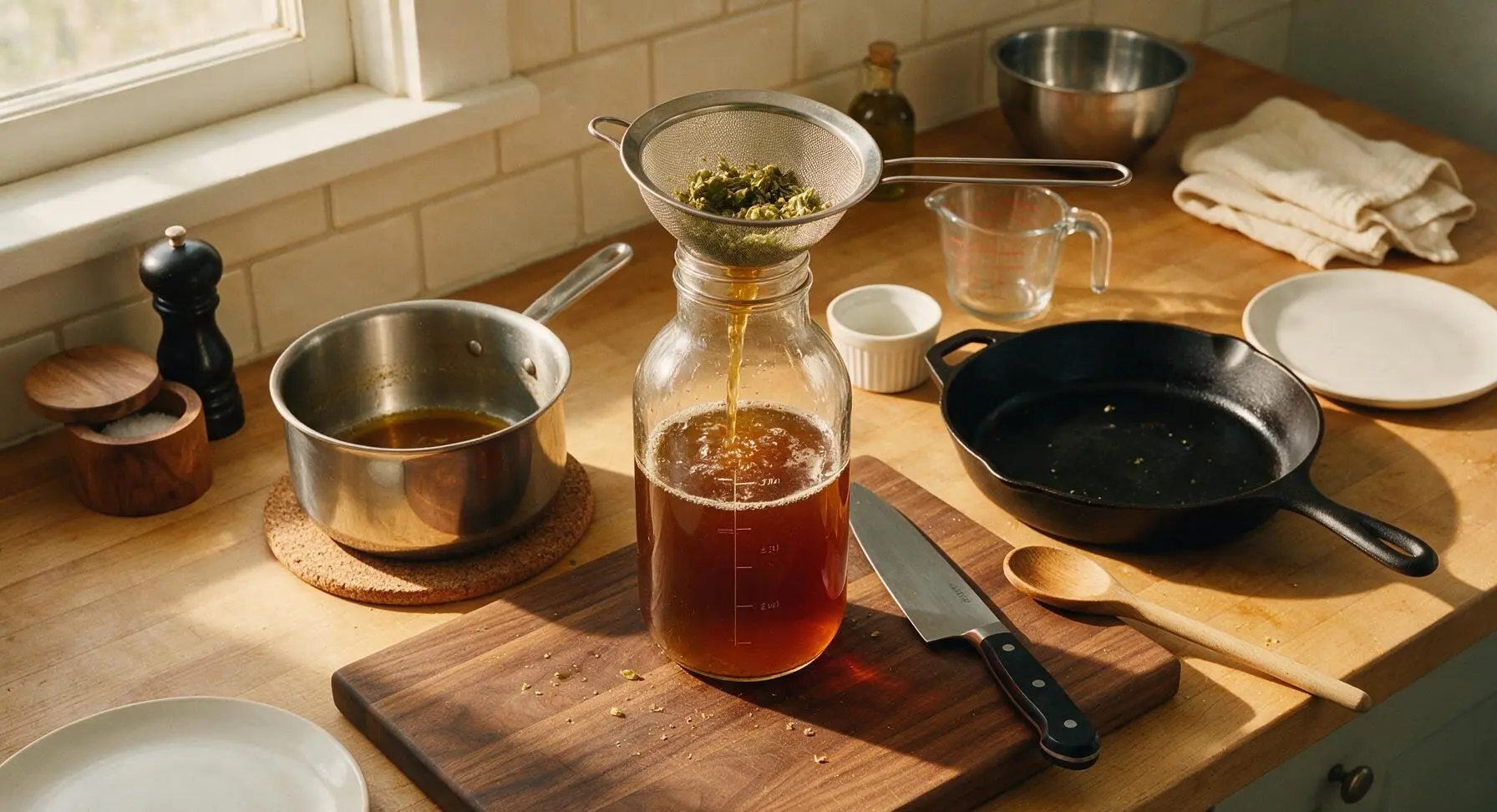
Step 6
step6:Cool and Transfer Wort
7

Pitch Yeast and Seal

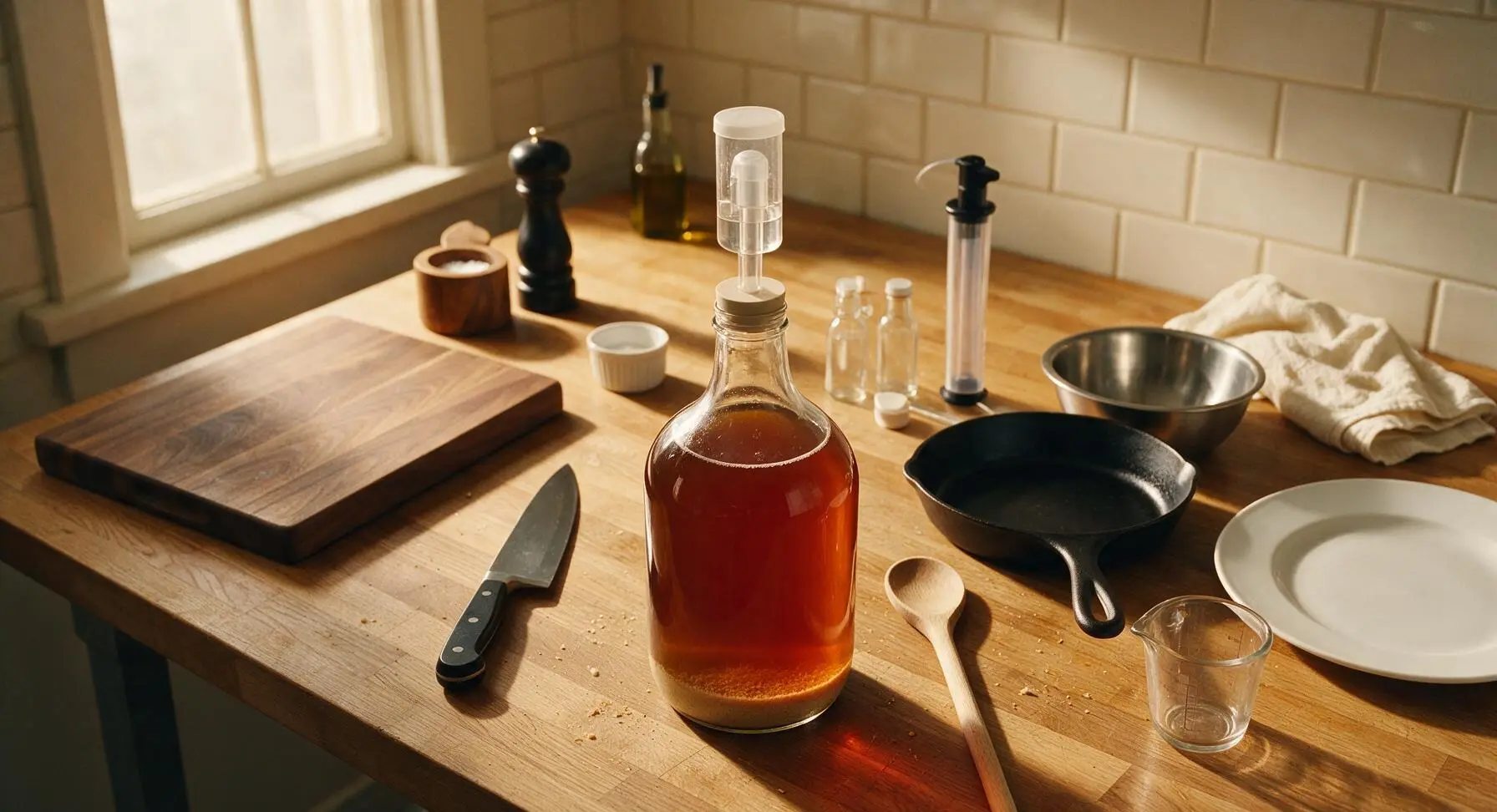
Sprinkle the entire 11g packet of English ale yeast evenly across the surface of the cooled wort in the fermentation jug. Do not stir, as the yeast will hydrate and mix on its own as fermentation begins. Fit the rubber stopper and sanitized 3-piece airlock into the jug mouth, then fill the airlock halfway with sanitizer solution to create an airtight seal that lets carbon dioxide escape without letting wild bacteria in.
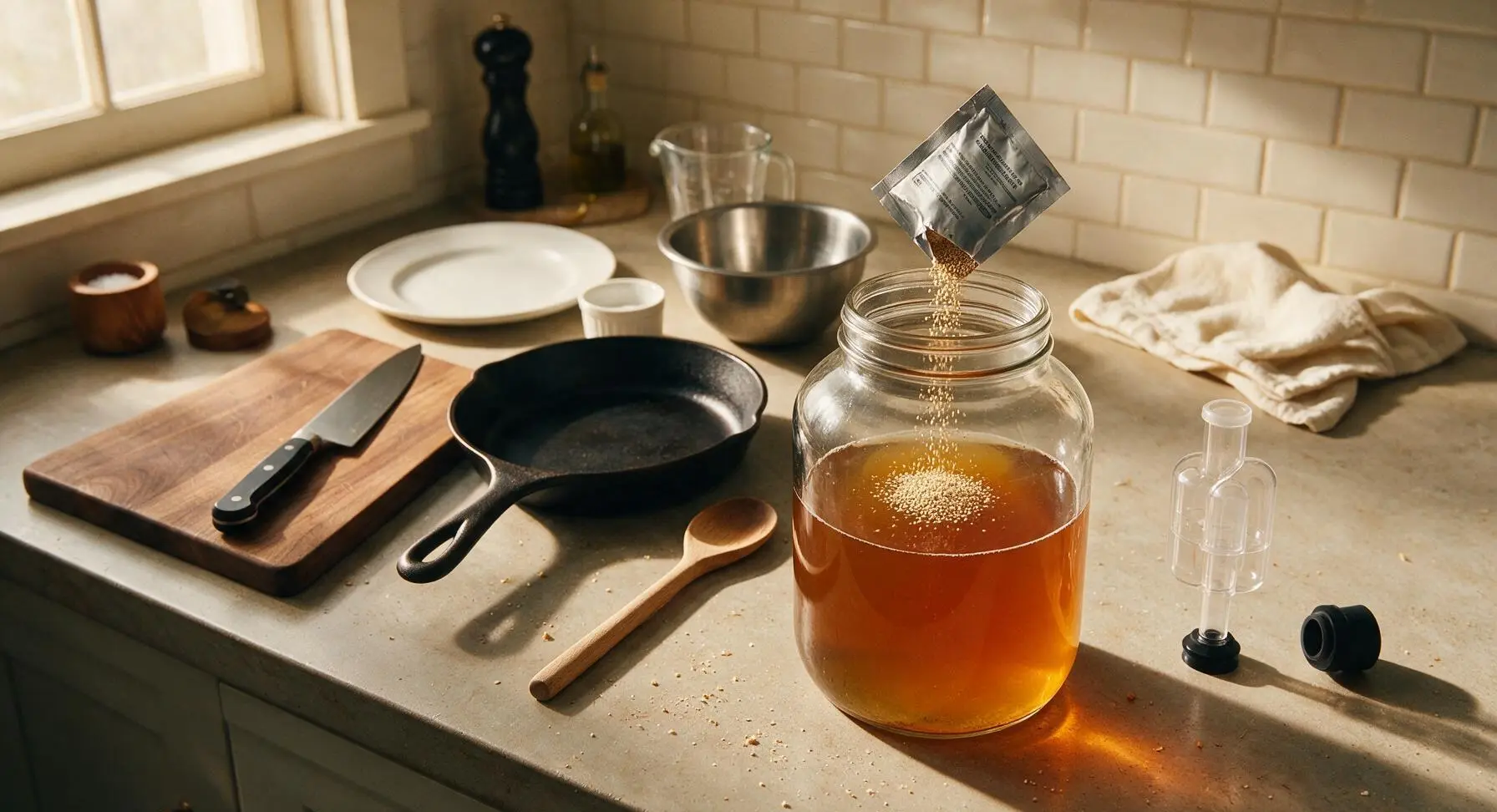
Step 7
step7:Pitch Yeast and Seal
8

Ferment and Carbonate

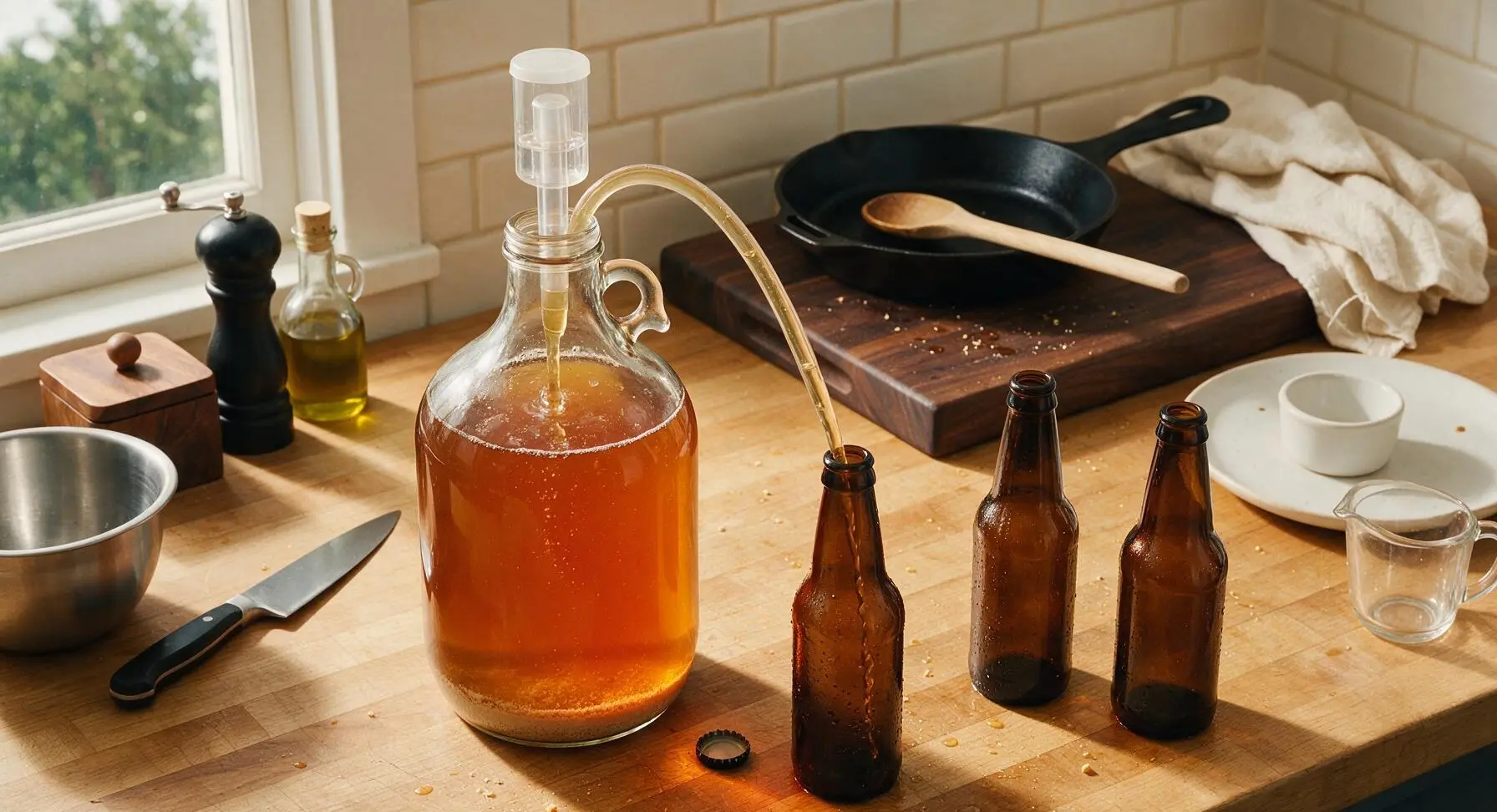
Move the sealed jug to a dark, temperature-stable spot at 65–68°F (18–20°C) and allow the beer to ferment undisturbed for 14 days, until bubbling in the airlock stops completely and the beer is clear with a thin layer of tan yeast sediment at the jug bottom. After fermentation, dissolve 25g of priming corn sugar in 50ml of boiling water, cool, and add to a clean sanitized vessel. Use the auto-siphon to transfer clear beer off the yeast sediment onto the priming sugar, then bottle in sanitized glass bottles, cap tightly, and let carbonate at room temperature for 3 days before chilling to 45°F for serving.
Step 8
step8:Ferment and Carbonate
Step 8
step8:Ferment and Carbonate

Tips

1.Never skip full sanitization of all equipment that touches cooled wort: wild bacteria or yeast on unsanitized surfaces will create off-flavors like sourness or mold that ruin the entire batch.
2.Hold mash temperature as close to 152°F as possible: higher temperatures create fuller, sweeter malt flavor, while lower temperatures create a thinner, more bitter beer, and 152°F hits the classic balanced ESB profile.
3.Avoid moving the fermentation jug for the full 14 days: jostling stirs up yeast sediment that will make the final beer cloudy and add unwanted yeasty, bready off-flavors.


✨ You May Also Like

Drinks & Beverages
🍜 Mexico

A bright, balanced tequila-based cocktail with zesty fresh lime, smooth orange liqueur, and a signature salt rim, perfect for warm summer sipping.

⏱️ 5 minutesDrinks & Beverages ★ 4.9
Drinks & Beverages
🍜 United States

Thick, creamy, nostalgic classic vanilla milkshake with a rich, smooth texture, topped with whipped cream and a cherry for cool, sweet refreshment.

⏱️ 5 minutesDrinks & Beverages ★ 4.7
Drinks & Beverages
🍜 United States

A bright, golden strong ale with fruity banana-clove notes, subtle hop spice, and soft carbonation, brewed in classic Trappist Tripel tradition.

⏱️ 2 hours aDrinks & Beverages ★ 4.5
Drinks & Beverages
🍜 United States

A frothy, nostalgic American soda fountain treat pairing bubbly cold root beer with creamy vanilla ice cream, perfect for cooling down at warm weather gatherings.

⏱️ 20 minuteDrinks & Beverages ★ 4.8
Drinks & Beverages
🍜 United States

Tart, funky, effervescent American Wild Ale is a complex fruity craft beer brewed with wild yeast, delivering bright, zesty notes perfect for warm-weather sipping.

⏱️ 2 hours aDrinks & Beverages ★ 4.4
Drinks & Beverages
🍜 United States

Bright, bubbly copycat of the iconic American caramel cola, balanced with citrus and warm spice, perfect for sipping ice-cold on hot days.

⏱️ 15 minuteDrinks & Beverages ★ 4.8

Extra Special Bitter:Frequently Asked Questions

1.What’s the ideal ABV for this traditional ESB recipe? ▾
A proper traditional ESB lands between 4.8% and 5.8% ABV, which is sessionable enough for casual sipping with friends. Stick to the listed grain bill ratios, skip extra high-sugar adjuncts, and hold fermentation at 65–68°F (the sweet spot for English ale yeast) to hit that range without harsh, boozy off-notes.
2.Can I substitute pellet hops for the whole East Kent Goldings and Fuggle cones called for? ▾
Absolutely, though you’ll need to adjust quantities slightly. Whole cone hops absorb more wort during the boil, so use 20% less pellet hops by weight to match the intended bitterness and flavor. Pellets still deliver that classic earthy, subtly floral profile, just with a touch less soft, rustic character.
3.Why does this recipe call for 60L crystal malt specifically? ▾
60L crystal malt is perfectly calibrated for this ESB’s balanced profile. It adds that rich, bready-toffee malt backbone, subtle hints of stone fruit, and soft amber hue without the heavy, cloying caramel sweetness you get from darker crystal malts. Keep it to 5-10% of your total grain bill to avoid overpowering delicate hop notes.
4.What hop schedule should I use to get that classic earthy ESB finish? ▾
For that signature balanced profile, add 60% of your East Kent Goldings at the start of a 60-minute boil for clean bitterness, 25% of your Fuggle hops at 15 minutes left for soft earthy flavor, and the remaining Goldings and Fuggles at knockout for that subtle, aromatic, non-sharp finish. Skip heavy late dry hops to keep it traditional.
5.What temperature should I ferment this ESB at for the best flavor? ▾
Hold fermentation steady between 65°F and 68°F for the first 5-7 days after pitching your English ale yeast. This range lets the yeast produce soft, subtle stone fruit esters without the harsh solvent-like off-flavors of too-warm fermentation, or the overly crisp, neutral profile of too-cold ferments.
6.Can I use standard American ale yeast instead of English ale yeast for this recipe? ▾
You can, but it will shift the profile away from traditional ESB character. American ale yeast is much cleaner, so you’ll lose those subtle stone fruit and faint bready yeast notes that define the style. If you must substitute, pick a slightly fruity American strain and ferment 2°F cooler than its recommended range to mimic softer English character.
7.How long should I condition this ESB before drinking it? ▾
After primary fermentation finishes, give this ESB 10-14 days of cold conditioning at 40–45°F, either in a keg or properly carbonated bottles. This short conditioning period lets the bready malt, earthy hops, and soft fruit notes meld smoothly, and lets leftover yeast sediment drop out for a crisp, clean sip.
8.What carbonation level is right for a traditional ESB? ▾
Aim for 2.0 to 2.4 volumes of CO2, which is lower than the fizz level of most American pale ales. This softer carbonation lets the rich bready malt and earthy hop flavors take center stage, instead of being masked by sharp, prickly fizz. For bottle conditioning, use 0.75 ounces of corn sugar per gallon to hit that target perfectly.
9.My ESB came out too bitter—what did I do wrong? ▾
Most often, over-bitterness comes from boiling late addition hops for too long, or using hop pellets without adjusting for their higher utilization. Next batch, add flavor and aroma hops only in the last 15 minutes of the boil or at knockout, and cut bittering hop additions by 10% if you prefer a softer, malt-forward balance.
10.Why is my ESB coming out darker than the expected warm amber color? ▾
That almost always comes from crushing your crystal malt too finely, or scorching your wort during the boil. When milling, aim for a coarse crack on crystal malt instead of a fine powder, and stir wort consistently during the boil to avoid hot-side scorching that adds dark, roasty off-flavors and deepens color beyond the classic amber hue.
11.Do I need a mash out step for this all-grain ESB recipe? ▾
A mash out step (raising mash temp to 168°F before sparging) isn’t strictly required, but it makes the process much more consistent. It thins sugary wort so it flows easier through the grain bed, prevents tannin extraction from over-sparging, and helps lock in that soft, bready malt character without harsh astringent notes.
12.What food pairs best with this traditional ESB? ▾
This balanced ESB is incredibly versatile for food pairings. It works beautifully with sharp aged cheddar, bangers and mash, crispy fish and chips, or grilled bratwurst. The bready malt cuts through rich, fatty foods, the earthy hops complement savory, salty flavors, and subtle stone fruit notes add a bright contrast to hearty pub fare.
13.Can I make this as a partial mash recipe if I don’t have full all-grain equipment? ▾
Absolutely! Swap 70% of the pale ale malt for high-quality light liquid malt extract, and do a small partial mash with the remaining pale malt and all of the 60L crystal malt to get that fresh bready grain character. Add extract at the end of the boil to avoid scorching, and follow the same hop and fermentation schedule for nearly identical results.
14.How do I get that subtle stone fruit note mentioned in the recipe intro? ▾
Those soft stone fruit notes—think ripe apricot and faint peach—come from two key places: the right English ale yeast fermented at the correct 65–68°F range, and the measured amount of 60L crystal malt. Skip added fruit or over-pitching yeast, as that will either make fruit flavor too bold or strip out those delicate, natural esters.
15.How long will this ESB stay fresh once it’s carbonated? ▾
When stored in a cool, dark place away from direct sunlight and temperature swings, this ESB will stay fresh and flavorful for 3-4 months. Unlike super hoppy IPAs that fade fast, the balanced malt and earthy English hop profile holds up well over time, though it’s best enjoyed within the first two months for the brightest, most integrated flavor.
16.Is it normal for this ESB to have a slight haze instead of being perfectly clear? ▾
A soft, light haze is totally normal and traditional for an English ESB! You don’t need fancy finings or filtration to get a crystal-clear pour. As long as you don’t have chunky sediment floating in each glass, that slight haze comes from residual yeast and hop compounds, and it doesn’t impact the smooth, balanced flavor.
17.What water profile works best for this traditional ESB? ▾
Aim for medium-hard water with 150-200 ppm of sulfate, 50-75 ppm of chloride, and balanced calcium levels to match classic English brewing water. The higher sulfate accentuates earthy hop crispness, while moderate chloride keeps the bready malt feeling smooth and round. If you have very soft tap water, add a small amount of gypsum to hit these targets.
18.Can I dry hop this ESB for more hop aroma without ruining the traditional profile? ▾
If you prefer a little more hop aroma, you can add a small amount (0.5 ounces total) of East Kent Goldings and Fuggles as a dry hop 3 days before bottling or kegging. Skip bright, citrusy American hops entirely, and keep the dry hop quantity low—too much will overpower the soft malt balance and push it away from classic ESB character.

Comments (3)

1 week ago

OMG, this ESB recipe is a total game changer! I brewed a 5-gallon batch for our annual neighborhood potluck last weekend and everyone was raving about it—perfect balance of toasty biscuit malt and that subtle earthy hop bite, none of that harsh metallic aftertaste I got from my last few homebrew attempts. I was a little intimidated by the medium difficulty rating since I’ve only done super simple extract brews before, but the step-by-step timing notes were so clear I never felt lost! The only small tweak I made was adding a half ounce of extra East Kent Goldings at dry hop, and chef’s kiss, that little pop of floral hop made it feel extra special. 10/10 will be making this on regular rotation for Sunday football hangs with the crew.

3 days ago

Wait, half an ounce extra? That’s exactly the kind of tweak I’ve been wanting to try on ESBs! Mine always come out a little too malt-heavy for my taste, like I’m drinking liquid bread almost. Did you notice any weird grassy off flavors from the extra dry hop? I’m so stoked to test this recipe out for my husband’s birthday cookout next month, he’s obsessed with traditional British-style ales.

2 days ago

So glad you loved the recipe, Hank! That extra East Kent Goldings addition sounds fantastic—those hops are a total classic for ESBs for a reason, they pair so beautifully with the rich, biscuity malt base without overpowering it. Quick pro tip for anyone adjusting dry hop amounts: stick to under 1 oz per 5 gallons if you want to keep that traditional ESB profile instead of accidentally drifting into IPA territory!

2 days ago

This came out SO good! My wife is usually not a fan of bitter beers at all—she strictly drinks fruited sours most of the time—but she asked for a second glass over dinner when I tapped the keg last night. The active brew time was exactly as written, 2 hours 30 minutes, no random unexpected steps that threw off my whole Saturday brew schedule. The 17 day fermentation/carbonation wait felt torturous, ngl, but trust me it’s so worth it—don’t rush it! I almost caved and tapped it 3 days early and I’m so glad I waited, the carbonation is perfectly soft and the flavors melded so nicely there’s zero harsh young beer taste. Already planning my next batch to bring to our fall camping trip.

yesterday

Great call waiting out the full fermentation and carbonation window, Mike! ESBs get so much of that signature smooth, balanced character from letting the yeast clean up properly after primary ferment. Rushing that step is the #1 mistake new homebrewers make with this style, so awesome that you stuck it out—cheers to your next batch!

5 days ago

Tried this last month and it was super solid, though I ran into a silly mishap (even though I’m 6 batches deep, smh) where my mash temp ran 5 degrees high for the first 20 minutes, so it came out a touch sweeter than the crisp, classic ESB profile I was going for. Even with that flub, it was still way better than the overpriced store-bought ESBs I usually grab for Friday night game nights with my roommates. I’m gonna give it another go next weekend and make sure I lock in that 152F mash temp this time to nail that perfect dry finish. The medium difficulty rating is totally fair—wouldn’t recommend this for total total newbies who’ve never done a full mash before, but if you’ve got 2-3 brews under your belt you’ll crush it no problem.



