flat iron steak

title 1
flat iron steak
⏱️ cook time 10 minutes
🍽️ servings 2
⚡ Difficulty medium

intro

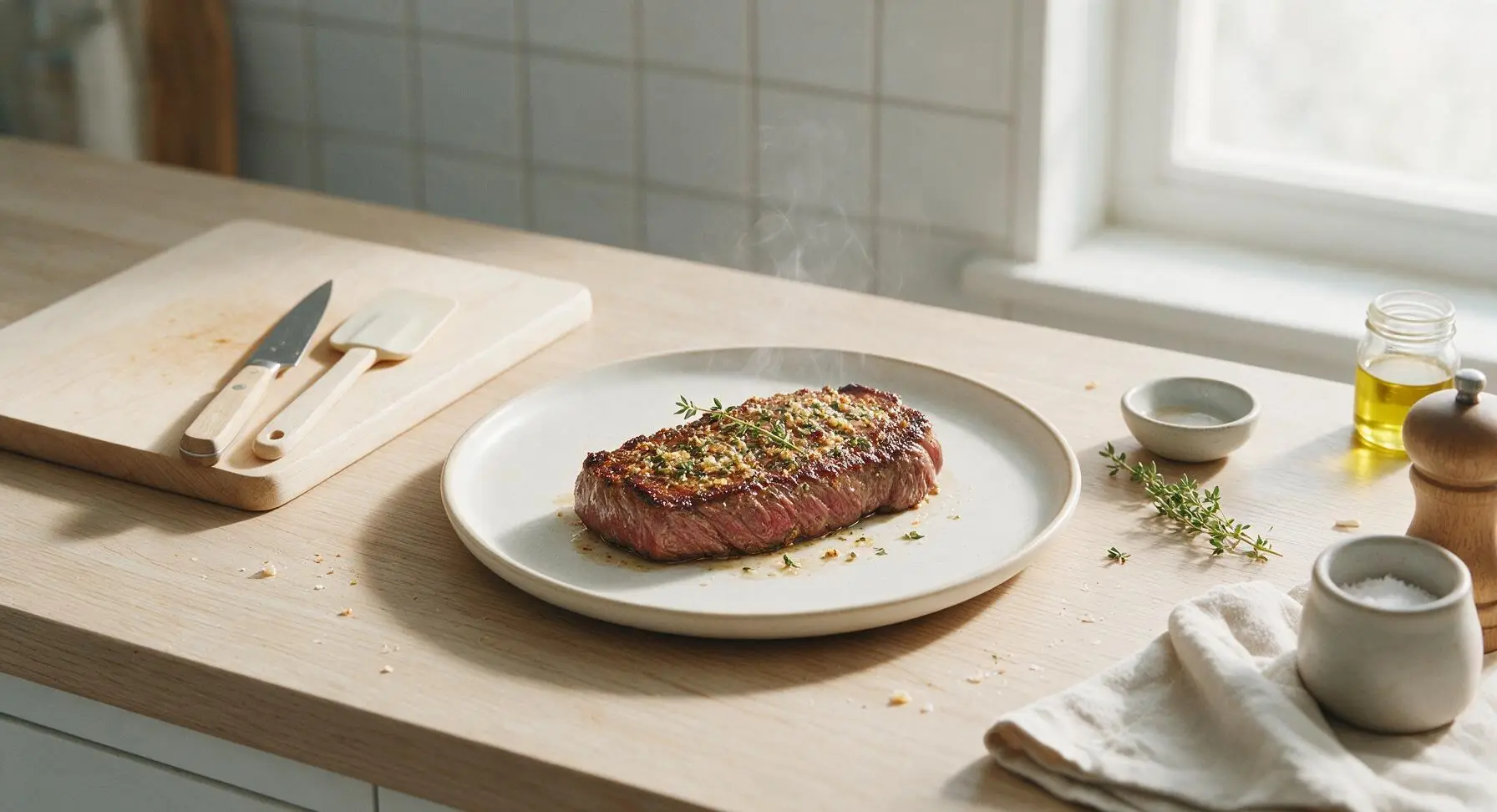
Perfectly seared flat iron steak with a crisp garlic-thyme butter crust, juicy medium-rare center, and rich nutty flavor—an affordable, restaurant-quality main ready in 30 minutes for an impressive at-home date night.

Ingredients
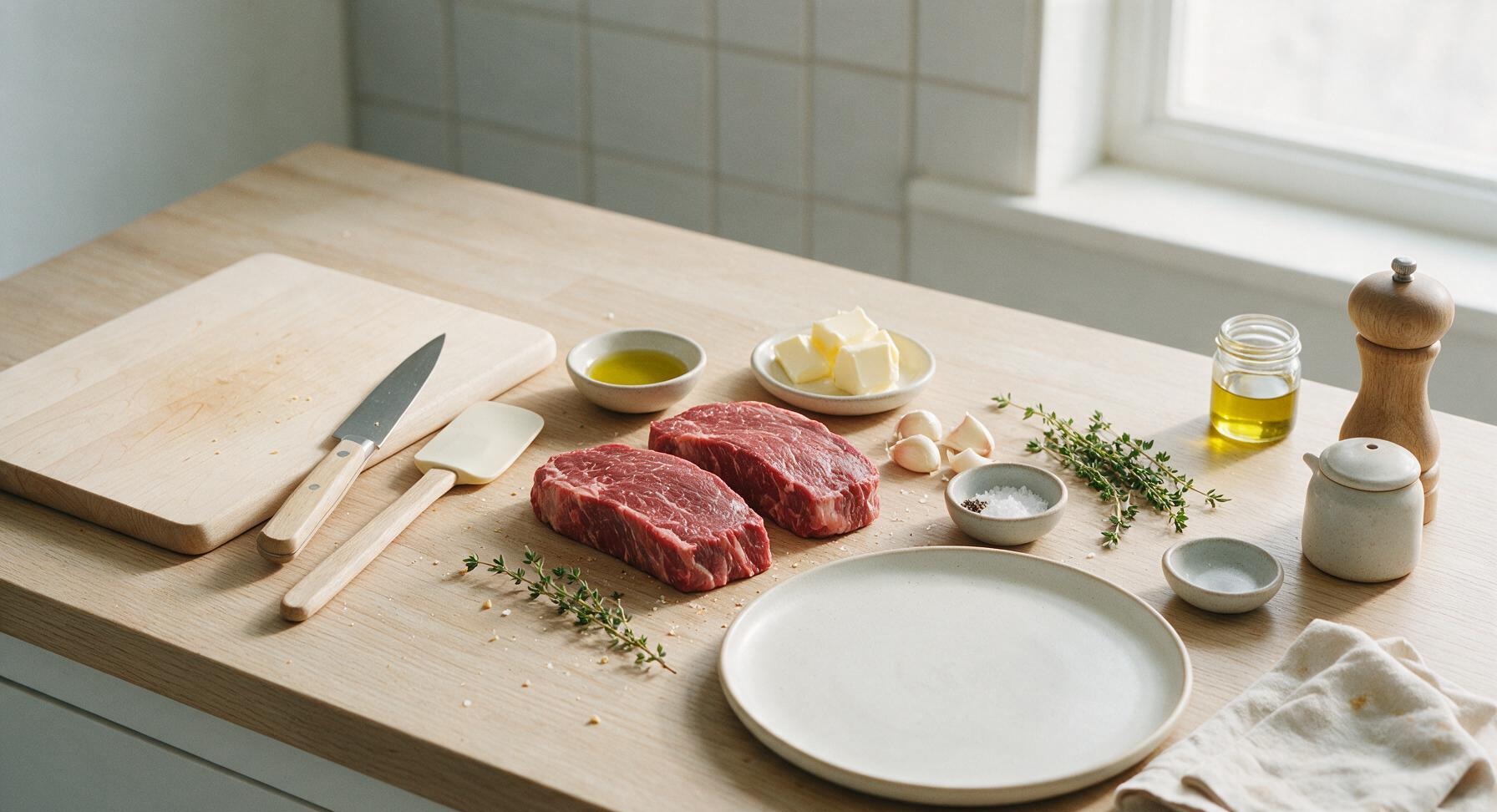
Flat iron steak (two 8oz cuts, 1.5 inch thick) 1 lb (450g)
Extra virgin olive oil 1 tablespoon
Unsalted butter 4 tablespoons (57g)
Garlic cloves, crushed 4 large
Fresh thyme sprigs 6 sprigs
Flaky sea salt 2 teaspoons
Coarsely ground black pepper 1 teaspoon

Steps

1

Prep and Season Steak

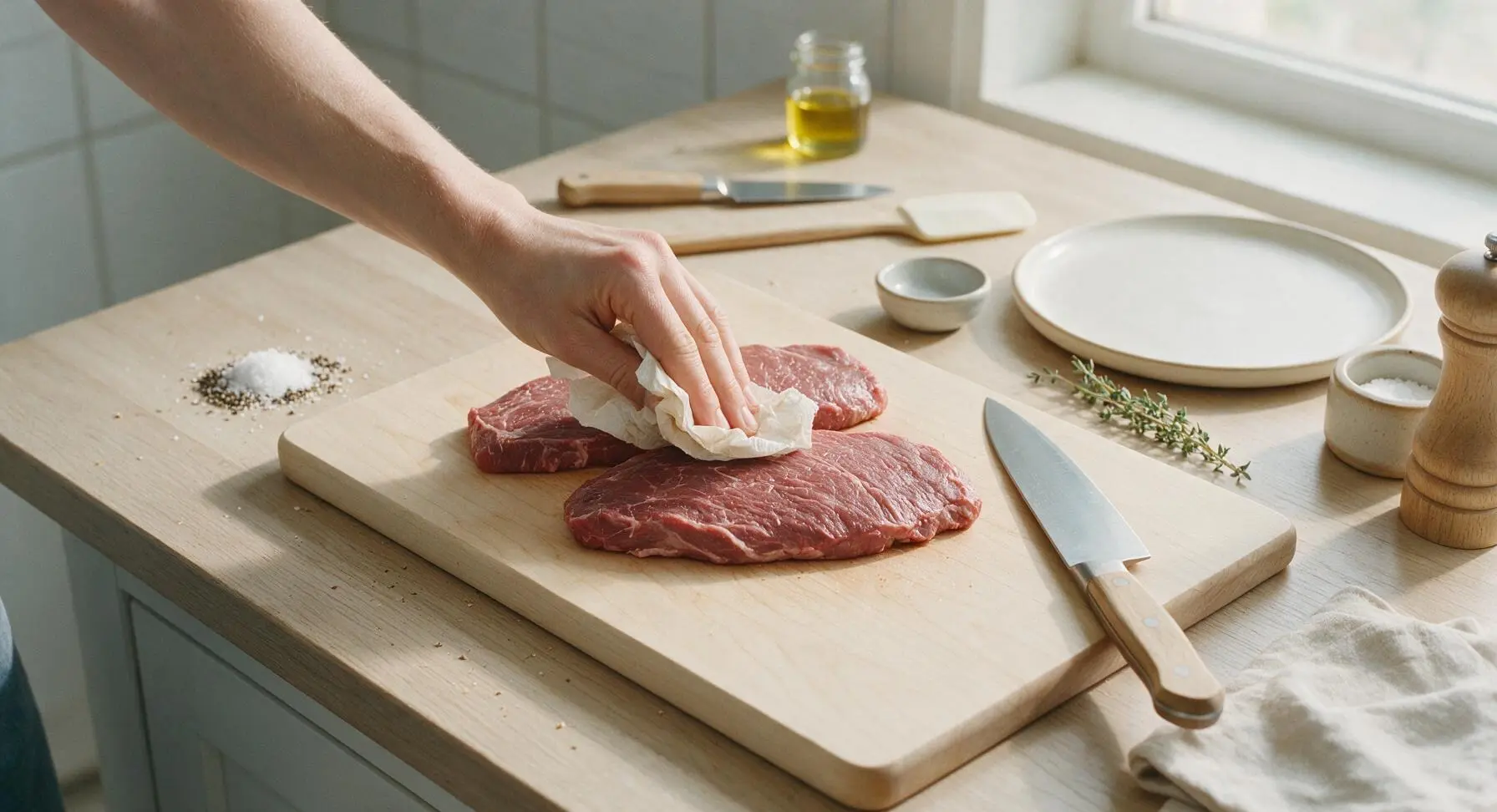
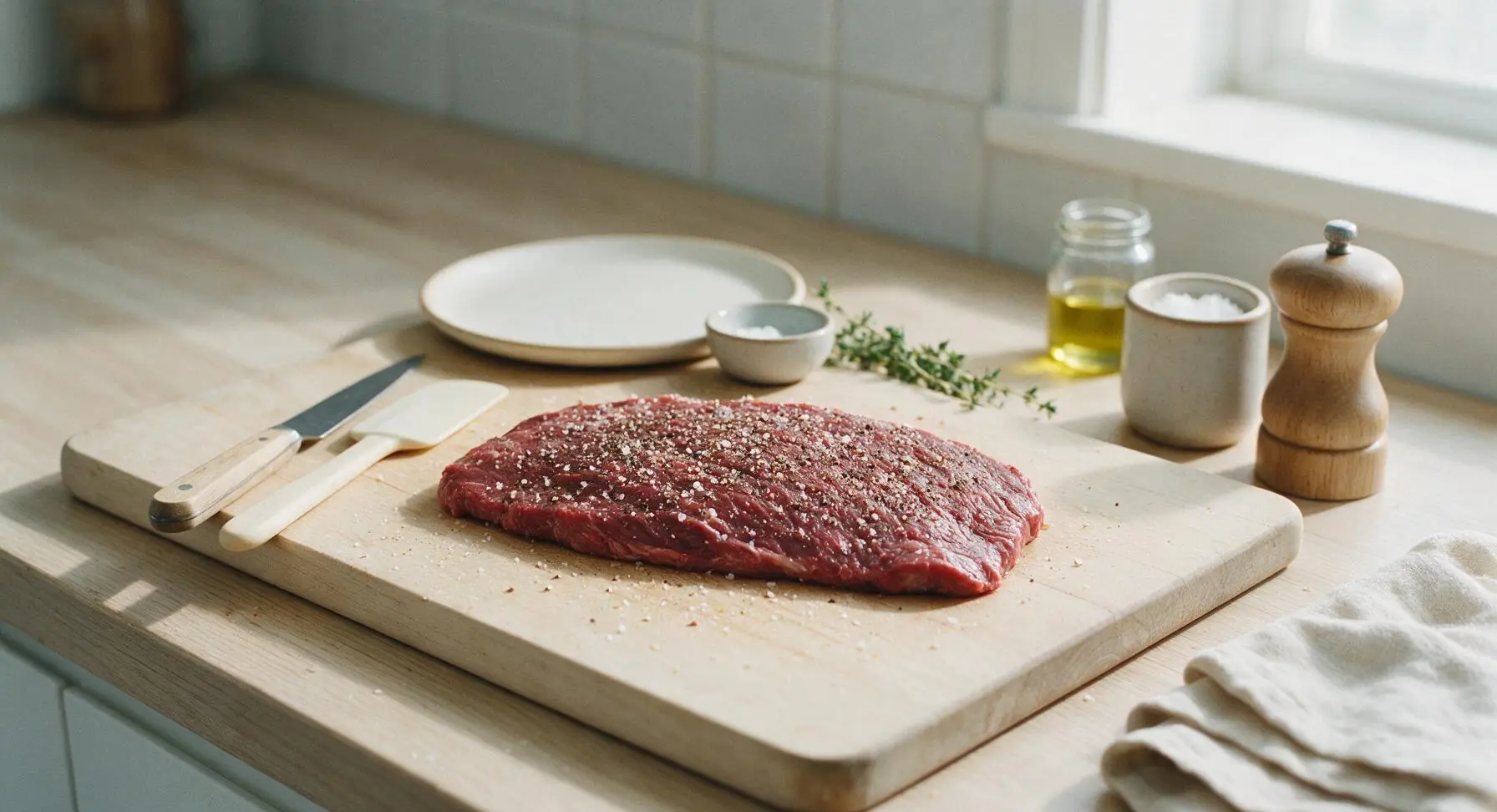
Remove flat iron steaks from the refrigerator 20 minutes prior to cooking to bring to 60°F room temperature, eliminating cold spots that cause uneven cooking. Set the maple cutting board at center counter, place steaks on the board, and pat all surfaces completely dry with paper towels until no dampness transfers when touched. Season every side (top, bottom, edges) with 1.5 teaspoons flaky sea salt and 1 teaspoon coarsely ground black pepper, pressing seasoning lightly into the meat to adhere. Set aside for 10 minutes while the pan preheats.
Step 1
step1:Prep and Season Steak
Step 1
step1:Prep and Season Steak
2

Preheat Carbon Steel Pan

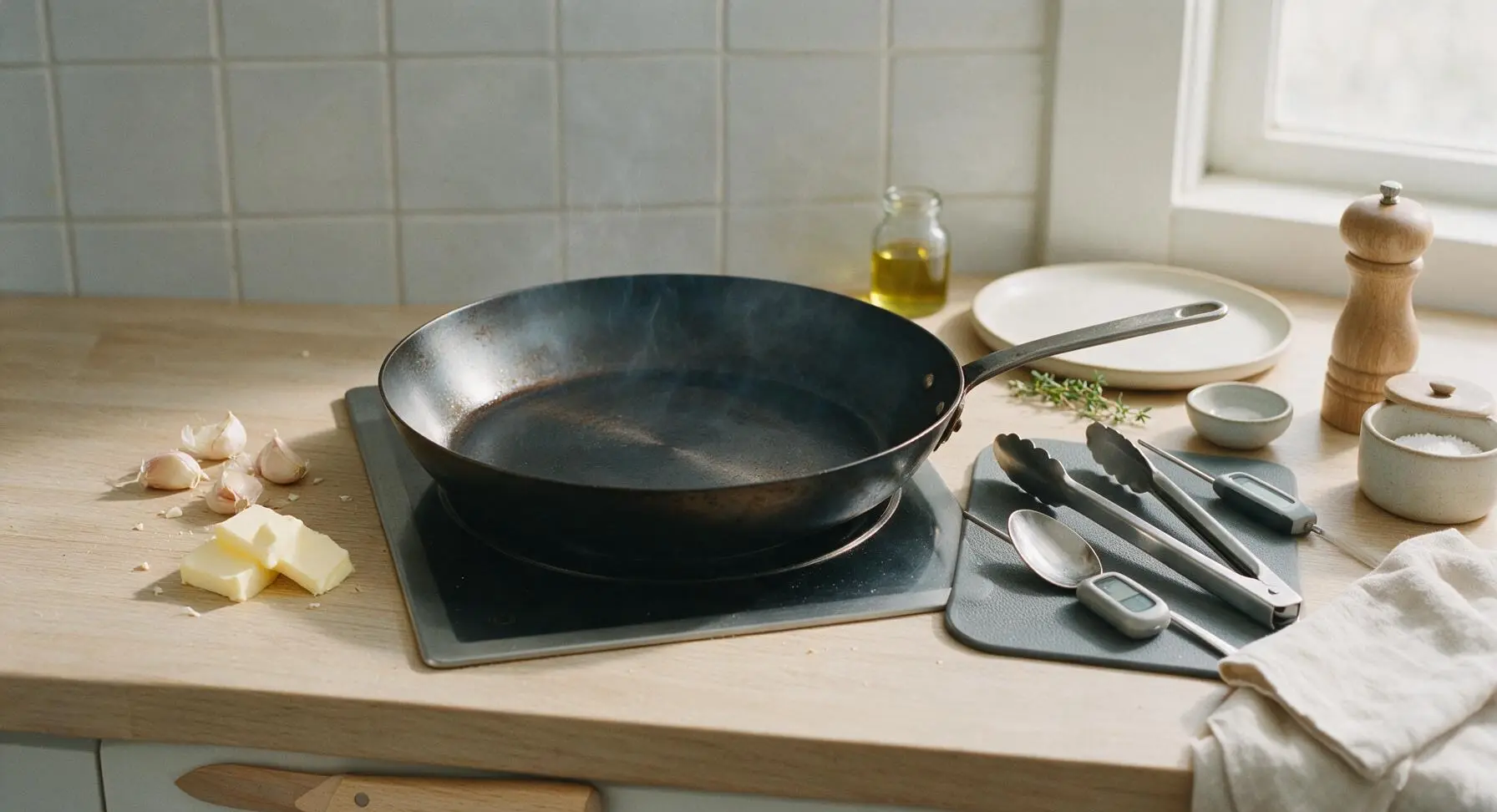
Place the 12-inch carbon steel skillet on the center stovetop burner, turn heat to medium-high, and preheat for 5 minutes until the pan is very hot (you will see faint wisps of smoke rising from the seasoned surface). While the pan heats, crush the 4 garlic cloves with the flat side of the chef knife, and portion the butter into two 2-tablespoon pats. Place the stainless steel tongs, stainless steel basting spoon, and instant-read thermometer on the dark grey silicone heat mat to the right of the pan. Move the maple cutting board and chef knife to storage below the counter to clear cooking space.
Step 2
step2:Preheat Carbon Steel Pan
3

Sear First Steak Side

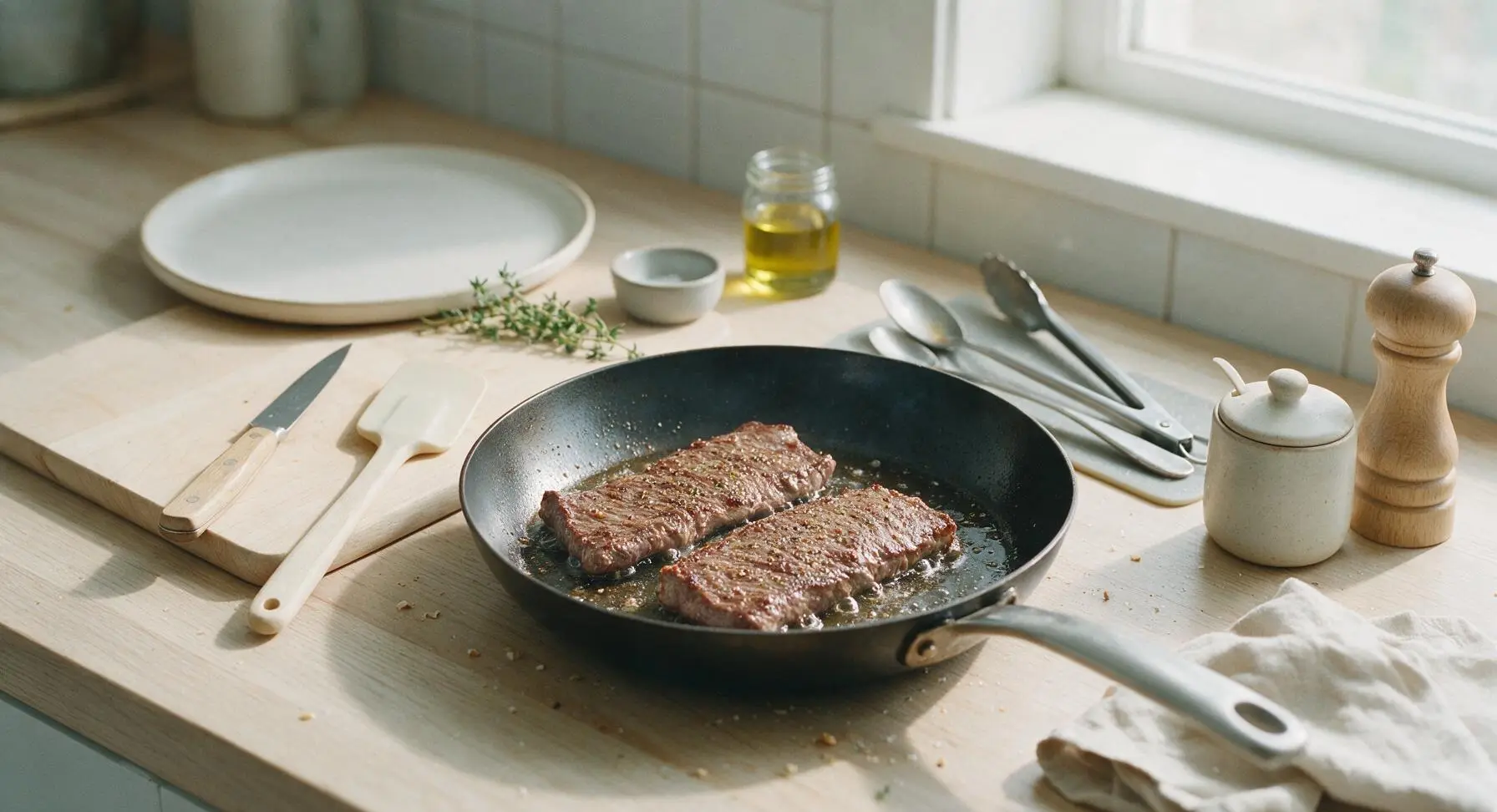
Add 1 tablespoon extra virgin olive oil to the hot skillet, swirling to coat the pan base. Carefully lay the steaks in the pan away from your body to avoid hot oil splatter. Do not move the steaks for 3 full minutes, allowing a deep, crisp mahogany crust to form via maillard browning. Resist the urge to lift or shift the steaks during this time, as constant movement prevents proper crust development.
Step 3
step3:Sear First Steak Side
4

Flip and Add Aromatics

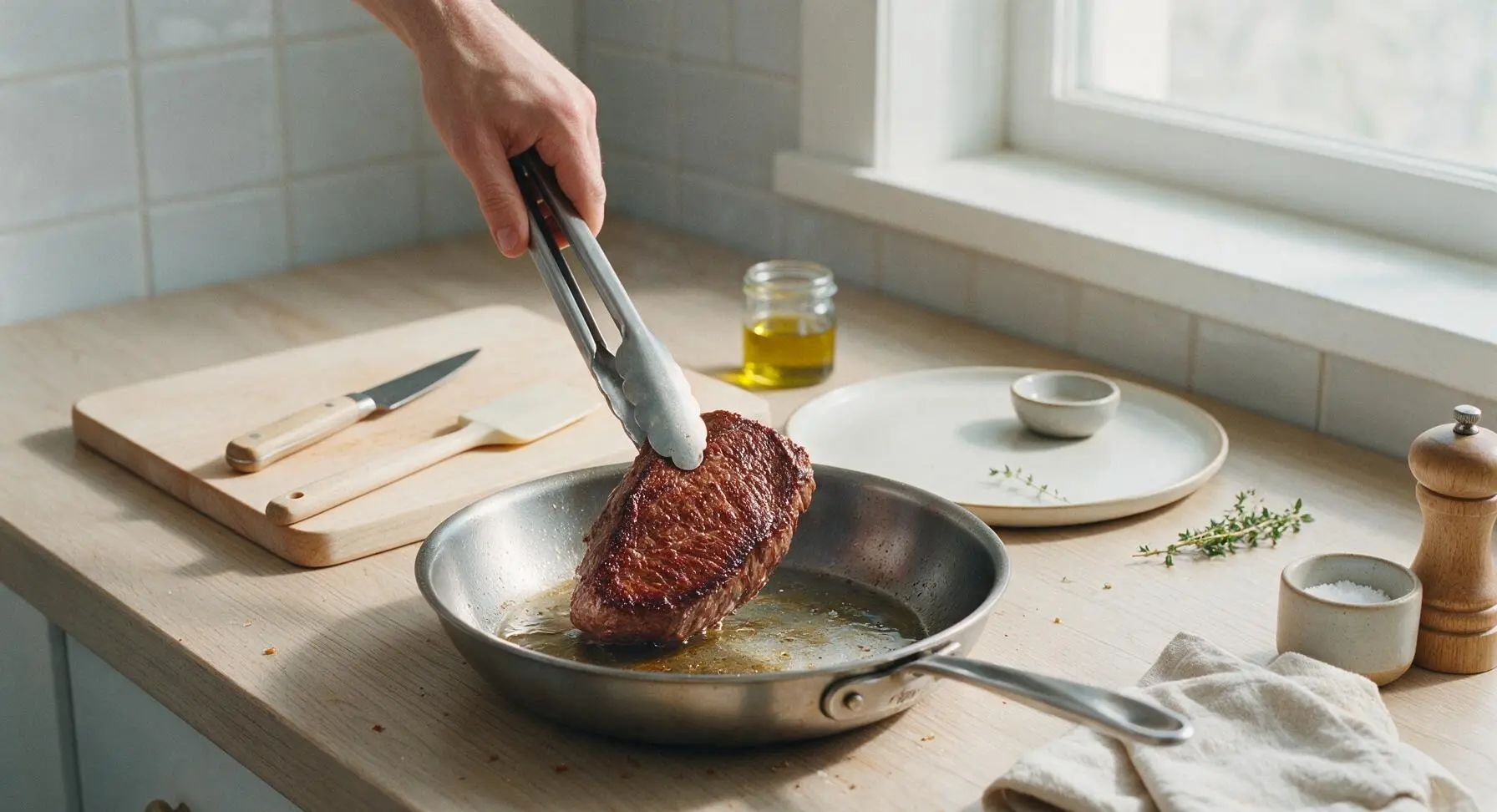
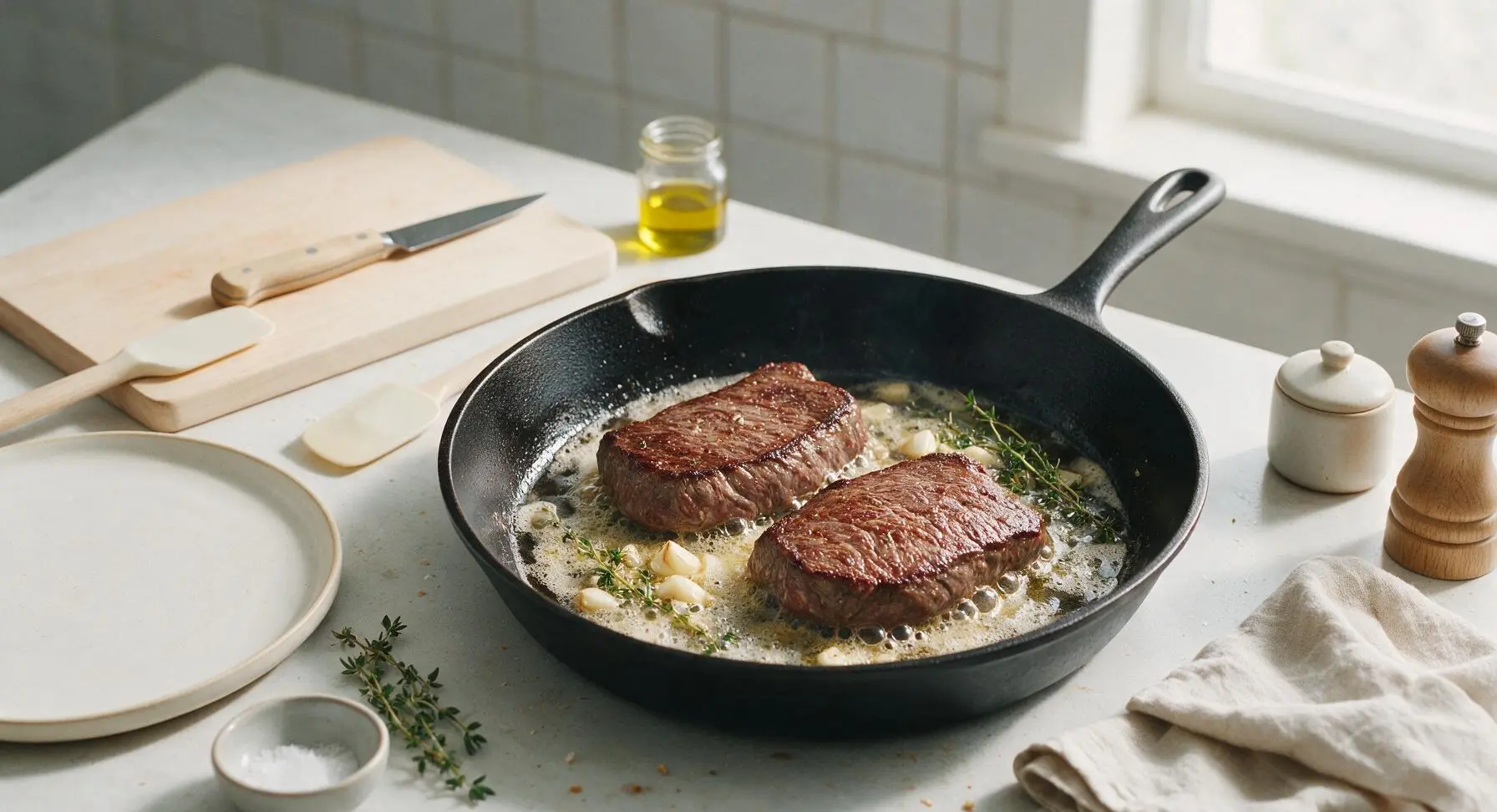
After 3 minutes of undisturbed searing, use the stainless steel tongs to flip the steaks to their second side. Sear for 2 minutes undisturbed, then add the 4 tablespoons of unsalted butter, crushed garlic cloves, and 6 sprigs of fresh thyme to the pan next to the steaks. The butter will melt immediately and start to foam, turning a light golden nutty brown after 30 seconds.
Step 4
step4:Flip and Add Aromatics
Step 4
step4:Flip and Add Aromatics
5

Baste Steak to Doneness

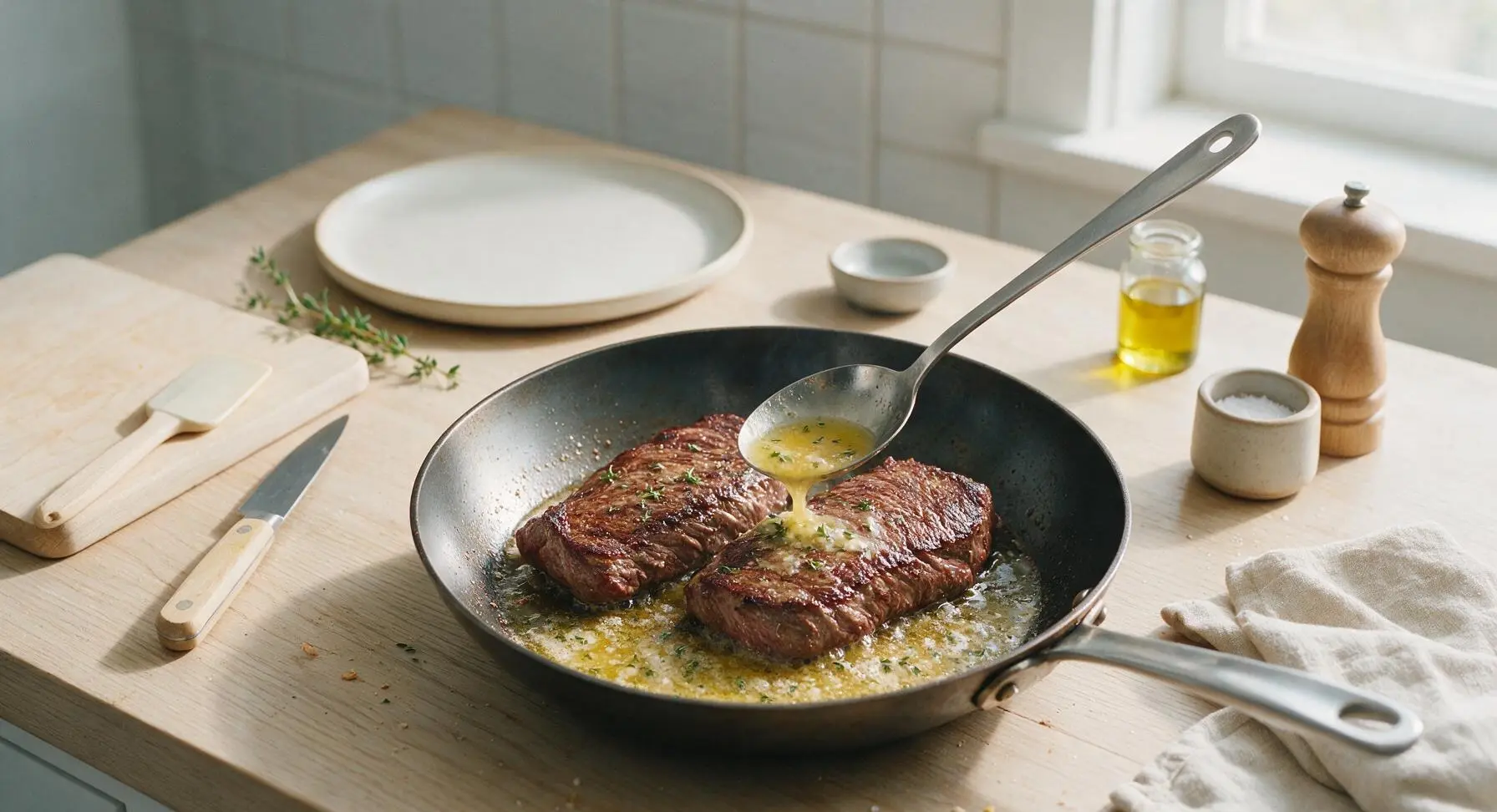
Tilt the pan slightly toward you so the melted garlic-thyme butter pools at the front edge. Use the stainless steel basting spoon to continuously scoop the hot butter over the top of the steaks for 2 full minutes, basting constantly to infuse flavor and cook the top of the steaks evenly. Check internal temperature with the instant-read thermometer: remove steaks when the thickest part reads 125°F for medium-rare (the temperature will rise 5°F during resting for a final 130°F serving temperature). For medium doneness, cook until internal temp reaches 135°F before removing.
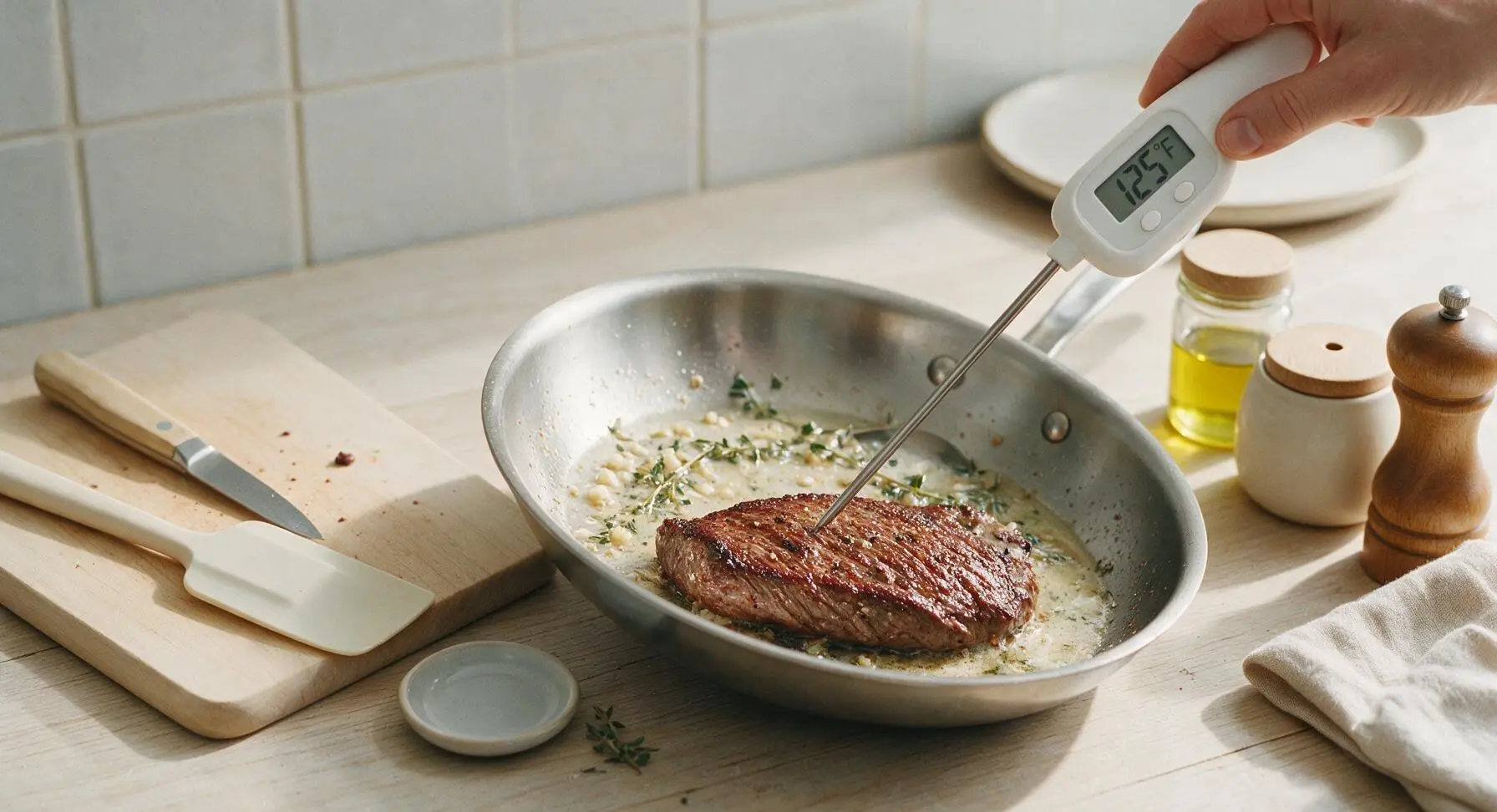
Step 5
step5:Baste Steak to Doneness
Step 5
step5:Baste Steak to Doneness
6

Rest Cooked Steaks

Use the tongs to transfer the cooked steaks from the pan to the matte warm off-white ceramic dinner plate set on the counter in front of the stovetop. Spoon 1 tablespoon of the hot garlic-thyme butter from the pan over the top of the steaks, then tent loosely with a small piece of aluminum foil. Let rest for 5 full minutes—this allows the muscle fibers to relax and reabsorb juices, preventing juice runoff when slicing.
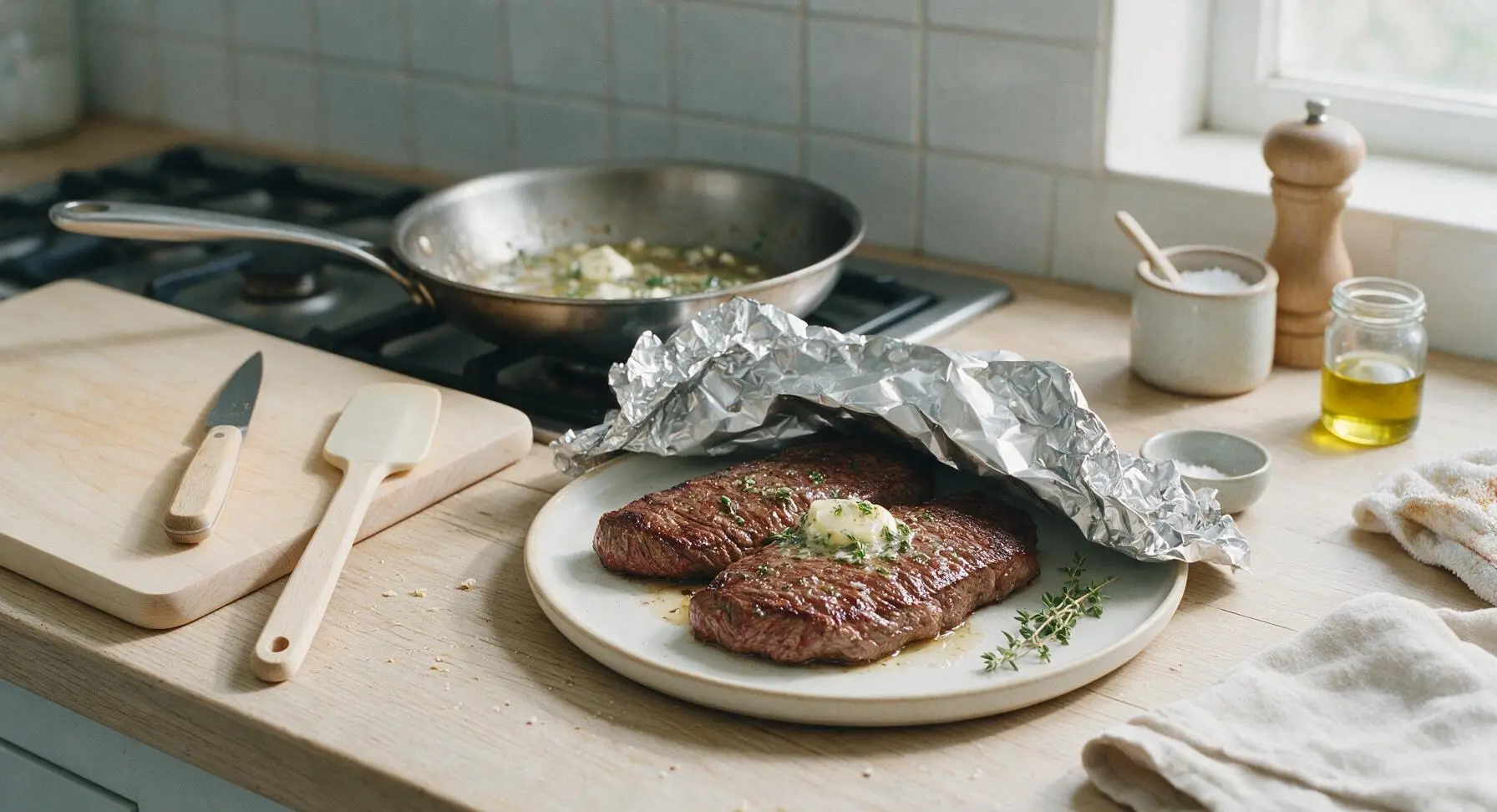
Step 6
step6:Rest Cooked Steaks
7

Slice Against the Grain

After 5 minutes of resting, remove the foil tent. Identify the direction of the parallel muscle fibers (the grain) running across the steak. Hold the chef knife at a slight 45-degree angle, and slice the steaks into 1/4-inch thick slices, cutting directly perpendicular to the grain. Slicing against the grain shortens tough muscle fibers, ensuring every bite is tender instead of chewy.
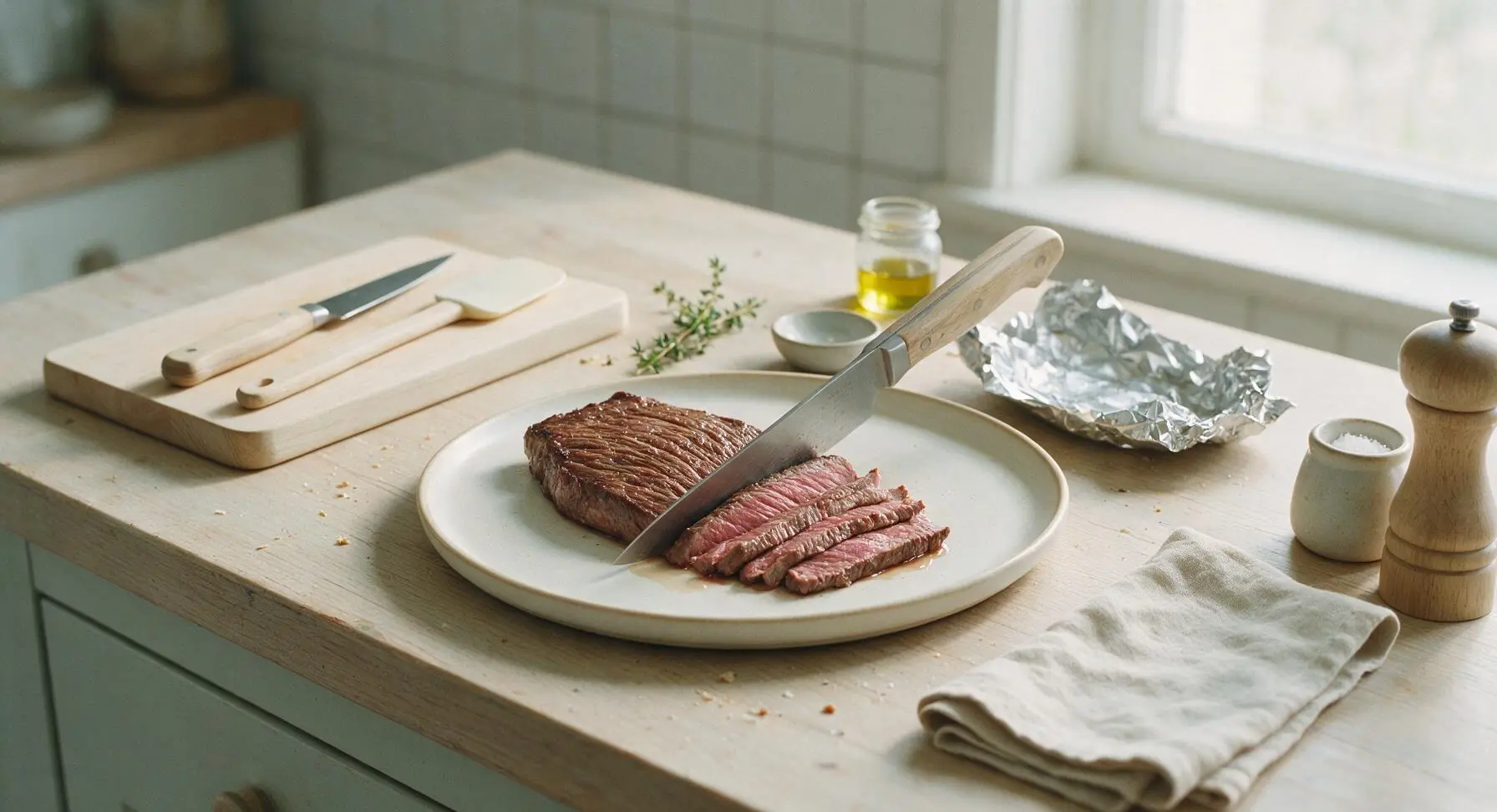
Step 7
step7:Slice Against the Grain
8

Plate and Garnish

Fan the sliced steak in a gentle overlapping arc across the center of the off-white dinner plate. Drizzle 1 teaspoon of the remaining pan butter over the slices, then sprinkle with the remaining 0.5 teaspoon of flaky sea salt, and scatter a few picked thyme leaves from the pan over the top for garnish. Set the small matching off-white ramekin at the edge of the plate to hold extra pan butter for serving, and serve immediately.
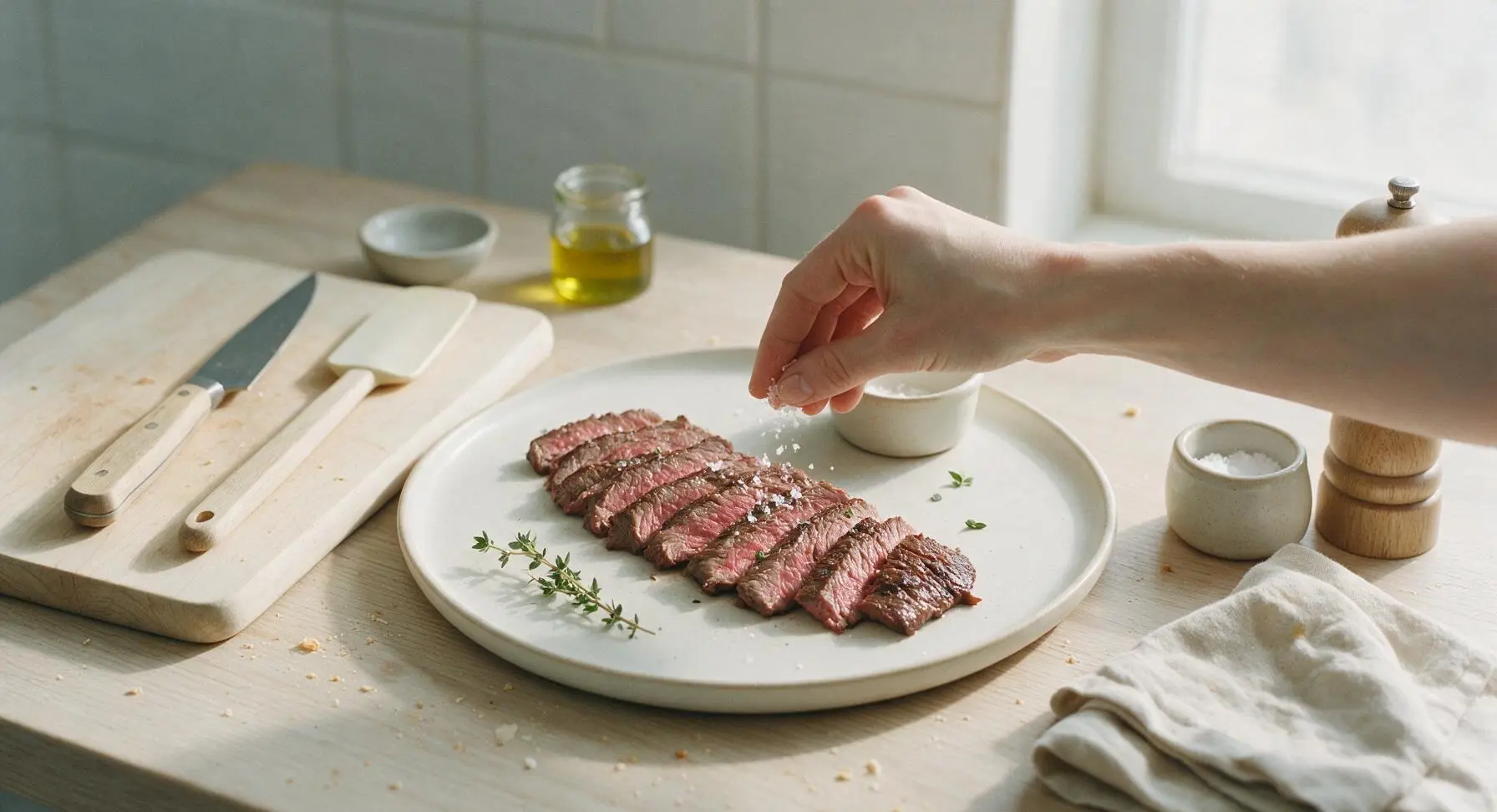
Step 8
step8:Plate and Garnish

Tips

1.Never skip drying the steak surface thoroughly: any remaining surface moisture will steam instead of sear, preventing the crisp, flavorful maillard crust that defines restaurant-quality steak. Disposable paper towels work better than cloth towels for absorbing every trace of surface dampness without leaving lint.
2.Avoid cutting into steak to check doneness: piercing the meat lets precious, flavorful juices run out onto the plate instead of staying in the slices. An inexpensive instant-read thermometer is the most reliable way to hit your exact preferred doneness every time, with zero guesswork.
3.Always slice flat iron steak against the grain: this cut has distinct long, tough muscle fibers running lengthwise, and slicing parallel to the grain will result in chewy, stringy bites even if you cooked the steak perfectly. A 45-degree slicing angle creates wider, more tender slices with a more elegant presentation.
✨ You May Also Like

Main Course
🍜 United Kingdom

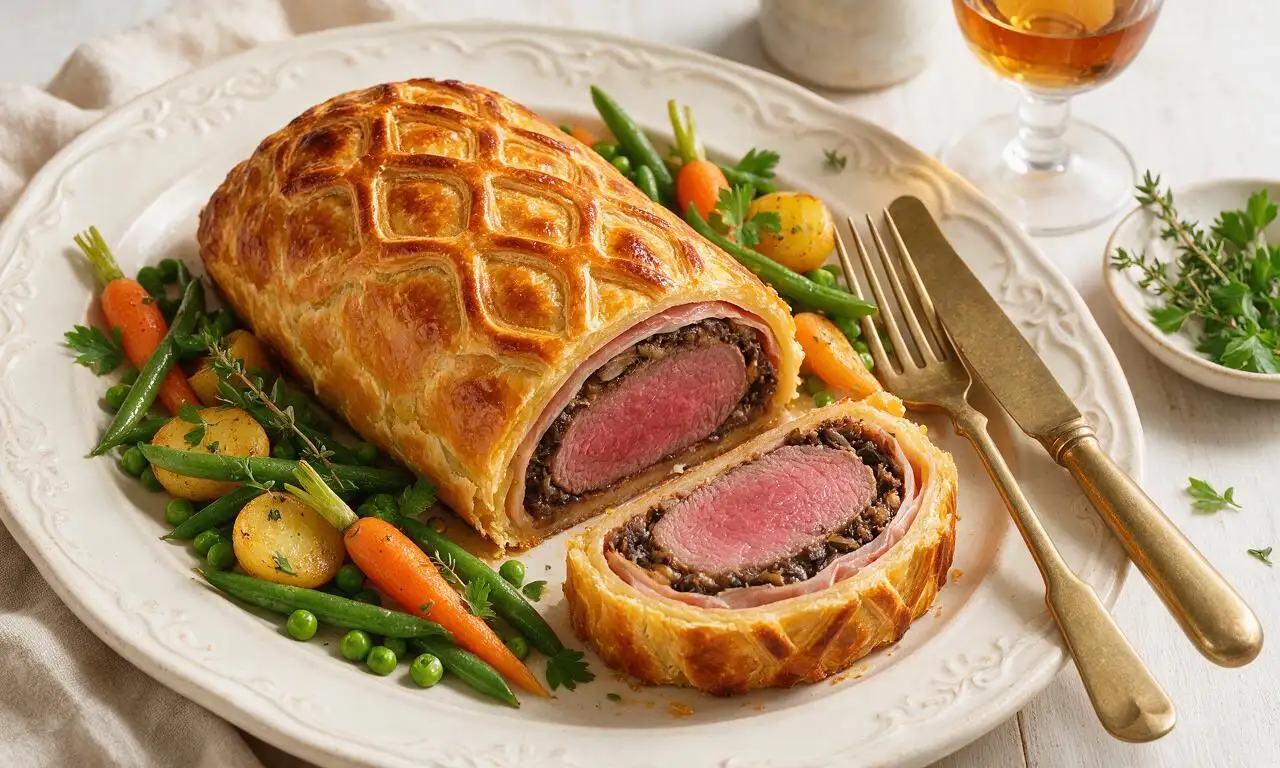
A showstopping classic of tender seared beef, savory mushroom duxelles, and crisp prosciutto wrapped in flaky golden puff pastry, baked to juicy perfection.

⏱️ 2 hours 1Main Course ★ 4.7
Main Course
🍜 India

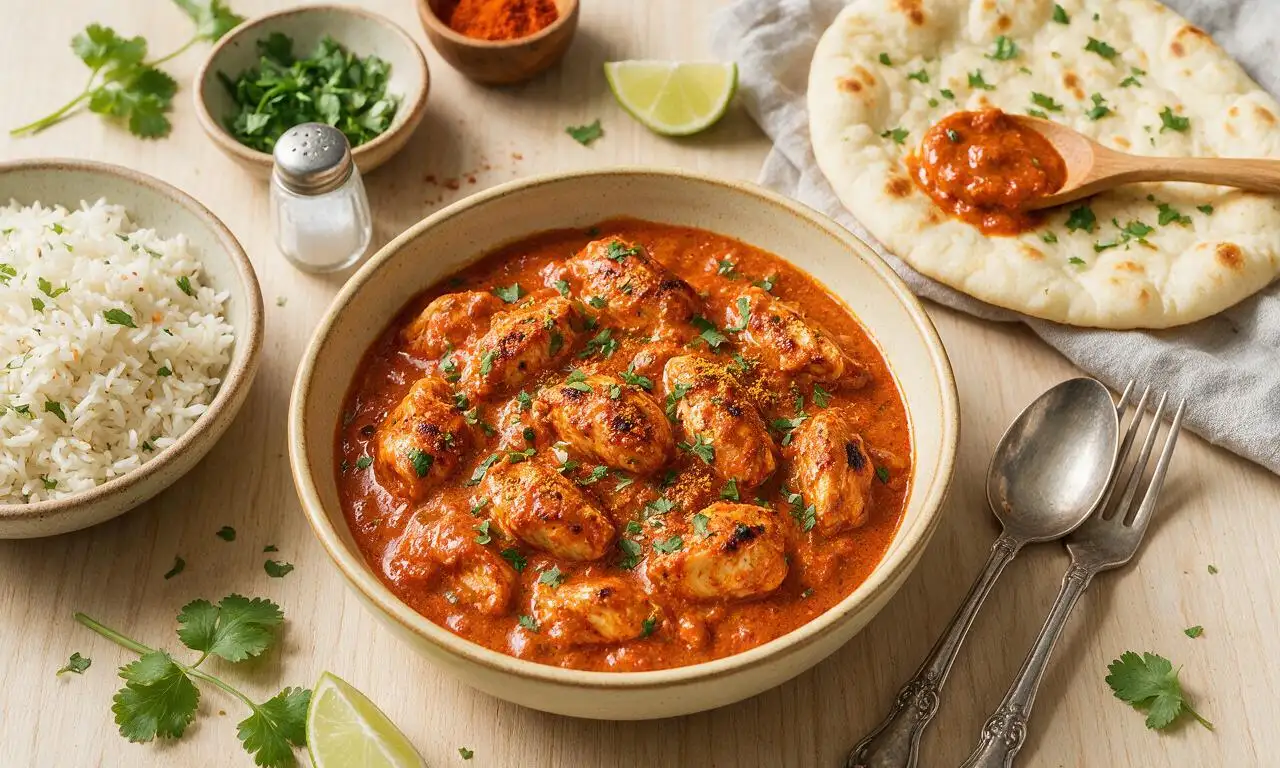
Tender charred marinated chicken simmered in a rich, spiced creamy tomato sauce, this iconic Anglo-Indian curry pairs perfectly with basmati rice or warm naan.

⏱️ 50 minuteMain Course ★ 4.6
Main Course
🍜 Thailand

Classic tangy, sweet, and savory Thai stir-fried rice noodles with shrimp, tofu, and crunchy garnishes, balancing all five core Thai flavor profiles.

⏱️ 30 minuteMain Course ★ 4.5
Main Course
🍜 United Kingdom

Crispy golden beer-battered cod and fluffy double-fried chips, served with tangy tartar sauce and malt vinegar: the timeless, beloved British pub comfort classic.

⏱️ 45 minuteMain Course ★ 4.7
Main Course
🍜 Mexico

Smoky, chile-marinated pork tacos with caramelized pineapple, fresh cilantro, and lime: a beloved classic Mexican street food perfect for casual summer gatherings.

⏱️ 1 hour 45Main Course ★ 4.8
Main Course
🍜 United States

Crunchy Fritos corn chips layered with savory beef chili and melted cheddar, topped with cool, zesty fixings for a beloved, cozy Tex-Mex comfort food.

⏱️ 35 minuteMain Course ★ 4.8

flat iron steak:Frequently Asked Questions

1.What makes flat iron steak a good pick for this recipe instead of pricier cuts like filet mignon? ▾
Flat iron is a heavily marbled, ultra-tender shoulder cut that costs 30-50% less than filet, with a deeper, beefier flavor. Its even 1.5-inch thickness holds up perfectly to high-heat pan searing, developing that craveable crisp crust without overcooking the juicy center for restaurant-level results on a budget.
2.How do I keep the garlic from burning when I sear the steak? ▾
Burnt garlic adds bitter, unpleasant flavor, so hold off on adding crushed garlic until the last 60-90 seconds of searing, right when you add the butter and thyme. Keep heat at medium-high once you add aromatics, and tilt the pan to spoon melted butter over the steak continuously so garlic toasts instead of scorching on the hot pan surface.
3.What internal temperature should I aim for to get a perfect medium-rare center? ▾
For that juicy, tender medium-rare sweet spot, pull the steak from the pan when your instant-read thermometer reads 125–130°F inserted into the thickest part. Remember the steak will cook an extra 5°F from carryover heat as it rests, landing you at a perfect 130–135°F final temp with a warm, evenly pink center.
4.Do I really need to let the steak rest after cooking, and how long? ▾
Yes, skipping rest is the #1 cause of juicy steak running all over your plate instead of staying in the meat. Let seared steaks rest on a cutting board tented loosely with foil for 5 full minutes after cooking. That gives muscle fibers time to relax and reabsorb garlic-thyme butter juices so every bite is moist.
5.Can I use dried thyme instead of fresh thyme sprigs if that’s all I have? ▾
You absolutely can, just adjust the quantity since dried herbs are far more concentrated. Use 1 teaspoon of dried thyme in place of the 4-5 fresh sprigs the recipe calls for. Add it when you add butter and garlic to let its flavor infuse, just note you won’t get that same bright, herbaceous pop fresh thyme adds.
6.Why does my steak never get that crisp, golden restaurant-style crust at home? ▾
The two biggest culprits are a wet steak surface and too-low pan heat. Pat steaks completely dry with paper towels on all sides right before seasoning, and heat oil in a heavy pan until it just shimmers before adding steak. Don’t move the steak for the first 3-4 minutes of searing to let that crust build.
7.What’s the best way to season the steak before searing? ▾
Keep it simple to let the beef and garlic-thyme butter shine. Season all sides of the steak generously with kosher salt and freshly cracked black pepper 45 minutes before cooking if you have time, or right before it hits the pan if you’re crunched. Skip heavy spice rubs here—they’ll burn before the steak finishes cooking.
8.Can I cook this recipe if my flat iron steaks are thinner than 1.5 inches? ▾
You can, you’ll just need to adjust your cook time to avoid overcooking. For 1-inch thick flat iron cuts, sear 2-3 minutes per side before adding butter, garlic, and thyme for the final basting step, and pull them 5°F earlier at 120–125°F to account for faster carryover heat rise.
9.Do I need to bring my steak to room temperature before cooking? ▾
It makes a noticeable difference in even cooking, so yes if you can plan ahead. Pull steaks out of the fridge 30–45 minutes before cooking so they come up to 60–70°F. Cold steaks seize up on hot pans, cook unevenly with an overcooked outer ring, and take longer to reach your target doneness.
10.Can I make this recipe with frozen steak if I forgot to thaw it? ▾
You absolutely can, no thaw required! Skip the room temp step, pat the frozen steak dry, sear it 4-5 minutes per side over medium-high heat to build a crust, then baste with butter, garlic, and thyme for an extra 2-3 minutes until it hits 125°F internal for a juicy, crusty result.
11.How do I check doneness if I don’t have an instant-read meat thermometer? ▾
Use the simple face test as a backup! Gently press the center of the steak with your finger: rare feels like the soft pad of your cheek, medium-rare feels like the firm but springy spot right below your cheekbone, and medium feels like the firm tip of your nose. A $15 instant-read thermometer is still the most reliable pick, though.
12.What sides pair best with this garlic-thyme flat iron steak for date night? ▾
Stick with simple, complementary sides that don’t overpower the rich, nutty steak flavor. Crispy roasted fingerling potatoes, garlicky sautéed spinach, creamy mashed cauliflower, or a bright arugula salad with lemon vinaigrette all work beautifully. You can even make a quick pan sauce from the leftover browned bits in the pan for extra flair.
13.What kind of pan works best for getting a good sear on this steak? ▾
Reach for a heavy-bottomed cast iron skillet or carbon steel pan if you have one—they hold high, even heat way better than thin nonstick pans, which can’t get hot enough to build a proper crust without damaging the nonstick coating. If you only have stainless steel, that works too, just add an extra teaspoon of oil to prevent sticking.
14.How should I store leftover cooked steak, and how long will it keep? ▾
Let leftover steak cool completely, then wrap it tightly in plastic wrap or store it in an airtight container in the fridge for up to 3 days. For the best texture, reheat slices gently in a skillet over low heat with a pat of butter, or eat it cold on salads or sandwiches—skip the microwave, which makes steak tough and rubbery.
15.Is it normal for my flat iron steak to have a thin line of tough connective tissue? ▾
Most store-bought flat iron steaks come pre-trimmed, but you may occasionally spot a thin silvery seam of connective tissue running through the center. If you see it, you can slice it out before cooking, or just cut cooked steak against the grain into thin slices, which breaks up that tissue so it’s totally tender when you eat it.

Comments (5)

2 hours ago

OMG this flat iron steak came out perfectly juicy for our Sunday family dinner! I was worried I’d overcook it since I usually mess up pan-seared cuts, but the garlic-thyme butter basting step is a total game changer. My kids loved it – my 10 year old asked for seconds before he even finished his first serving, which is the highest praise in our house! Served it with roasted baby potatoes and steamed broccoli, everyone cleaned their plates. Will absolutely be adding this to our weekly rotation.

30 minutes ago

So happy this was a hit with your family, MamaBearCooks82! The basting step really does lock in that garlicky herby flavor – pro tip for next time, let the steak rest 5 full minutes after cooking to keep all those juices in, it makes an even bigger difference! 😊

5 minutes ago

Totally agree about the resting step! I skipped it the first time I made this and lost half the juice on my cutting board, second time around it was restaurant quality. My partner said it was better than the steak we got at our fancy anniversary dinner last month!

2 days ago

This was SO good, perfect for quick weeknight meals since total cook time is only 10 minutes! I prepped a big batch Sunday to slice up for salads and grain bowls all week, and it held up great. Knocked off one star only because I wish there was a note about what internal temp to pull it at for medium-rare – I had to dig out my meat thermometer guide last minute. Definitely will make again though!

yesterday

Thanks so much for the honest feedback, Mia! Great call on the internal temp note – for medium-rare, pull the steak when it hits 130°F in the thickest part, since it will keep cooking a few degrees while resting. I just added that tip to the recipe card to make it easier for everyone else!

3 days ago

Brought this to our neighborhood block party potluck last weekend and people were hounding me for the recipe before I even set the platter down! I sliced it thin against the grain like the recipe said, set out some horseradish sauce on the side for dipping, and it was gone in 15 minutes flat. Who knew a cheap, quick steak could impress that much? Total crowd pleaser.

2 days ago

Oh I’m so glad you mentioned the horseradish dip! I’m making this for my husband’s birthday cookout this weekend and was stuck on what side sauce to serve, that sounds perfect. Did you serve it warm or room temp for the potluck?

5 days ago

Tasted pretty solid, but I found the cook time was a little off for my stovetop. My burners run super hot, so after 3 minutes per side the steak was closer to medium well than the medium I wanted. Also, I didn’t have fresh thyme so I used dried, and it was fine but I bet fresh is way better. Not a bad recipe overall, just might need to adjust for your own stove, new cooks beware.

1 week ago

Game changer for weeknight date nights! My partner and I have been trying to do more at-home date nights instead of dropping $100 on steak dinners out, and this recipe tastes exactly like what we order at our favorite local steakhouse. The garlic and thyme infuse the butter so well, I ended up drizzling the extra pan butter over our mashed cauliflower too. 10/10, no notes.