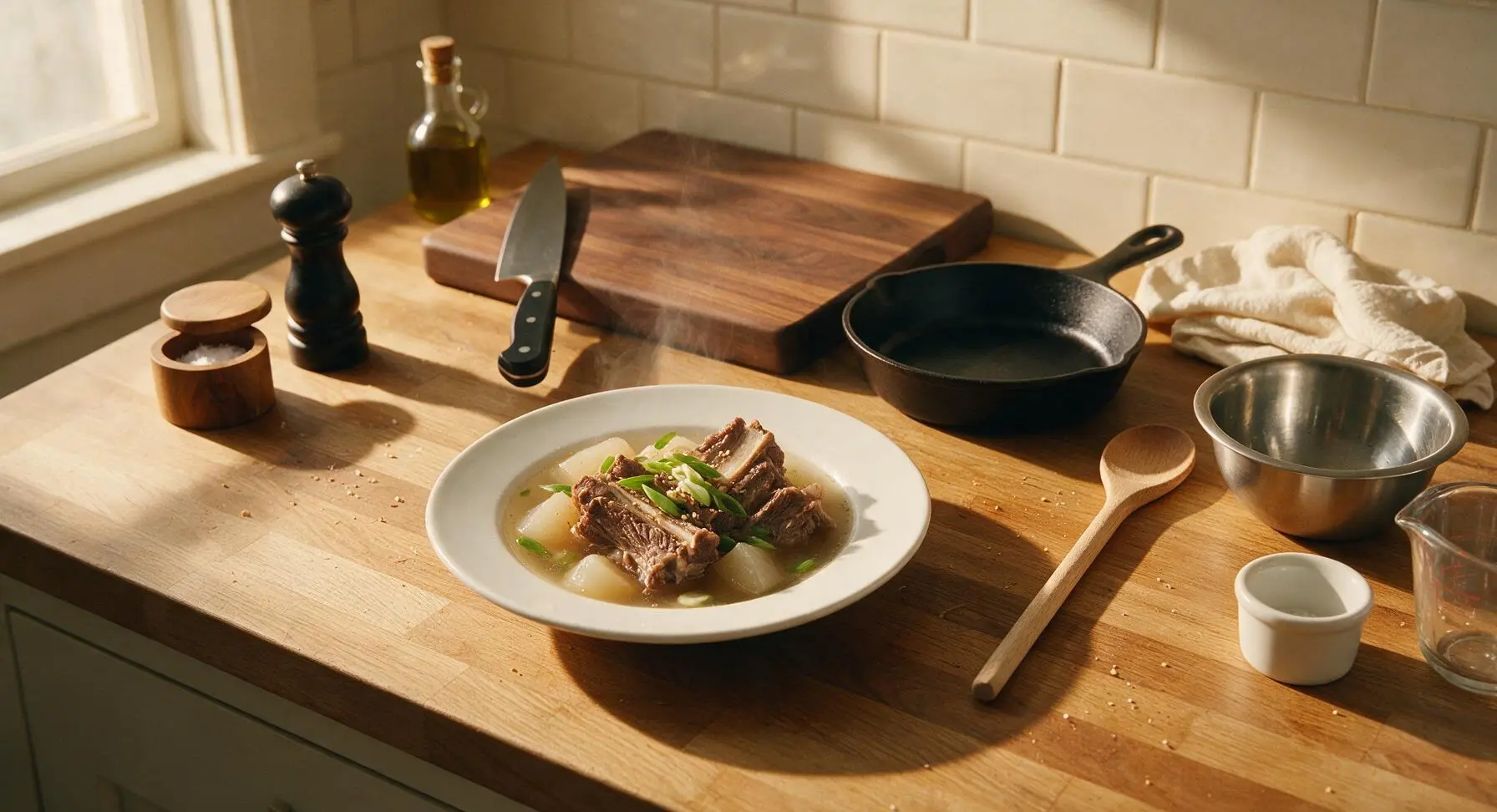
Galbitang Ribs

title 1
Galbitang Ribs
⏱️ cook time 2 hours 30 minutes
🍽️ servings 4
⚡ Difficulty medium

intro

Slow-simmered Korean beef short rib soup with fall-off-the-bone tender meat, clear savory broth, and sweet soft radish — a nourishing, comforting cold-weather classic.

Ingredients
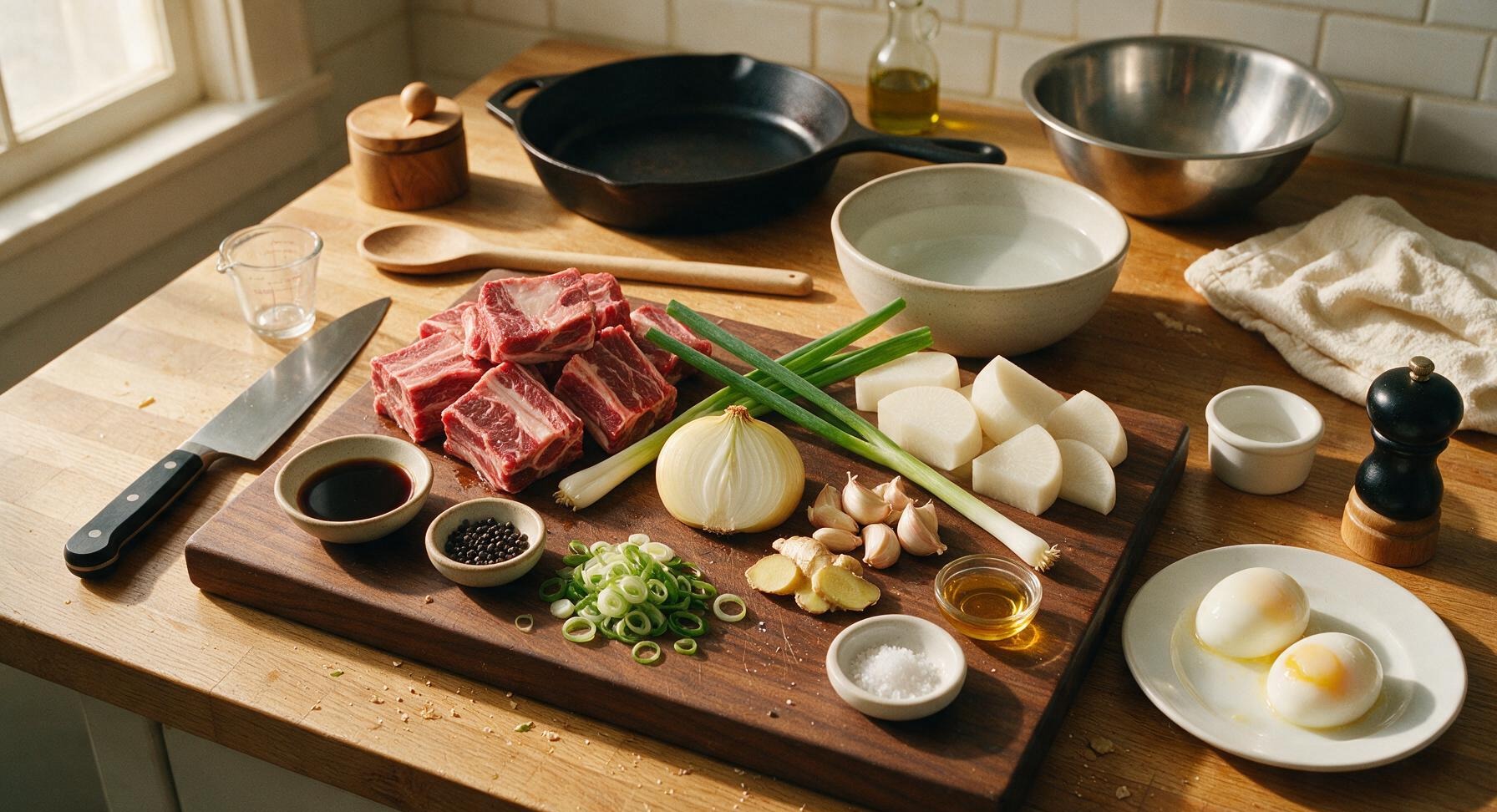
Bone-in beef short ribs (cut across the bone into 5cm pieces) 1.2kg
Korean radish (mu), peeled and cut into 5cm thick half-moons 300g
Medium yellow onion, peeled and halved through root 200g (1 whole)
Whole garlic cloves, crushed lightly 25g (8 cloves)
Fresh ginger, peeled and sliced thick 15g (5cm piece)
Scallions, 2 left whole for broth, 2 thinly sliced for garnish 60g (4 whole)
Korean soup soy sauce (guk-ganjang) 30ml (2 tbsp)
Whole black peppercorns 1 tbsp
Toasted sesame oil 5ml (1 tsp)
Coarse sea salt 1 tsp (plus more to taste)
Cold filtered water 3L
Large eggs (optional, soft-boiled for garnish) 2 pieces

Steps

1

Prep and soak ribs

First, place the cut beef short ribs on the bamboo cutting board, and use the chef knife to trim away any thick, hard chunks of surface fat, leaving thin layers of soft fat for flavor. Transfer trimmed ribs to the medium stainless steel mixing bowl, cover completely with cold filtered water, and let soak for 2 hours at room temperature, changing the water every 30 minutes. This draws out residual blood to keep the broth perfectly clear rather than cloudy. Drain ribs in the small stainless steel colander once soaking is complete, rinsing briefly under cold running water.
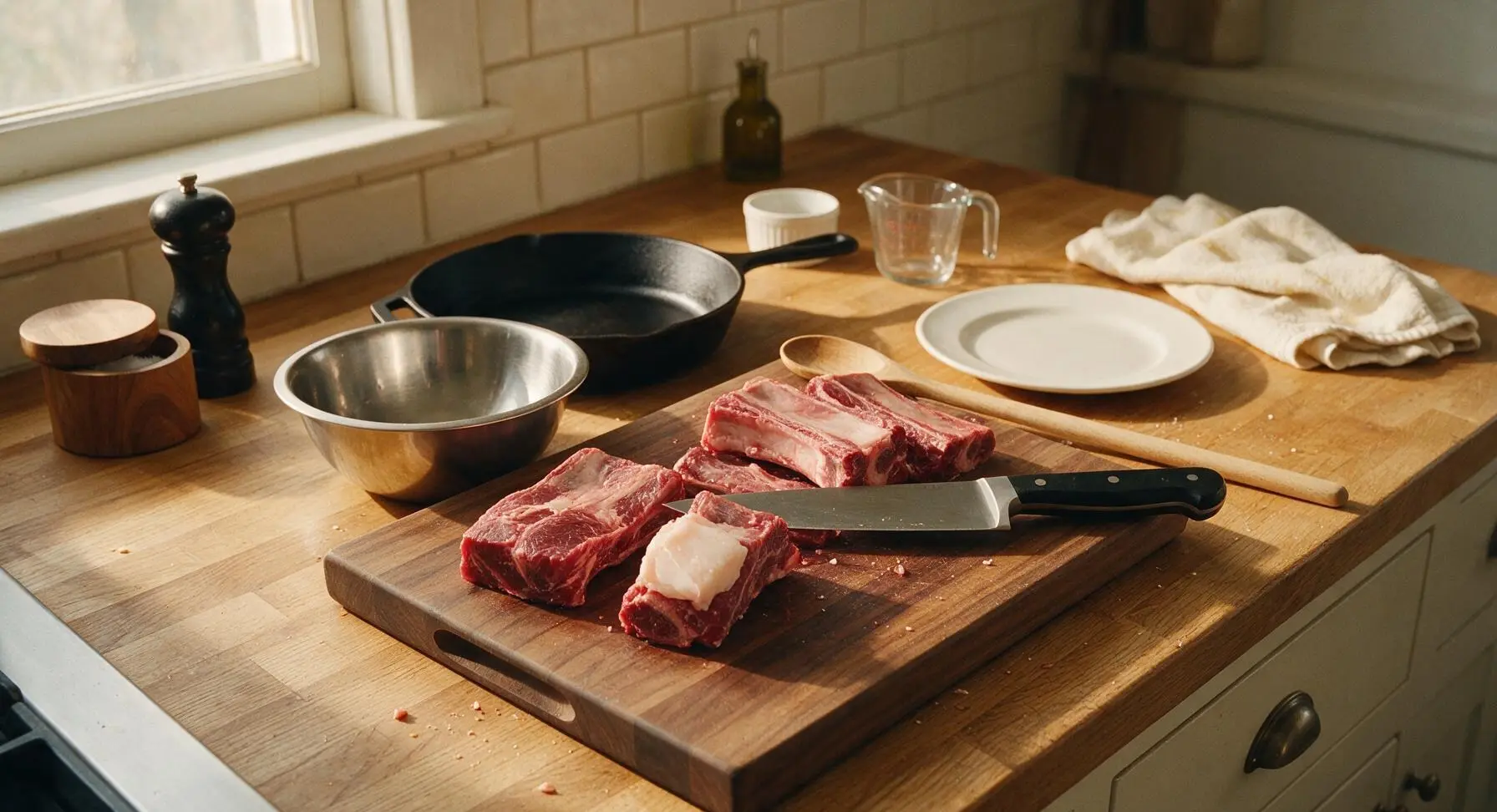
Step 1
step1:Prep and soak ribs
2

Blanch ribs for cleaning

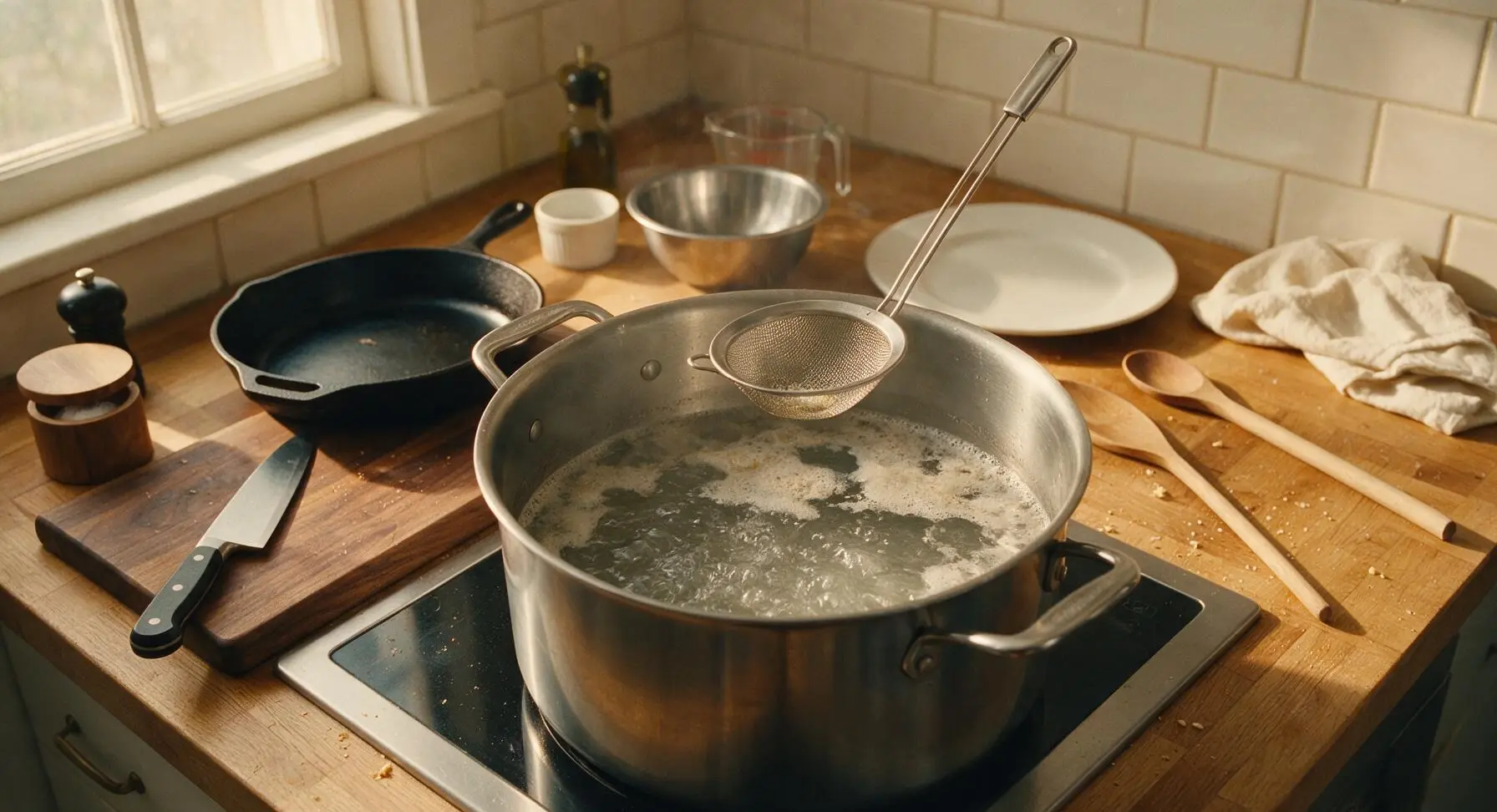
Fill the large 8L stainless steel stock pot with 2L of cold water, bring to a rolling boil over high heat (100C/212F) on the induction cooktop. Add the drained, soaked ribs to the boiling water, and blanch for exactly 7 minutes. Grey, bitter-tasting scum will foam to the surface as the ribs cook. Use the fine-mesh stainless steel skimmer to remove large floating scum pieces as the ribs blanch, to prevent it from sticking back to the meat.
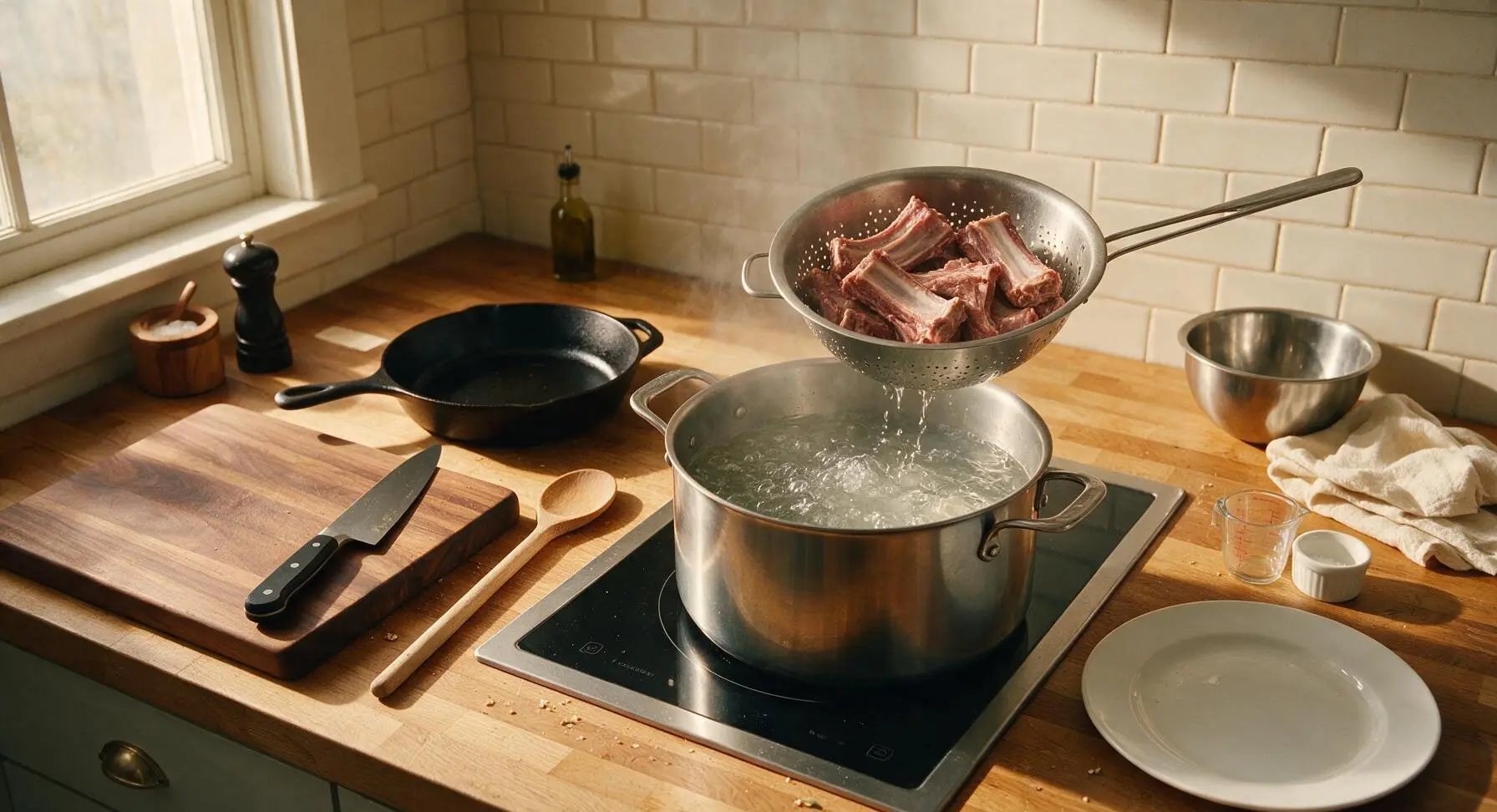
Step 2
step2:Blanch ribs for cleaning
Step 2
step2:Blanch ribs for cleaning
3

Rinse blanched ribs well

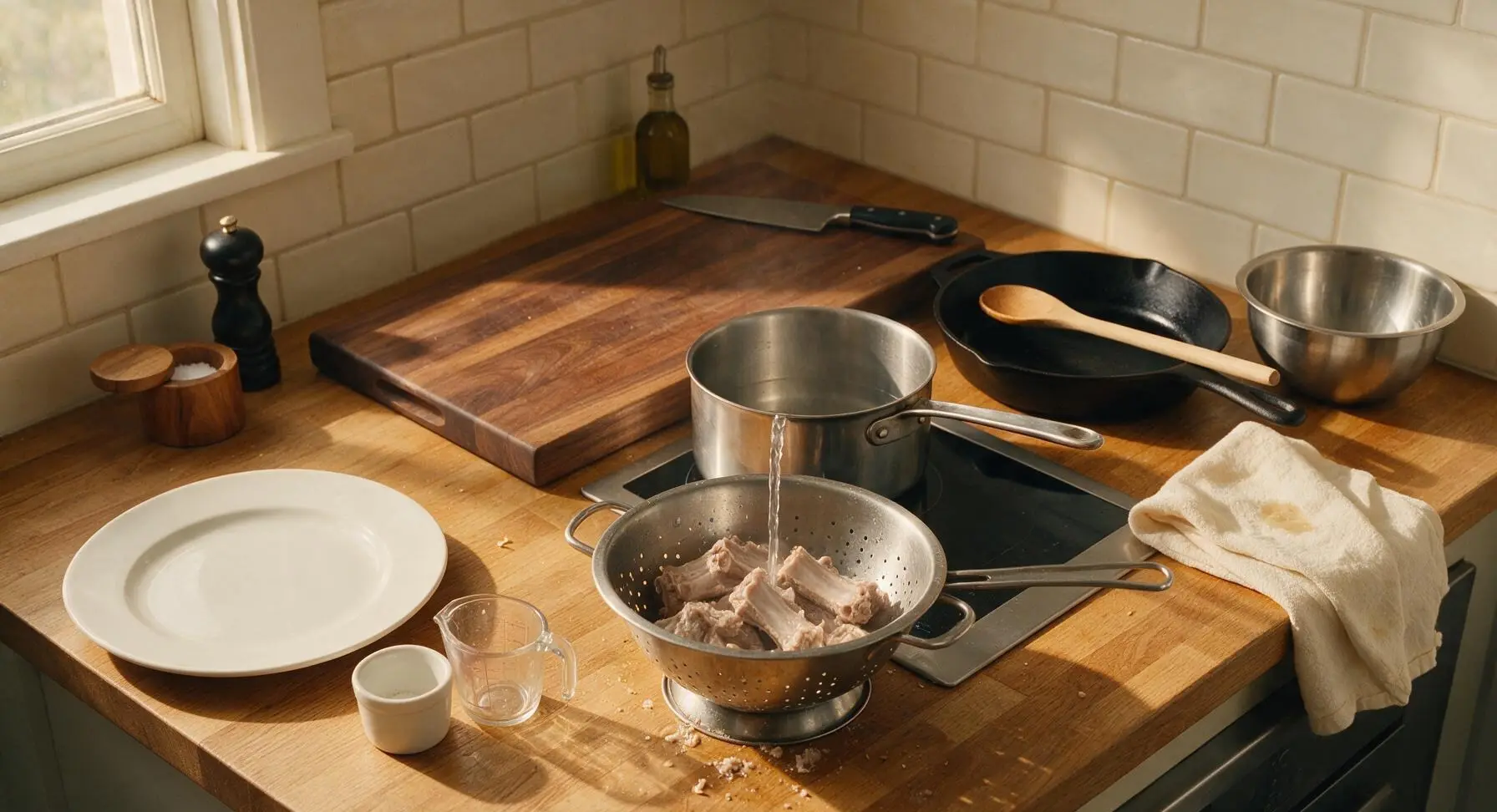
After 7 minutes of blanching, turn off the heat, drain all cloudy blanching water completely from the pot. Transfer the blanched ribs back to the colander, and rinse each rib thoroughly under warm running water to wash off any clinging grey scum from the bone and meat surface. Scrub the inside of the stock pot completely clean of any stuck scum residue, as leftover scum will make the finished broth cloudy. Pat the pot dry with a corner of the linen towel before returning it to the central induction cooktop.
Step 3
step3:Rinse blanched ribs well
4

Simmer broth low and slow

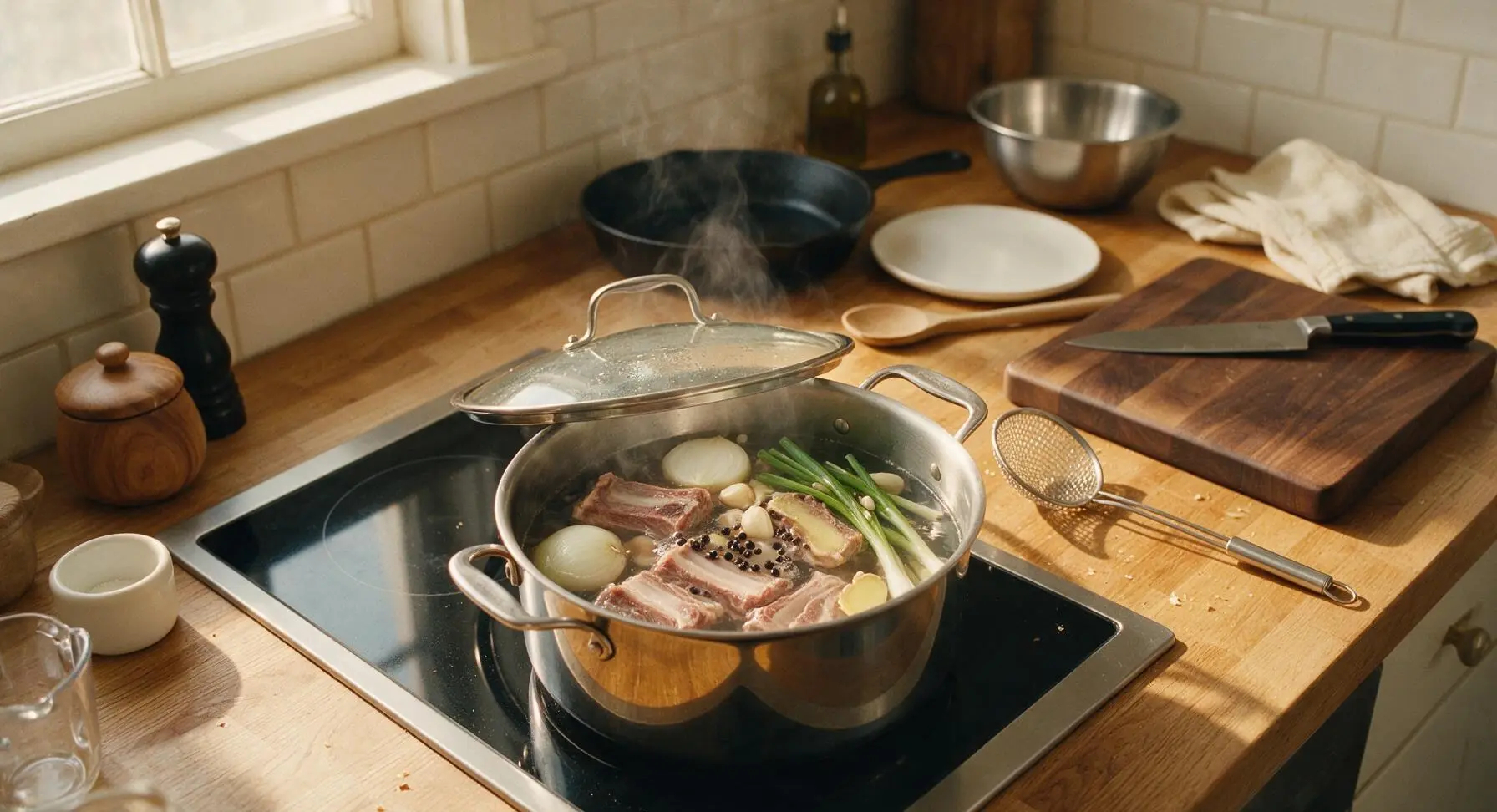
Return the cleaned, rinsed ribs to the dry stock pot, add 3L of cold filtered water, the halved onion, lightly crushed garlic, thick-sliced ginger, 2 whole scallions, and whole black peppercorns. Bring the pot to a gentle boil over medium-high heat, then immediately turn heat down to low to maintain a soft, steady simmer (around 85C/185F — no rolling bubbles, just small gentle breaks on the broth surface). Rest the glass lid partially on the pot, leaving a 2cm gap to prevent boiling over, and simmer for 1 hour 45 minutes, skimming any small amounts of floating fat or fine scum every 30 minutes with the fine-mesh skimmer.
Step 4
step4:Simmer broth low and slow
5

Add radish and season

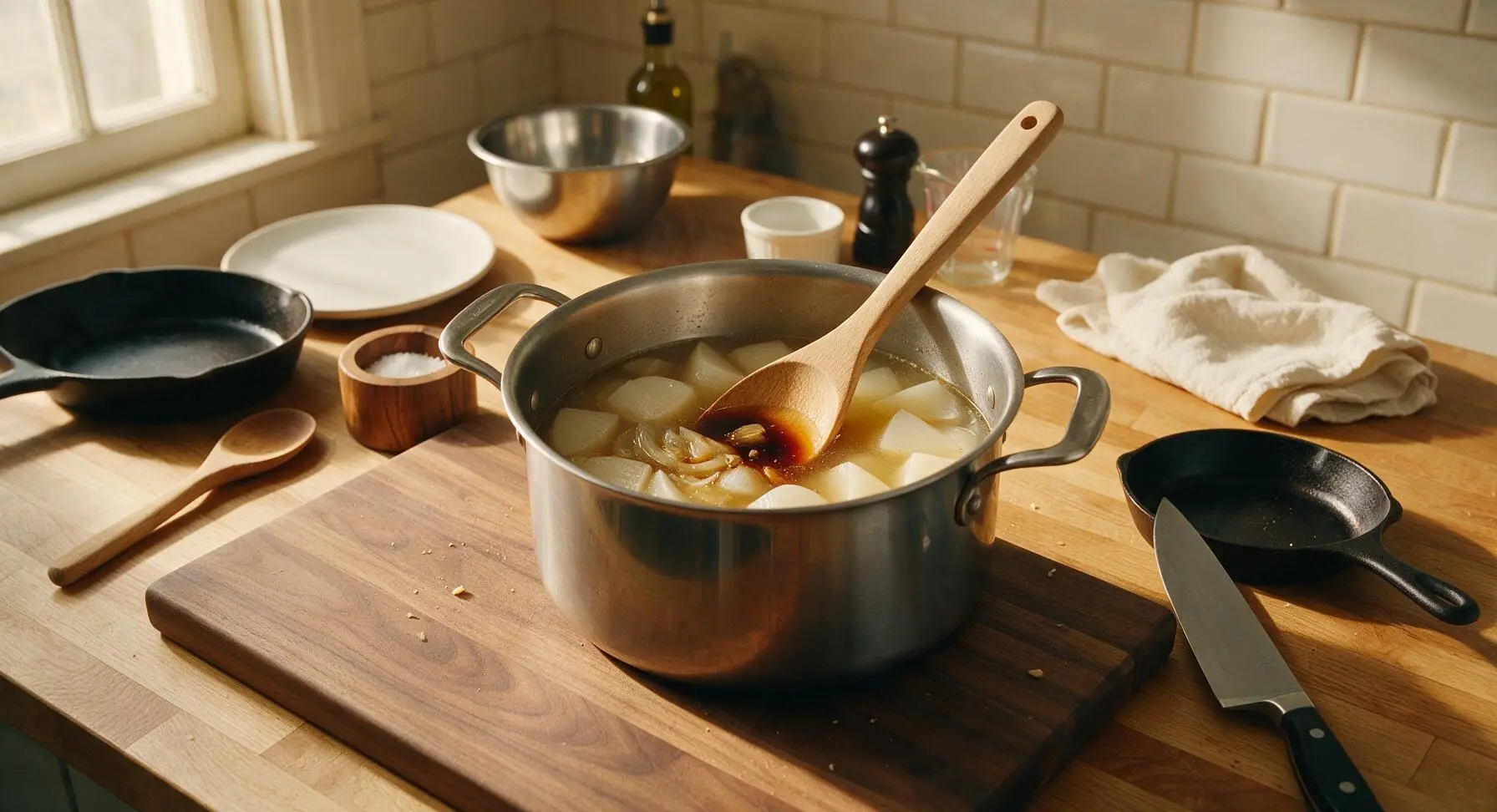
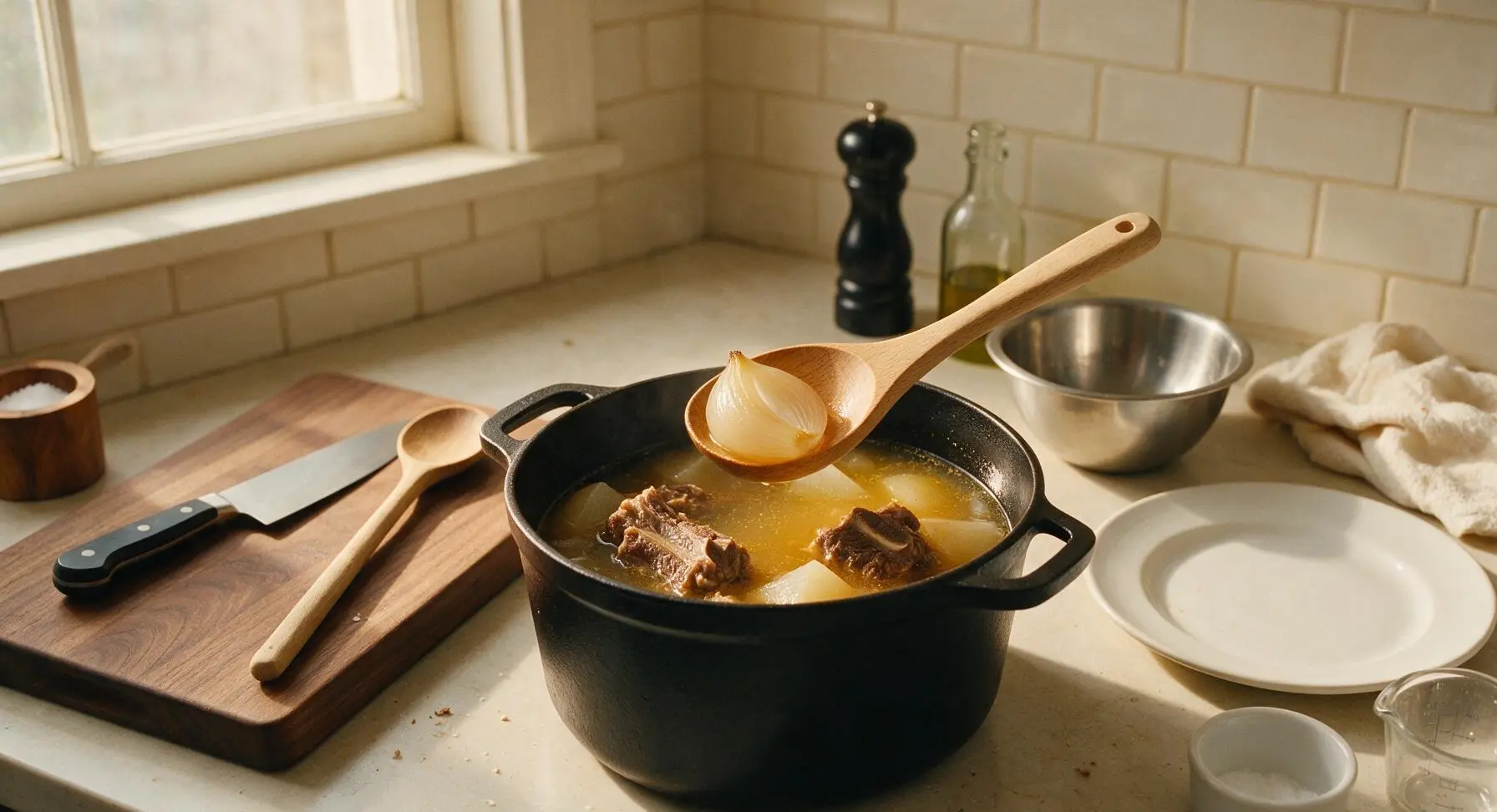
After 1 hour 45 minutes of simmering, use the beech wood ladle to push the ribs aside, then add the thick half-moon chunks of Korean radish and 2 tablespoons of Korean soup soy sauce to the pot. Stir gently with the ladle to combine the soy sauce evenly into the broth. Continue simmering partially covered for another 30 minutes, until the radish is completely tender when pierced with the tip of the chef knife (it should slide off the knife easily with no resistance, no hard white core left) and the ribs are tender enough to pull away from the bone with a light tug.
Step 5
step5:Add radish and season
6

Strain broth and adjust

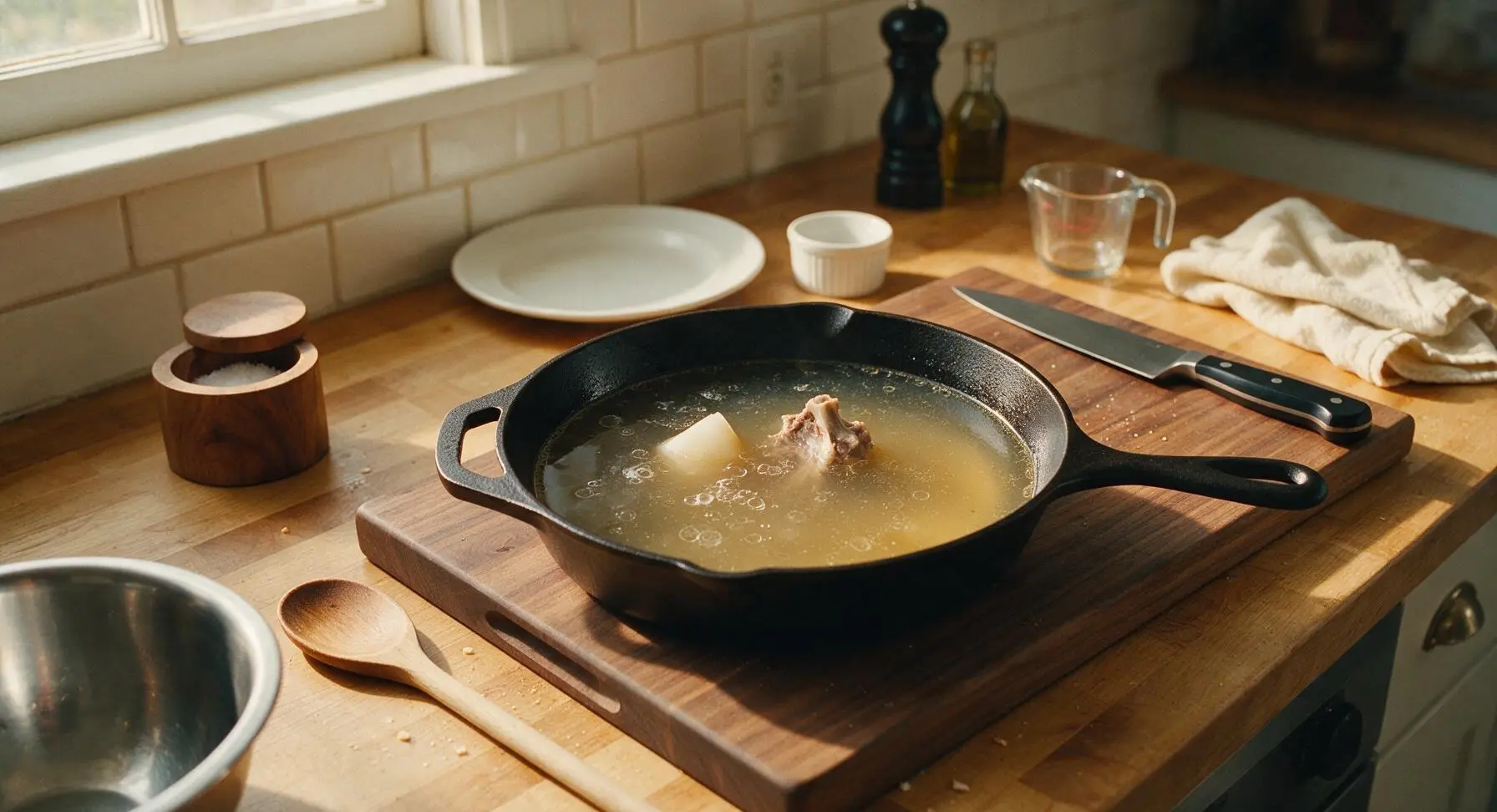
Once ribs and radish are fully tender, use the ladle to fish out all spent aromatics: the soft cooked onion halves, ginger slices, crushed garlic, whole scallions, and loose peppercorns, discarding them. Taste the broth carefully, and adjust seasoning with a pinch of coarse sea salt if needed — the broth should be light, clean, and savory, not overly salty, as the ribs and radish carry their own rich flavor. If using optional soft-boiled eggs, lower whole room-temperature eggs into the simmering broth and cook for 6 minutes for soft, runny yolks, then remove, peel, and halve for garnish.
Step 6
step6:Strain broth and adjust
Step 6
step6:Strain broth and adjust
7

Ladle soup and garnish

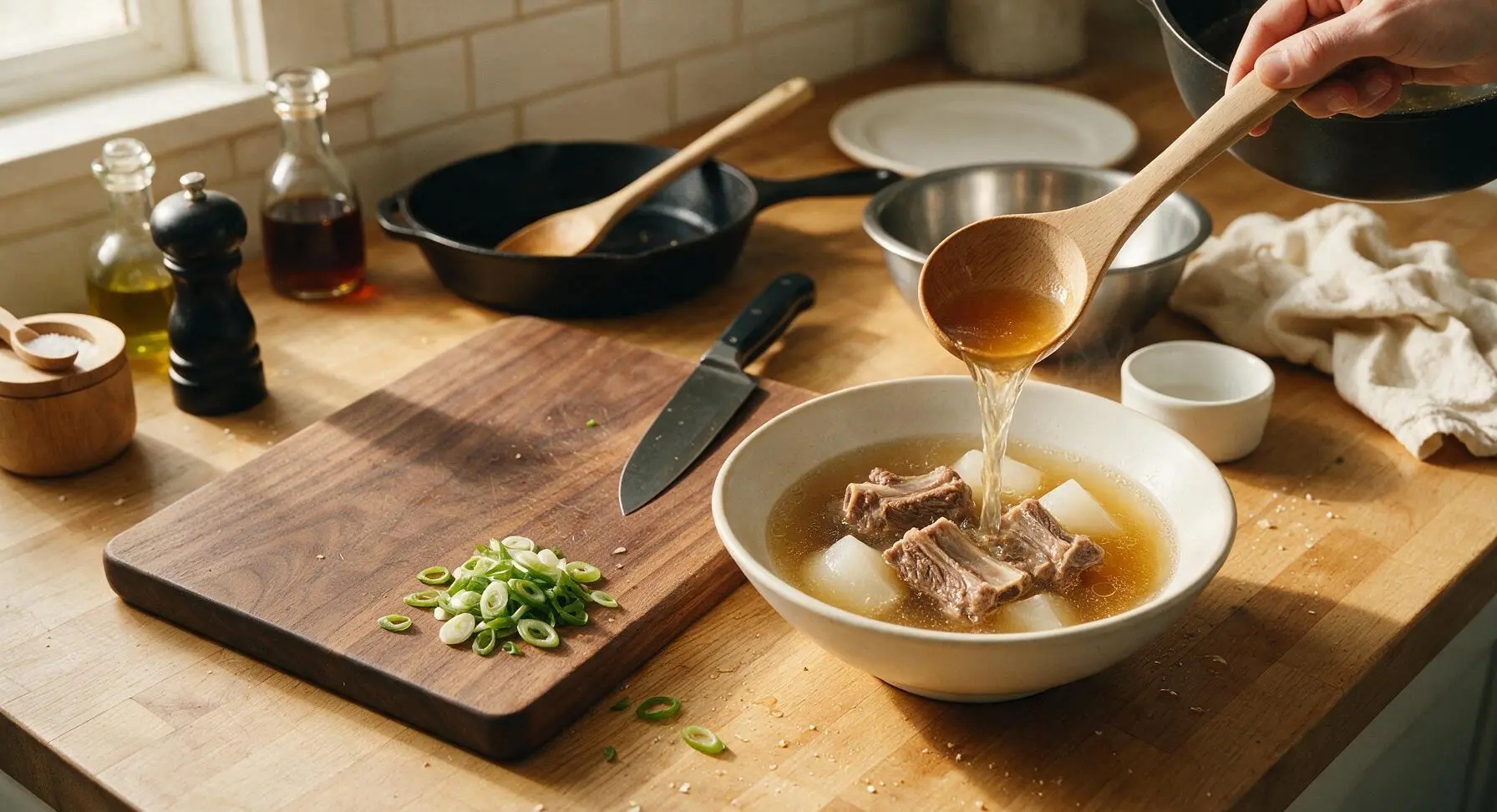
Arrange 3 pieces of tender short rib and 3-4 chunks of cooked radish in the base of each off-white ceramic deep soup bowl. Ladle hot clear broth over the solids to fill the bowl 3/4 full. Top each bowl with a generous sprinkle of thinly sliced fresh scallion, a tiny drizzle of toasted sesame oil, and a halved soft-boiled egg if using. Serve immediately while piping hot, with small dishes of extra sea salt and black pepper on the side for diners to adjust to their taste.
Step 7
step7:Ladle soup and garnish

Tips

1.Never boil Galbitang at a rolling boil for long periods: violent boiling emulsifies fat and scum into the broth, turning it cloudy and murky instead of the signature clear, clean pale gold. Keep the heat low enough for only tiny bubbles to break the surface.
2.Do not add radish too early in the simmer: Korean radish turns mushy and loses its sweet, bright flavor if cooked for more than 30 minutes, so adding it in the final half hour ensures it is tender but still holds its shape and subtle sweetness.
3.Use Korean soup soy sauce (guk-ganjang) instead of regular soy sauce: regular soy sauce is darker, saltier, and will discolor the clear broth and overpower the delicate beef flavor, while soup soy sauce is lighter, fermented specifically for clear soups and adds depth without darkening the liquid.
✨ You May Also Like

Soups & Stews
🍜 Japan

Rich, umami-dense Hokkaido-style miso ramen with chewy noodles, savory fermented broth, and classic toppings, a cozy, deeply satisfying warm meal.

⏱️ 45 minuteSoups & Stews ★ 4.5
Soups & Stews
🍜 United States

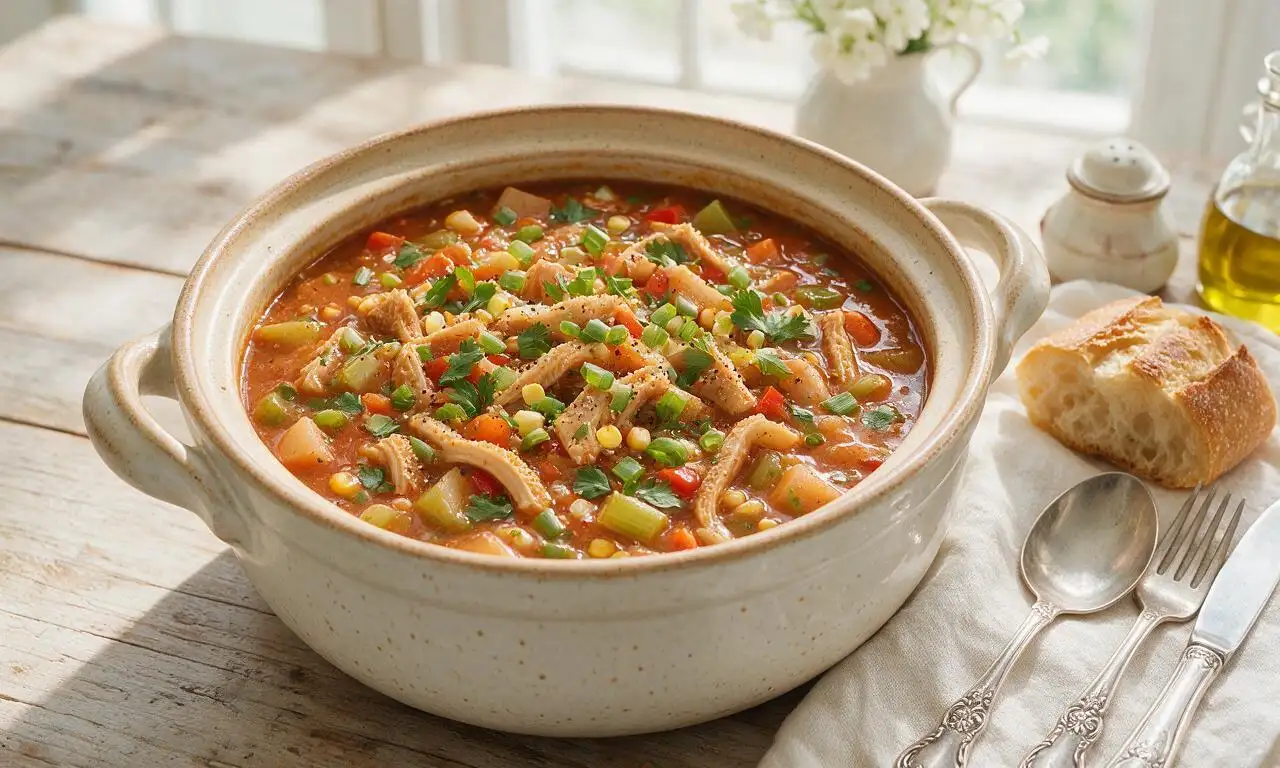
A hearty, peppery tripe and root vegetable stew with colonial Philadelphia roots, thick, warming, and packed with bold savory flavor for cold winter days.

⏱️ 2 hours 3Soups & Stews ★ 4.6
Soups & Stews
🍜 Mexico

Hearty, warming red pork posole loaded with tender hominy, slow-simmered in a rich smoky chile broth, served with zesty fresh garnishes for a deeply comforting, satisfying meal.

⏱️ 2 hours 3Soups & Stews ★ 4.7
Soups & Stews
🍜 United States

Warm, soothing classic chicken noodle soup loaded with tender chicken, soft egg noodles, and savory veggies, perfect for chasing chills and feeding the whole family.

⏱️ 40 minuteSoups & Stews ★ 4.9
Soups & Stews
🍜 France

Deeply savory caramelized onion broth topped with crusty bread and bubbly melted Gruyère, a timeless French bistro comfort food ideal for cold days.

⏱️ 1 hour 25Soups & Stews ★ 4.8
Soups & Stews
🍜 United States

Hearty, briny Maryland crab soup loaded with sweet blue crab, tender summer vegetables, and zesty Old Bay, a beloved Chesapeake Bay coastal comfort staple.

⏱️ 55 minuteSoups & Stews ★ 4.9

Galbitang Ribs:Frequently Asked Questions

1.Why do I need to soak beef short ribs before making galbitang? ▾
Soaking draws out excess blood and myoglobin from the rib bones and muscle, which keeps the final broth clear instead of murky and unpleasantly bitter. Submerge ribs in cold water for 2–4 hours in the fridge, changing the water every hour, then rinse thoroughly before blanching for a clean, savory flavor base.
2.What cut of short ribs works best for galbitang? ▾
Always pick bone-in beef short ribs cut across the bone (flanken-style) into 5cm pieces, as noted in the recipe. This cross-cut exposes marrow and connective tissue that breaks down during slow simmering to give the broth rich, silky depth, while the meat cooks to that ideal fall-off-the-bone tenderness. Skip boneless ribs, as they won’t deliver the same deep broth flavor.
3.Can I use regular daikon instead of Korean radish (mu)? ▾
While daikon is a close relative, Korean radish (mu) is denser, firmer, and sweeter with less peppery bite than standard daikon, so it holds its shape better during long simmering and develops that classic soft, sweet bite. If you must substitute, pick the largest, firmest daikon you can find, and skip young, thin, overly peppery specimens.
4.How long do I need to simmer galbitang to get fall-off-the-bone ribs? ▾
Plan for a low, gentle simmer of 2 to 2.5 hours total for that perfect fall-off-the-bone texture without the meat turning mushy. Keep heat low enough that only tiny bubbles break the surface—rolling boils will make the broth cloudy and toughen the outer layer of rib meat before connective tissue fully breaks down.
5.Why does my galbitang broth turn out cloudy instead of clear? ▾
Cloudy broth almost always comes from skipping the pre-soak, skipping the blanching step, or simmering at too high a boil. Fix this by soaking ribs to draw out loose blood, blanching then scrubbing off gray scum before the long simmer, keeping heat at a bare bubble, and skimming any surface foam as it rises during cooking.
6.Do I need to blanch the ribs even if I already soaked them? ▾
Yes, a quick 5-minute blanch in boiling water is non-negotiable even after soaking. The soak removes loose surface blood, but blanching cooks off deeper impurities and residual scum that would otherwise cloud the broth. After blanching, rinse each rib under cold water to scrub off clinging gray foam before adding to your clean simmer pot.
7.What size should I cut Korean radish to keep it from turning to mush? ▾
Cut your peeled Korean radish into 5cm thick half-moon pieces, exactly as noted in the recipe. This thickness is substantial enough that it will soften into a sweet, tender texture over the simmer without dissolving into the broth. If you cut radish too thin, it will turn mushy and break apart long before the ribs finish cooking.
8.Can I make galbitang in an Instant Pot or pressure cooker to save time? ▾
You absolutely can! Pressure cook prepped, blanched ribs with onion, garlic, and ginger on high for 35 minutes, then do a natural pressure release, add the radish, and pressure cook for 10 more minutes. The ribs will be tender and broth rich, though you may get a slightly less nuanced clear broth than the slow-simmered stovetop version.
9.Why does the recipe call for onion halved through the root instead of chopped? ▾
Leaving the yellow onion halved intact through the root end keeps it from breaking apart into tiny bits during the long simmer, so you can easily fish it out along with ginger and garlic once the broth is done. This keeps the broth perfectly clear and free of floating mushy onion bits, while still infusing all that sweet, aromatic flavor.
10.How do I skim excess fat from finished galbitang? ▾
For the cleanest, least greasy broth, chill fully cooked, strained soup overnight in the fridge—all solid fat will rise to the top and harden into a disk you can lift right off. If serving immediately, use a small fine-mesh skimmer to carefully lift pooled fat off the broth surface as it simmers, tilting the pot to gather fat in one corner.
11.My ribs are tough even after simmering—what did I do wrong? ▾
Tough ribs almost always come from either simmering at too high a heat, which seizes meat fibers, or not simmering long enough for tough connective tissue to break down into silky gelatin. If your ribs are chewy, just lower the heat to a bare bubble and keep simmering for another 30–45 minutes, and the meat will soften right up.
12.Can I prep galbitang ahead of time for meal prep or gatherings? ▾
Galbitang actually tastes better when made a day ahead! The flavors meld as it chills, you can easily remove all solidified fat from the top, and you just need to reheat it gently on the stovetop before serving. It will keep for up to 4 days in an airtight fridge container, or 3 months in the freezer.
13.Do I leave the garlic and ginger in the soup when serving? ▾
No, you’ll want to fish out the thick ginger slices, crushed whole garlic cloves, and halved onion before serving, since they’ve already given all their flavor to the broth and will be mushy and overly strong to eat. The only solid ingredients left in the finished soup are the tender short ribs and soft radish pieces.
14.What are classic garnishes and sides to serve with galbitang? ▾
Serve galbitang piping hot, topped with a sprinkle of thinly sliced green onion, a pinch of freshly ground black pepper, and a small drizzle of toasted sesame oil. Most people pair it with a small bowl of soy-vinegar dipping sauce for the rib meat, plus steamed rice and tangy kimchi on the side to round out the meal.
15.Why is my cooked radish bitter instead of sweet? ▾
Bitter radish usually comes from using old, soft, or overly peppery daikon instead of firm, fresh Korean radish, or adding the radish too early so it leaches bitter compounds as it overcooks. For that signature sweet, soft bite, add your 5cm radish pieces in the last 40 minutes of simmering, rather than at the start.
16.Can I add other vegetables to traditional galbitang? ▾
Traditional galbitang keeps the ingredient list simple to let the rich rib broth shine, but you can add small amounts of cubed carrot, dried jujube dates, or peeled chestnuts for extra sweetness and texture if you’d like. Avoid strongly flavored veggies like celery, bell pepper, or tomato, as they will overpower the delicate, clean broth flavor.
17.How do I get deep umami flavor without making the broth dark? ▾
That deep, rich umami comes entirely from slow-simmered bone marrow, broken-down connective tissue, and subtle aromatics—no soy sauce or dark seasonings go into traditional galbitang, which is why the broth stays clear. Don’t rush the simmer: low, slow cooking extracts all that silky, savory depth from the ribs without clouding additives.
18.Is it normal for the broth to turn gelatinous when I chill it? ▾
That jiggly, gelatinous texture when chilled is actually the sign of a perfect galbitang! It comes from all the collagen and connective tissue from the short rib bones breaking down into gelatin during the slow simmer. That gelatin gives the broth that rich, silky mouthfeel when reheated, and means you extracted maximum flavor and nutrition from the ribs.

Comments (10)

1 week ago

OMG this galbitang was SO good! I made it for our Sunday family dinner last week and even my super picky 7 and 10 year old asked for seconds — my kids loved it! The broth came out so rich and clear, just like the ones I get at my local Korean spot in Queens. 10/10 will be adding this to my regular meal prep rotation!

3 days ago

Tried this for a potluck with my work crew last weekend and everyone was hounding me for the recipe! Only thing I messed up was I skimped on the blanching step first so my broth was a little cloudier than I wanted, but the flavor was still chef's kiss. Total game changer for cold weather here in Denver.

2 days ago

Oh I did the exact same thing my first time! Blanching for a full 10 minutes and scrubbing the bones really gets rid of all that gunk that makes the broth murky, trust me it makes such a difference!

2 days ago

So glad you loved the flavor, Dave! Great tip from KimchiKween88 — that initial blanch and quick rinse of the ribs is key for that crystal clear, clean-tasting broth. Next time it'll turn out perfect!

2 days ago

Wait, 2.5 hours cook time — is this doable if I split the prep? Like can I simmer the broth the night before and then reheat and add the veggies the next day? I'm trying to plan ahead for my kid's soccer team dinner next week.

yesterday

Absolutely! The broth actually tastes even better the next day as the flavors meld. Just make sure to cool it completely before storing it in the fridge, skim off any solidified fat from the top when you're ready to reheat, then add your radish and noodles right before serving. It works perfectly for make-ahead meals!

5 days ago

I've been making galbitang for years after picking up the recipe from a friend when I was stationed in Seoul, and this version is spot on. The ratio of garlic to soy to ginger is exactly right, no weird extra add-ins that muck up the clean beef flavor. Made a big batch and froze half for quick lunches all month.

30 minutes ago

Has anyone tried adding a little gochugaru to their bowl when serving? I love a little heat and was curious if that would mess with the classic flavor too much. Also, do you have to use Korean radish or can regular daikon work in a pinch?

5 minutes ago

I add a tiny pinch of gochugaru all the time! It doesn't ruin the classic broth at all, just gives a nice little warm kick. I've used regular daikon when my local H-Mart was out and it worked totally fine, just a tiny bit milder than the Korean variety.

just now

Great question! A sprinkle of gochugaru or a dollop of gochujang in individual bowls is totally a common personalization — we kept the base recipe classic so everyone can customize to their taste. Daikon is a perfectly fine substitute for Korean radish if you can't find it, no one will notice the difference!

2 weeks ago

My grandma used to make galbitang for every birthday and Lunar New Year, and I've been scared to try making it myself because I thought it would be too hard. This recipe made it feel so approachable even as a medium-difficulty dish! I cried a little when I took my first sip, it tasted exactly like home.

1 week ago

This makes our whole team so happy to hear! Food that tastes like family memories is the best kind, and we're so glad this recipe helped you recreate that special flavor for yourself.

yesterday

Made this for our weekend tailgate before the Ohio State game and it kept everyone warm in that 30 degree weather! Served it with little bowls of kimchi and rice on the side and it was a total hit. Will be making this for every cold weather game from now on.

2 hours ago

Quick question — I have a pack of pre-cut short ribs from the grocery store, they're about 2 inches thick instead of the 3 inch ones the recipe calls for. How much should I cut down the simmer time so they don't get tough and stringy?

30 minutes ago

I used 2 inch ribs last week! I simmered them for about 1 hour 45 minutes instead of the full 2 hours before adding veggies and they came out fall-off-the-bone perfect, no toughness at all.

5 minutes ago

Great question! Thinner ribs will cook faster, so 1 hour 45 minutes of simmer time before adding vegetables is a great benchmark. Just test one rib with a fork before adding your veggies — if it pierces easily but isn't falling apart completely, you're right on track.

2 days ago

SO good! I was a little intimidated by the medium difficulty rating but the step by step instructions were so easy to follow. My only note is that I wish I'd made a double batch because my roommates devoured almost the whole pot in one sitting.

yesterday

Oh my gosh same! I made a single batch for me and my boyfriend and it was gone in 2 days, definitely doubling it next time too. The leftovers are insane if you add a handful of glass noodles when you reheat.

5 minutes ago

Is this recipe easy to make gluten free? I have celiac so I have to be super careful about soy sauce cross contamination, wondering if tamari would work as a swap here without ruining the flavor.

just now

It's super easy to make this gluten free! Tamari is a perfect 1:1 swap for the regular soy sauce in this recipe, it won't change the flavor profile at all. Just make sure to double check that any other add-ins you use are certified gluten free, and you're good to go!