
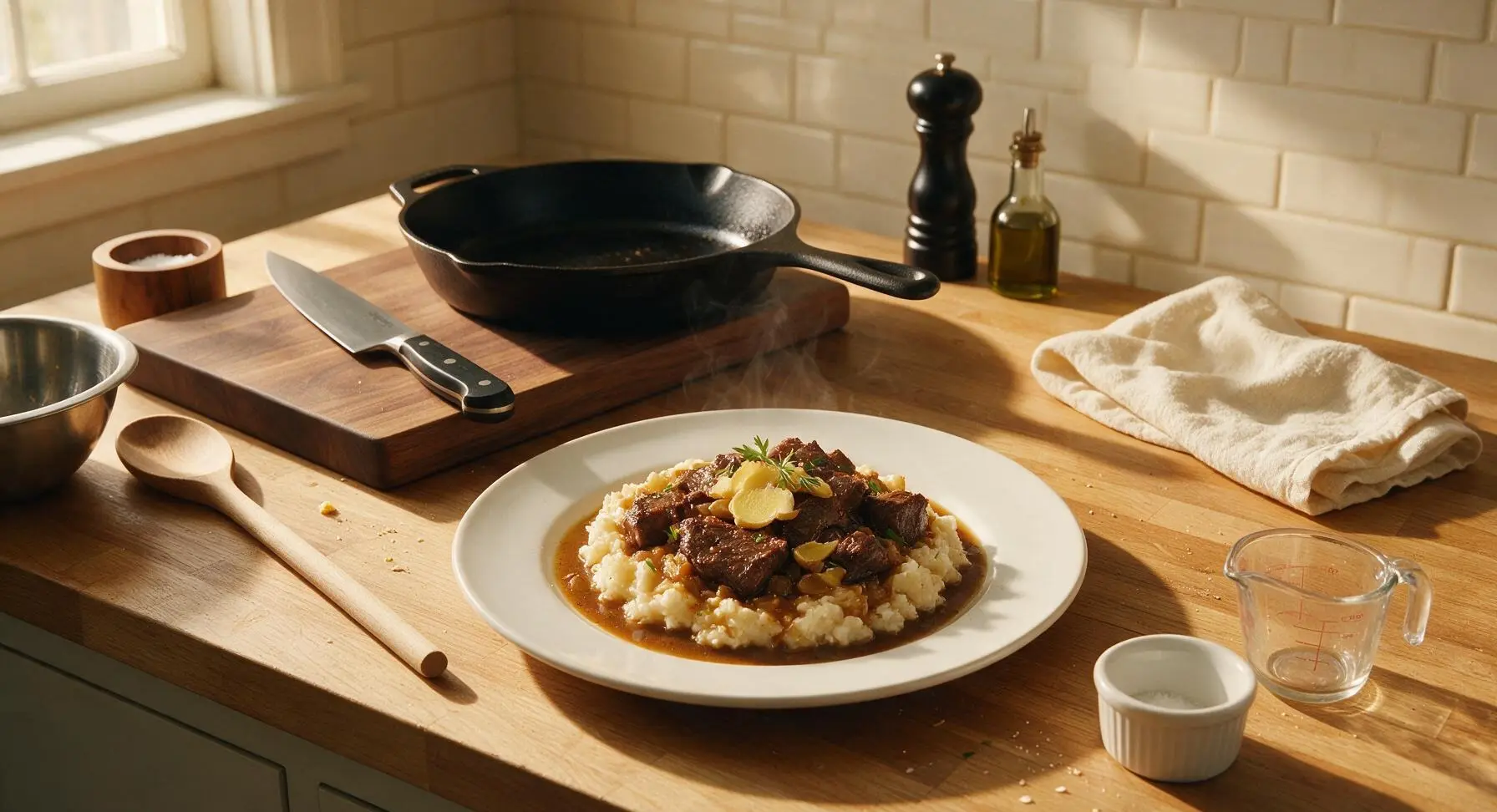
Ginger Stout

title 1
Ginger Stout
⏱️ cook time 1 hour
🍽️ servings 8
⚡ Difficulty medium

intro

Rich, roasty homemade ginger stout balances deep dark malt flavor with bright, zingy fresh ginger warmth, perfect for sipping with friends on crisp autumn evenings.

Ingredients
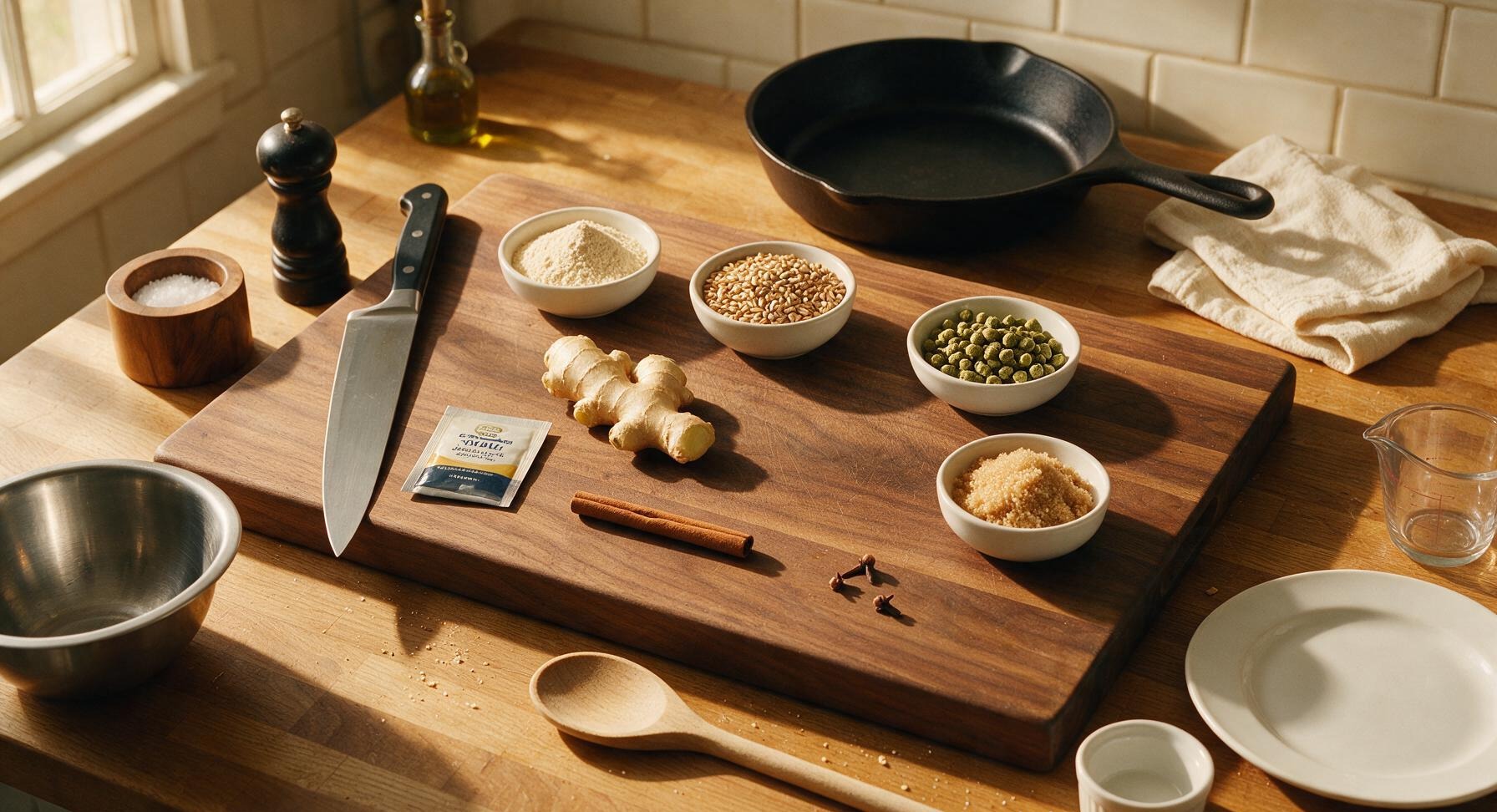
Light dry malt extract 1kg (2.2 lbs)
Roasted barley 120g (4.2 oz)
Fresh ginger root 150g (5.3 oz)
Cascade hop pellets 15g (0.5 oz)
Ale yeast 1 packet (5g)
Light brown sugar 50g (1/4 cup)
Cinnamon stick 1 whole
Whole cloves 3 pieces

Steps

1

Prep Fresh Ginger

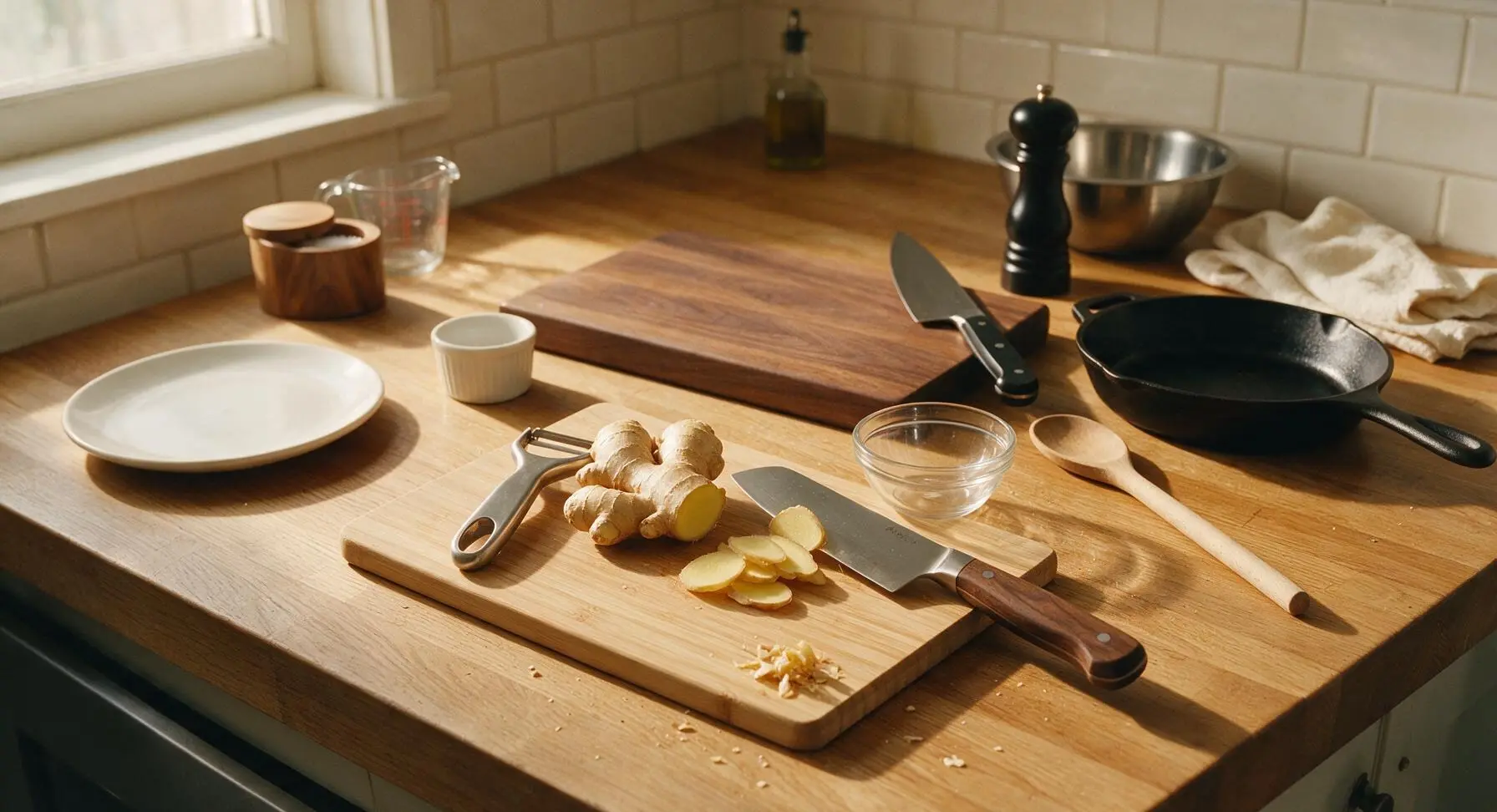
Scrub the 150g fresh ginger root under cool running water to remove any surface dirt, then pat dry. Place ginger on the light bamboo cutting board, use the matte stainless steel vegetable peeler to remove the thin tan outer skin, then use the 7-inch walnut-handled santoku knife to slice ginger into 5mm thick rounds, collecting slices in a small clear glass prep bowl. Discard any dry, woody ginger ends and collected peel scraps.
Step 1
step1:Prep Fresh Ginger
2

Steep Roasted Barley

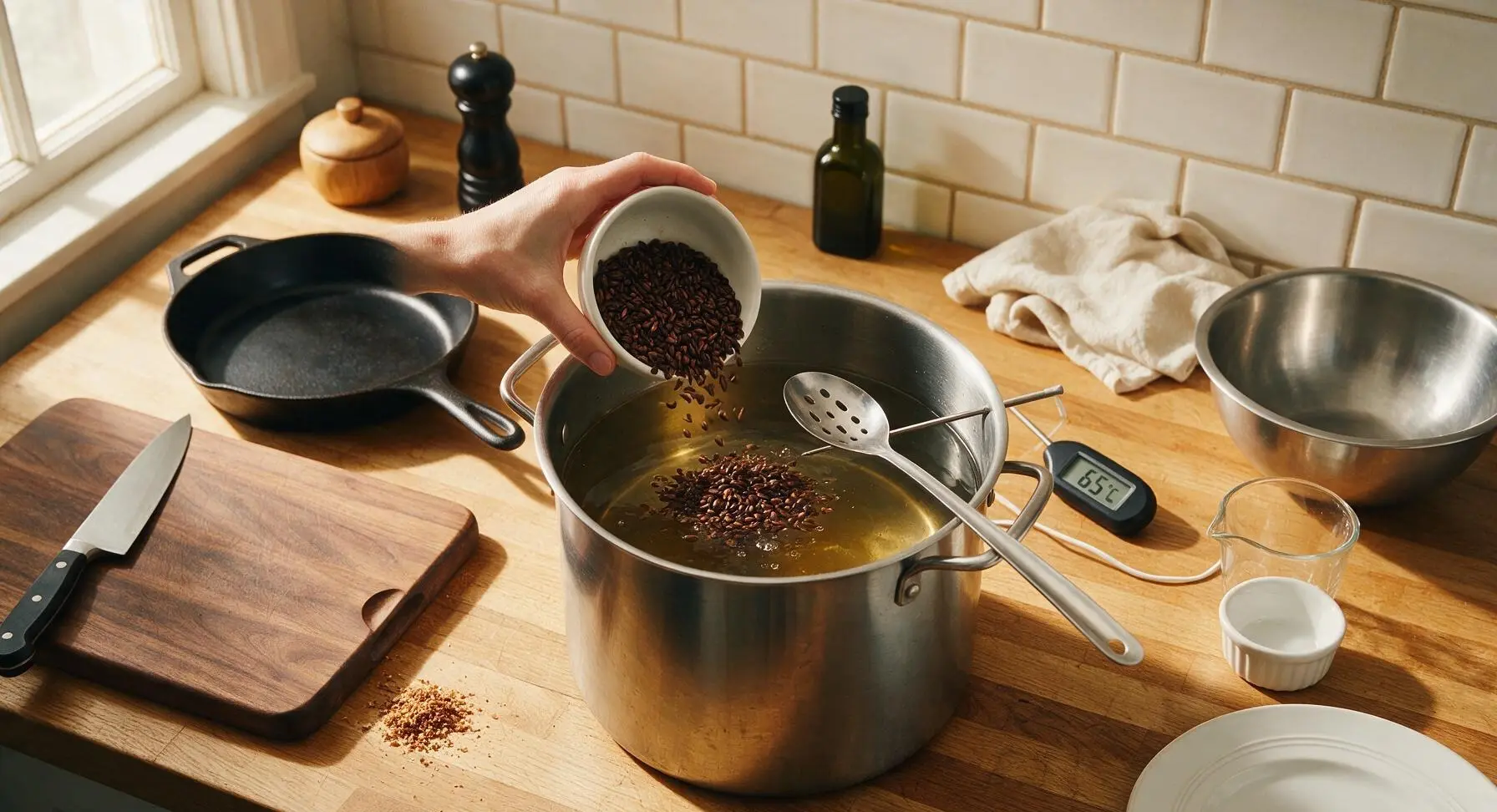
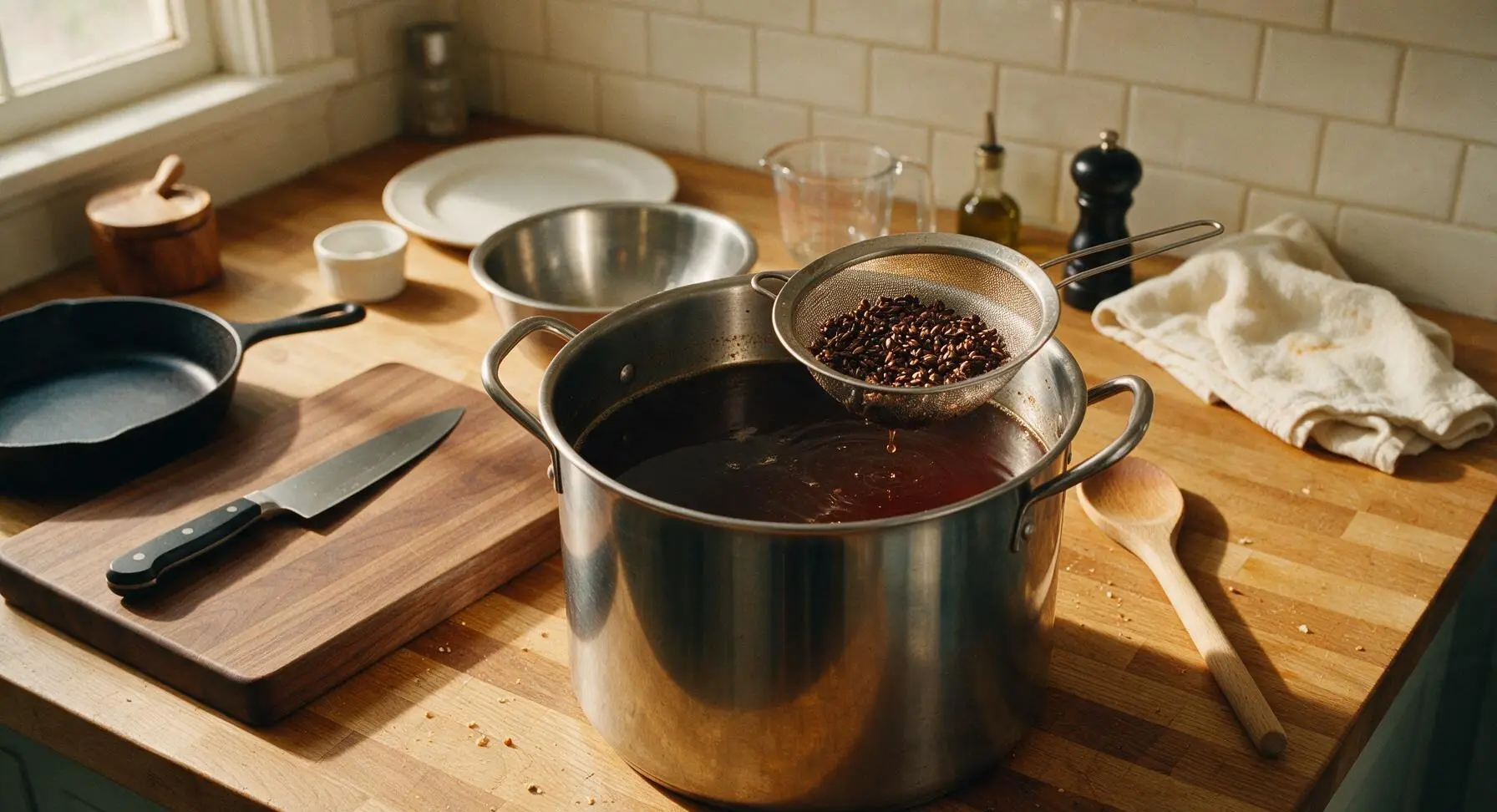
Fill the 1-gallon stainless steel brew pot with 3 liters of cool filtered water, place over medium heat. When water reaches 65C (150F), add the 120g roasted barley, stir once with the long slotted stainless steel spoon. Steep for 20 minutes, maintaining a steady 65-70C temperature (do not boil), until the water turns a deep dark mahogany brown. Use the fine-mesh stainless steel strainer to remove all barley grains, discard the spent grains.
Step 2
step2:Steep Roasted Barley
Step 2
step2:Steep Roasted Barley
3

Boil Malt Extract

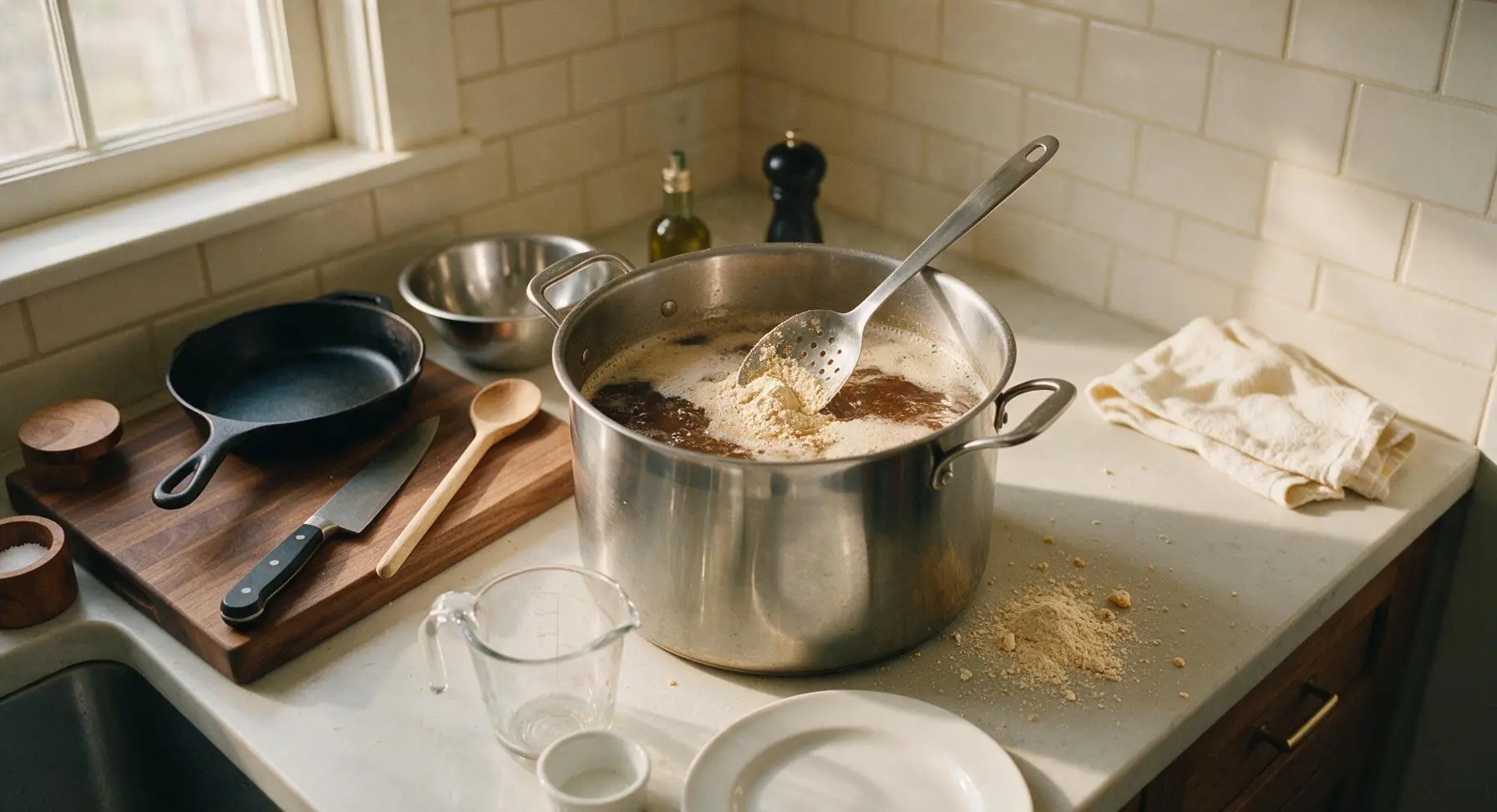
Increase heat under the brew pot to bring the steeped grain liquid to a gentle rolling boil. Once boiling, slowly stir in the 1kg light dry malt extract with the slotted spoon, stirring constantly until fully dissolved with no dry clumps. Maintain a gentle rolling boil (adjust heat to avoid boil-over) for 30 minutes, watching for a light tan foamy head that signals the wort is cooking evenly.
Step 3
step3:Boil Malt Extract
4

Add Ginger and Spices

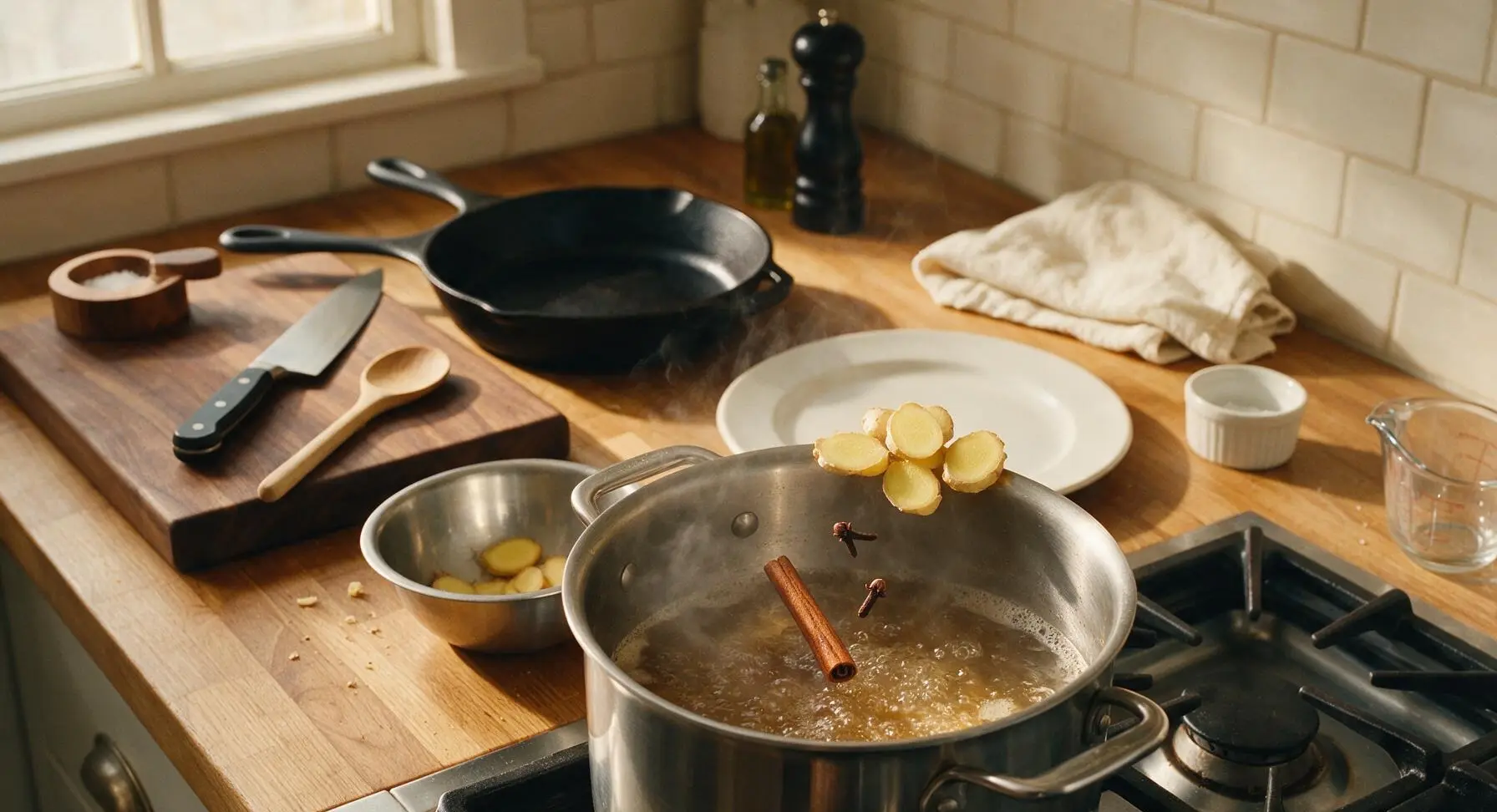
After 30 minutes of boiling, add the reserved sliced fresh ginger, 1 cinnamon stick, and 3 whole cloves to the boiling wort. Continue boiling for an additional 15 minutes to extract ginger heat and warm spice aroma. Add the 15g Cascade hop pellets during the last 5 minutes of boiling to add subtle citrusy bitter balance that cuts through the rich malt.
Step 4
step4:Add Ginger and Spices
5

Cool and Strain Wort

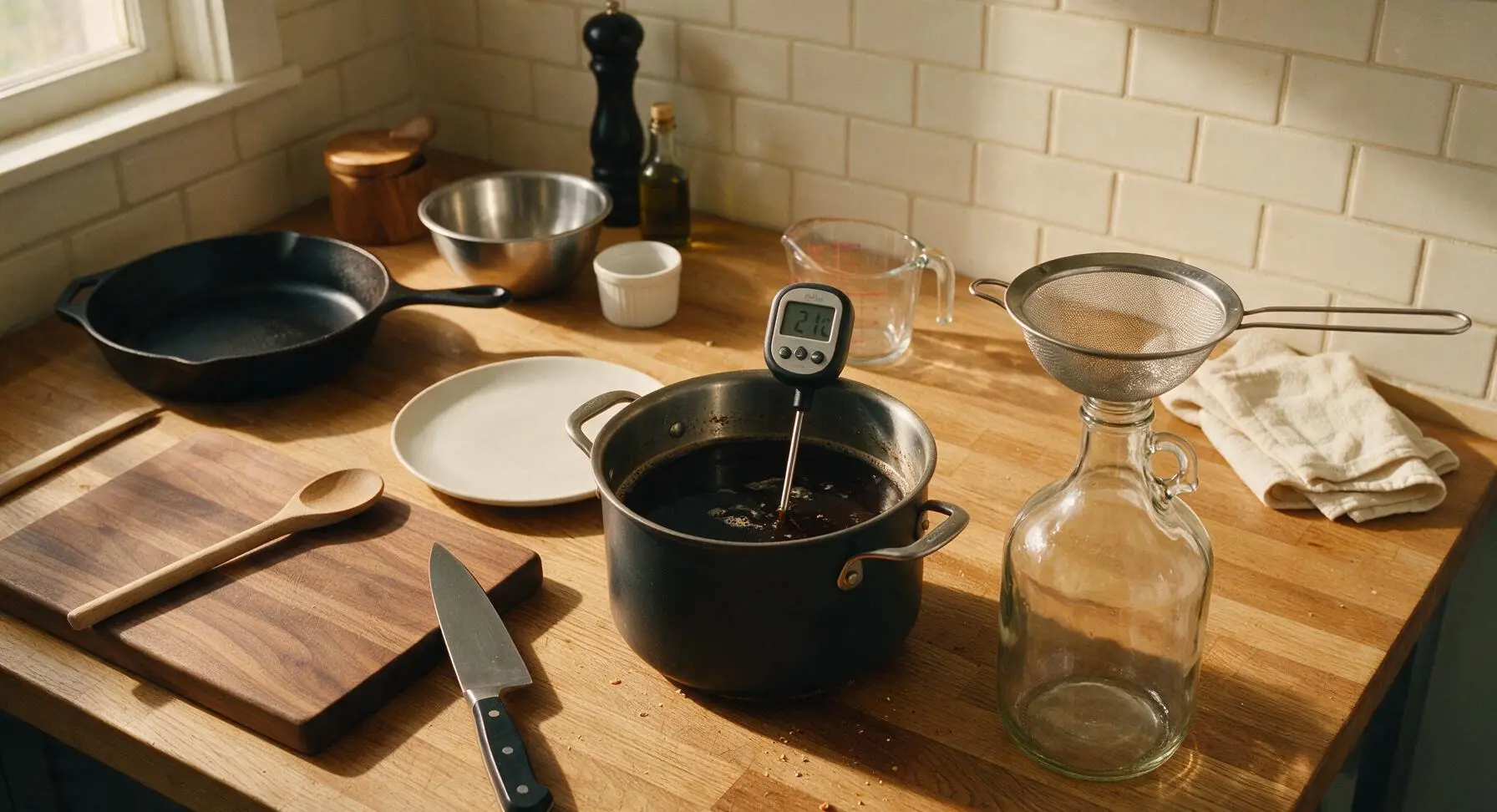
Turn off heat under the brew pot. Set the pot on the cool counter to bring the wort temperature down, then place in an ice bath (in the adjacent sink, out of frame) to cool quickly to 21C (70F), approximately 15 minutes total. Once cooled, pour the wort through the fine-mesh stainless steel strainer into the clear 1-gallon glass fermentation jug, straining out all ginger slices, spices, and hop debris. Top the jug with cool filtered water to bring total wort volume to 1 gallon, if needed.
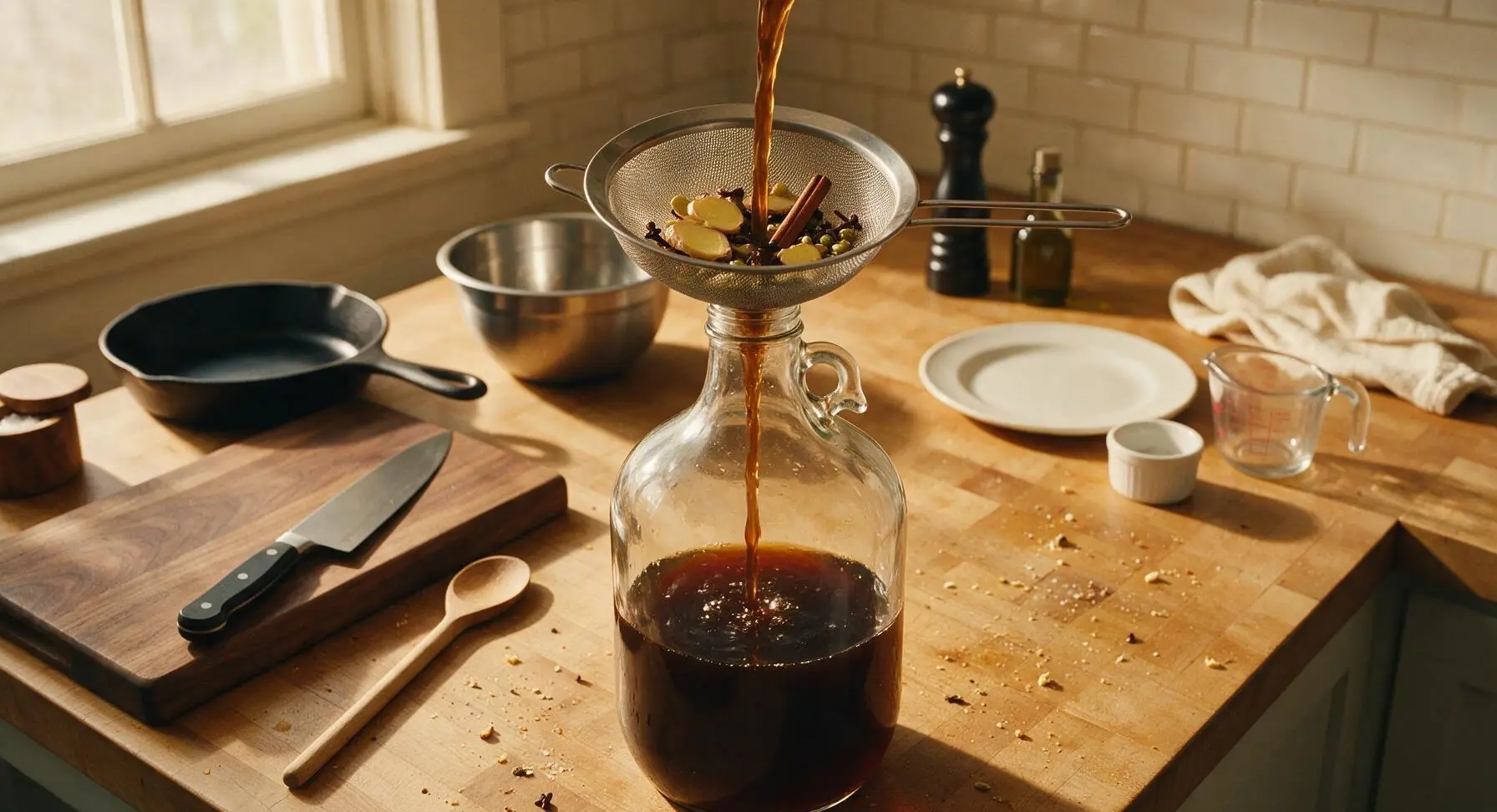
Step 5
step5:Cool and Strain Wort
Step 5
step5:Cool and Strain Wort
6

Pitch Ale Yeast

Sprinkle the full 5g packet of ale yeast evenly over the surface of the cooled, strained wort in the fermentation jug. Do not stir, as the yeast will hydrate and activate on its own. Seal the jug mouth with a sterilized rubber stopper, then insert the 3-piece airlock filled halfway with clean water to allow fermentation gas to escape without letting airborne contaminants in.
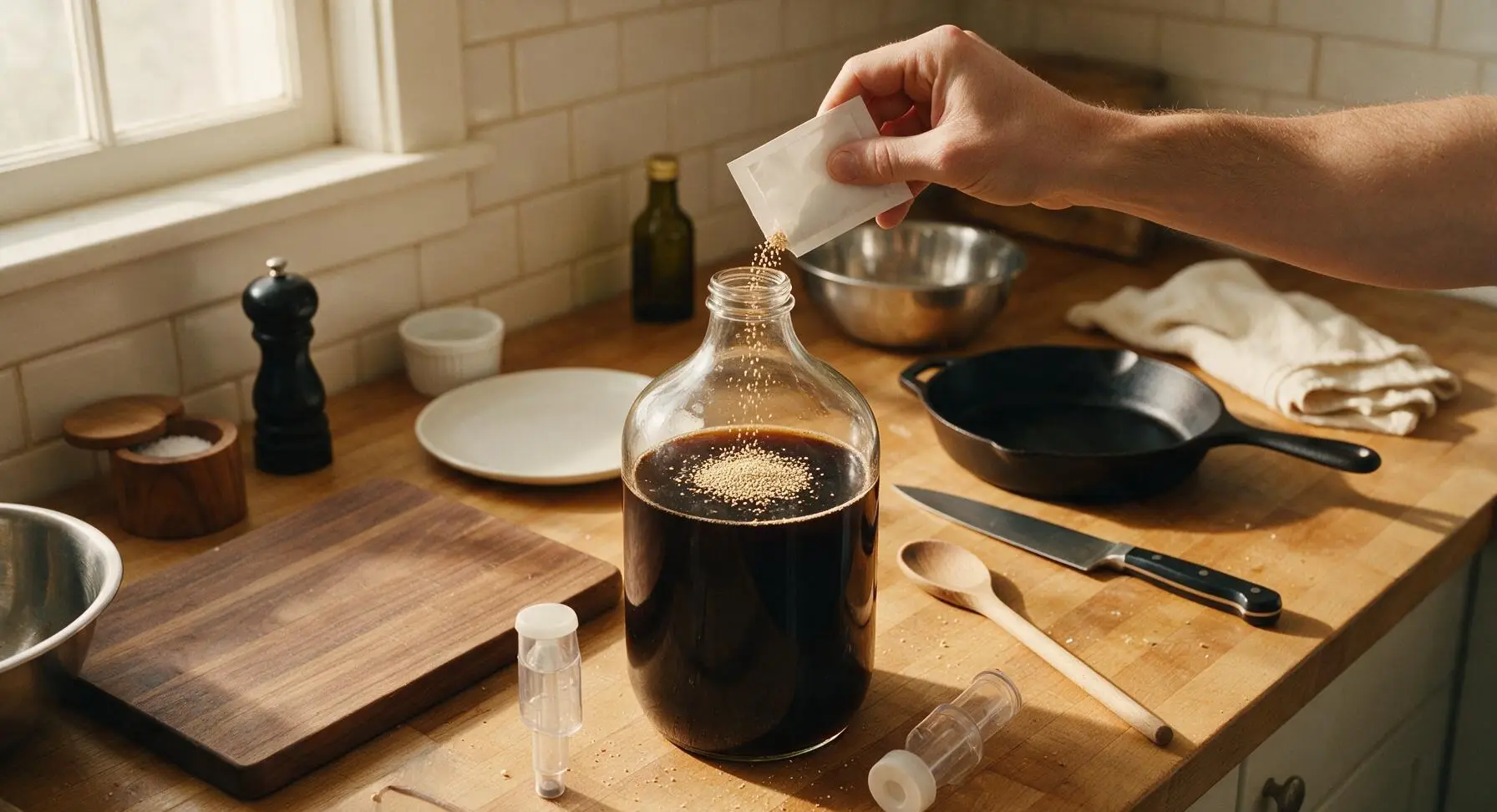
Step 6
step6:Pitch Ale Yeast
7

Ferment and Bottle

Place the sealed fermentation jug in a cool, dark spot (18-21C / 65-70F) for 2 weeks, until bubbling in the airlock stops completely, signaling fermentation is finished. Dissolve the 50g light brown sugar in 60ml (1/4 cup) boiling water, cool to 21C, and pour evenly into the 8 sterilized dark amber 12oz glass bottles. Carefully pour the finished stout through the fine-mesh strainer into each bottle, leaving 2cm of headspace at the top of each bottle, then cap tightly with sterilized metal bottle caps. Let bottles rest at room temperature for 1 week to build natural carbonation from the added sugar.
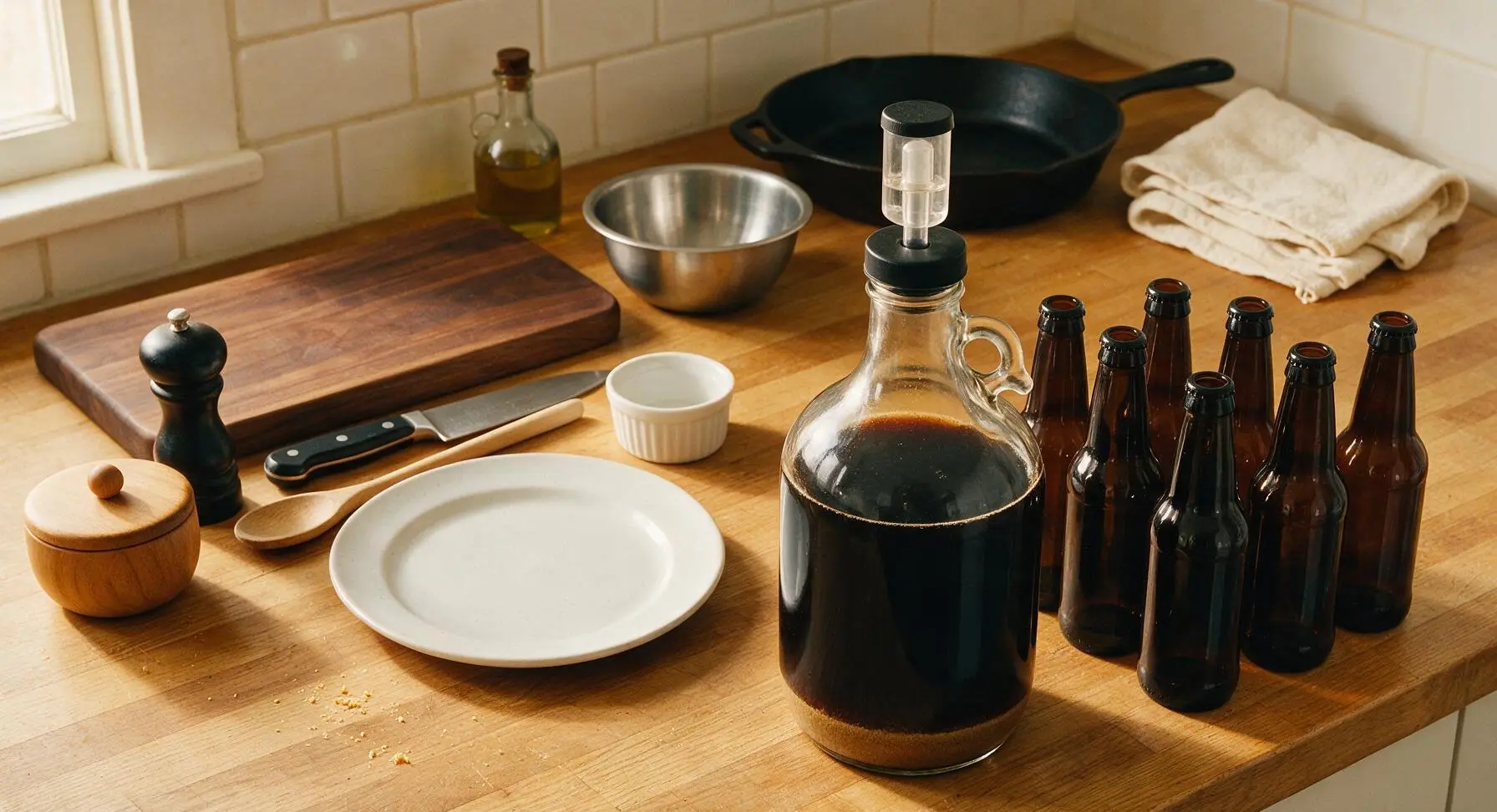
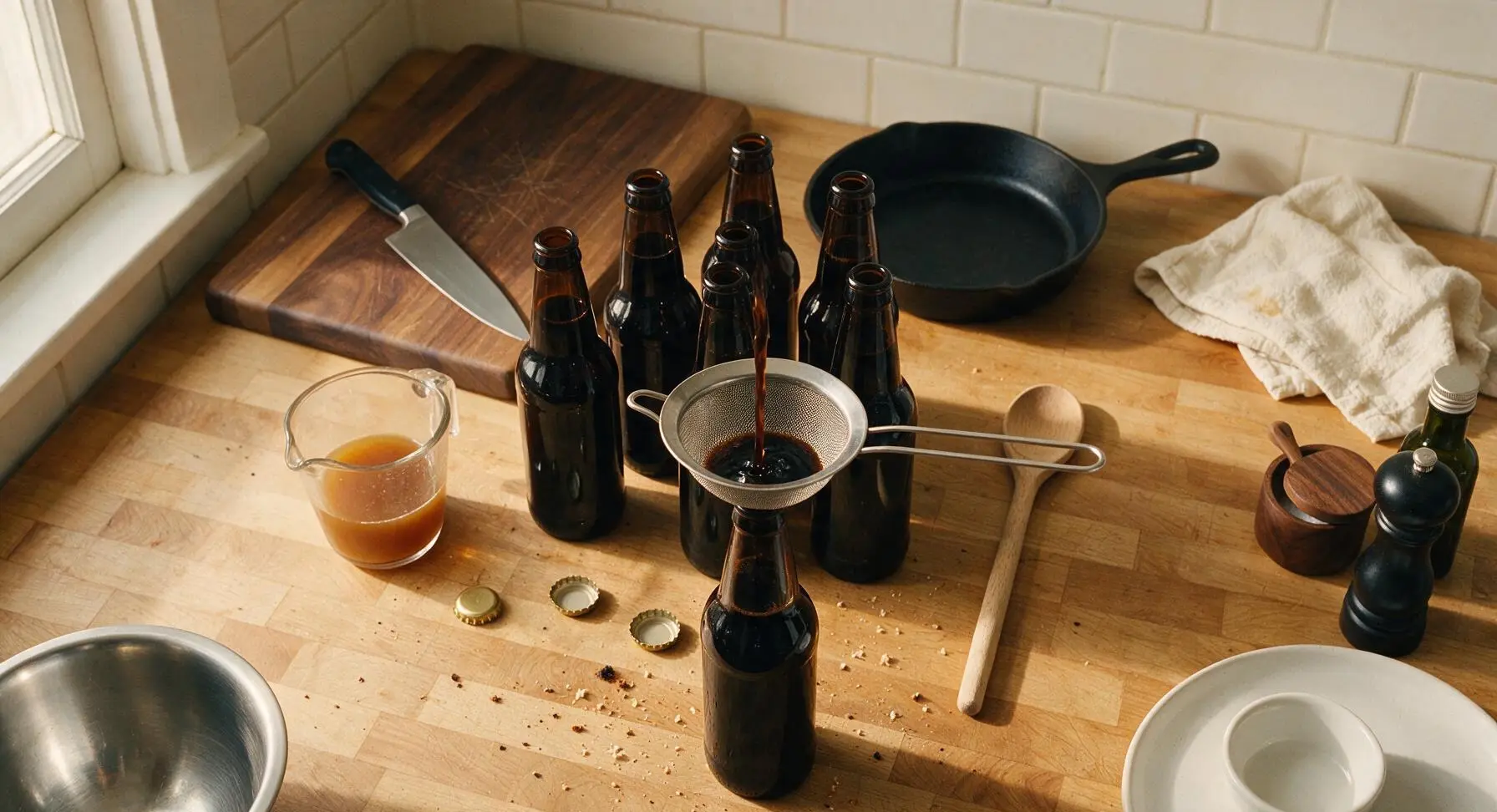
Step 7
step7:Ferment and Bottle
Step 7
step7:Ferment and Bottle
8

Chill and Serve

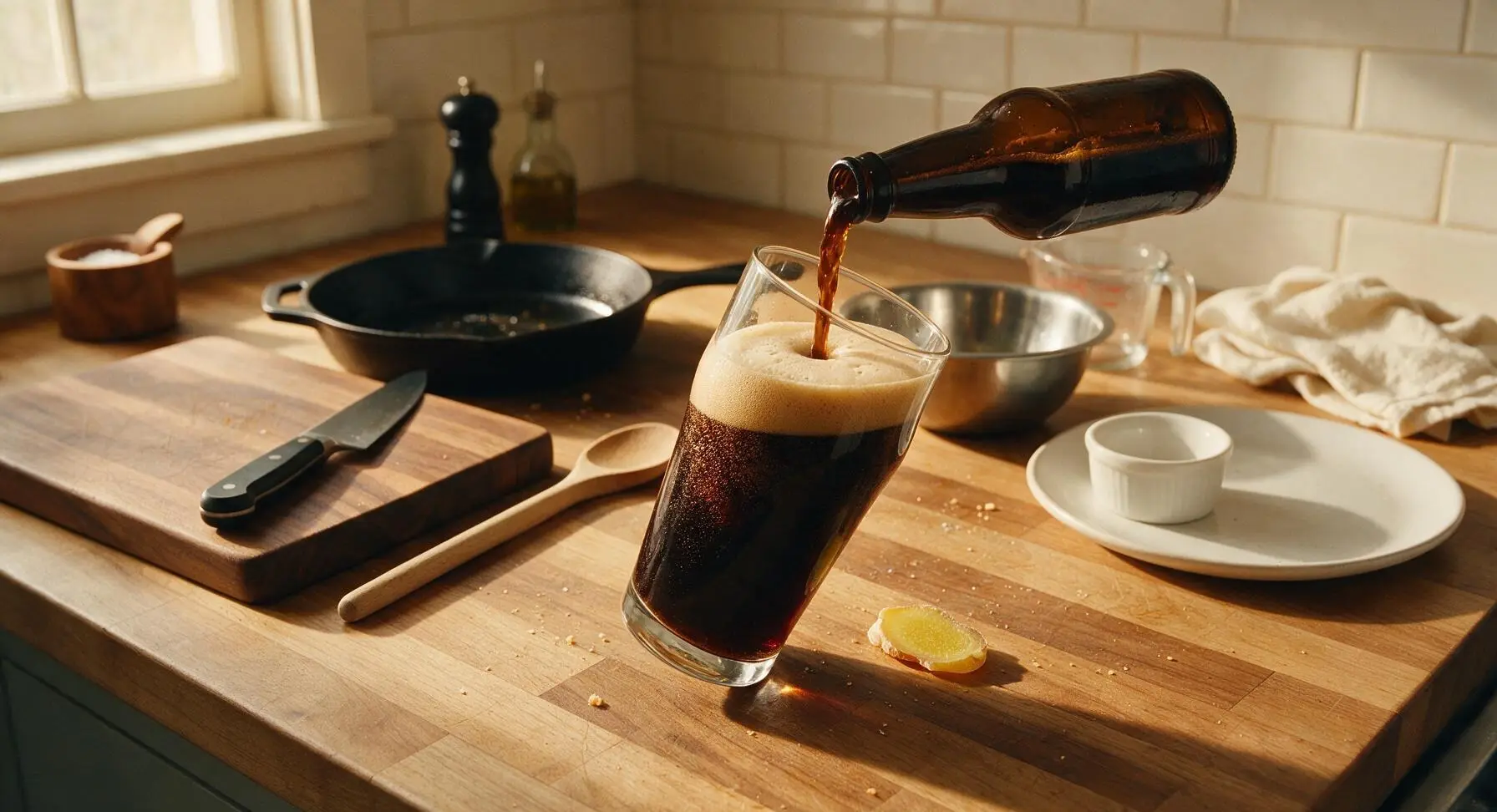
After 1 week of bottle conditioning, chill bottles of ginger stout in the refrigerator for at least 4 hours until cold (4C / 40F). Pour slowly into the thick-walled clear imperial pint glass, tilting the glass at a 45-degree angle to build a 2cm thick tan foam head, then straighten the glass to finish the pour. Garnish with a thin slice of candied ginger on the rim if desired.
Step 8
step8:Chill and Serve

Tips

1.Never let the wort temperature rise above 70C when steeping roasted barley, as higher temperatures extract harsh, astringent tannins from the grain that will make the finished stout taste dry and bitter instead of smooth and roasty.
2.Thoroughly wash and sanitize all equipment that touches cooled wort (fermentation jug, airlock, strainer, bottles, caps) with food-grade no-rinse brewer’s sanitizer before use; wild bacteria or yeast will create sour, off-flavors that ruin an entire batch.
3.Adjust ginger intensity to taste: for a bright, sharp ginger zing, add half the sliced ginger during the last 5 minutes of the boil instead of the full 15 minutes, as longer boiling softens ginger’s spicy bite into a warmer, more mellow baked-spice note.


✨ You May Also Like

Drinks & Beverages
🍜 Mexico

A bright, balanced tequila-based cocktail with zesty fresh lime, smooth orange liqueur, and a signature salt rim, perfect for warm summer sipping.

⏱️ 5 minutesDrinks & Beverages ★ 4.9
Drinks & Beverages
🍜 United States

Thick, creamy, nostalgic classic vanilla milkshake with a rich, smooth texture, topped with whipped cream and a cherry for cool, sweet refreshment.

⏱️ 5 minutesDrinks & Beverages ★ 4.7
Drinks & Beverages
🍜 United States

A bright, golden strong ale with fruity banana-clove notes, subtle hop spice, and soft carbonation, brewed in classic Trappist Tripel tradition.

⏱️ 2 hours aDrinks & Beverages ★ 4.5
Drinks & Beverages
🍜 United States

A frothy, nostalgic American soda fountain treat pairing bubbly cold root beer with creamy vanilla ice cream, perfect for cooling down at warm weather gatherings.

⏱️ 20 minuteDrinks & Beverages ★ 4.8
Drinks & Beverages
🍜 United States

Tart, funky, effervescent American Wild Ale is a complex fruity craft beer brewed with wild yeast, delivering bright, zesty notes perfect for warm-weather sipping.

⏱️ 2 hours aDrinks & Beverages ★ 4.4
Drinks & Beverages
🍜 United States

Bright, bubbly copycat of the iconic American caramel cola, balanced with citrus and warm spice, perfect for sipping ice-cold on hot days.

⏱️ 15 minuteDrinks & Beverages ★ 4.8

Ginger Stout:Frequently Asked Questions

1.How much fresh ginger should I use for a balanced 5-gallon batch of this ginger stout? ▾
For a standard 5-gallon batch, use 4–6 ounces of peeled, thinly sliced fresh ginger, added during the final 10 minutes of your boil. This delivers warm, bright ginger zing that complements, rather than overwhelms, the deep roasted barley flavor. If you prefer extra punch, toss in 1 extra ounce of grated ginger during secondary fermentation for brighter, fresher spice.
2.Can I substitute fresh ginger with dried ground ginger if I don’t have fresh on hand? ▾
You can, but use it sparingly—dried ginger has a much more concentrated, earthier spice than fresh. For a 5-gallon batch, use only 0.5–1 teaspoon of ground ginger added at the end of the boil, as too much will leave a harsh, powdery aftertaste that clashes with the smooth malt profile. Fresh is always preferred for that bright, zesty kick.
3.Why do you use light dry malt extract instead of dark malt extract for this stout? ▾
Light dry malt extract gives you full control over the final color and roast level of your stout, rather than relying on pre-mixed dark extract that can carry harsh, ashy burnt notes. You’ll build that classic deep stout flavor entirely from roasted barley, which creates a smoother, more rounded roasty taste without bitter, acrid off-notes.
4.How much roasted barley do I need to add to get that classic rich stout color and flavor? ▾
For a 5-gallon batch, 8–10 ounces of crushed roasted barley, steeped for 30 minutes at 150–155°F before adding your malt extract, will deliver that signature espresso-like roast, deep dark color, and smooth dry finish. Avoid steeping it at boiling temperatures, as that pulls out harsh, astringent tannins that ruin smoothness.
5.Why are Cascade hop pellets recommended for this recipe instead of other hop varieties? ▾
Cascade hops are perfect here because they carry bright, citrusy, slightly piney notes that bridge the gap between the dark, roasty malt and zingy fresh ginger. They don’t have the aggressive, resiny bite of heavier bittering hops, so they add just enough balance to cut malt sweetness without competing with the ginger’s warm spice.
6.Do I need to add hops at multiple points during the boil, or just a single addition? ▾
For this ginger stout, you only need a single 60-minute bittering addition of Cascade pellets (about 1.5 ounces for a 5-gallon batch) to hit a target 30–35 IBUs, which is just enough to balance malt sweetness. Skip late hop additions, as those can add overly bright floral or tropical notes that clash with roast and ginger flavors.
7.What type of ale yeast works best for this ginger stout, and how much should I use? ▾
A clean, neutral American ale yeast (like US-05) works perfectly here, as it won’t add fruity or funky ester notes that distract from the malt and ginger. For a 5-gallon batch, use one standard 11-gram packet of dried yeast, rehydrated per package directions, to ensure strong, consistent fermentation that finishes clean without off-flavors.
8.What temperature should I ferment this ginger stout at for the best results? ▾
Hold your fermentation steady at 65–68°F for the first 7–10 days after pitching your ale yeast. This range lets the yeast work cleanly, without producing extra fruity or solvent-like off-flavors. After primary fermentation slows, let the temp drift up 2–3 degrees for 3 days to ensure the yeast fully ferments all available sugars before bottling.
9.How long do I need to let this stout condition before it’s ready to drink? ▾
After bottling with priming sugar, let bottles condition at room temperature for 2 weeks to build carbonation, then move them to a cool (45–55°F) spot for a minimum of 2 more weeks of aging. This extra conditioning softens sharp roast bite, lets ginger meld smoothly with malt, and creates a far more balanced, sippable final beer.
10.Will the ginger flavor get stronger or fade as the stout ages in the bottle? ▾
The bright, sharp fresh ginger zing will mellow slightly over the first month of conditioning, blending more seamlessly with the roasty malt notes, but it won’t disappear entirely. Avoid aging this stout for longer than 6 months, as the ginger flavor will fade significantly after that point, leaving you with a plain, standard dry stout.
11.Can I add other spices to this ginger stout to customize the flavor? ▾
You can, but keep additions very subtle so you don’t overpower the core ginger and roast balance. A single cinnamon stick, 2–3 whole cloves, or a 2-inch strip of orange zest added during the last 5 minutes of the boil works beautifully. Skip strong spices like nutmeg in large amounts, as they easily overpower delicate ginger and smooth malt.
12.Why is my finished stout coming out overly astringent and harsh instead of smooth? ▾
Harsh, astringent flavor almost always comes from steeping roasted barley at boiling temperatures, or squeezing your grain bag too hard when removing it from the steep, which pulls out bitter tannins. It can also happen if you added too much dried ginger, or let fermentation get too warm. Keep steep temps under 160°F and handle grain bags gently for smoother results.
13.Do I need to peel the fresh ginger before adding it to the boil? ▾
It’s best to peel ginger before adding it, as the thin, papery outer skin can carry earthy, slightly bitter notes that make your final stout taste dull or muddy. You don’t need to chop it super fine—thin slices work great, since the boil pulls out ginger flavor easily, and slices are far easier to strain out before fermentation than tiny grated bits.
14.What carbonation level is best for this homemade ginger stout? ▾
Aim for a moderate carbonation level of 2.0–2.2 volumes of CO2, right in line with traditional dry stouts. That fizz level is low enough to preserve the rich, creamy mouthfeel of the roasted barley, but high enough to lift bright ginger notes so they don’t get lost under heavy malt. Over-carbonating will make it feel fizzy and thin, rather than rich and smooth.
15.Can I make a non-alcoholic version of this ginger stout? ▾
You absolutely can! Swap the standard ale yeast for a specialized non-alcoholic brewing yeast that produces less than 0.5% ABV, and keep all other ingredient measurements identical to retain that roasty, zingy flavor profile. If you use non-alcoholic yeast, you’ll only need 1 week of bottle conditioning, since the yeast produces less carbonation and fewer fermentation byproducts.

Comments (12)

2 days ago

OMG this homemade ginger stout is a GAME CHANGER!! I brewed this for our annual fall bonfire last weekend and every single person was begging me for the recipe. The ginger kick is perfect—not too overpowering, just enough warm zing to cut through the rich, roasty stout flavor. I was nervous it’d be too tricky for a casual home brewer like me, but the steps were totally straightforward even with the medium difficulty rating. 10/10 will be making this again for tailgate season!

yesterday

Wait did you add any extra ginger? I love super spicy ginger drinks so I’m tempted to toss in an extra knob when I make it next week!

yesterday

So stoked you loved it for your bonfire! If you want an extra ginger kick like Hannah is asking about, adding 1-2 extra ounces of freshly grated ginger during the last 10 minutes of the boil works perfectly without making it bitter.

1 week ago

Solid recipe overall! I’ve been brewing stouts at home for 5 years and this ginger variant is now one of my go-tos. My only note is that the 1 hour cook time didn’t account for cooling time for me—took me an extra 45 minutes to get it down to pitching temp for the yeast, so make sure you plan for that if you’re a new brewer. The end result is so smooth, though, the wait is totally worth it.

5 days ago

Great point! We’re going to add a note about cooling time to the recipe card for new brewers—thanks so much for the helpful feedback, so glad the final stout turned out well for you!

3 days ago

Made this for my husband’s birthday dinner since he’s obsessed with both ginger beer and dark beer, and he was blown away! Even my teenagers who usually only drink seltzers snuck sips and said it was way better than the fancy craft stout we picked up from the local brewery last month. SO good.

5 days ago

Wait, is this supposed to be carbonated like regular store-bought stout? I followed the steps exactly but when I bottled mine after primary fermentation it came out totally flat. Did I mess up the priming sugar step? Bummed because the flavor was incredible when I tested it pre-bottle.

3 days ago

Oh I had this same issue my first batch! Turns out I didn’t let it sit in the bottles long enough at room temp—mine carbonated perfectly after 2 full weeks, I almost gave up on it too!

2 days ago

Seconded! I rushed my first batch too and thought I ruined it. Just give it time, the fizz will come. Mine was perfect for our tailgate last Saturday.

yesterday

Brought a growler of this to our neighborhood potluck last Sunday and it was gone in 20 minutes flat. Neighbors were asking if I’d sell them bottles! I added a tiny pinch of cinnamon to the boil and it complemented the ginger so nicely, highly recommend that little tweak.

2 hours ago

Oh that cinnamon addition sounds chef’s kiss! I’m making this for our block party next month, definitely stealing that tip. Thanks for sharing!

2 weeks ago

As someone who puts ginger in literally every drink I make, this stout is my new obsession. I’ve made it twice in the last month! I did use a bit of candied ginger as a garnish when serving it at book club and everyone thought that was such a fun touch. Will be my go-to winter drink for sure.

30 minutes ago

This was my very first time home brewing anything and I was so intimidated by the medium difficulty rating, but I did it! The instructions were so clear and easy to follow, and I didn’t mess up a single step. My stout is currently conditioning in the bottles and I’m so excited to try it in a week. Quick question—can I use dry yeast instead of liquid yeast if that’s all my local home brew shop has?

5 minutes ago

Yay, congrats on your first home brew! That’s such an exciting milestone. Yes, dry yeast works totally fine for this recipe—just make sure you rehydrate it according to the package directions before pitching for the best results. Can’t wait to hear how it turns out when it’s done conditioning!

1 week ago

Took a batch of this up on our fall camping trip last weekend and it was the perfect thing to sip around the campfire after a long day of hiking. The warm ginger notes hit so good when it’s 30 degrees outside! I did find the 1 hour cook time was spot on for me, no extra time needed which was great because I was prepping it the night before we left.

5 days ago

Camping trip stout sounds like a dream! Did you serve it cold or warm it up a little over the fire? I feel like warm ginger stout would be unreal on a cold night.

3 days ago

So glad it worked out for your camping trip! We love warming up a mug of this with a dollop of whipped cream on extra cold nights too, it’s like a cozy adult treat.

2 hours ago

Made this for date night in with my partner last week and they said it was better than any stout we’ve gotten at our favorite downtown brewpub. We paired it with chocolate covered pretzels and it was the perfect combo. 10/10 will be a regular in our home brew rotation.

30 minutes ago

The chocolate covered pretzel pairing is genius! I never would have thought of that, I’m grabbing a bag on my way home from work to pair with the batch I have conditioning right now.

5 minutes ago

Tried making this last night and had a little mishap when I added the ginger too early, but it still turned out tasty! Next time I’ll wait to add it like the recipe says so it doesn’t get that bitter boiled ginger taste. Even with my mistake, my roommate drank half the batch in one sitting so I can’t be too mad about it.

just now

Oh I did that my first time too! It’s still drinkable, but the fresh ginger zing is way better when you add it later. You’ll love the next batch, I promise.

just now

Don’t stress the mishap! Even pro brewers mess up timing every now and then. So glad it was still tasty enough for your roommate to enjoy—your next batch will be perfect!

just now

This stout is going to be my secret weapon for football tailgates all season long. I tested a small batch last weekend and my buddies all said I need to bring a keg of it to the homecoming game next month. Quick question—how long does this stay good in the fridge once it’s carbonated?

just now

Love that it’s tailgate-approved! If stored in airtight, sealed bottles in the fridge, this stout will stay fresh and carbonated for up to 3 months, though we doubt it’ll last that long once your friends get a taste!

3 days ago

I made a double batch of this to have on hand for impromptu friend hangouts all month, and it’s so nice having something homemade to offer people when they stop by. I love that the cook time is only an hour, so it didn’t take up my entire Sunday to put together. Way cheaper than buying fancy craft stout every weekend too!



