
Guava Rye Barrel Aged IPL

title 1
Guava Rye Barrel Aged IPL
⏱️ cook time 8 weeks
🍽️ servings 36
⚡ Difficulty hard

intro

A crisp, complex India Pale Lager balancing spicy rye malt, bright tropical guava, piney noble hops, and subtle charred rye barrel notes for a refreshing summer sip.

Ingredients
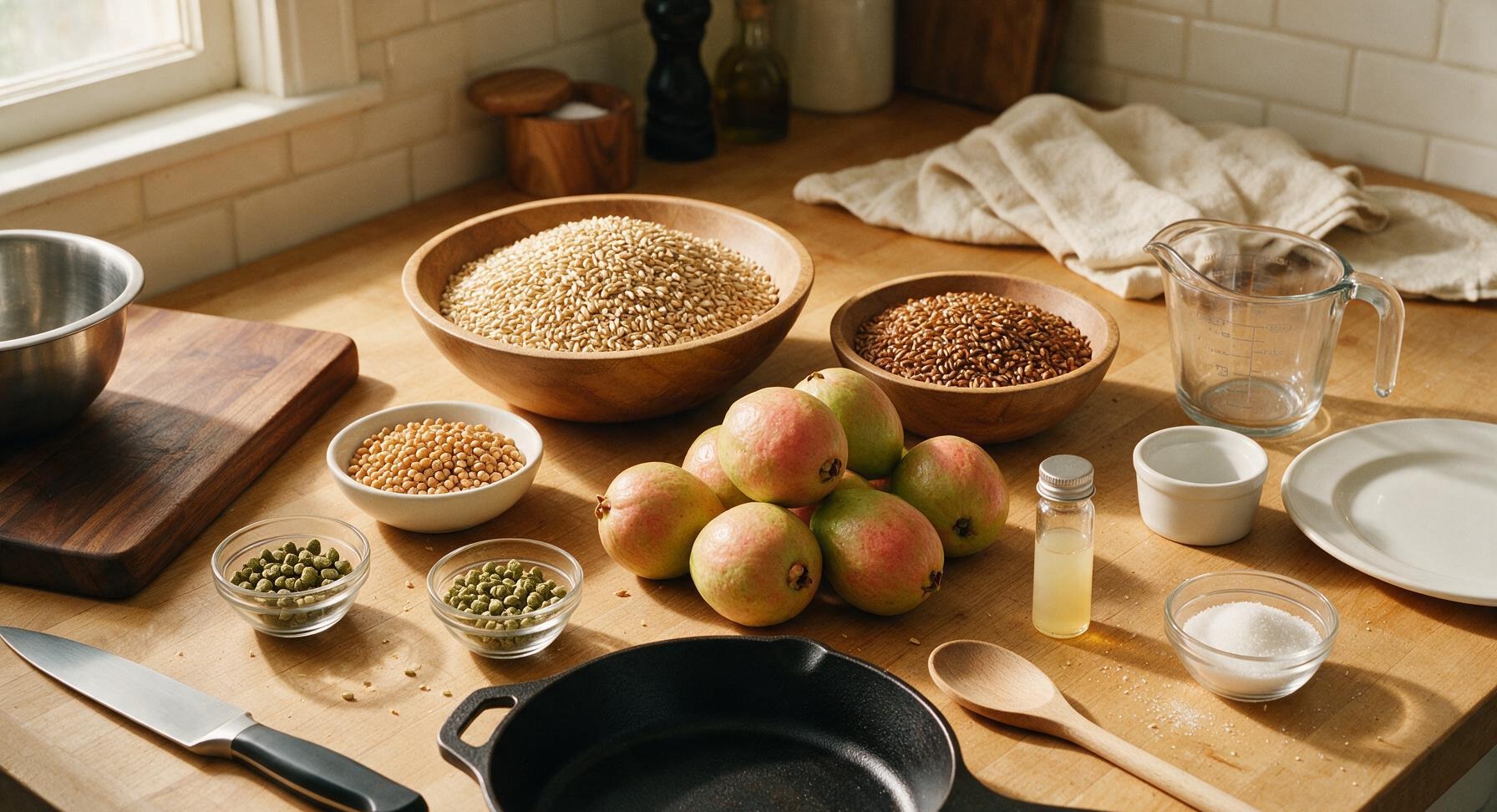
2-row pale malt 8 lbs
Rye malt 2 lbs
Carapils malt 8 oz
Magnum hop pellets 1 oz (14% alpha acid)
Czech Saaz hop pellets 2 oz (3.5% alpha acid)
Fresh ripe pink guava 3 lbs
California Lager yeast (WLP810) 1 liquid yeast packet
Corn sugar (priming sugar) 5 oz

Steps

1

Sanitize Brewing Equipment

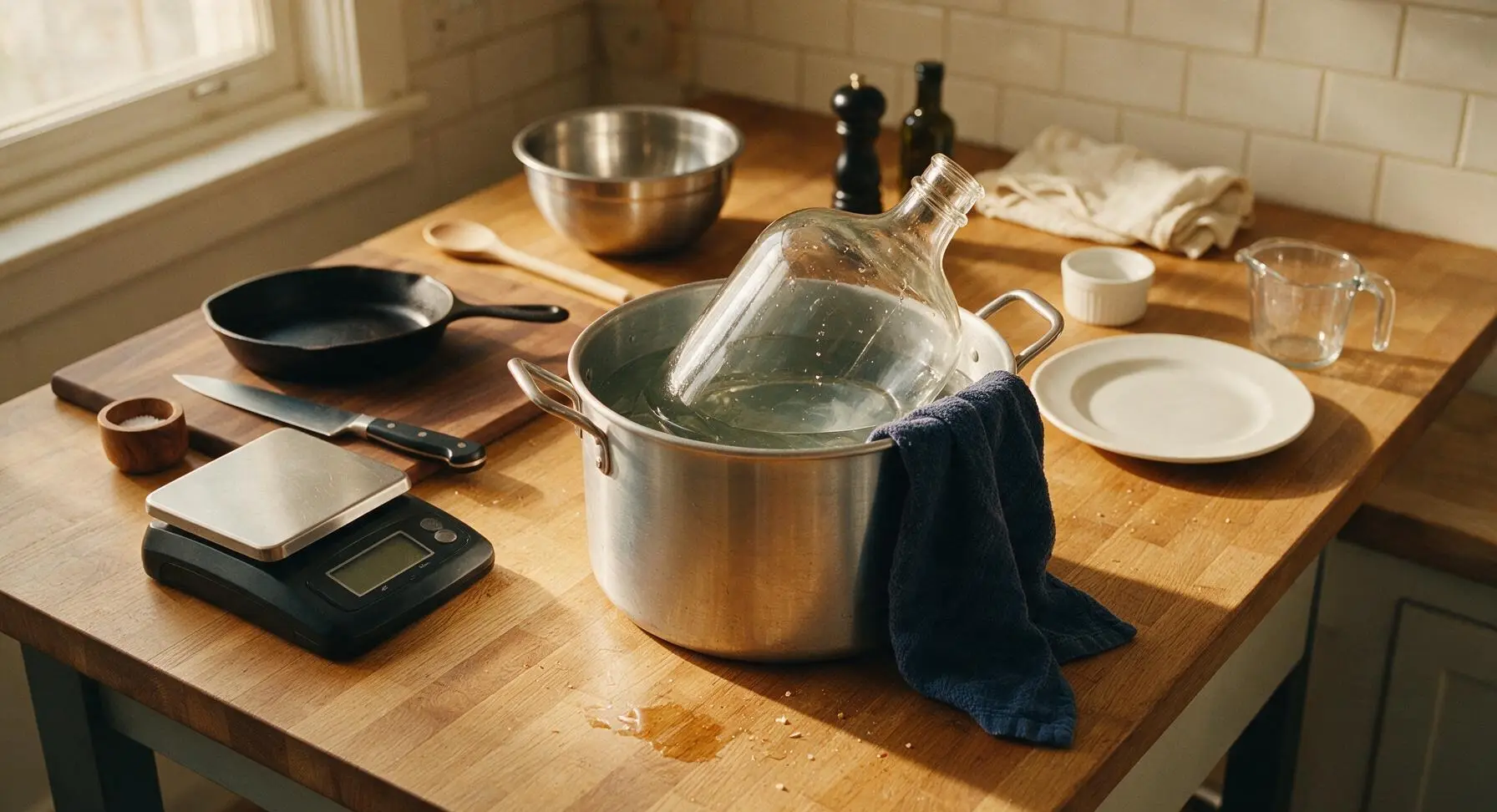
First, mix 1 tablespoon of food-grade no-rinse brewery sanitizer per 5 gallons of cool water in the brew kettle. Submerge the carboy, mash paddle, straining bag, siphon, airlock, and fruit bowl for 2 full minutes, then set on the clean counter to air dry. All surfaces that touch cooled wort must be fully sanitized to prevent off-flavors or infection; no residual water droplets should remain on equipment surfaces before use.
Step 1
step1:Sanitize Brewing Equipment
2

Mill and Mash Grains

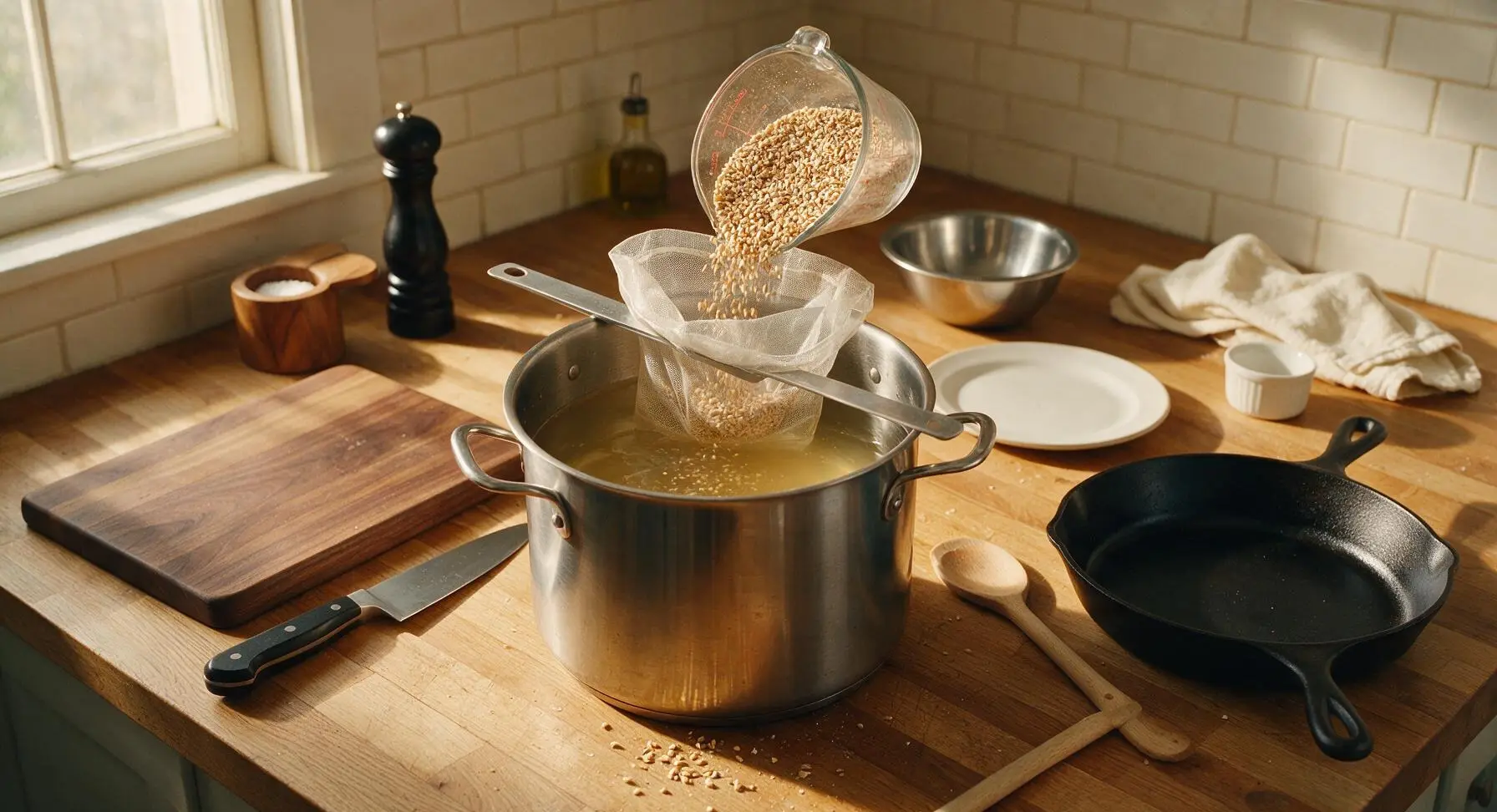
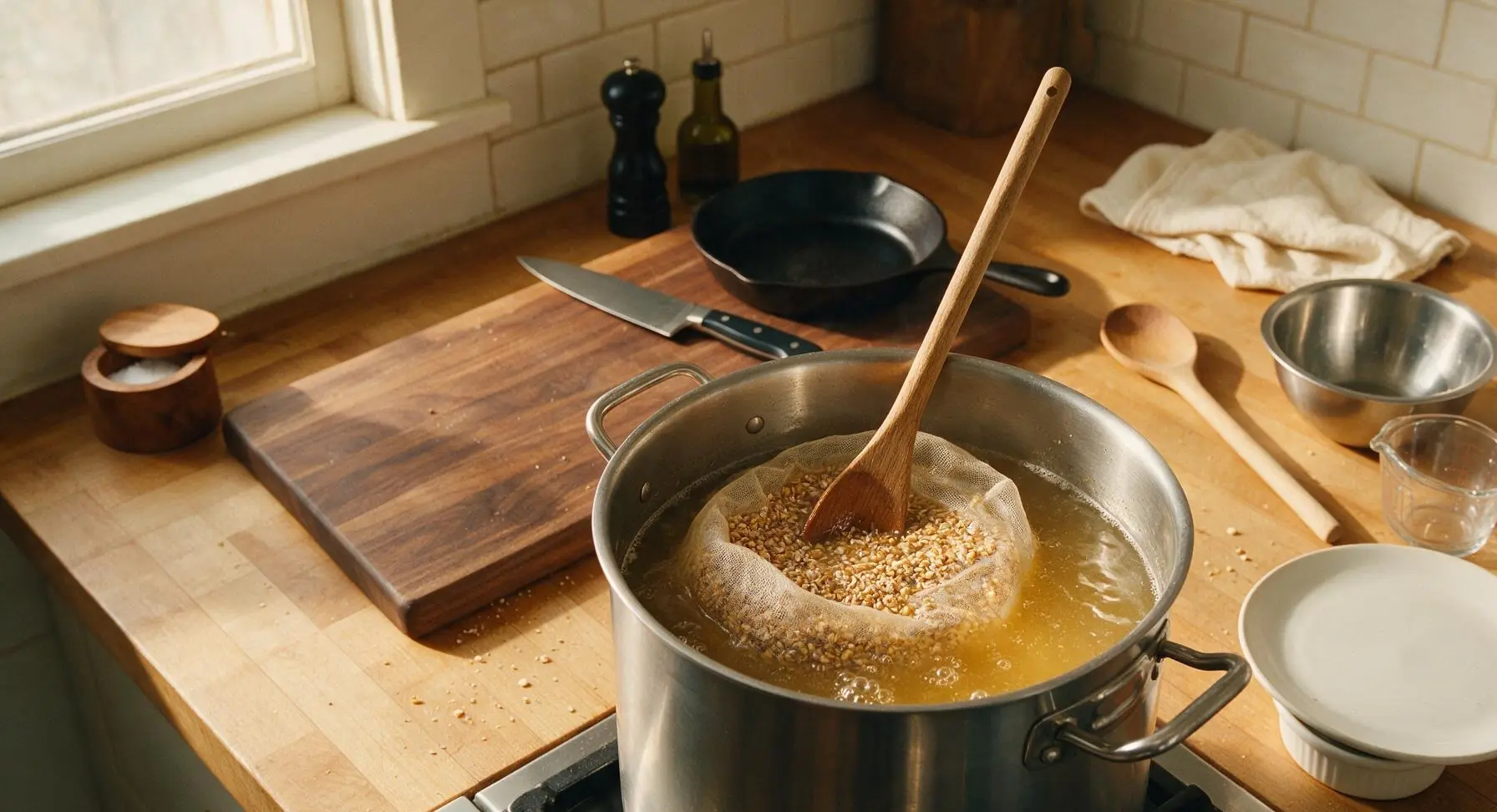
Set the digital scale to zero, weigh out all malts, then run through a grain mill to crack kernels (do not grind to flour, husks should remain partially intact to avoid harsh tannins). Add 4 gallons of 152°F filtered water to the brew kettle, place cracked grains in the fine-mesh straining bag, submerge fully, and hold temperature steady at 150°F for 60 minutes. The mash will smell sweet and bready, with light golden wort seeping through the bag when lifted.
Step 2
step2:Mill and Mash Grains
Step 2
step2:Mill and Mash Grains
3

Boil Wort and Add Hops

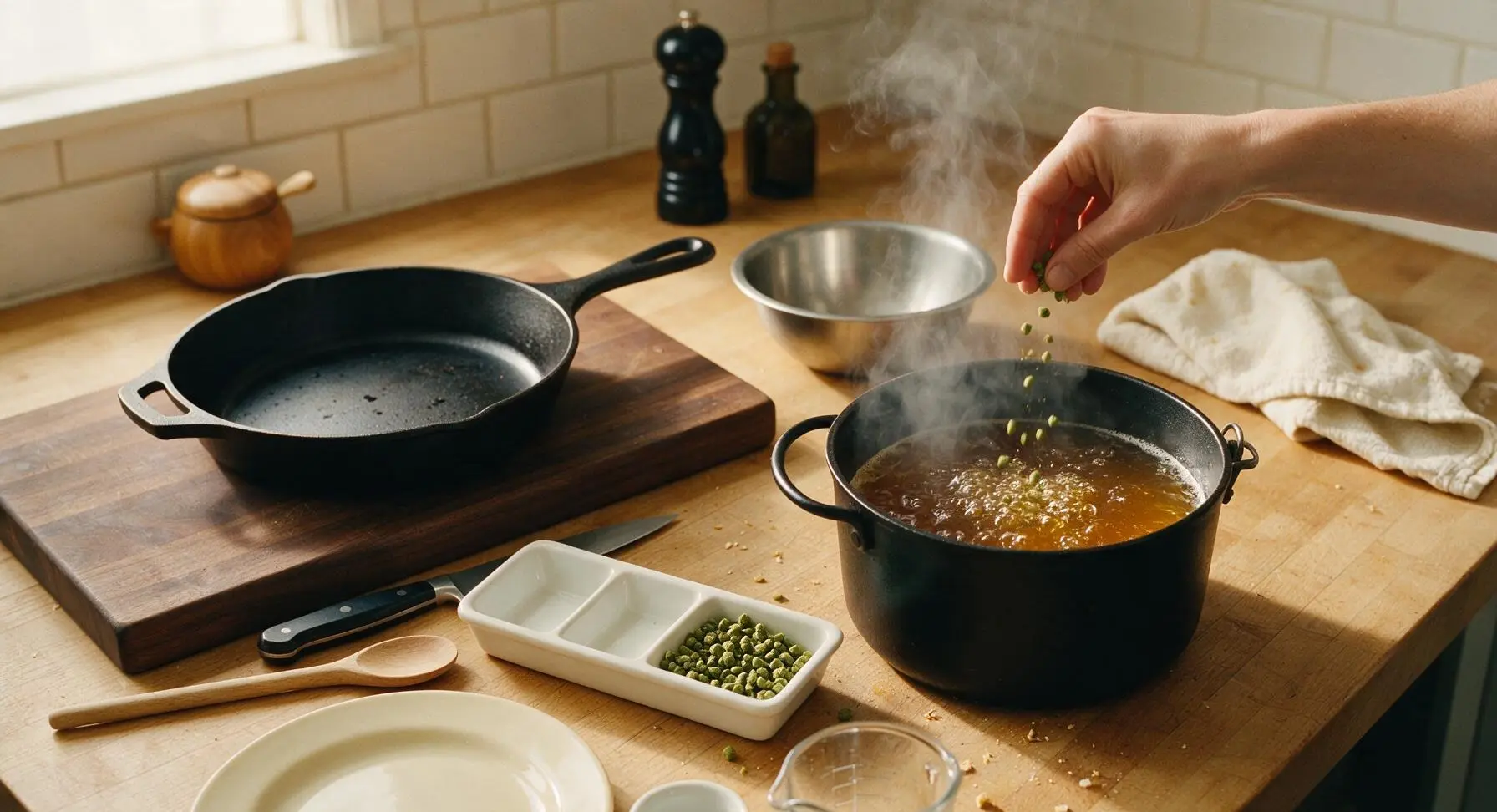
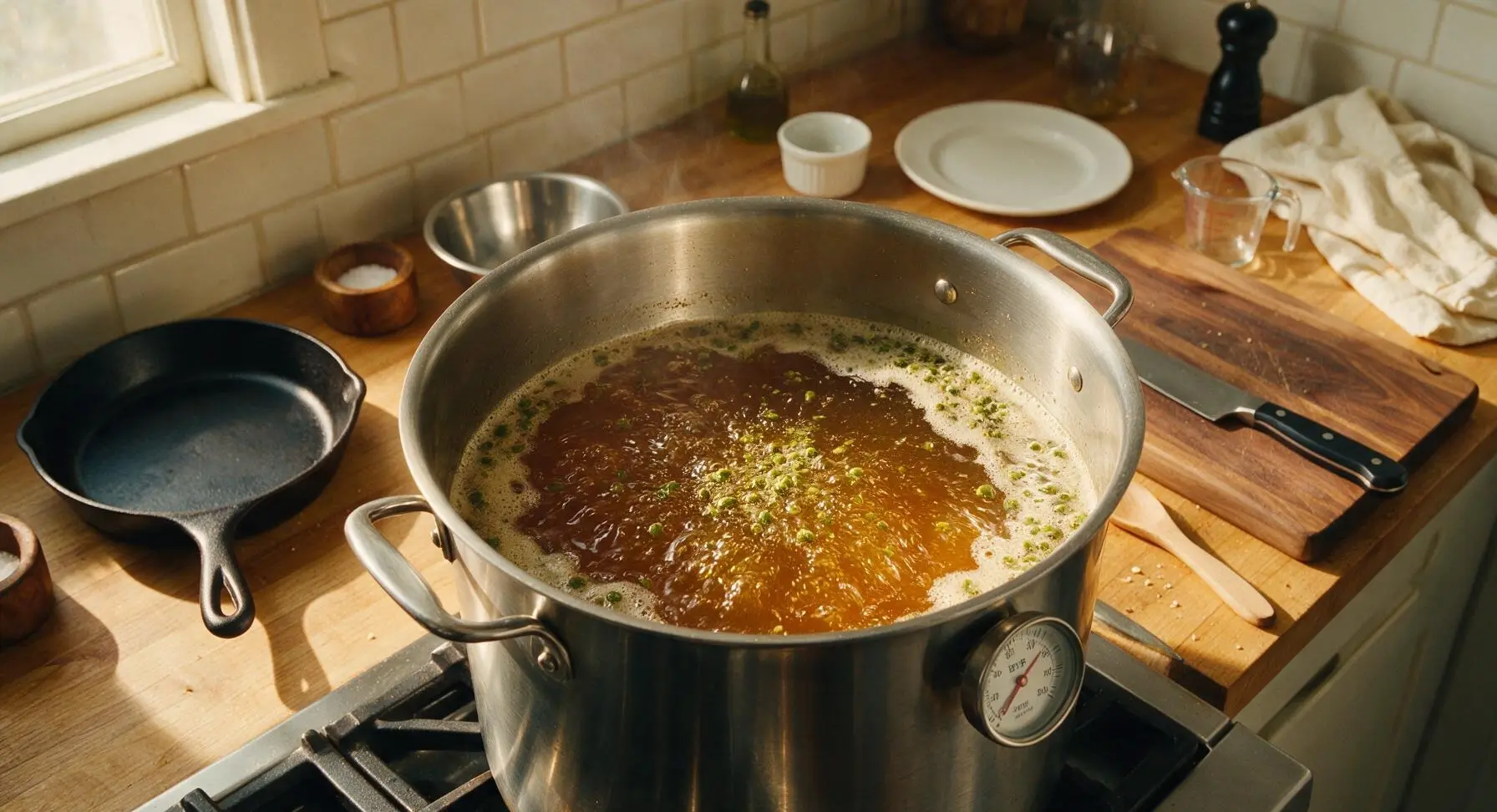
Lift the grain bag out of the mash, let drain fully by gravity (do not squeeze) into the kettle, then bring wort to a gentle rolling boil at 212°F. Once boiling starts, add 1 oz Magnum hop pellets for bittering, set a timer for 45 minutes. When 15 minutes remain on the boil timer, add 1 oz of Czech Saaz hop pellets for bright aroma. Maintain a steady rolling boil, watching for boilovers; the wort will darken slightly to a deep golden amber as hops break down.
Step 3
step3:Boil Wort and Add Hops
Step 3
step3:Boil Wort and Add Hops
4

Cool and Pitch Yeast

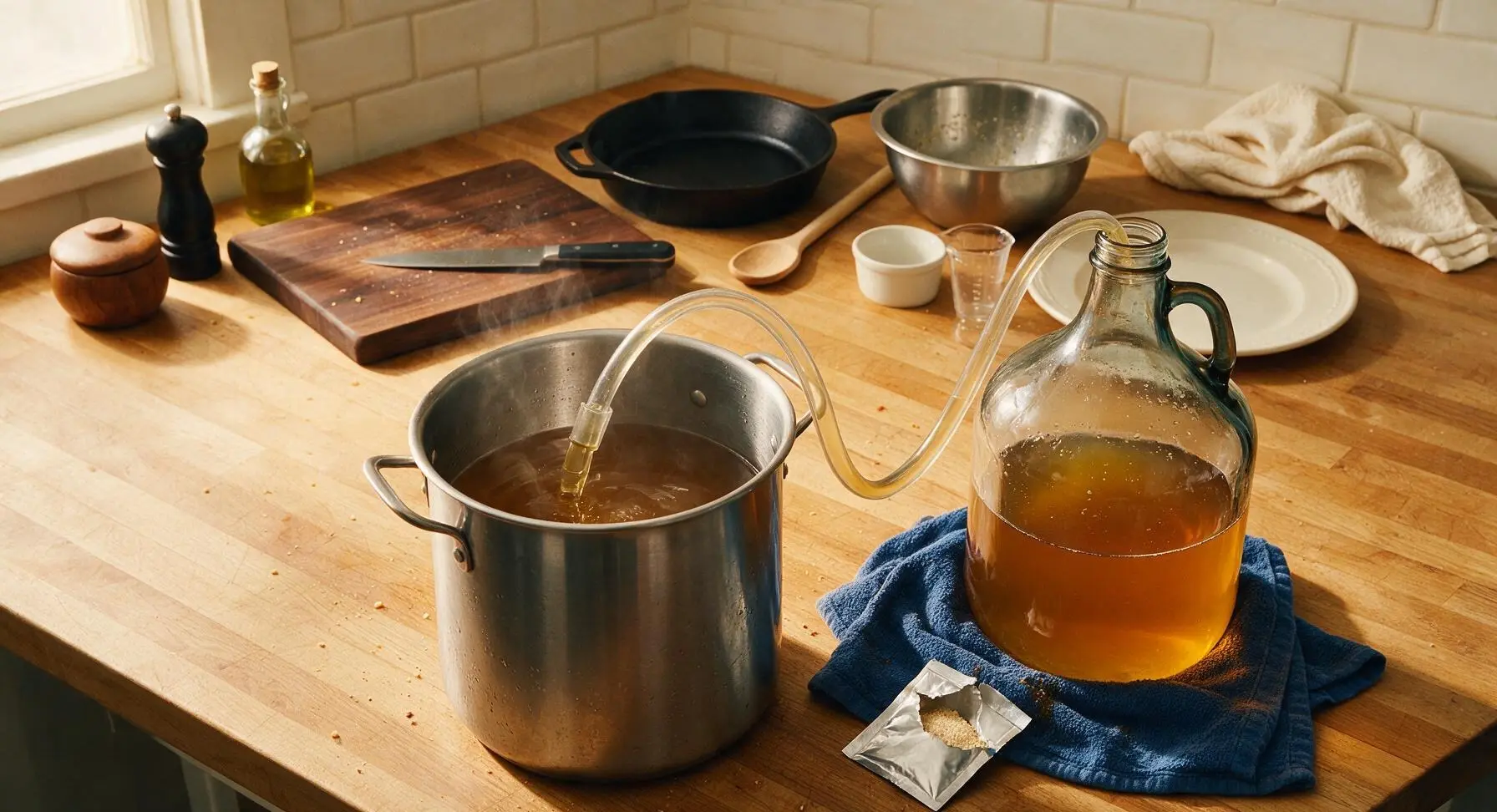
After the full 60 minute boil is complete, remove the kettle from heat, place in an ice bath to cool wort rapidly to 65°F (approximately 25 minutes). Once cooled, pour wort into the sanitized 5-gallon glass carboy, top up with cool filtered water to reach the 5-gallon mark, then sprinkle the entire packet of California Lager yeast over the wort surface. Seal the carboy neck with a sanitized rubber stopper, insert the 3-piece airlock filled halfway with sanitizer, and move to a dark, 60°F space for primary fermentation.
Step 4
step4:Cool and Pitch Yeast
5

Prep Guava and Barrel

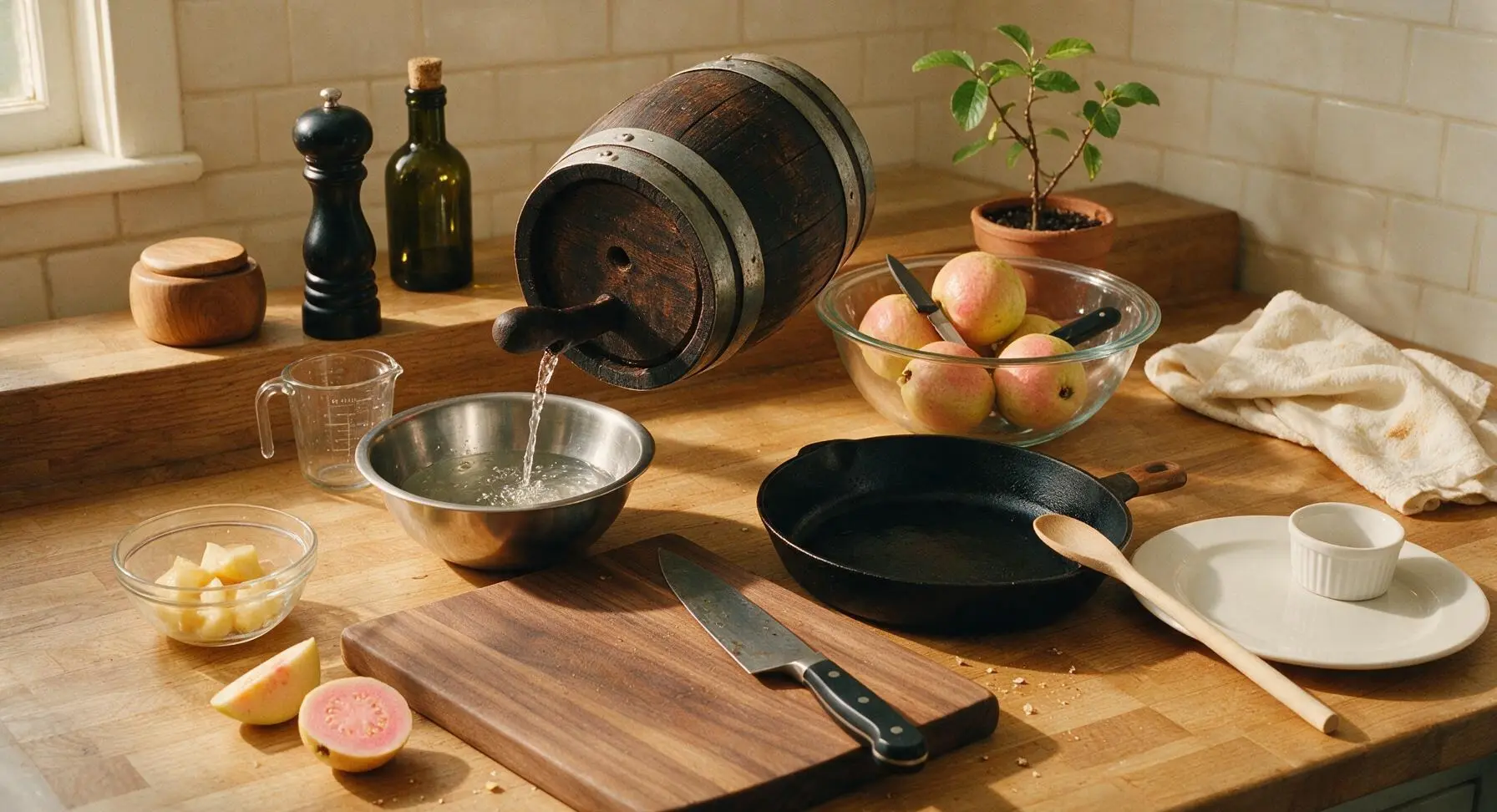
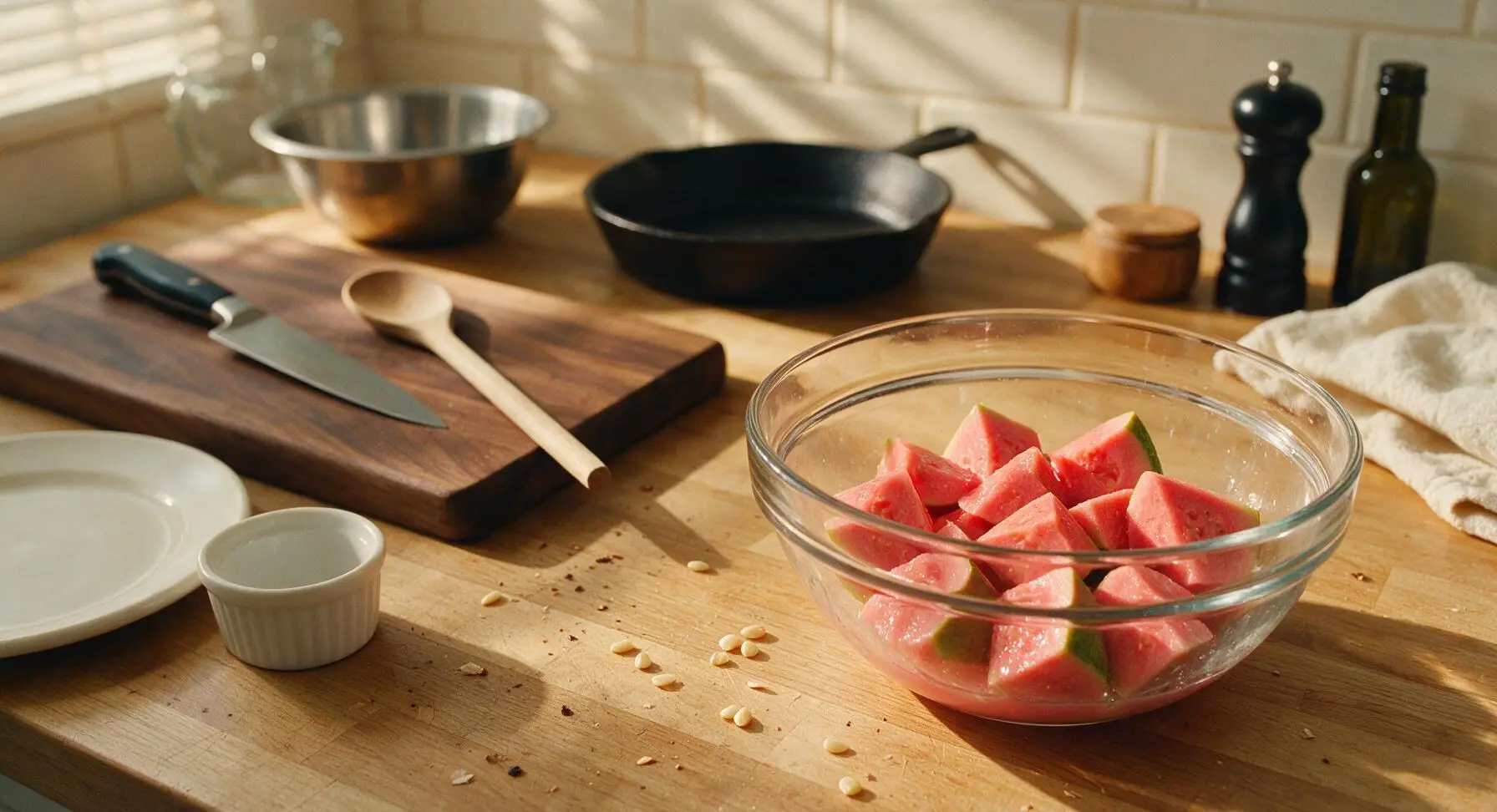
While primary fermentation proceeds for 2 weeks (wait for bubbles in the airlock to slow to 1 every 2 minutes, signaling fermentation is nearly complete), wash and sanitize the 2-liter charred rye barrel by filling with cool sanitizer solution and letting sit for 24 hours, then drain fully. Wash fresh guavas, peel, remove seeds, and cut into 1-inch chunks using the paring knife in the clear glass fruit bowl; do not cook the guava, as fresh bright flavor is desired. Drain all sanitizer from the barrel before use.
Step 5
step5:Prep Guava and Barrel
Step 5
step5:Prep Guava and Barrel
6

Transfer for Barrel Aging

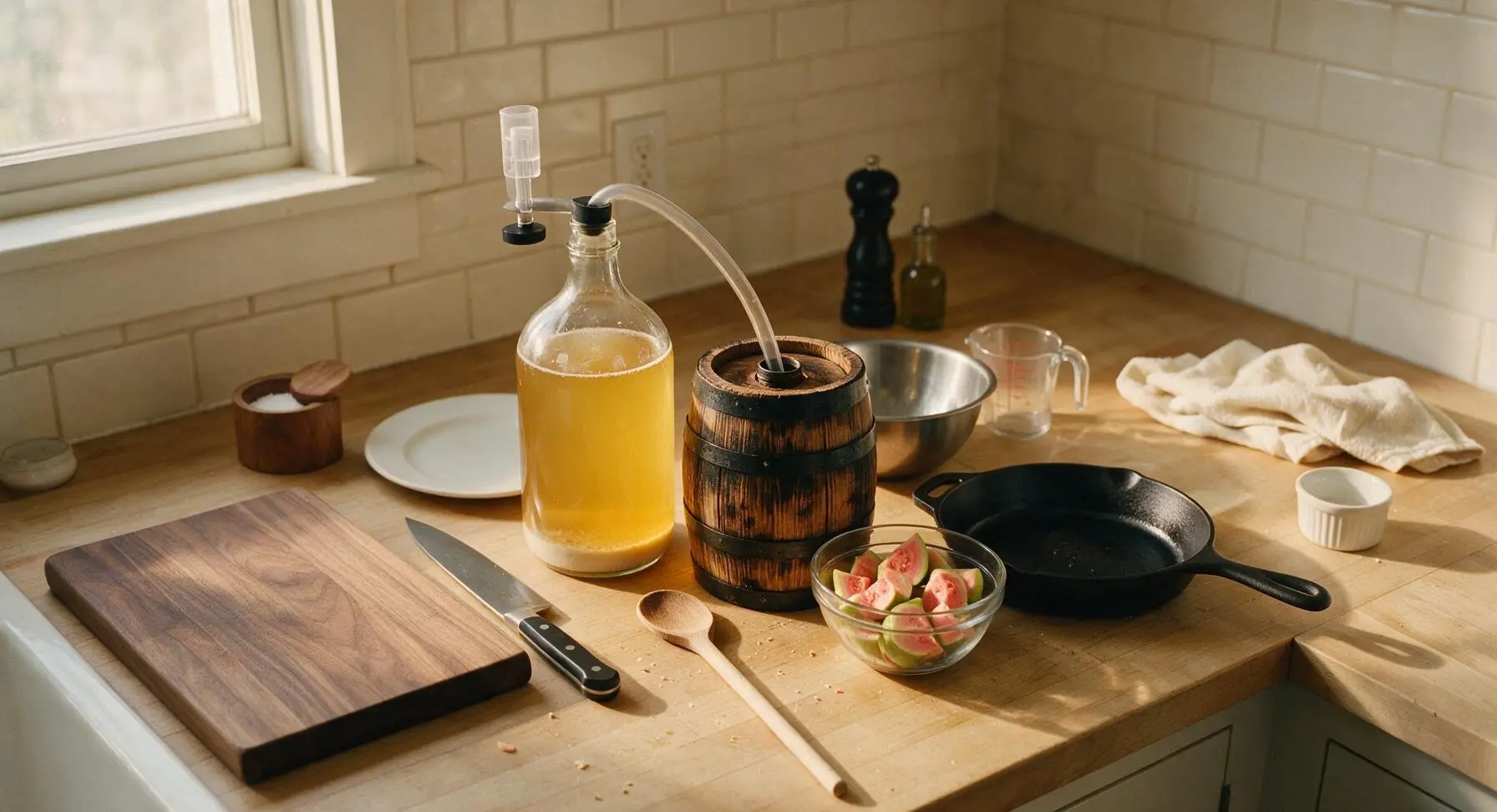
After 2 weeks of primary fermentation, use the sanitized auto-siphon to rack the clear fermented beer off the thick layer of yeast sediment at the bottom of the carboy into the prepared rye barrel. Add the cut fresh guava chunks directly to the barrel, seal tightly with the wooden bung, and store in a cool 60°F dark space for 3 weeks of aging. The beer will pick up subtle vanilla, rye whiskey, and toasted oak notes from the barrel, and bright tropical guava aroma as it ages.
Step 6
step6:Transfer for Barrel Aging
7

Dry Hop and Condition

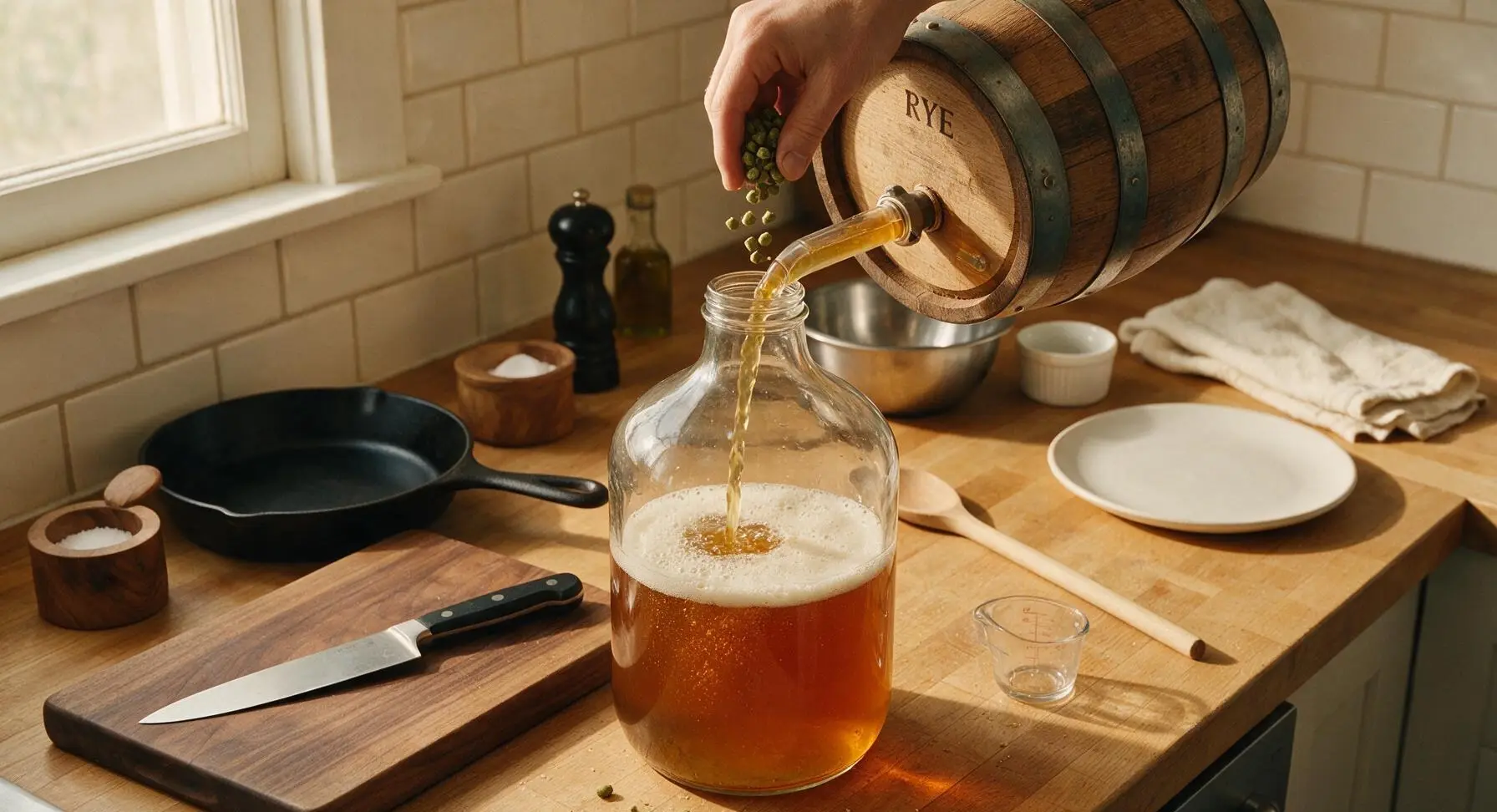
After 3 weeks of barrel aging, rack the beer back into the sanitized glass carboy, leaving any guava sediment and fine barrel char particles behind. Add the remaining 1 oz of Czech Saaz hop pellets directly to the carboy for dry hopping, seal again with the airlock, and let condition for 1 week at 55°F. The beer will develop bright, earthy noble hop aroma that balances the sweet guava and warm oak notes.
Step 7
step7:Dry Hop and Condition
8

Carbonate and Serve

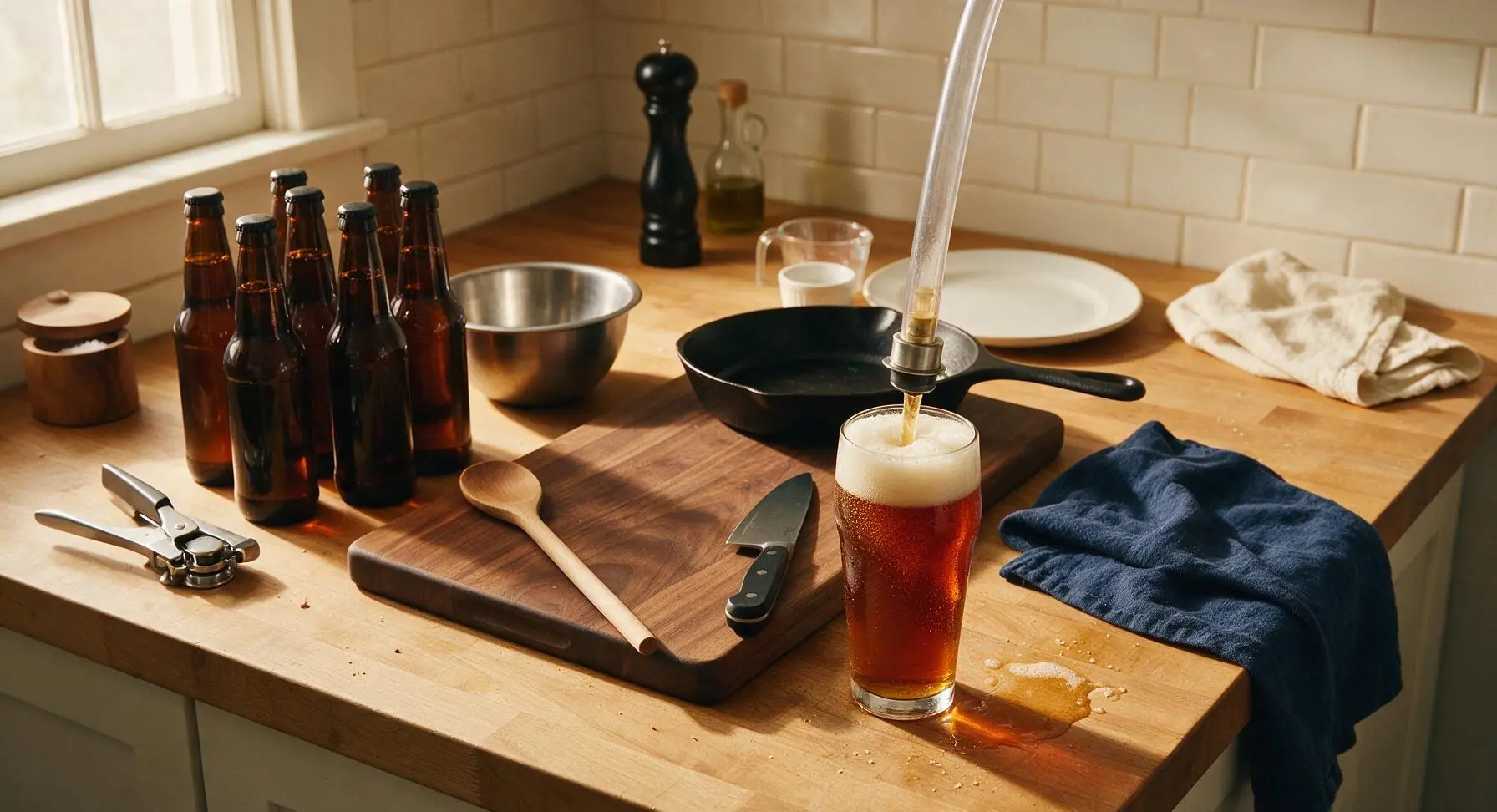
After 1 week of dry hopping, siphon the finished beer into sanitized 12oz glass bottles, adding 1 tsp of dissolved corn sugar priming solution to each bottle to create natural carbonation. Seal bottles with crown caps, store at 65°F for 2 weeks to fully carbonate, then chill to 42°F before serving. Pour slowly to leave fine sediment in the bottle, forming a 1-inch thick creamy white head.
Step 8
step8:Carbonate and Serve

Tips

1.Never squeeze the grain bag during mashing or sparging, as this extracts harsh tannins from grain husks that create a dry, astringent aftertaste that clashes with bright guava flavor. Let the bag drain fully by gravity only for the smoothest mouthfeel.
2.When prepping guava for aging, avoid cooking or over-blending the fruit, as heat destroys delicate fresh tropical aroma. Cut fruit into 1-inch chunks to make racking easier and prevent fine fruit sediment from making the final beer gritty or overly hazy.
3.Before using the miniature rye barrel, perform a 24-hour leak test with cool water. Small oak barrels dry out quickly in storage, and unaddressed leaks can ruin weeks of aging work; if seepage occurs, soak the barrel until wood swells fully to seal gaps.


✨ You May Also Like

Drinks & Beverages
🍜 Mexico

A bright, balanced tequila-based cocktail with zesty fresh lime, smooth orange liqueur, and a signature salt rim, perfect for warm summer sipping.

⏱️ 5 minutesDrinks & Beverages ★ 4.9
Drinks & Beverages
🍜 United States

Thick, creamy, nostalgic classic vanilla milkshake with a rich, smooth texture, topped with whipped cream and a cherry for cool, sweet refreshment.

⏱️ 5 minutesDrinks & Beverages ★ 4.7
Drinks & Beverages
🍜 United States

A bright, golden strong ale with fruity banana-clove notes, subtle hop spice, and soft carbonation, brewed in classic Trappist Tripel tradition.

⏱️ 2 hours aDrinks & Beverages ★ 4.5
Drinks & Beverages
🍜 United States

A frothy, nostalgic American soda fountain treat pairing bubbly cold root beer with creamy vanilla ice cream, perfect for cooling down at warm weather gatherings.

⏱️ 20 minuteDrinks & Beverages ★ 4.8
Drinks & Beverages
🍜 United States

Tart, funky, effervescent American Wild Ale is a complex fruity craft beer brewed with wild yeast, delivering bright, zesty notes perfect for warm-weather sipping.

⏱️ 2 hours aDrinks & Beverages ★ 4.4
Drinks & Beverages
🍜 United States

Bright, bubbly copycat of the iconic American caramel cola, balanced with citrus and warm spice, perfect for sipping ice-cold on hot days.

⏱️ 15 minuteDrinks & Beverages ★ 4.8

Guava Rye Barrel Aged IPL:Frequently Asked Questions

1.What ratio of rye malt delivers that perfect spicy note without harsh, astringent off-flavors? ▾
Aim for 15-20% of your total grain bill as rye malt, paired with 70% 2-row pale malt and 10% Carapils for balanced body. That ratio delivers that signature peppery rye bite without the grainy, drying harshness that comes from overloading on rye, which would throw off the bright guava and soft hop balance.
2.Do I need a full charred rye whiskey barrel for that barrel-aged note, or is there a homebrewer-friendly shortcut? ▾
You absolutely don’t need a full 53-gallon barrel! For 5-gallon homebrew batches, add 1-2 ounces of medium-char rye whiskey barrel cubes (soaked in a splash of rye whiskey for 24 hours) to secondary for 1-2 weeks. Taste regularly to pull cubes once you hit that soft, subtle charred rye note to avoid over-oaking.
3.When is the best time to add guava to get bright, fresh tropical flavor without muted or off-notes? ▾
Add pasteurized, unsweetened guava puree (roughly 1 pound per gallon of beer) on day 3 of secondary fermentation, after primary fermentation has mostly slowed. Adding it too early blows off delicate guava aroma during active ferment, while adding it too late risks poor flavor integration or unwanted wild yeast activity.
4.Why use Magnum and Czech Saaz hops instead of the bold tropical hops common in modern IPAs? ▾
Magnum acts as a clean, neutral bittering hop early in the boil, adding smooth, sharp bitterness without grassy or harsh notes that clash with rye. Late-addition Czech Saaz delivers soft piney, slightly floral noble hop character that complements guava and barrel char far better than loud tropical hops that would overpower more delicate notes.
5.What fermentation temperature keeps this IPL crisp, instead of heavy or fruity like an ale? ▾
Hold your lager yeast at a steady 50-55°F for the first 7-10 days of primary fermentation, then slowly ramp to 60°F for a 3-day diacetyl rest before cold crashing. This slow, cold ferment eliminates fruity ale-like esters that muddle the clean profile, letting each core ingredient shine without murky off-flavors.
6.Can I use fresh ripe guava instead of store-bought puree if I have access to it? ▾
Absolutely! Use fully ripe, fragrant guava, peel and deseed it, then gently heat to 160°F for 5 minutes to pasteurize and kill wild yeast or bacteria before pureeing and adding to secondary. Skip added sugar, and strain out stringy pulp if you prefer a cleaner, crisper mouthfeel over a slightly hazy, fruit-forward pour.
7.How long should I age this beer after adding guava and barrel elements before it’s ready to drink? ▾
Give it 2 full weeks in secondary after adding guava and barrel cubes to let flavors fully integrate, then cold crash for 3 days at 35°F, package, and condition for another 1-2 weeks cold. Skip long multi-month aging—this beer is designed to be bright and fresh, so drink it within 3 months of packaging for best flavor.
8.What does Carapils malt add, and can I skip it if I don’t have any on hand? ▾
Carapils is a light, dextrinous malt that adds subtle, smooth body and helps the beer retain a fluffy, persistent white head without adding sweet or toasty flavor. If you don’t have it, substitute an equal amount of 10L light caramel malt, or skip it entirely—just note your final beer will be slightly thinner with less head retention.
9.How do I avoid astringent, harsh rye flavors ruining my finished IPL? ▾
The top cause of harsh rye astringency is over-sparging your grain bed at temperatures over 170°F, or mashing rye at too high a pH. Keep sparge water at 165-168°F, adjust mash pH to hit 5.2-5.4, and don’t squeeze your grain bag when lautering to pull only smooth, sweet wort without bitter grain tannins.
10.What serving temperature and glassware show off this IPL’s flavors best? ▾
Serve this beer at 40-45°F, a touch warmer than ice-cold mass-market lager, in a tall pilsner glass or tulip glass. The narrow pilsner glass shape traps bright guava and piney Saaz aroma as you sip, while the slightly warmer temp lets subtle rye spice and soft barrel char come through instead of being muted by extreme cold.
11.Is there a way to make a non-alcoholic version of this Guava Rye Barrel Aged IPL at home? ▾
Definitely! Brew the grain and hop bill as normal, then use a non-alcoholic lager yeast strain, stop fermentation early to keep ABV below 0.5%, or use a small-batch homebrew alcohol removal system. Add the same guava puree and a tiny amount of rye barrel extract to mimic char notes for that same crisp, balanced profile without alcohol.
12.How bitter should this IPL be compared to a standard West Coast IPA? ▾
Aim for 35-45 IBUs from your early Magnum addition, far lower than the 60+ IBUs common in bold West Coast IPAs. This lower, smoother bitterness lets spicy rye, sweet tropical guava, soft pine hops, and subtle barrel char take center stage, so the beer feels refreshing and crushable, perfect for summer sipping.
13.Can I use a previously used rye barrel for aging, or do I need a brand new charred barrel? ▾
A gently used rye whiskey barrel that held a mild lager or pale ale for 1-2 prior batches works perfectly, as long as you sanitize it thoroughly and check for off-flavors or mold before use. Avoid barrels that held heavy stouts or sours, as those residual flavors will completely overpower the delicate guava, rye, and hop profile.
14.What common mistake causes bottle bombs when brewing fruit beer like this, and how do I avoid it? ▾
Always confirm primary fermentation is fully complete before adding guava, and let the beer fully ferment out any fruit sugar in secondary before bottling. Use a hydrometer to check for stable final gravity over 3 straight days before packaging, and never add extra guava at bottling, as unfermented sugar can cause dangerous excess carbonation.

Comments (12)

2 weeks ago

OMG, I was so intimidated by the 8 week timeline and barrel aging step but this came out INSANE. Brought a growler to our weekly hiking group potluck last weekend and everyone was begging for the recipe. The guava brightness cuts the rye spice so perfectly, and that subtle barrel vanilla note? *Chef’s kiss* 10/10 would block off my fridge shelf for 2 months again.

1 week ago

Wait did you use a new oak barrel or the used bourbon barrel chips the recipe note mentions? I’m trying to decide if I want to spring for a mini barrel for my first batch!

1 week ago

Great question! Both work great — mini barrels give a more rounded, integrated barrel flavor if you have the budget, but the bourbon barrel chips we link in the recipe notes deliver that same warm, oaky kick for a fraction of the cost for home brewers just starting out with barrel aging.

1 week ago

Game changer for summer cookouts. I’ve made a handful of IPLs before but the guava + rye combo is something I never would have thought to pair. Served this ice cold next to my brisket last weekend and it held up perfectly against the smoky meat, my brother in law drank 3 glasses before he even asked what it was. Only note: make sure you don’t rush the conditioning phase, I almost tapped mine a week early and I’m so glad I waited.

5 days ago

So glad you stuck out the full conditioning time! That slow carbonation and flavor melding is what makes the 8 week wait worth it, especially when pairing with rich, smoky foods like brisket. Cheers!

3 days ago

Wait, I thought this was a dessert at first? Oops, my bad — still, my husband is a huge homebrew nerd so I sent this straight to his homebrew folder. He’s been obsessing over rye beers lately and he loses his mind over anything guava, so I know this is gonna be our weekend project for the next couple months. Already picked up a pack of guava puree from the grocery store to surprise him!

5 days ago

Tough recipe for sure, I messed up the first dry hop addition on my first try and had to dump half the batch 😅 Second time around I followed the temp controls exactly and wow, so worth the frustration. The guava isn’t overpowering at all, it’s just this nice tropical hint that hits after the rye and hop bite. Took a six pack to my office potluck and even the people who ‘don’t like beer’ were asking for seconds.

3 days ago

Ugh I feel you on the temp control mishap! I had my fermenter run 2 degrees too warm on my first batch and got that weird fruity off-flavor, had to dump it too. Second batch is in the barrel right now, counting down the days!

2 days ago

Sorry to hear about the first batch, but so stoked the second one turned out! Temp control is extra important with this lager strain, which is why we marked this recipe as hard — it doesn’t leave a ton of room for error, but the payoff is massive when you nail it.

2 days ago

SO good. I’m usually an IPA guy but this crisp, clean lager base with the rye spice and sweet guava is gonna be in my regular rotation all spring and summer. Aged mine on some extra guava puree for the last 3 days of conditioning because I love that tropical punch vibe, and it turned out perfect. My neighbors already put in a request for me to make a double batch for our block party next month.

yesterday

How much extra guava did you add? I’ve been debating bumping up the guava amount because I love really forward fruit flavors, don’t want it to taste like fruit punch but I want that guava to shine!

2 days ago

I don’t homebrew but my cousin does, and he made this for our family Easter dinner. I’m not even a big beer drinker but I had two full glasses! It was fruity without being sweet, had that little spicy kick from the rye, and went so well with the ham and cheesy potatoes we had. Already texted him to make another batch for our Fourth of July cookout.

yesterday

Okay, I’m not gonna lie, I saw ‘8 weeks’ and almost clicked away because I’m so used to fast, 2 week homebrew recipes. But my roommate talked me into trying it, and man, patience really is a virtue here. That smooth barrel finish is unreal, it tastes like something I’d pay $18 a four pack for at the fancy bottle shop in my neighborhood. Worth every penny of supplies and every minute of waiting.

2 hours ago

We get it, 8 weeks feels like forever when you’re excited to try a new brew! That slow barrel integration and lager fermentation is what gives it that craft-bottle-shop level smoothness, so we’re thrilled it paid off for you.

3 days ago

My kids thought I was crazy for hogging the basement fridge for 2 months for ‘guava beer’ but once they snuck a tiny sip (don’t worry, they’re teens, it was just a taste!) they said it smelled like the tropical smoothies we get on vacation. Brought a keg to our youth soccer end of season potluck for the parents, and it was gone in 45 minutes. Will absolutely be making this again, just maybe hide a growler for myself next time so I don’t run out.

2 days ago

Wait a soccer parent potluck with this beer? Sign me up! Our team snack schedule is just chips and Gatorade, I need to step up my game for the next tailgate.

30 minutes ago

Love that this was a hit with the parent crew! Pro tip for next batch: bottle a few 12oz ones to stash in the back of the fridge so you don’t give all of it away at gatherings — we’ve made that mistake too many times!

2 hours ago

First time attempting a barrel aged anything, and as someone who’s only made simple extract kits before, this was definitely hard like the recipe says. I had to re-read the rye mash step three times to make sure I didn’t mess up the ratios, but I’m 3 weeks into conditioning right now and the sample I pulled tasted so promising! Super excited to see how it turns out when it’s done.

5 minutes ago

You’ve got this! I was also a total newbie to barrel aging when I tried this, just take sanitizing super seriously (I can’t stress that enough) and you’ll be golden. The finished product is so worth the extra effort.

1 week ago

Made this for my partner’s birthday and he said it’s better than the guava lager we had on our trip to Hawaii last year. Win in my book! The rye adds such a nice earthy balance so it doesn’t taste like a sugary seltzer, which is exactly what we both love. Will be making again for sure.

1 week ago

I’ve been experimenting with fruit lagers for years and this is hands down one of the best recipes I’ve tested. The rye addition is genius — it keeps the guava from making the beer taste too cloying, and the barrel notes add just enough depth to make it feel fancy without being pretentious. I even entered my first batch into a local homebrew competition and won third place in the lager category!

3 days ago

Wow, third place in a homebrew comp? That’s incredible! Congrats on the win, that makes all the recipe testing we did for this totally worth it. Cheers to you!

30 minutes ago

Wait, has anyone tried making this without the barrel component? I live in a tiny apartment and don’t have space for a mini barrel or extra equipment for barrel aging, and I’m not sure if the recipe will still be good if I skip that part. The guava rye combo sounds so good but I don’t want to waste ingredients if it’ll be missing something major.

5 minutes ago

I made it without the barrel chips/barrel when I first tested it because I forgot to order them, and it was still delicious! Just a crisper, brighter version without that oaky vanilla note, totally worth making even if you skip the barrel step.

just now

Great question! You can absolutely make this without the barrel component — it’ll still be a delicious guava rye IPL, just missing those warm oaky, vanilla notes. We note a non-barrel variation in the recipe tips at the bottom that adjusts the hop schedule slightly to account for the missing barrel depth, so be sure to check that out!



